Istanbul January 2, 2012
Posted by freda in Birmingham, Michigan.trackback
Happy New Year!!
I know you’re saying “finally, the promised post on Istanbul.” Yes, this has taken longer than I expected or planned. Seems December is a busy month (!) with things to do that can’t wait, so this blog has been sacrificed. We had a wonderful Christmas, with both boys with us for about 10 days. The four of us went to Chicago for two nights right after Christmas – the first time for all of us, though Don has been on business. We had a great time and realized we need several more days to see that lovely city properly. We enjoyed our time together, as always, ate and drank too much, saw a few movies, visited with good friends – everything that is wonderful about the holiday season. Now, back to reality. And without further ado…. Istanbul. I hope you enjoy the trip.
Don and I had an amazing 8 days in Istanbul – one of our favourite trips! It was a l-o-n-g haul to get there, though. We drove to Windsor, flew from Windsor to Toronto, then Toronto to Munich, and finally Munich to Istanbul. About 20 hours later we were at our lovely hotel, the family-run Hotel Kari Sonak, in the old city area of Sultanahmet. http://www.istanbulhotelsarikonak.com/
After unpacking, we headed out for a long walk around the area, to keep awake and get our first look at the city. Just up the street from our hotel, practically in our back yard, the Blue Mosque…
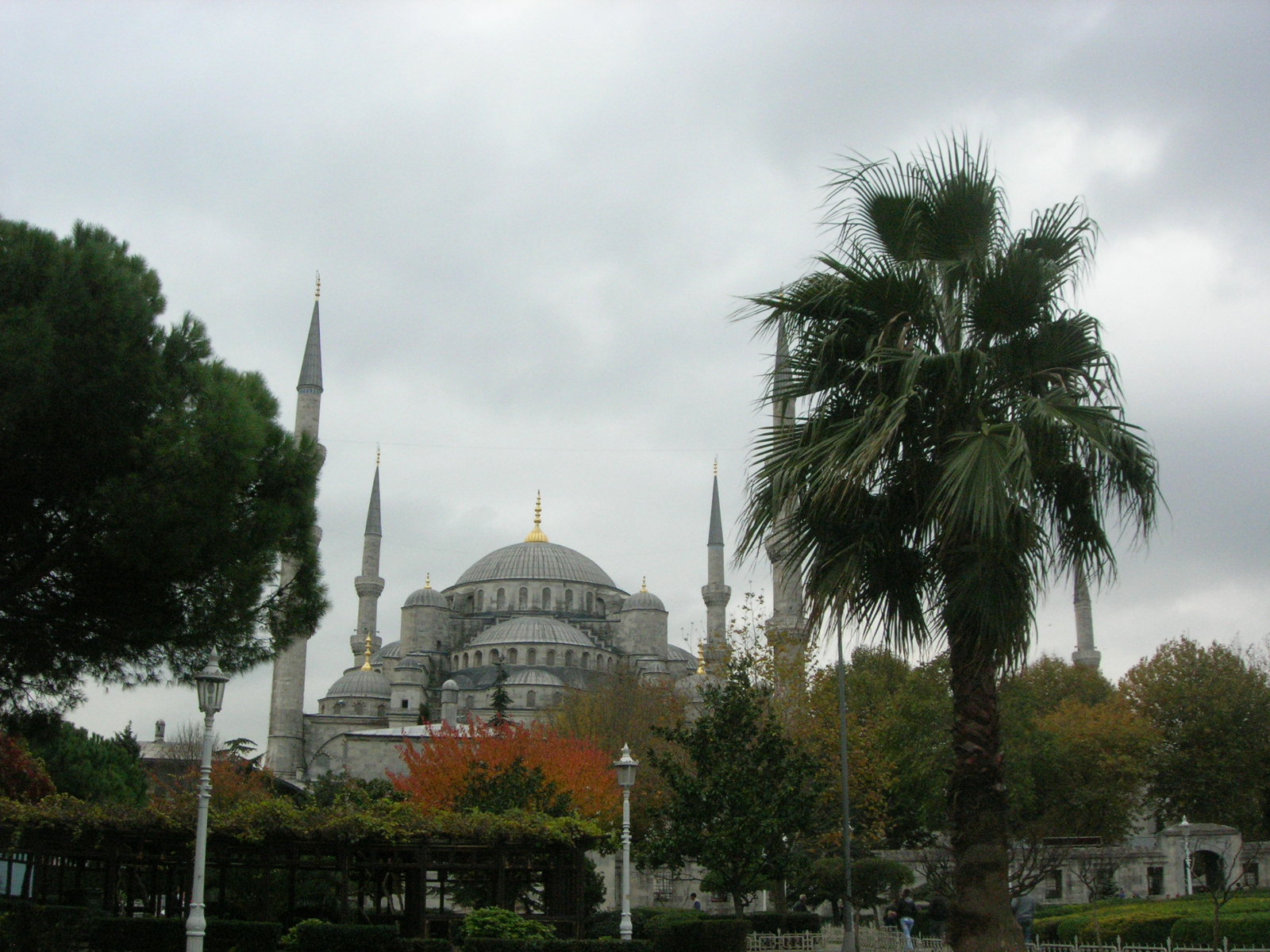
Blue Mosque
Then we meandered along winding, hilly, cobblestoned streets, past more carpet shops than you can imagine, and even carpets being sold right on the street!
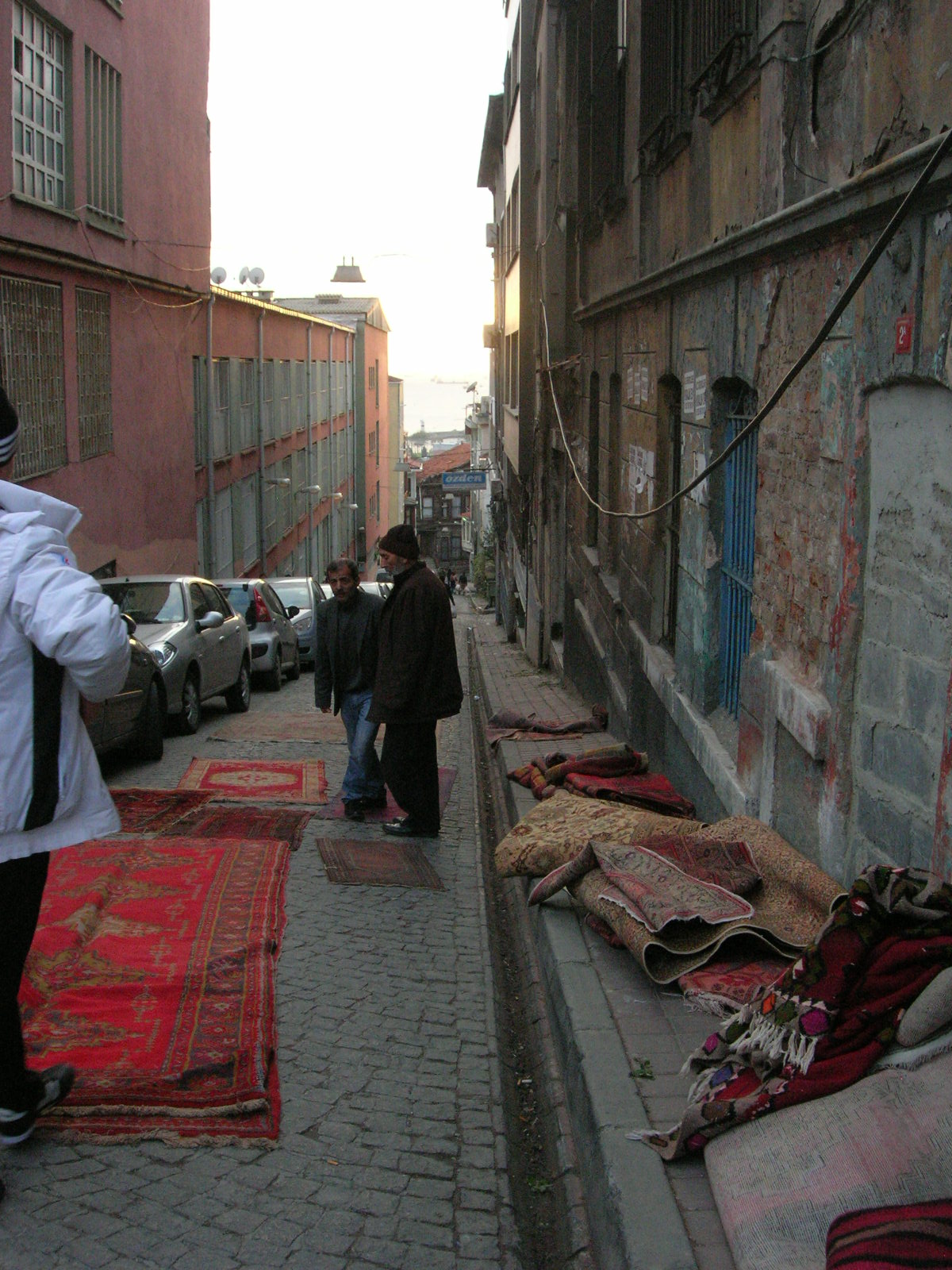
street vendor
Don was starving as he hadn’t eaten on the last plane, so he decided to try the street-seller’s bagel or pretzel-like fare, which we learned is called simit, a “crisp, ring-shaped savoury loaf.”
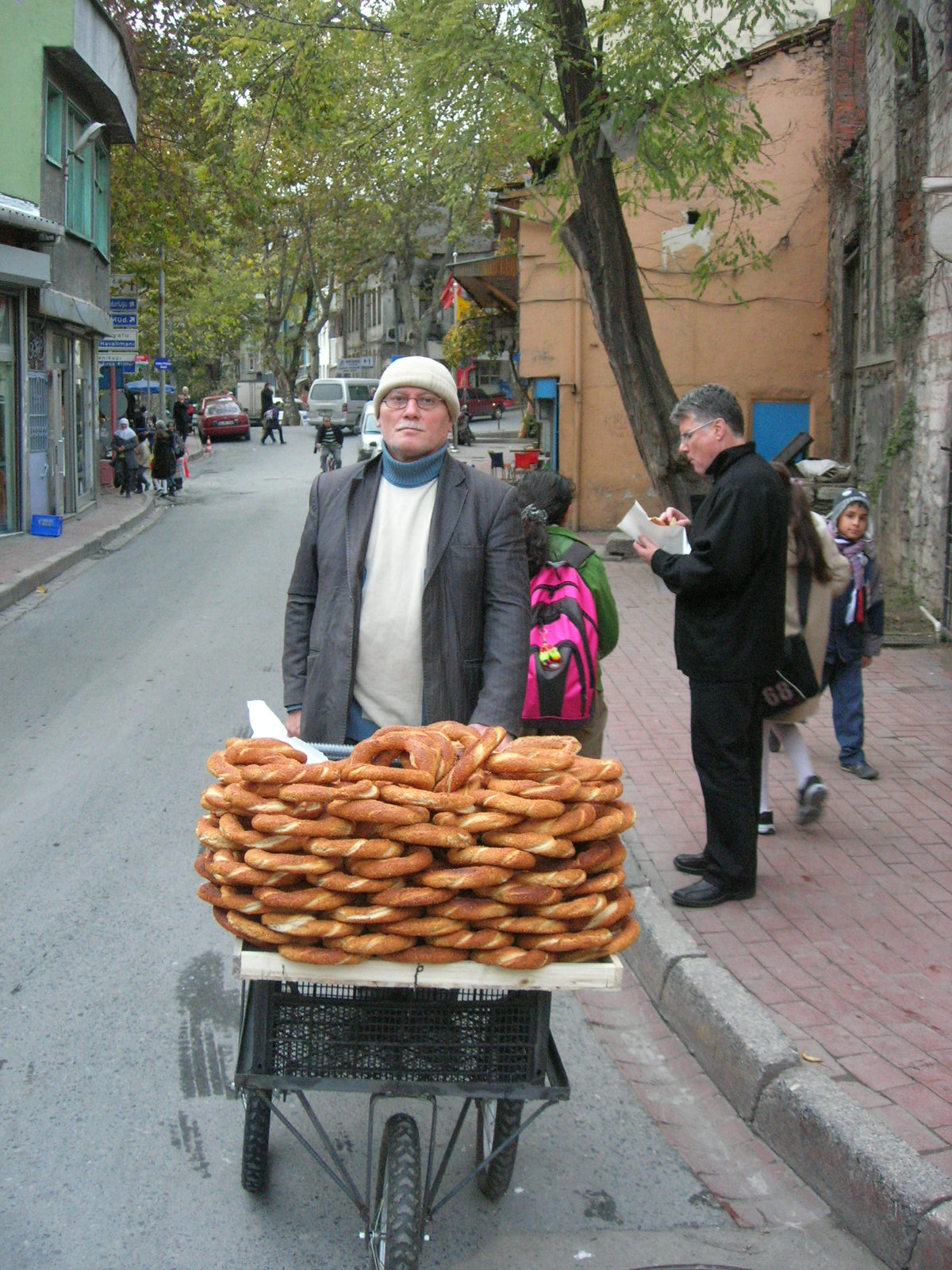
"simit" seller
After more than an hour of wandering, I was dying for a ‘cuppa’ and we headed back to our hotel for complimentary tea-time. After a reviving cup of tea, we asked Hasan (the bartender) for a beverage – beer for Don and hot mulled wine for me – and chatted with him for awhile. This became our evening routine before dinner, though we skipped the tea from then on out. (Turned out we had more tea during most days than we’ve ever had in our lives! … But those stories are still to come.) And then, from a recommendation from Hasan, we made our way to the “restaurant street” just a few metres up the hill and around the corner from our hotel, to a fantastic place, Magnaura Cafe Restaurant, where we ended up having dinner three times during our stay! They had a mix of Turkish and Ottoman cuisine, plus some western dishes we didn’t even look at, and lovely Turkish wine. We had no idea Turkey had such a good wine industry, but they do. The food was great, service was great, and after dinner, thanks to the suggestion from Hasan, our waiter gave us a tour of their underground ancient Roman-time caves.
We were back to our hotel and asleep by 8:30 after a very long overnight day of travel.
The next morning, after the delicious buffet breakfast put out daily at our hotel – excellent yogurt, dried fruit and fresh orange slices, hard-boiled eggs, tomatoes and cucumbers, feta cheese, olives, and breads – we met our personal tour guide in the lobby at 9:30. How we came to hire Gamze is a bit of a story…. When I ordered the Istanbul Eyewitness Travel Guide (my favourite guide, because of the addition of pictures to the information) from amazon (our local book store didn’t have a guide for Istanbul!), in the way that amazon does, they said, “people who buy… also buy….” and so of course I clicked on some of those suggested books to see what might interest me, and I ended up also ordering “Istanbul: The Collected Traveler: An Inspired Companion Guide” edited by Barrie Kerper. It’s an anthology of articles written by a variety of writers on all aspects of Istanbul, and I’ve only dipped into it so far. But, one thing I did read was an interview of tour guide Gamze Artaman conducted by author Tom Brosnahan, and based on that interview, I emailed her! Her detailed response, and then a few more back-and-forth emails inspired us to hire her for our first two days, plus a third day later in the week. She turned out to be the best tour guide we’ve ever had!

Gamze
We started our day with history as we walked up the hill to stand in the area that was once the Hippodrome, the centre of the Byzantine city of Constantinople. Not much is left now from the once-upon-a-time stadium, which is now a public garden, except an Egyptian Obelisk (built in 1500 BC, it once stood outside Luxor, where Don and I have also been) and Constantine’s Column (built in 330 AD, part of the celebrations to inaugurate the Byzantine capital), and I’m sorry I don’t have pictures of them. It was easy to get an idea of the size, though, as the road that runs around the garden square is what used to be the chariot racing track, chariot racing being, apparently, the most popular pastime of the Byzantines. The Hippodrome fell into ruin after the Ottoman conquest of Istanbul in 1453.
According to the Eyewitness Guide (where all my serious information will come from, and will be in italics): For almost a thousand years Constantinople was the richest city in Christendom. It radiated out from three great buildings: the Hippodrome, the Great Palace and the church of Haghia Sophia. Nothing is left of the Great Palace, but the Haghai Sophia is stunning.
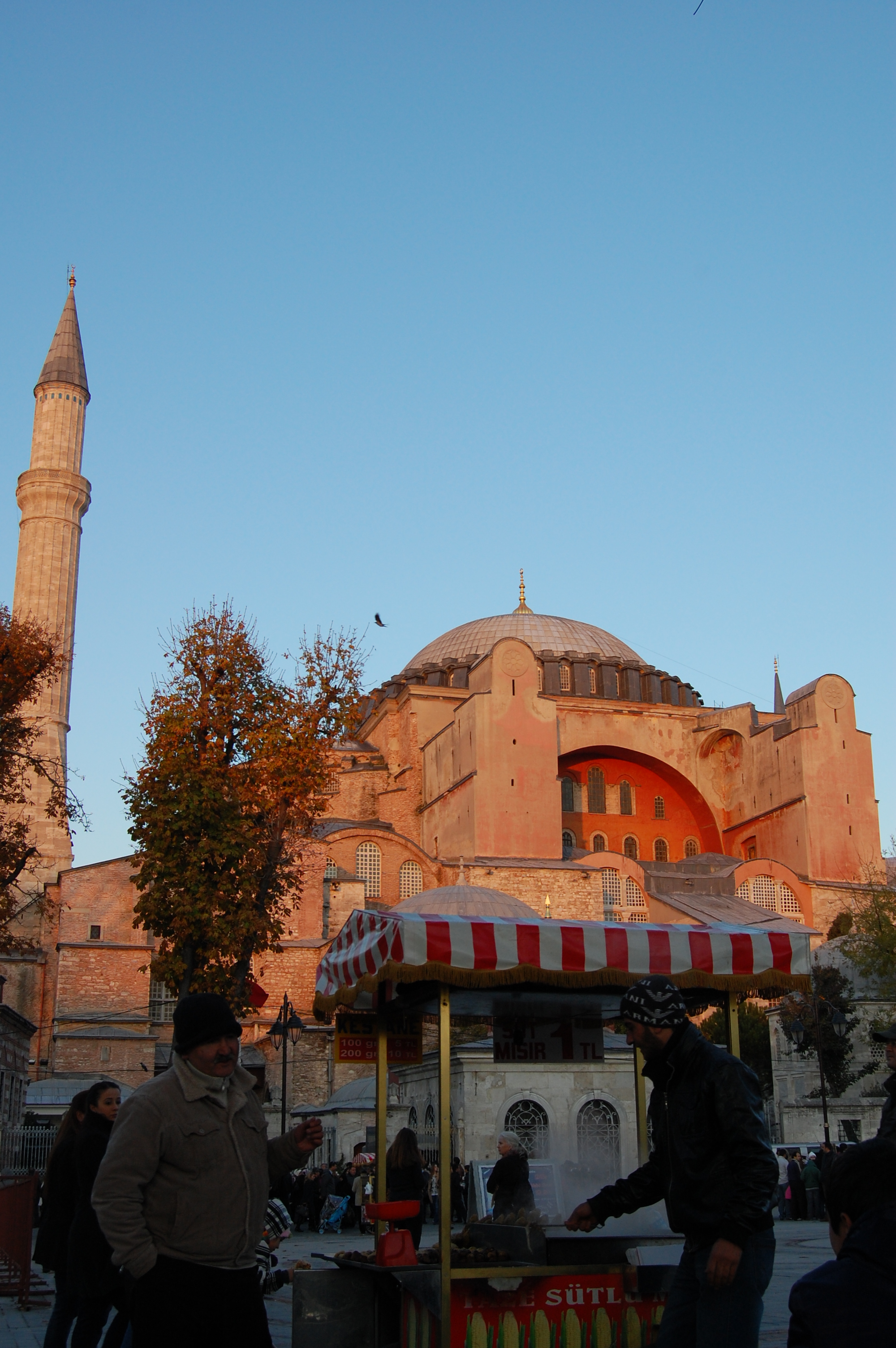
Haghia Sophia
The “church of holy wisdom,” Haghia Sophia is among the world’s greatest architectural achievements. More than 1400 years old, it stands as a testament to the sophistication of the 6th-century Byzantine capital. The vast edifice was built over two earlier churches and inaugurated by Emperor Justinian in 537. In the 15th century the Ottomans converted it into a mosque: the minarets, tombs and fountains date from this period. But, what might be the most amazing, is the open-mindedness of “the Conquerer” Sultan Mehmet II, because he allowed the Christian-themed mosaics to remain after the conversion to a mosque, side-by-side with the eight wooden plaques bearing calligraphic inscriptions, bearing the names of Allah, the Prophet Mohammed, the first four caliphs and Hasan and Hussein, two of the Prophet’s grandsons who are revered as martyrs.
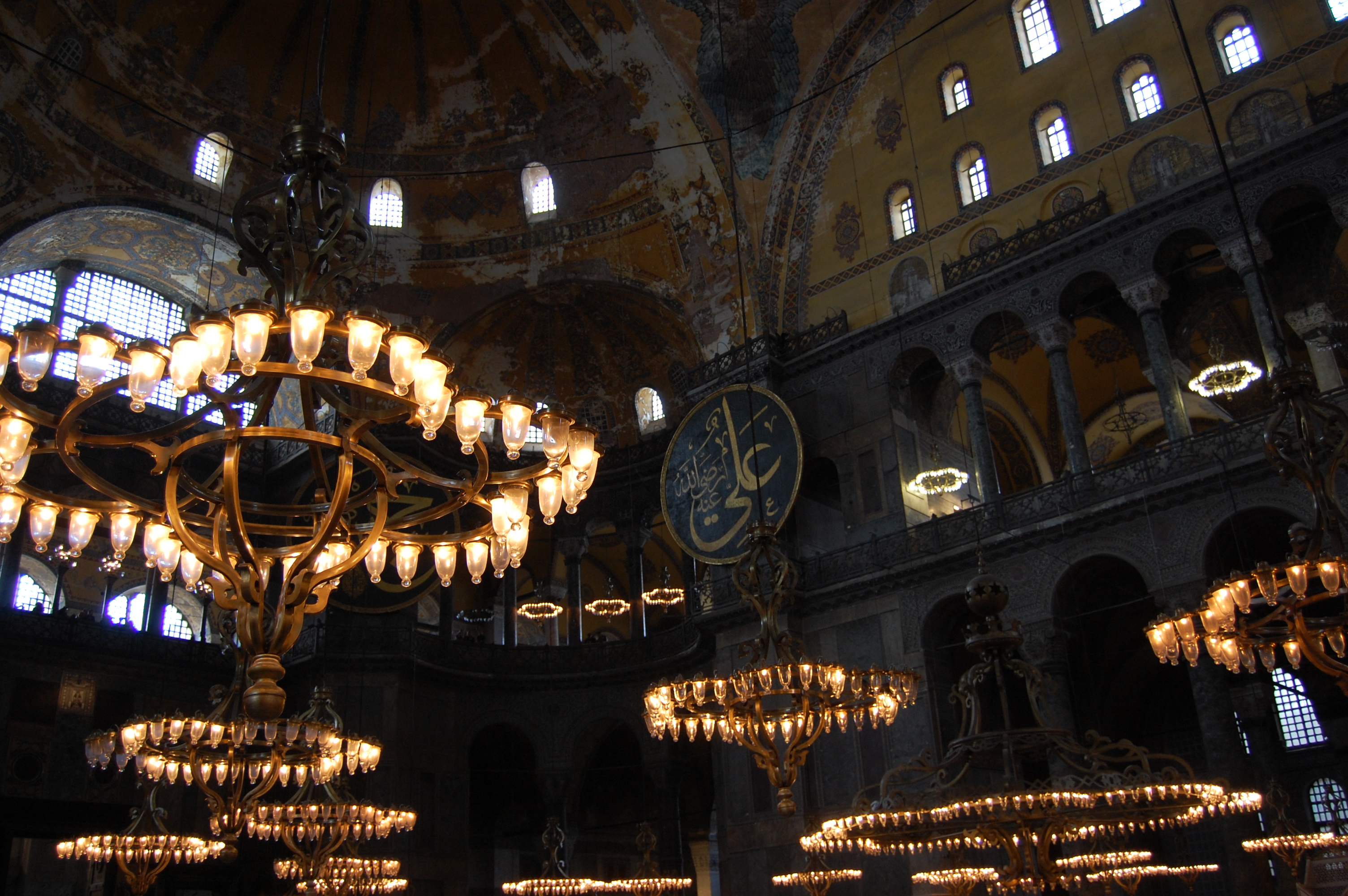
example of calligrahic roundel
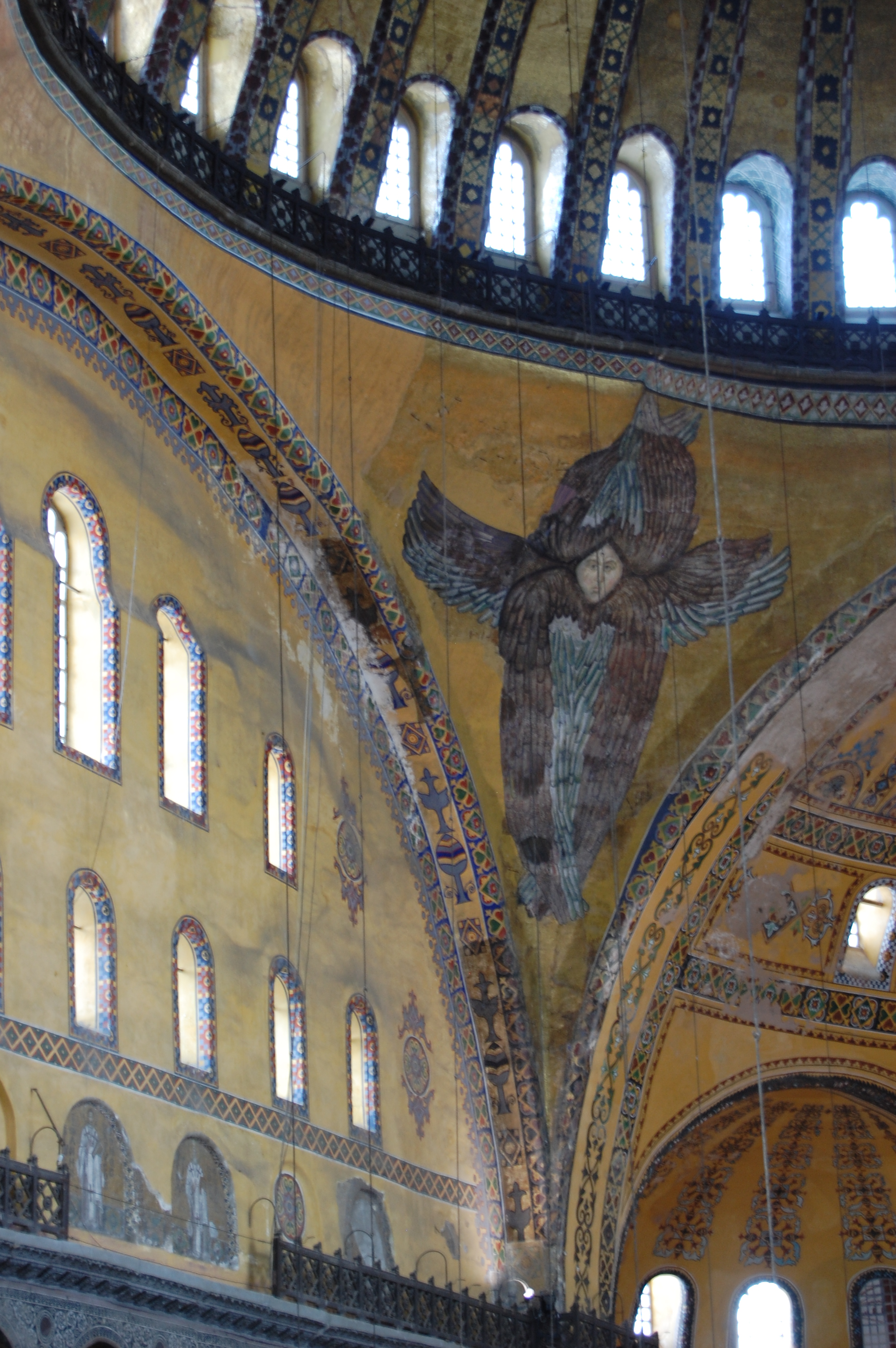
example of mosaic
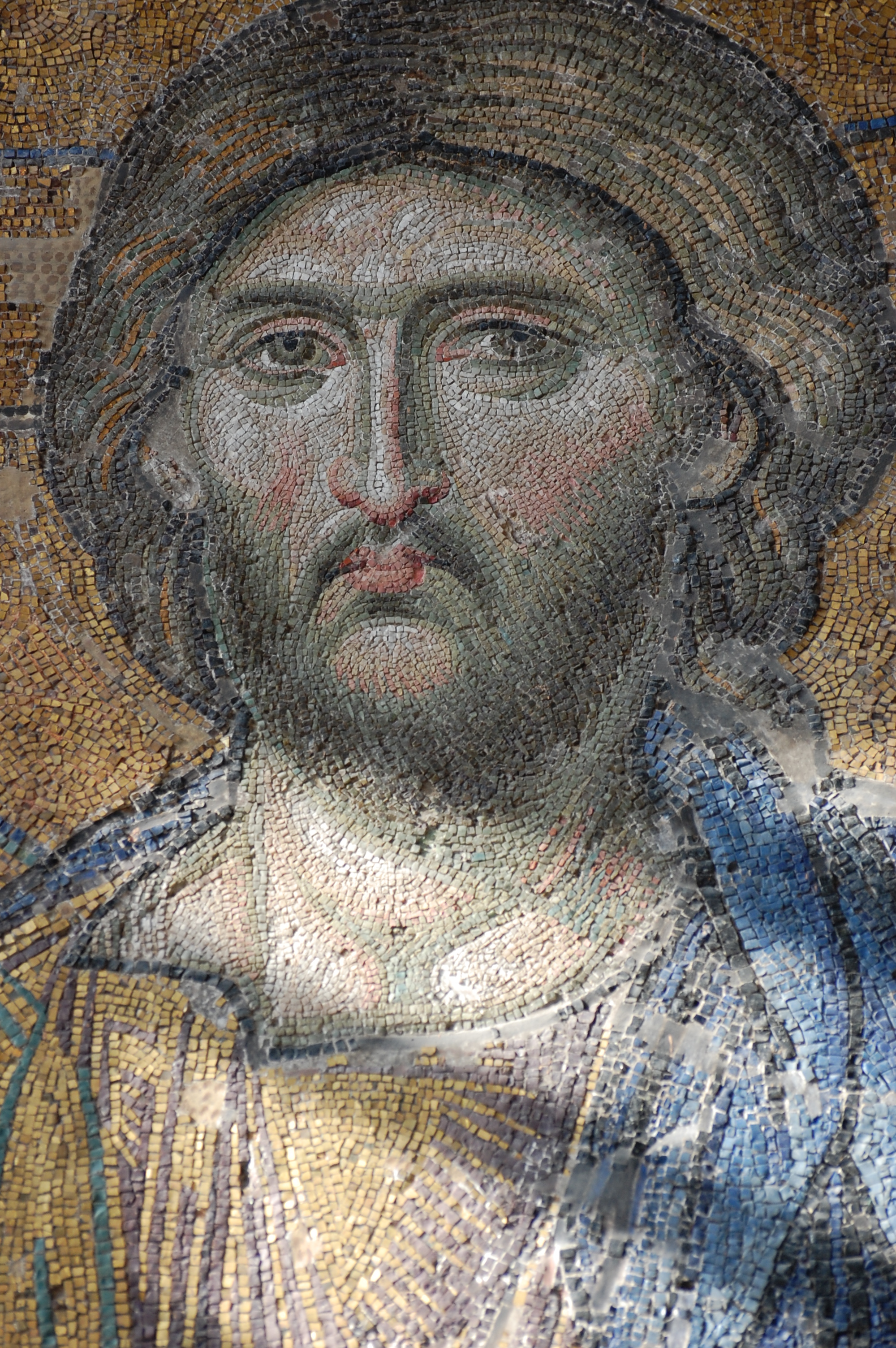
mosaic detail
We also went into the Blue Mosque, Istanbul’s most famous landmark. The blue mosque, which takes its name from the mainly blue Iznik tilework decorating its interior, is one of the most famous religious buildings in the world. Serene at any time, it is at its most magical when floodlit at night, its minarets circled by keening seagulls. Sultan Ahmet I (1603-17) commissioned the mosque during a period of declining Ottoman fortunes, and it was built between 1609-16 by Mehmet Aga, the imperial architect. The splendor of the plans provoked great hostility at the time, especially because a mosque with six minarets was considered a sacrilegious attempt to rival the architecture of Mecca itself.
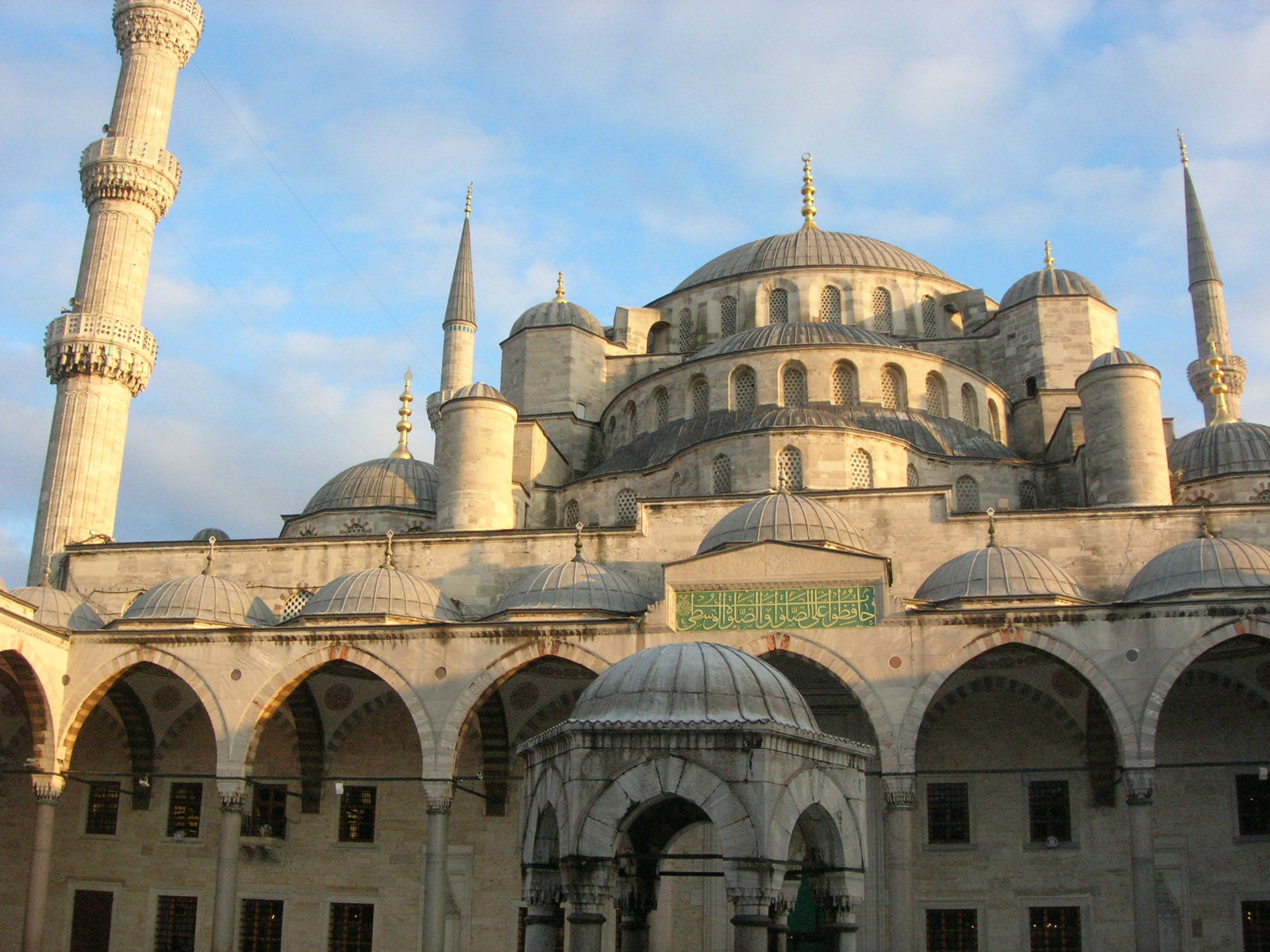
inside the courtyard, with ablutions fountain
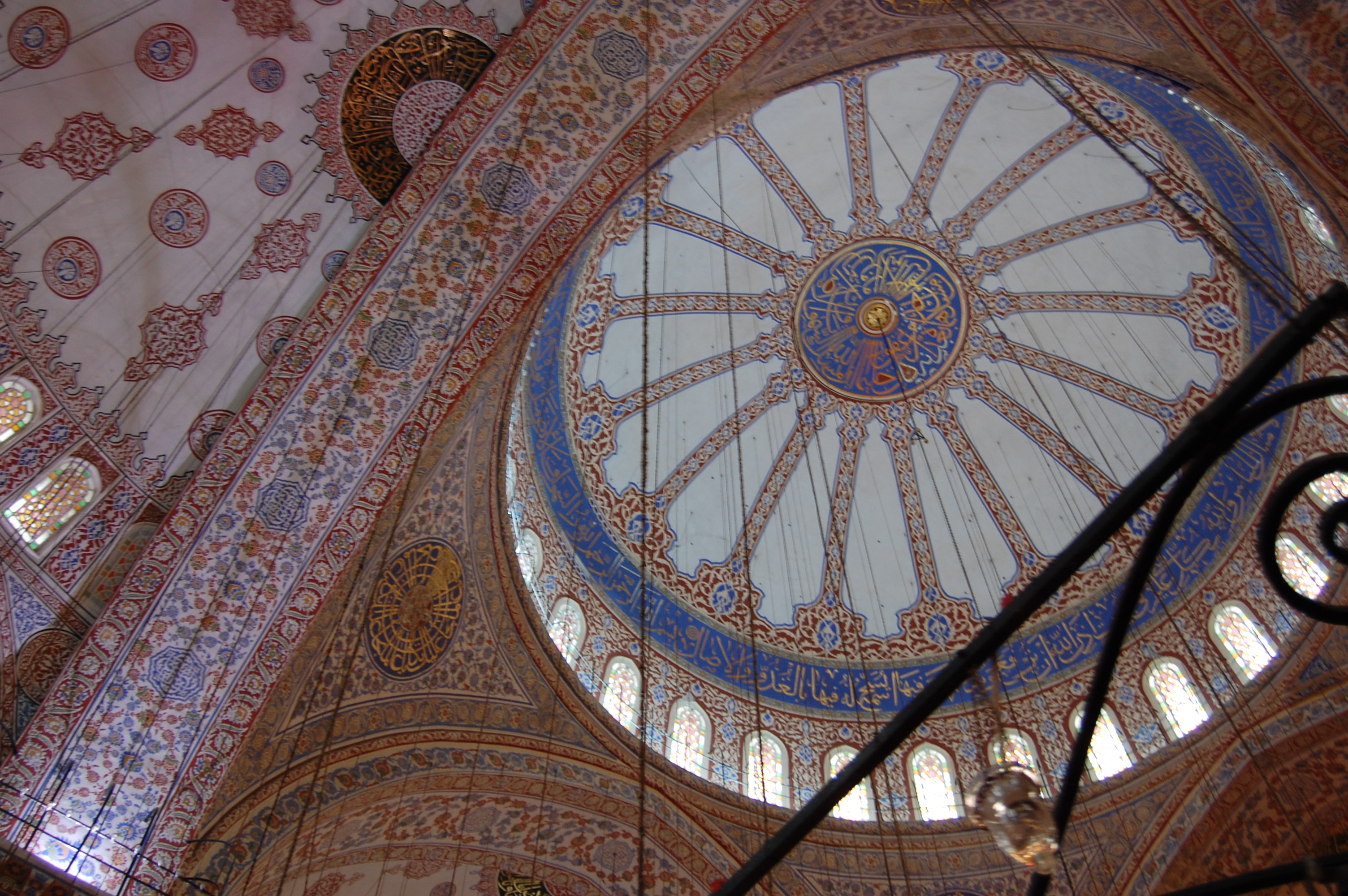
inside of the dome
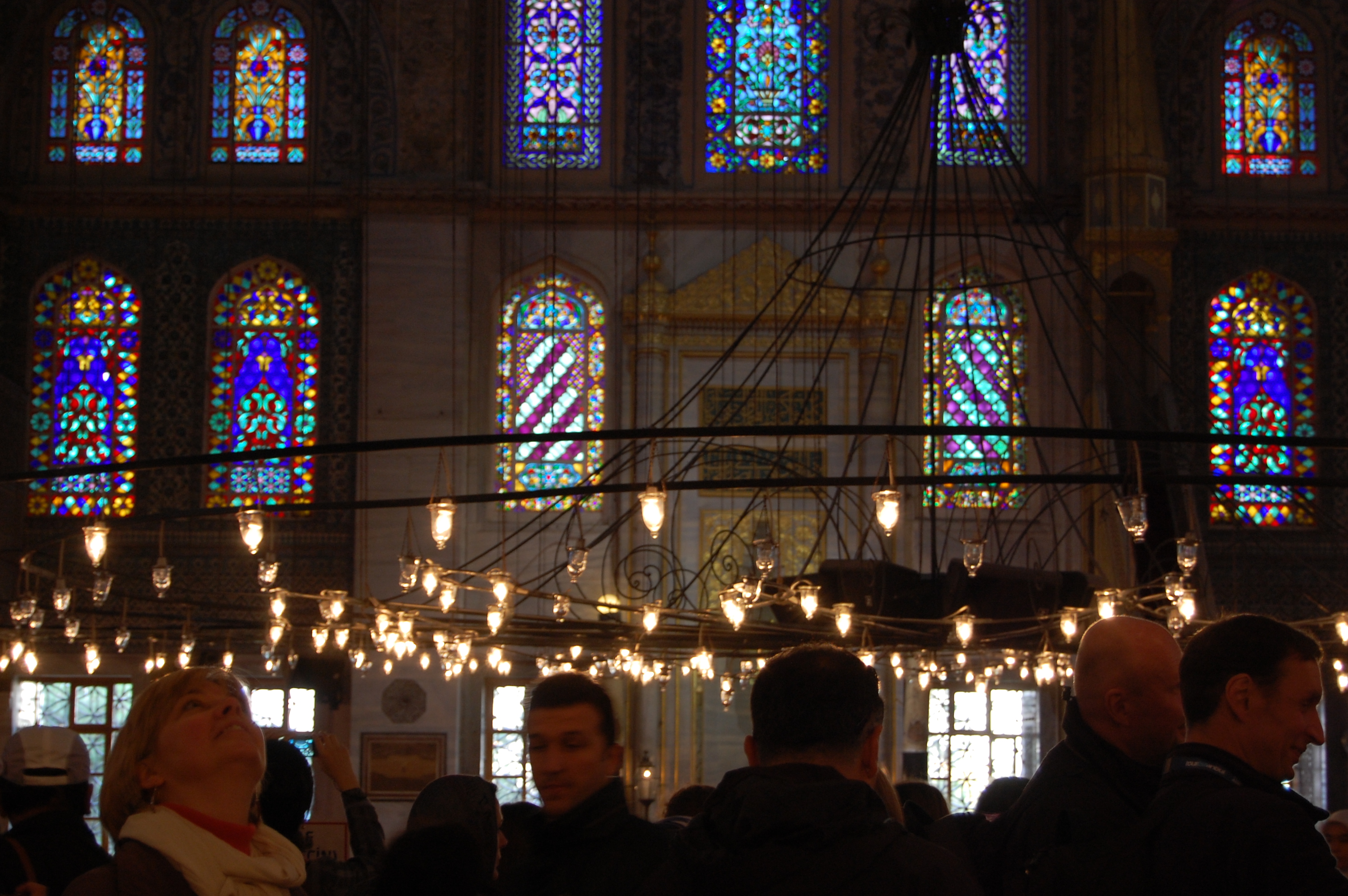
and beautiful stained glass windows
Our next stop was the Grand Bazaar, first to eat lunch and then to explore…
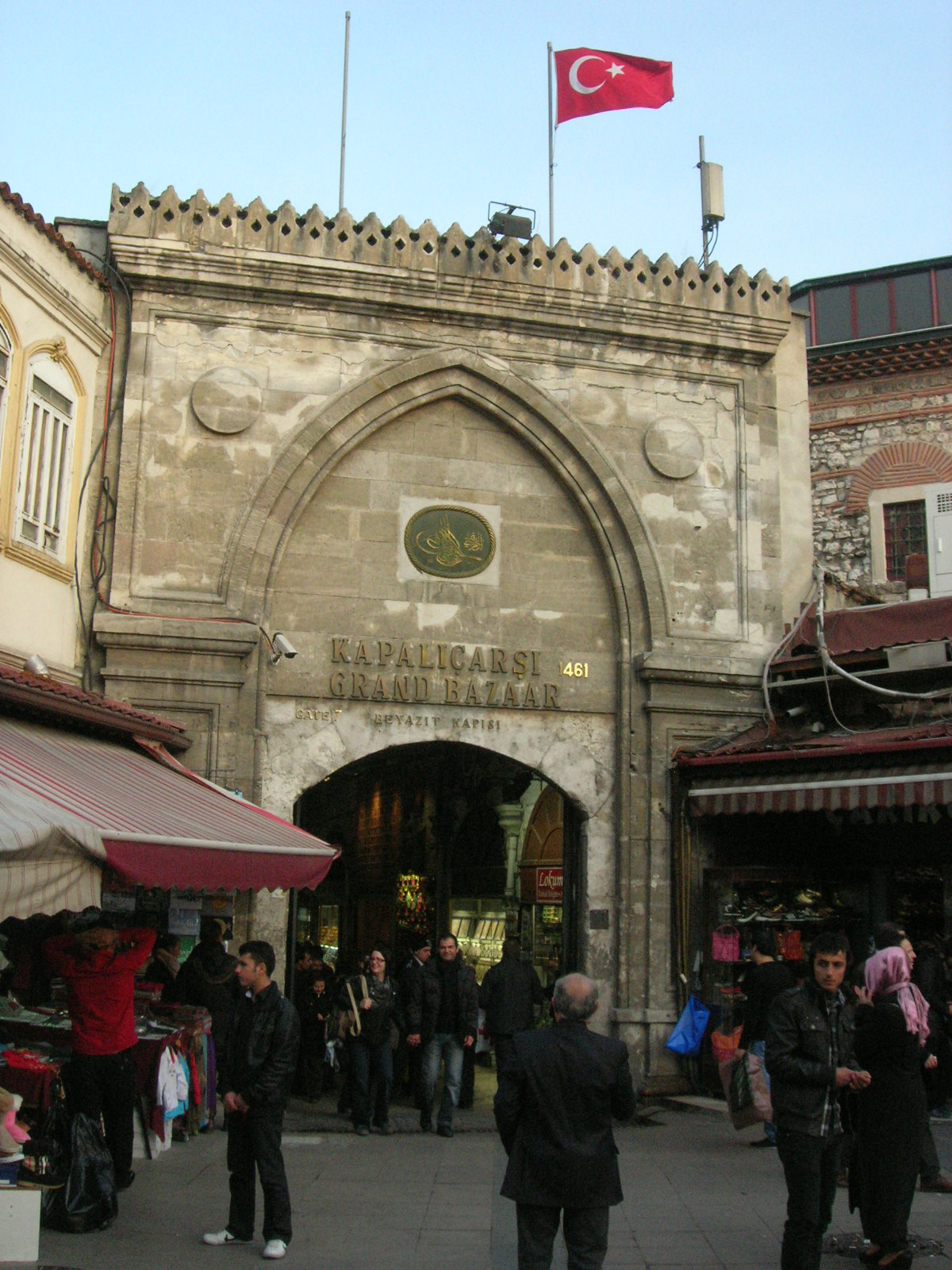
one of many gateways into the bazaar
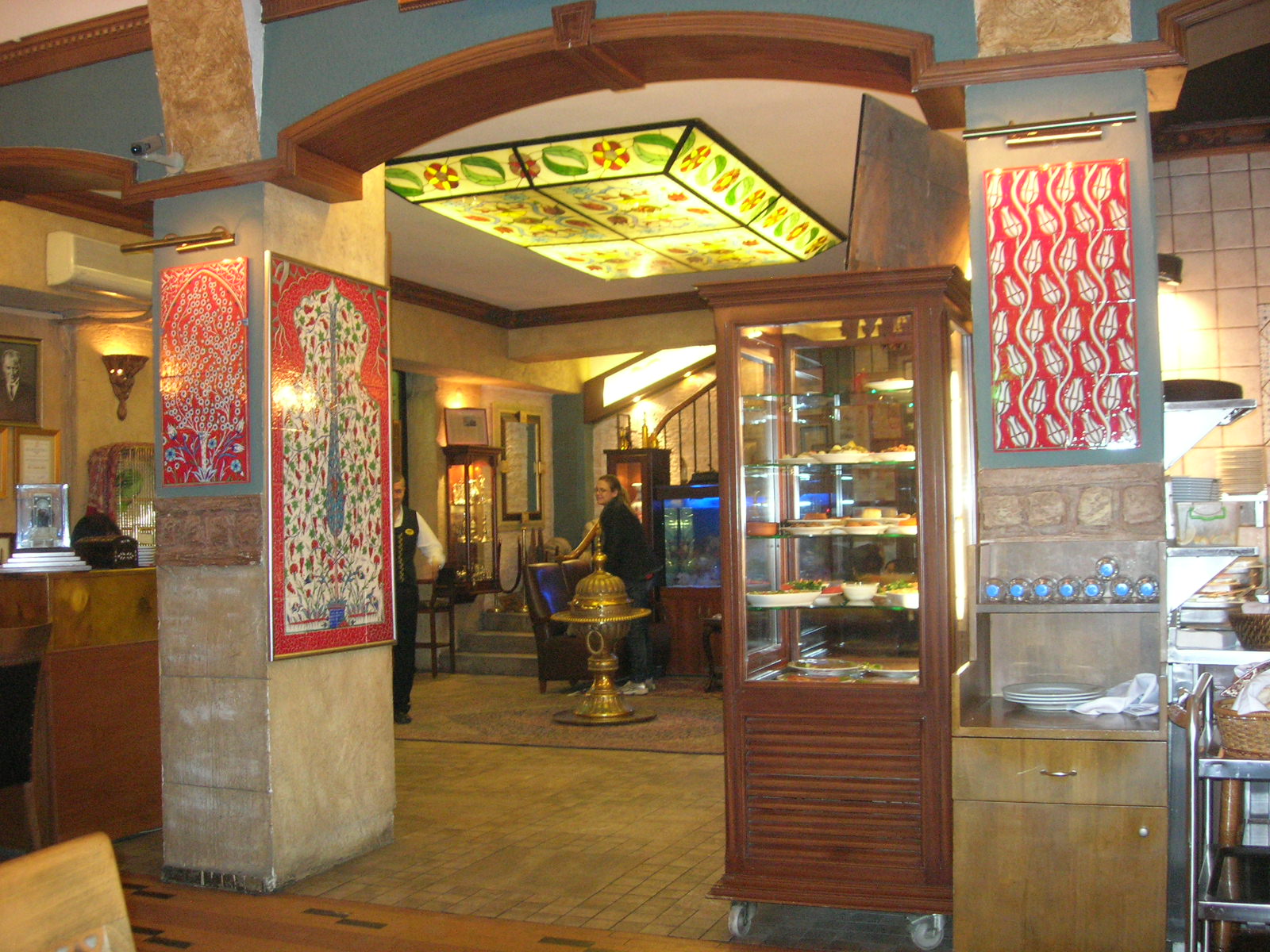
inside the Havuzlu restaurant in the Grand Bazaar
They have a website you can check out, with pictures of the restaurant, and the menu: http://www.havuzlurestaurant.com
The Eyewitness Guide says about the Bazaar: nothing can prepare you for the Grand Bazaar. (They’re right!) This labyrinth of streets covered by painted vaults is lined with hundreds of booth-like shops…. The bazaar was established by Mehmet II shortly after his conquest of the city in 1453. It is easy to get lost in the bazaar in spite of the signposting…. which is why Gamze gave us a tour, stopping by a few of her favourite shops.
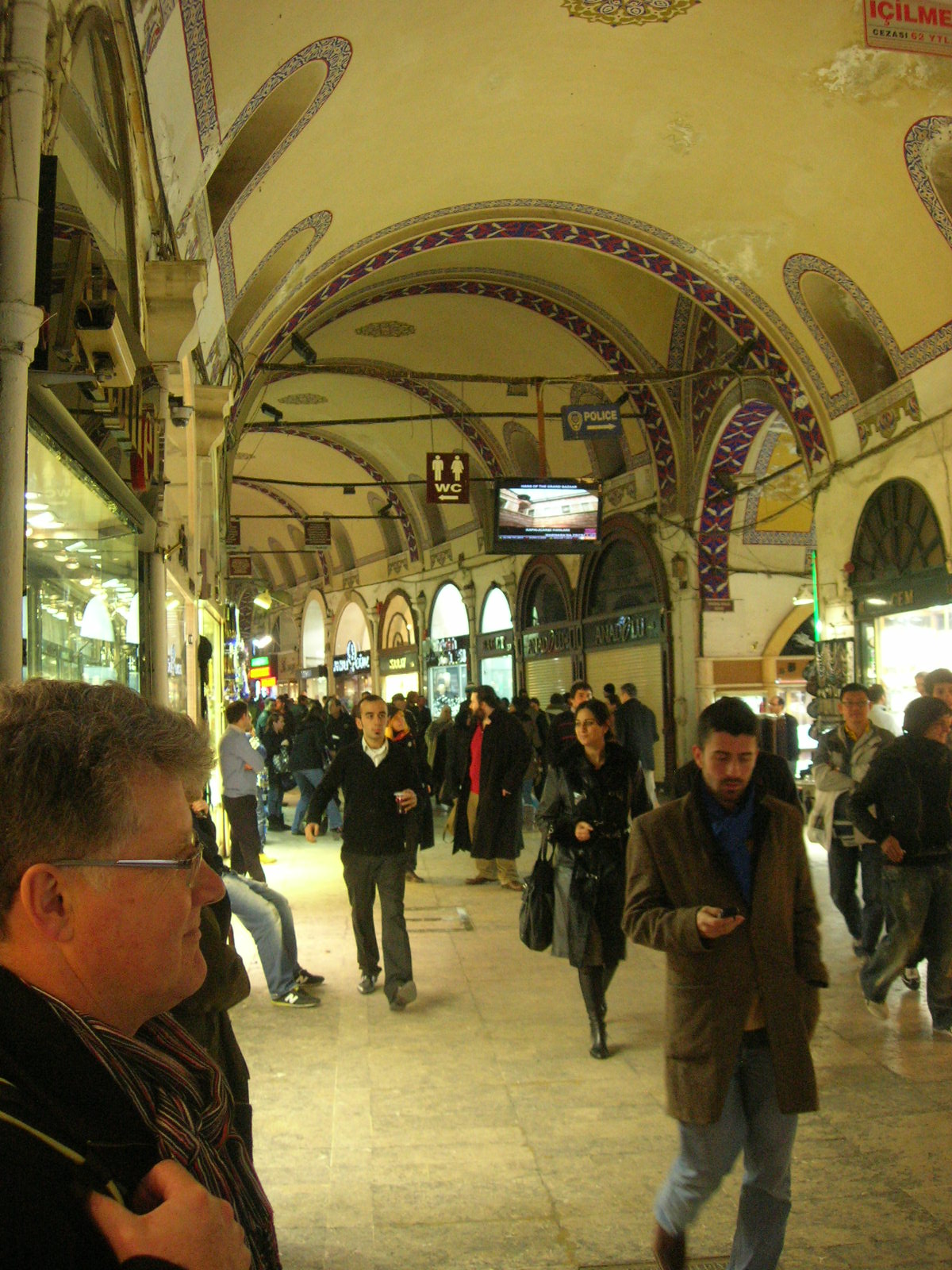
Don watching the activity in the Grand Bazaar
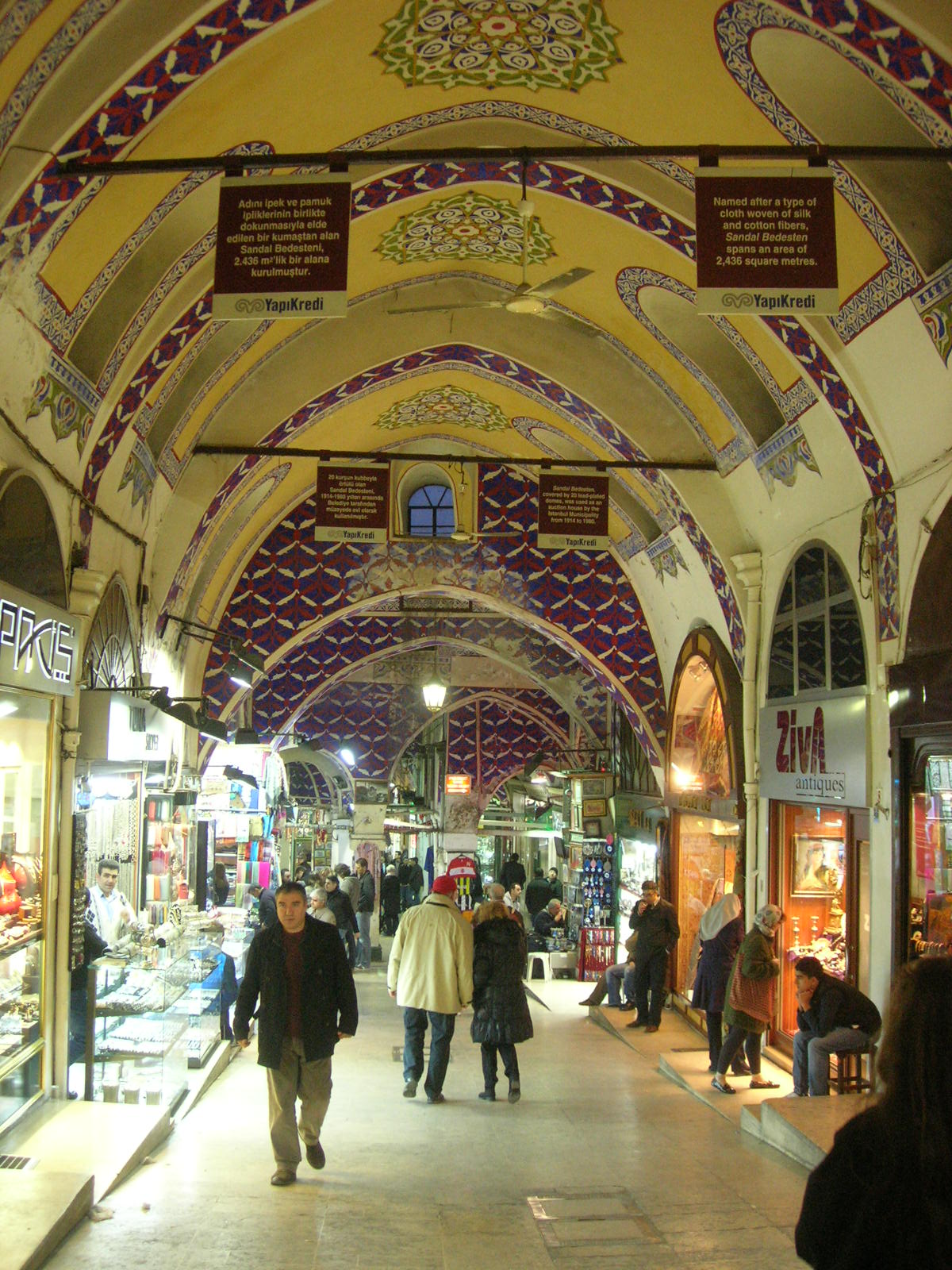
so many shops under beautifully tiled ceiling
Even with a map it was easy to get confused in this place!
Back to the hotel for a drink at the bar, and then we went out for an excellent dinner at a near-by seafood restaurant Gamze recommended called Balikgi Sabahattin.
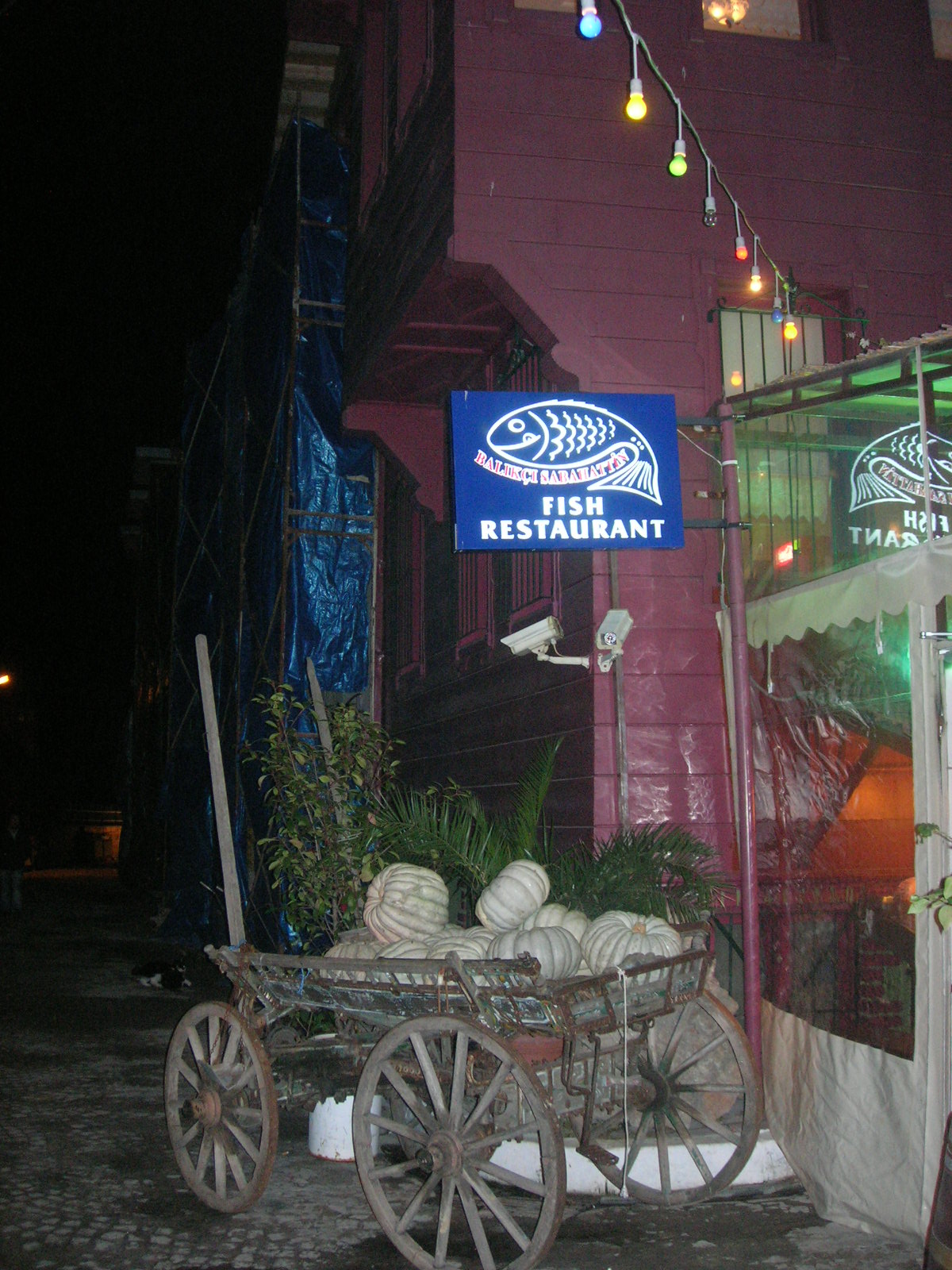
fabulous seafood here
The next day Gamze was back at 9:30 and off we went to Topkapi Palace, where we spent over 3 hours touring the huge grounds and buildings. Between 1459 and 1465, shortly after his conquest of the city, Mehmet II built Topkapi Palace as his main residence. Rather than a single building, it was conceived as a series of pavilions contained by four enormous courtyards, a stone version of the tented encampments from which the nomadic Ottomans had emerged. Initially the palace served as the seat of government and housed a school in which civil servants and soldiers were trained. In the 18th century the government was moved to another location, and in 1853 the current sultan, Sultan Abdul Mecit I abandoned Topkapi in favour of Dolmabahce Palace. In 1924 Topkapi was opened to the public as a museum. (Side note: in 1964 a movie called Topkapi was released, starring Maximilian Schell and Melina Mercouri, and co-starring Peter Ustinov – a comedy-thriller of 2 thieves out to steal the jewelry-encrusted dagger that is actually on display in the palace treasury; some of the scenes of the movie were filmed on the palace grounds.)
We wandered through the grounds, through the Harem – the labyrinth of rooms where the sultan’s wives and concubines lived – and through the treasury.
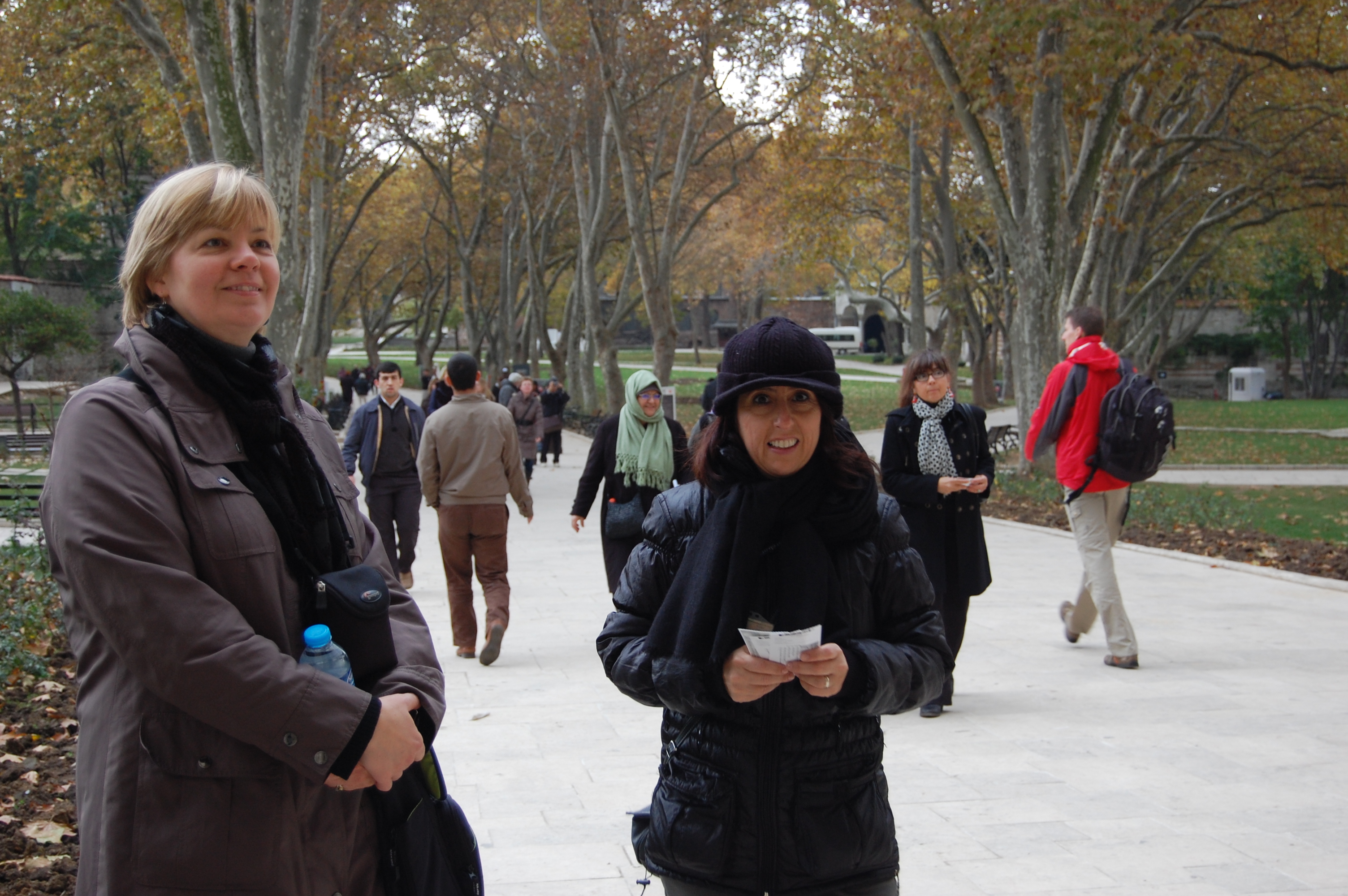
Gamze and me somewhere on palace grounds
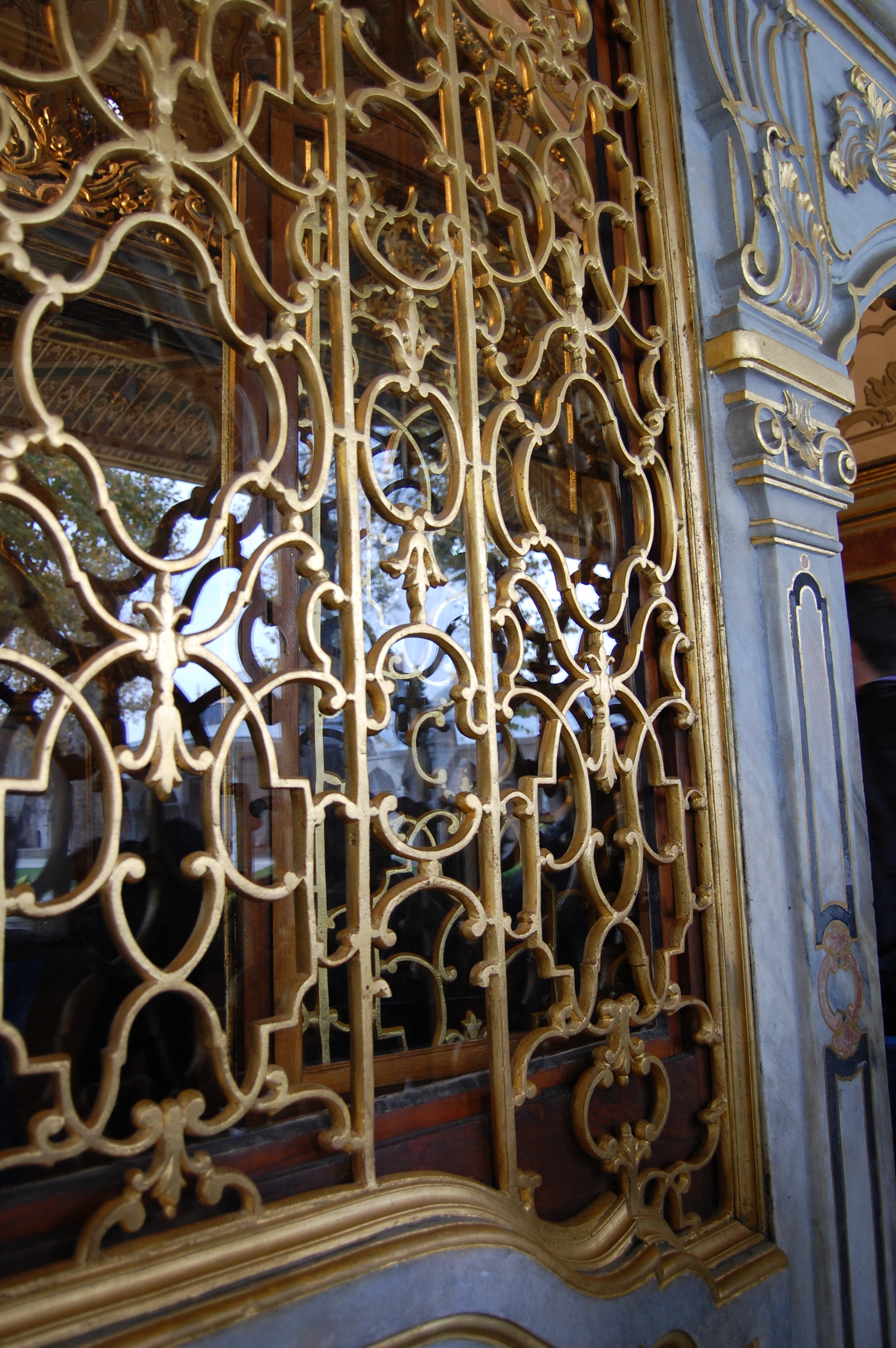
beautiful detail
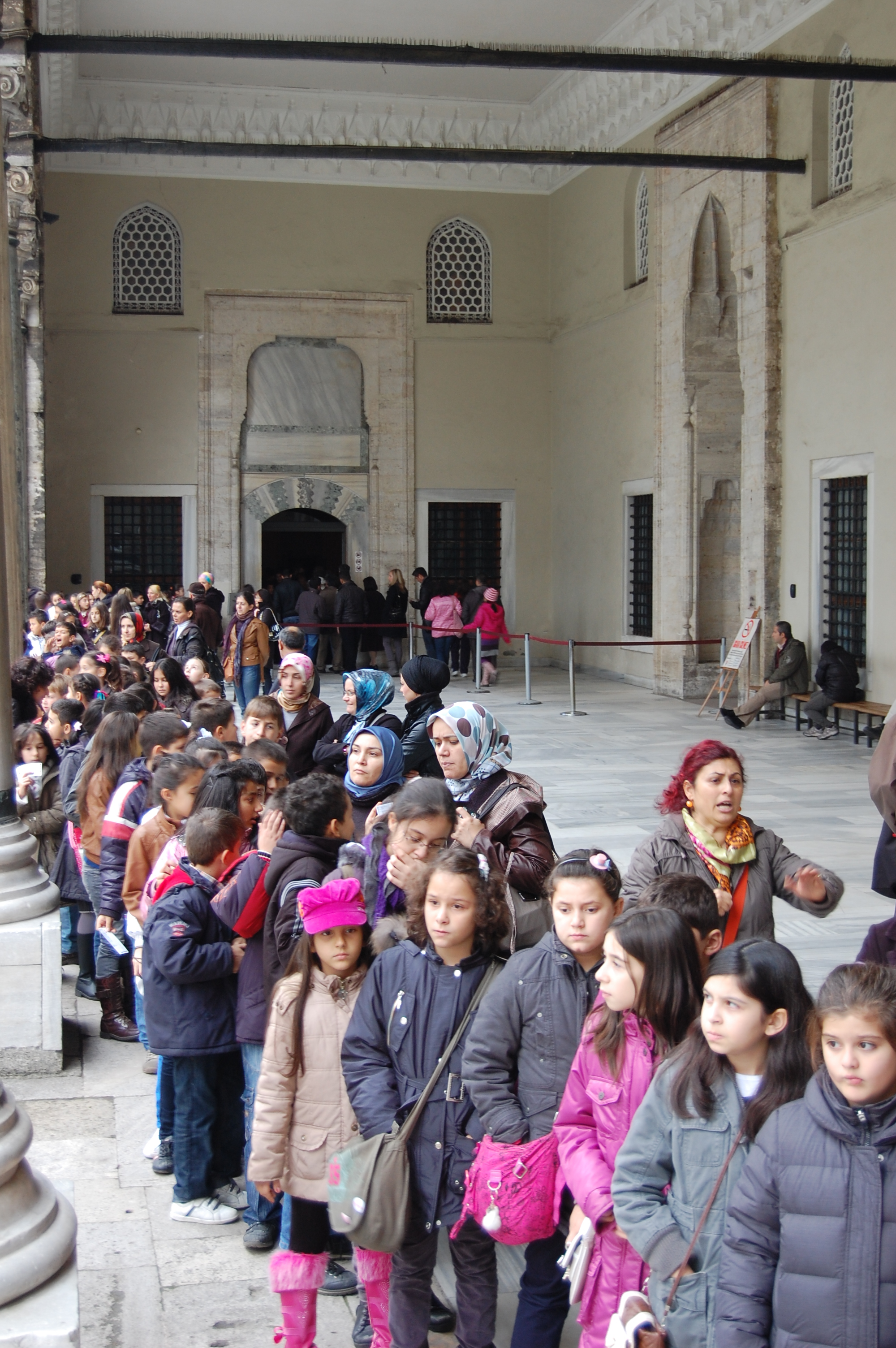
way too many school tours!
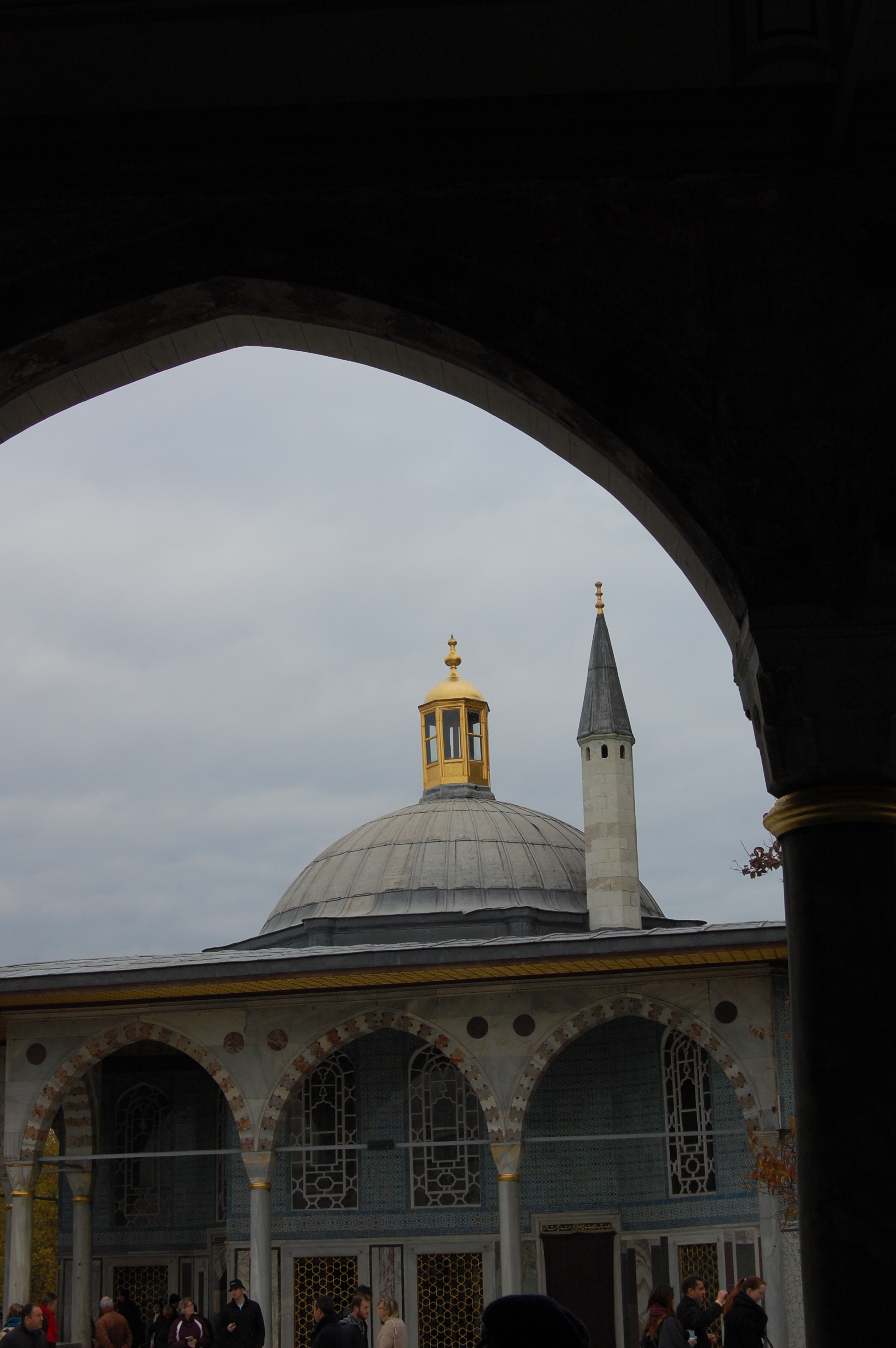
roof top detail
After a thorough visit at the palace, we moved on to the Basilica Cistern, (to me perhaps the most amazing and eerily beautiful thing we saw): a vast underground water cistern, a beautiful piece of Byzantine engineering. Although there may have been an earlier, smaller cistern here, this cavernous vault was laid out under Justinian in 532, mainly to satisfy the growing demands of the Great Palace on the other side of the Hippodrome. For a century after the conquest, the Ottomans did not know of the cistern’s existence. It was rediscovered after people were found to be collecting water, and even fish, by lowering buckets through holes in their basements. Today visitors tread walkways, to the mixed sounds of classical music and dripping water. The cistern’s roof is held up by 336 columns, each over 8 metres high. The original structure covered a total area of 9800 square metres, but today only about 2/3 of it is visible, the rest having been bricked up in the 19th century. Water reached the cistern, which held about 100 million litres, from the Belgrade Forest, 20 km north of Istanbul, via the Valens Aqueduct.
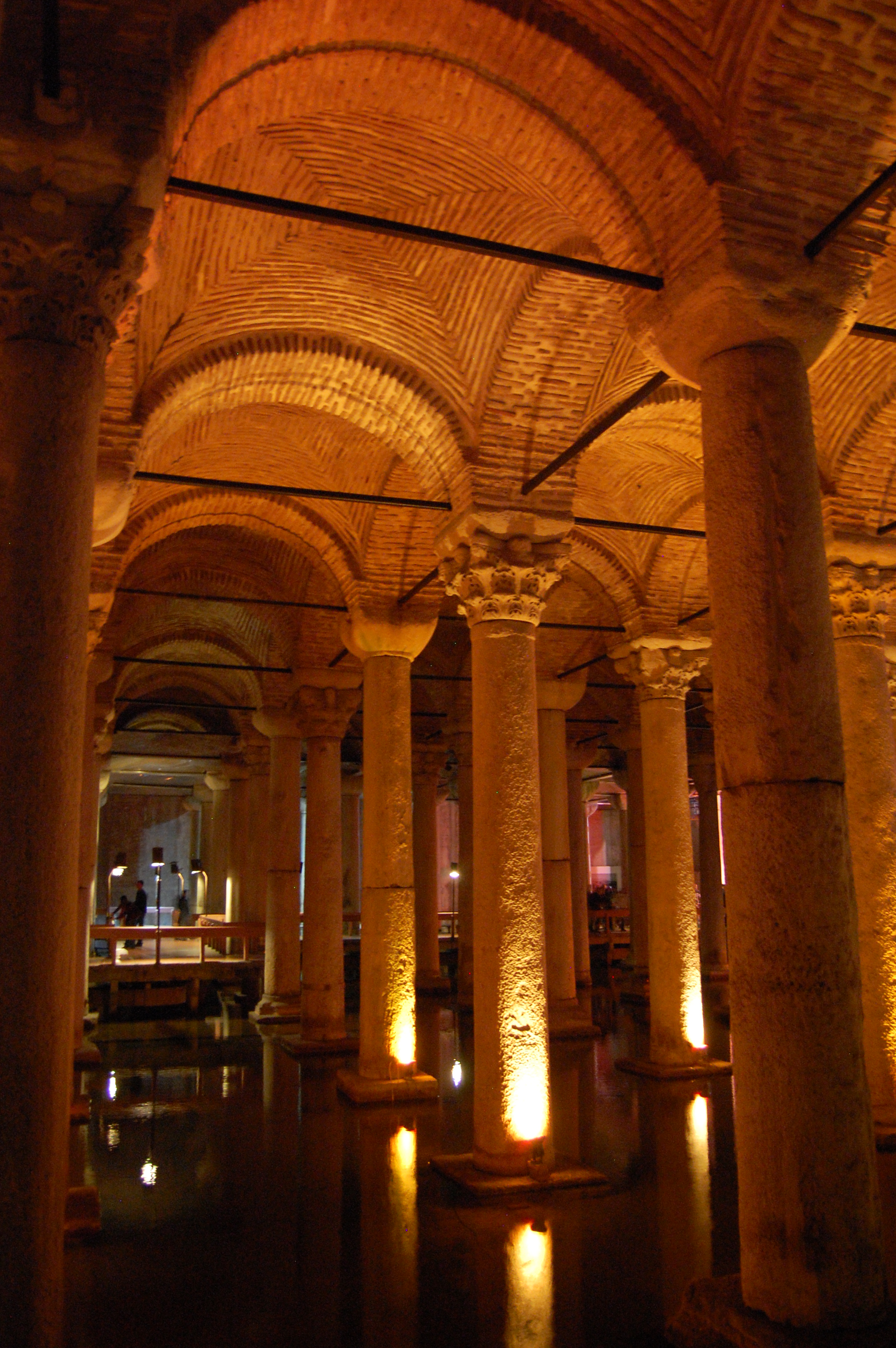
columns are lit and beautifully reflect in the water
From here, Gamze taught us how to take the tram, and off we went to the Spice Market area, first to have lunch at Hamdi Restaurant – turkish pizza and the BEST baclava we’ve ever had!
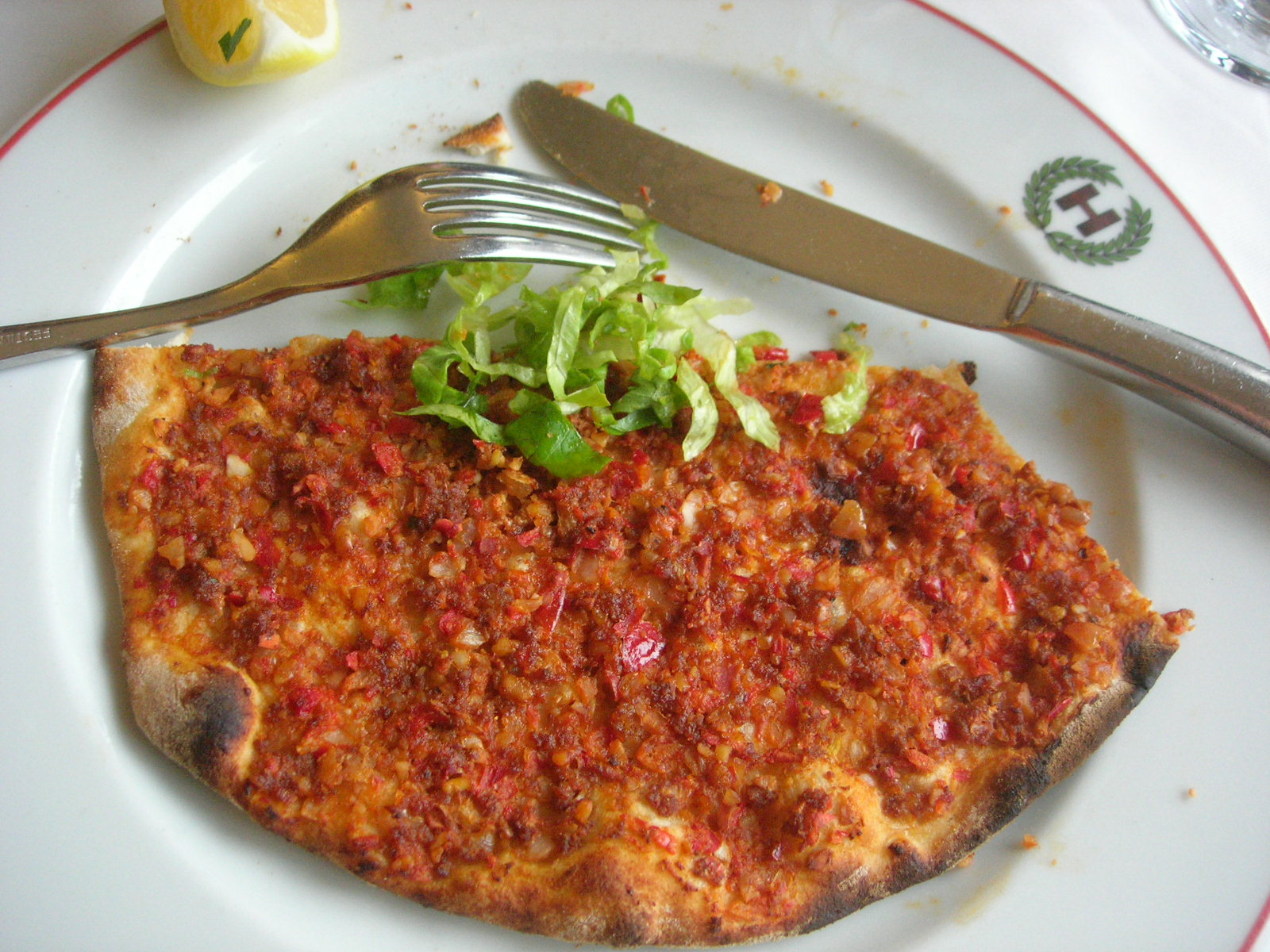
turkish pizza - very flat crust, minced meat, sprinkled with pomegranite syrup - delicious!
After lunch we wandered through the Spice Market, and bought pistachios, turkish delight and saffron to bring home. And took lots of pictures – such a picturesque area!
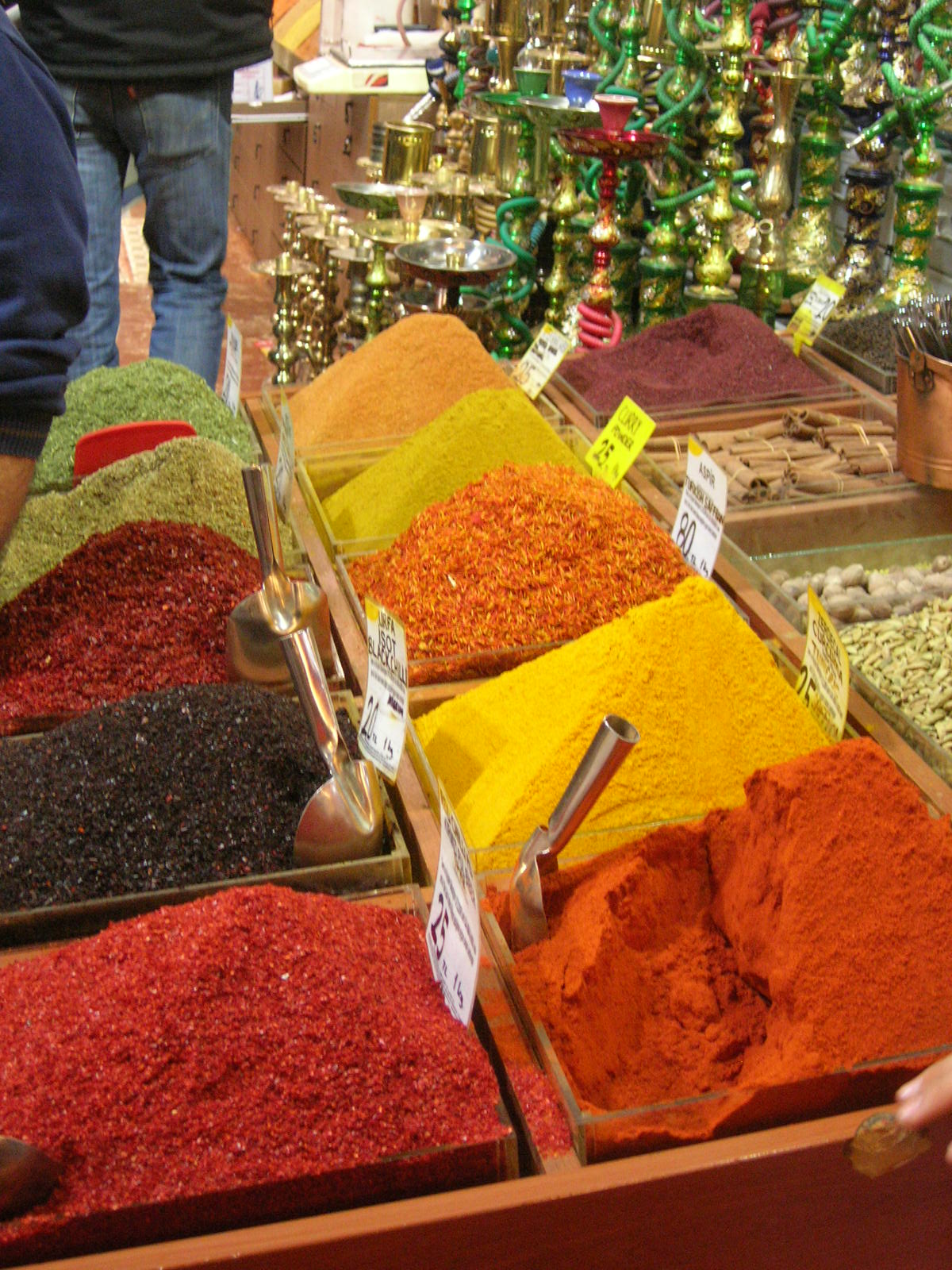
colourful spices
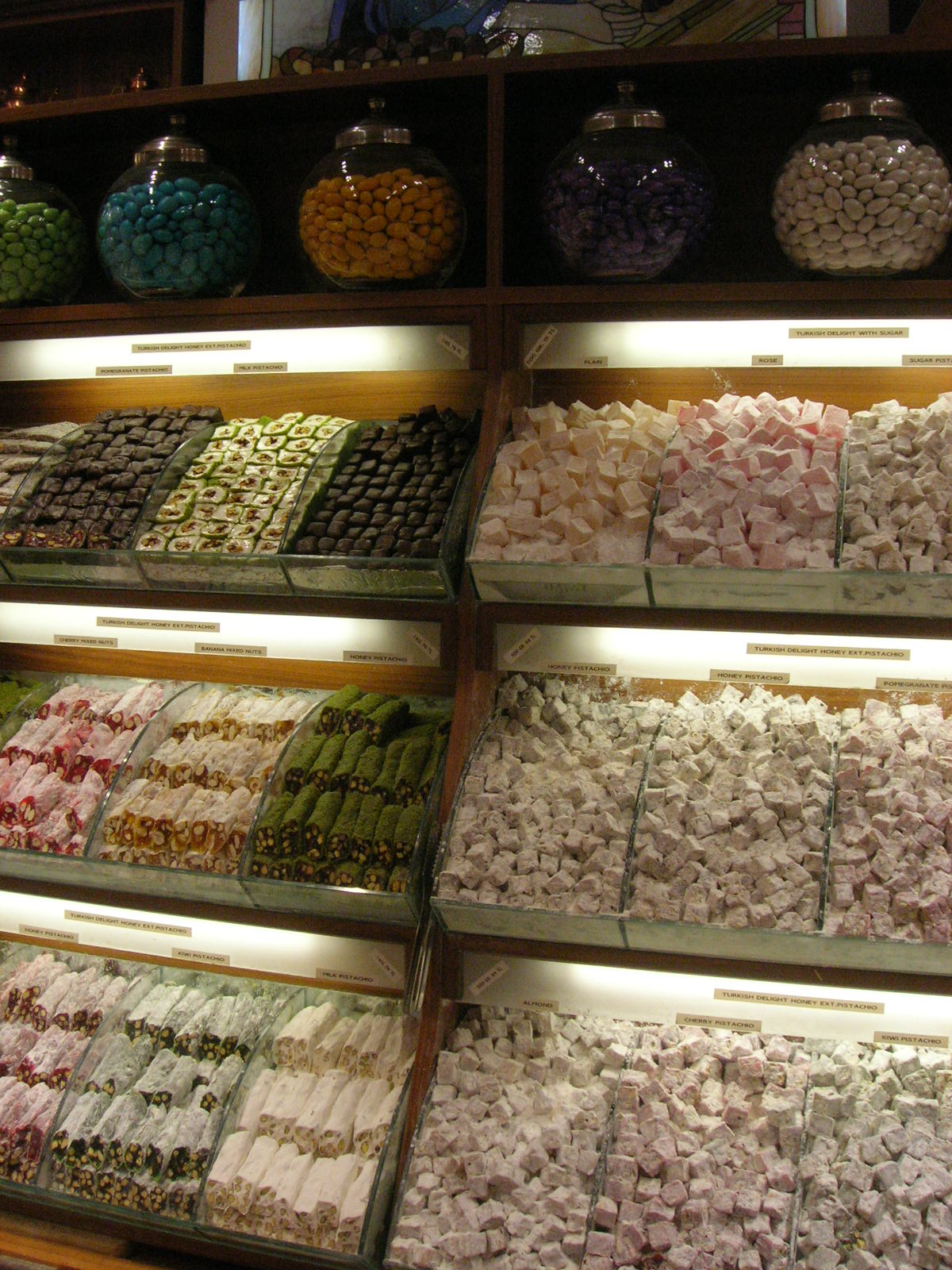
turkish delight and other treats
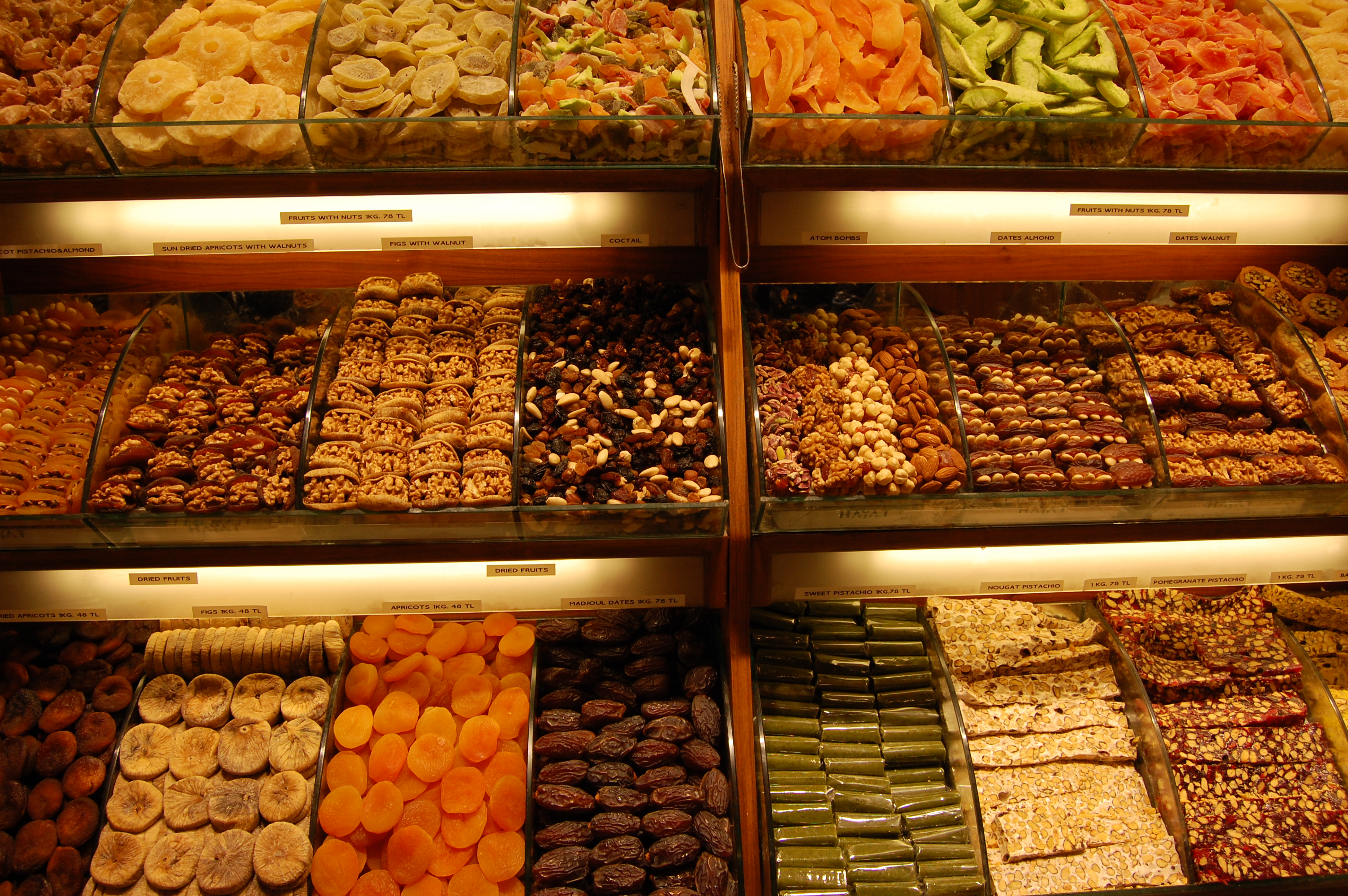
dried fruits and nuts
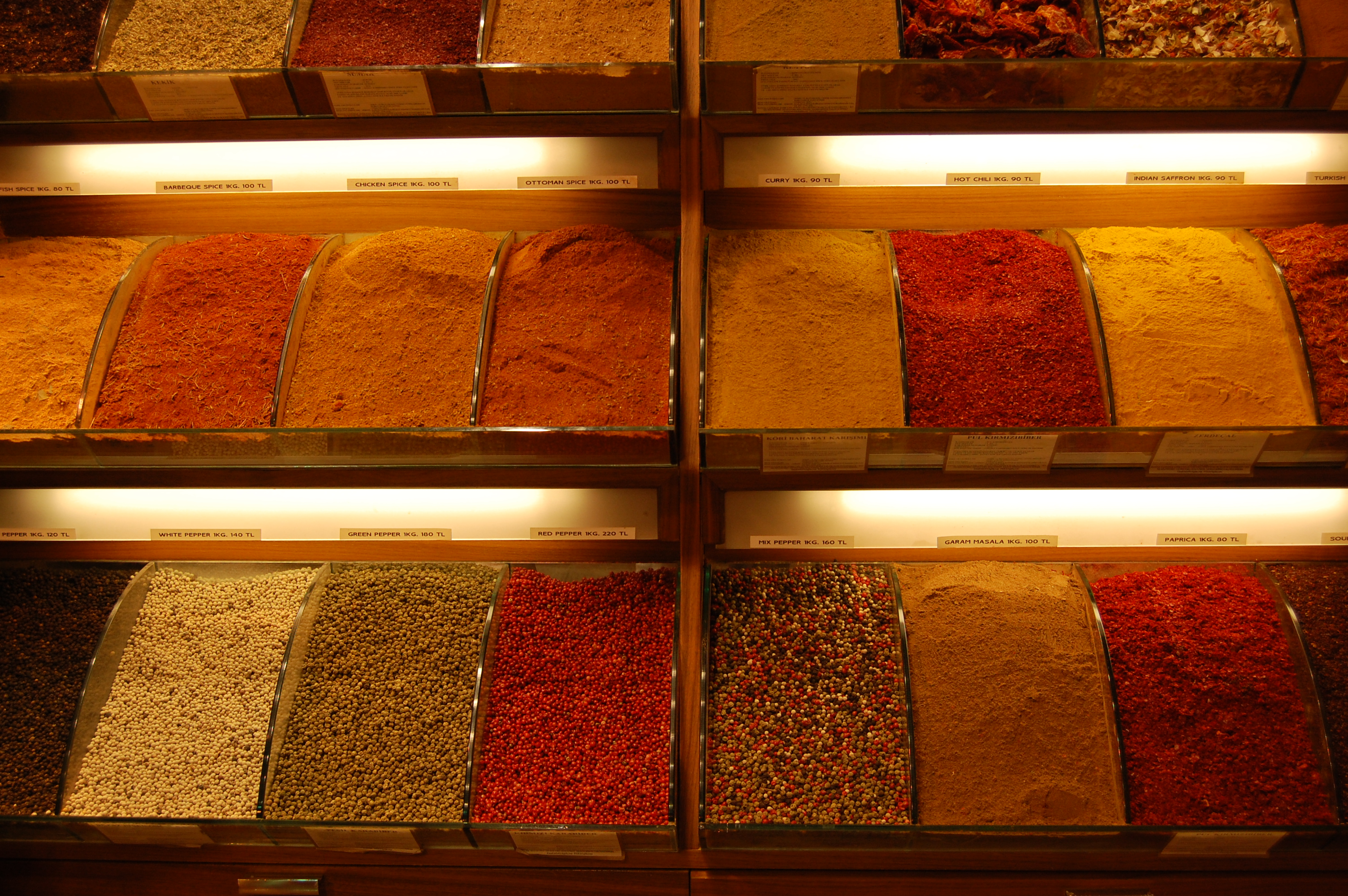
more spices
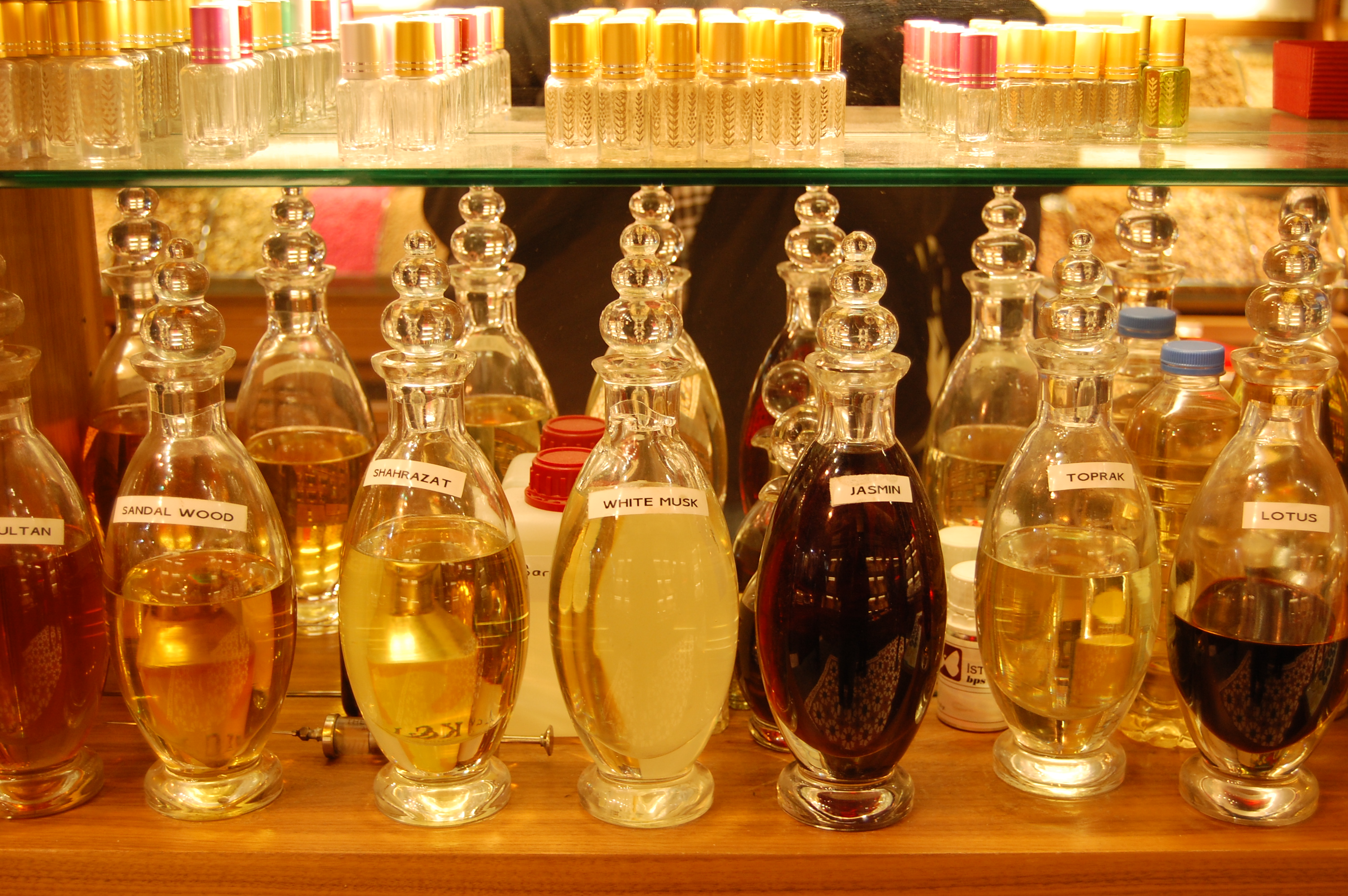
fragrances
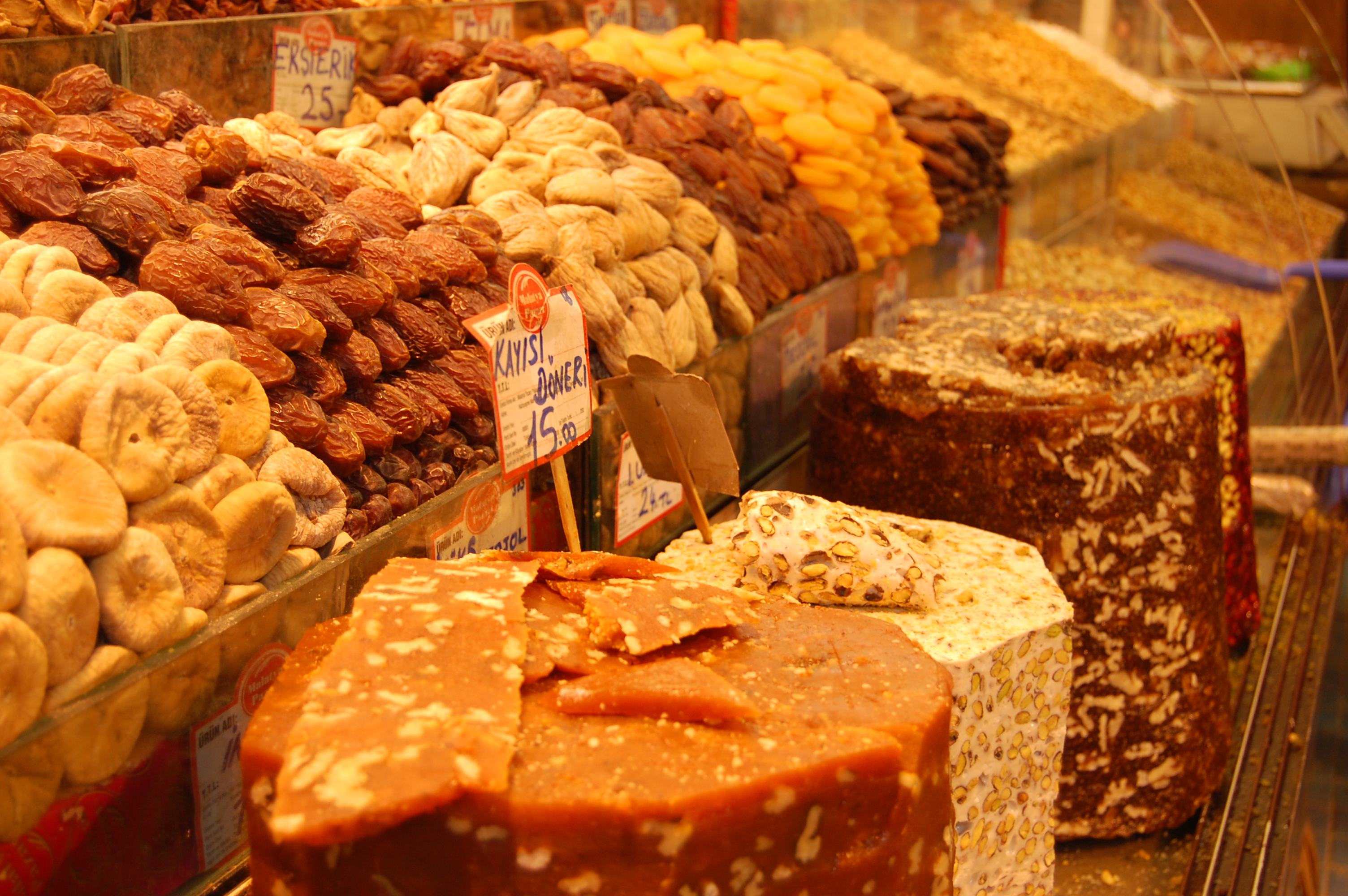
nougat
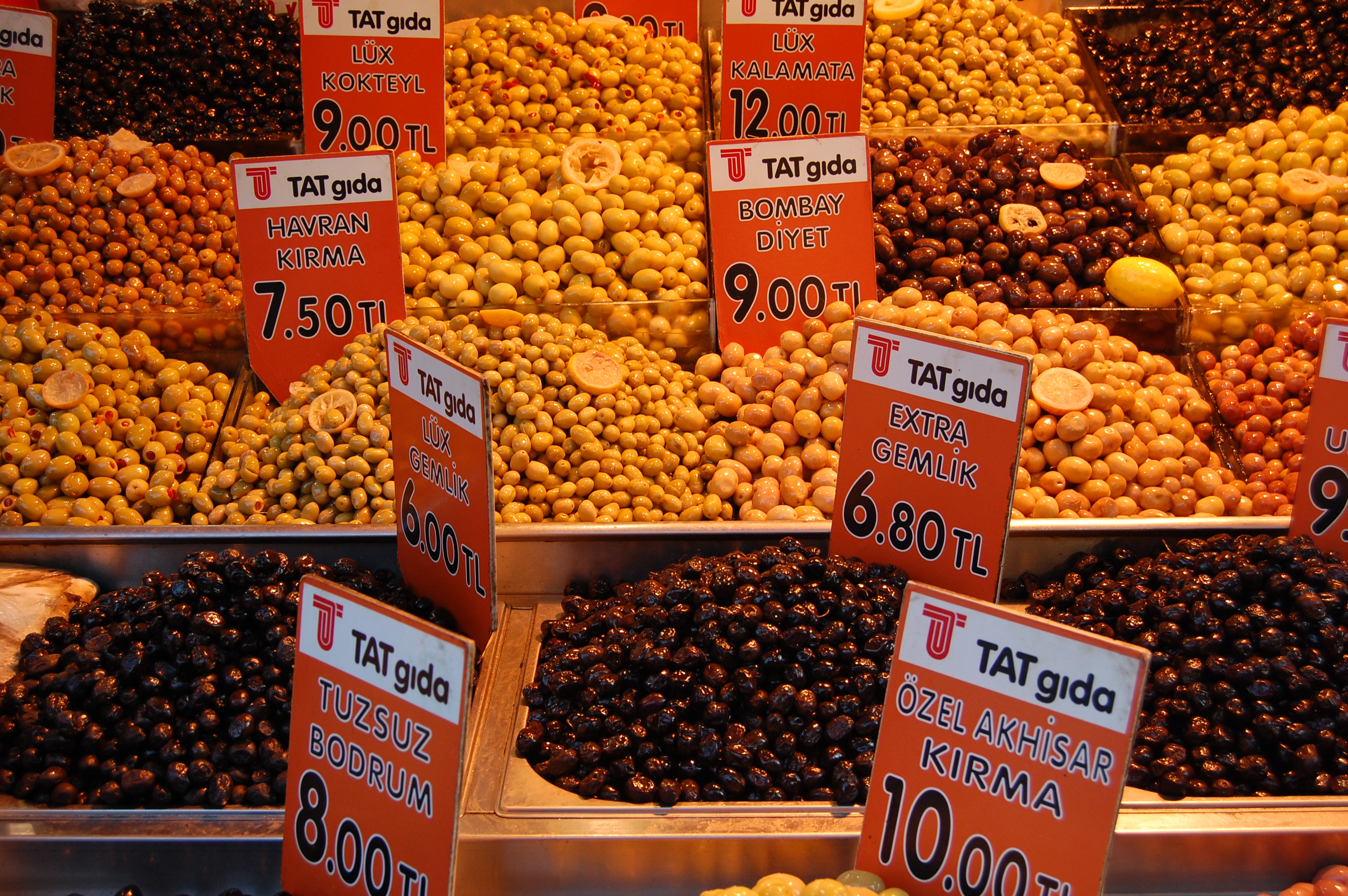
olives
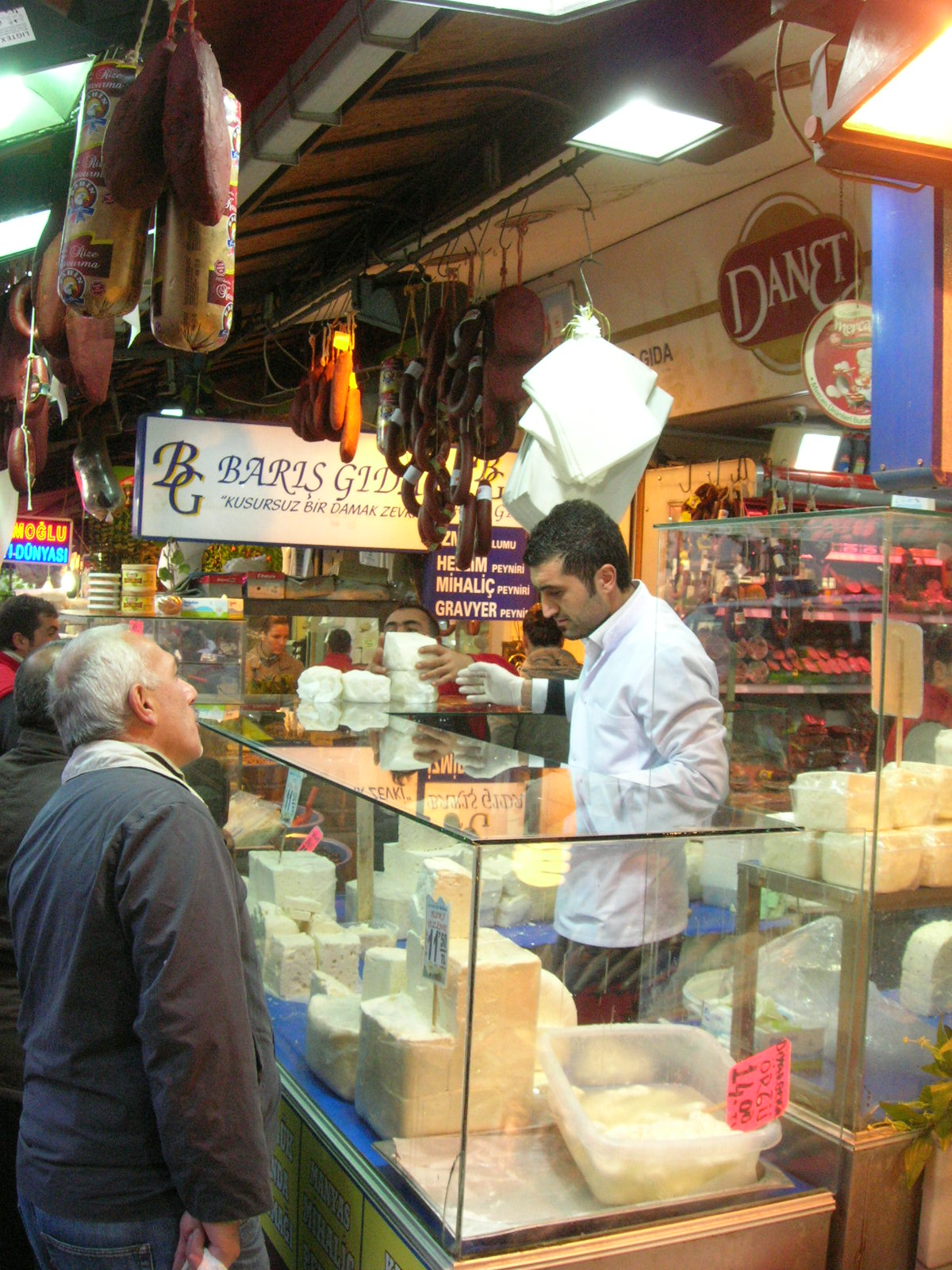
lots of feta, and other cheeses
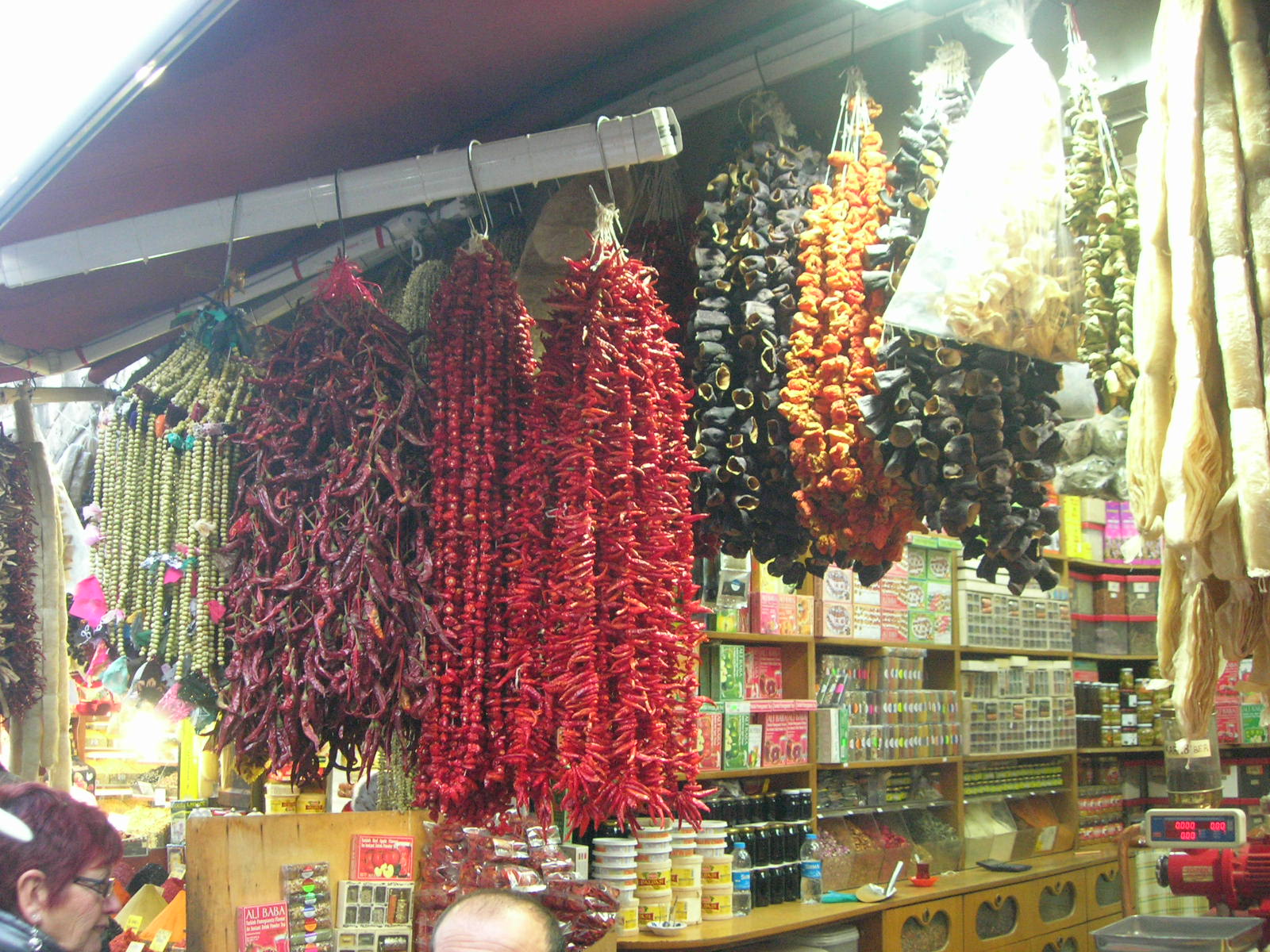
dried peppers and eggplants
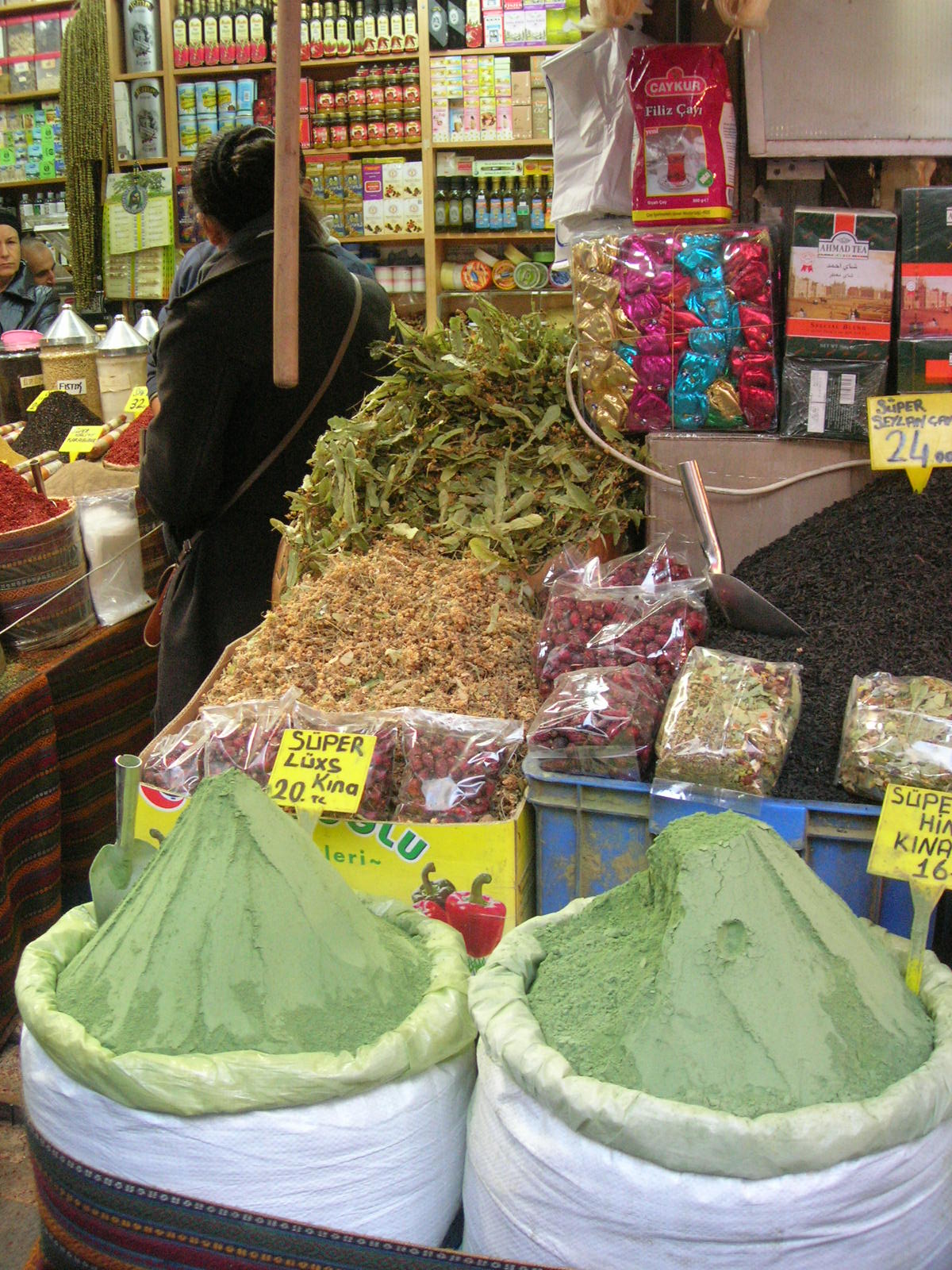
I think it's aloe
I TOLD you there were great photo opportunities!!
Our final activity for the day was to walk across the Galata Bridge, which spans the mouth of the Golden Horn, a flooded river valley which flows into the Bosphorous. This bridge is great fun, tightly lined with fishermen on the top level, cafes and bars on the lower level, and affording great views of the city.
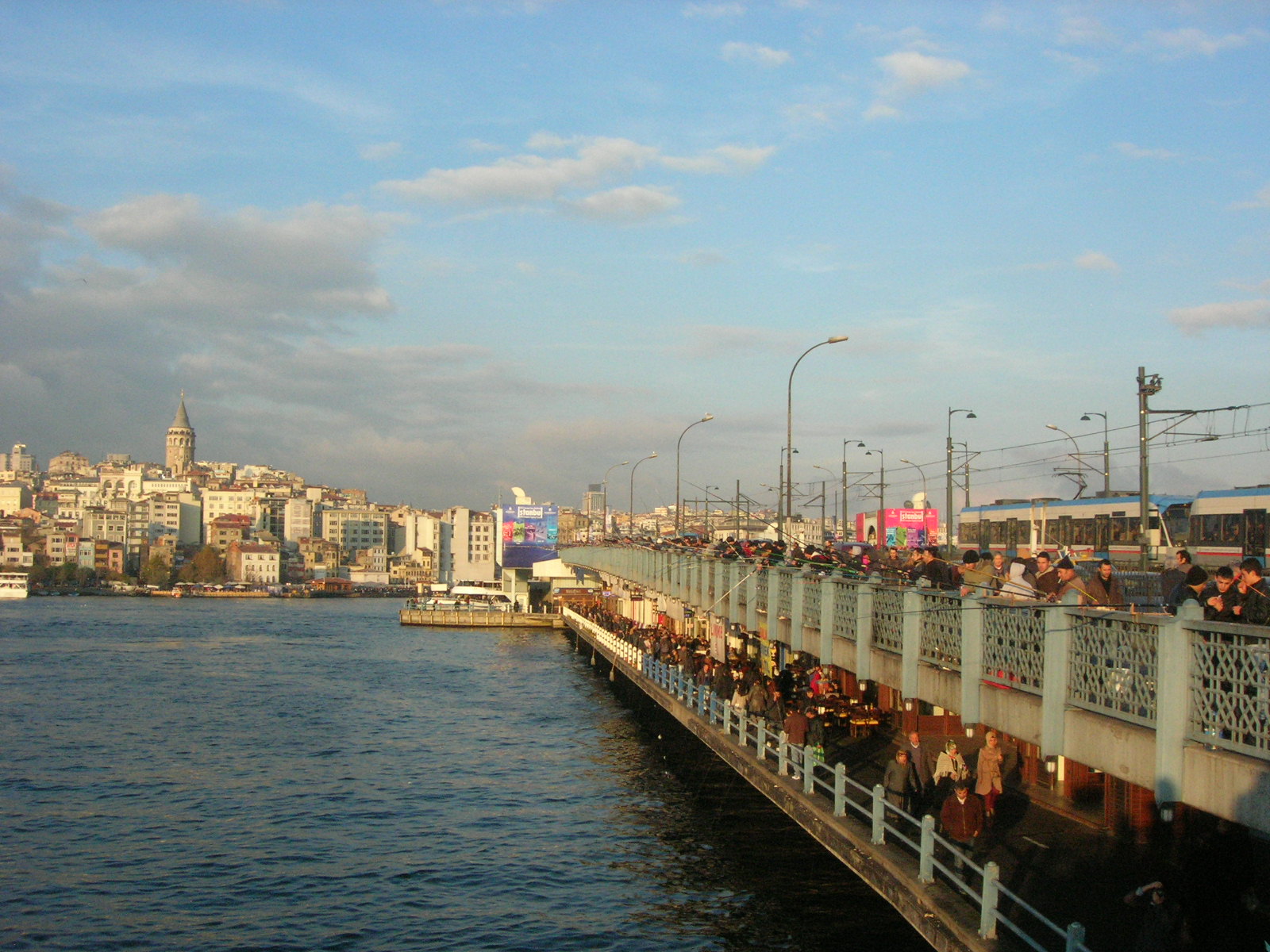
Galata Bridge, and Galata Tower on the other side
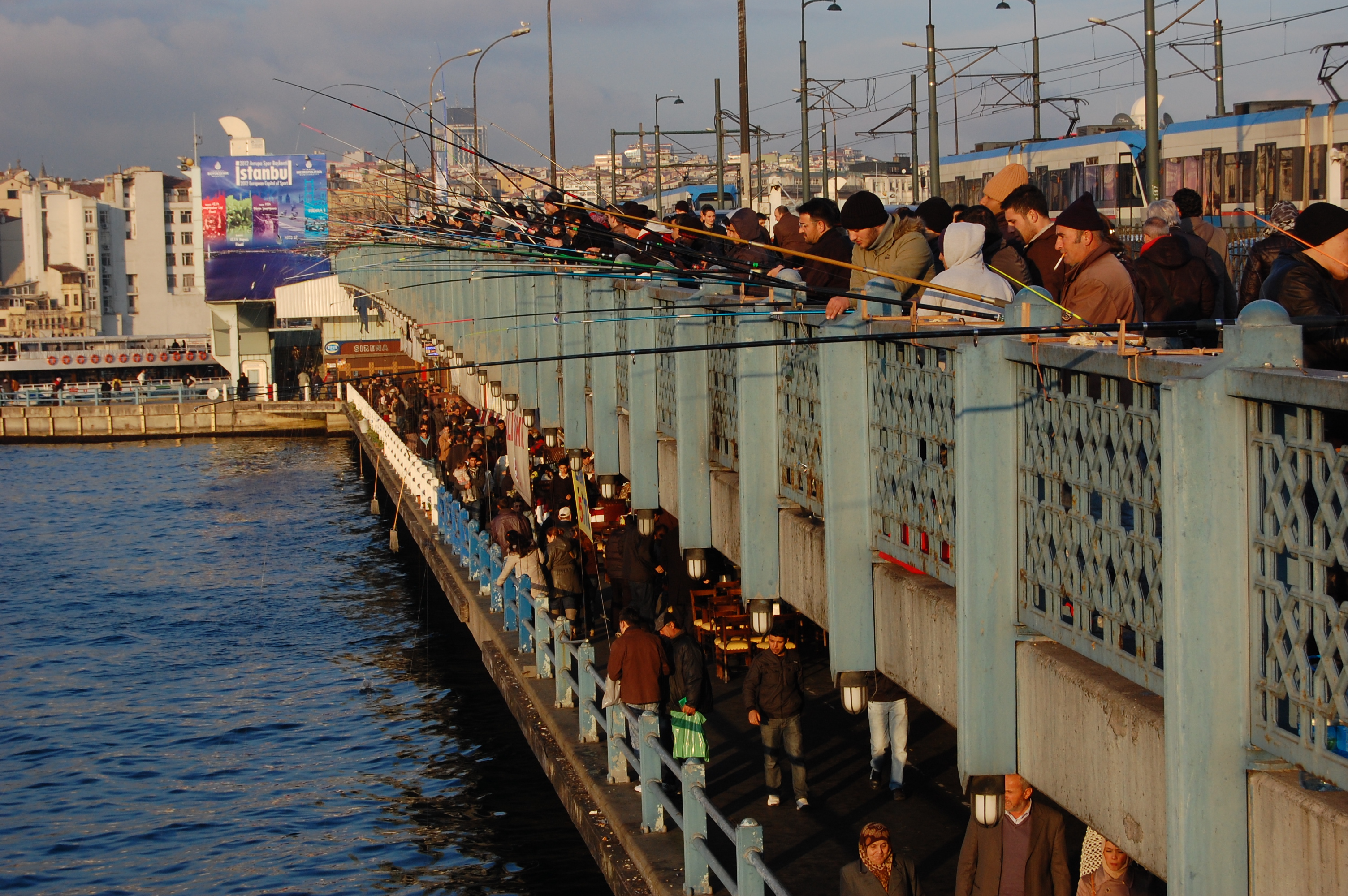
so many people fishing
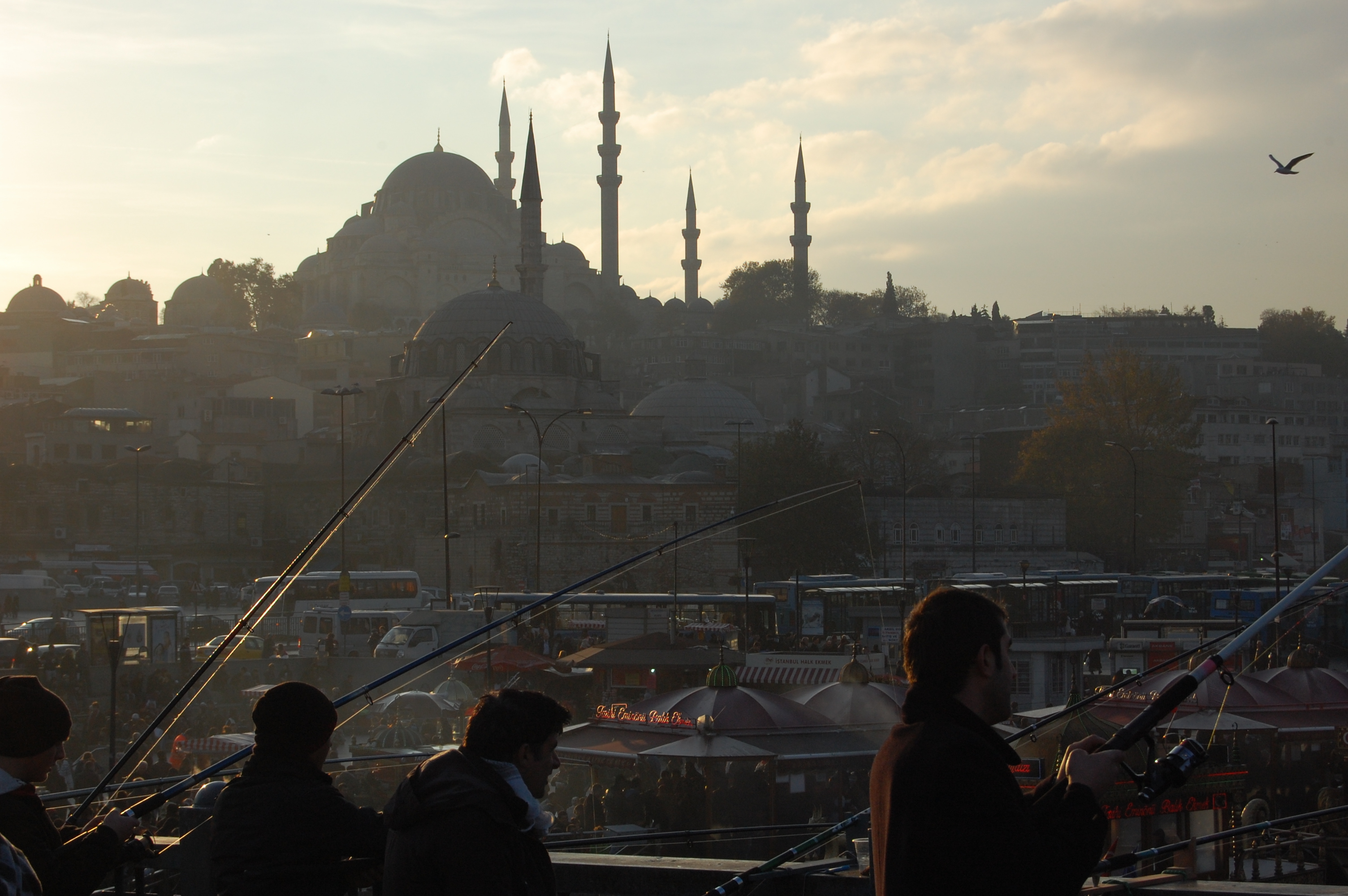
looking back
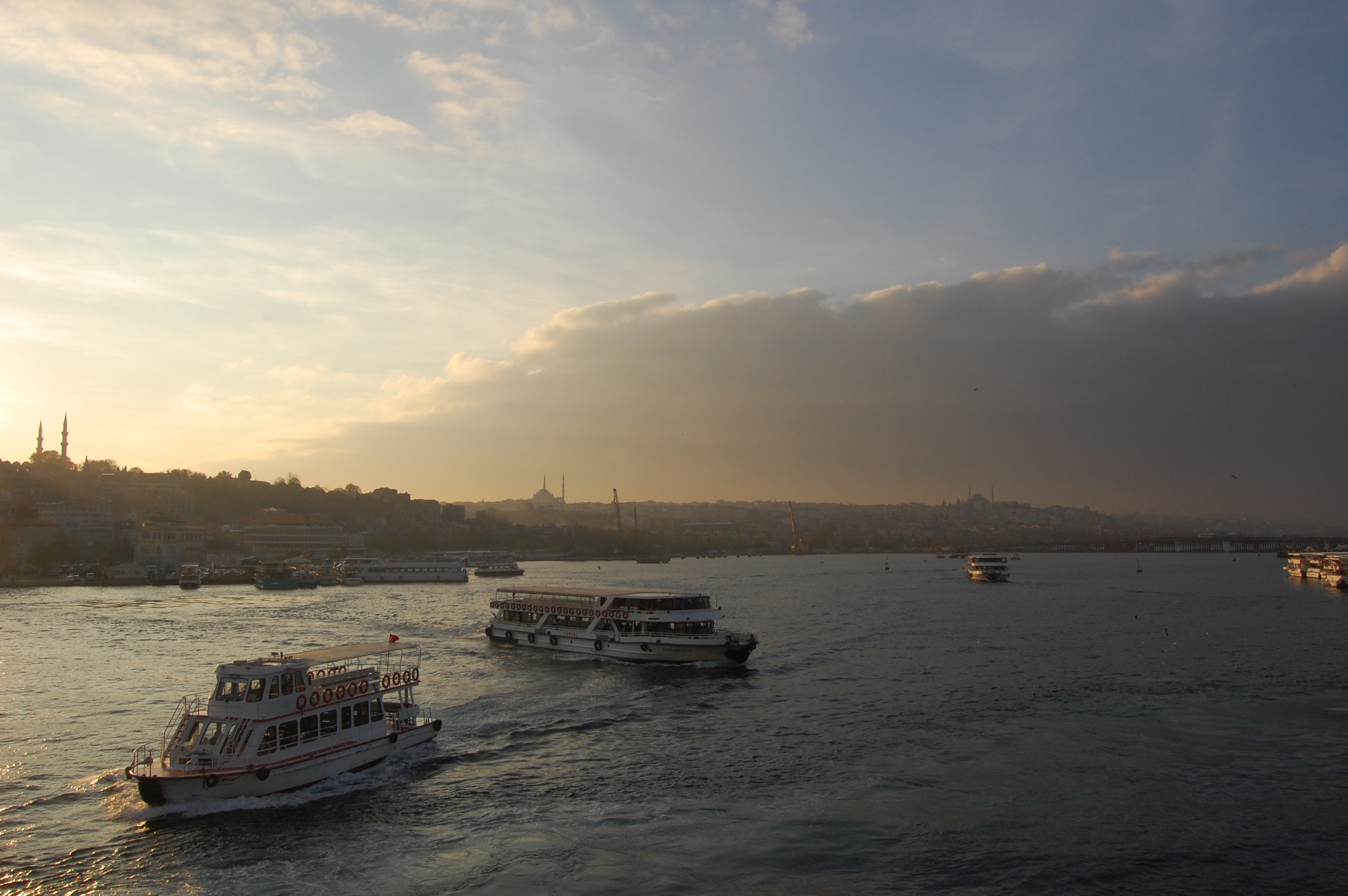
looking out - the Golden Horn
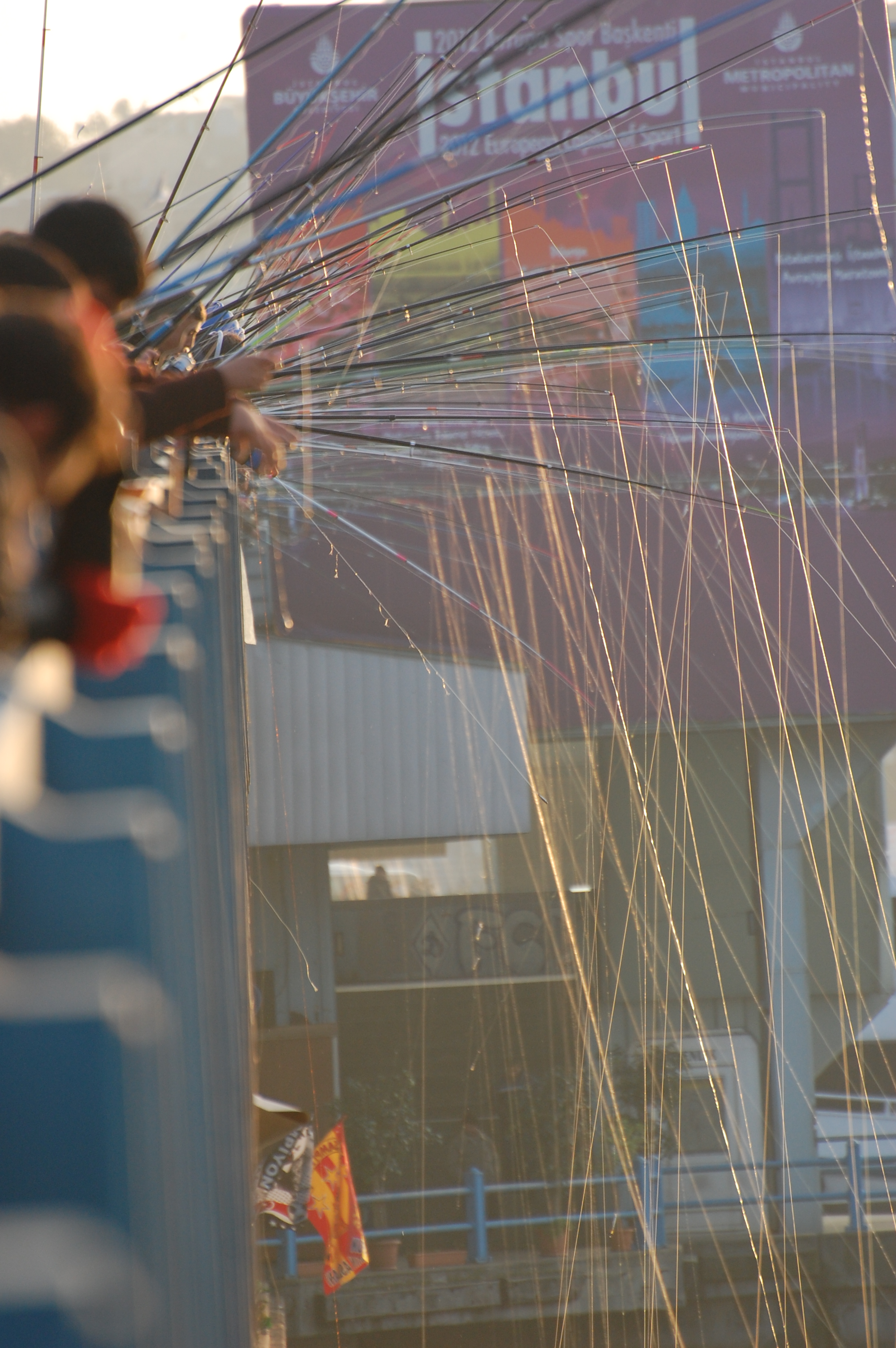
Don captures the fishing lines

tiny fish for sale
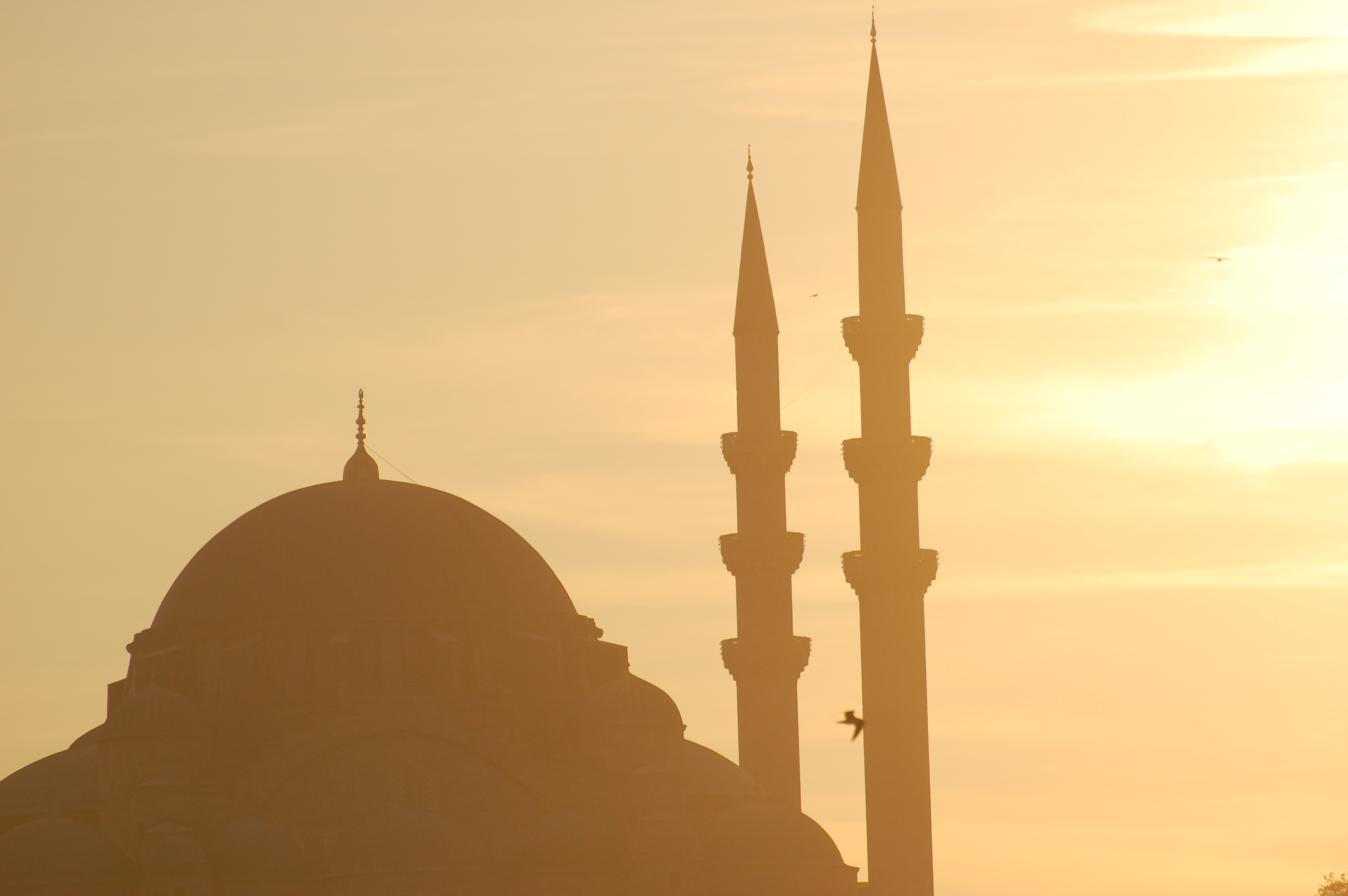
my favourite picture of Don's
We took a taxi from here back to the hotel for our now-customary happy hour and then out for a small bite to eat at a very forgetable restaurant.
On Monday we were on our own, with a challenge from Gamze to “see how well we can manage without our tour guide!” Well, we managed wonderfully, thank you very much. 😀 After breakfast we made our way towards the tram station, our plan being to get back to the Galata Bridge area, where we could take a boat tour up the Bosphorus. We were delayed along the way. As we were walking and talking, a man and woman walking past us stopped us to talk. The man speaking excellent english asked us where we’re from, and it went from there…. Turns out that though he’s from Istanbul, he lives in Florida, has visited B.C. on a fishing trip, etc, etc. Of course it turns out he’s in the carpet business. (See previous note about carpet shops everywhere.) He’s a wholesaler, he doesn’t have a “shop,” but he does have a place very nearby where we has rooms-full of carpets, and his collegue would be delighted to give us a lesson on what to look for when buying carpets so as not to be taken in by fakes. He’s on his way to a meeting, but his cousin (the woman with him) can show us the place – there’s no sign on the door because he doesn’t sell to the public – and we can make an appointment to return for our lesson. (We were a little leery about all of this and had already said we had an engagement and didn’t have time for the lesson right now.) So, we went with the woman, met the collegue, said we’d be back later. And off we went to the tram, not sure quite what to make of it all.
Down to the port to buy our tickets for a short boat tour up the Bosphorus. There are many tours, and you could be on the water for a full day, going right to the Black Sea, but that would be a better trip in warmer weather. While we had beautiful sunny days in Istanbul, the temperature was cool (between 5 and 8 degrees) and a 1 1/2 hour trip was as much time as we wanted to spend. It was a picturesque trip, and definitely a little chilly.
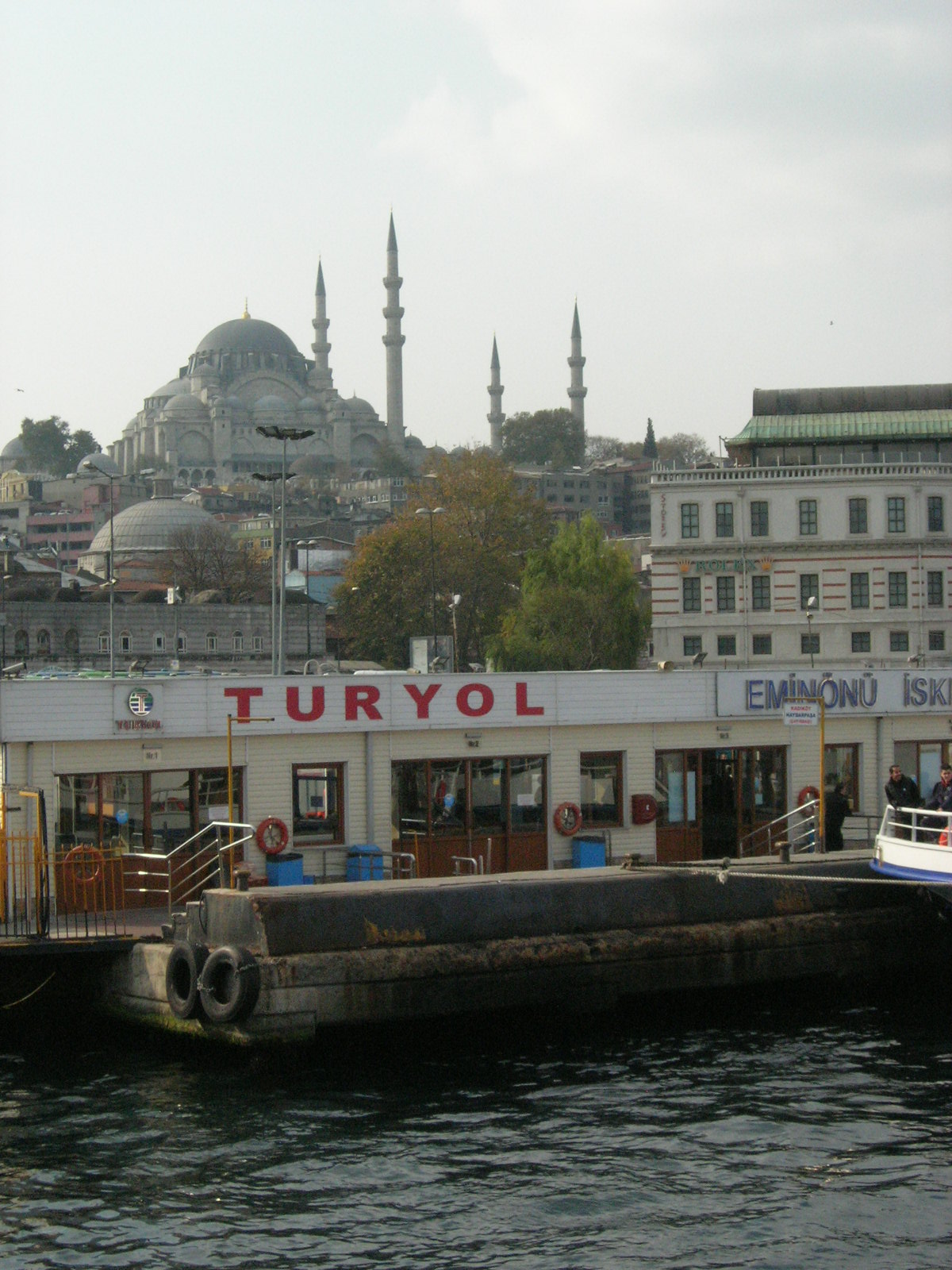
pulling away from the port
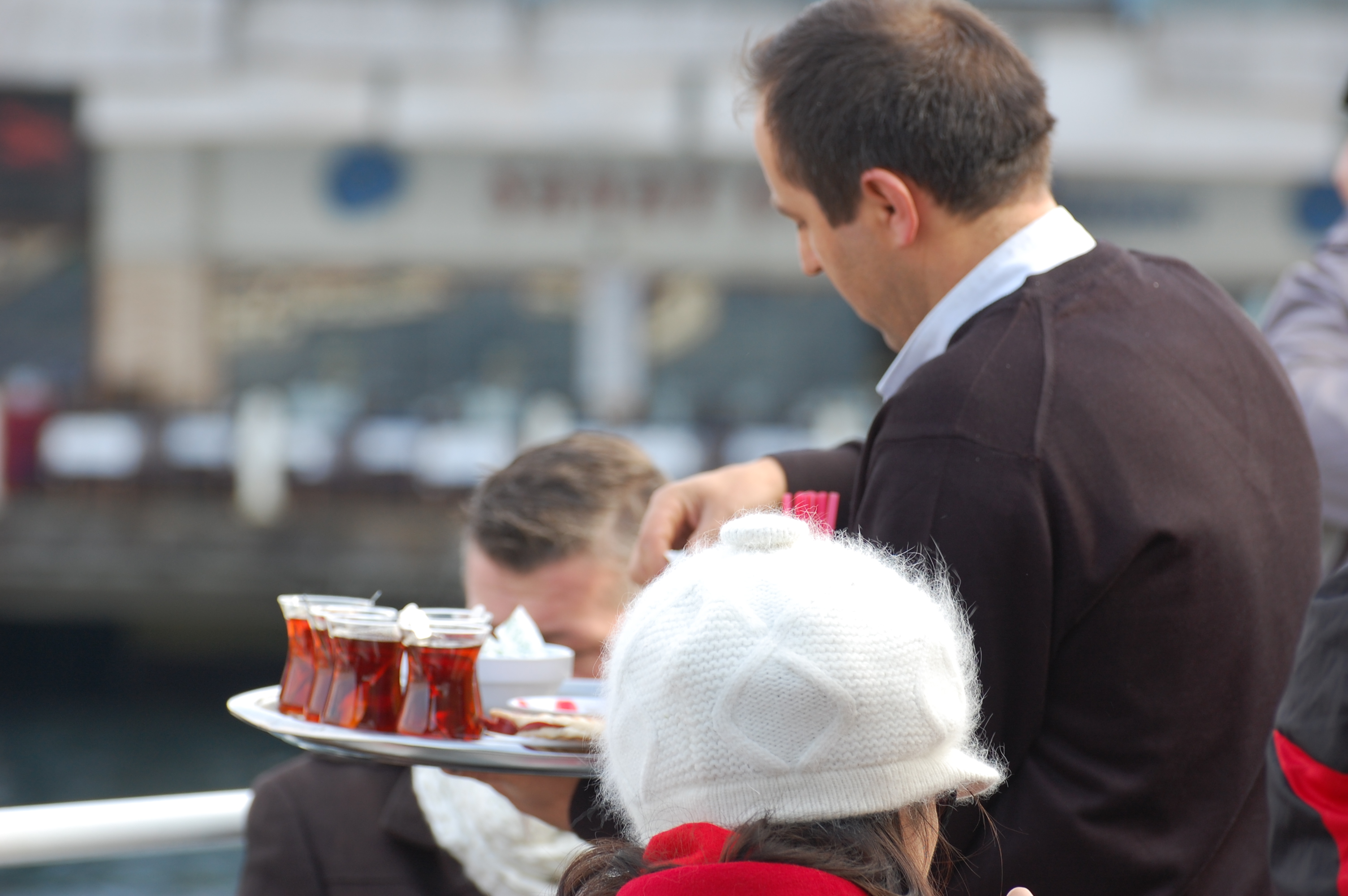
tea seller makes his rounds
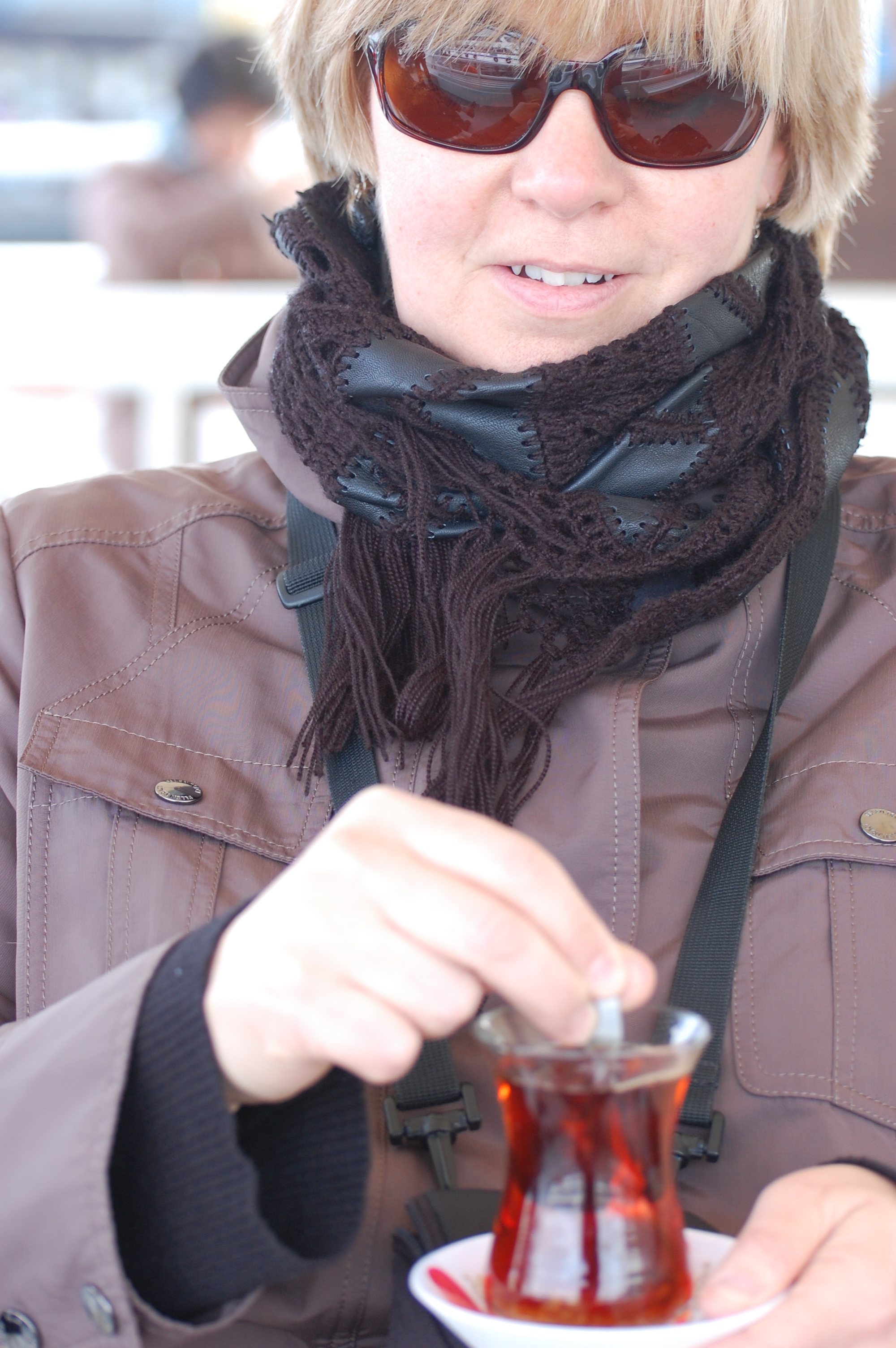
not a good pic of me, but wanted you to see how the tea is served, in tulip glasses on saucers, even on a boat!
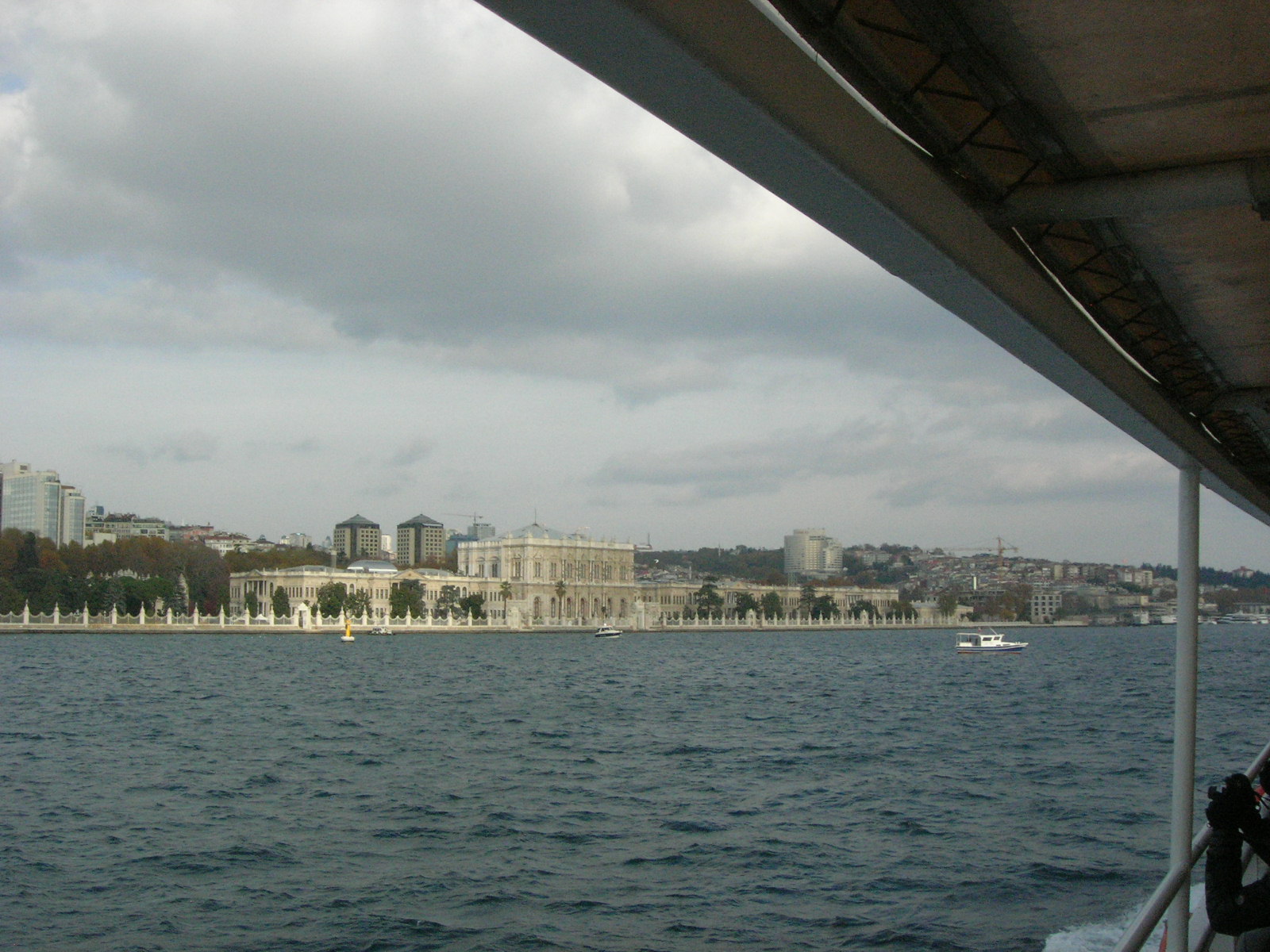
Dolmabahce Palace
This palace is the one I mentioned earlier, which Sultan Abdul Mecit built and moved to (abandoning Topkapi) in 1856, interestingly at a time when the Ottoman Empire was in decline. It is the only one of the “Top 10 Istanbul Sights” that we didn’t tour.
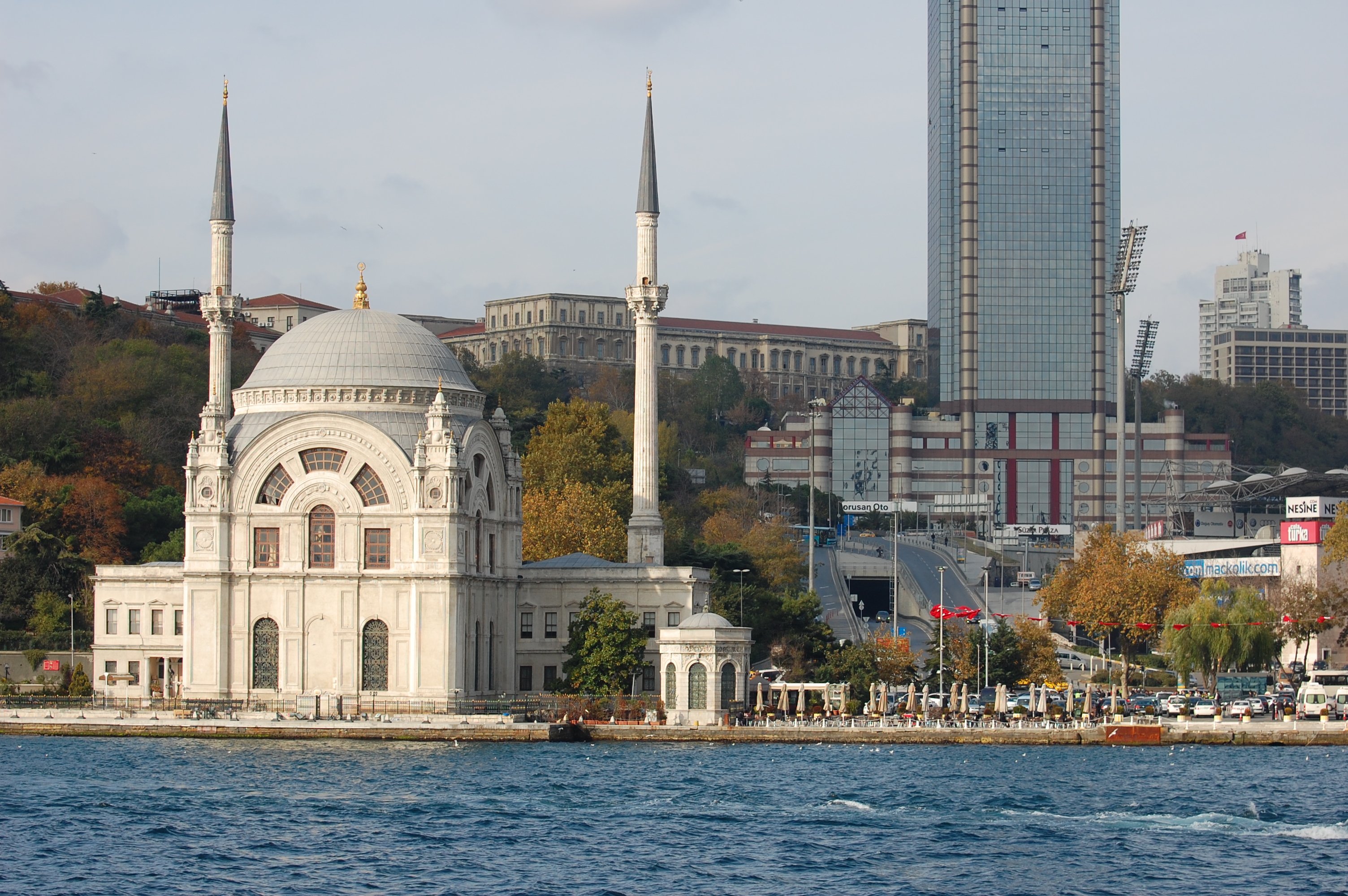
Mecidiye Mosque - love the old and new in this pic
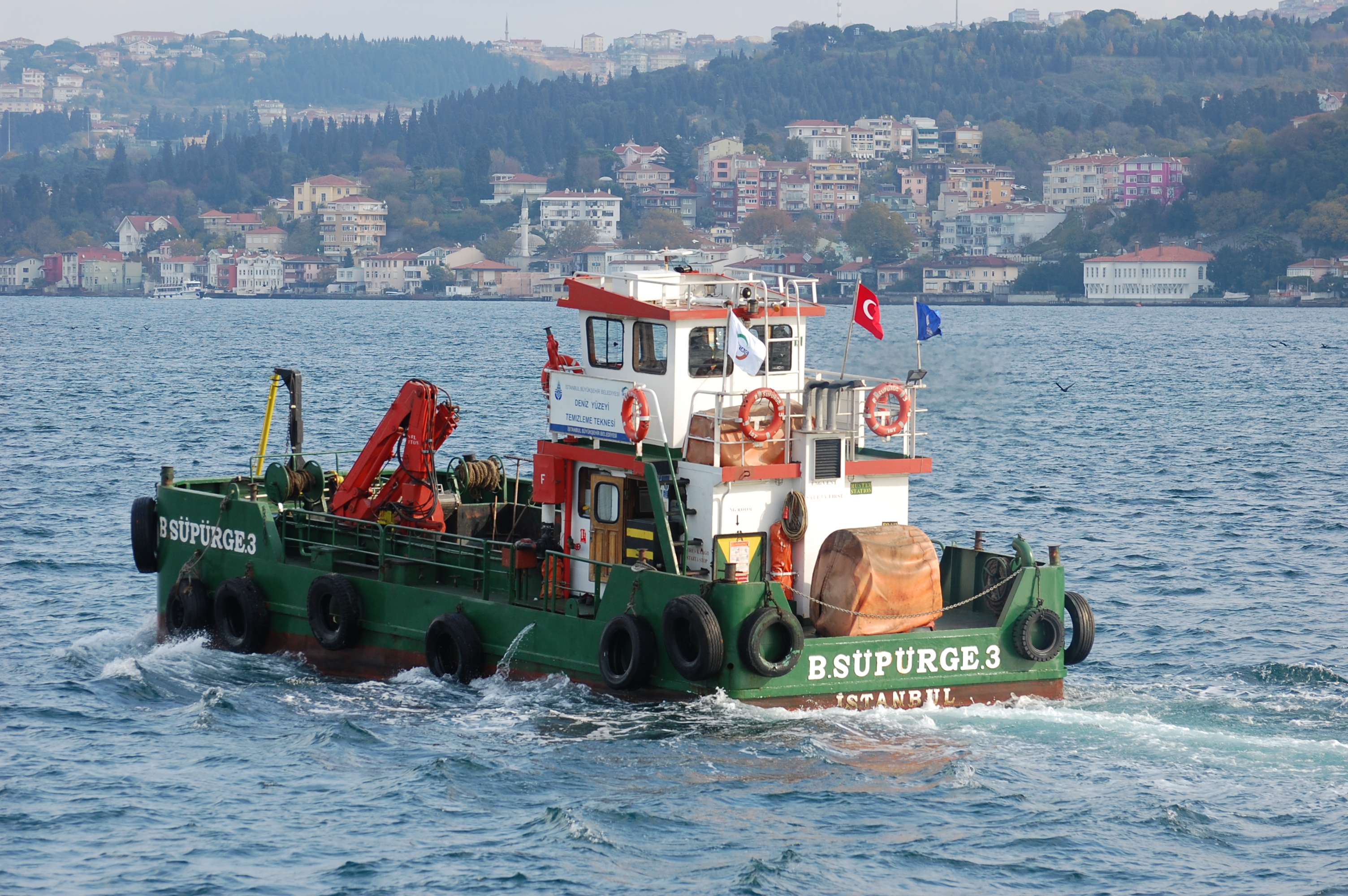
lots of boats, of course
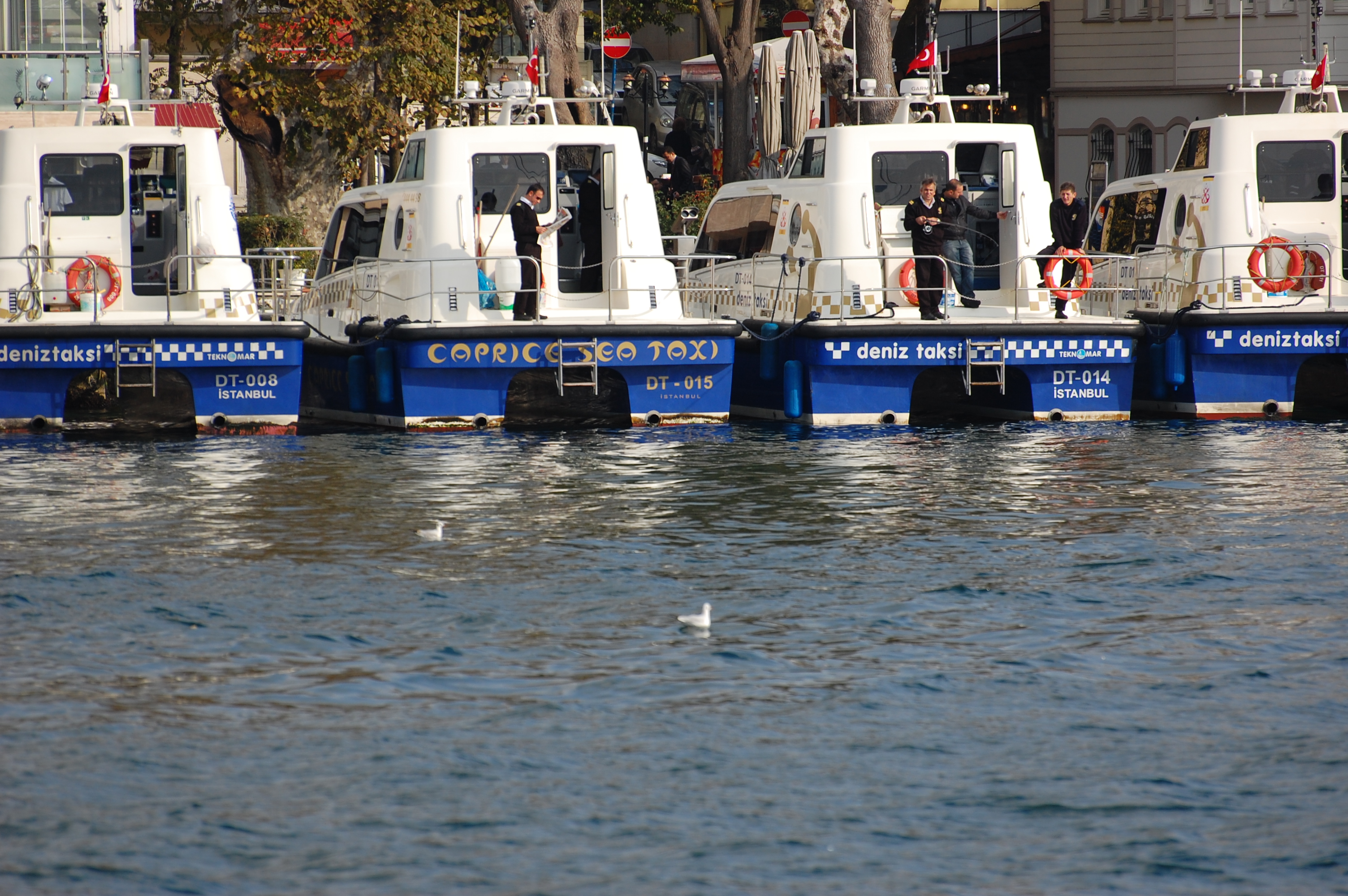
taxi boats
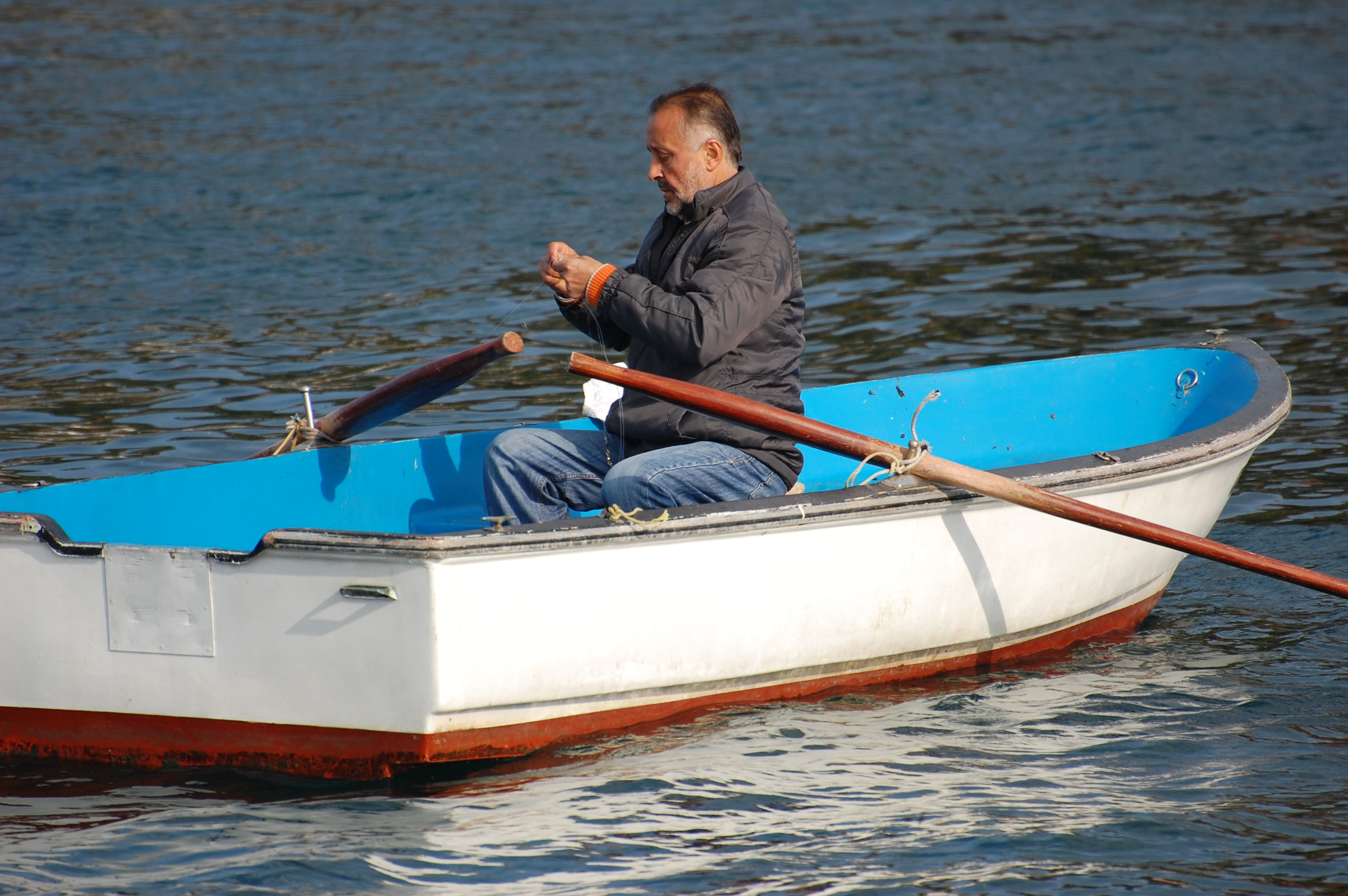
always men fishing
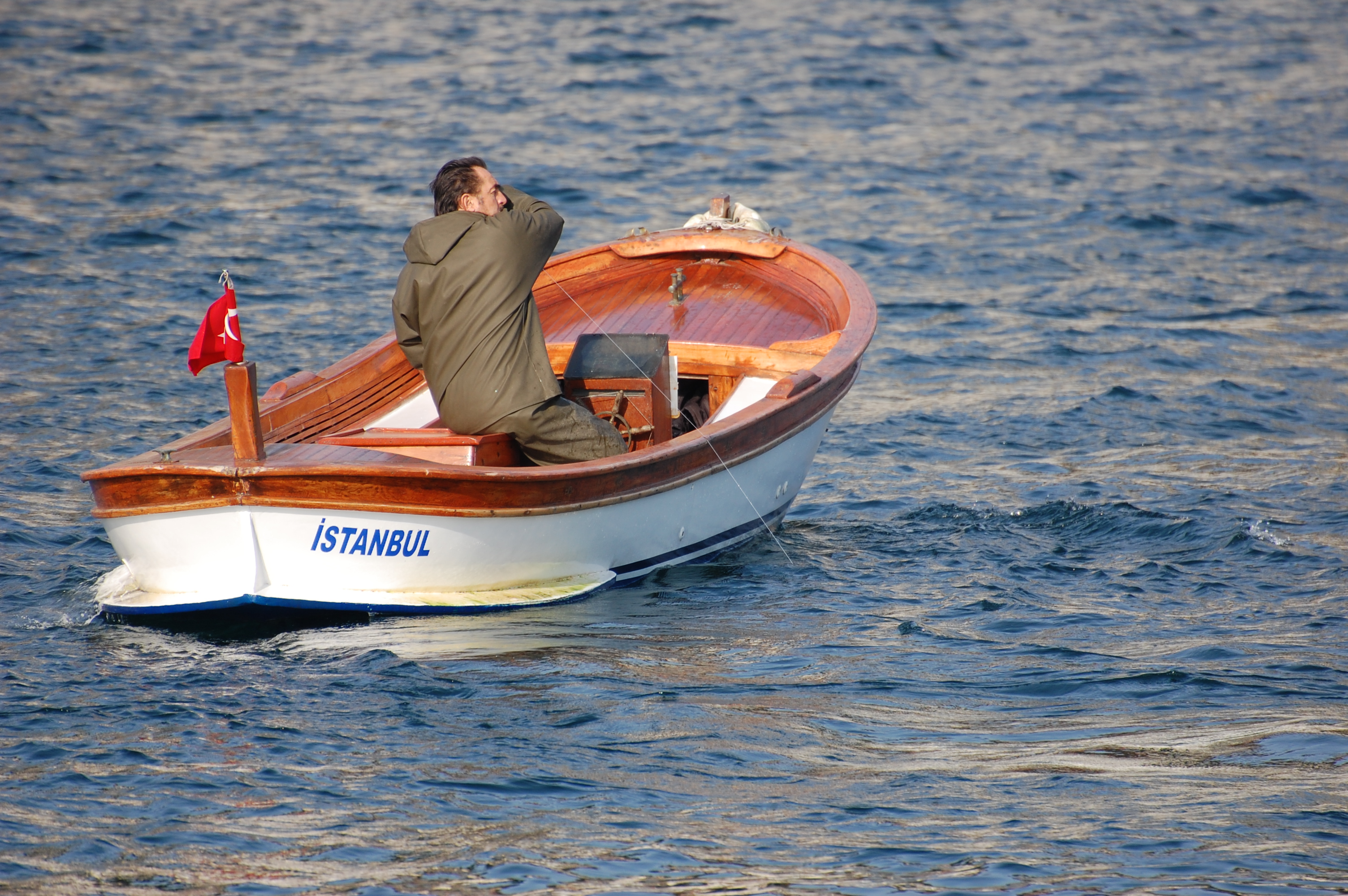
another fisherman
Don does love his boat pictures!
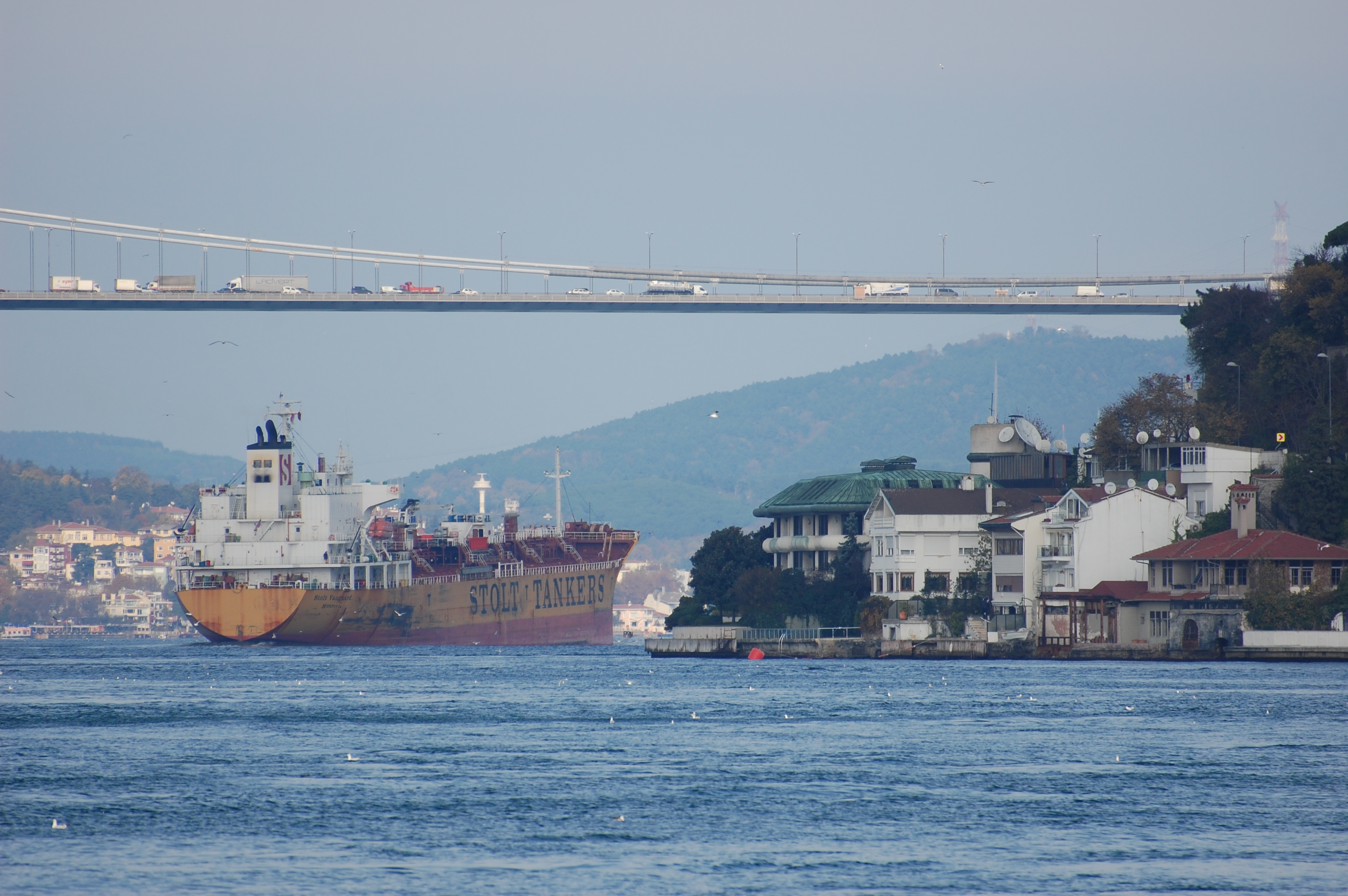
Bosphorus Bridge and tanker
The Bosphorous bridge was the first bridge to be built across the straits that divide Istanbul. Construction began in 1970 and finished on 29 October 1973, the 50th anniversary of the inauguration of the Turkish Republic. It is the world’s 9th longest suspension bridge.
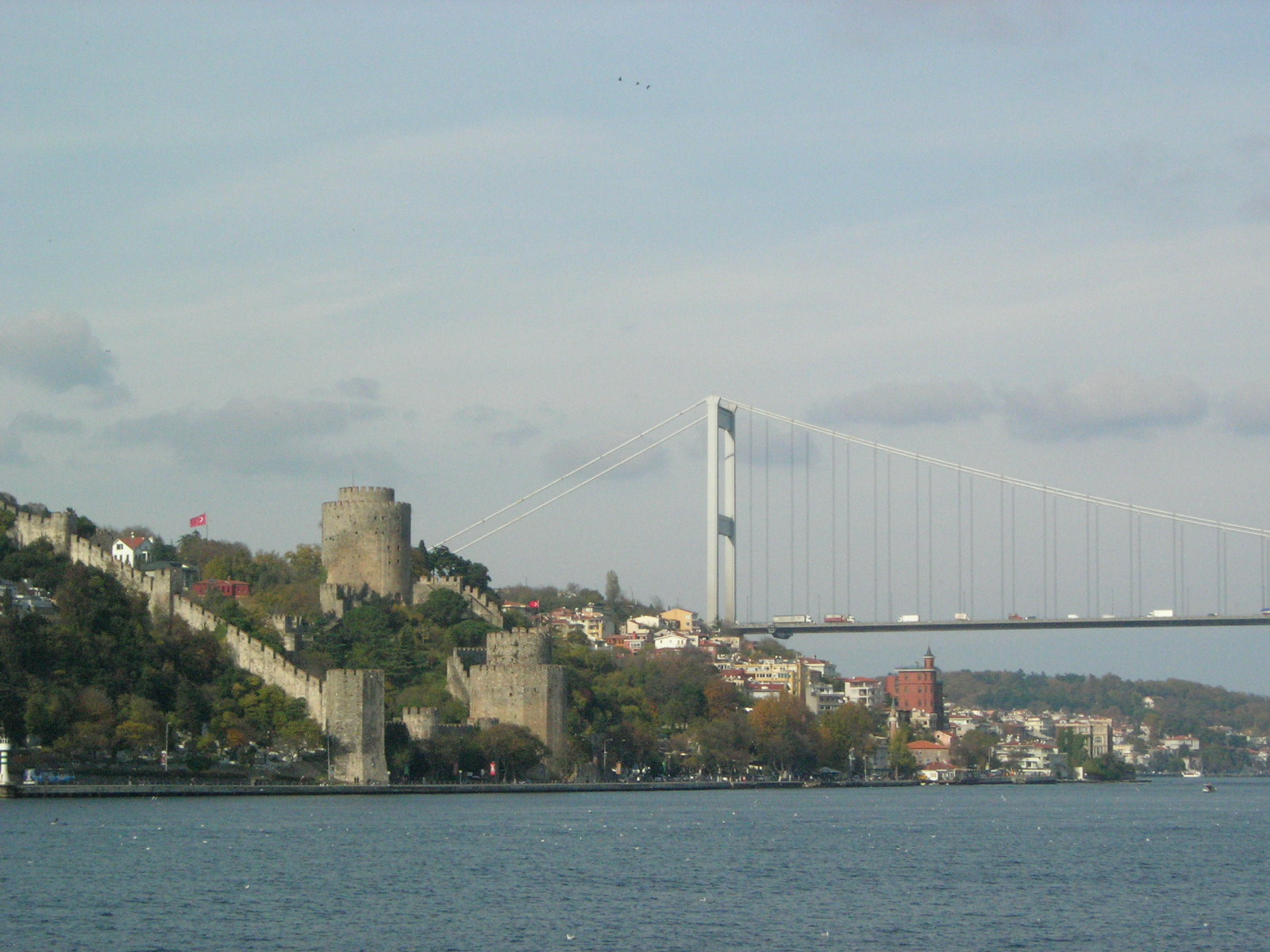
Fortress of Europe and Fatih Sultan Mehmet Bridge
The Fortress is “situated at the narrowest point on teh Bosphorus, and was built by Mehmet II in 1452, as a prelud to his invasion (and subsequent conquest) of Costantinople.”
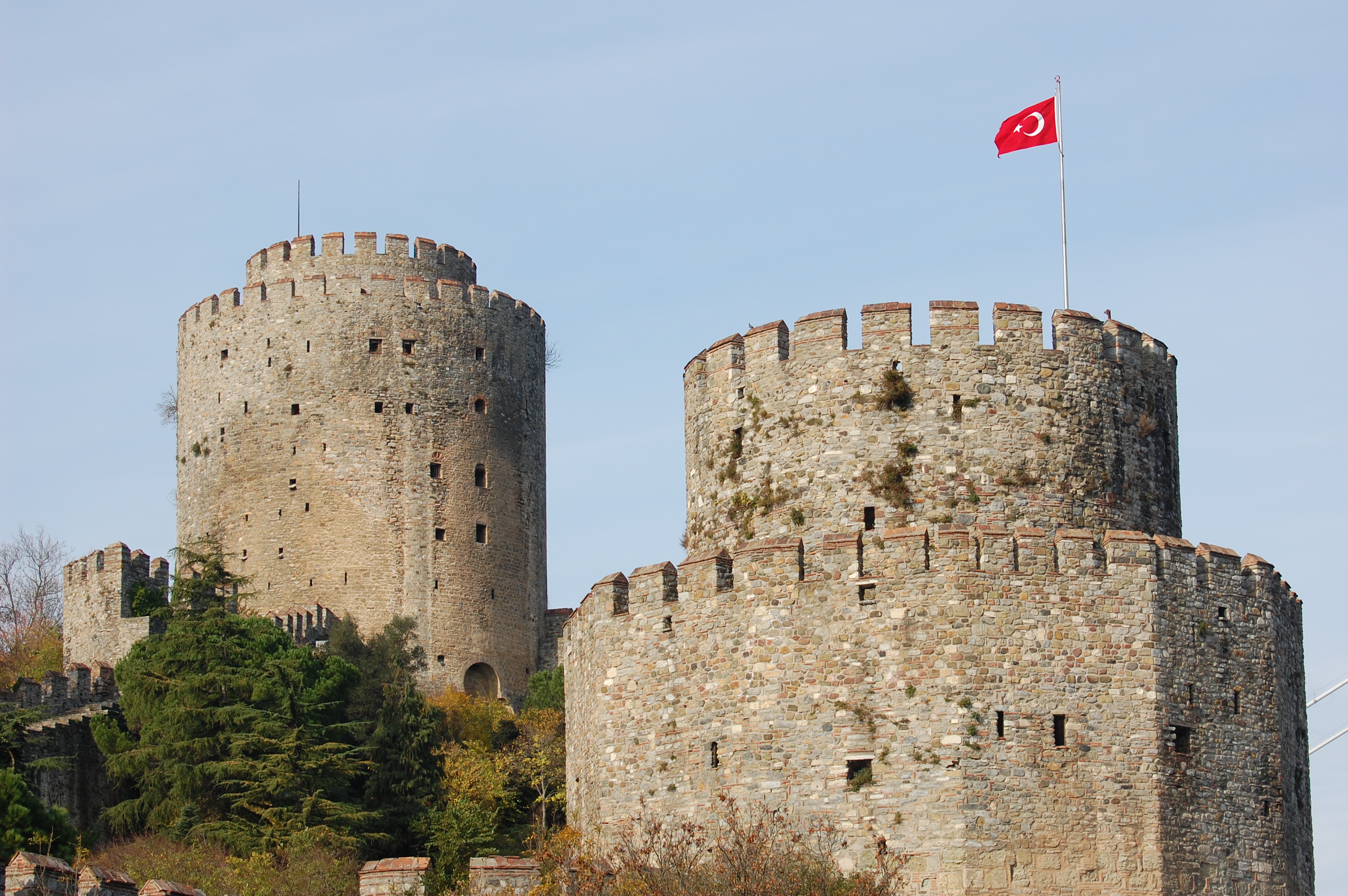
Fortress of Europe
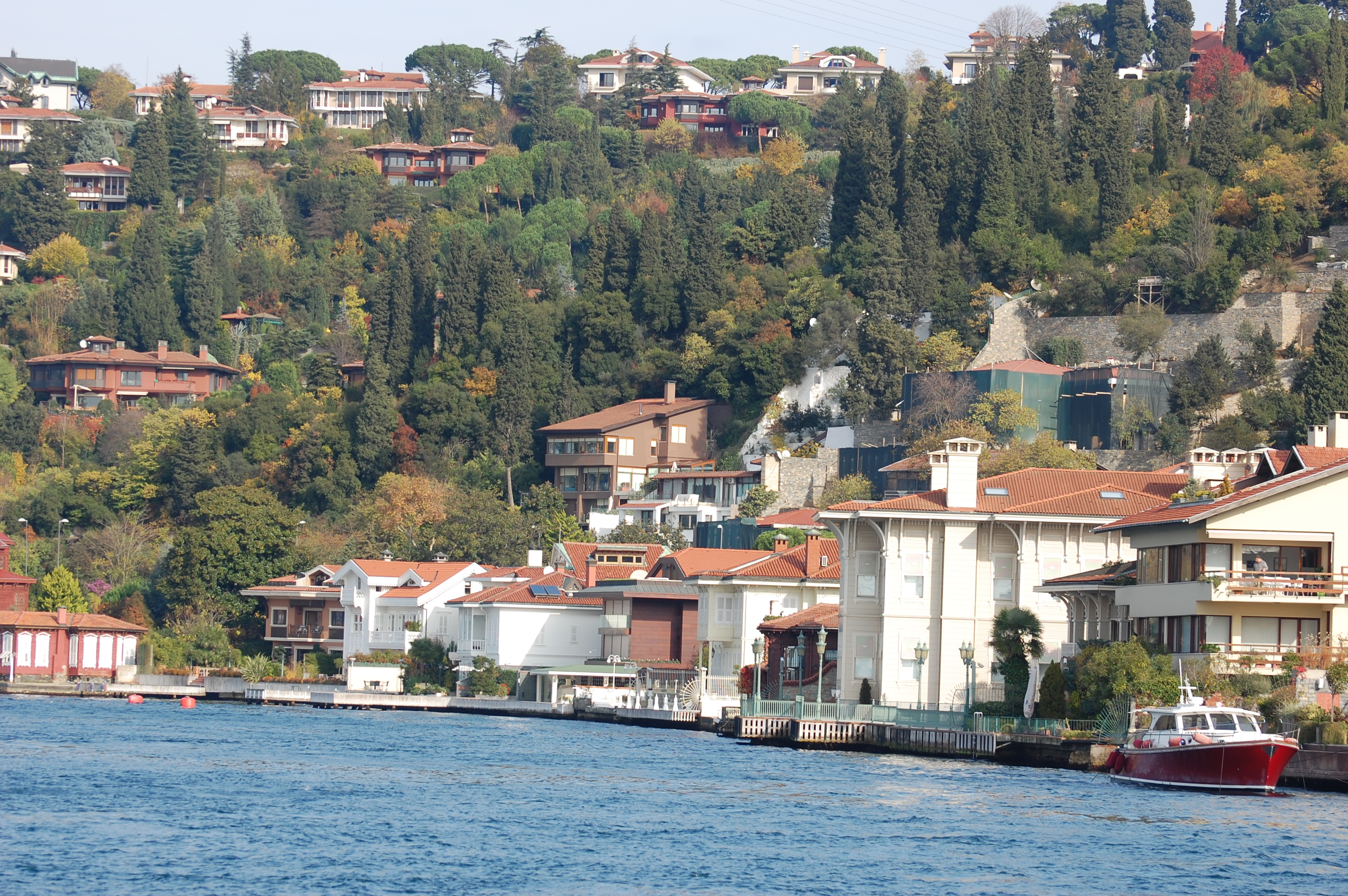
beautiful homes along the water
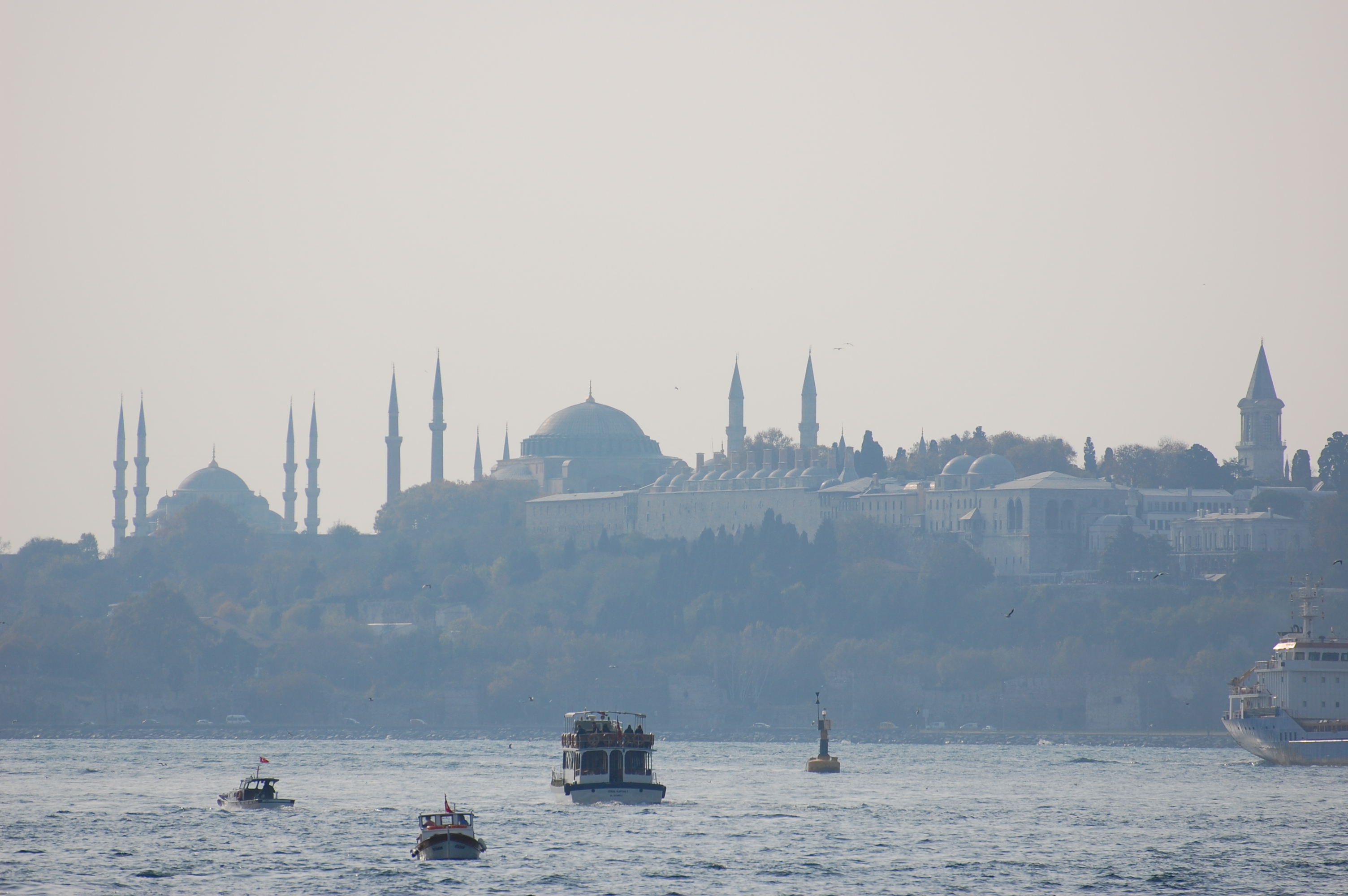
and back towards the port
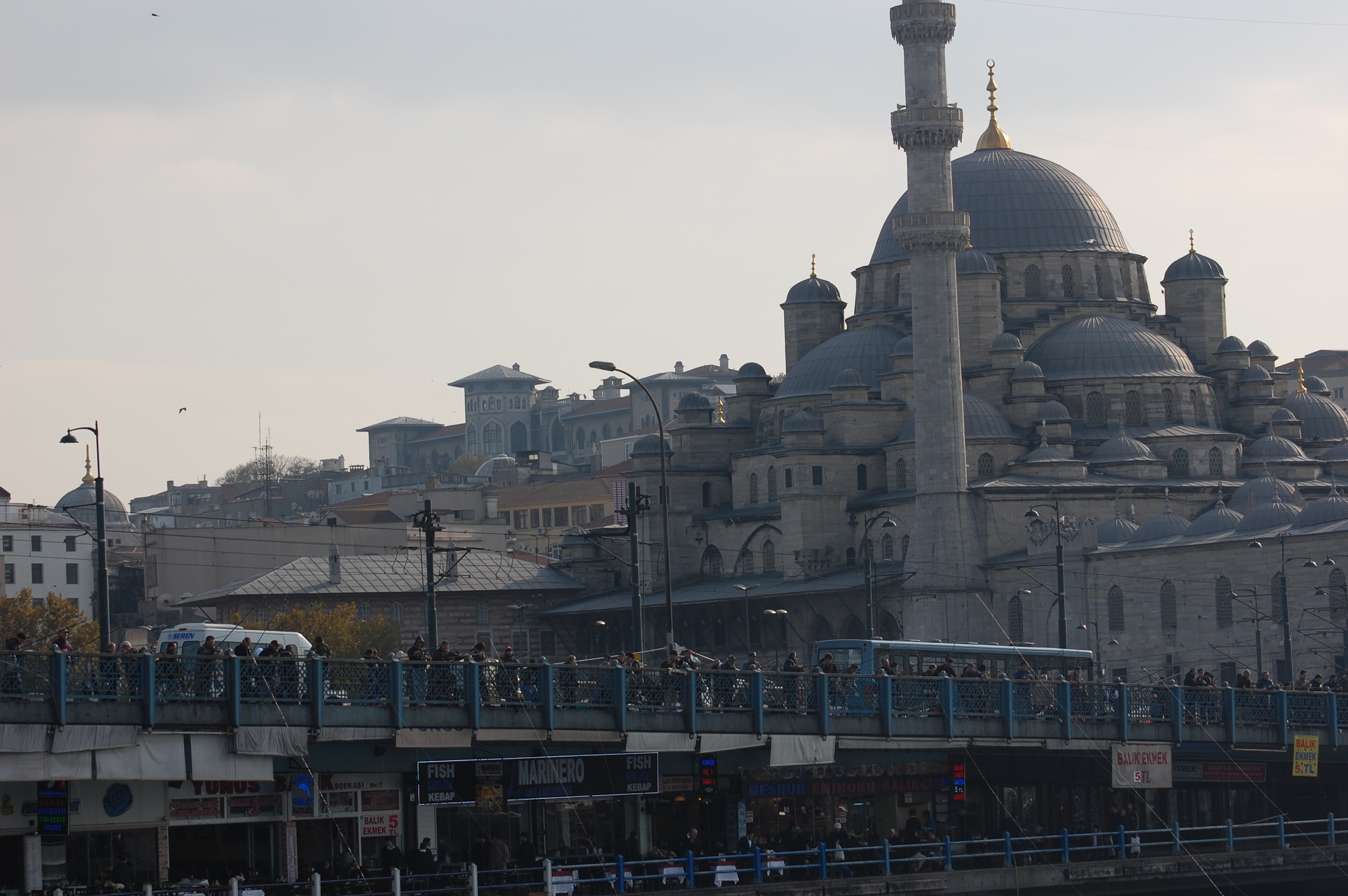
past the Galata Bridge to the dock
After the boat trip we needed to eat and warm up, so back to the delicious restaurant from the day before for pizza and that wondrous baclava. And then we walked, and walked, meandering up winding hills, and through market areas…
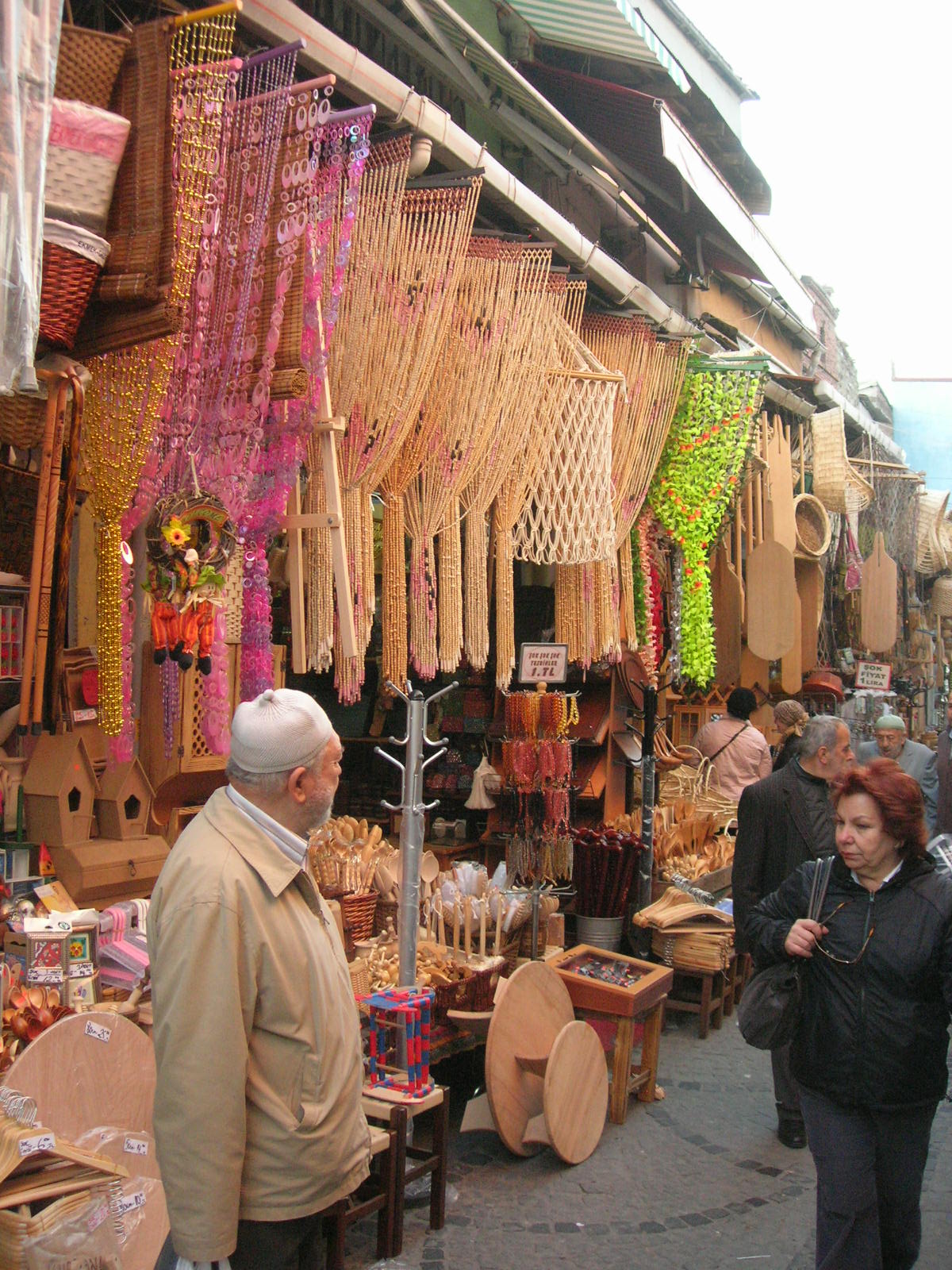
busy street market
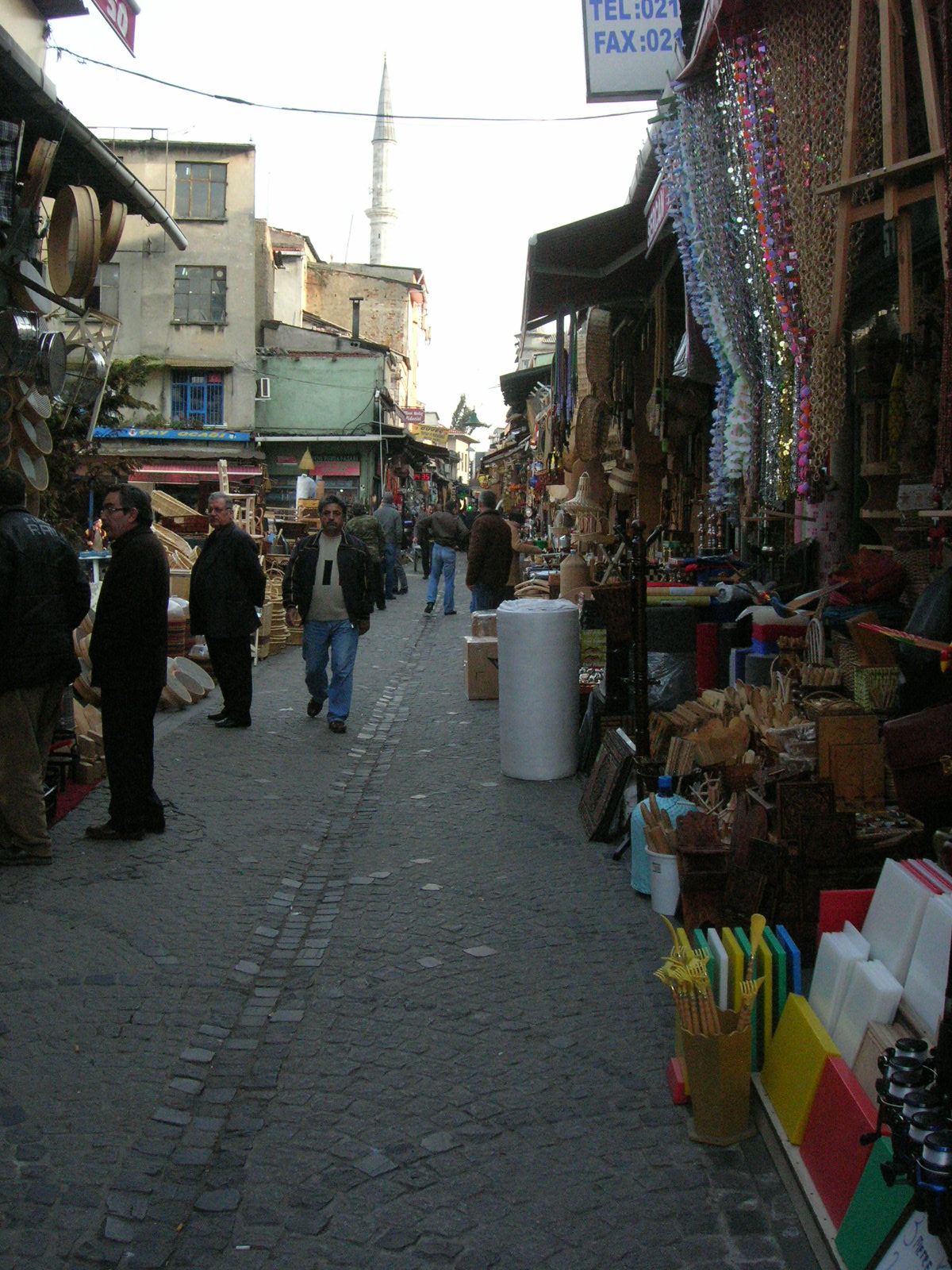
cobblestoned street
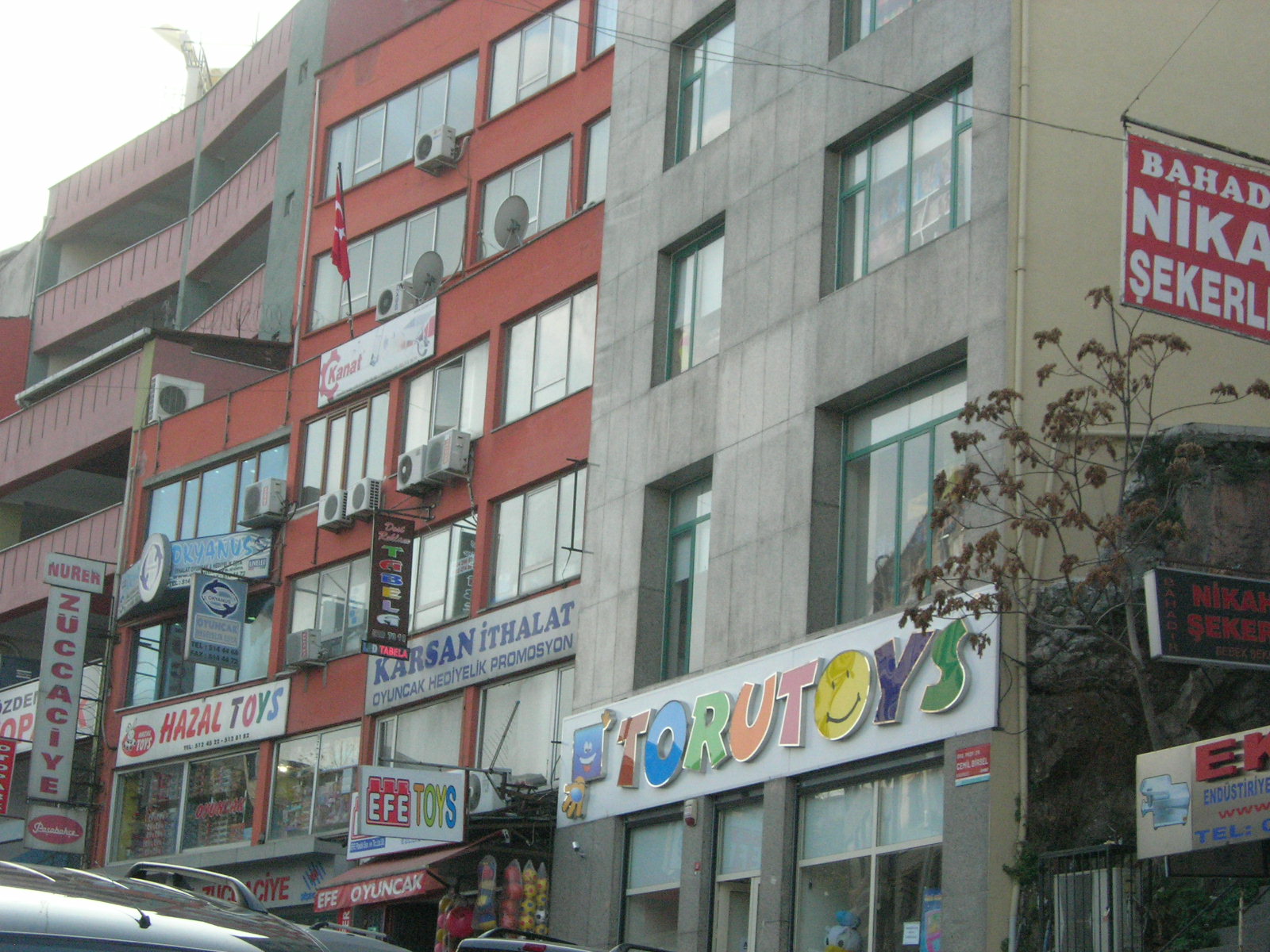
apparently the toy store street!
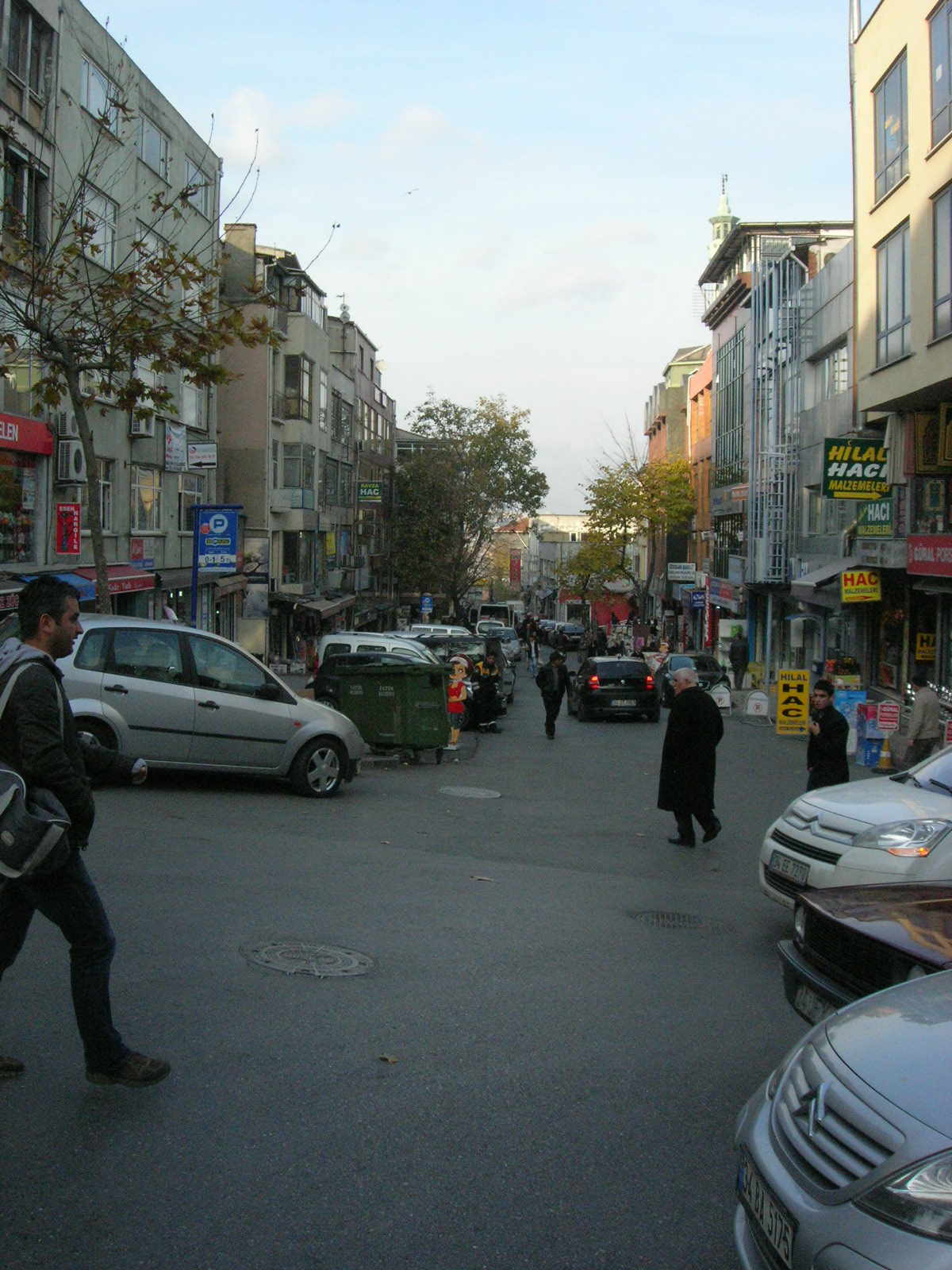
hilly, chaotic streets
past the Suleymaniye Mosque, the largest one in the city, and onto the outer grounds…
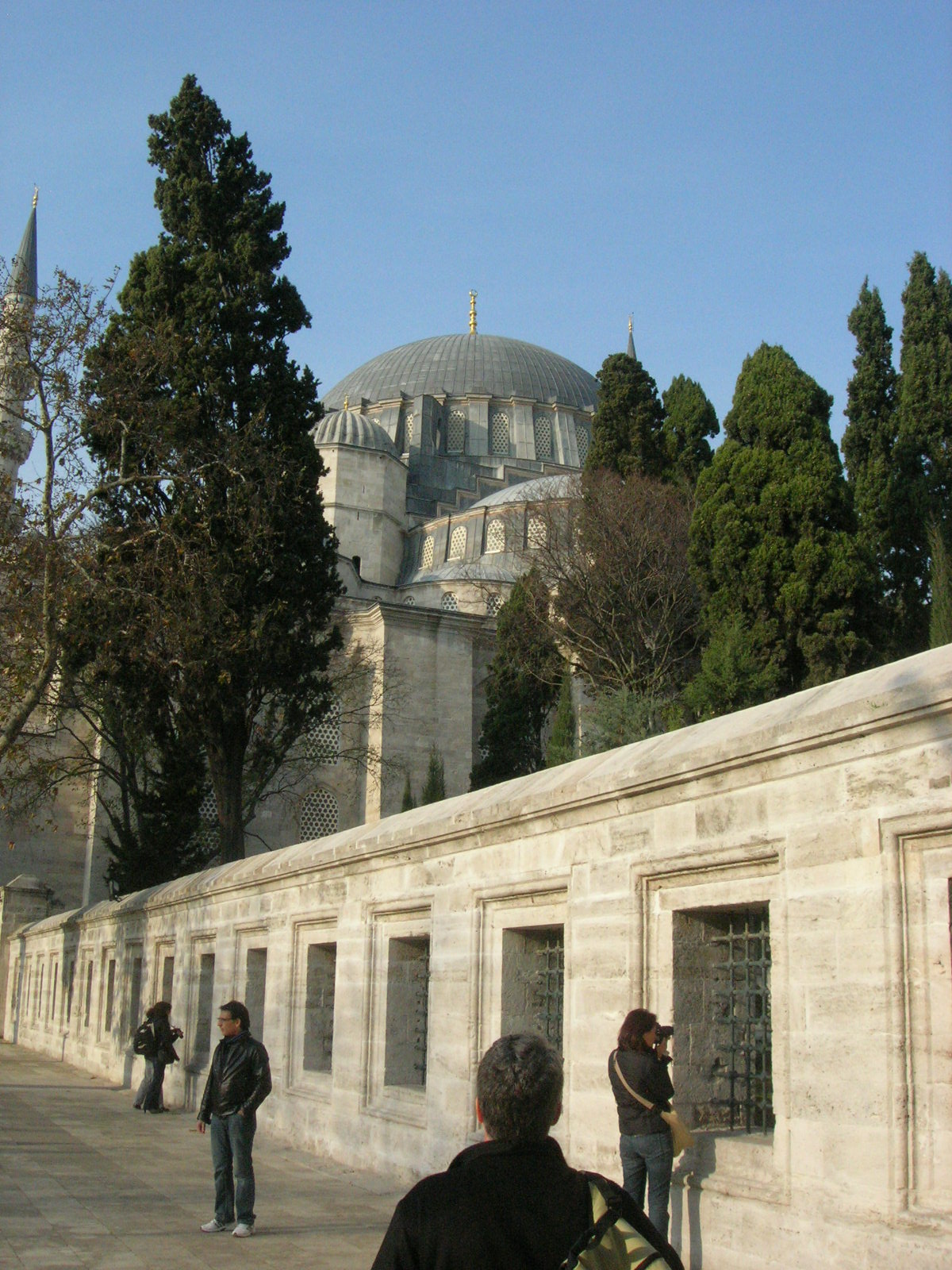
Suleymaniye Mosque, and outer wall
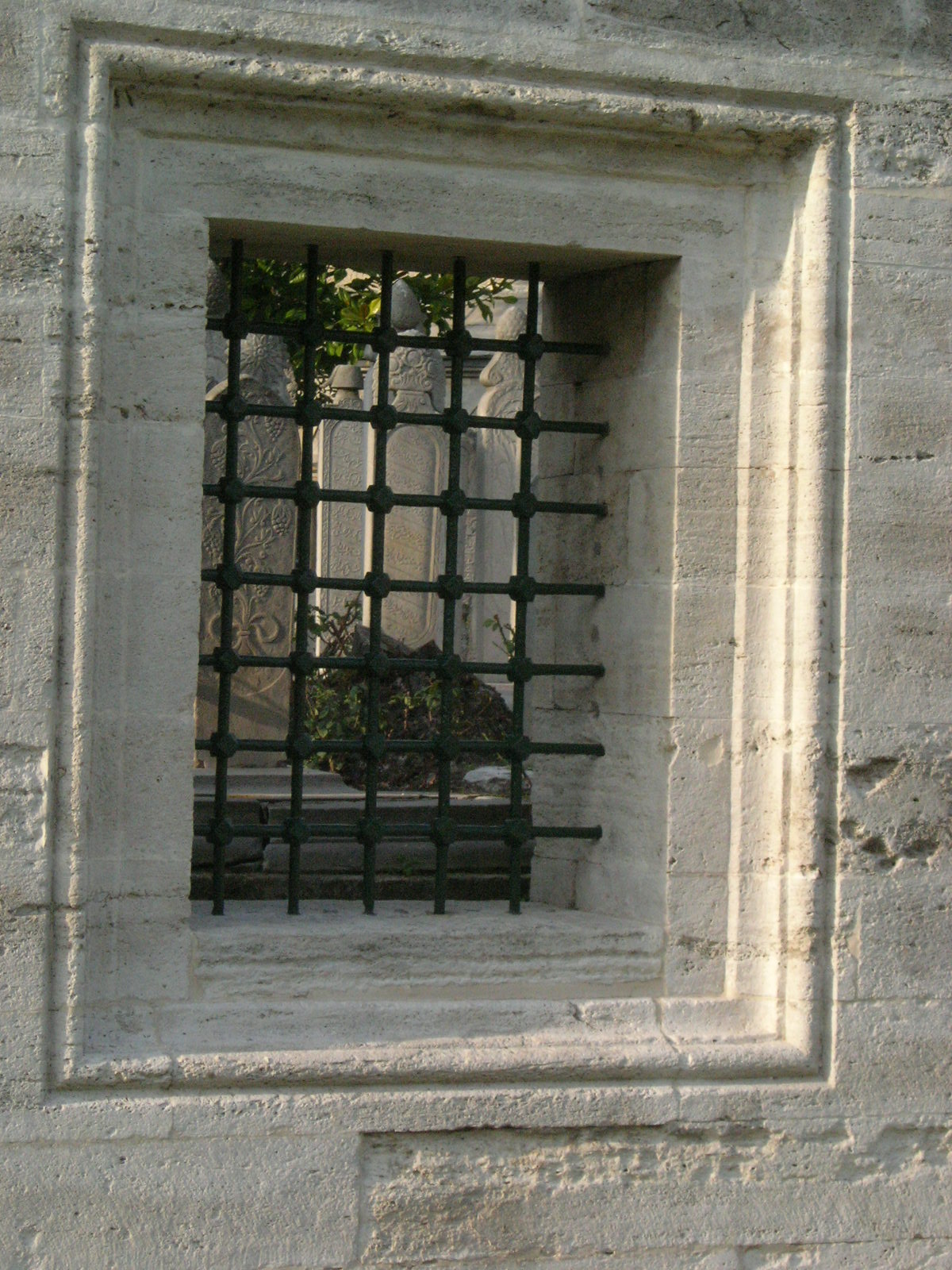
through the windows of that outer wall you can see the cemetery
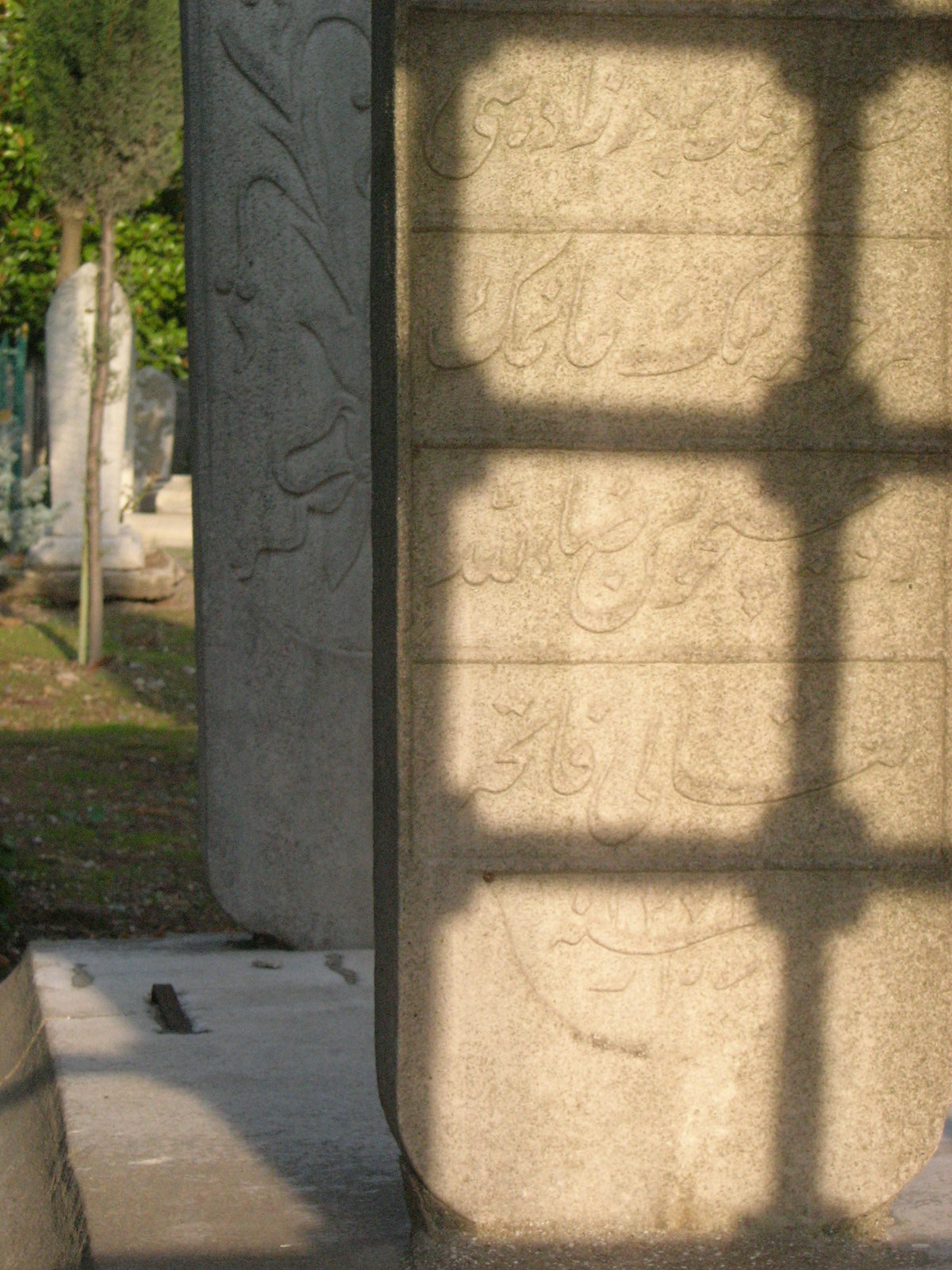
cemetery marker detail
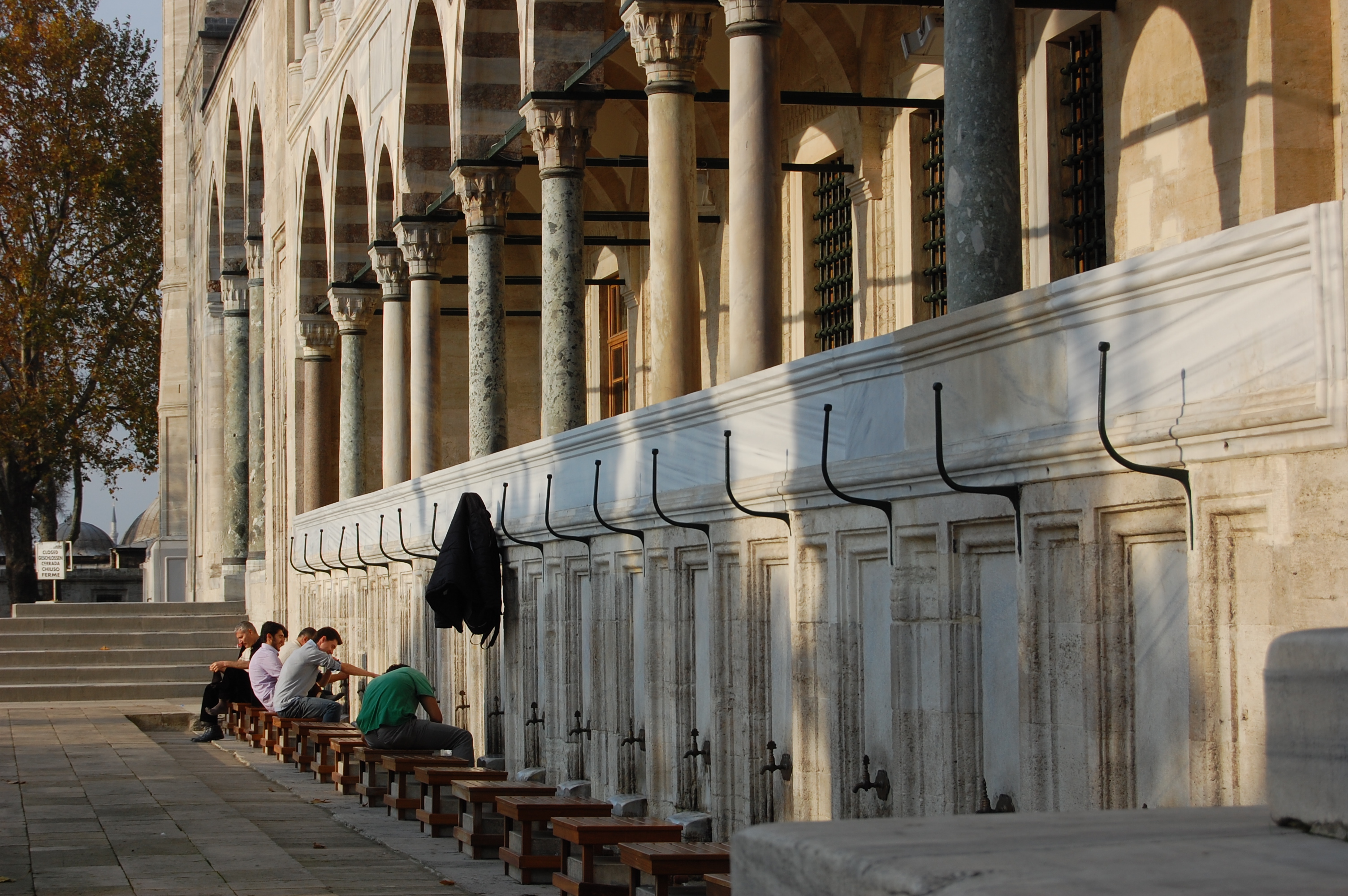
ablutions before praying
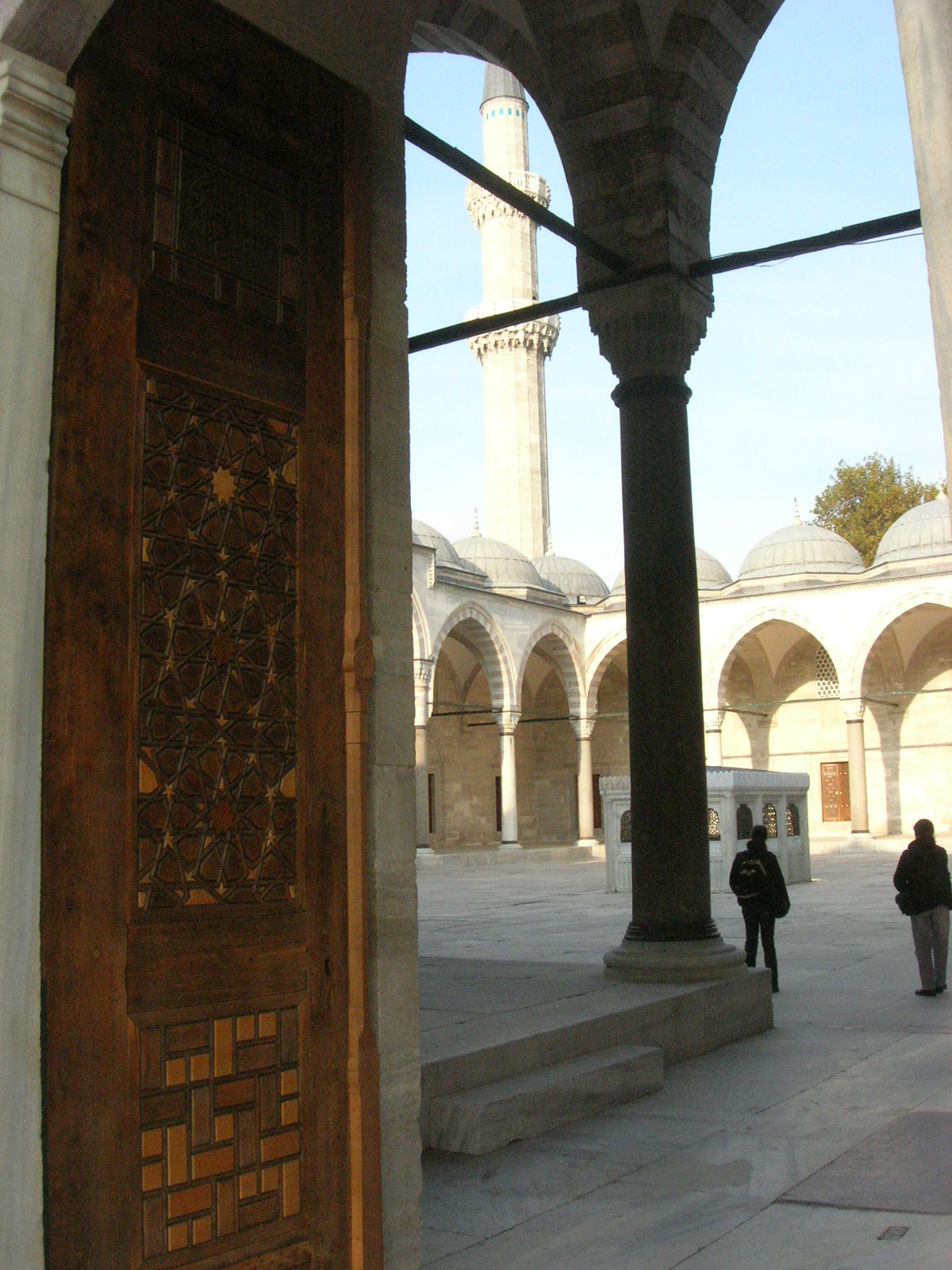
into the courtyard of the mosque
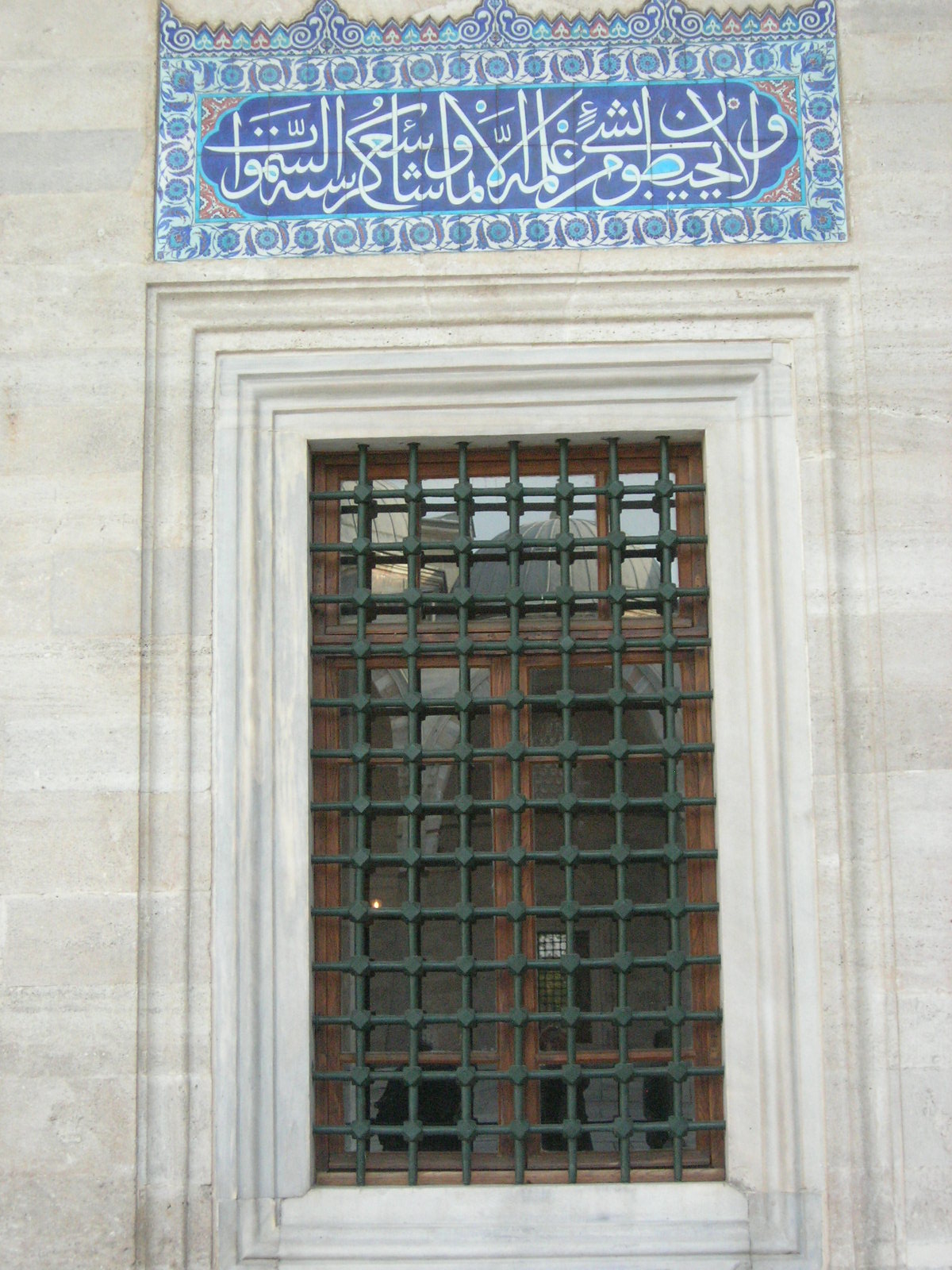
beautiful tiles over the windows in the courtyard
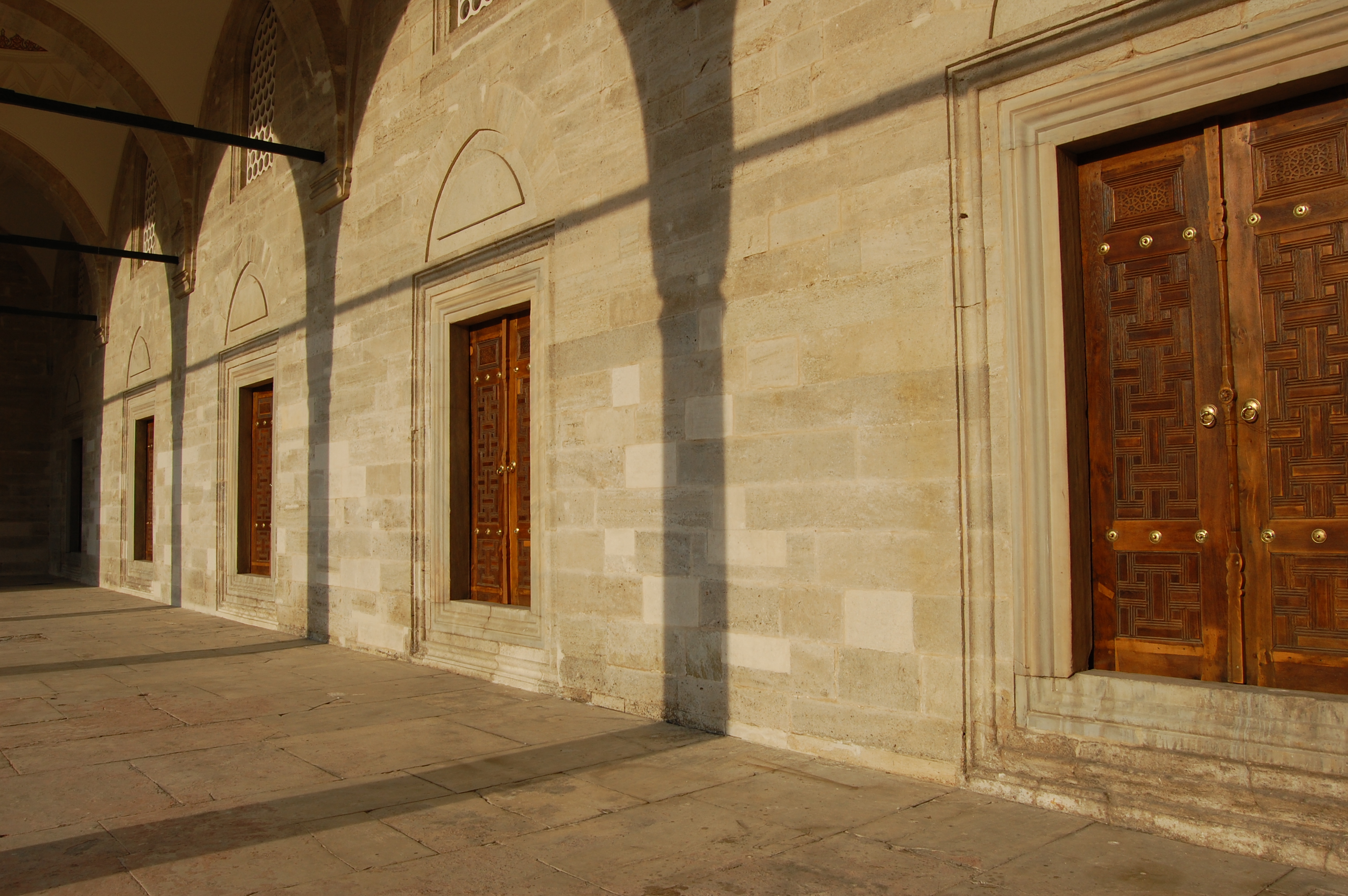
inside the courtyard, so many doors
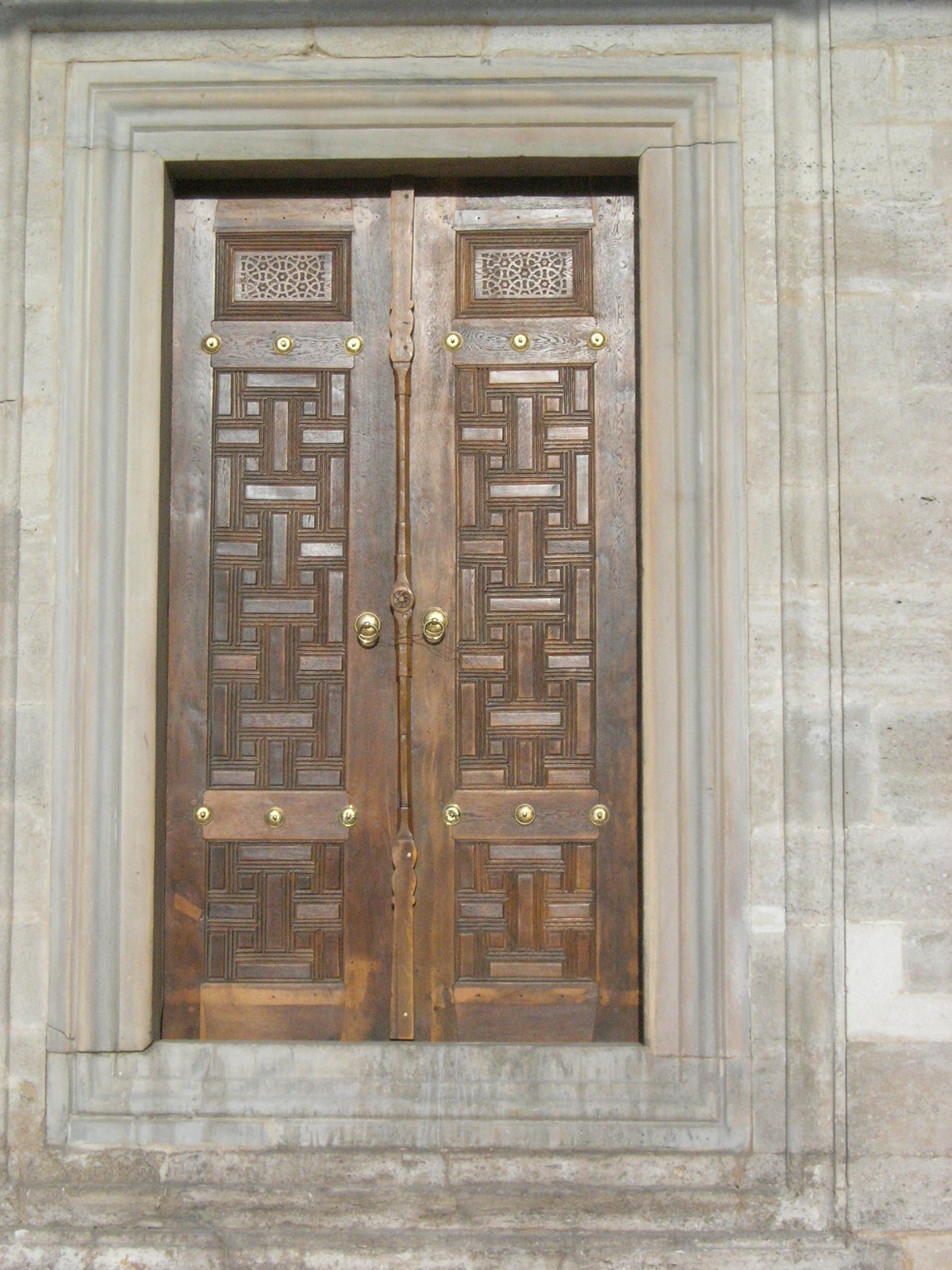
door detail
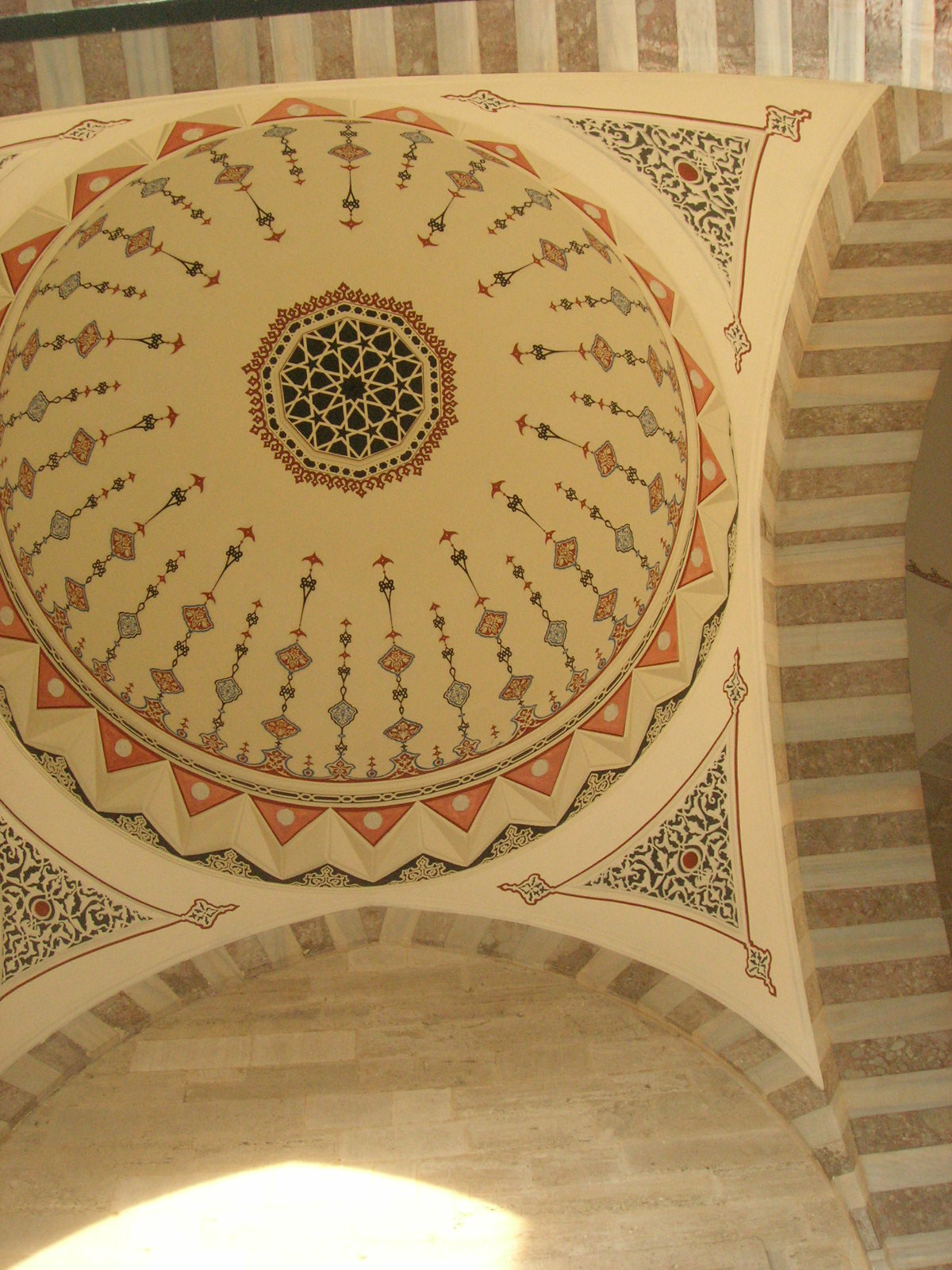
courtyard roof detail
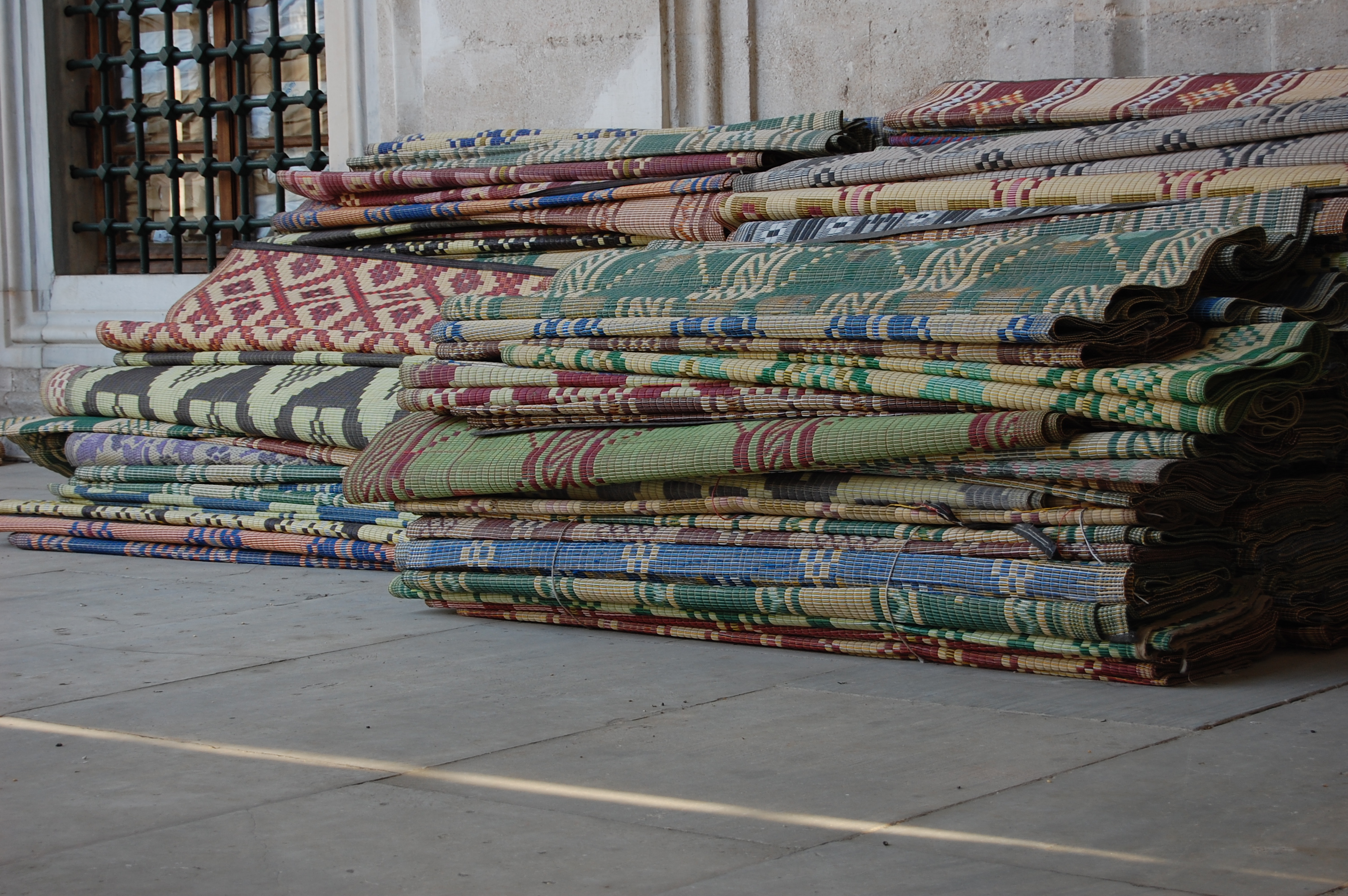
prayer mats to borrow, piled outside the entrance
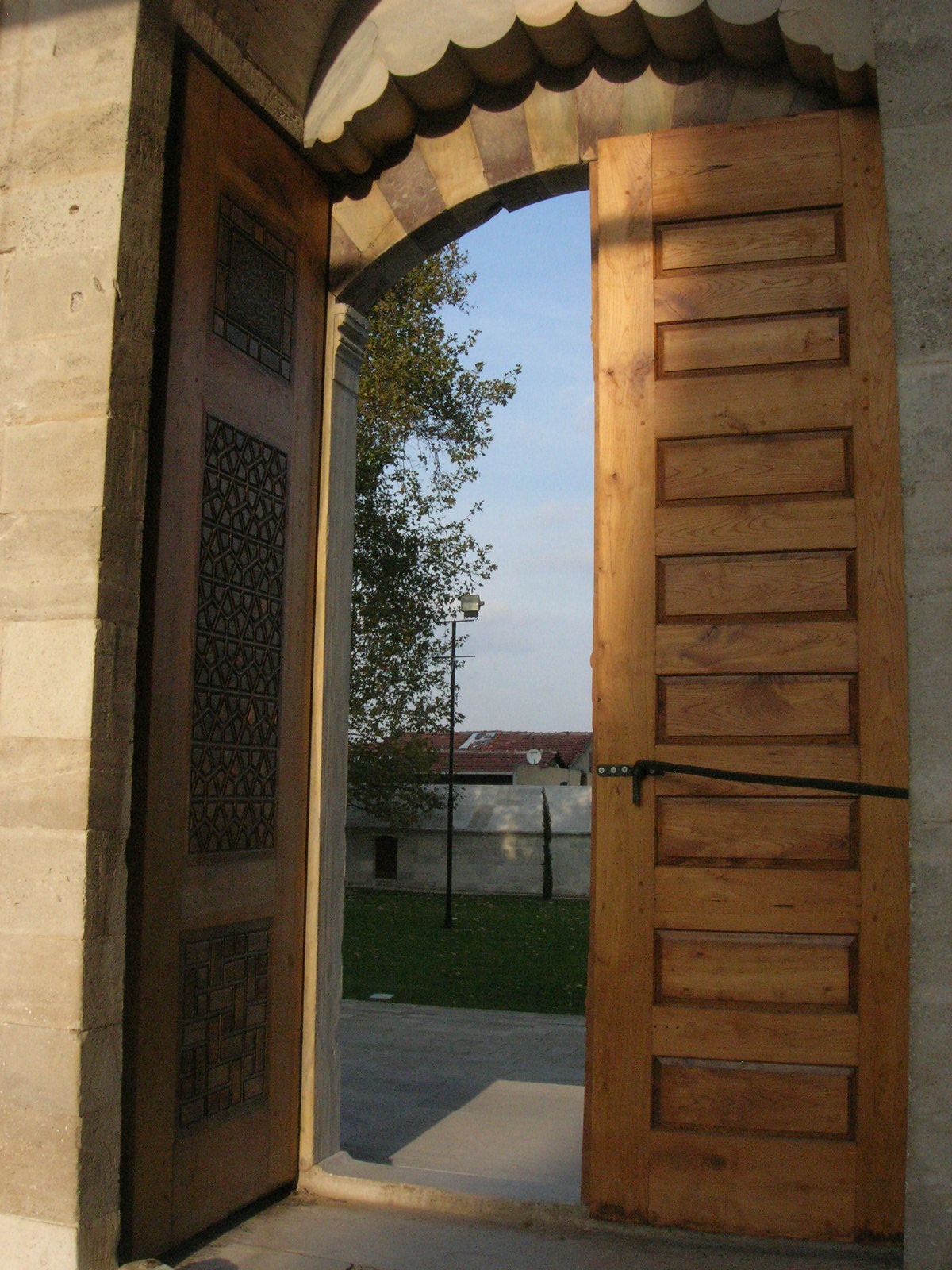
through this door to the 'back yard' for city views...

view over the city from the back of the mosque
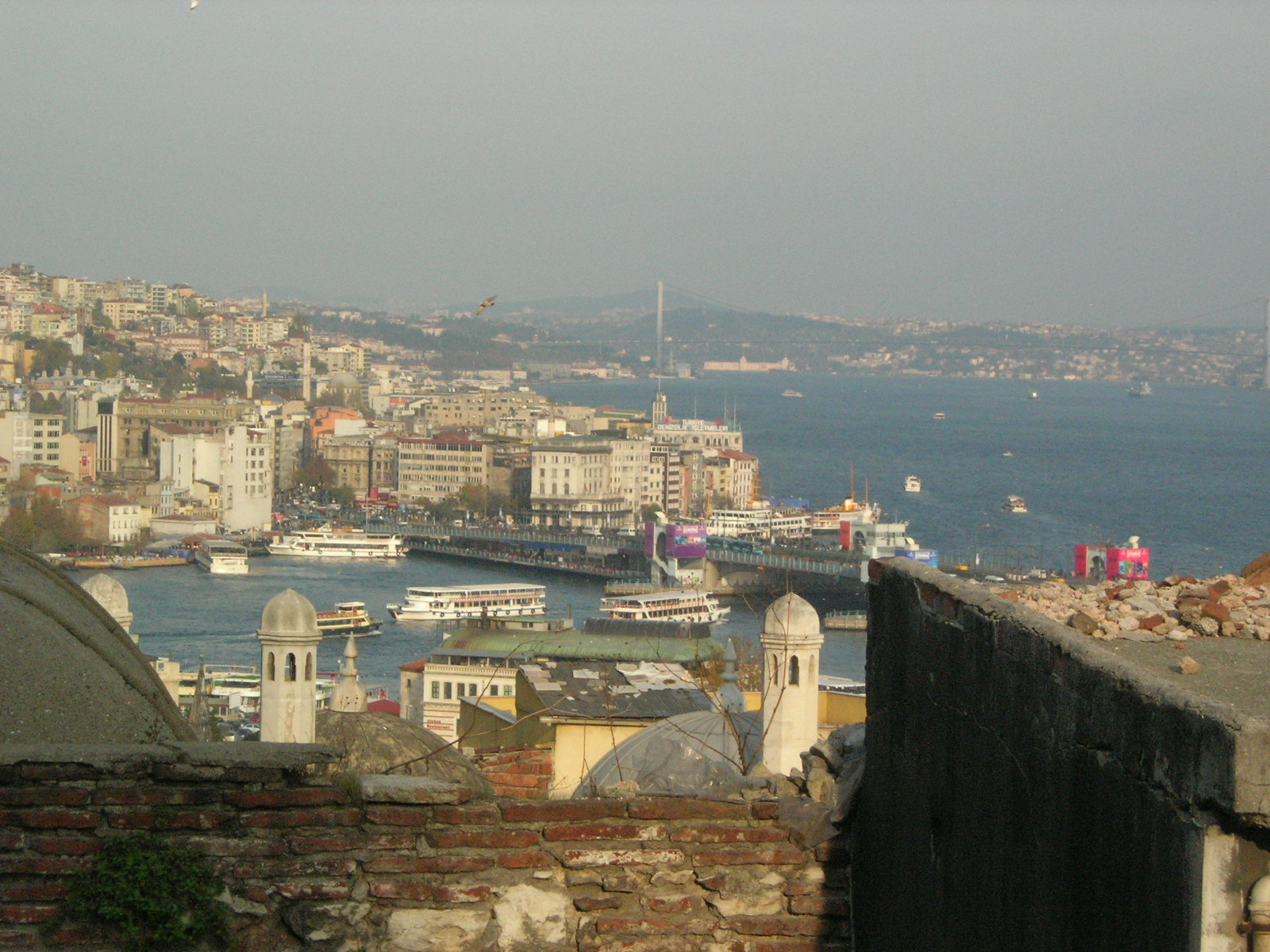
again the view from the back yard
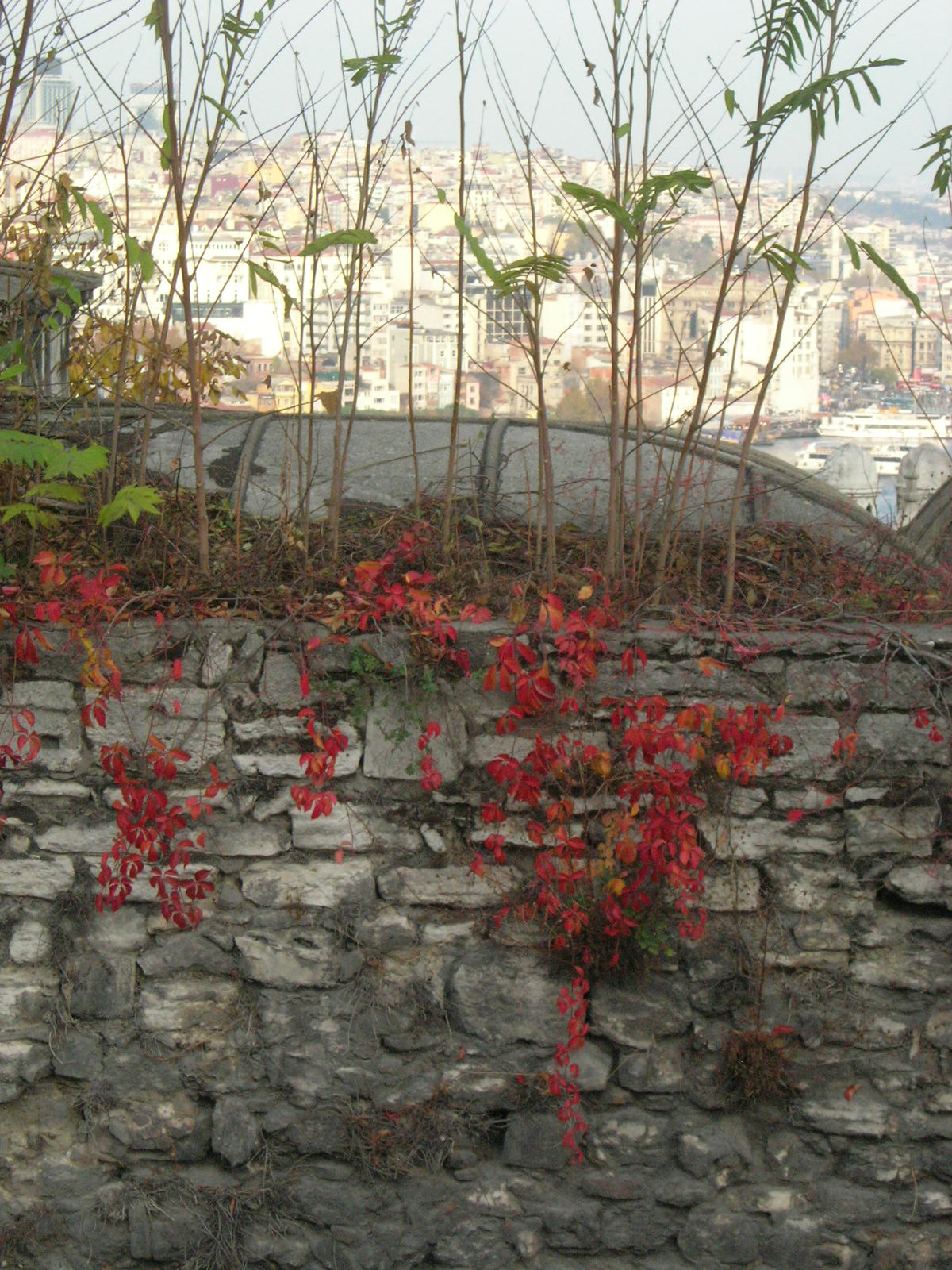
back wall detail
back to the street and past the university grounds…
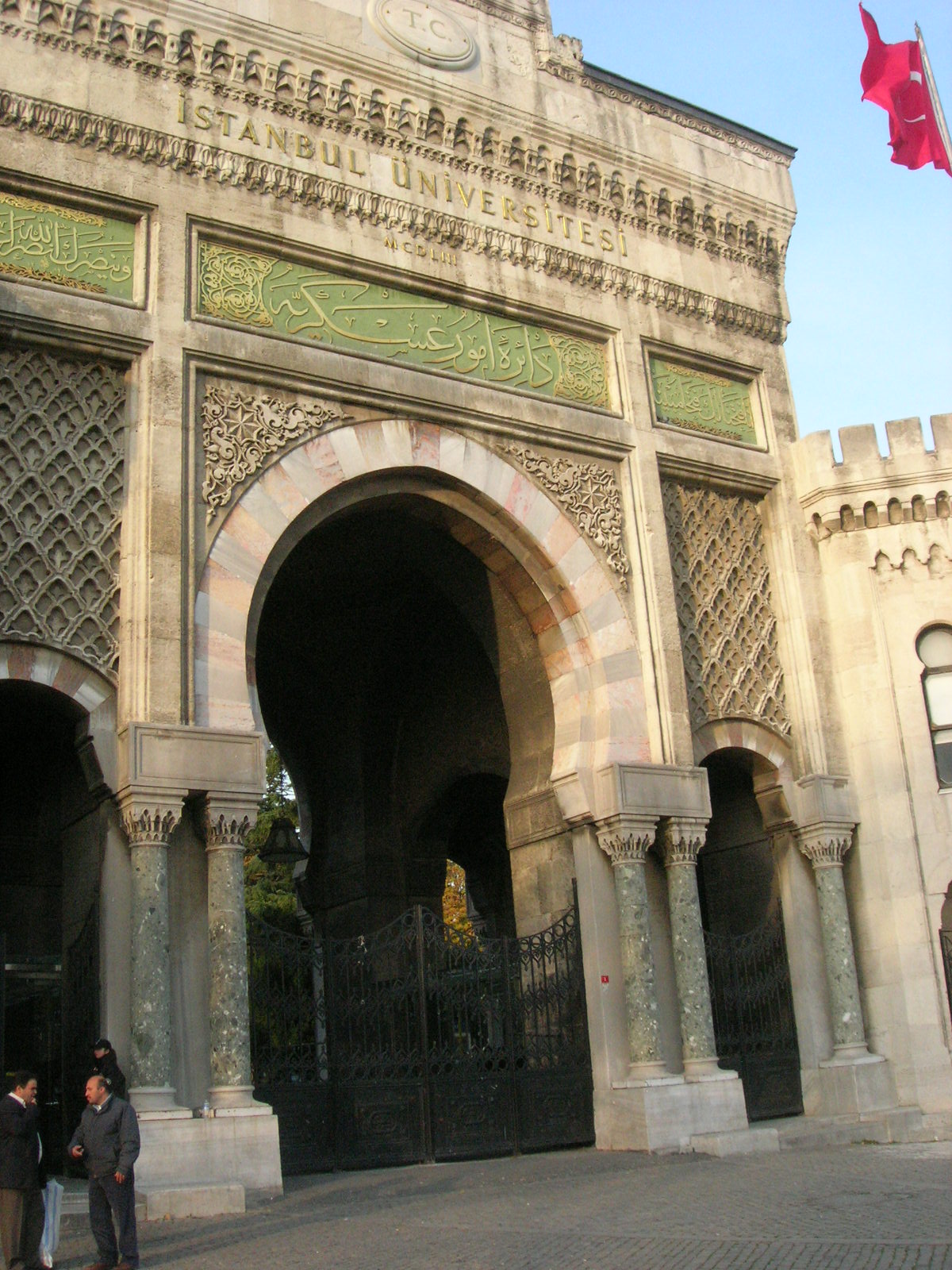
gate into university grounds
and then found the book bazaar (you knew I’d want to see that!)
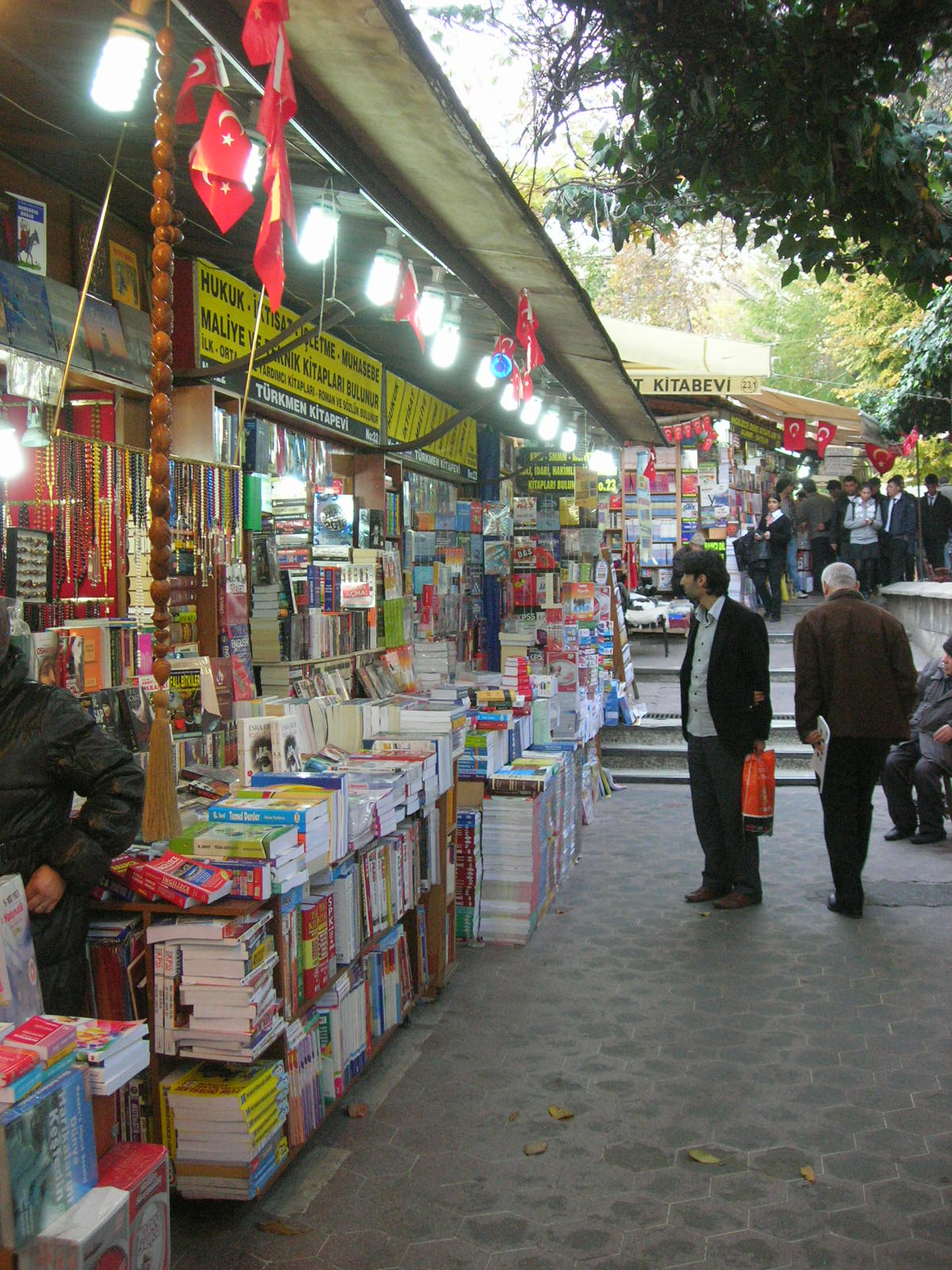
book bazaar
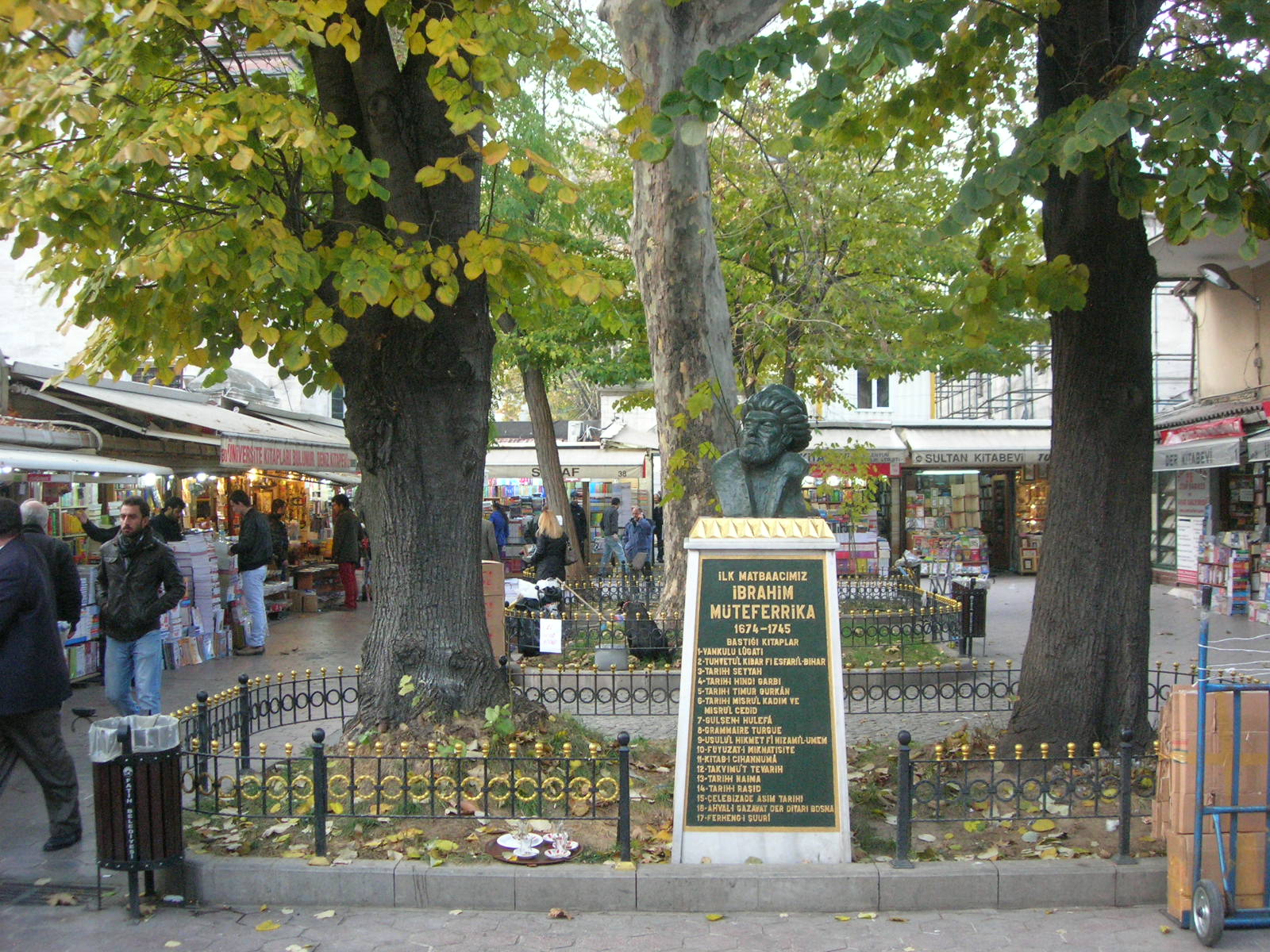
such a peaceful corner of the city for book browsing and reading
Then we went back to the Grand Bazaar to wander the maze, and check out a few products we might want to buy, including a carpet shop, where we chatted with the owner about the kilims, one of the two main kinds of rugs made in Turkey. We told him we had to think about it, and homeward we went, for happy hour with Hasan, and then back to the first restaurant for mezes (appetizers) and wine. It was an excellent day on our own, and I bragged about our success to Gamze in an email before we went to bed!!
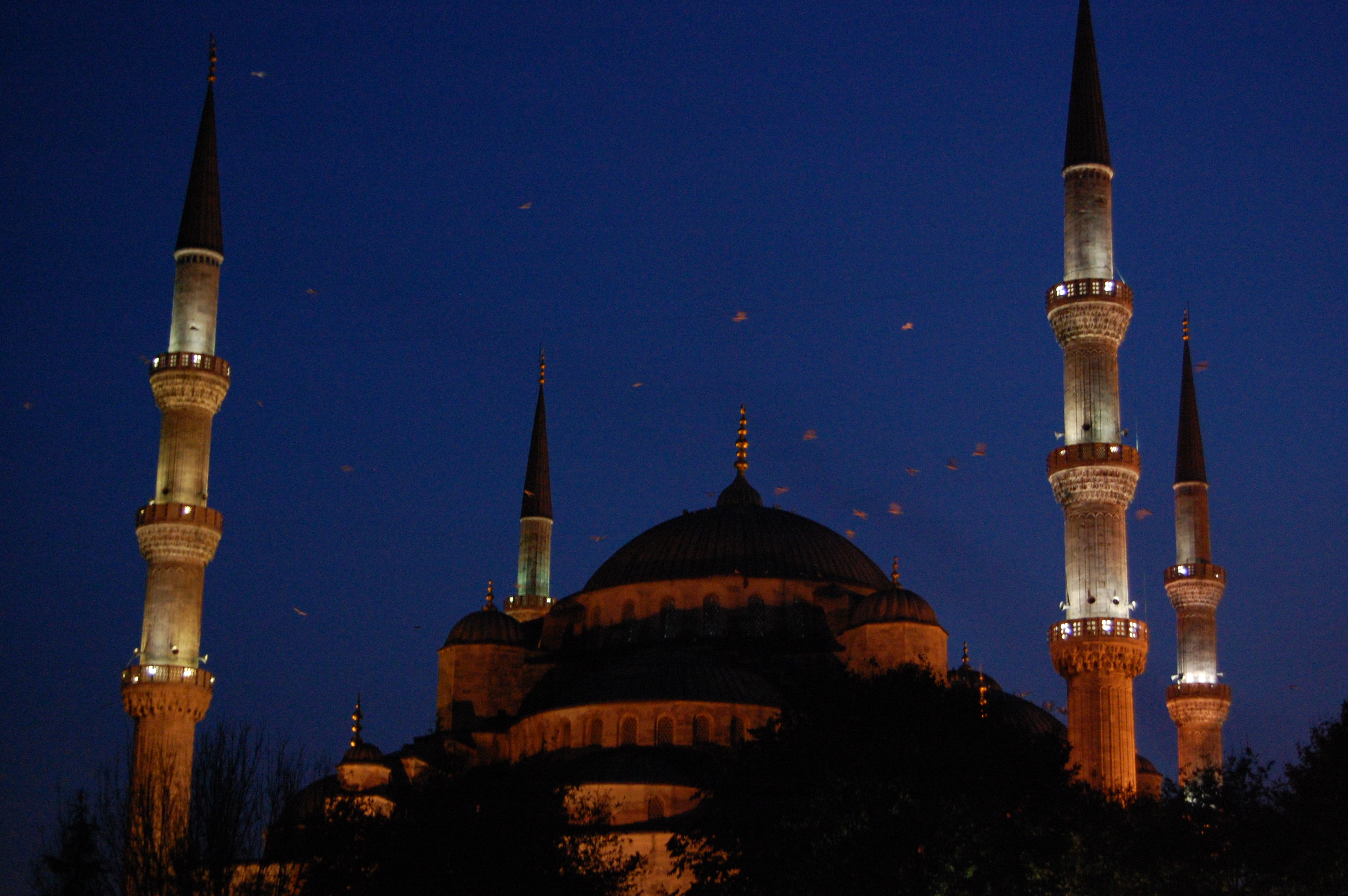
the Blue Mosque at night, the light attracts lots of birds
On Tuesday we were happily anticipating the arrival of my cousin and her husband. Edith is the daughter of my father’s oldest brother, and she and Leo had visited us several years ago in Whitby. They retired to the south-west coast of Turkey, where Leo sails most days. They flew to Istanbul to stay overnight one night at the same hotel and tour with us. They were expected to arrive by noon, so in the morning, after breakfast, we set off to visit the Museum of Turkish and Islamic Arts. You can’t take any pictures inside, but if you google the museum, I suggest clicking the the google Images and check out the excellent collection, especially their carpet collection.
Back to the hotel to find Edith and Leo just arrived, and their room not quite ready, so we all walked up the street to have a coffee – my first and only Turkish coffee, which is like sludge. Then, back to the hotel for their check-in, and then off we went to take the tram to the Galata Bridge. We walked across the bridge, climbed up a steep and winding hill to the Galata Tower, and then up the steep and winding stairs of the tower for a magnificent view of the city.
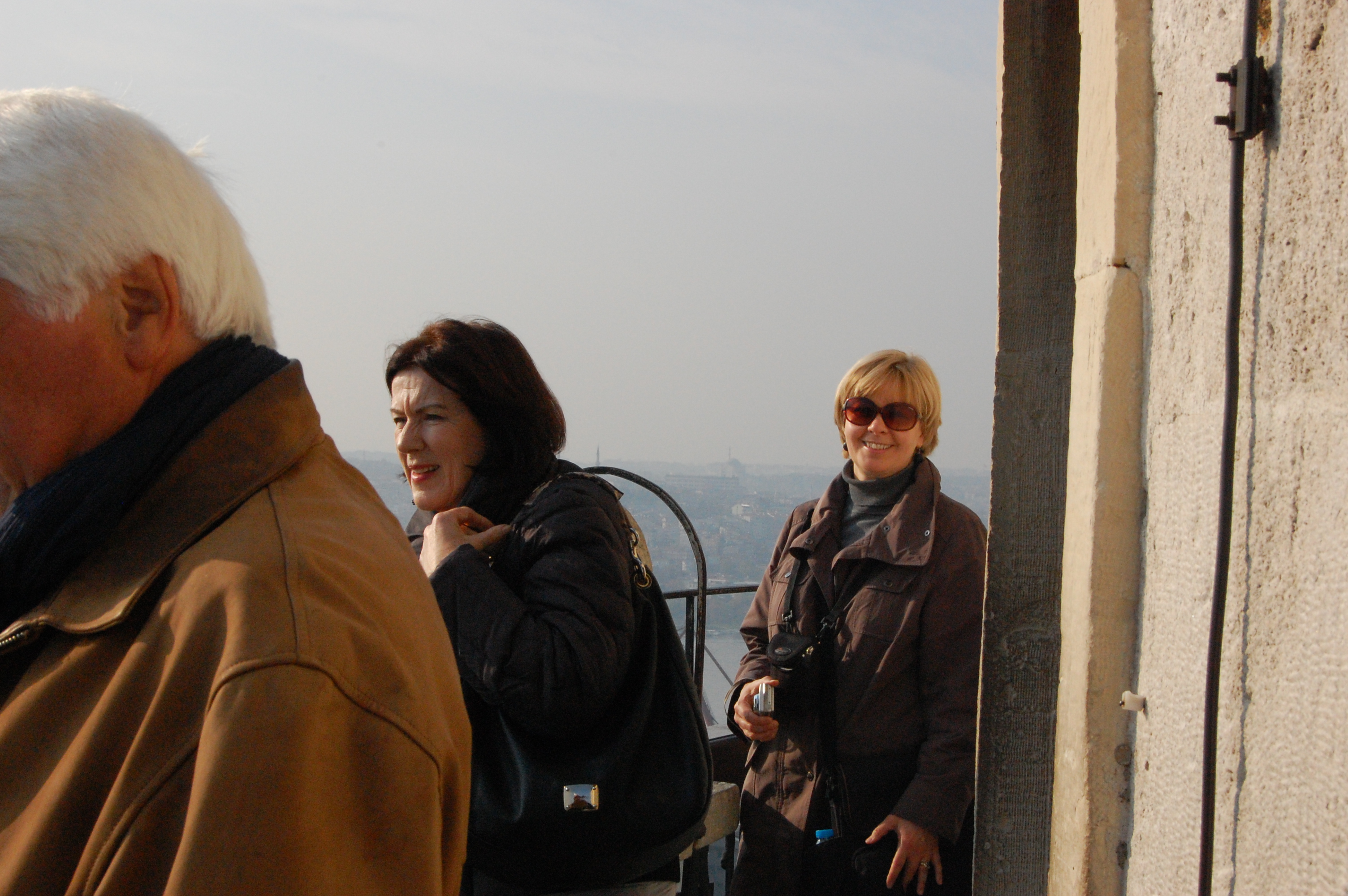
Leo (partially), Edith and I at the top of Galata Tower
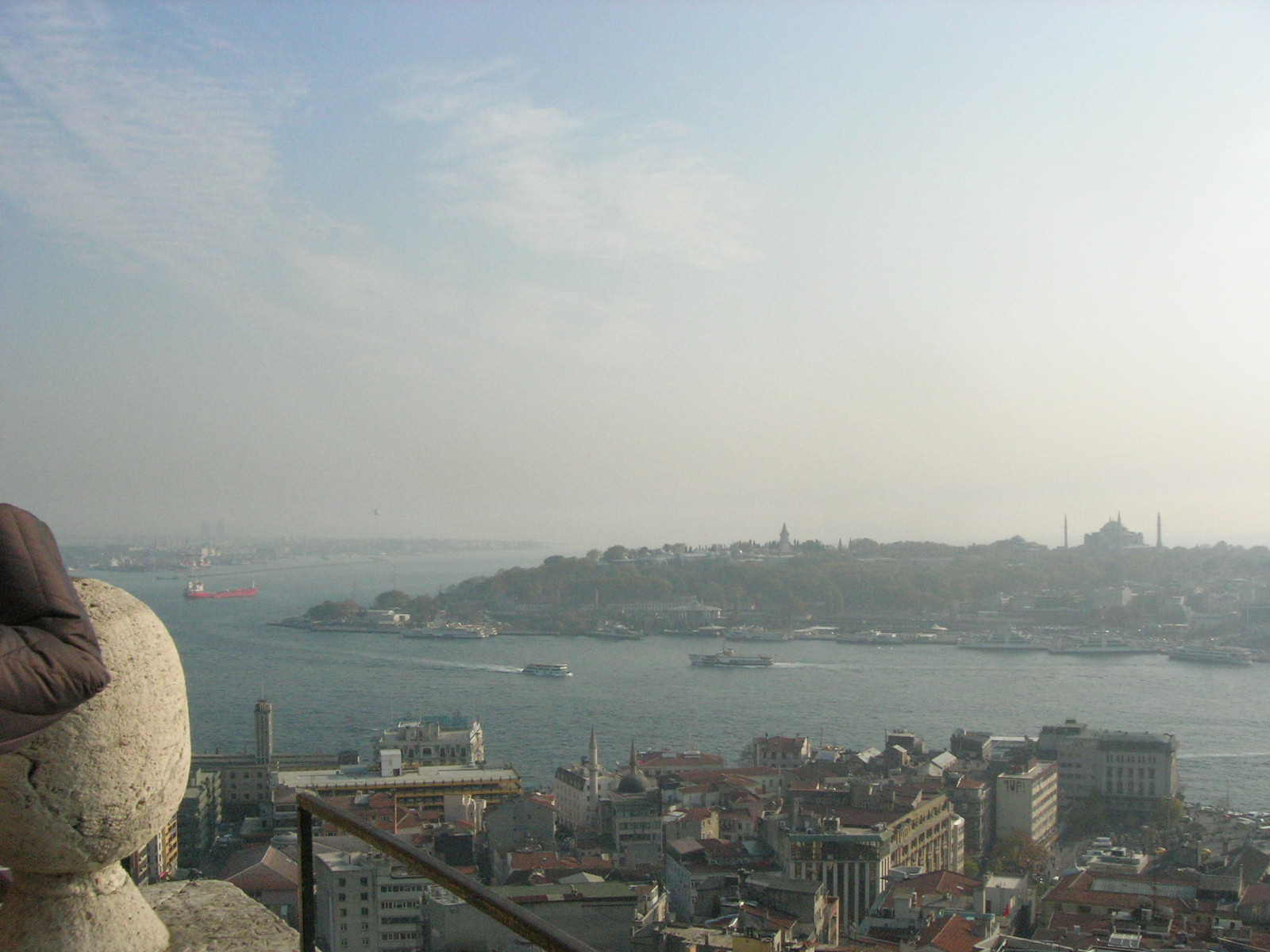
tower view
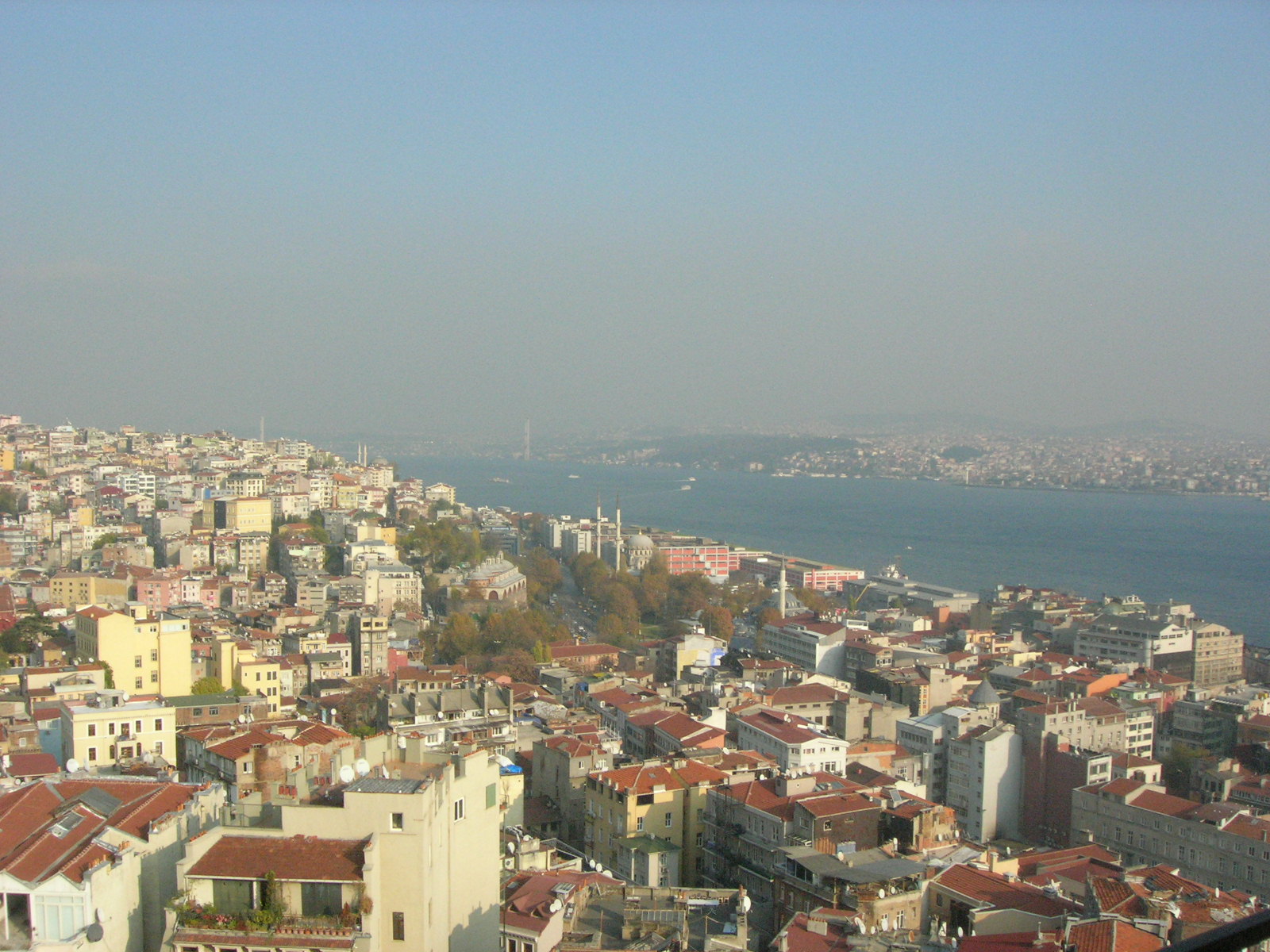
tower view
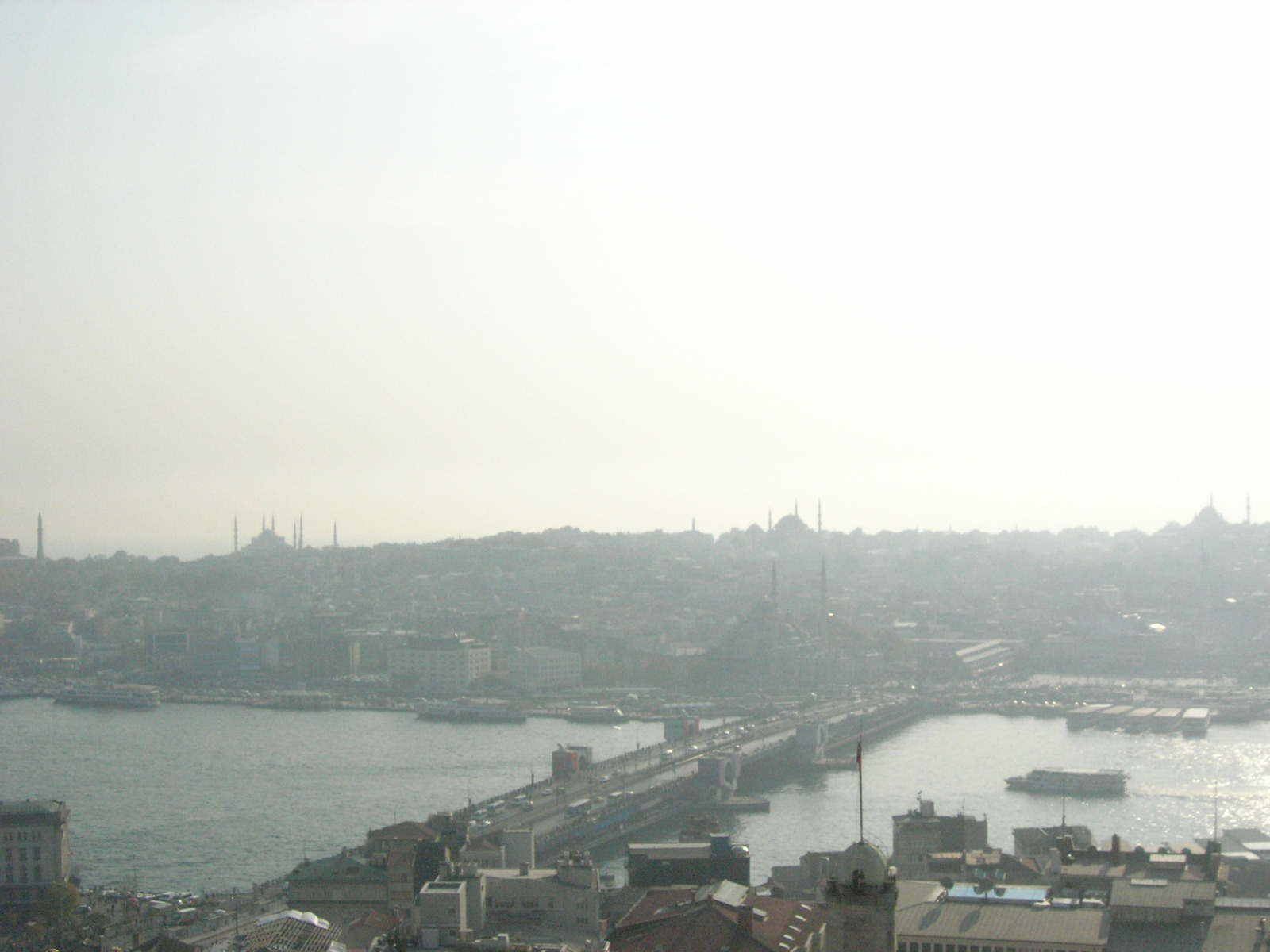
view of Galata Bridge and city
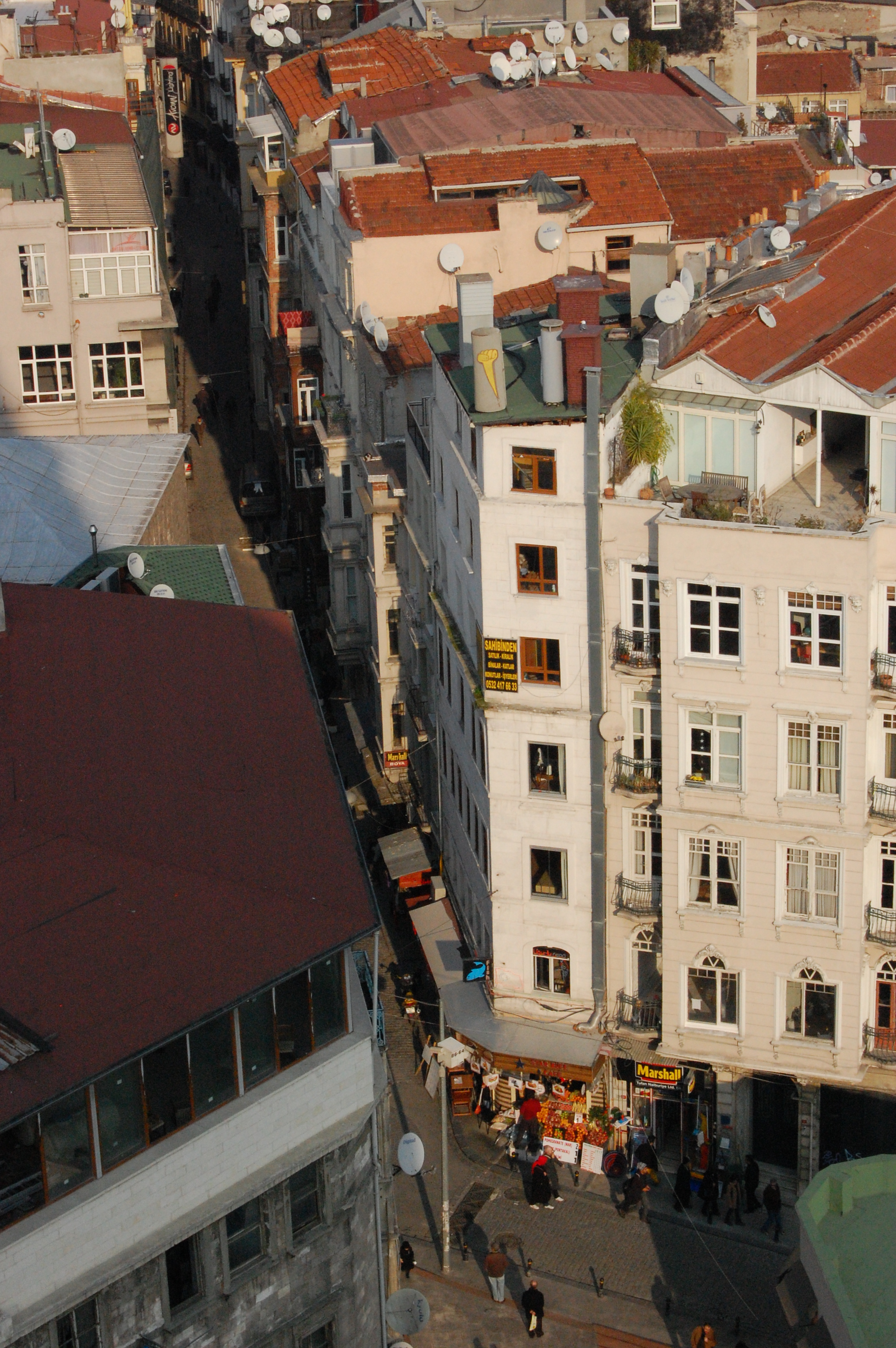
straight down
Back down on the ground, we had a light lunch at a small cafe, and then wandered along the main street of this area of the city, called Istiklal Caddesi (Caddesi means “street”), though it was once known as The Grande Rue de Pera. The street is lined with stores (chain stores like you can see everywhere in the world now), European embassy buildings, and just off the main street, lots of trendy bars and restaurants. The street was VERY busy with local people.
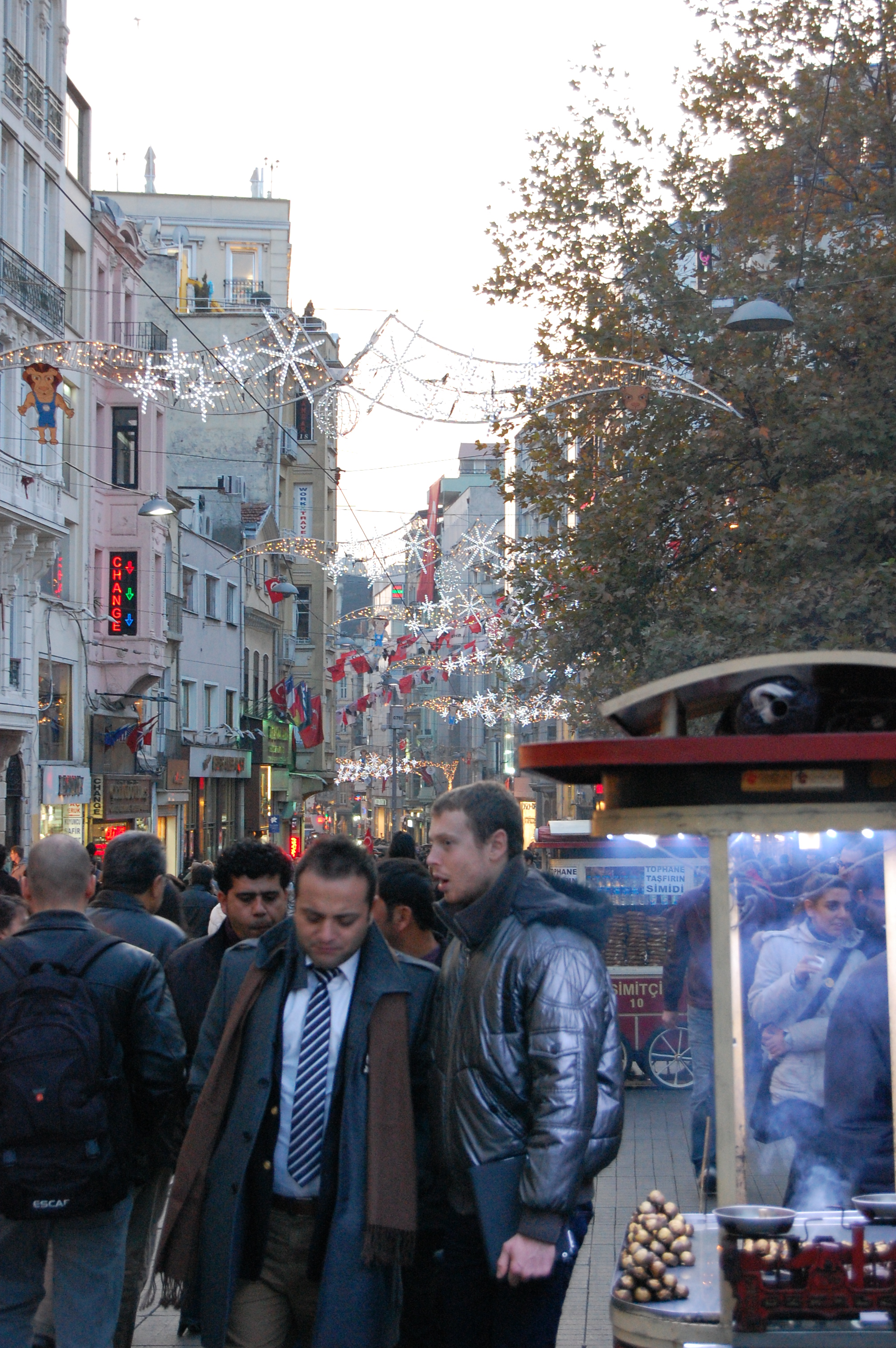
busy street
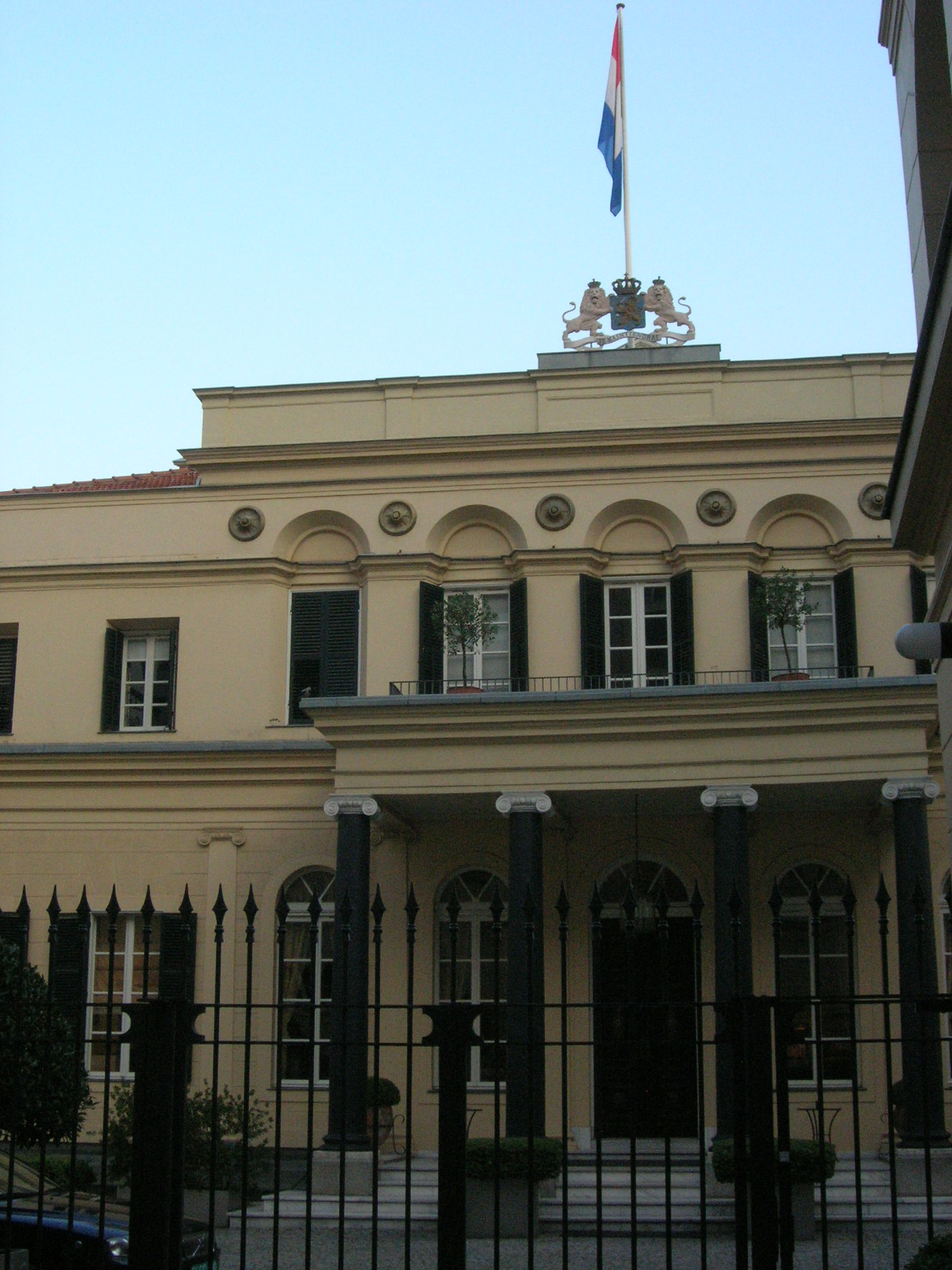
Dutch embassy
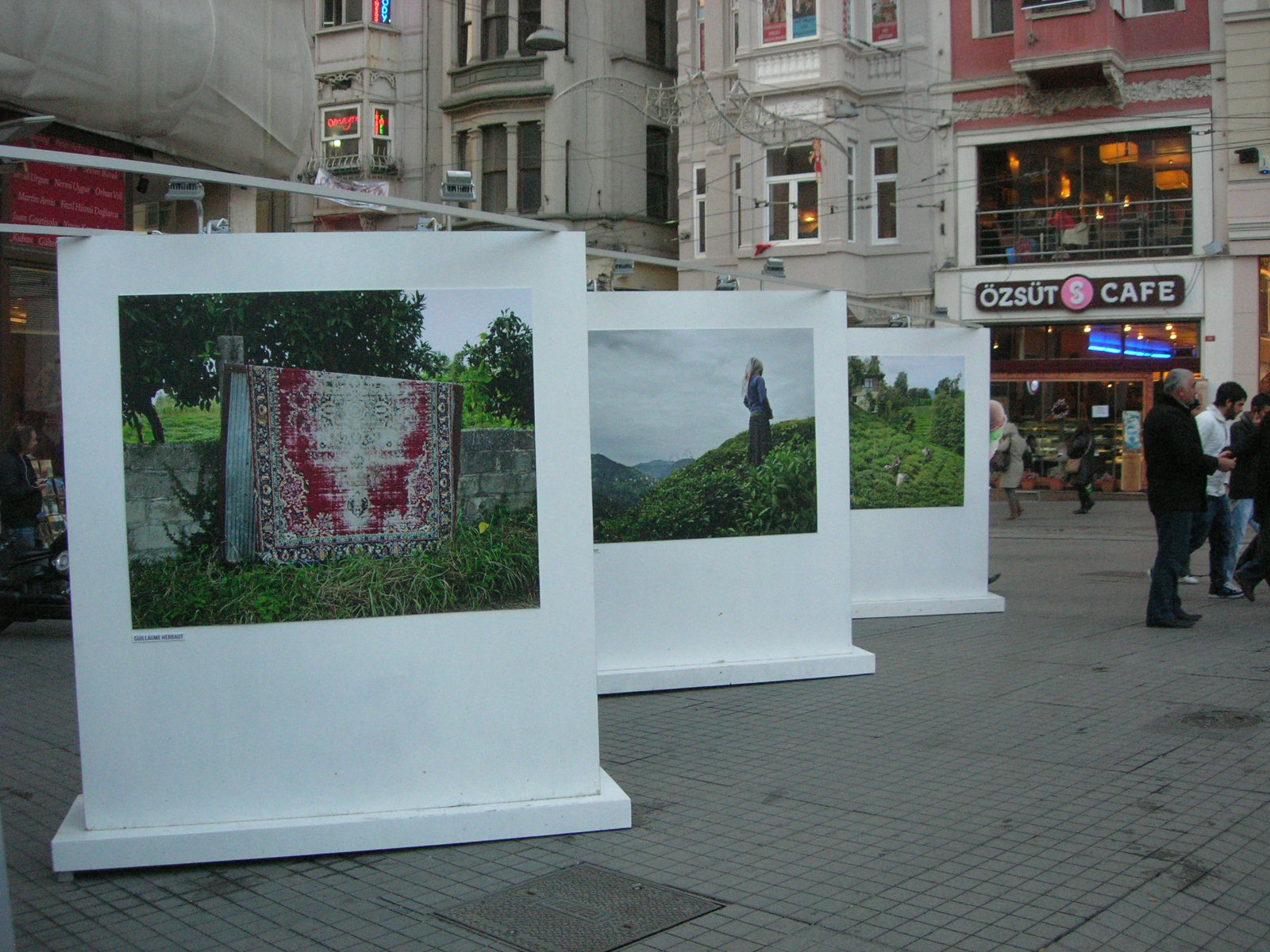
photo exhibit on the street
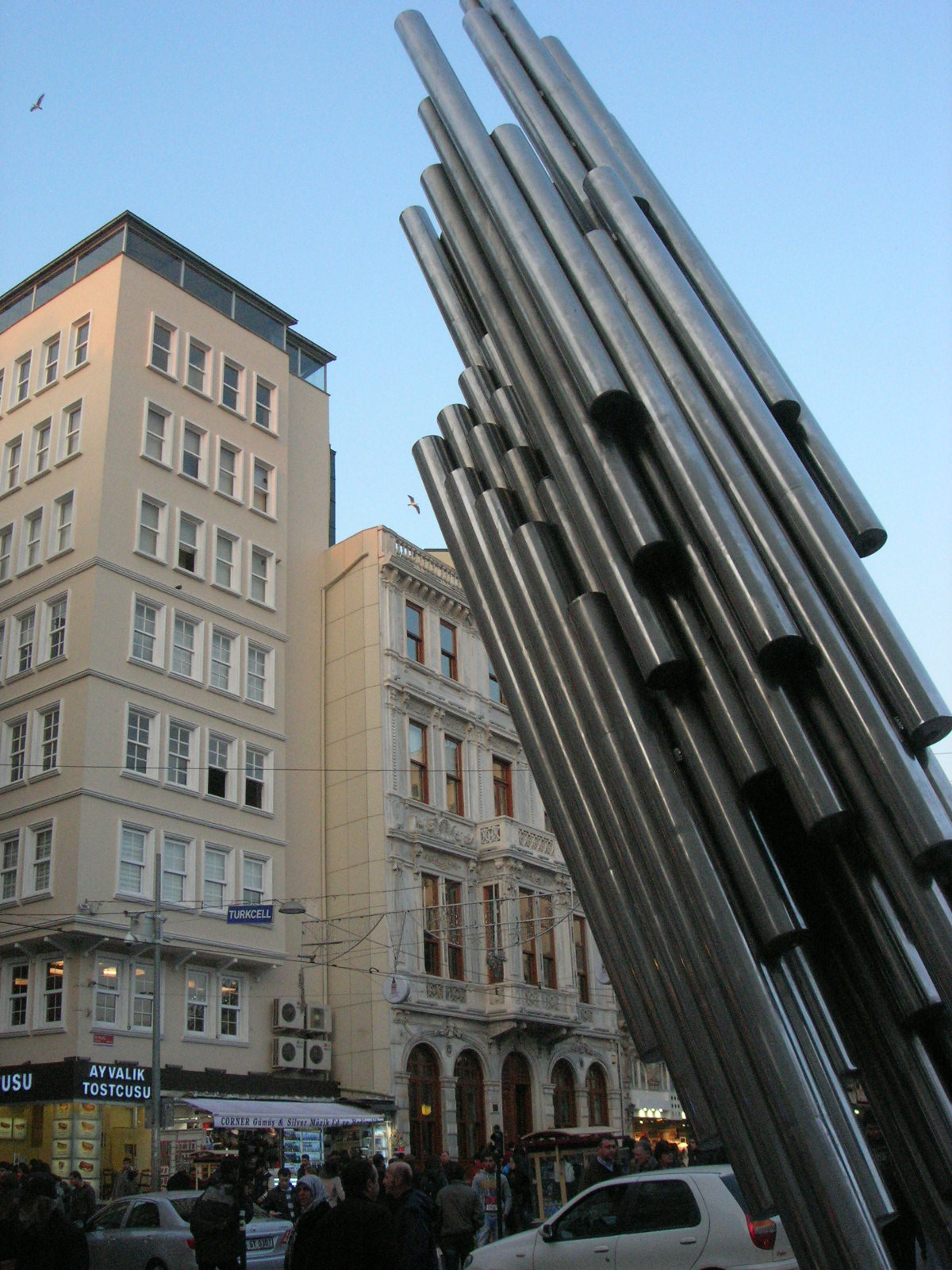
modern sculpture

old gated entrance into a lane of shops
We walked the full length of the street to Taksim Square, where stands the 1928 Monument of Independence, which shows Ataturk and the other founding fathers of the modern Turkish Republic.
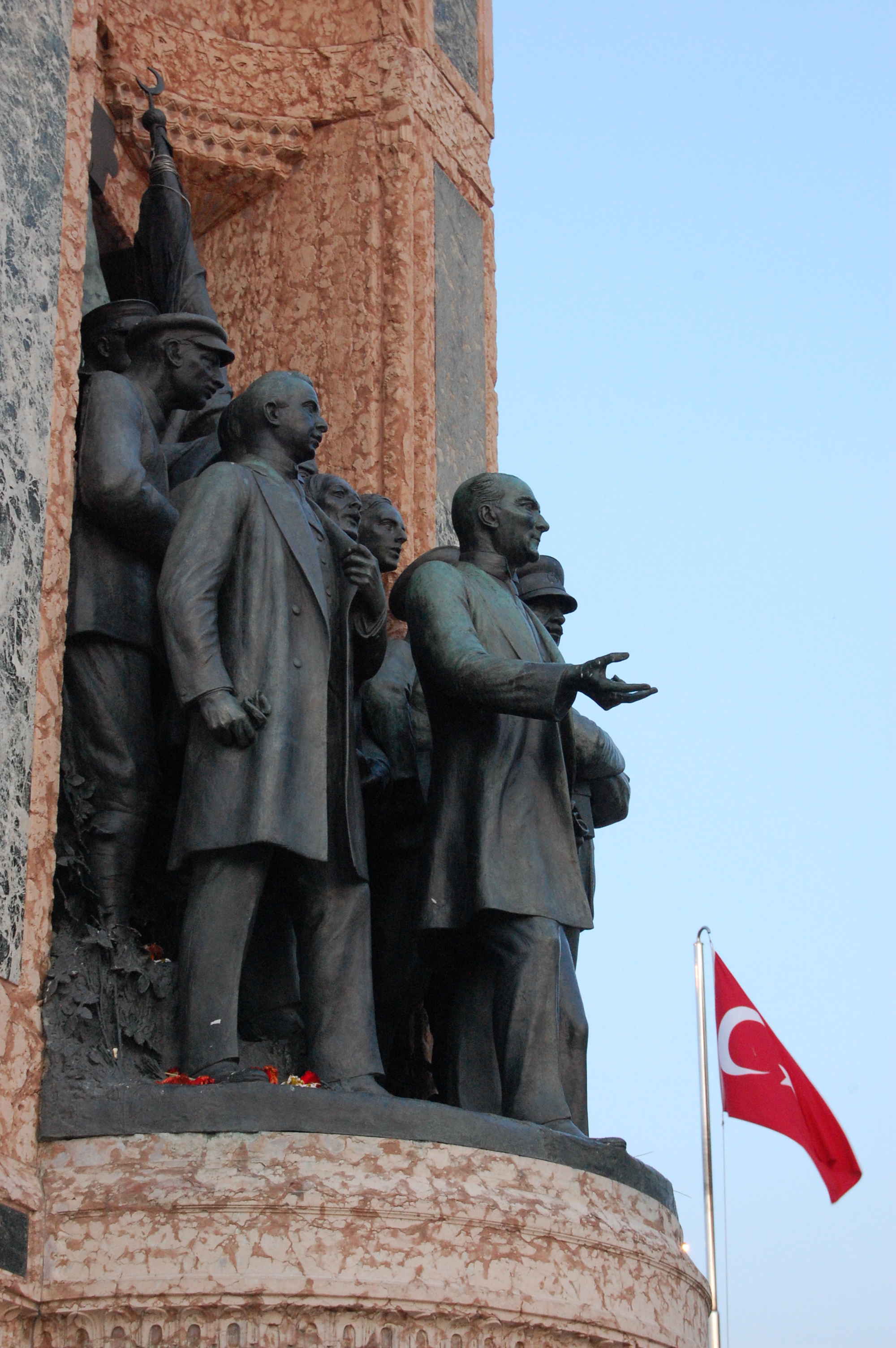
Monument of Independence
Then, all the way back down the street, much to Leo’s dismay (and tired feet) to the Pera Palas Hotel for tea. This “atmospheric period piece” opened in 1892, “mainly to cater for travellers on the Orient Express.” Famous guests include Agatha Christie (she wrote much of Murder on the Orient Express here), Ernest Hemingway, Alfred Hitchcock, Mata Hari, Greta Gardo… etc. The lobby is magnificent.
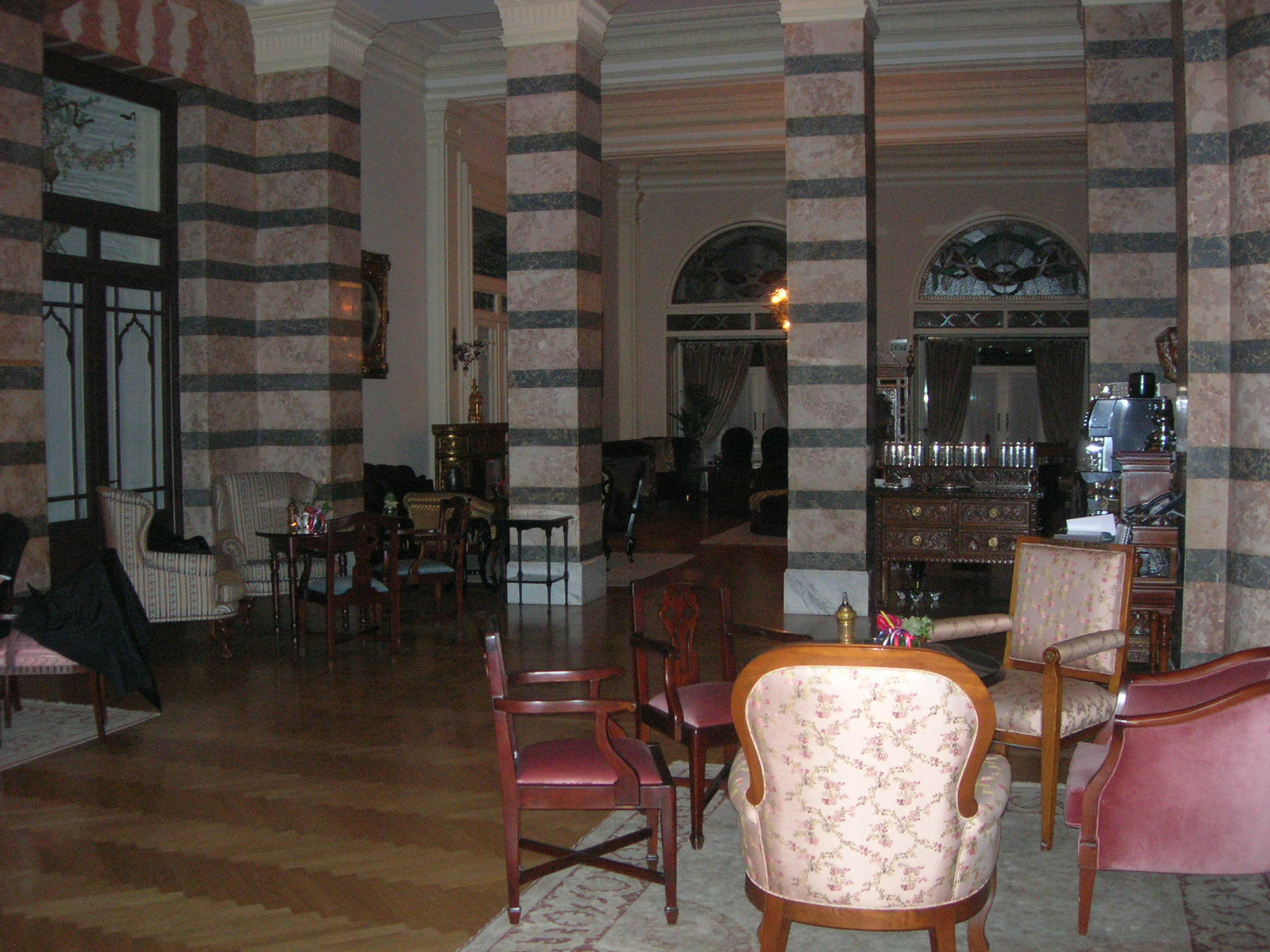
Pera Palas Hotel
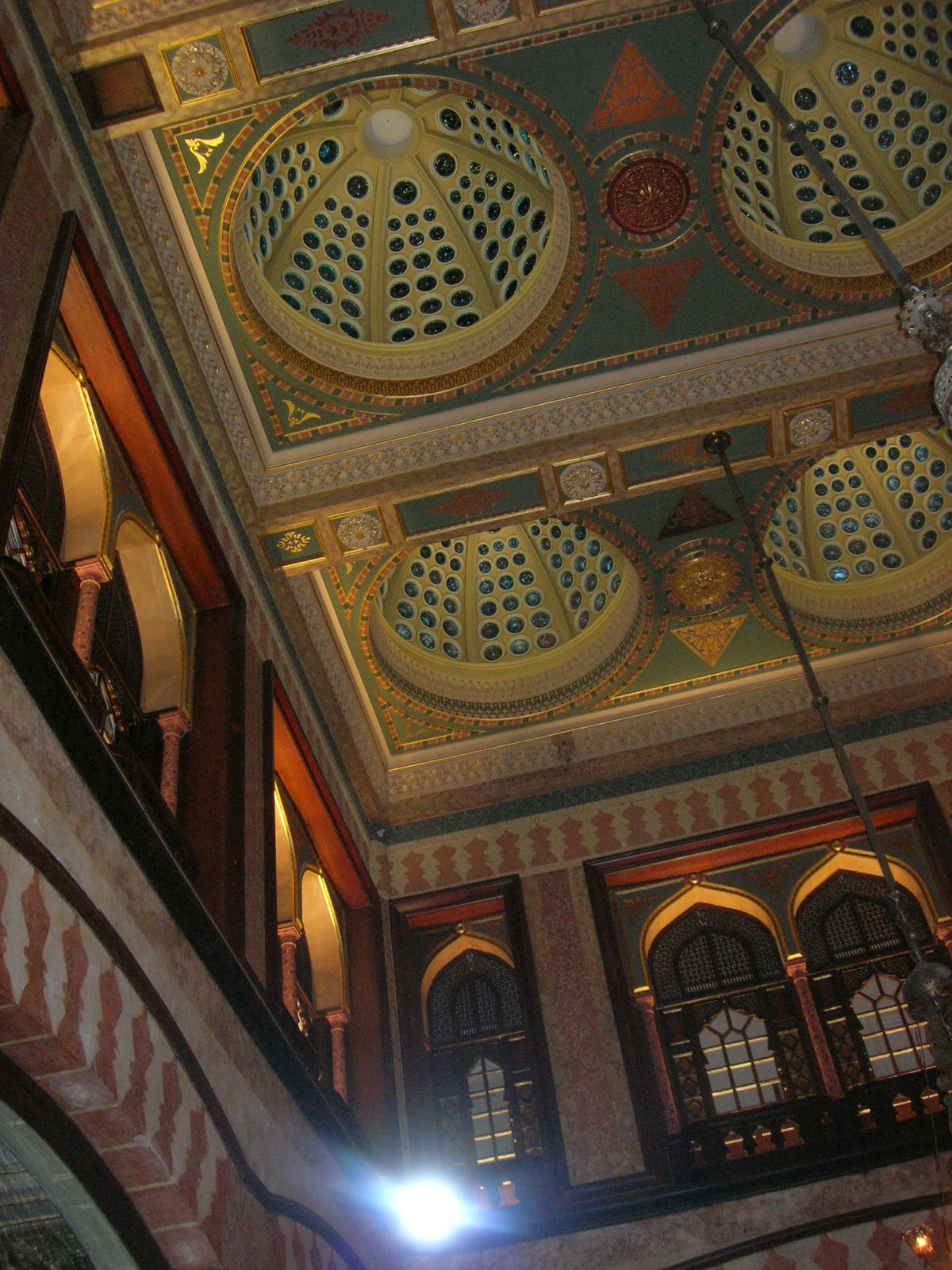
ceiling detail
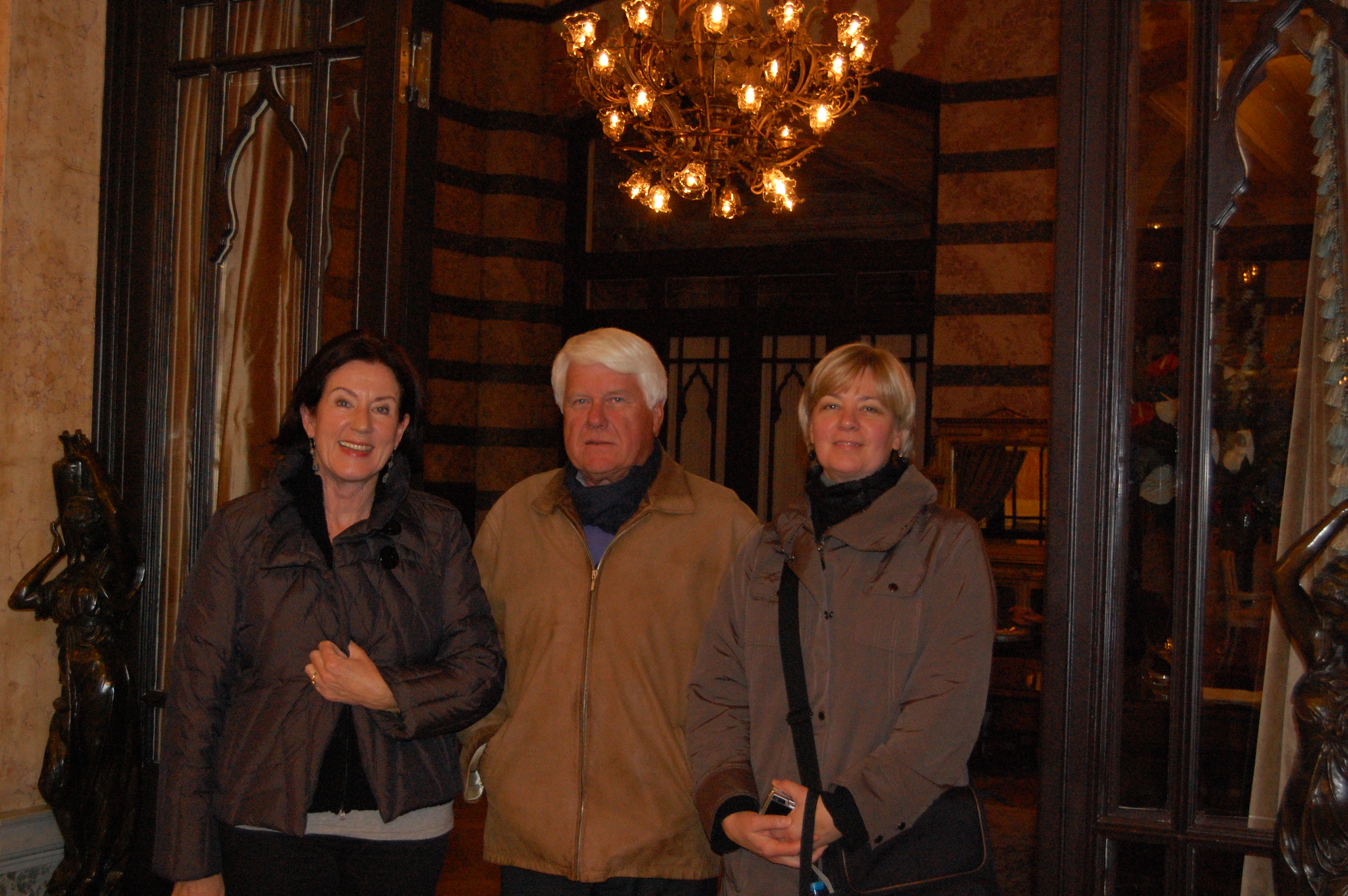
with Edith and Leo inside hotel entrance
After a reviving cup of tea we wandered some more to find a bar, where we enjoyed a few drinks, and then on to find a restaurant, where we had a fabulous meal. We took a taxi back to the hotel.
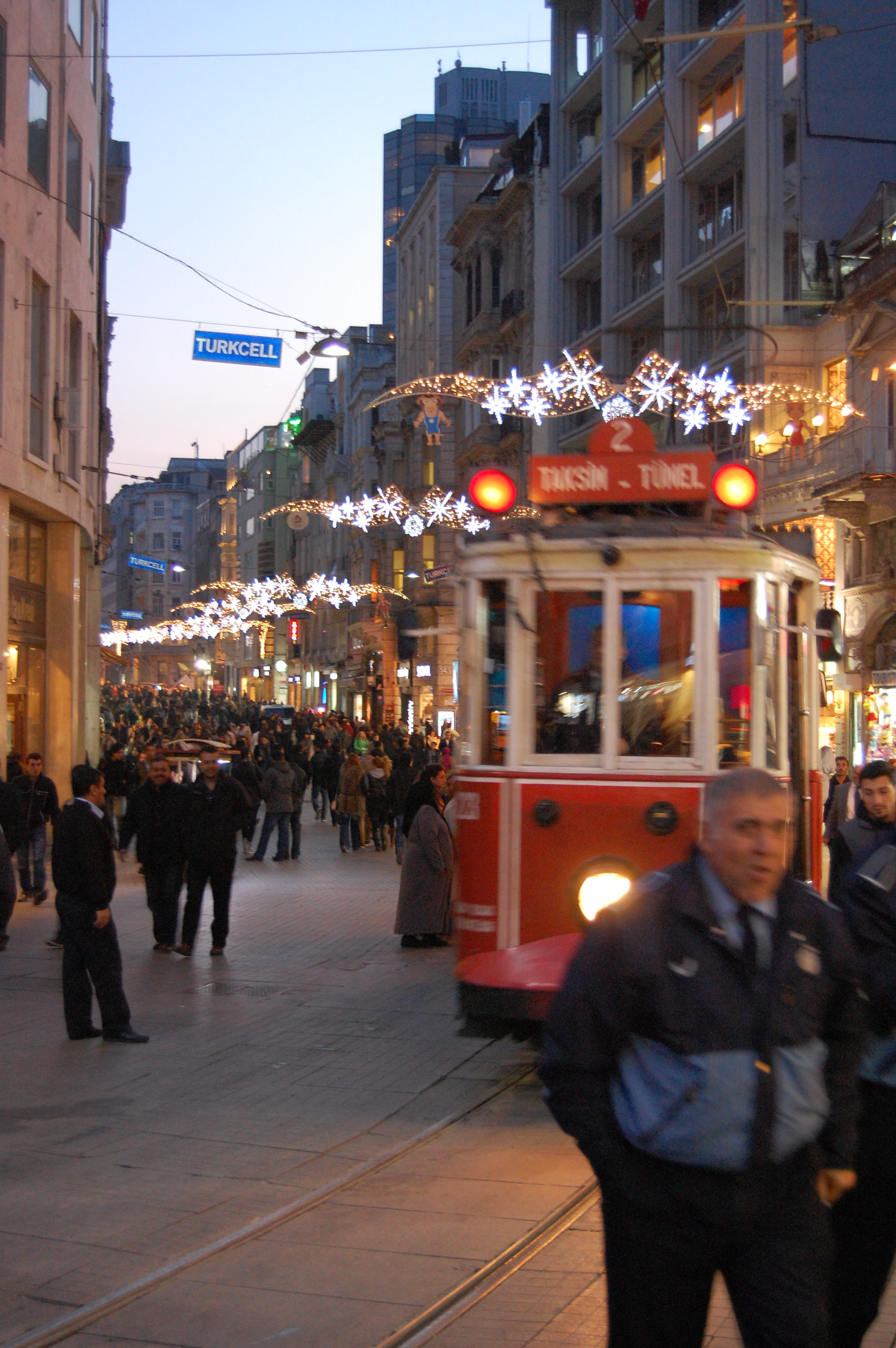
Istiklal Caddesi tram in the evening
Gamze met us in the morning, after breakfast, for a full day of touring. We started the day by driving to Eyup, a village area in “greater Istanbul,” a little outside the downtown core. Eyup is “the burial place of Eyup Ensari, the standard bearer of the prophet Mohammed, and is a place of pilgrimage for Muslims from all over the world. Its sacrosanct status has kept it a peaceful place of contemplation. The wealthy elite established mosques and street fountains in the village but, above all, they chose Eyup as a place of burial….” We first visited the Eyup Sultan Mosque. “Mehmet the Conquerer built the original mosque in 1458, five years after his conquest of Istanbul, in honour of Eyup Ensari. That building fell into ruins, probably as a result of an earthquake, and the present mosque was completed in 1800 by Selim III.”
Much of it was under renovation, but we wandered through what areas we could.
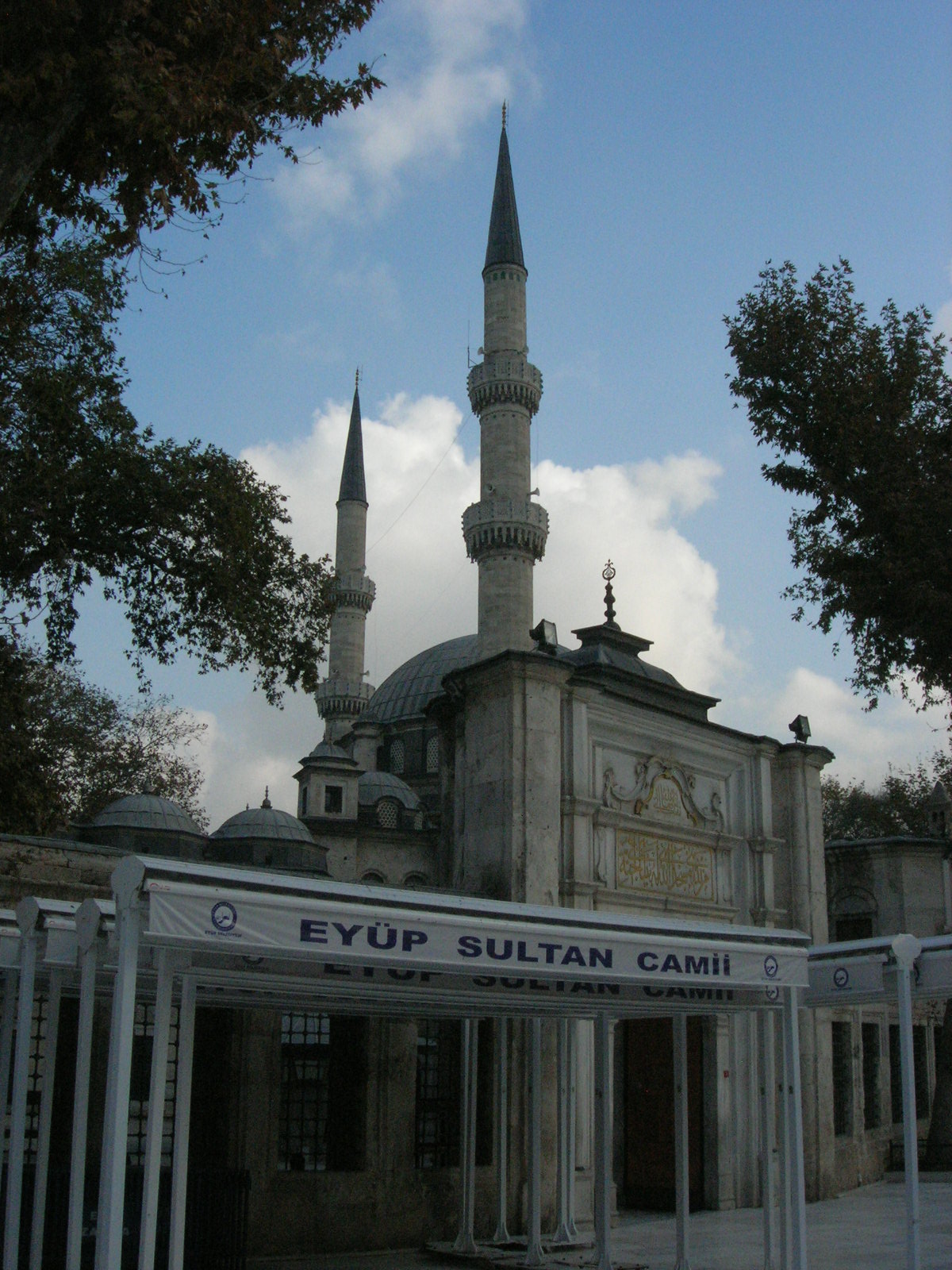
Eyup Sultan Mosque
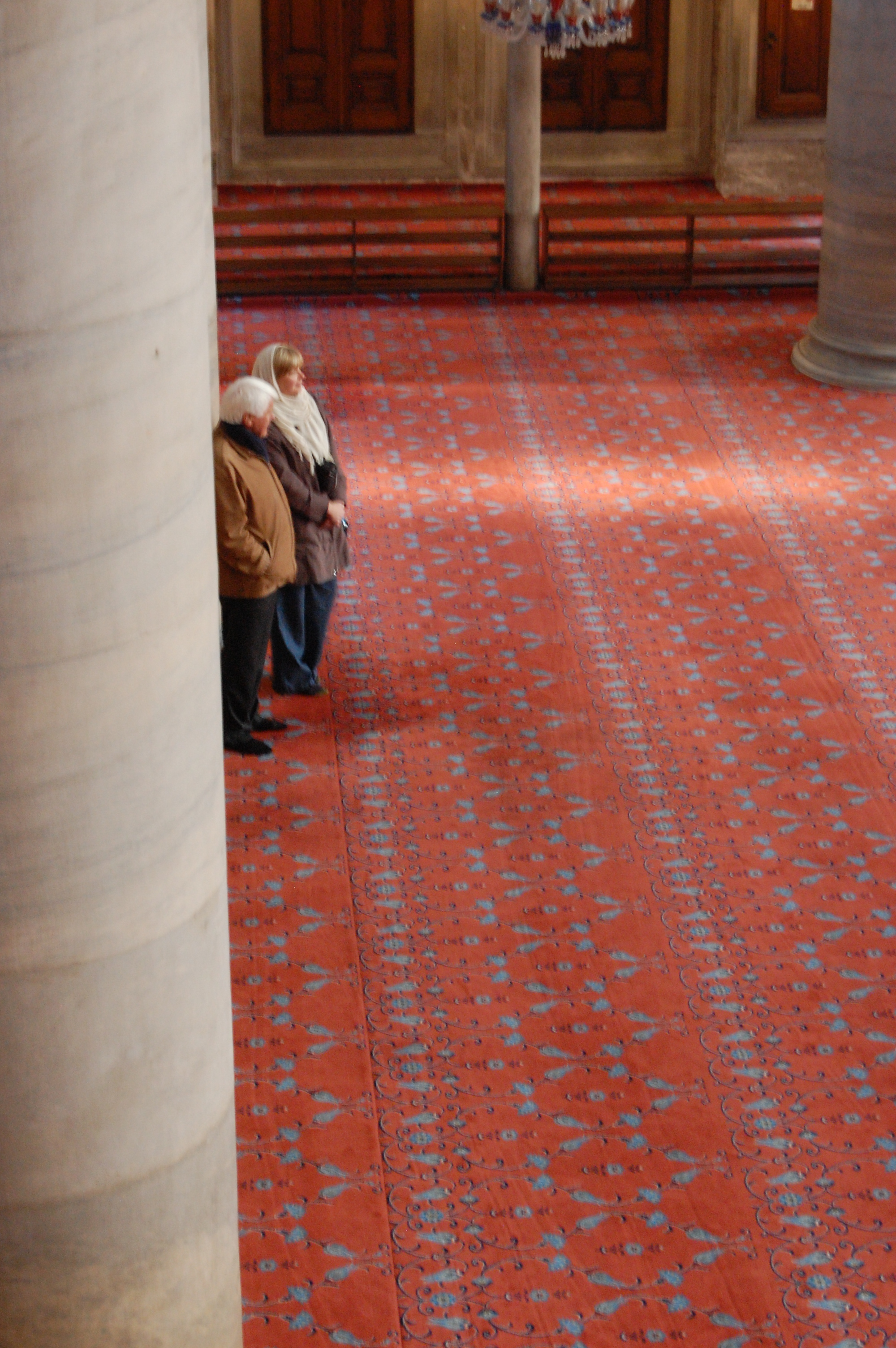
Leo and I inside the mosque
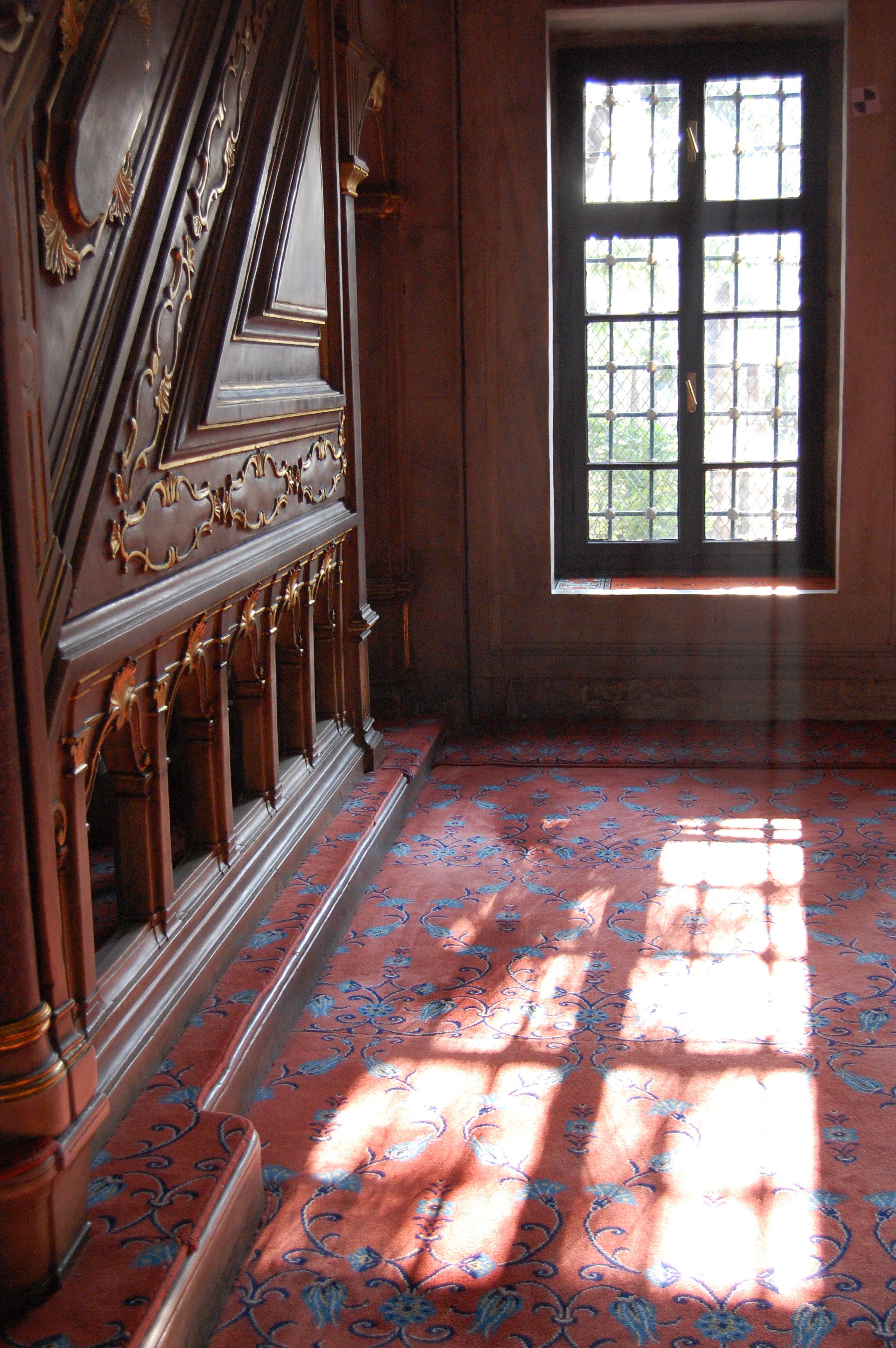
detail
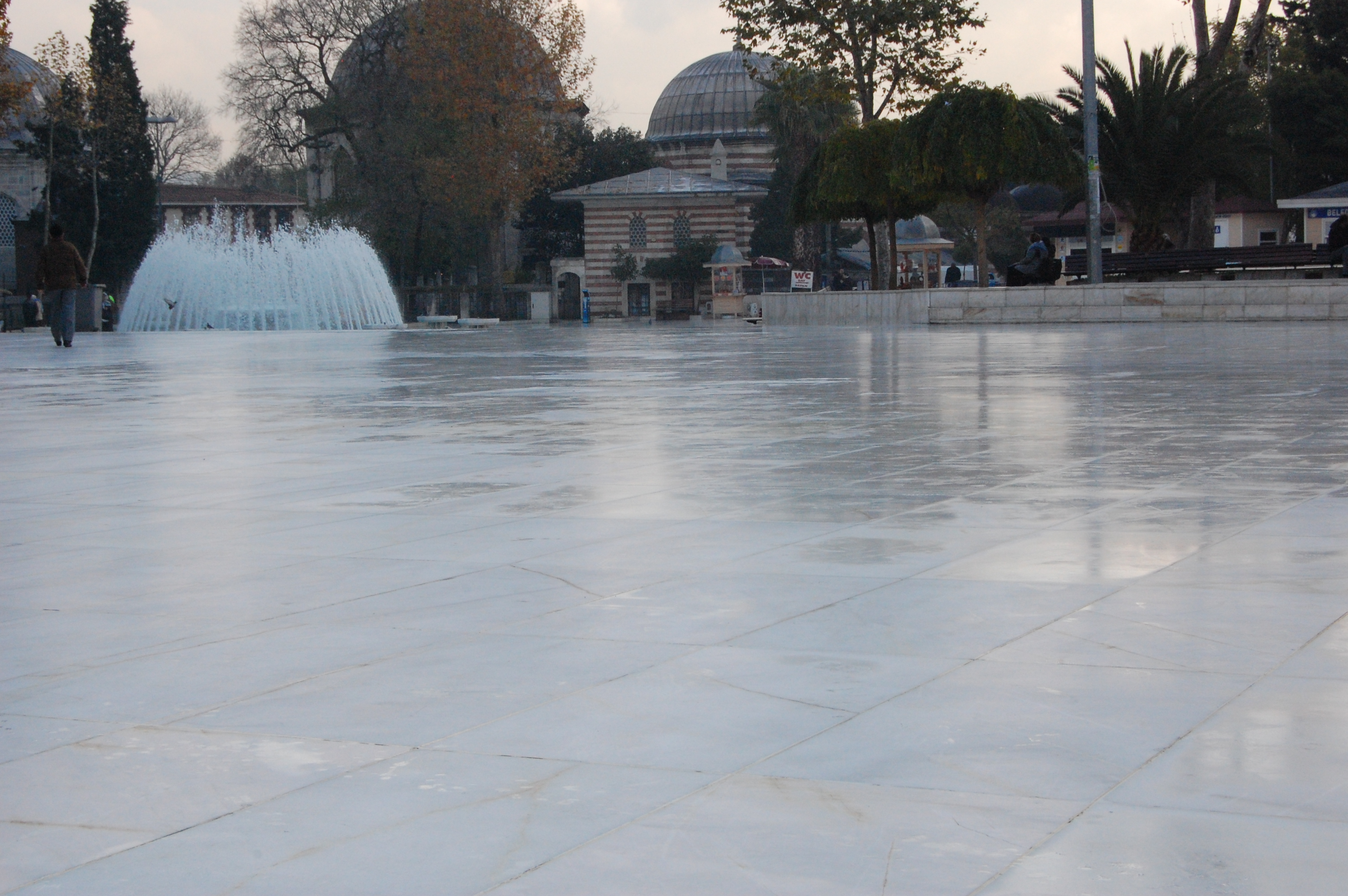
street fountain
After visiting the mosque, we climbed the hill of the Eyup Cemetery to the Pierre Loti Cafe that stands at the top of the hill. The path is lined with tombstones, most dating from the Ottoman era. The gravestone decorations indicate sex, occupation, rank and number of children.
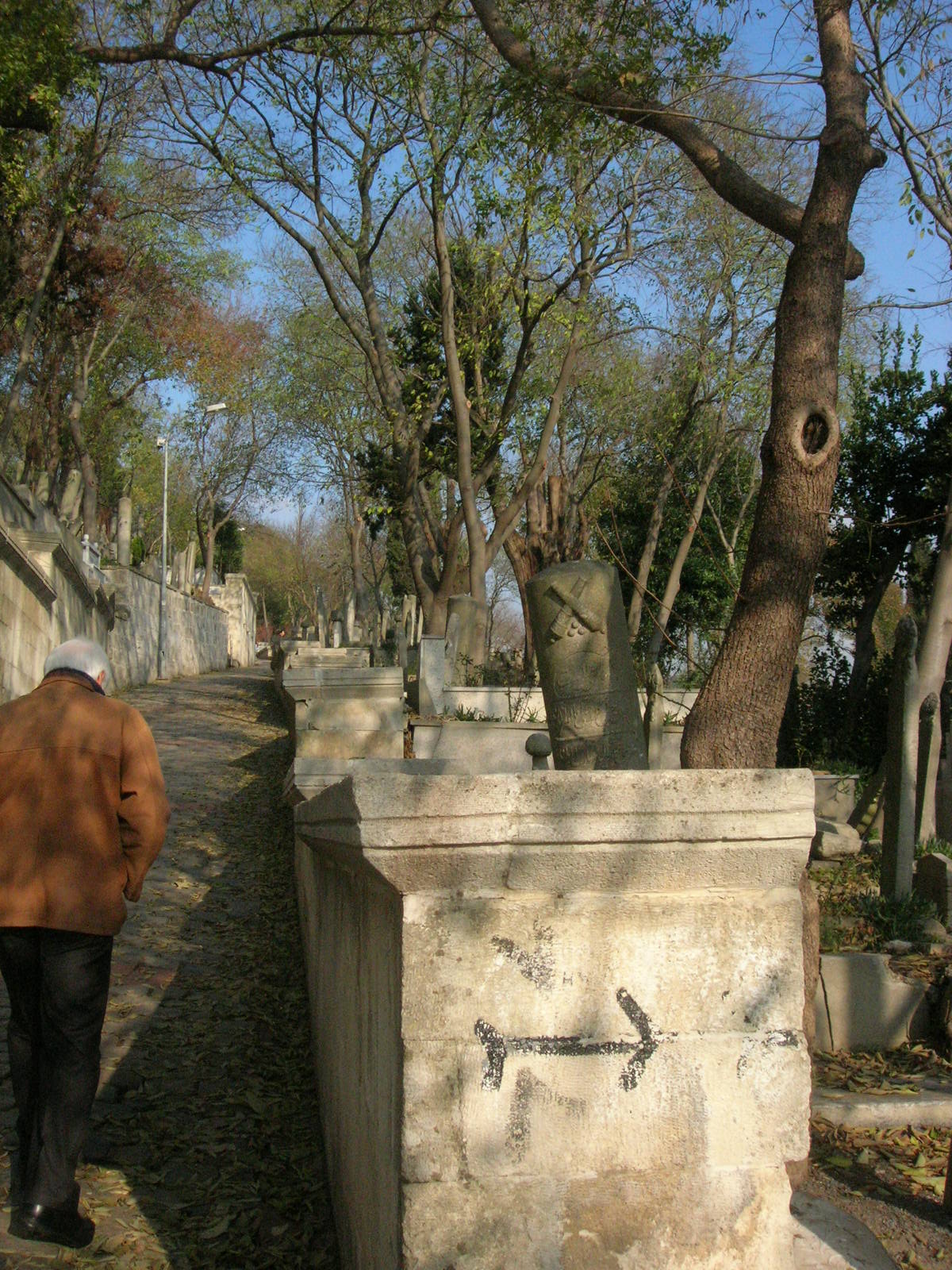
walking up the hill of the cemetery
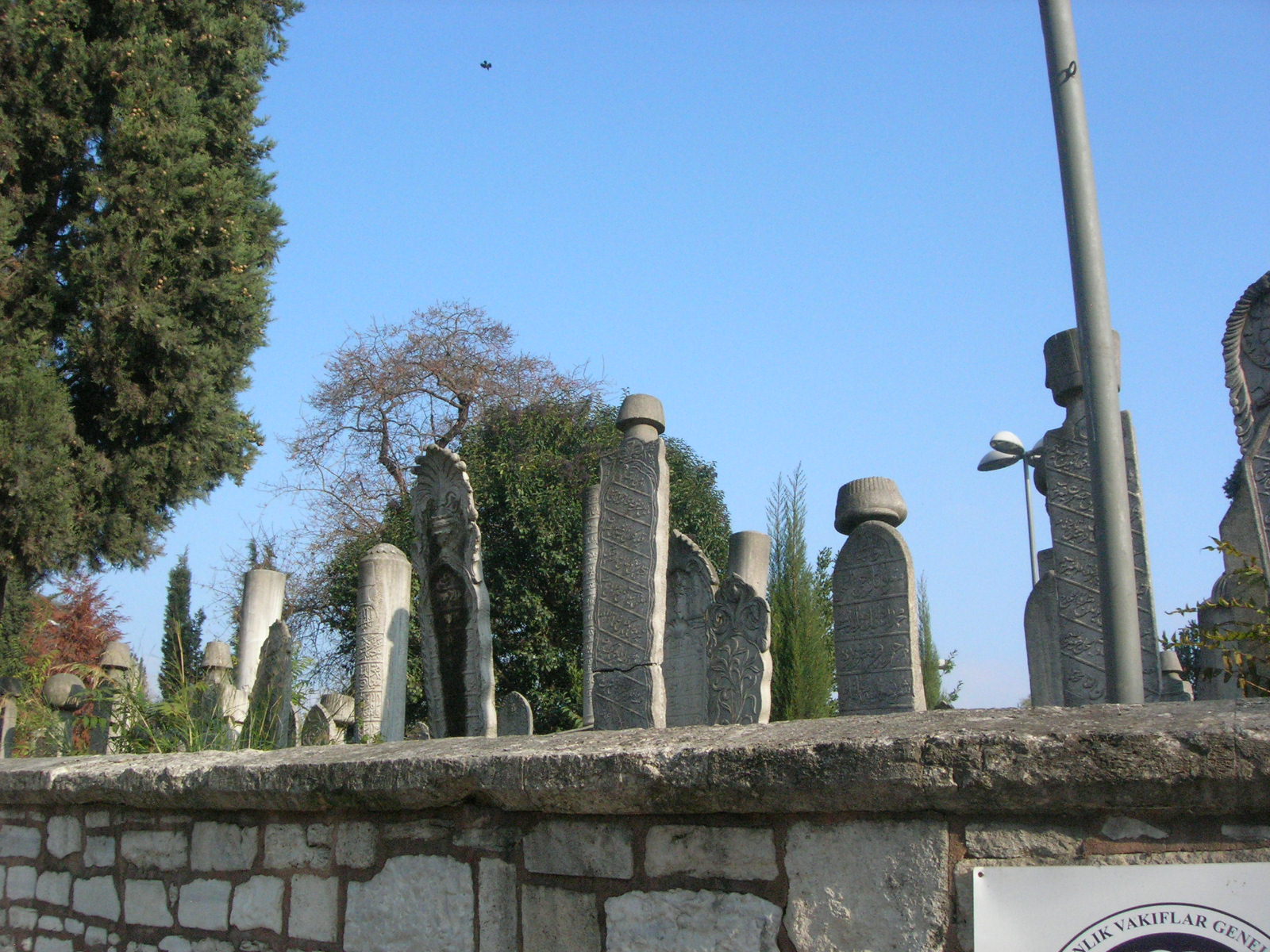
Ottoman gravestones
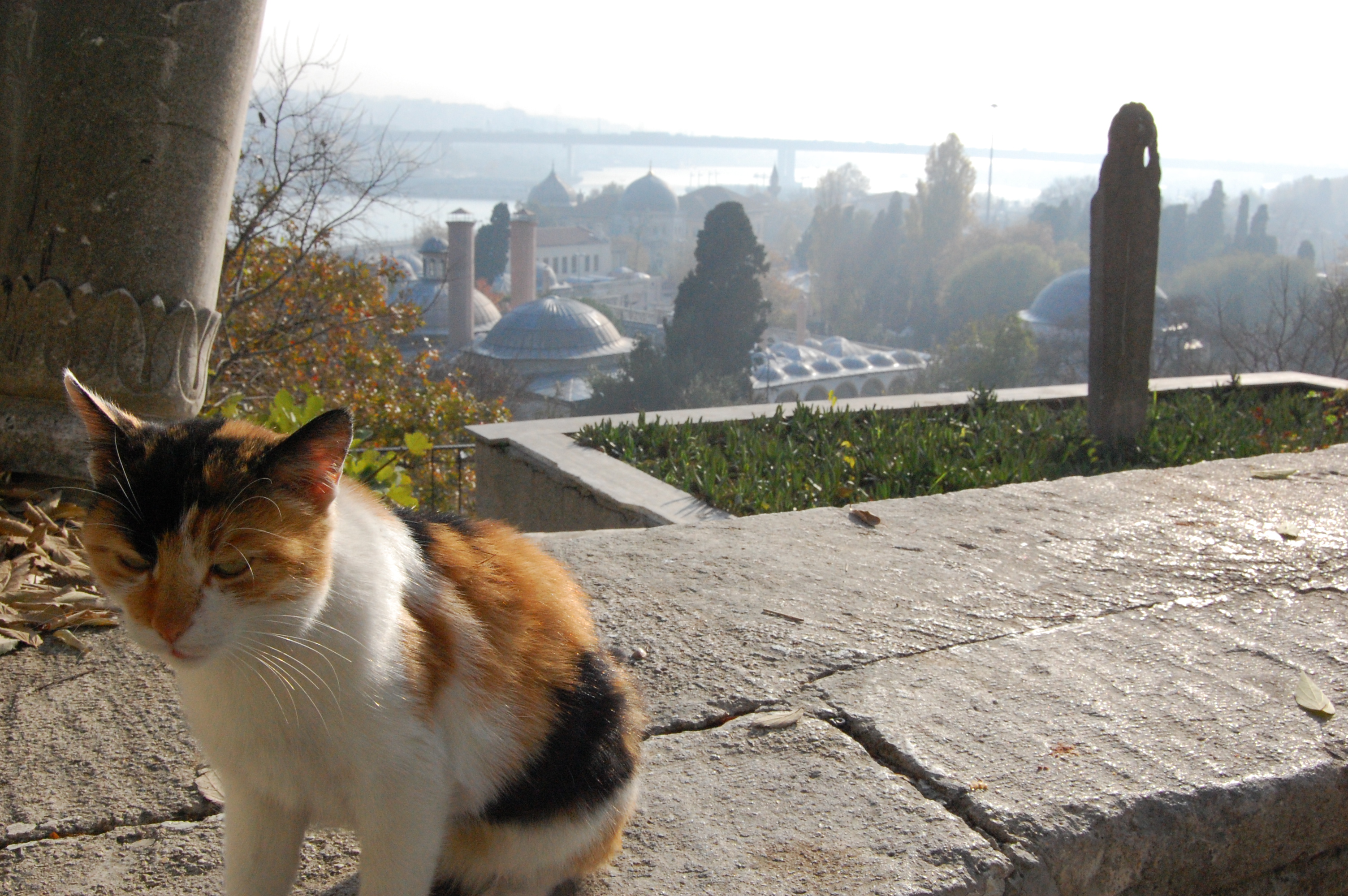
at the top

reviving tea and coffee at the Pierre Loti Cafe
Pierre Loti was a French navel officer and novelist who frequented this cafe during his stay in 1876, when he supposedly fell in love with a harem girl and wrote an autobiographical novel about their affair. Regardless of the history of the cafe, it is a delightful spot with a gorgeous view.
We walked back down the hill, returned to the car, and drove to the Fatih, Fener and Balat neighbourhoods. From the book: “A visit to these neighbourhoods is a reminder that for centuries after the Muslim conquest, Jews and Christians made up around 40 per cent of Istanbul’s population. Balat was home to Greek-speaking Jews from the Byzantine era onwards; Sephardic Jews from Spain joined thme in the 15th century. Fener became a Greek enclave in the early 16th century and many wealthy residents rose to positions of prominence in the Ottoman Empire. Hilltop Fatih is linked to the city’s radical Islamic tradition and you will see far more devout Muslims here than anywhere else in Istanbul. All three areas are residential, their maze of streets the preserve of washing lines and children playing.”
Gamze grew up in the neighbourhood of Fener, so knew the area well. She took us to see the Church of St. Mary of the Mongols, for which you usually need an appointment, but she knows the caretaker, who would let us in for a small fee. We parked and Gamze rang the bell for the caretaker, but there was no answer. She called someone, to be reminded it was market day, and the woman would likely be out for awhile. We walked the winding, hilly streets for a look at the neighbourhood…
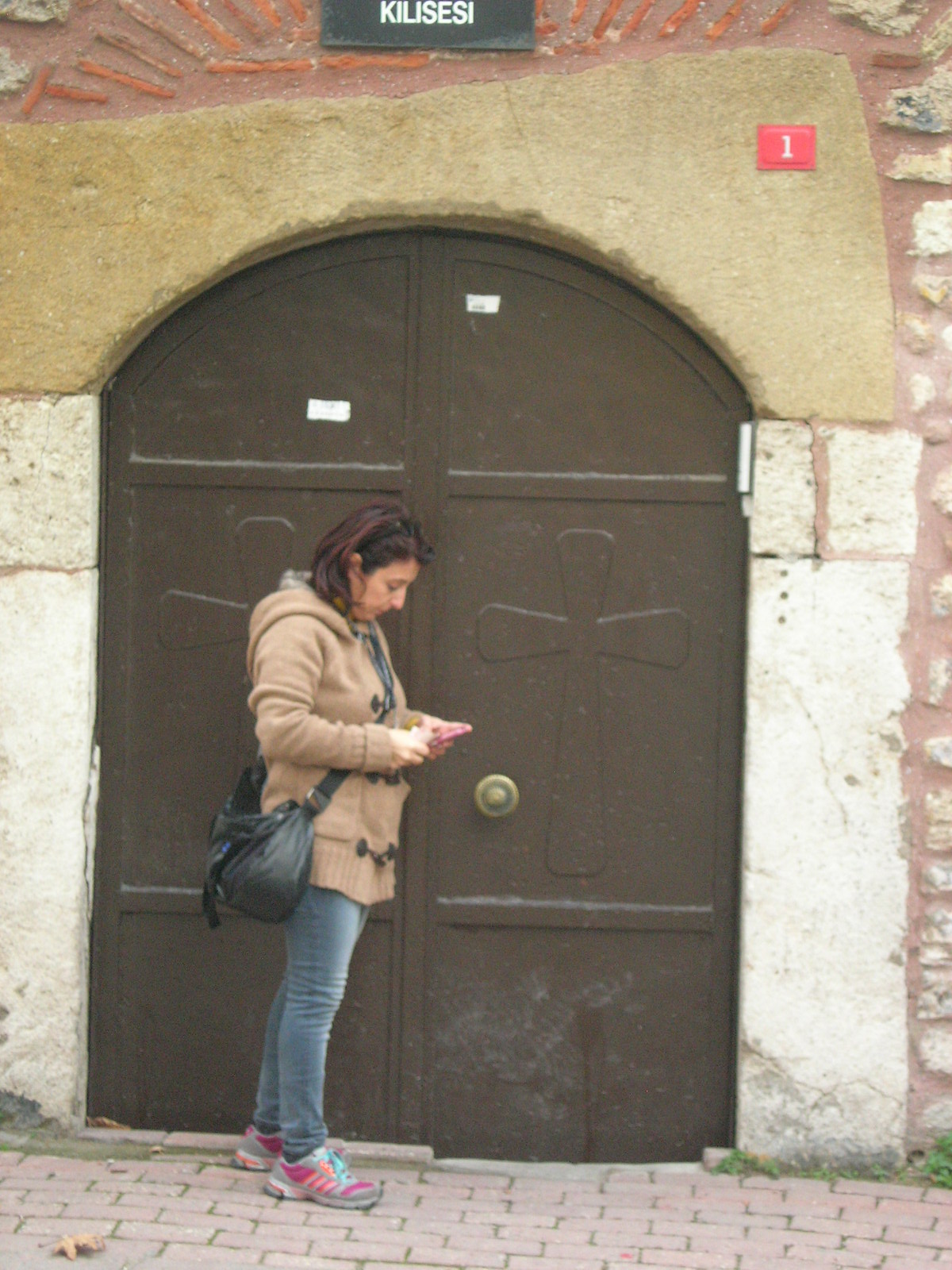
Gamze waiting for a response at the door to the church
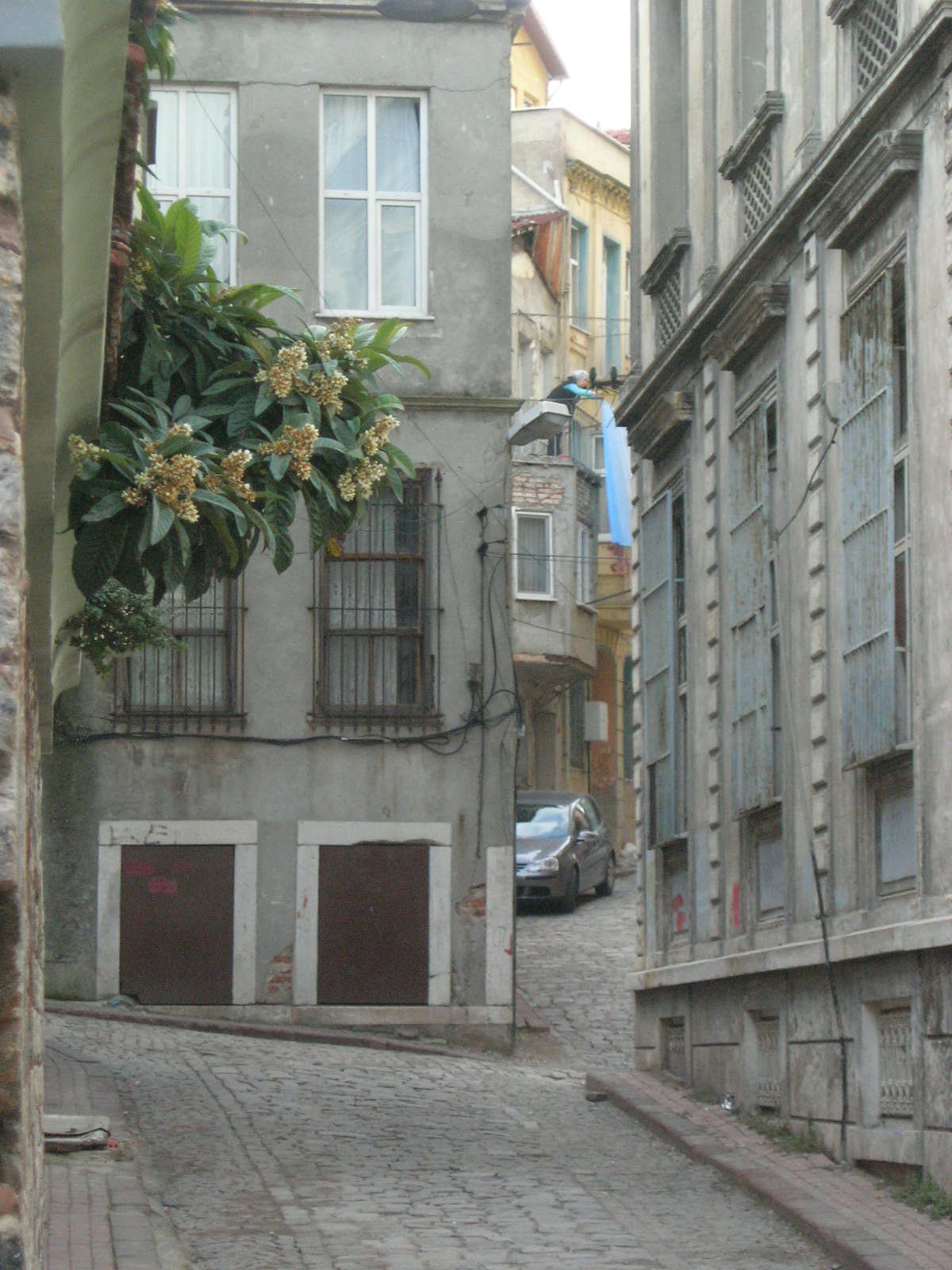
street scene in Fener district
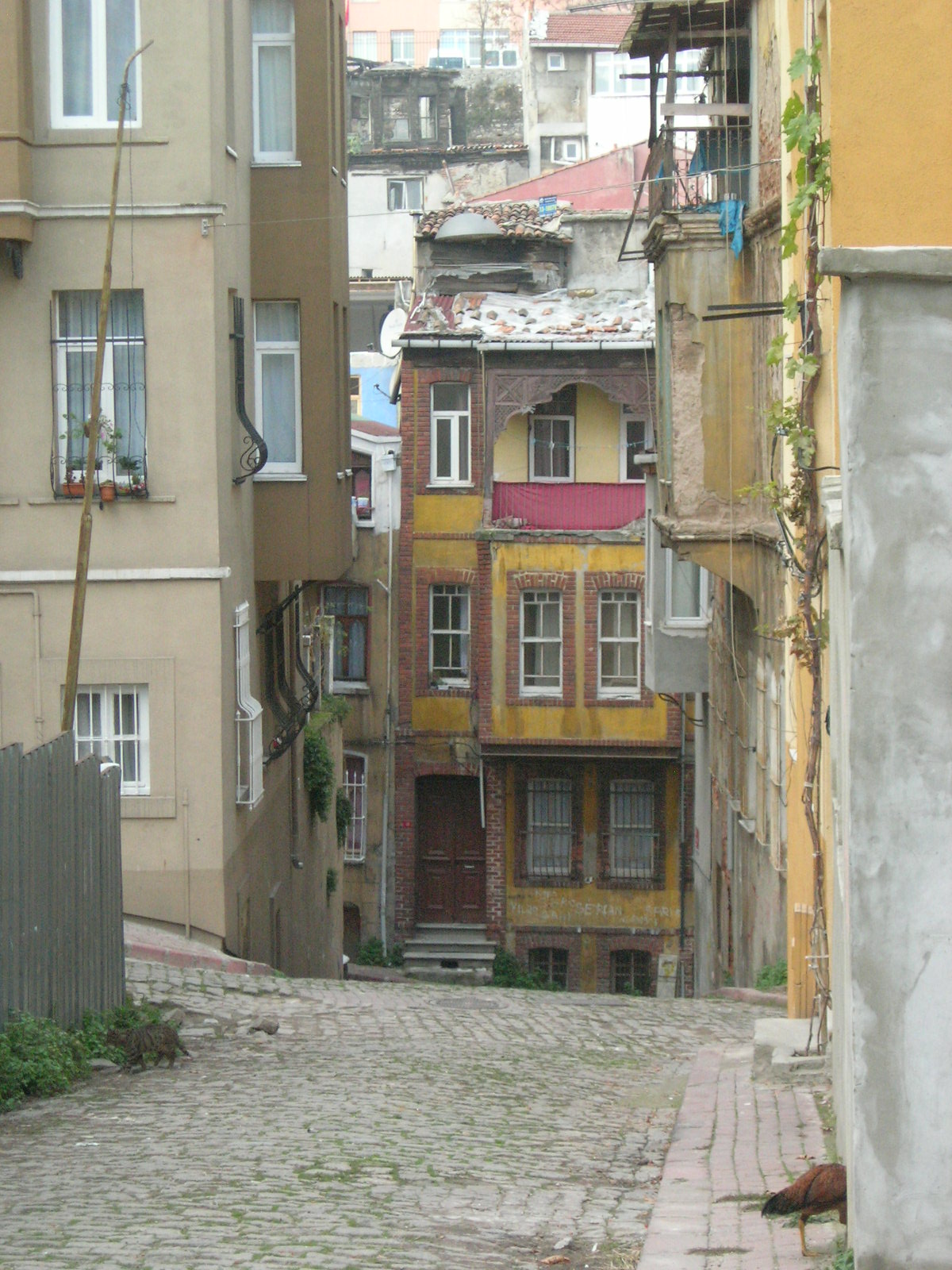
street scene

street scene (and Don)

street scene (you know how I like my window pictures!)
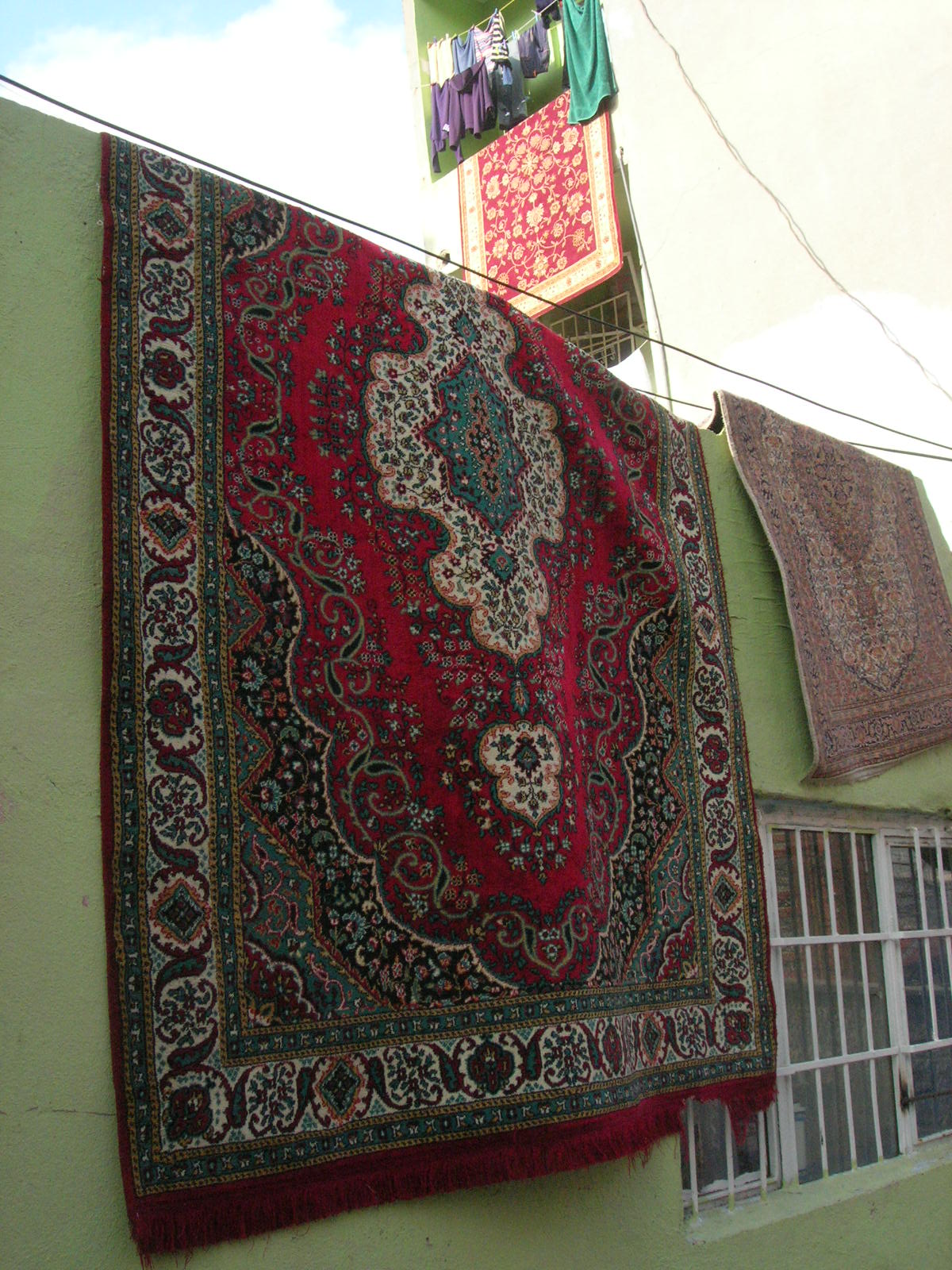
carpets airing
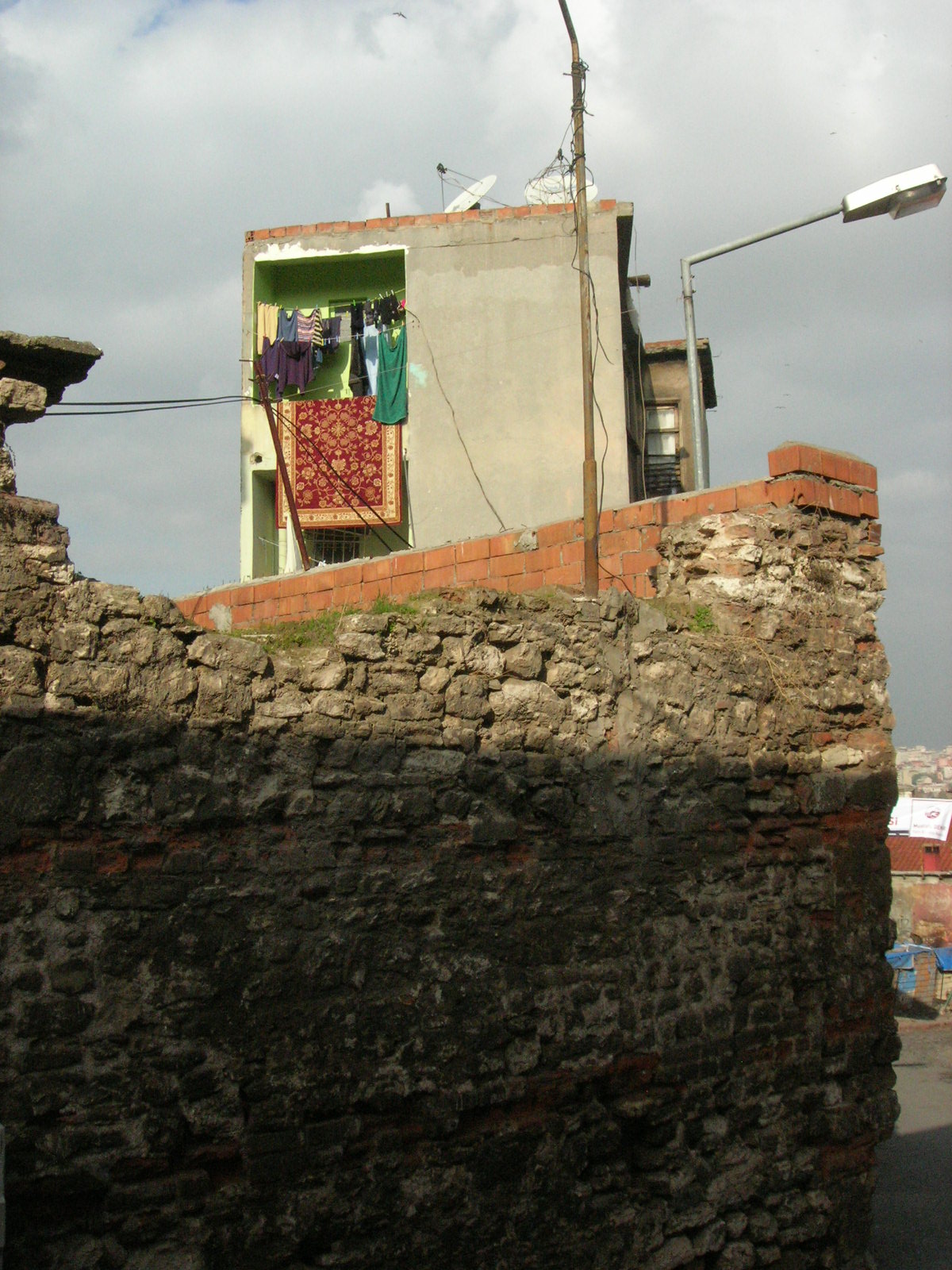
laundry and carpets
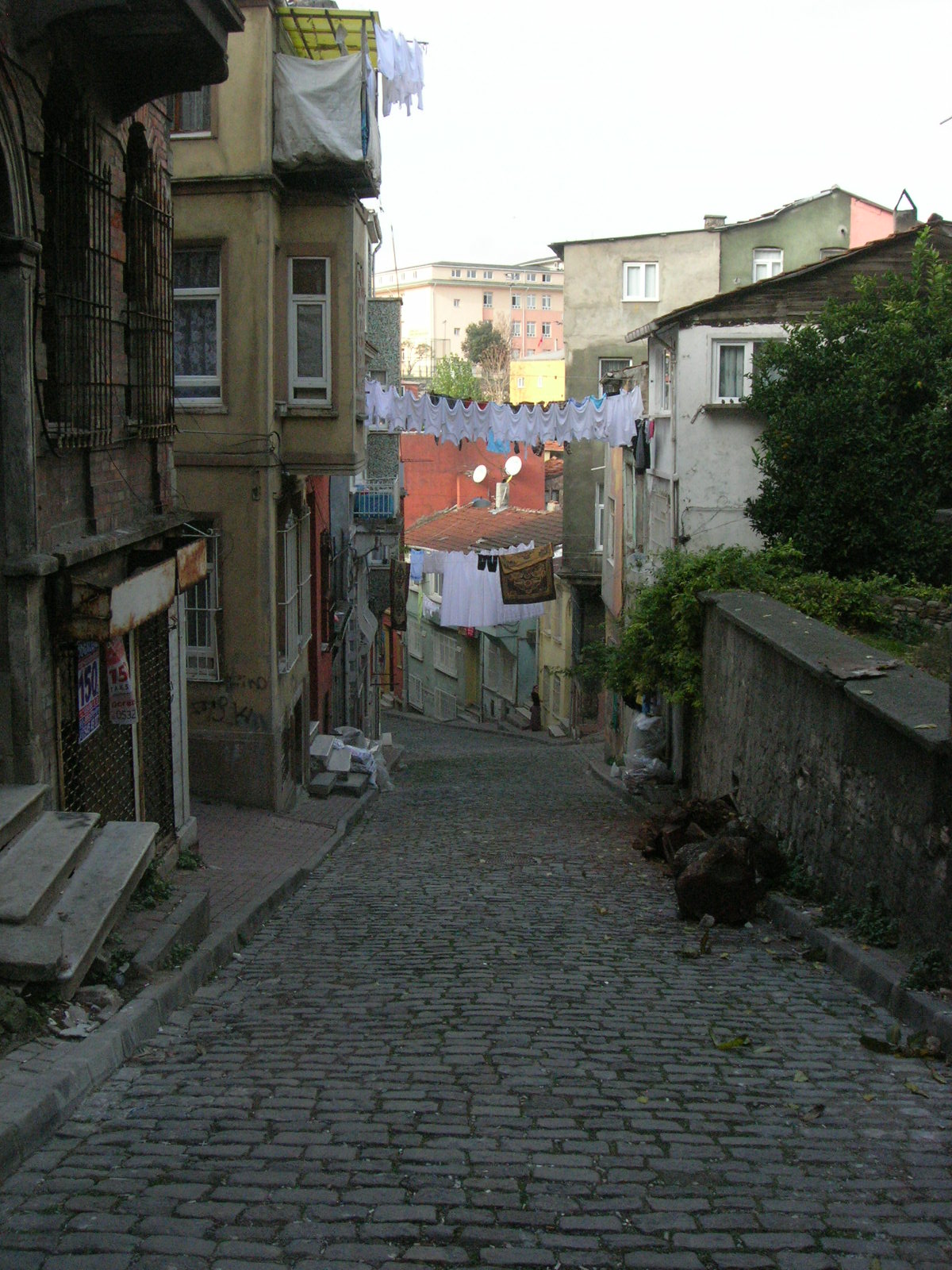
street scene
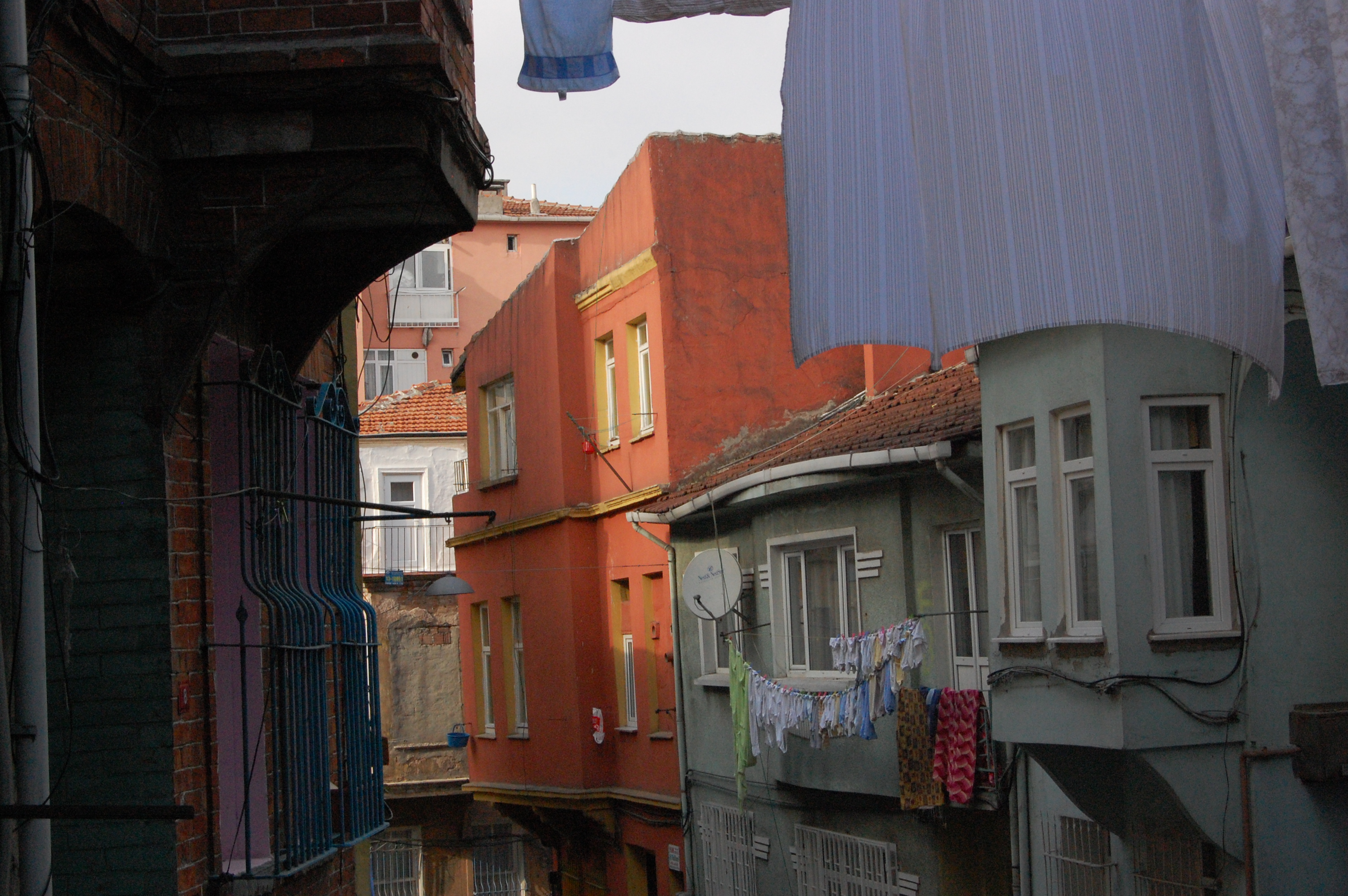
some very colourful buildings
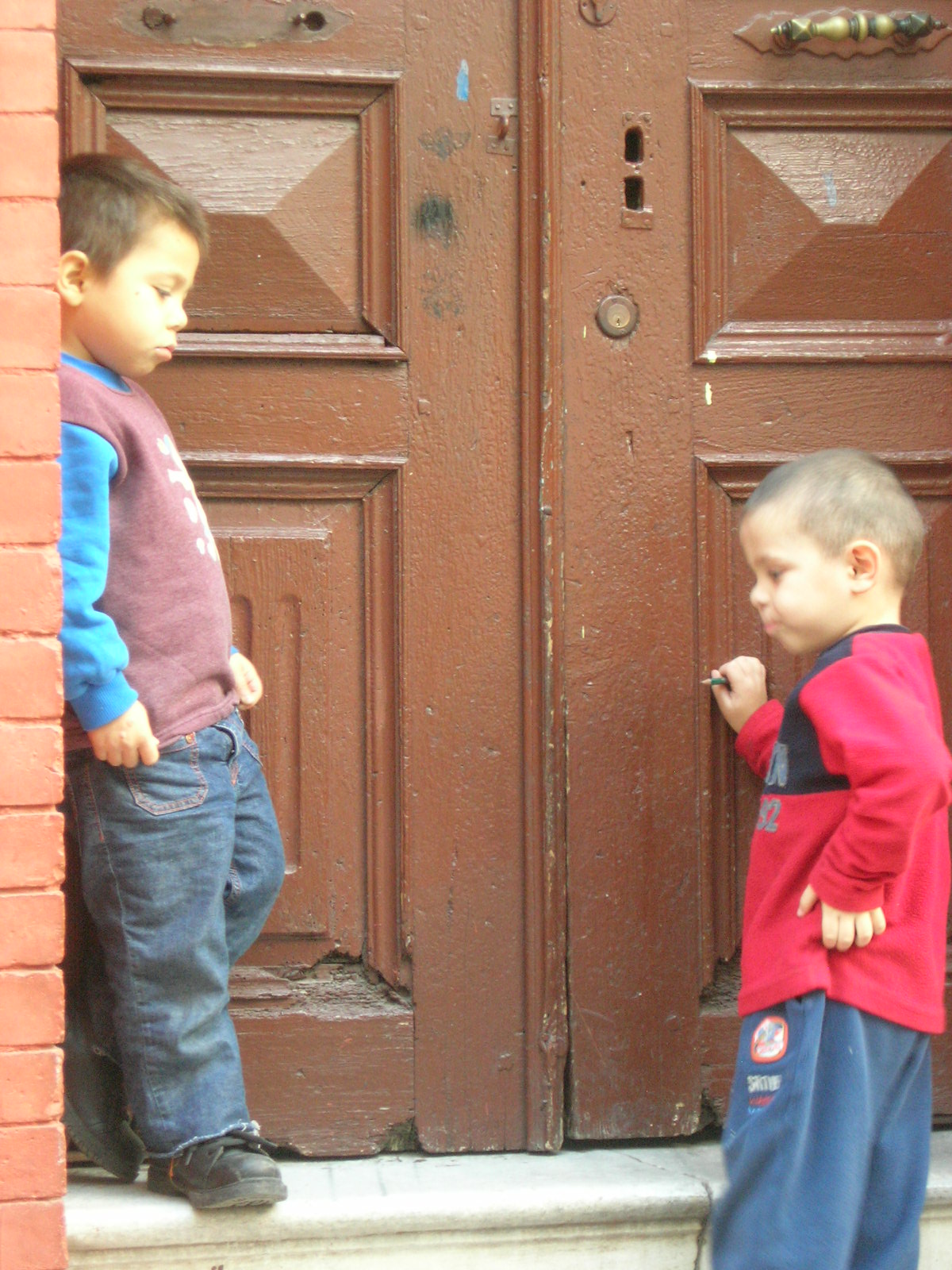
a few young boys at play (it was a school day, so not so many kids around)
Because the caretaker of the church would likely be away for awhile, we decided to have lunch, and off we drove to a restaurant Gamze knew and liked…
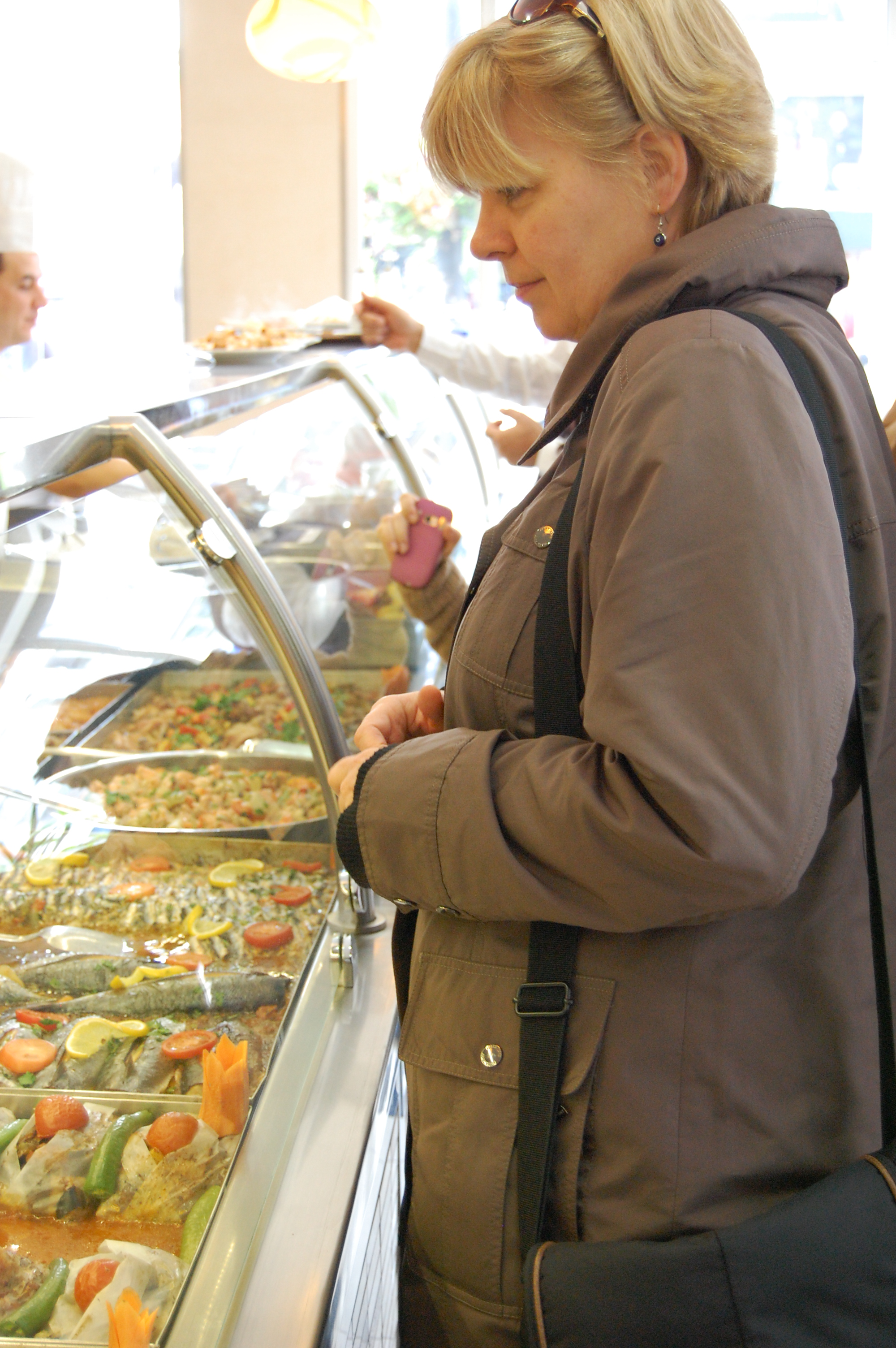
choosing my lunch dishes
After lunch we went to the largest mosque in the city, the Suleymaniye Mosque, where Don and I had wandered a few days earlier. This time we went inside. “Istanbul’s most important mosque is both a tribute to its architect, the great Sinan (the Michaelangelo of Istanbul), and a fitting memorial to its founder, Suleyman the Magnificent. It was built above the Golden Horn between 1550-57. Like the city’s other imperial mosques, the Suleymaniye Mosque was not only a place of worship, but also a charitable foundation. The mosque is surrounded by its former hospital, soup kitchen, schools, and bath house. This complex provided a welfare system which fed over 1000 of the city’s poor – Muslims, Christians and Jews alike – every day.”
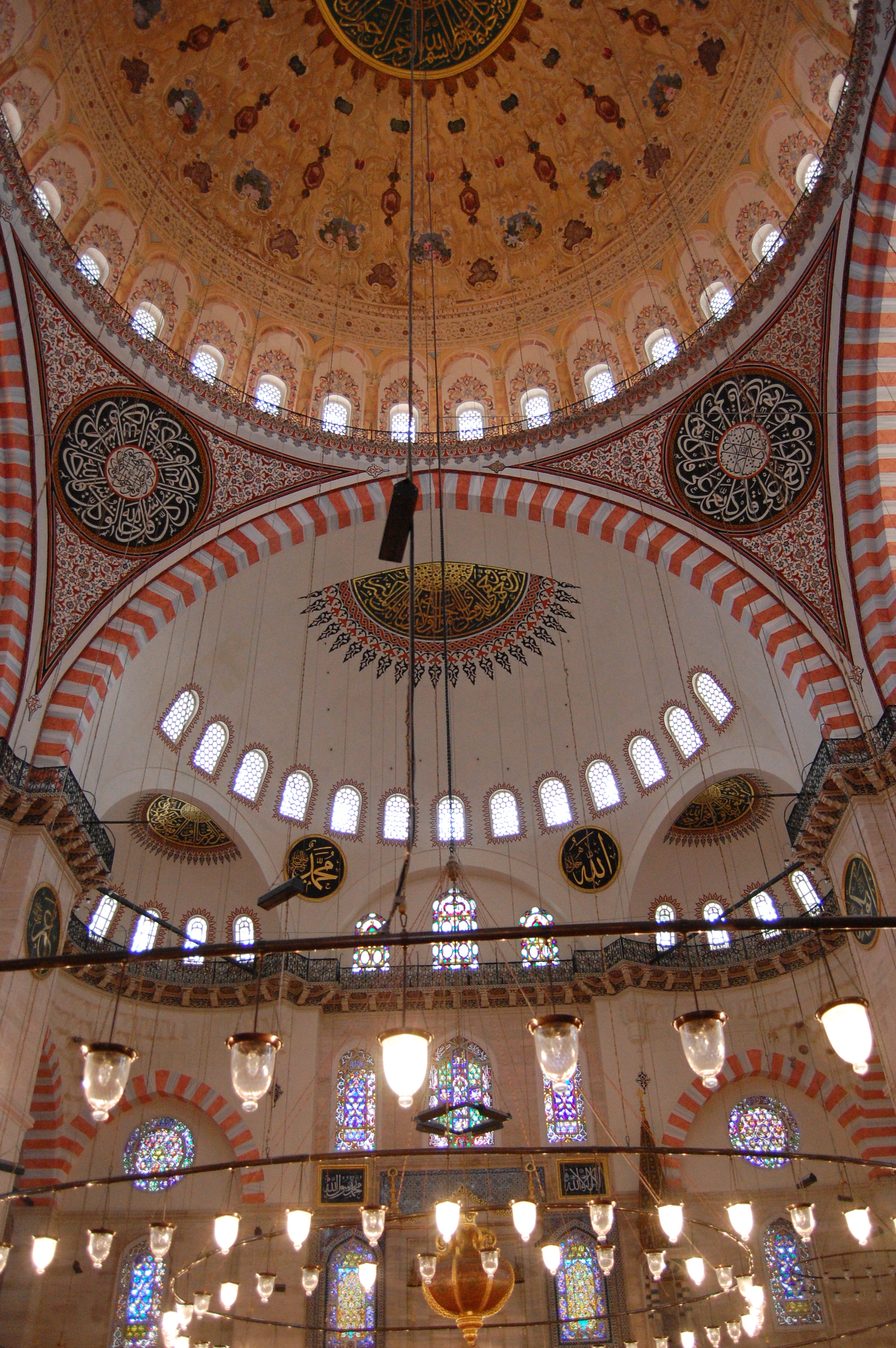
dome ceiling detail
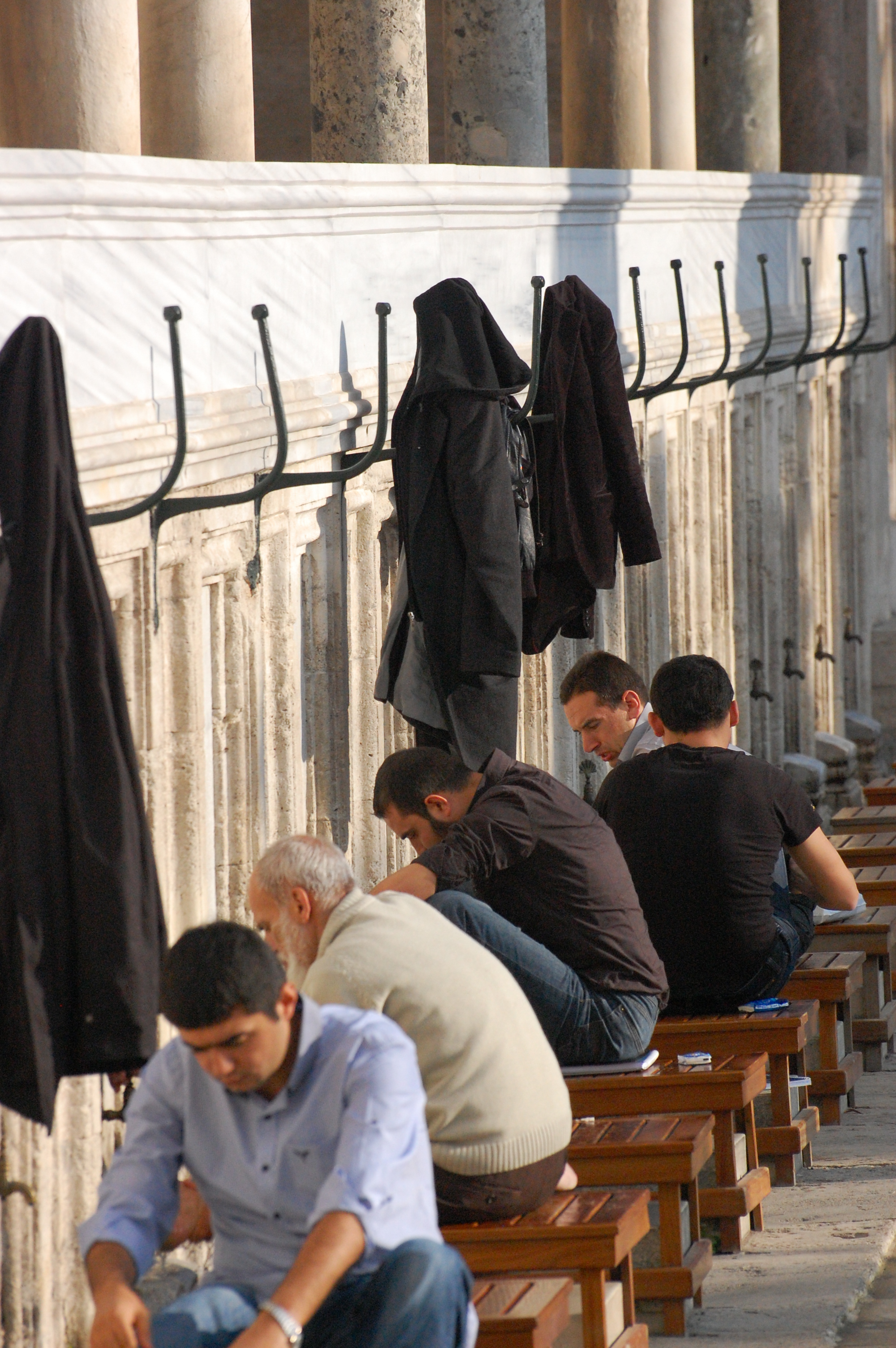
ablutions before prayer
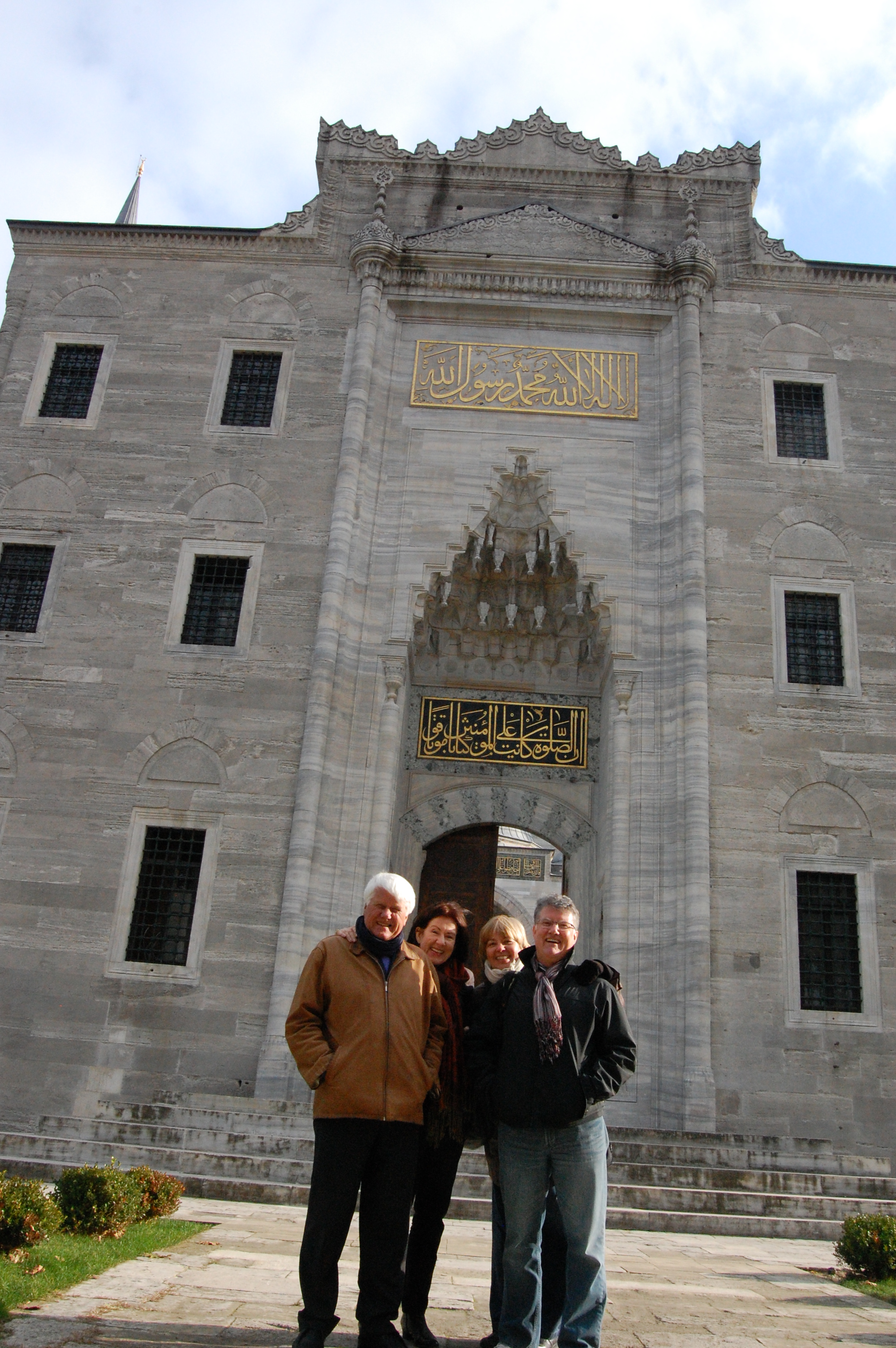
in front of Mosque entrance
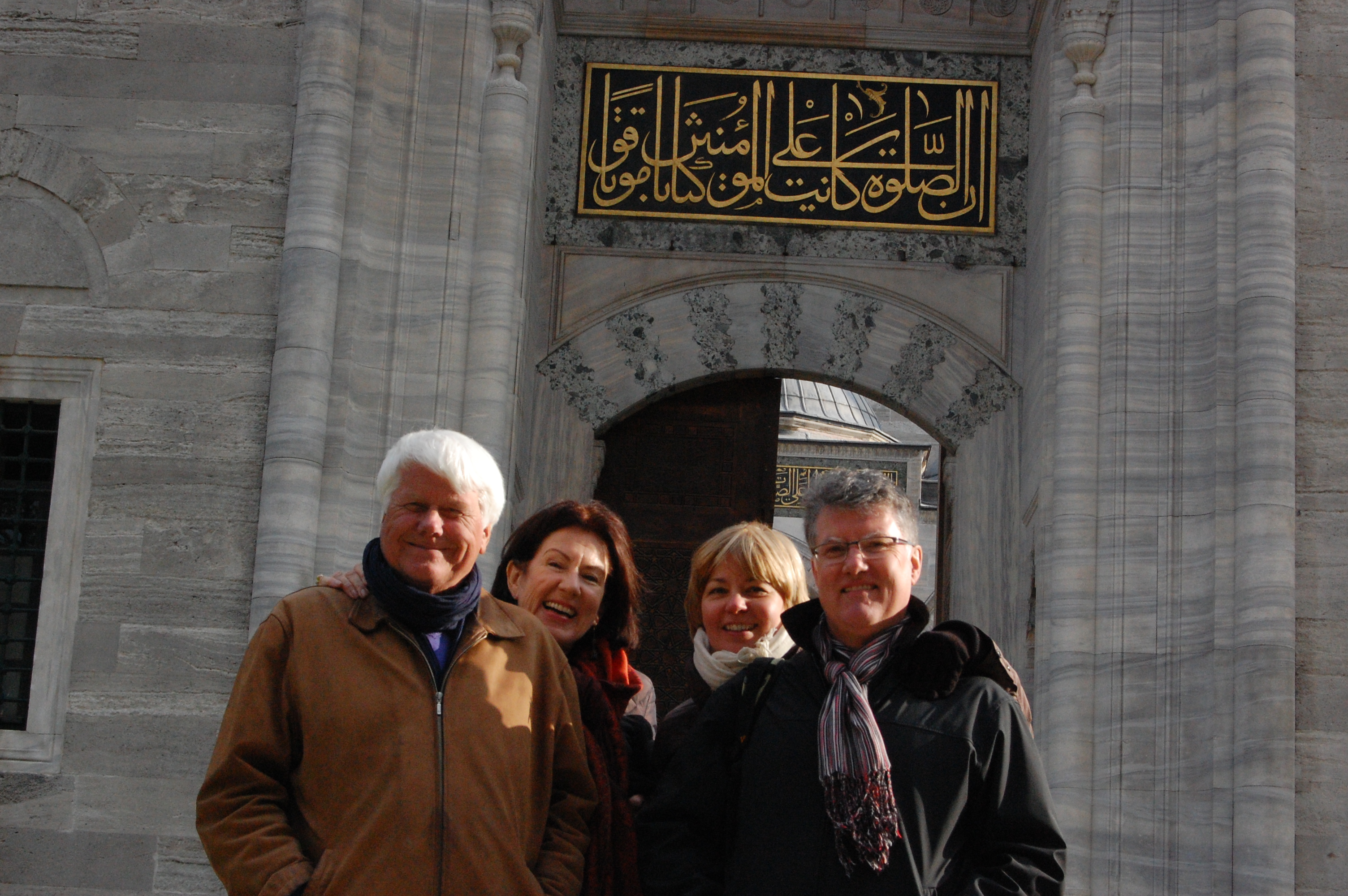
our close-up
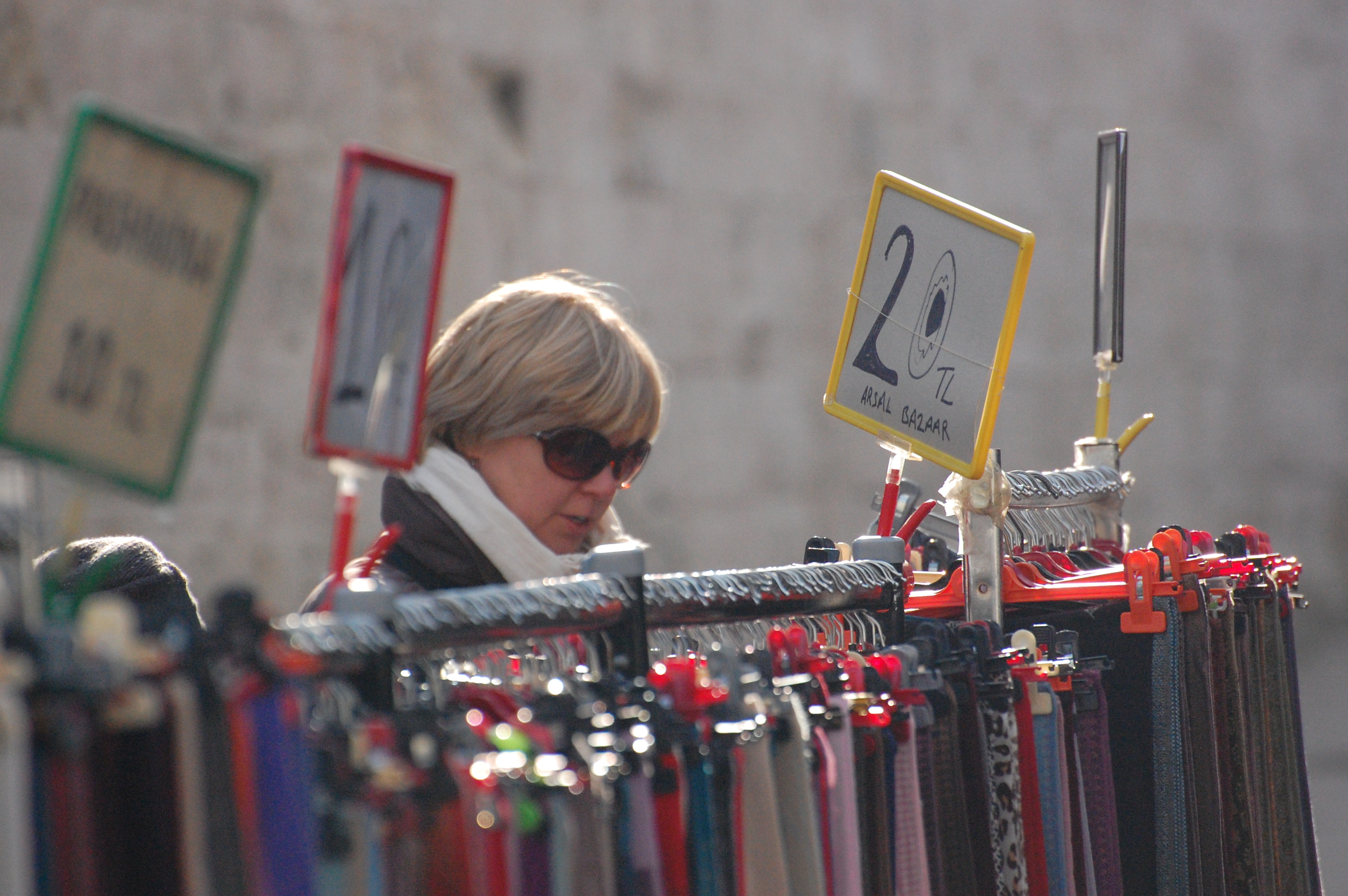
browsing the goods for sale around the Mosque
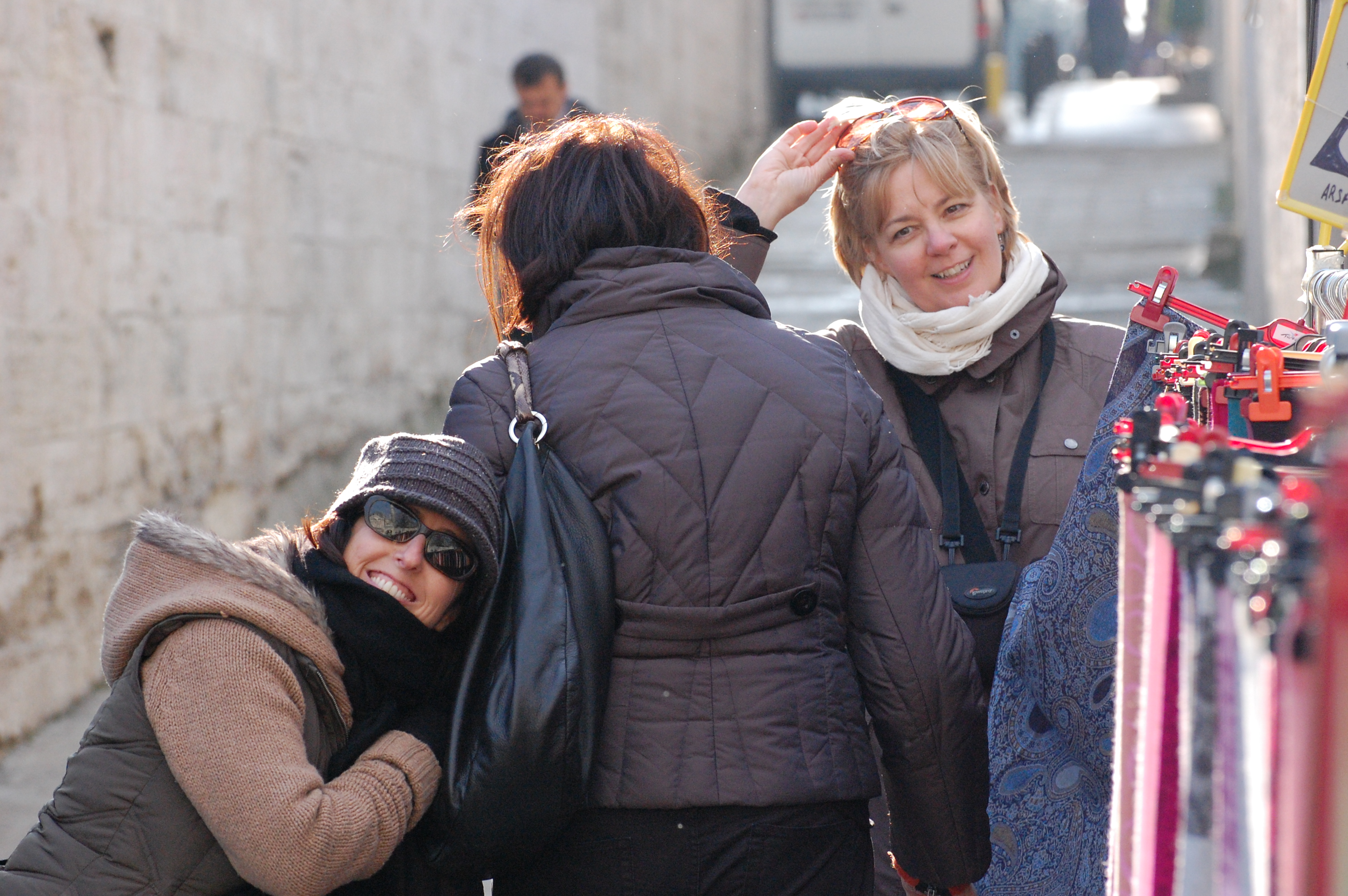
fooling around, choosing a shawl
We then went back to Fener to see if the caretaker was back, and she was, so we entered the Church of St. Mary of the Mongols. “Consecrated in the late 13th century, the Church of St. Mary of the Mongols is the only Greek Orthodox church in Istanbul to have remained continuously in the hands of the Greek community since the Byzantine era. Its immunity from conversion into a mosque was decreed in an order signed by Mehmet the Conqueror. A copy of this is kept by the church to this day. The church gets its name from the woman who founded it, Maria Palaeologina, an illegitimate Byzantine princess who was married off to a Mongol khan. Upon his assassination, she returned to Constantinople, built this church and lived out her days in it as a nun.”
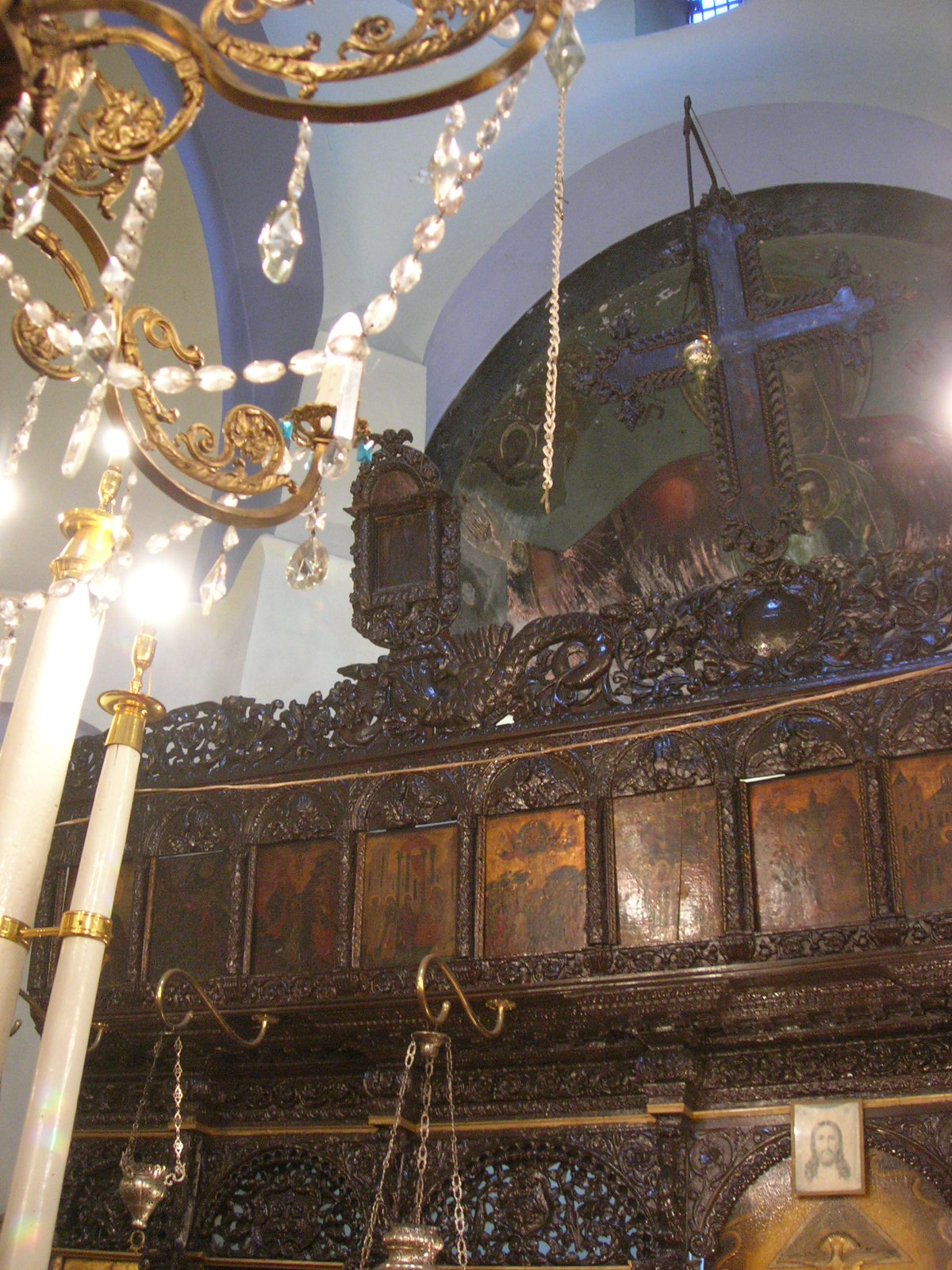
inside the Church of St. Mary of the Mongols
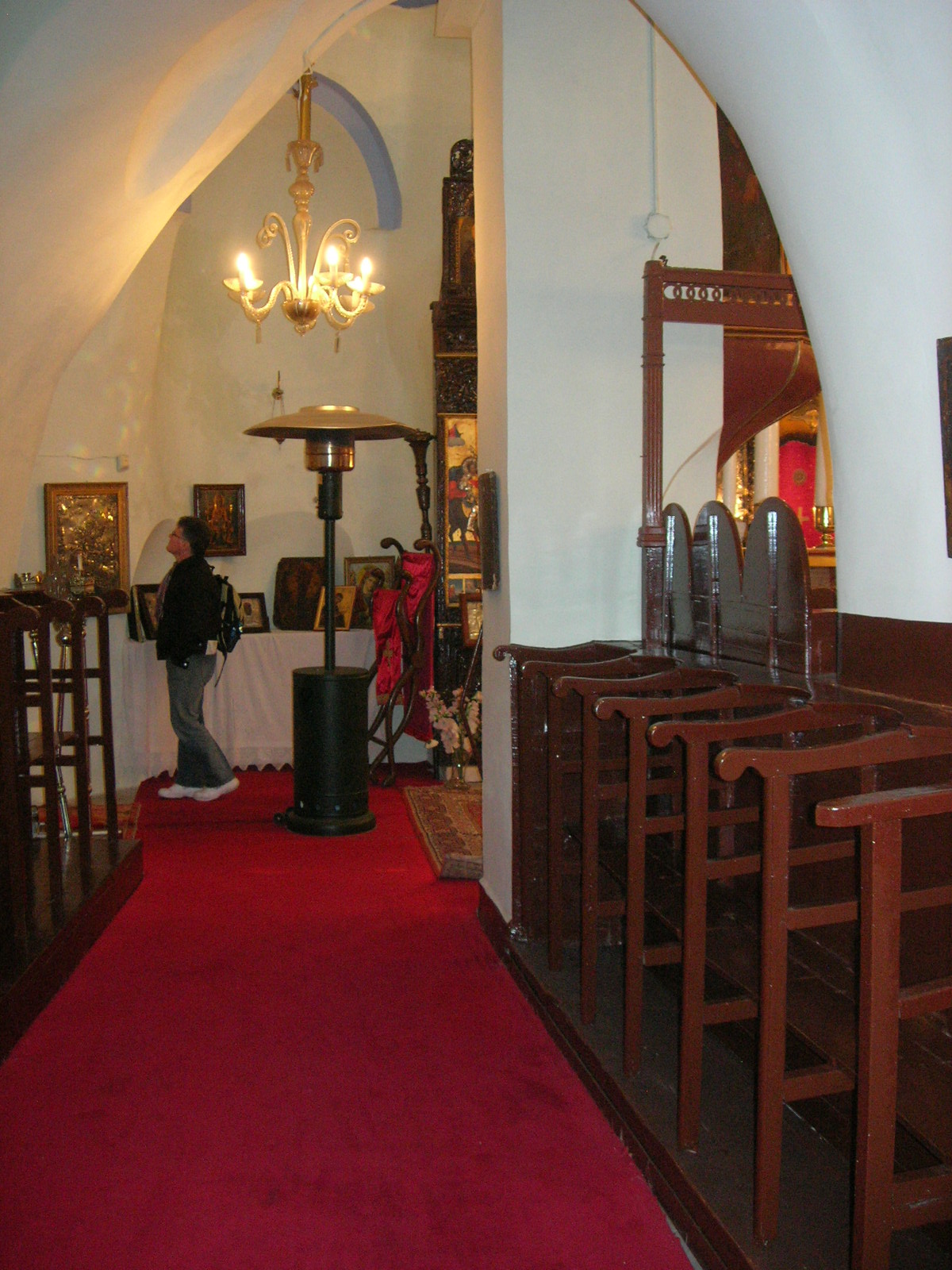
there's Don
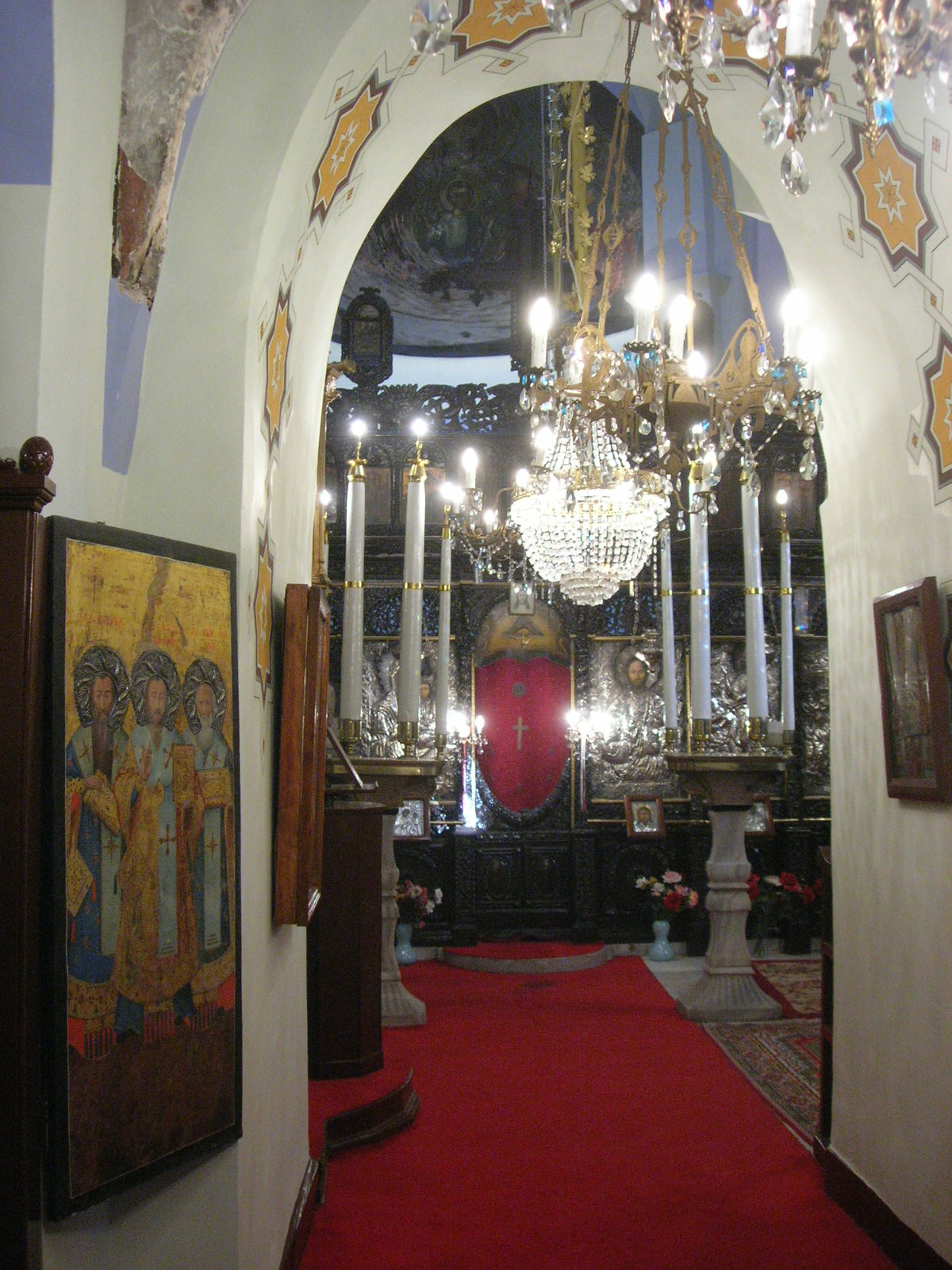
inside the church
It was time to say goodbye to my cousins as they had to catch their plane back home. We dropped them at the bus station to get back to the airport. It was so wonderful sharing time with Leo and Edith in Istanbul, and next time we will visit them in their home and go sailing! (And see what the rest of the country has to offer.)
Back to our hotel for a drink in the bar with Hasan, and dinner at a different restaurant on the restaurant street, the Albura Kathisma Cafe, another excellent and highly-recommended spot. We ate outside, under heat lamps, and chatted with an Australian couple who were eating at this same place every night of their stay in the city, that’s how good the food and service was!
Thursday was carpet-buying day! We had gone to Turkey with plans to buy a carpet, and took an extra suitcase in which to bring it home. Leo and Edith had introduced us to the owners of the carpet shop up the street from our hotel, and we started our day there by asking them to teach us about carpets. They brought us to an upstairs showroom, served us tea, and commenced a lesson on carpets (which are knotted) and kilims (which are flat-woven), the differences between handmade and machine-made carpets, and natural dyes vs. synthetics. They laid out carpet and kilim after carpet and kilim, looking for our preferences. The large floor was soon covered and piled with samples, and they were all lovely. We spent almost three hours there. And then said we had to think about it, talk it over, thanked them and left.
Our second stop was that little house we’d been taken to a few days back, owned by the fellow we ‘met’ on the street. We rang the bell, and not-surprisingly, they were delighted to see us. Again we sat down, again tea was brought, and again we had a lesson on carpets and kilims, knots and weaves, and dyes. And again, carpet after carpet was piled up in front of us. Turns out there are approximately 67,000 carpets stored in this ‘little’ house!!
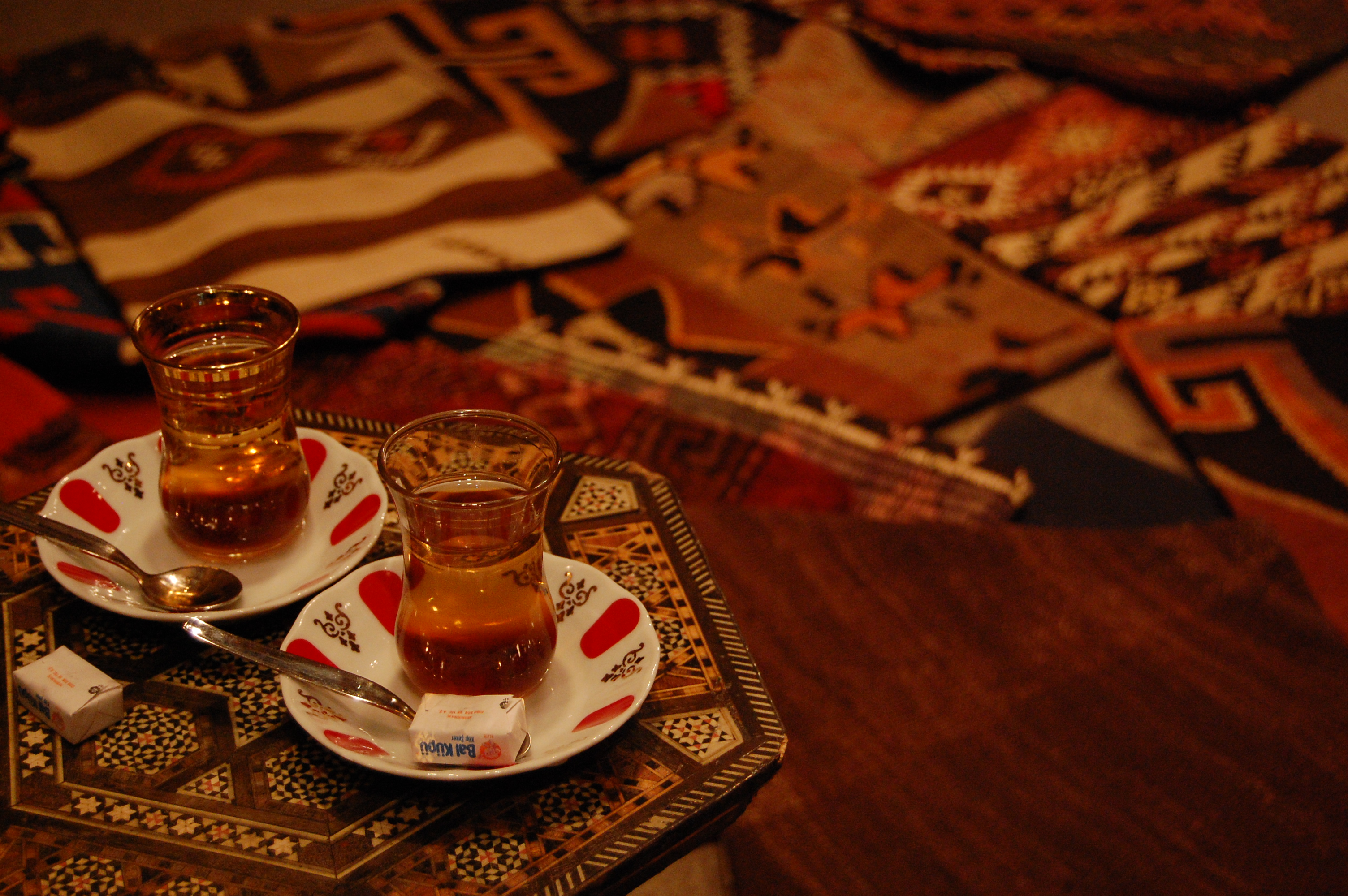
tea, always served in tulip glasses with saucers
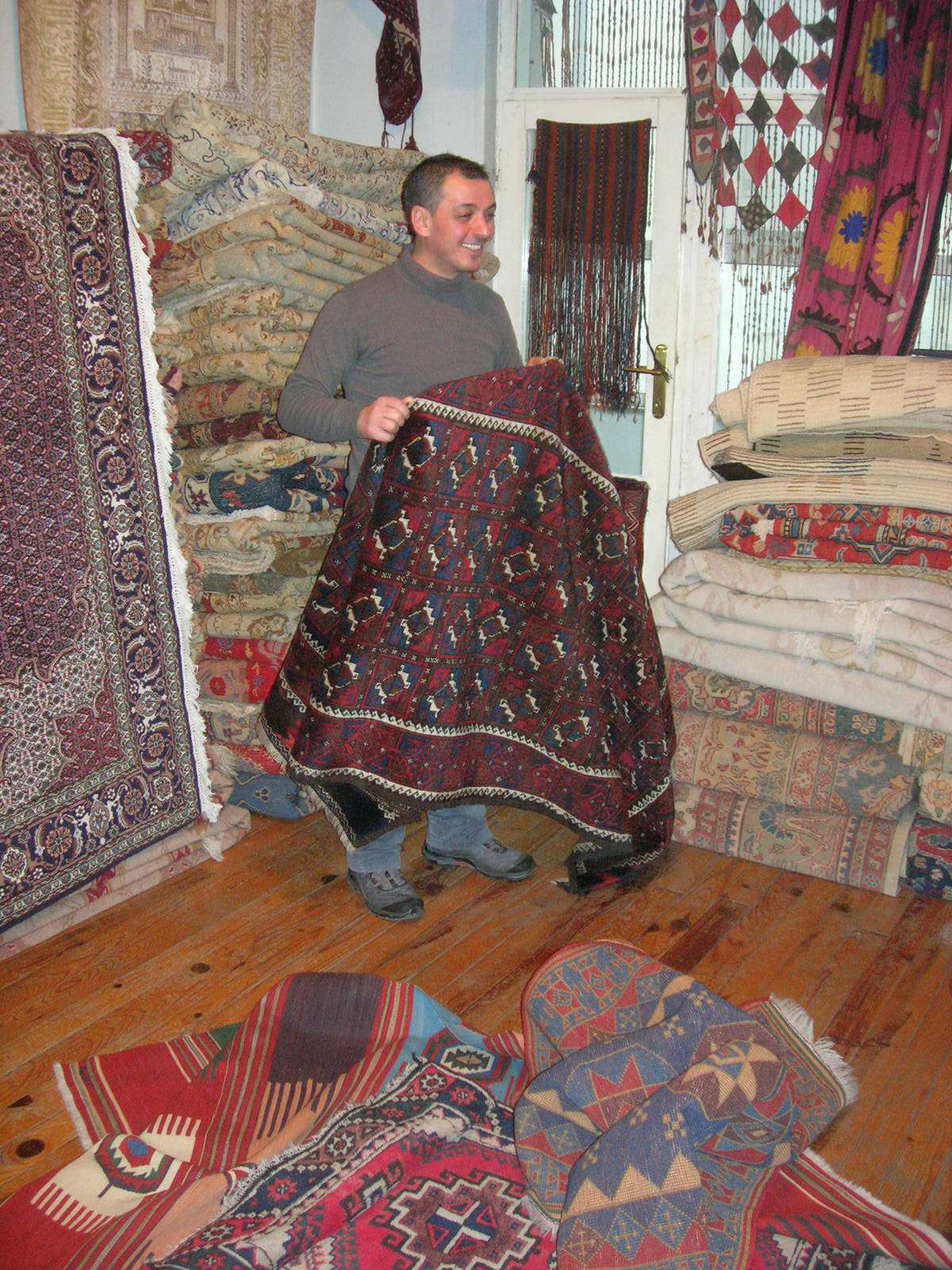
carpets, carpets, carpets
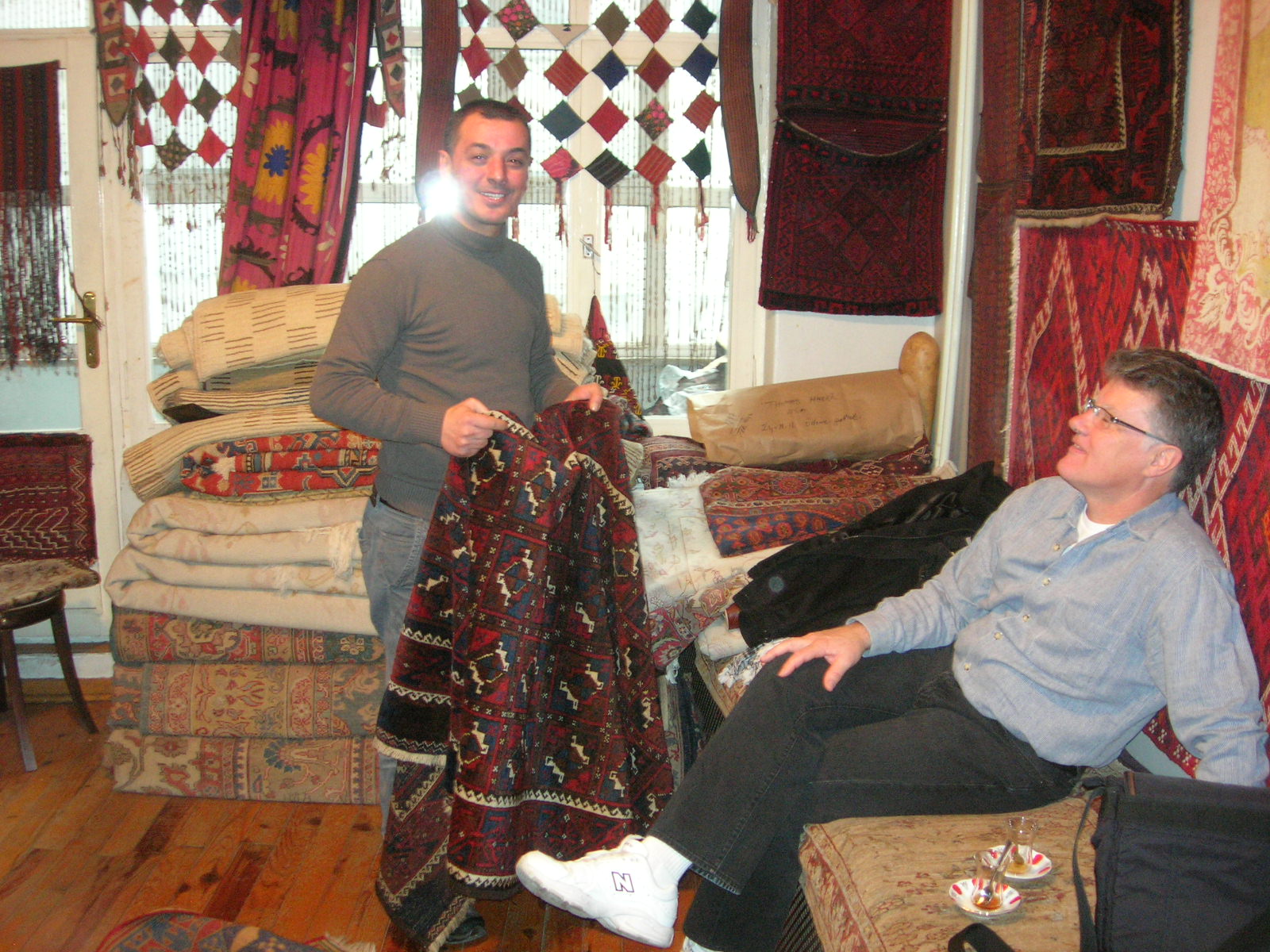
viewing carpets
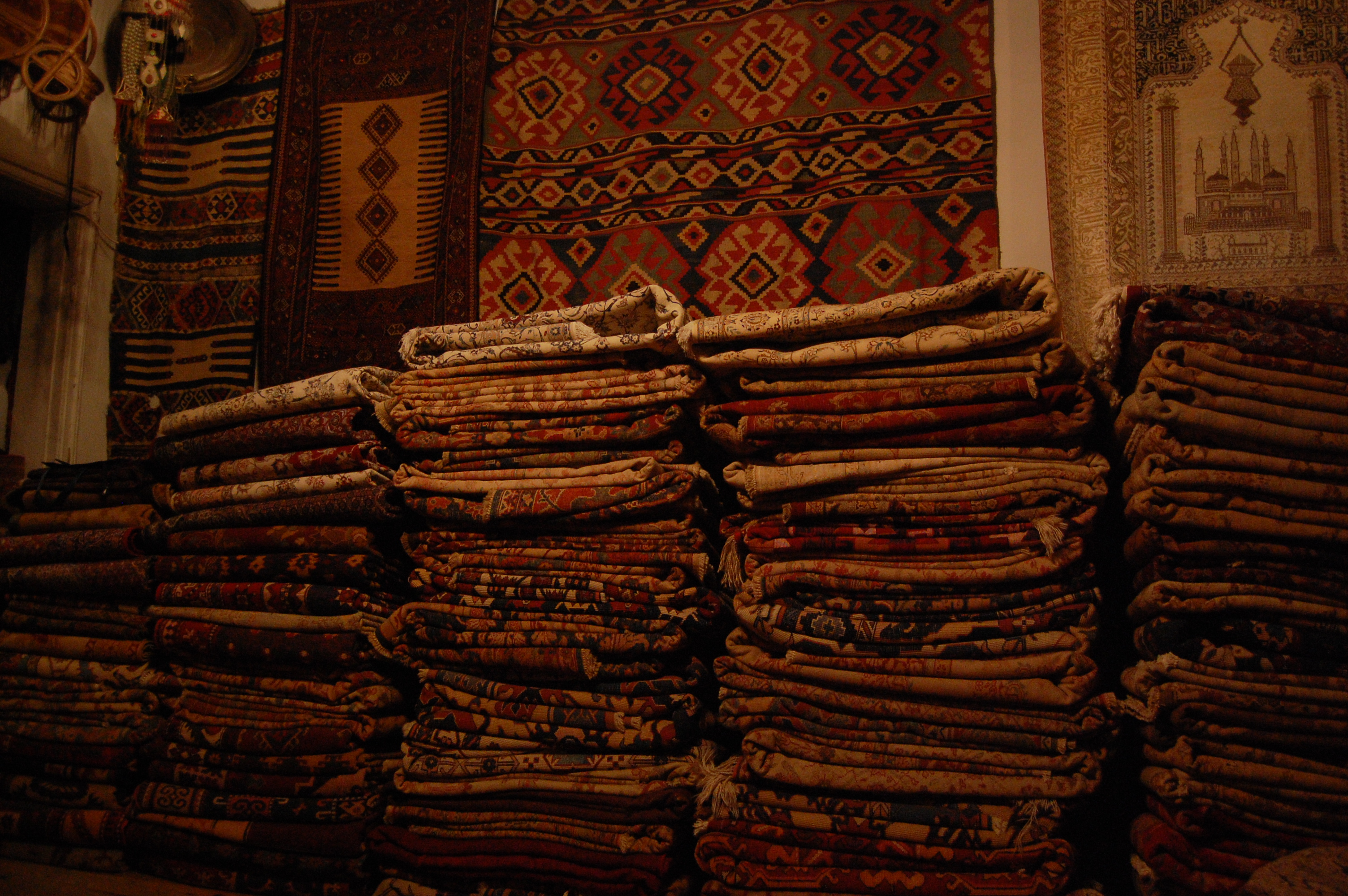
carpets folded and stacked
Again, after a few hours of talking and viewing carpets, we said we had to talk it over. Also, we were starving! Off we went to the Grand Bazaar, first for lunch and discussion. With a “plan” in place, we wandered the labyrinth of streets and found our carpet man in the bazaar. Here we again had tea, but we didn’t have to have the long lesson because we’d already had that from him a few days earlier. We had decided we really liked a kilim in this shop in the bazaar – naturally dyed, newly made – and so only what was left was the bargaining. We came to a mutually-accepted price and our 4 foot x 6 foot carpet was folded and packaged up and stuffed into Don’s backpack. Yes, stuffed into his backpack, because we had also decided to buy a 2nd carpet from the ‘house’ of carpets, and we didn’t want them to know we’d first bought elsewhere! Back to the house, and agreed on an older carpet we really liked, probably between 80-100 years old, and not very big, about 3 feet x 4 feet. We love them both, they fit into our suitcase with room to spare (oooh, should’ve bought a third!), and no problem at customs. Our only problem was the feelings of guilt about not buying from the first shop, where they’d spent so much time with us, so we “snuck home” by a back road so we didn’t have to walk past their shop and fend off enquiries! And here’s what we bought:
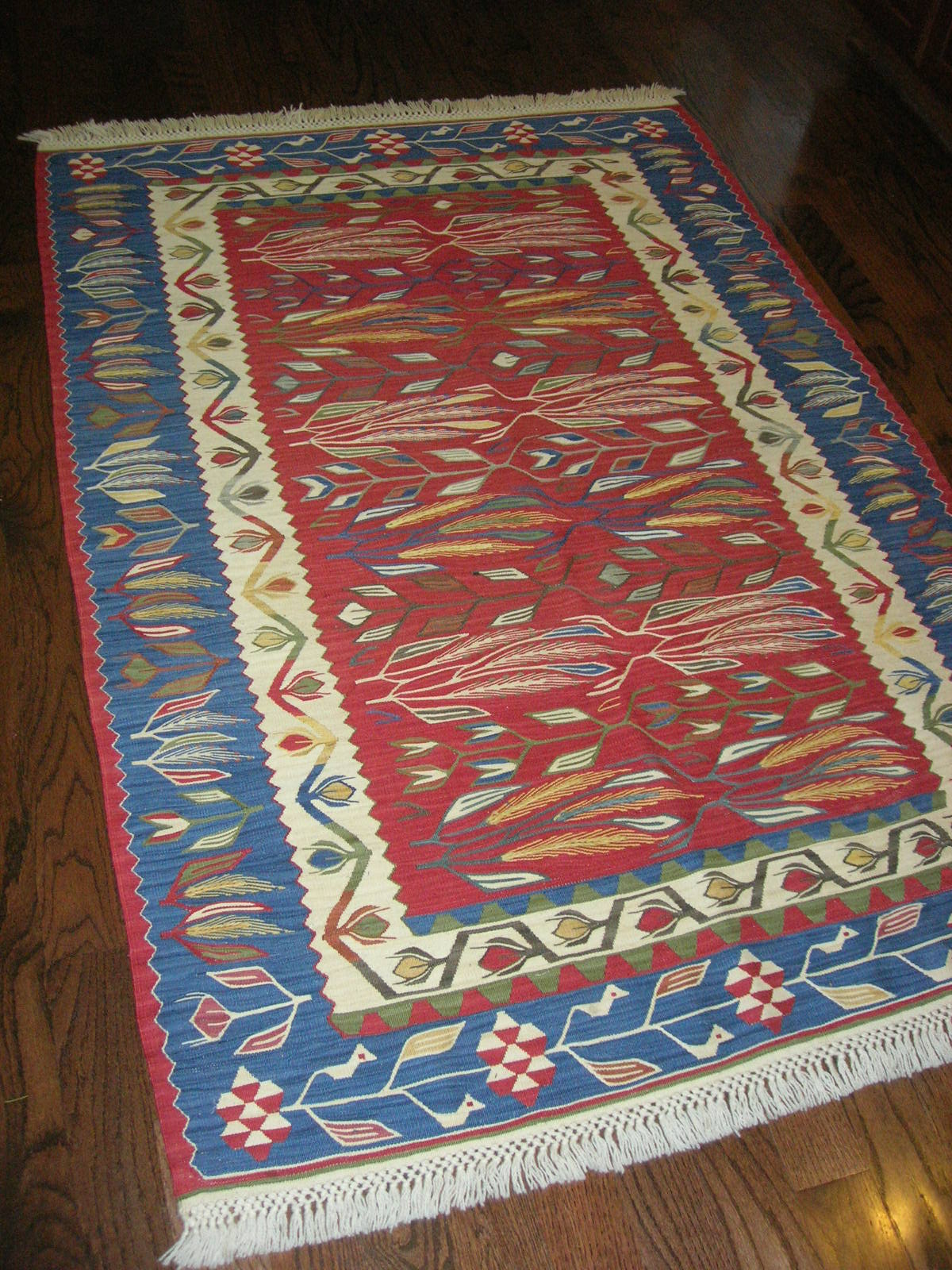
this kilim is in our kitchen
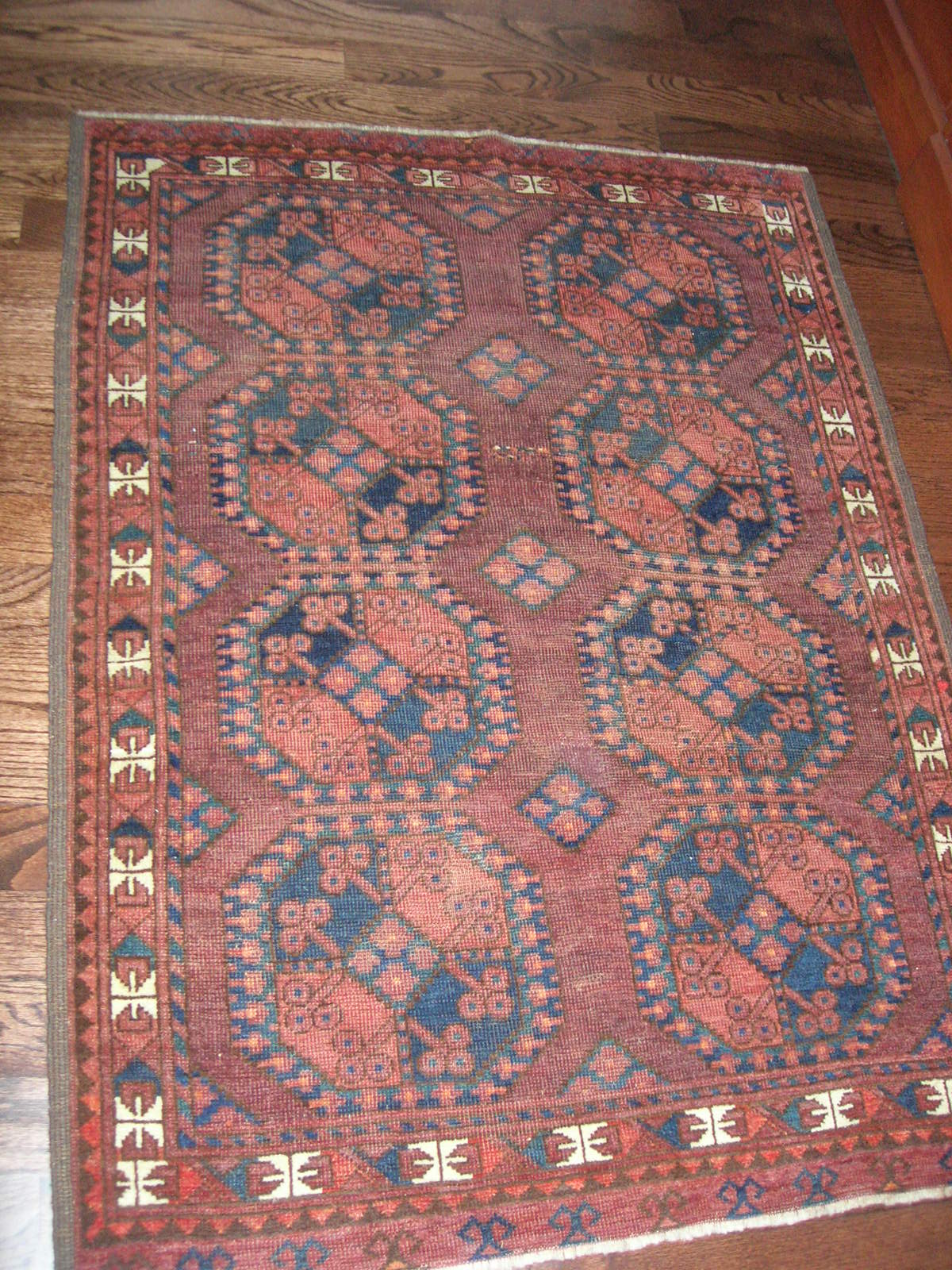
and this smaller, 'antique' carpet is in our family room
All that carpet buying was exhausting. We literally spent 8 hours on carpets!! Definitely time for a glass of wine, or two, with Hasan, and then out for dinner.
Friday was our last day in Istanbul. Our first stop was the Archaeological Museum, where we spent a few hours, impossible to see everything in one visit.
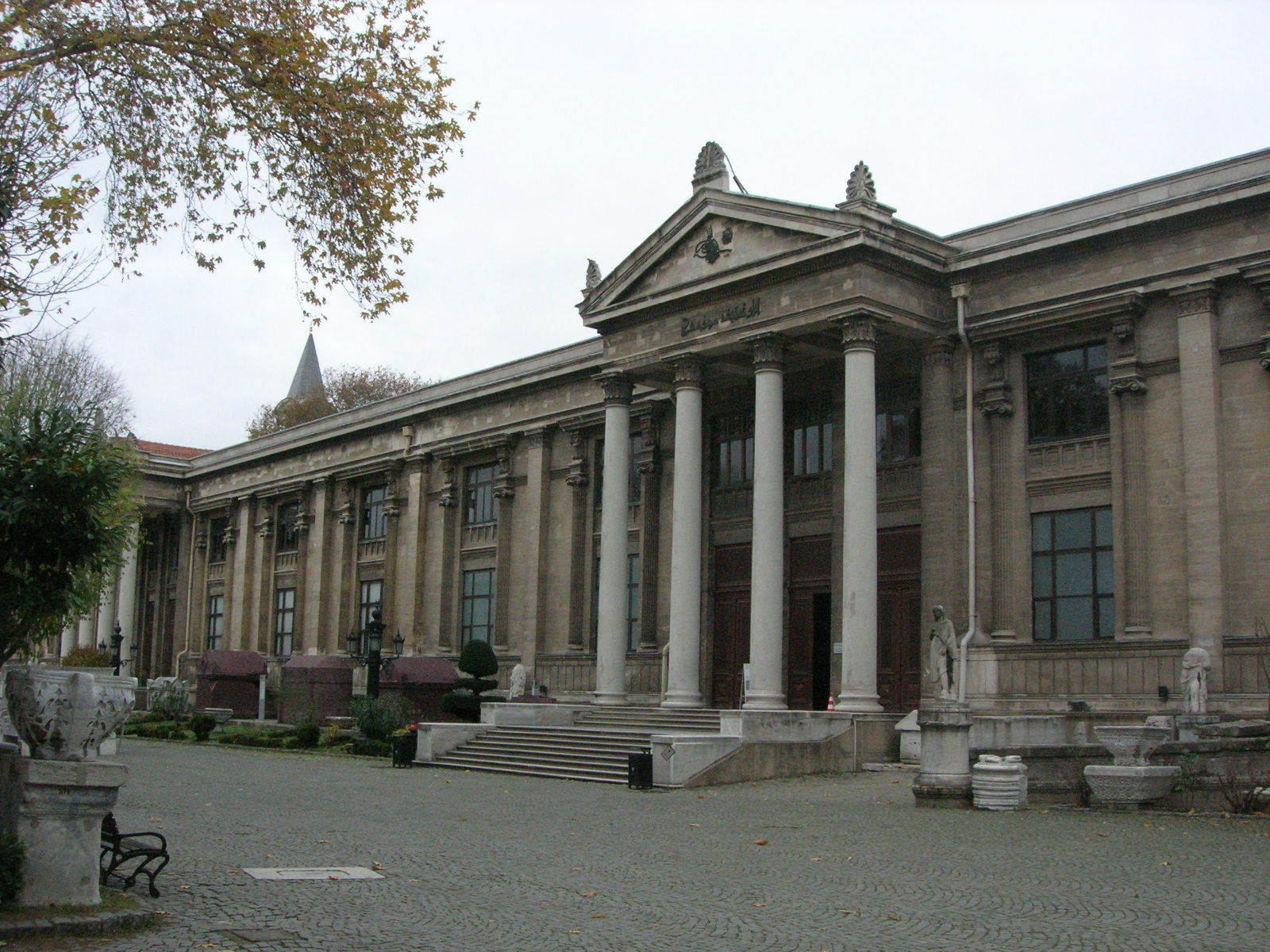
Archaeology Museum
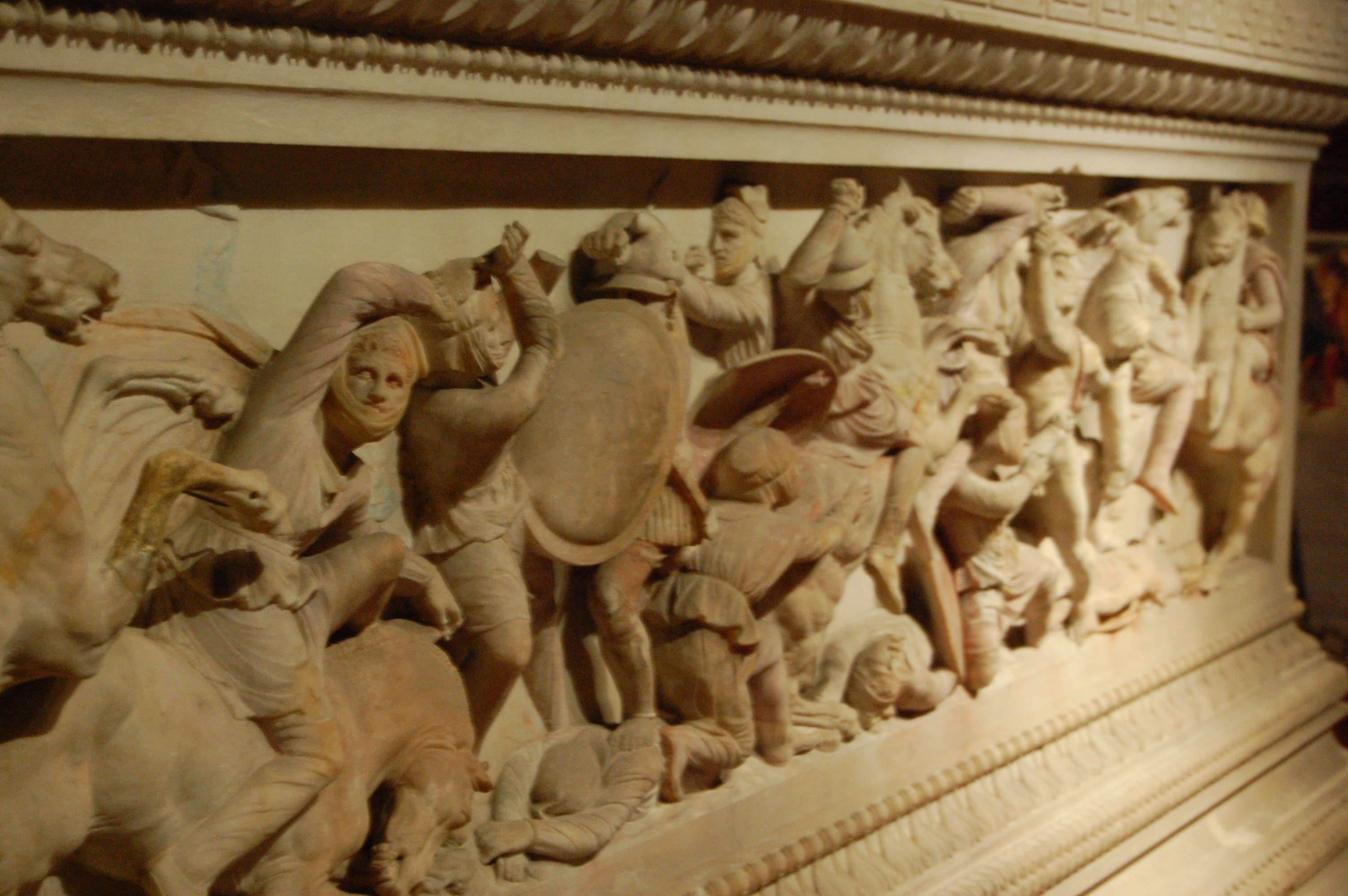
frieze showing the battle is Issus (333BC) on the side panel of Alexander Sarcophagus
The Alexander Sarcophagus is a “fabulously” carved marble tomb from the late 4th century BC, thought to have been built for King Abdalonymos of Sidon. It is called the Alexander Sarcophogus because Alexander the Great is depicted on it winning a victory over the Persians.
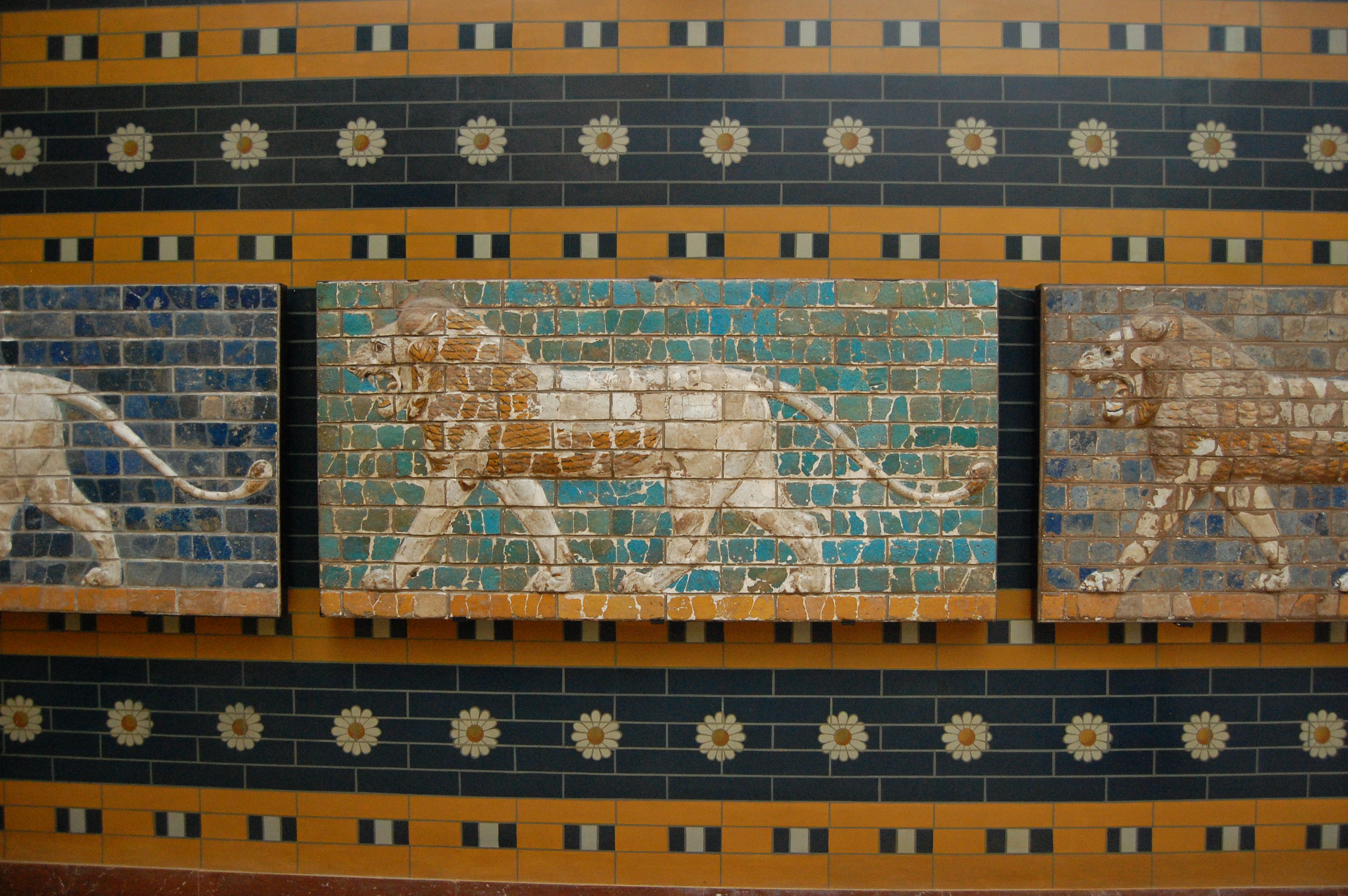
glazed brick friezes from Babylon's main entrance, the Ishtar Gate
In the Ancient Orient section of the museum, these glazed friezes are the star attraction. “The monumental glaed brick friezes from Babylon’s main entrance, the Ishtar Gate, date from the reign of Nebuchadnessar II (605-562 BC), when the capital of Babylon experienced its final flowering.”
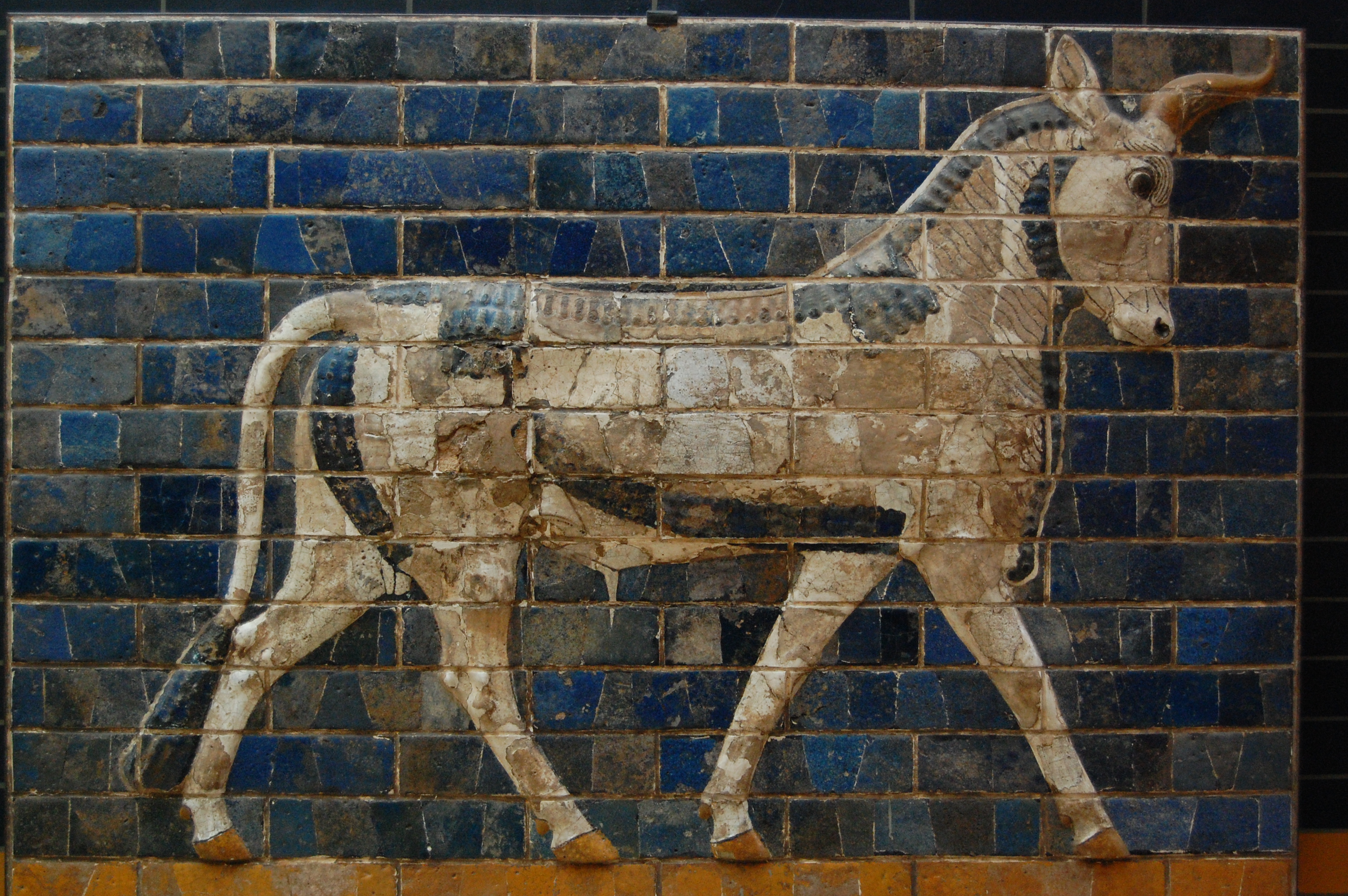
glazed frieze of a bull from Ishtar Gate, Babylon
From the museum we took a taxi to an area along the old city walls, to see the Church of St. Saviour in Chora, also known as the Mosaic Church. Gamze had wanted to take us here on Wednesday, but it is closed on Wednesdays. According to the guide book, “some of the very finest Byzantine mosaics and frescoes are found in this church. Little is known of the early history of the church, although its name, “in Chora,” which means “in the country,” suggests that the church originally stood in a rural setting. The present church dates from the 11th century. Between 1315-21 it was remodelled and the mosaics and frescoes added….” The mosaics were amazing.
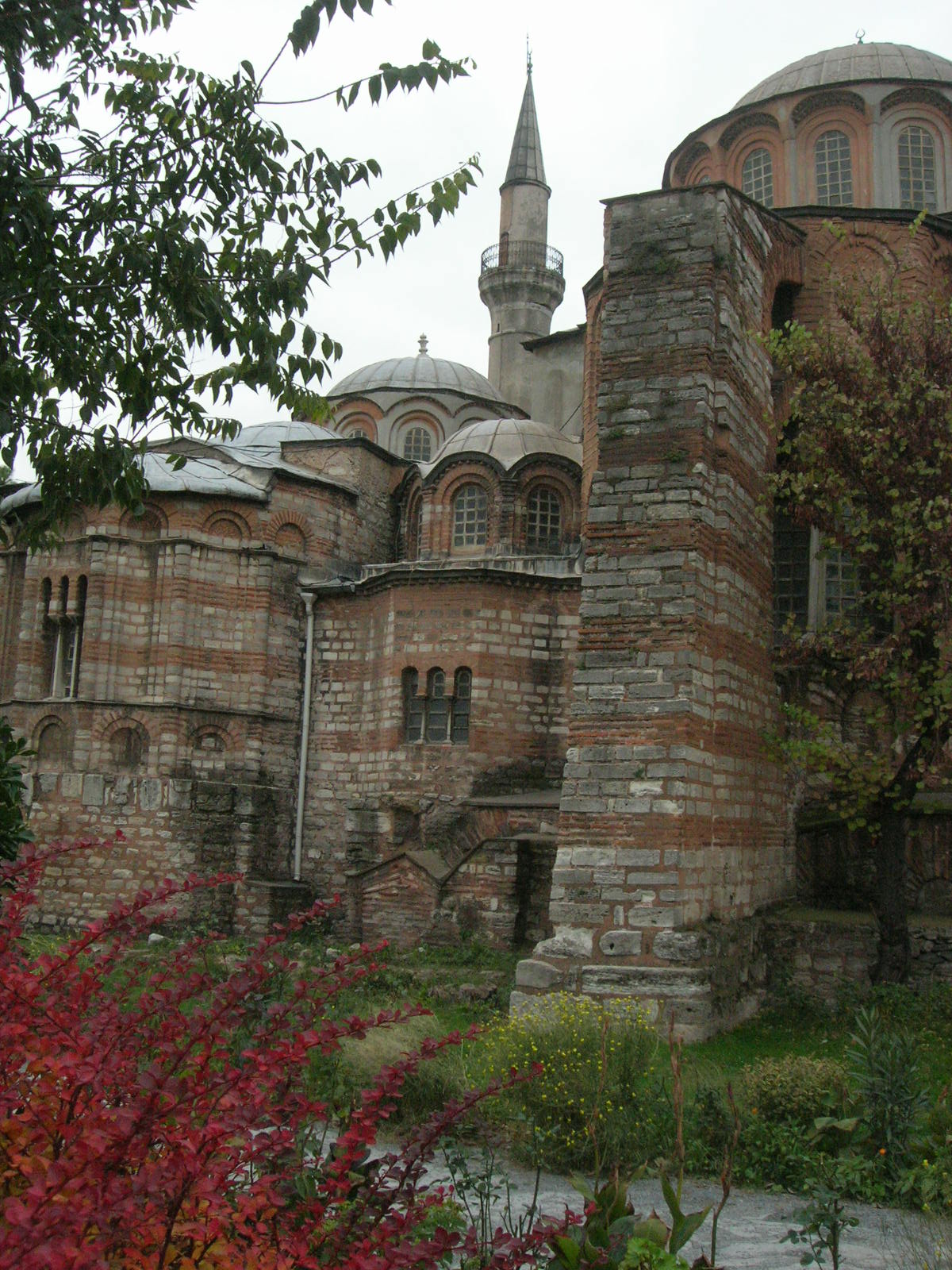
the outside of the church
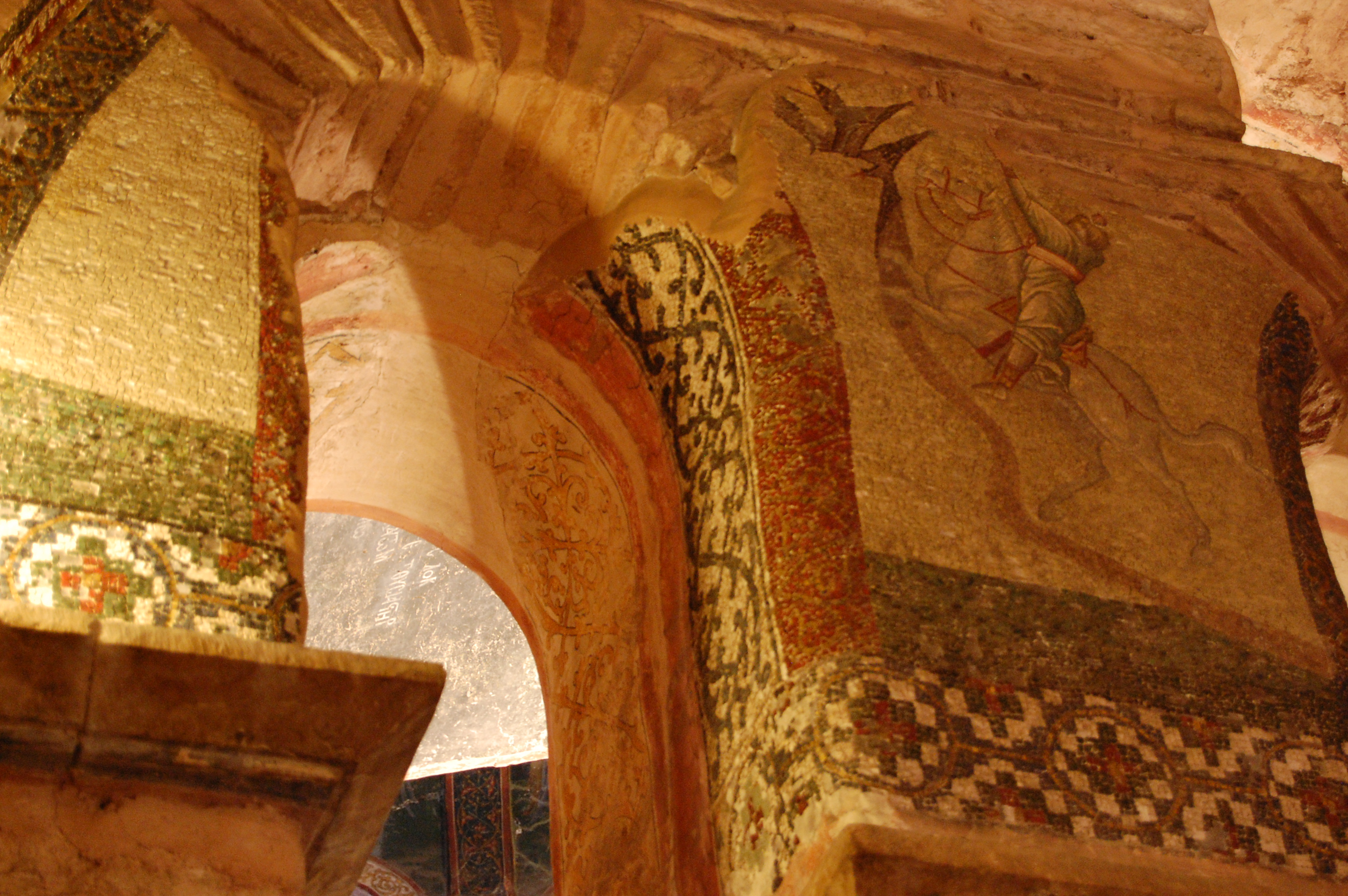
inside
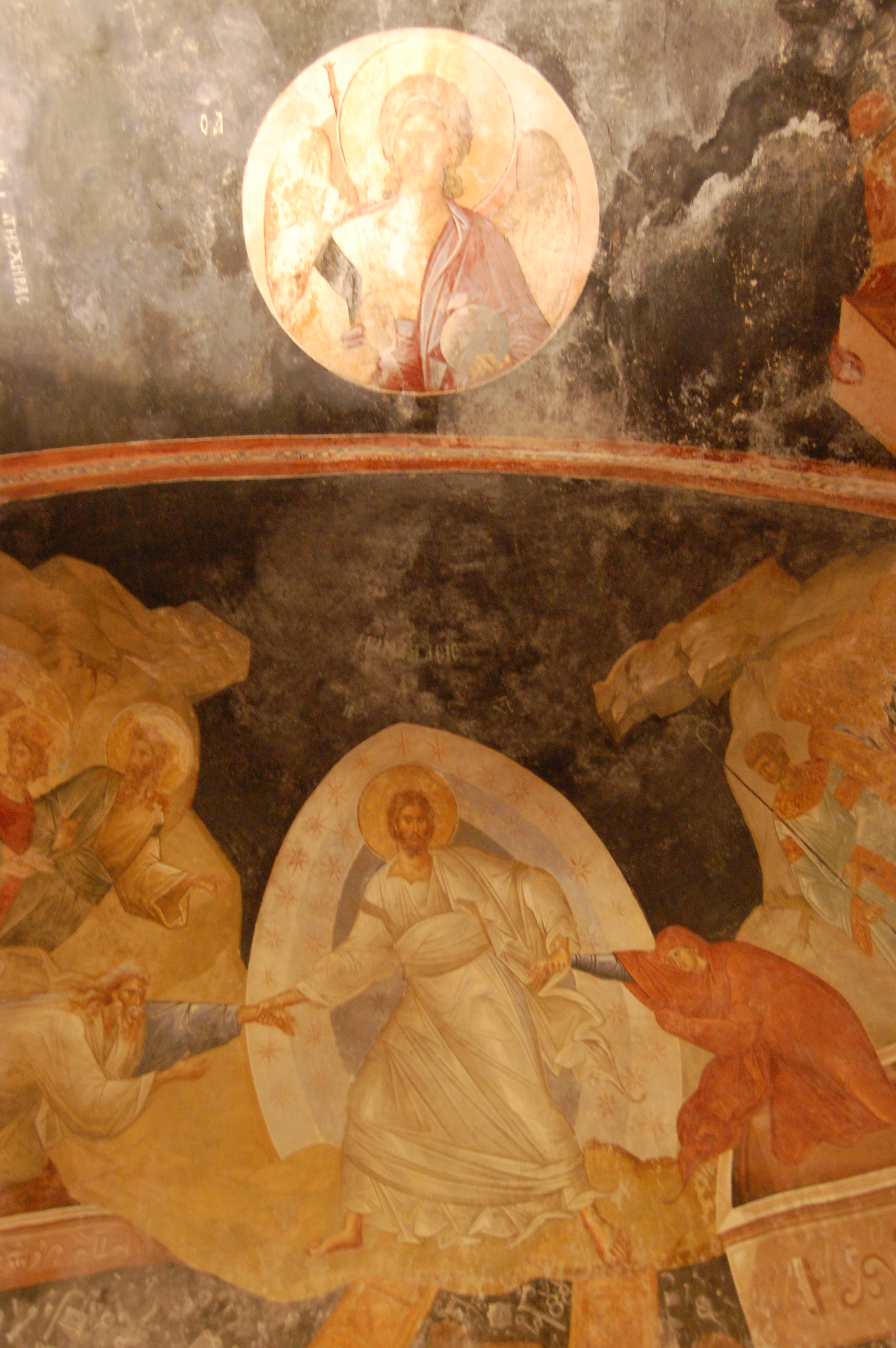
frescoe
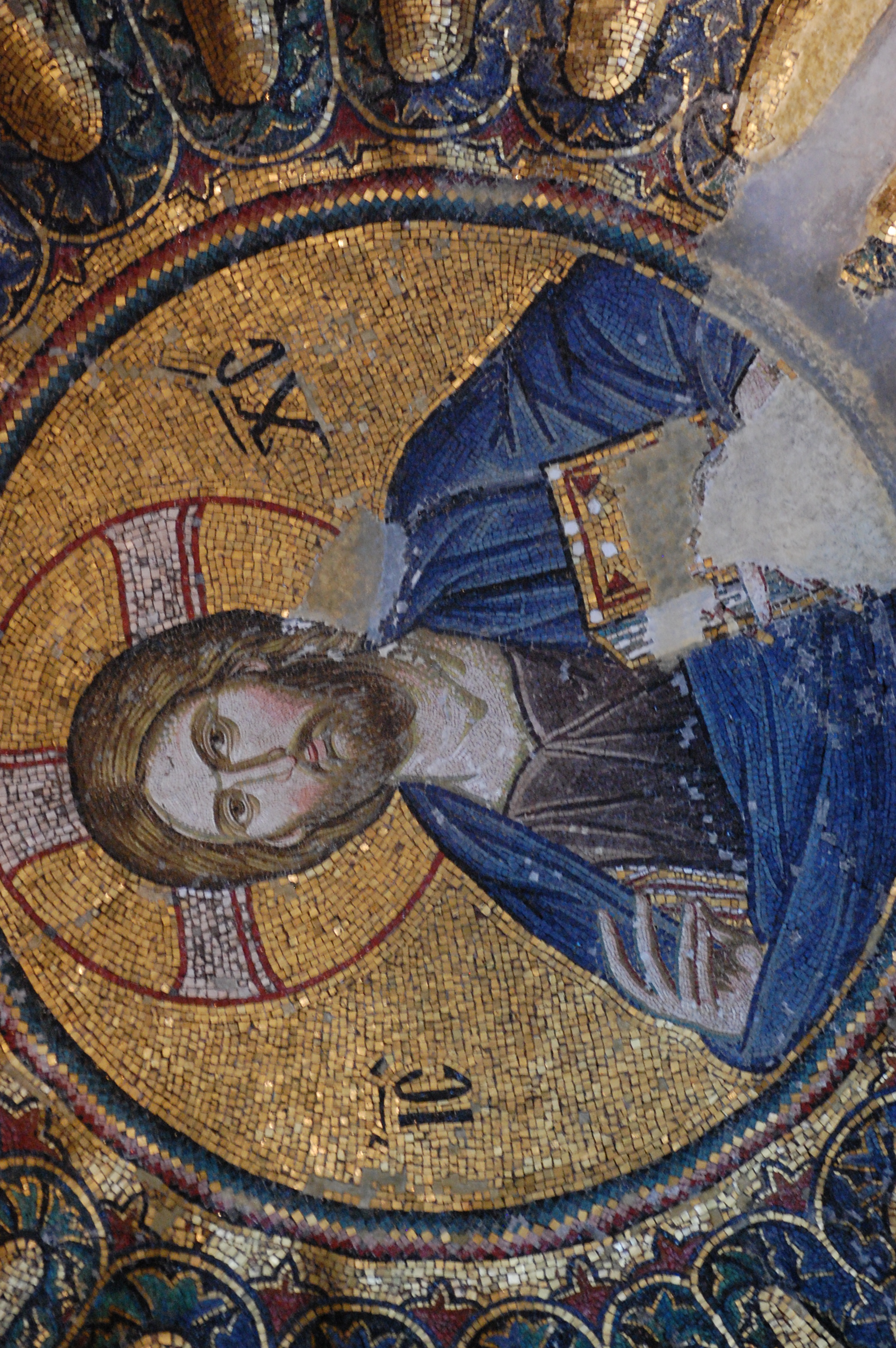
mosaic
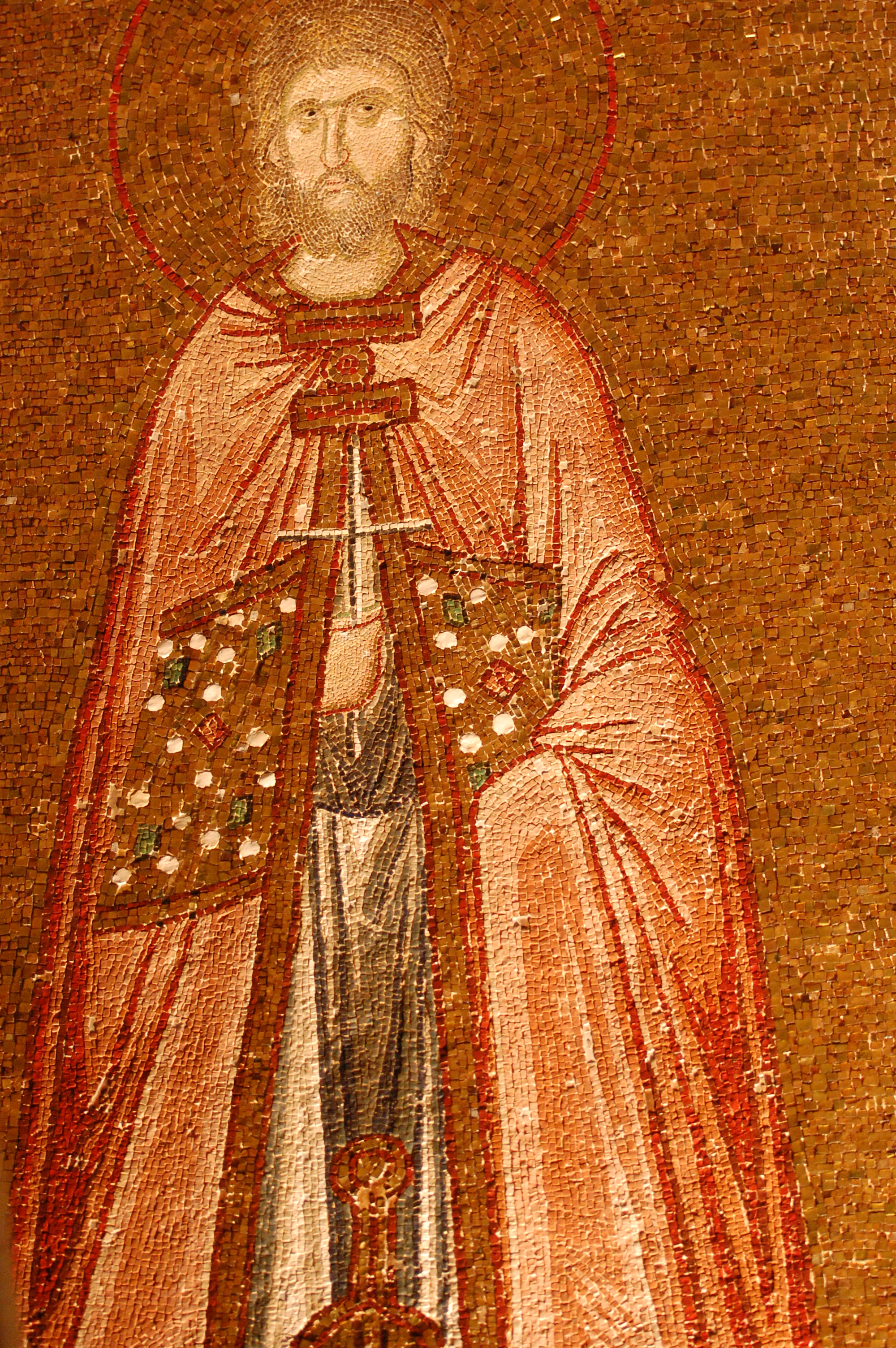
mosaic
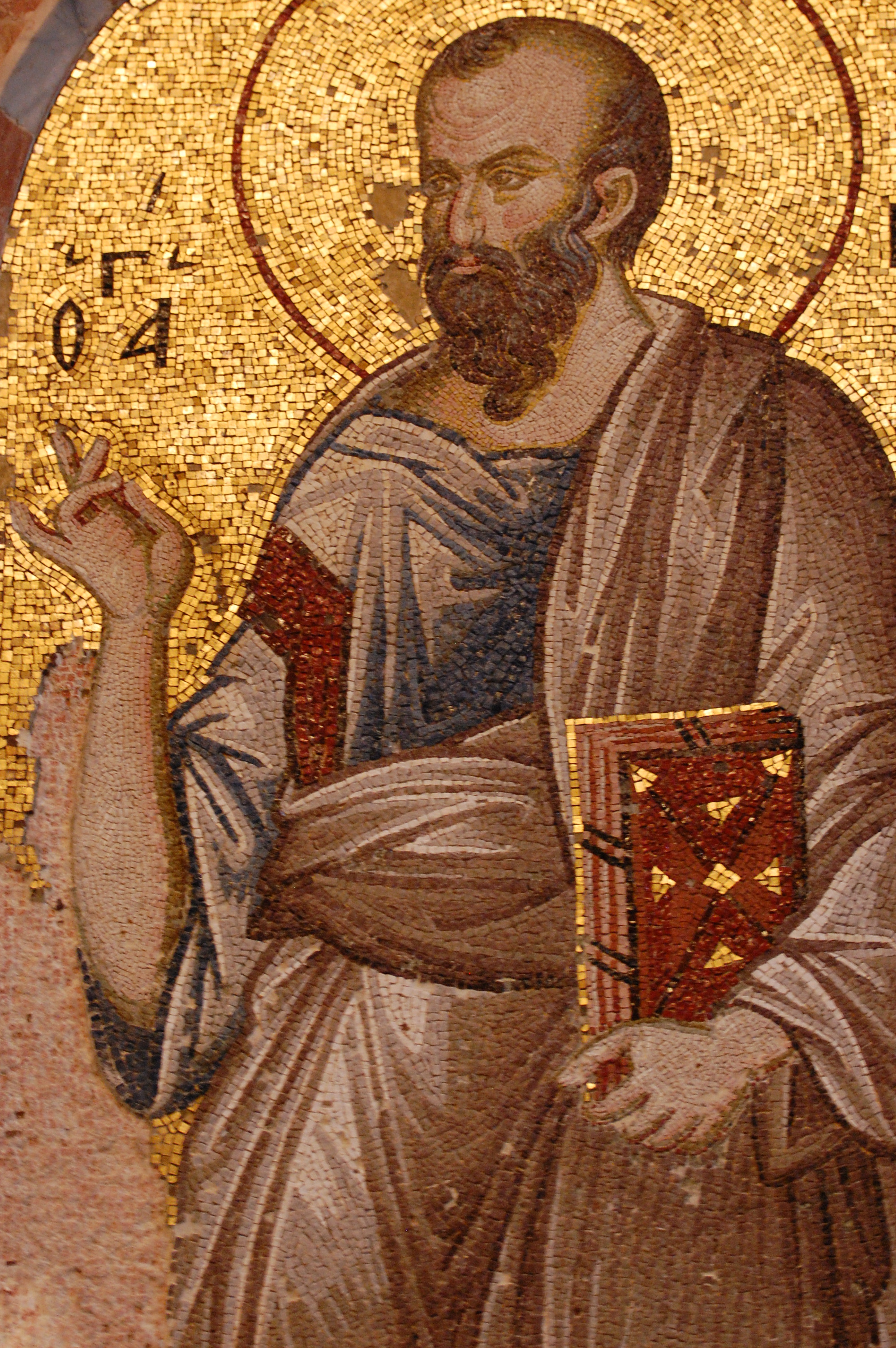
mosaic
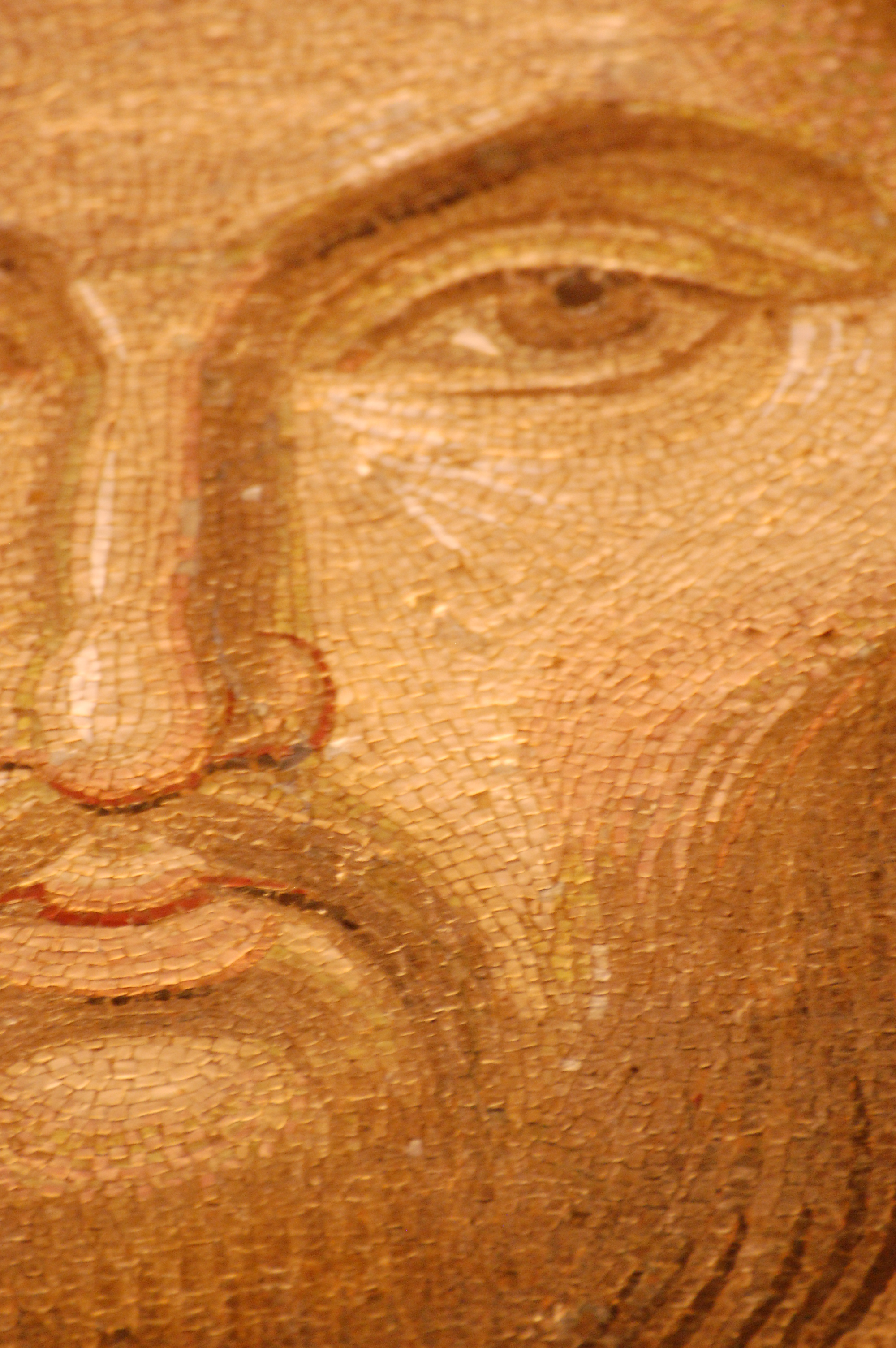
mosaic detail
From the church we walked, and walked, and walked. First to lunch, and then to find a small grocery store where we’d been told we could find wine for sale (yes, the wine produced in Turkey is quite fine and we brought home two bottles), and then back to the spice market to buy a few gifts, and then a final trip to the Grand Bazaar for a few gifts. Oh… and a stop here, because they are almost everywhere in the world, for a chai latte for me…
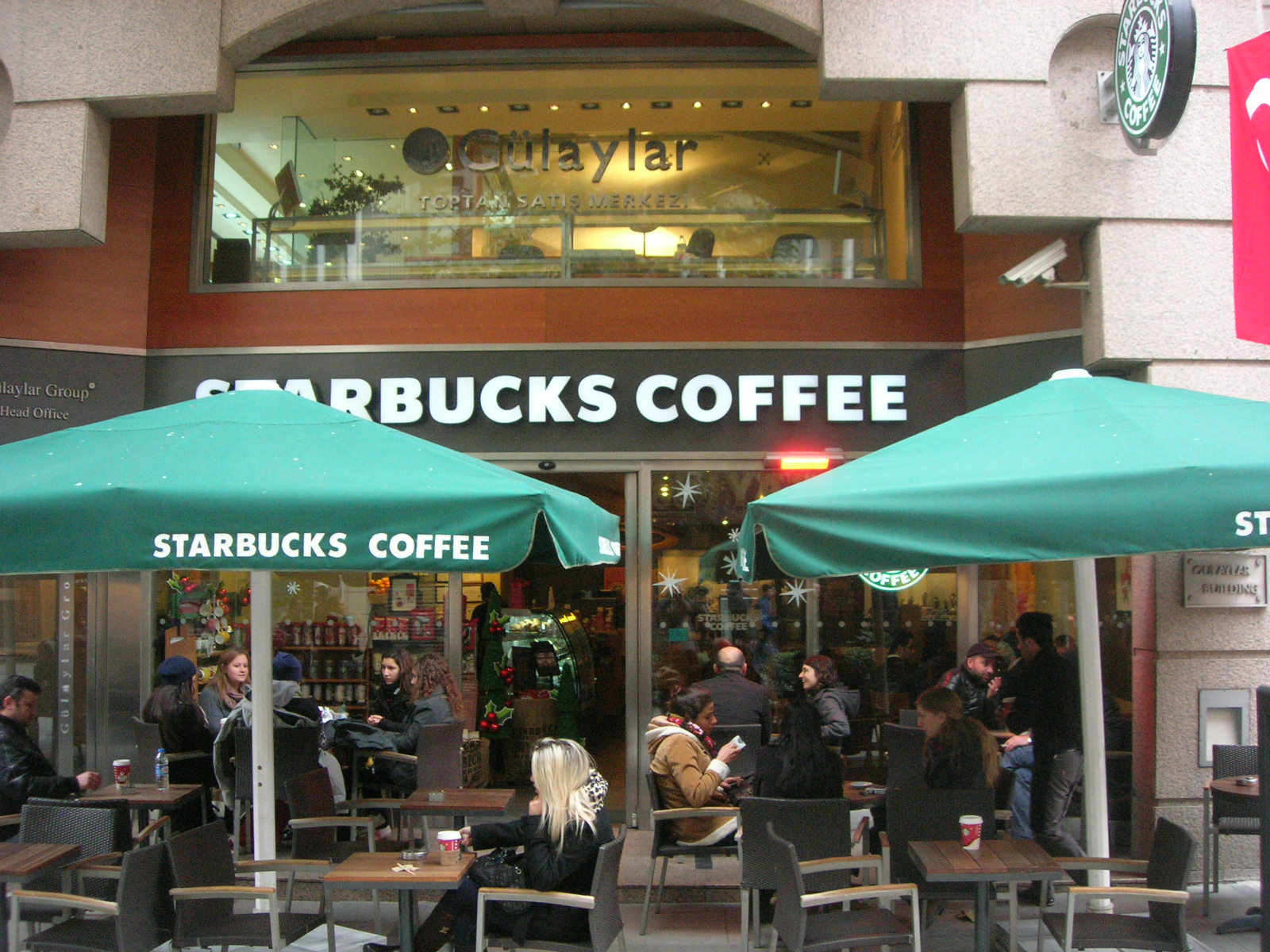
Starbucks in Istanbul (could be anywhere!)
Somewhere along the way, we saw these women through the shop window, busy making the teeny-tiniest of some kind of dumpling. They were stuffing a mixture, probably minced meat, inside dough, and piling them on their tables, and their hands were a whirlwind of activity – pinch meat, enclose in dough with a pinch or two, move on to the next one, and creating each one much faster than it took me to explain.
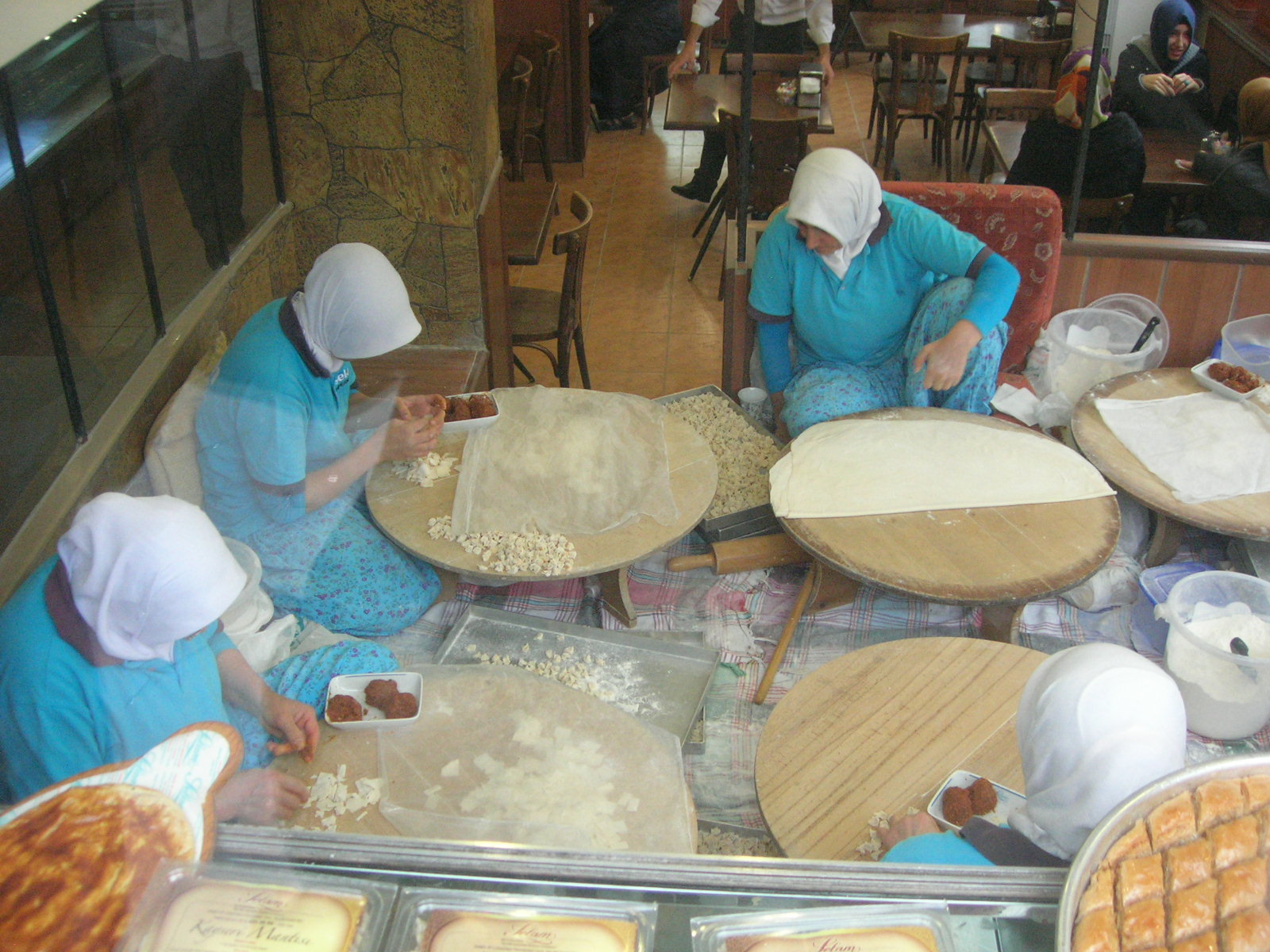
food production
Back to the hotel to pack, and then to the bar for our last glass of wine with Hasan.
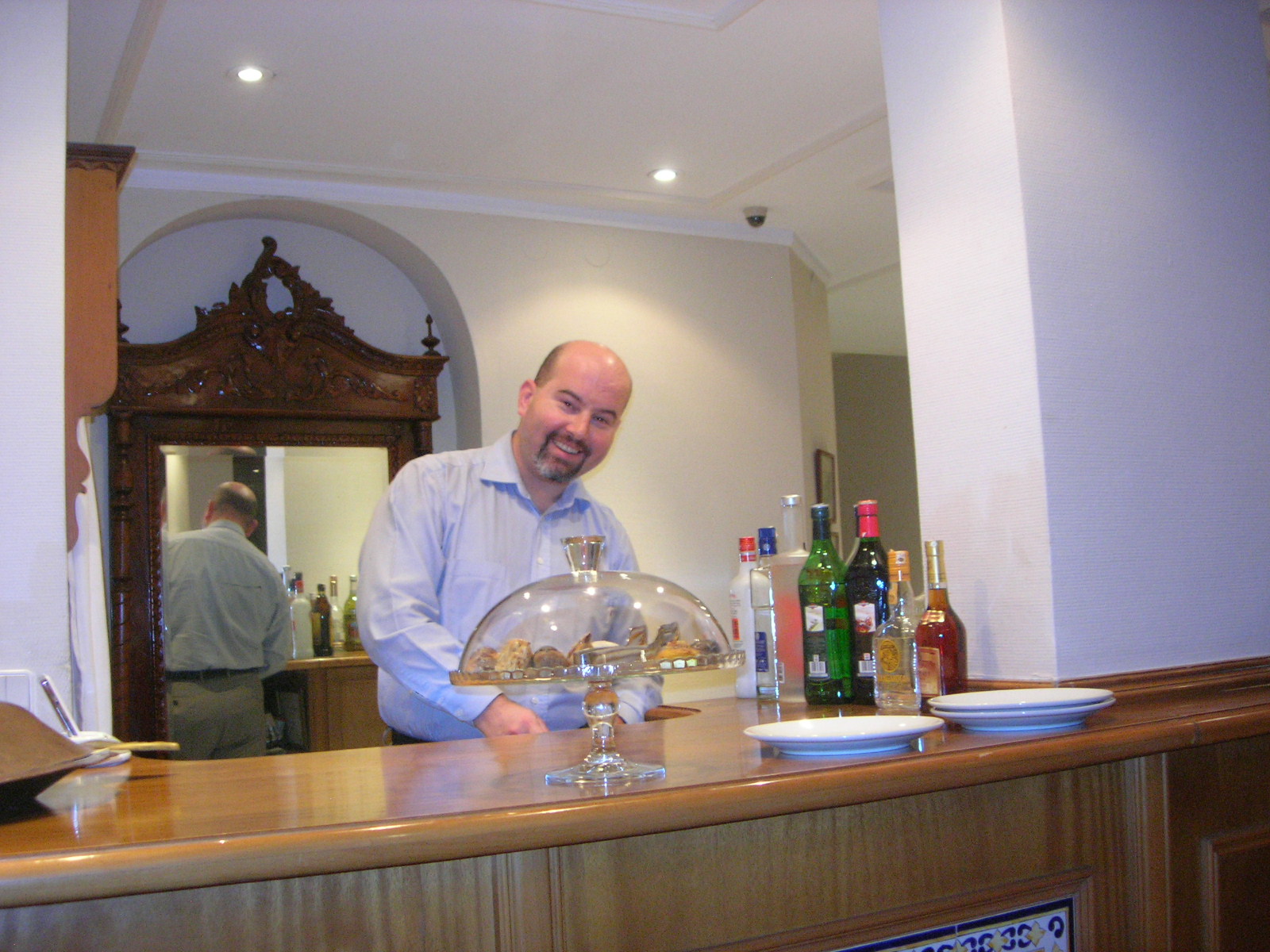
Hasan behind the bar
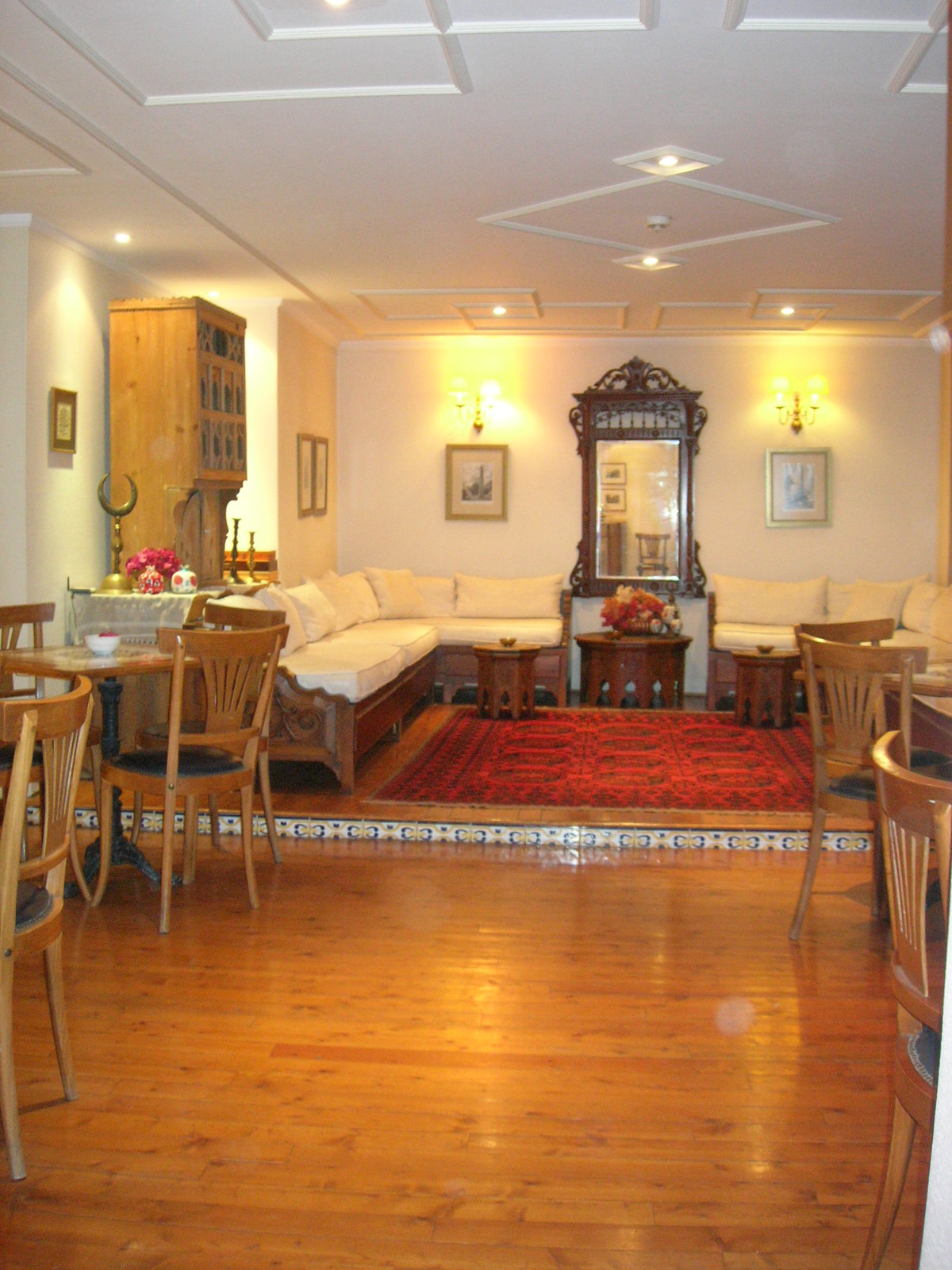
bar area is also breakfast area, but always a warm and comfortable stop
While we’re at the hotel, here are a few more pictures…
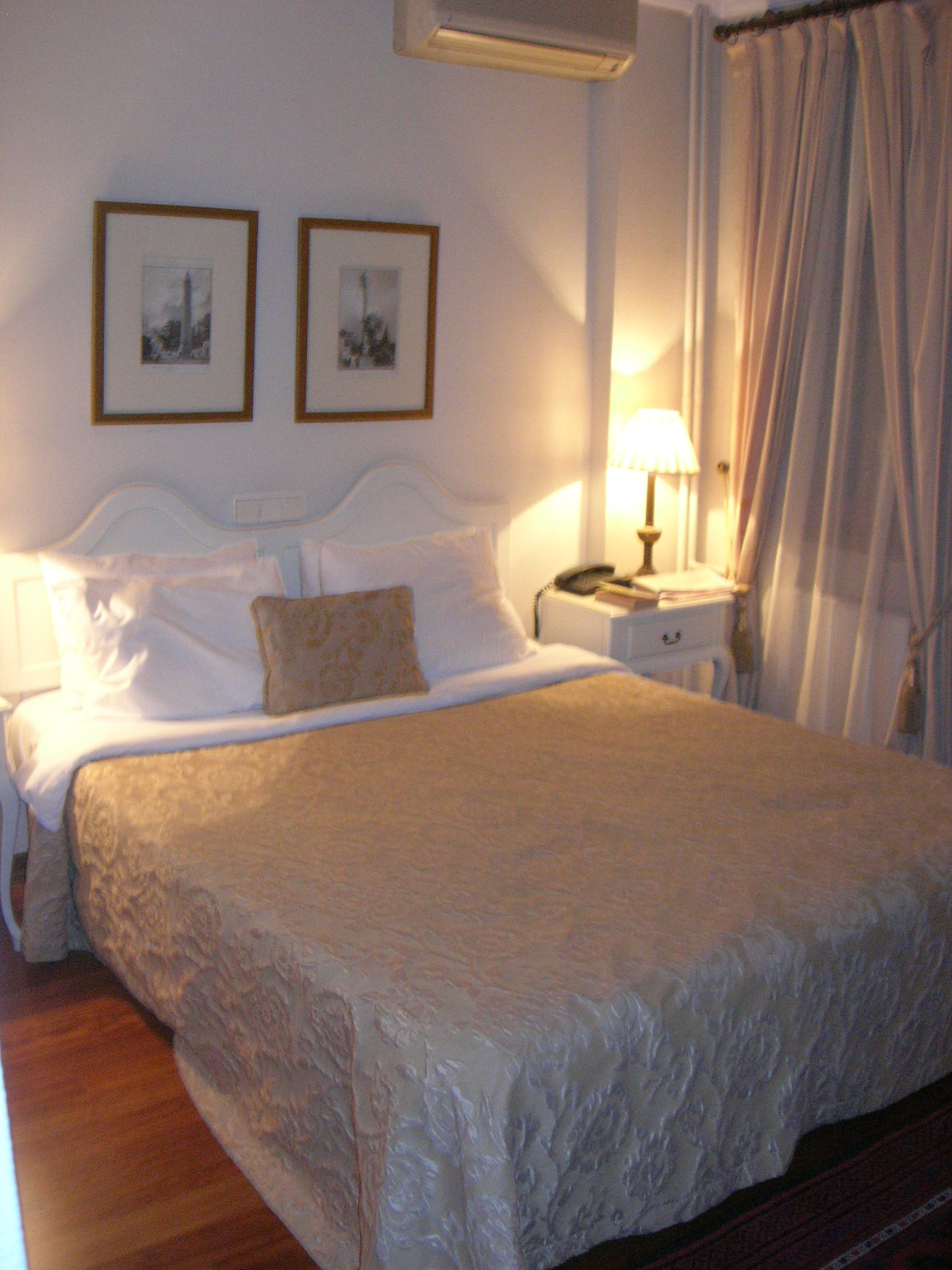
our room, simple but comfortable, with a window seat (not seen here) and small desk
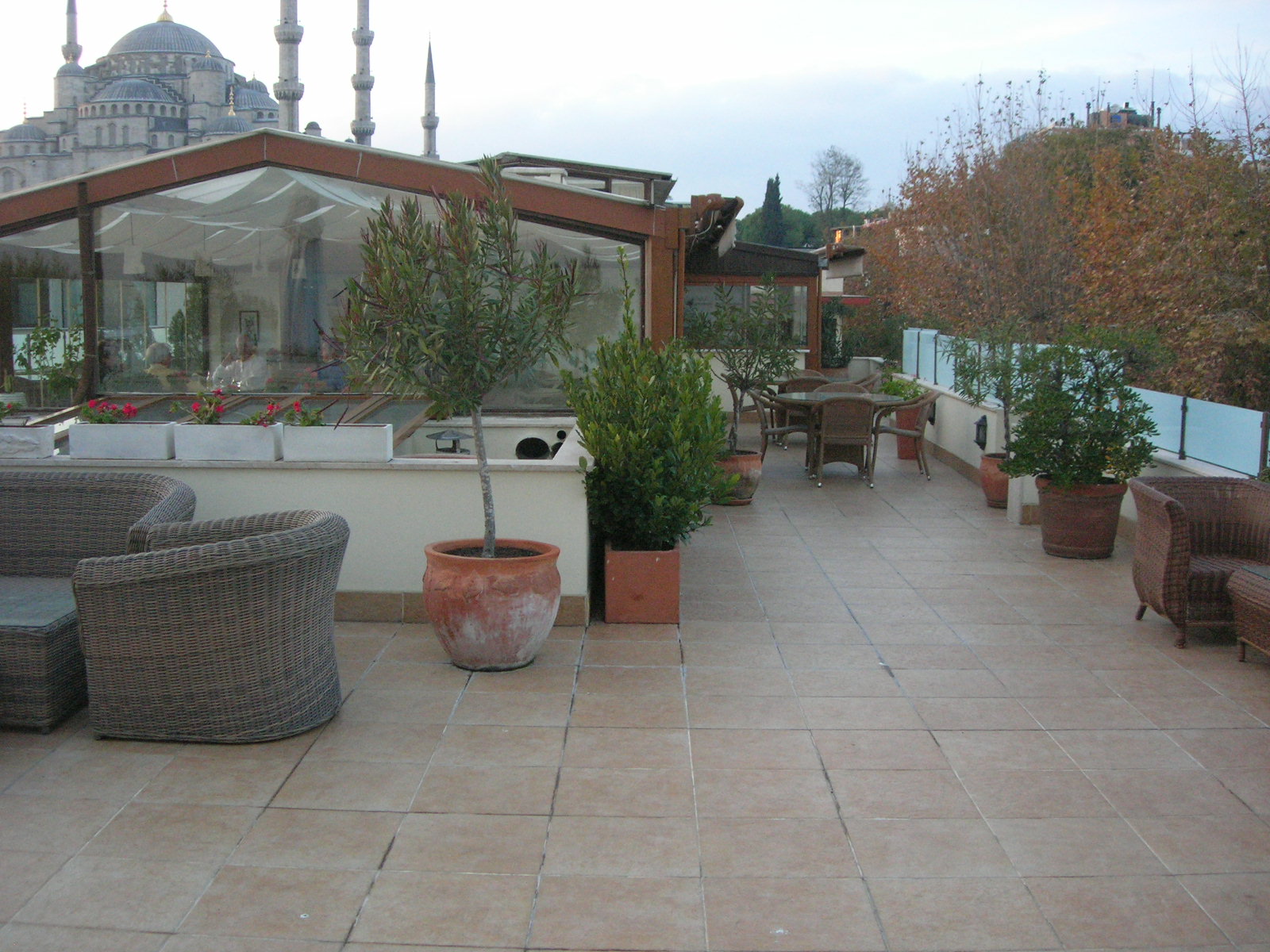
the open deck, which in the summer is the bar area
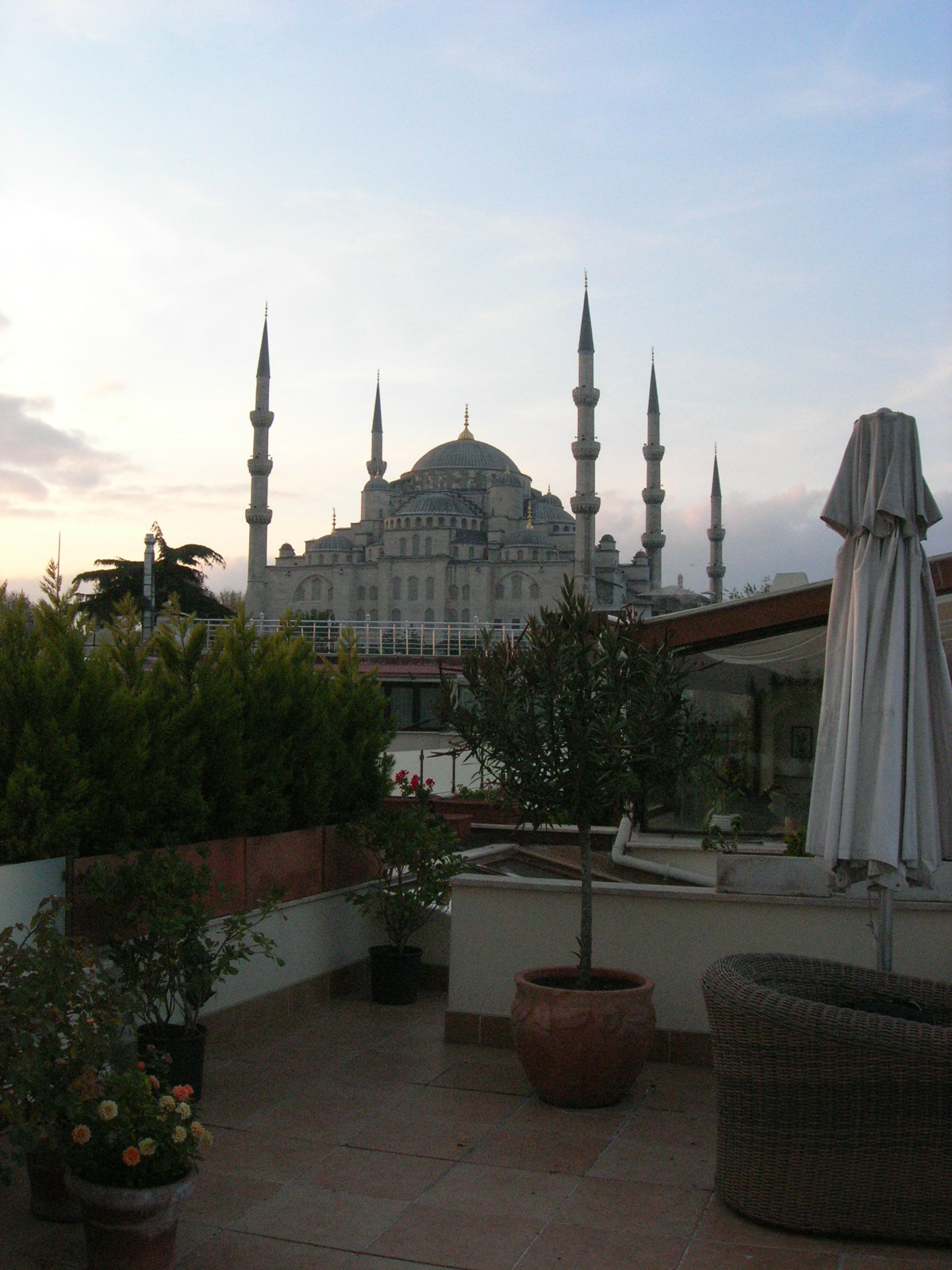
where you can watch the sun set and the Blue Mosque light up
And then we went out for our last dinner, back to the very first restaurant again.
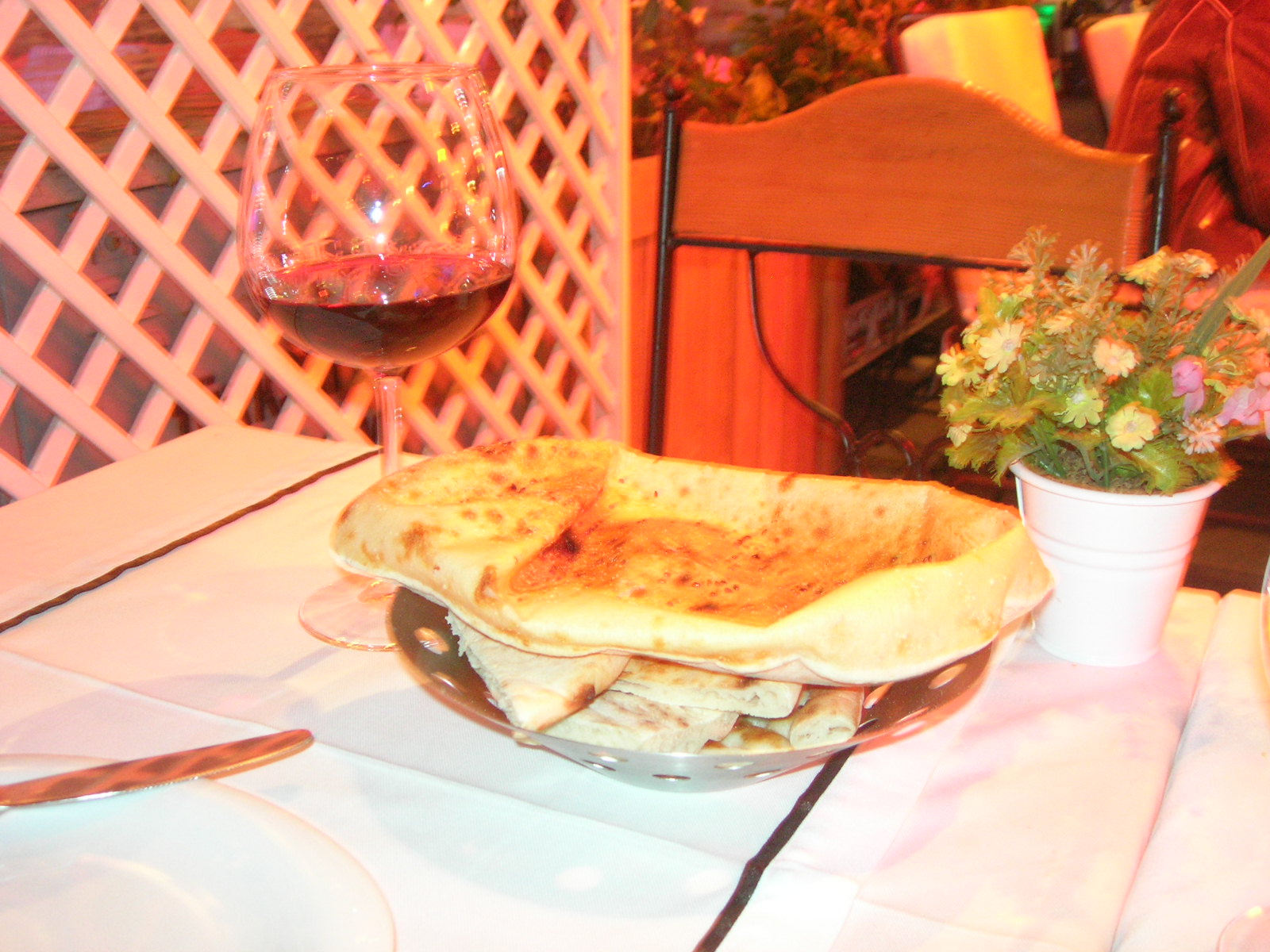
bread and wine and later an Ottoman stew
We had to be up before 4 a.m. as we left the hotel at 4:15 to get to the airport for our first flight from Istanbul to Frankfurt. It was a L-O-N-G trip back, even longer than getting there, but the our time in Istanbul was worth it. Istanbul was cleaner and more organized than we had expected, and the people were some of the friendliest people we’ve encountered in our travels. The history is like no other city, the food was great, and it was very easy to spend a week. But, my favourite thing of all was listening to the call to prayer five times a day. The first one woke us up, of course (though we always went back to sleep), and sometimes we didn’t even hear it, but when we did, it was always mysterious, eerie and beautiful.
 freda's world adventures
a great week, and brought back lots of memories, but of course I didn’t see half what you did, and we were there during Ramadam days, both before and after the Black Sea cruise, so no market or the spice market. We had a longer cruise, and the lovely homes and hotels along the Bosphrus were amazing. I loved the fisherman on the Galata bridge, and Liz and I had tea and cake after walking over, down below where all the cafes were.
Will have to get my pictures out and look again
Thanks love Mom
Your story is inspiring and brings back good memories of the delicious food and drinks I have had in 1985…
It was during that trip that I bought my kilim, it is a wheat sack, great inspiration for my glassblowing: the theme is ‘Glass bags’. The homepage of my website has the picture which I have taken in Istanbul.
And also: check out: http://www.tribal-kilims.com/
Thank you Freda!