Sochi 2014 February 28, 2014
Posted by freda in Birmingham, Michigan.6 comments
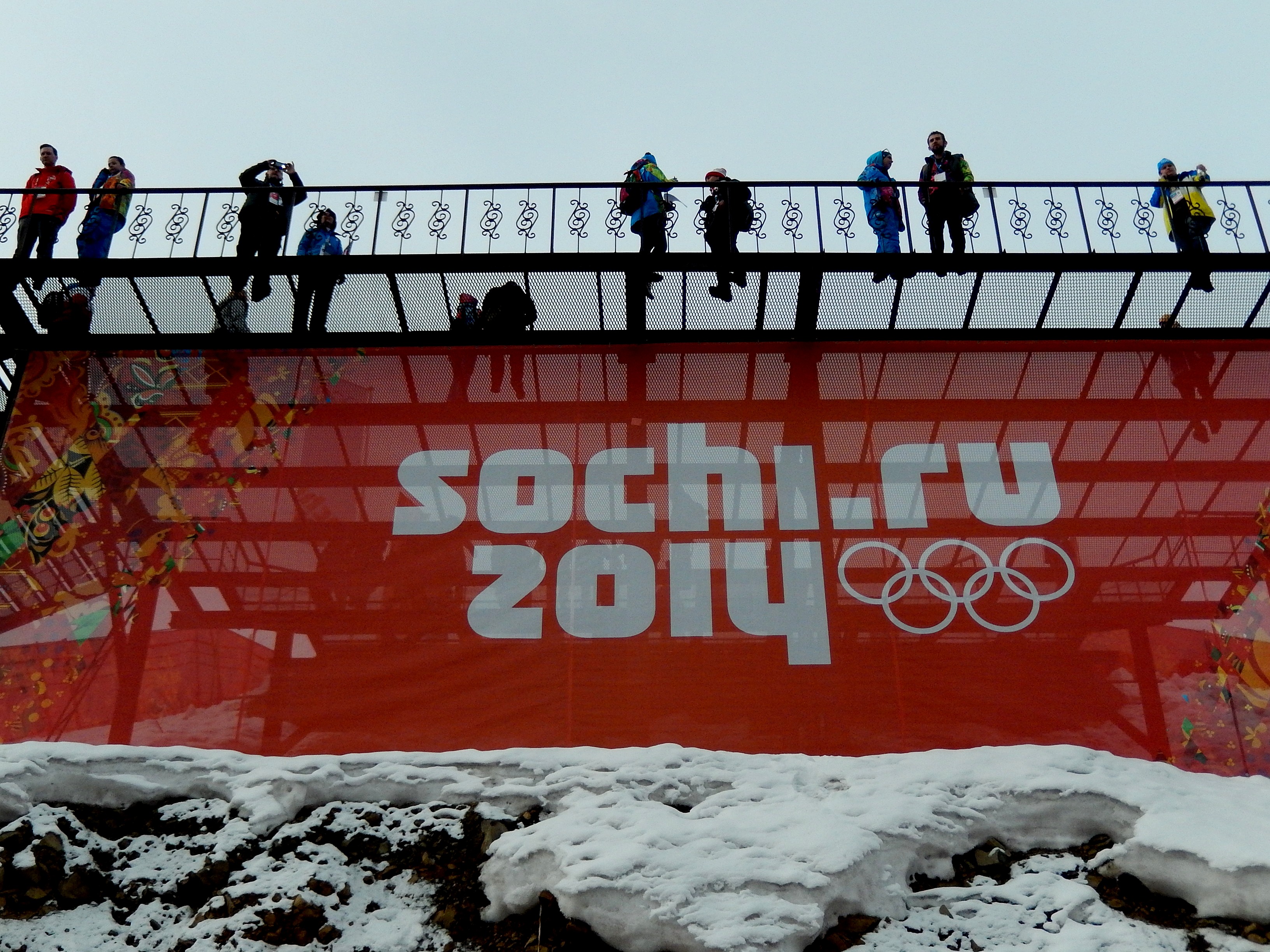
Sochi 2014 (Don)
(Don’t forget, if you click on any of the pictures, you can see them full screen.)
Don and I were fortunate, and very happy, to attend the Winter Olympic Games in Russia, as guests of NBC, as Chevrolet was a major media sponsor. We hosted a number of Chevrolet dealers from across the US, who had earned the trip based on strong sales to close out 2013. There were two sets of winning dealers, going in what NBC termed “waves”, but we were able to get there early enough to host both groups.
We left home on Friday, Feb 7th, and after a very long day of flying, including a 2-hour delay out of NYC because of an extra security check at the gate (a very thorough-ish hand search of all carry on luggage) rather poorly organized, which resulted in us missing our connection from Moscow to Sochi, (though we got on a later flight to Sochi – along with the NBC Today Show team, including Al Roker), we finally got to our hotel on Saturday, about 8:30 p.m. local time. We were staying at the Radisson in Rosa Khutor, the mountain area for the Olympics. The whole mountain village was built for the Olympics, and luckily this hotel had been constructed a few years ago, and was complete and lovely: http://www.radisson.ru/en/hotel-rosakhutor
The hotel was taken over by NBC, with multiple restaurants and bar choices and a large room called the Moscow Room, set up with a bar and many TV screens, for gathering in groups. After we unpacked, that’s where we headed, to wait for the GM dealer couples already in Sochi, to come back from their evening event. We had a great visit-meet with them (I’d only met one of them before), and then collapsed in bed.
NBC had organized our days like this: each day we had tickets to a “featured event,” usually in the late afternoon or evening, but they also had limited tickets to many other events, and if we were interested, we had to sign up today for what we wanted to see tomorrow, which meant every morning lining up to sign up, and hope to get tickets. Don decided to go to Men’s Downhill our first morning, but I knew it was too early for me after our day of flying. So, I slept in a little later, then took a walk around the mountain-village, and then had a nap,

mountain village
and Don went to the Men’s Downhill –

the Downhill course (Don)
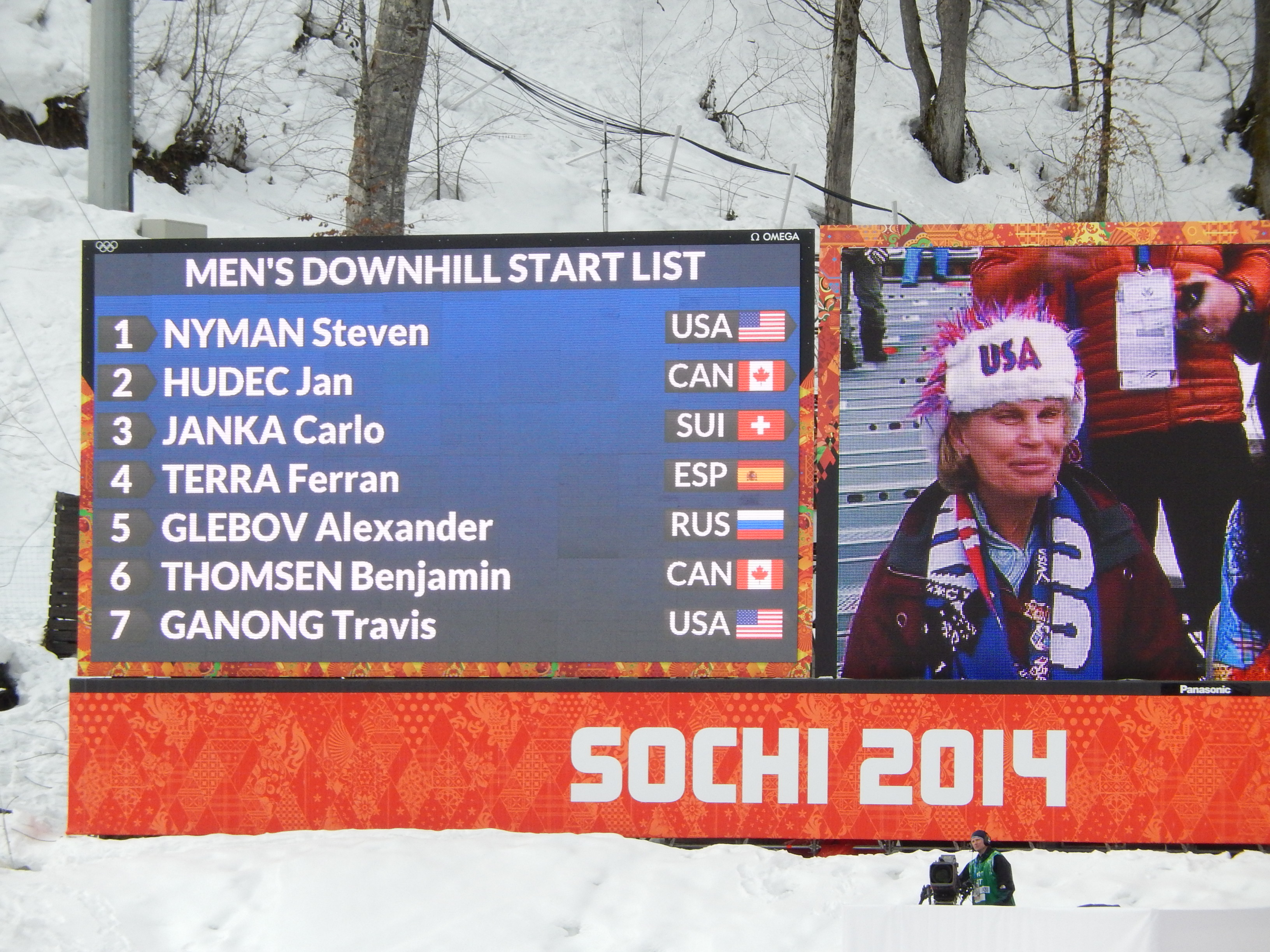
the starting list (Don)
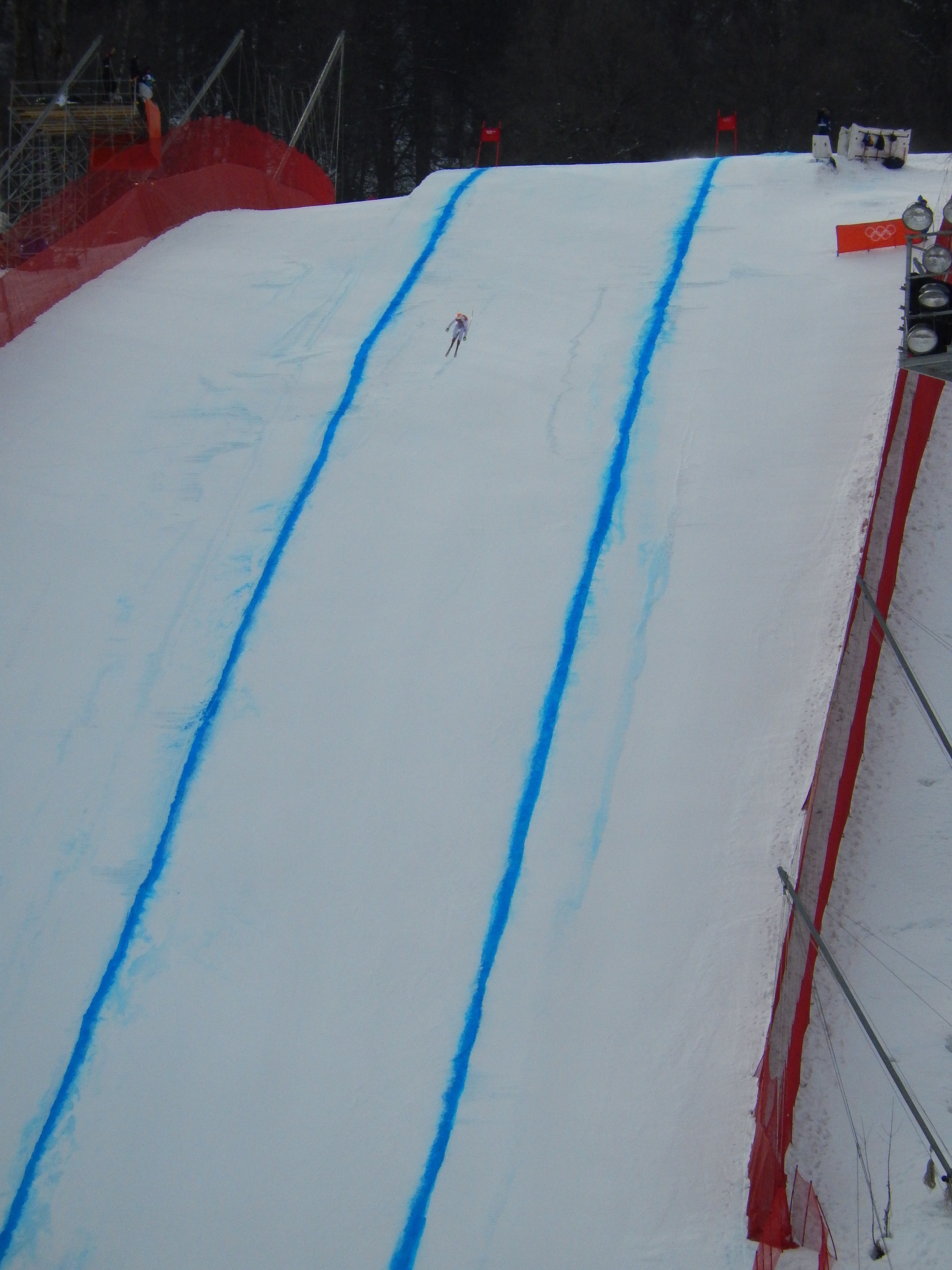
racing (Don)
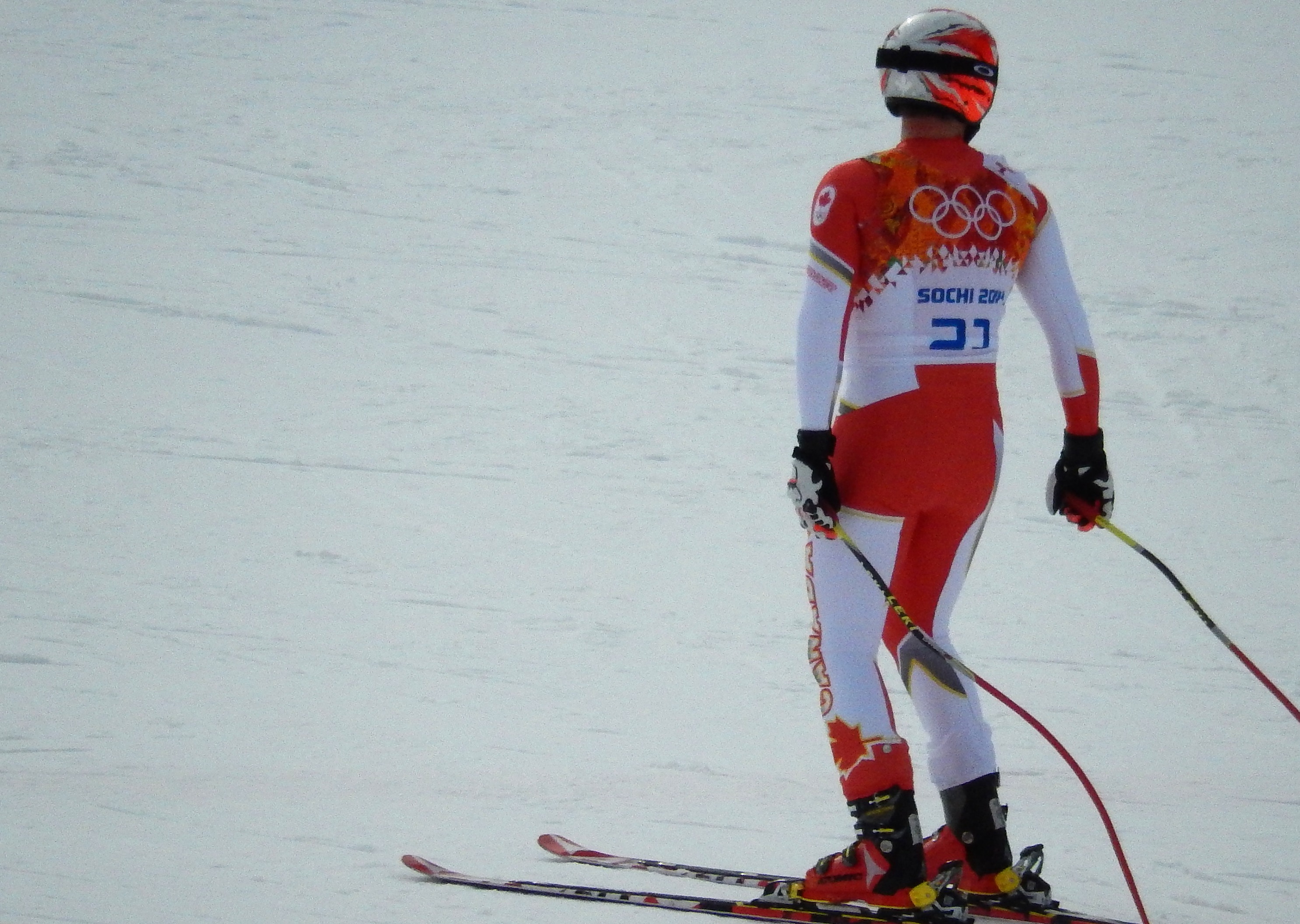
at the finish (Don)

I love this shot of a lone camerman (Don)
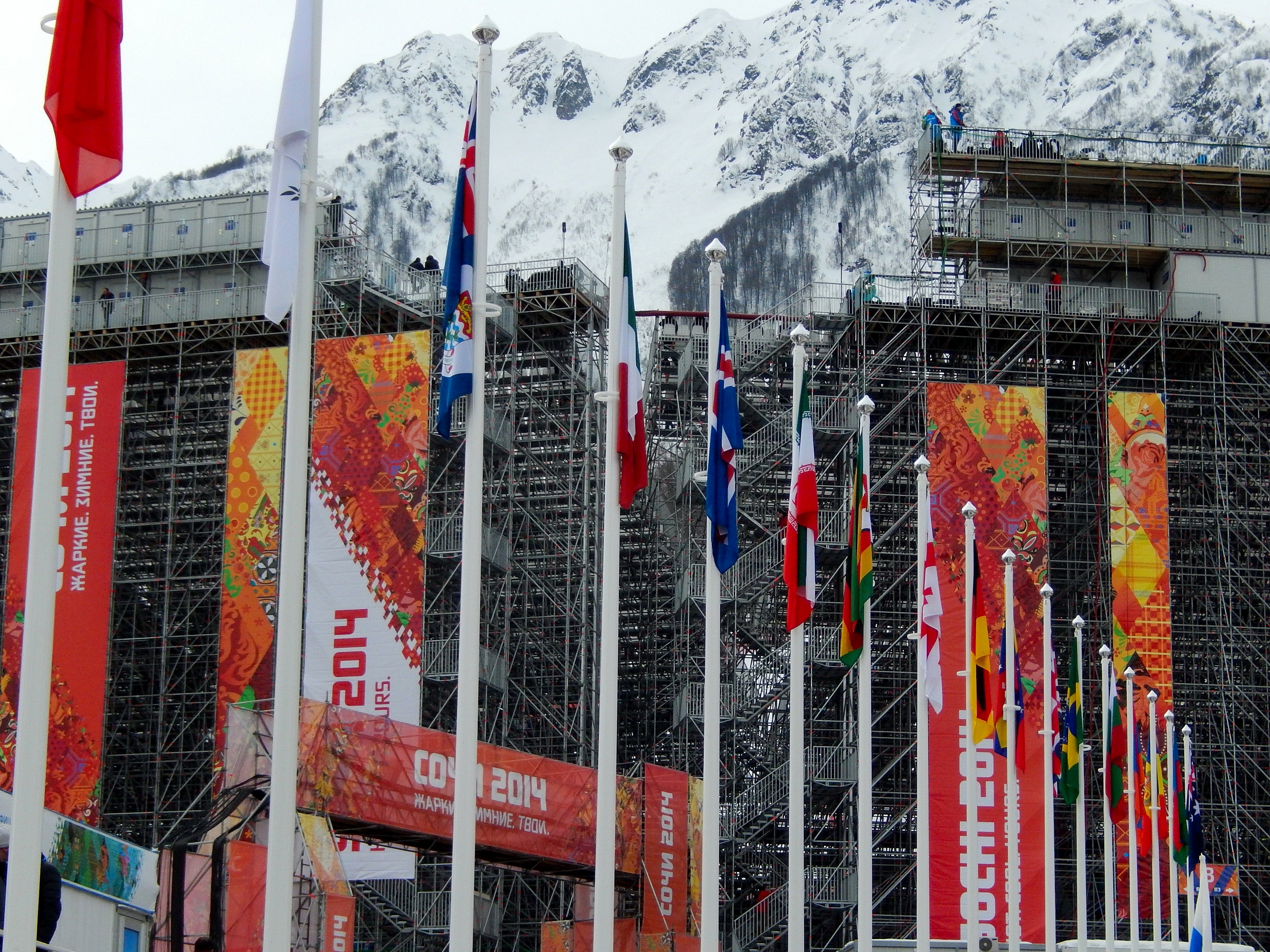
mountain venue (Don)

Coco-Cola is the *only* beverage of the Olympics (Don) – well, besides vodka 😉
Back at the hotel, Don had a nap, and then we were herded onto the buses to head to the Olympic Village for our first “featured event” of Team Figure Skating Finals, a new event at these Olympics, and which included Women’s Free Skate, Men’s Free Skate, and Dance Pairs Free Skate, for the final five teams of Japan, Italy, USA, Canada and Russia.
The Olympic Village was a 45-60 minute bus ride from our hotel in the mountain area, depending on traffic, a trip we made every day. NBC had hired several interns, all university students, at least half of whom spoke Russian, to be our ‘handlers.’ At the hotel they held signs with events on them (e.g. “Speed Skating,” “Hockey,” “Curling,” etc) to make sure we got to the right bus and right event for which we had tickets. At all times, in the hotel and at the venues, we were required to wear a “spectator pass” around our necks,

spectator pass, worn around our necks at ALL times
and when we were heading to the events, a second lanyard holding our event tickets.

a sample of our tickets
Without those it was impossible to get into the Village. Once there, we walked from the parking lot to the security check, where we scanned our spectator pass to enter. Then, just like at an airport, our possessions went through x-ray, and then not quite like at airports, we were thoroughly patted down. Of course we all appreciated the thoroughness, but it also became a bit of a joke. The best line was from a woman who said, “well, I feel like a cigarette now!”
Once through security, the NBC interns were placed along a sight-line, holding what they called “lollipops” that led us to the NBC Hospitality Suite, about a 15-minute walk through the village.
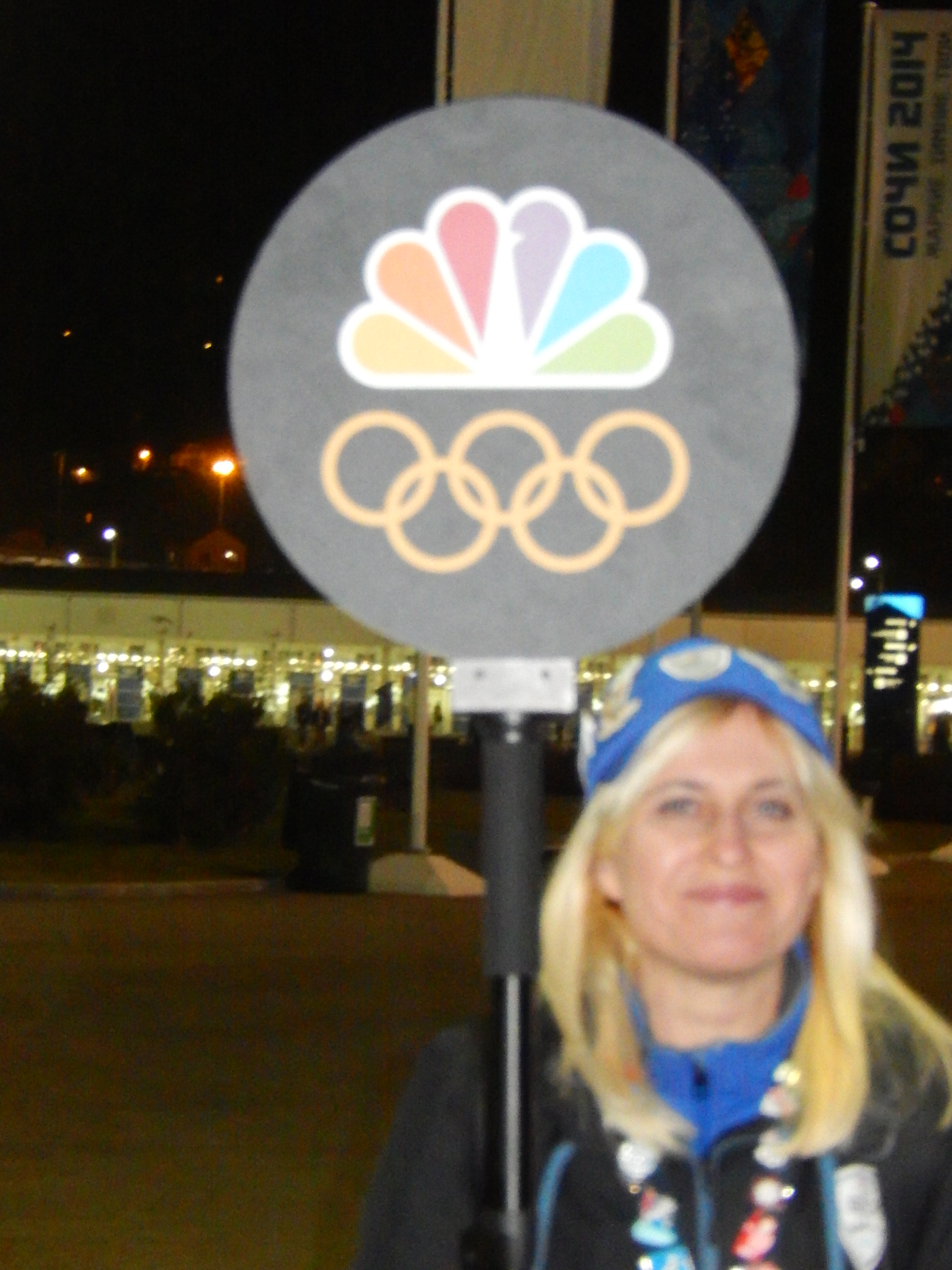
intern with her “lollipop”
The buses were timed so there was always time to relax at the Hospitality Suite and indulge in drinks and amazing food before heading to our Olympic event.
The Olympic Village was really fabulous; so well designed with all the arena venues in a circle around the flame. There were Russian volunteers everywhere in their colourful outfits. Besides the arenas, there were a variety of pavillions and outdoor stages for entertainment, and a number of food kiosks. The weather was fabulous the whole time we were there – sunny and warm – and it was a delight to walk over the rainbow bridges and people watch.
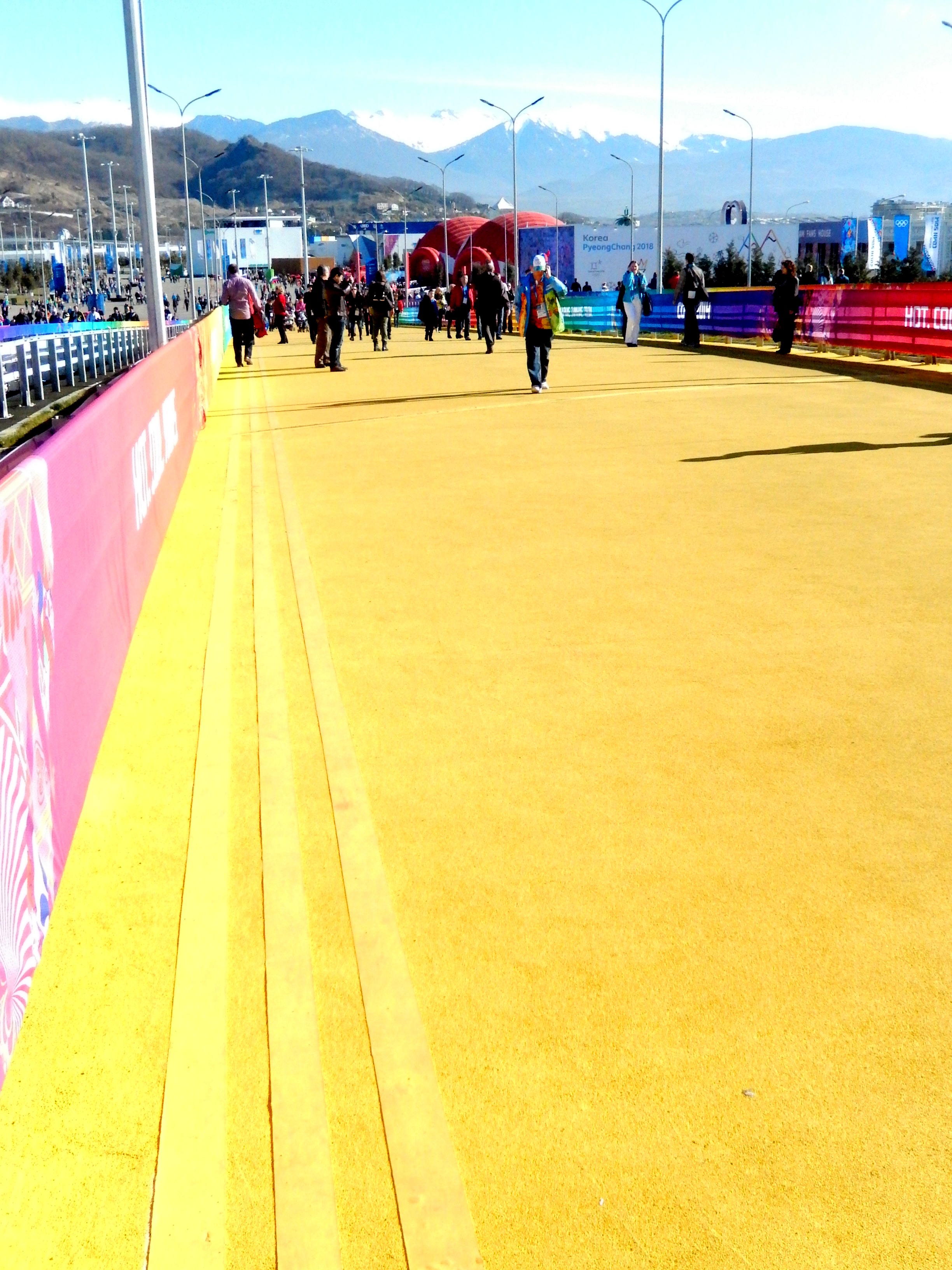
on the rainbow bridge (Don)
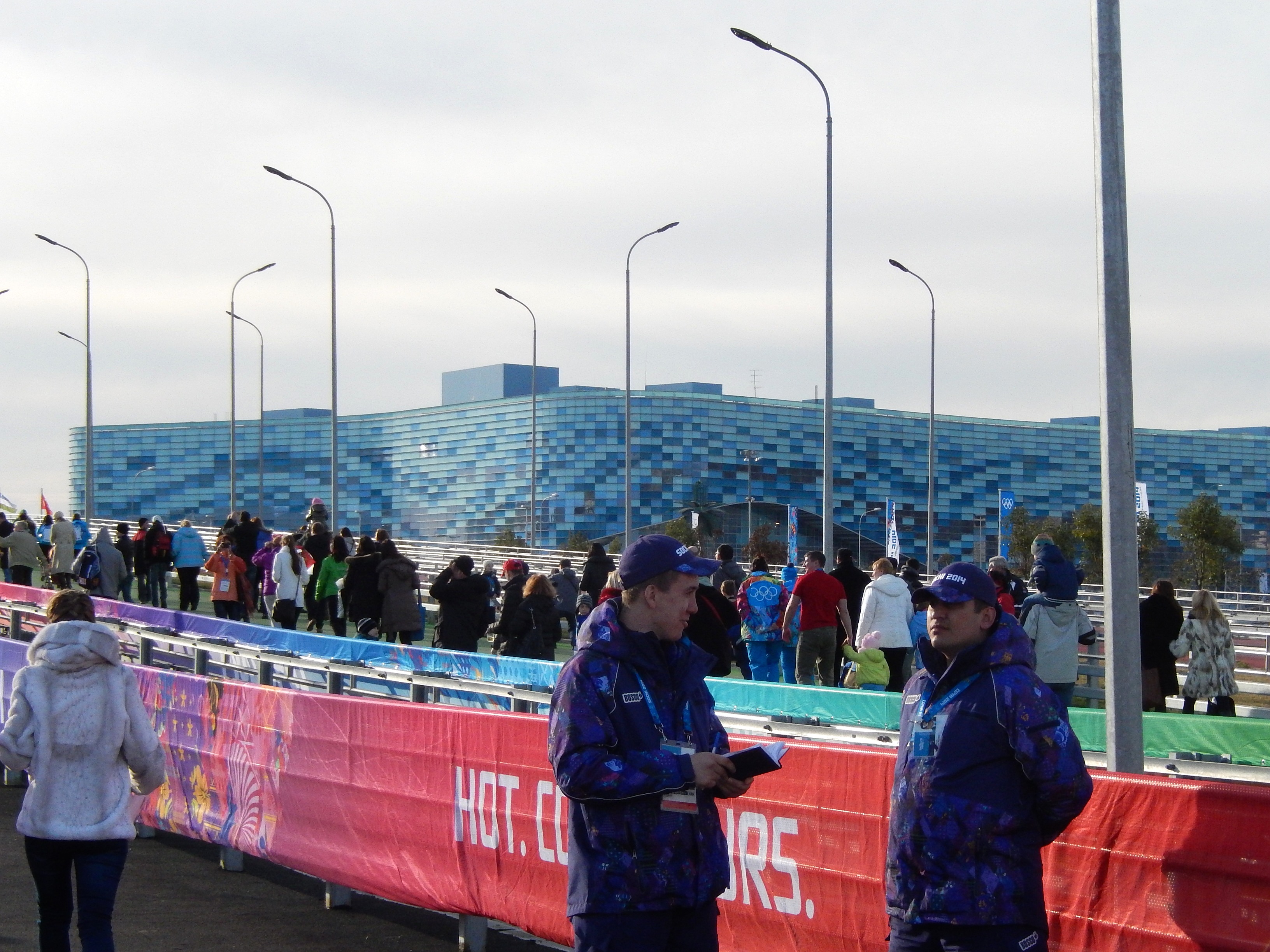
on the bridge – Iceberg Skating Palace behind
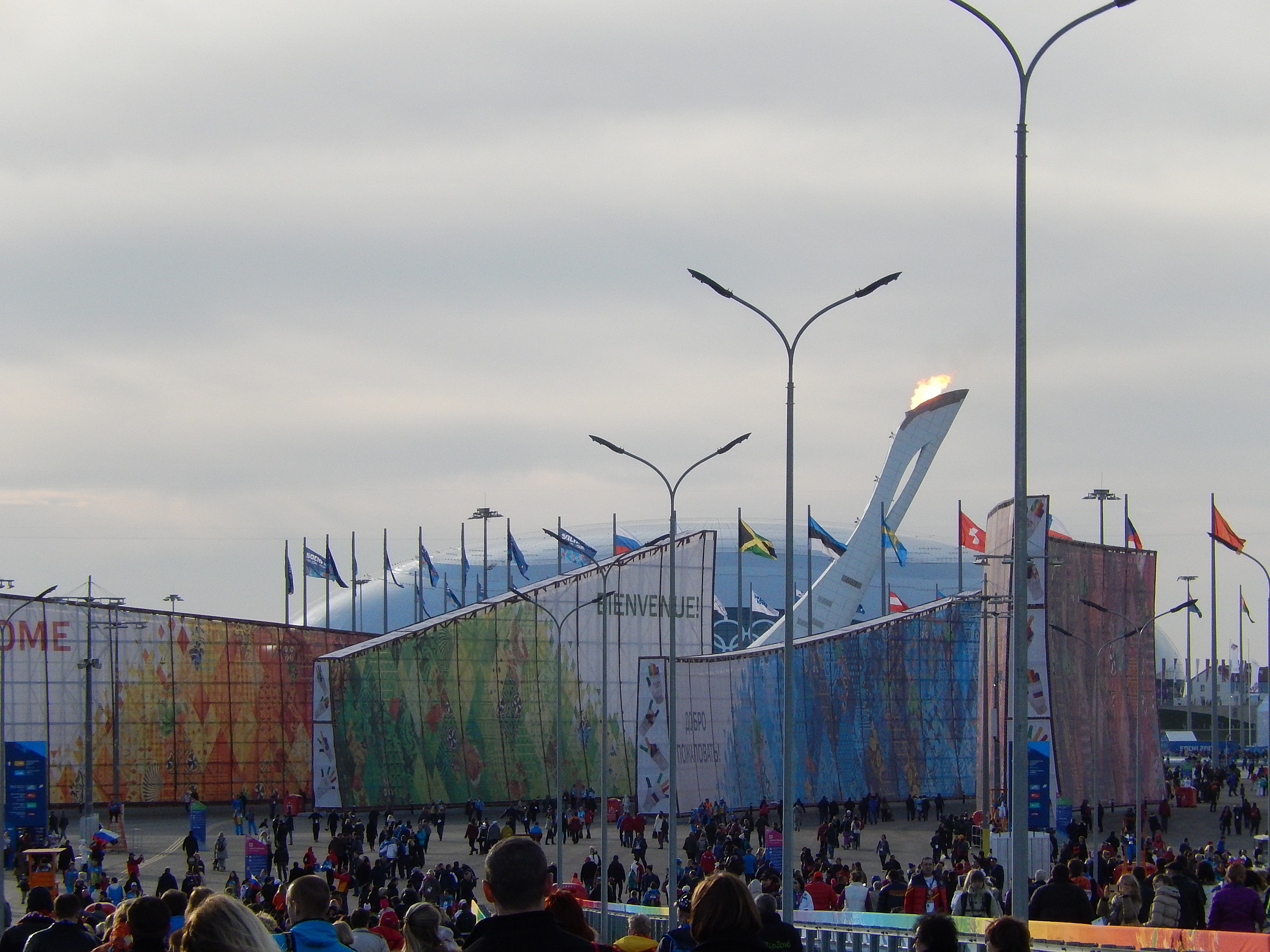
another view from the bridge
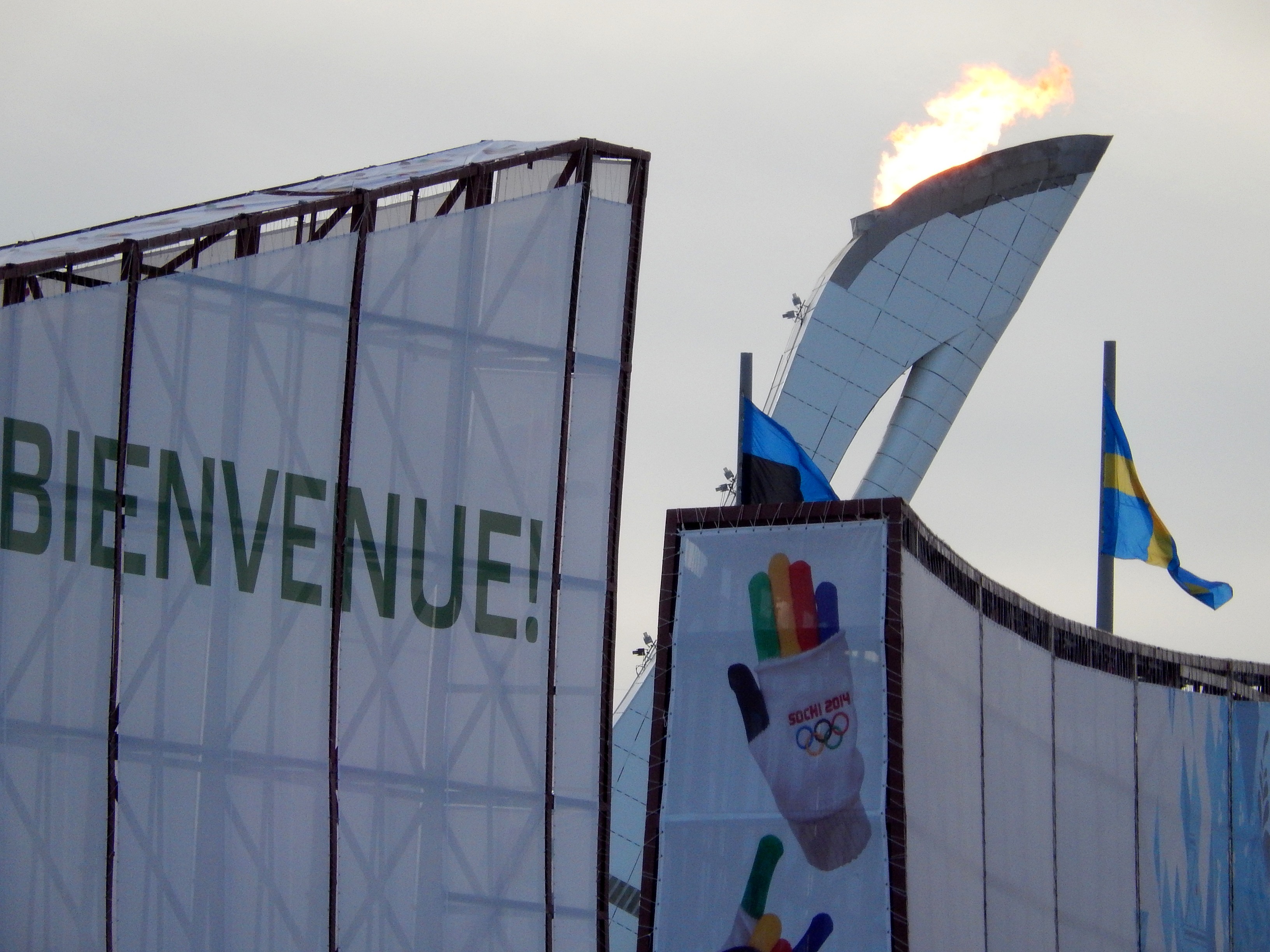
Welcome! (Don)
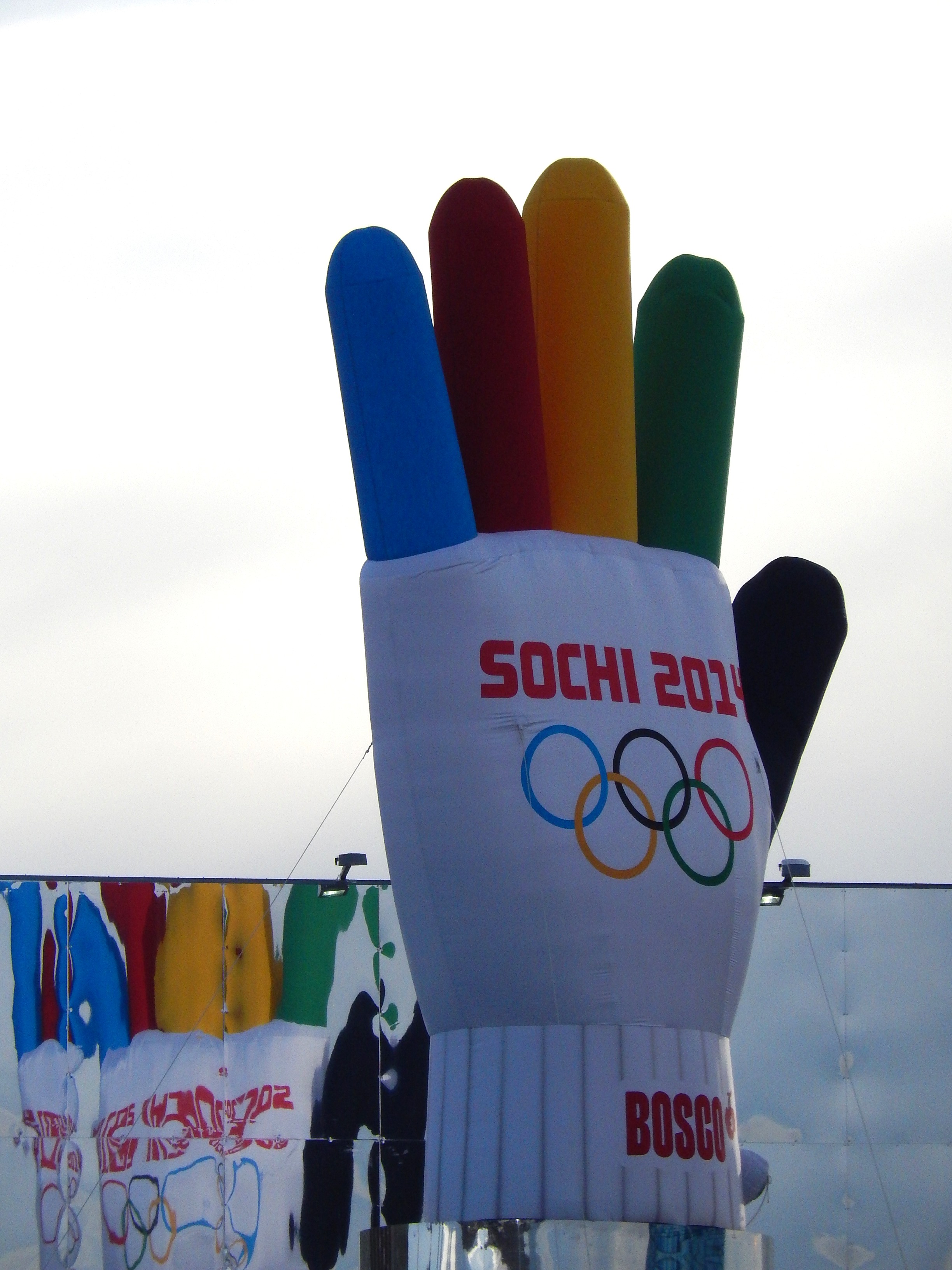
the Sochi 2014 glove (Don)

in the village

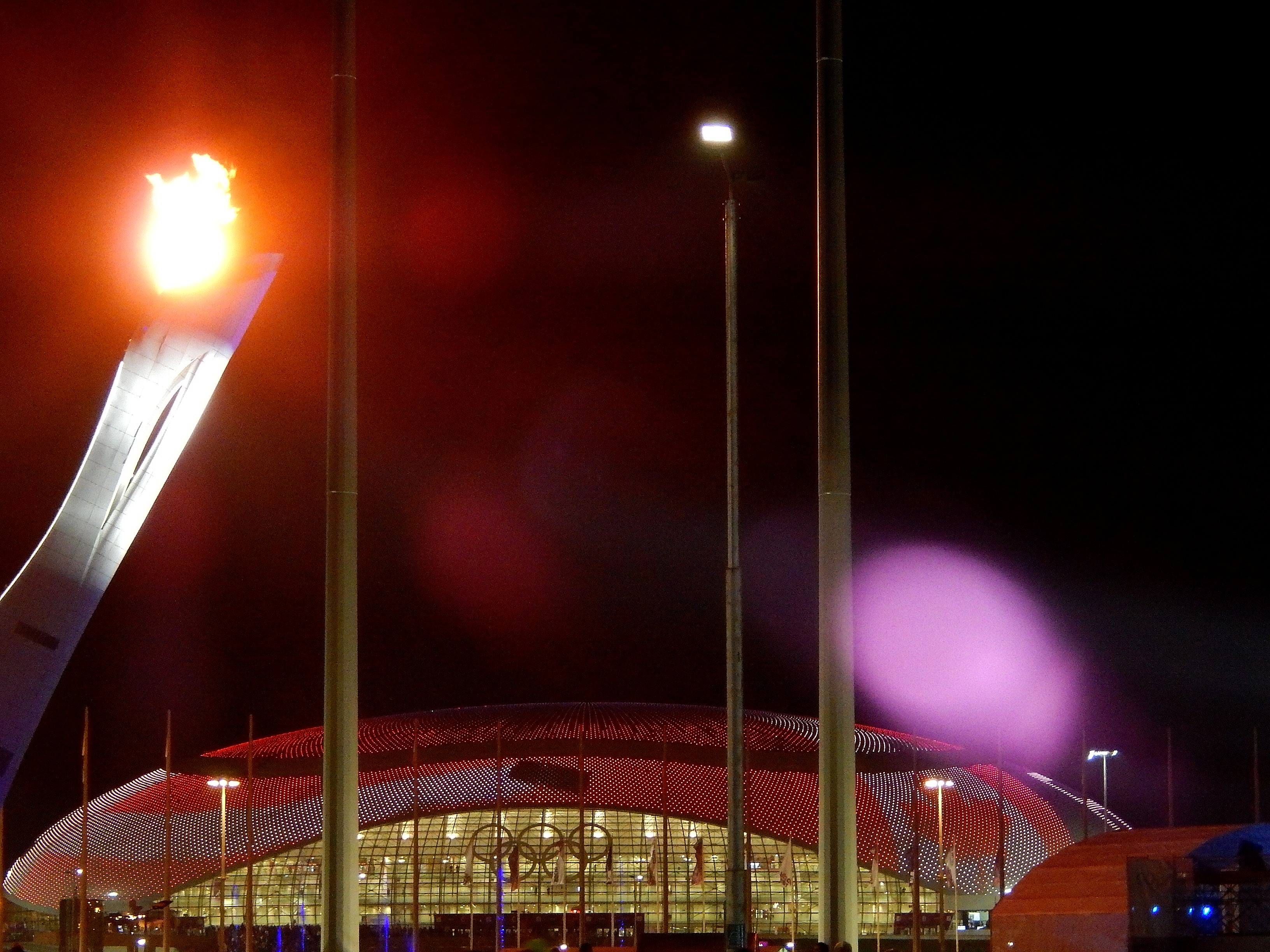
the flame
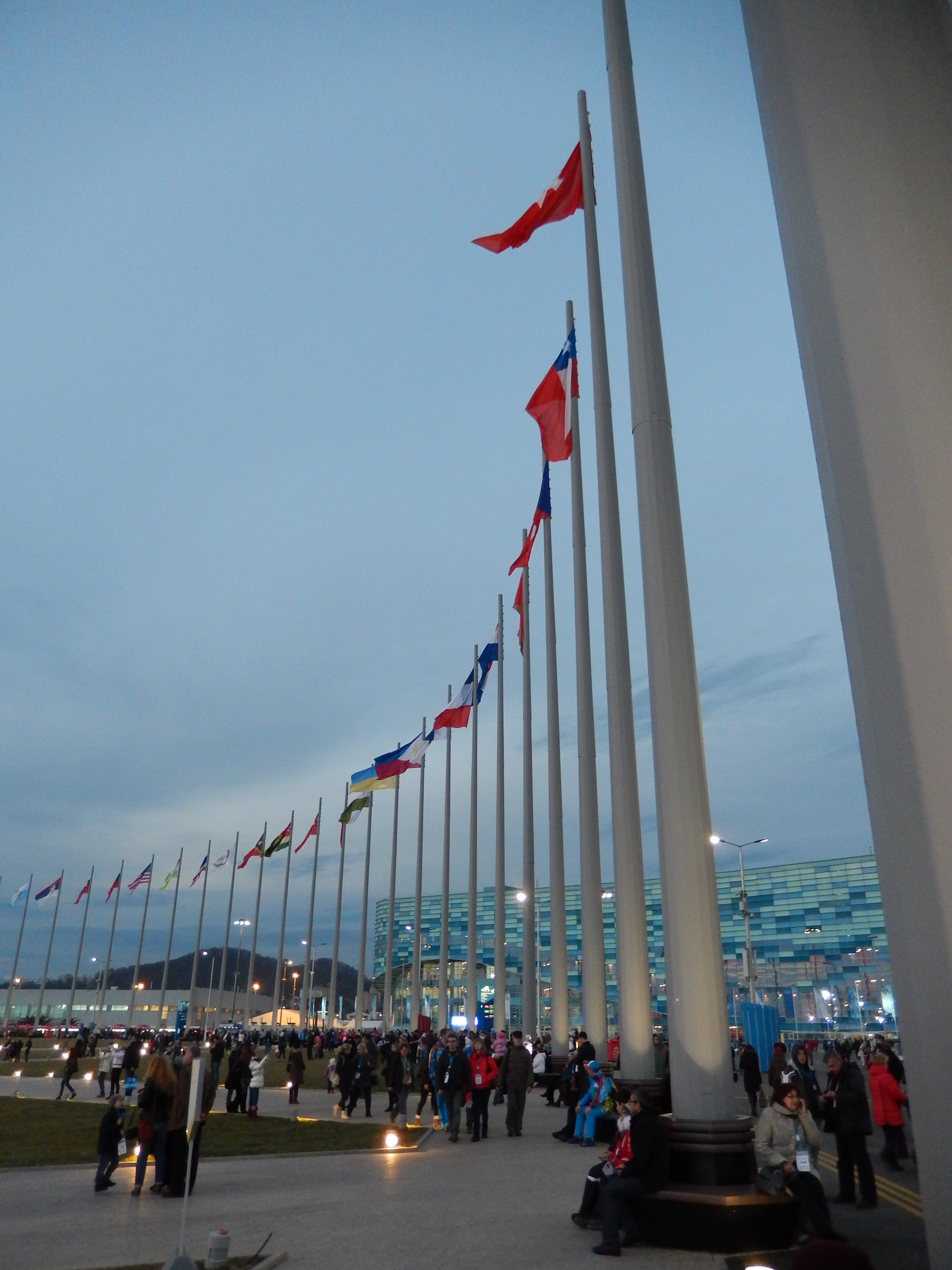
flags around the flame
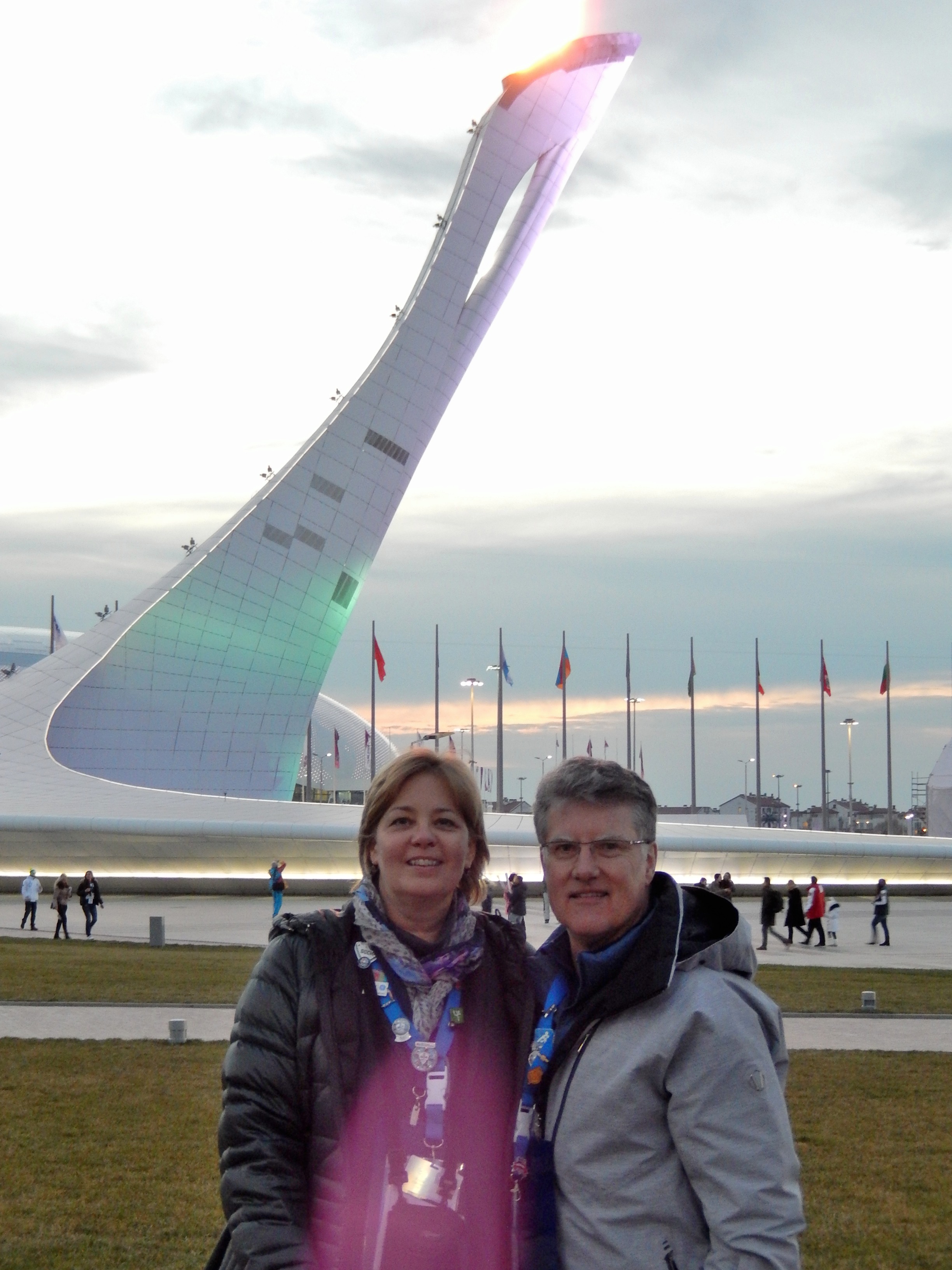
We are here!
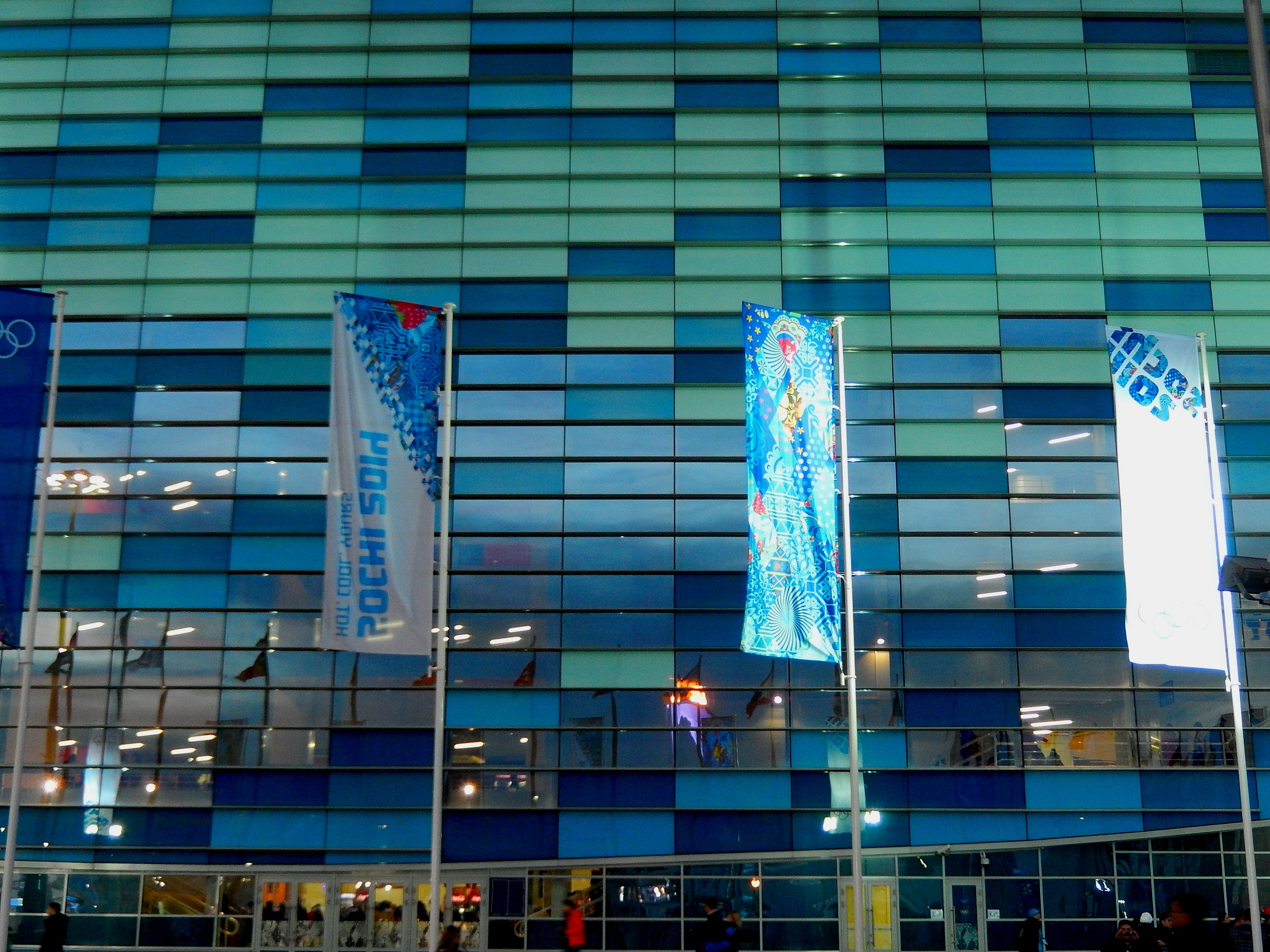
heading into the Iceberg skating palace

Figure Skating Team Event: Canada, Russia, USA, Japan, Italy
We saw some wonderful skating in this new Team Event, a hint of what would come in the individual events… The American, Jason Brown, was thoroughly entertaining:

USA’s Jason Brown
The Canadian, Kevin Reynolds, was excellent:
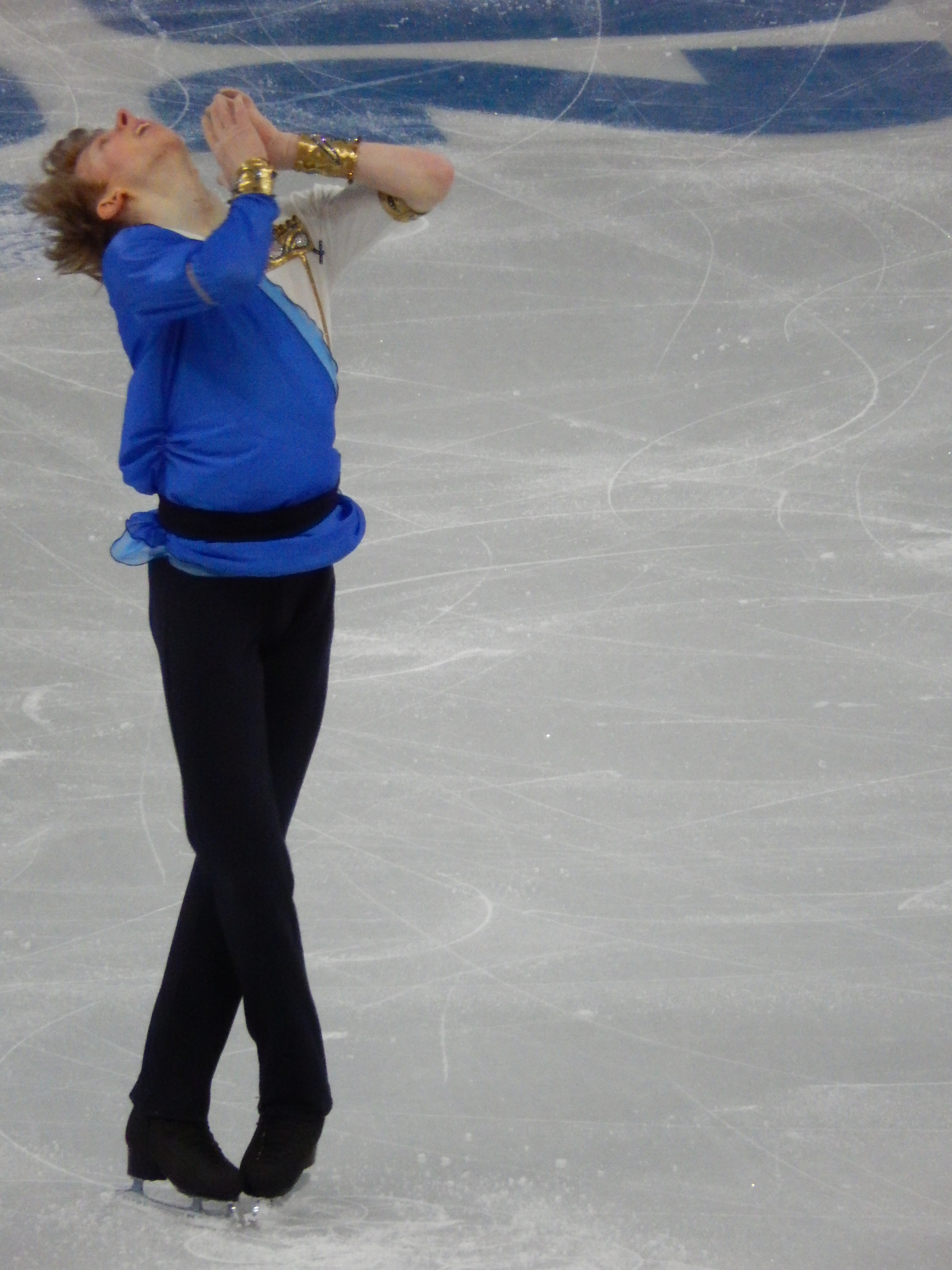
Canadian Kevin Reynolds
The Russian Plushenko, strong and perfect, before he had to withdraw from competition:
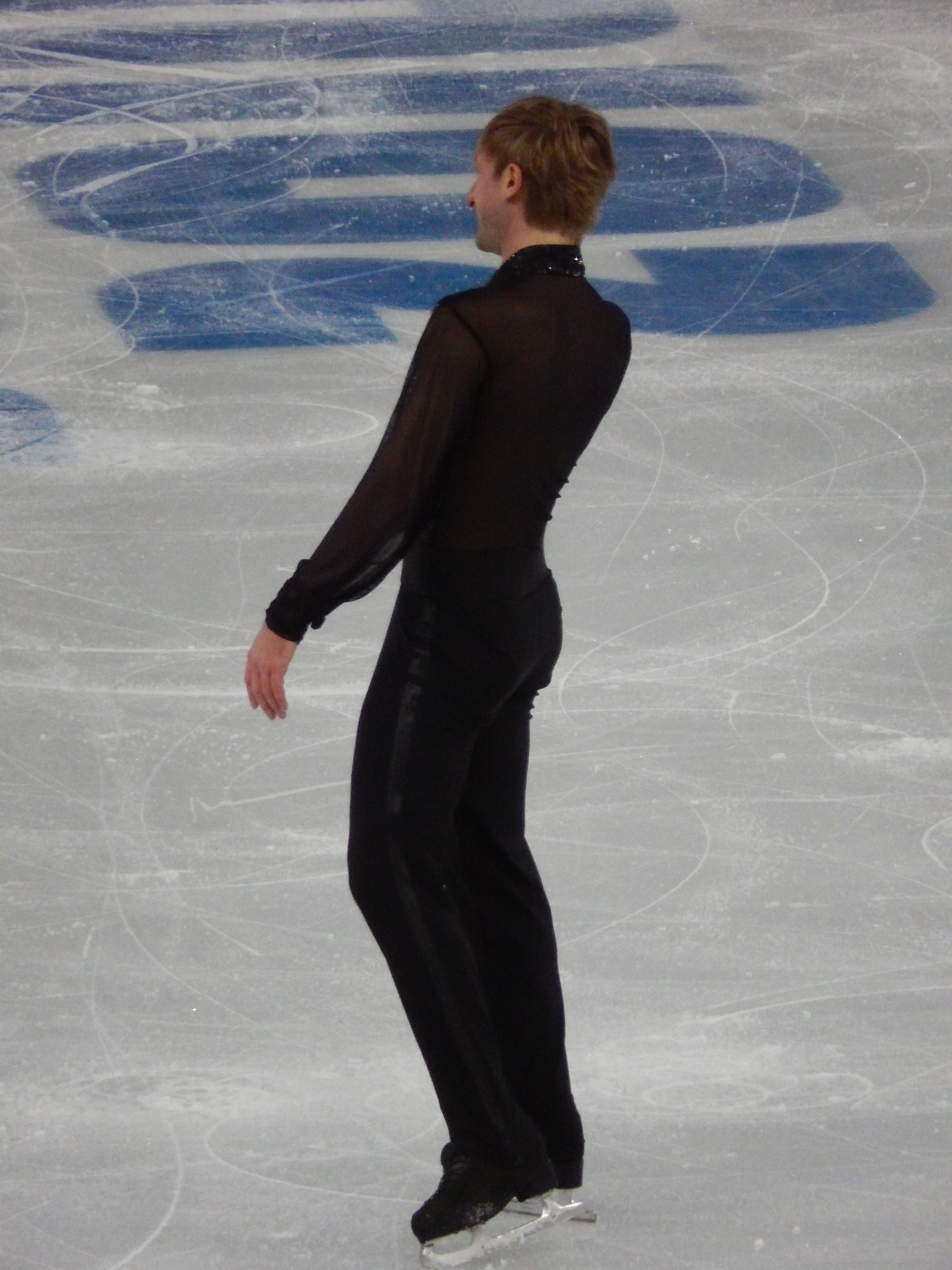
Russian Evgeni Plushenko

the mostly Russian audience very happy with the Russian skaters
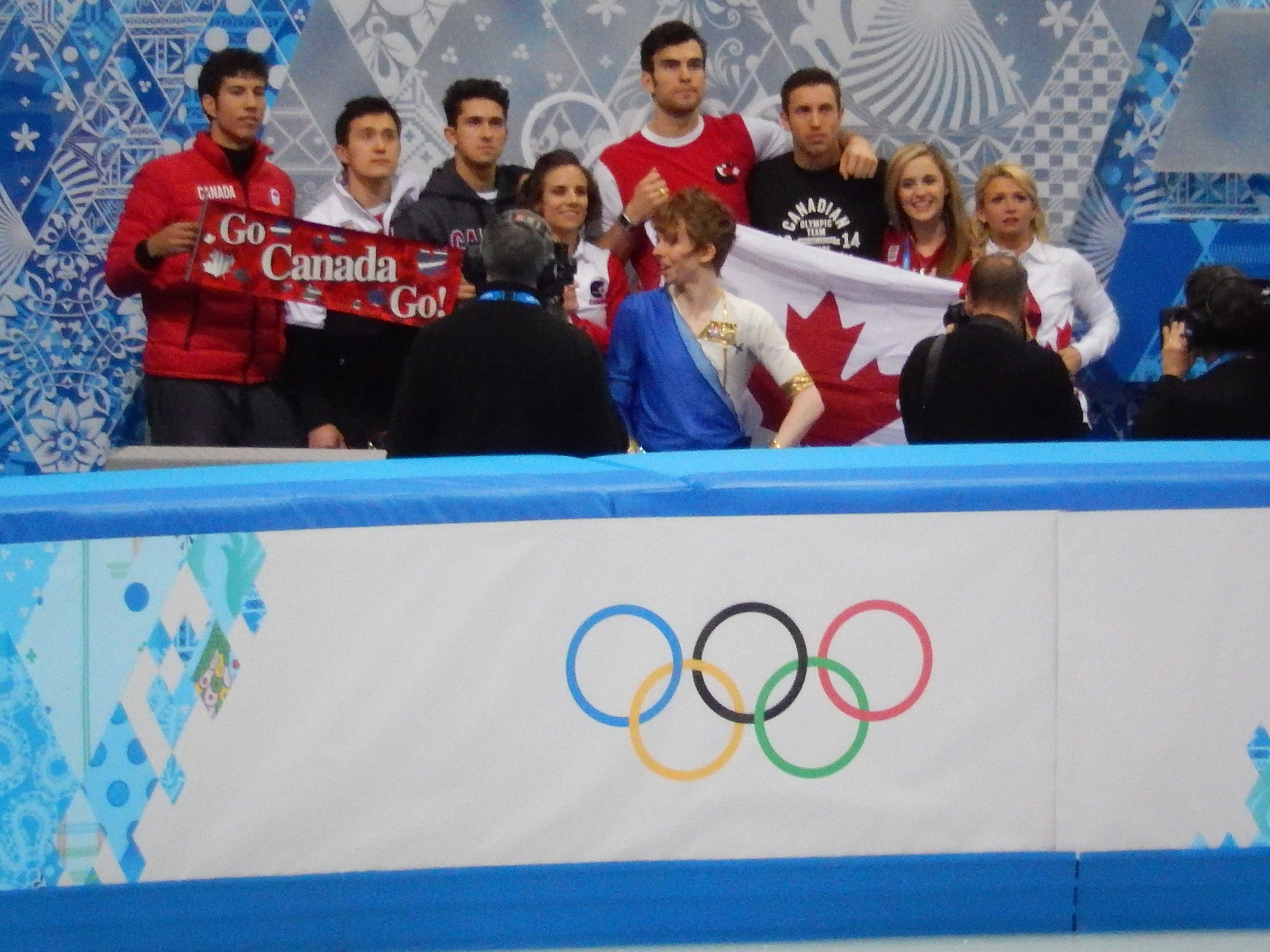
Canadian team waiting for results
My favourite thing to watch – the little girls picking up the flowers!

picking up the flowers (Don)

off for more flowers (Don)
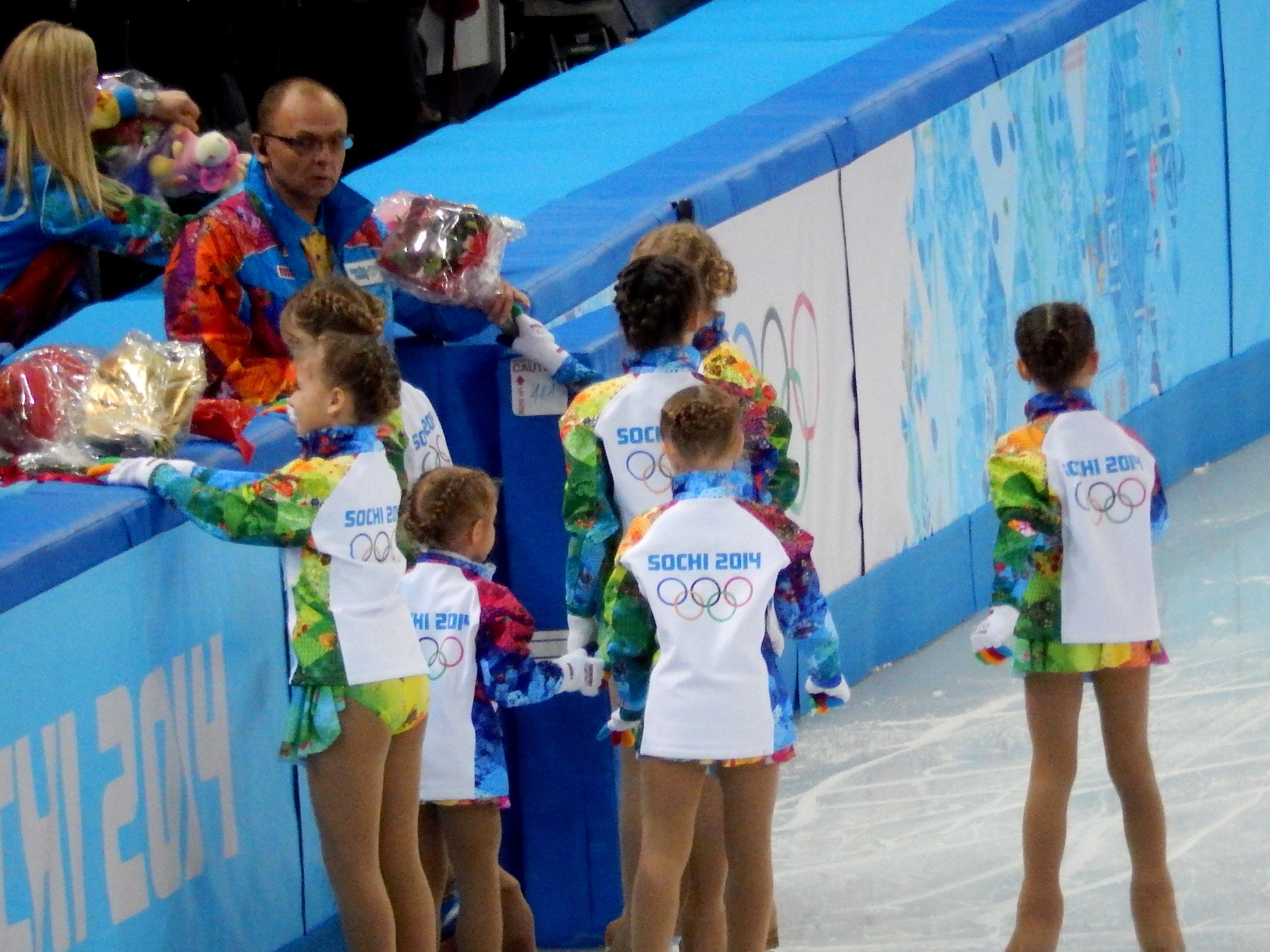
I also love their outfits. All the volunteers had variations of this theme (Don)
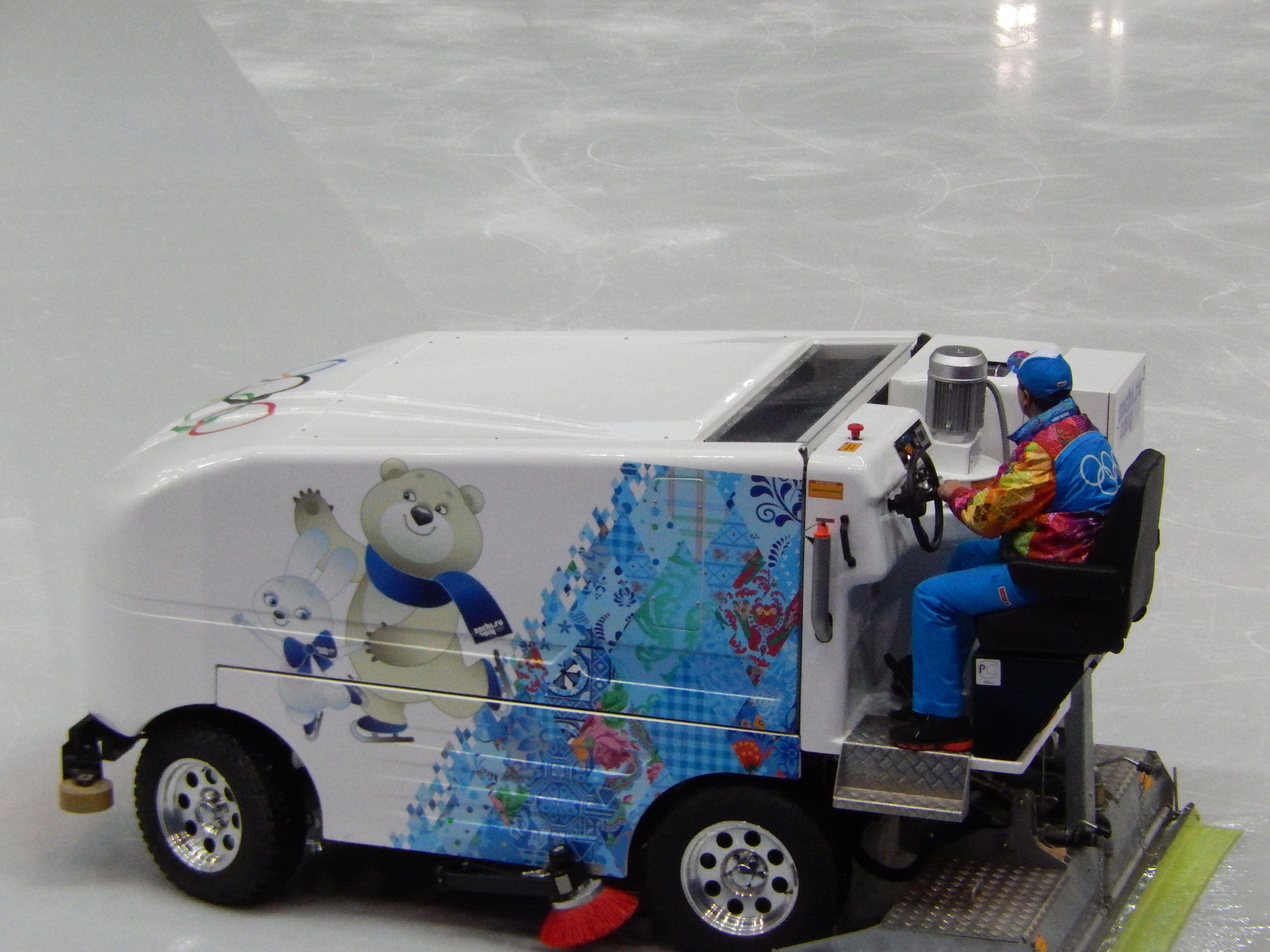
The zambonis matched their arenas

the whole figure skating arena
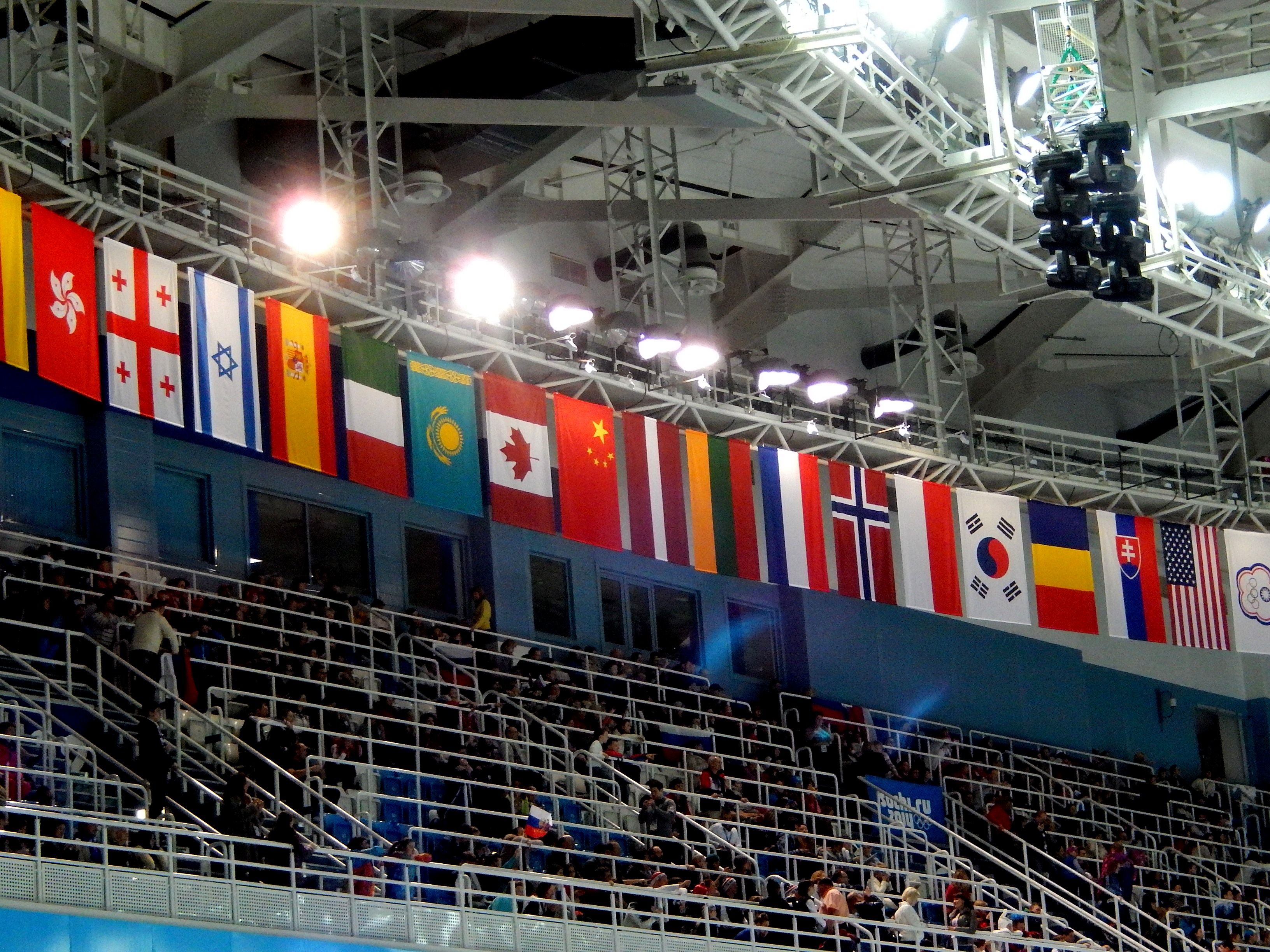
flags of the arena

ready for the next skater
The 15-year old Russian Yulia Lipnitskaya blew us ALL away, and brought me to tears:

Yulia Lipnitskaya
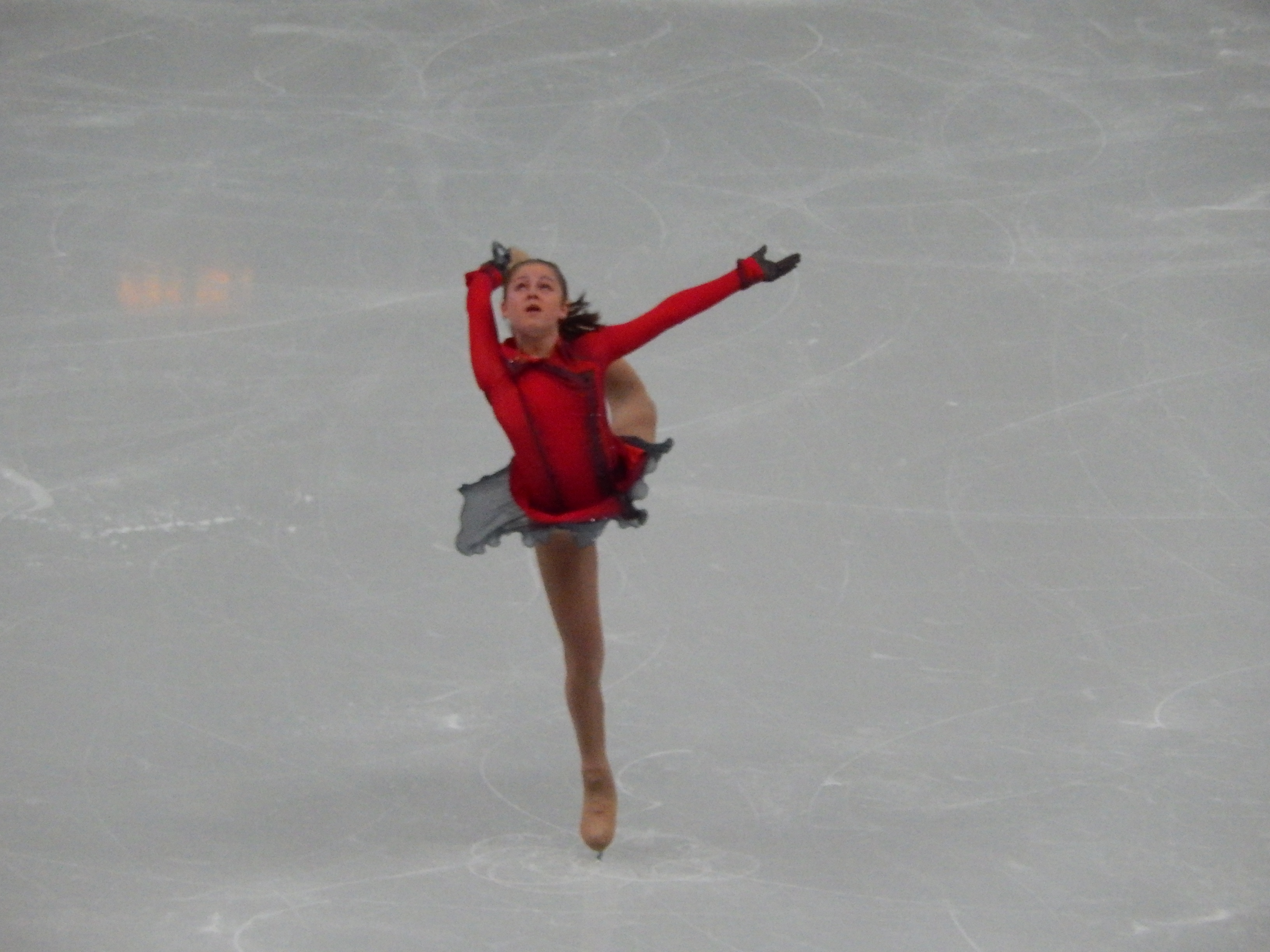
a perfect skate, that she couldn’t duplicate in her individual competition
Canada’s Tessa Virtue and Scott Moir were beautiful and perfect. I’m so glad I got to see them live:
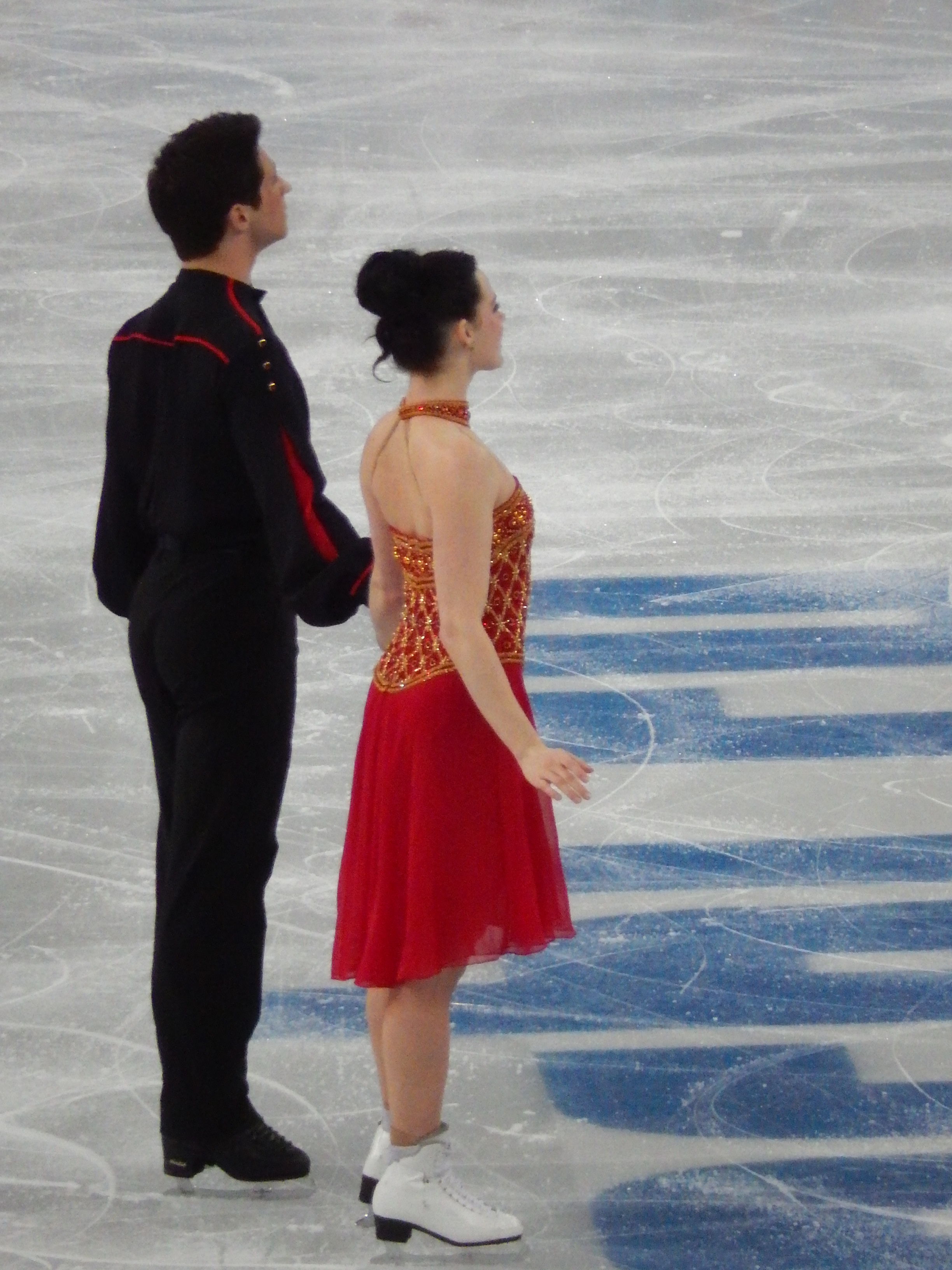
Tessa and Scott, ready to begin
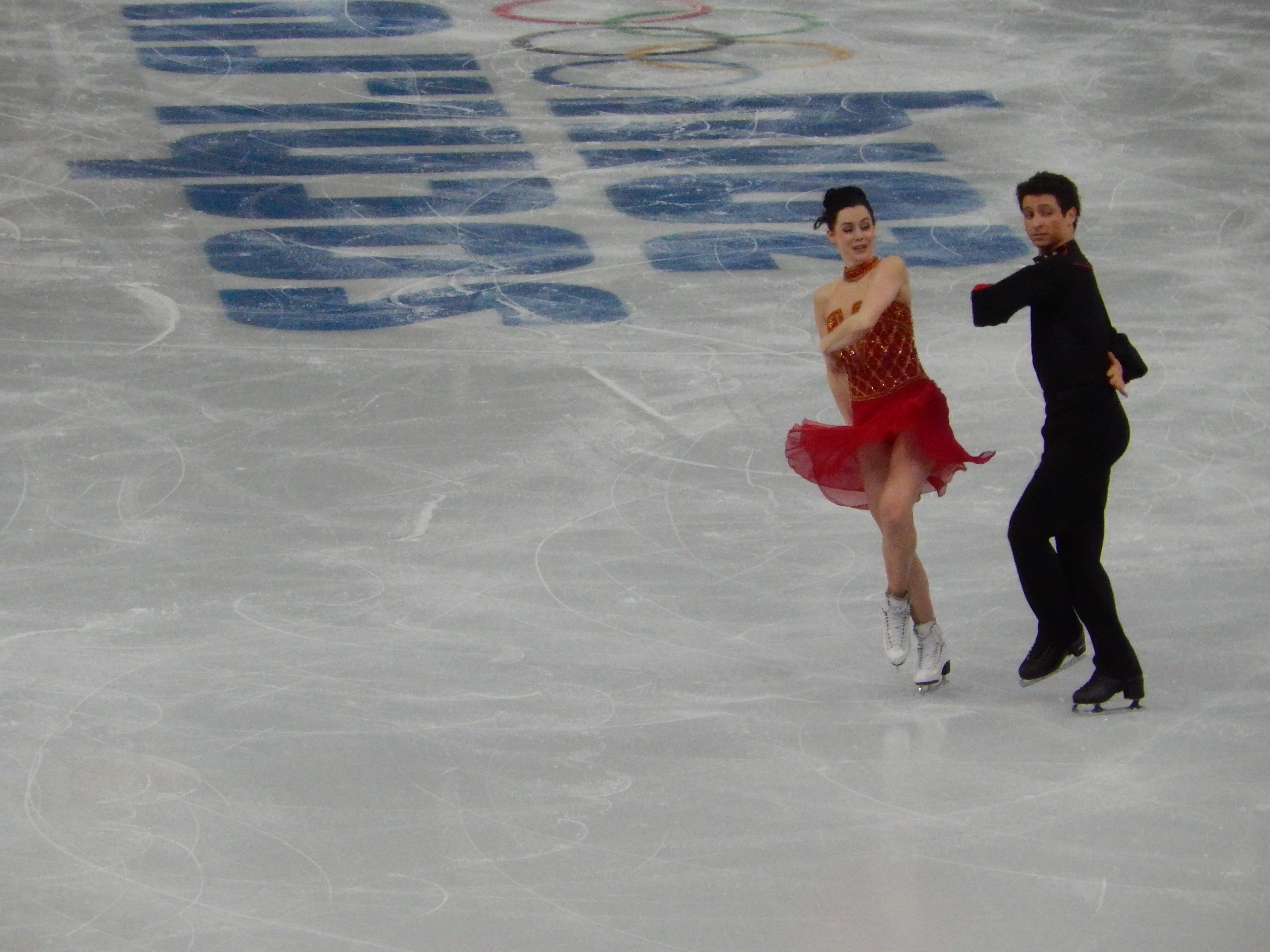
oops, maybe ‘slightly’ out of sync
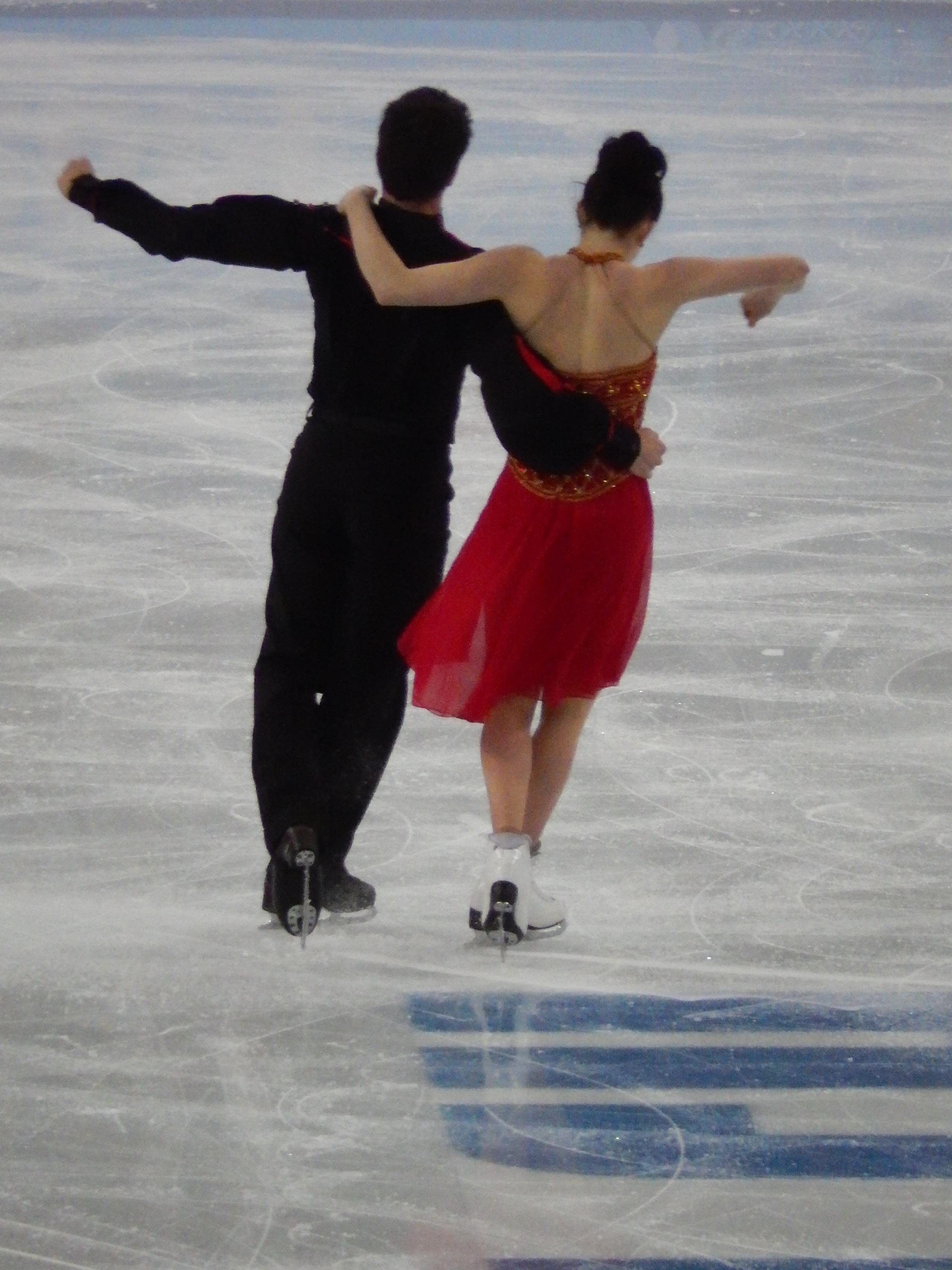
so beautiful

and finished
The final Team Skating results: Russia Gold, Canada Silver, USA Bronze. Leaving the arena, the beautiful exterior showed us the current medal standings:

medal standings showing on the Iceberg Palace
We were back on the bus by 10:30 p.m. and arrived at the hotel for a midnight buffet – a standard night event, it turned out, mostly because we were never eating a real dinner, only ‘grazing’ before the evening event, and then again at midnight.
For our 2nd day, we chose tickets to see Short Track Speed Skating for our ‘optional’ event in the early afternoon, held in the Iceberg Arena, followed in the evening by the ‘featured’ Speed Skating – a longer track in a different arena – The Adler Arena. Our bus from the hotel left early enough to give us some time to walk around the village and check out a few pavilions.
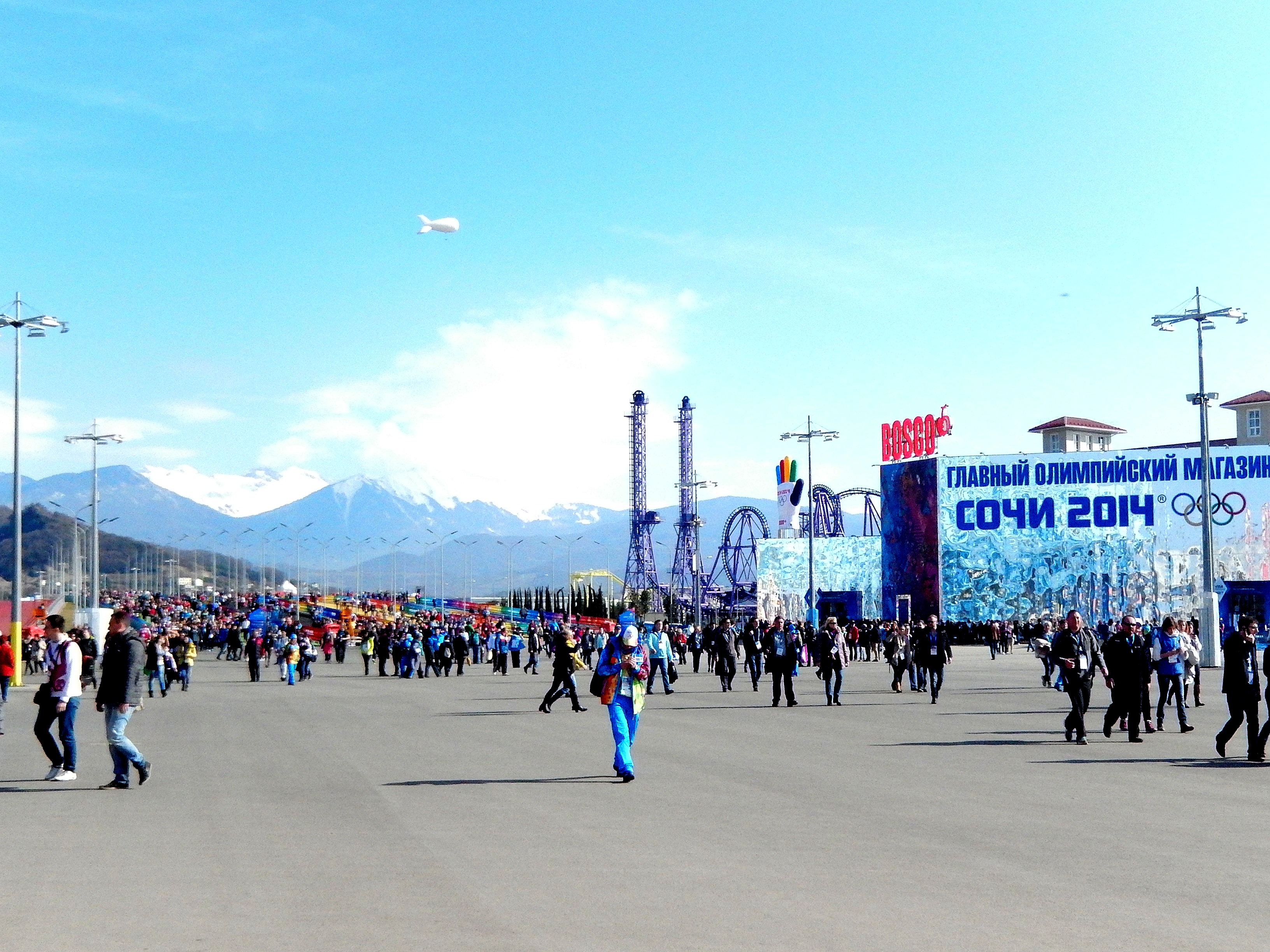
another gorgeous day!

Sochi Olympic mascots

faces in 3D pointillism and constantly changing

home of the next Winter Olympics (Don)
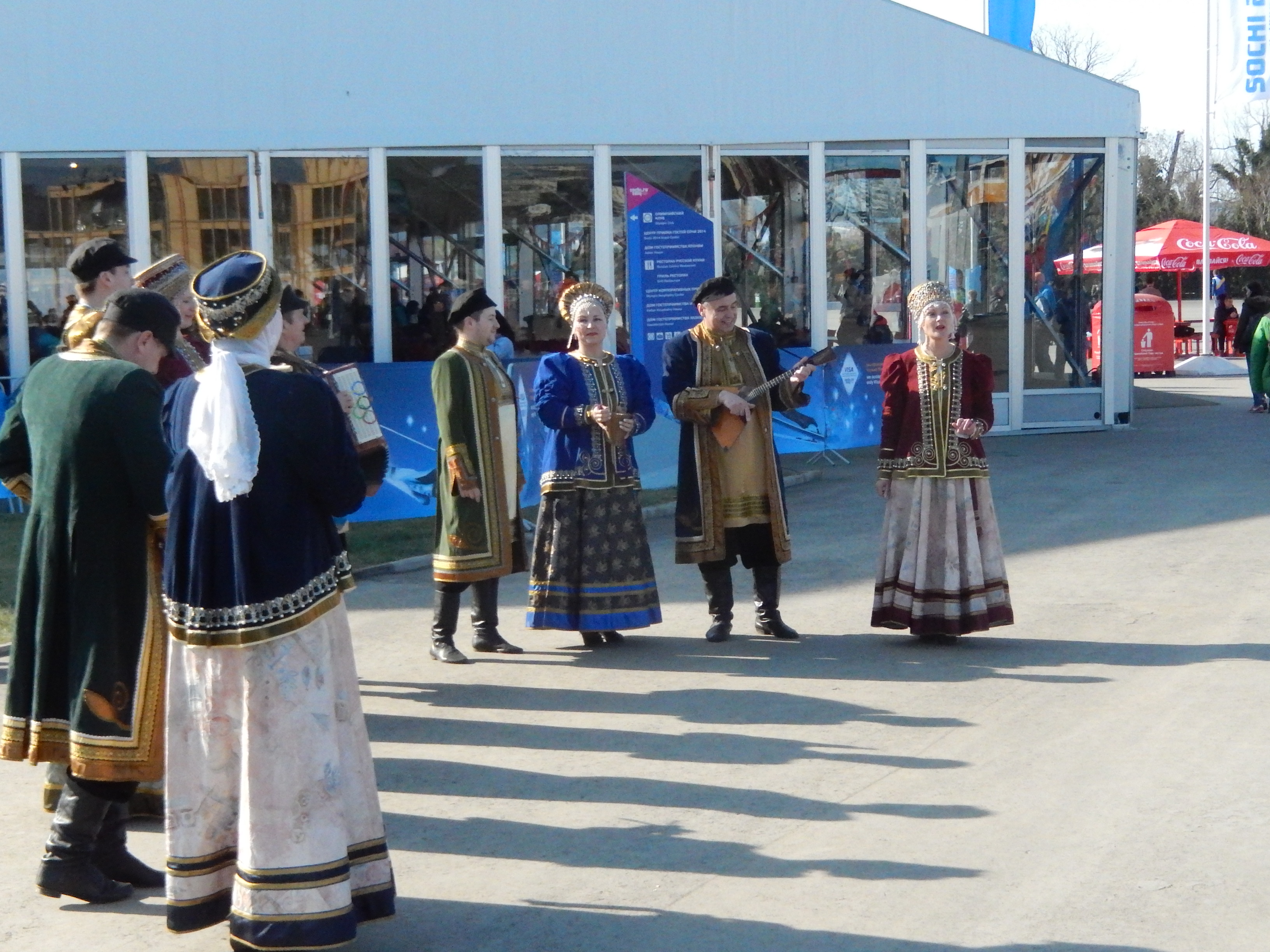
traditional costumed dancers
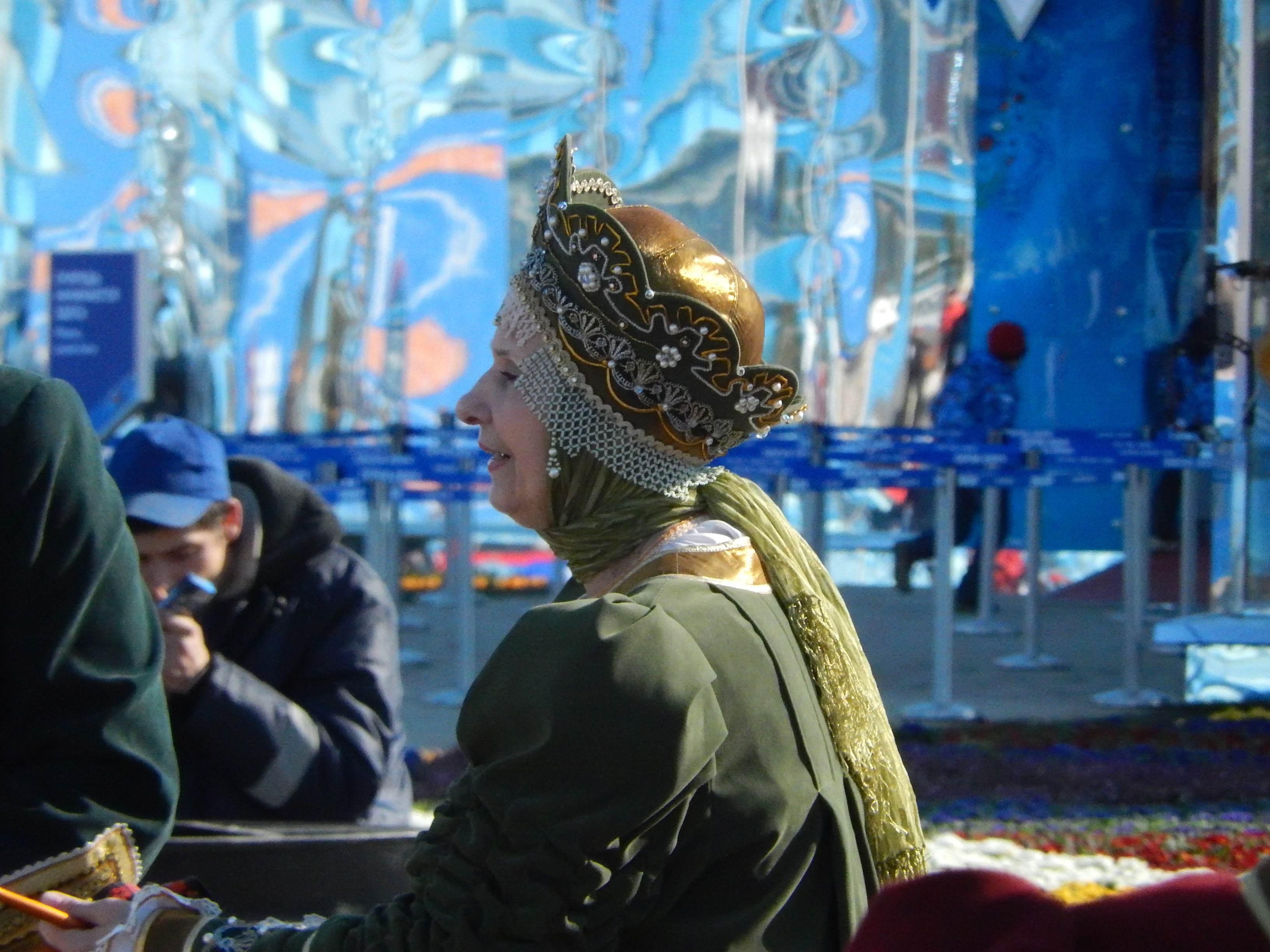
hat detail
Short Track Speed Skating may be my favourite event to watch – SO exciting, as they whip around the corners, practically touching the ice, and so easily wiped out.
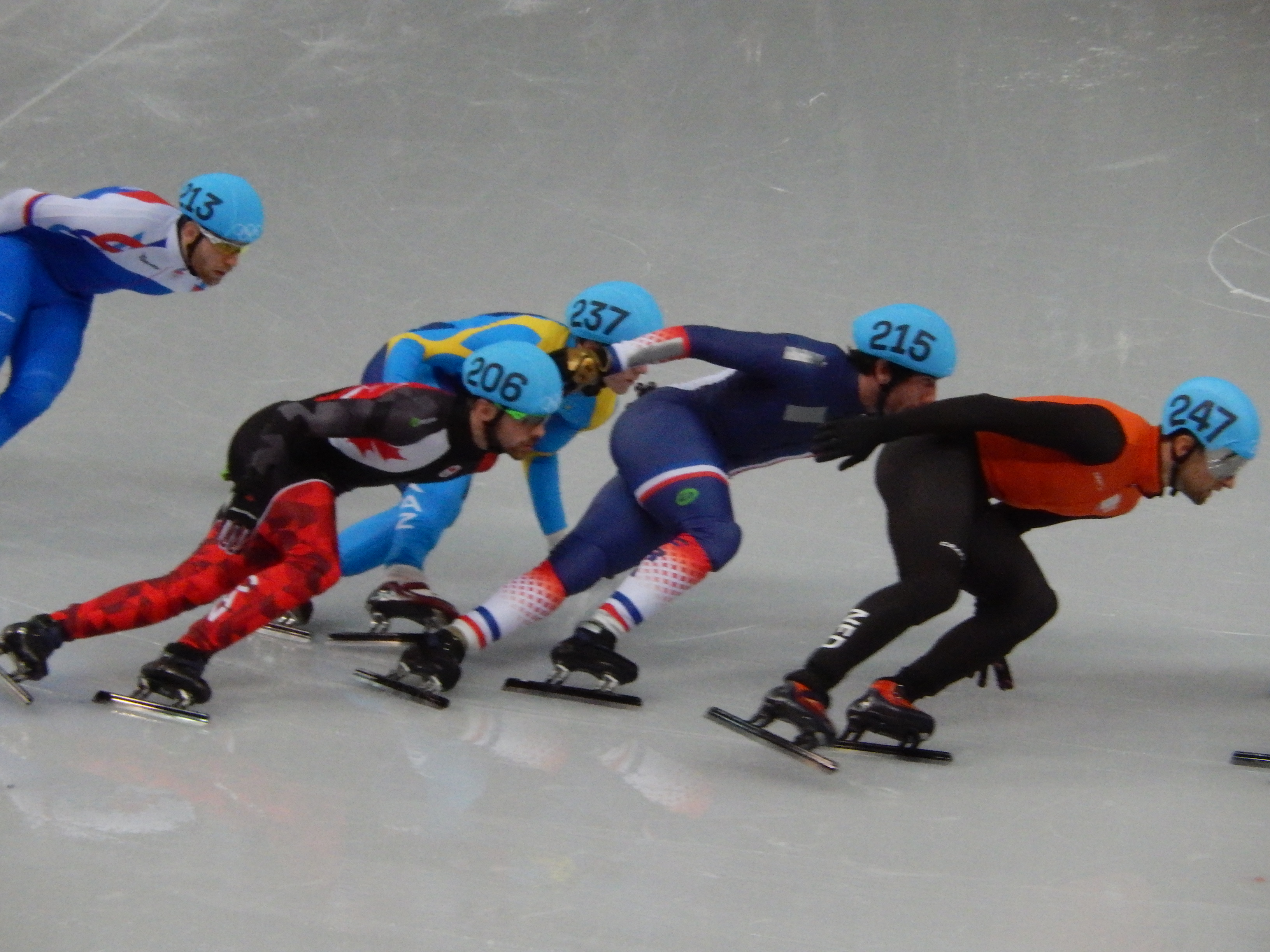
Canadian passing on the outside (Don)

sometimes I don’t know how they stay standing! (Don)
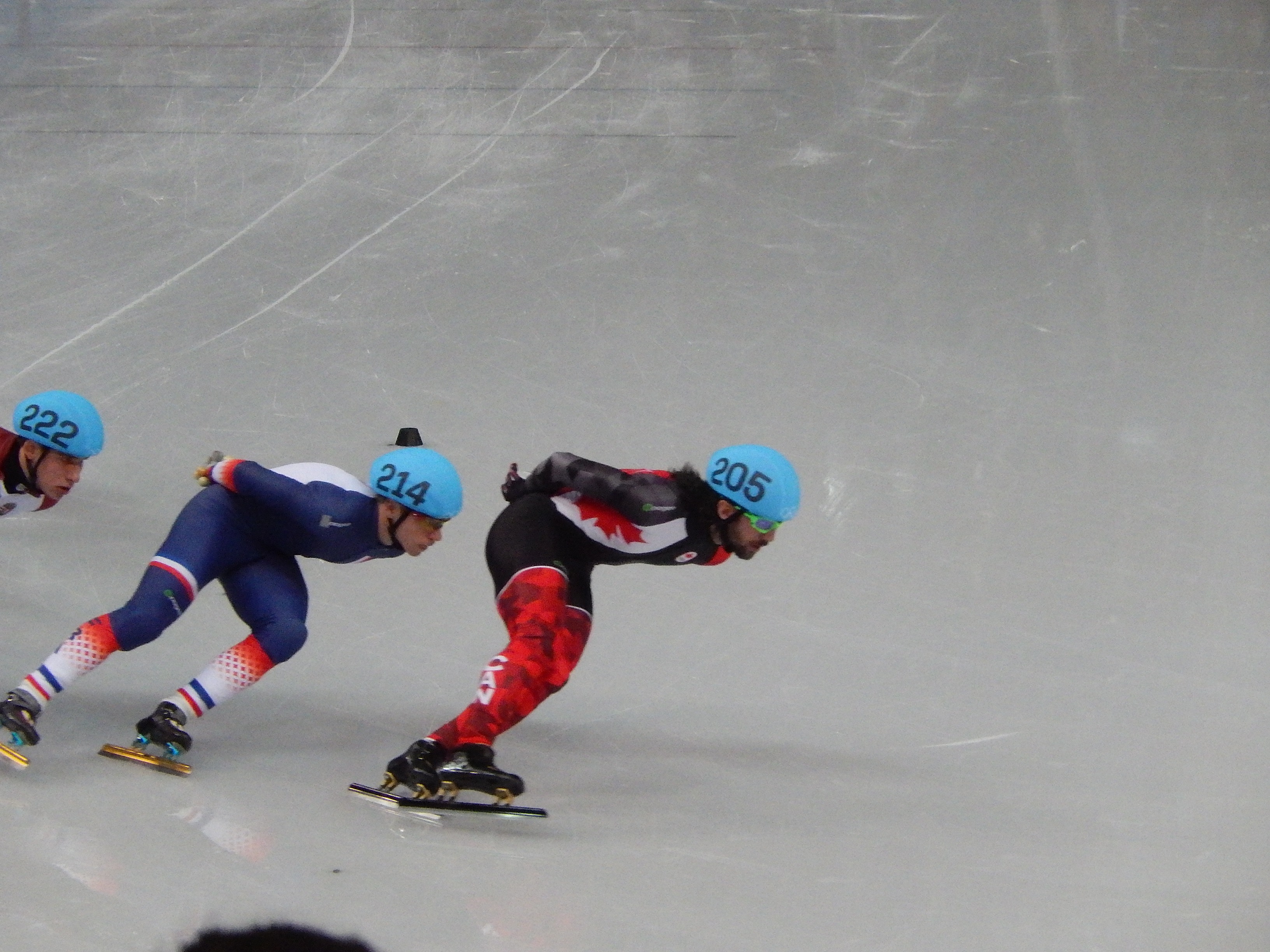
Canadian Charles Hamelin in the lead (Don)
It was so exciting to be there to see Charles Hamelin win GOLD in the Short Track 1500 metre – especially as he wiped out of his other events.

Charles Hamelin GOLD
We stayed to watch the Flower Ceremony…
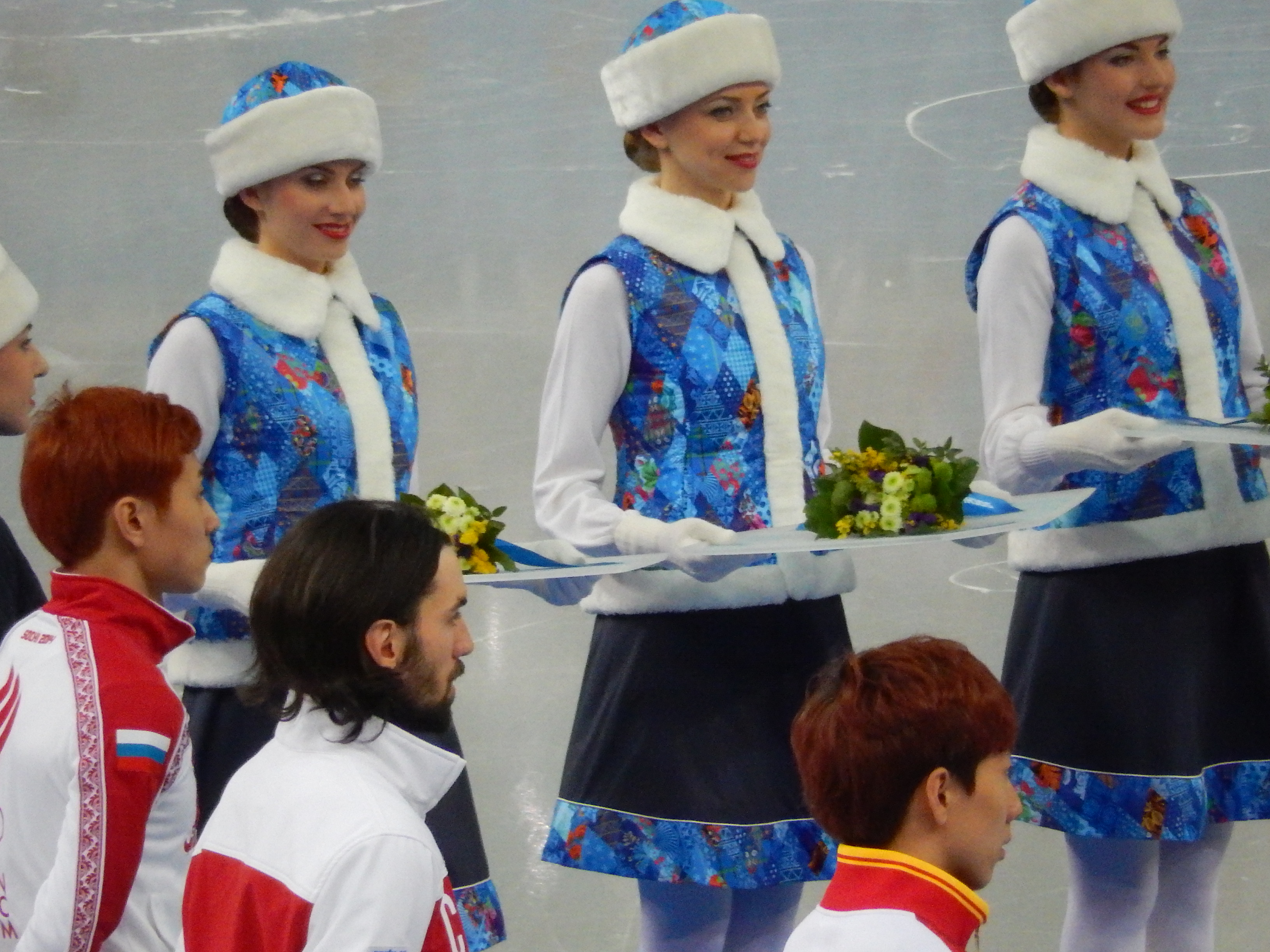
Flower Ceremony
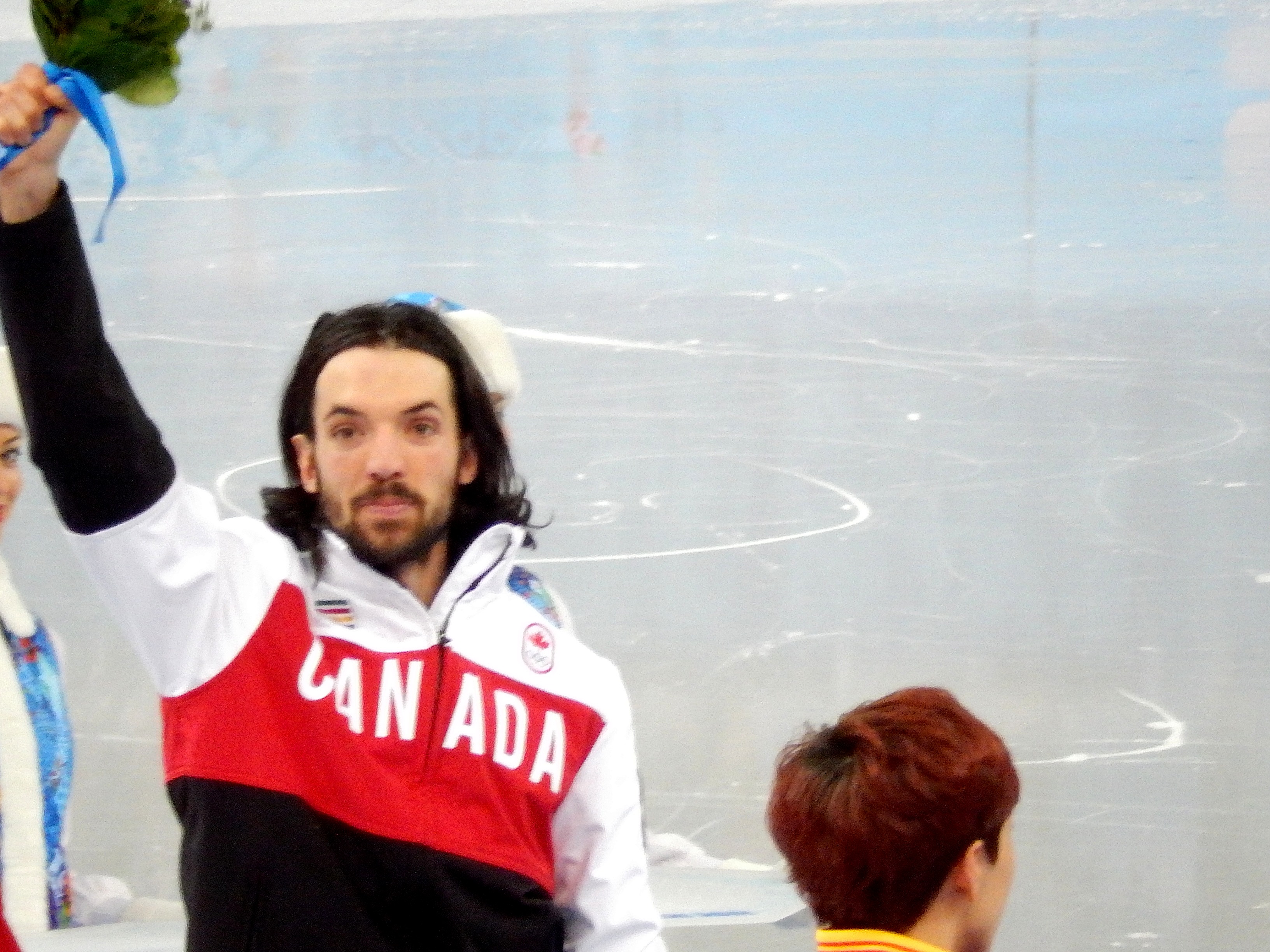
Gold medal winner, Charles Hamelin
In between skating events we went to Canada House to buy some Canadian garb. As grateful as we were to Chevrolet and NBC for the trip, of course we were rooting for Canada! Don had tried to get into Canada House the previous day, but you could only get in by invitation, (and couldn’t even get into the shop without the pass), so… he emailed a friend, who emailed somebody who emailed somebody and soon Don had an email to tell us our invitations were waiting at the front desk at Canada House. When we got there we went through the process of accredidation – picture taken, lanyard pass created,
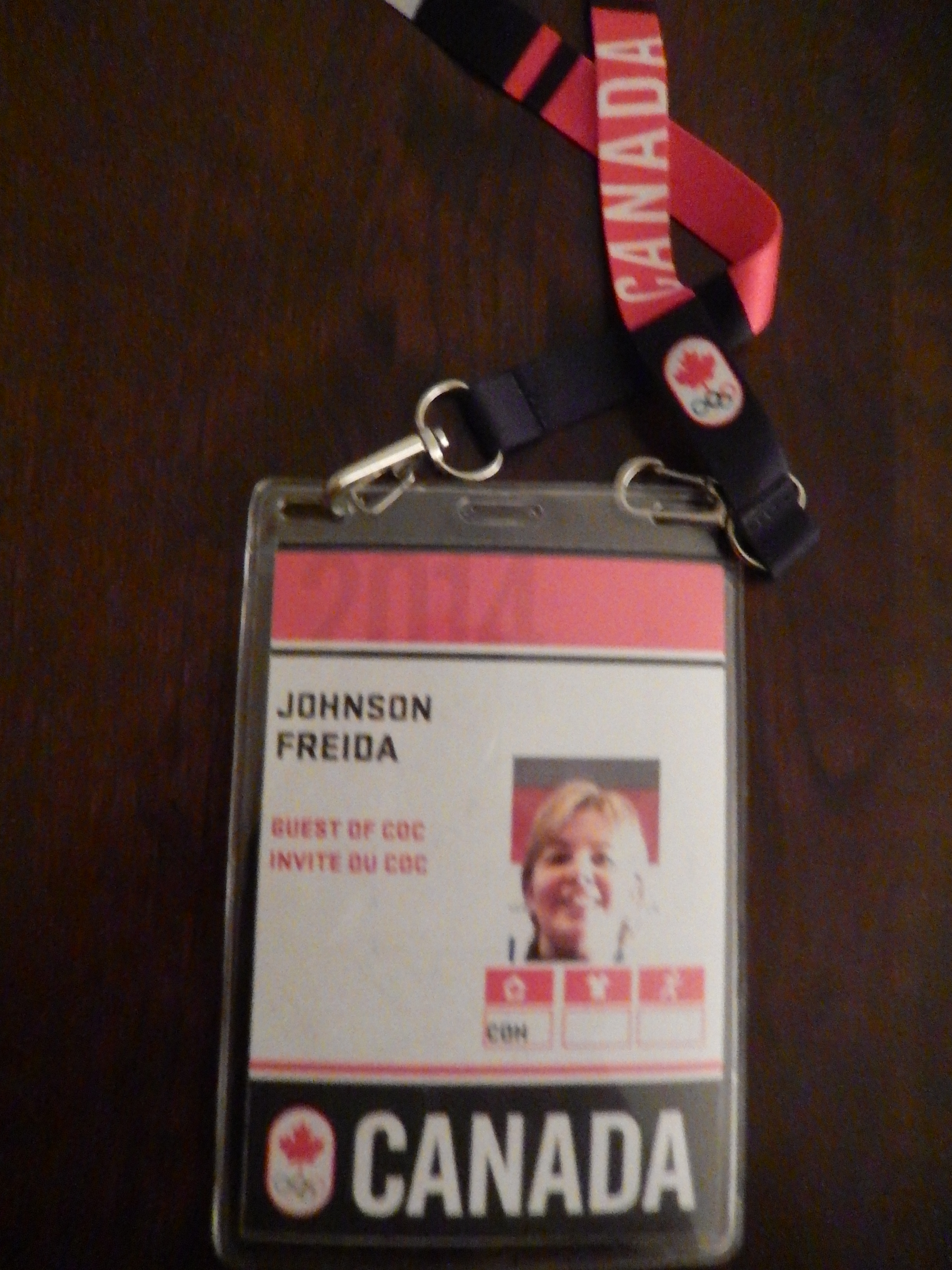
Canada House accredidation (yes, they misspelled my name)
and then we shopped. I got a great scarf and Don got a toque and tshirt. Back to the NBC Suite for food and drink, and then on to the Speed Skating event. This takes place on a bigger course, so it’s less dramatic, I think, and sometimes pretty boring. It’s also really hard to take pictures as the skaters whizz past. This is the only one that turned out:
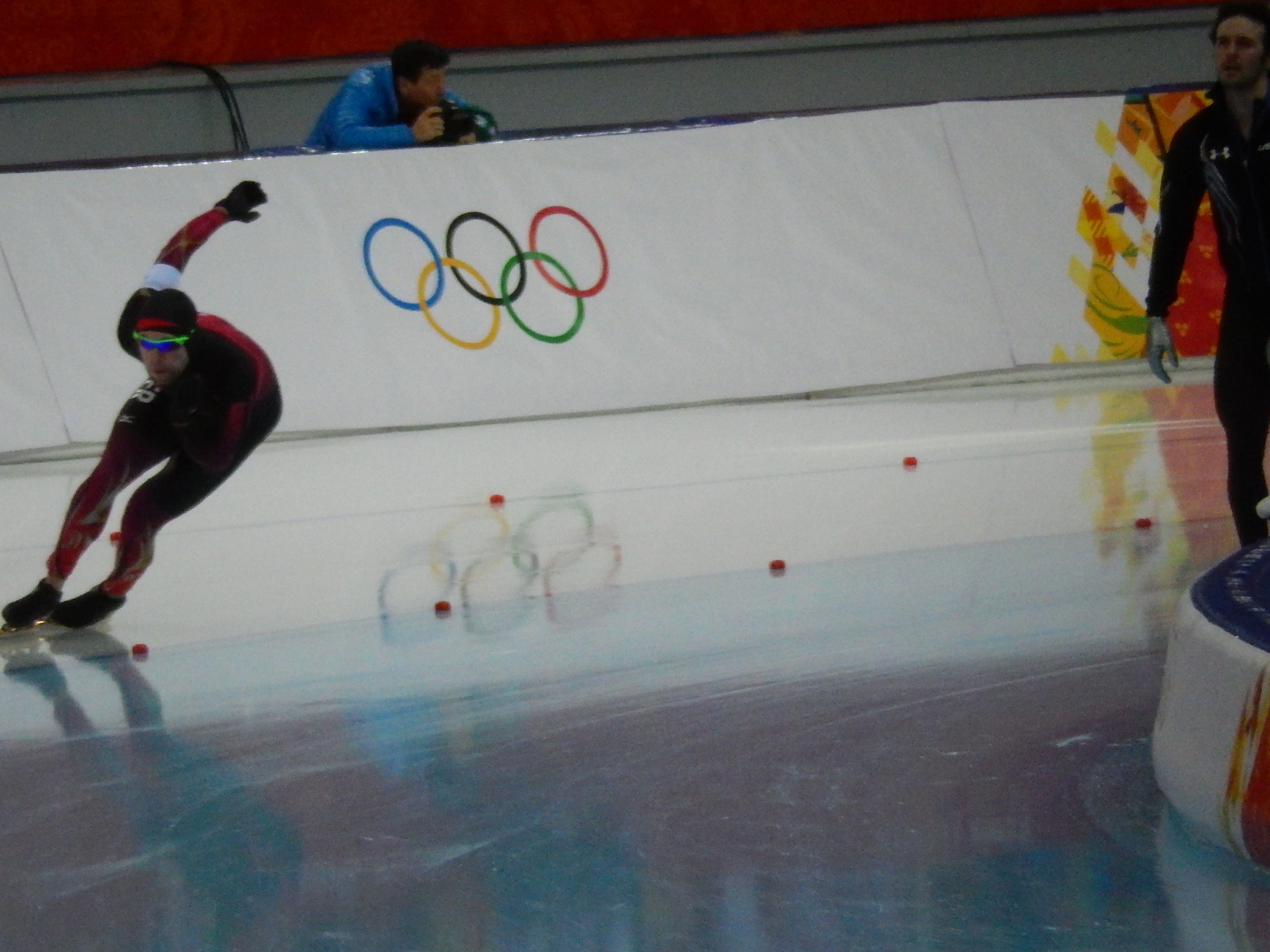
speed skater (Don)
The Dutch dominate in speed skating, taking 24 medals, 23 in long-track speed skating and one in short track – here’s a great article about that: http://www.sbnation.com/2014/2/26/5405120/winter-olympics-2014-netherlands-speed-skating-medals-dominance. The excitement at our event came with the finals, when Dutch skaters swept the finish, Gold-Silver-Bronze, with twin brothers taking the Gold and Bronze. Being half Dutch, this was almost as exciting for me as the Canadian win! 🙂
As we exited the arena, Don and I realized the nightly medal ceremony was about to take place, and we could see Charles Hamelin get his medal. The area for medal presentations was crowded and exciting. We saw several presentations, waiting for Hamelin, including Ireen Wust of The Netherlands receive Gold for Women’s Speed Skating 3000 metre.
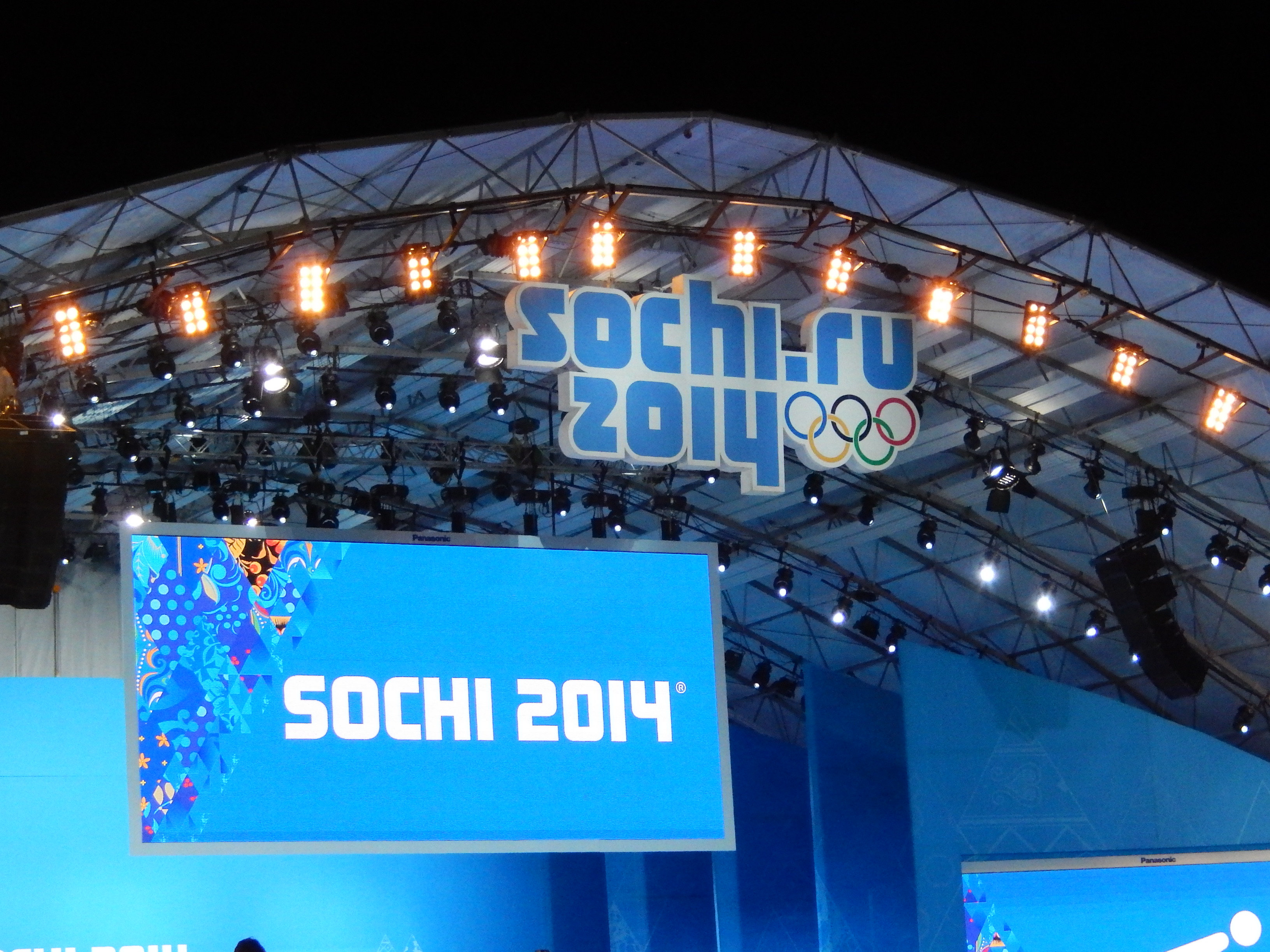
medal ceremony stage
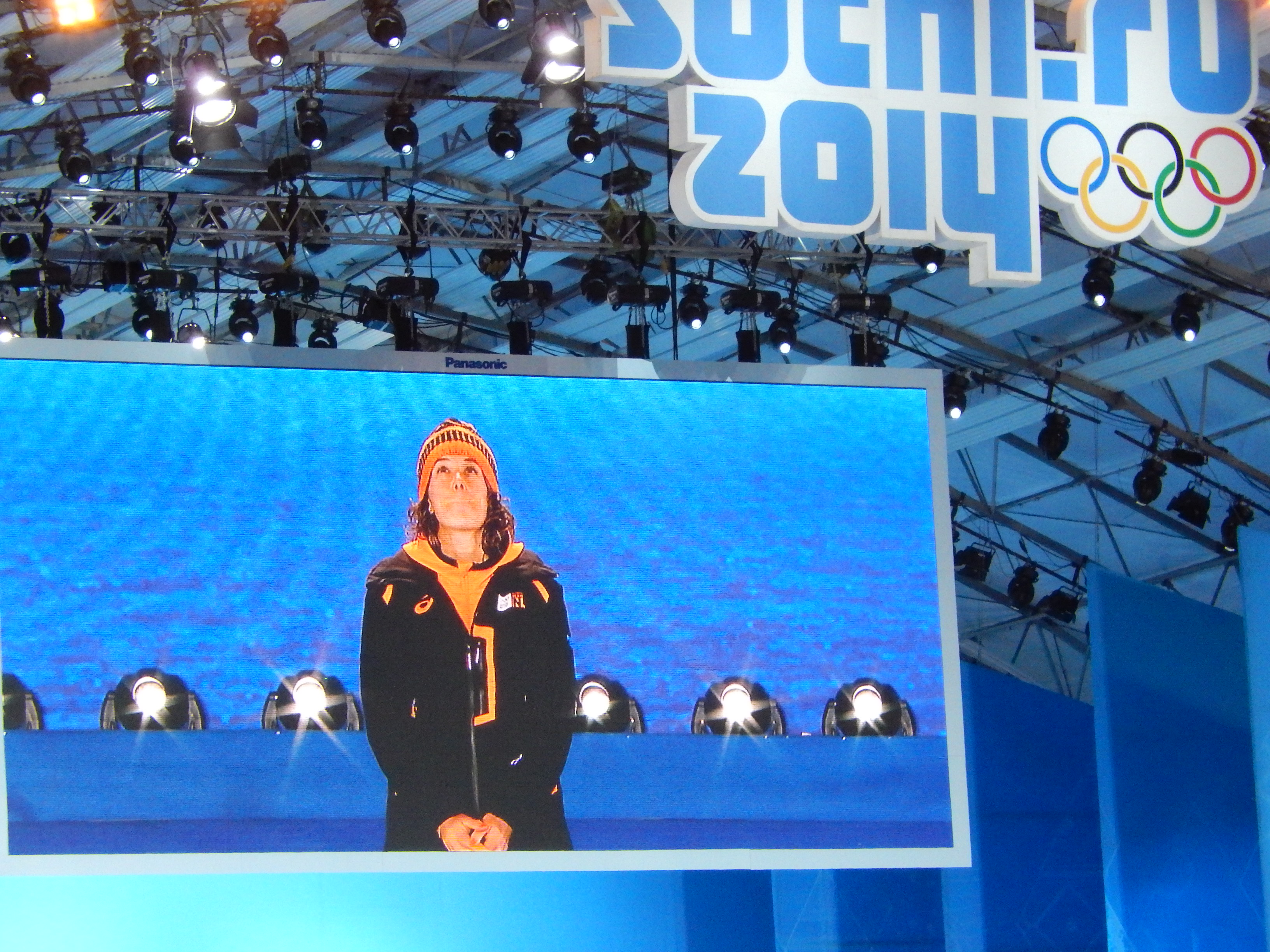
Ireen Wust, Gold – on a screen as it was hard to see the stage from where we stood
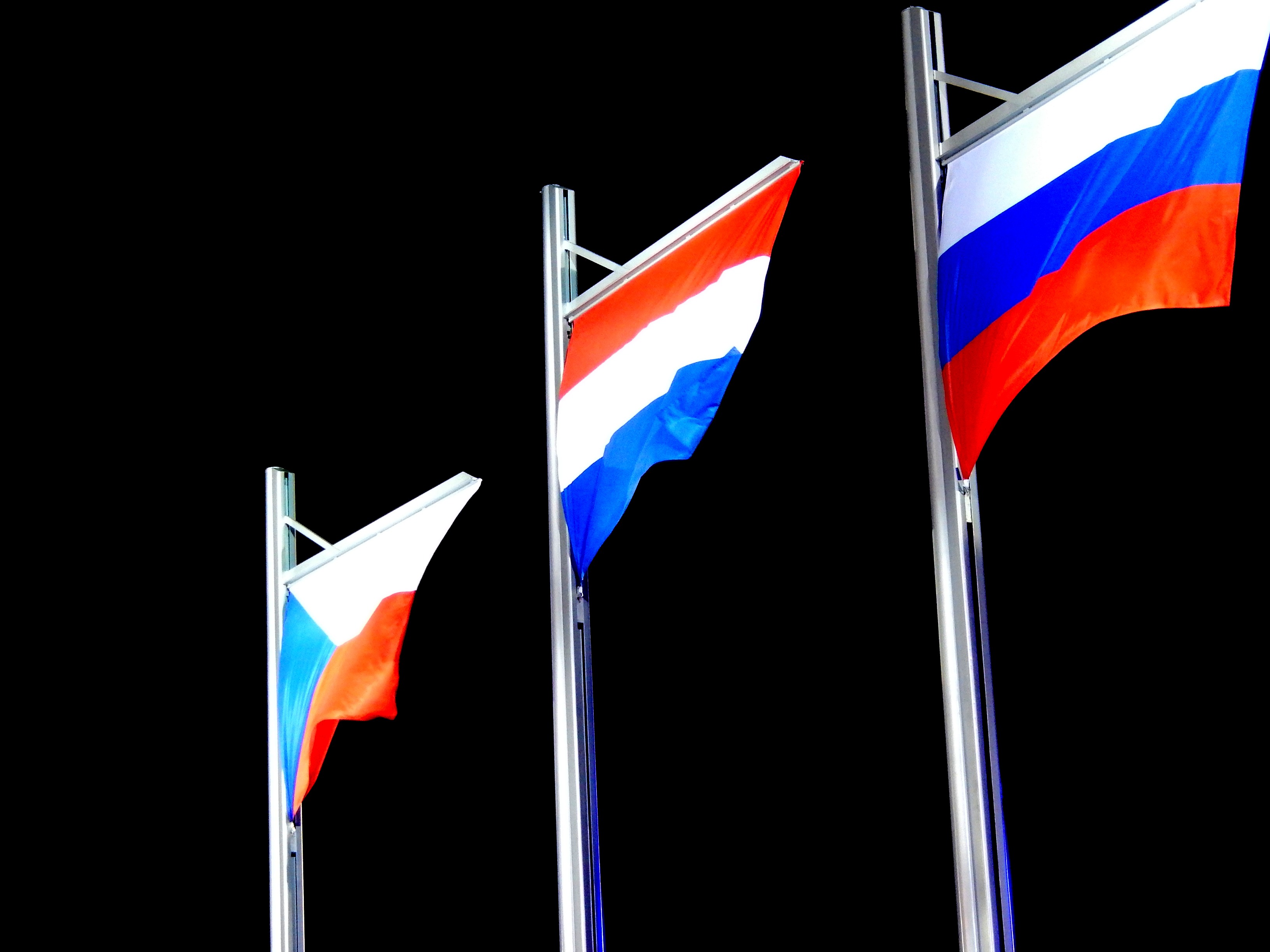
Dutch flag in the centre
Finally, just as we worried we’d have to leave so we wouldn’t miss our bus, Charles Hamelin, medal ceremony, and then the raising of the Canadian flag and singing of the National Anthem – so moving to be in the centre of that!

Charles Hamelin GOLD

Oh, Canada!
Back to the hotel, and it was party time! The first wave of guests were going home the next day and NBC was sending them off with a bang! First The Swon Brothers (finished third place on the 4th season of NBC’s ‘The Voice’) entertained us, and then it was a DJ playing dance music so loud we yelled the rest of the night away. We were up until past 2:00 and slept until noon the next day! I had a massage booked that afternoon (bliss!), and then we were on the bus to the Village, first for drinks and snacks at the Hospitality Suite and then to our evening event – Figure Skating Pairs Short Program.

across the wonderful rainbow bridge into the Village
The Pairs Skate Short Program was a LONG night – 20 pairs skating their short programs, of course to different music, but incorporating the required jumps and moves meant a lot of the same thing. We watched the Canadians with interest, of course – all 3 Canadian pairs did well enough to advance to the final long program –
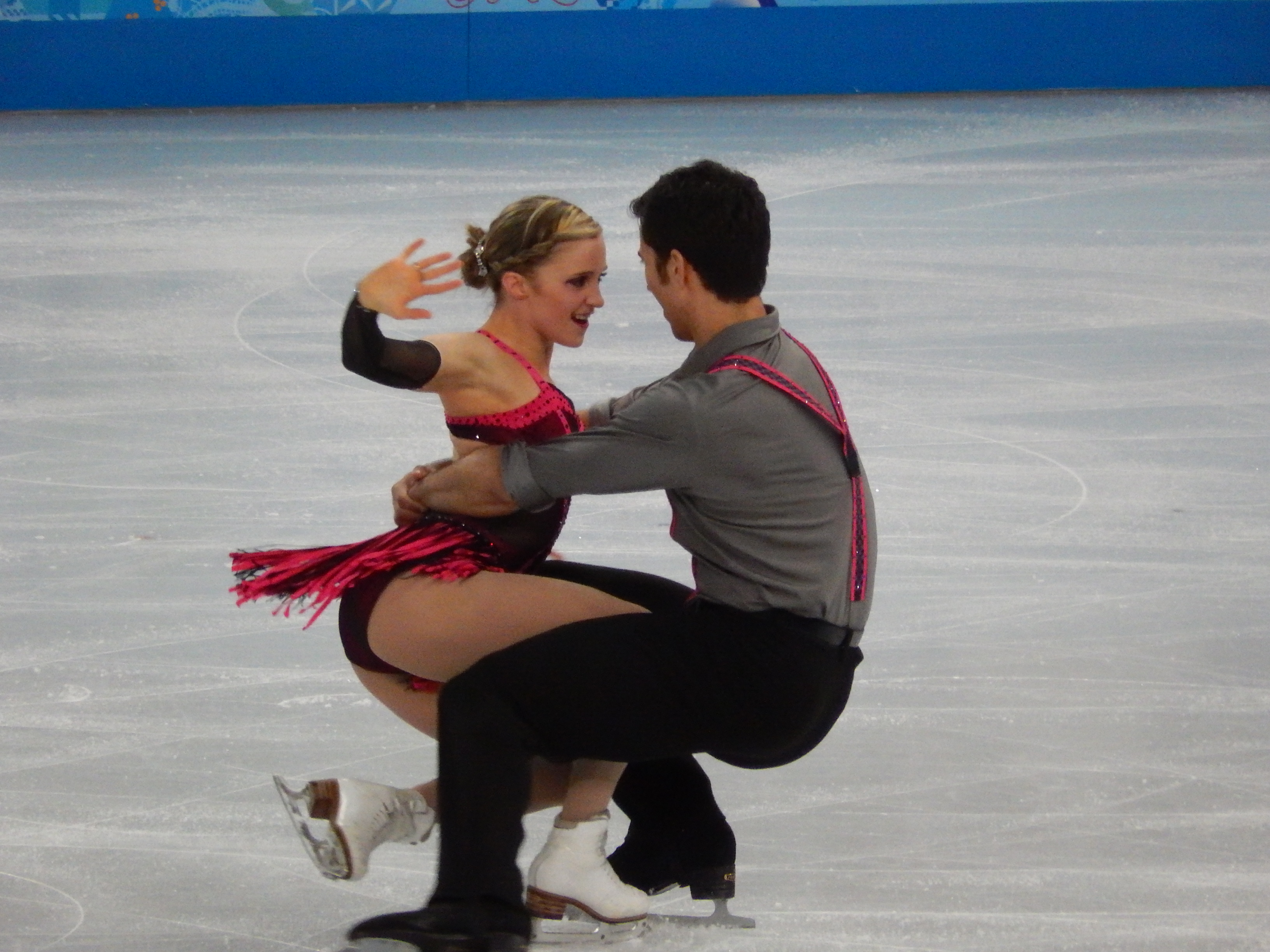
Canadians Paige Lawrence & Rudi Swiegers
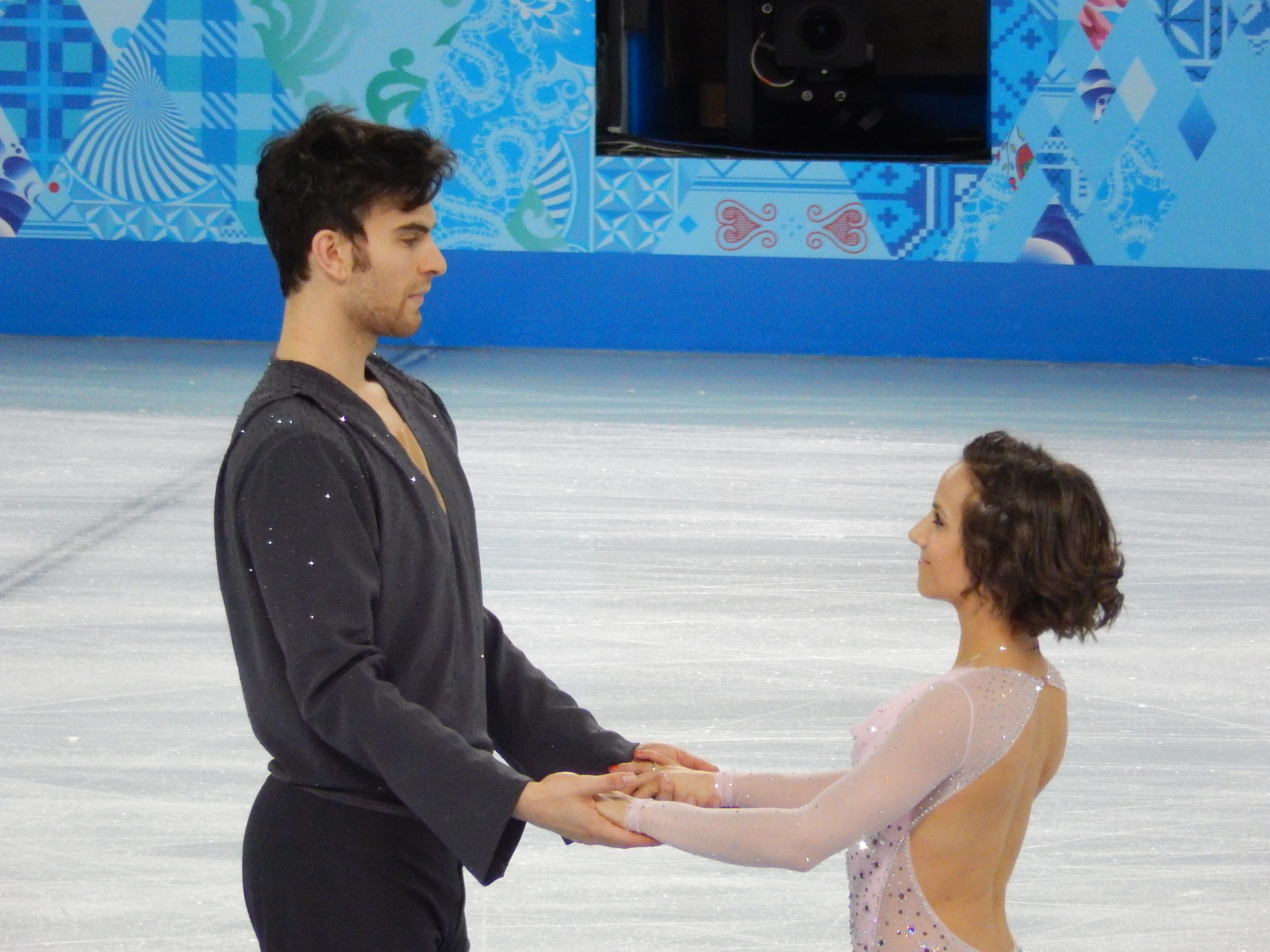
Canadians Meagan Duhamel & Eric Radford
This American team was very colourful –
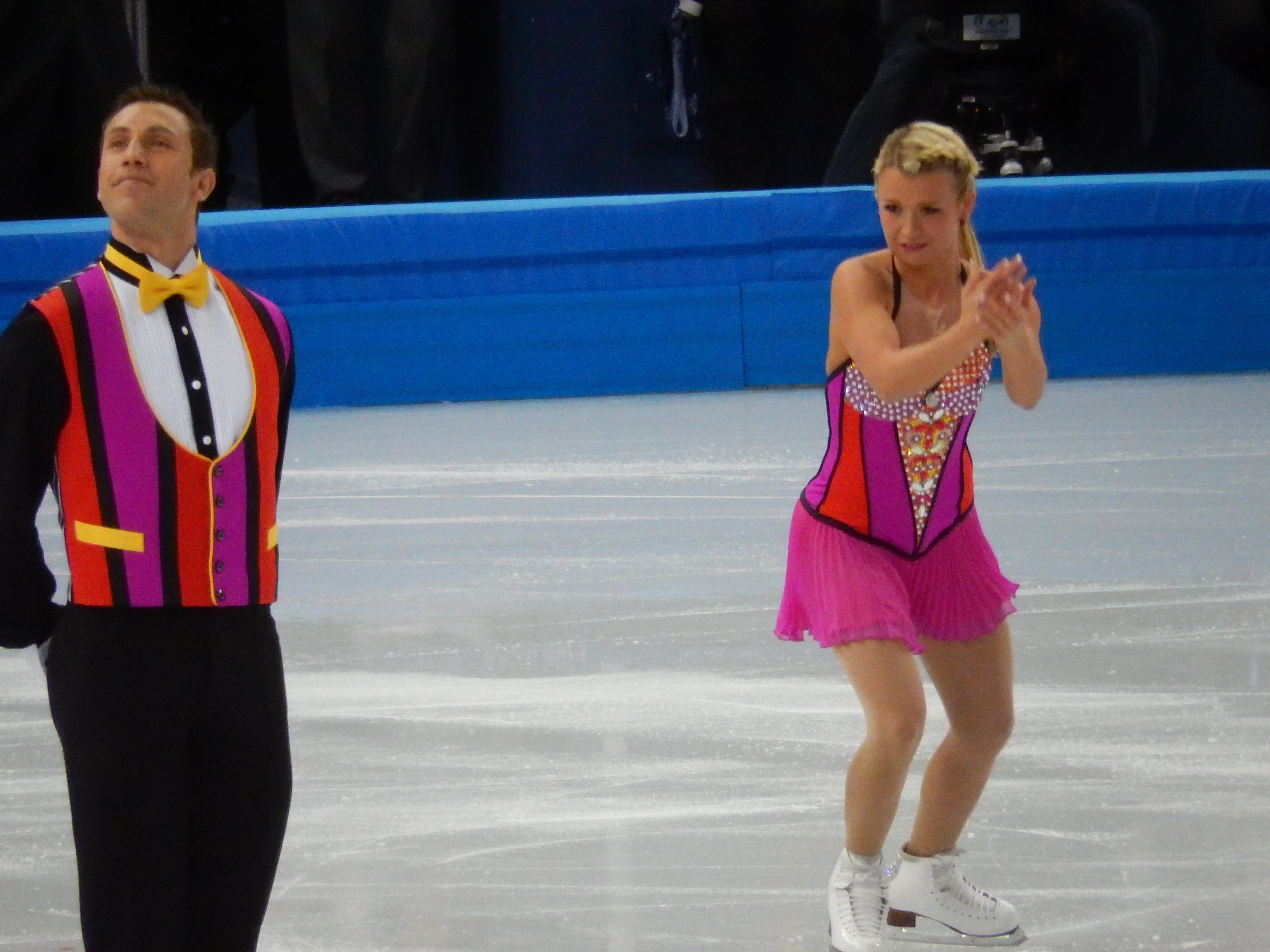
Americans Kirsten Moore-Towers & Dylan Moscovitch
But, our favourite short program, for fun presentation, came from the German team, skating to The Pink Panther -the hot pink catsuit photographs so well!
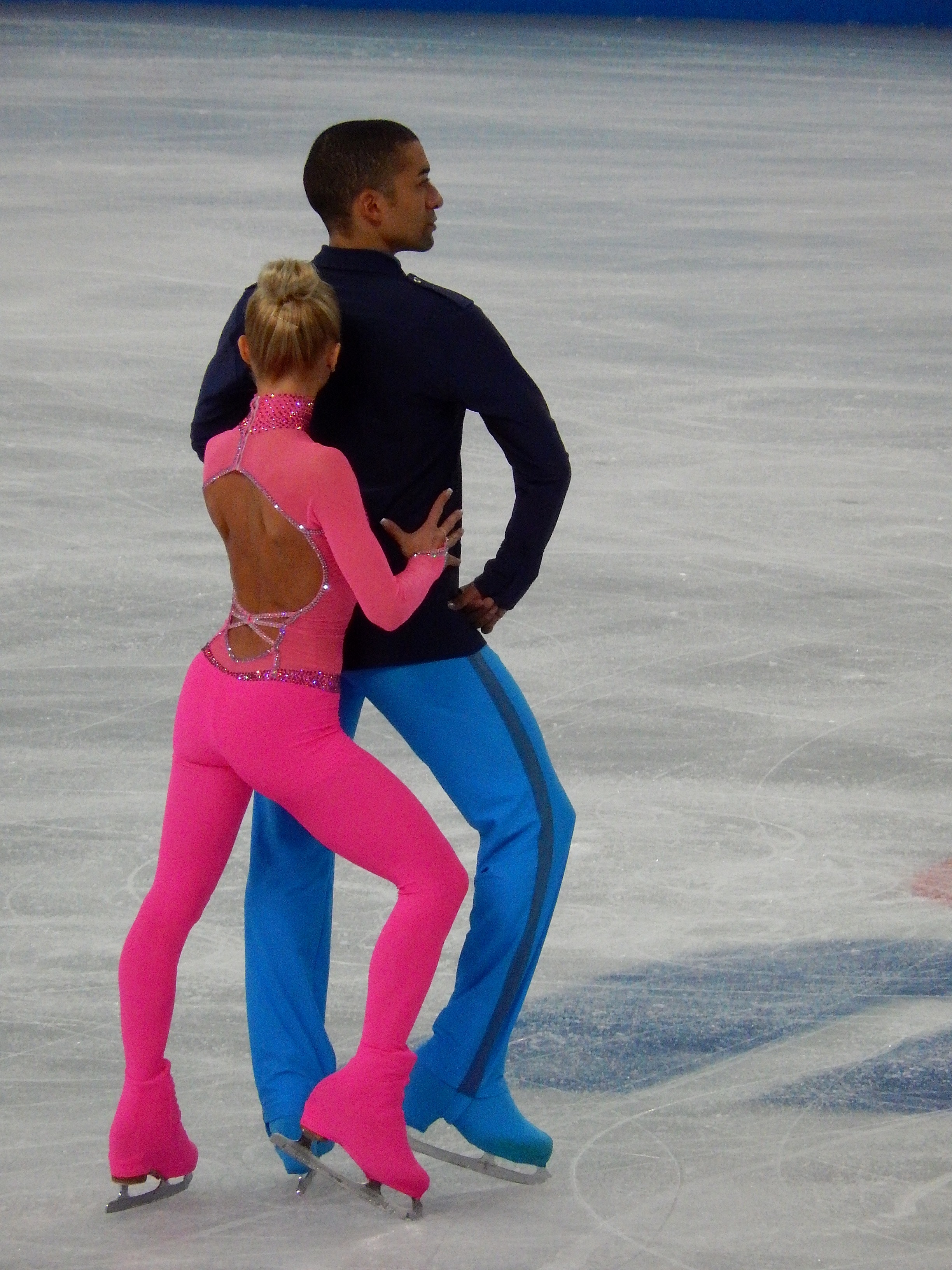
German pair Aliona Savchenko & Robin Szolkowy (Don)

German team (Don)
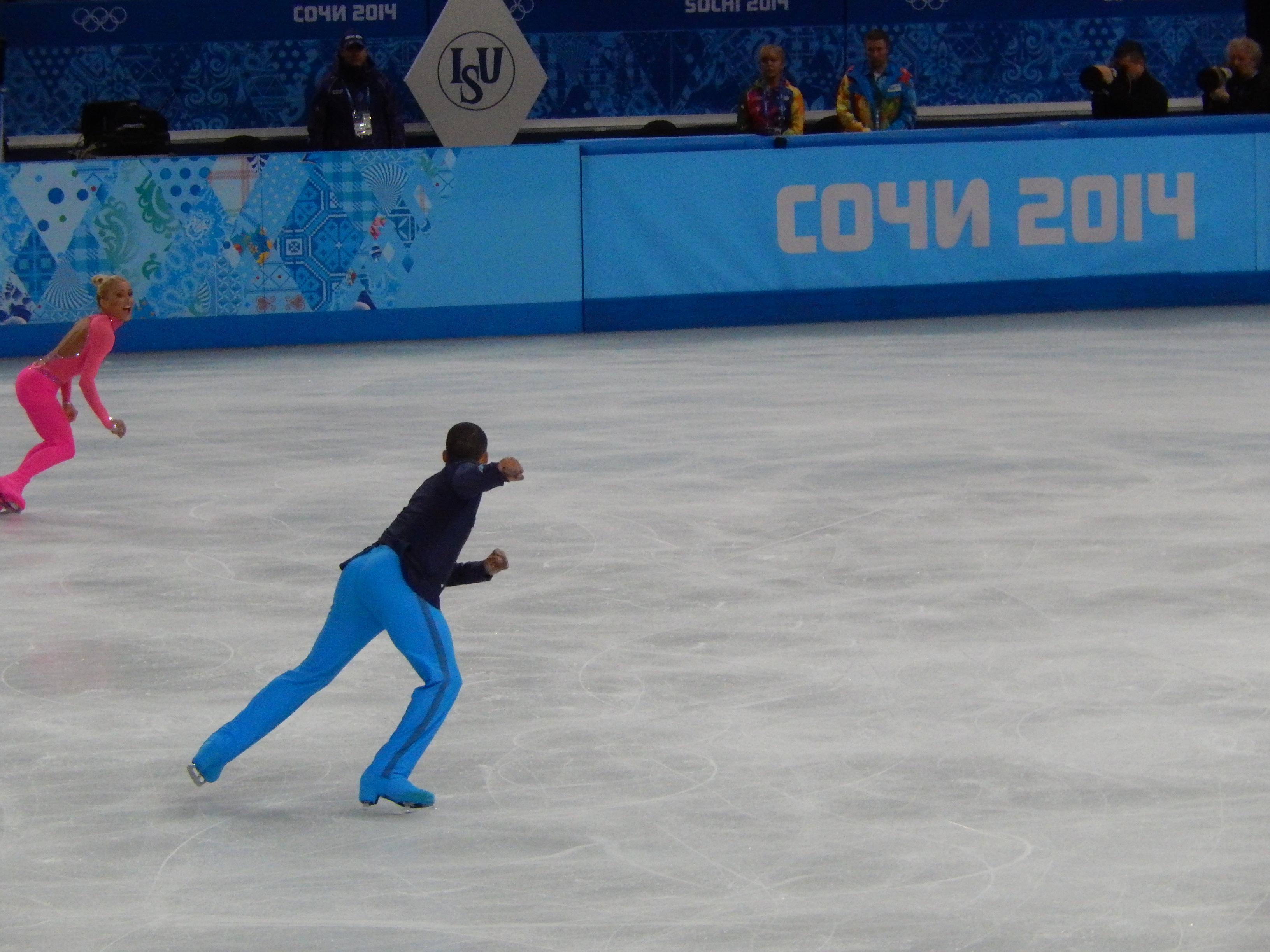
Catch me if you can! (Don)
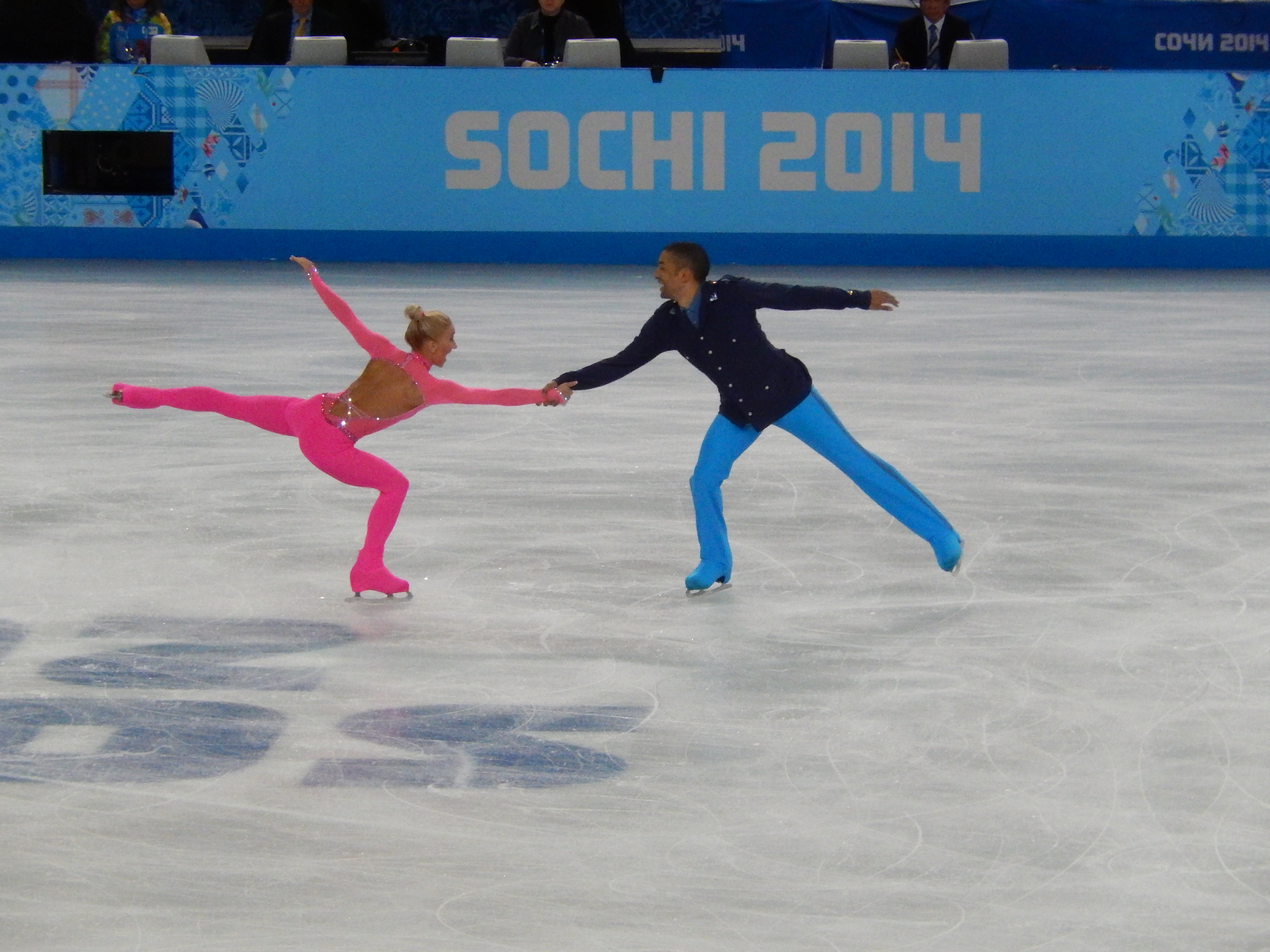
German team (Don)
The audience was almost as interesting as the skaters. Photo-journalists made their way over to our section during breaks because a few rows behind us: a Russian Cosmonaut and an American Astronaut (does anyone recognize them? We don’t know who they are.)
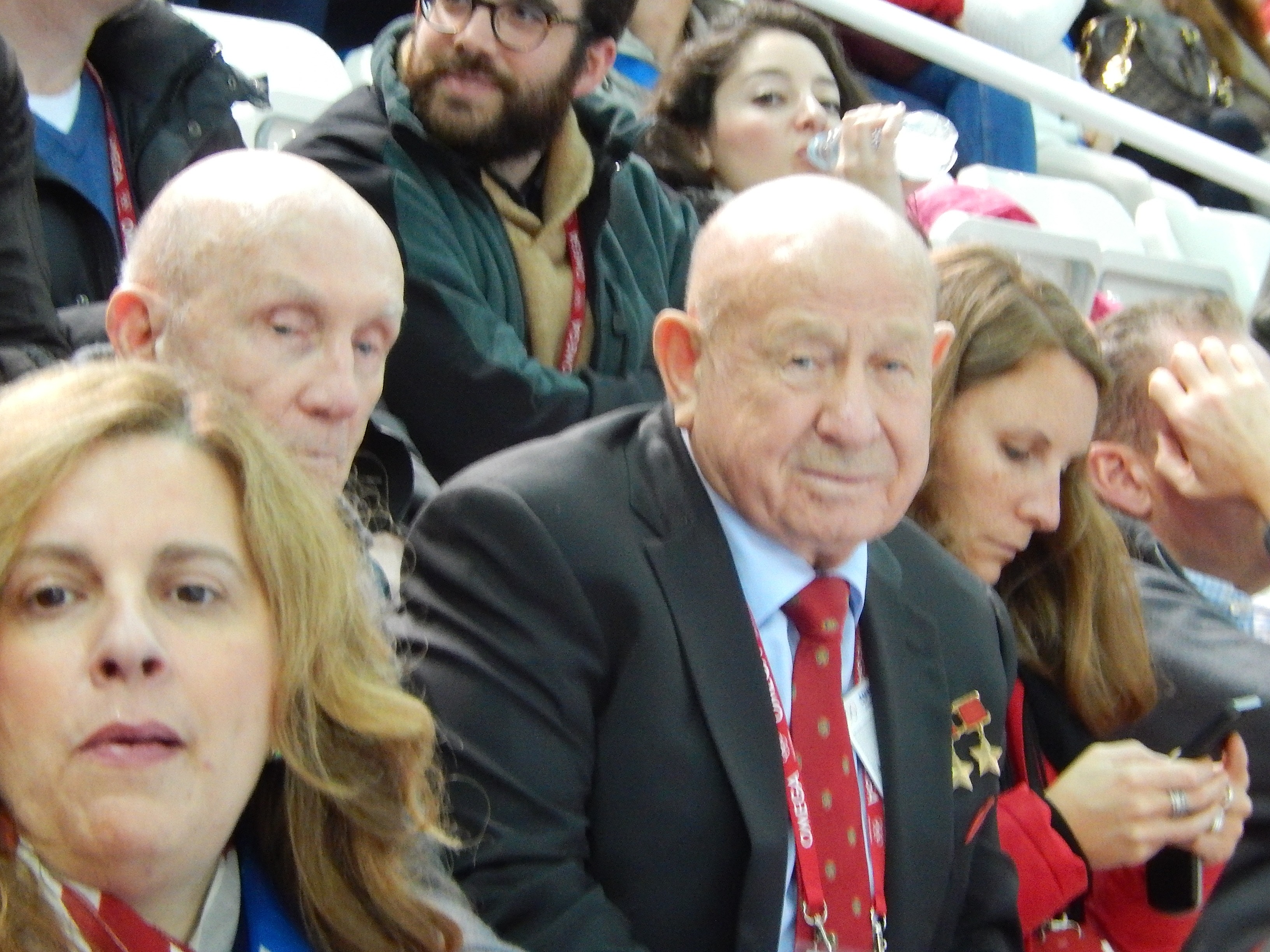
Russian Cosmonaut, and slightly hidden American Astronaut
And in the row Right Behind us, Russian pop singer Oleg Gazmanov, who specializes in patriotic songs and is also a candidate for Master of Sport for Russia for Gymnastics. (We had to google him to learn this.) He was interviewed during the first break and from then on THRONGS of Russians made their way over to have their pictures taken with him. It became a bit of a joke because we were so crowded, and I think we will be in a few of those pictures!
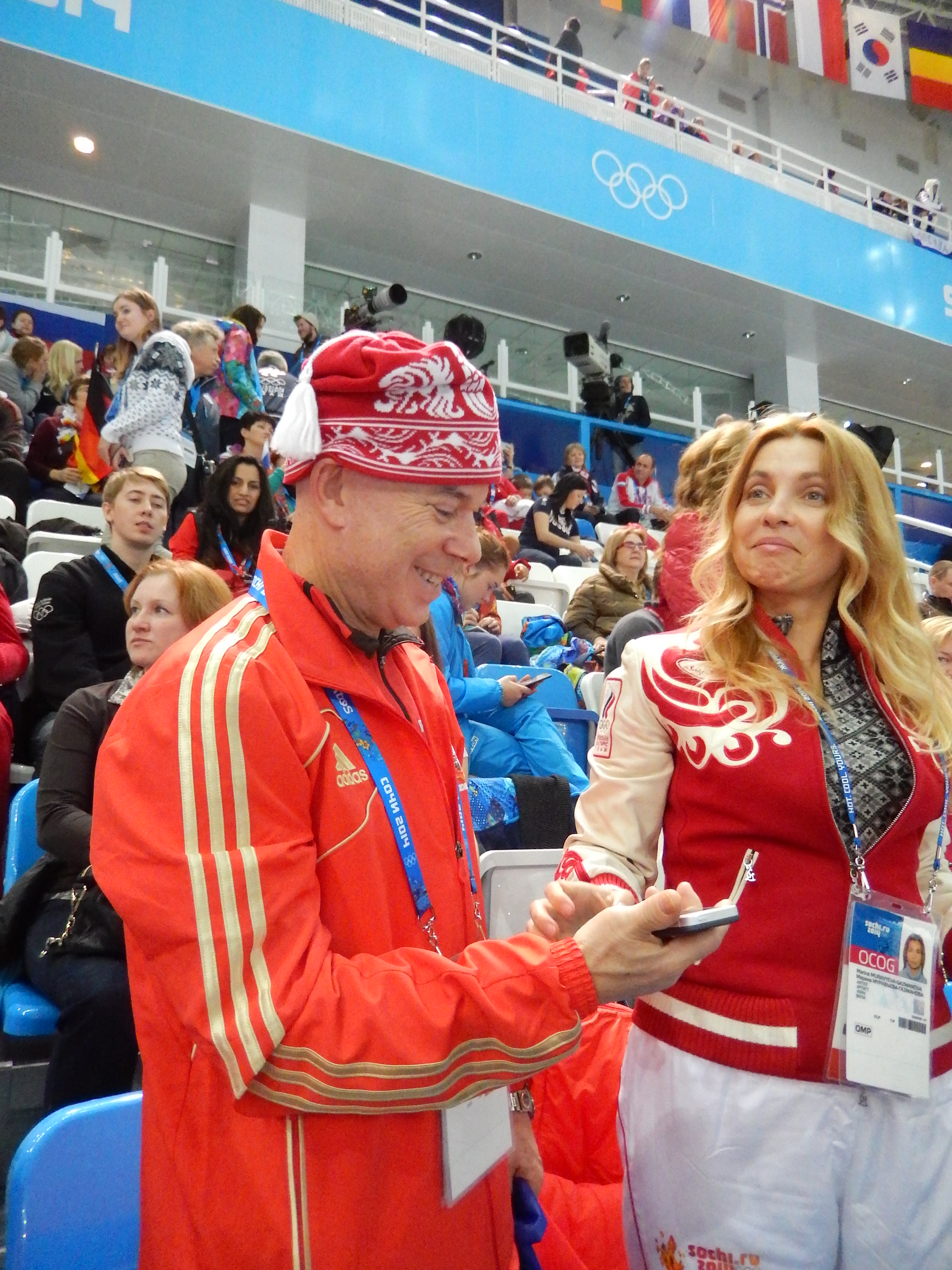
Russian singer Oleg Gazmanov and his wife
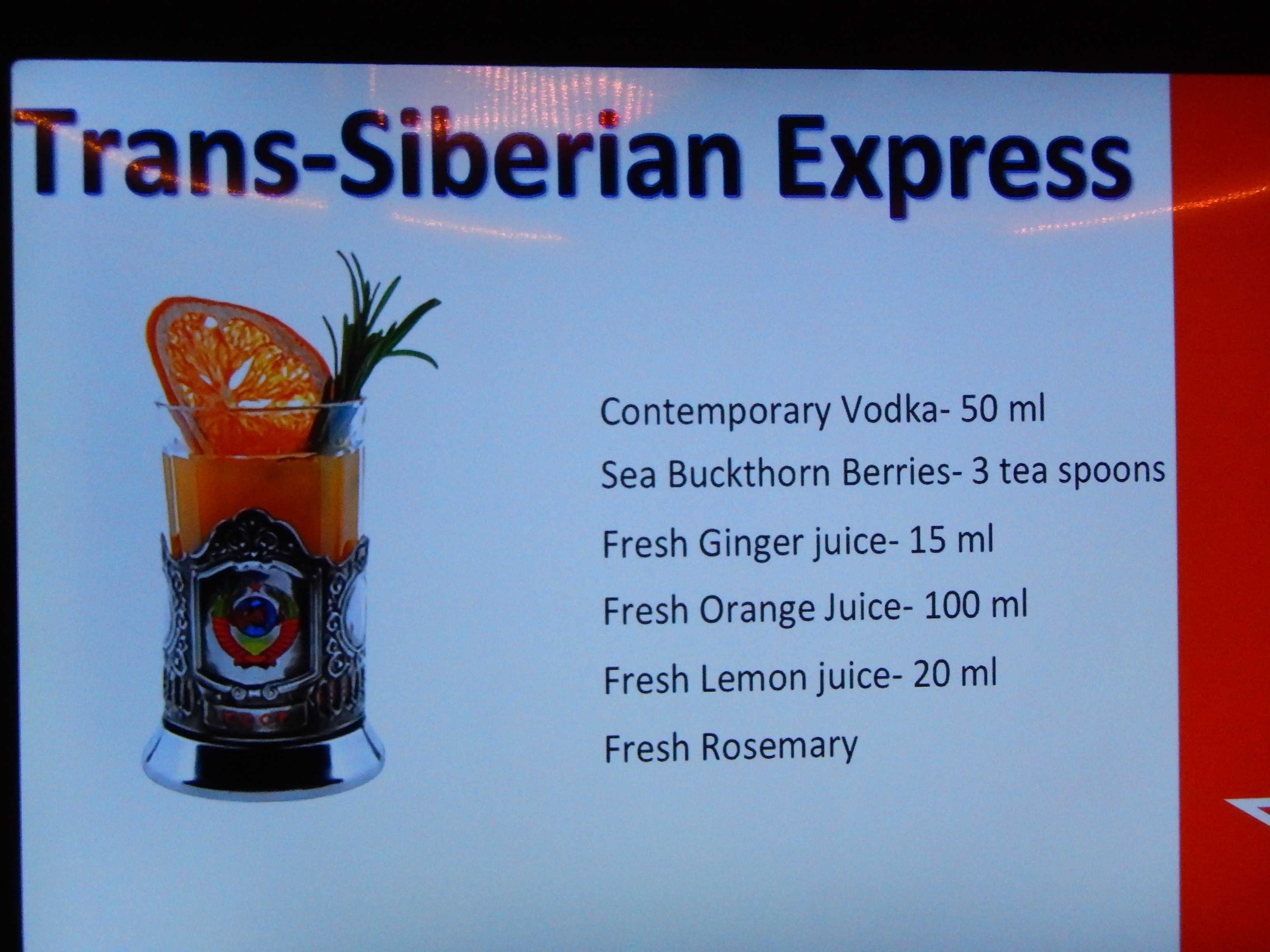
On Wednesday, the 12th, we had signed up for vodka-tasting with international bartender Bek Narzi, but Don found out he could get a ticket for the Canada-USA Women’s Hockey preliminary game, so off he went to that while I sacrificed and stayed for the vodka “drinking,” as it turned out! 😉 We drank a mixed cocktail, sampled shots of three different kinds of vodka, and then had three more cocktails, while learning about the history of vodka in Russia:
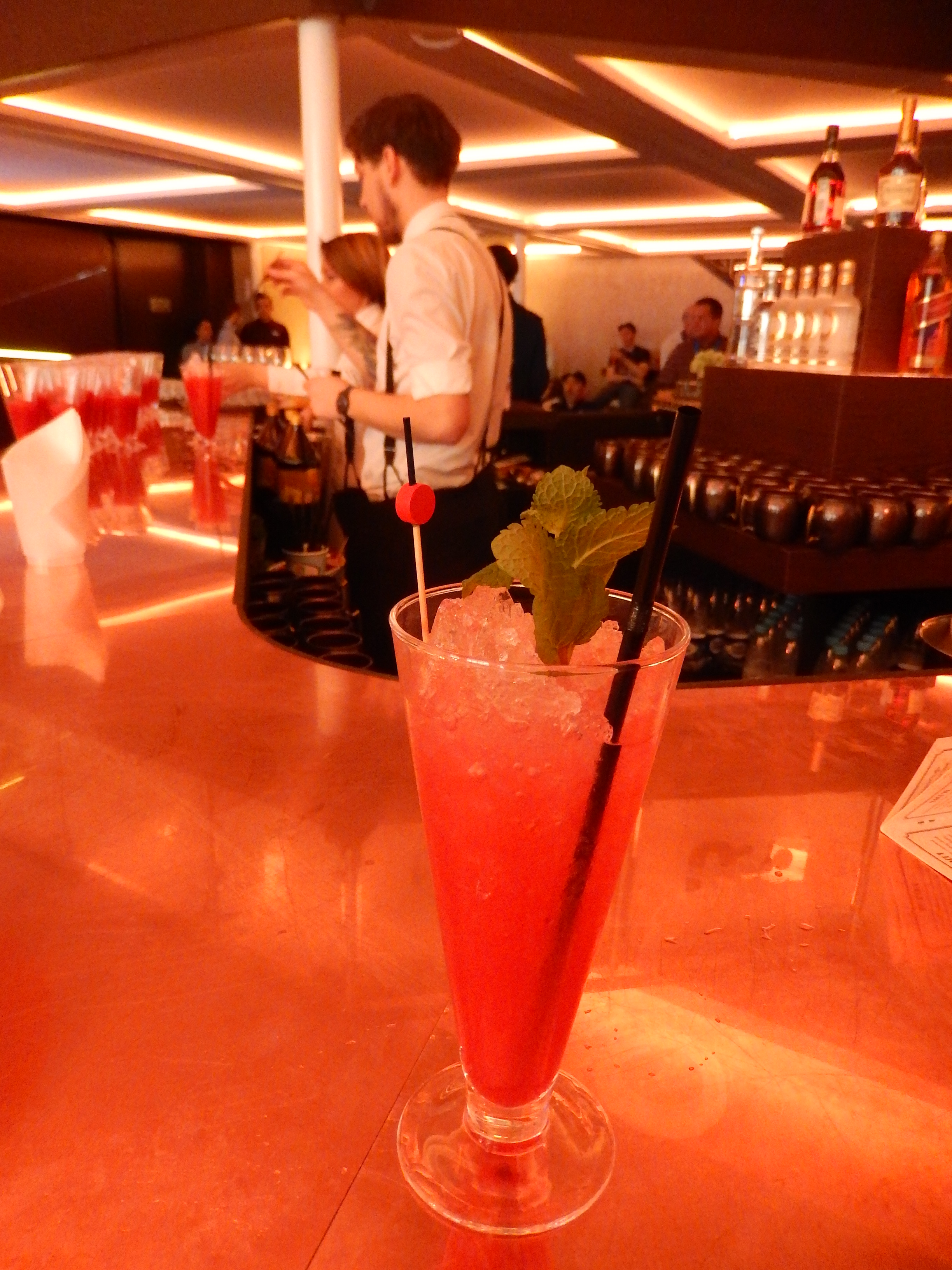
Moscow Spring Punch – very orange because the bar is copper-coloured and the light in the room rather coppery, as well

the recipe
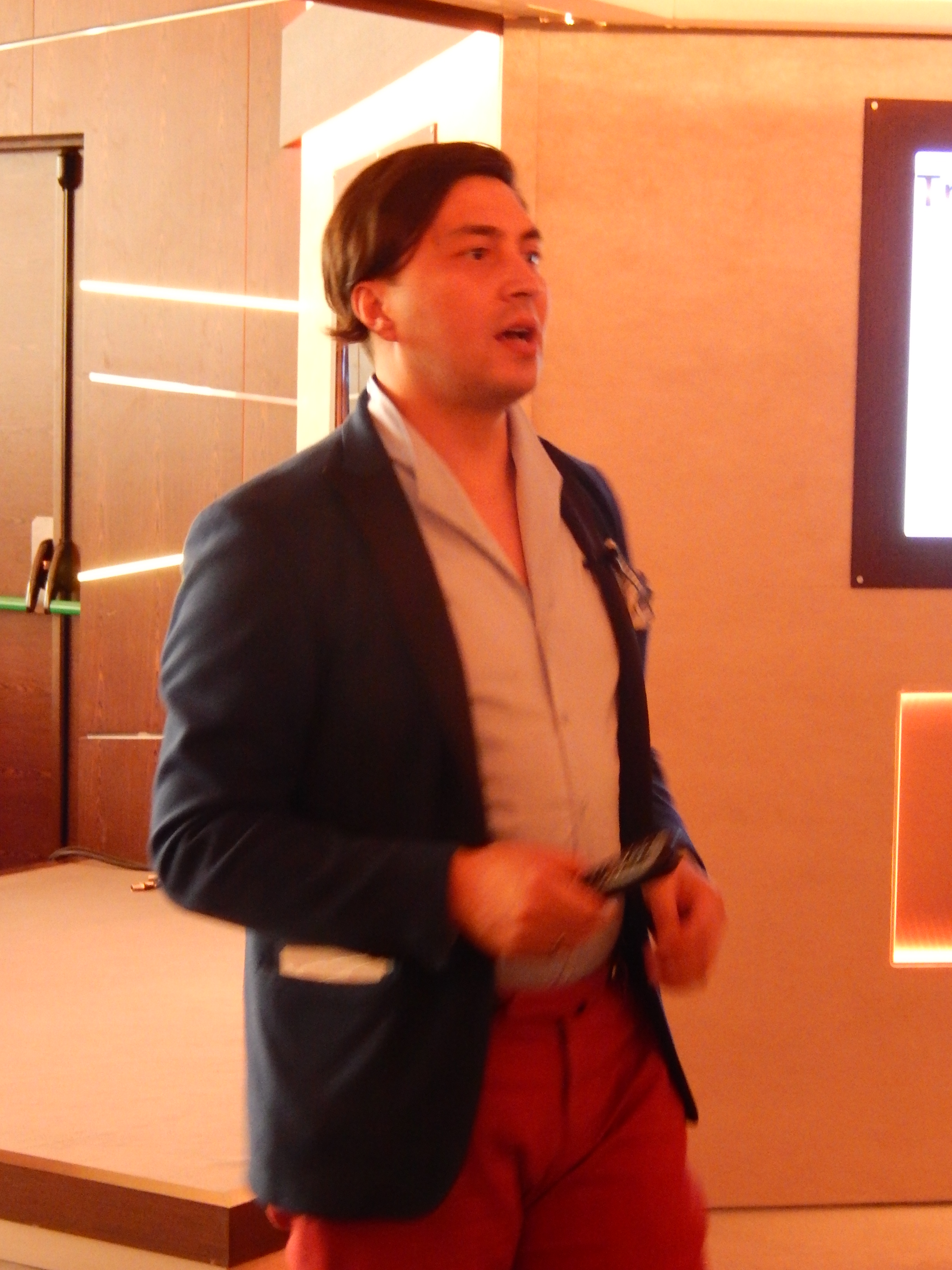
Bek Narzi
another cocktail

and another (I *may* have had two of these)

the last cocktail
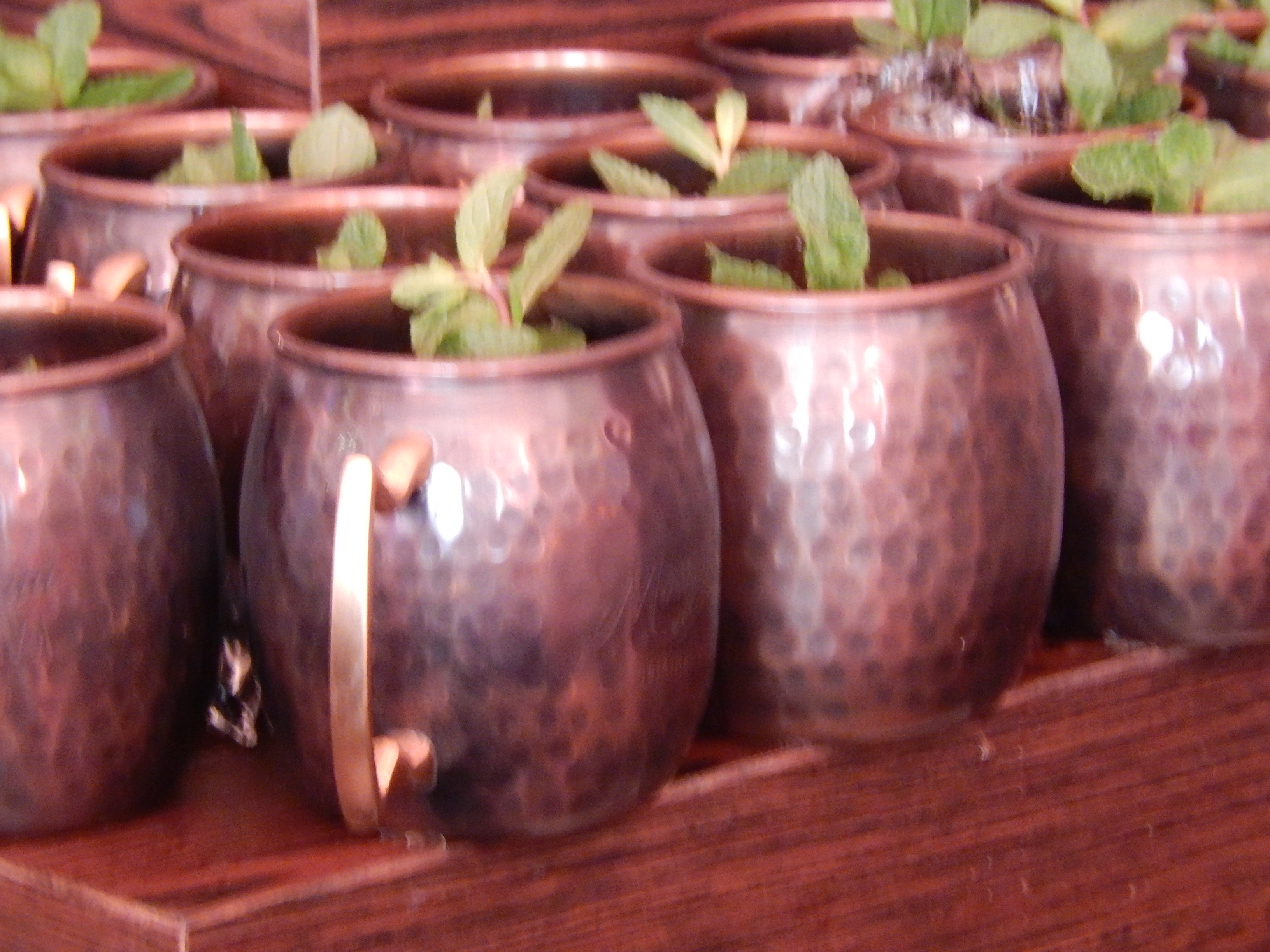
served in these mugs we got to take home (blurry picture *may* be due to vodka consumption)
It was all great fun! And then I got on the bus to the Olympic Village, watching the last half of the women’s hockey game on the TV screens, sitting outside in the gorgeous sunshine at the Hospitality Suite, quietly cheering for the Canadians while surrounded by Americans! Don met me at the suite after the game – Canada won – to eat, and then we were off to the Pairs Long Skate, the final. The Russians were truly exciting to watch, and got Gold and Silver. Our favourites from the night before, the German couple, had been in 2nd place, but they both fell during their performance – heartbreaking – and ended up with Bronze. My favourite from this night was the Gold-medal Russian couple, skating to Jesus Christ Superstar:

Tatiana Volosozhar & Maxim Trankov

great music, great costumes, great performance
Thursday, 13th, first to Short Track Speed Skating and then USA vs Slovakia Hockey Game. It was *another* gorgeous day!
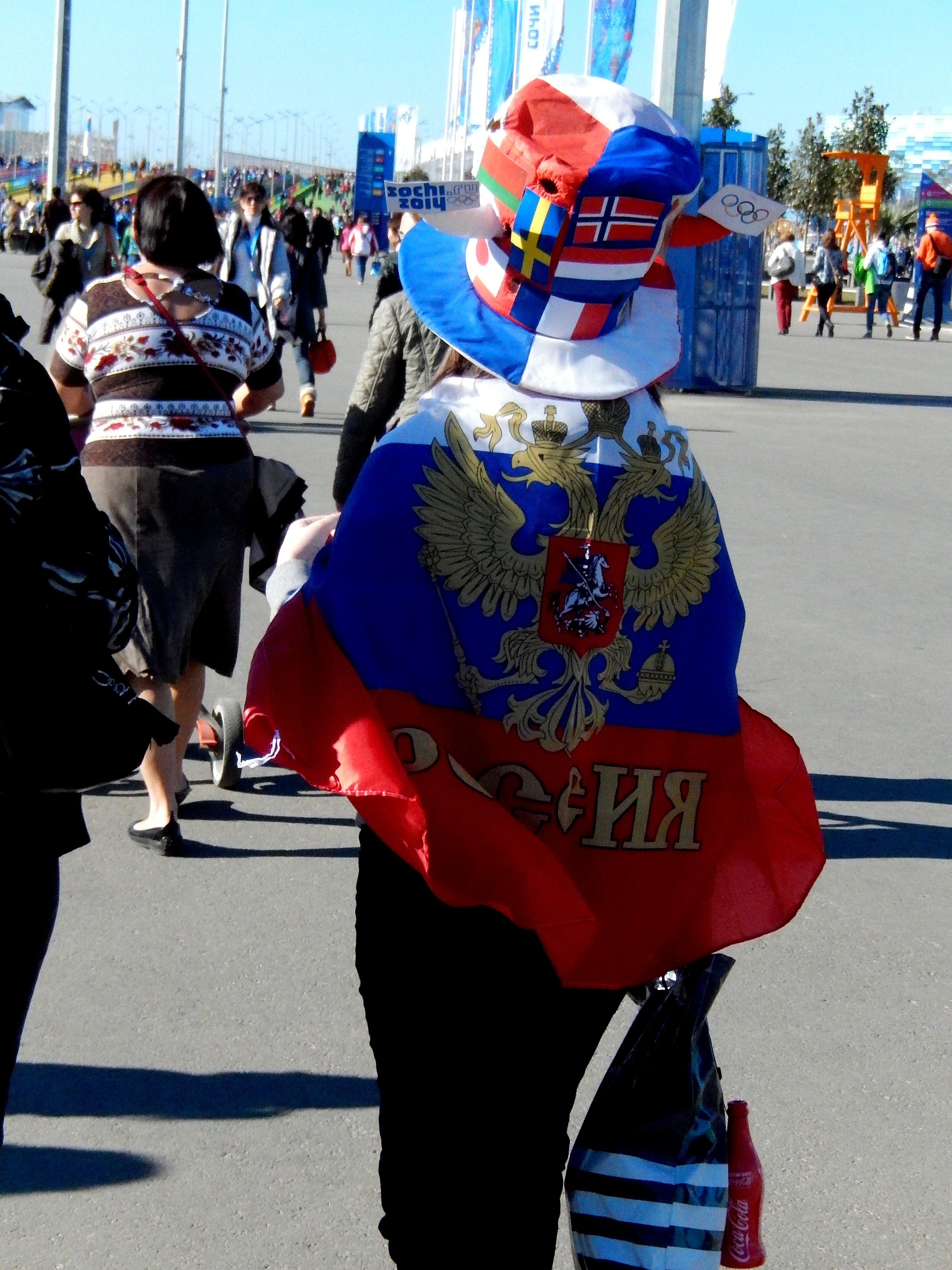
colourful character
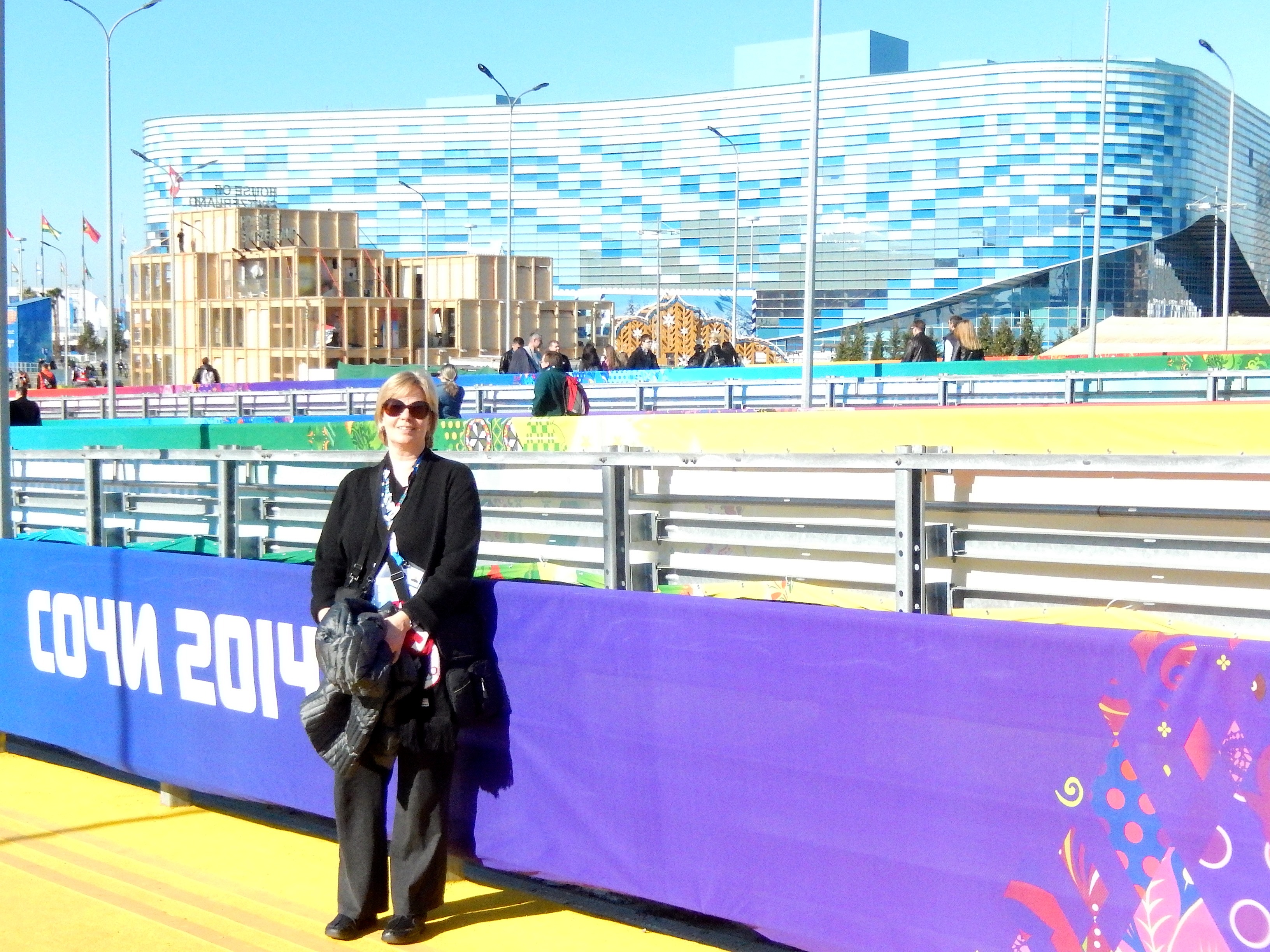
on the rainbow bridge
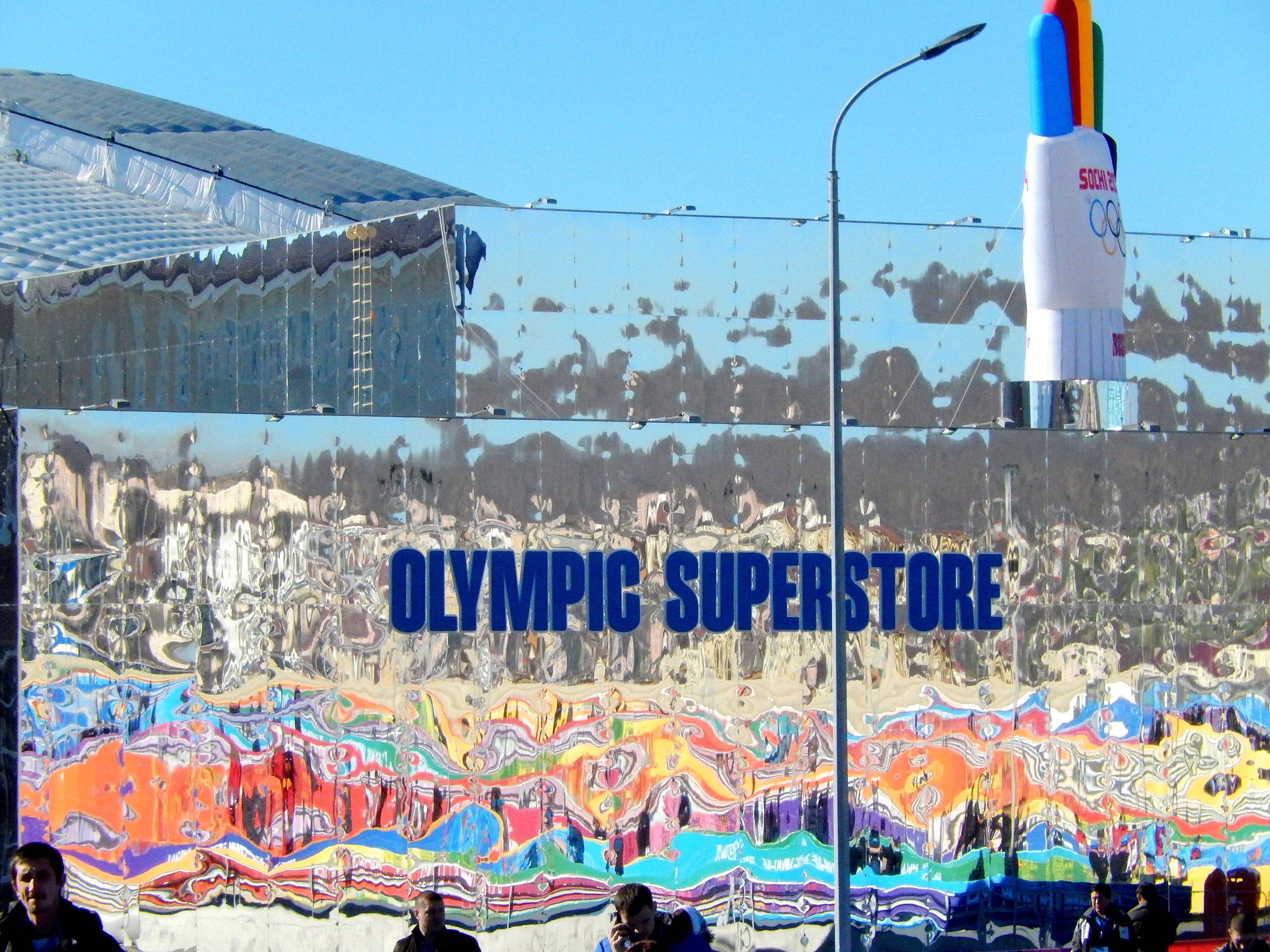
reflections in the Bosco Olympic Store (Don)
The short track speed skating was as exciting as always, though sadly the Canadian men’s relay team had a wipe out; heartbreaking when they had a chance at gold. Then three women wiped out in the final for the 500 metre event; it was wild. Ran into these crazy Dutchmen as we exited the arena:

3 Dutchies
Walking from one arena to the next, passing the flame burning bright on a gorgeous day:

beautiful
Hockey: USA vs Slovakia, with half the arena cheering for the USA and half for the Slovakians, and six of the seven US goals right in front of us!

exciting game; final score
The sunset was gorgeous as we exited the arena:

sunset over the Black Sea
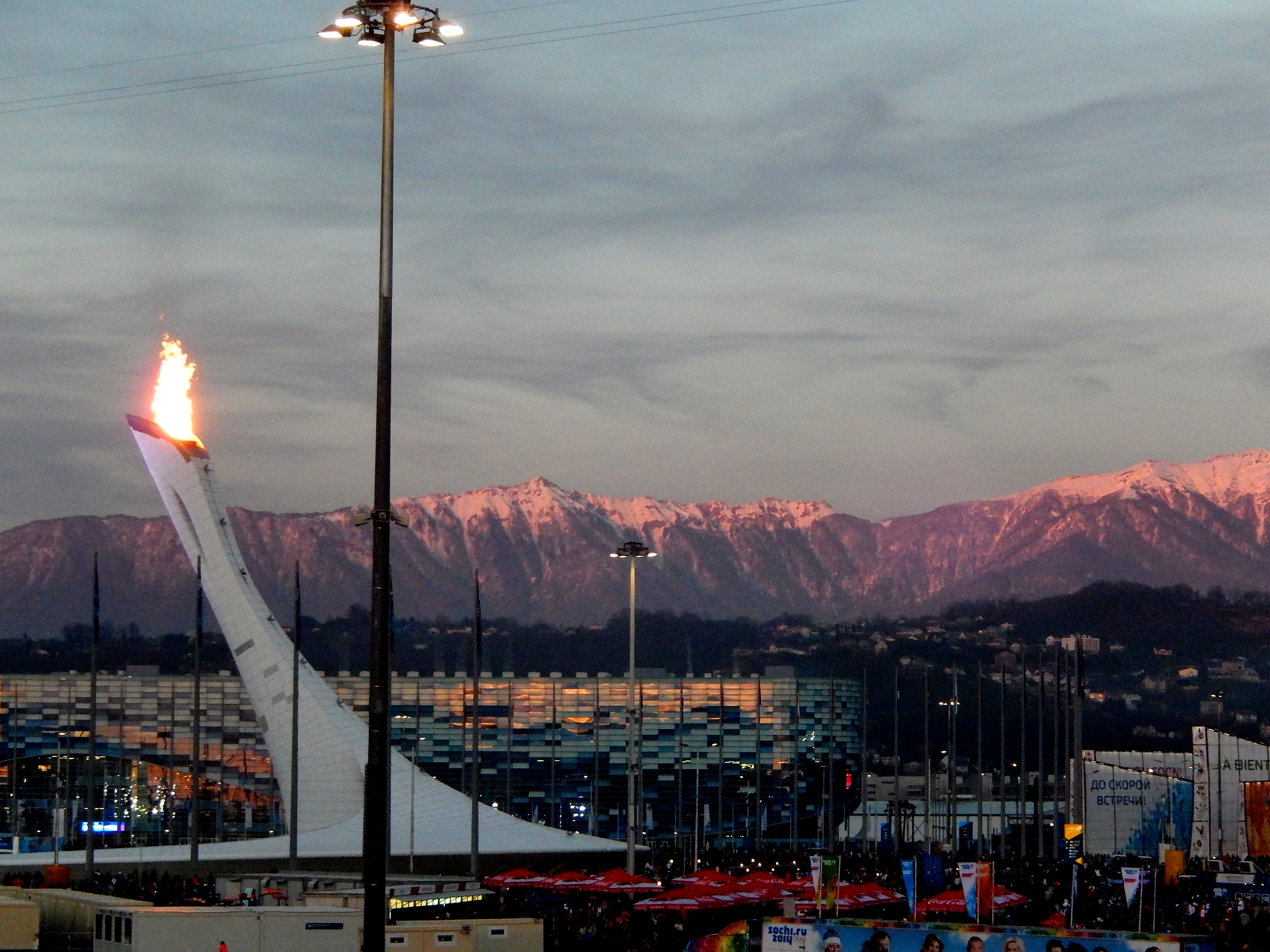
and reflecting off the mountains

the Opening and Closing Ceremonies stadium
We got back to the hotel relatively early, compared to other nights, with great intentions of going to bed early. I will blame the dealers for the fact we stayed up partying until 1:30 a.m. They were a fun group!
Don had a massage in the early afternoon, and then we were back on the bus to first head to the “back stage” of the NBC Today Show taping. It was actually quite boring, with a lot of standing around in the background, cheering when we were told to, etc. And it was HOT standing in the direct sunlight (probably our warmest day), so we didn’t stay for the whole show. But, all the Today Show hosts were very gracious, came over to shake hands with the “audience” and pose for pictures, etc.

the backs of Al Roker and Matt Lauer – Today Show hosts
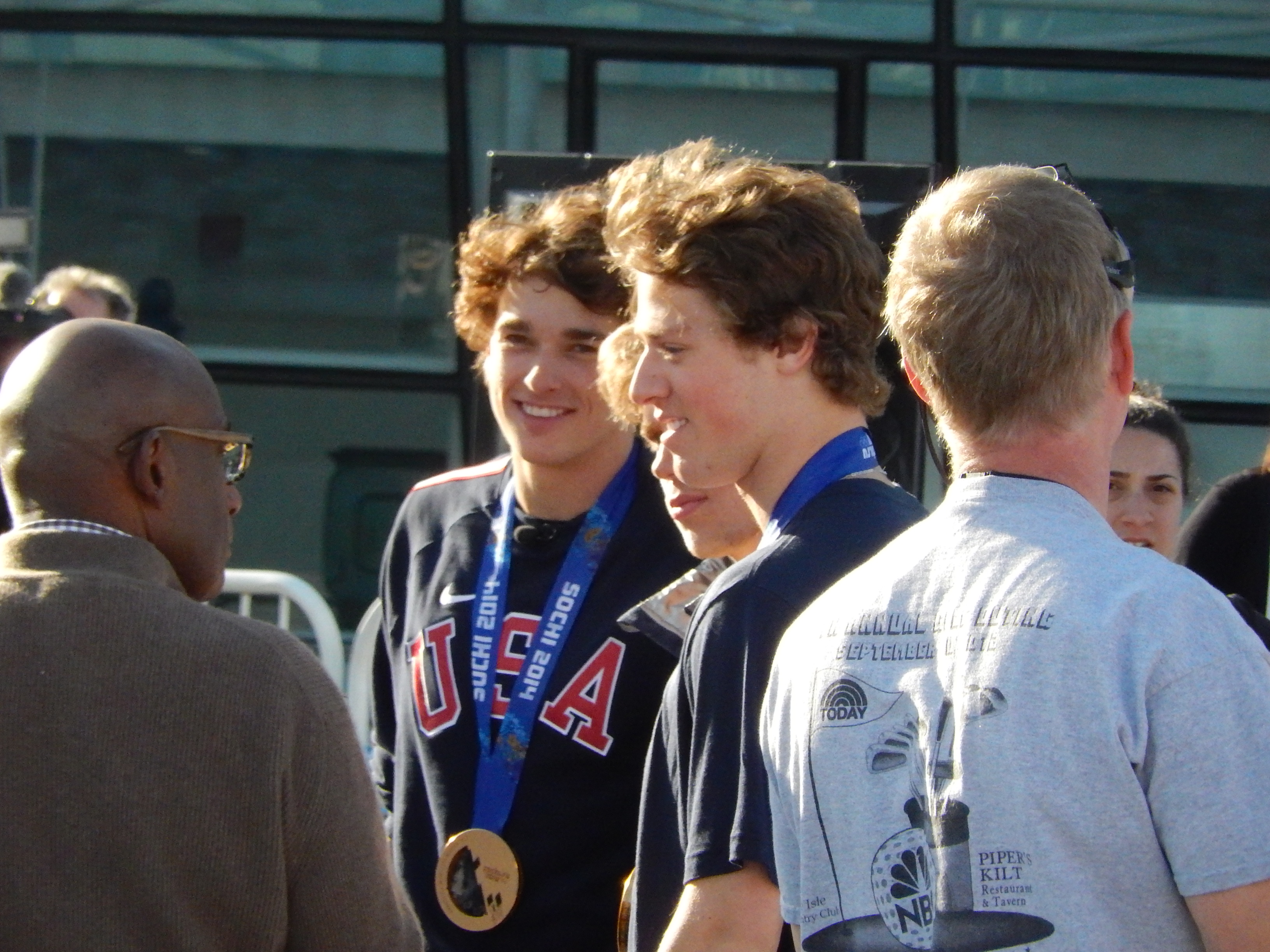
featured Olympian guests – the 3 Americans who swept the podium in first-ever Men’s Freeski Slopestyle Competition

time to leave the Today Show

the Olympic Rings, of course
Relaxing back at the Hospitality Suite, enjoying food and drink, and suddenly everyone was abuzz with the rumour that Putin was going to show up at the next-door American House, where the athletes and their families hung out, across the outdoor patio area which NBC shared with them. People were hovering, cameras were set up, and then finally, surrounded by security, he *did* show up! He sat on the patio, had a glass of wine, and answered interview questions. We were inside the NBC suite, and the doors had been closed to the patio, for security reasons, but I passed my camera up to one of the NBC interns who was standing on a table, and he took this picture for me:
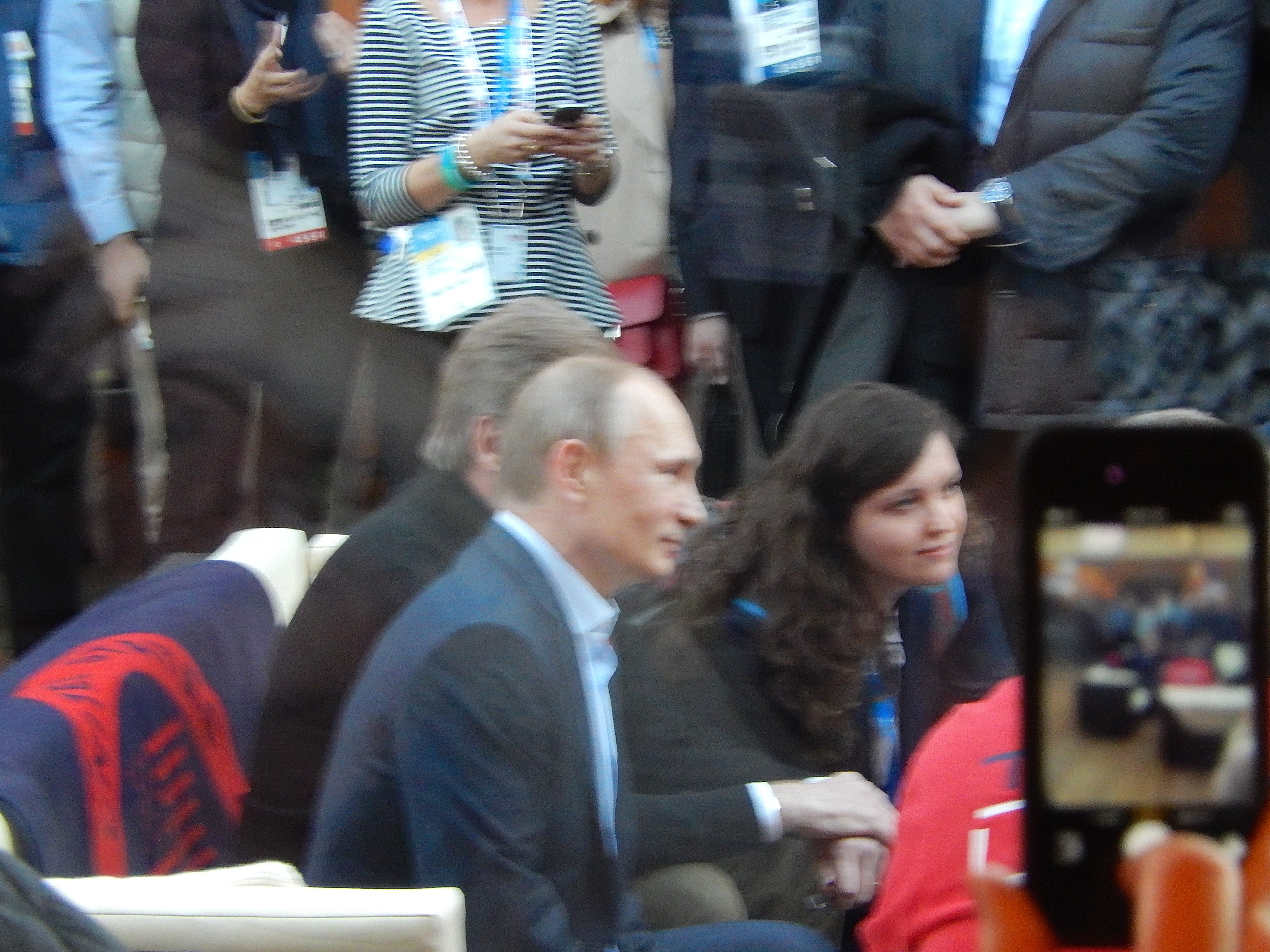
Putin, through a window
After that excitement it was time to get to our Figure Skating Men’s Long Program final. There were some good skates, but none of them were quite as dynamic as they could be.
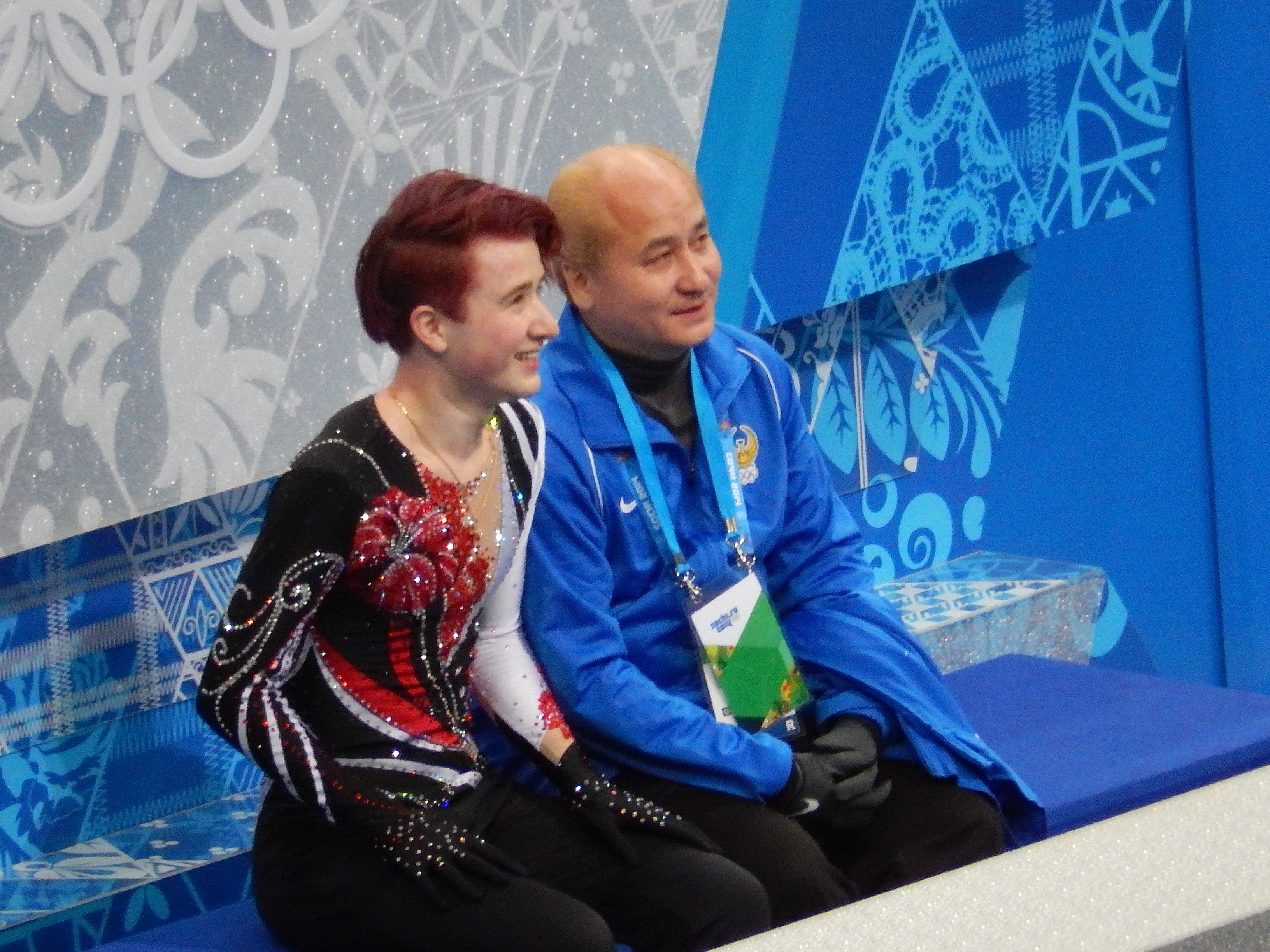
Misha Ge from Uzbekistan was one of our favourites

Candian Kevin Reynolds waiting with his coach for results (he finished 15th)

Silver-medalist, Canadian Patrick Chan
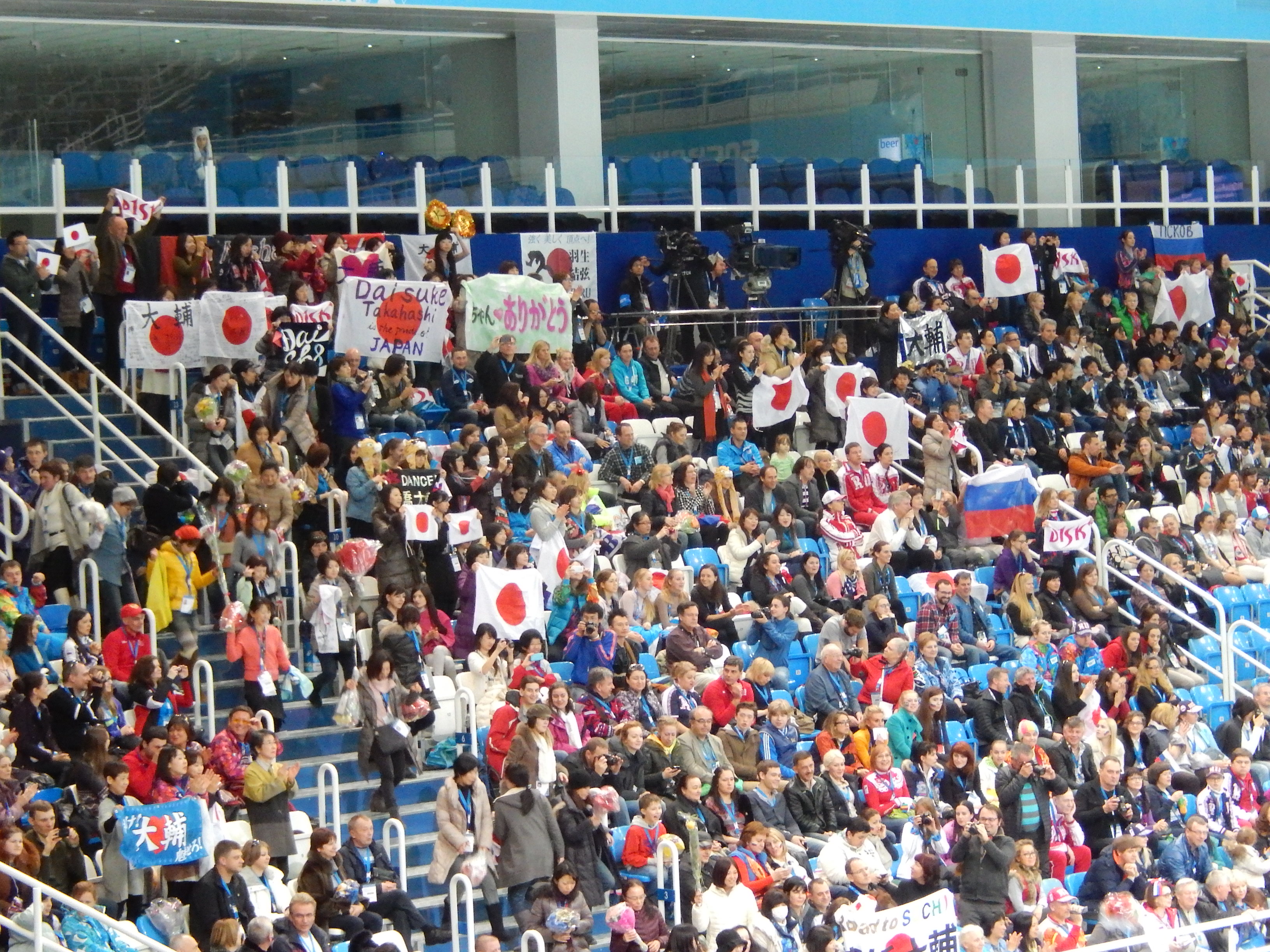
the Japanese fans had Gold-medalist Yuzuru Hanyu to cheer for, though several here are holding signs for 6th-place Daisuke Takahashi
When we exited the skating arena, the roof of the hockey arena was lit up with the Canadian flag, indicating Canada had won their hockey game – that was cool to see!
Canada wins their game!
Our last day, Saturday 15th, Don participated in a “skate with Tara Lipinski.” Tara was the Gold-medal Olympian at the 1998 Nagano games, when she was just 15 years old. At the Sochi games, she and Johnny Weir were the figure skating commentators. (I listened to them a lot once we were home and I think they did a fabulous job.) Tara did a bit of a presentation, and allowed for Q&A, before those participating took to the ice. Don hadn’t put on skates since we left Ontario (8 years ago?), but after a shaky start, he had a blast.
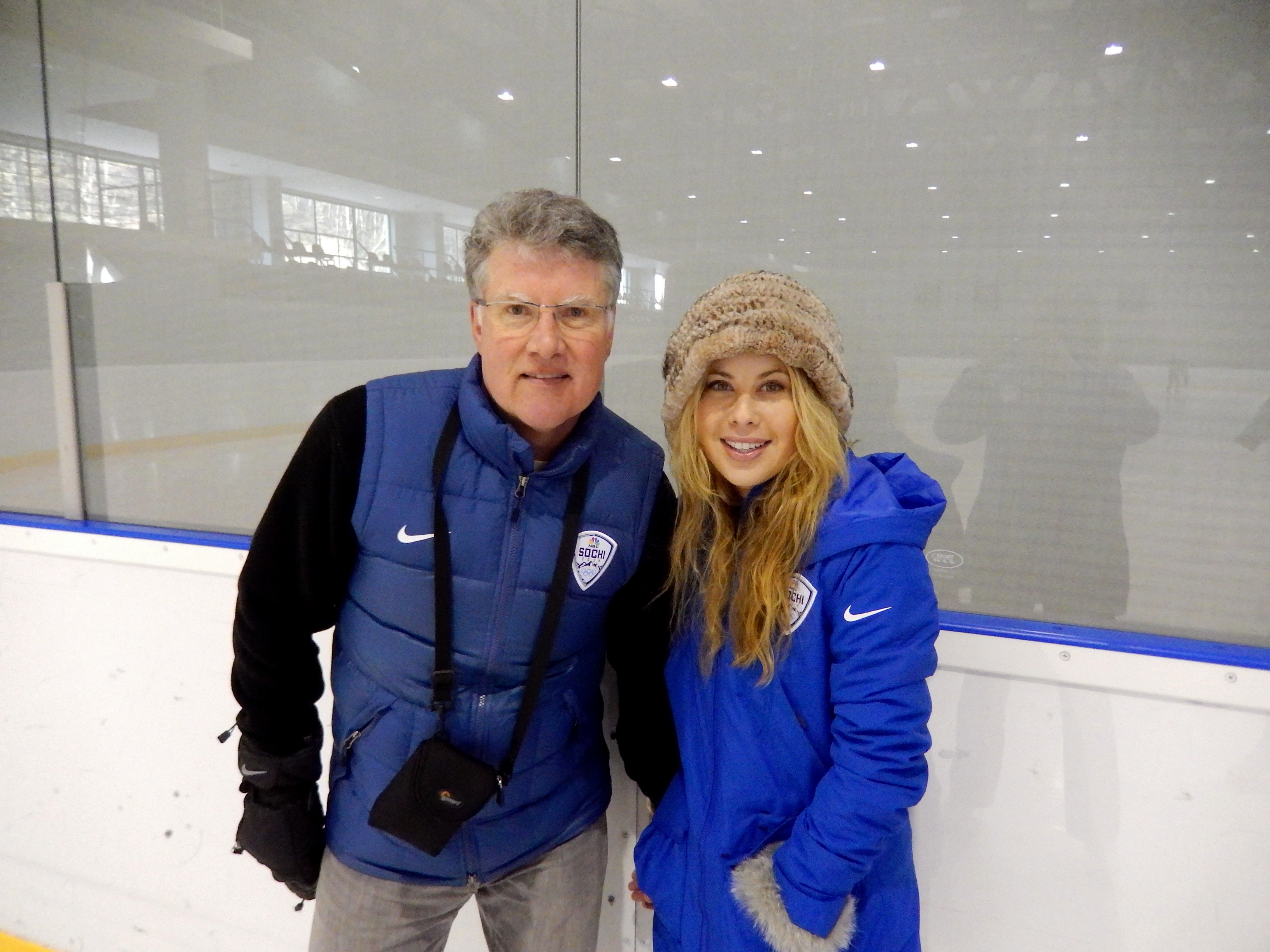
Don and Tara Lipinski
When he got back, we wandered around the mountain village, doing a little souvenir shopping, enjoying the sunshine.
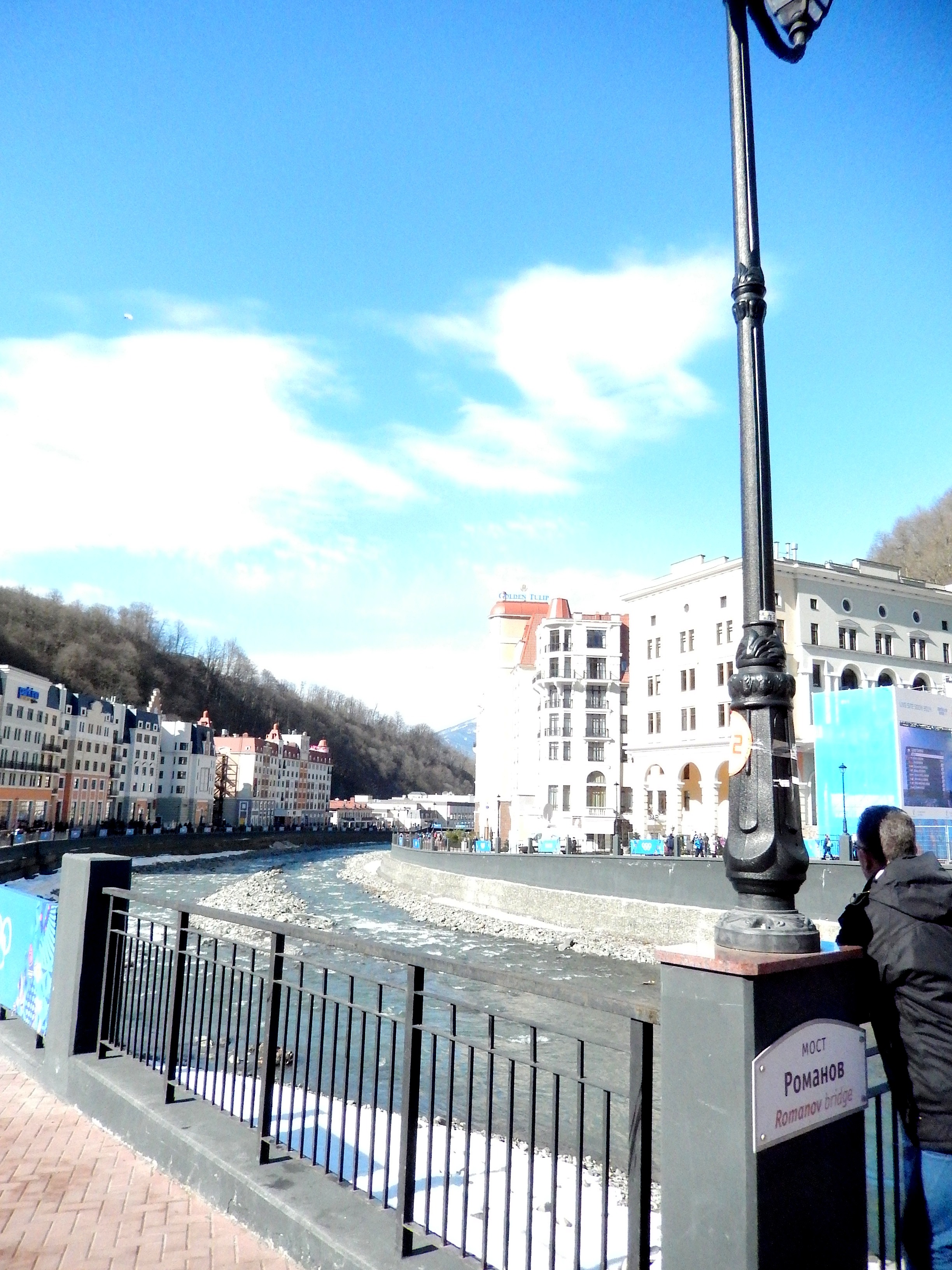
mountain village, and a river runs through it

Bosco (Russian version of Nike) supplied all the Olympic clothing. Gondola in the background

Don stopped for a sausage
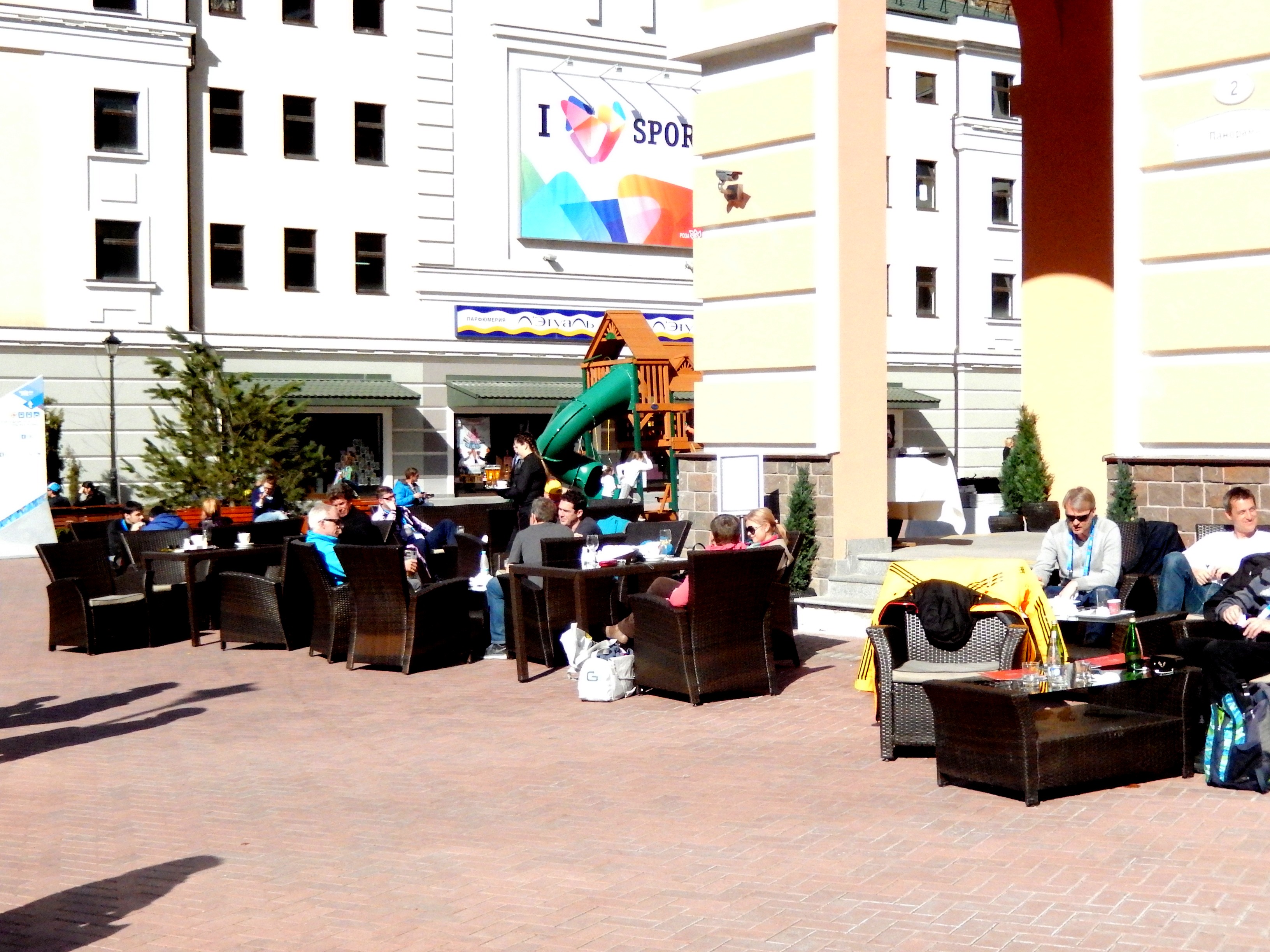
enjoying cold beers on the patio (hard to believe it’s winter in Russia)
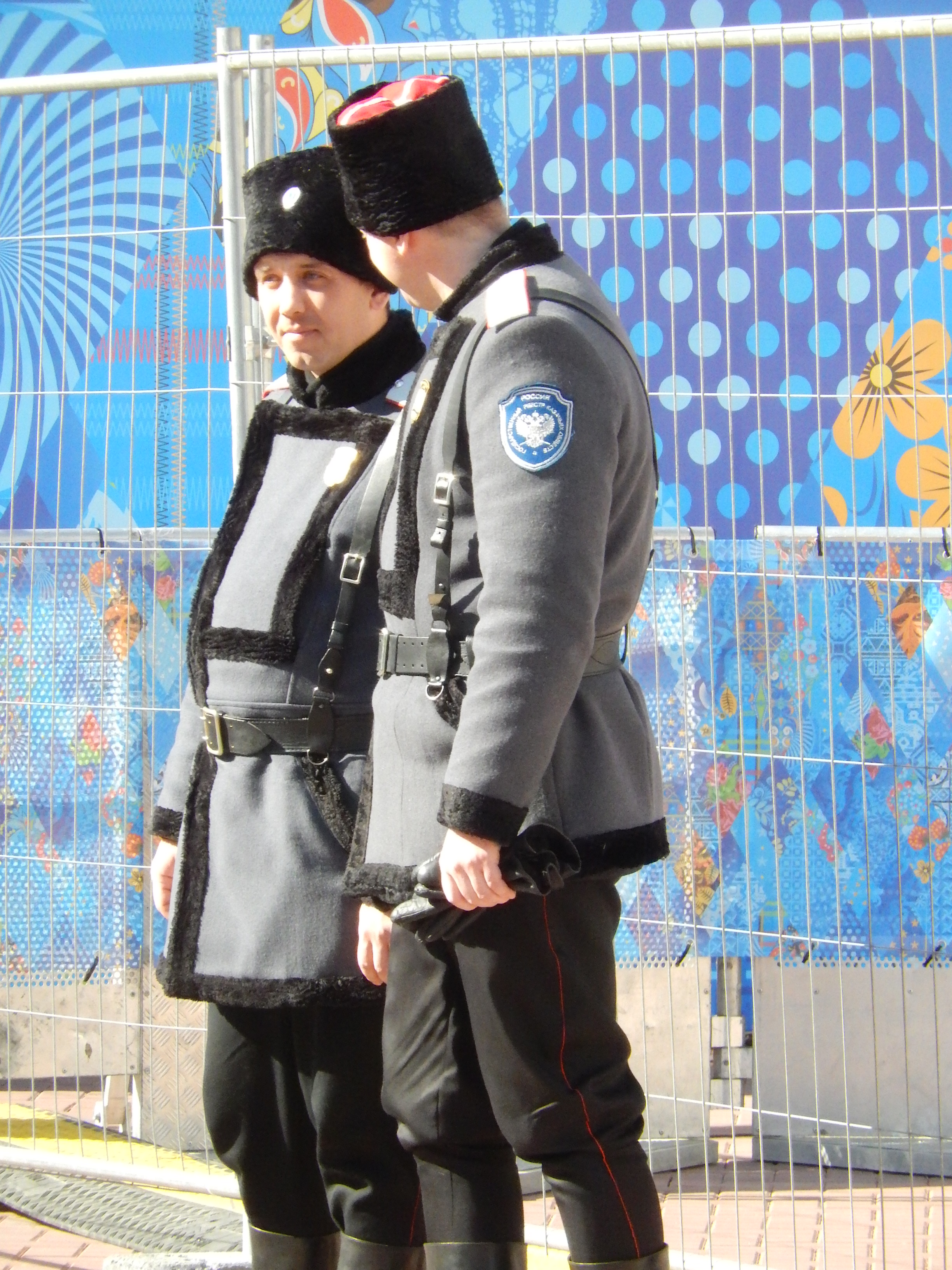
they must be hot in those outfits on such a warm day

the mascot statues always drew a crowd
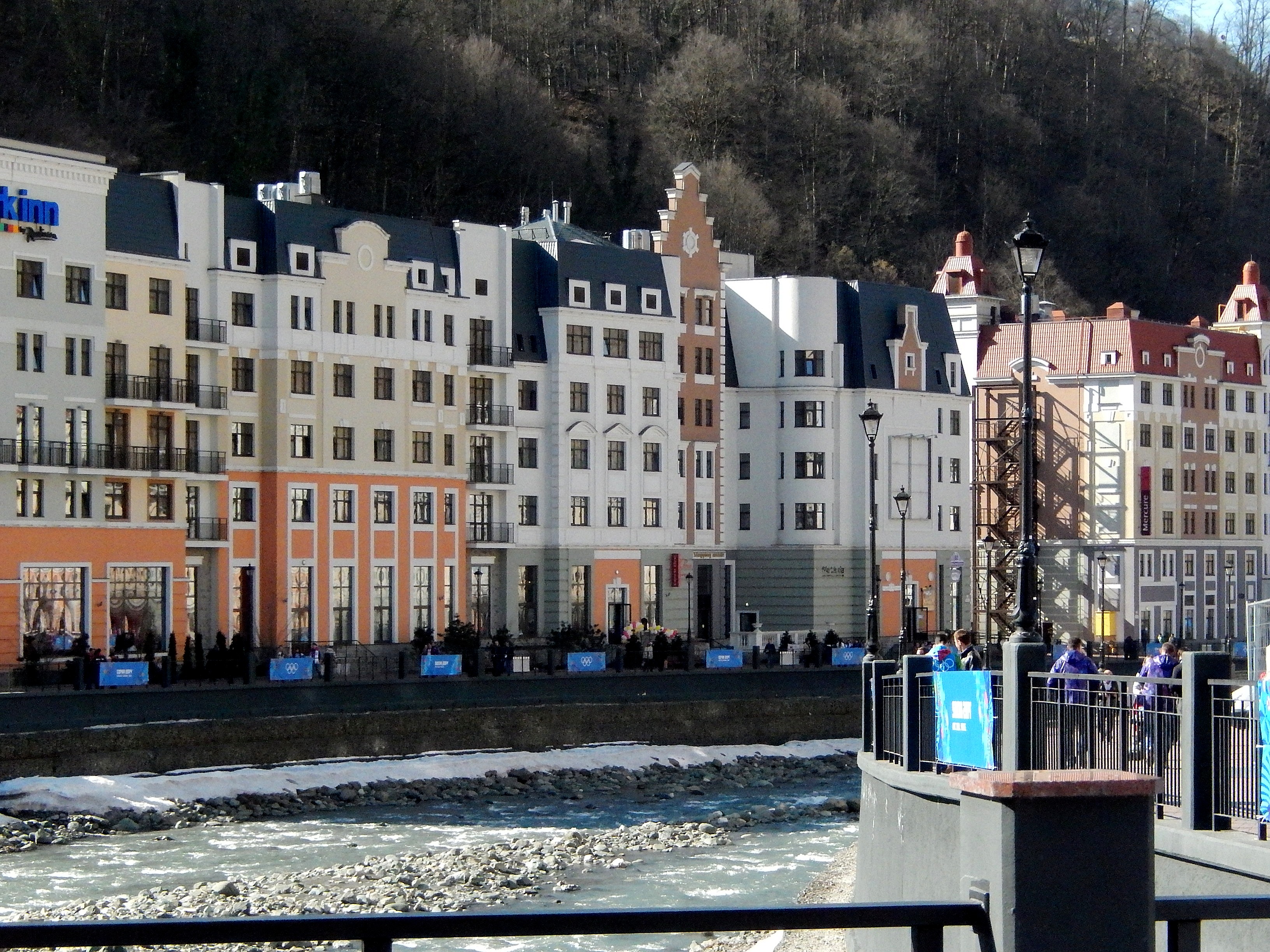
it really is a pretty village – hopefully it gets used after the Olympics

Olympic banner
Then, back on the bus for the last time, first to enjoy a little time at the NBC suite with all the GM gang:

it was a great group!
And then to the Men’s USA vs Russia hockey game – SUCH an EXCITING and INTENSE game!

1st period score board
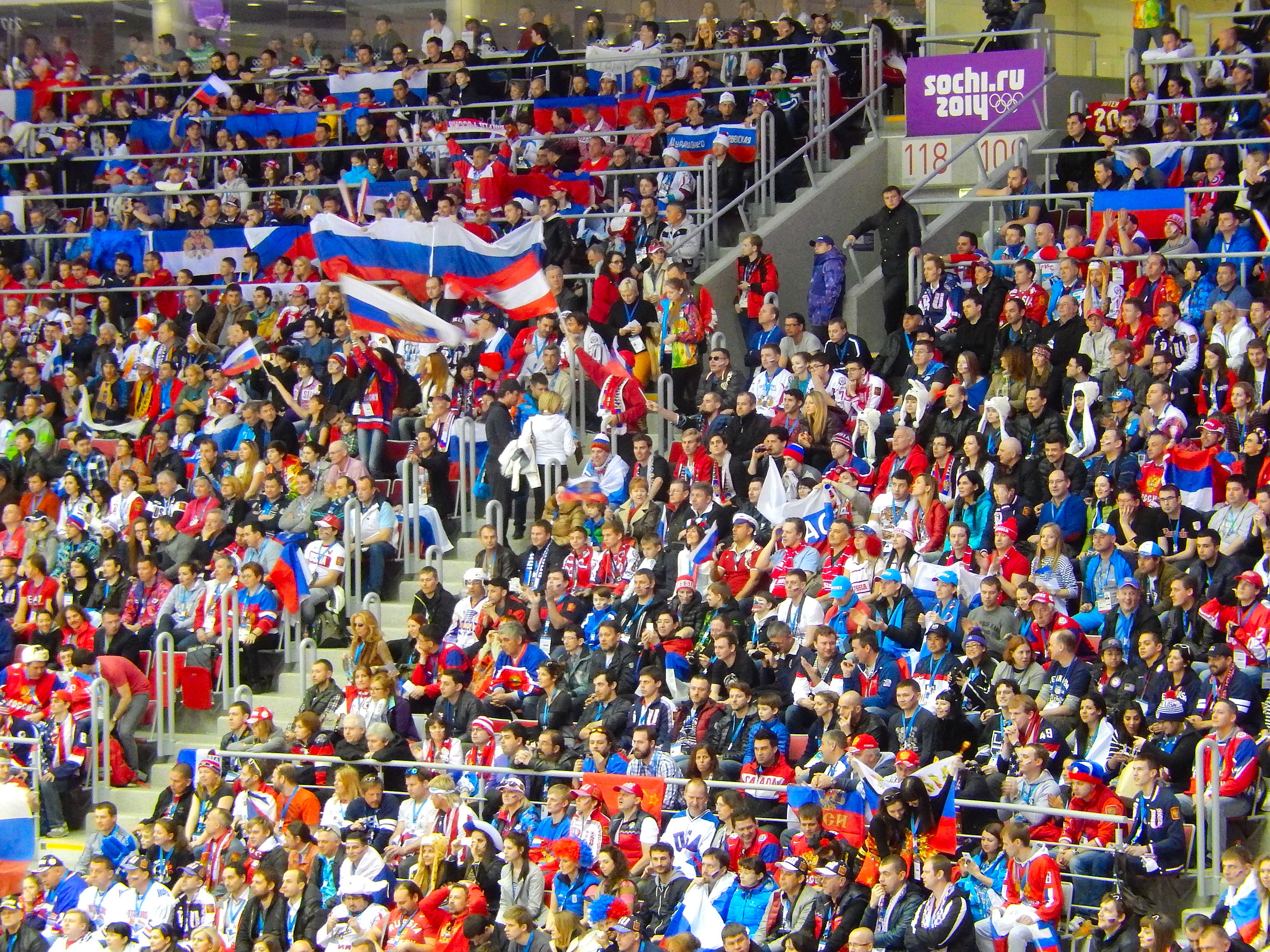
the audience reaction is just as interesting as the game
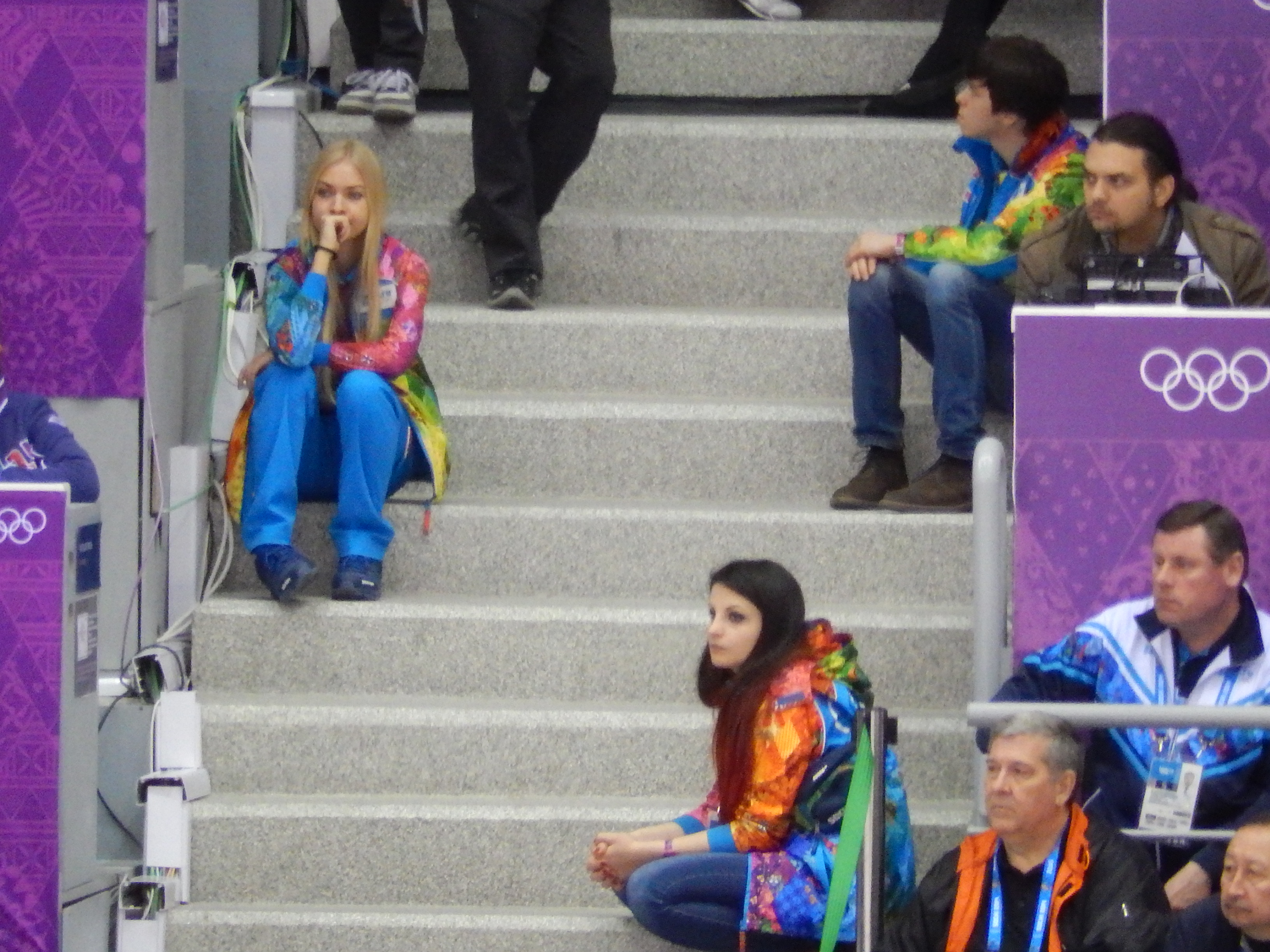
the Russian ushers are tense
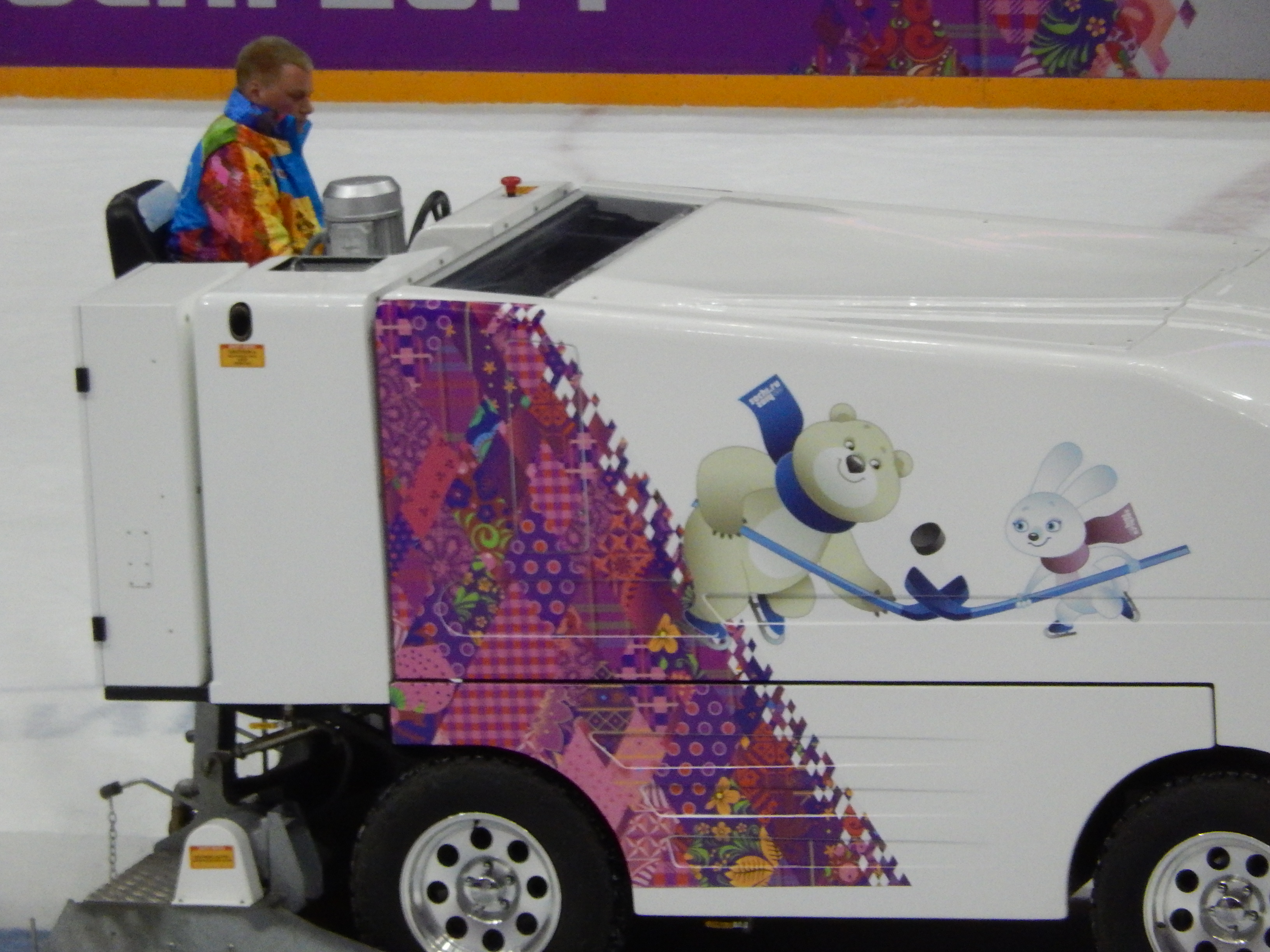
the hockey arena zamboni

an interesting costume

play hockey!

USA goalie

Russian Goal!

Olympic mascot in the audience
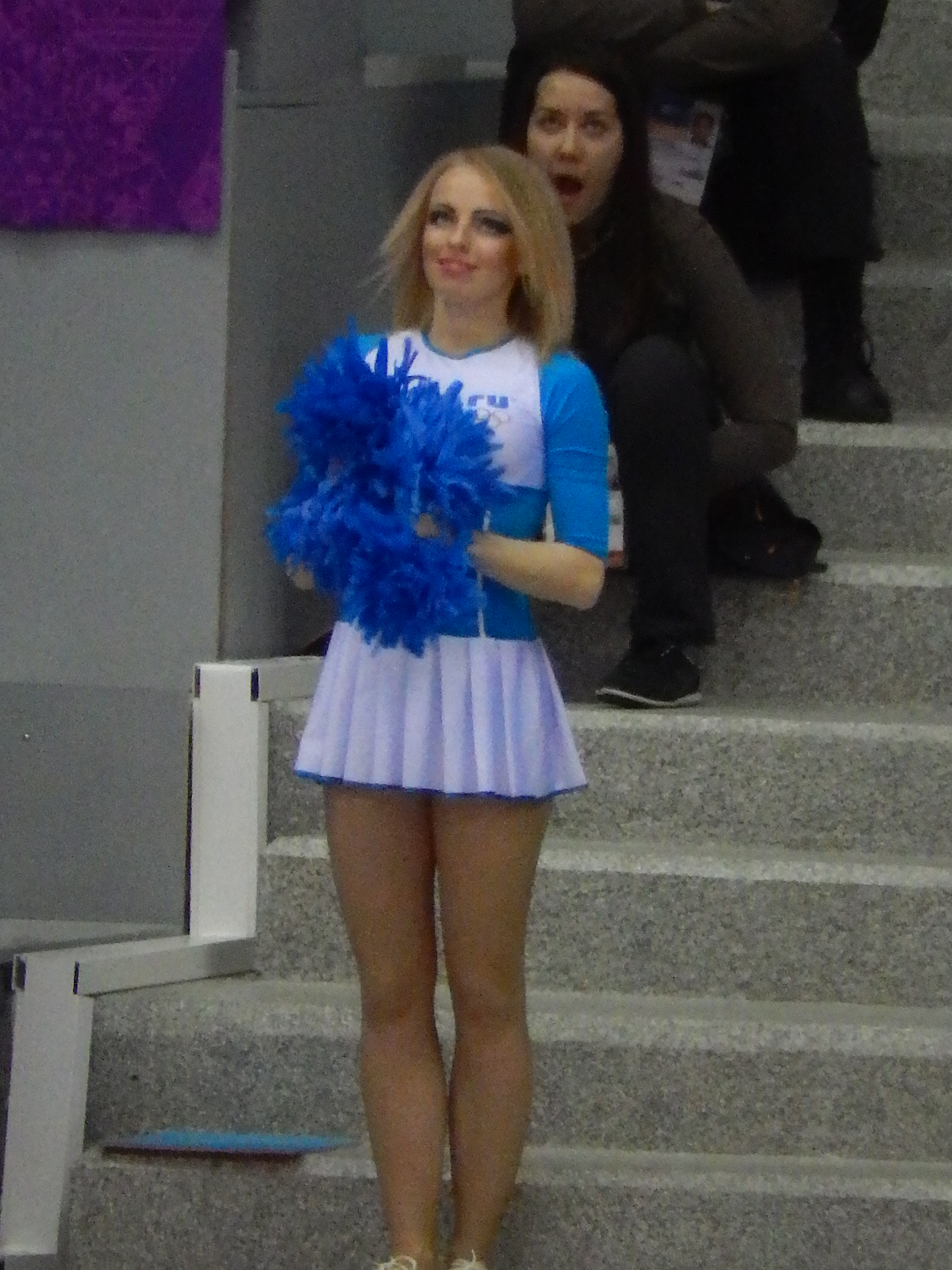
this game has cheerleaders
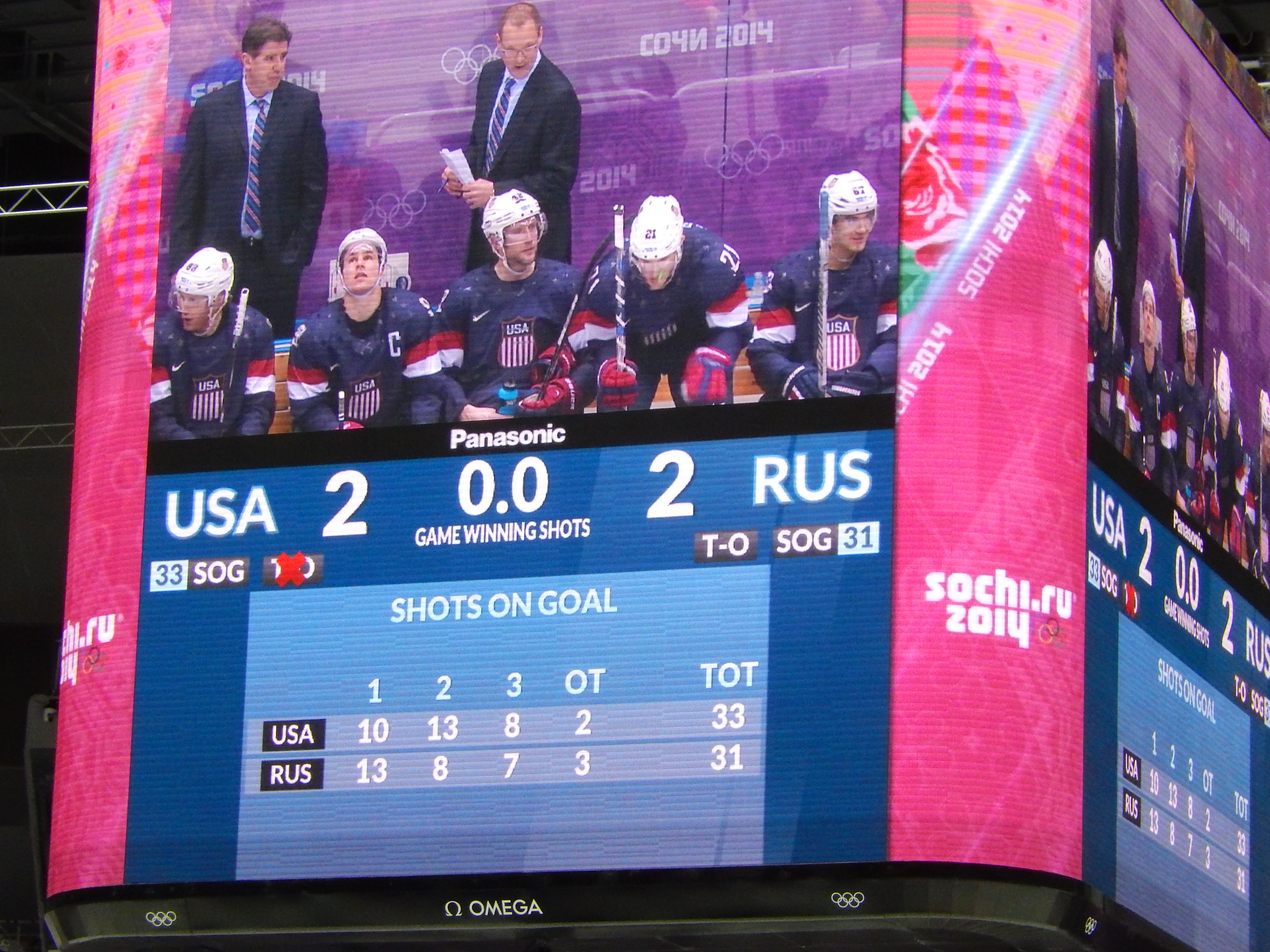
tied!

still tied after 3-shot shoot out

Oshie – American hero
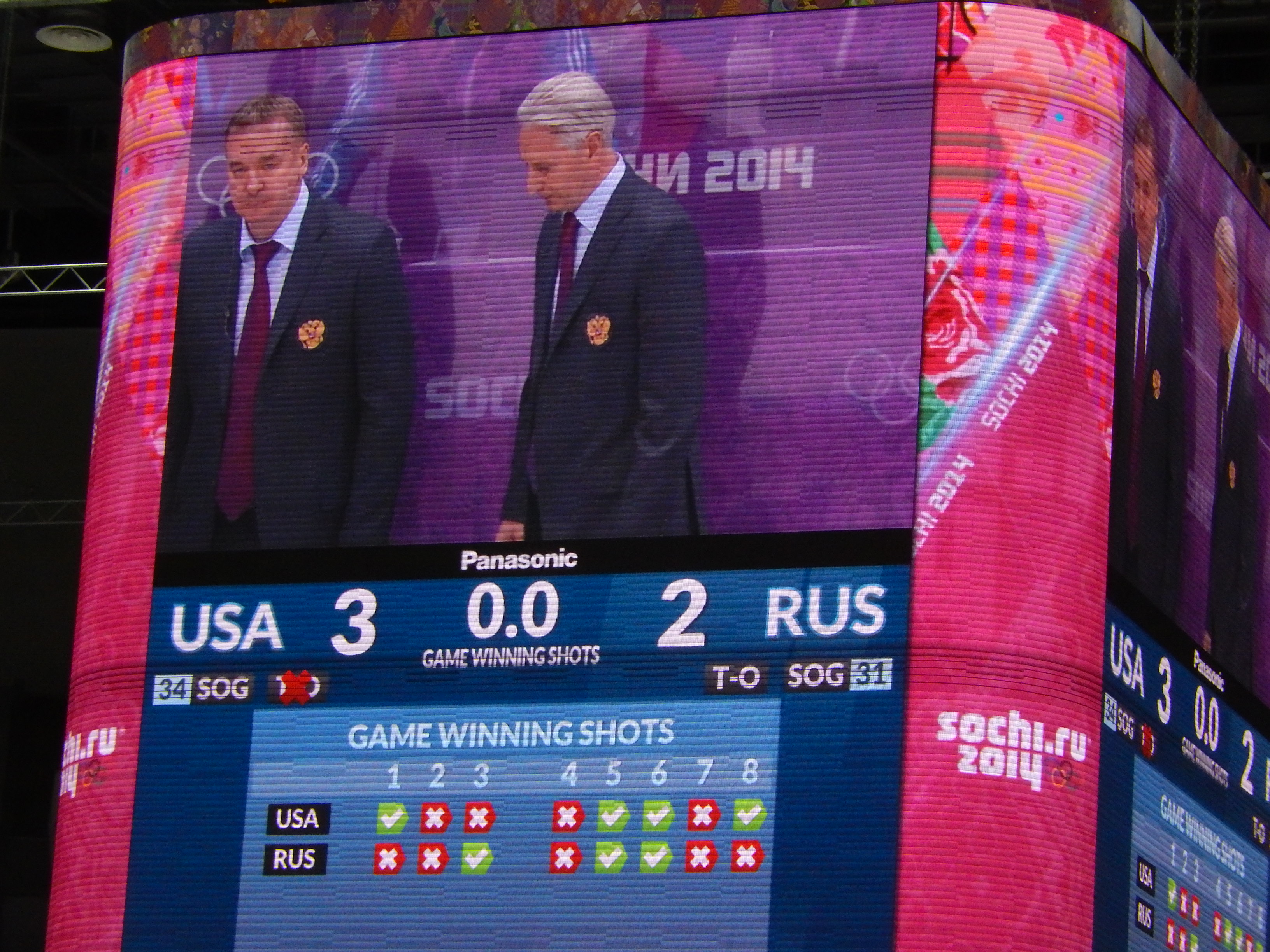
final count
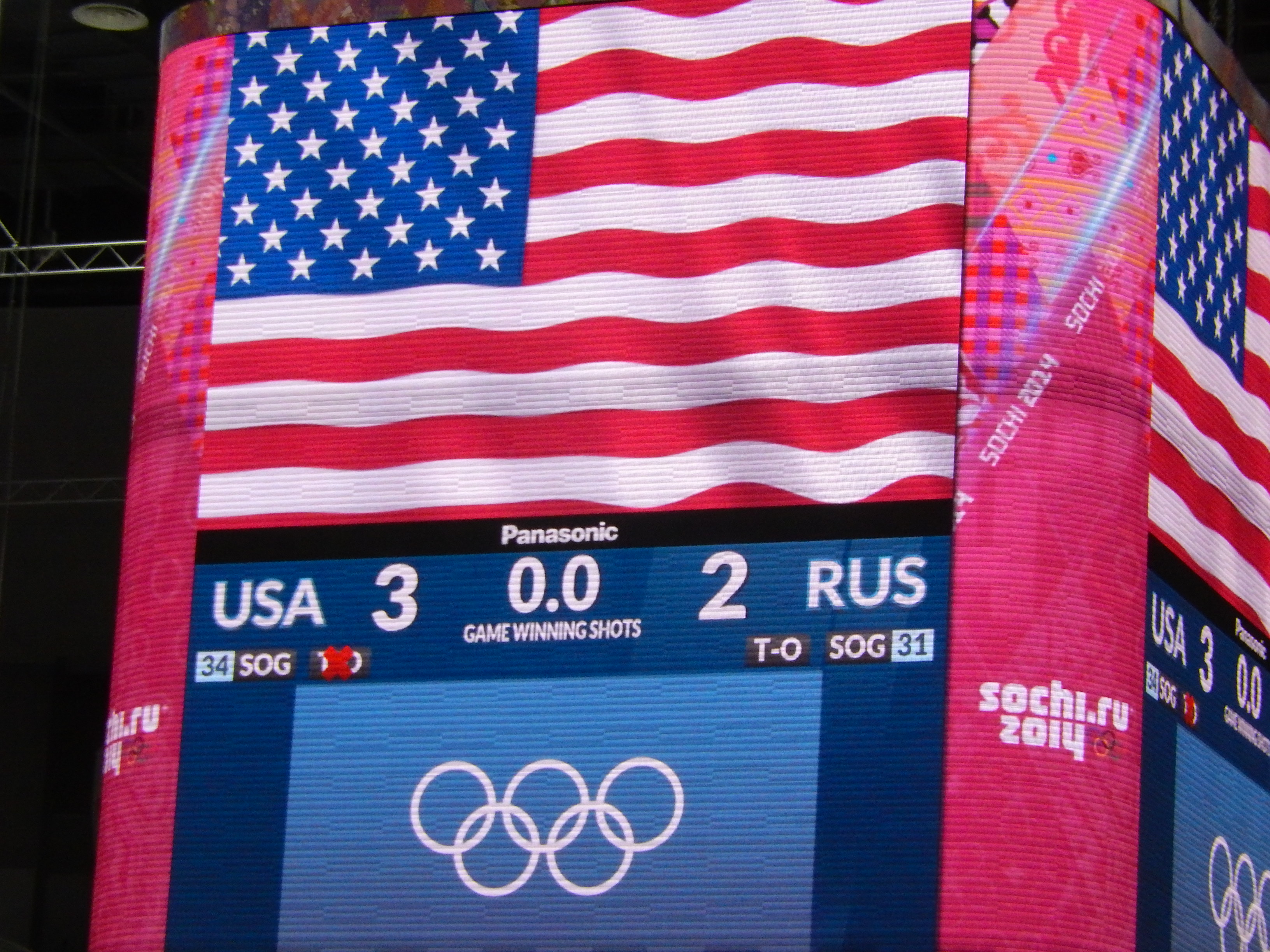
USA wins!
It was quite an end to our time at the Sochi 2014 Olympics! We exuberantly made our way back to the NBC hospitality suite for a celebratory drink before heading to the bus and back to the hotel to pack. Don and I had to be up SO early, leaving the hotel at 3:30 a.m. for the beginning of our 26 hours in transit. No matter. It was worth it – a fantastic experience!
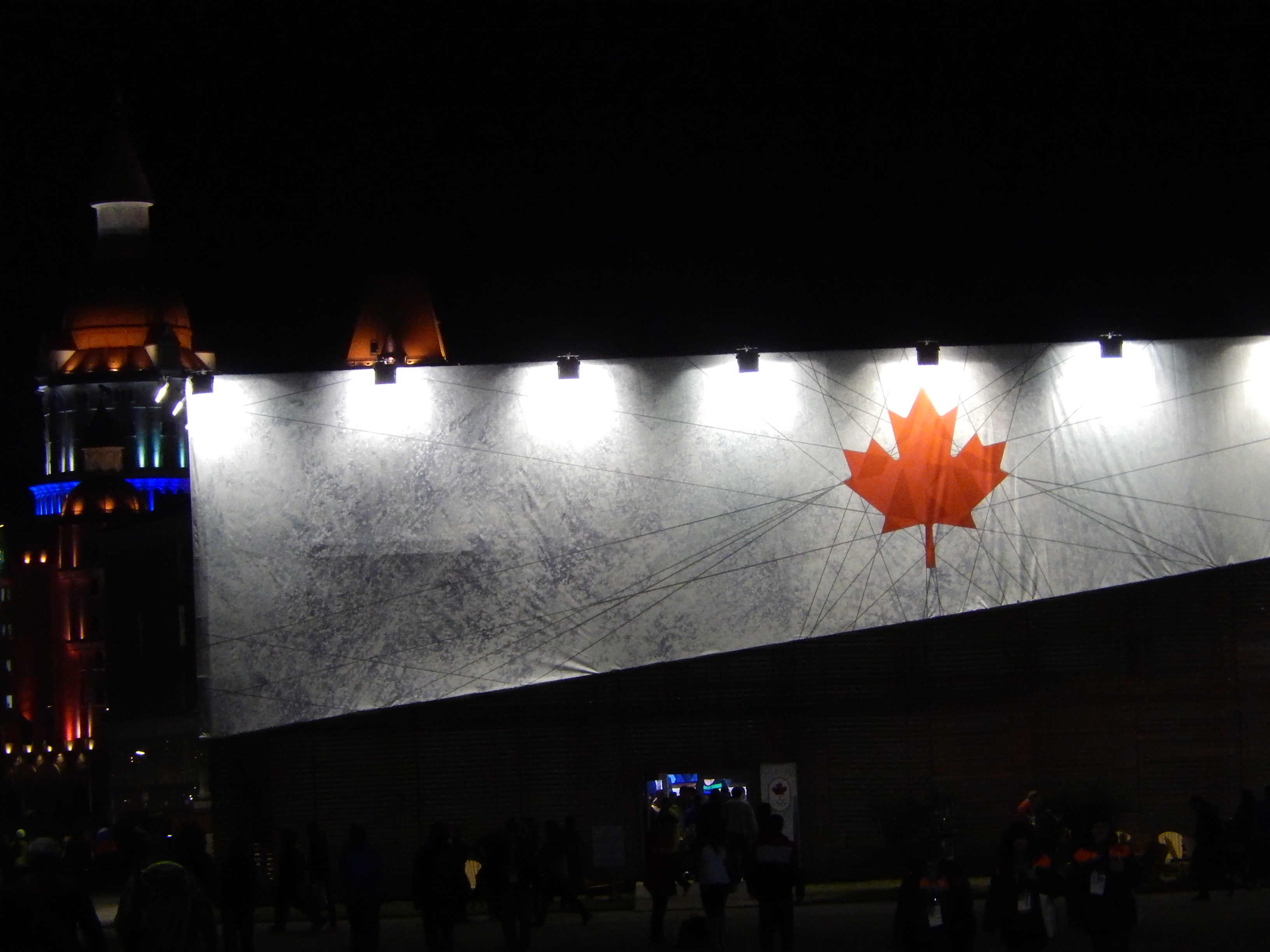
Good bye Canada House
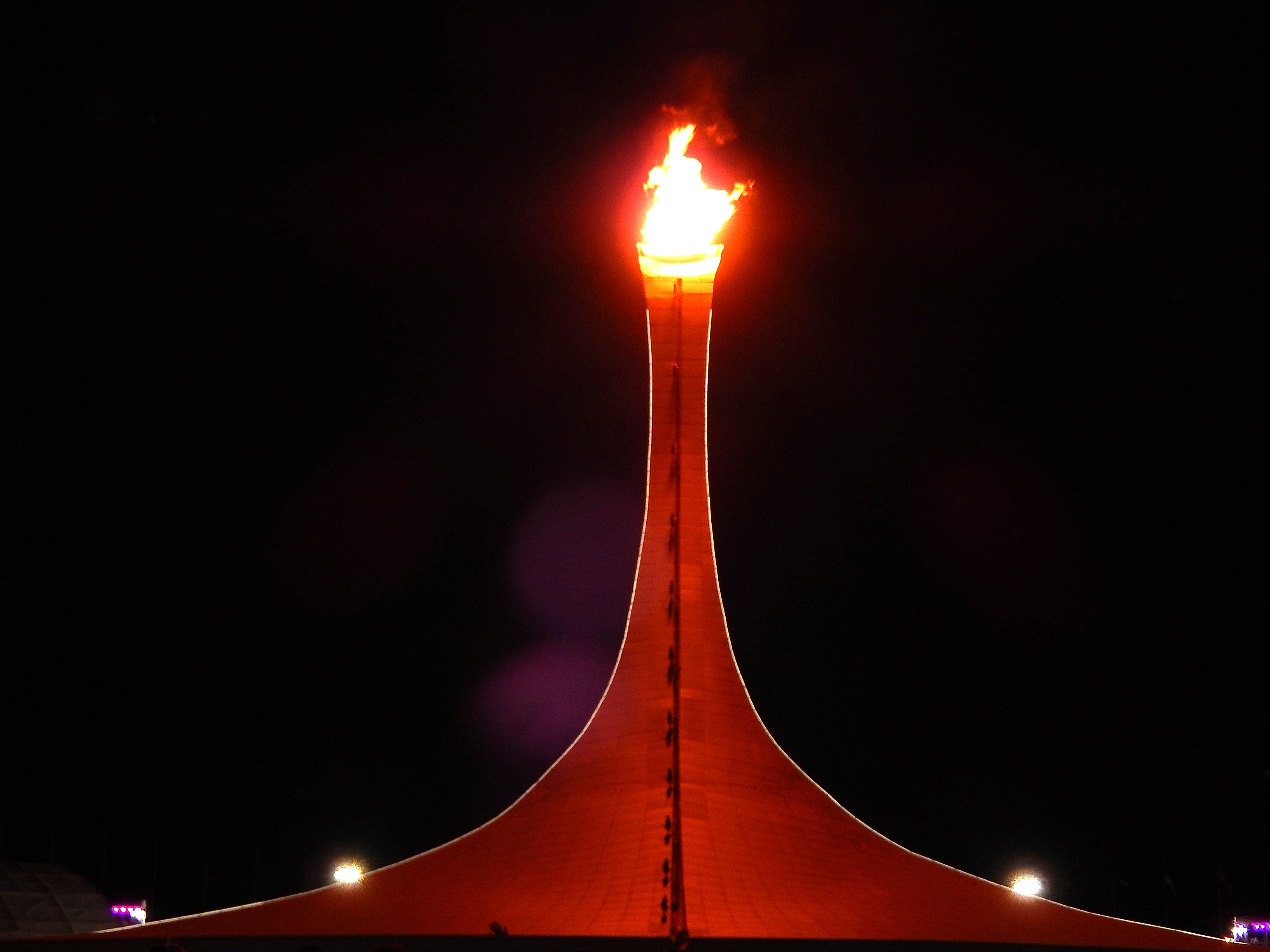
Good night Sochi
Prague and Vienna – November 2013 January 30, 2014
Posted by freda in Birmingham, Michigan.2 comments
Don and I left for our annual November holiday the evening of November 19th and arrived in Prague the afternoon of the 20th. After checking into our highly recommendable hotel – (if you click on any picture you will see it in full screen; I have also added Don’s name in brackets on any of his pictures)

Hotel Pod Vezi
and unpacking in this room:
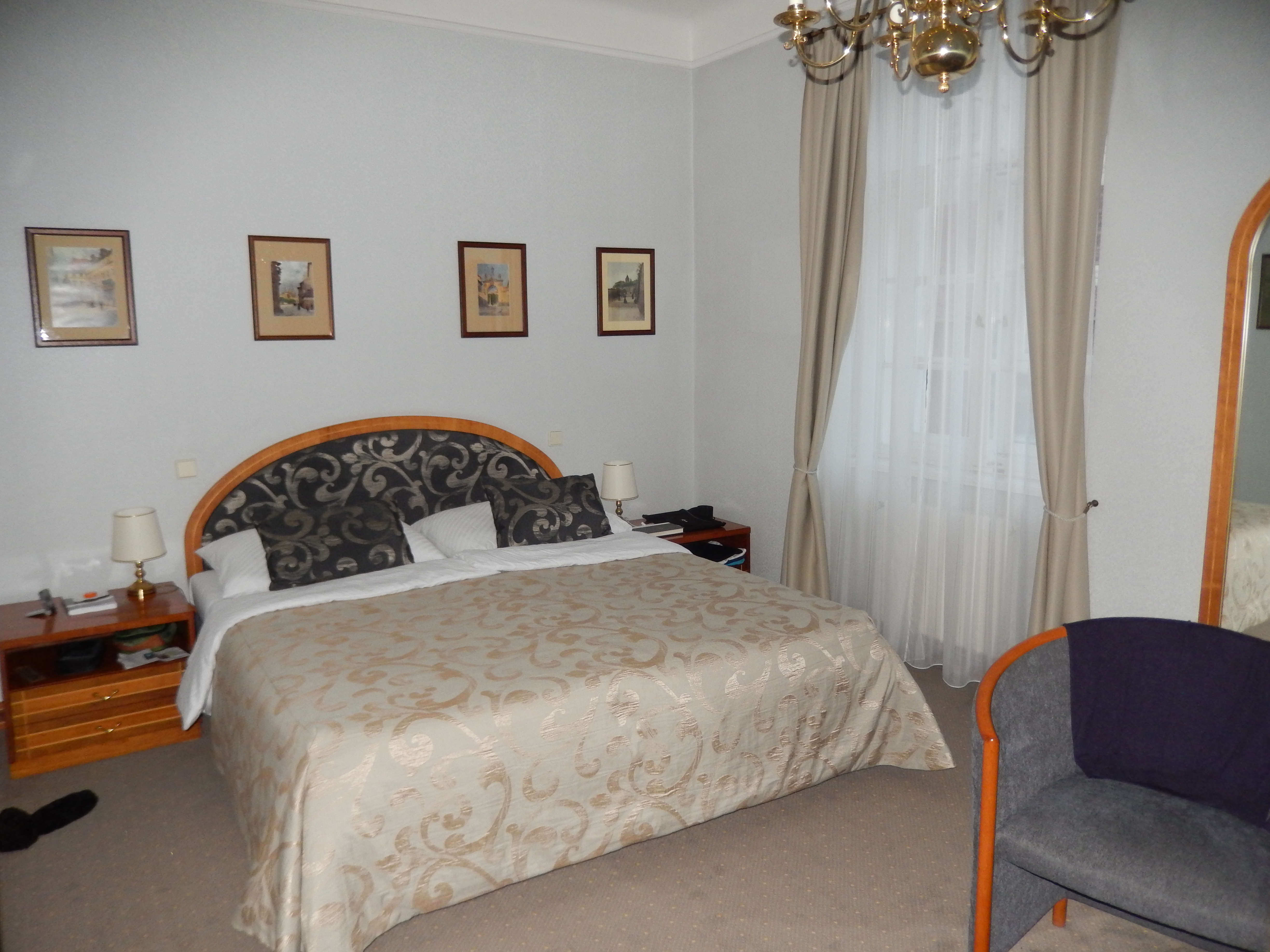
our deluxe room
our first stop was a late lunch: beer and goulash, of course!
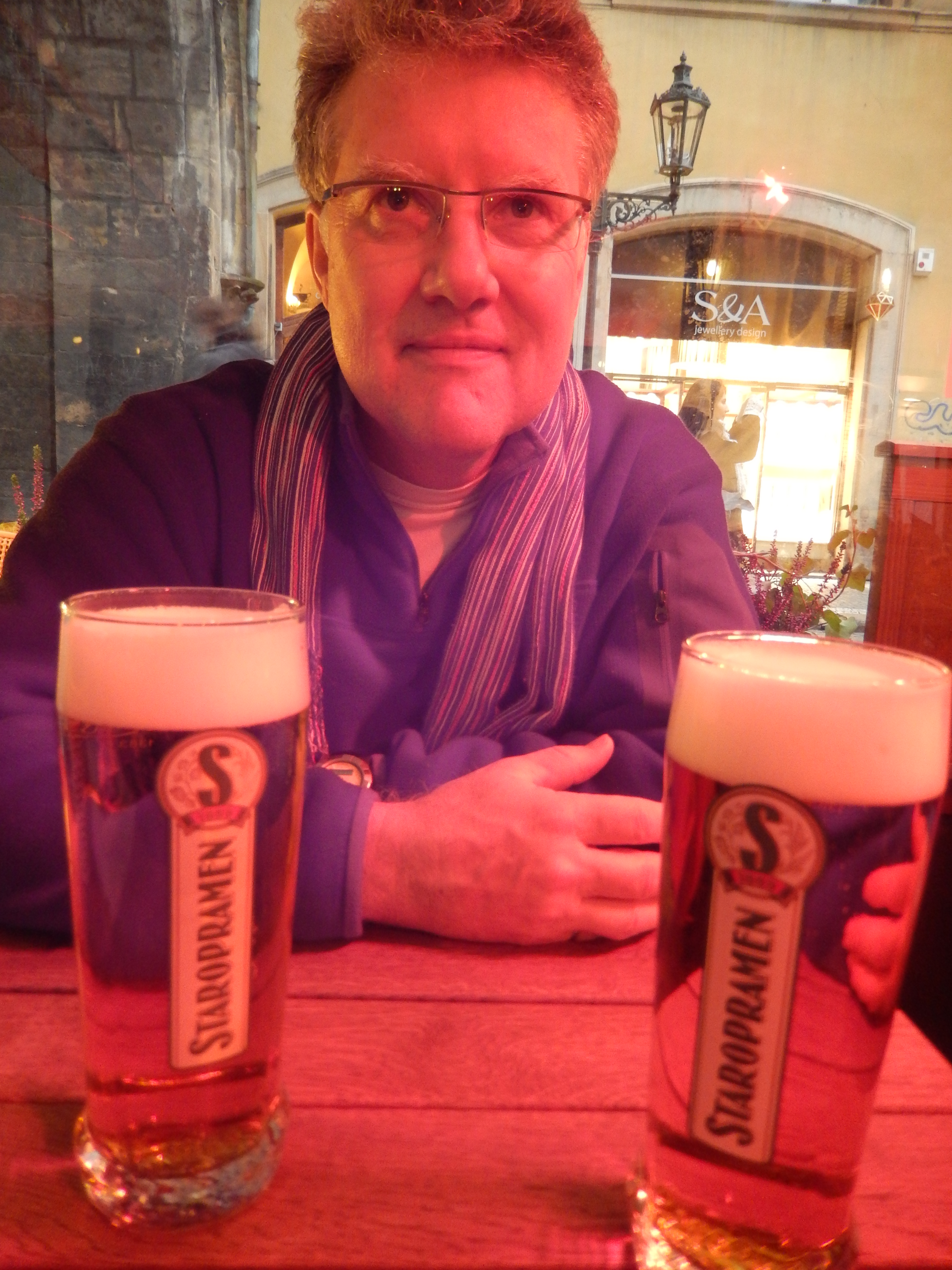
our first Czech beer
Then, as the light was fading (so early!) we started off for a first look at the city, across the Charles Bridge and into the Old Town square.
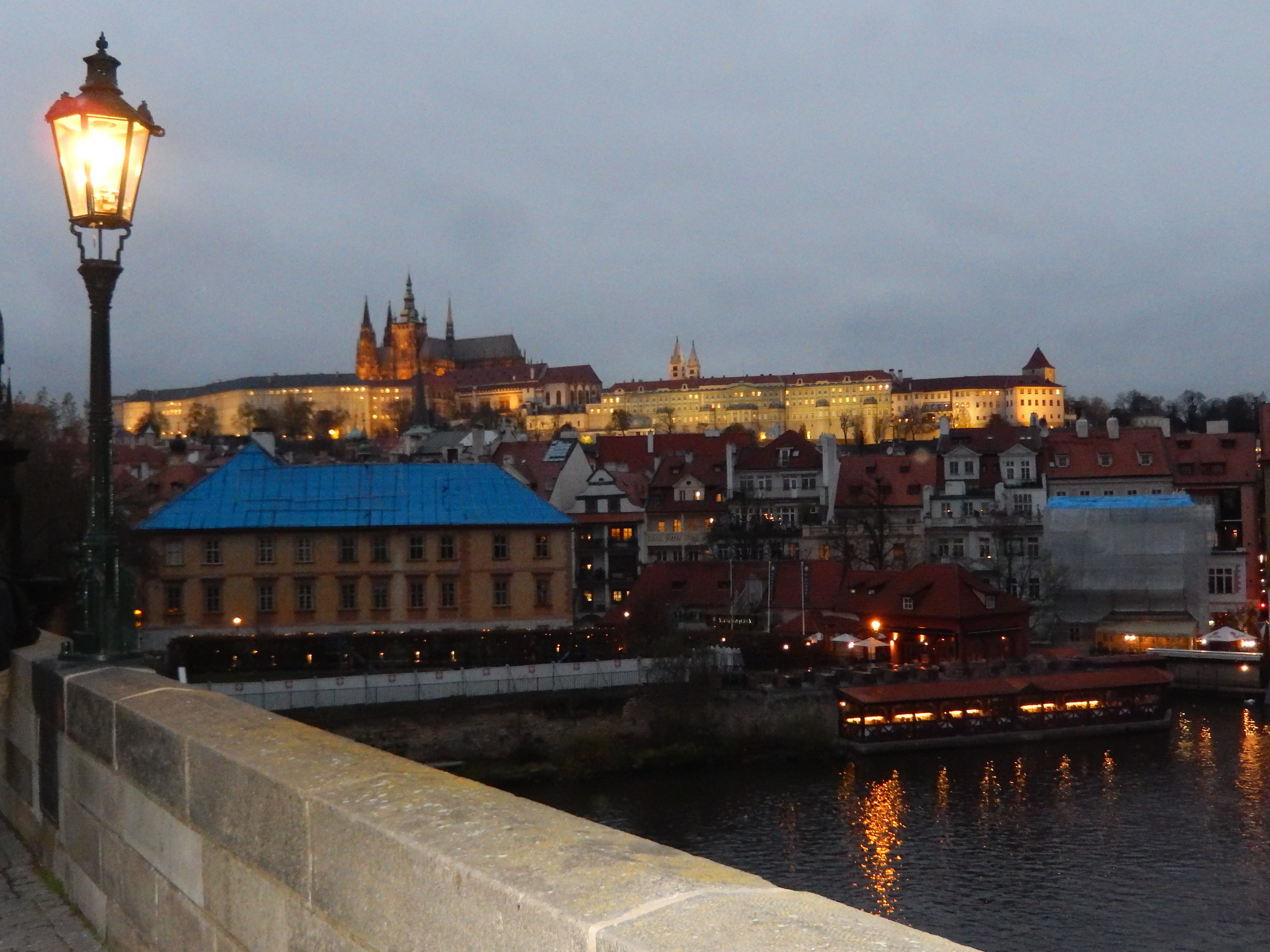
from the middle of Charles Bridge, looking back at the Prague Castle, all lit up
We walked and walked the Old Town – a good way to fight jet-lag – until we were ready for dinner. Back to our hotel side of the bridge, the area called the Little Quarter, or Malá Strana, we wandered, looking at the restaurant choices, getting lost in the meandering streets, and finally chose a local “Czech” place in the Little Quarter Square, where I had a duck leg and Don had ribs and dumplings – typical local hardy, and tasty, fare.
The next morning, after a great buffet breakfast, we met our tour guide Petr:

Petr Zidek (Don)
We had arranged to take two half-day tours with Petr. He divided the city in half, by the river, and during our first 3 1/2 hour morning we walked all over the Little Quarter and Castle Quarter. He likes to start with this side, as there are great views of the city up on the hill where the Castle is situated. So, up the hill we climbed, to the Prague Castle and St. Vitus Cathedral. The Castle grounds are huge, pretty much a town unto itself, and for over 1000 years, Czech leaders have ruled from the Castle. It continues to be the offices of the Czech President. The Cathedral sits in the middle, an imposing sight:

St. Vitus Cathedral, flying buttresses galore (Don)

St Vitus Cathedral (Don)

members of the symphony play outside the Castle gate, where they can earn more than the symphony pays (Don)
We walked the grounds, but didn’t go into the buildings. Then, we meandered along the streets behind the castle…
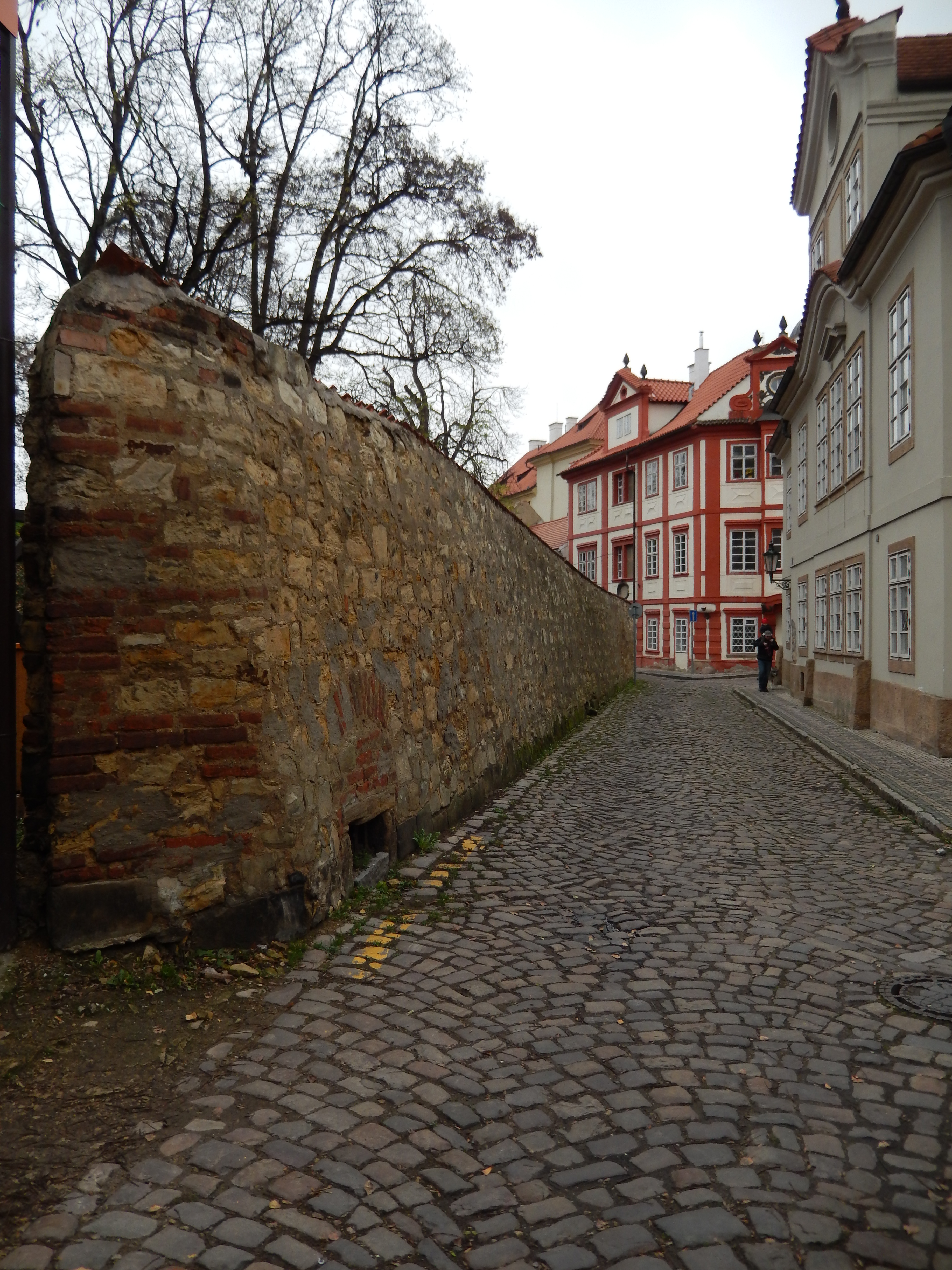
cobble-stoned streets
to get to the Monastery for the gorgeous view of the city…
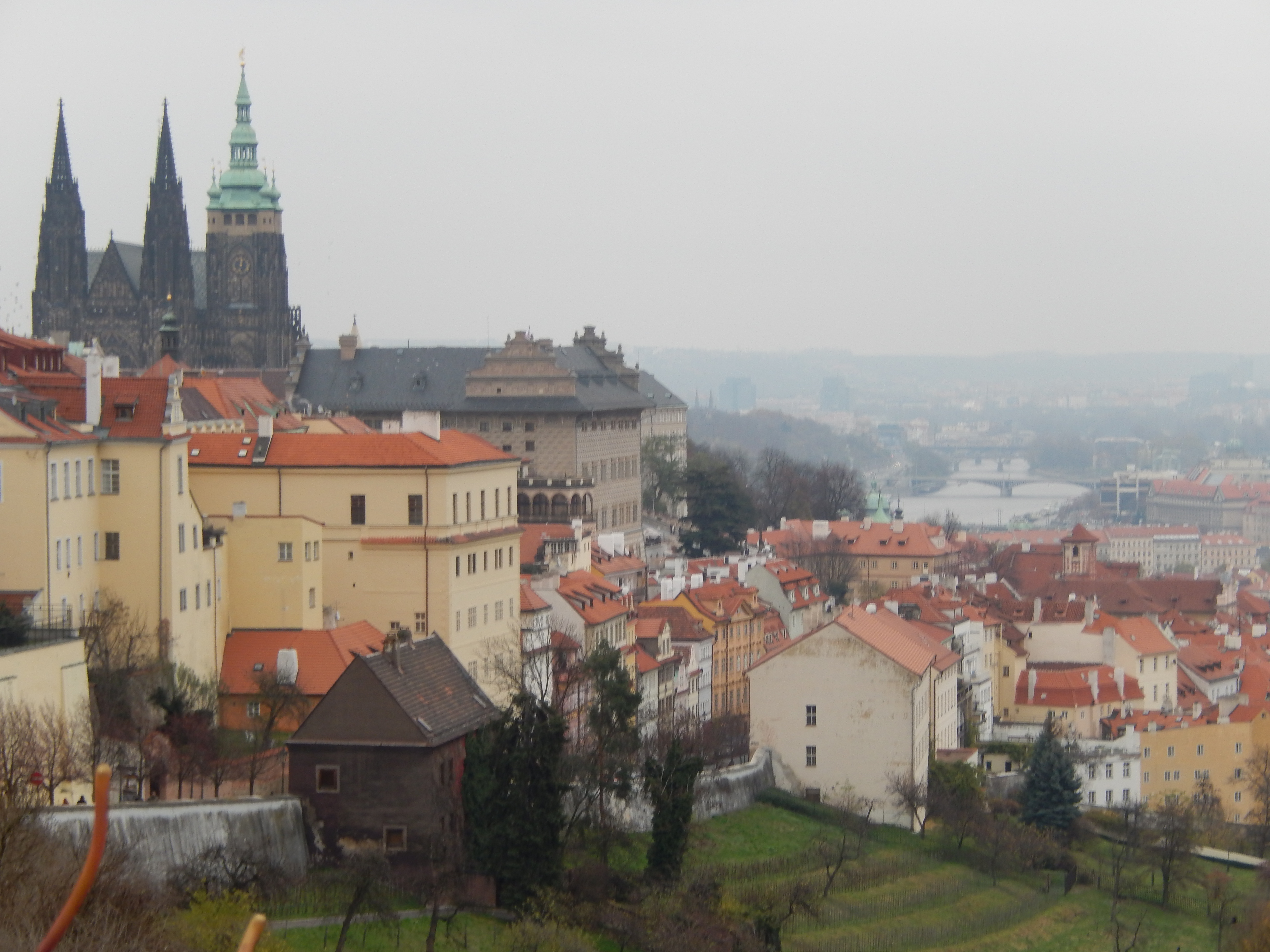
I love this view!
From the Castle Quarter to the Little Quarter, of which Rick Steves, in his guidebook, says: “This charming neighbourhood, huddled under the castle on the west bank of the river, is low on blockbuster sights but high on ambience.”
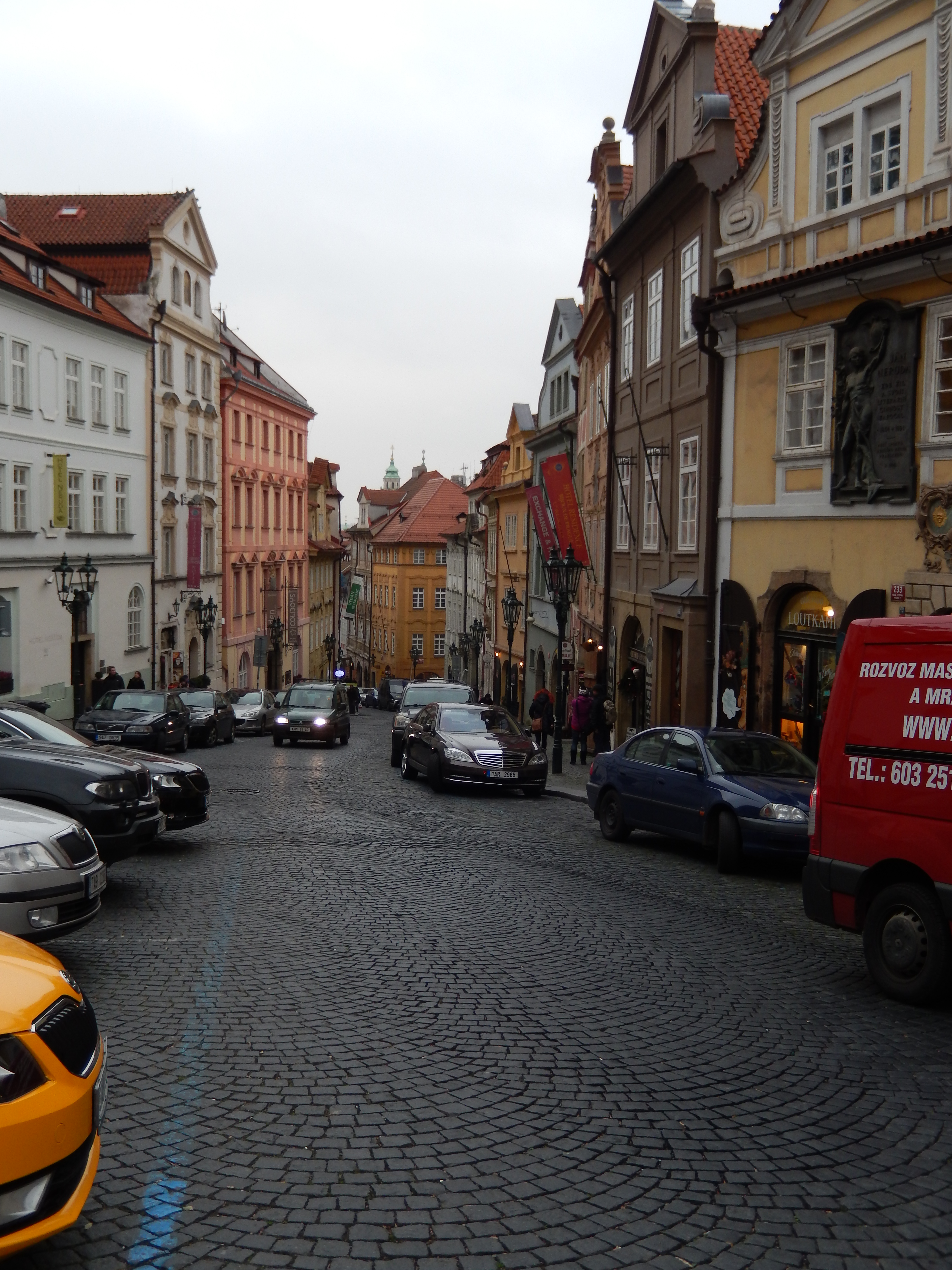
colourful streets
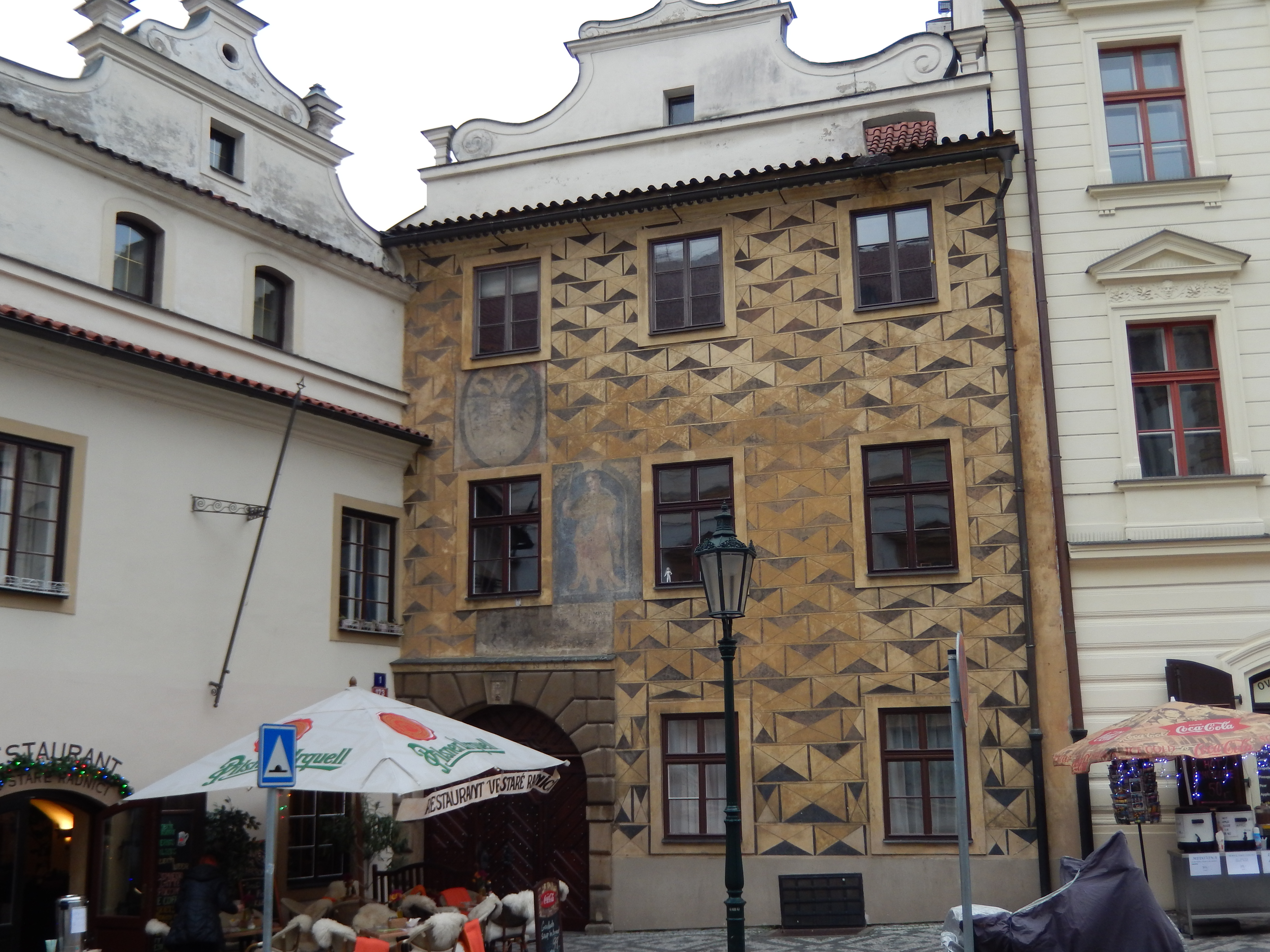
building detail
One of the “sights” in this area is the Lennon Wall: “John Lennon’s ideas gave many locals hope and a vision. When he was killed in 1980, a large wall was spontaneously covered with memorial graffiti. Night after night, the police would paint over the “All You Need Is Love” and “Imagine” grafitti. Day after day it would reappear. Until independence came in 1989, travelers, freedomlovers and local hippies gather here. Silly as it might seem, this wall is remembered as a place that gave hope to locals craving freedom. Even today, while the tension and danger associated with this wall are gone, people come here to imagine.” (from Rick Steves’ guide to Prague) This link is from a Prague tourist website, with a little more detail: http://www.prague.net/john-lennon-wall
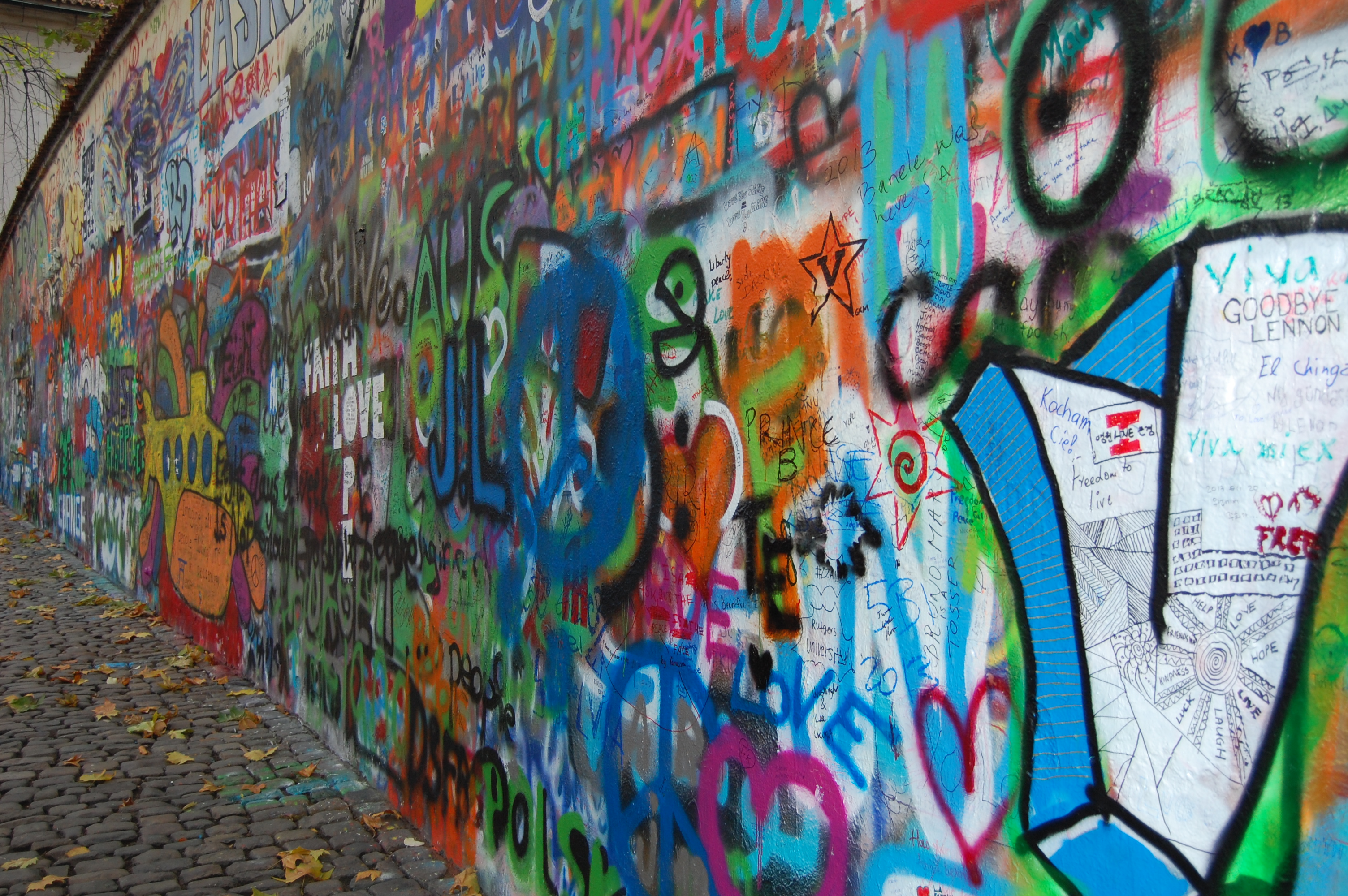
Lennon Wall (Don)
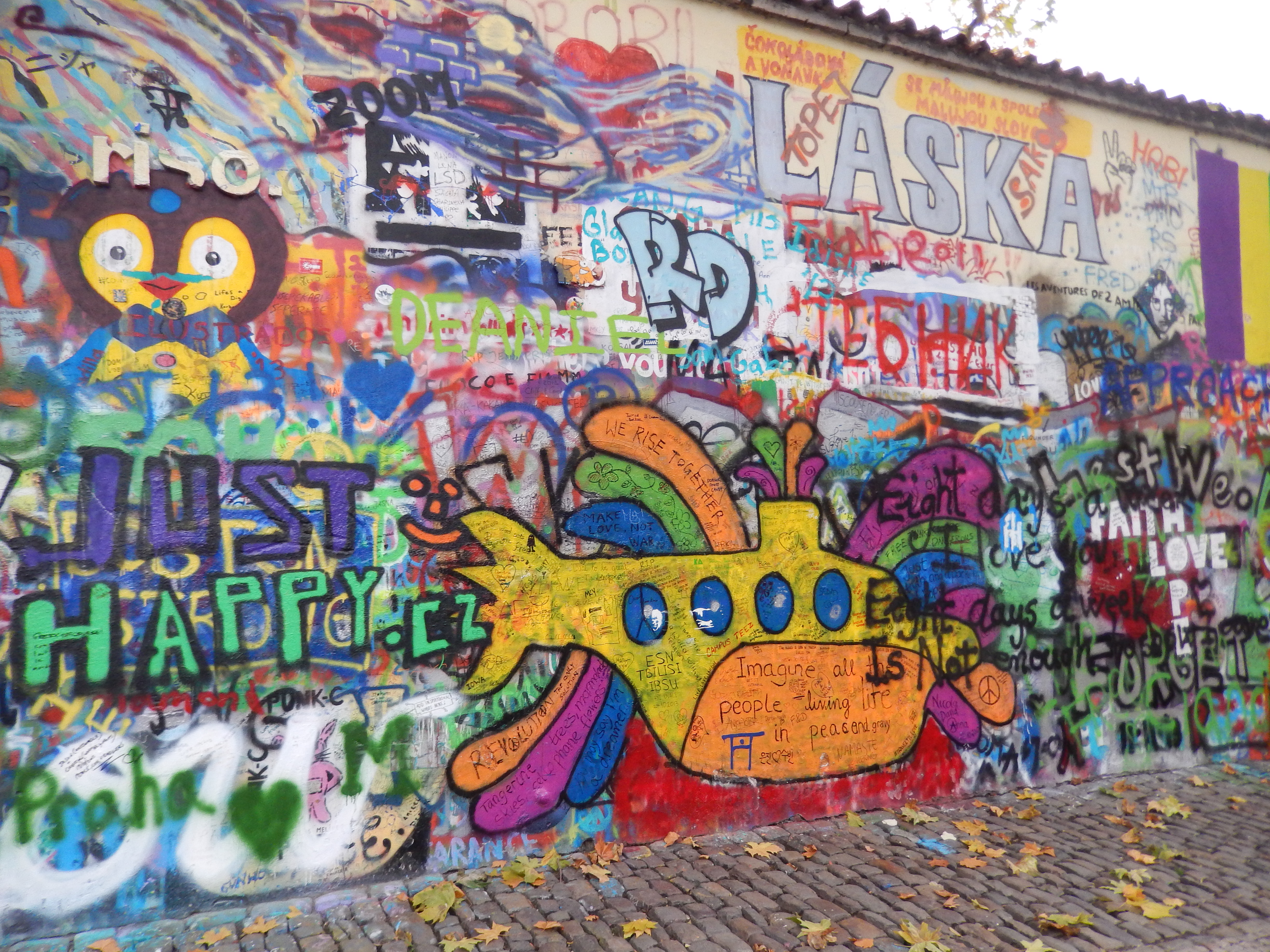
Imagine all the people living life in peace
We crossed a canal that used to be lined with mills, where every mill had its own protective water spirit. I wonder if this was one:
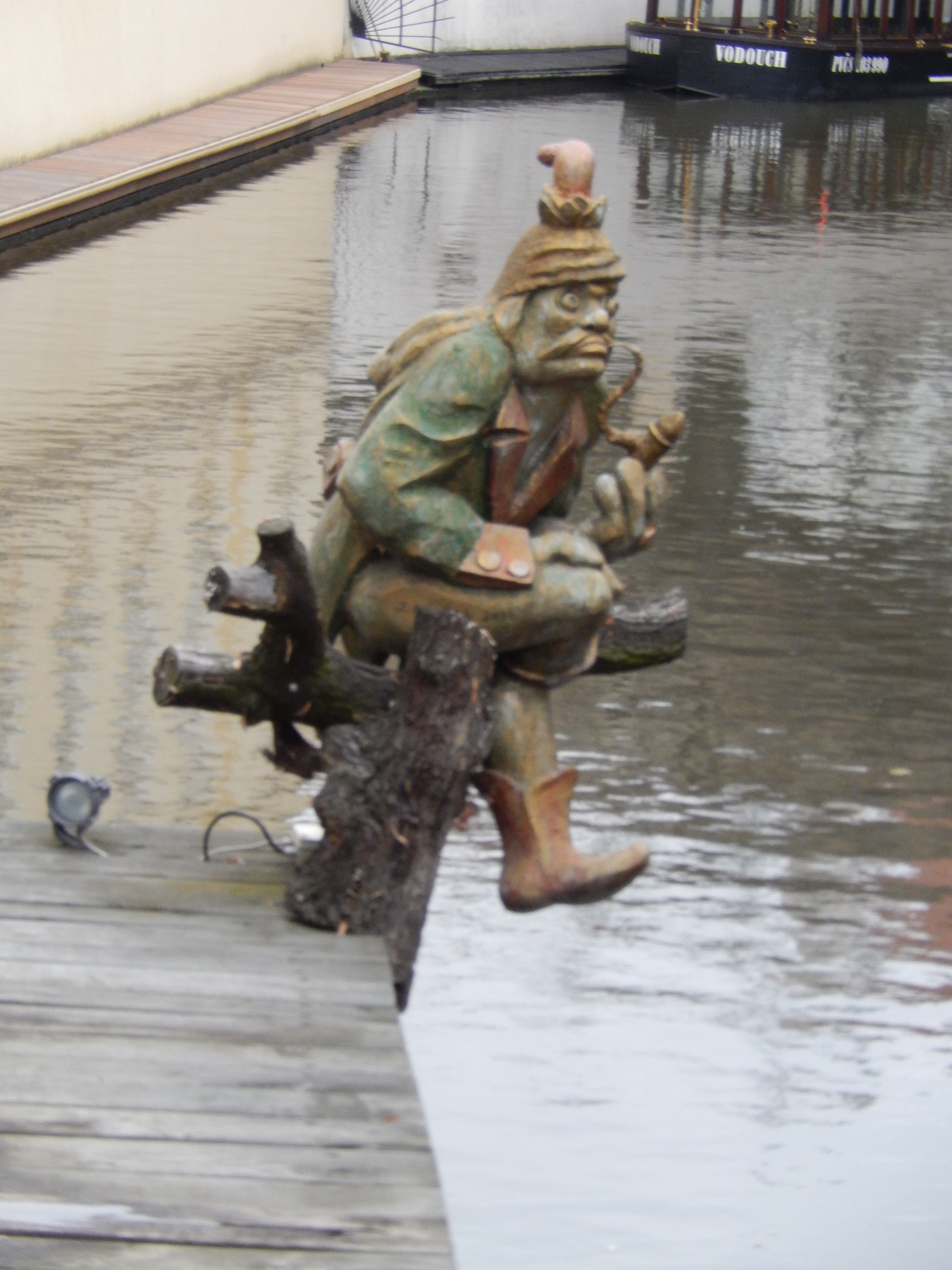
protective water spirit?
Also, a sight that has become ubiquitous in Europe, which apparently started in Russia – couples put padlocks on the bridge rails, a symbol of their love:
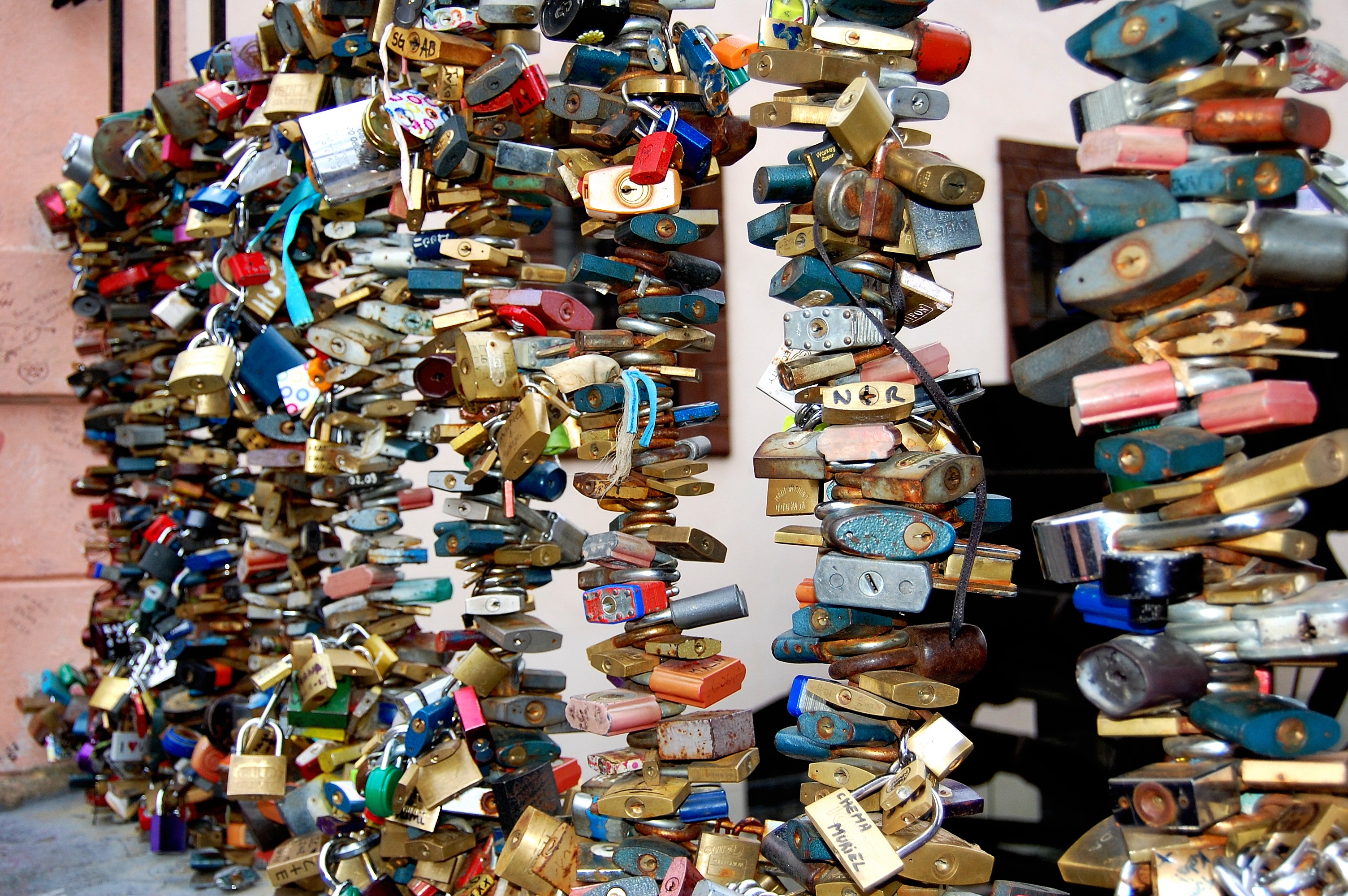
padlocks of love (Don)
Three and a half hours of non-stop walking, talking about the country’s history, communism, and Petr’s own history (he defected from the country after completing his university degree in engineering, and after some struggle, ended up in Calgary, Alberta, Canada for several years, before returning to Prague in 2003), and we were back to our hotel for a much-needed rest and late lunch.
Then, off again for some touring on our own. My top priority was the Klementinum: The Czech National Library, one of the most beautiful in the world. The only way to see the library is by a tour, and sadly you can’t take pictures, but there are a number of websites that show what it looks like: http://www.pragueexperience.com/places.asp?PlaceID=844 (You can also google Klementinum Library and click on the images for lots of great pictures.) The tour package includes the Chapel of Mirrors, a lovely room where concerts are held, and the Astronomical Observatory Tower, with several old astronomy apparatases of which the tour guide was quite proud, and a very steep-stepped climb for some great views over the city, worth the climb.
Then, we wandered to find The Family Museum of Postcards inside the Choco Café. Apparently the Austrian Empire invented the postcard – the walls of the café were covered in framed old postcards, and they had several early-20th-century examples of postcards for sale. http://www.choco-cafe.cz/house-of-red-chair_p19.html

Choco Café
After we had fortified ourselves with hot mulled wine and a little snack at the café, and I had bought a few postcards,
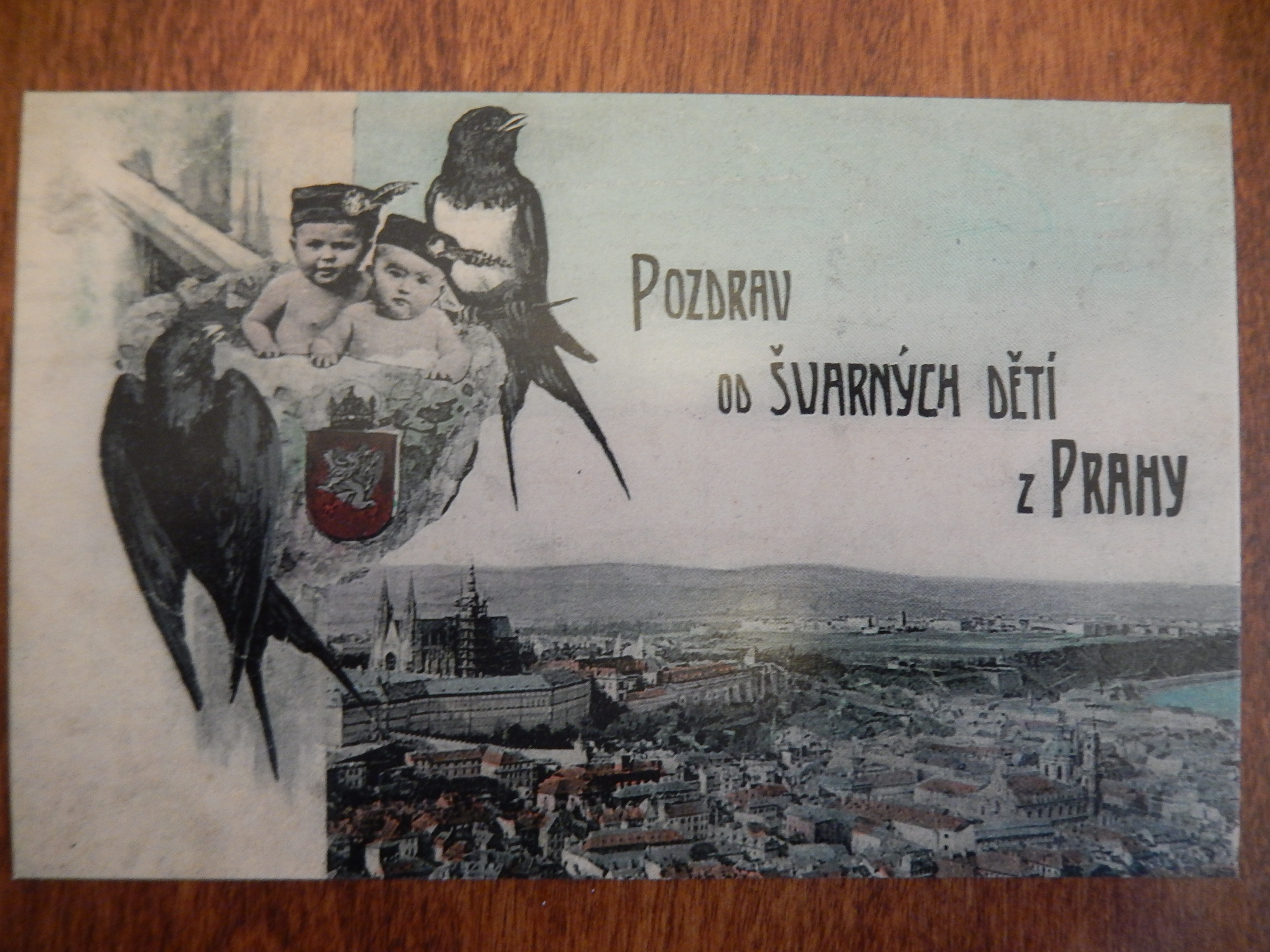
old Prague postcard “greetings from children from Prague”
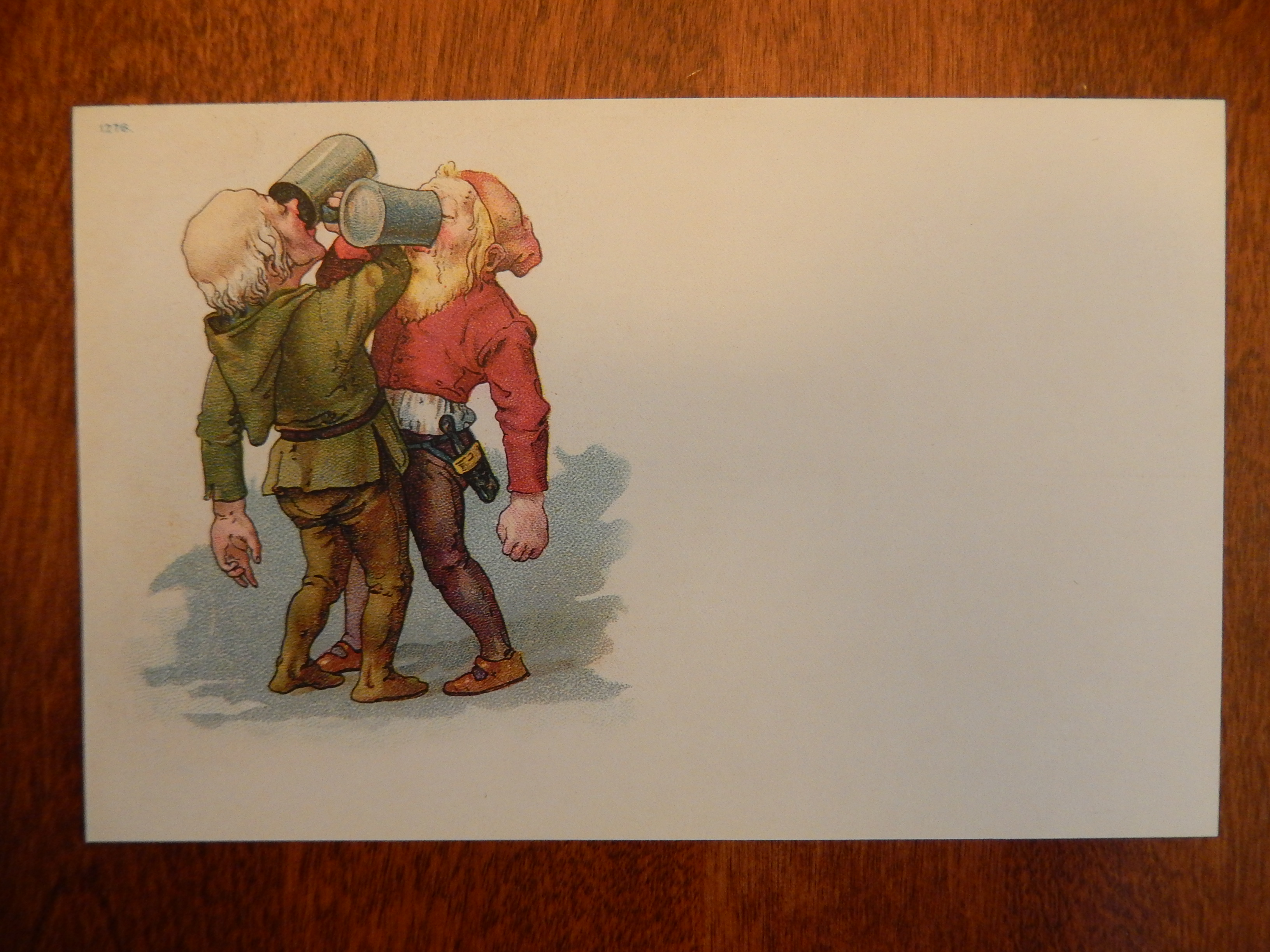
old postcard
we walked back to what we affectionately called “our side of the bridge” and checked out Shakespeare and Sons book store with their large selection of books in english… and, well, you know me, I had to buy a few. 🙂
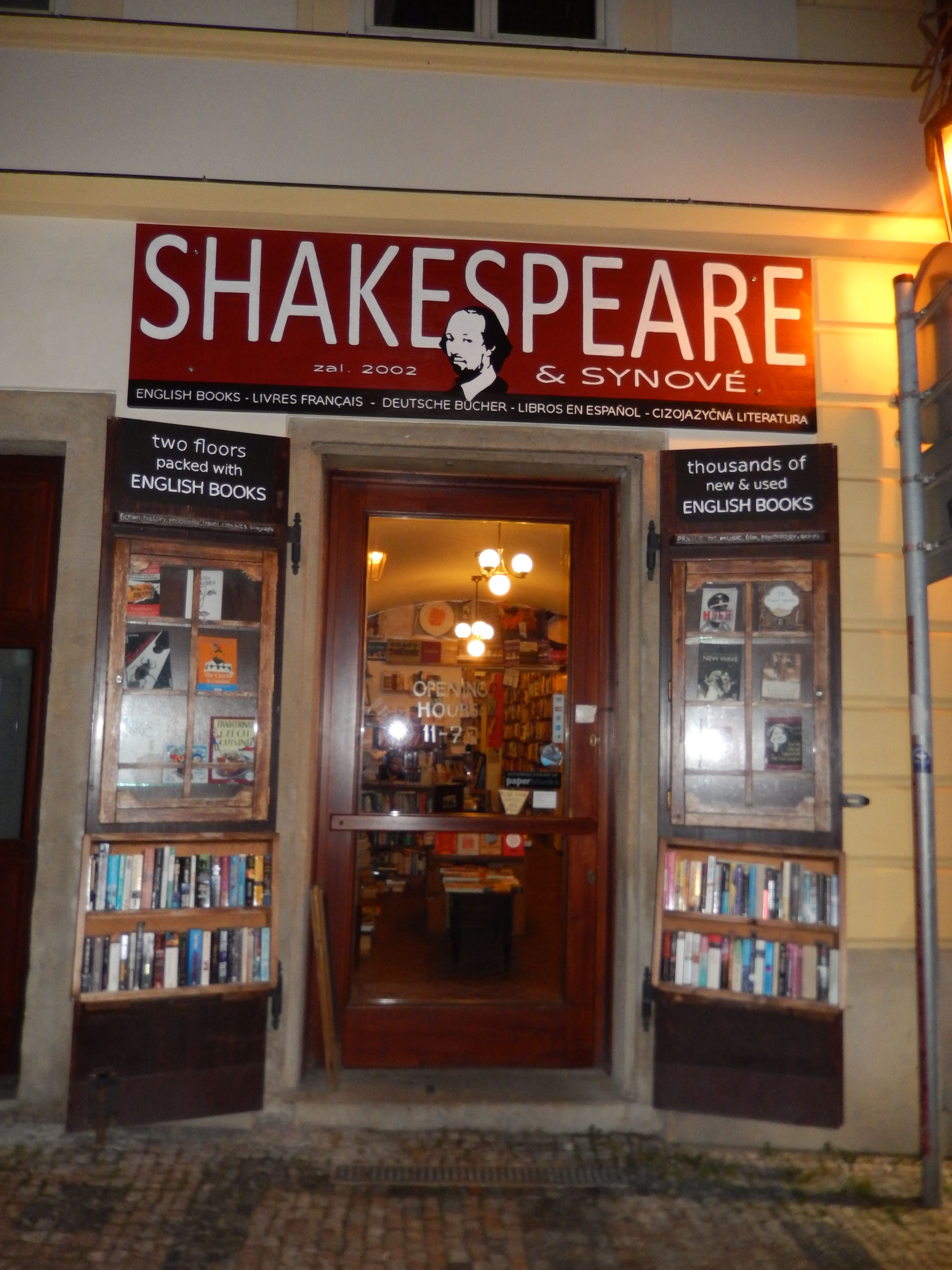
Shakespeare and Sons book store
Then, off to find a restaurant recommended to us by friends who had stumbled upon it during their visit to Prague: http://www.ichnusabotegabistro.cz/ This Sardinian restaurant was hard to find, tucked into a quiet neighbourhood, but well worth the search. There are no menus, just a verbal list of the specials of the day – you know it’s fresh! Everything was delicious!
Petr was back the next morning at 10:00 for our Old Town, New Town, Jewish Quarter tour, another 3 1/2 hours of walking and talking. The Old Town Square is the centre of Prague. “It has been a market square since the 11th century and became the centre of the Old Town when its Town Hall was built in the 13th century.”
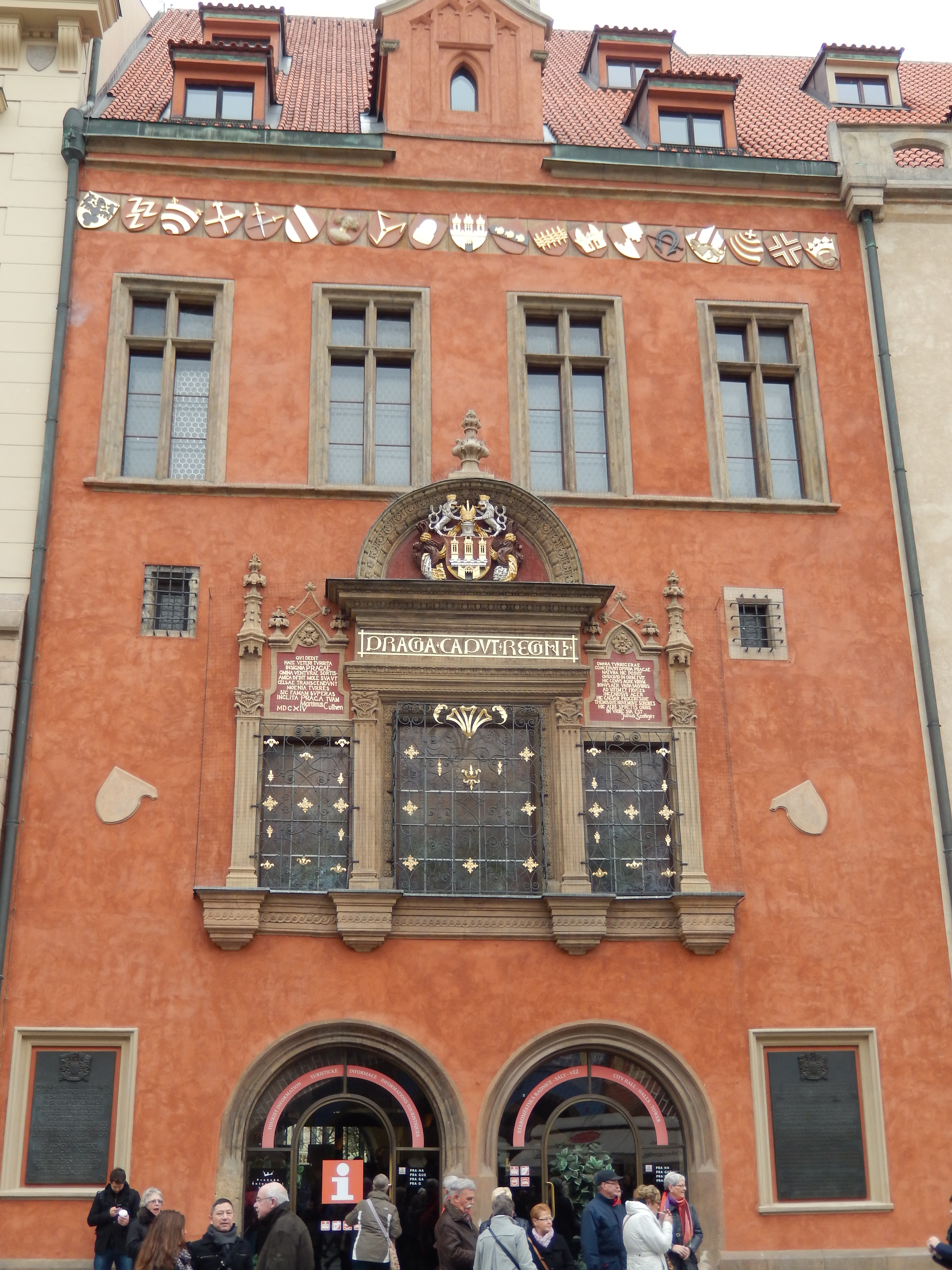
Town Hall, Old Town Square
Next door to the Town Hall is the famous Astronomical Clock, which was installed in the early 1400s and is a marvel of technology.
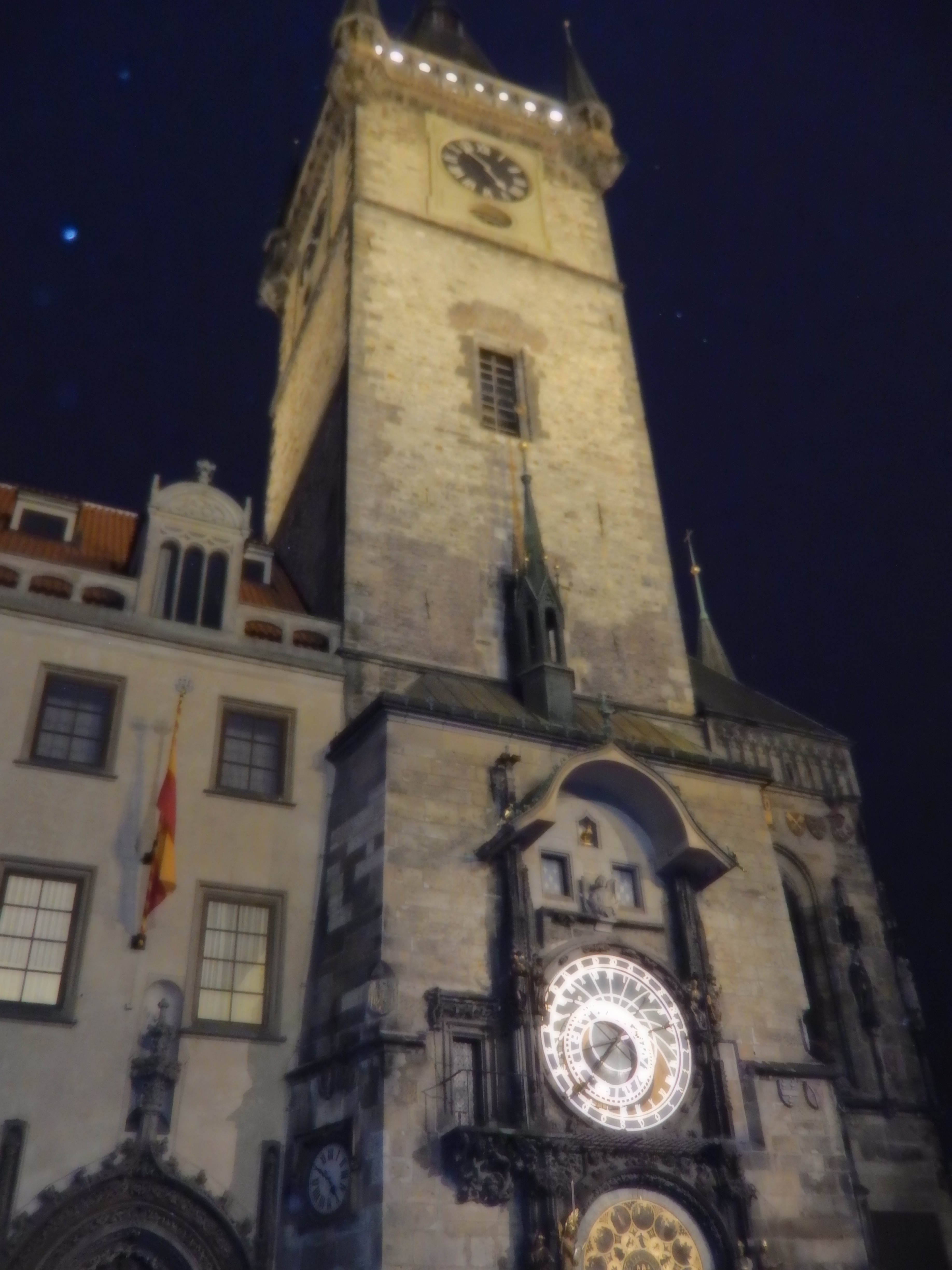
Astronomical Clock
It has several revolving discs and (apparently) tells Bohemian time, modern time, the time of sunrise and sunset. There are four statues beside the clock face that “represent the 15th-century outlook on time and prejudice: a Turk with a mandolin symbolizes hedonism, a Jewish moneylender is greed, the figure stating into a mirror stands for vanity, and Death, with the hourglass, reminds us our time is running out.”
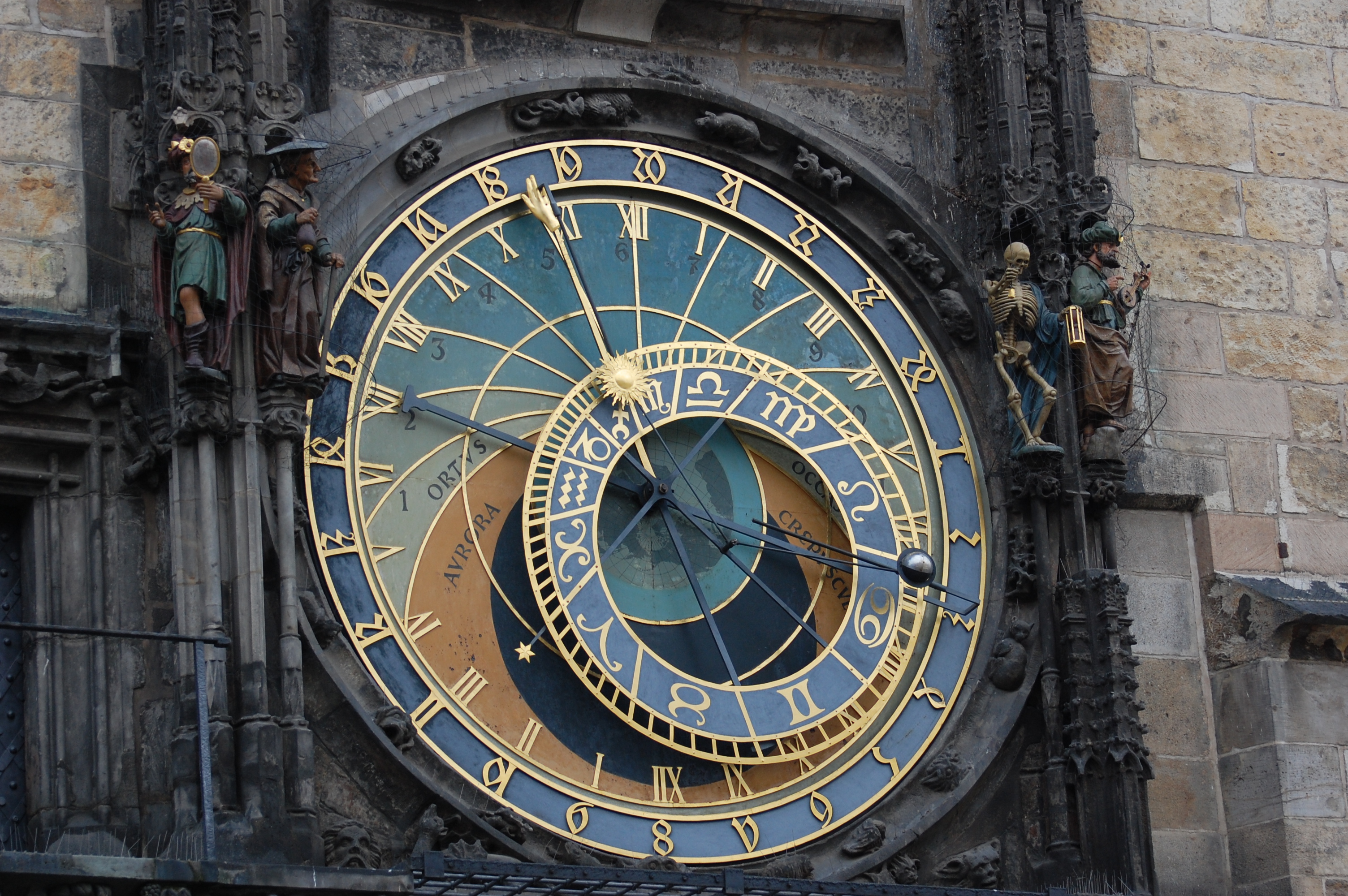
the statues of the clock (Don)
At the top of the hour, Death tips his hourglass and pulls the cord, ringing a bell,
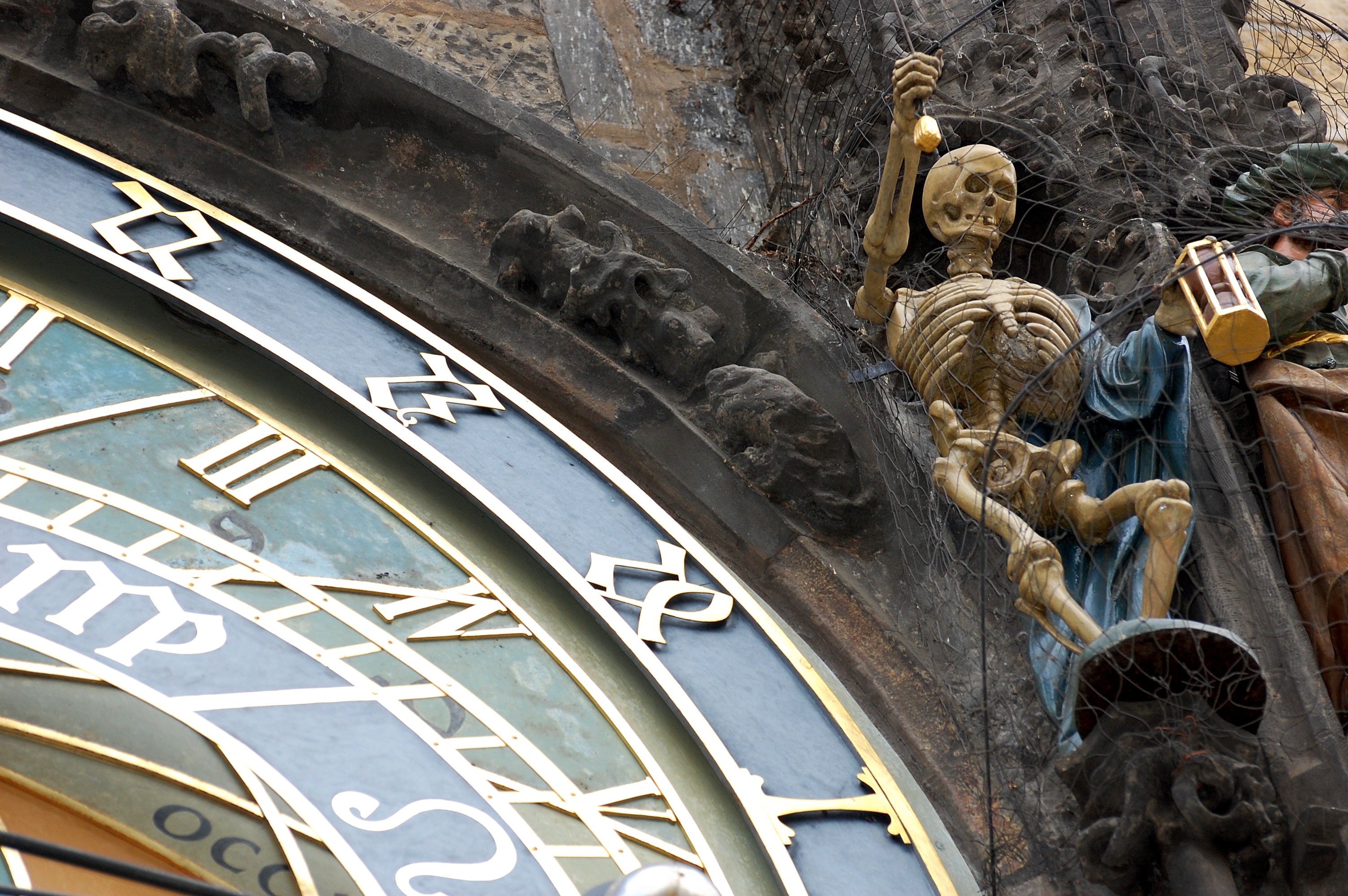
Death (Don)
the windows open and the 12 apostles parade by, and then the hour is rung.
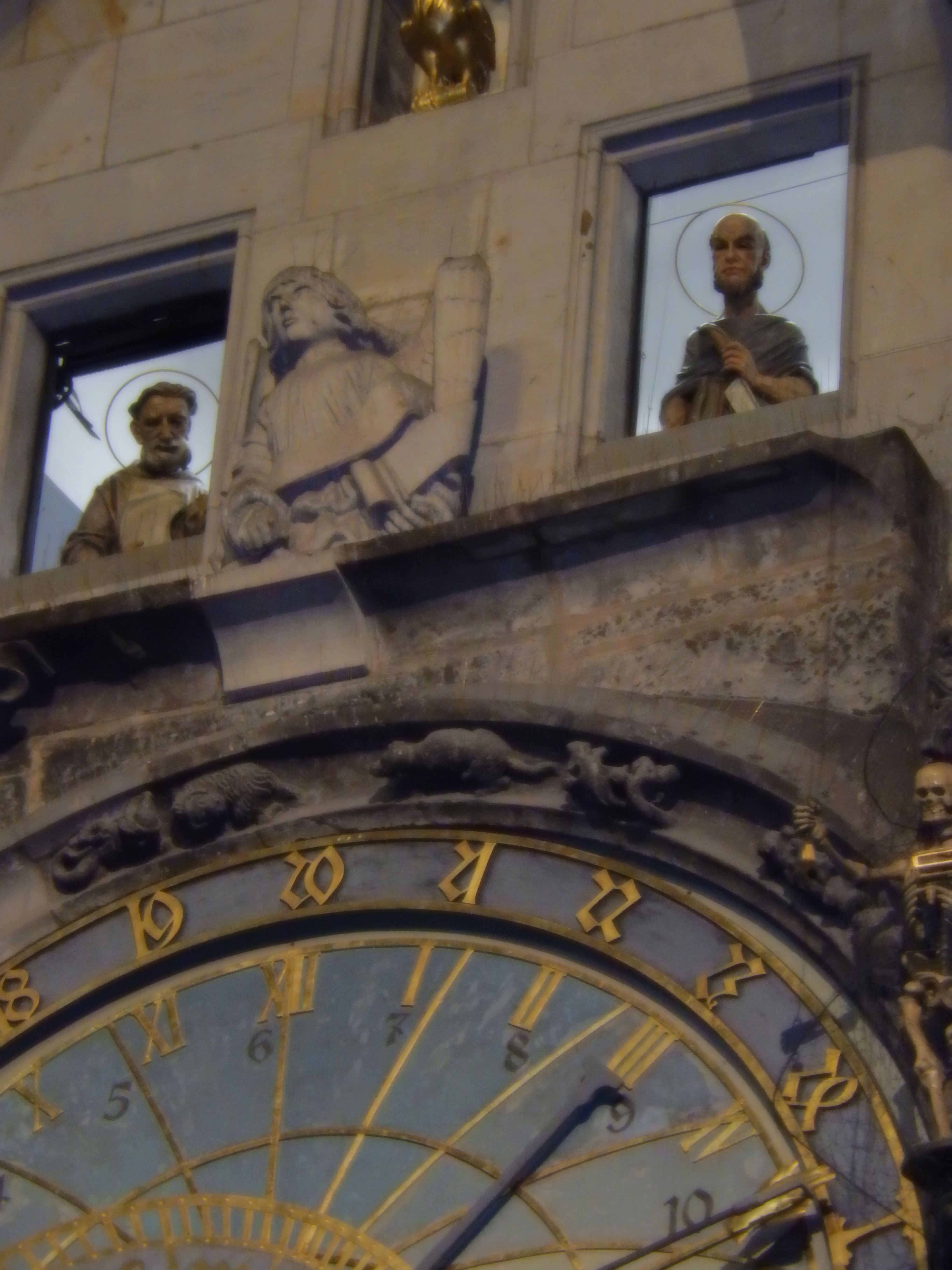
two of the apostles in the windows
It’s all over in 25 seconds. The crowds gathered for the show, in November, were many. We can’t imagine how crowded it must be in the summer!
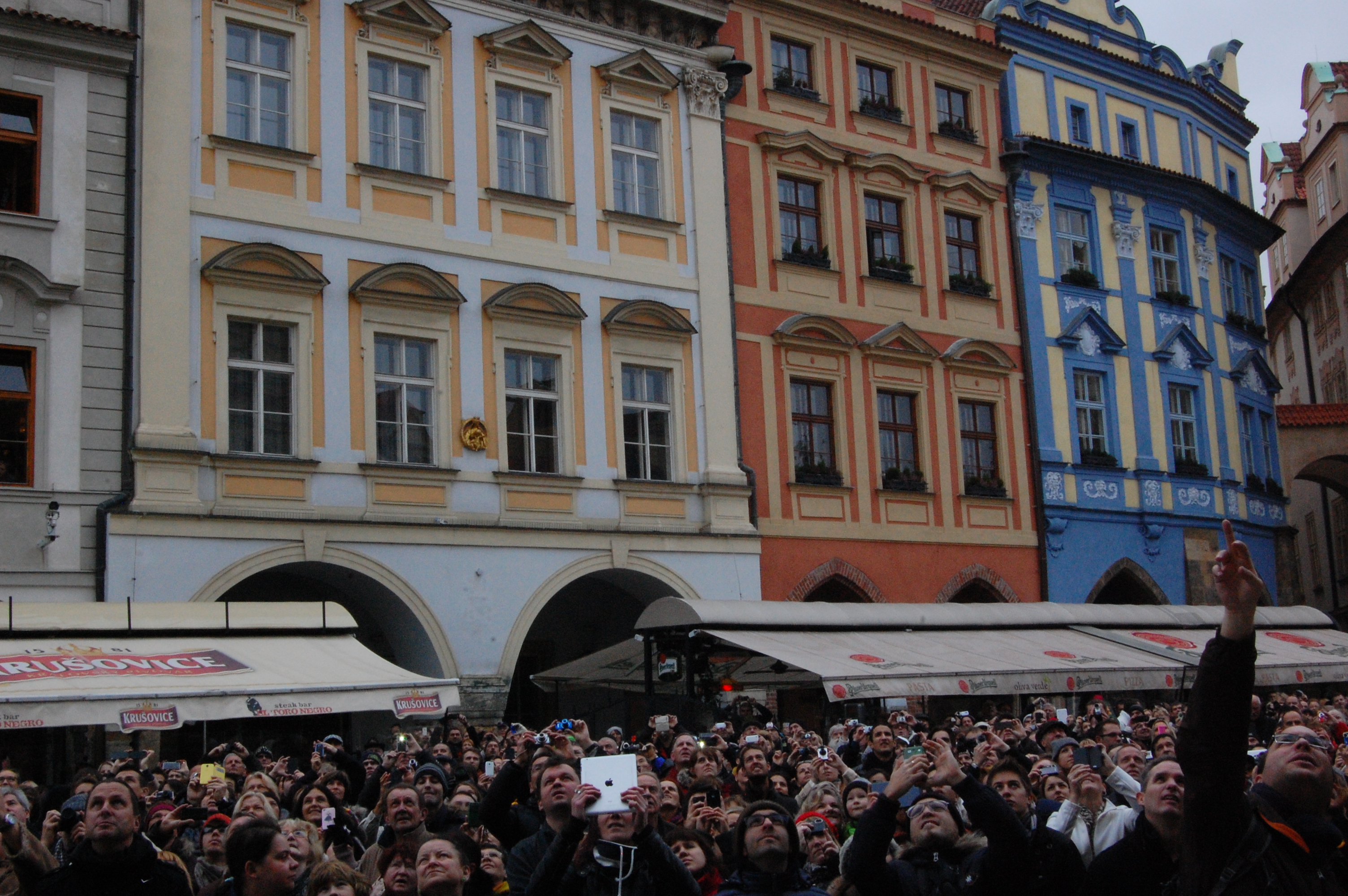
crowd waits for the clock to strike (Don)
In the centre of the town square is a memorial to Jan Hus. “Jan Hus (c. 1369-1415) lived and preached a century before Martin Luther. Both were college professors as well as priests. Both condemned Church corruption and promoted a local religious autonomy. Both helped establish their national languages. Hus gave the Czech alphabet its unique accent marks so that the letters could fit the sounds. Both got in big trouble. While Hus was burned at the stake as a heretic, Luther survived. Thanks to the new printing press, invented by Gutenberg, Luther was able to spread his message cheaply and effectively. Since Luther was high-profile and German, killing him would have caused major political complications. While Hus may have loosened Rome’s grip on Christianity, Luther orchestrated the Reformation that finally broke it. Today, both are honoured as national heroes as well as religious reformers.” (Rick Steves guide)
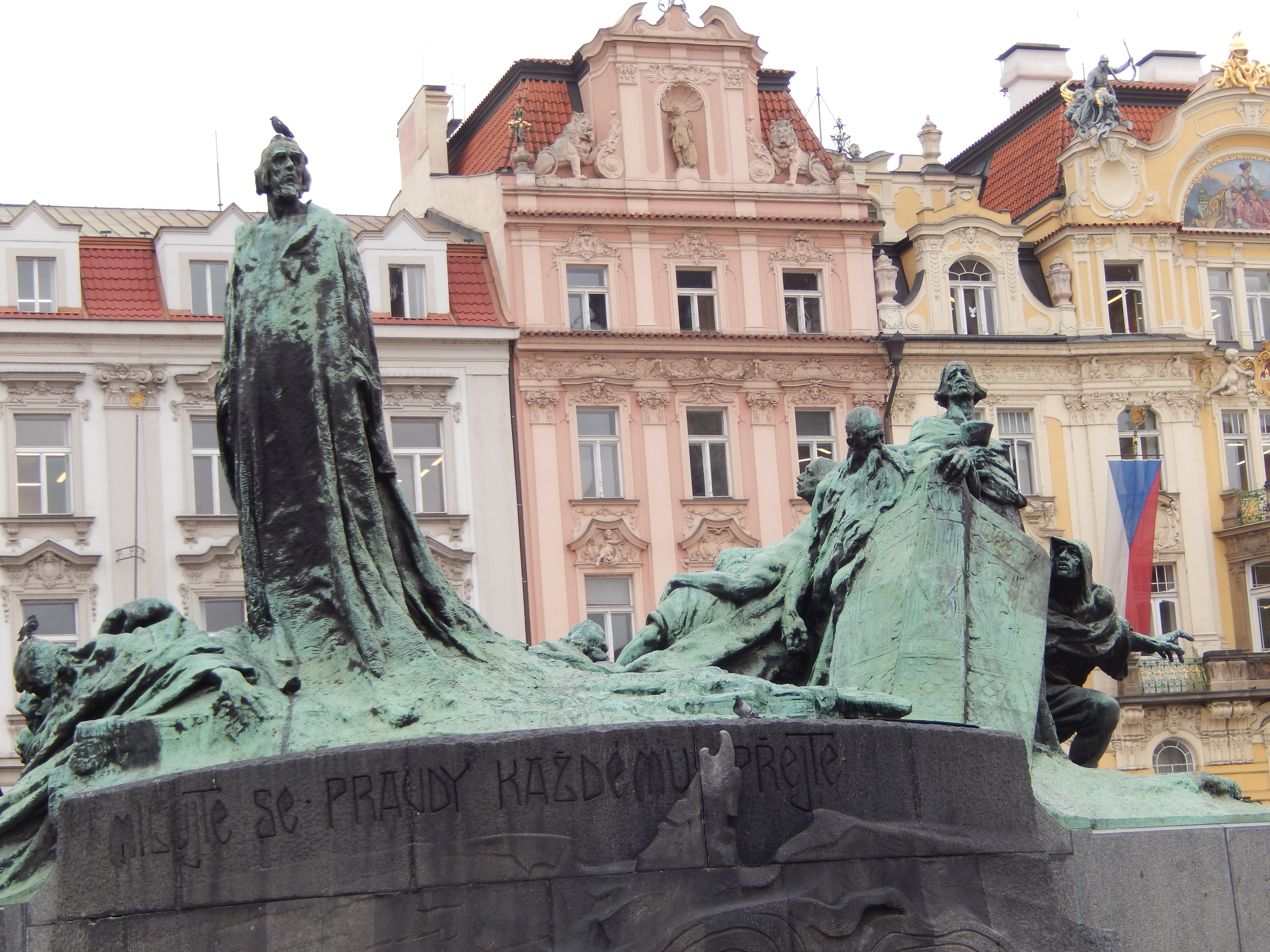
Jan Hus memorial, erected in 1915 (500 years after Hus’ martyrdom by fire)
Also in the Town Square, the Týn Church, which for 200 years after Hus’ death, was Prague’s leading Hussite church. Previous it had been Catholic and after the Hussites were defeated, was returned to Catholicism.
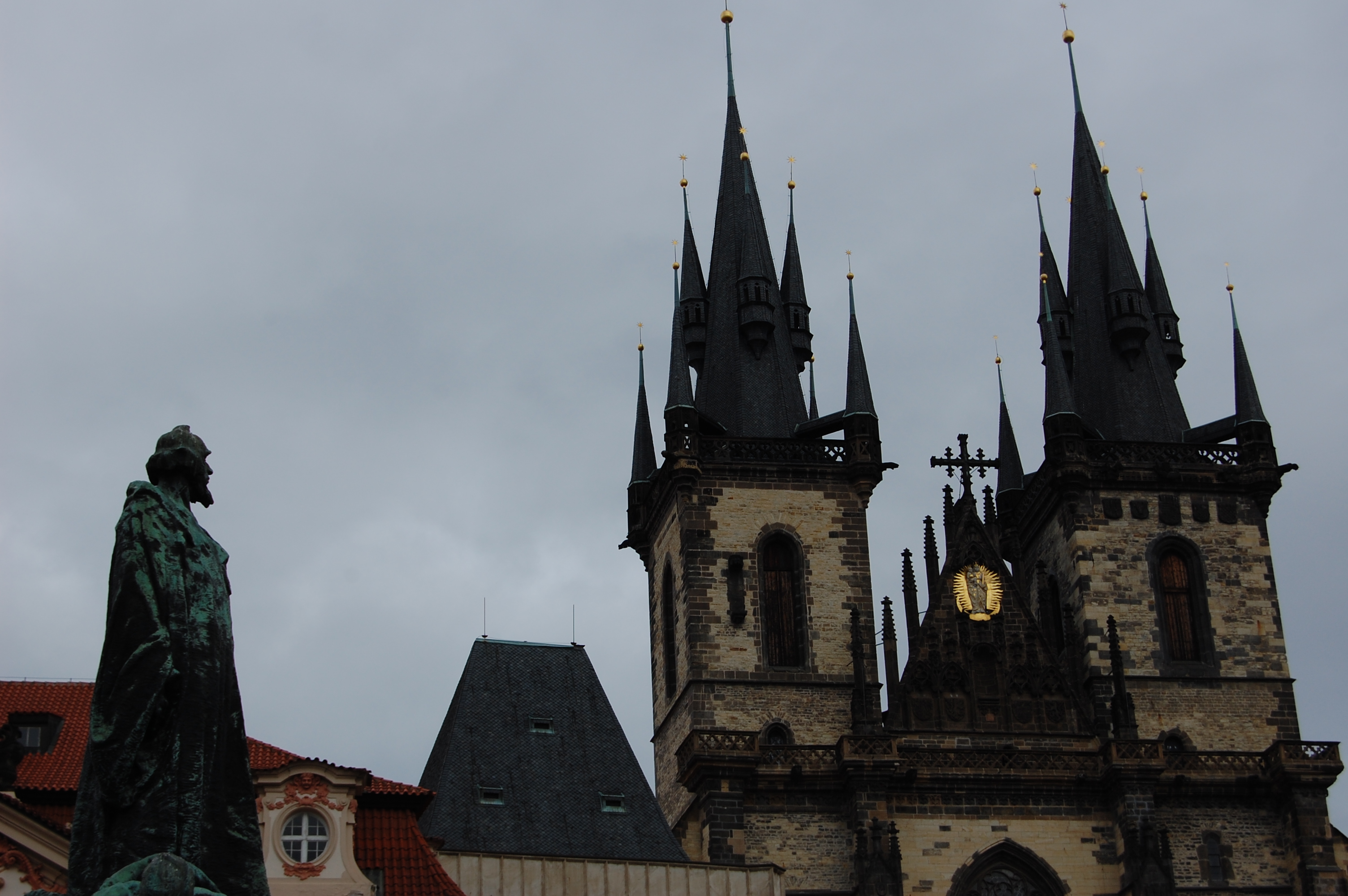
Hus looks over to the gothic Týn Church (Don)
Behind the church is the Ungelt Courtyard, once the commercial nucleus of medieval Prague.
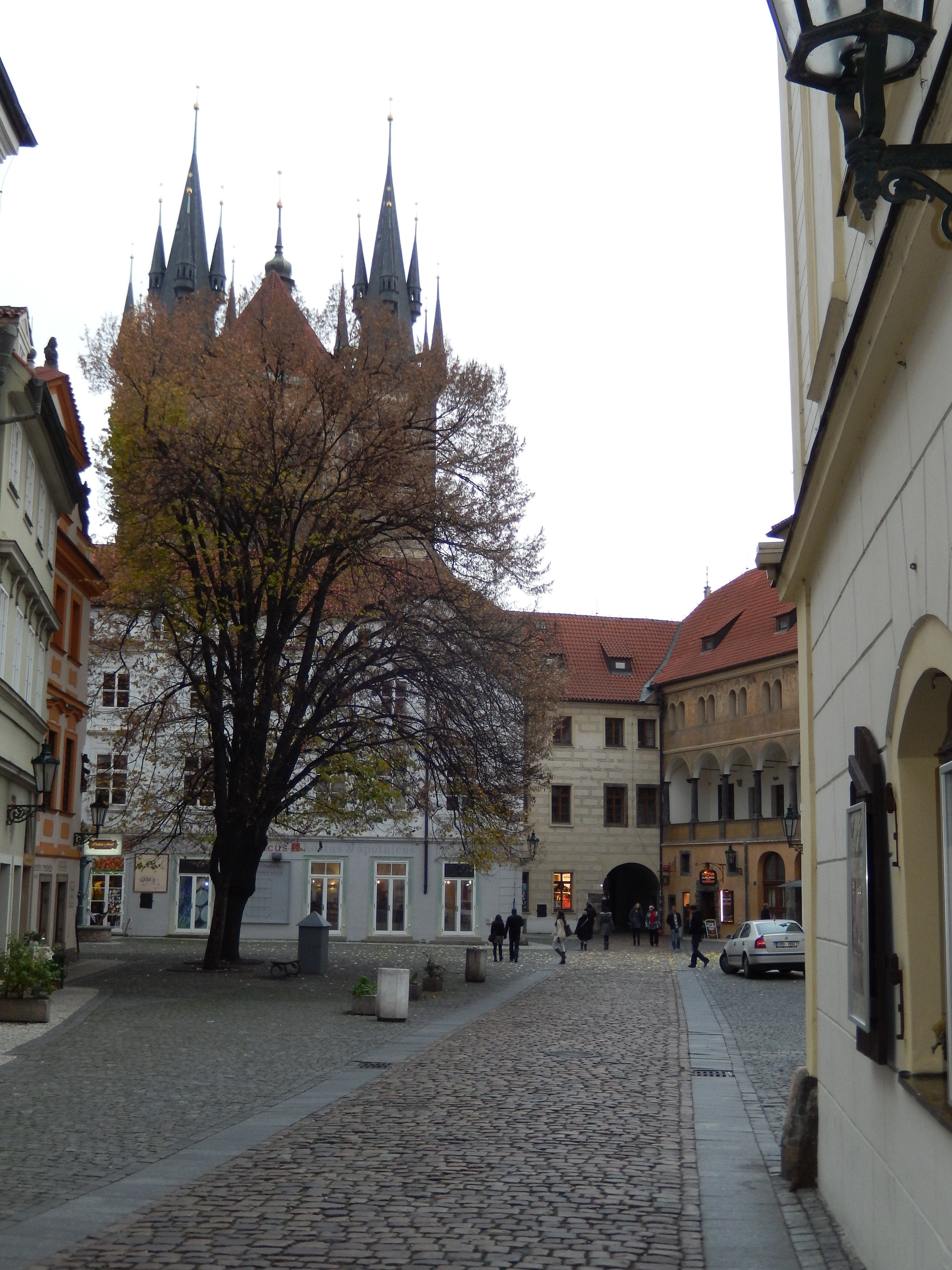
Ungelt Courtyard, a beautiful little square
From the Old Town Square we wandered through the Jewish Quarter. “Of the 120,000 Jews living in the area in 1939, just 10,000 survived the Holocaust. Today there are only 3,000 ‘registered’ Jews in the Czech Republic, 1,700 of whom are in Prague.”
The oldest synagogue in Eastern Europe is here, built in 1270:
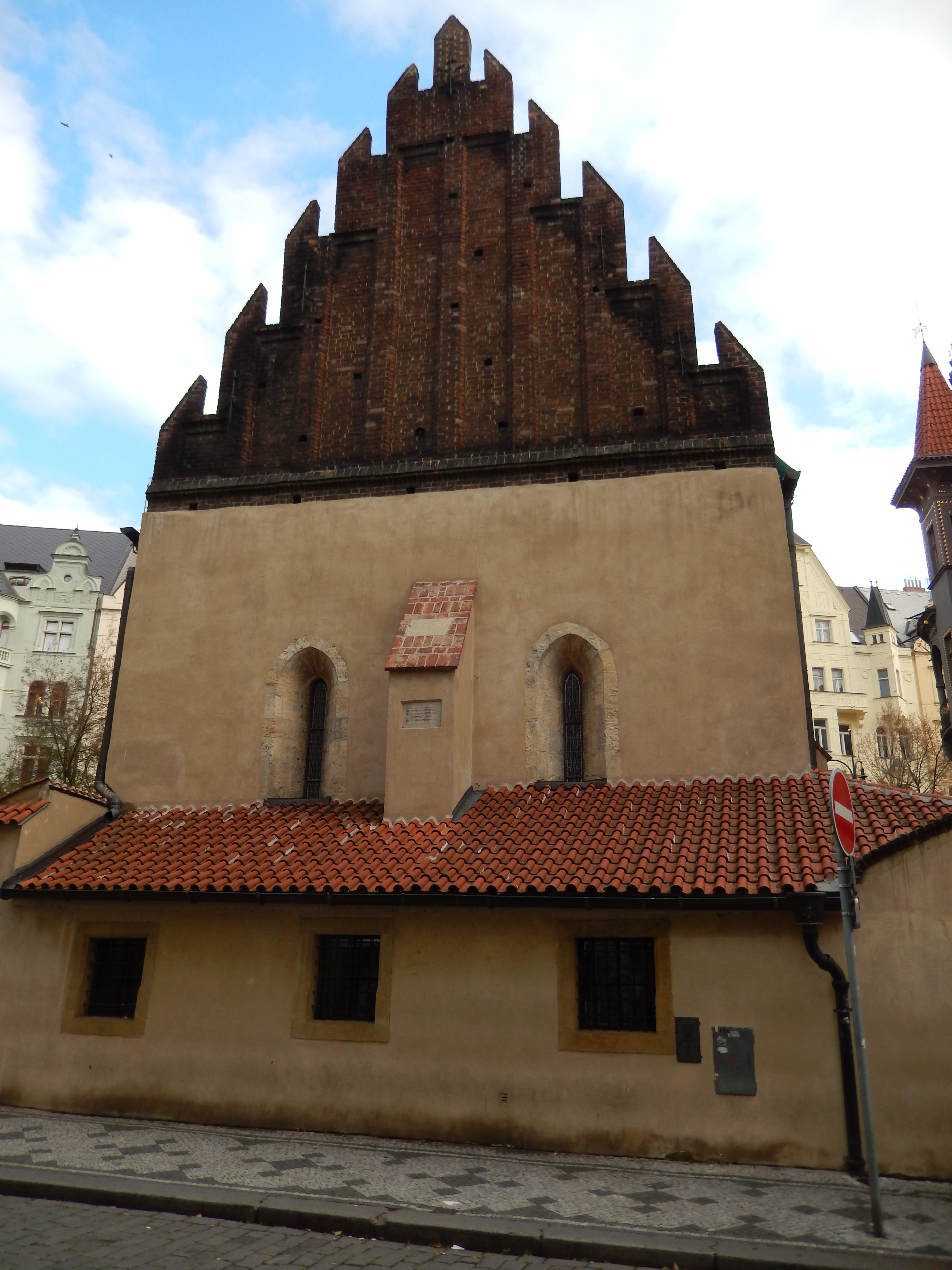
Old-New Synagogue (Staronová Synagóga)
The history of the cemetery is interesting: between 1439 and 1787, this was the only burial ground allowed for the Jews of Prague. It is claimed the tombs are layered seven or eight deep, and that there are close to 100,000 tombs here. The tombs were piled atop each other because of limited space, and the Jewish belief that the body should not be moved once buried. With its many layers, the cemetery became a small plateau. This picture, from the street behind the cemetery, illustrates how high the ground now is with those layers:

the Jewish cemetery, showing high above the shopping stalls
As we made our way from the Jewish Quarter to the New Town, we passed this statue, a tribute to author Franz Kafka, born in 1883 to a German-speaking Jewish family in Prague, and probably Prague’s most famous author. The sculptor is by Jaroslav Róna, and the work is “inspired by events in Kafka’s story, Description of a Struggle.” (I’ve never read Kafka.)

Franz Kafka monument
Leaving the medieval Prague of Old Town and heading into the modern New Town, one of our first sights is the Powder Tower, “the Gothic gate of the town wall, built to house the city’s gunpowder. This is the only surviving bit of the wall that was built to defend the city in the 1400s.”
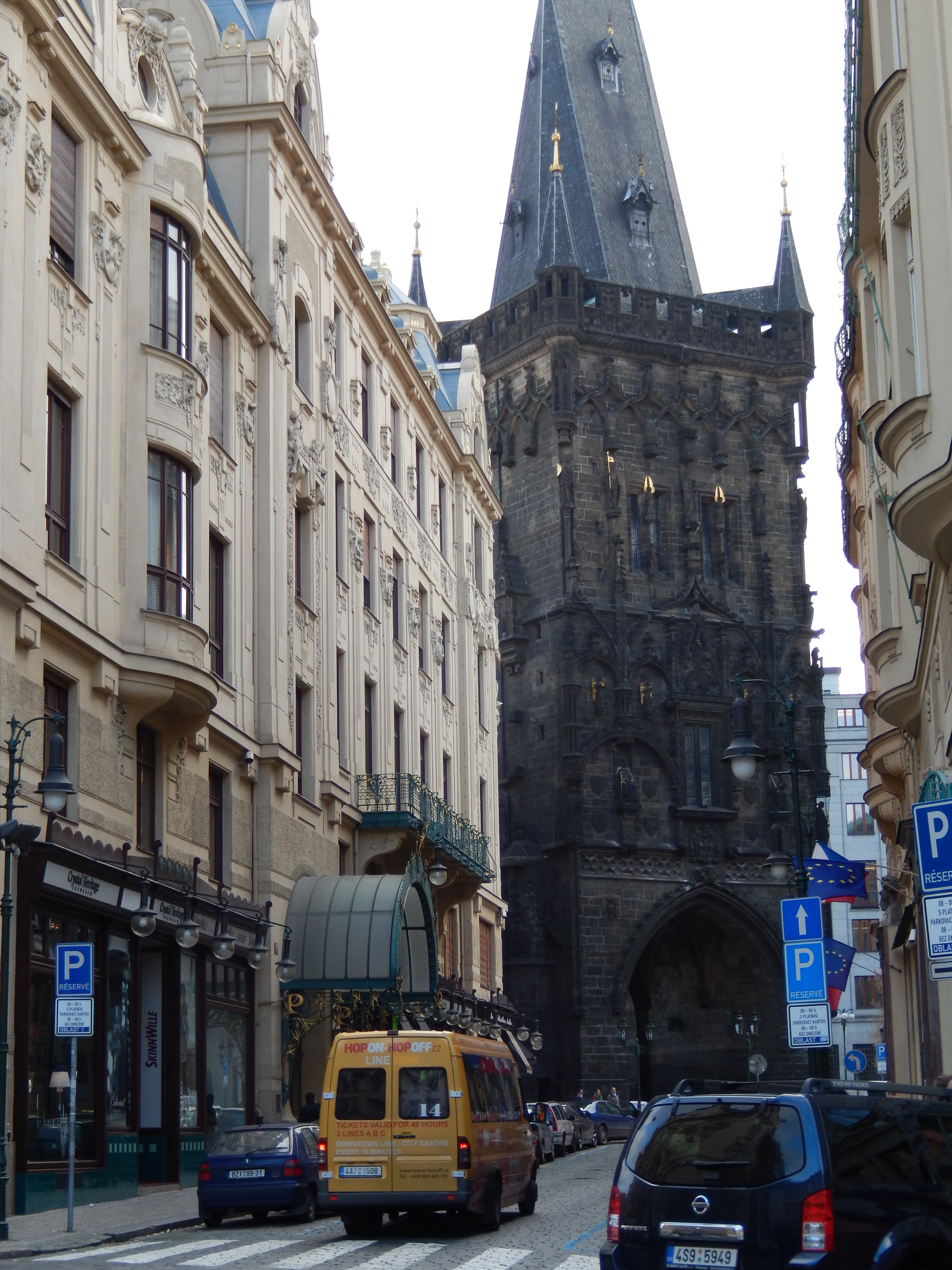
the Powder Tower
Next door to the Powder Tower is the Municipal House, built in 1911, housing Prague’s largest concert hall and a few restaurants. The building is “Neo-Baroque, with a dusting of Art Nouveau.”

the side of the Municipal House
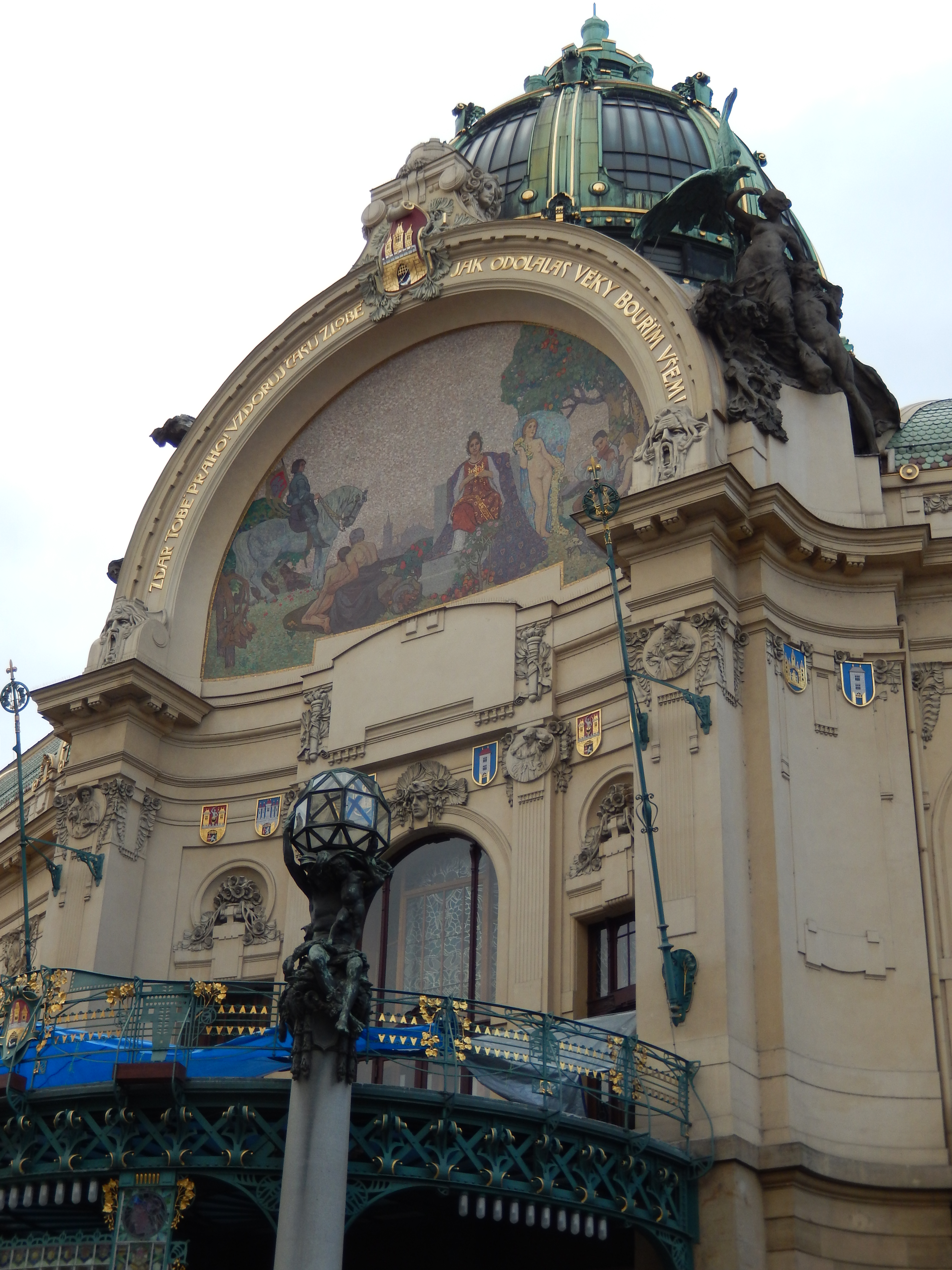
front of Municipal House, with “Homage to Prague” mosaic

old and new side-by-side (Don)
Stepping inside Municipal House, the interior is “arguably Europe’s finest Art Nouveau.”

interior Art Nouveau stairwell
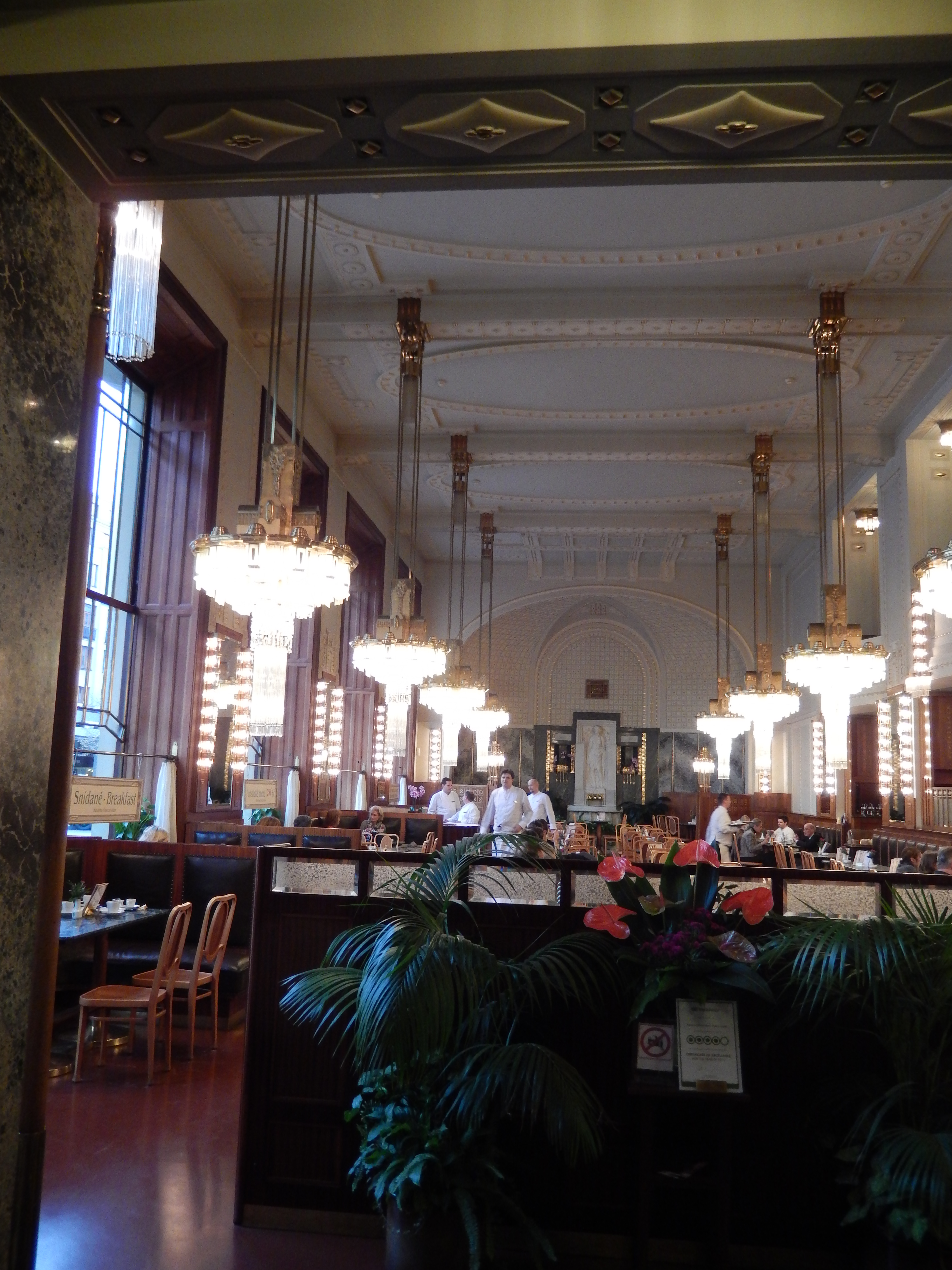
Art Nouveau café
Nearby is the Estates Theatre, built in the late 18th-century, and where Mozart conducted the world premiere of his opera Don Giovanni in 1787. It is the only theatre left standing where Mozart performed.
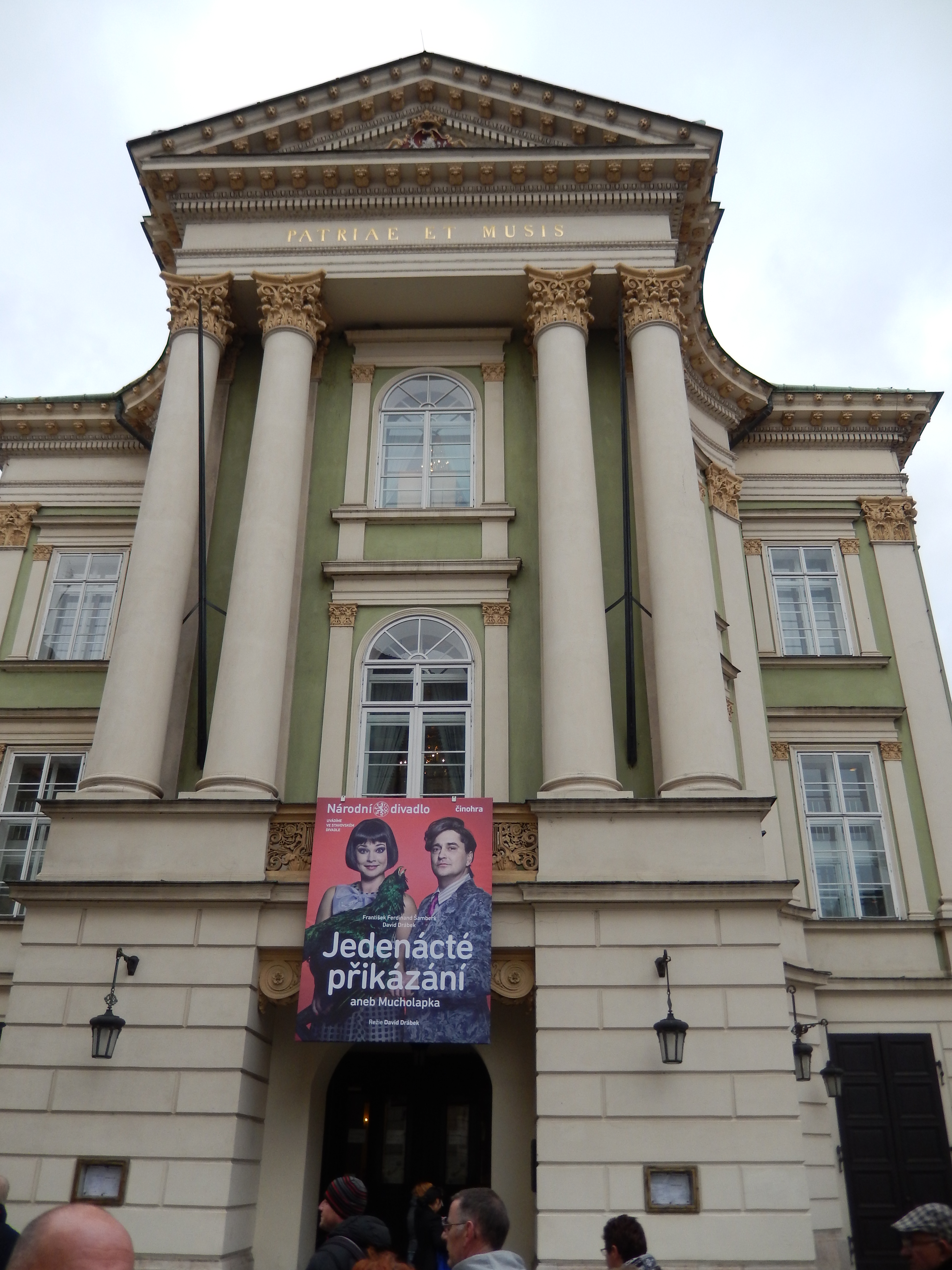
Estates Theatre
Wenceslas Square, is really a very wide boulevard rather than a square, and is the main part of New Town. It is named for King Wenceslas, “the wise and benevolent 10th-century Duke of Bohemia.”

Wenceslas Square, with the National Museum at the end
Close to the statue of King Wenceslas is an important memorial, almost hidden in the garden. “It commemorates victims of communism such as Jan Palach, a philosophy student who loved life, but wanted to live in freedom, and who in 1969 set himself on fire on the steps of the National Museum for the cause of Czech independence. He died a few days later. On the 20th anniversary of his death, huge demonstrations swept the city, leading …after more demonstrations… 10 months later, to the overthrow of the Czech communist government in 1989.”
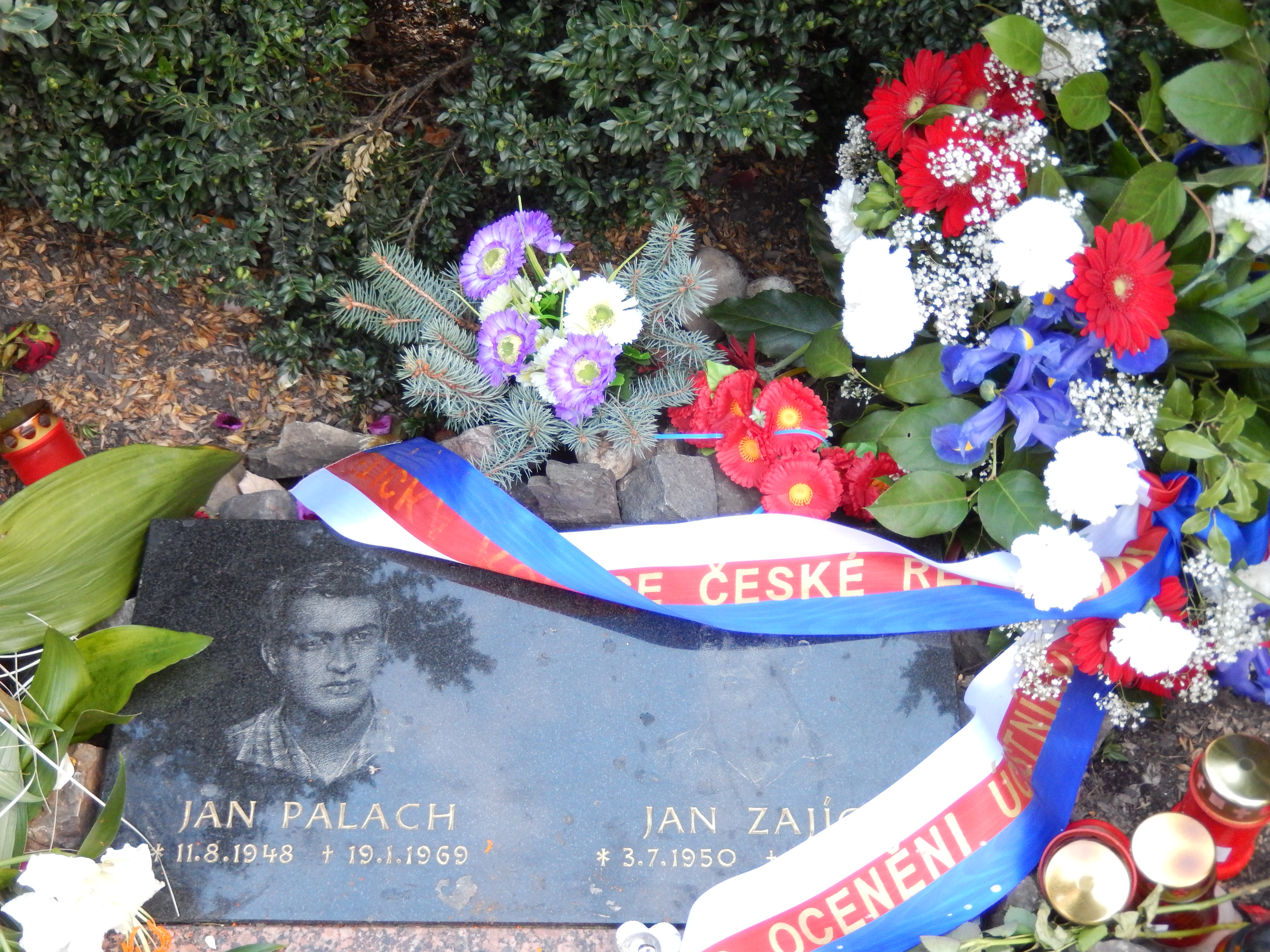
memorial
On November 17, 1989, 30,000 students began a series of demonstrations that eventually resulted, on December 29, with the end of the communist regime and the election of Václav Havel as the president of a free Czech Republic. On Národní Trída (National Street) there is a memorial to the event, and because we were in Prague just shortly after this anniversary date, we saw the remnants of this year’s remembrance:
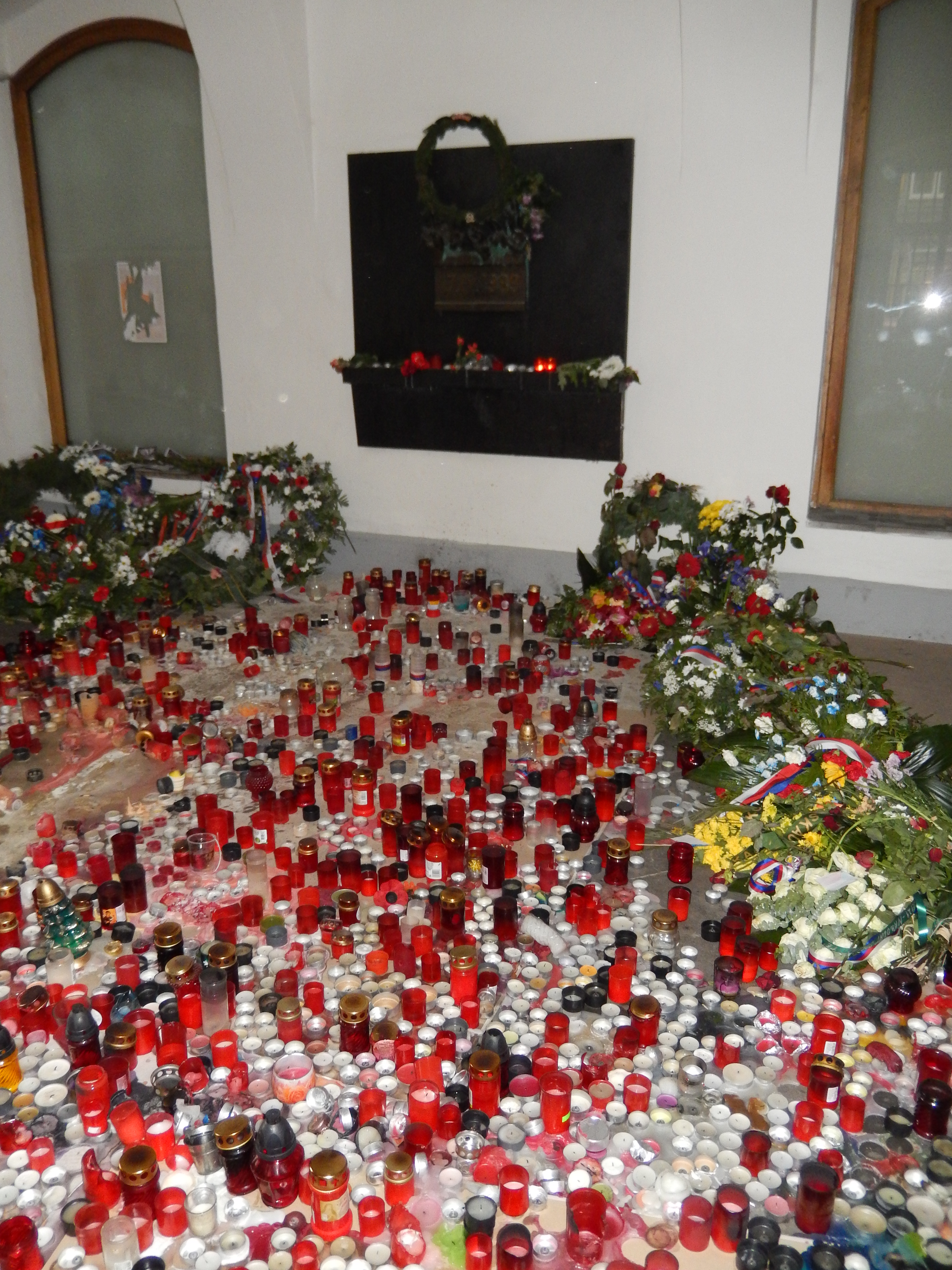
17.11.1989 memorial
During both days with Petr, he very cleverly walked us on a route that took us right back to where we started in 3 1/2 hours. We said thank you and good-bye on the Old Town side of the Charles Bridge, right under the statue of Charles IV, the Holy Roman Emperor who ruled his vast empire from Prague in the 14th century. The statue was erected in 1848 to celebrate the 500th anniversary of Prague’s Charles University. In the statue, Charles is holding a contract establishing the university, which was the first in Northern Europe. The women around the pedestal symbolize the school’s four subjects: the arts, medicine, law and theology.
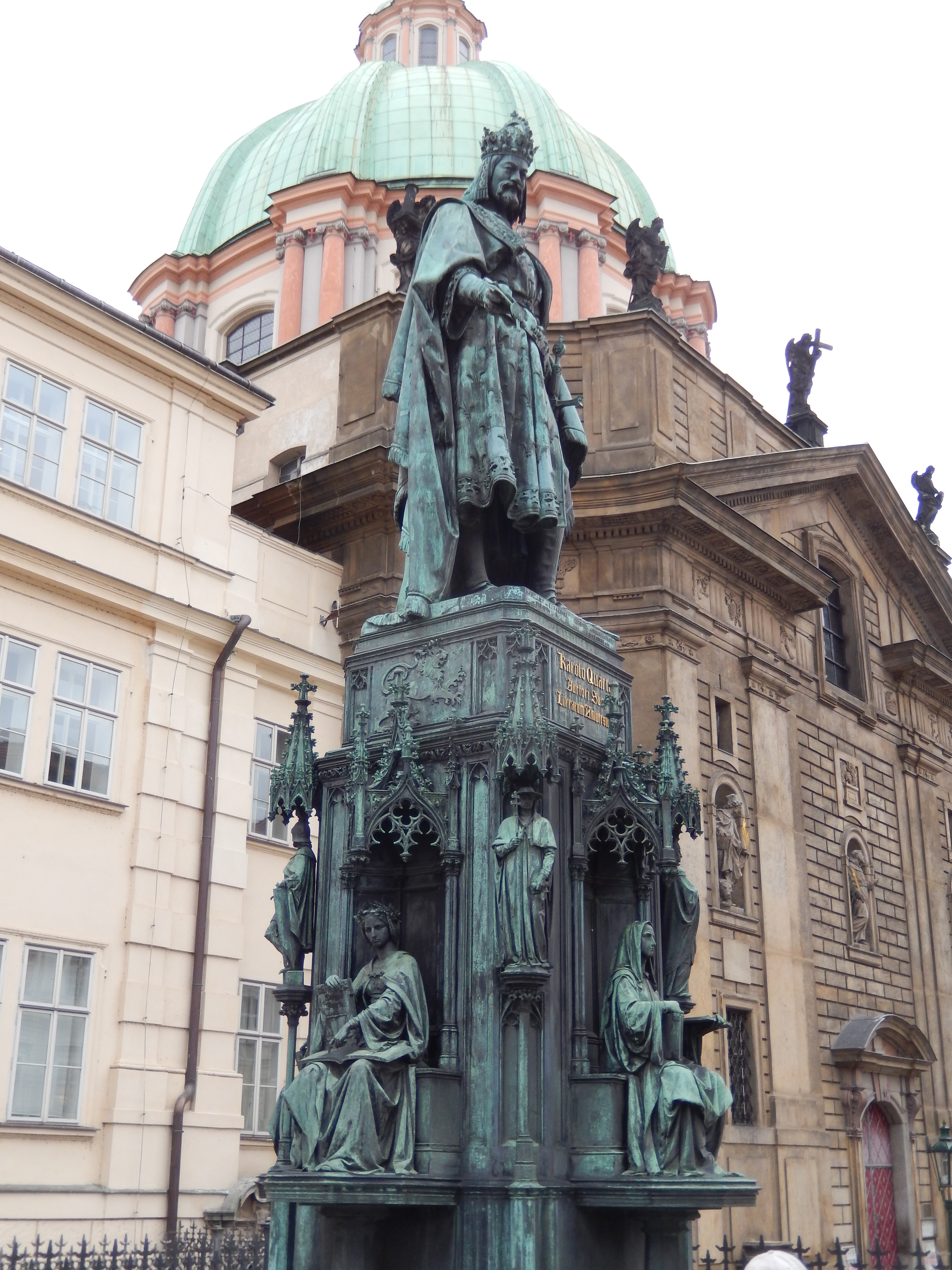
Charles IV
We walked back over the Charles Bridge (something we did once or twice a day!) ate lunch, and then went to our hotel for a much-needed rest. In the early evening, we walked back over the Charles Bridge and bought tickets for a classical performance at the Municipal House later that evening, then had a light meal at the Grand Café Orient, in the Cubist House of the Black Madonna, a building designed and built in 1911-1912 as the first example of cubist architecture in Prague: http://en.wikipedia.org/wiki/House_of_the_Black_Madonna
Then, off to the Municipal House for a 12-string ensemble presentation of Dvořák’s Serenade in E Major for Strings, Op.22 and Vivaldi’s Four Seasons.
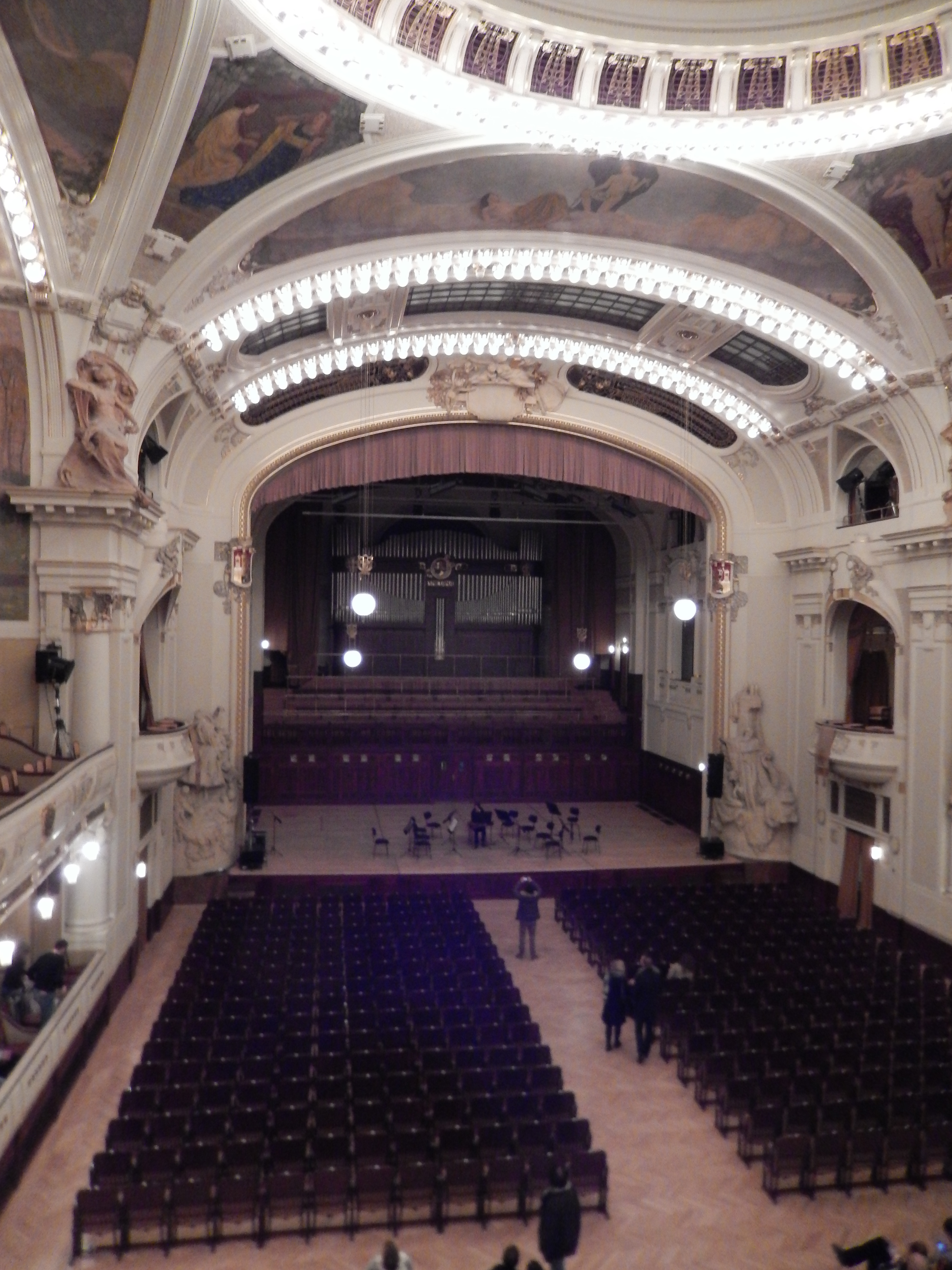
beautiful Smetana Hall, Municipal House

another view of the hall
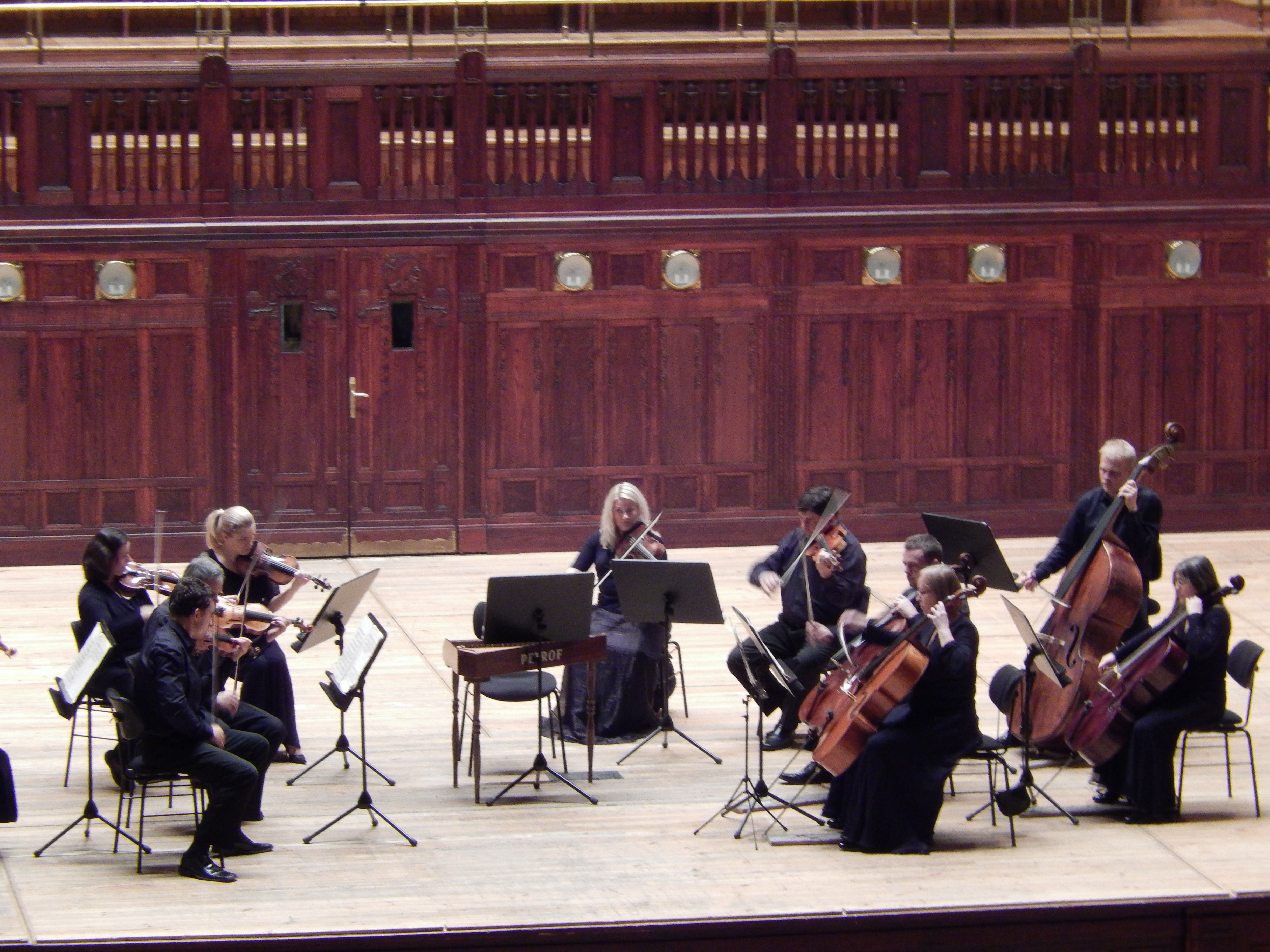
string ensemble plays
The concert was just over an hour long – a perfect amount of time. We walked back to our hotel, got a bottle of wine and took it up to the small roof-top patio to enjoy the night views of the city. (Yes, it was chilly – we wore our coats – but not too cold to enjoy the wine or the view.)
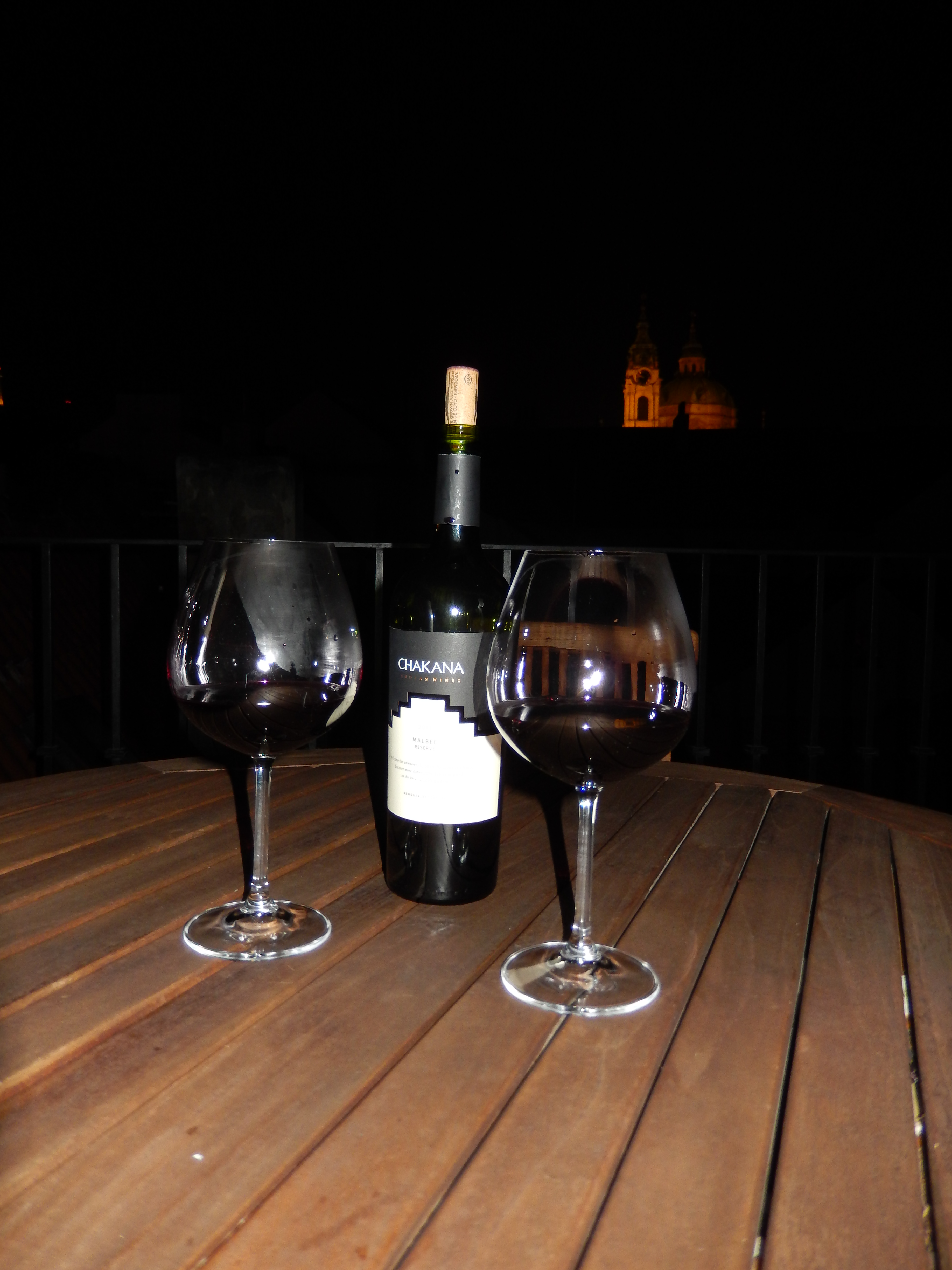
wine for two

Prague rooftops
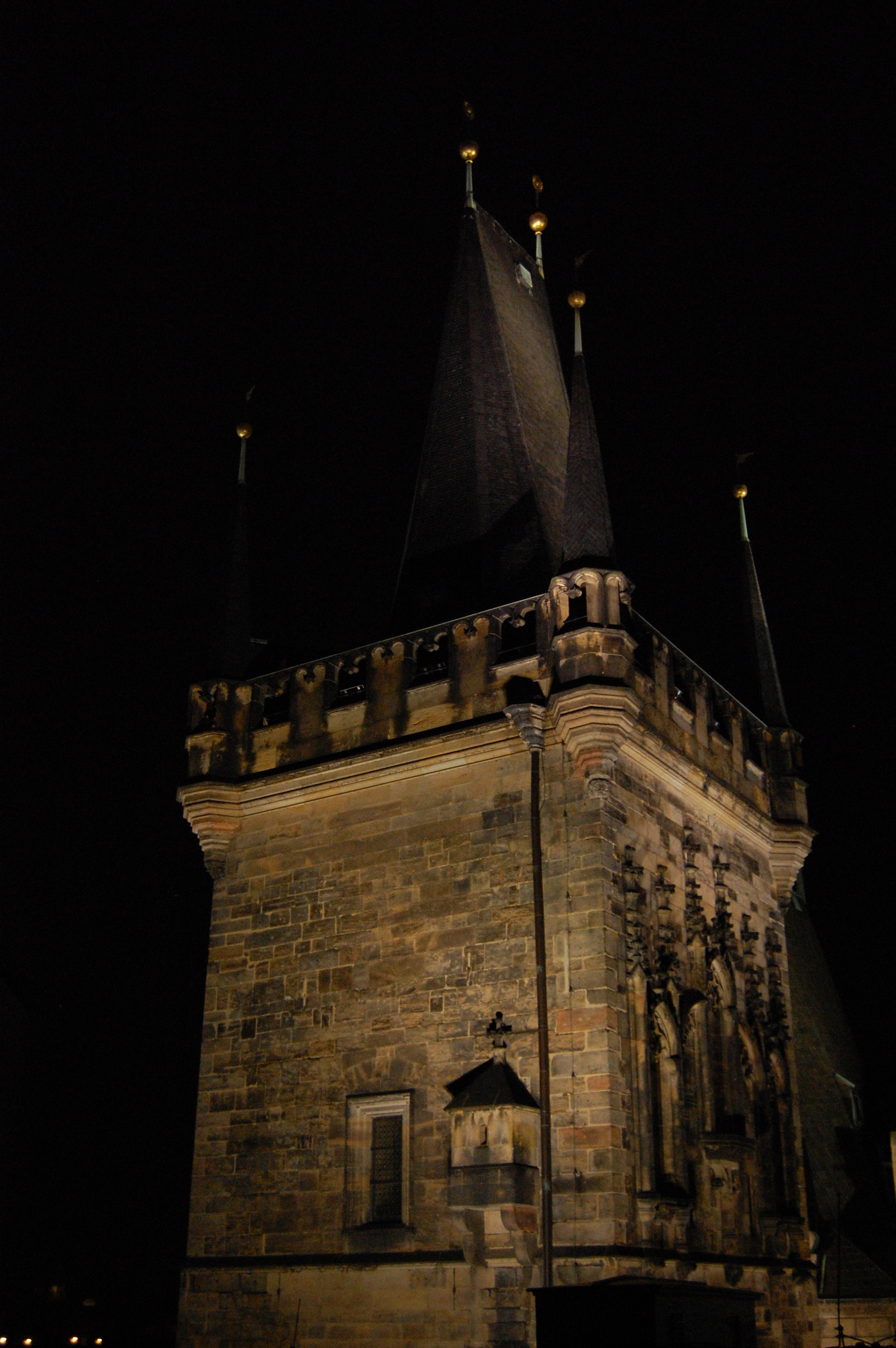
top of the Gothic gate at the end of the Charles Bridge (Don)
This gothic gate (above, at night) was just steps from our hotel:
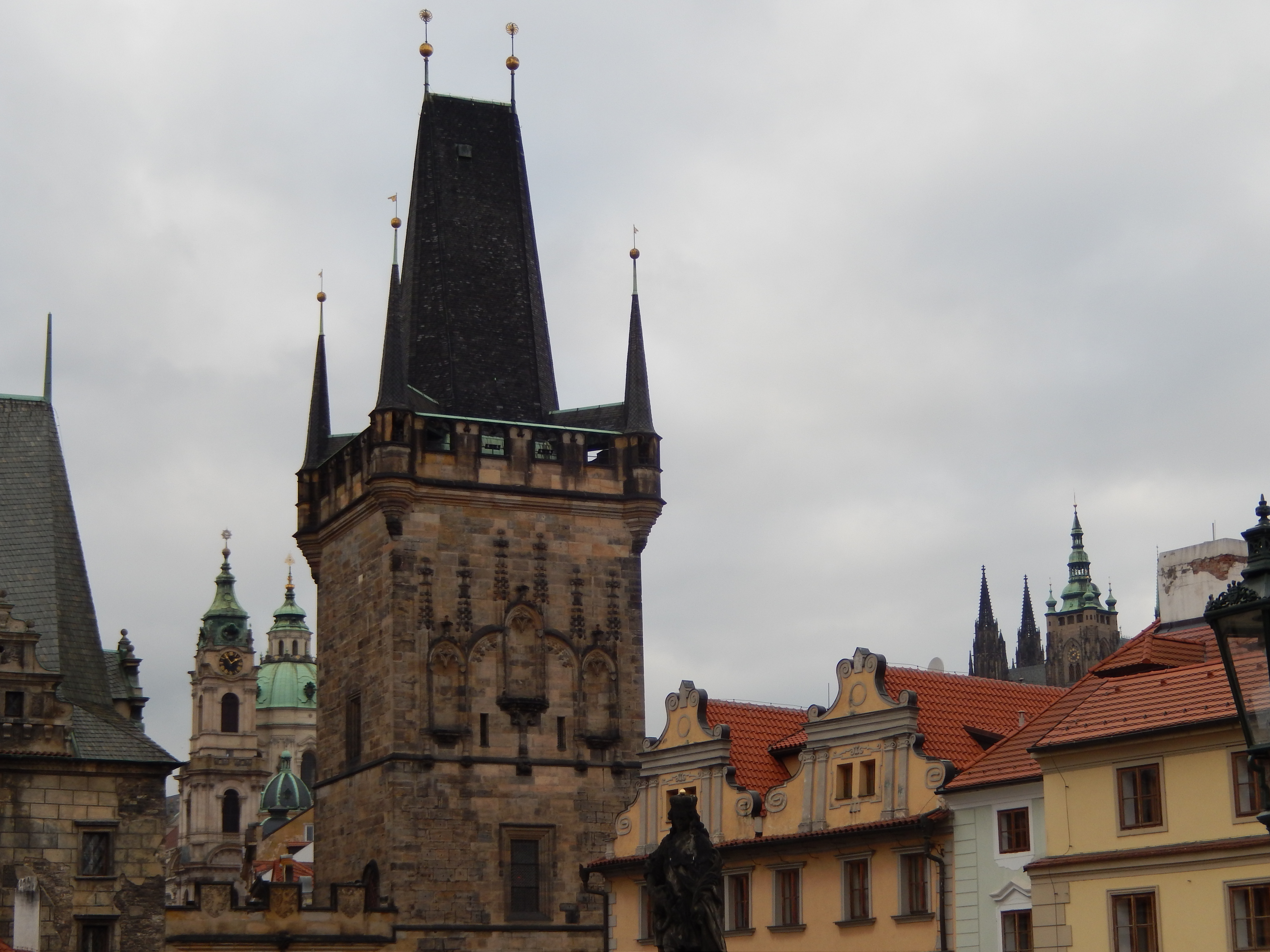
Gothic gate, Malá Strana side
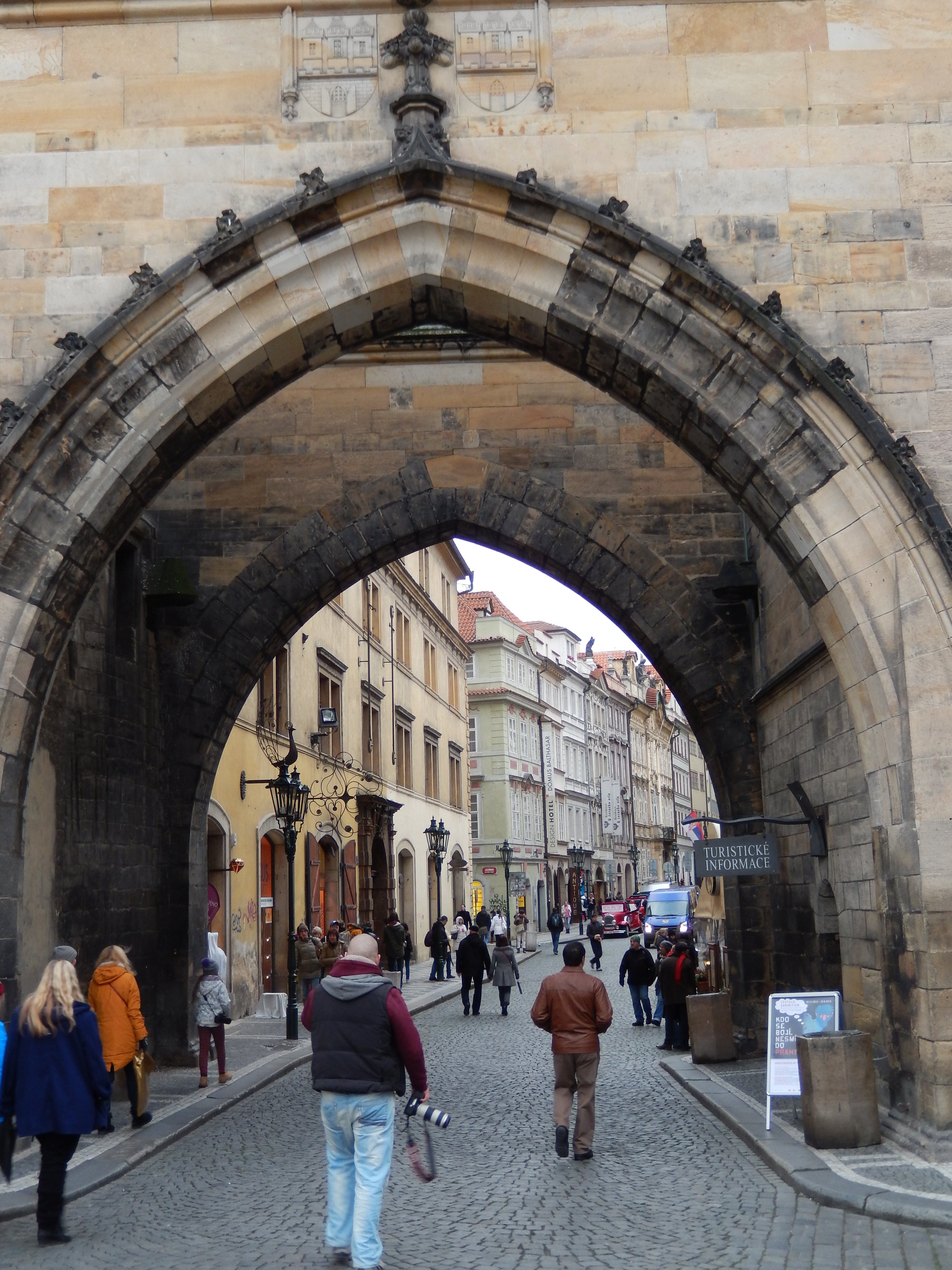
the gateway

from our hotel window, the start of the Charles Bridge
I can’t believe we didn’t take any pictures of the Charles Bridge, since we walked it at least twice a day, but here’s some information about it: http://en.wikipedia.org/wiki/Charles_Bridge
The next day, Saturday, we toured a few museums. First to the Museum of Communism, which tells the history of communism in Prague quite thoroughly, and with all information in English. It also includes a short video of the protests in 1989 which culminated in the end of communist rule. It was very worthwhile.
A stop for coffee and strudel recharged us before we went to the Mucha Museum, dedicated to the work of Czech Art Nouveau artist Alfons Mucha, of which Rick Steves says, “This is one of Europe’s most enjoyable little museums. …With the help of an abundant supply of sultry models, Mucha became a founding father of the Art Nouveau movement.” He is perhaps most famous for the many Sarah Bernhardt posters she commissioned him to create. We recognized his work immediately, and I’m sure you will too: http://www.alfonsmucha.org/
Afterwards we went walking, first heading to Charles Square, of which Rick Steves said, “Prague’s largest square is covered by lawns, trees and statues of Czech writers. It’s a quiet antidote to the bustling Wenceslas and Old Town squares.” You know the mention of statues of writers intrigued me. Well, we walked pretty much the whole square and huge park and all we found was one statue! I think I need to have a talk with Mr. Rick Steves!
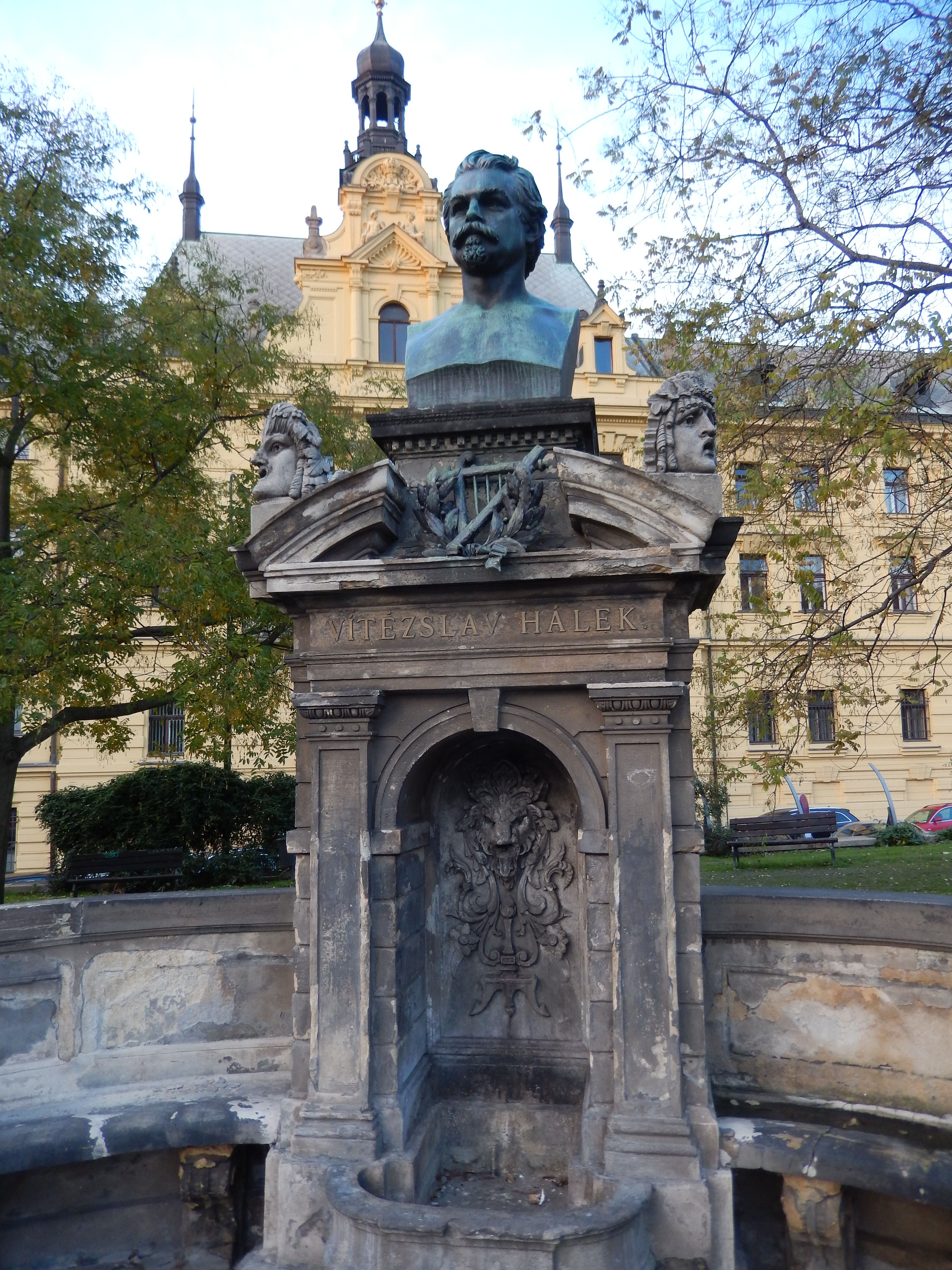
Vitezslav Halek – poet
From the park we headed towards the river, and came upon this intriguing street art along the way:
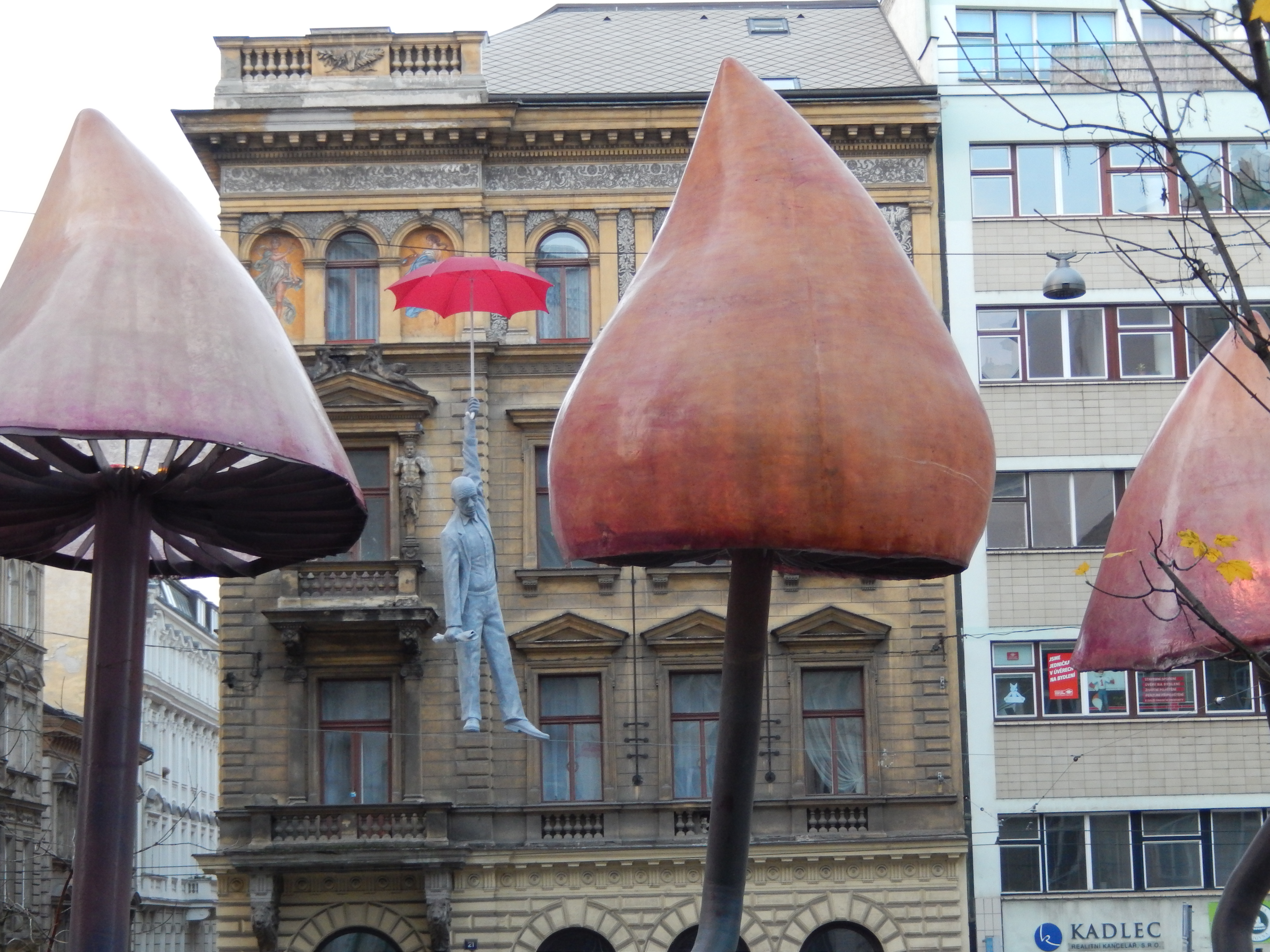
intriguing street art – no explanation

he’s not Mary Poppins 🙂

sitting atop the Mosaic – a music club
And then at the river’s edge, what is called “Dancing House” and nicknamed ‘Fred and Ginger’ – designed by Frank Gehry of Toronto, Canada:
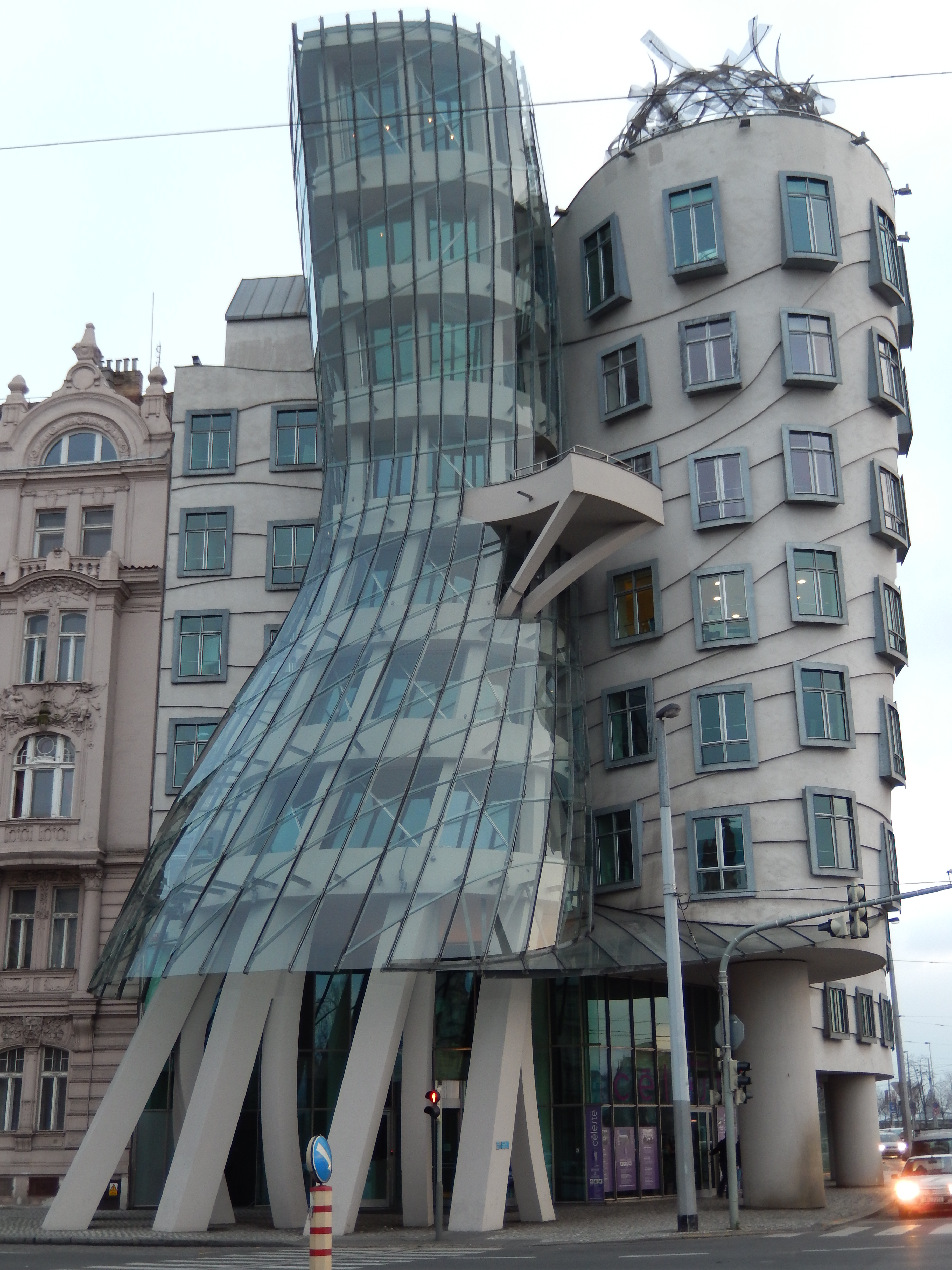
Dancing House
It was past time for a very late-lunch. We stopped at Cafe Louvre http://www.cafelouvre.cz/en/ where Franz Kafka and Einstein, among others, liked to spend time, and had a delicious meal:
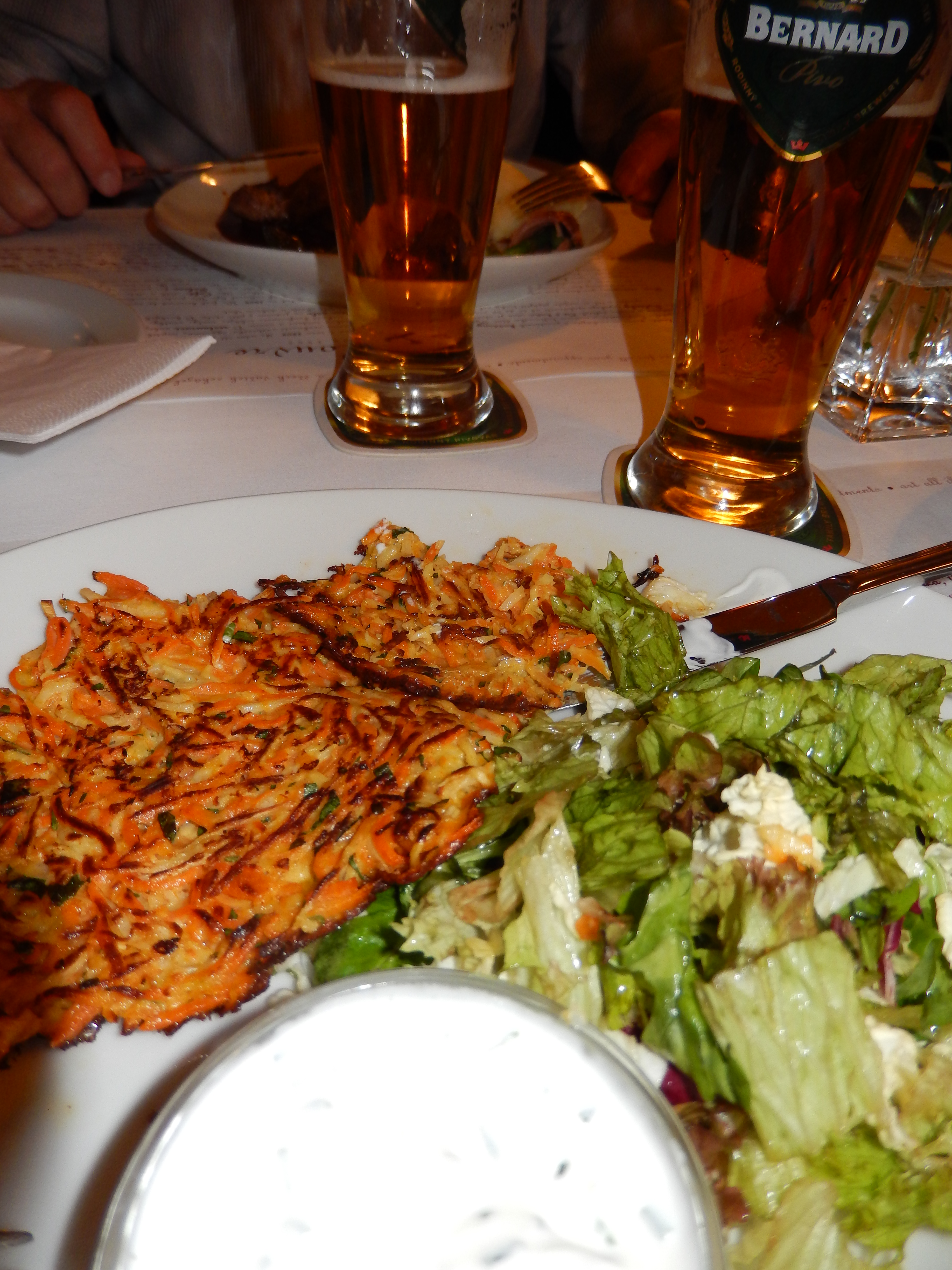
vegetable pancake and avocado salad to die for, and Czech beer, of course
Then, back to the hotel for a rest before an evening out. We love jazz and earlier in the day had walked past a few different clubs to decide on a place for our evening. By chance we picked the Agharta Jazz Club http://www.agharta.cz/ and had the BEST night of our trip, actually the HIGHLIGHT of our trip! We got to the club an hour before the show started, luckily, because it turned out all but three of the tables in this small club (seats about 60) were reserved. (Reservations hadn’t occured to us.) As the club began to fill up we ordered a bottle of wine and waited for the show. It turned out the place was full because the Czech’s top jazzman was performing!! Jiří Stivin & Co Jazz Quartet blew us away!!
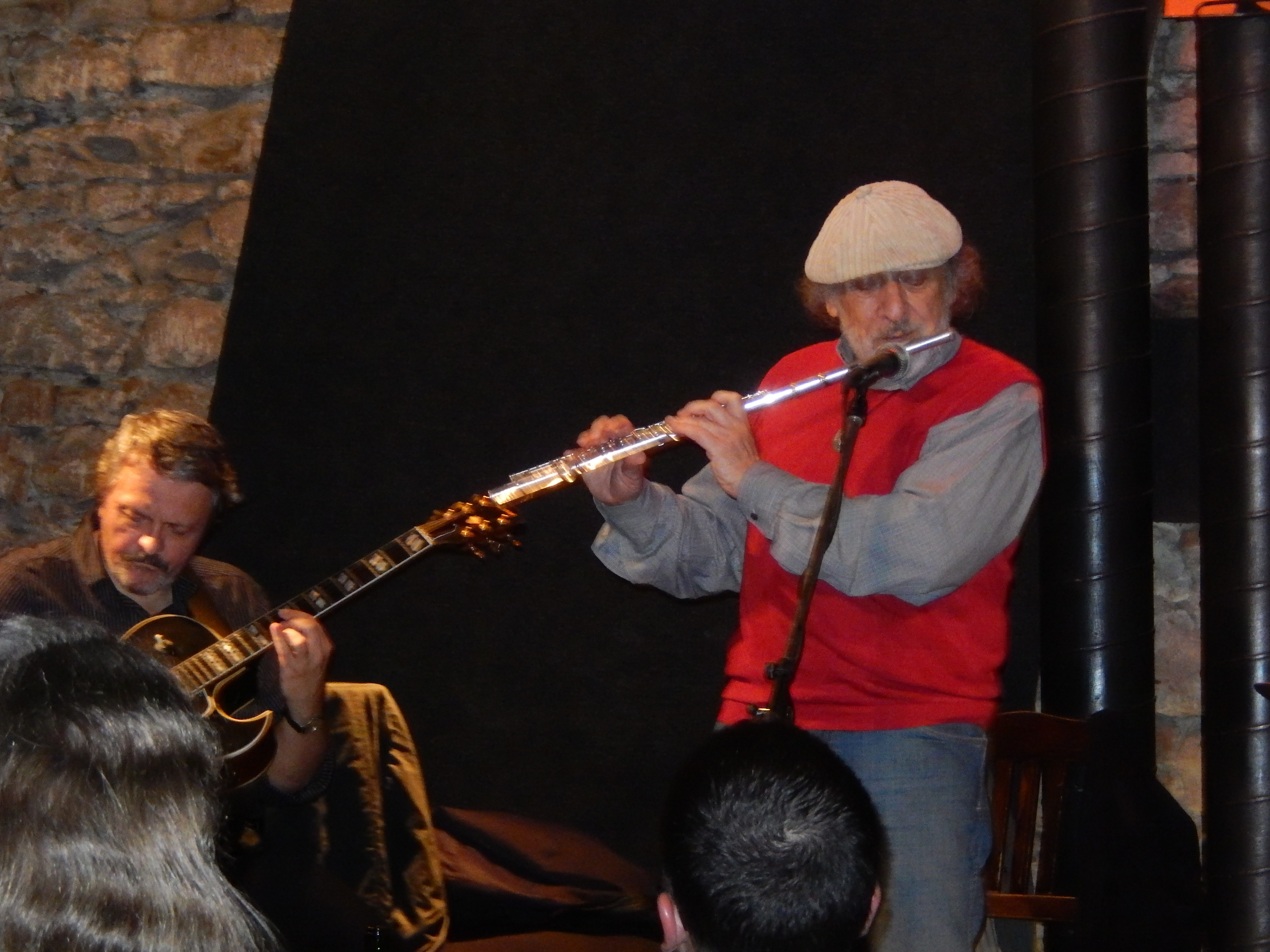
Jiří Stivin
We stayed until the very last note, at midnight, and loved every single moment. Their CD has been my soundtrack while I write this blog.
Wandering home, we passed this bakery for the umpteenth time and this time bought a treat to eat as we walked.

delicious bakery treats (Don)
The next day was our last in Prague. We wanted only to take a few pictures and buy “Bohemian garnets,” mined from a mountainous area of Bohemia and, (according to Rick Steves), the major source of garnets from the Renaissance through Victorian age.
We mostly had the wonderful architecture in our camera focus:
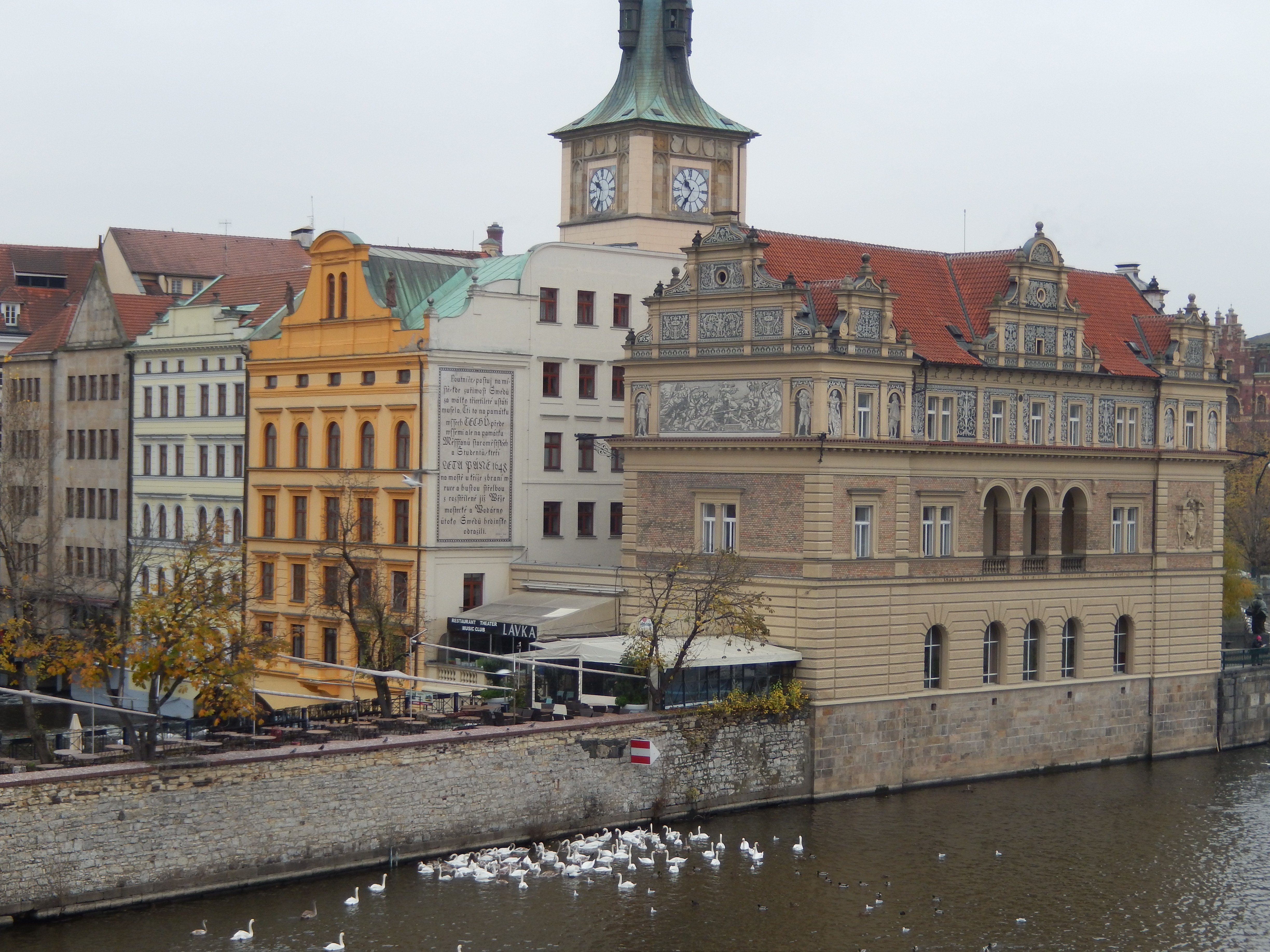
taken from the Charles Bridge
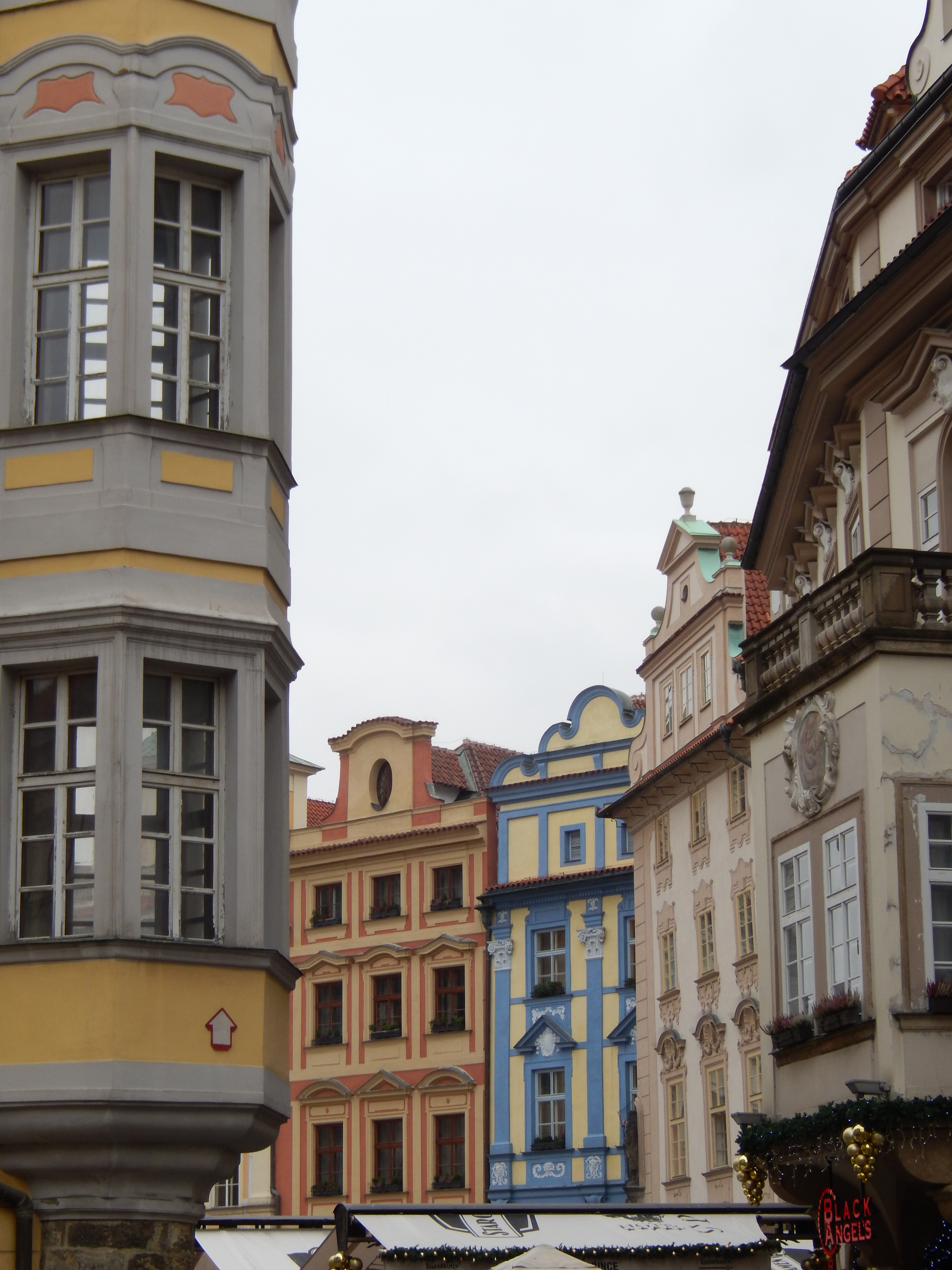
heading into Old Town Square
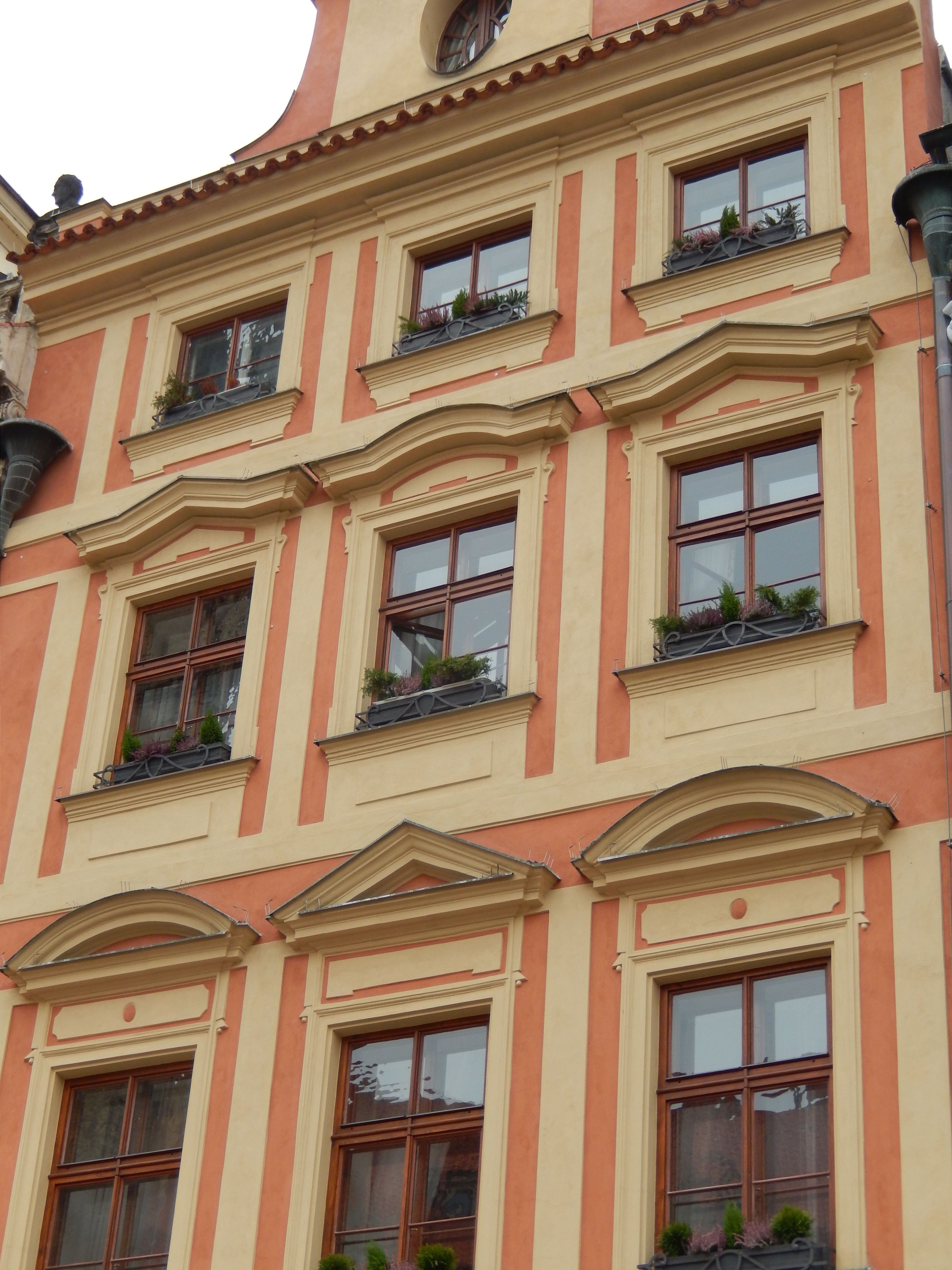
take a good look at this one (in the Old Town Square) as the whole building is being turned into a McDonald’s…
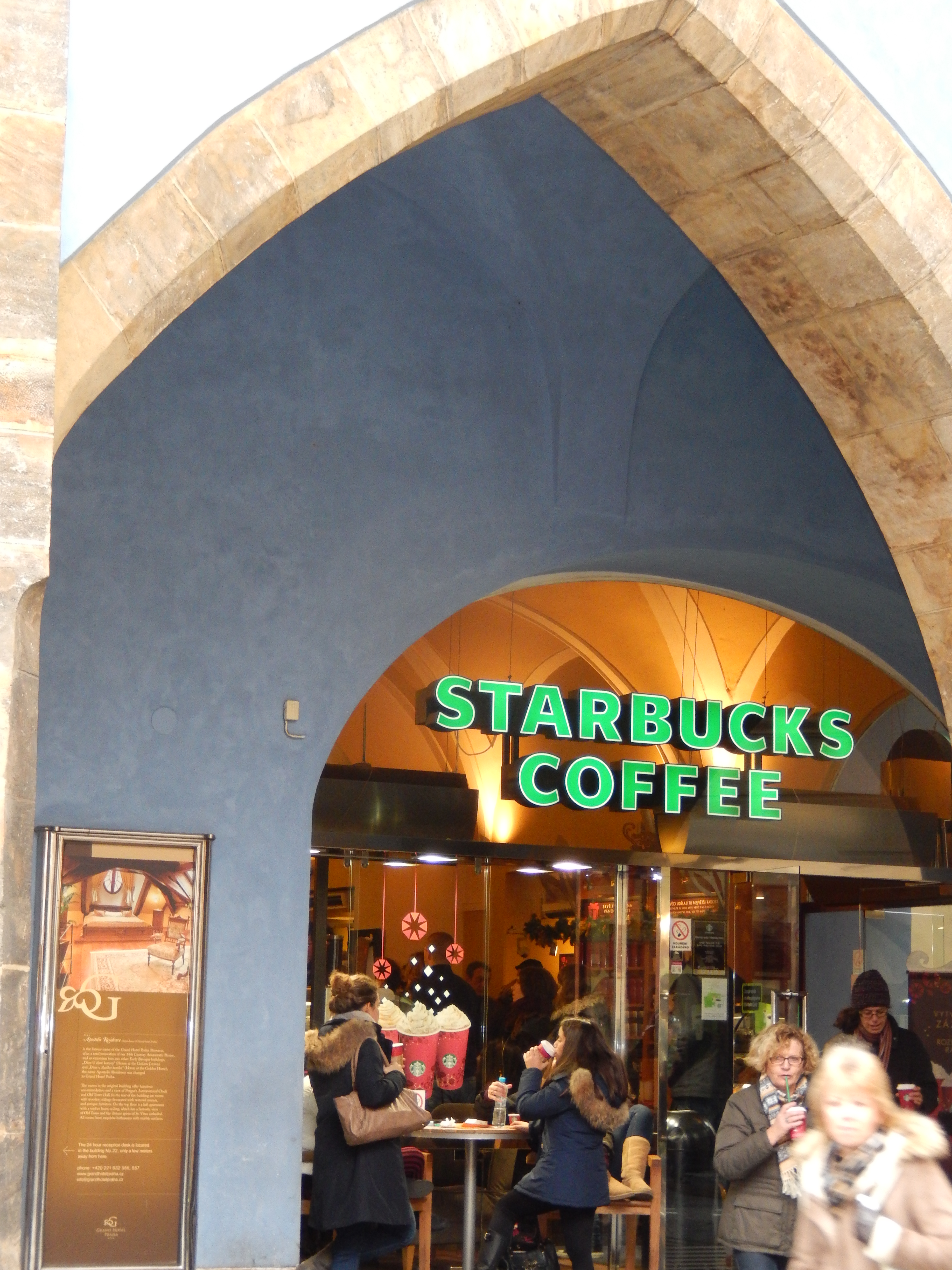
..joining the Starbucks right next door (though, at least slightly hidden on the ground level under an arch)

these buildings reminded me of those in The Netherlands

some were extraordinarily decorated (this shows the top of an old well in front of the building)
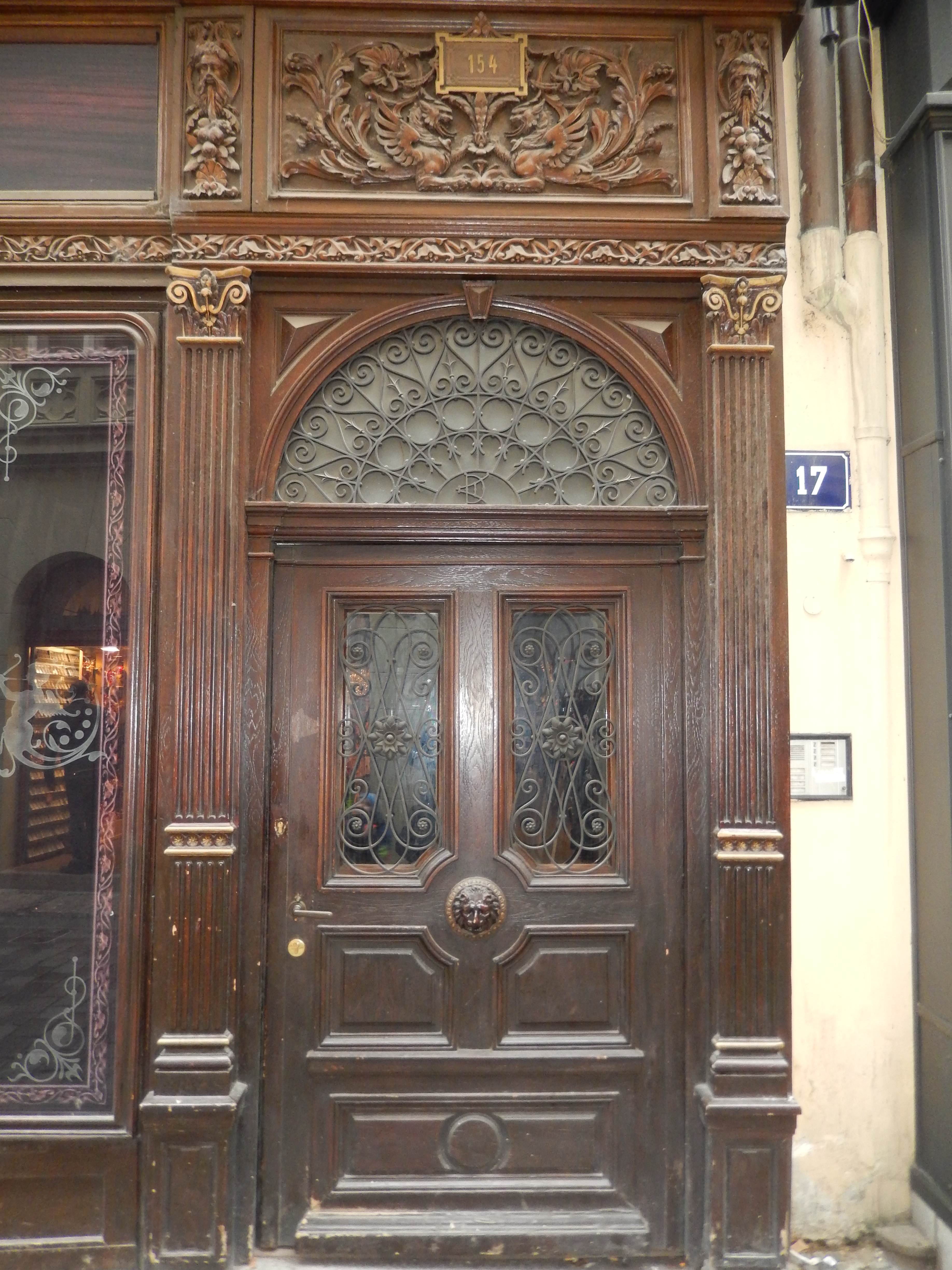
many had beautiful doors
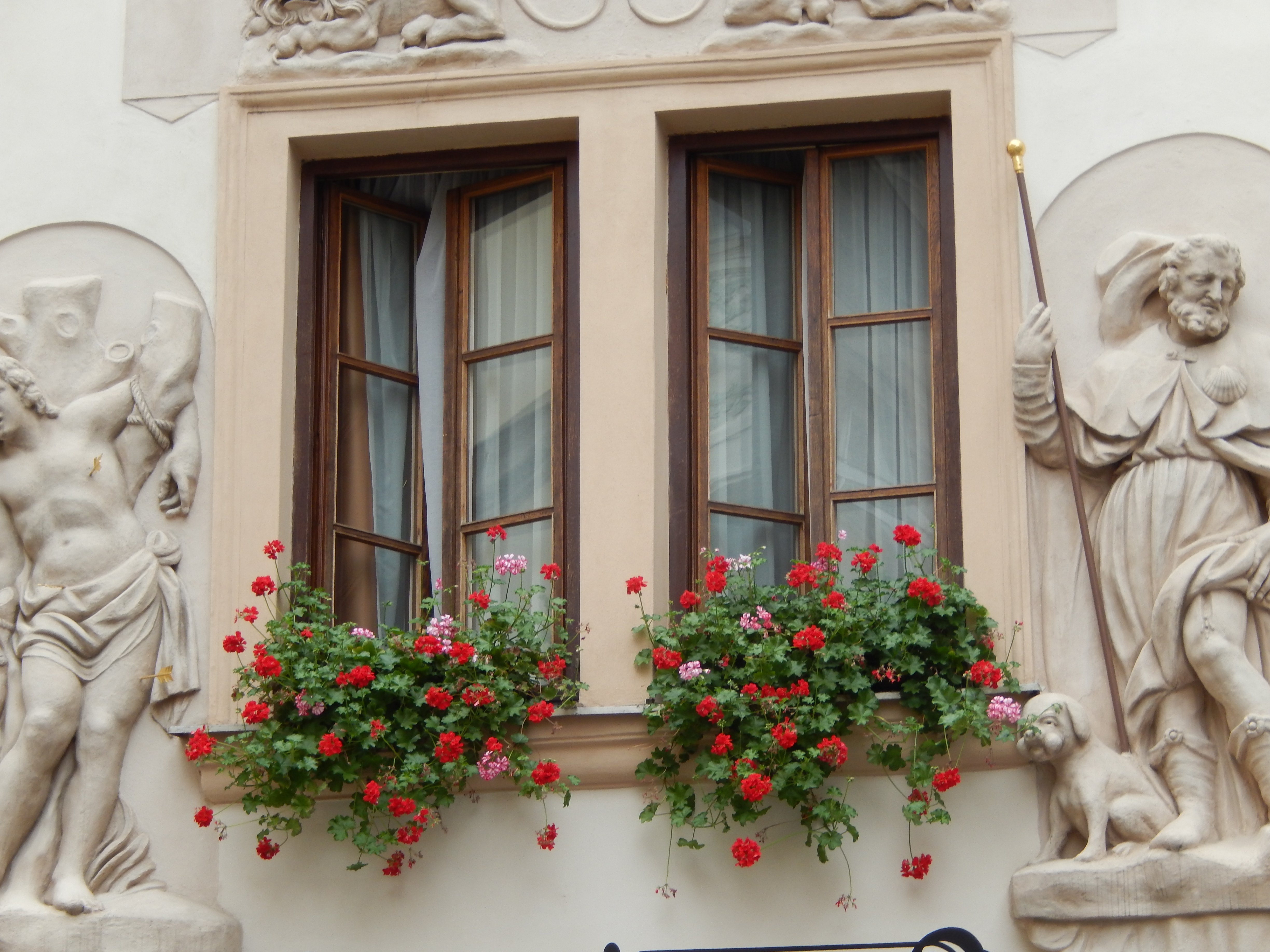
and a few beautiful windows
We had a great day of walking, eating, and shopping – I got a pair of earrings and Don got a pair of cuff links. Our last dinner was at Klub Architektů, a kind of modern vibe in a medieval cellar, with very good local white wine. And then, to the Hemingway Bar for an evening cocktail. (Well, two.) http://www.hemingwaybar.cz/bar-prague/ The bar was another highlight, recommended to us by friends. Hemingway never drank there, but they are dedicated to cocktails in a way Hemingway would approve. We sat at the bar watching the expert bartender shake and stir. It was great fun!
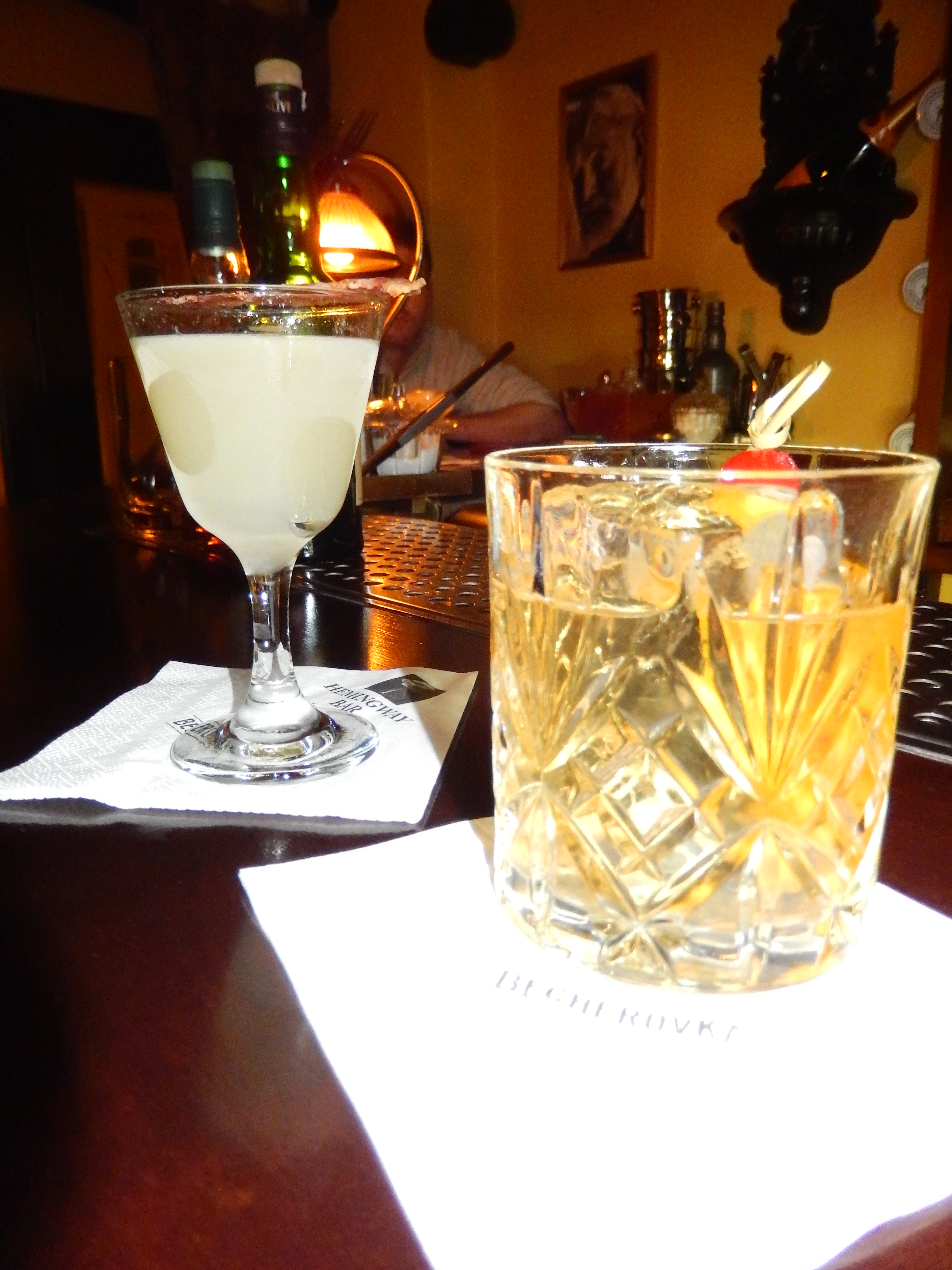
cocktails for two
One last walk home across the Charles Bridge…
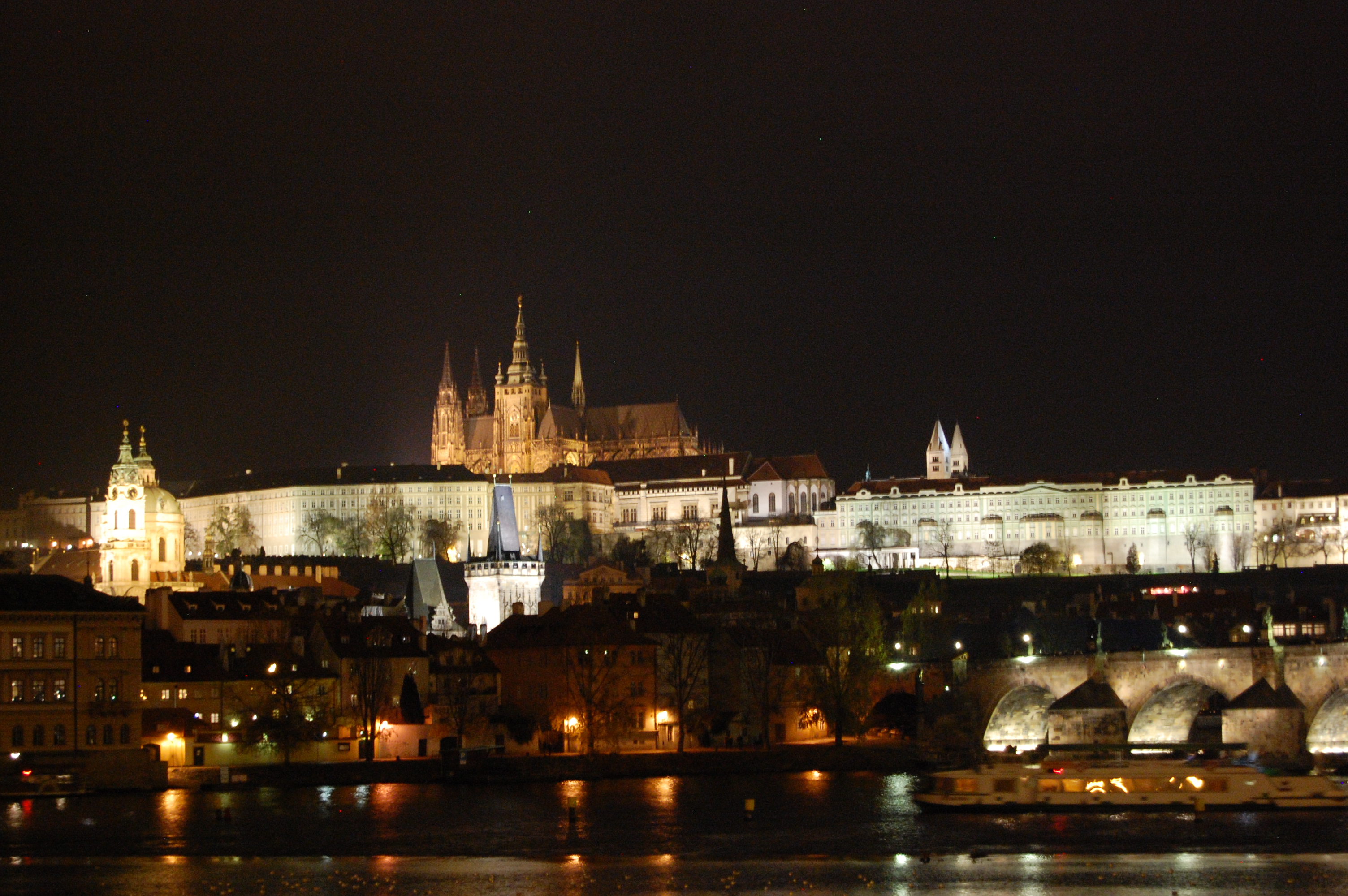
one last view of the beautiful Prague Castle at night (Don)
And that was the end of our wonderful time in Prague. The next morning we were up and out, on the train to Vienna. We left Prague at 9:45, made one connection, and at 2:20 arrived in Vienna. We got a taxi to the hotel, checked in and unpacked. It wasn’t such an atmospheric hotel as the one in Prague, but in a convenient location, fairly modern, very clean, and the breakfast buffet was good.
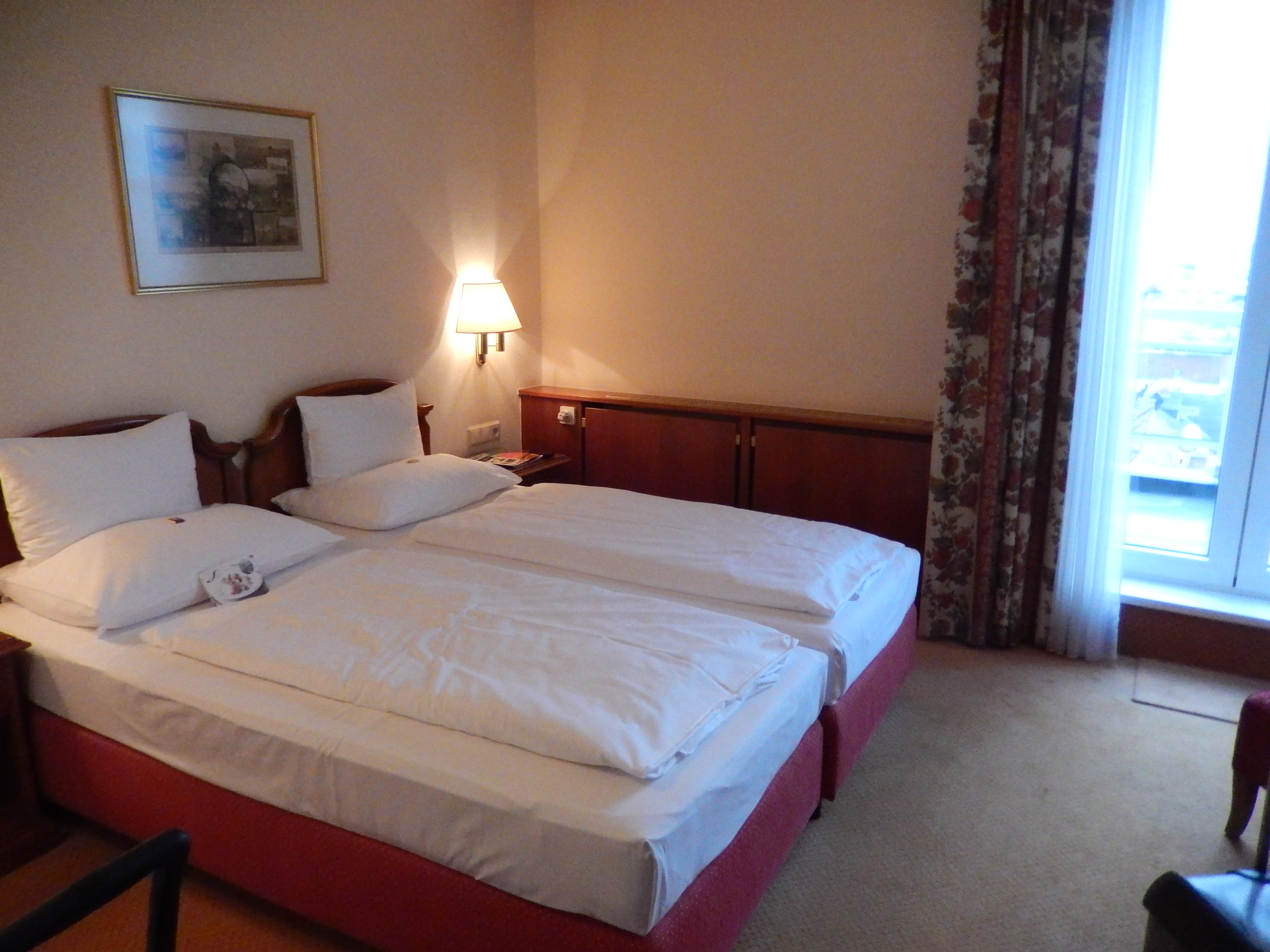
our room
Having missed lunch (just snacks on the train), we looked to Rick Steves’ book for local restaurant recommendations and walked just a short distance for a typical German meal of schnitzel, potato salad (very different, but delicious) and beer, and the only picture of the two of us together on the whole trip:

first meal in Vienna
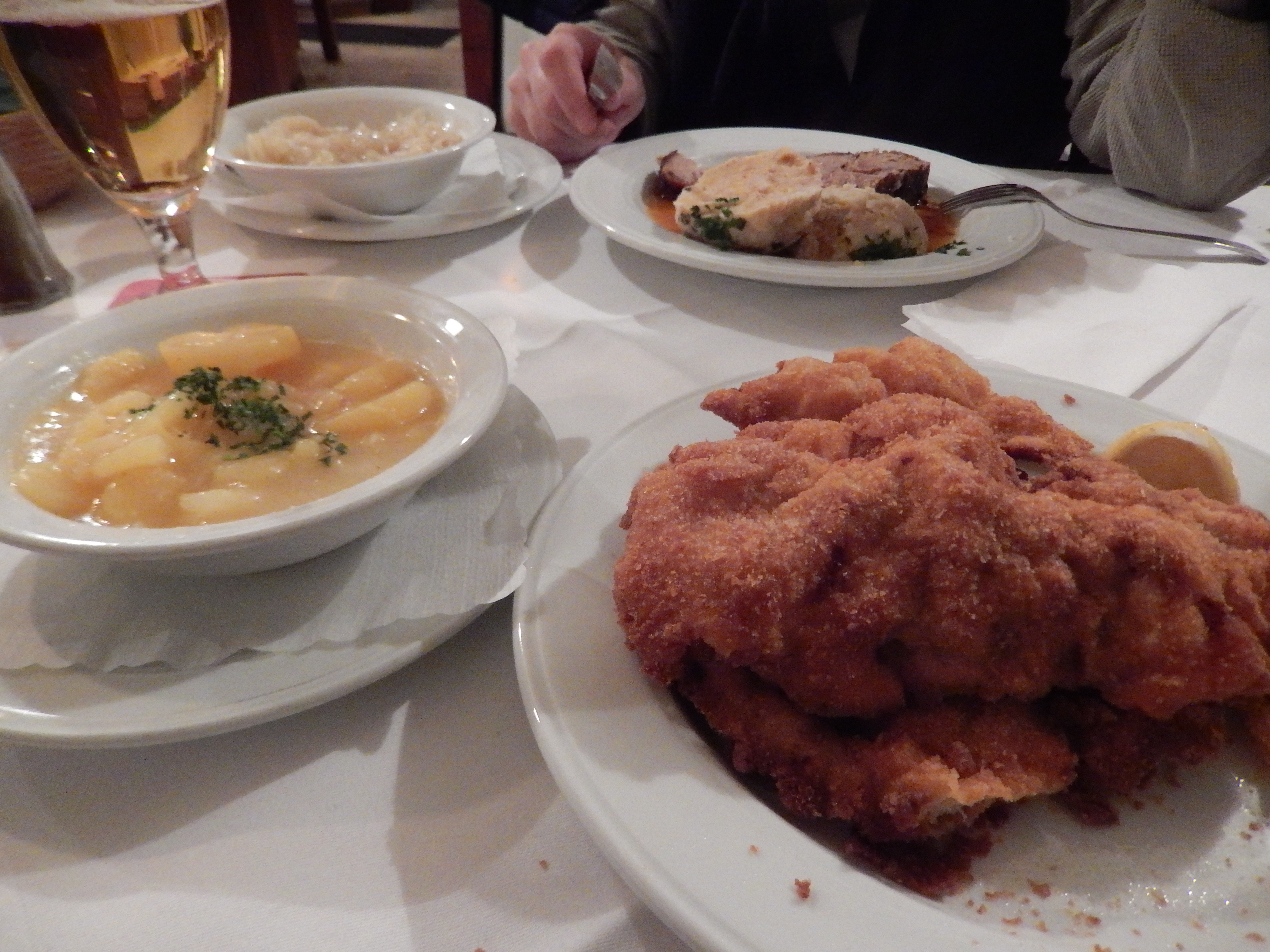
yummy and huge – very filling schnitzel
And then, as it started to get dark, off we headed to the centre of Vienna – St. Stephen’s Cathedral square, where we were surprised, but very happy, to find a Christmas market.
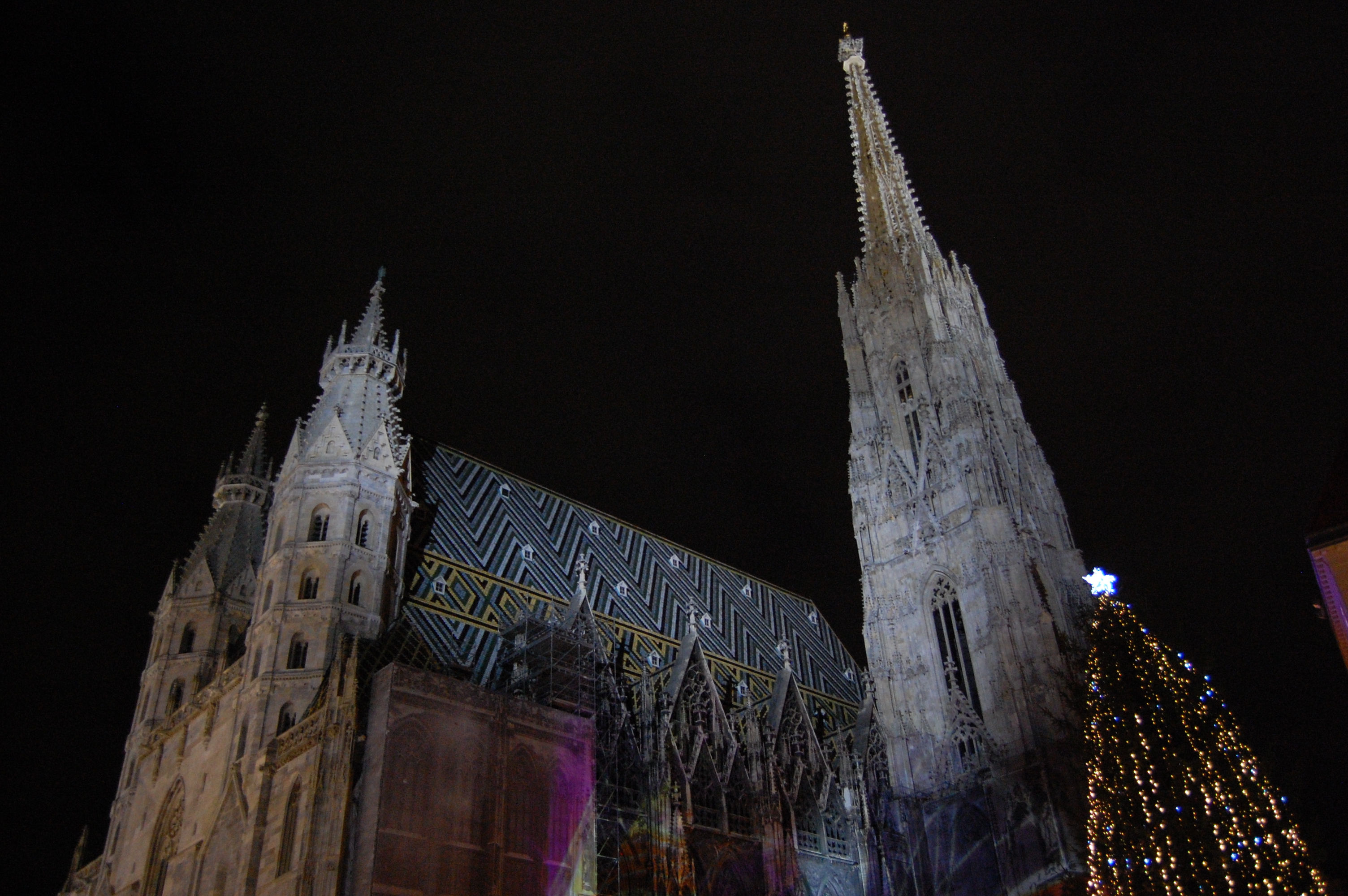
St. Stephen’s Cathedral (Don)
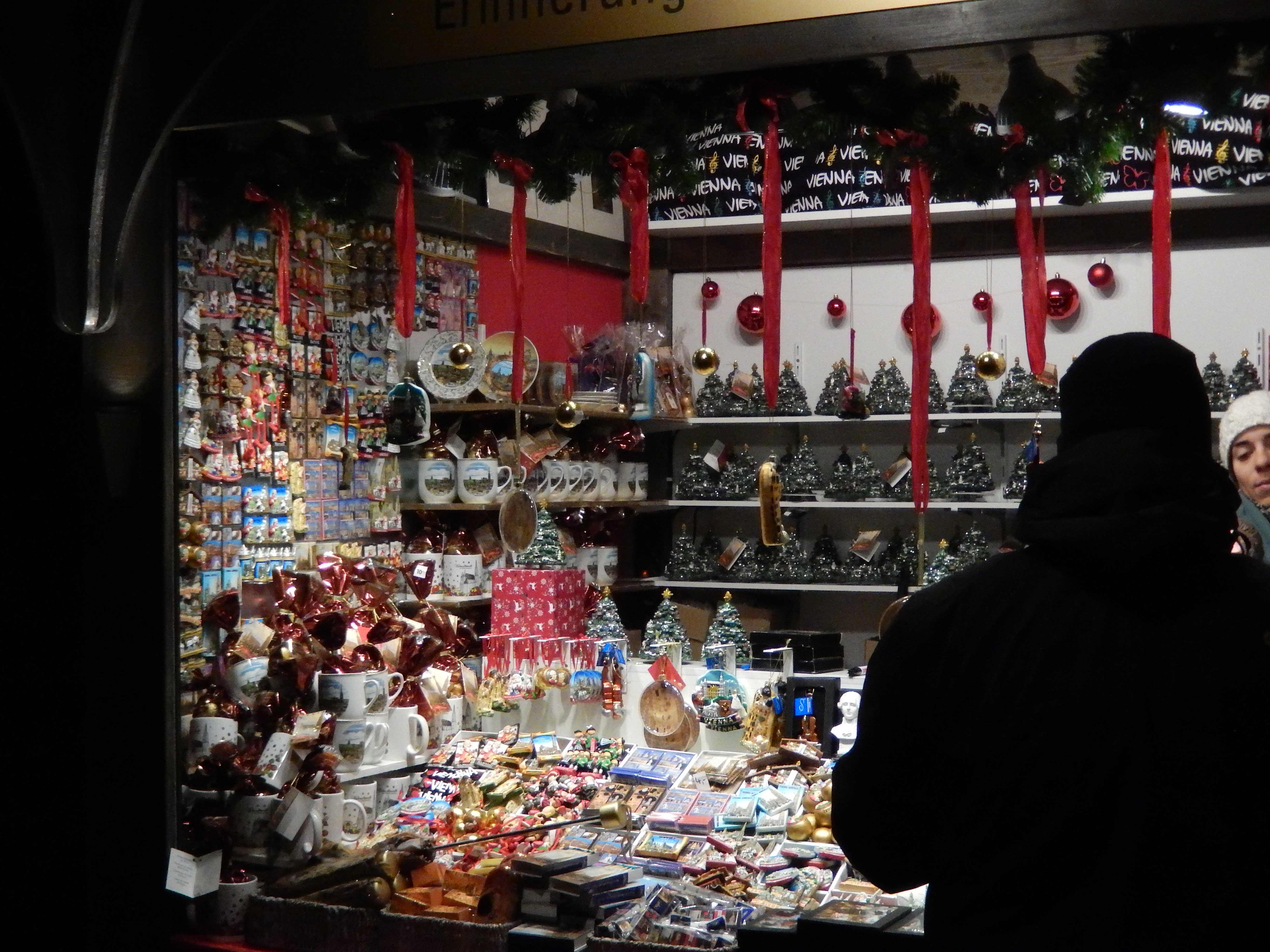
Christmas market booth

cheery Christmas decorations galore
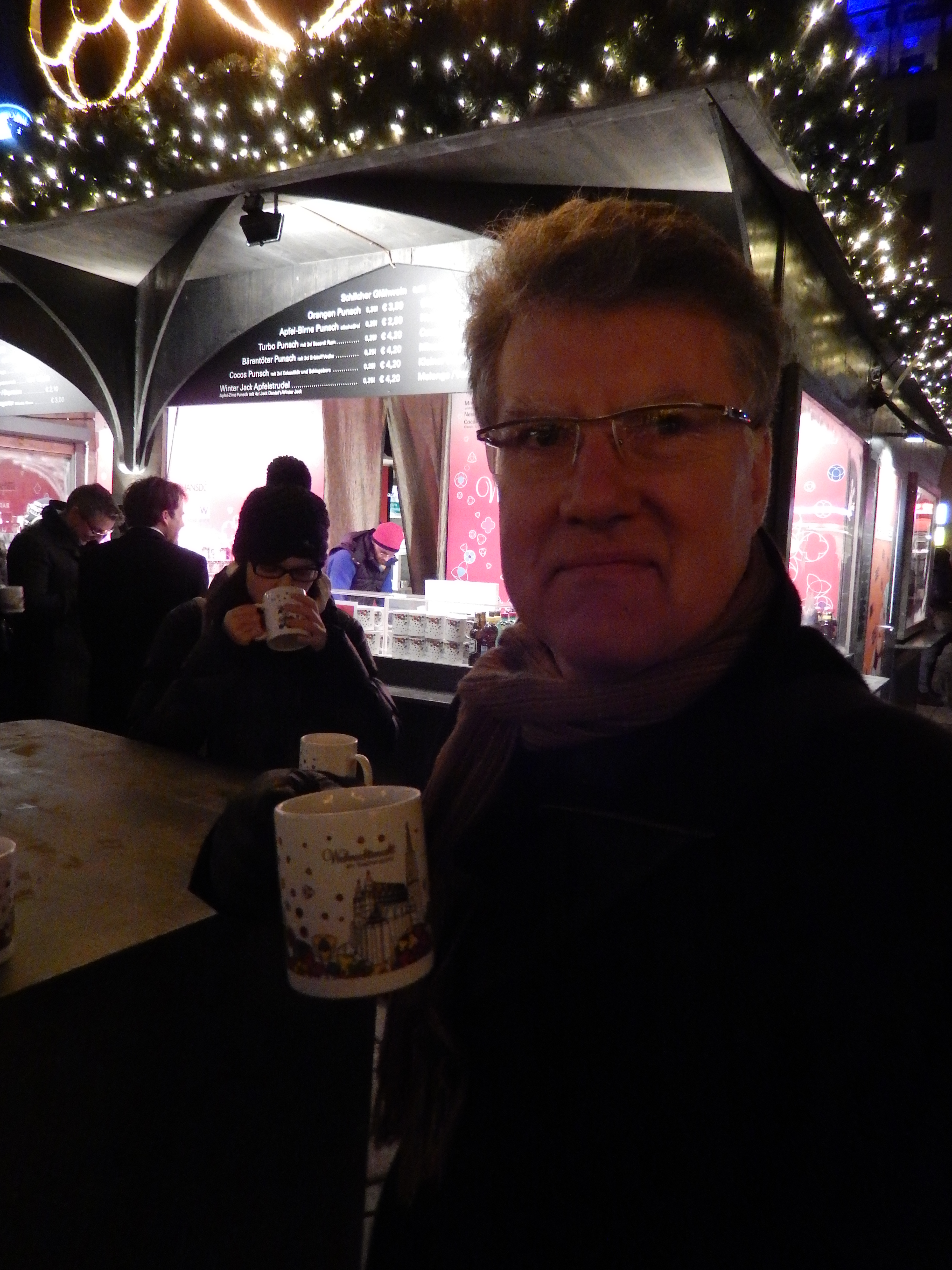
best of all, “Glüwein” – hot mulled wine
We walked and walked, past many high end shops, more churches, up to the palace gates, and then back towards our hotel, stopping at the Marriott’s bar for a glass of wine before heading to our hotel and bed.
The next day, after breakfast, we started our sight-seeing with a tour of St. Stephen’s Cathedral, the heart of Old Vienna. There was a sign inside to tell us of a tour in english, and the fellow’s detail was good. Then we remembered that Rick Steves has podcast tours (which I’d very cleverly downloaded for our iPods before we’d left home) and one of his podcasts is a tour of St. Stephen’s, so we listened to his version as we wandered through the cathedral taking pictures. I won’t go into all his detail, but a few highlights include:
the old pulpit – a Gothic sandstone pulpit, c.1500 –
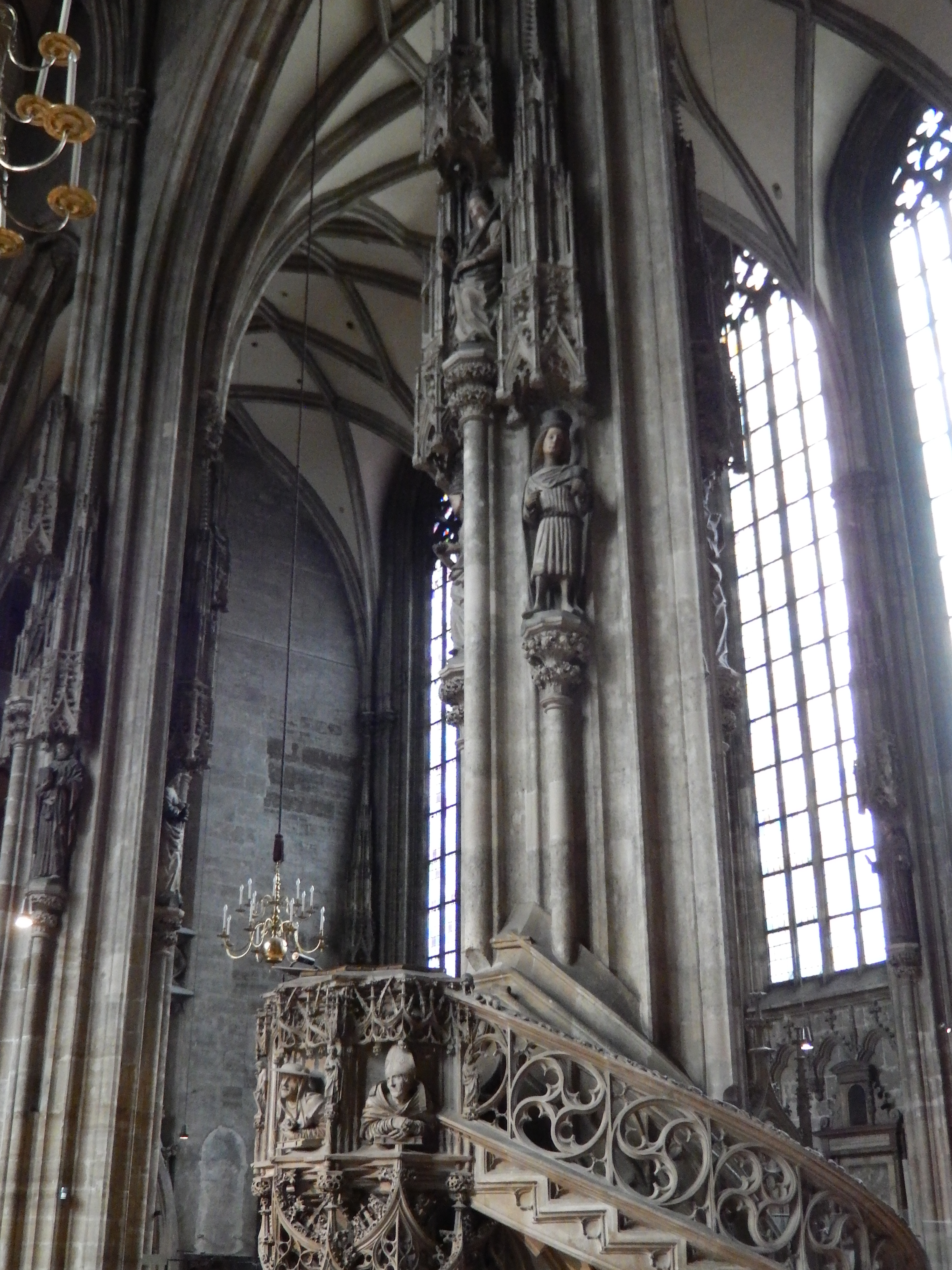
Gothic pulpit

closer view of carved detail
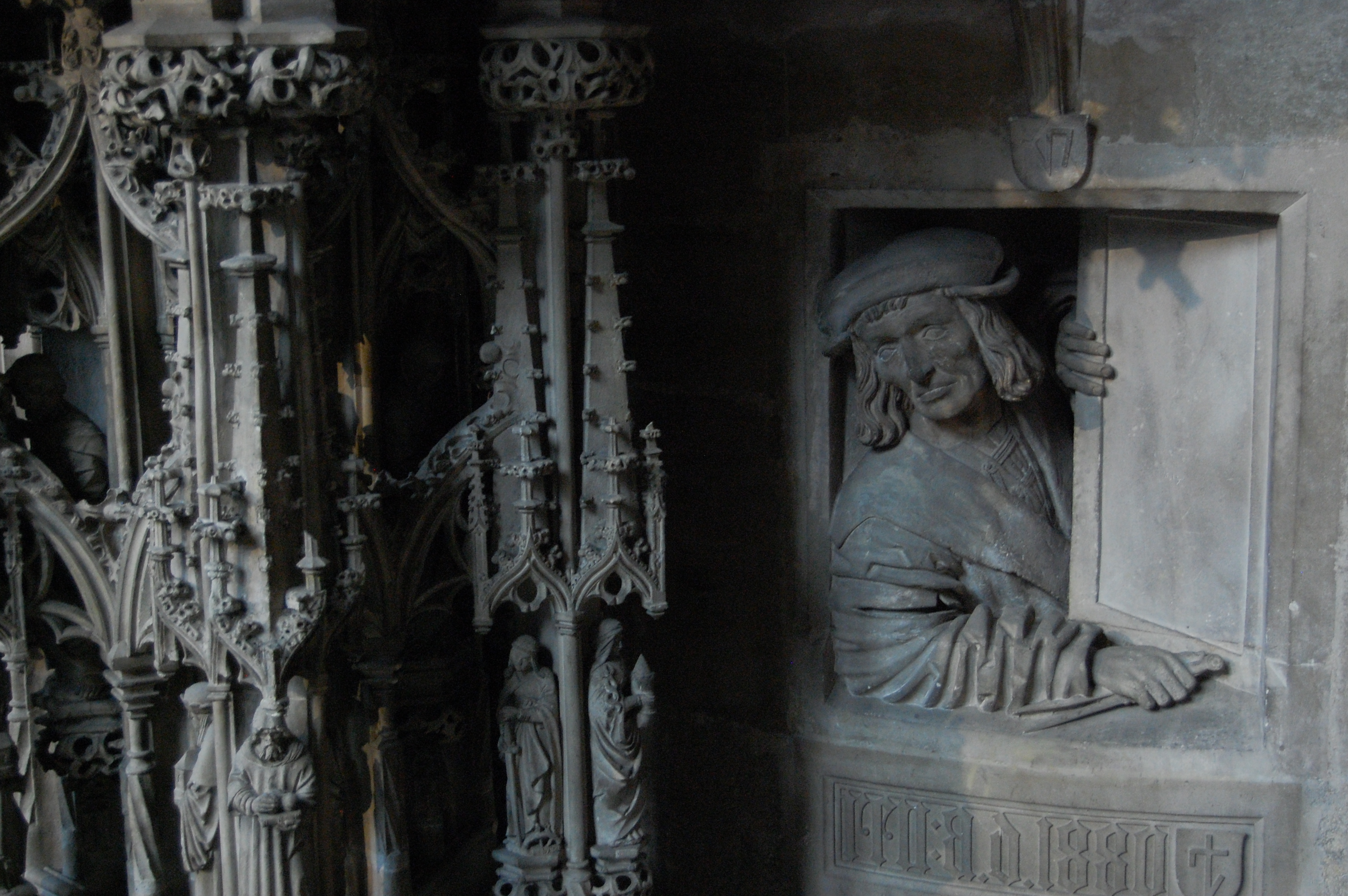
peeking out from under the pulpit stairs, thought to be a self-portrait of the sculptor (Don)
a carved statue of the Madonna of the Servants (from 1330), a favourite of working people –
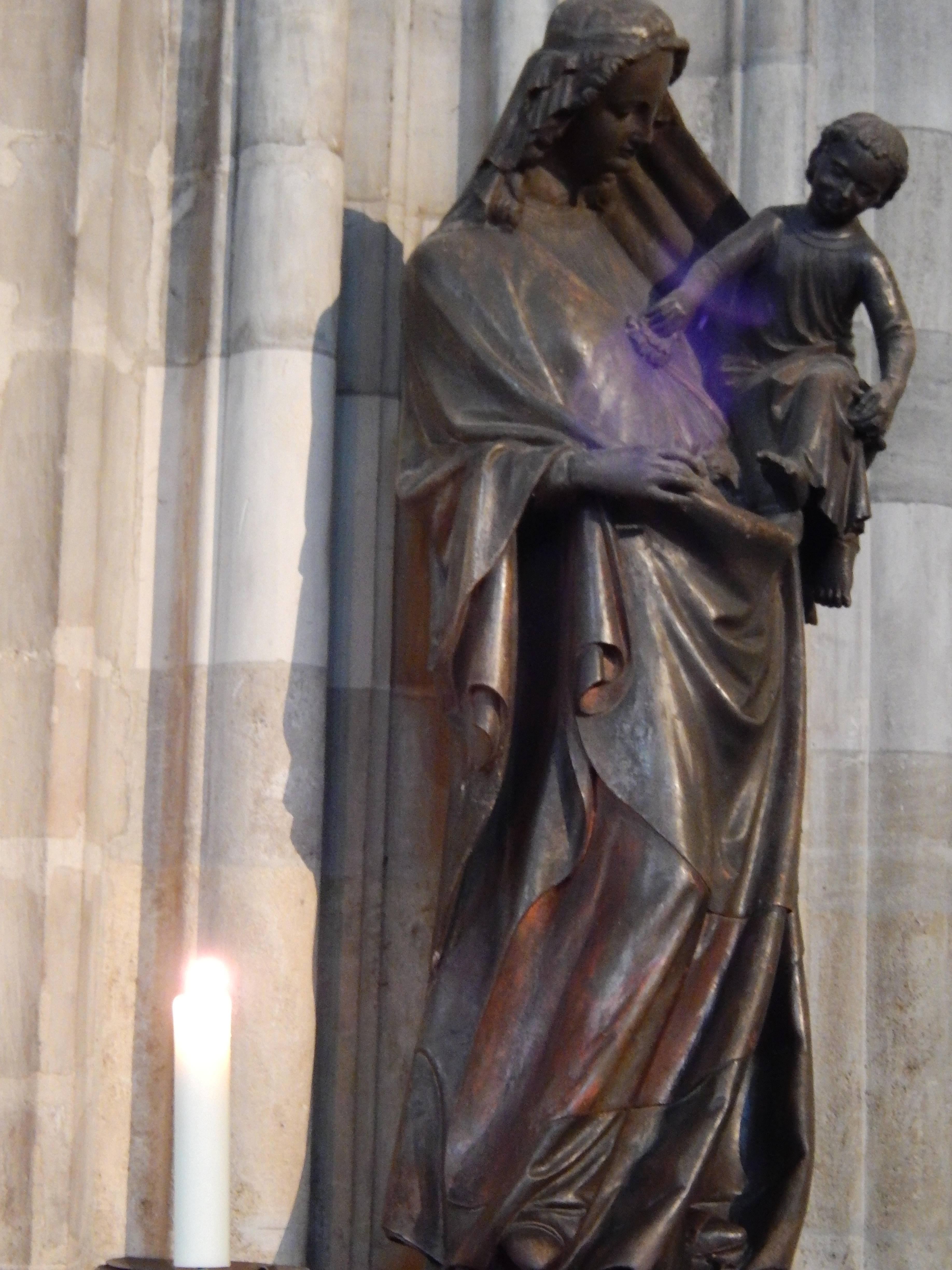
Madonna of the Servants
and the tomb of Frederick III (1415-1493), “who is considered the ‘father’ of Vienna for turning the small village into a royal town with a cosmopolitan feel. Frederick secured a bishopric, turning the newly completed St. Stephen’s church into a cathedral. The emperor’s major contribution to Austria, however, was in fathering Maximilian I and marrying him off to Mary of Burgundy, instantly making the Habsburg Empire a major player in European politics. The lavish tomb (made of marble from Salzburg) is as long-lasting as Frederick’s legacy. To make sure it stayed that way, locals saved his tomb from damage during WWII by encasing it (as well as the pulpit) in a shell of brick” –
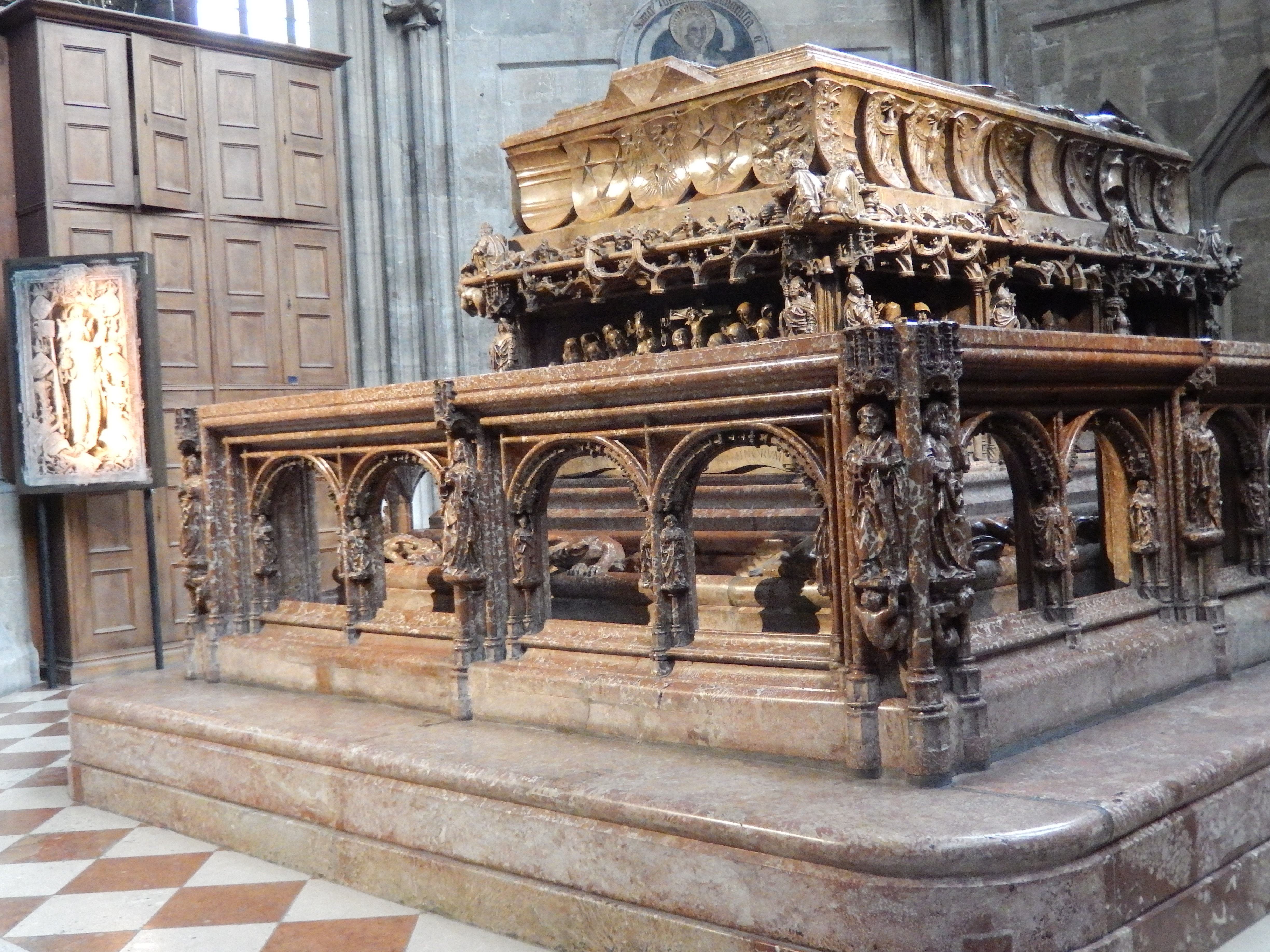
Tomb of Frederick III
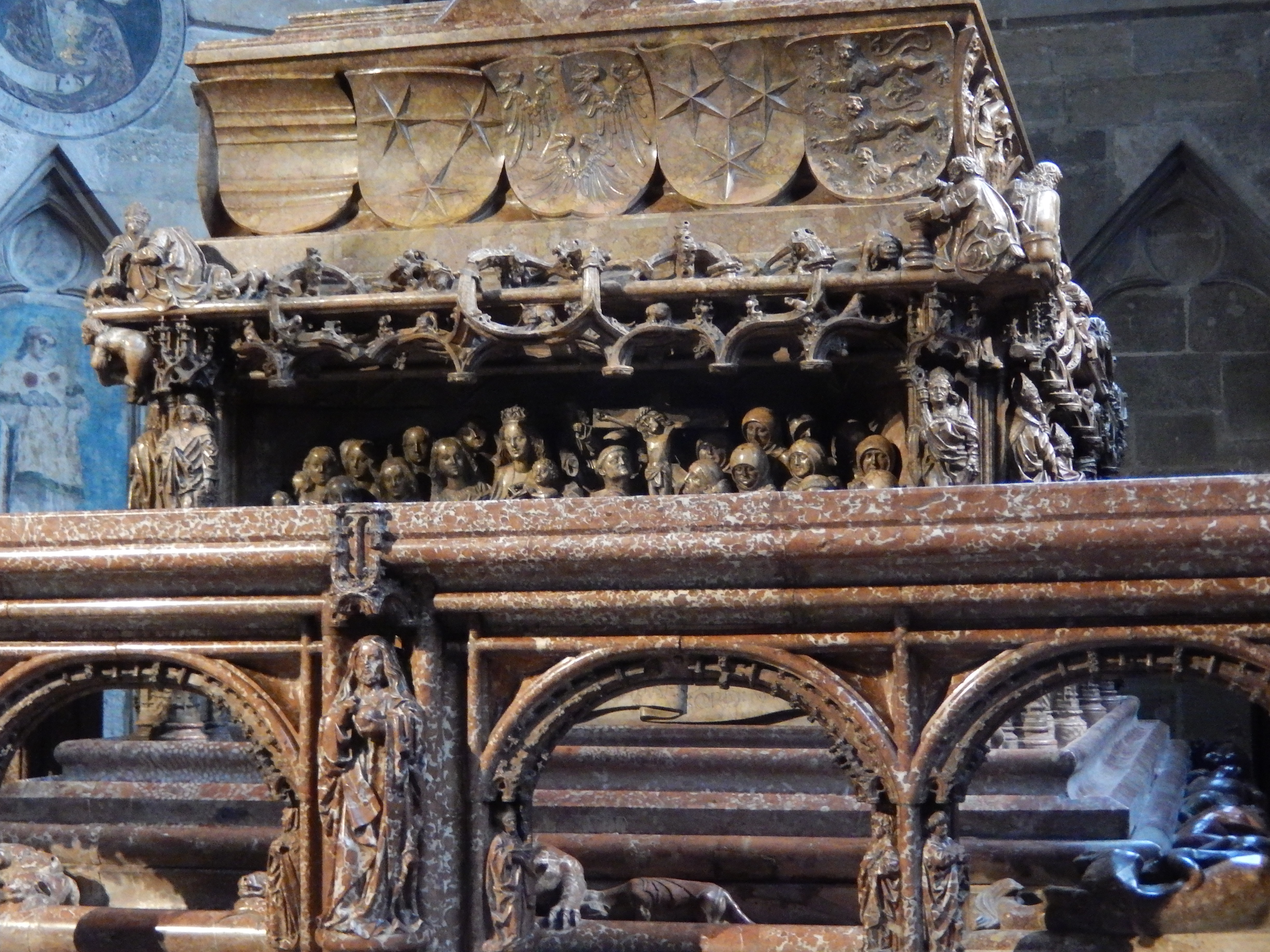
carved detail is incredible
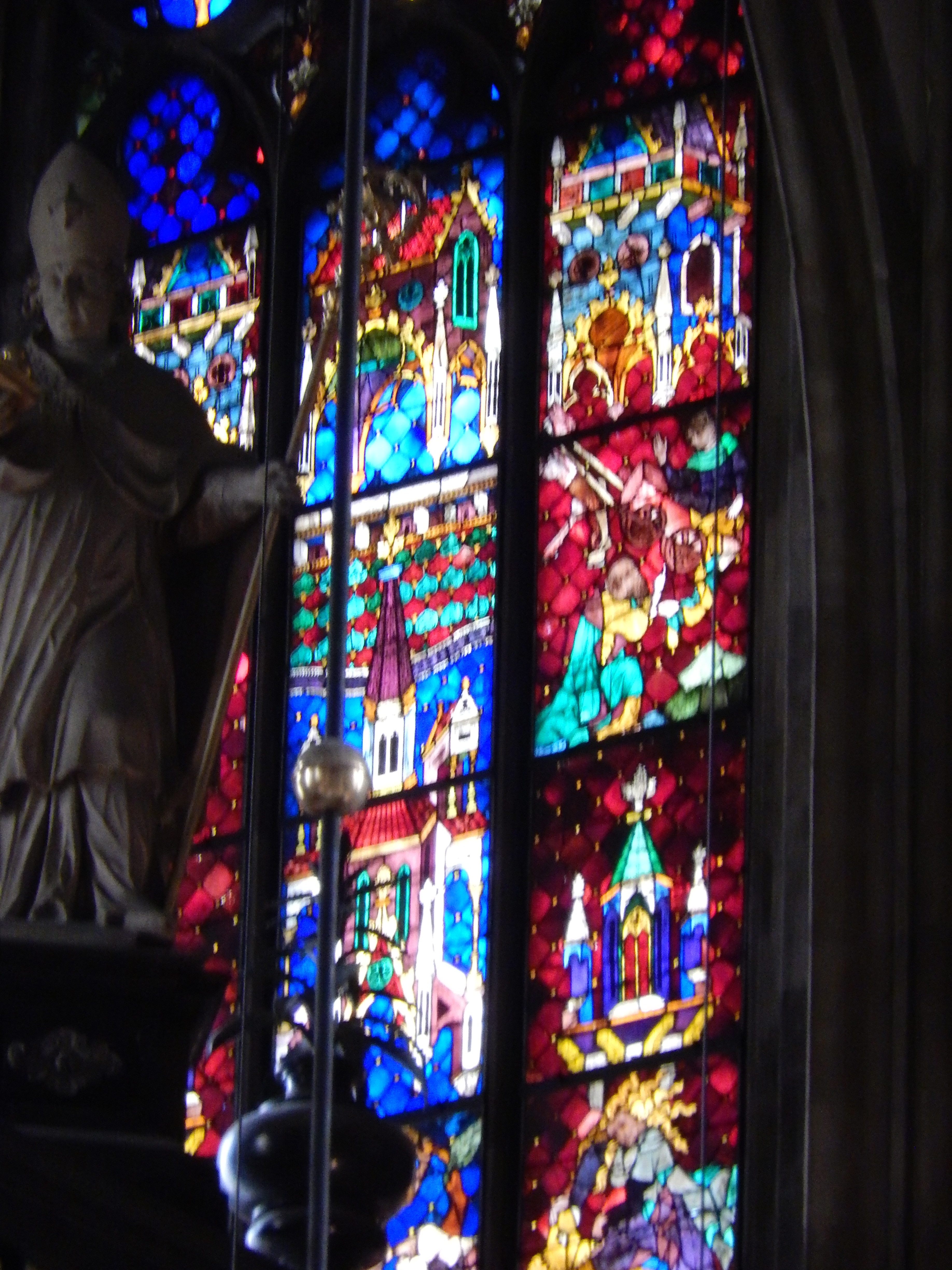
the cathedral has just a few stained glass windows
As we walked out of St. Stephen’s we were hit with snow flurries. We felt terribly sorry for the horses waiting in the cold.

horses waiting in the snow (Don)
From the cathedral we walked over to the Opera House to check on tour times, and felt sorry for the pigeons, too!

huddling against the snow (Don)
Having ascertained the english tour times, we went to the near-by Tirolerhof Café for lunch.
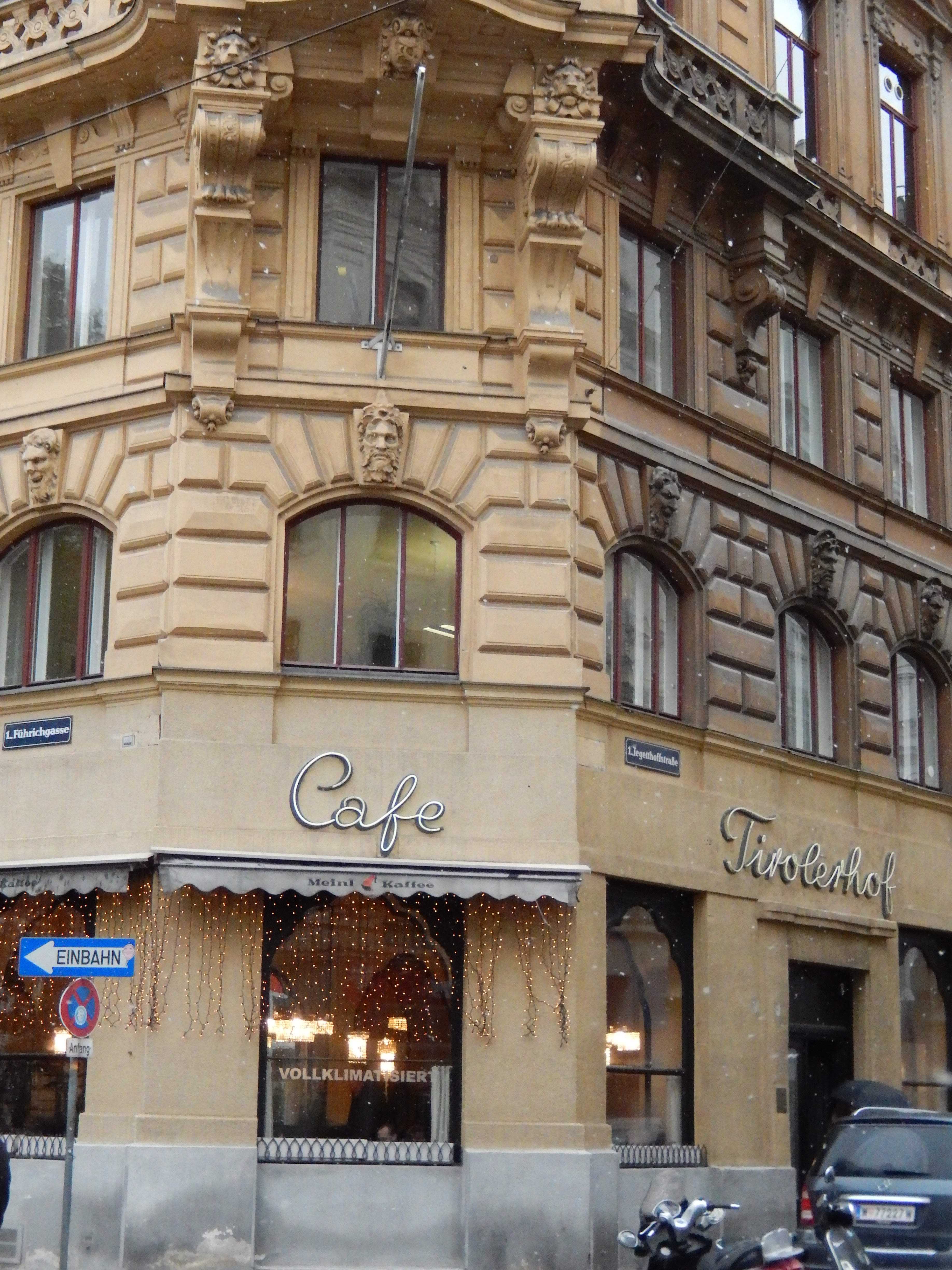
Tirolerhof Café
I had soup, Don had a salad and then we shared this amazing apfelstrudel with our coffees.
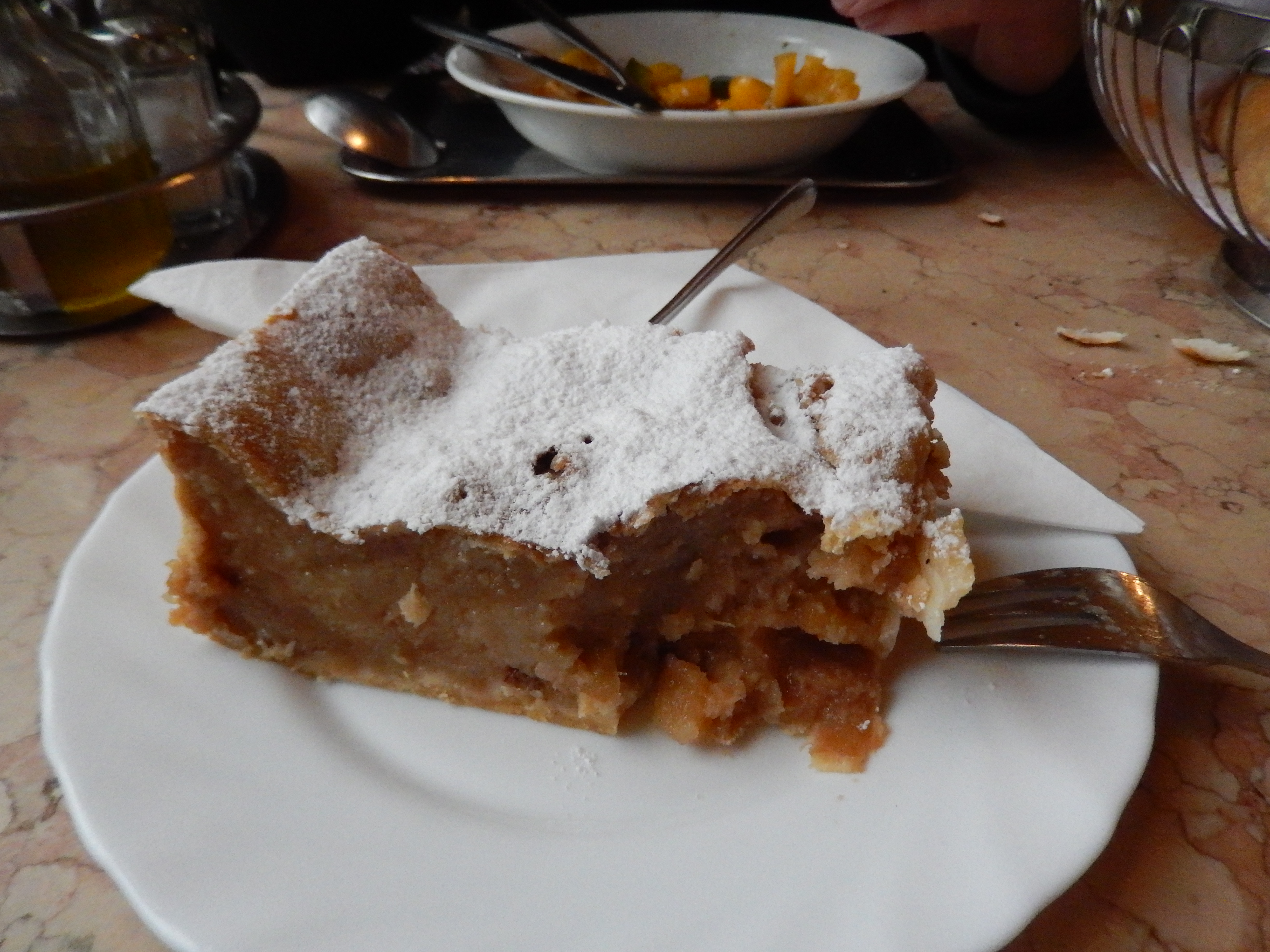
apfelstrudel to die for
We had discovered the “café culture” of Vienna as Rick Steves describes: ” In Vienna, the living room is down the street at the neighbourhood coffeehouse. This tradition is just another example of the Viennese expertise in good living. Each of Vienna’s many long-established (and sometimes even legendary) coffeehouses has its individual character (and characters). These classic cafés can be a bit tired, with a shabby patina and famously grumpy waiters who treat you like an uninvited guest invading their living room. Yet these spaces somehow also feel welcoming, offering newspapers, pastries, sofas, quick and light workers’ lunches, elegant ambience, and “take all the time you want” charm for the price of a cup of coffee.”
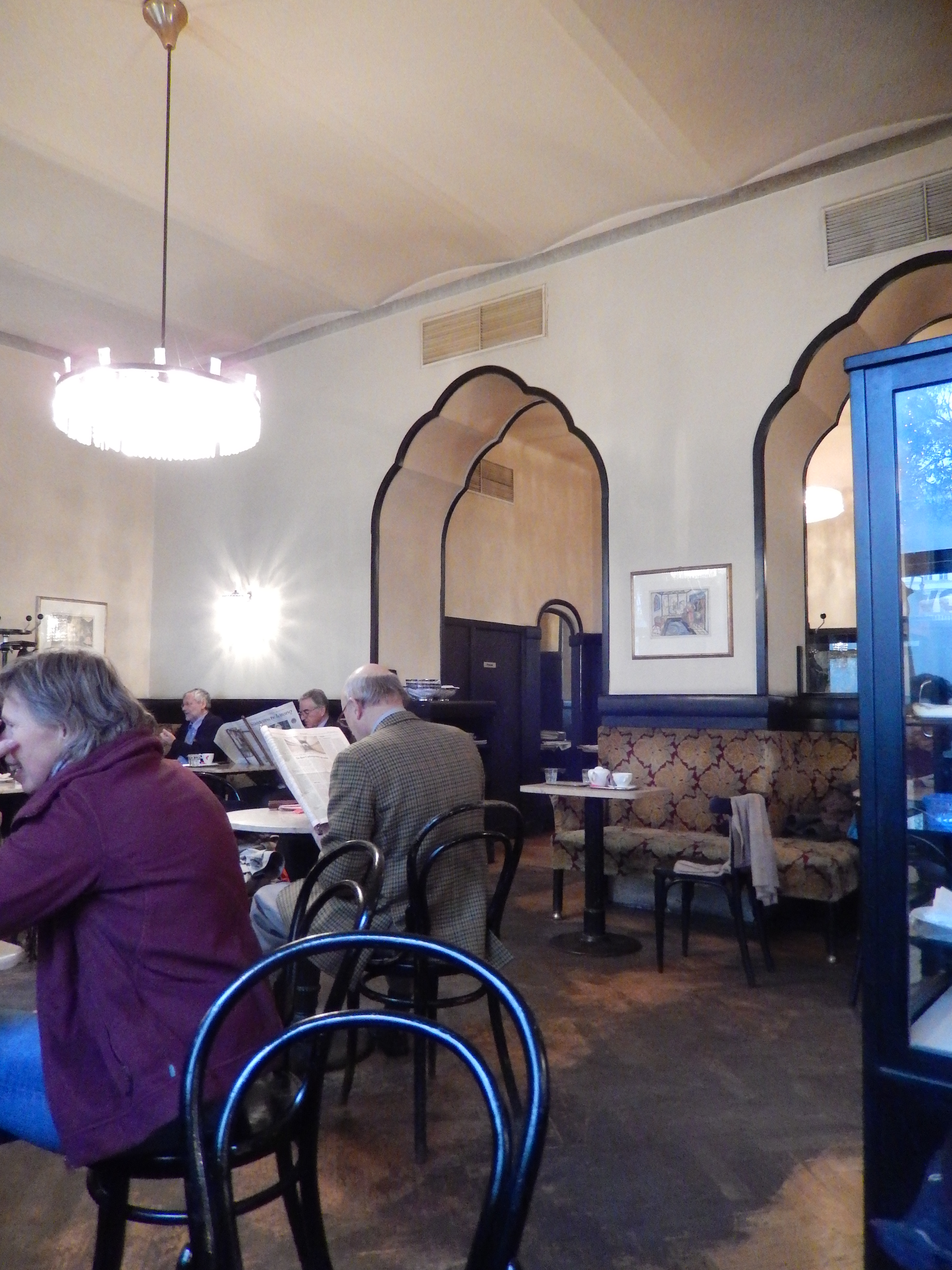
inside the Tirolerhof, maybe a little ‘tired’ but delightful nonetheless
After our lunch we still had some time before the tour of the Opera House started, so we wandered over to the Naschtmarkt, which “roughly translates to ‘Munchies Market.'” This would be a great place in the summer.
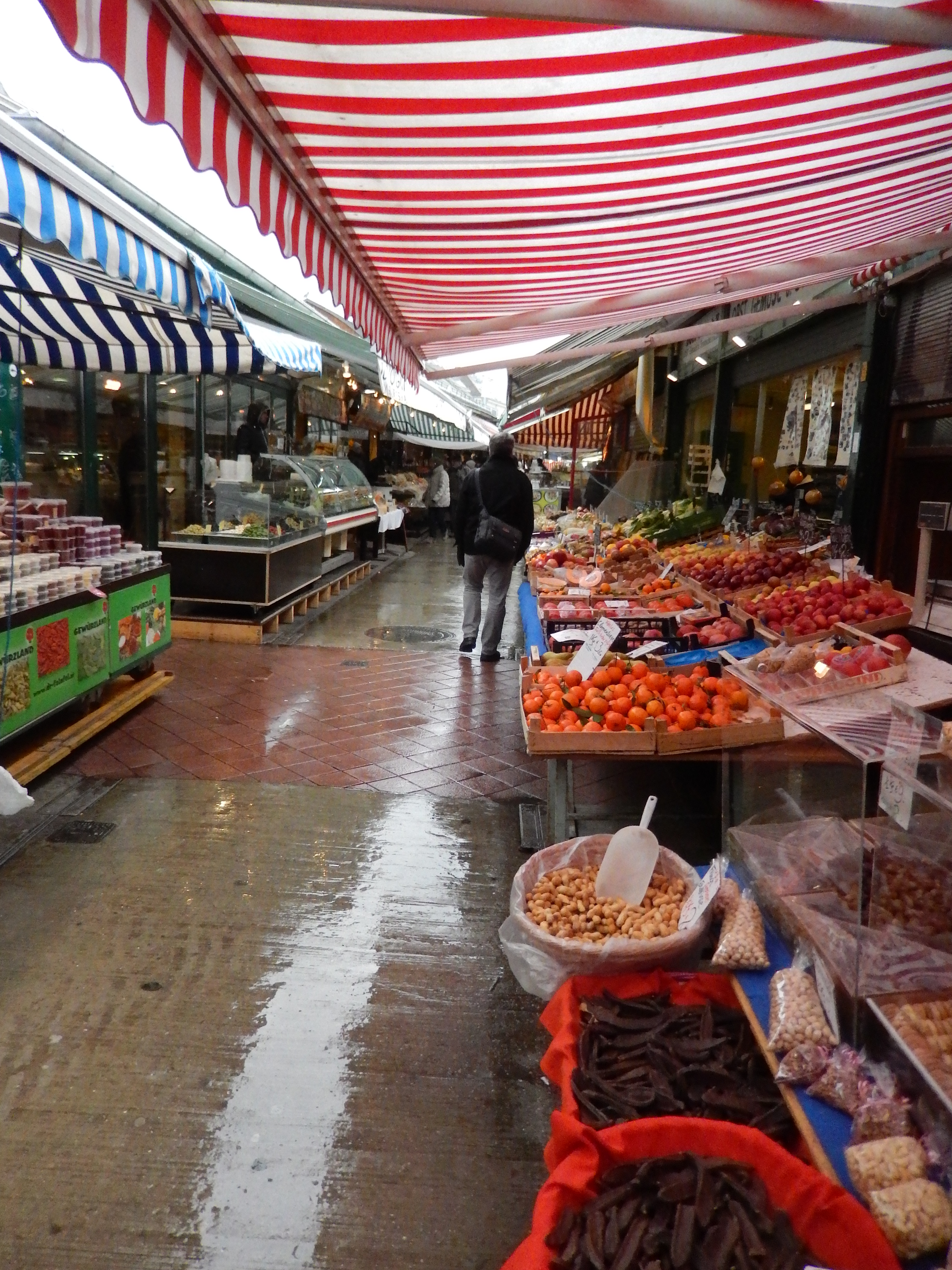
Naschtmarkt
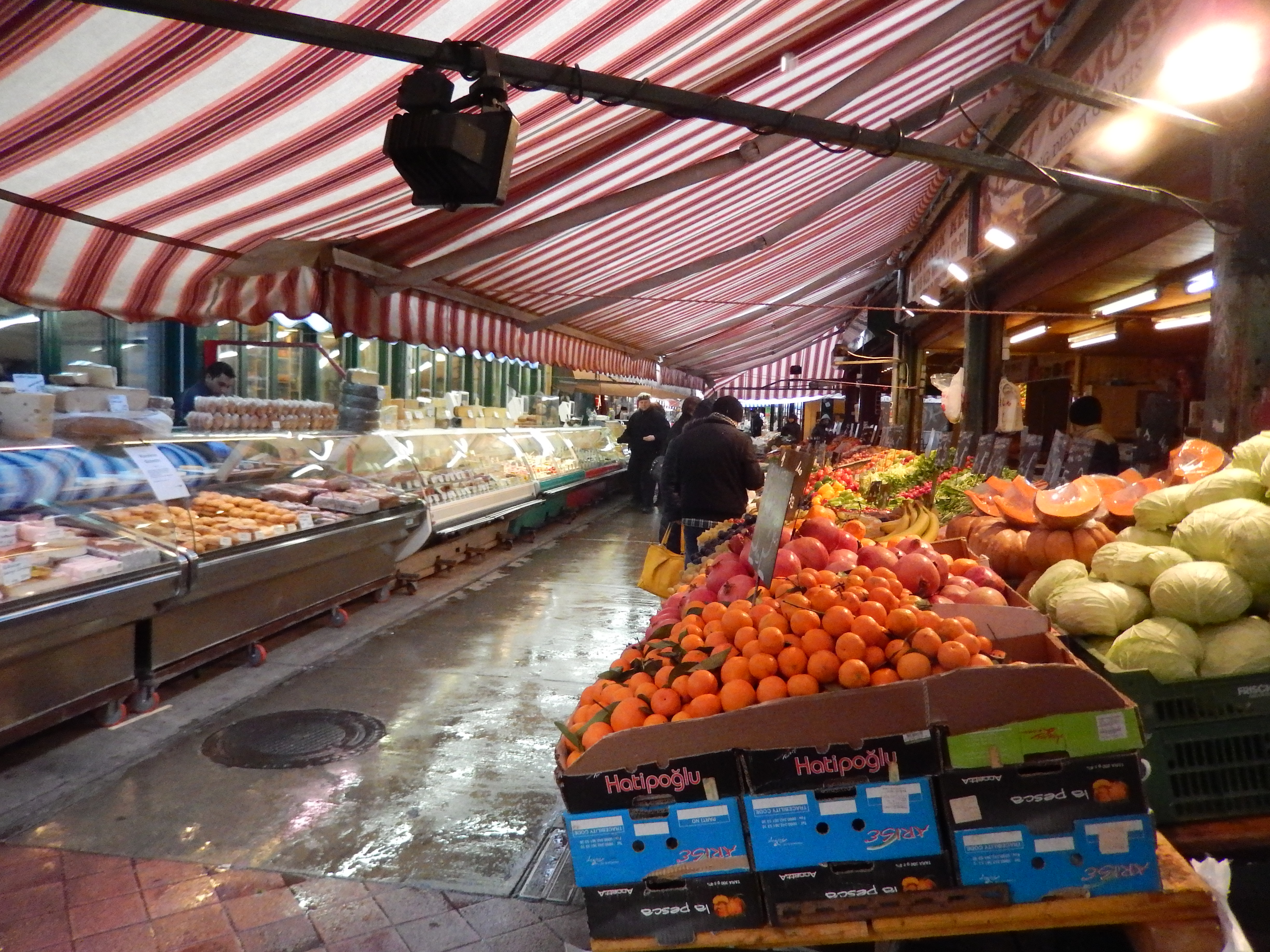
Naschtmarkt
Back to the Opera House for our tour.
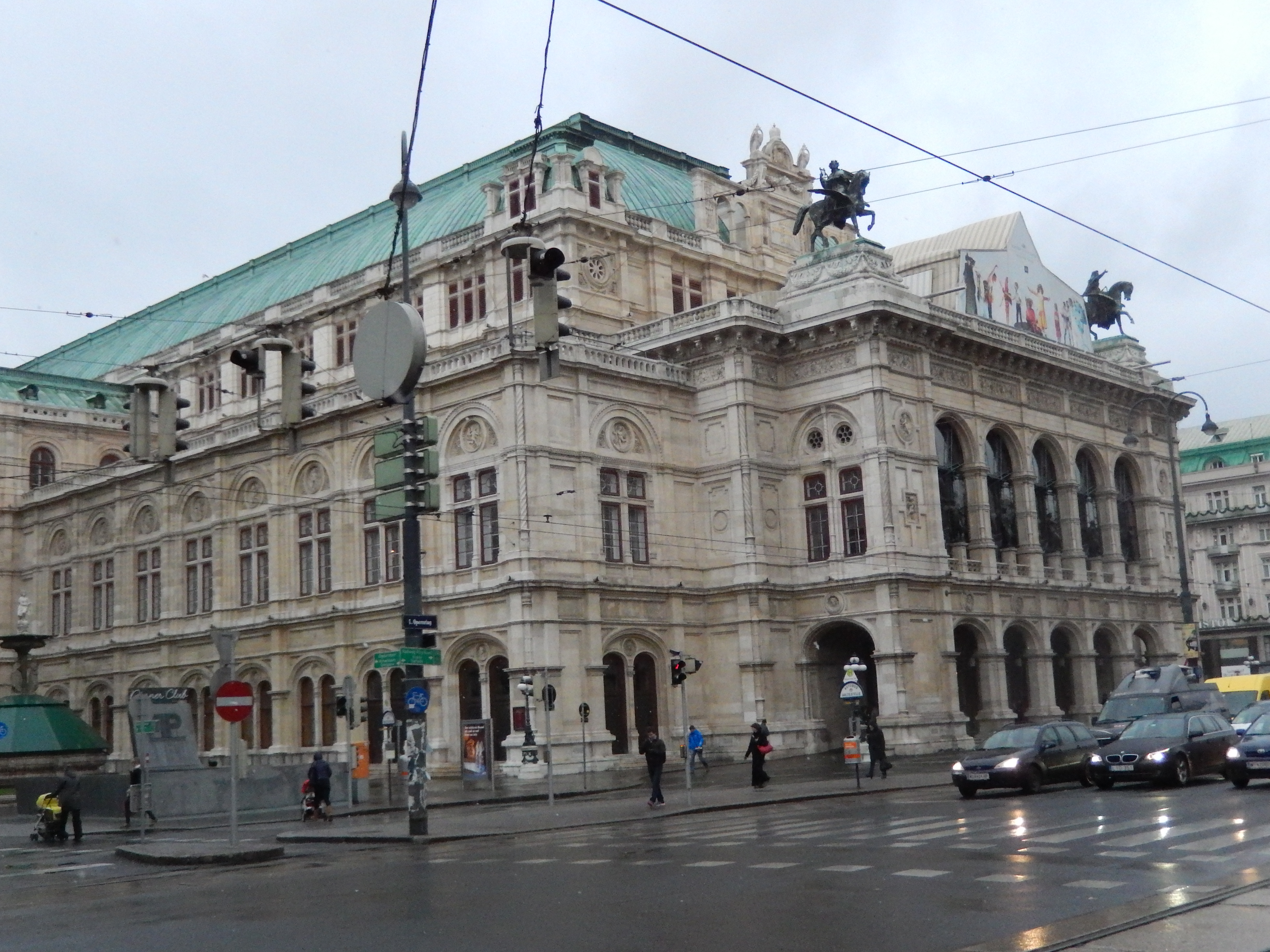
Vienna Opera House (Weiner Staatsoper)
Interestingly, the architect of the building received a great deal of criticism for his design, mostly because he failed to create a grand entrance, which led him to commit suicide. (We actually walked most of the way around the building looking for the entrance.) It was also destroyed by bombs during WWII and has been rebuilt. It’s still beautiful, though, especially inside.
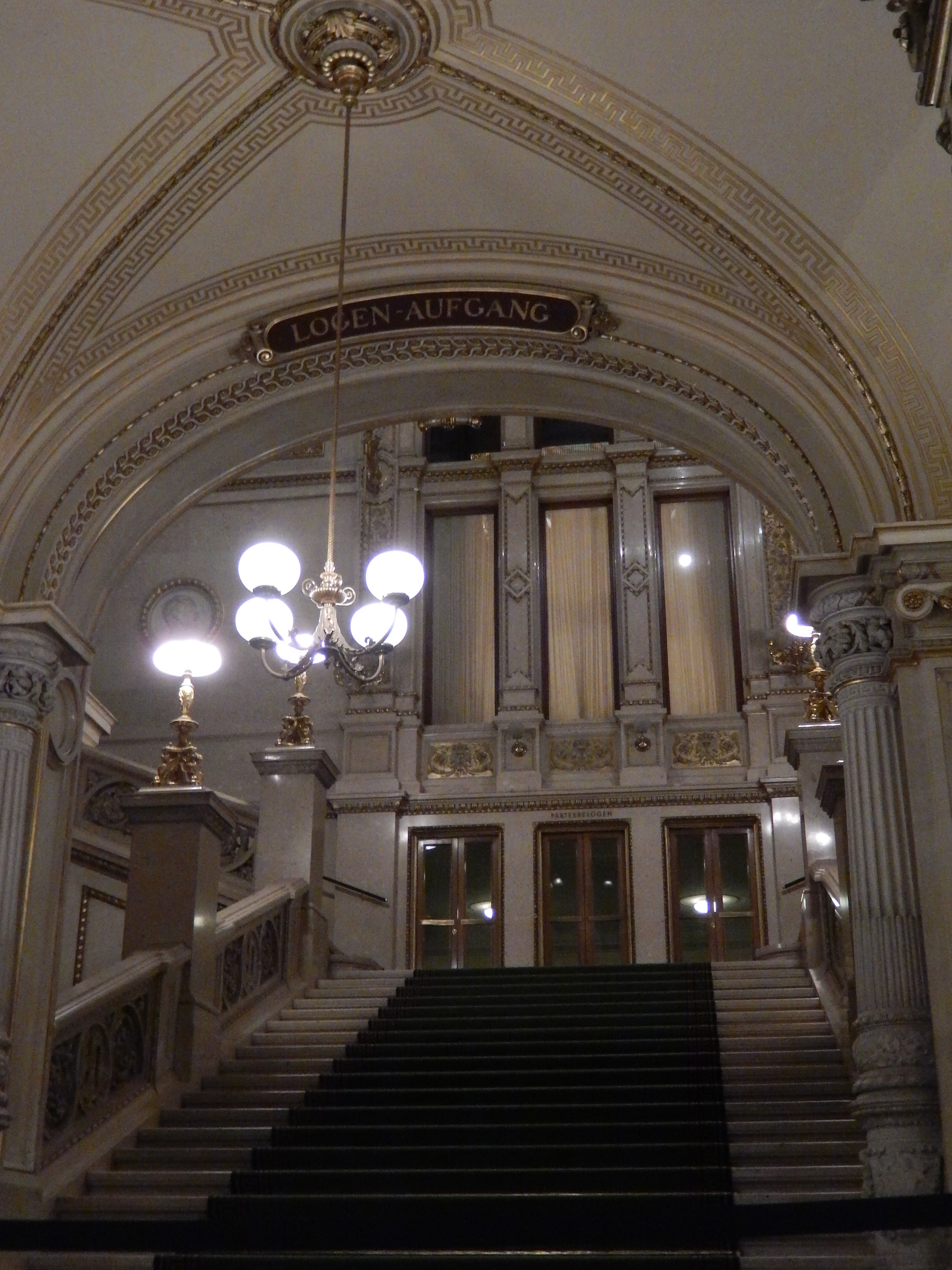
main entrance staircase
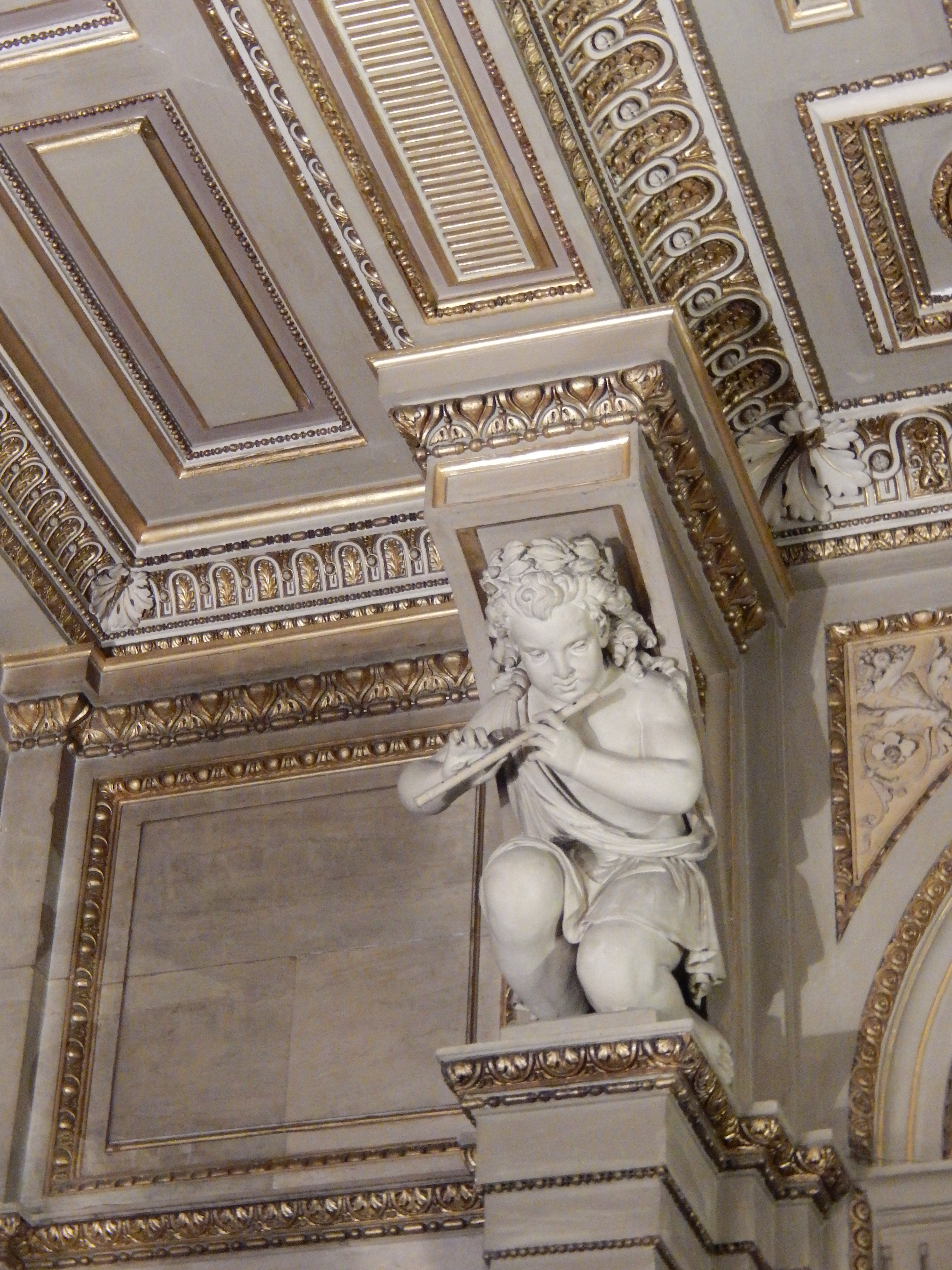
pillar and ceiling detail
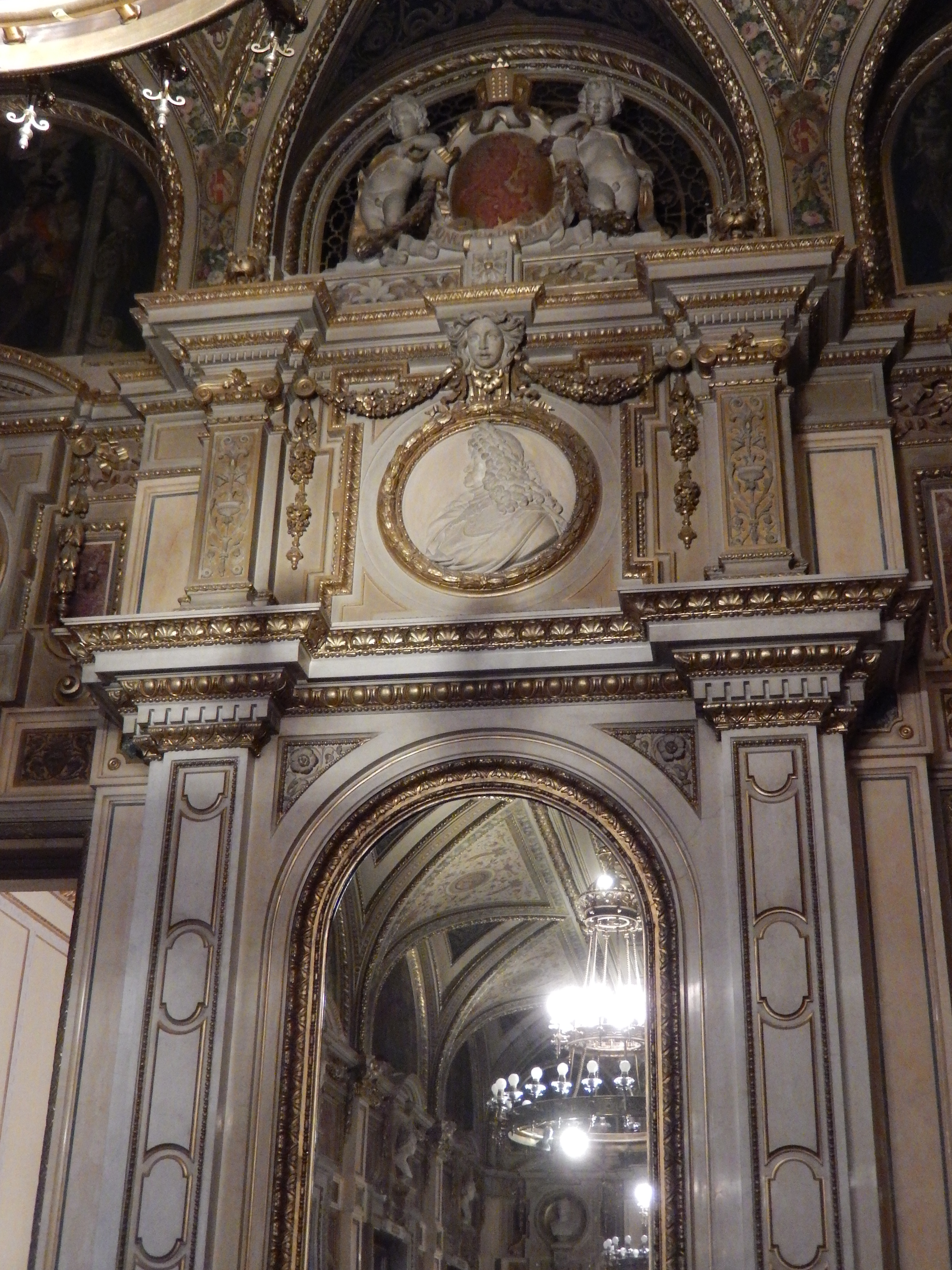
one of several lovely salons
We were lucky to get to see backstage, work in progress. Unbelievably, every night is a different production at the Opera House in Vienna – which, I guess, keeps hundreds of people employed.

backstage work
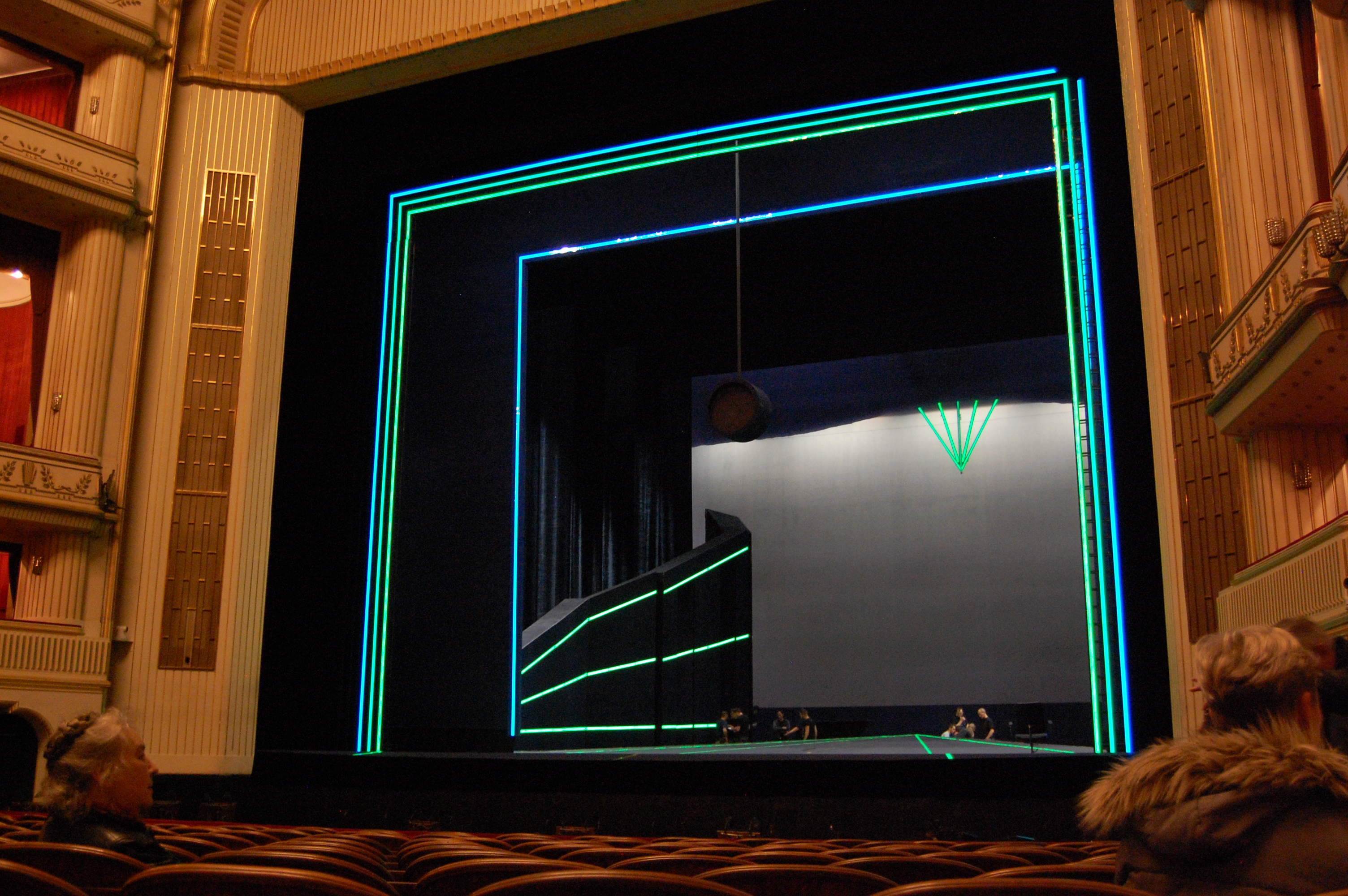
not sure what production will be playing, but the lighting is electric (Don)

such beautiful arches
The tour was worthwhile, the only way to see the building unless you’re attending an opera – which we weren’t.
From the Opera House we walked just a short distance to the Kunsthistoriches Museum, built in 1888 as a showcase for the Habsburgs’ collected artwork, collected between 1450-1650 approximately. For the two hours before it closed, we saw just a tiny sample of what’s on display,

another gorgeous entrance – Kunsthistoriches Musuem
including many Dutch and Flemish painters – Rubens, Vermeer, Rembrandt, Pieter Bruegel the Elder…
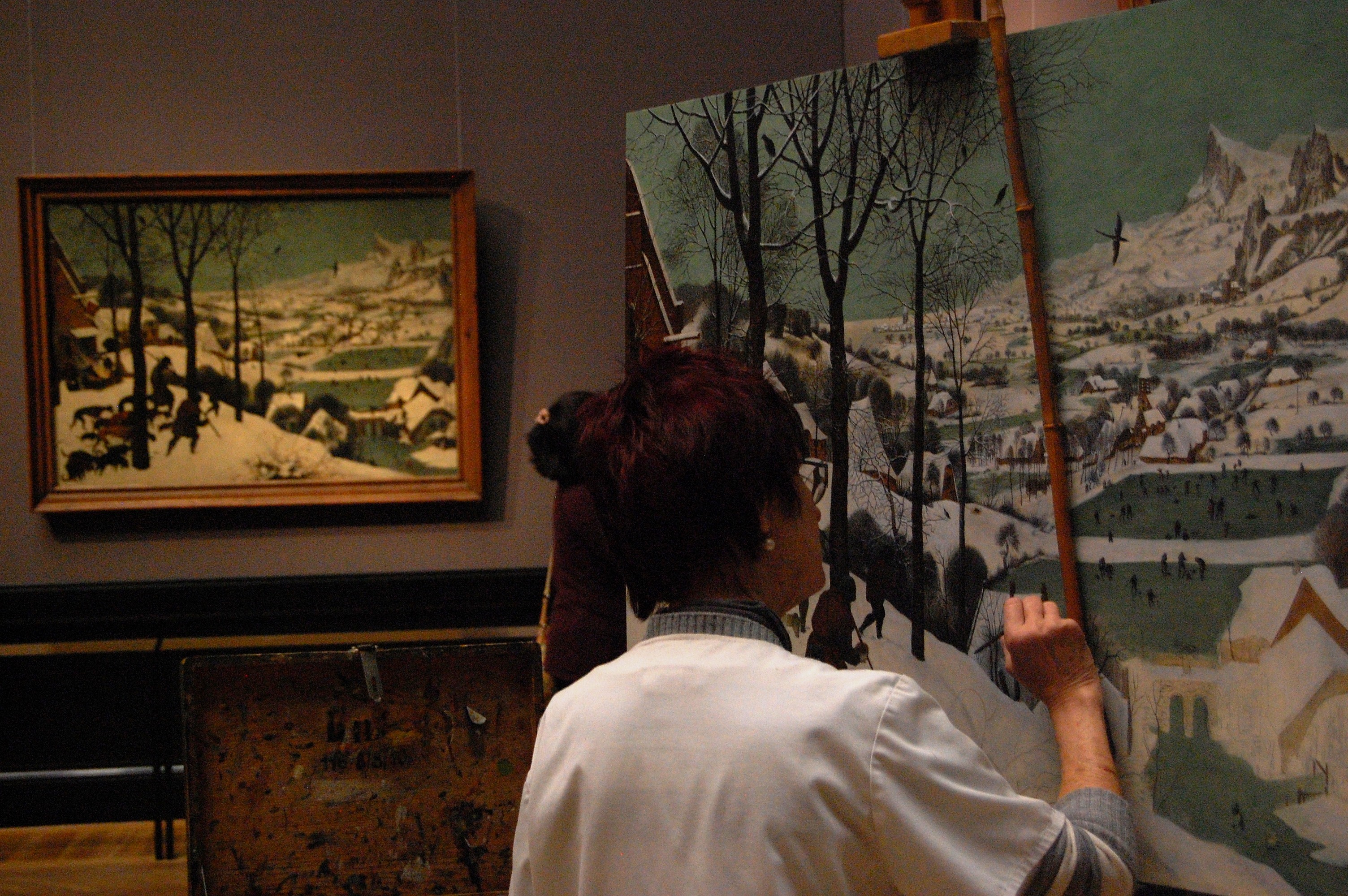
this woman paints an amazing copy of a Bruegel “Hunters in the Snow” (Don)
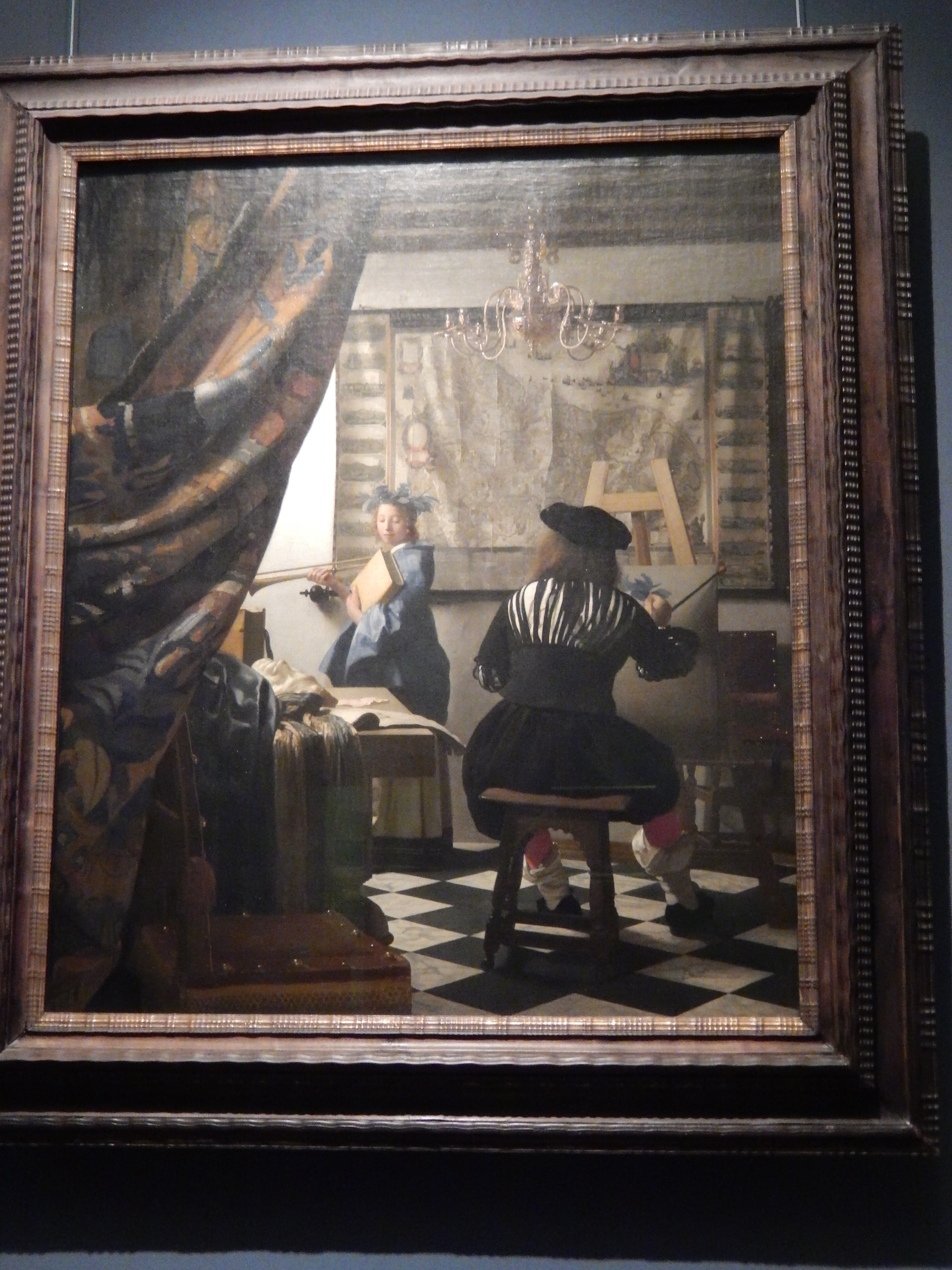
Vermeer’s “The Art of Painting”
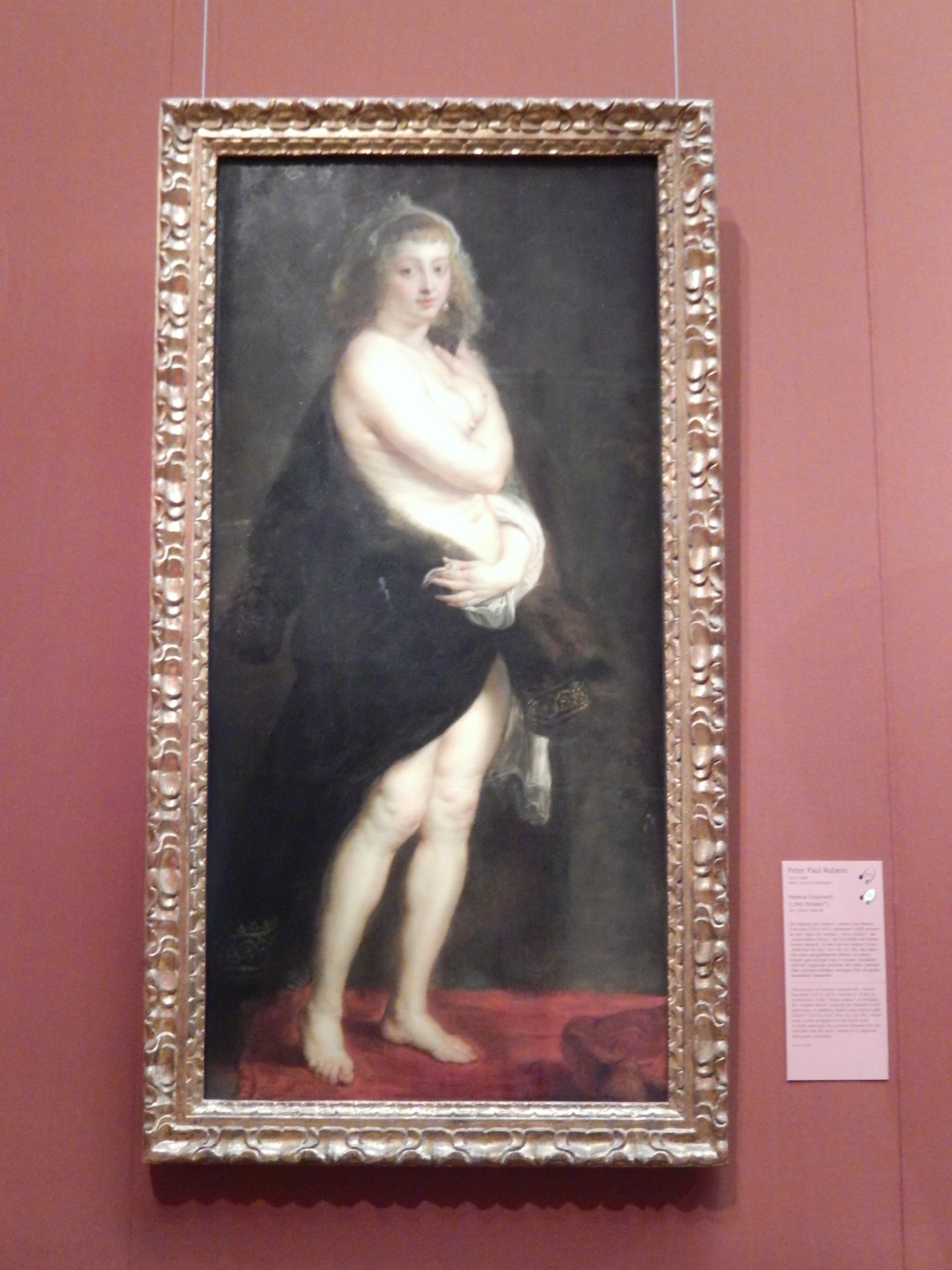
Peter Paul Rubens’ “The Little Fur”

inside the Rubens room, as lovely to look at as the paintings
Exiting the museum at closing time (6 pm), we were confronted by snow flurries, Vienna’s biggest monument- the Maria Theresa Monument, and a lovely Christmas market.
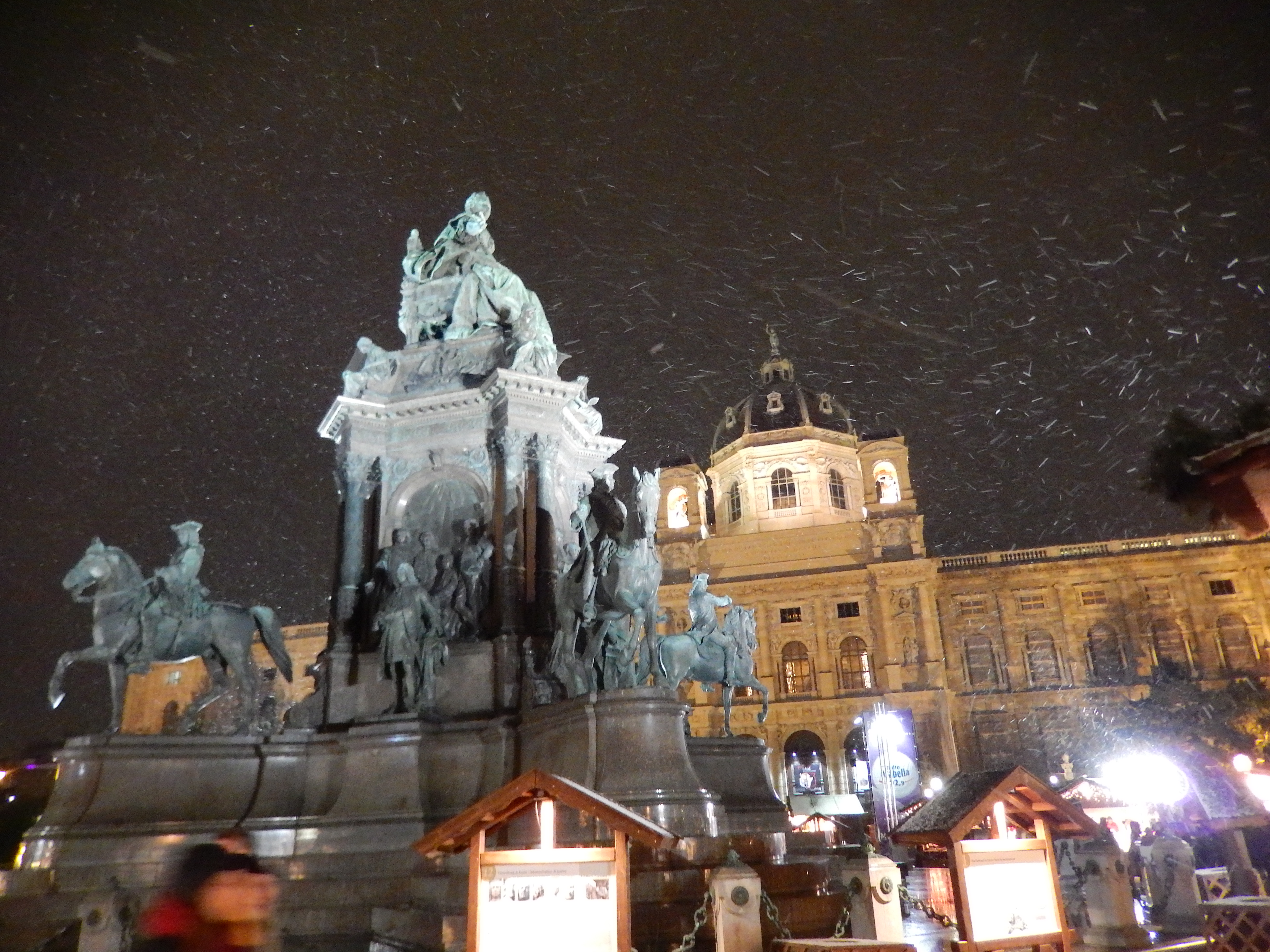
Christmas market around the Maria Theresa Monument, in the snow
First up, “glühwein!” and a wander through the market…
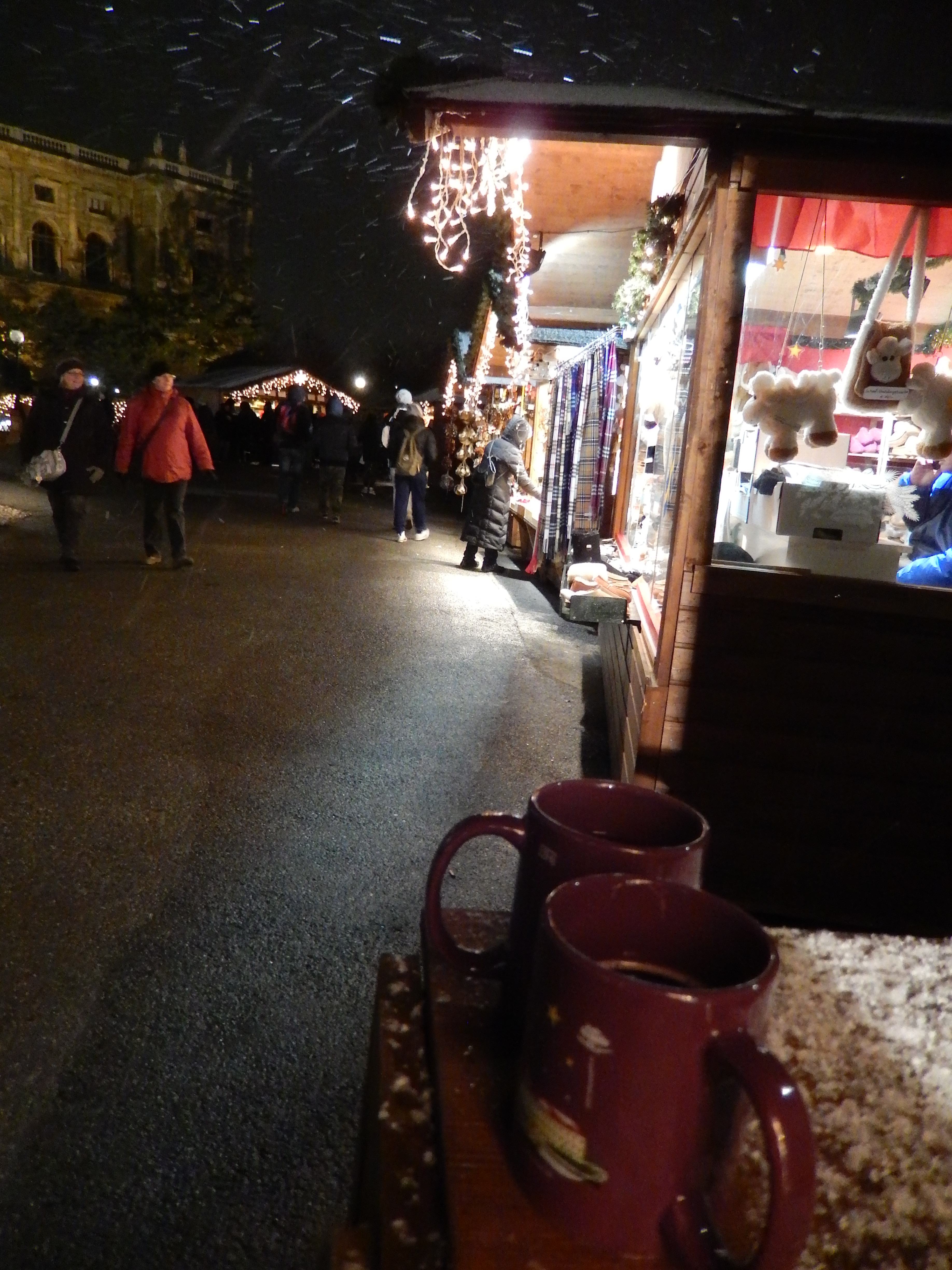
our two mugs of glühwein, market stalls behind
and then Don found chips!
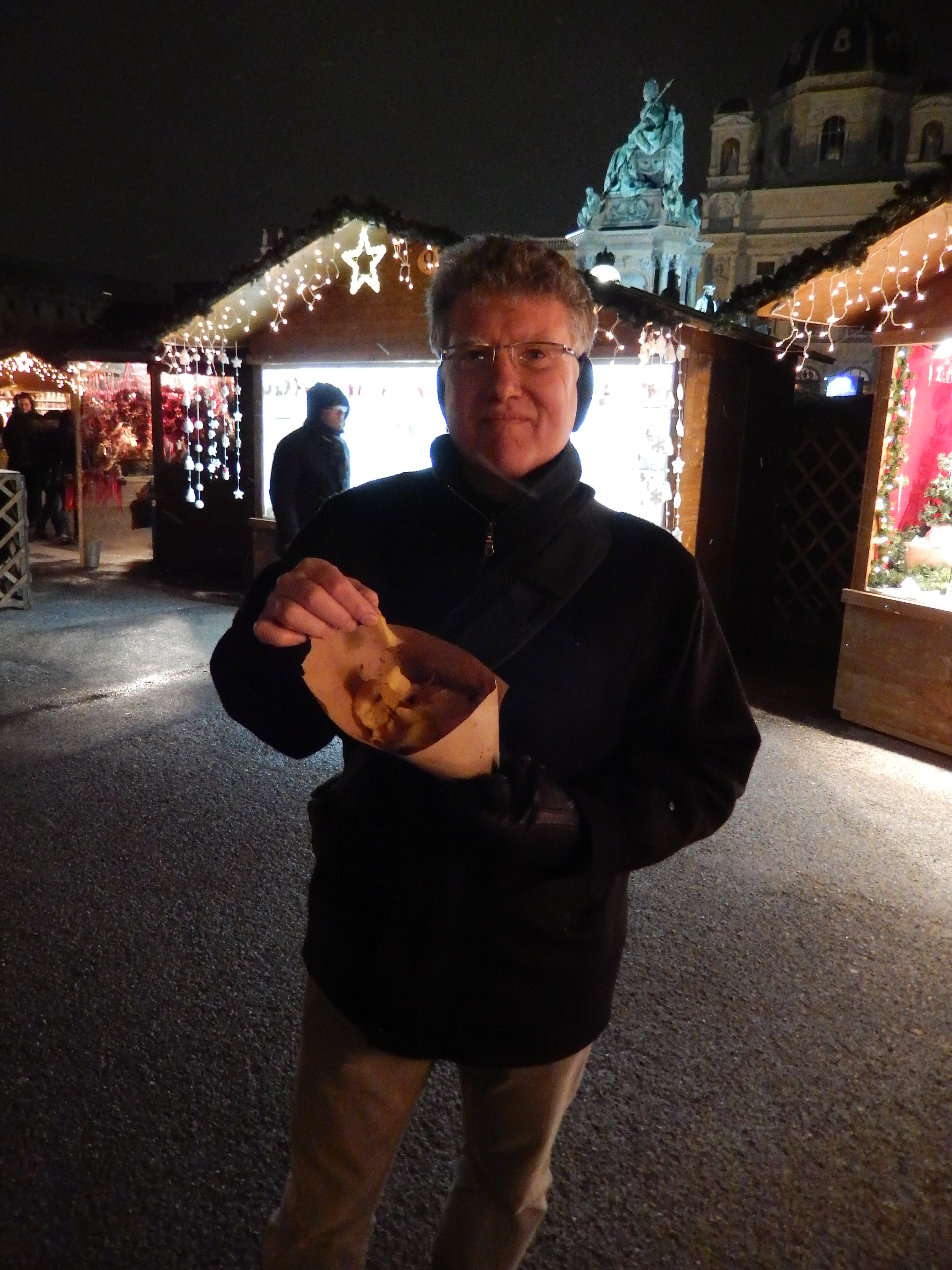
Don *loves* chips!
From this market, we market-hopped: food at one – (sausages for Don, a gyro for me) – and then hot wine wine at another, where we also bought advent calendars, and finally at the St. Stephen’s market (so close to our hotel) for one last hot wine before retiring for the night, exhausted and foot sore!

so many sausages
The next morning, clear skies, and we discovered the view from our hotel balcony:
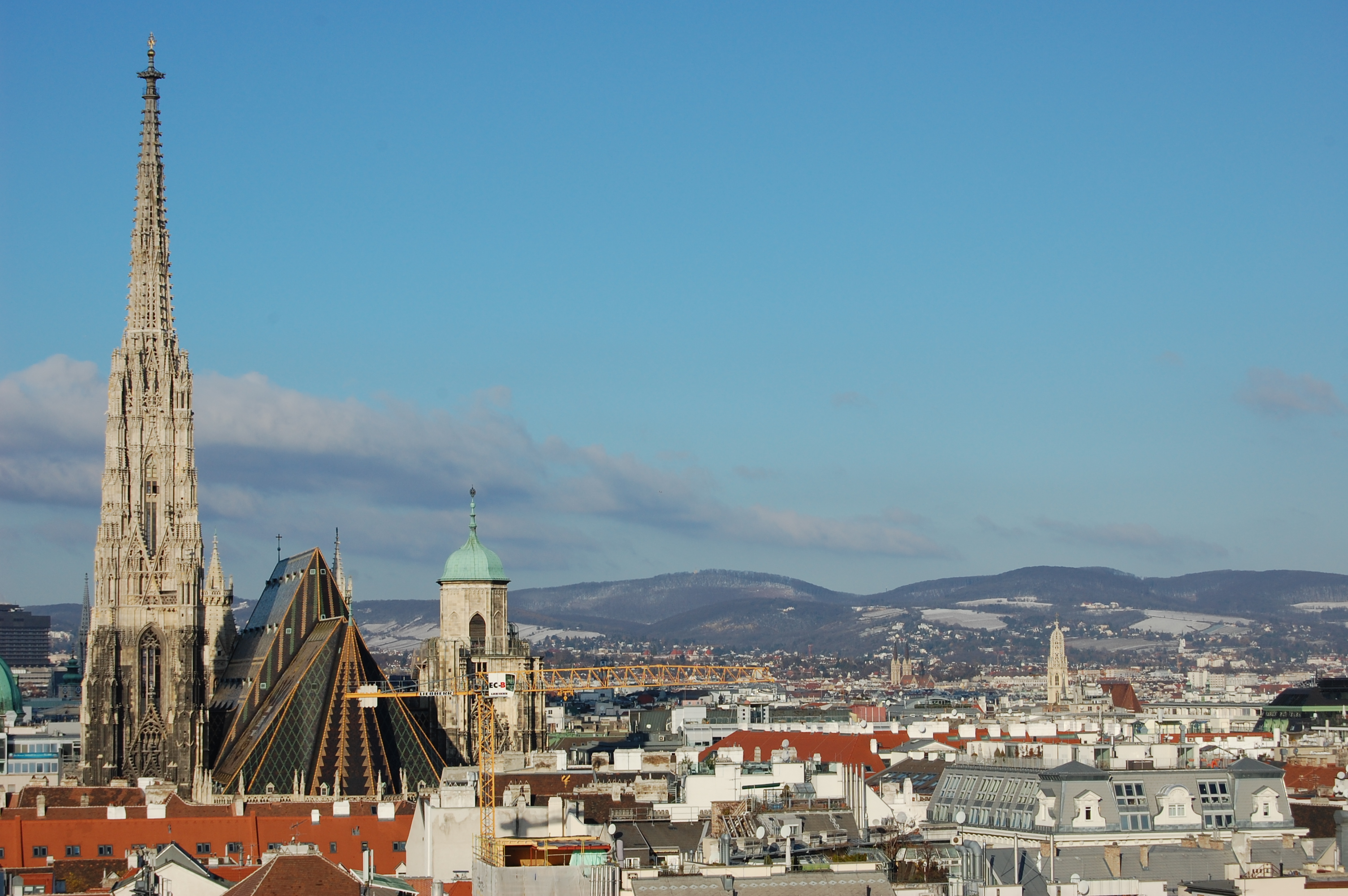
St Stephen’s Cathedral pokes its’ tower up (Don)
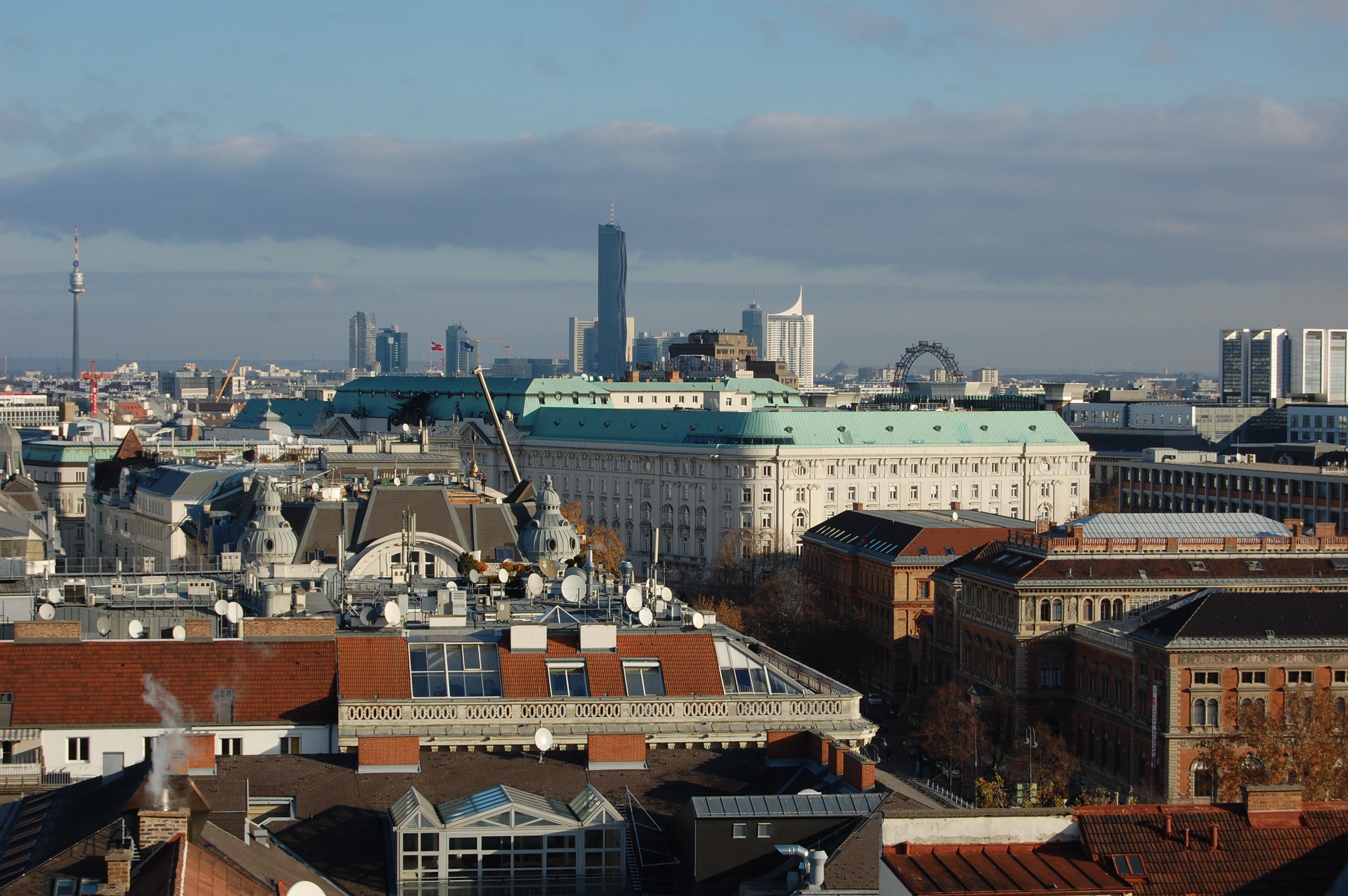
rooftops, and Vienna’s famous ferris wheel way in the background (Don)
After breakfast, we started our day by following Rick Steves’ city walk tour on our iPods. Following his directions while listening to his descriptions was like having our own personal tour guide – we can’t recommend his podcasts enough!! He starts his walk at the Opera House (because “if Vienna is the world capital of classical music, this building is its throne room”). Behind the Opera House, the famous Café Sacher, at the Hotel Sacher –
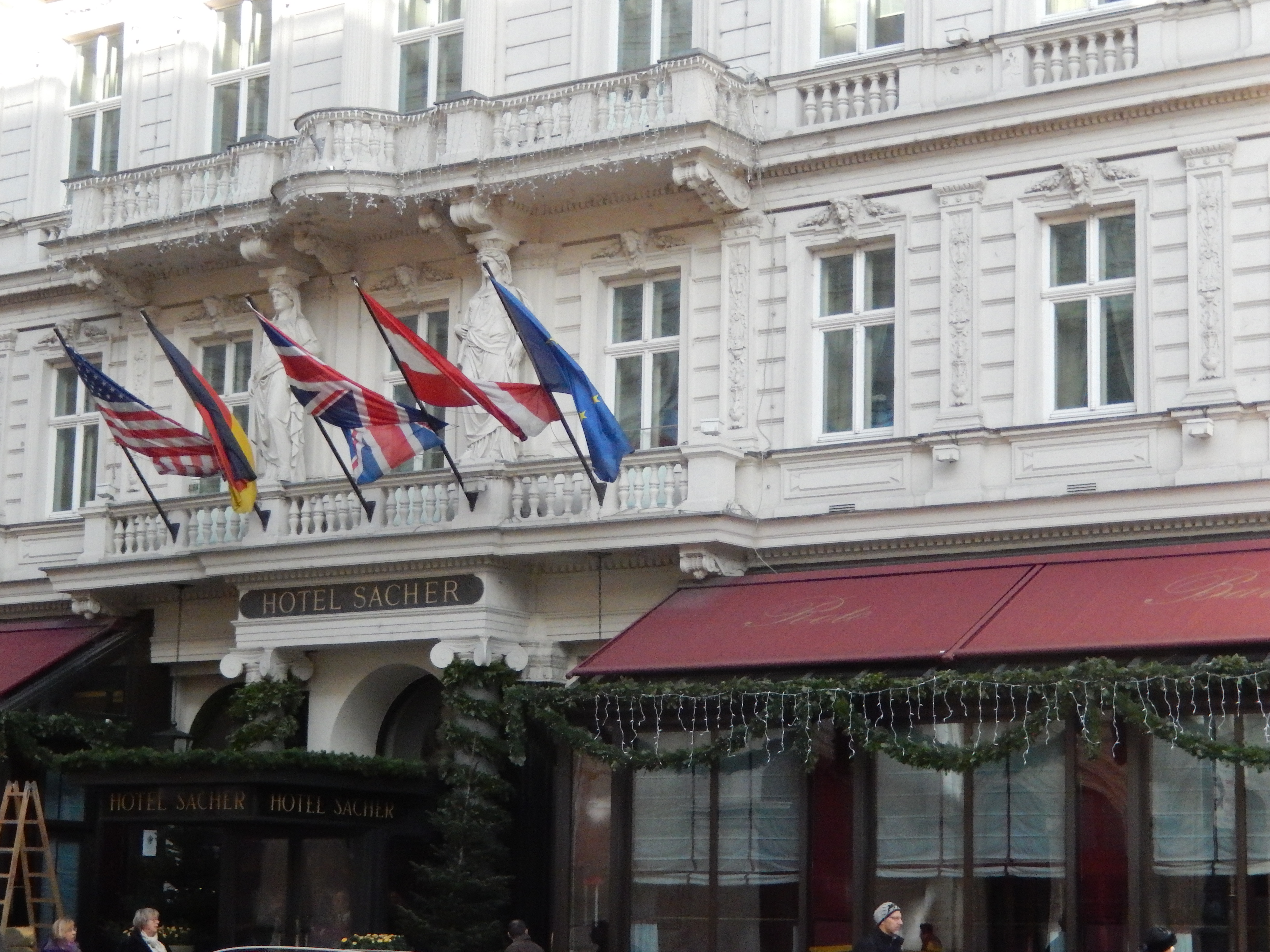
Hotel Sacher
home of the world famous Sacher-Torte – two layers of cake separated by apricot jam and covered in dark chocolate icing. (We didn’t indulge. ) To the horror of Viennese purists, Starbucks (with chutzpah) opened a branch right across the street from this most famous of cafés. In Don’s picture you can see the Starbucks logo in the ground-floor window:
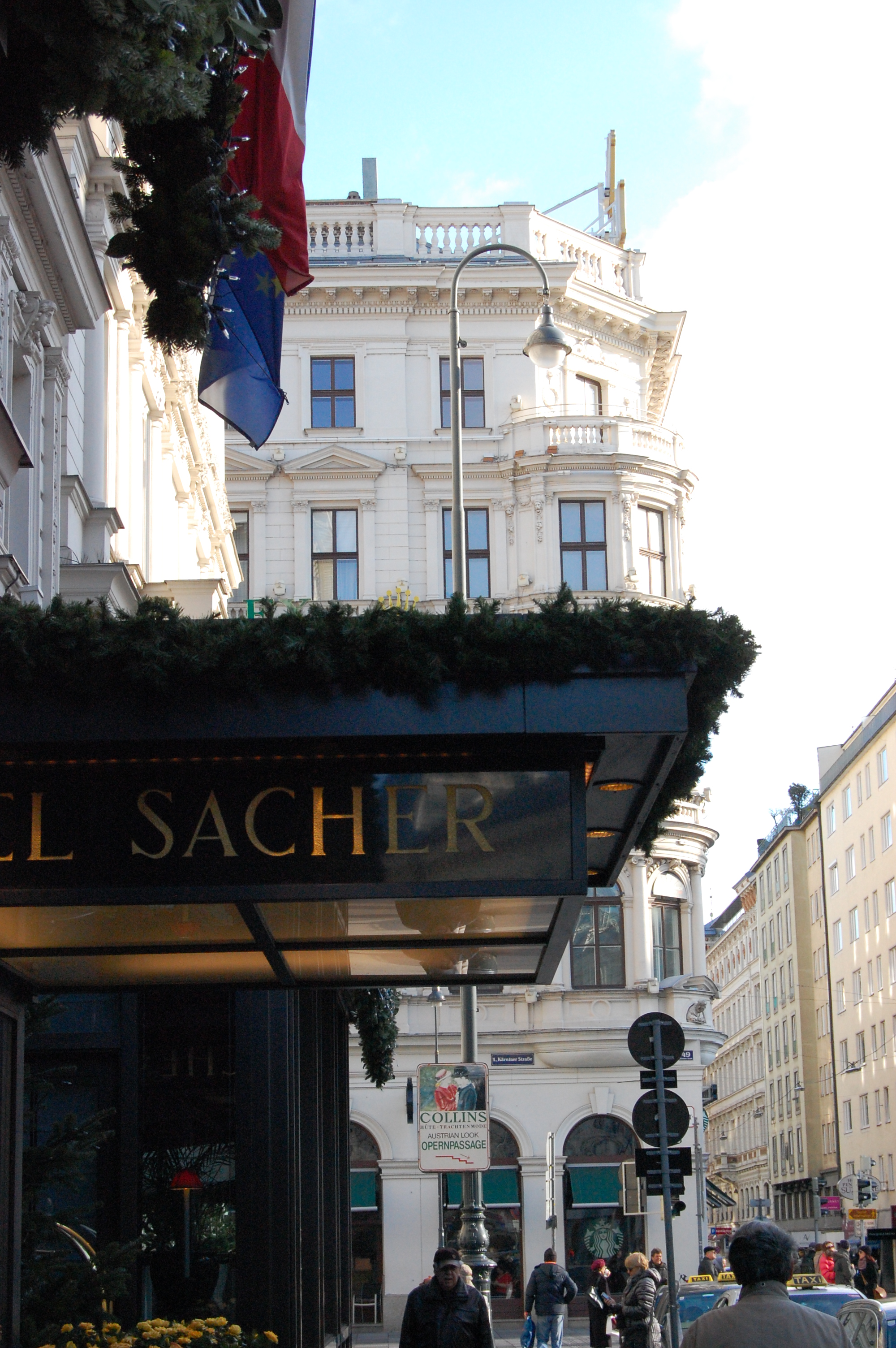
Hotel Sacher and Starbucks – the traditional and the upstart
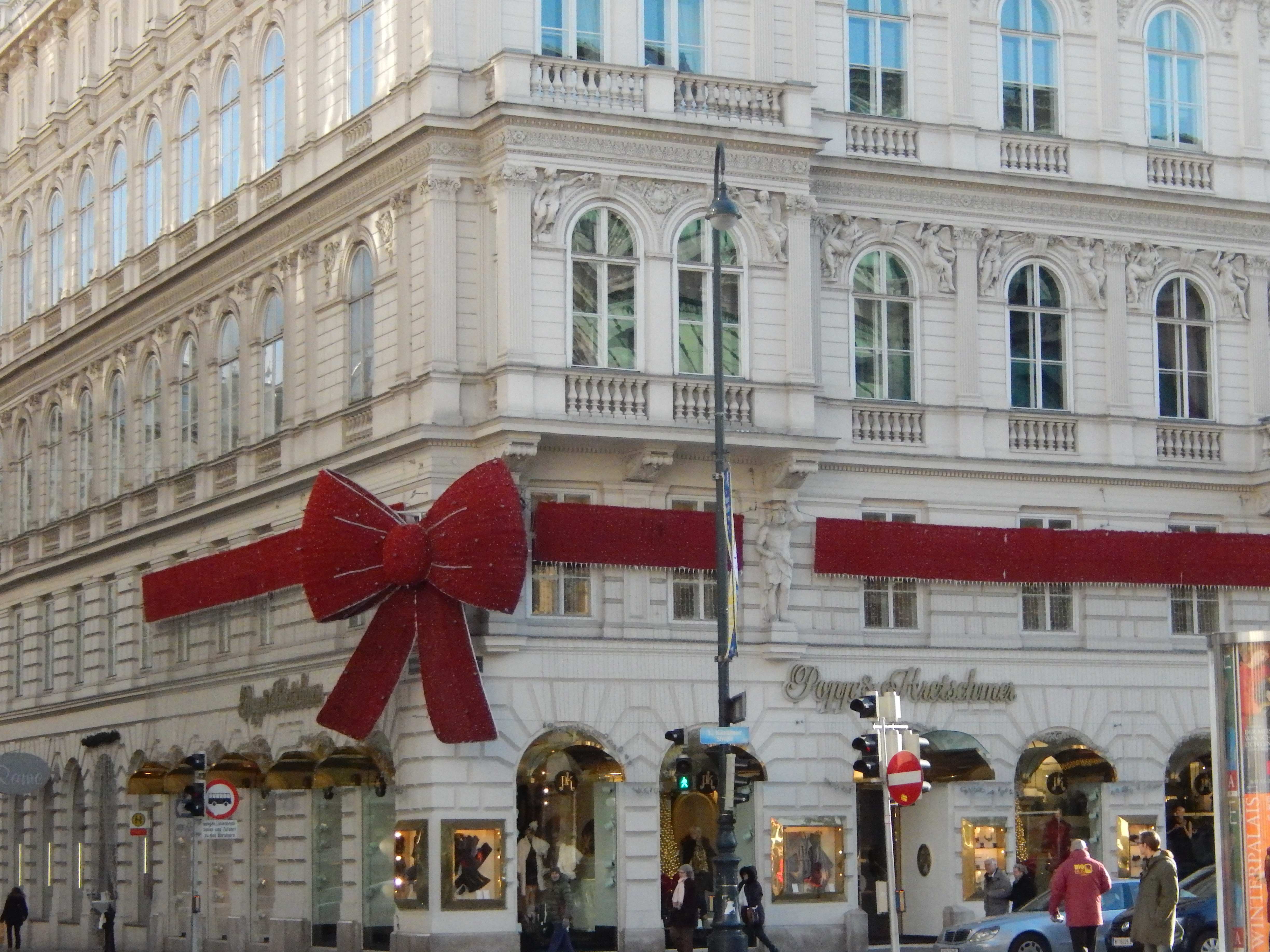
I love this ‘wrapped-up-for-Christmas’ building in the same block
In the Albertinaplatz, this “Neoclassical building marks the tip of the Hofburg Palace (a sprawling complex of buildings that was long the seat of Habsburg power); today it is the Albertina Museum” –
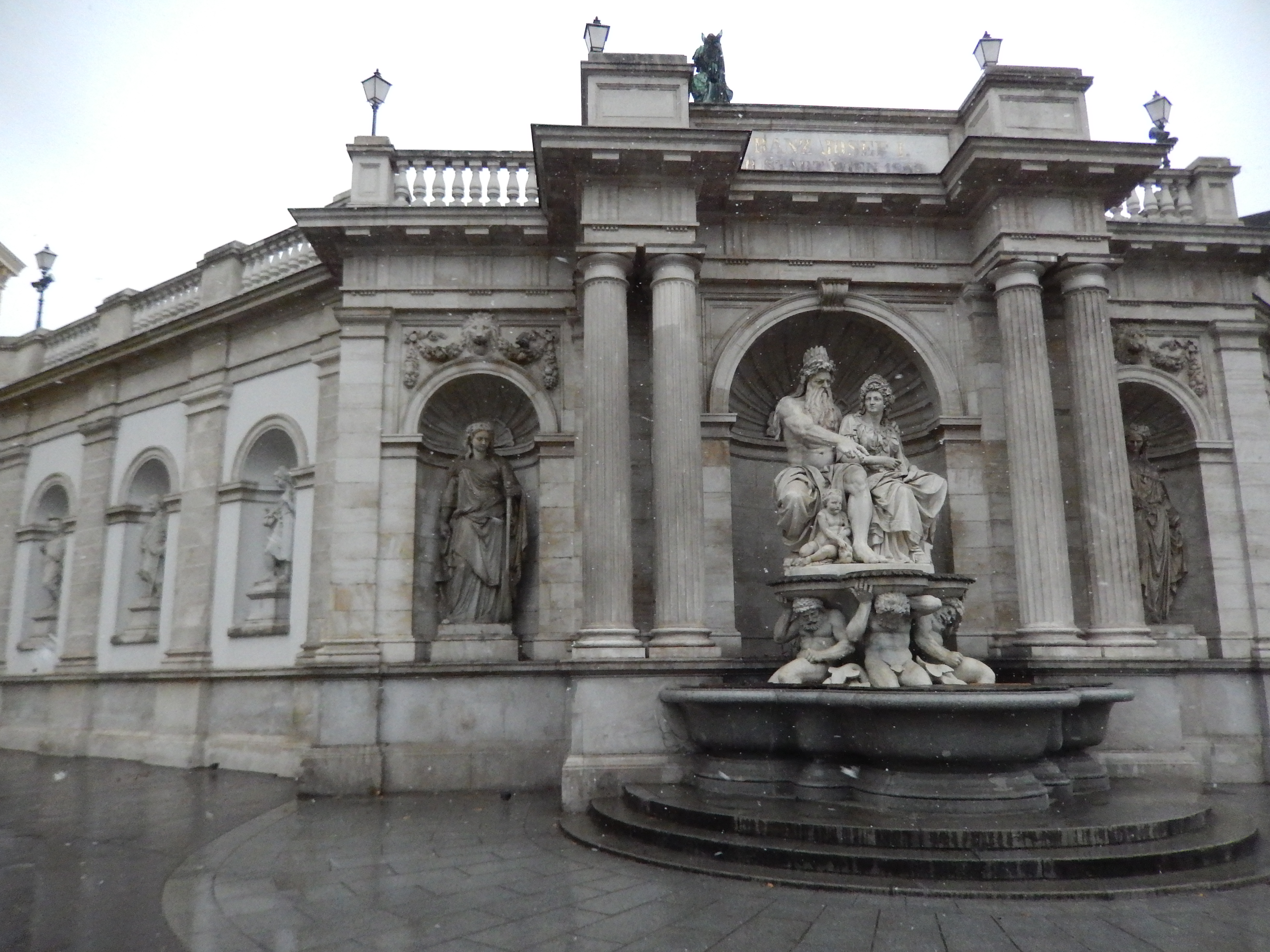
Abertina Museum
Within the ‘platz’ are several statues that make up a Monument Against War and Fascism, commemorting the years when Austria came under Nazi rule (1938-1945). This piece is called The Gates of Violence, to remember victims of all wars and violence.
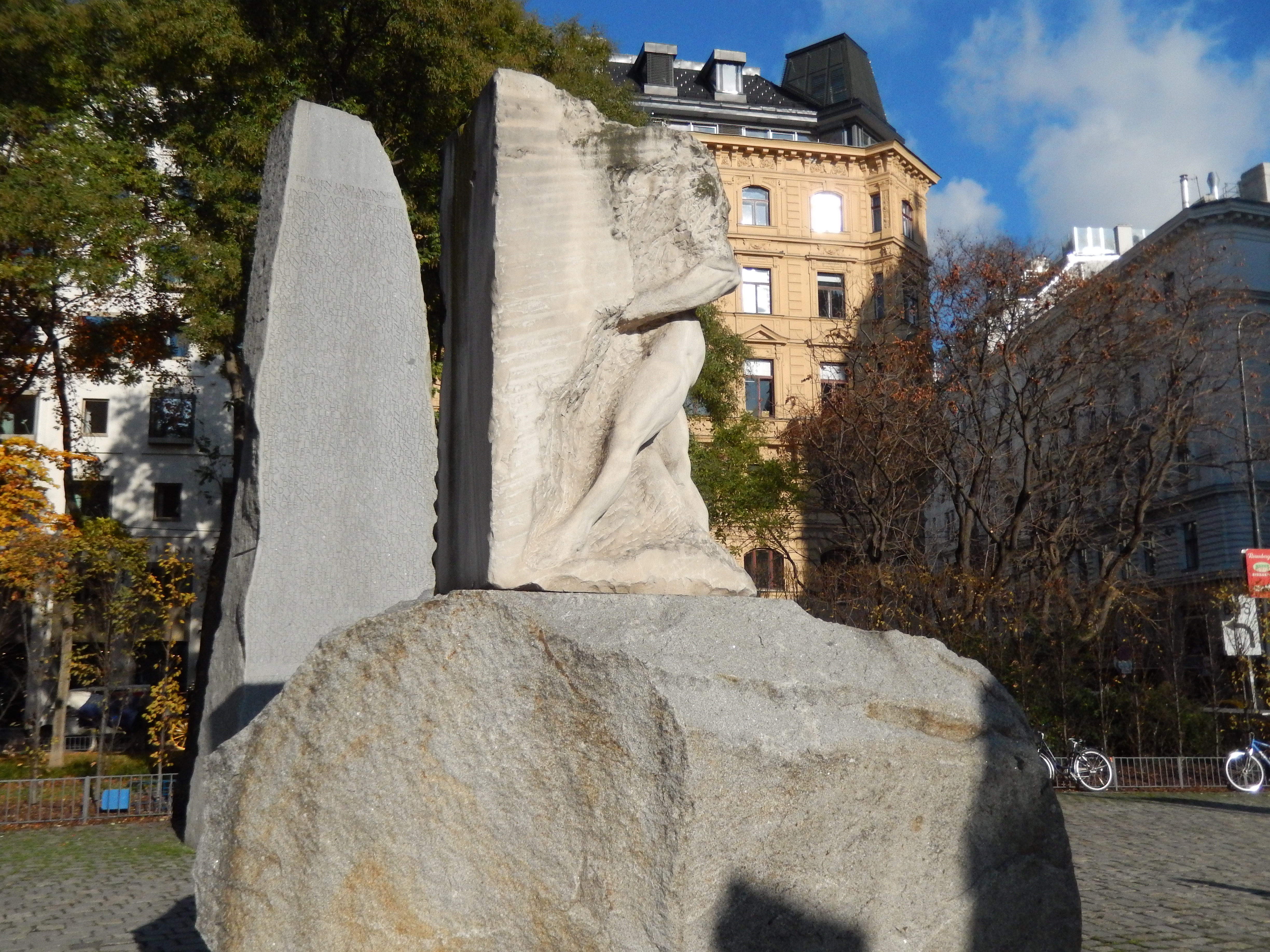
The Gates of Violence statue
On we wandered, up and down winding streets, listening to history and architectural detail, admiring the beautiful buildings…
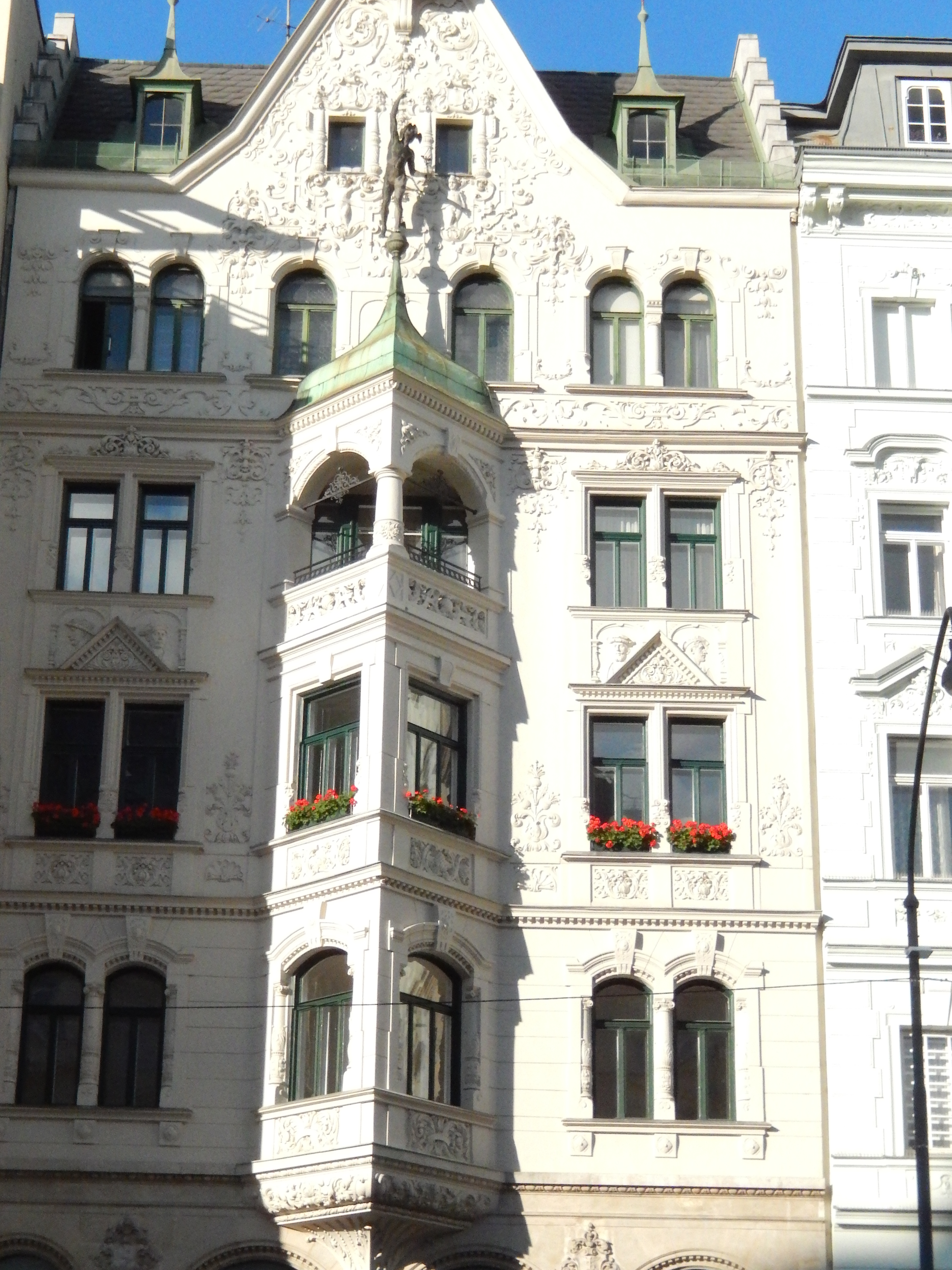
building detail
and the prepartion for Christmas…
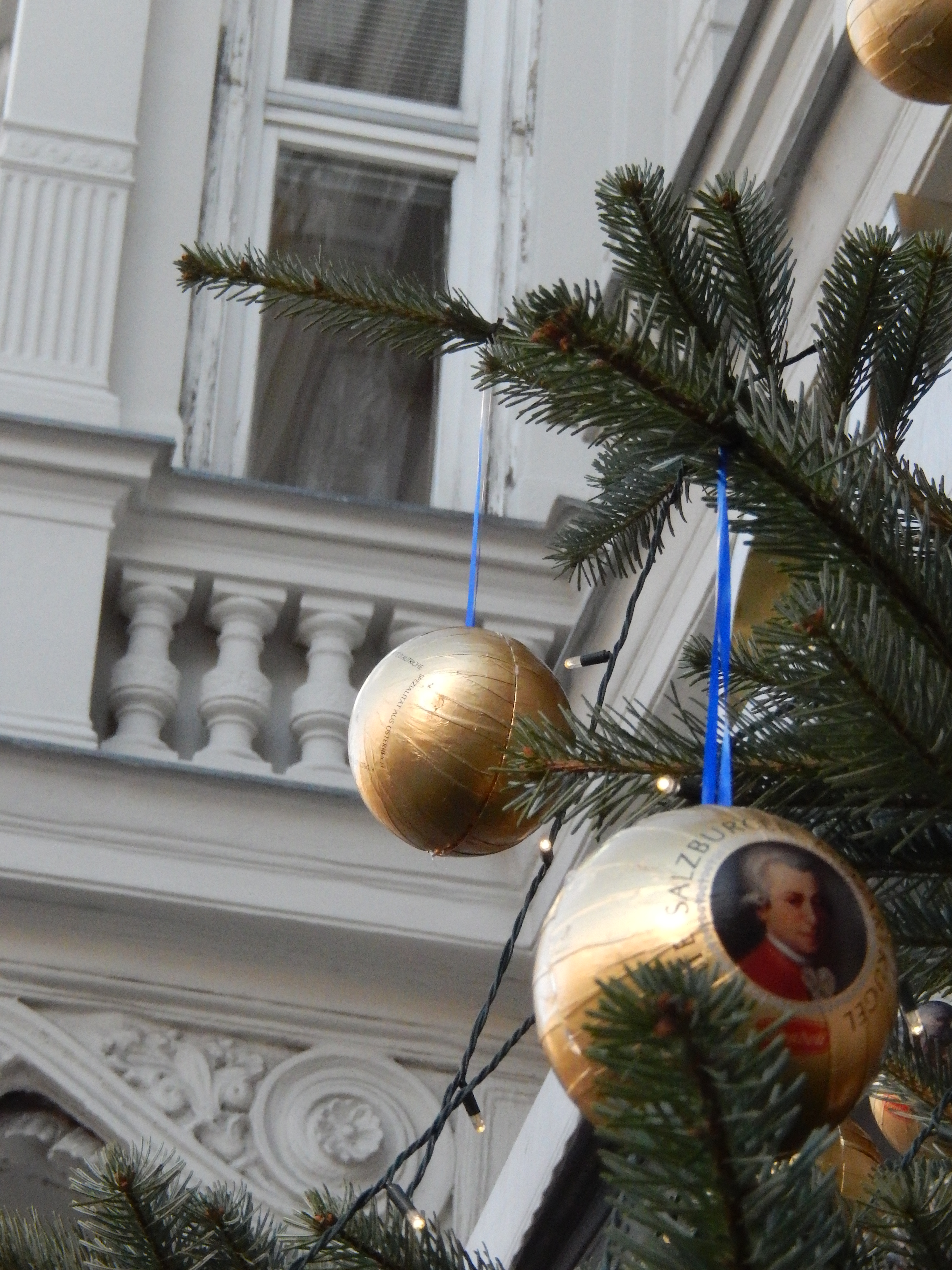
Mozart decorations
The Graben (which means ‘ditch’) was originally the moat for the Roman military camp, then it was a busy street of traffic, until the 1970s, when it was turned into one of Europe’s first pedestrian-only streets. (The statue-column at the far left of this picture is called the Holy Trinity Plague Column: 60 feet tall, erected by Emperor Leopold I, in gratitude to God after saving Vienna from total devestation, after the Plague hit in 1679, wiping out 75,000 Viennese, a 1/3 of the city at that time.) Note the Christmas decorations hung, but not lit. Every evening we hoped they would be…

building detail, and Christmas decor, on the Graben
We stopped for lunch at another atmospheric café, Café Hawelka; and then drooled over the window display at Demel, one of Vienna’s famous chocolate shops –
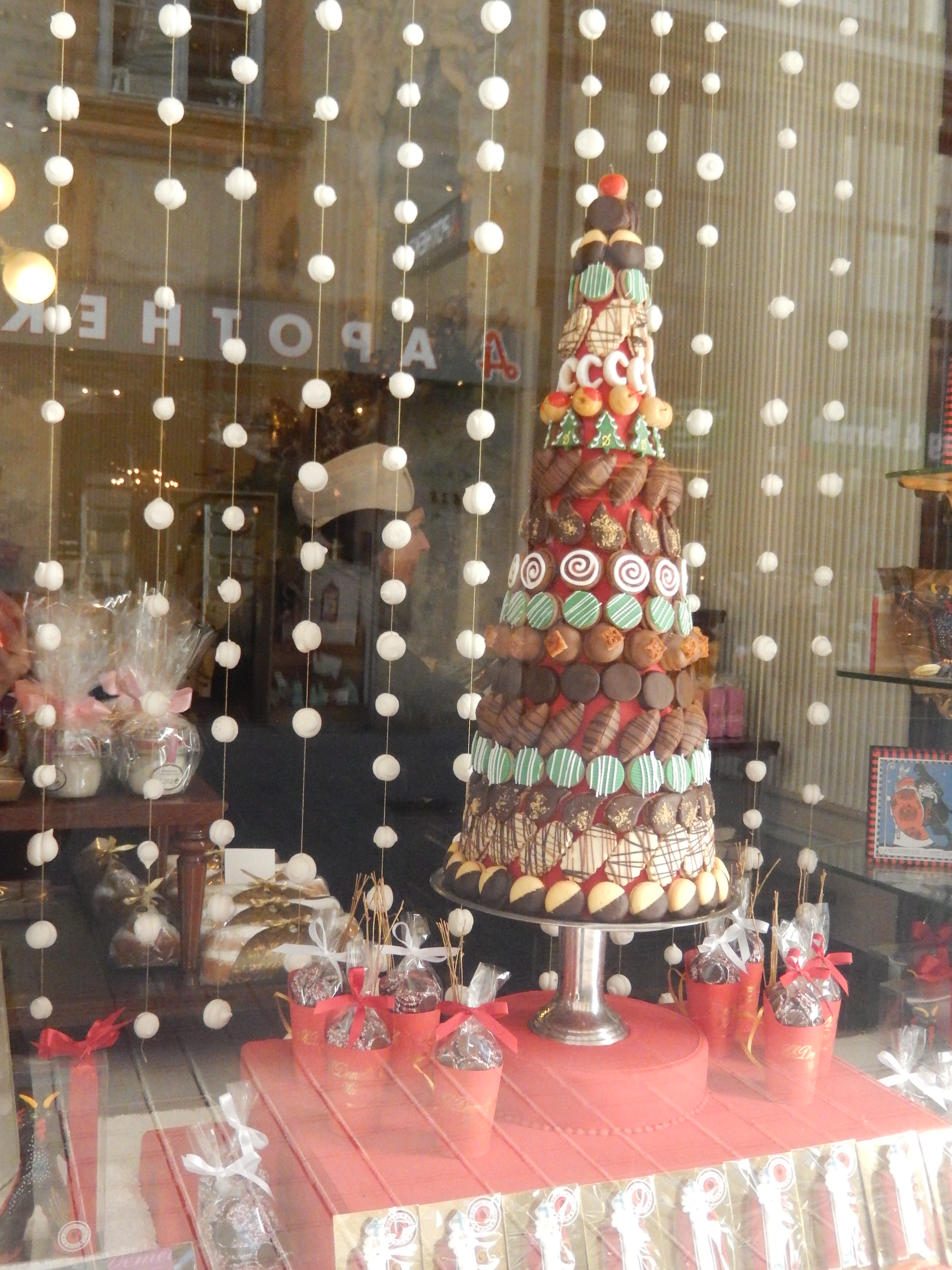
delectable window display
before venturing inside to see the bakery in action –
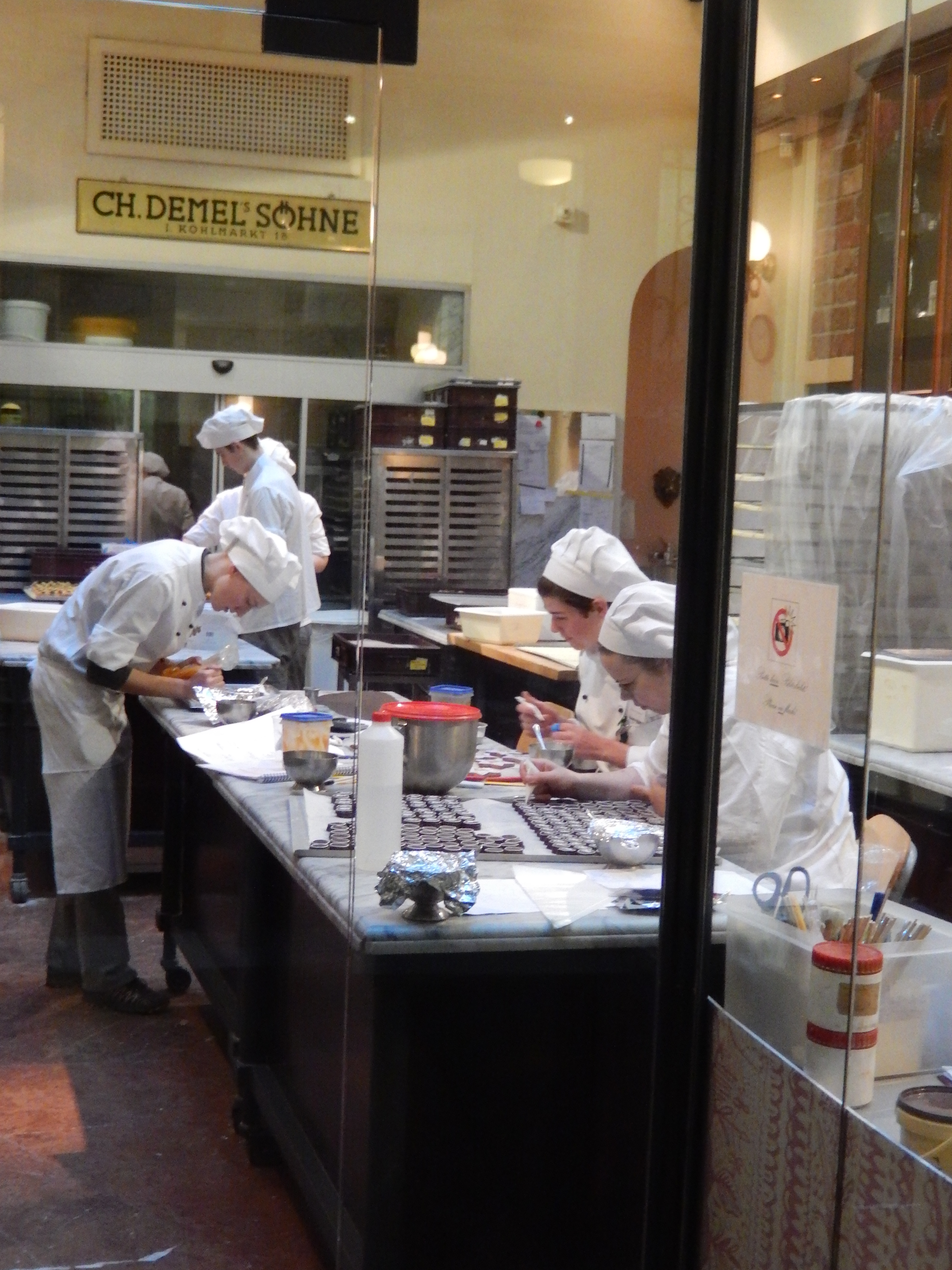
bakery in action
Back outside, we came to Michaelerplatz and the Neo-Baroque facade of the Hofburg Palace, where the Habsburg emperors lived (except in the summer).

Hofburg Palace, Imperial apartments
We went in to tour the Imperial apartments, home to Emperor Franz Josef I (the last of the Habsburg monarchs) and his reclussive, eccentric empress, Elisabeth, known as “Sisi.” The tour included the Sisi Museum. The apartments (which you can not photograph) are as lavish as you would expect. More interesting was the museum dedicated to the life and death of “Sisi.” http://en.wikipedia.org/wiki/Empress_Elisabeth_of_Austria We knew nothing of Sisi prior to visiting this museum, whose “beauty, bittersweet life and tragic death helped create a larger-than-life legacy” and found the details quite fascinating.
Next, we went to the Austrian National Library, actually part of the Hofburg Palace, and another one of the most beautiful libraries in the world. This was once the library of the Habsburgs. Construction of this beautiful room began in 1722 under the authority of Charles VI, whose statue is in the middle. Here we were allowed to take photos; please forgive the many that follow!
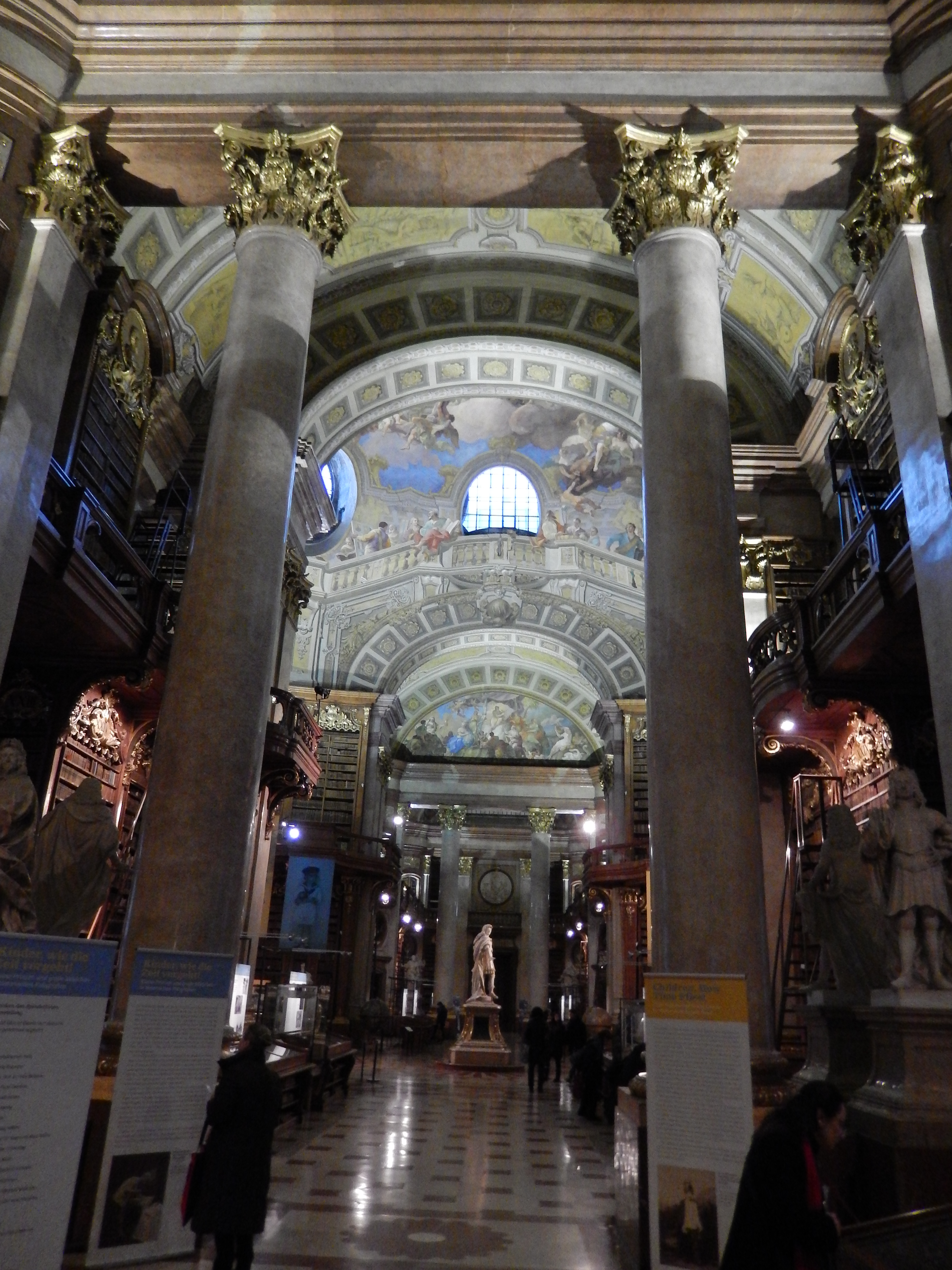
first view as we walk in
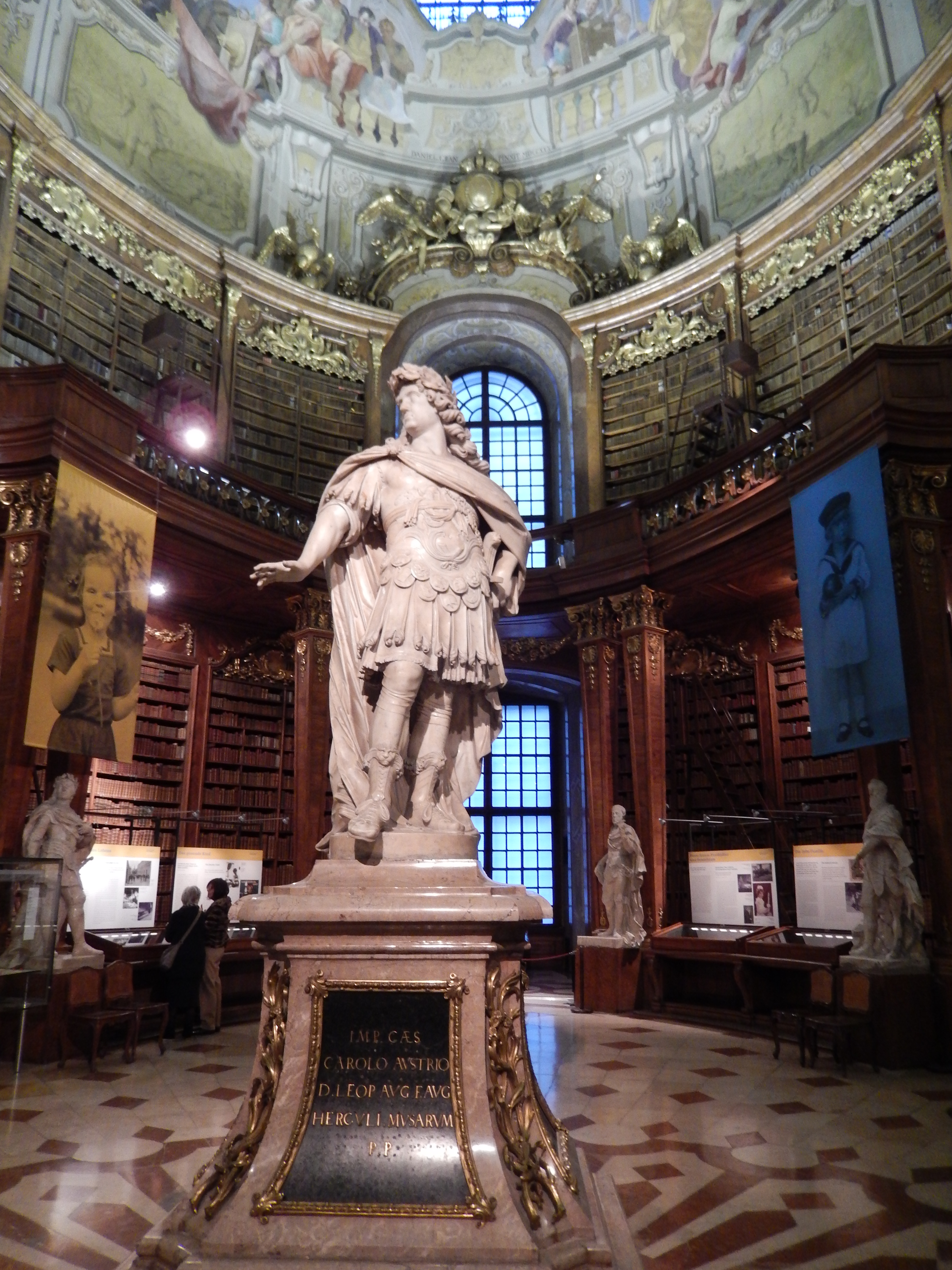
Charles VI
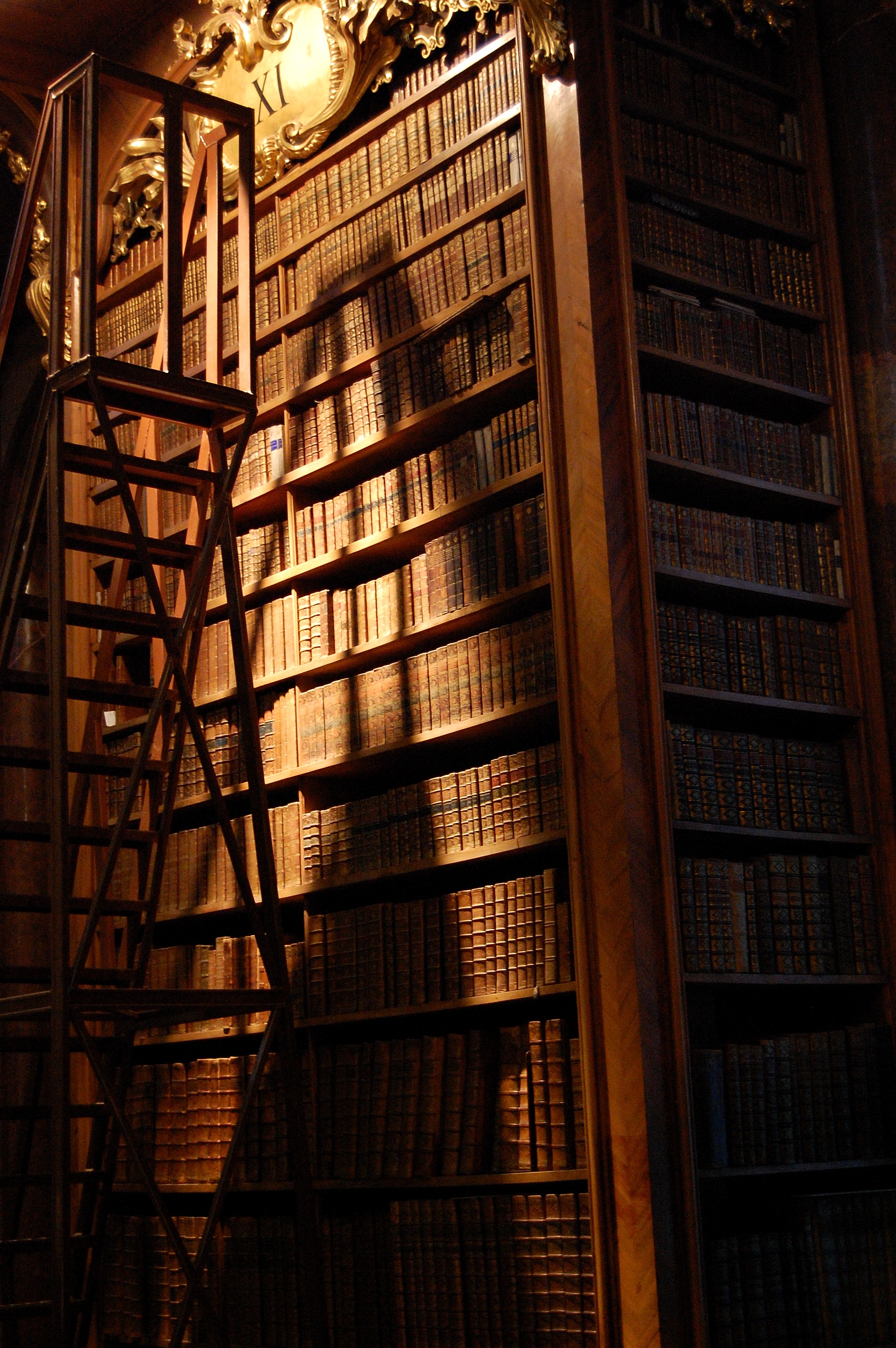
gorgeous shelves (Don)
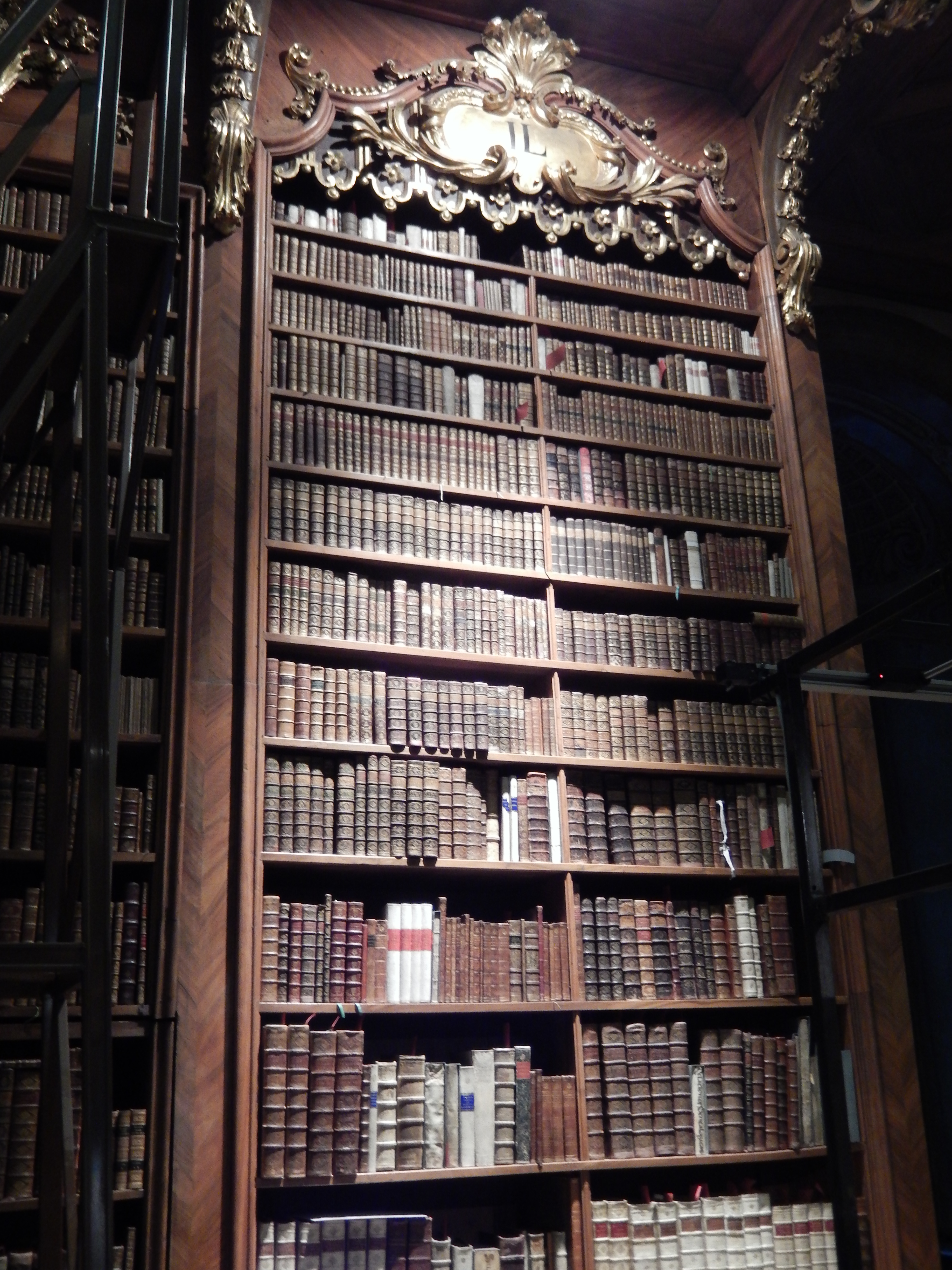
old books
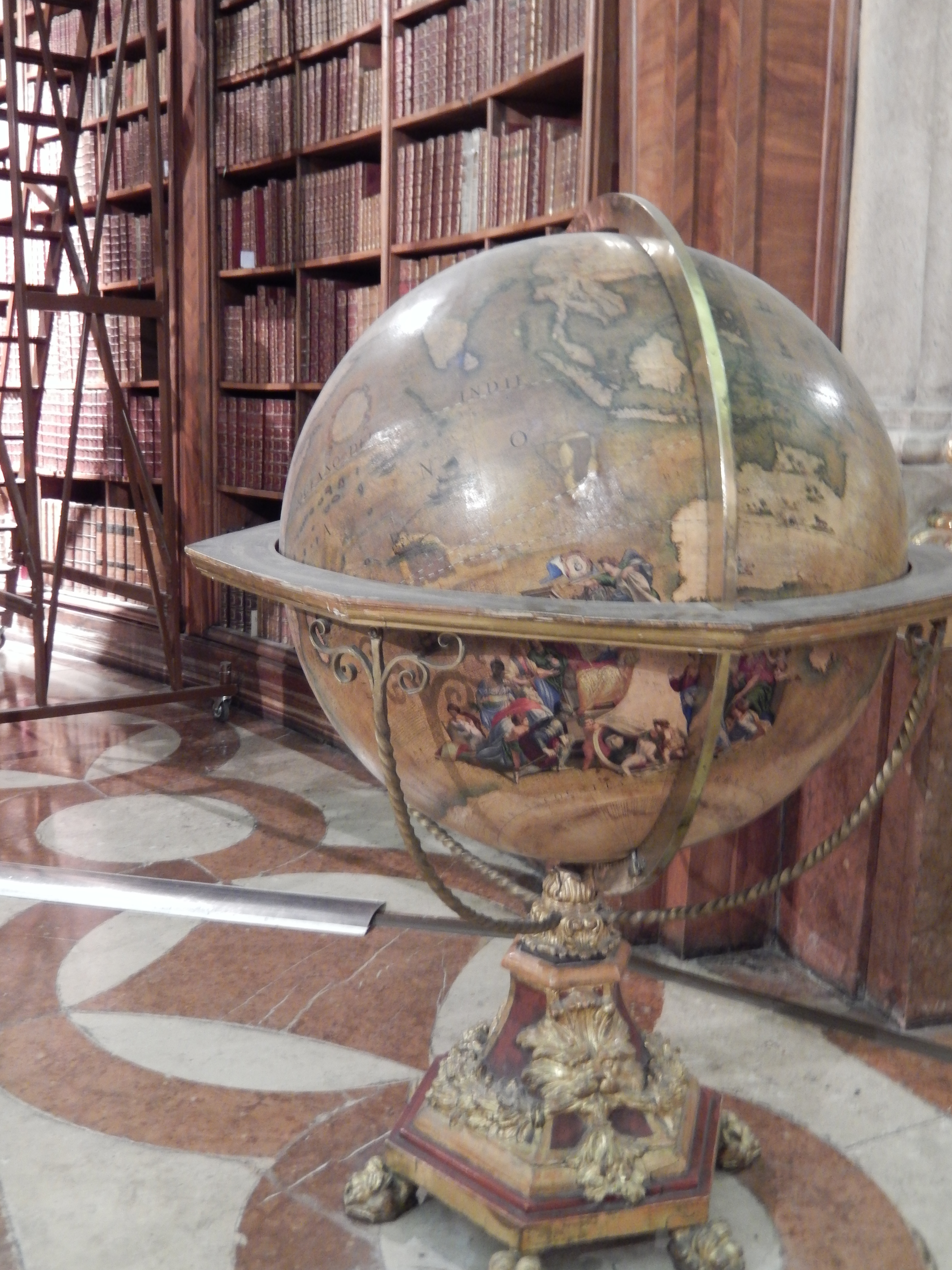
old globes

stunning ceiling
And from an exhibit in the library on children in Austria over the years, a sign I couldn’t resist –
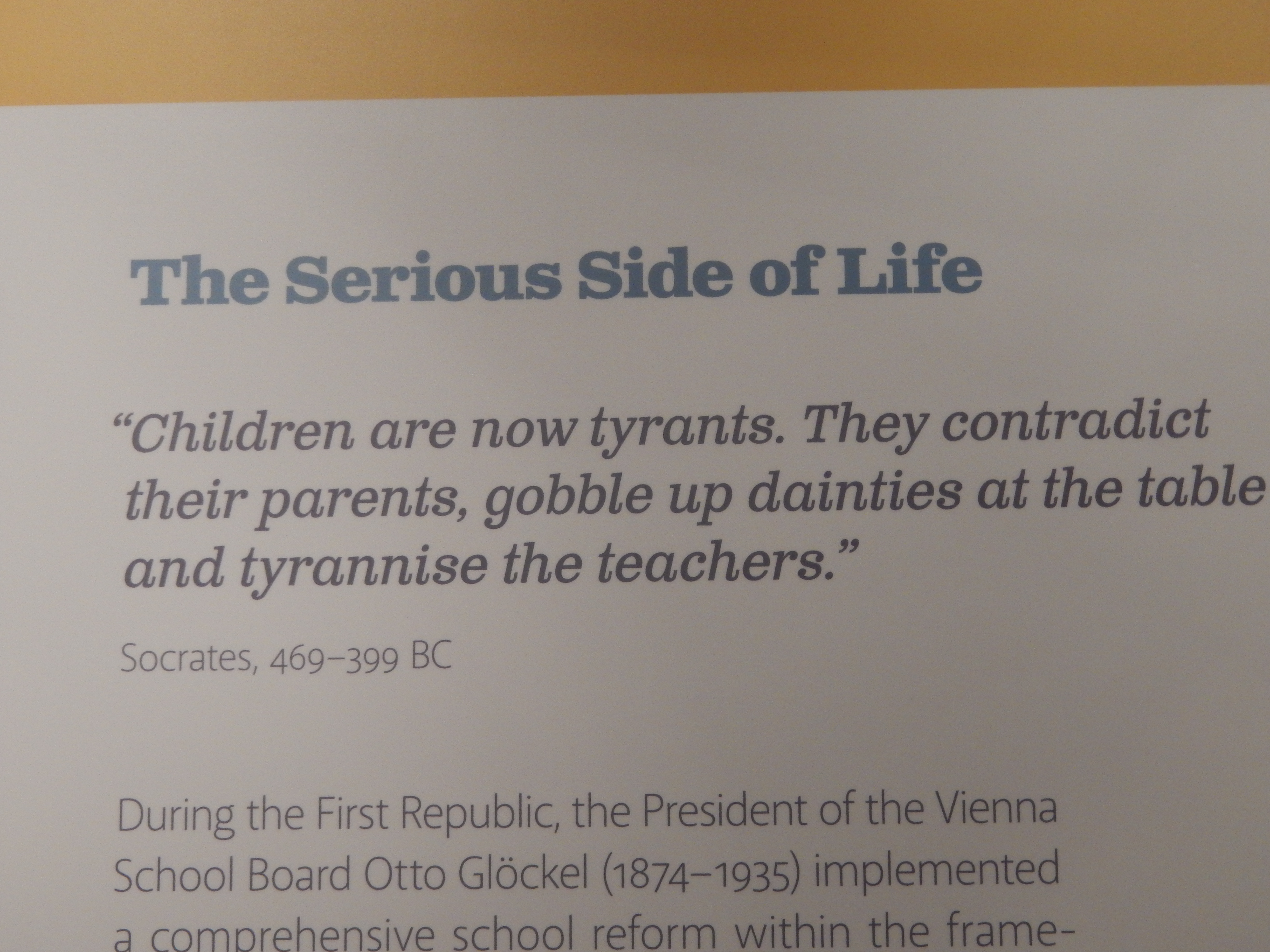
the more things change, the more they stay the same
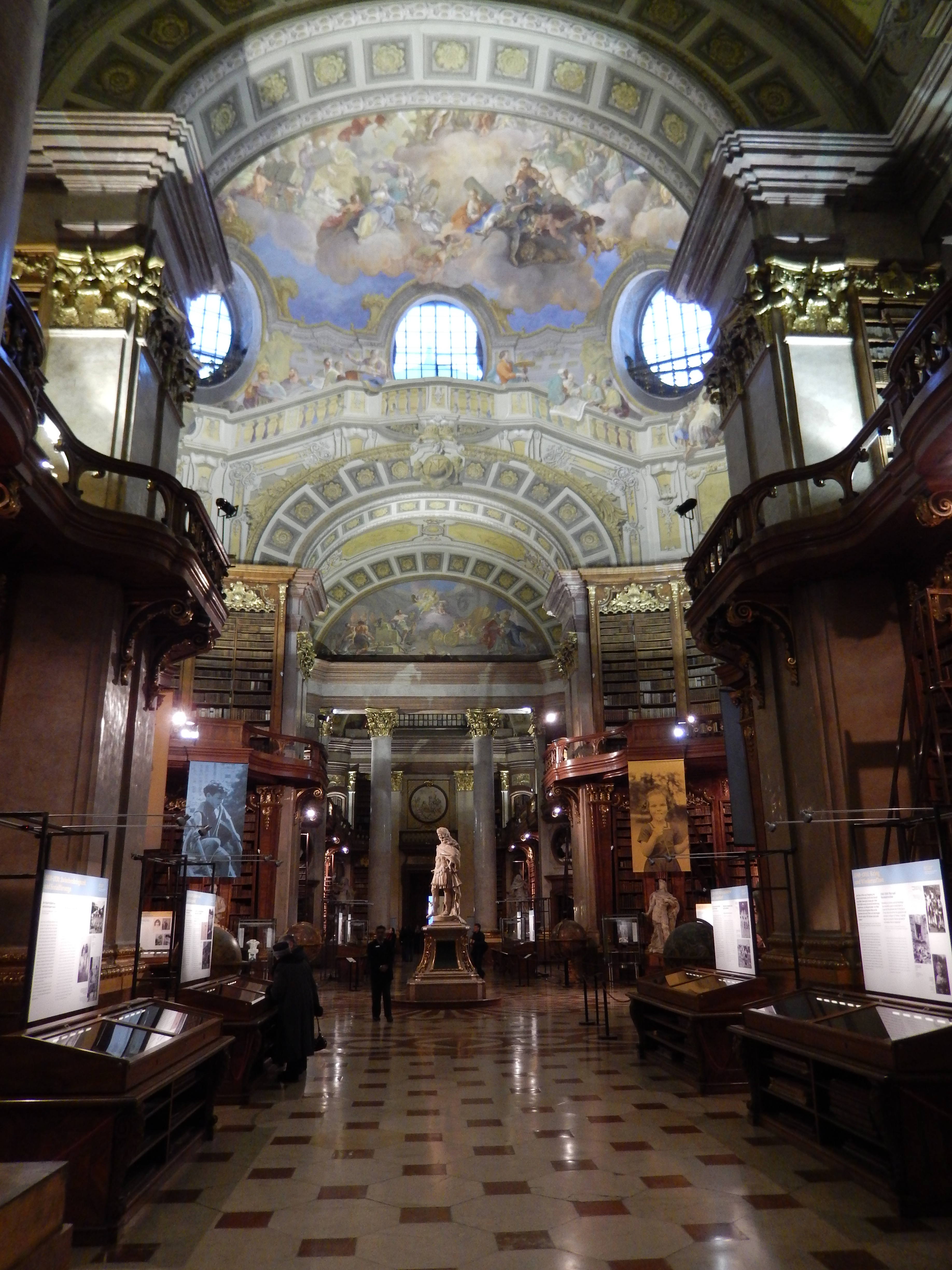
it was hard to leave this beautiful library
We went back to the hotel to relax, and then out to an intriguing little Italian restaurant for dinner, Cantinetta La Norma, rustic, artistic, and great food – an Italian restaurant run by Arabs, with much coming and going, and maybe more going on than meets the eye. If only they didn’t allow smoking inside!
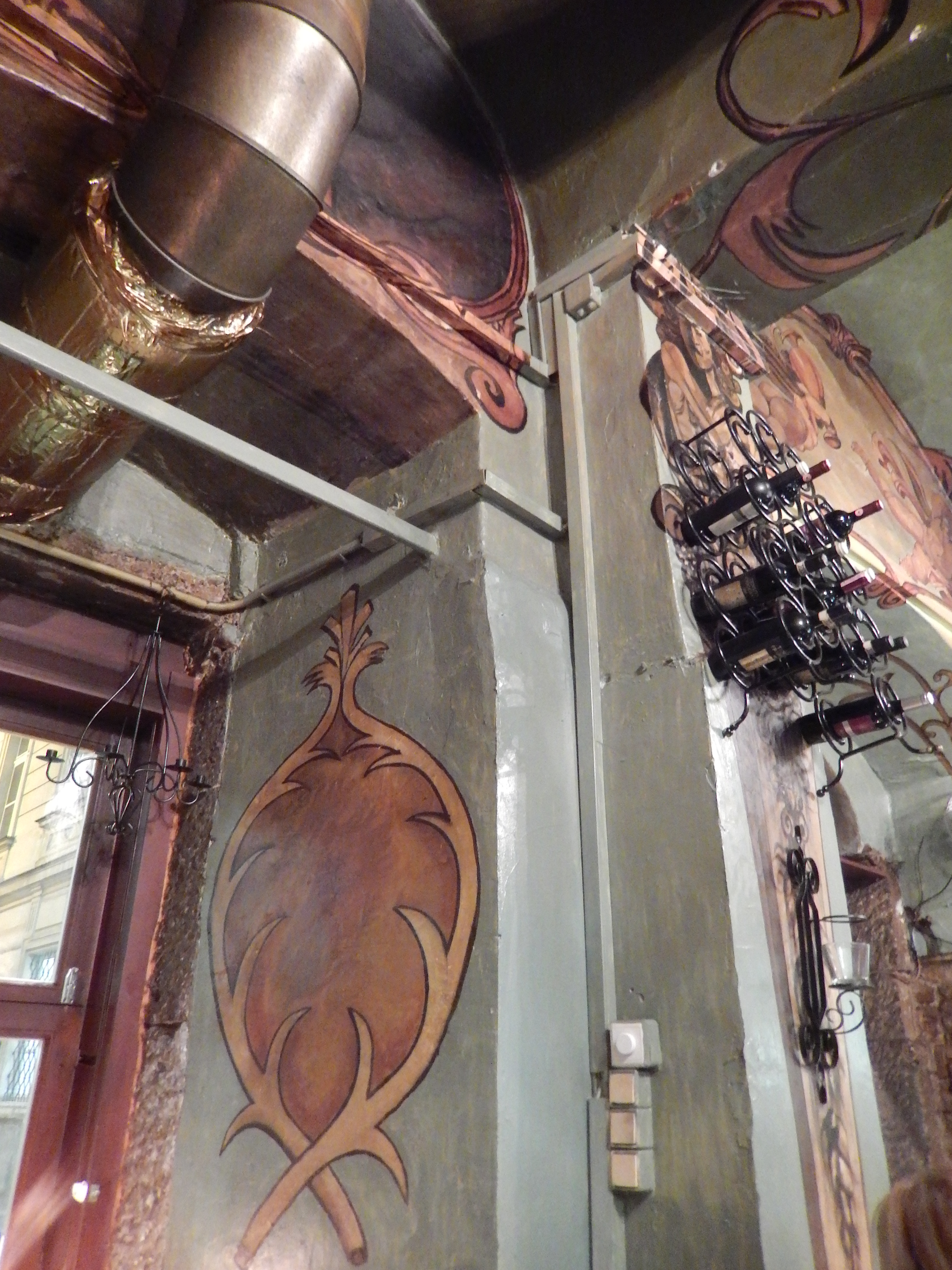
intriguing decor
One last mug of glühwein at the St. Stephen’s market and back to our hotel and bed.
Thursday morning was crystal clear, sunny and cold. We started the day by walking across the Ringstrasse from our hotel to Stadtpark (City Park), Vienna’s major park, honouring many Viennese musicians and composers with statues. Most beautiful in the sunshine, the golden Johann Strauss, “waltz king.”
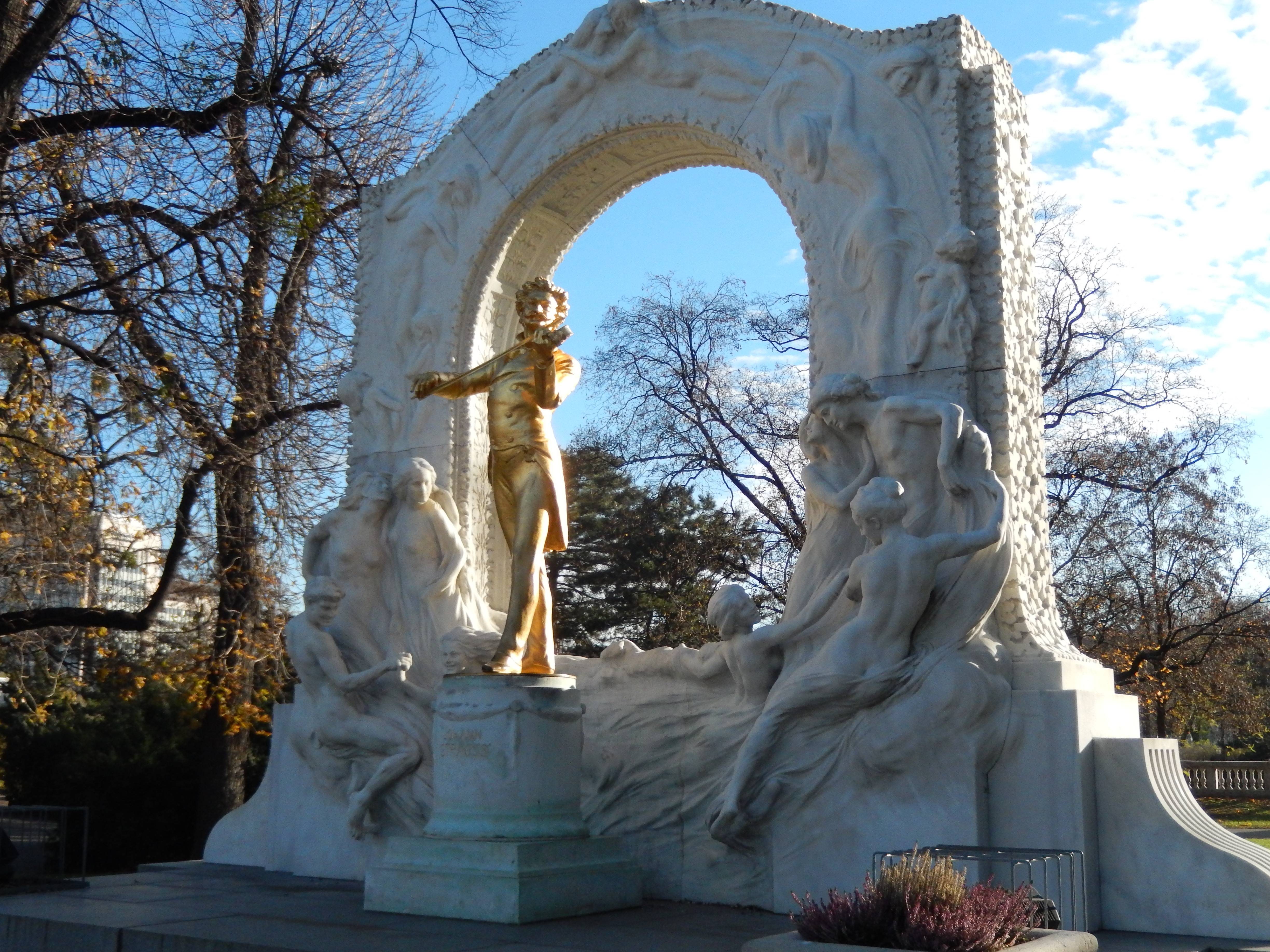
Johann Strauss
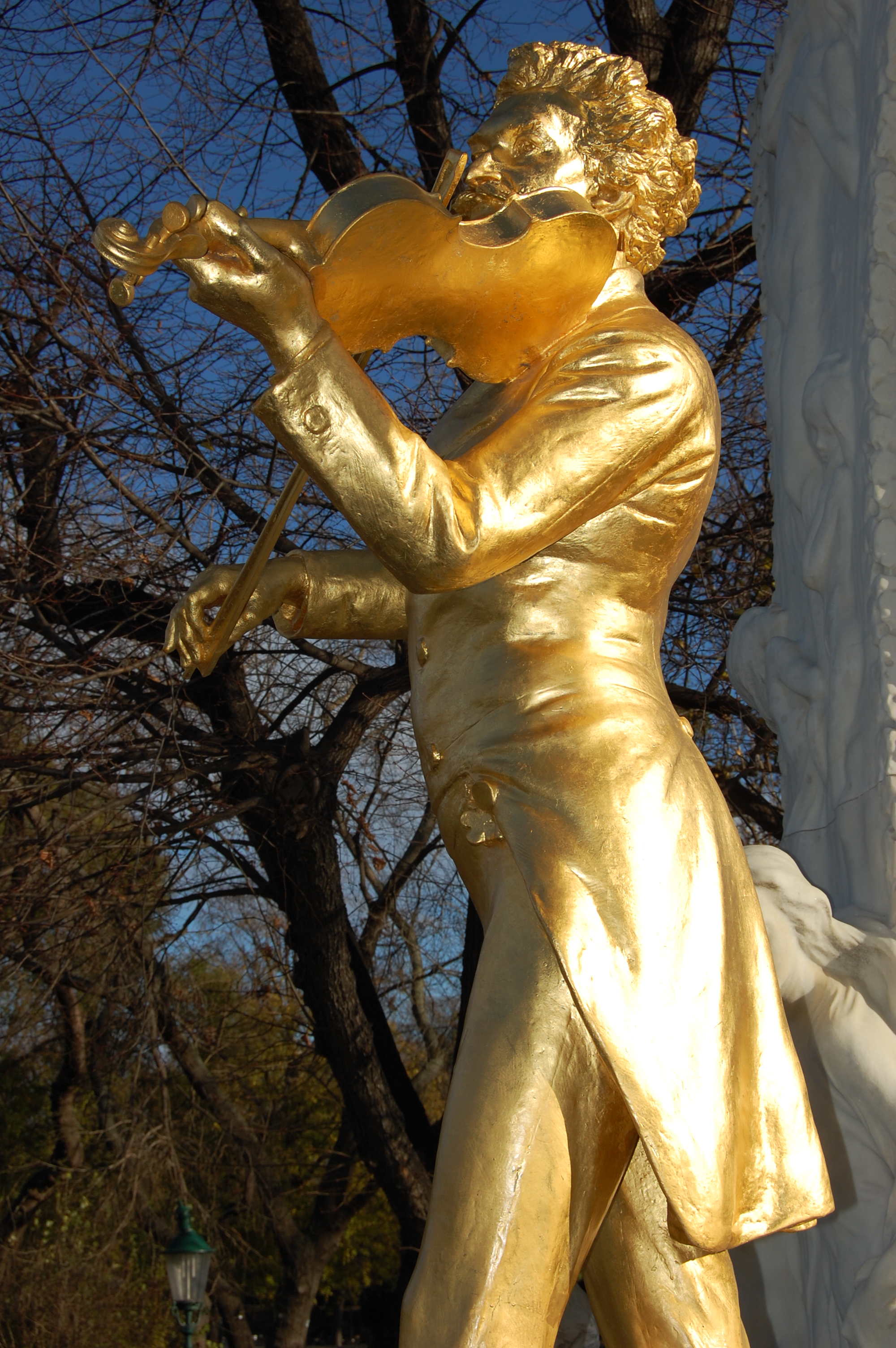
golden (Don)
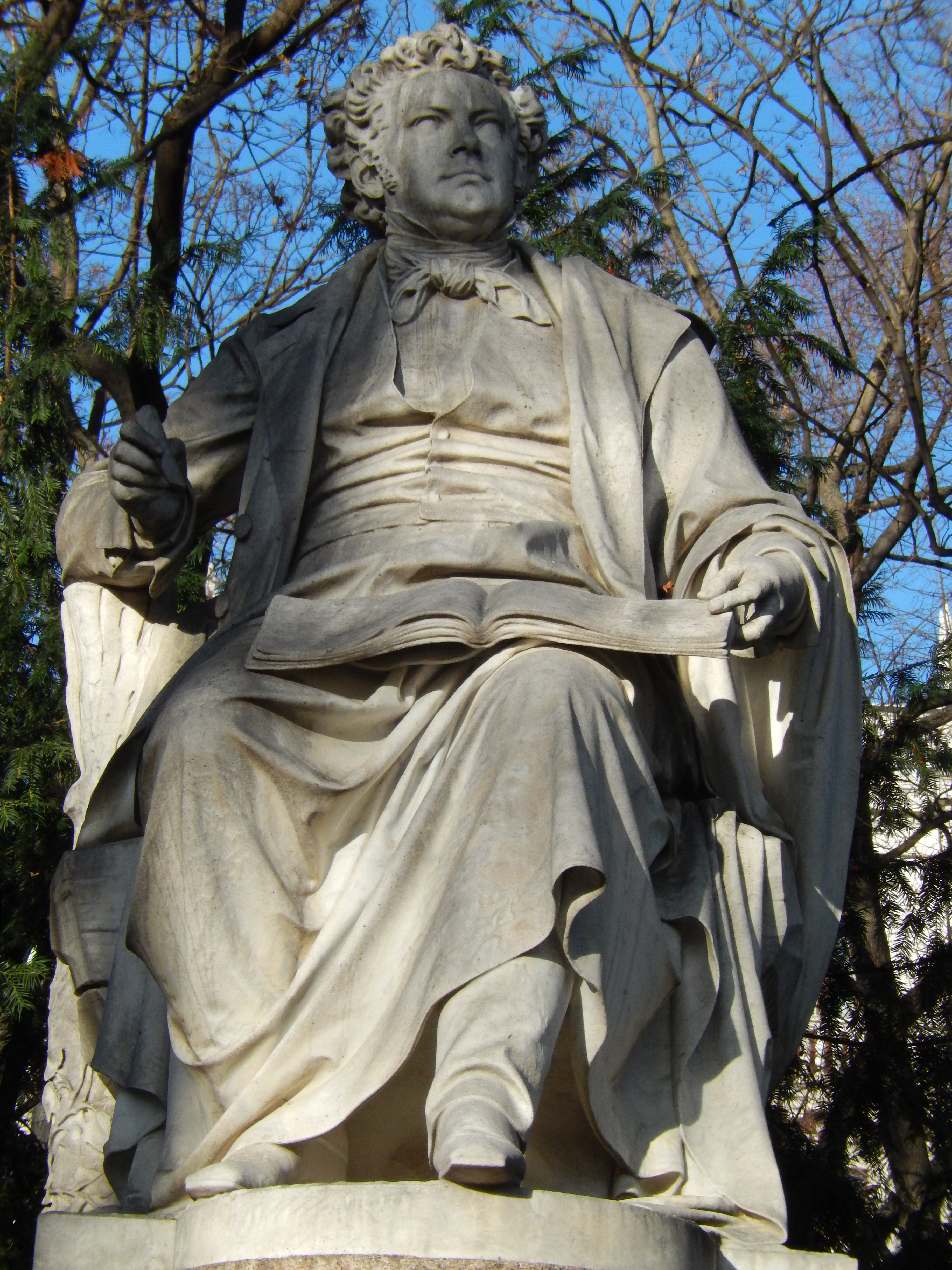
Franz Schubert

a lovely pond
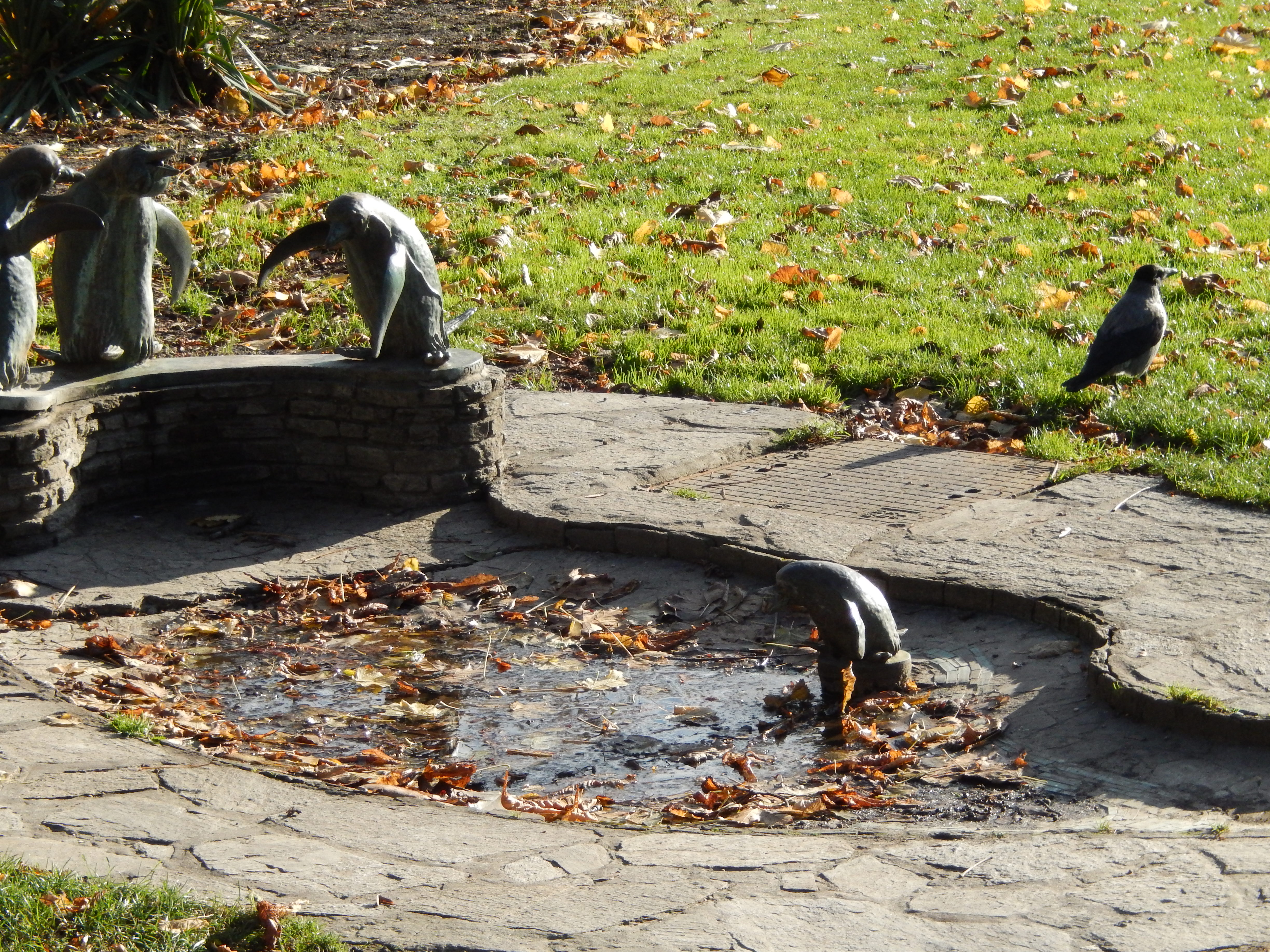
crow walks away from the penguin statues – sad because they aren’t real! 😀
We were heading for the Belvedere, but saw a few sights along the way. First, this Russian Monument, built in 1945 as a forced thank you to the Soviets for liberating Austria from the Nazis: formerly a sore point and now just ignored (Rick Steves) –
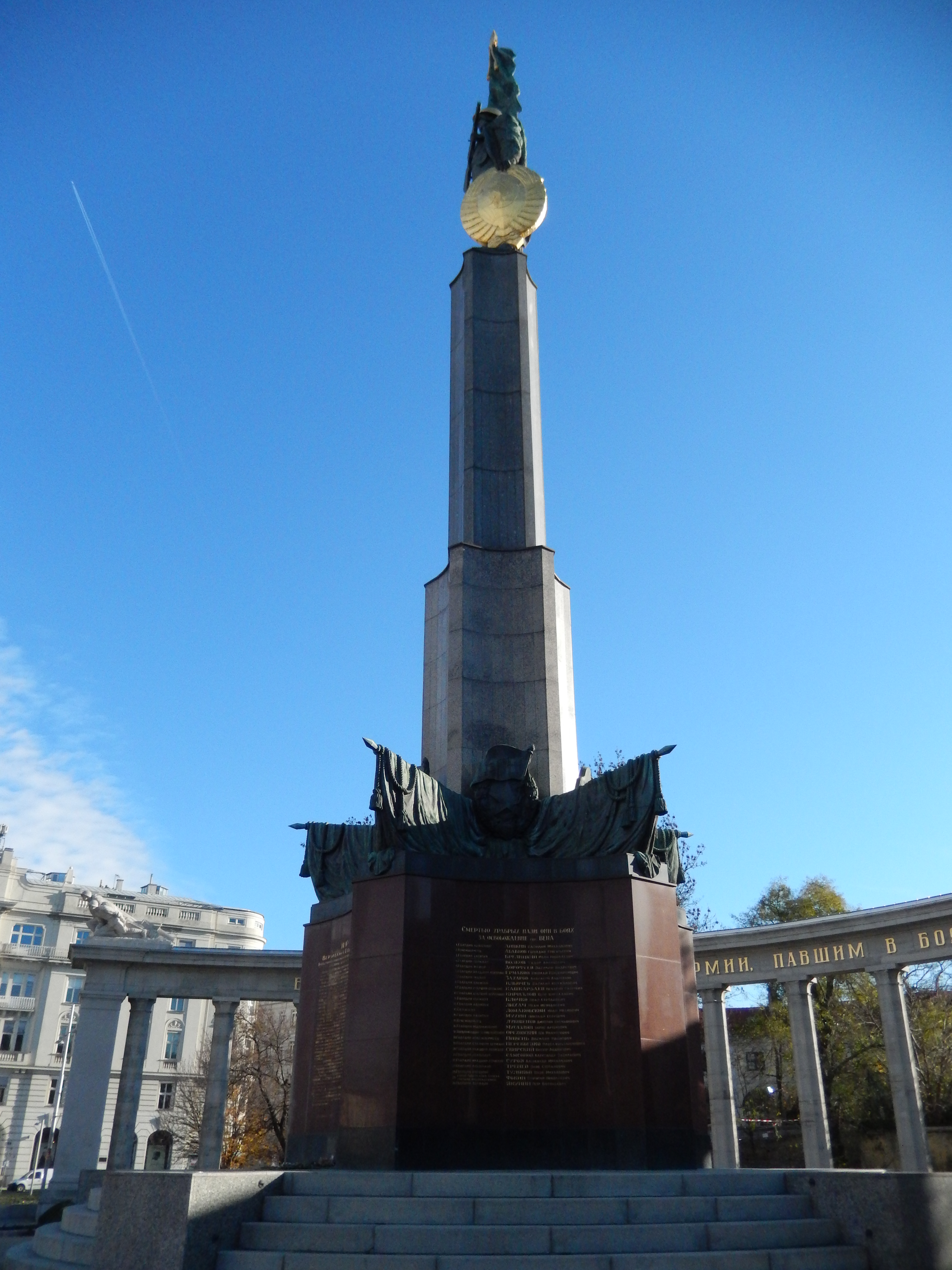
Russian Monument

monument detail (Don)

this fellow was playing beautifully in the square

and this fellow was taking photos
Next we came upon Karlskirche (St. Charles’ Church) and discovered it was being “yarn-bombed:” http://en.wikipedia.org/wiki/Yarn_bombing
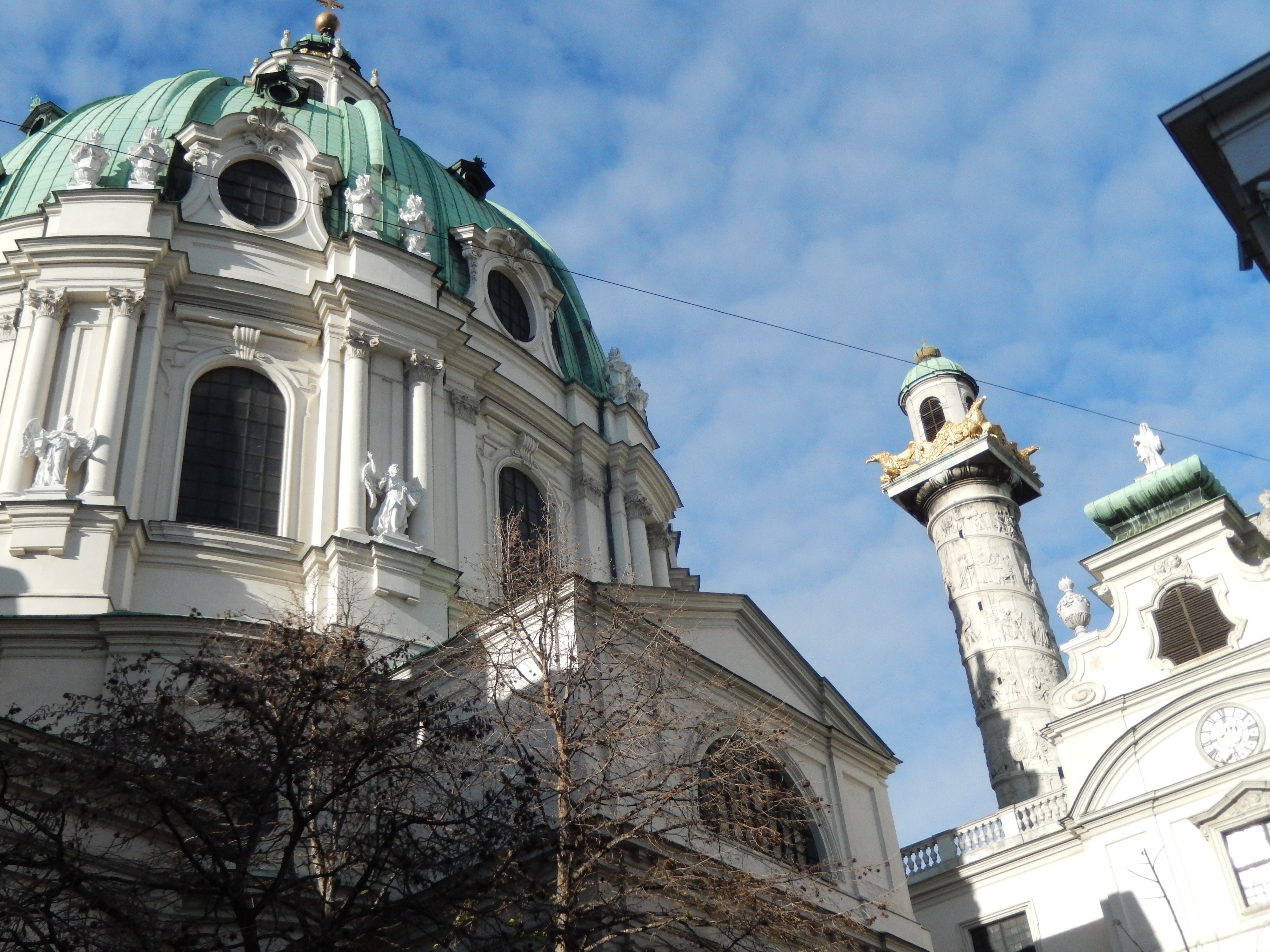
Karlskirche dome
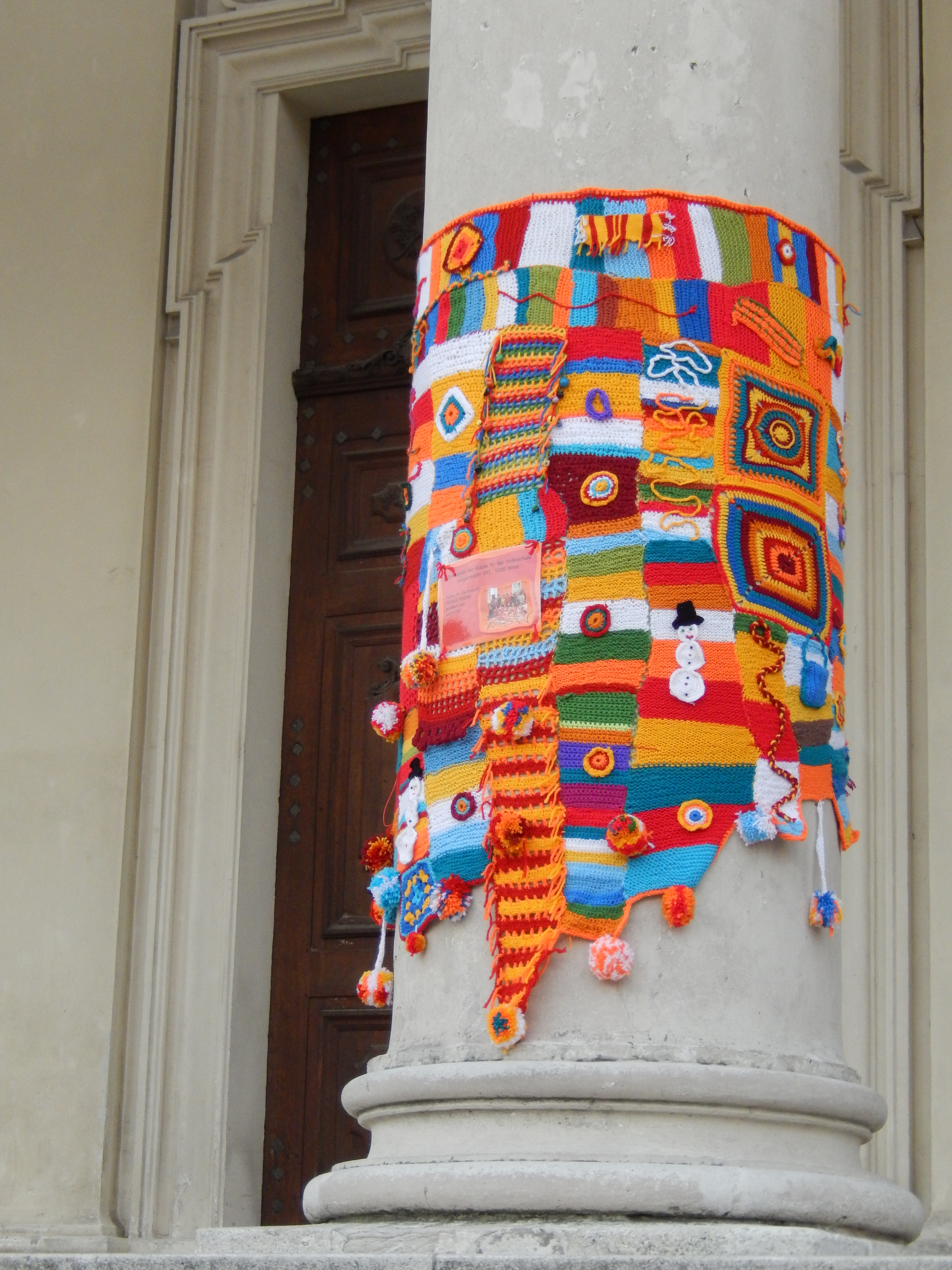
Love the bright colours!
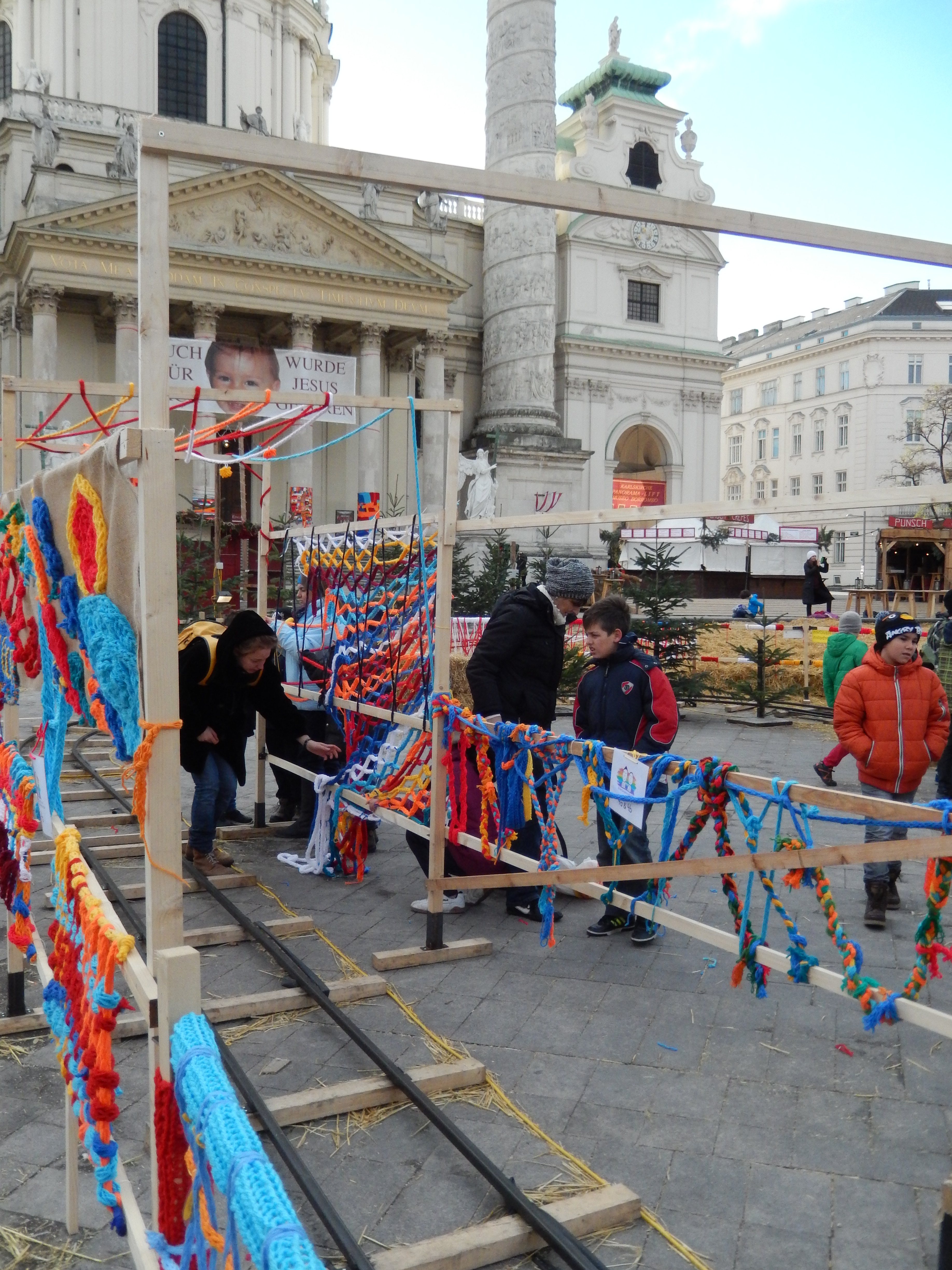
school kids were doing the yarn work
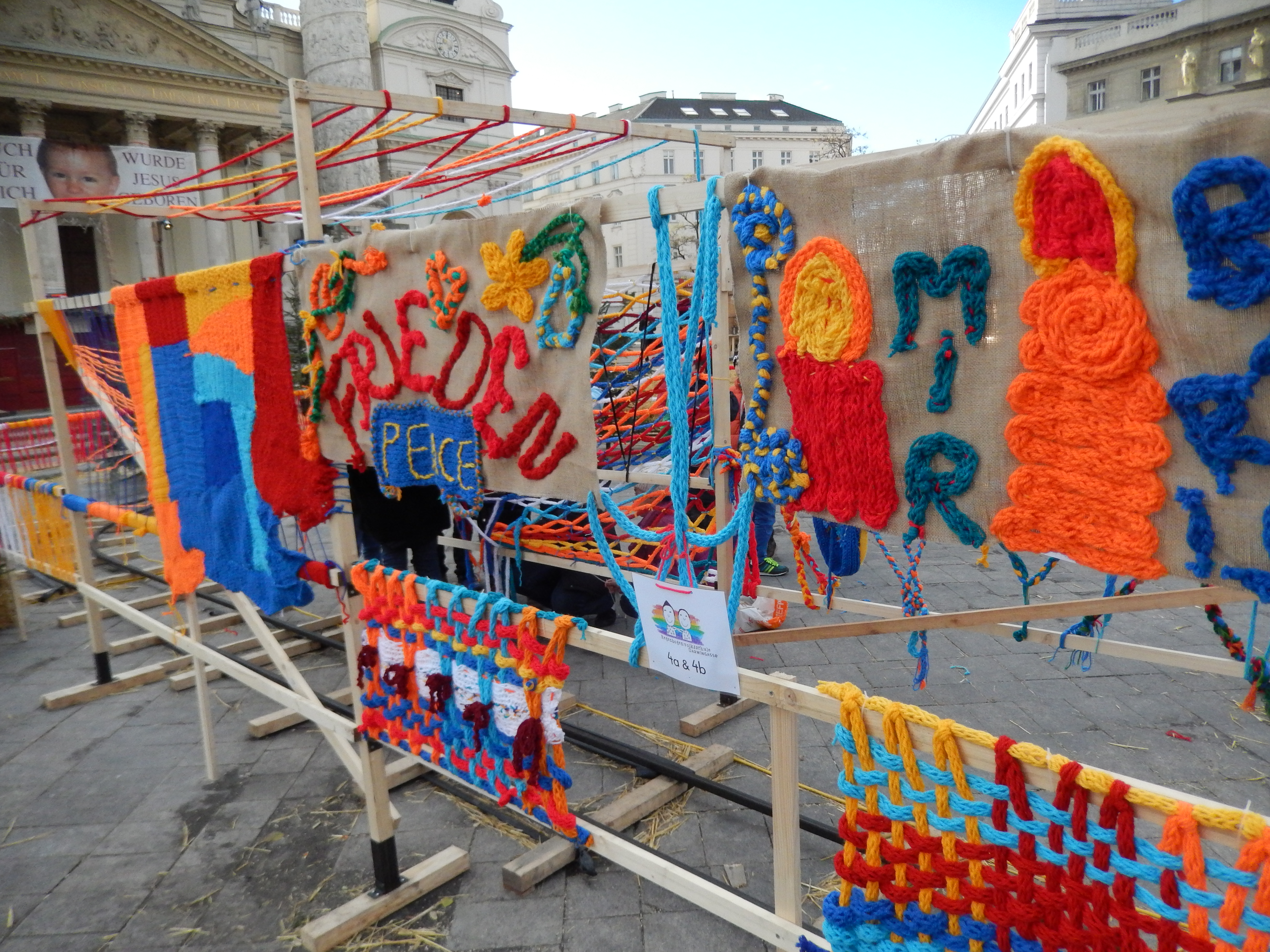
they’ve done a good job, don’t you think?
Onward to the Belvedere Palace – “the elegant palace of Prince Eugene of Savoy (1663-1736), the still-much-appreciated conqueror of the Ottomans. Eugene, a Frenchman considered too short and too ugly to be in the service of Louis XIV offered his services to the Habsburgs. While he was indeed short and ugly, he became the greatest military genius of his age, the savior of Austria, and the toast of Viennese society. When you conquer cities, as Eugene did, you get really rich. With his wealth he built this palace. Only Eugene had the cash to compete with the Habsburgs, and from his new palace he looked down on the Hofburg, both literally and figuratively. Prince Eugene had no heirs, so the state got his property, and Emperor Joseph II established the Belvedere as Austria’s first great public art gallery.”
The Belvedere (beautiful inside and out) has Vienna’s best collection of local artists, including several Gustav Klimt: http://en.wikipedia.org/wiki/Gustav_Klimt
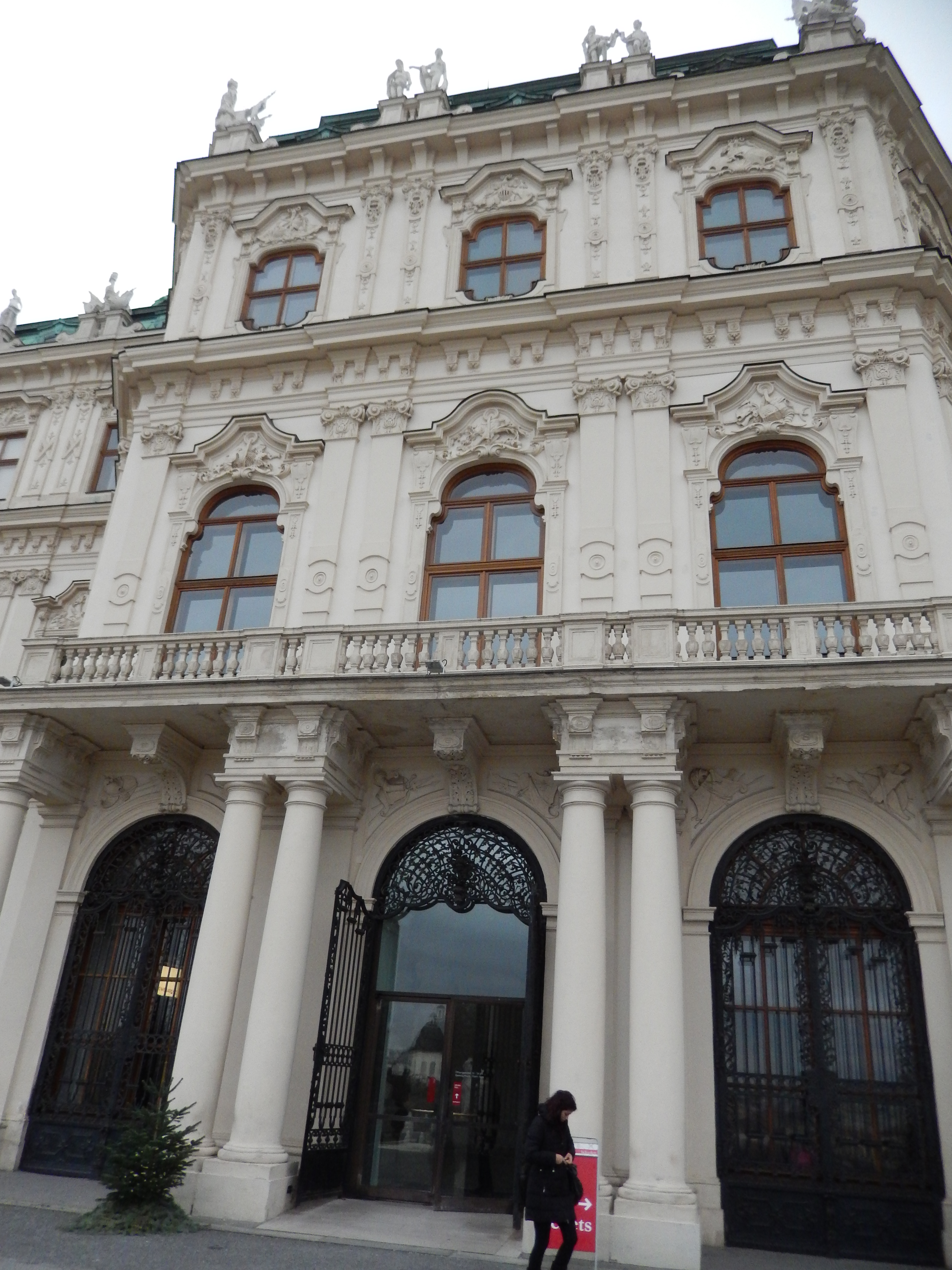
Belvedere Palace entrance
After wandering through the Belvedere, we took the tram to see the Parliament buildings and City Hall.

Parliament buildings
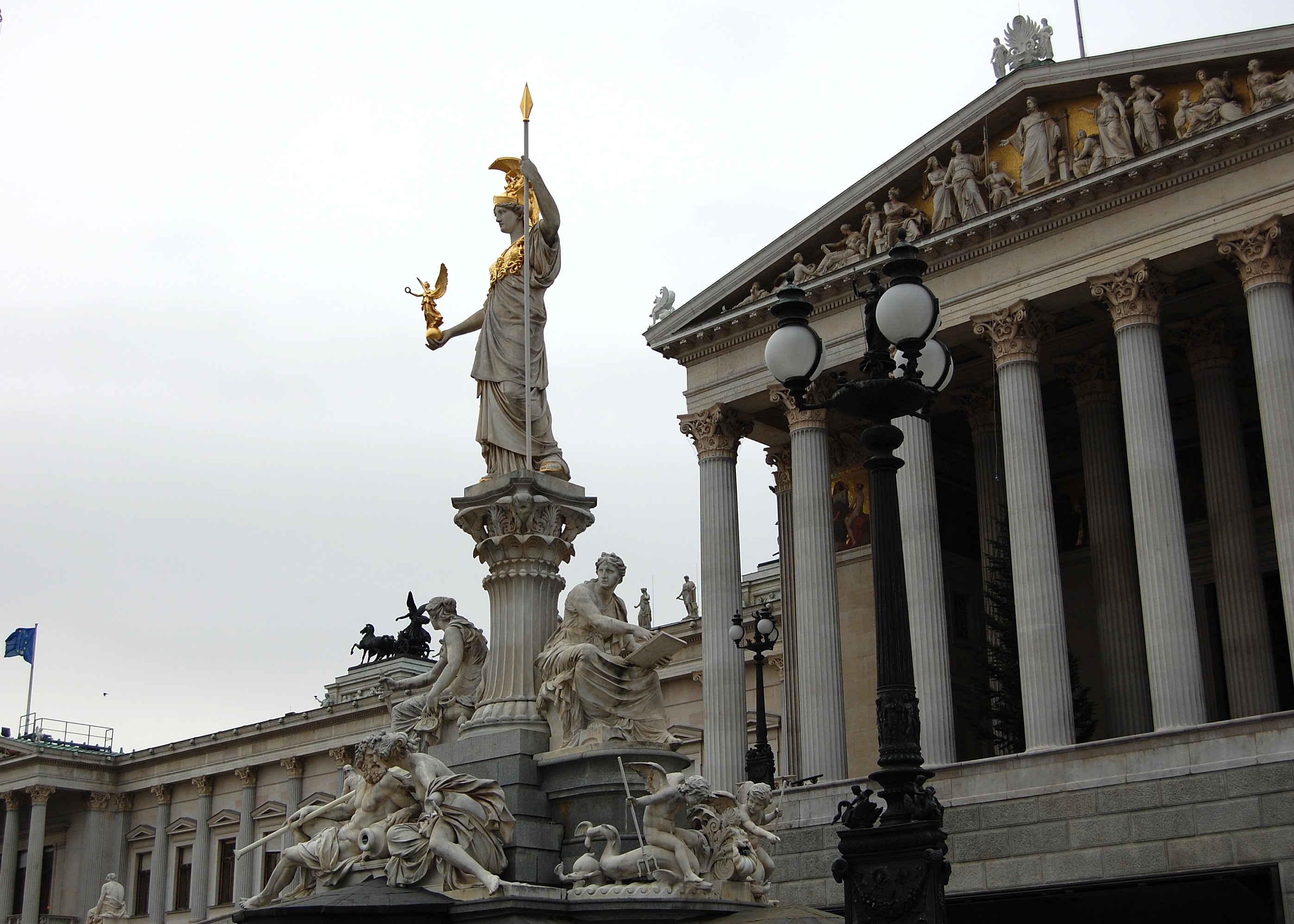
detail (Don)
At City Hall we found another Christmas market.
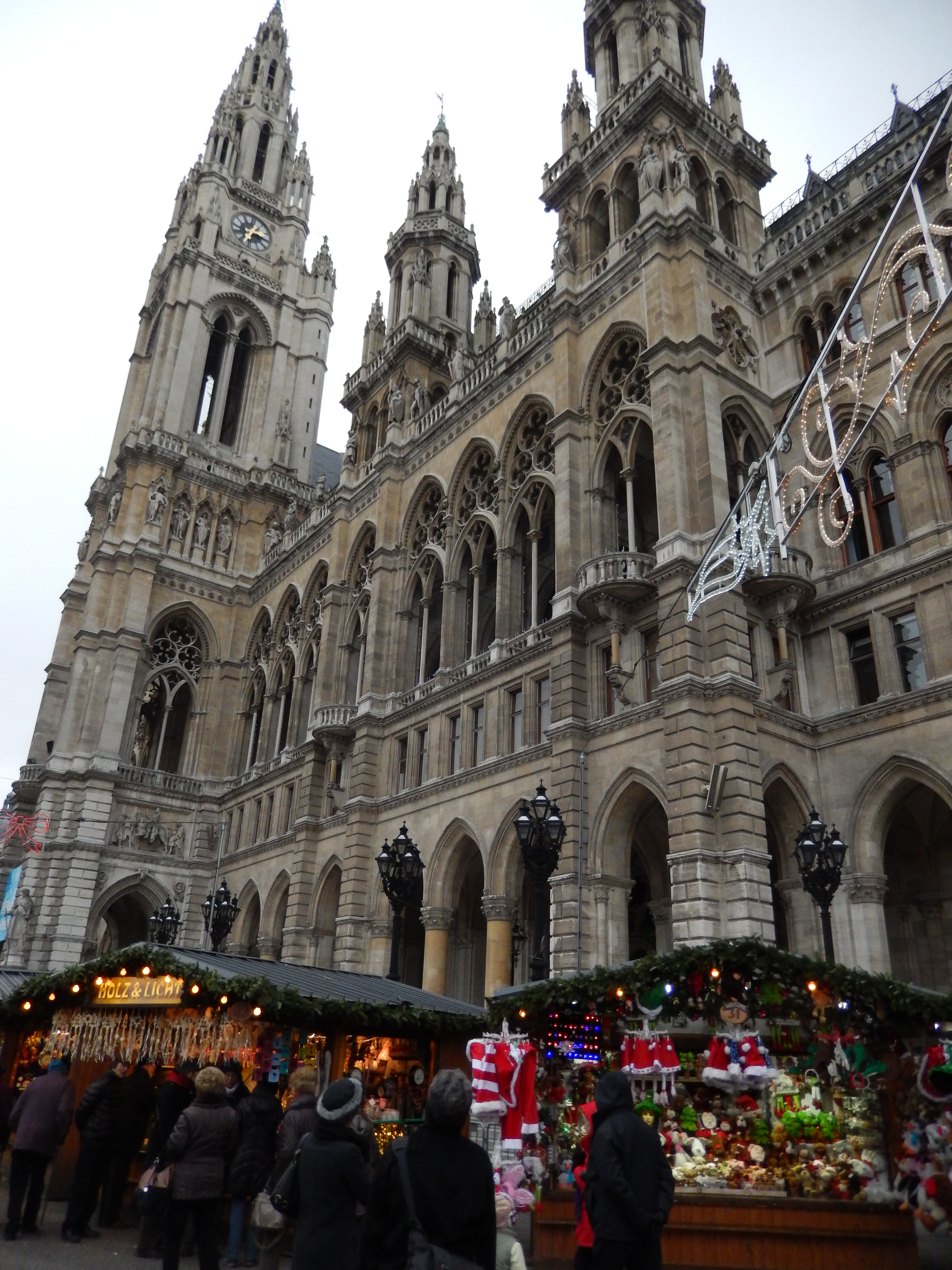
City Hall
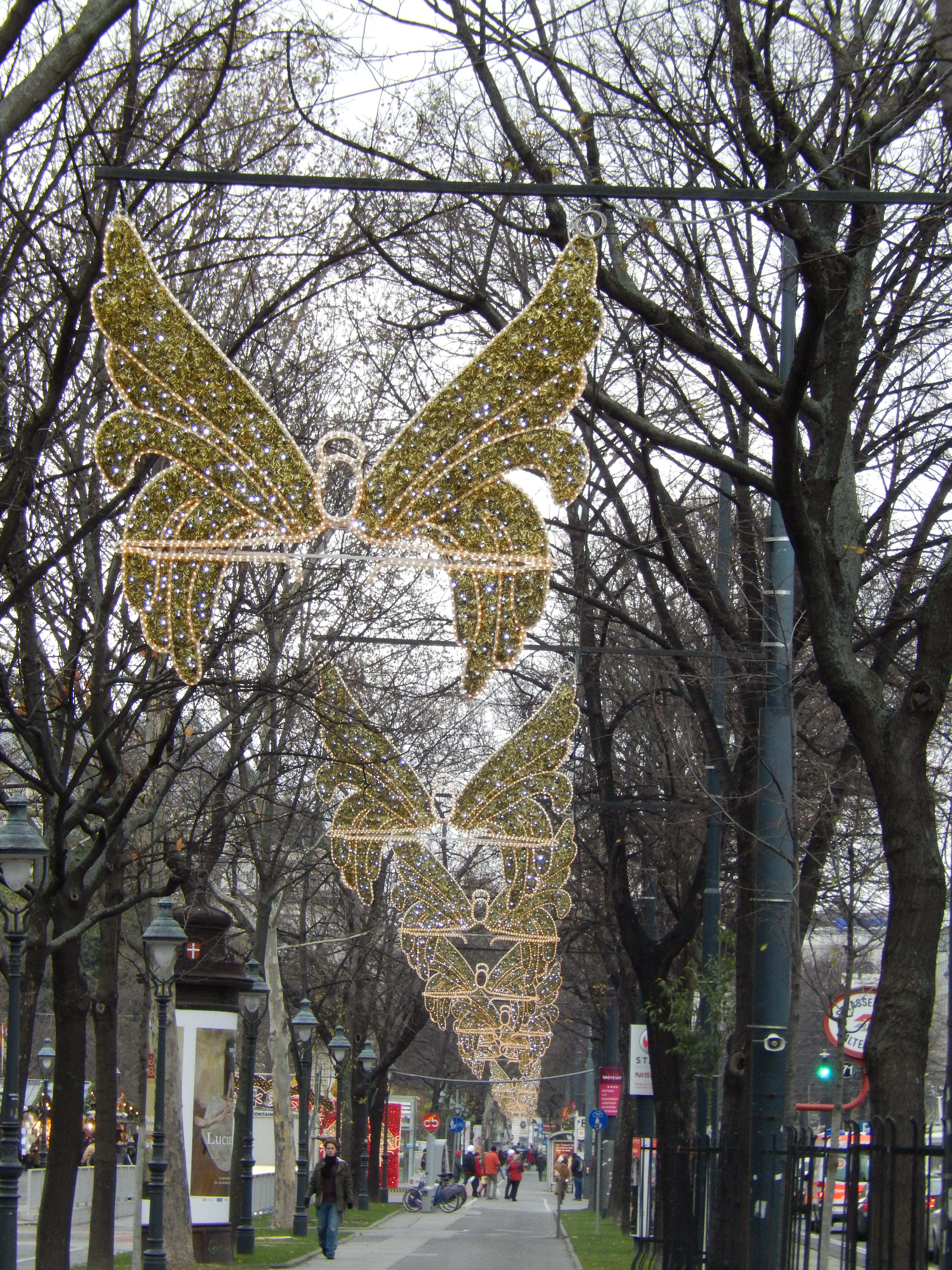
pretty walkway
It was the biggest Christmas market we’d seen, so we decided we’d come back when it was dark and enjoy the sparkling atmosphere. We headed back to the hotel to rest our feet. When it was dark, we returned to the City Hall market. It was lovely.
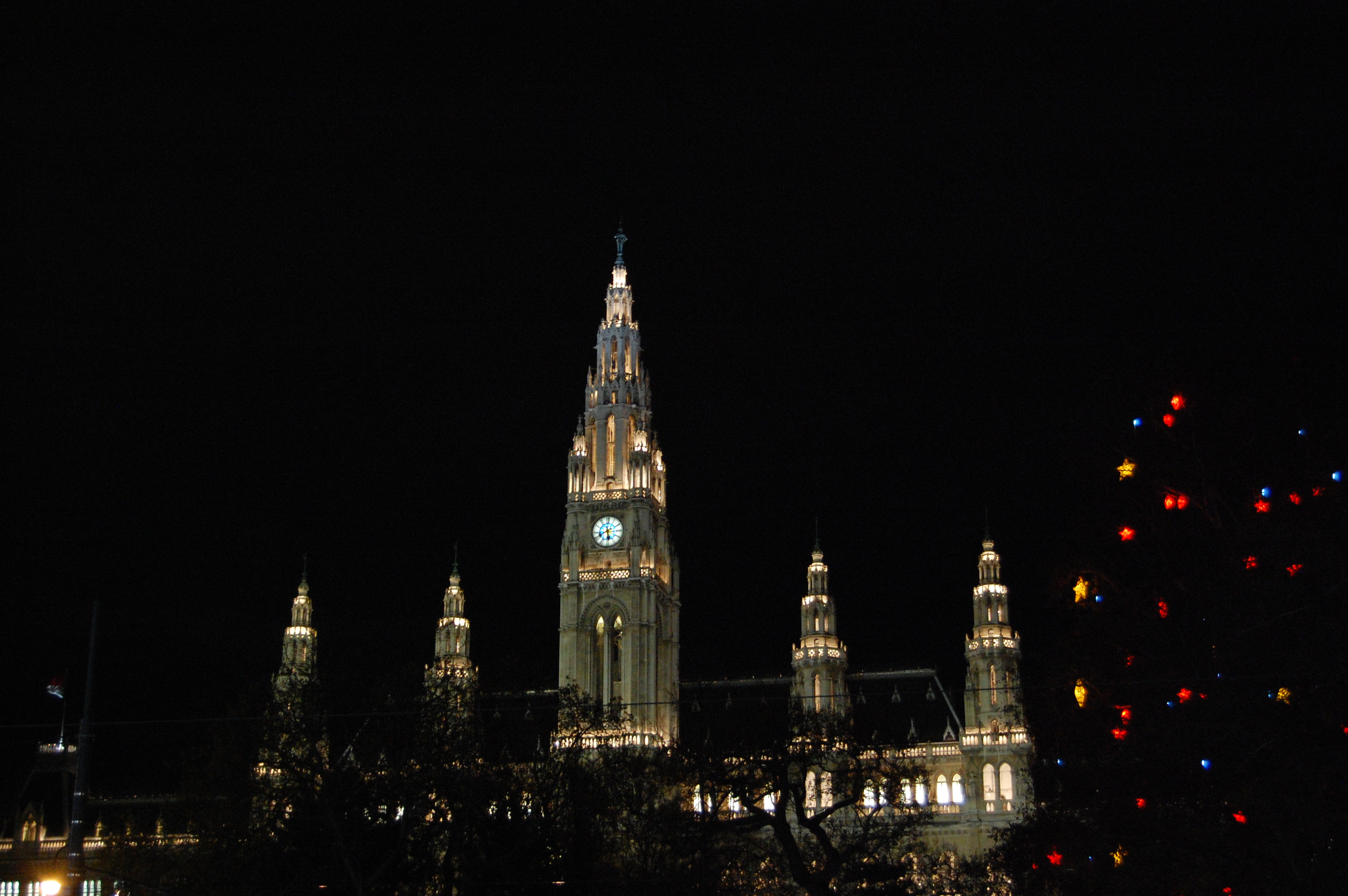
City Hall at night (Don)
sparkling (Don)
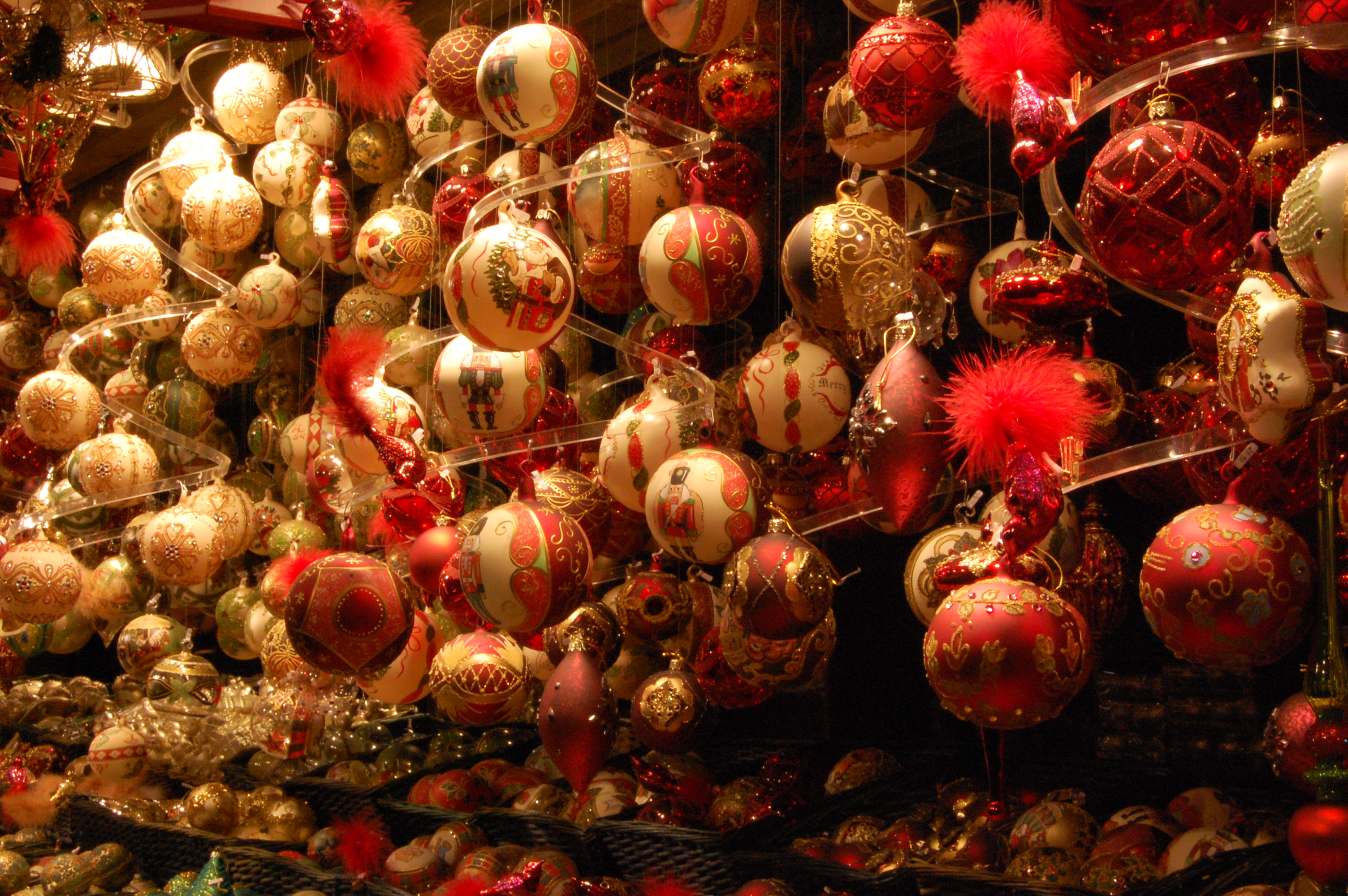
beautiful decorations for sale (Don)
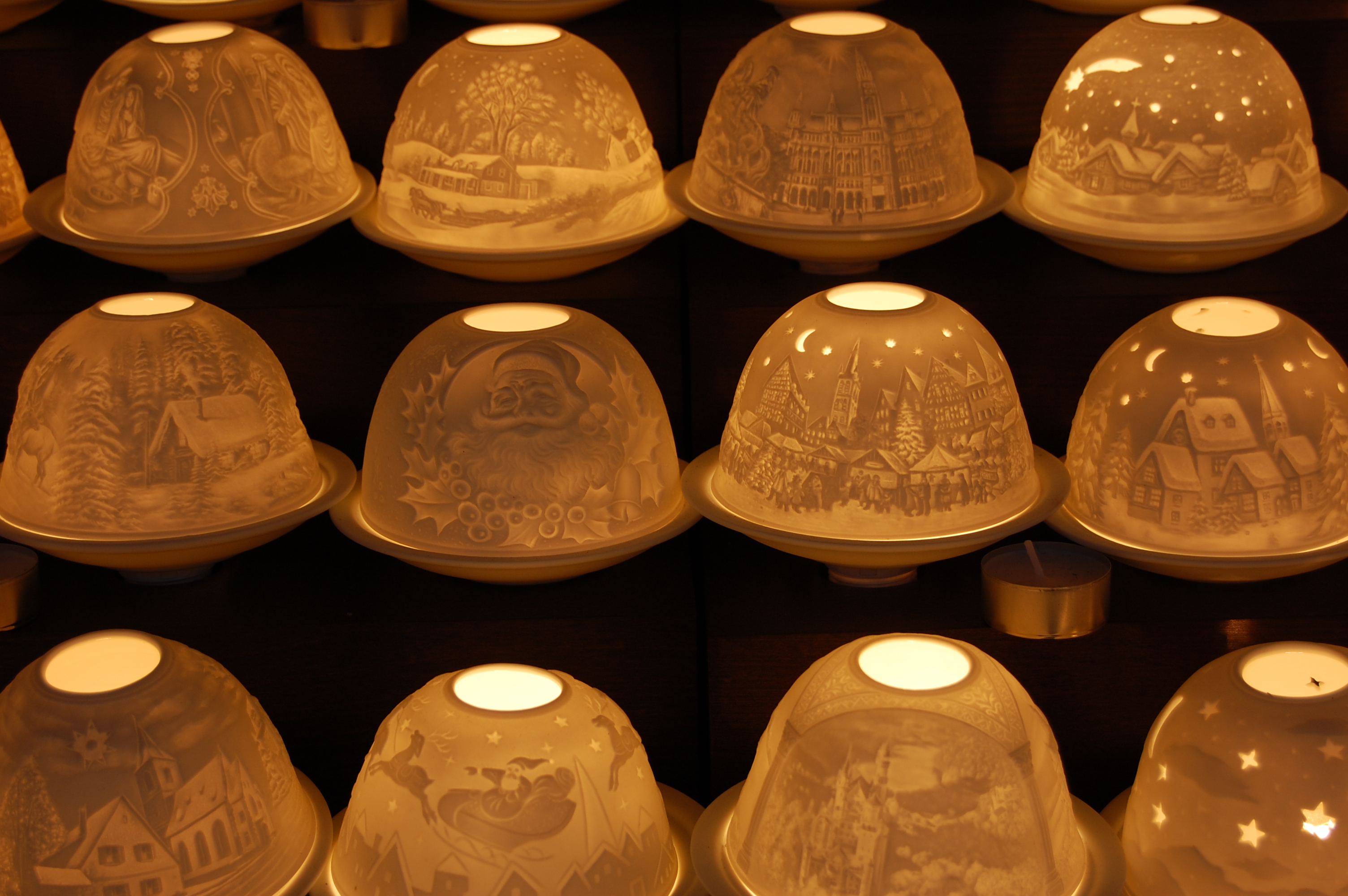
Christmas tea lights (Don)
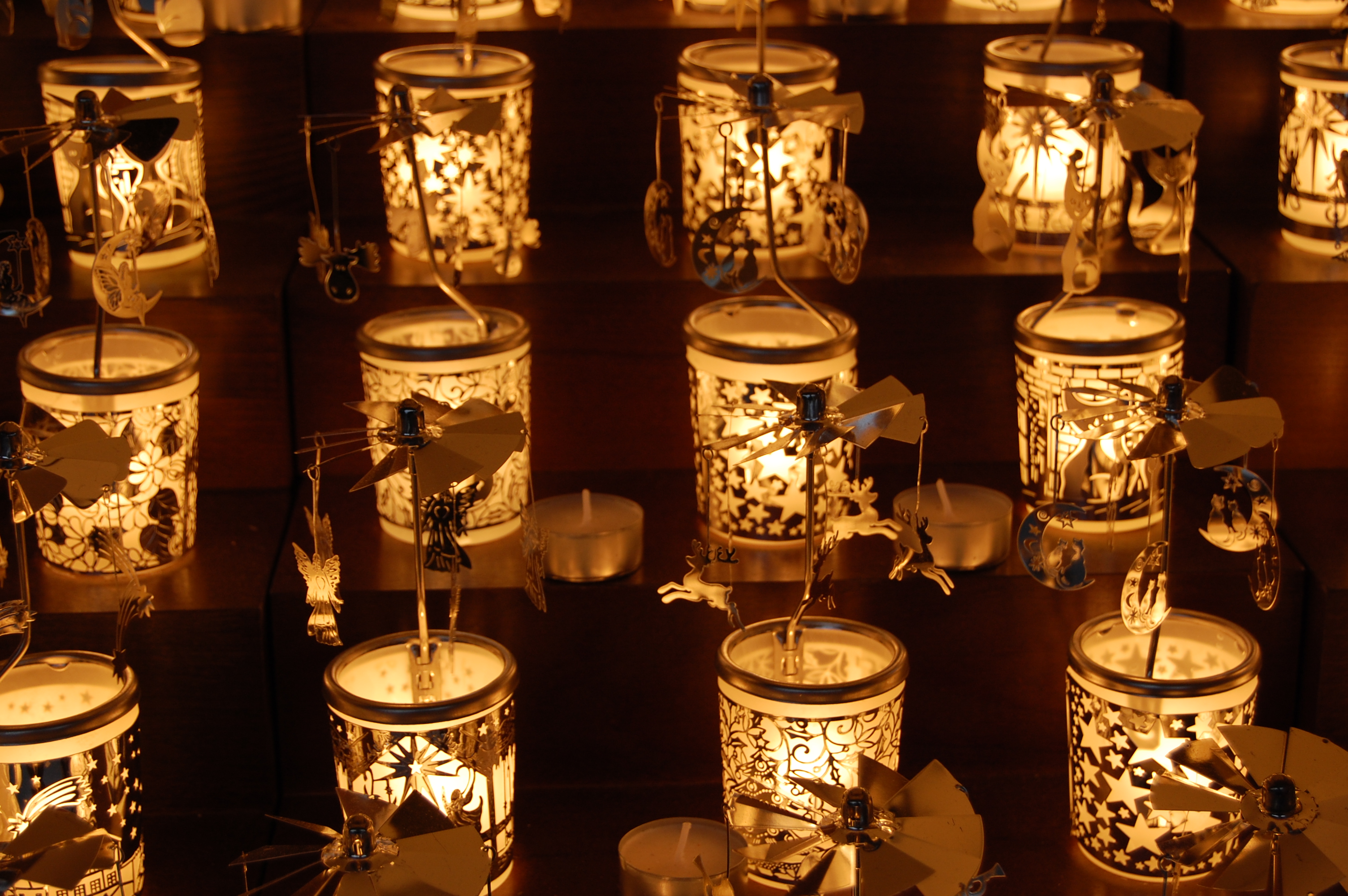
more Christmas tealights (Don)
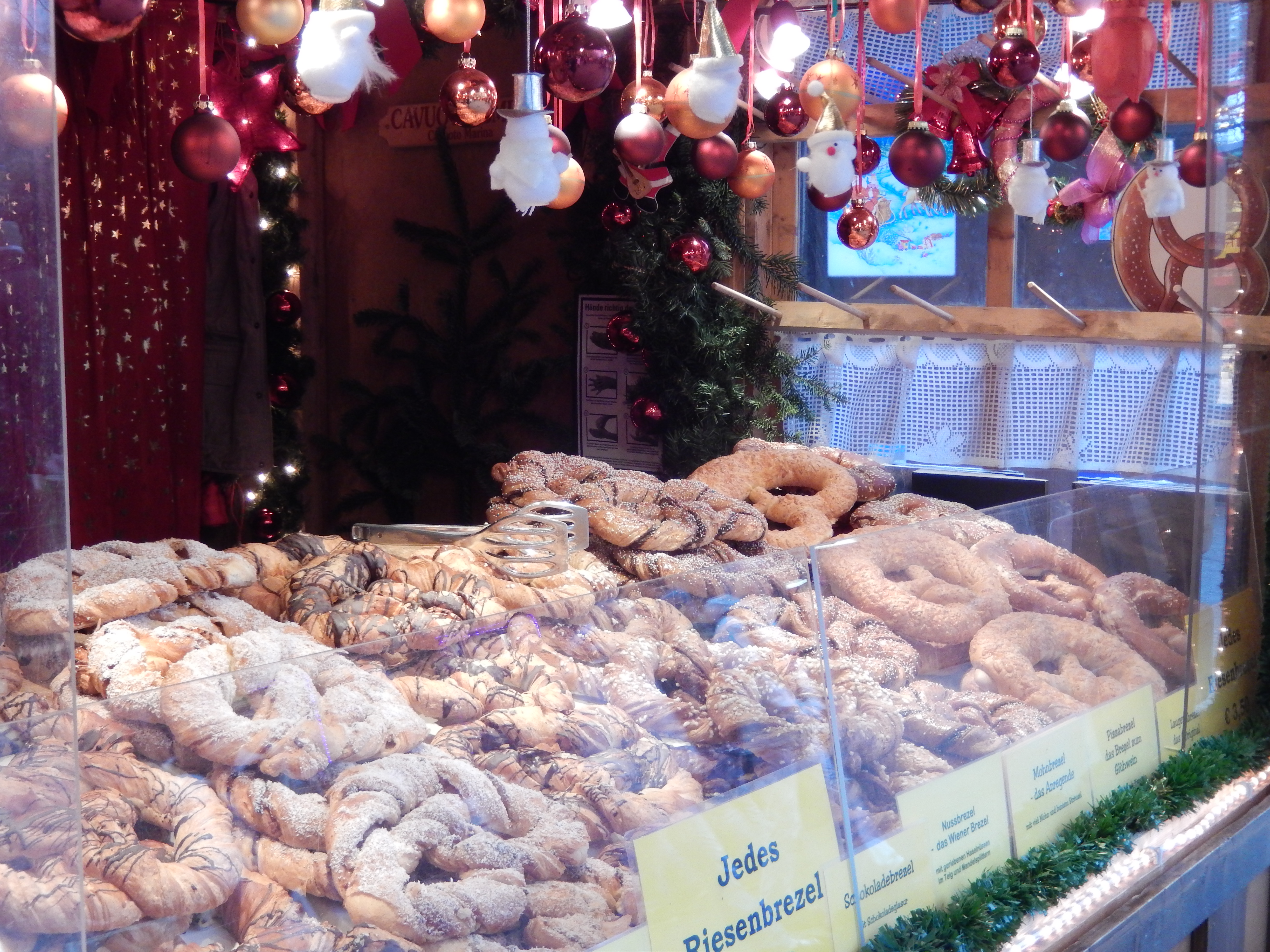
yummy goodies
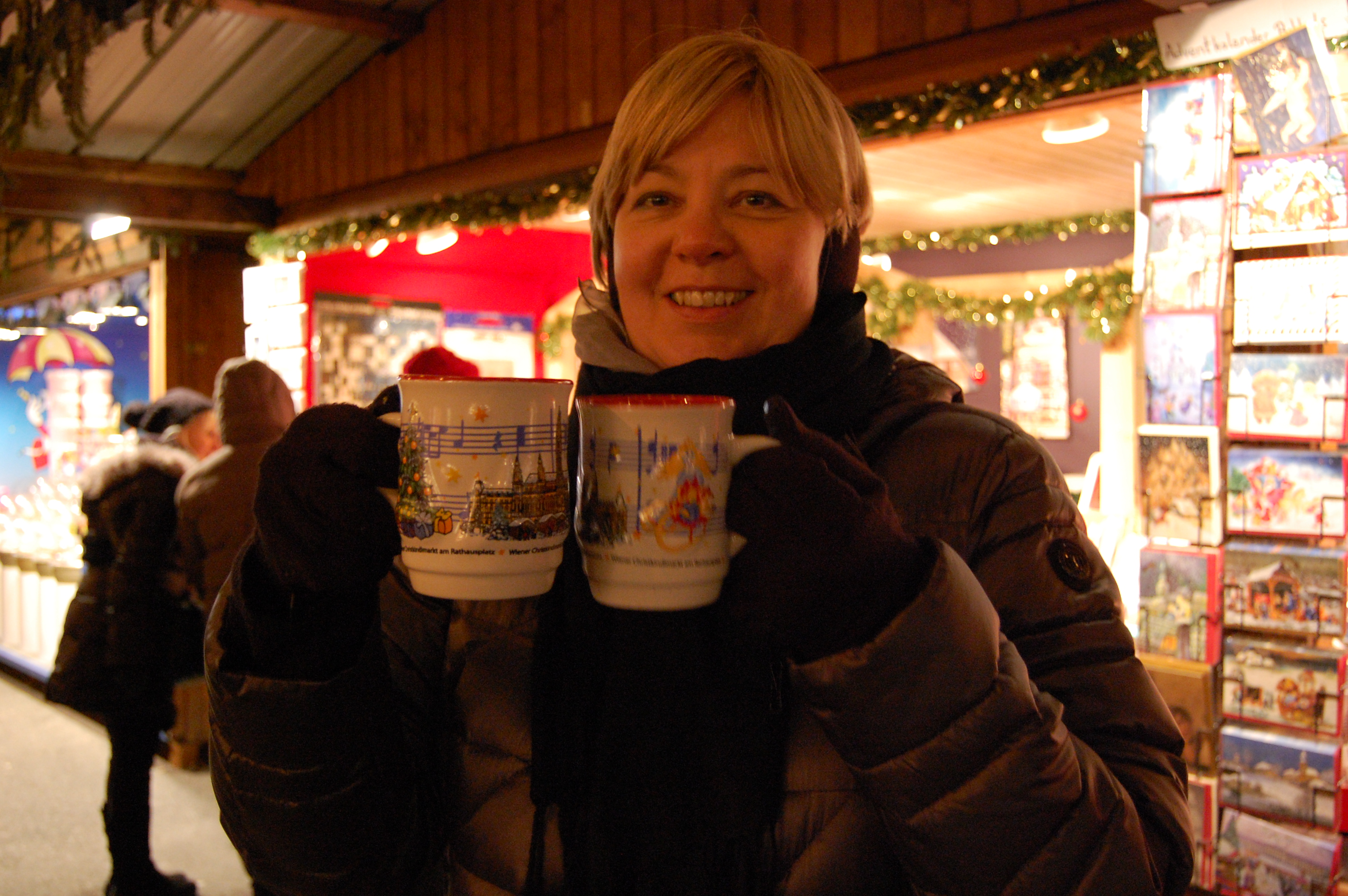
and Glühwein, of course! (Don)
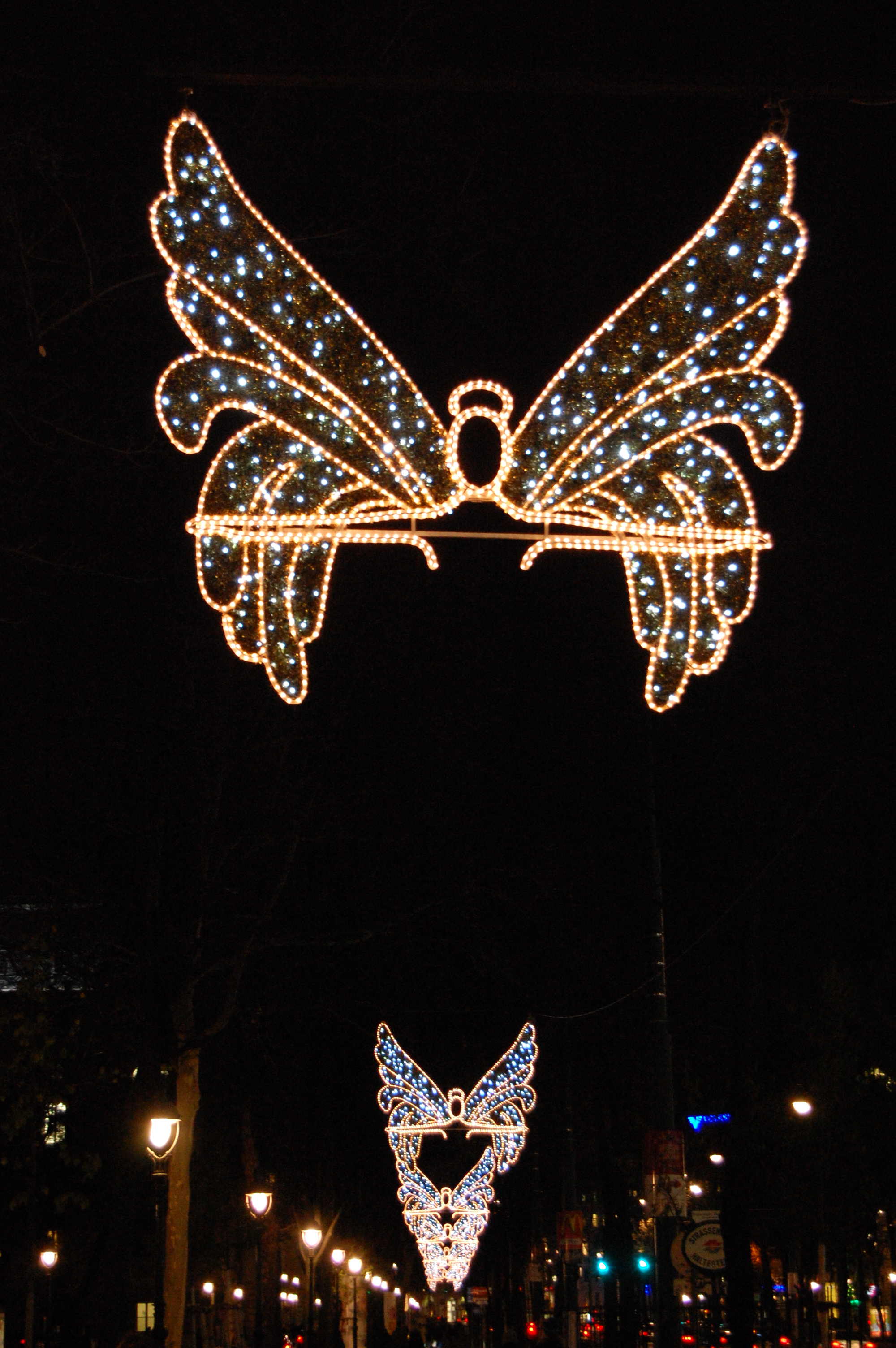
We were also very happy that, on our last night, the city had finally turned on the power to light up the Graben street decorations we’d seen every day, but never lit:
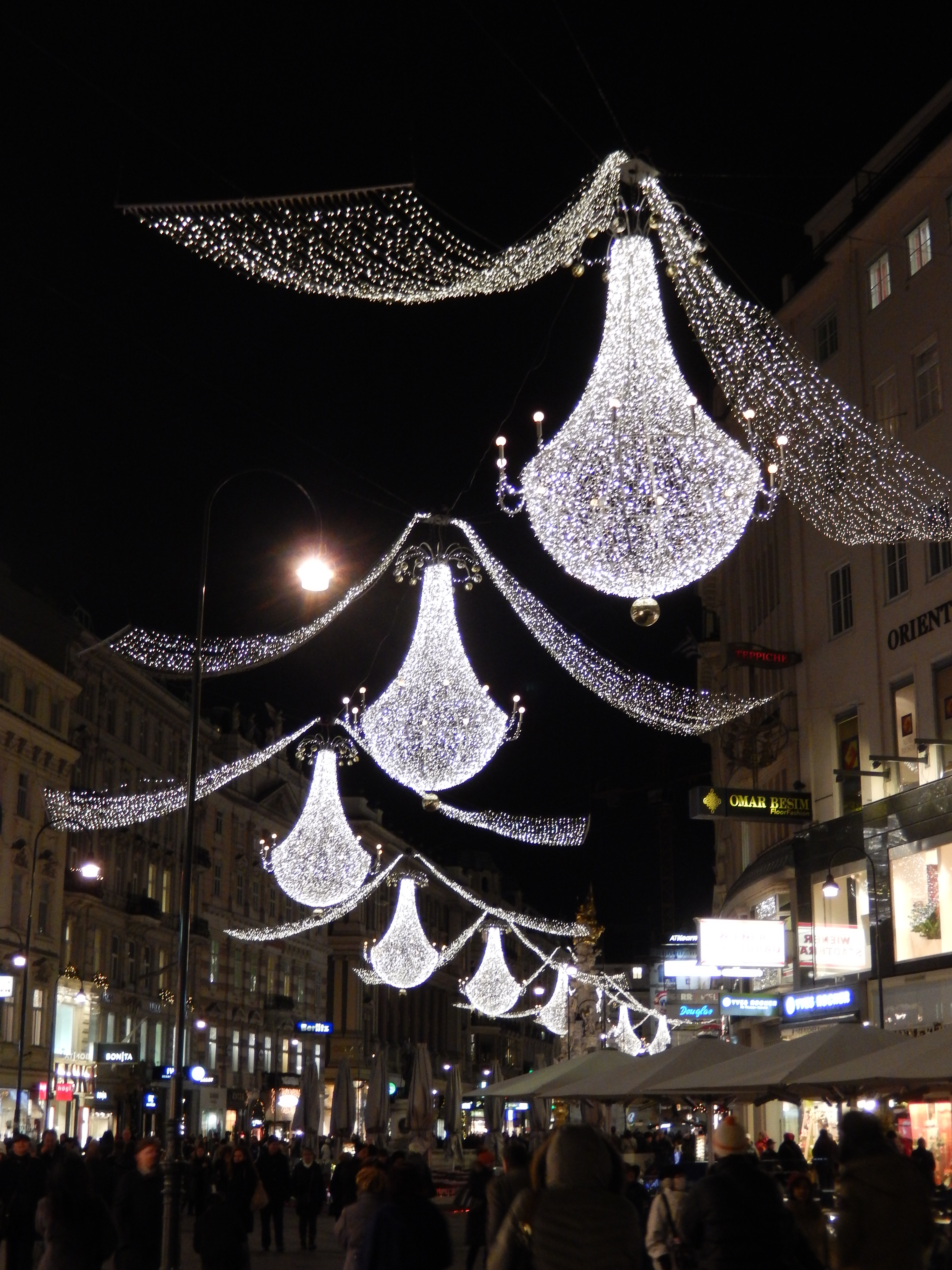
the Graben is lit up
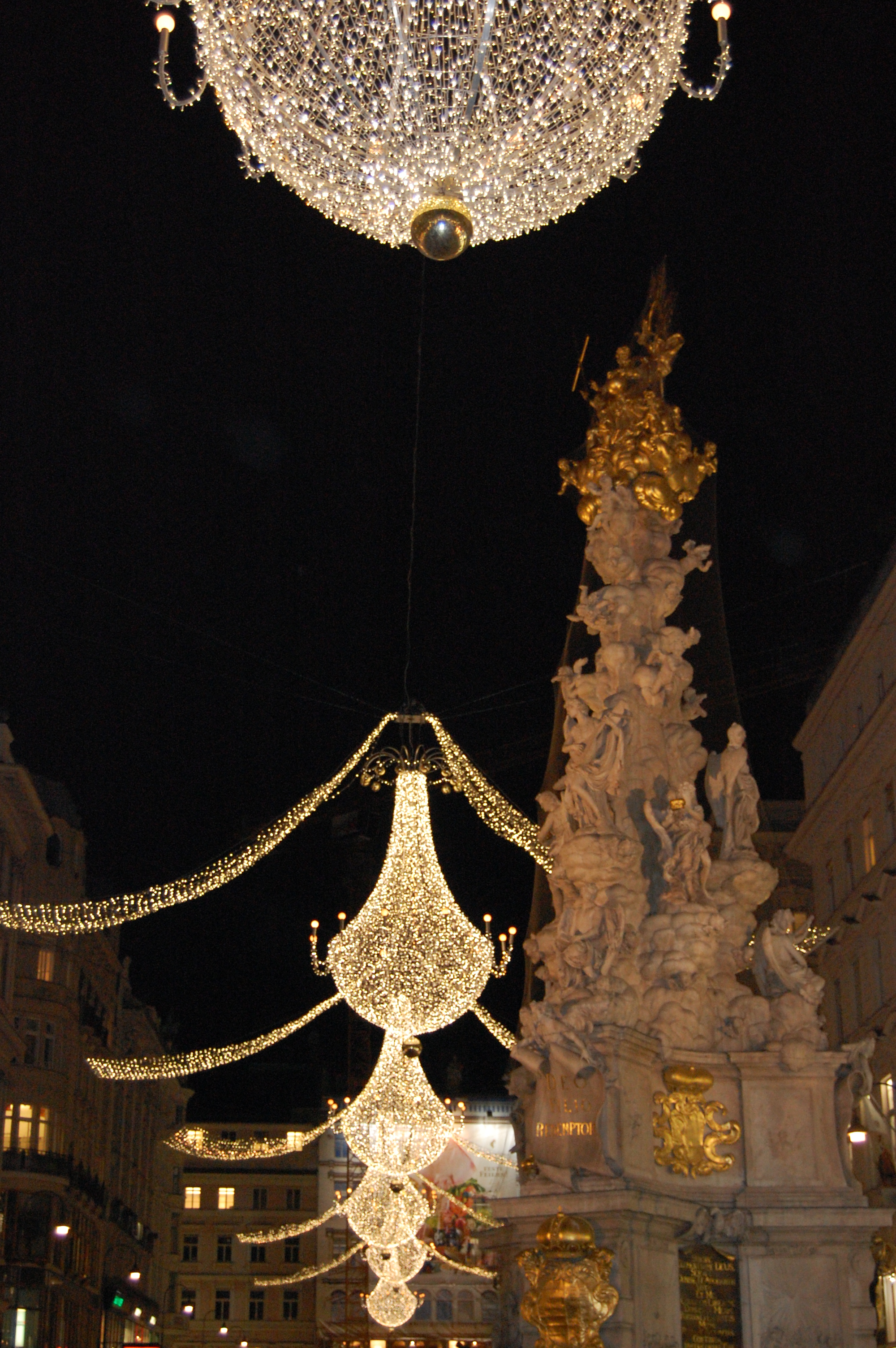
highlighting the Holy Trinity Plague Column on the Graben (Don)
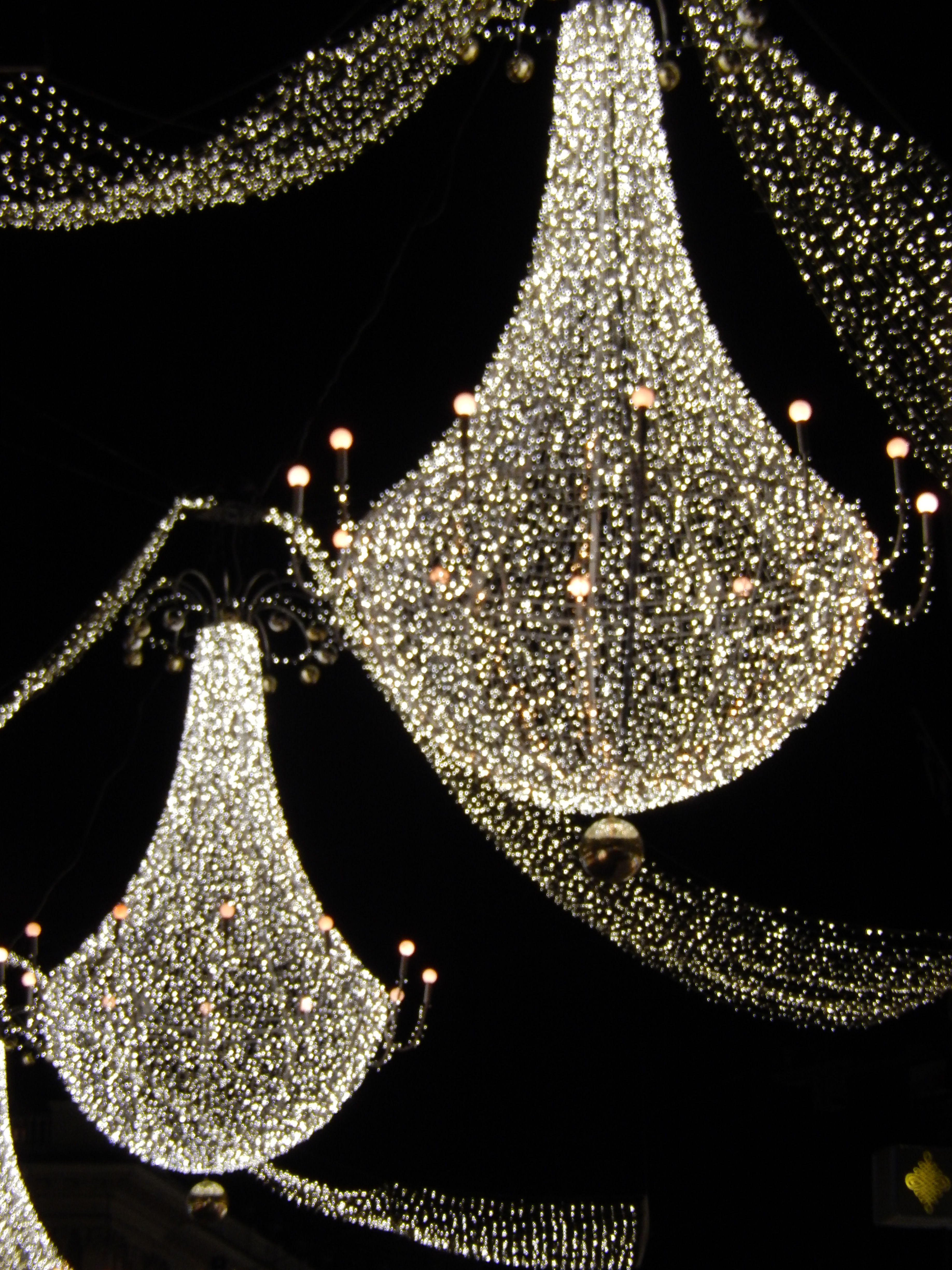
detail
After enjoying the beautifully lit up night, we went out for a last dinner, at an Italian place we had passed a few times, and which looked inviting:
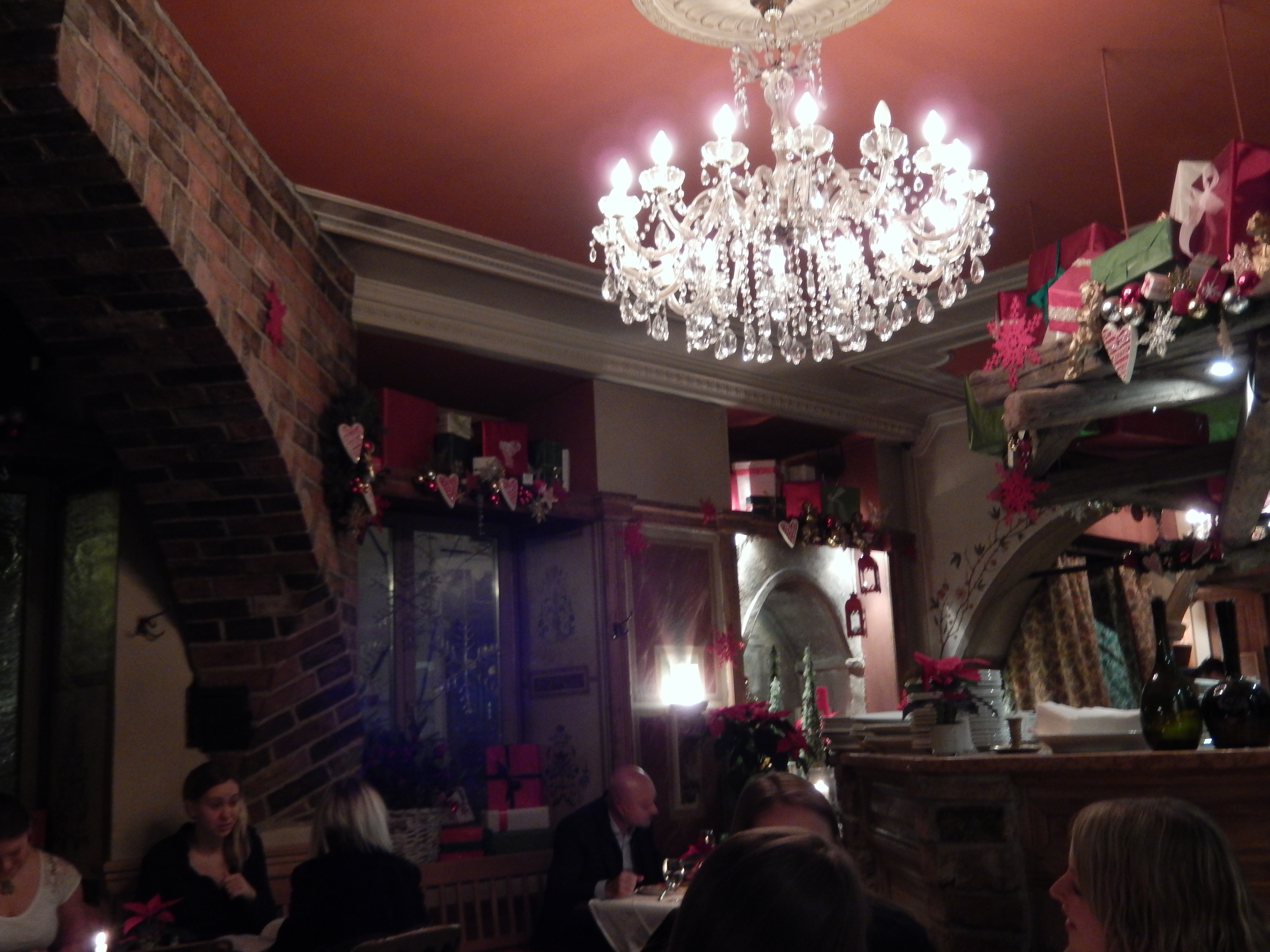
last dinner at Da Capo, decorated for Christmas
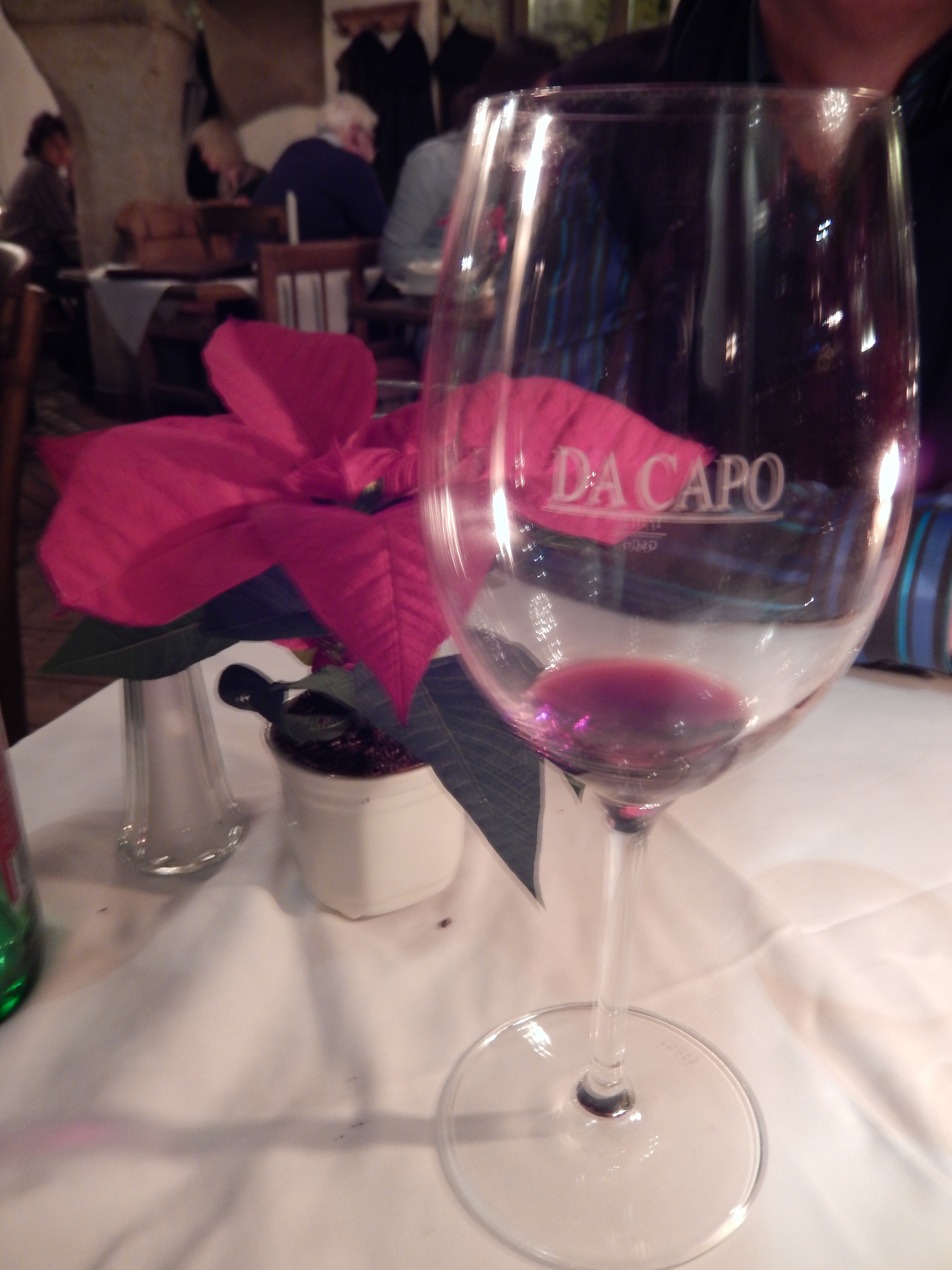
last dinner cheers
We had a last full morning in the city before taking the train back to Prague, so we decided to take a long walk, across the Danube Canal (not the river), to the north corner of the city, to see the Prater Amusement Park, with the famous ferris wheel. In 1766, Emperor Josef II gave his imperial hunting grounds to the people of Vienna for a public park. In 1896, English engineer Walter B. Basset submitted the idea to construct a Giant Ferris Wheel (something his company had already done in other locations), and in 1897 construction was complete – 30 cabins with 20 seats each. During WWII the ferris wheel was damaged when a fire destroyed all 30 cabins and the operational facilities, but it was reconstructed in record time and re-opened in May 1947. It features in such famous films as James Bond’s The Living Daylights and 1950’s The Third Man, based on a novel by Graham Greene, set in bombed-out, post-war Vienna, starring Orson Welles and Joseph Cotton (which we had watched before we left on this trip).
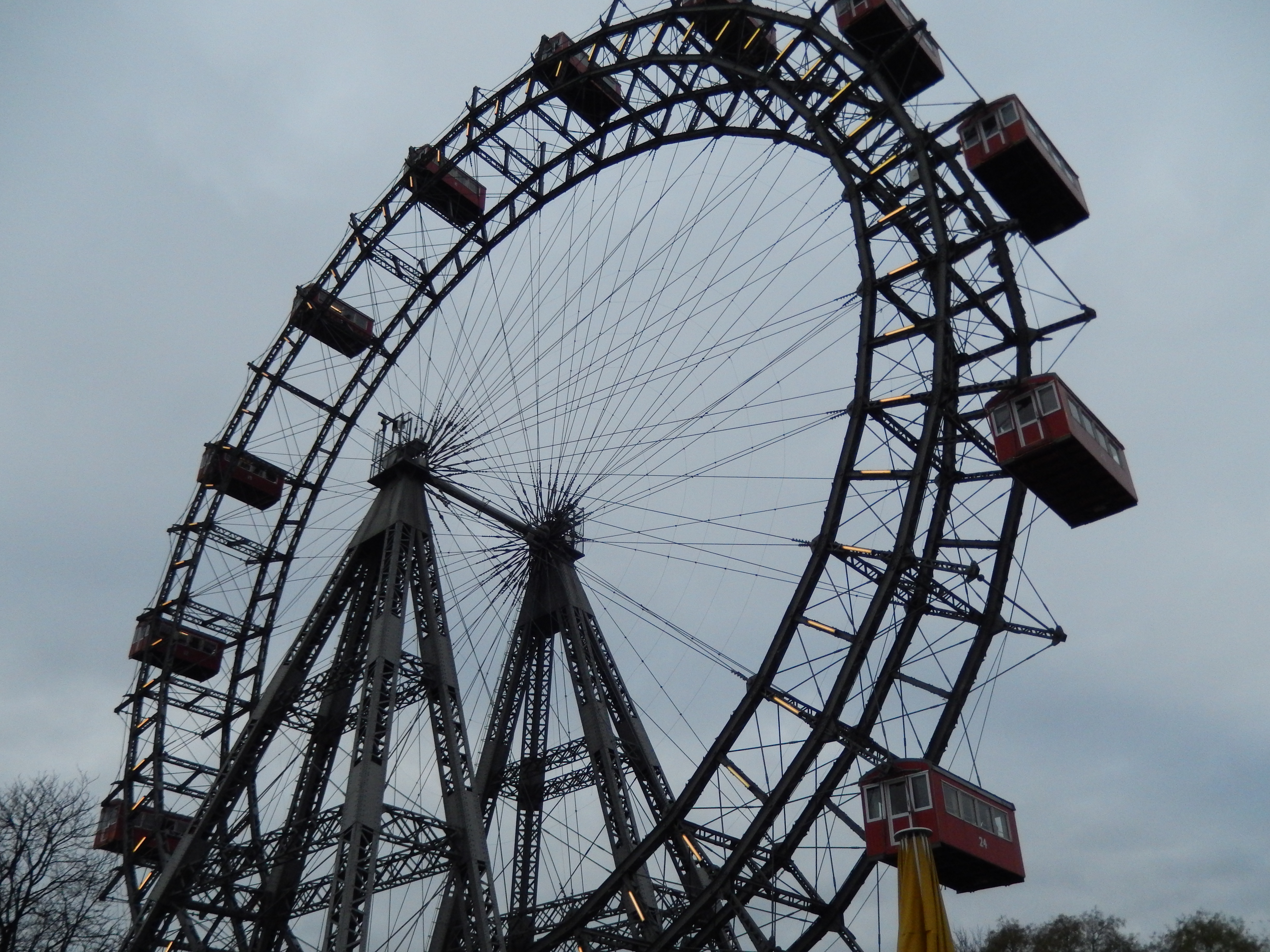
Vienna’s Giant Ferris Wheel
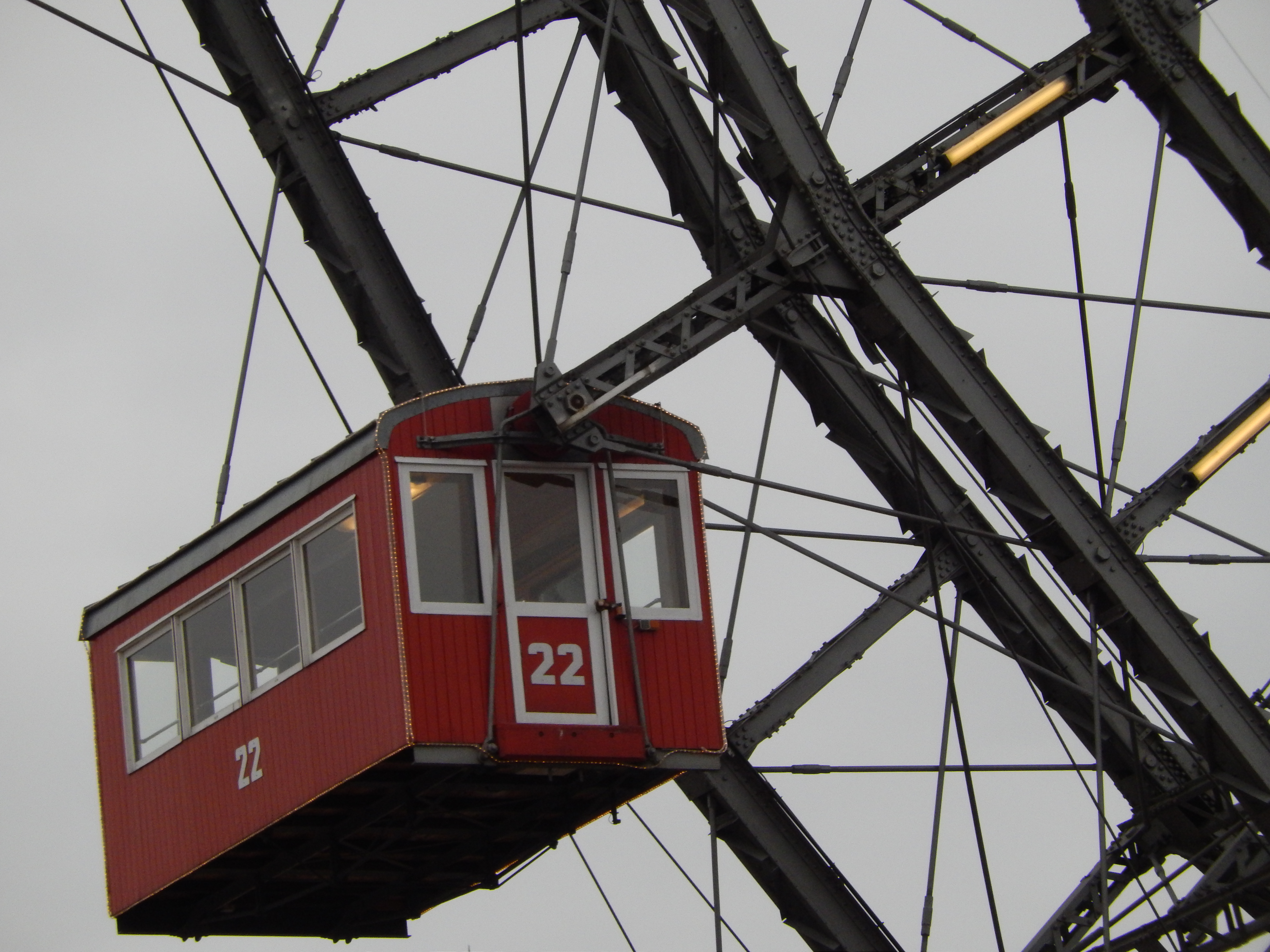
large cabins
Walking back to the hotel, we passed this statue of Dr. Karl Lueger, the influential mayor of Vienna, from 1897-1910, who together with architect Otto Wagner, helped to shape modern Vienna.
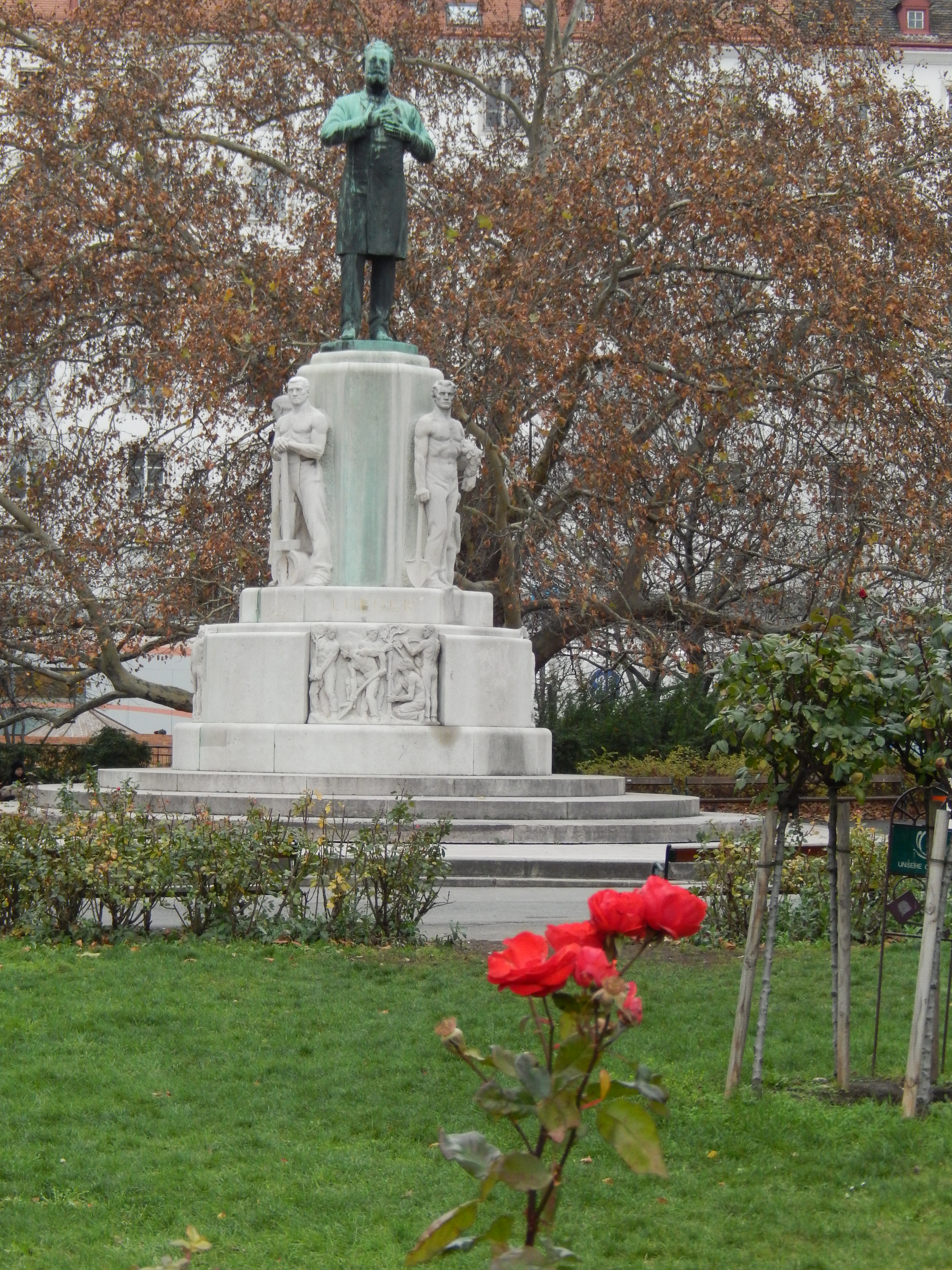
mayor Dr. Karl Lueger
It was time to say goodbye to Vienna. We took the train back to Prague, arriving in the evening, and stayed at the Airport Courtyard Marriott, an excellent hotel with a great restaurant, and just steps away from airport check-in the next morning.
We had a wonderful trip, with Prague being our favourite – a city to which we’d be very happy to return. Vienna was lovely too – we especially enjoyed the cafés and Christmas markets – but we didn’t have the same feel for it as we did for Prague. It was all fun, though.
Next up – Winter Olympics in Sochi! Stay tuned….
R & R in Mexico March 7, 2013
Posted by freda in Birmingham, Michigan.2 comments
In November, during American Thanksgiving week, we went to Mexico with good friends. Sharon and Fred (currently living in Shanghai) have a time share with Intrawest, which includes a property in Zihuatanejo, on the west coast of Mexico. They booked a three-bedroom, three-bathroom condo and we, and Diane and Julio (currently living in Mexico City), joined in for 6 glorious nights. It was a perfect relaxing week in a gorgeous location.

the view from the check-in desk
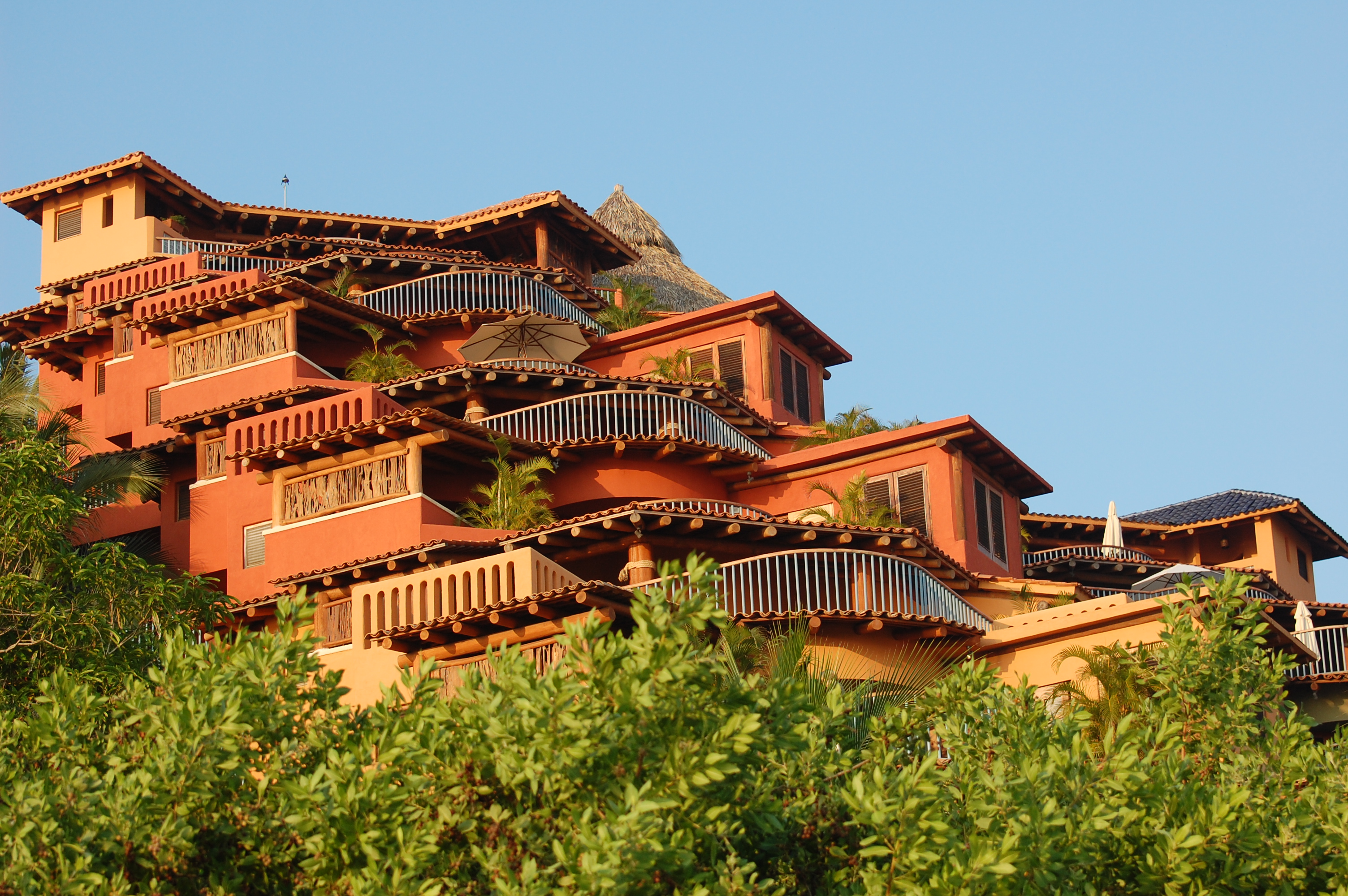
Intrawest property, like a Dr. Seuss creation!
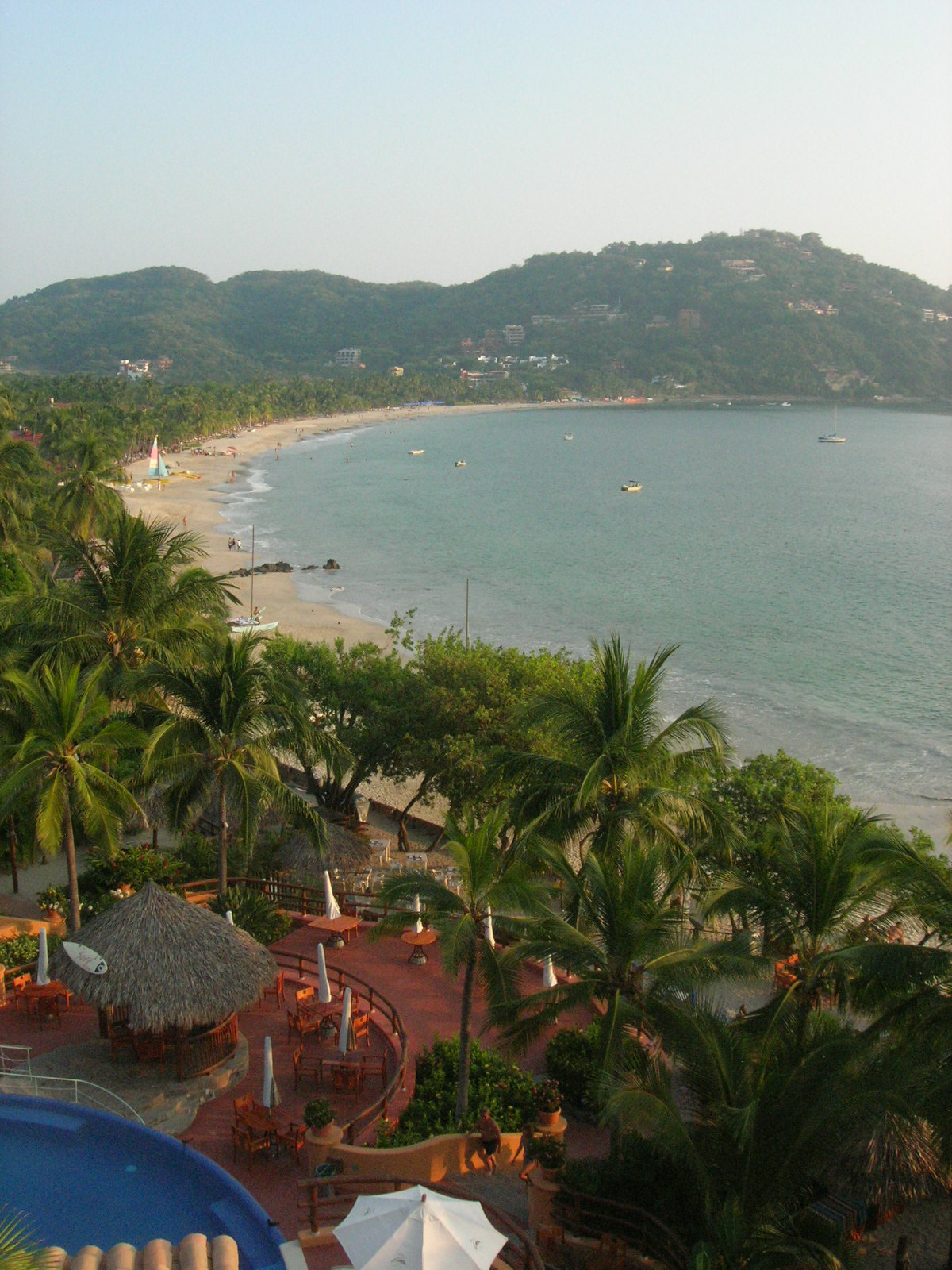
the beach view from our balcony

and the view from the end of that beach looking back
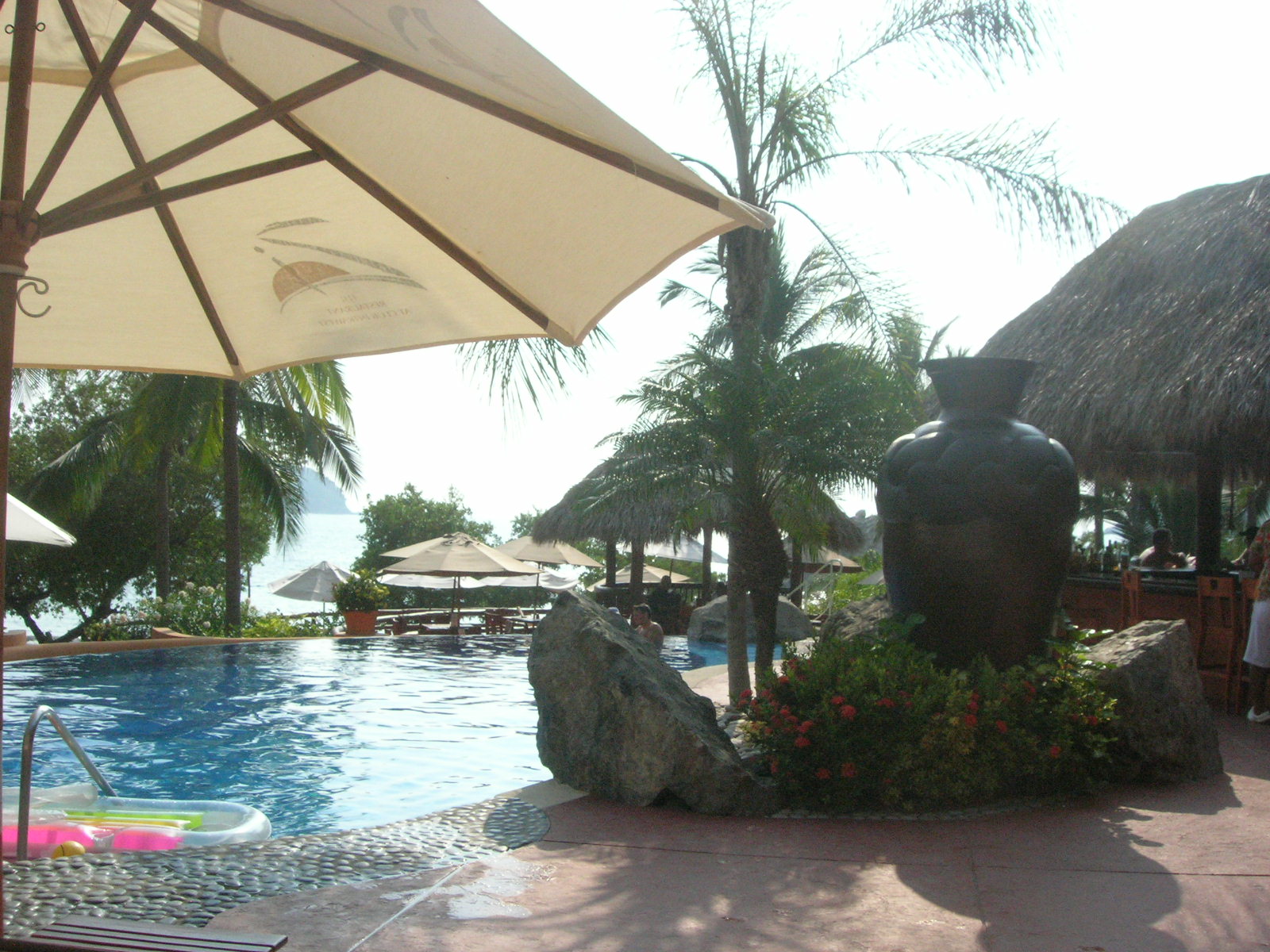
from the pool area
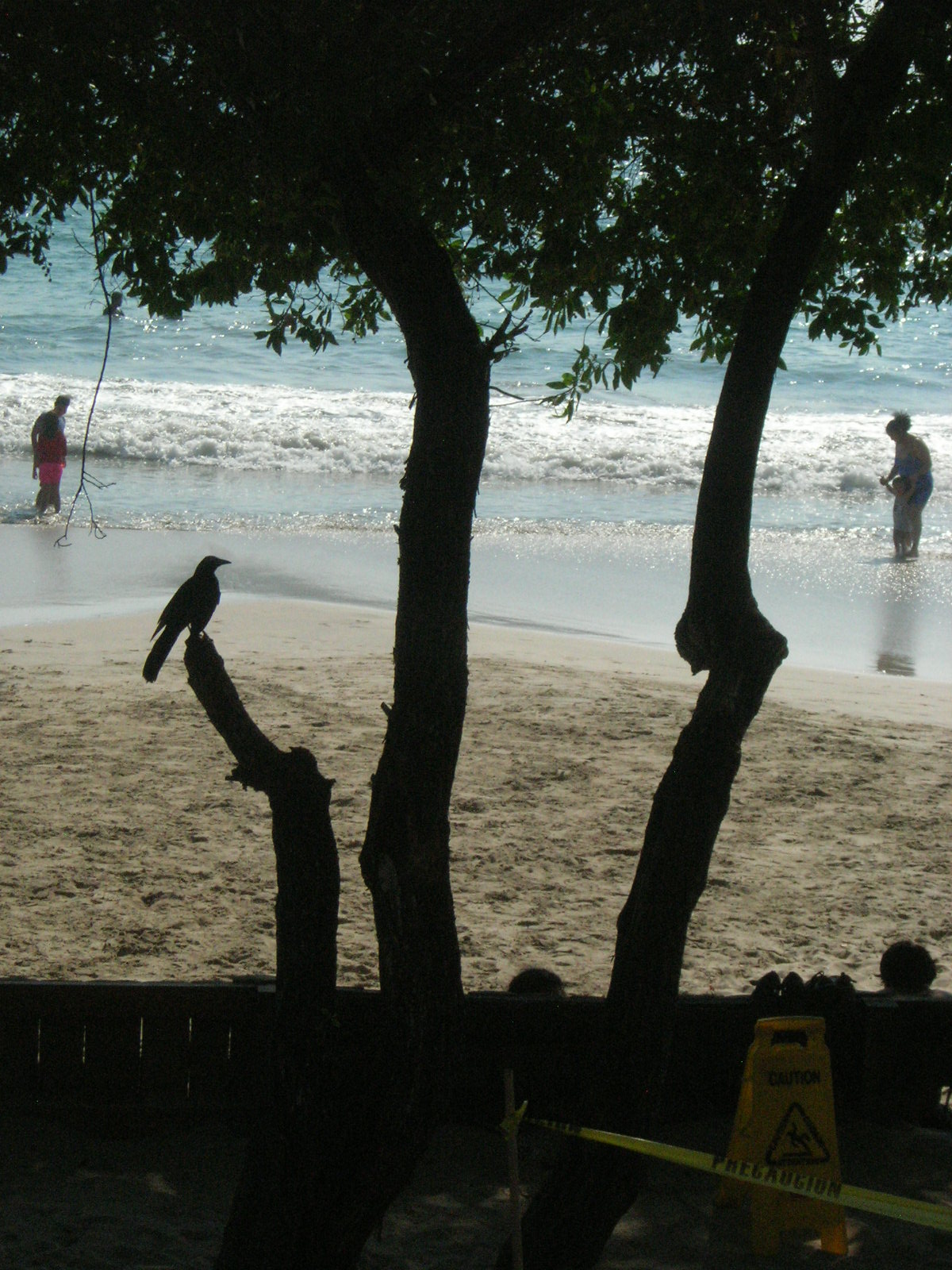
the view from my lounge chair
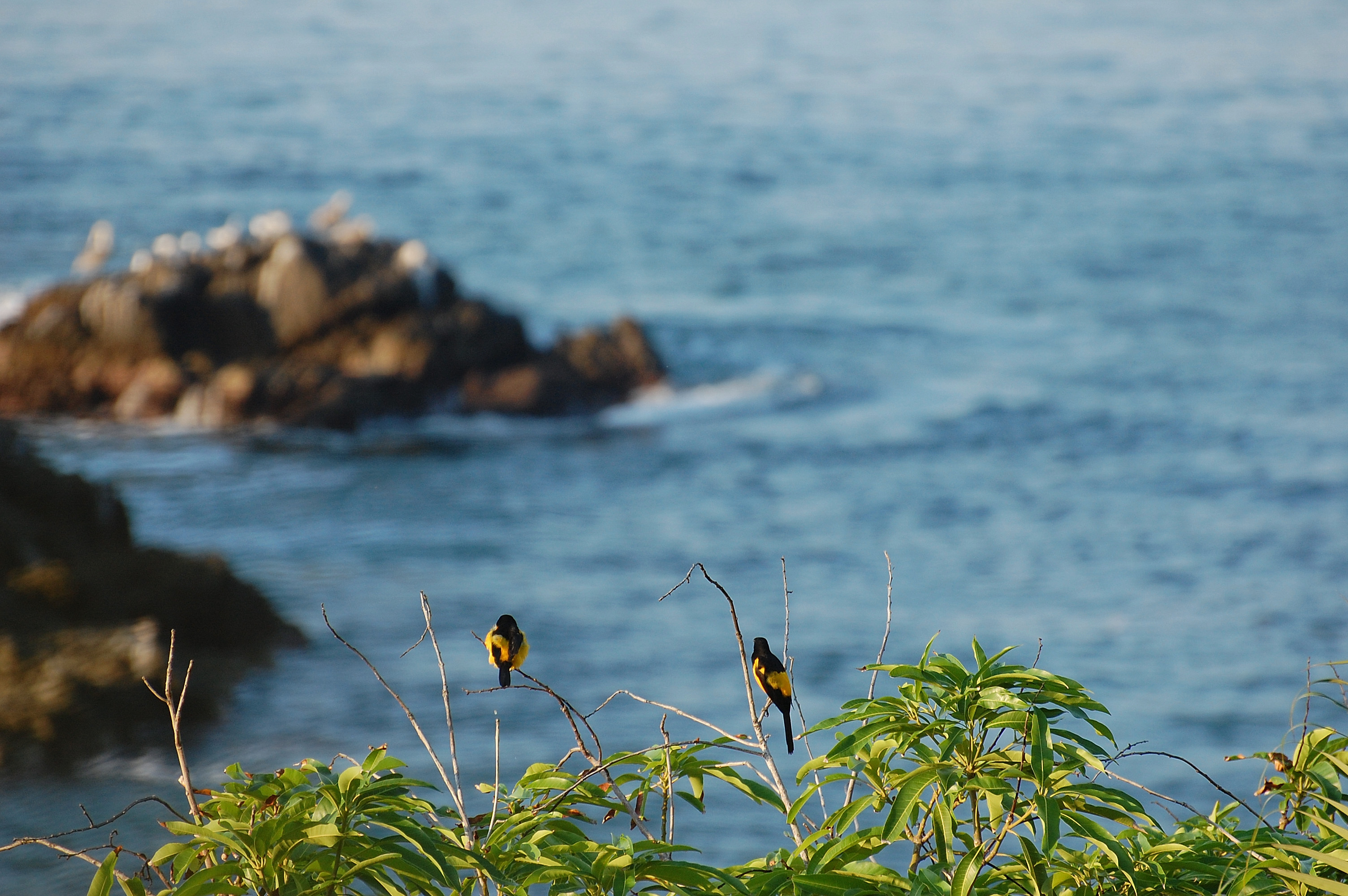
a peaceful paradise
We spent the days walking the beach, dozing in the sun, reading and swimming, and Don and Diane had two great days of scuba diving. We had fantastic meals and many margaritas in a variety of local restaurants…
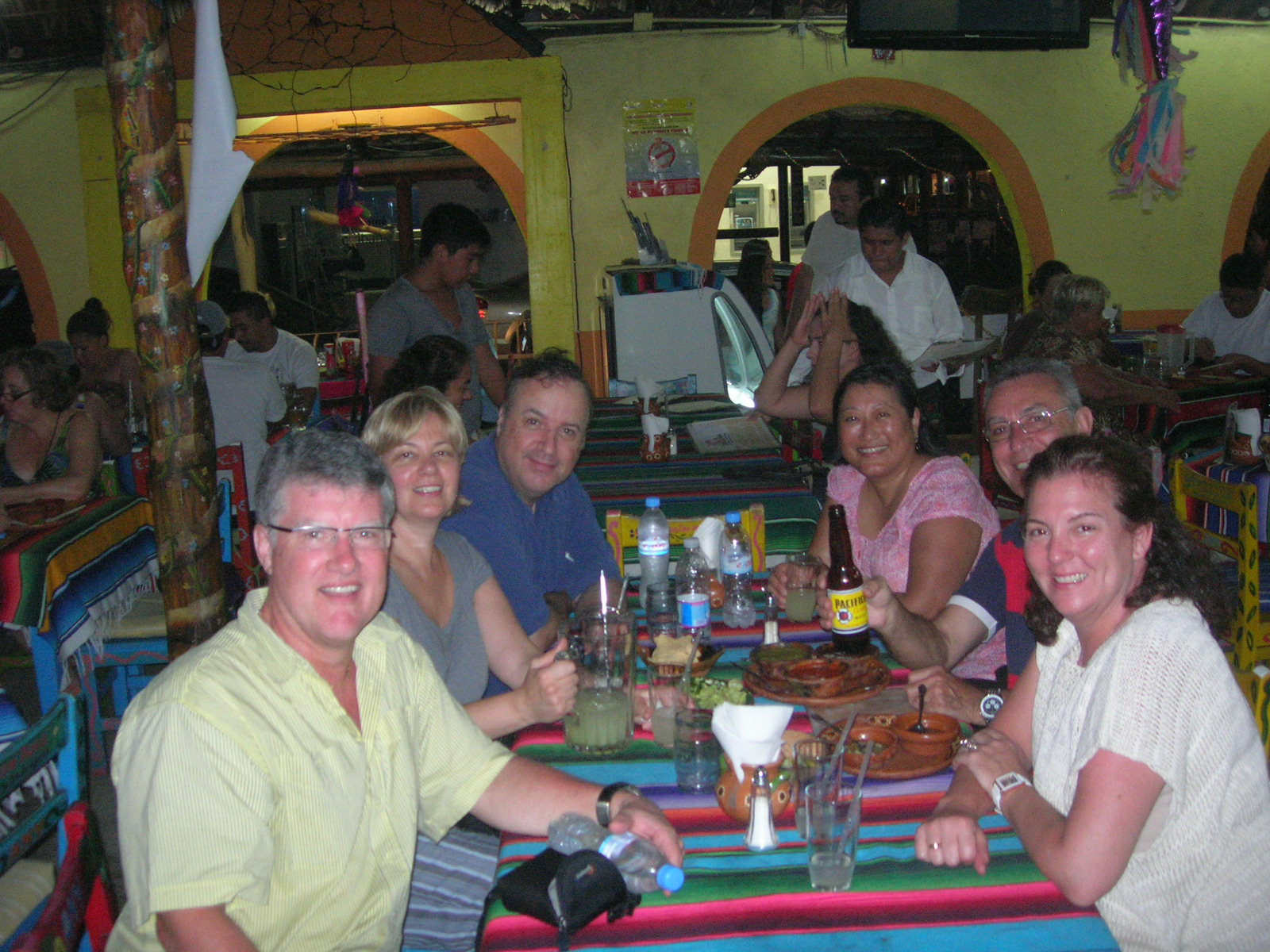
around the table: Don, Freda, Fred, Sharon, Julio and Diane
But the highlight may have been releasing one-day-old sea turtles back to the sea…

so tiny – and tickly!
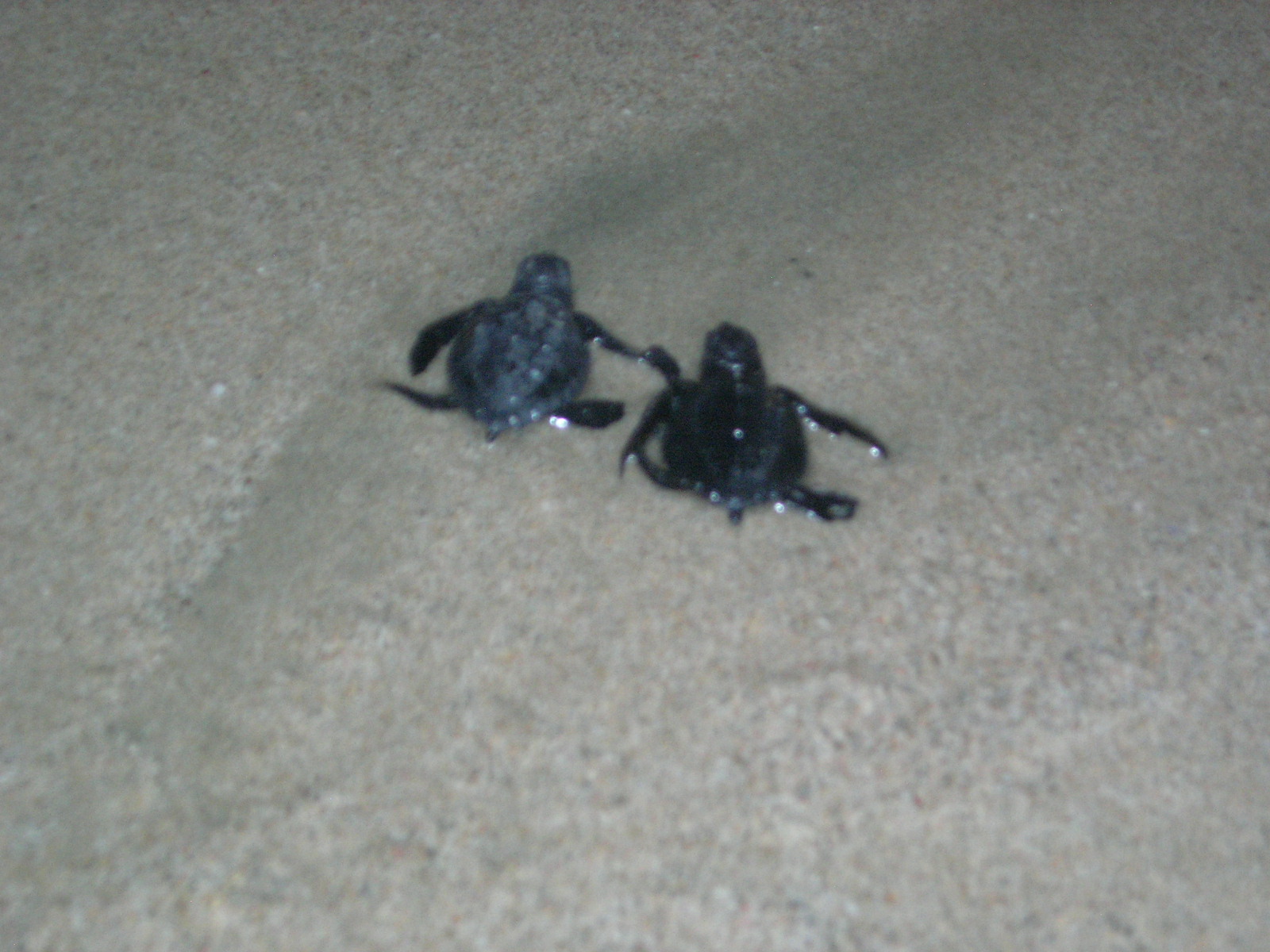
GO babies! Live long and prosper.
After six wonderful and relaxing days in Zihuatanejo, we all flew to Mexico City for two days, where Diane and Julio hosted us and we did some touring.
Our first stop from the airport was the Basilica de Guadalupe, in the north of the city, the most important Roman Catholic site in Mexico and, indeed, the Americas. Every year on December 12, the day of the festival of the Virgin of Guadalupe, hundreds of thousands of people make the pilgrimage to the Basilica, to pay homage to the Virgin Mary, who, it is said, appeared to farmer Juan Diego in 1531. As well as being a Catholic icon of exceptional importance, the Dark-Skinned Virgin is also a symbol of Mexican Independence, since her image was on the standards carried by the rebel armies in the struggle for independence from Spain. The site of the Basilica consists of the original 18th Century building with its baroque facade,

Basilica de Guadalupe
as well as a modern circular basilica. The two basilicas stand perpendicular to each other in starkly contrasting styles, deliberately constructed close to the site of Juan Diego’s vision. The original basilica is built on the spot of the Virgin’s fourth and last appearance to Juan Diego, at which time, it is said, she emblazoned the famous image of the Virgin of Guadalope on to his cloak so that he could prove to the local bishop that he encountered the Holy Mother. The cloak is on show inside the new basilica, the ancient icon being Mexico’s most sacred symbol.

the modern circular basilica
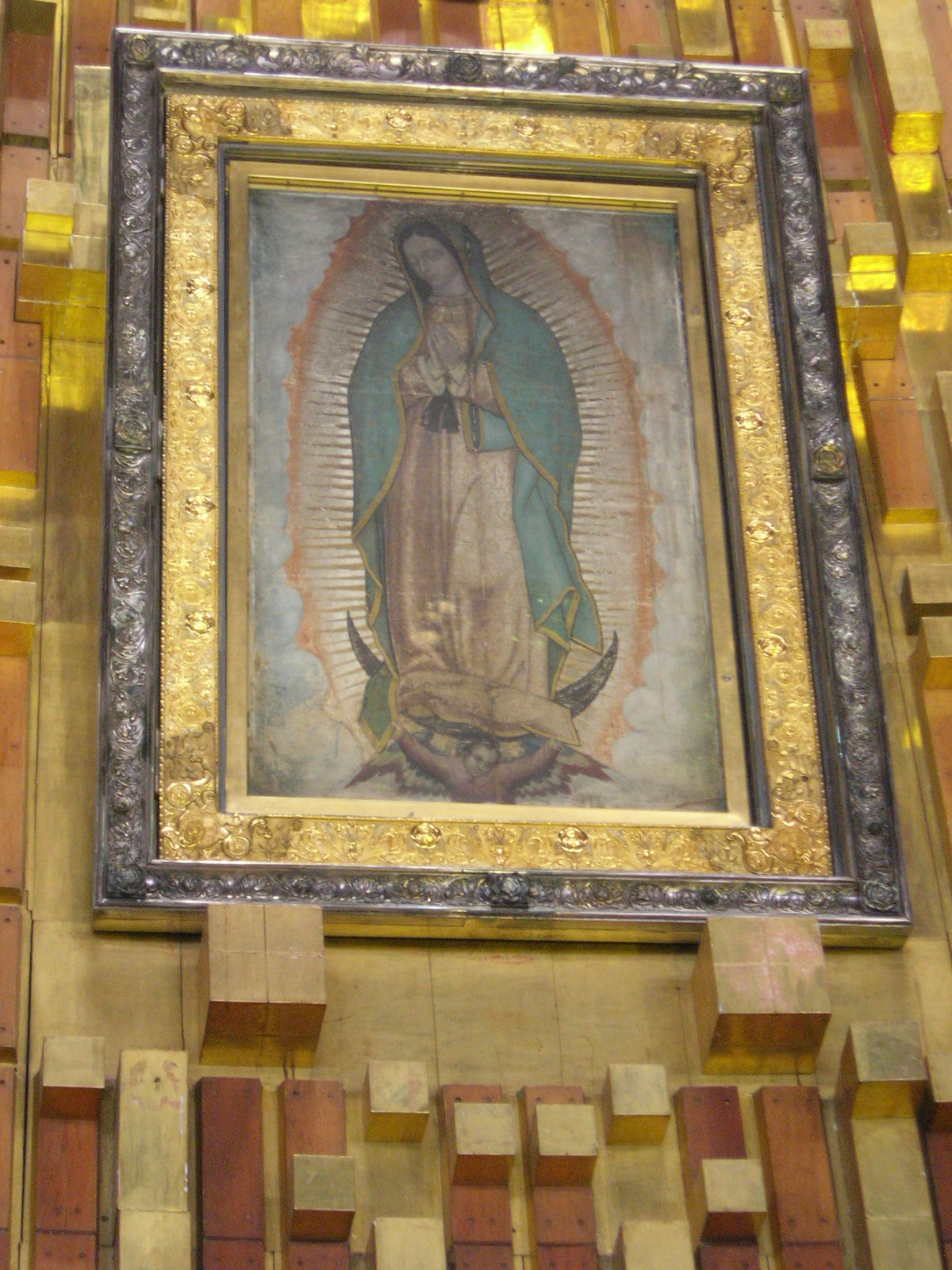
emblazoned image of the Virgin of Guadelupe on the cloak
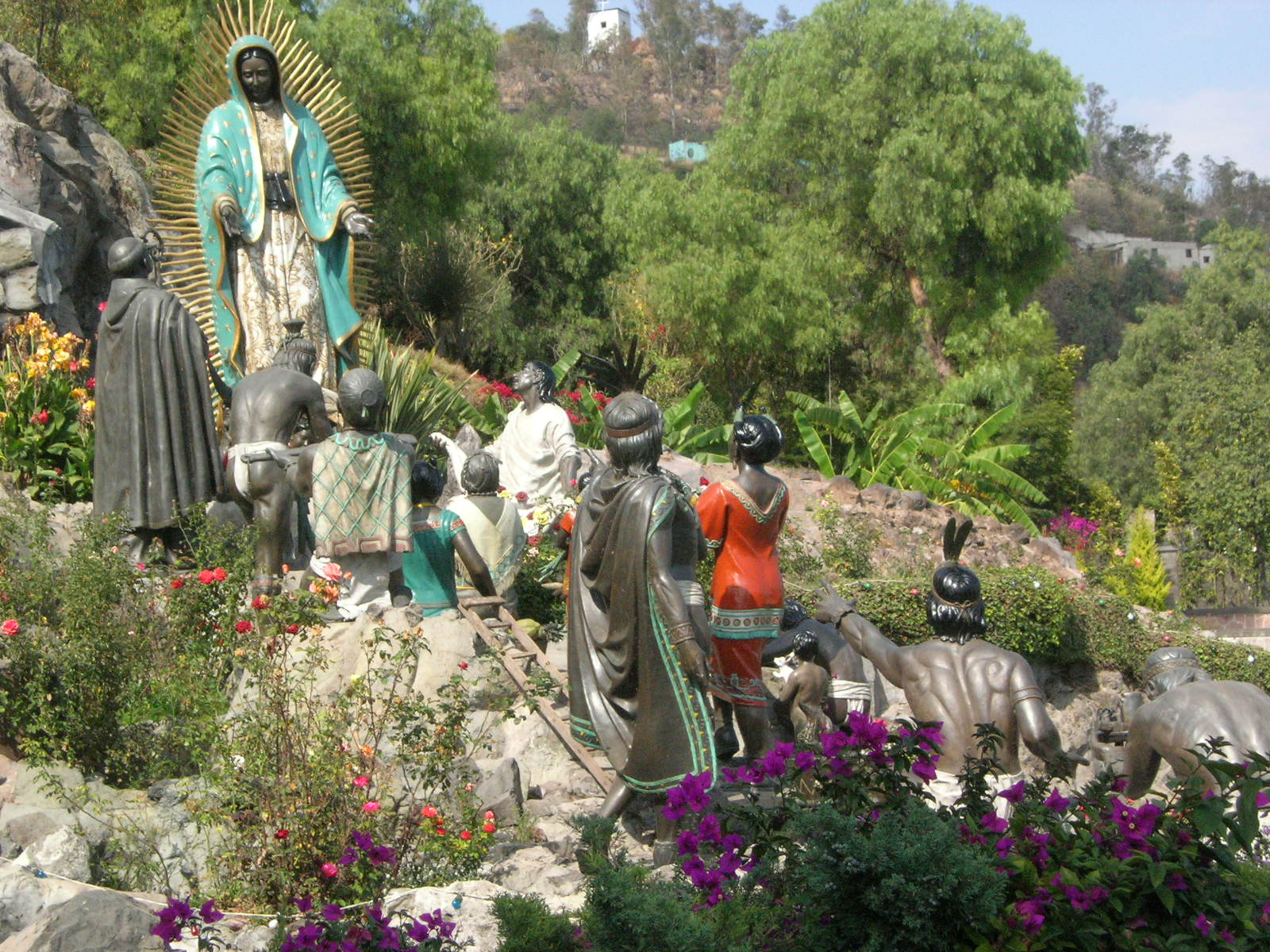
dark-skinned Virgin

the sign says it’s forbidden to sit on the stairs

a few performers on the grounds
We stopped for a quick lunch….
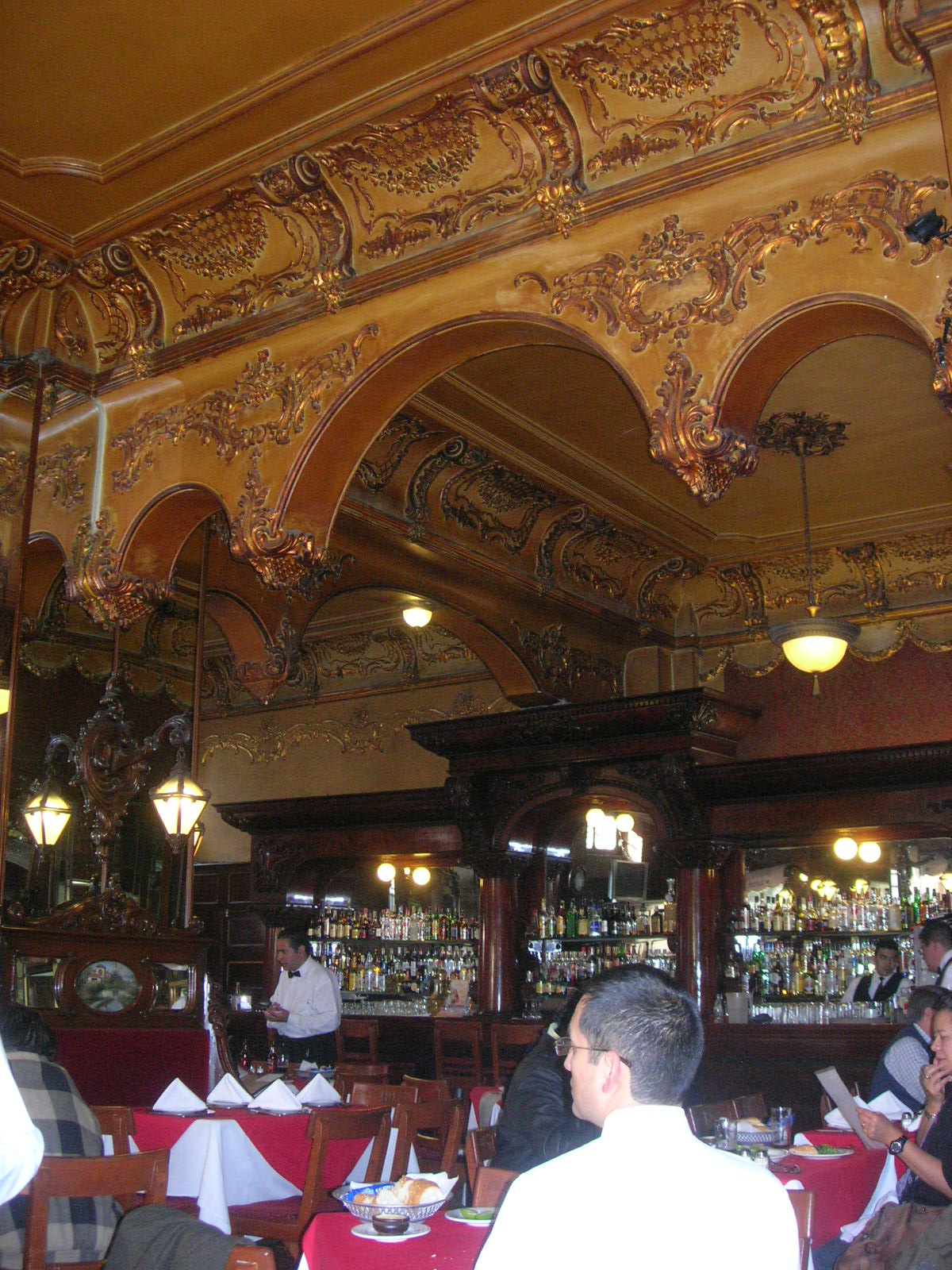
love the woodwork in this restaurant
And then to the Palacio National de Mexico to see Diego Rivera’s murals depicting the history of Mexico. This link gives a brief overview. Having read “The Lacuna” by Barbara Kingsolver (I think her best novel) prior to our trip, I was most anxious to see the murals. They did not disappoint.
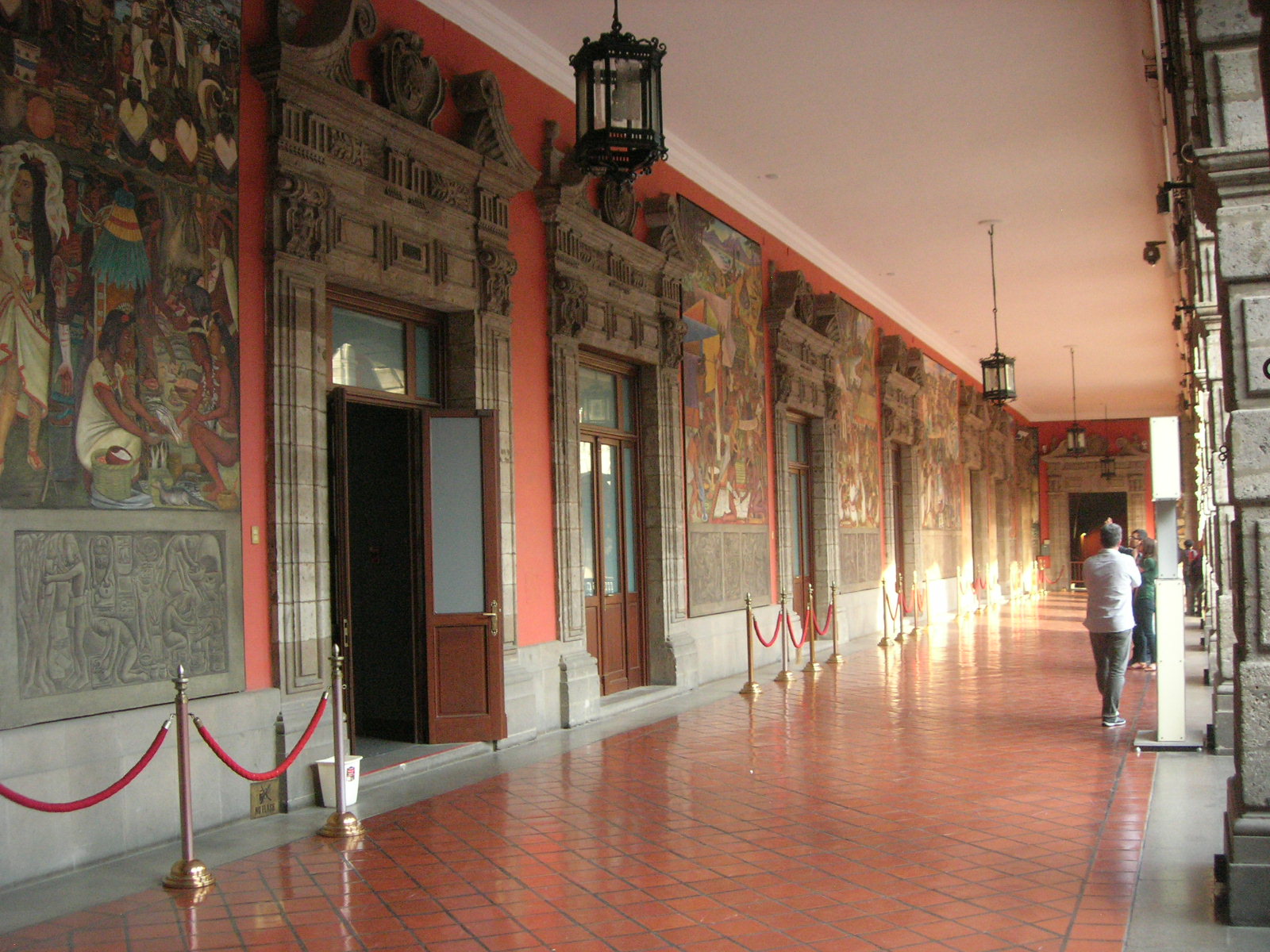
mural panels along the hallways
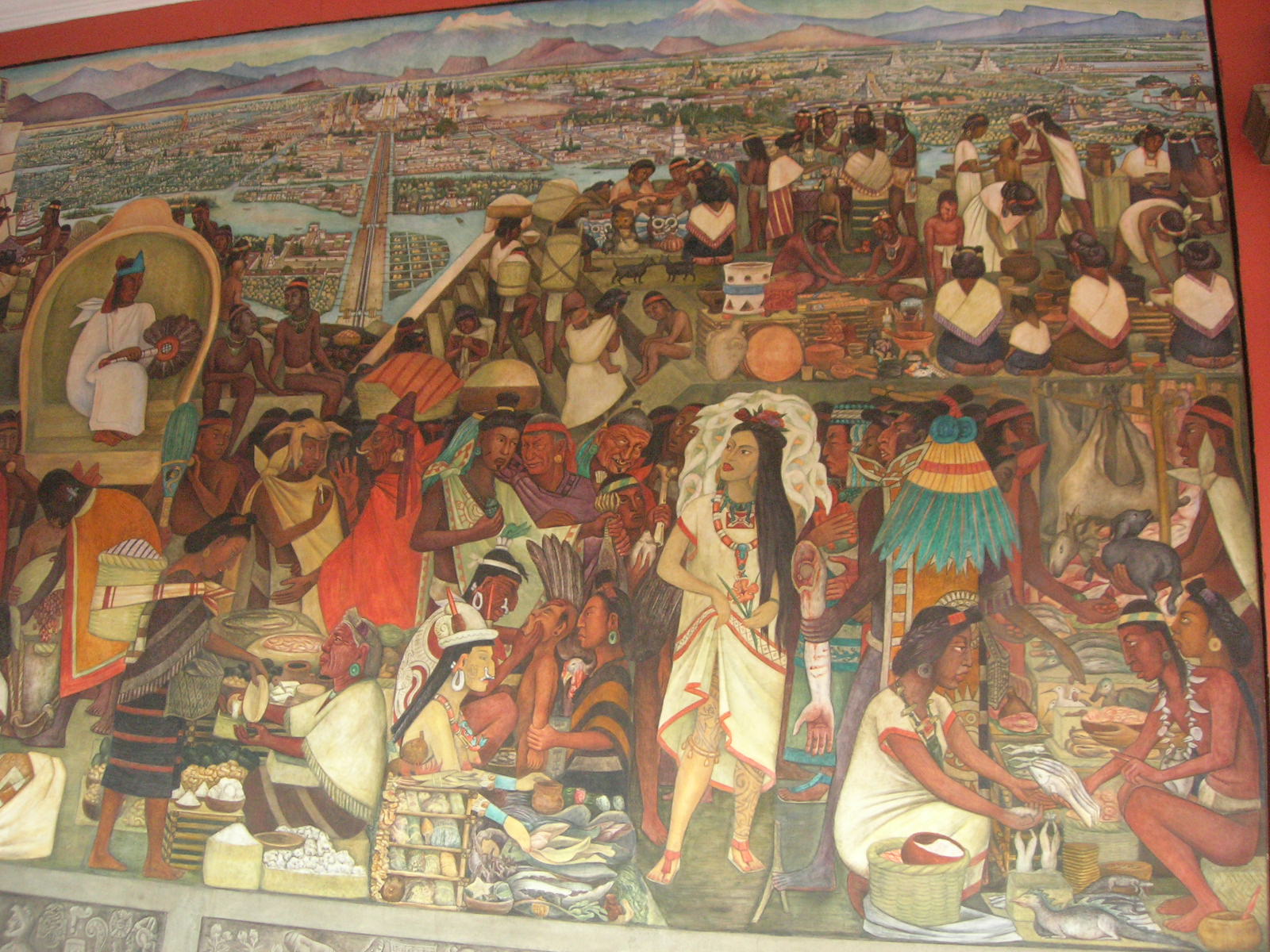
one of so many panels
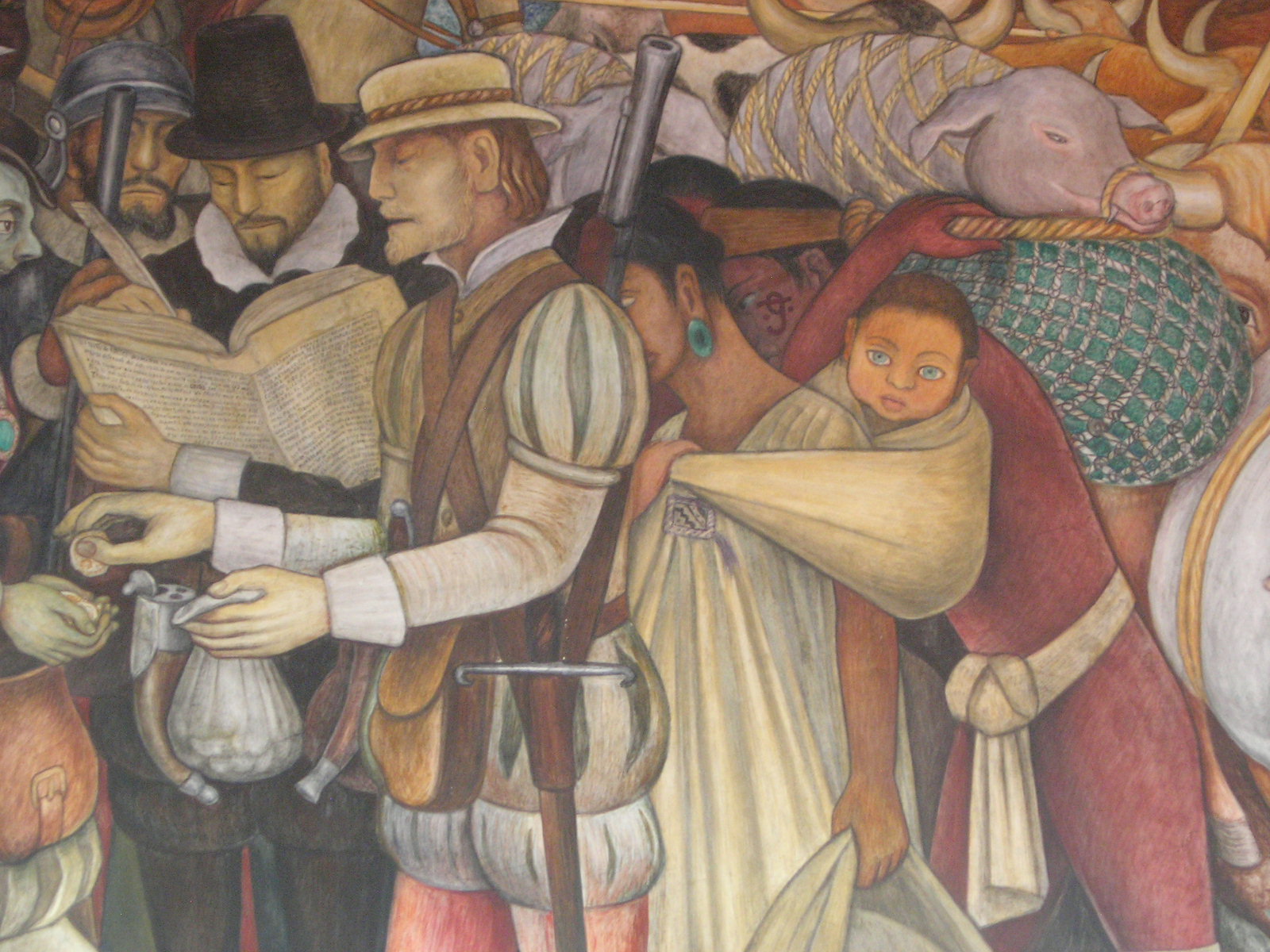
Diego as a baby in panel detail
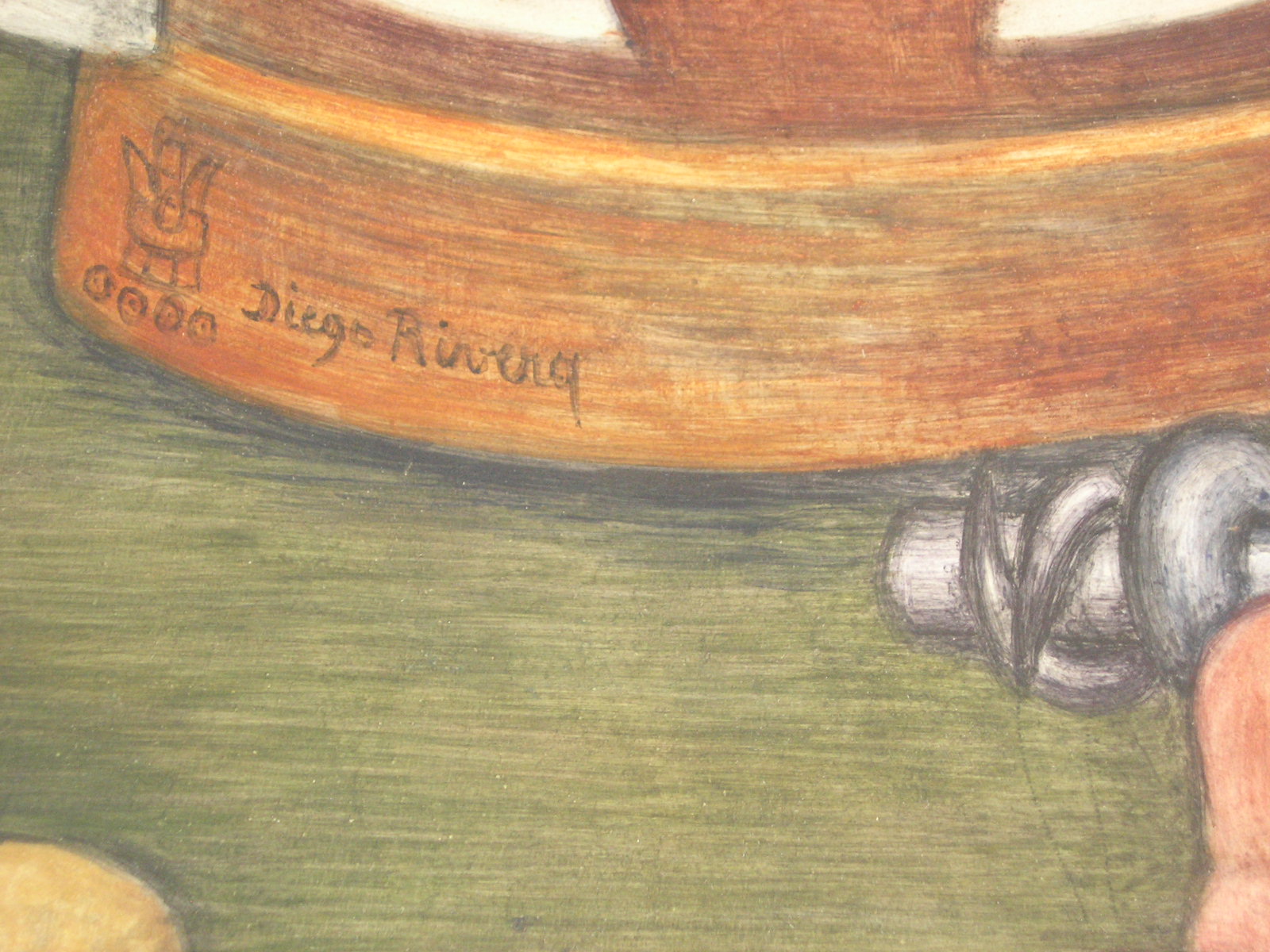
Diego’s signature in the panel
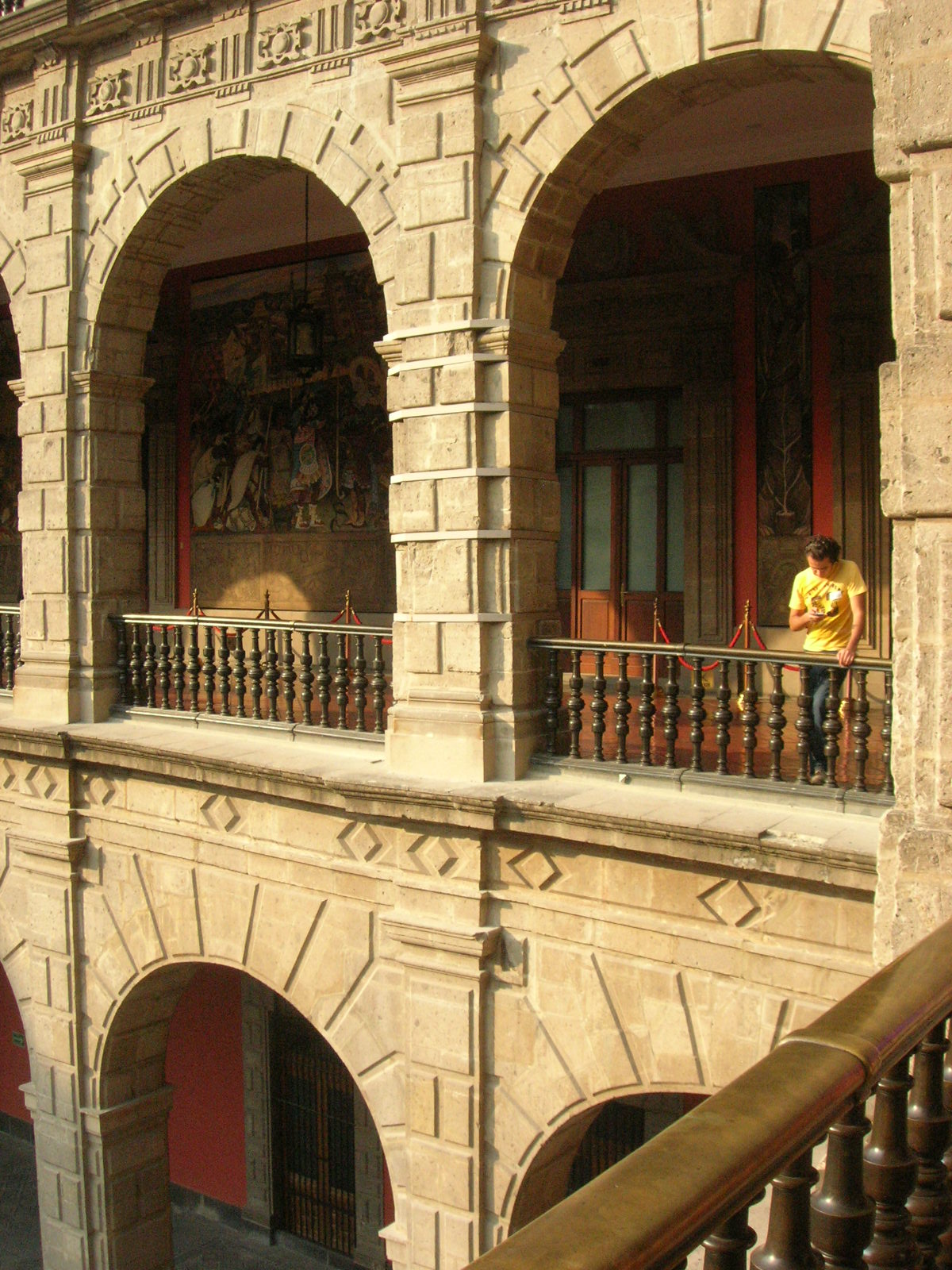
beautiful arches of the building

the stairwell panels are amazing

more stairwell panels
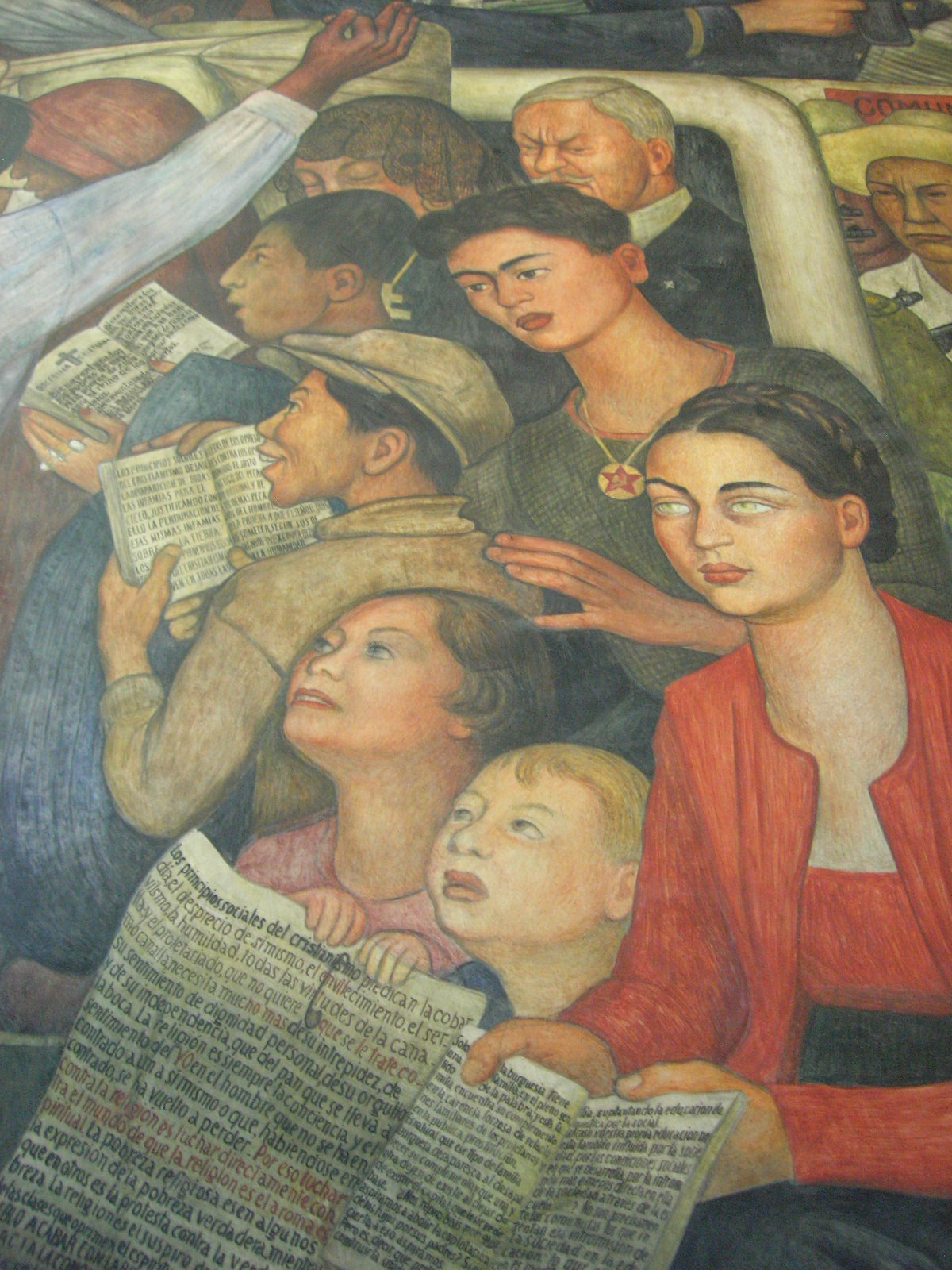
Diego’s wife, Frida Kahlo, and her sister
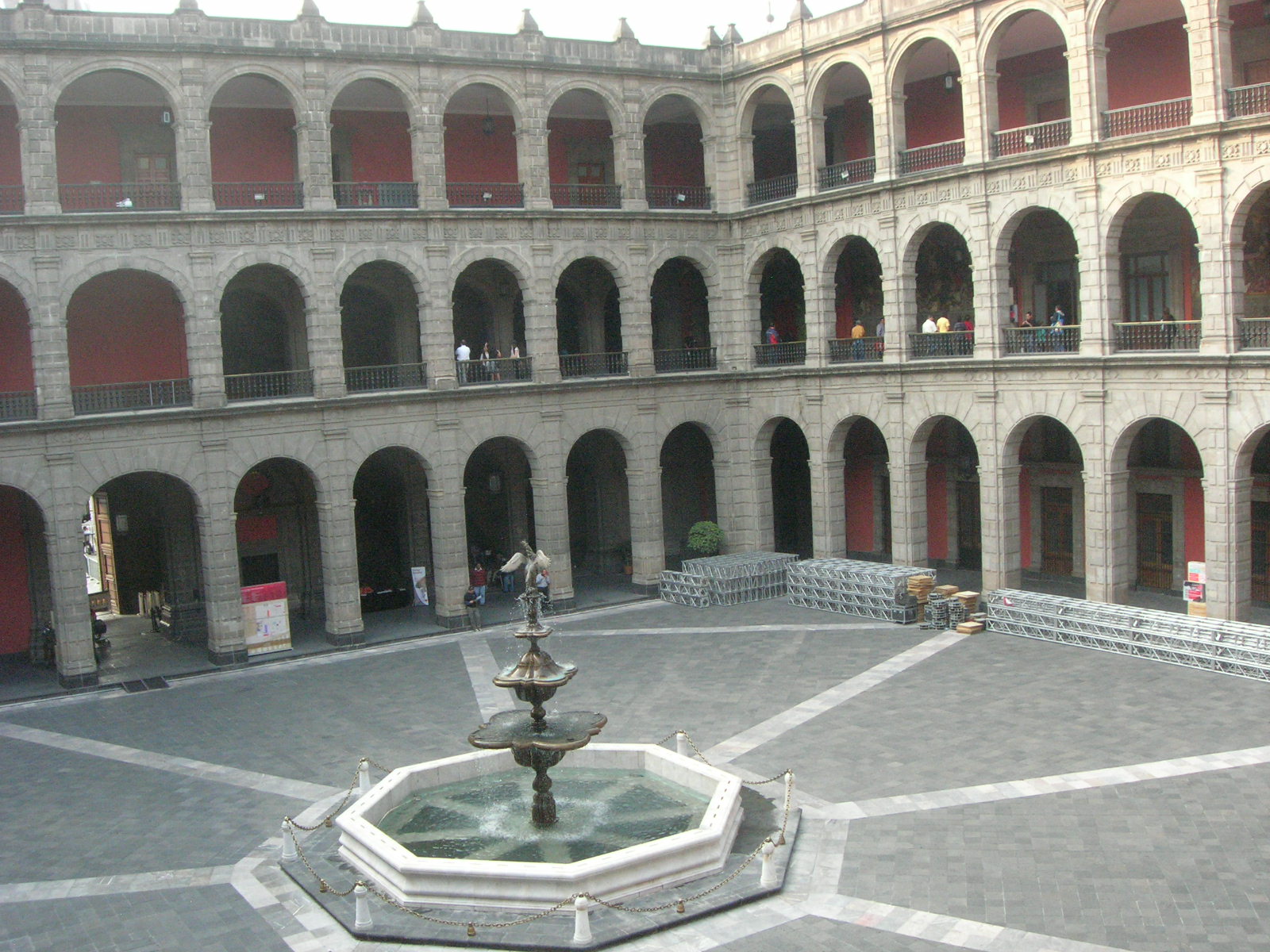
the courtyard
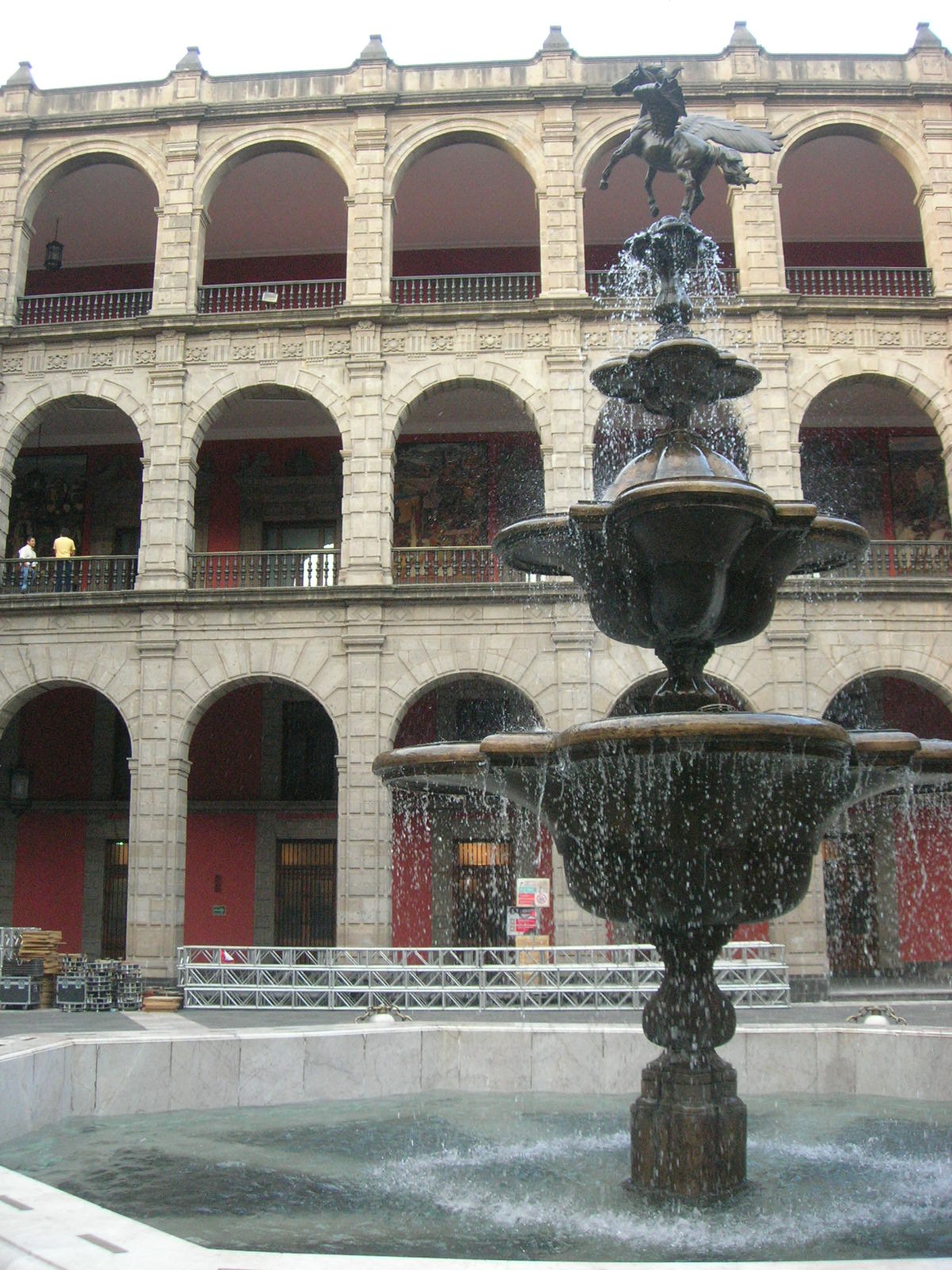
courtyard fountains
When we exited the Palacio National, we encountered these life-sized, kind of creepy, “Catrinas”.. The “Catrina” has become an icon of the Mexican Day of the Dead, and was introduced by Mexican artist, Jose Guadalupe Posada, in a zinc drawing from the early 1900’s, showing a female skeleton wearing only a hat. She was later popularized by Diego Rivera. We saw many examples later, mostly in gift shops.
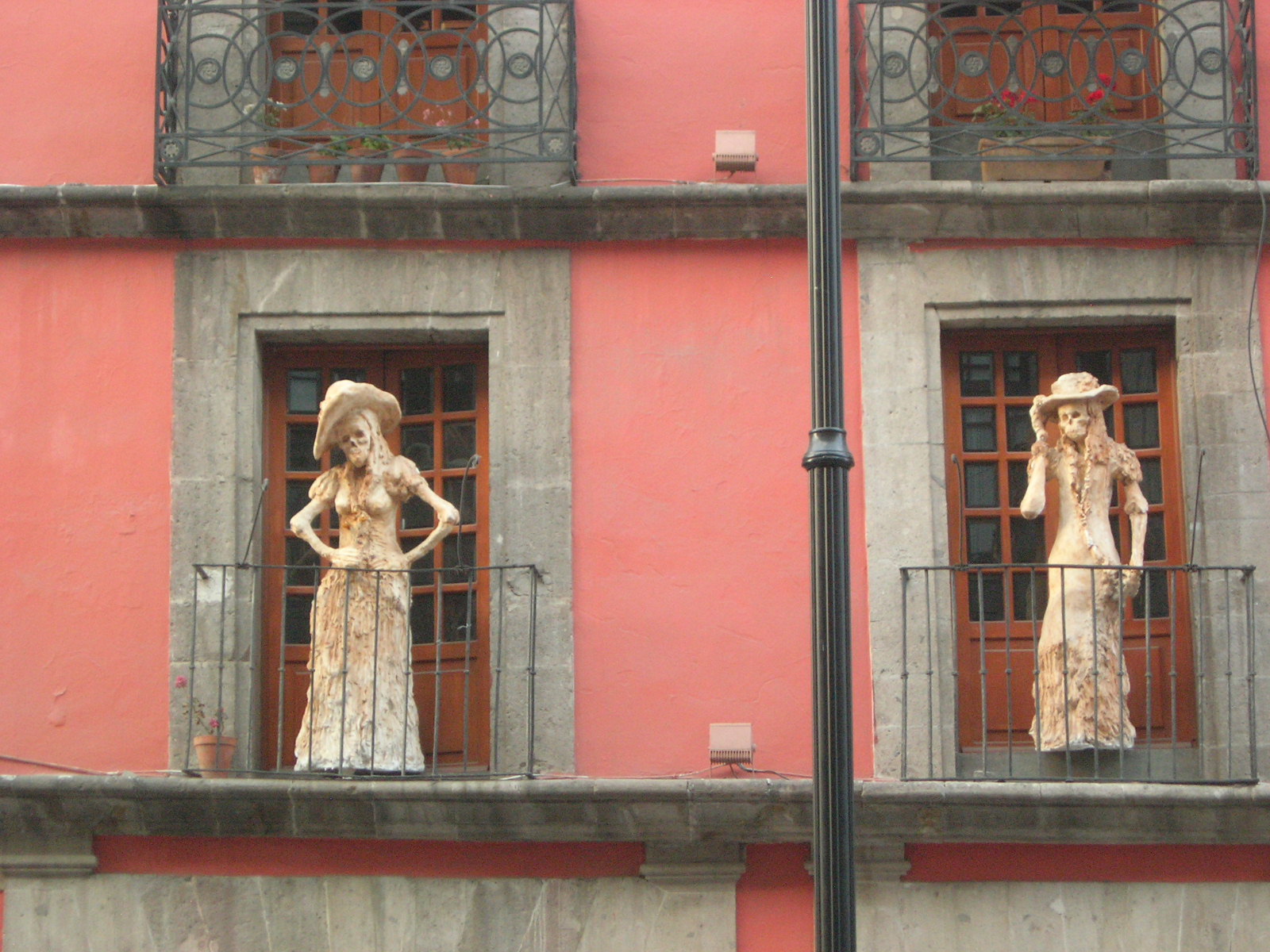
life-sized Catrinas
It was time to unload at Diane and Julio’s lovely apartment, freshen up, enjoy a glass of wine, and then have dinner at Diane and Julio’s favourite Spanish restaurant in their neighbourhood, —, where we had an excellent dinner.
On Saturday morning we were up early, to grab coffee and food at the local Starbucks (where the special drinks had different flavours from ours…)
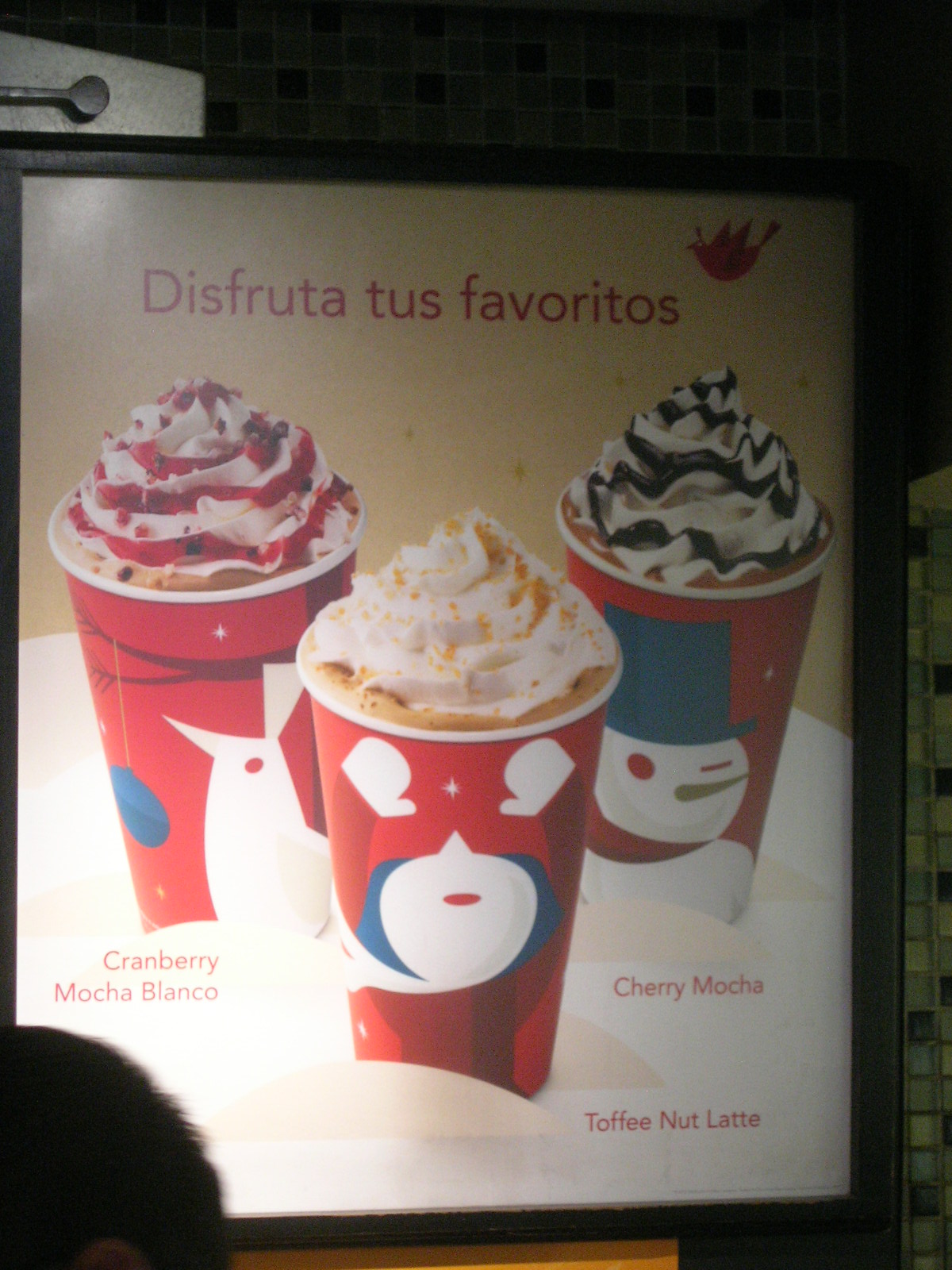
Starbucks, Mexico
and then an hour-long drive to Teotihuacan, an “enormous archaeological site 30 miles northeast of Mexico City, containing some of the largest Mesoamerican Pyramids built in the pre-Columbian Americas. The name means “where man met the gods.” Apart from the pyramids, Teotihuacan is also known for its large residential complexes, the Avenue of the Dead, and numerous colorful, well-preserved murals. Additionally, Teotihuacan produced a thin orange pottery style that spread through Mesoamerica” (from Wikipedia). The weather was perfect (sunny, cool) for the walking (and walking) and climbing (and climbing) we did here.
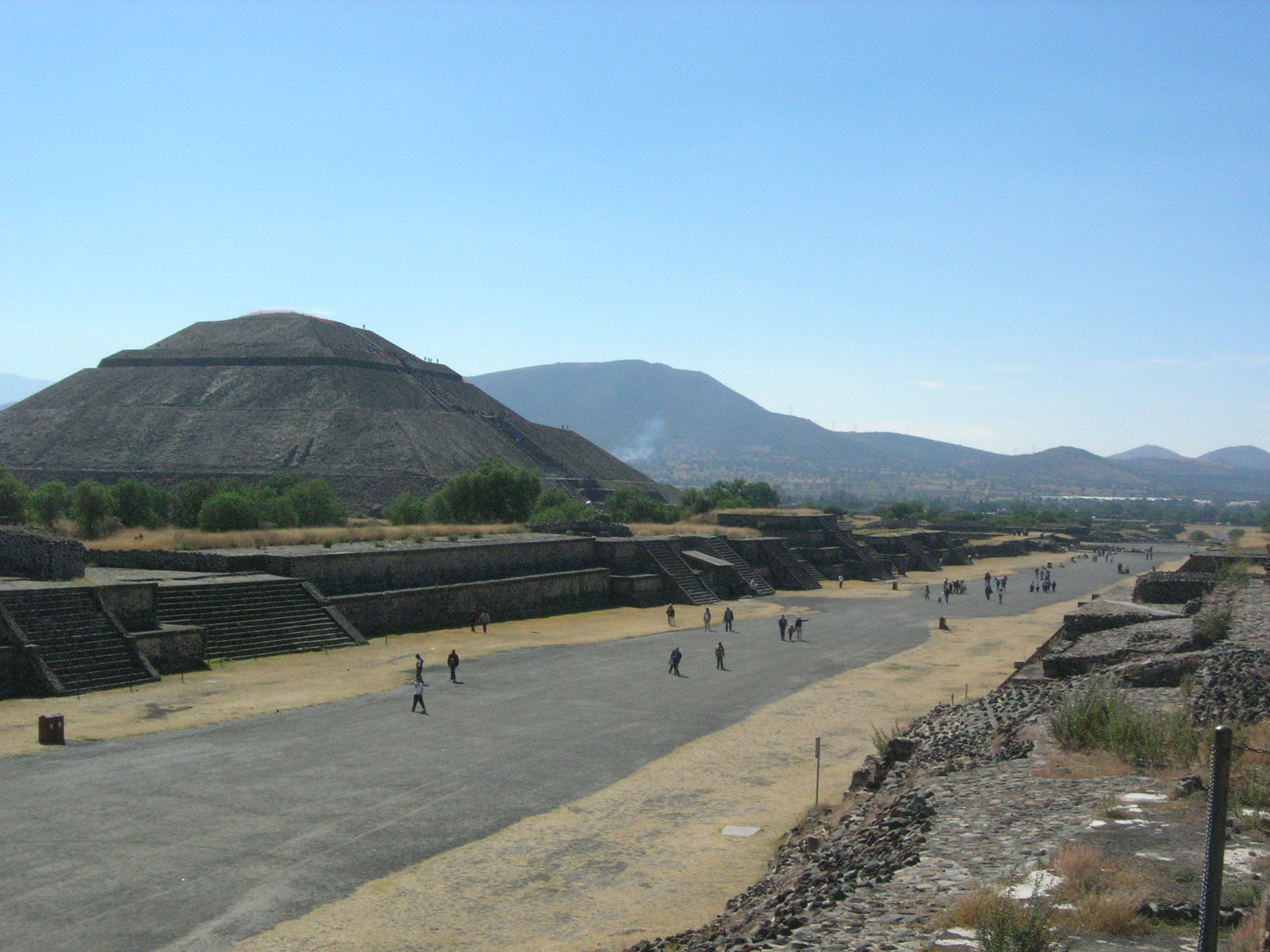
a great overview of Teotihuacan, Avenue of the Dead
First we climbed the Pyramid of the Sun, though we weren’t allowed to go to the top because the winds were too strong this day (!) The climbing was pretty strenuous, so I was okay with that. 🙂
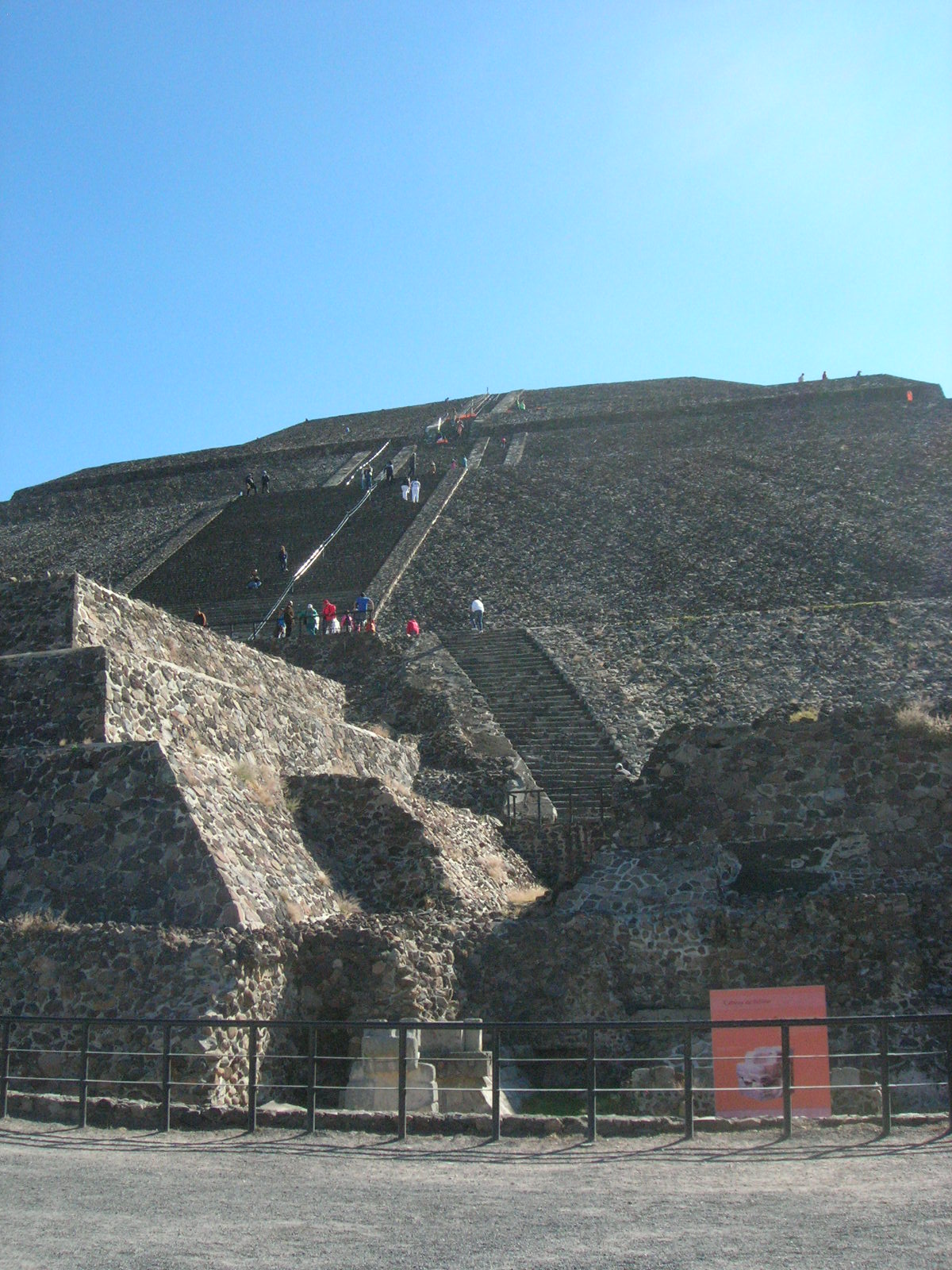
Pyramid of the Sun
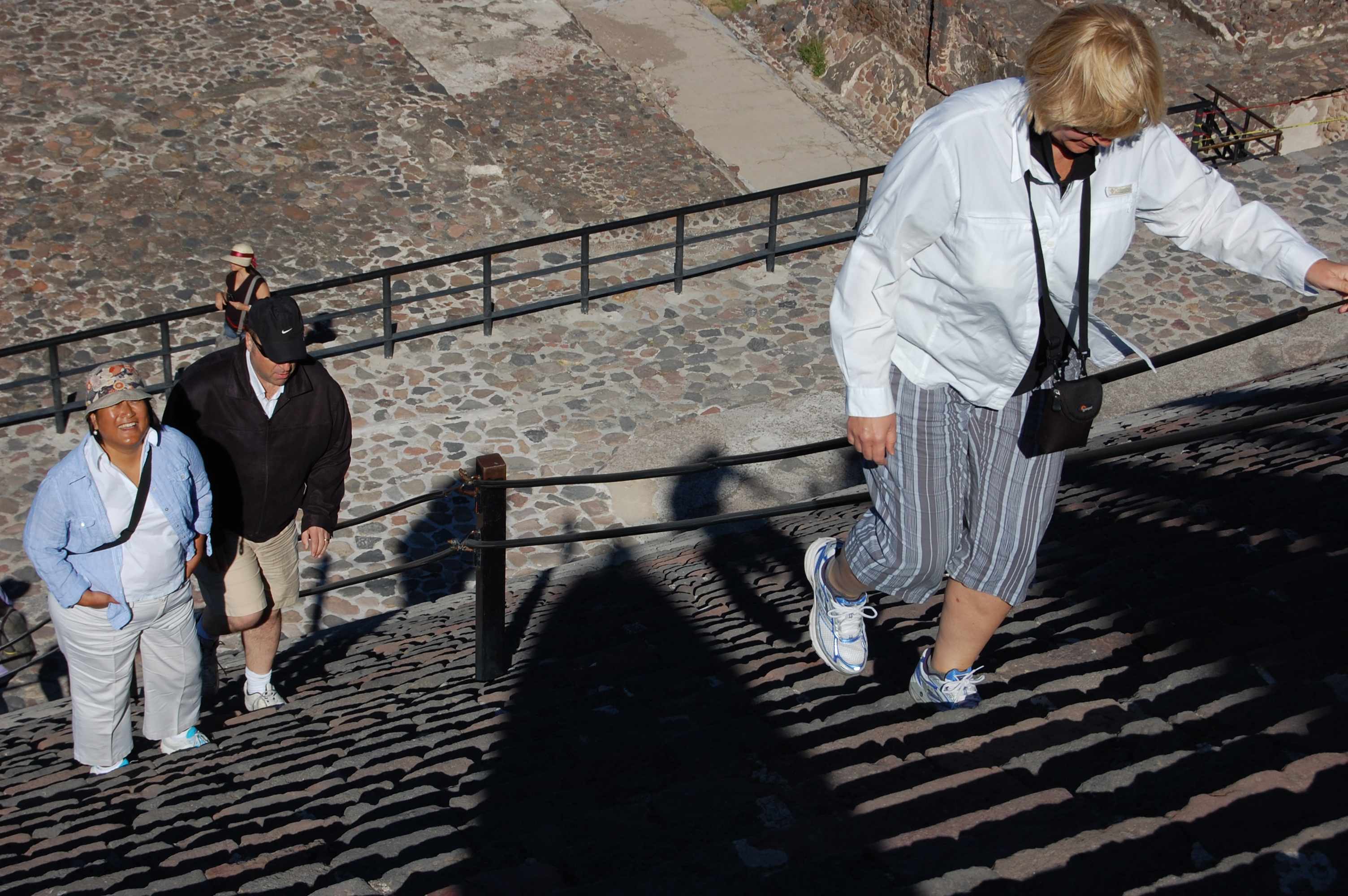
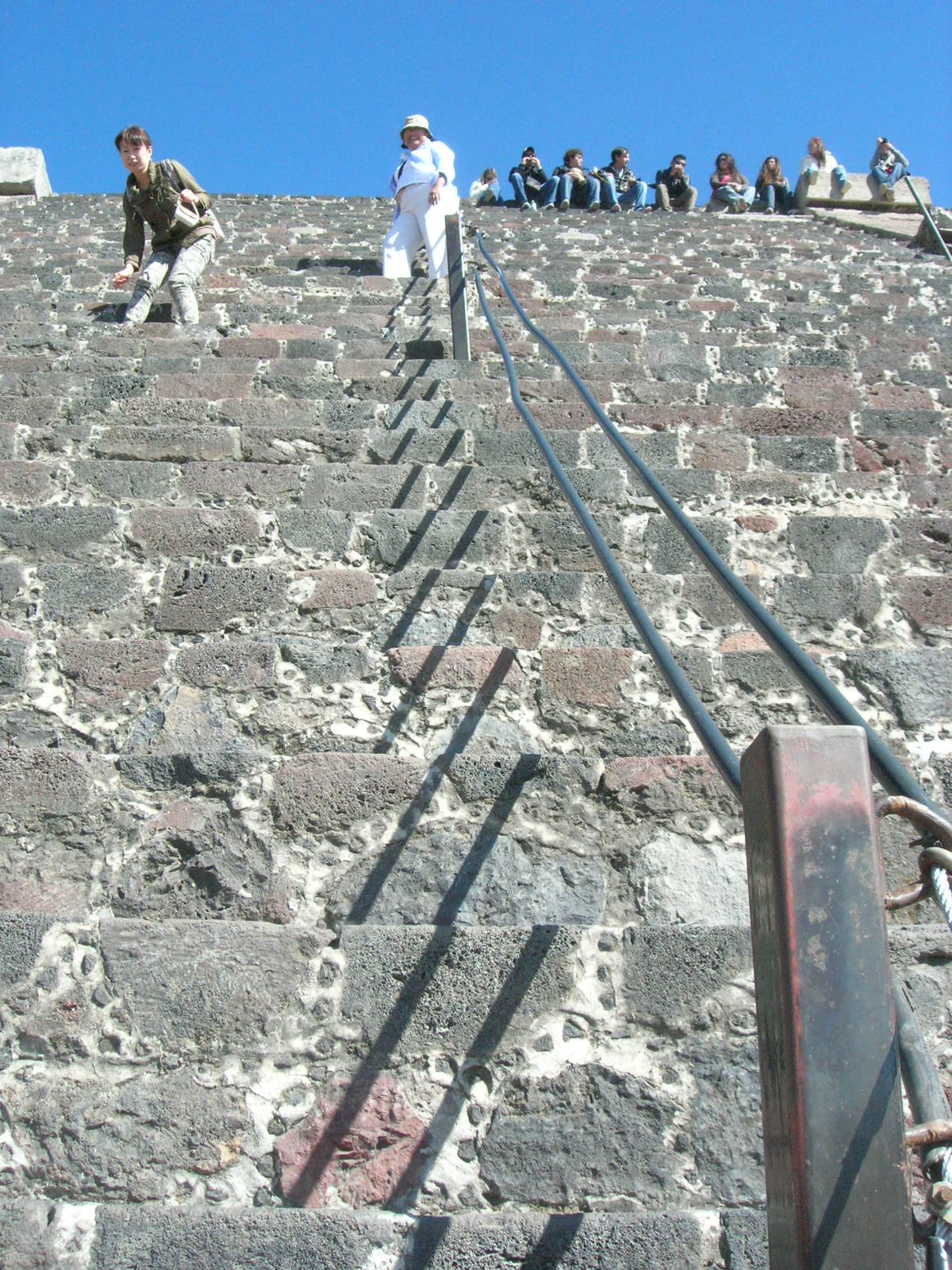
the stairs are very steep
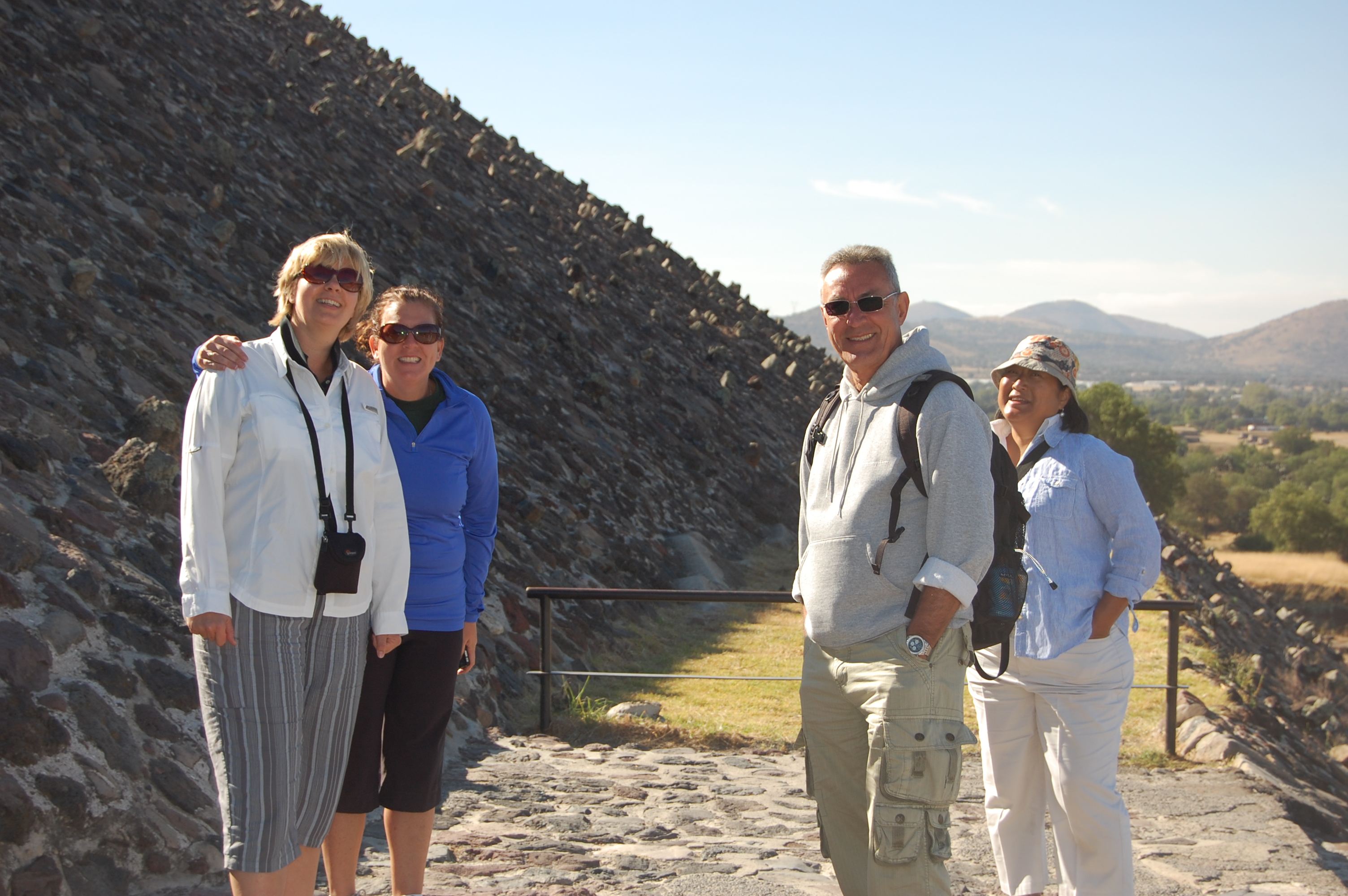
luckily there are a few platforms to rest at

a view of the Moon Pyramid from a platform of the Sun Pyramid
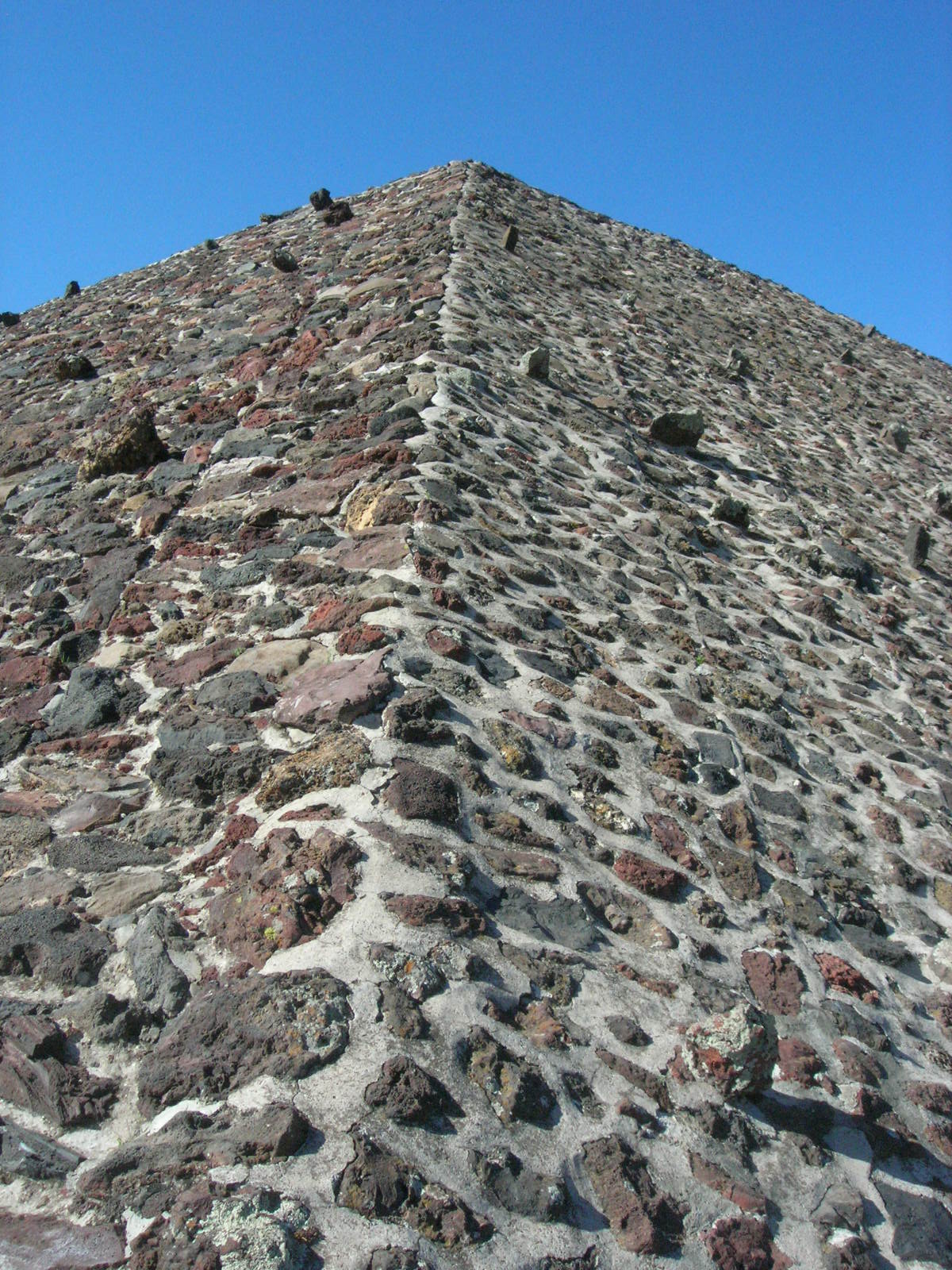
the walls are steep

another view
The Moon Pyramid, where we could climb to just the first platform (thank goodness!)
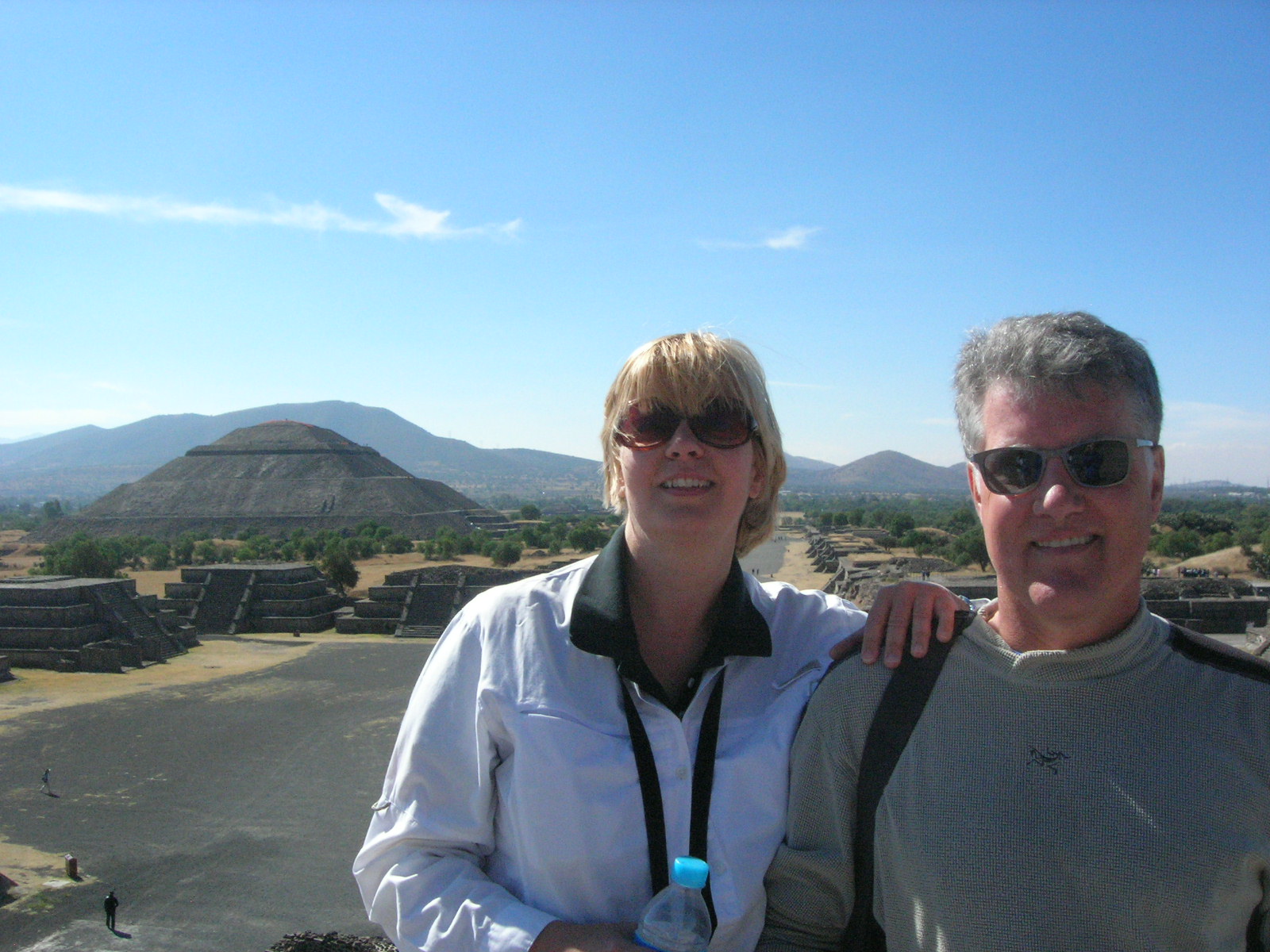
from the platform on the Moon Pyramid, with Sun Pyramid in background
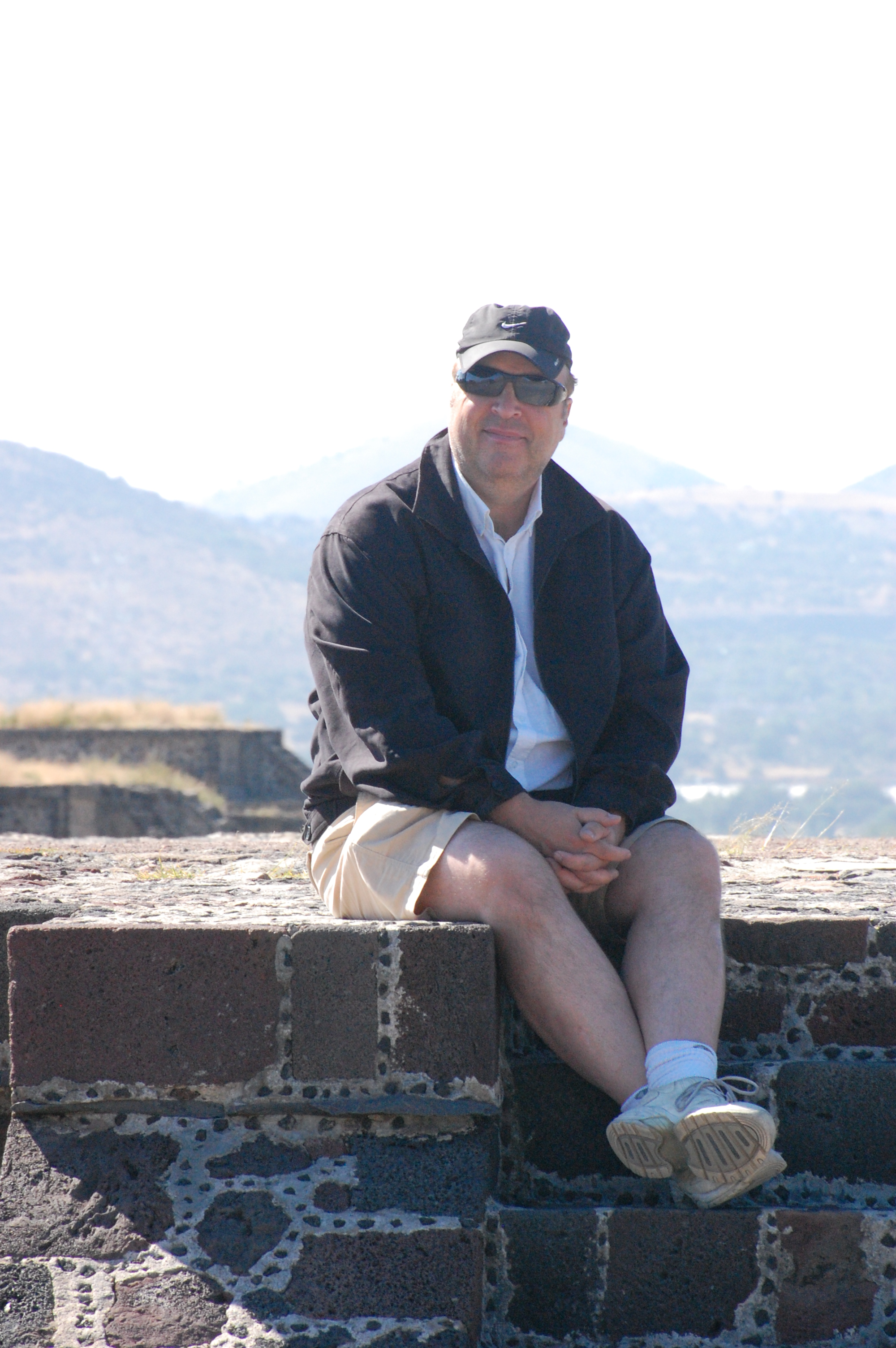
Fred, waiting while we climbed the Moon Pyramid

wall mural

interesting remains of old rooms
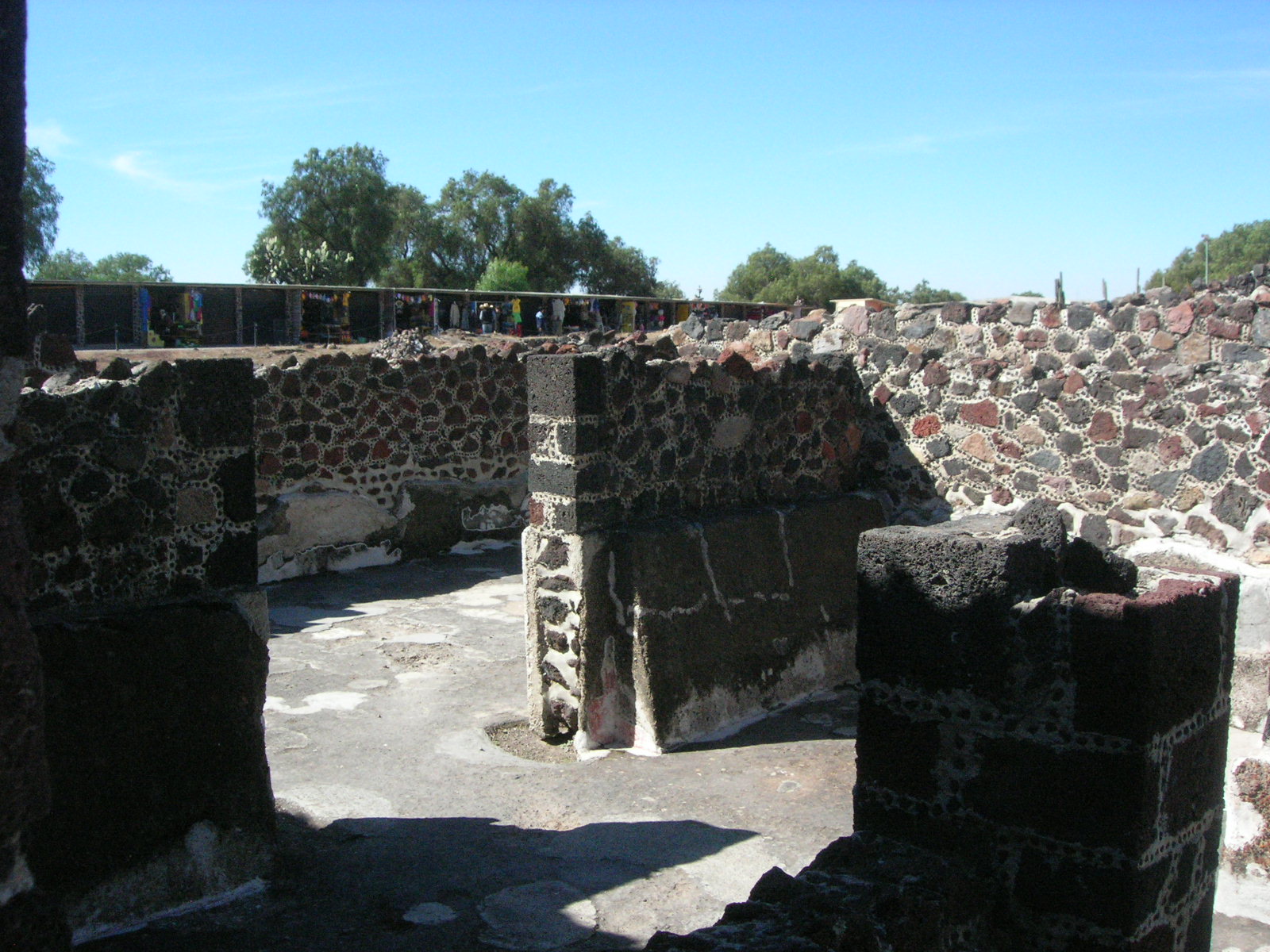
wall remains
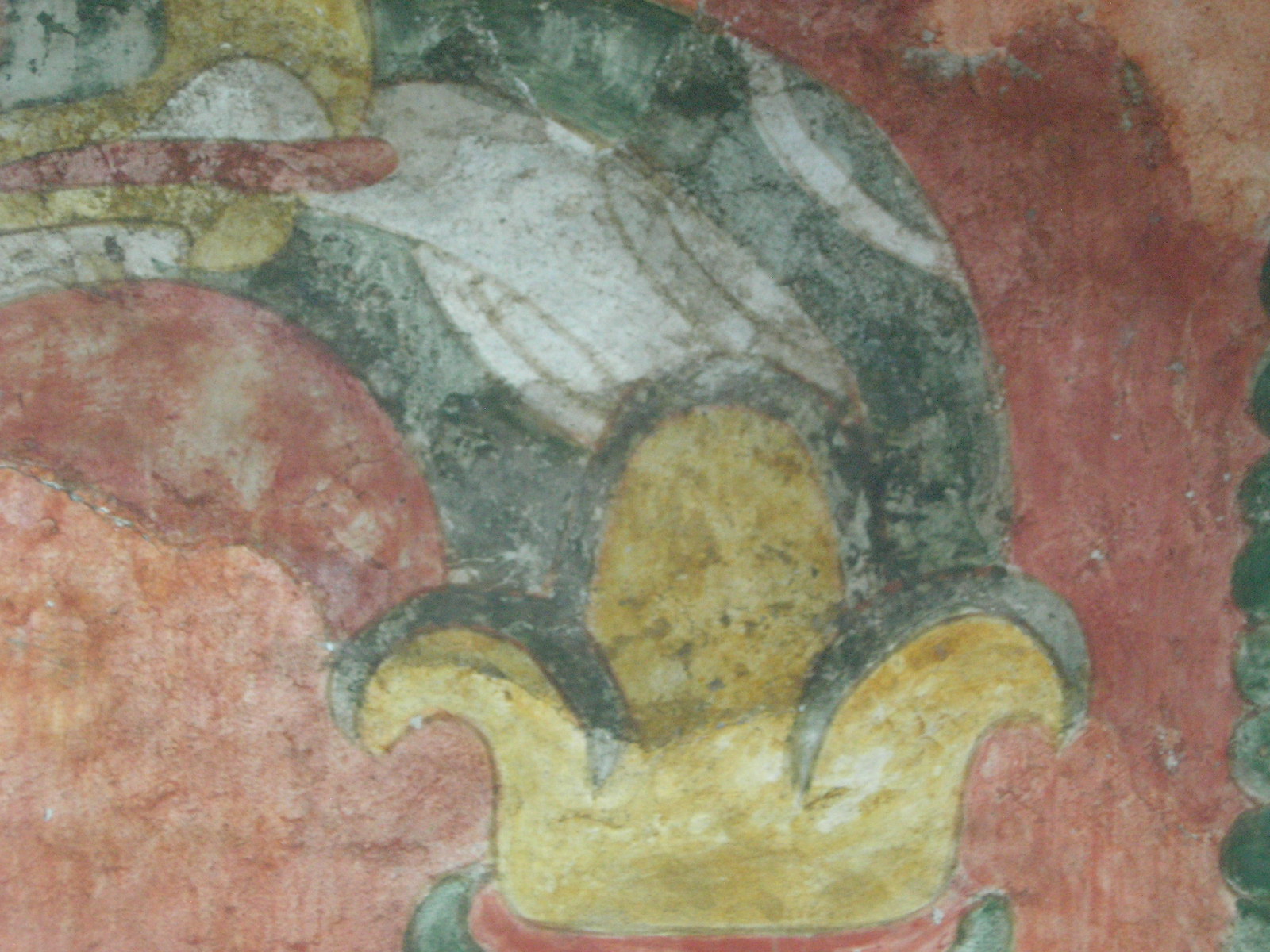
mural detail
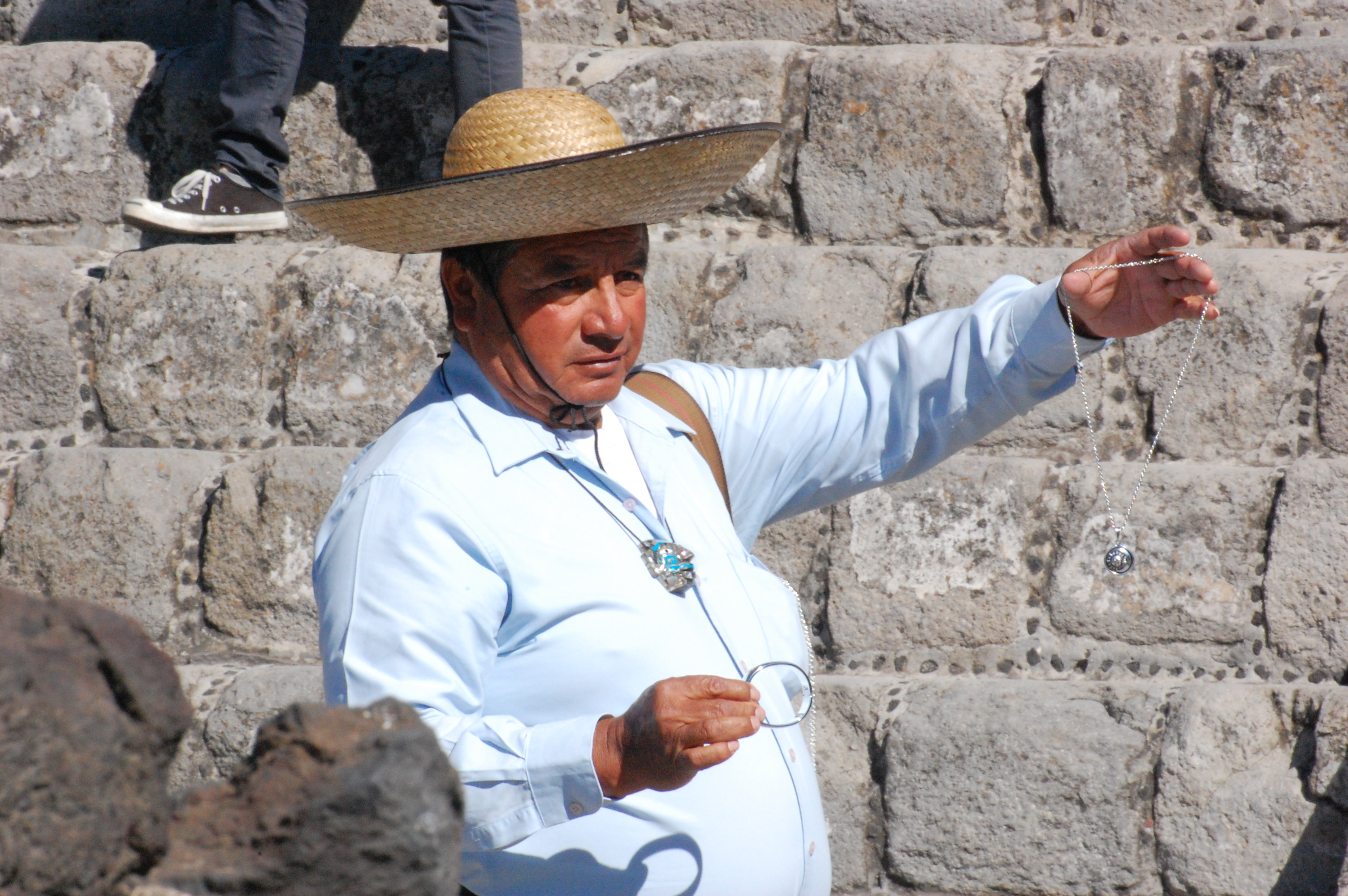
the usual trinket sellers, found at all tourist attractions world-wide

masks for sale
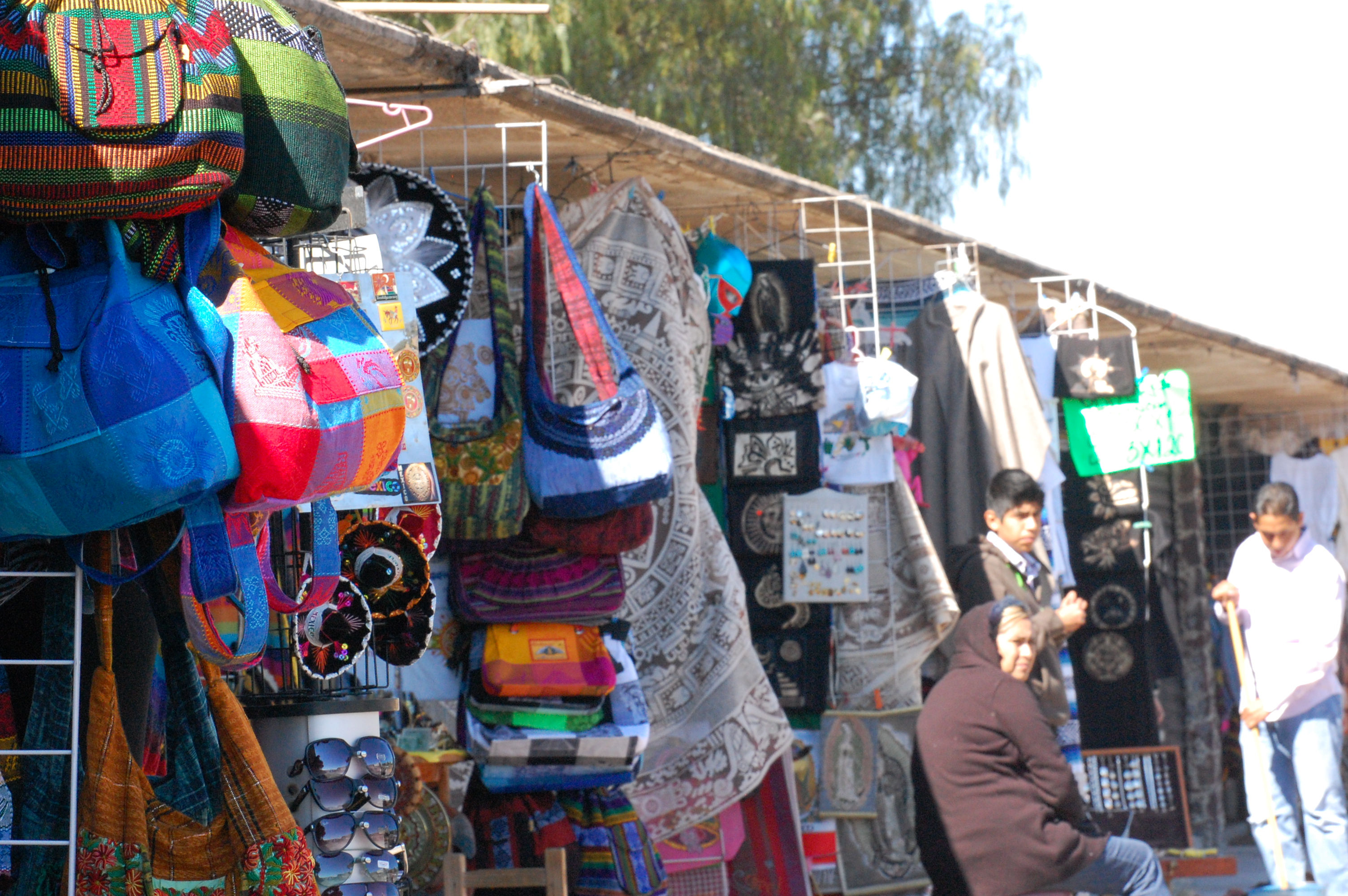
beautiful colours
And as we exited the site, there was a row of tshirt and trinket shops, many featuring the “catrinas”- well-dressed, but still creepy.
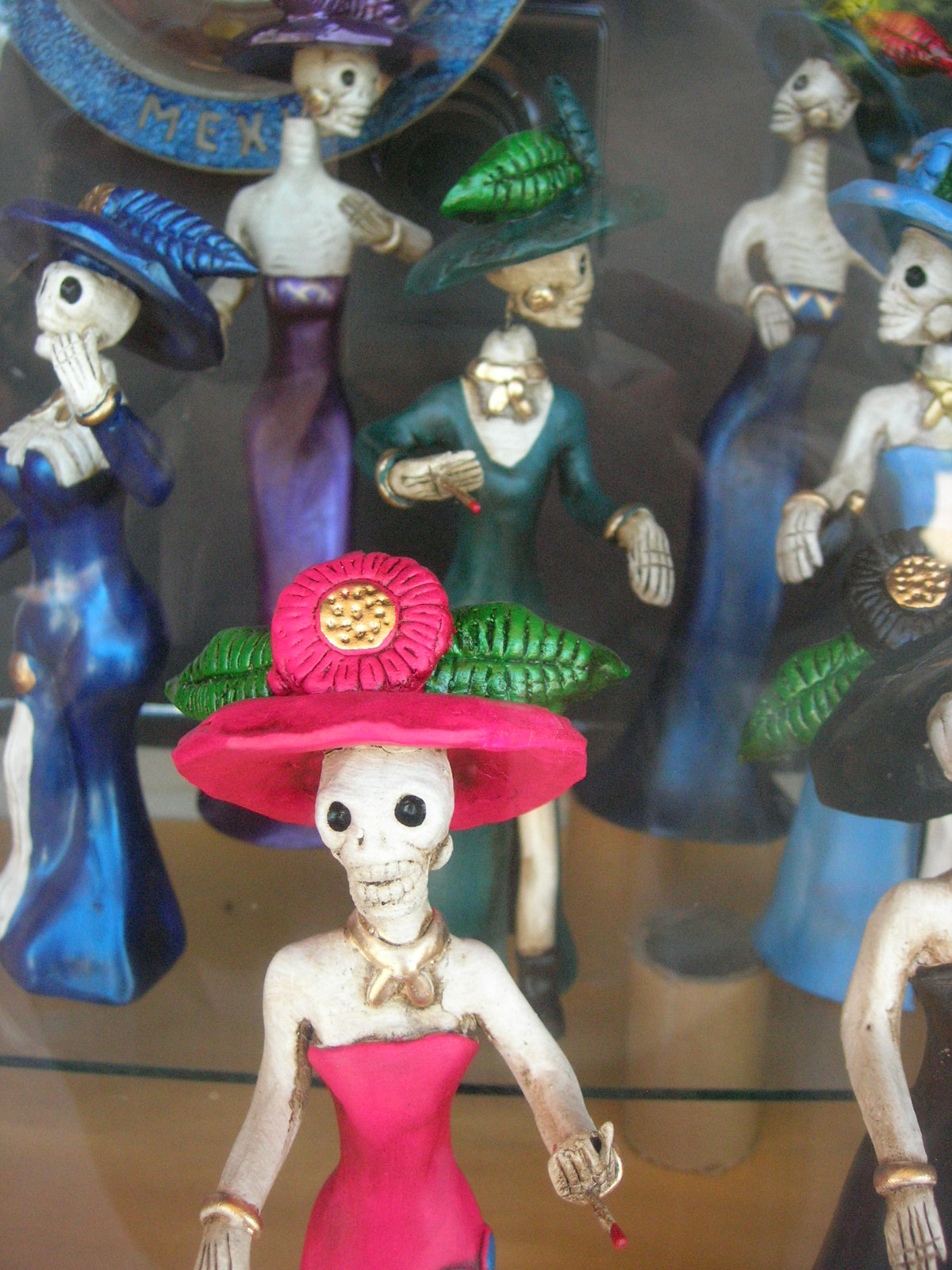
well-dressed Catrinas in shop window
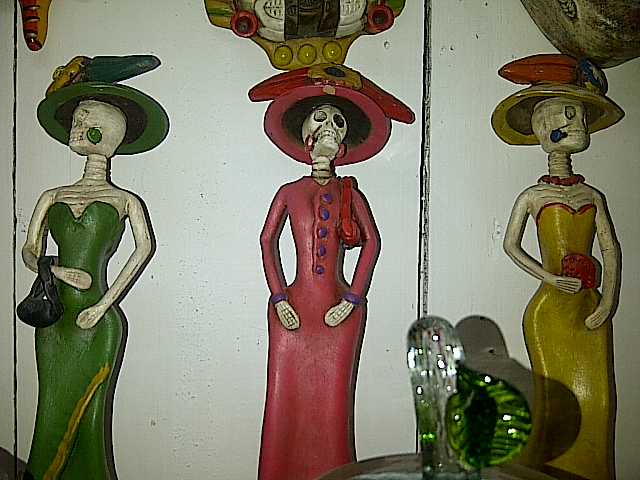
Catrinas
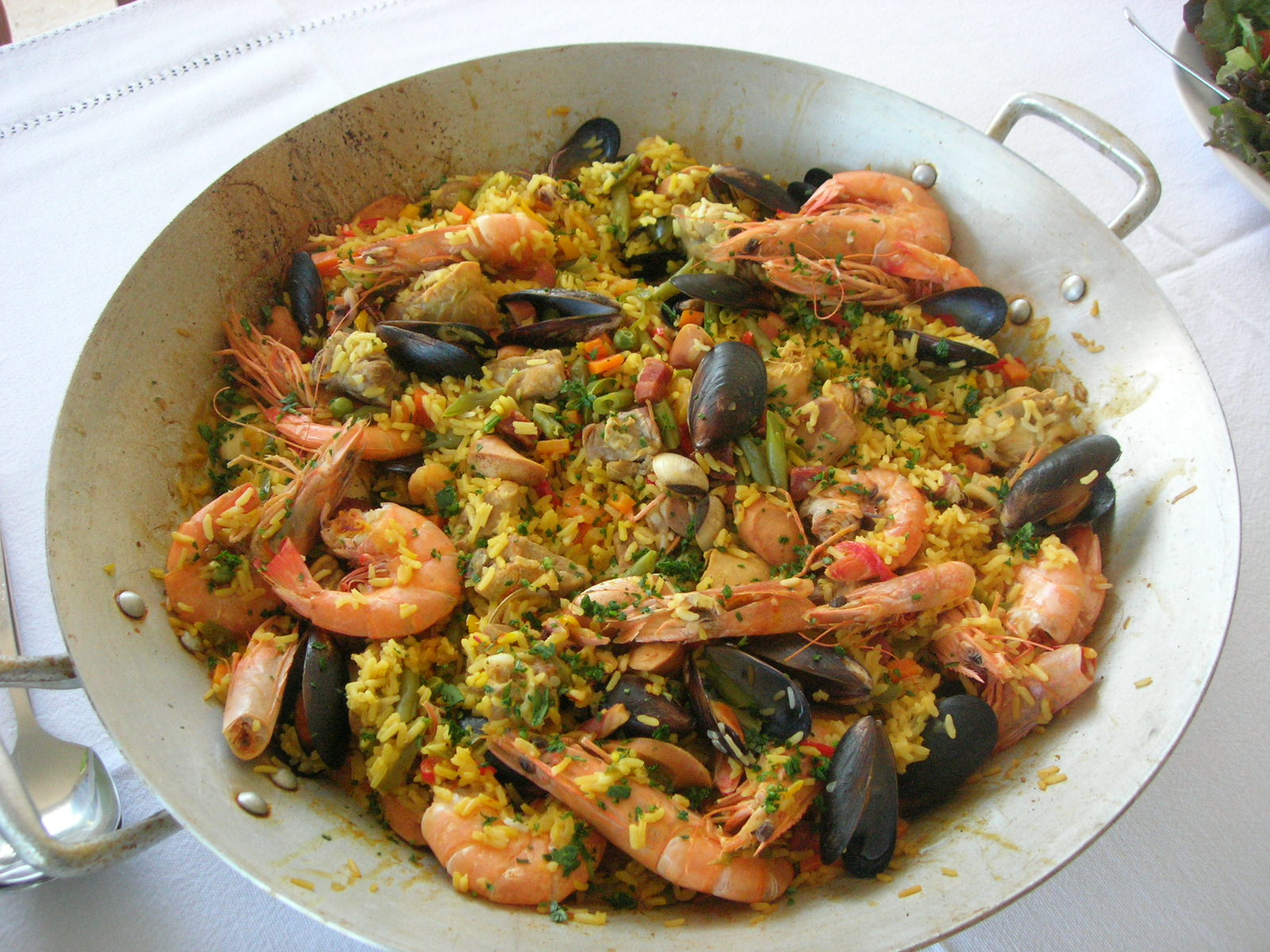
After a long morning at this wonderful site, we returned to the apartment to clean up and get ready for a very late (Spanish-time) lunch at the home of the head of General Motors Mexico. Yes, tequila was involved! Also a most delicious paella made by his wife, who teaches cooking.
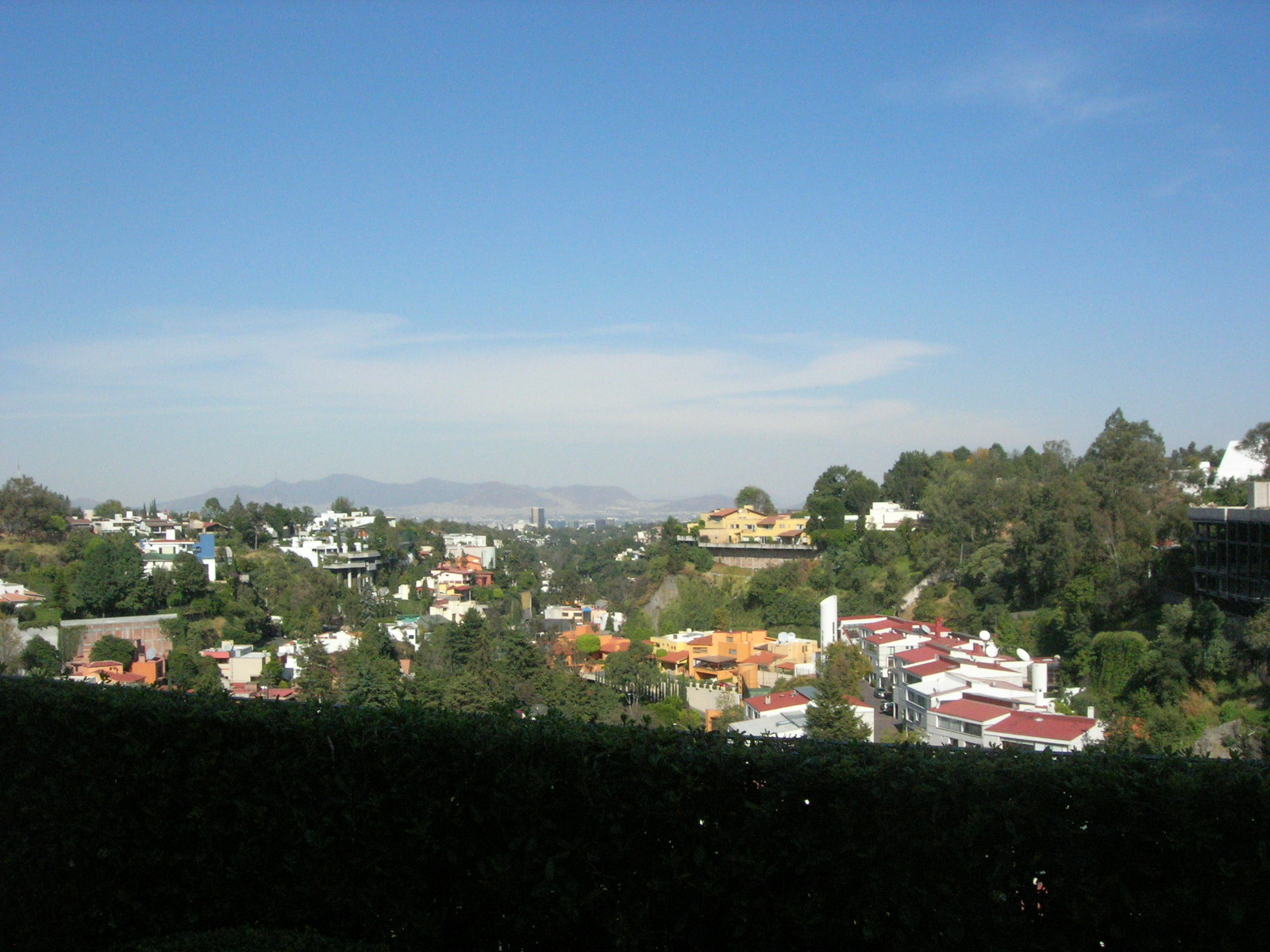
view from their backyard
On Sunday, Sharon and Fred left really really early for the airport and their long trip home. Don and I had time on Sunday morning for a walk around Diane and Julio’s lovely neighbourhood before we had to leave.
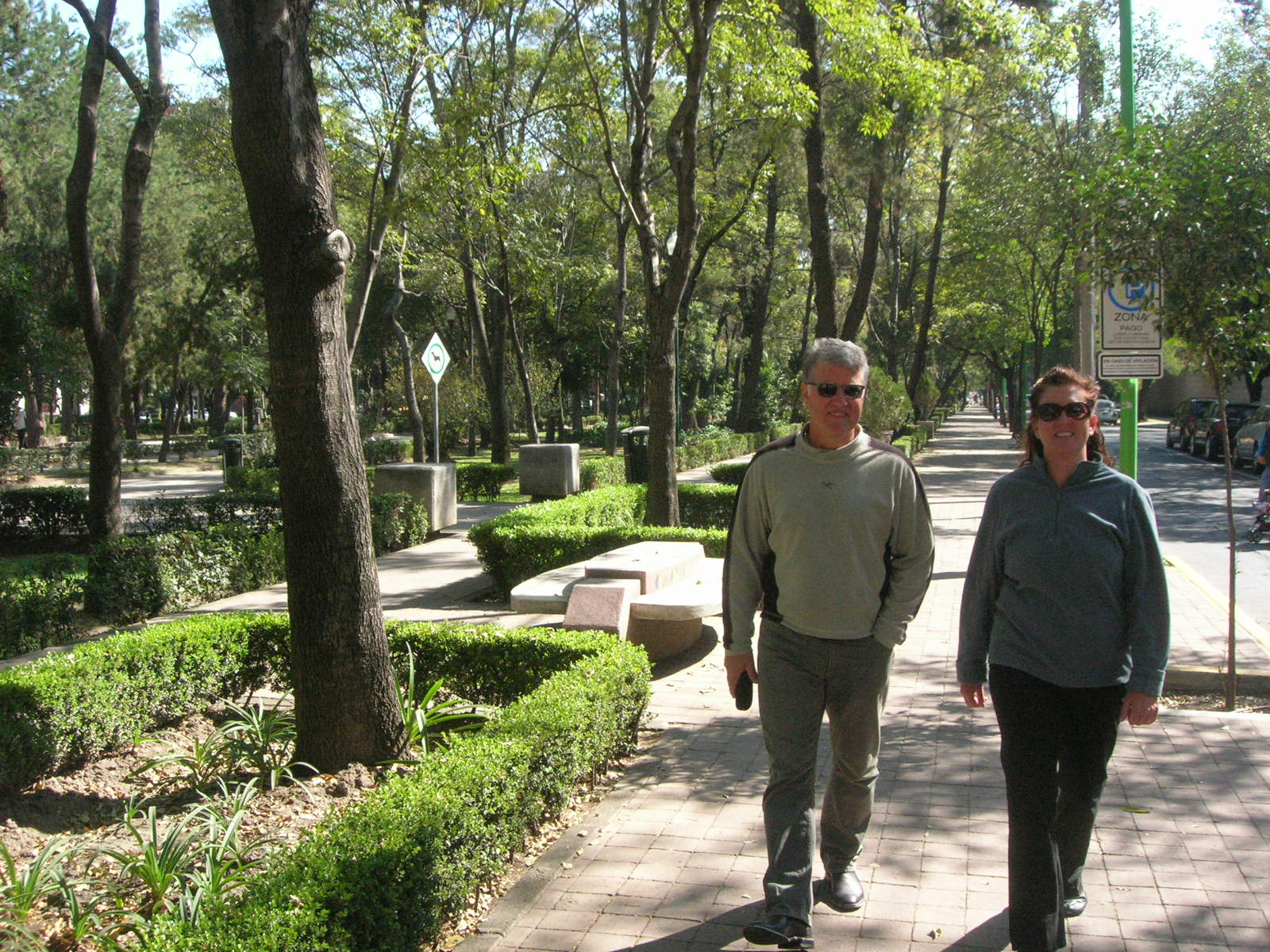
Don and Diane in the nearby park
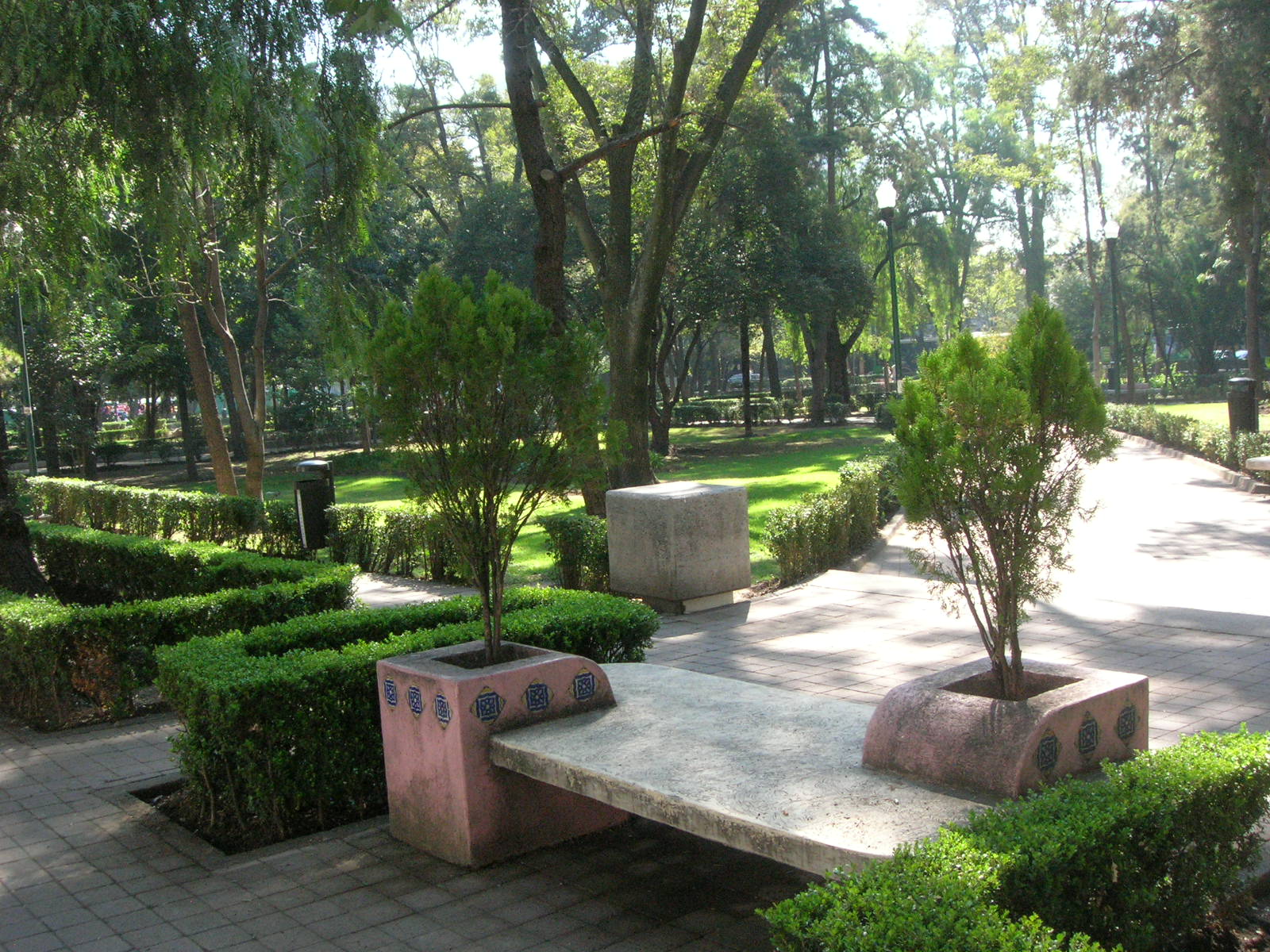
beautiful benches in the park, nicely designed
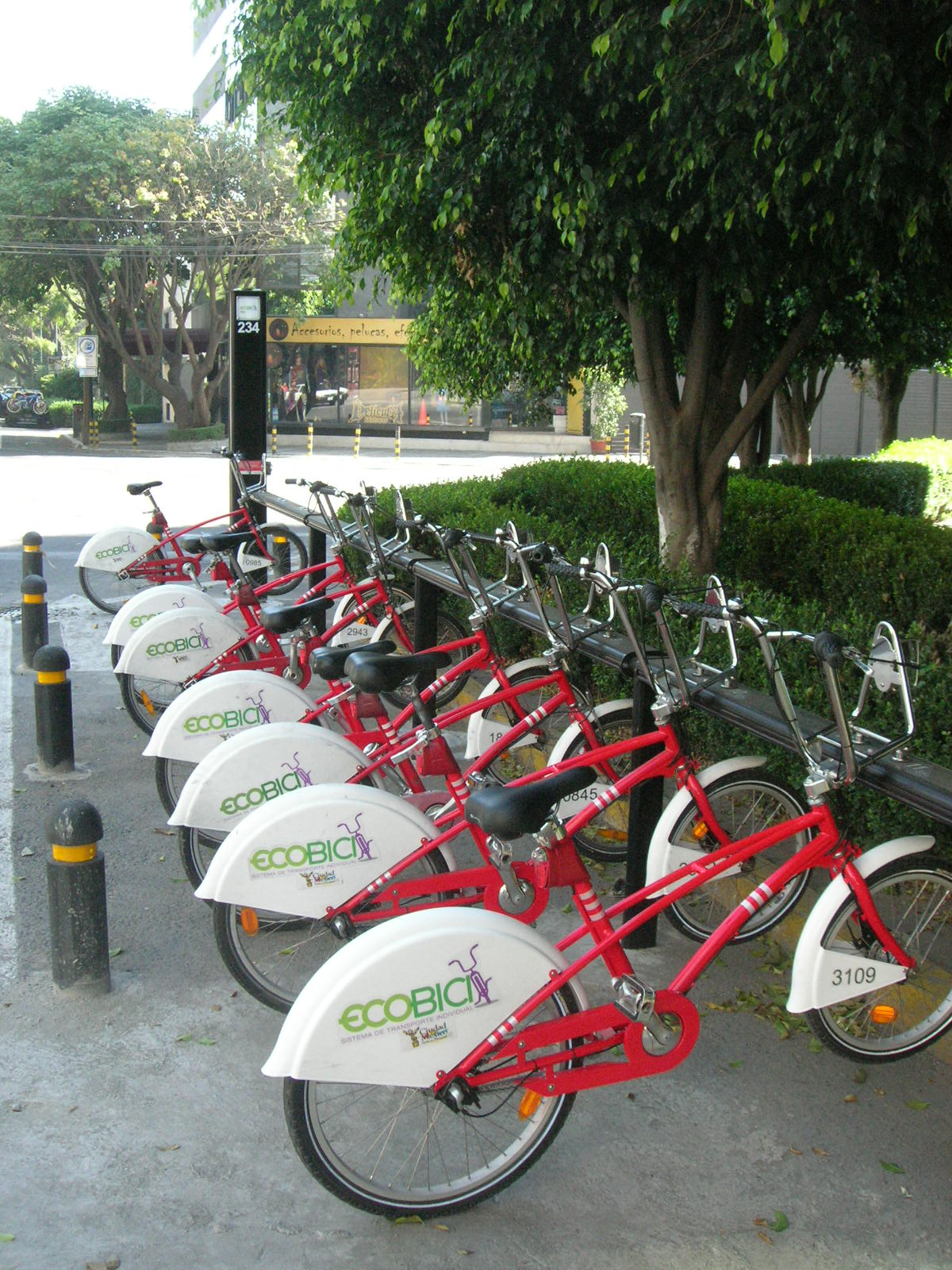
bicycles to rent
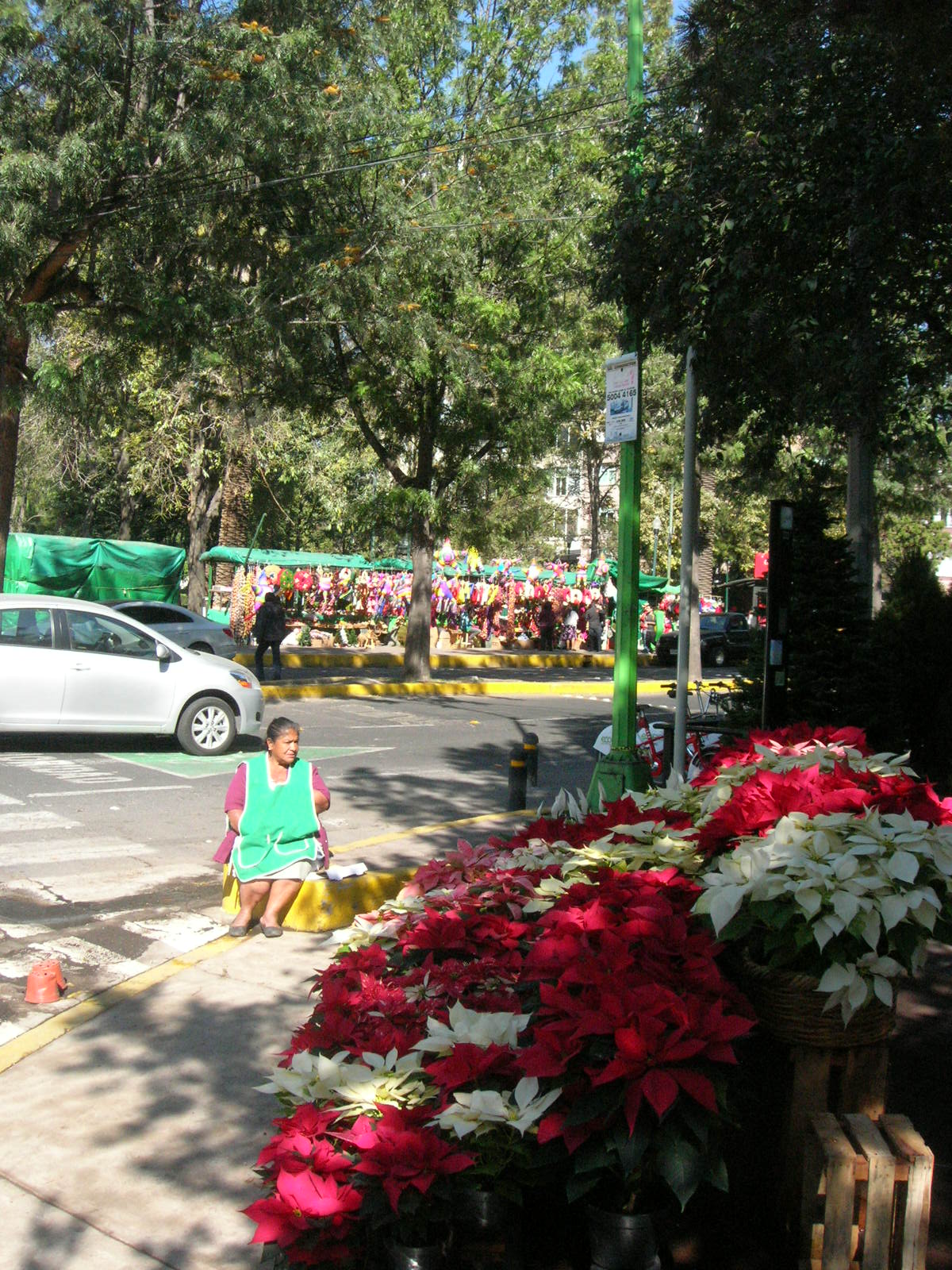
lots of poinsettias, native to Mexico, ready for Christmas

love that it is Poinsettias hanging from the lamp posts
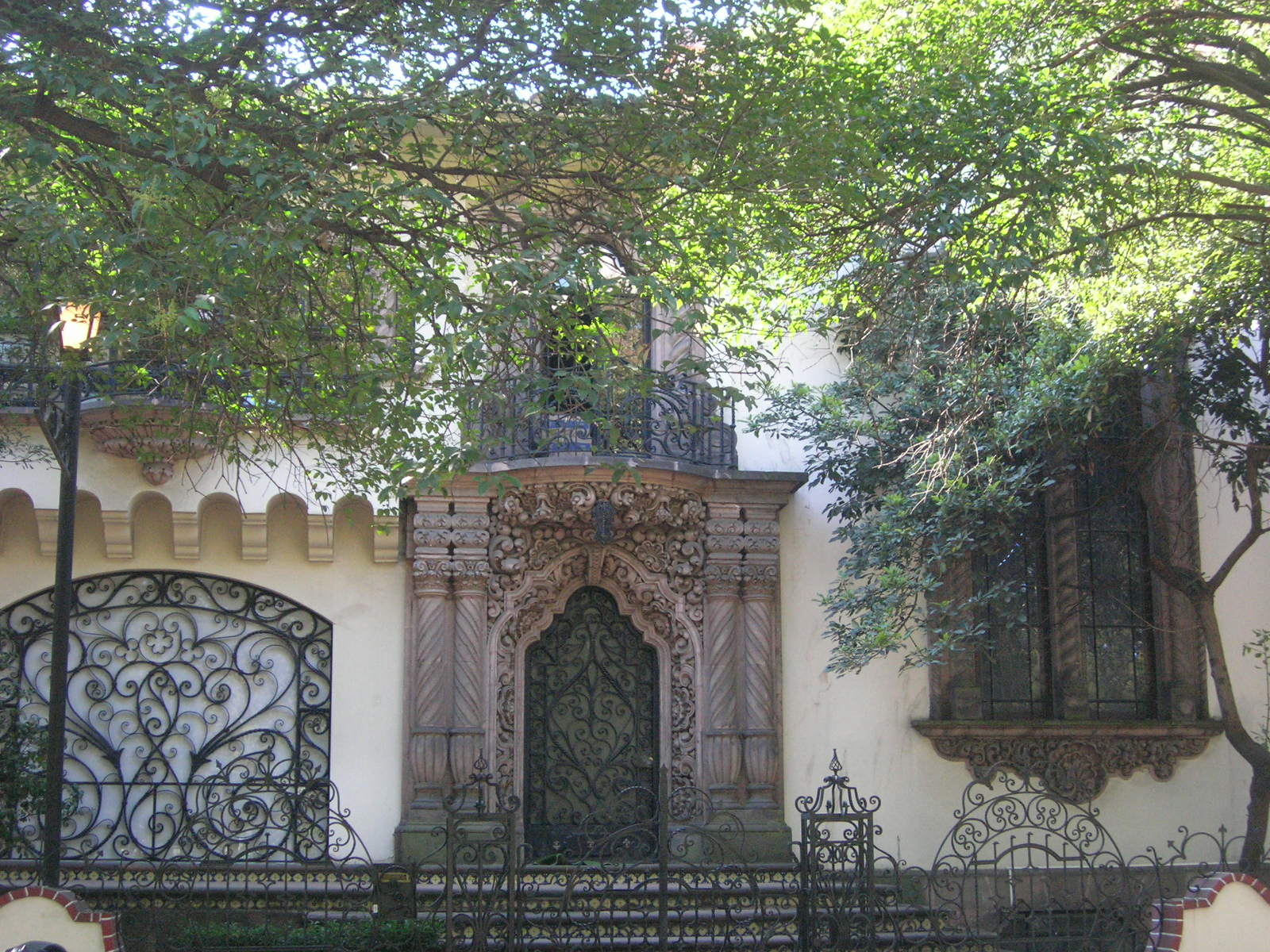
beautiful old homes in the neighbourhood
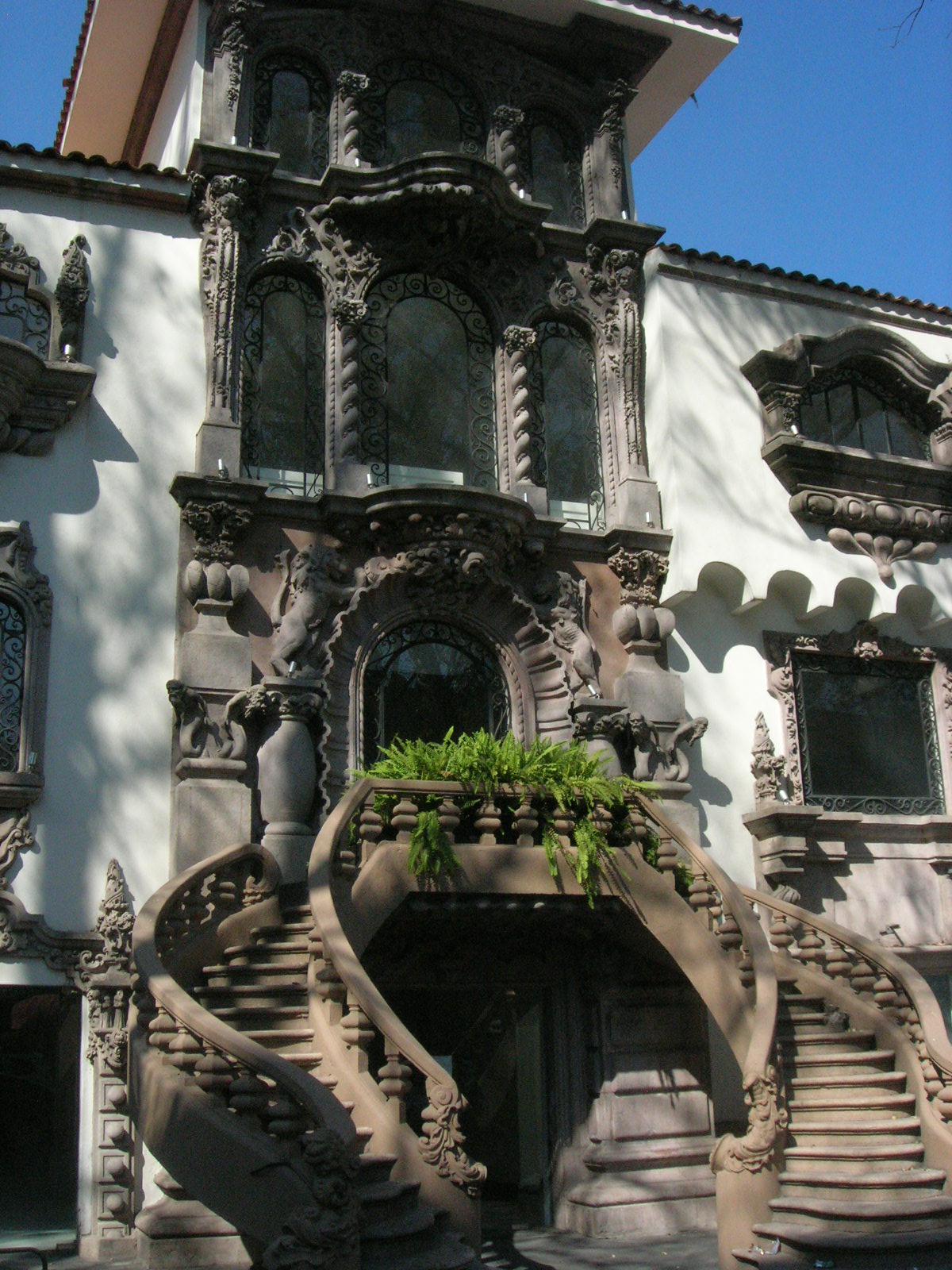
stunning staircase

another beautiful home

my friends know I want to check out local bookstores! 😀
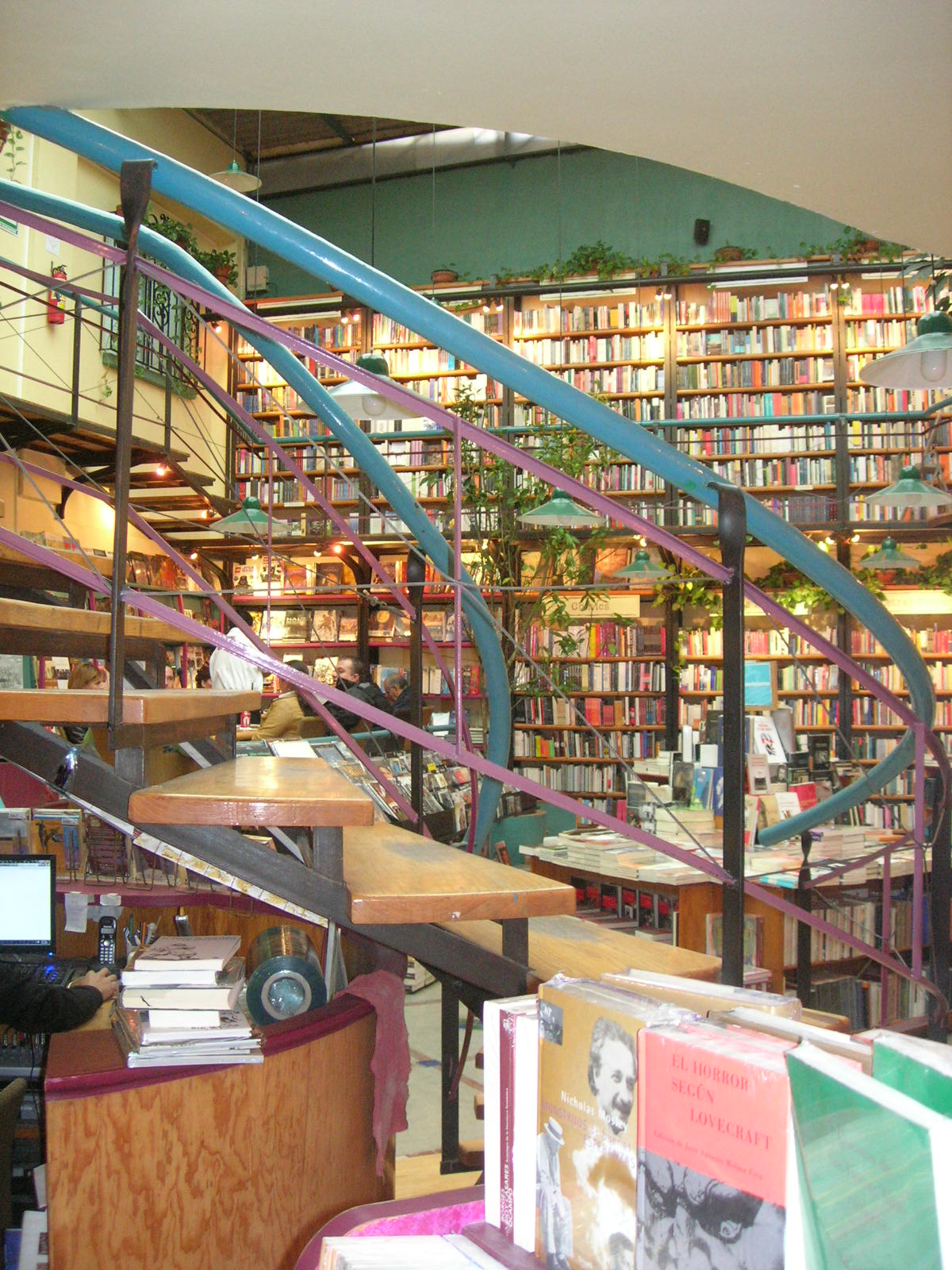
lovely staircase inside, as well as a cafe

another example of a Catrina, in the window of a gift shop

one last colourful shop
After walking the neighbourhood, we went back to the apartment to finish packing up, then said good bye and thank you to Diane and Julio and were off to the airport. We had a great time on our first visit to Mexico.
A week in Paris and a family reunion October 4, 2012
Posted by freda in Birmingham, Michigan.1 comment so far
Don and I left Detroit Friday night, June 23rd, arriving in Paris Saturday morning, June 24th. After picking up our luggage, we made our way to the terminal where my sister was arriving, met up with Kate, then went to the rental car area. After securing our vehicle, we drove into the city to pick up my mother, who had arrived a few days earlier than us. The three of us took turns showering, then we all went out for lunch at a little spot mom had discovered down the street.
Slightly revived after coffee and lunch, we were on the road for a two hour drive to the town of Villeneuve L’Archeveque for a family reunion weekend. Our accomodation was gorgeous:
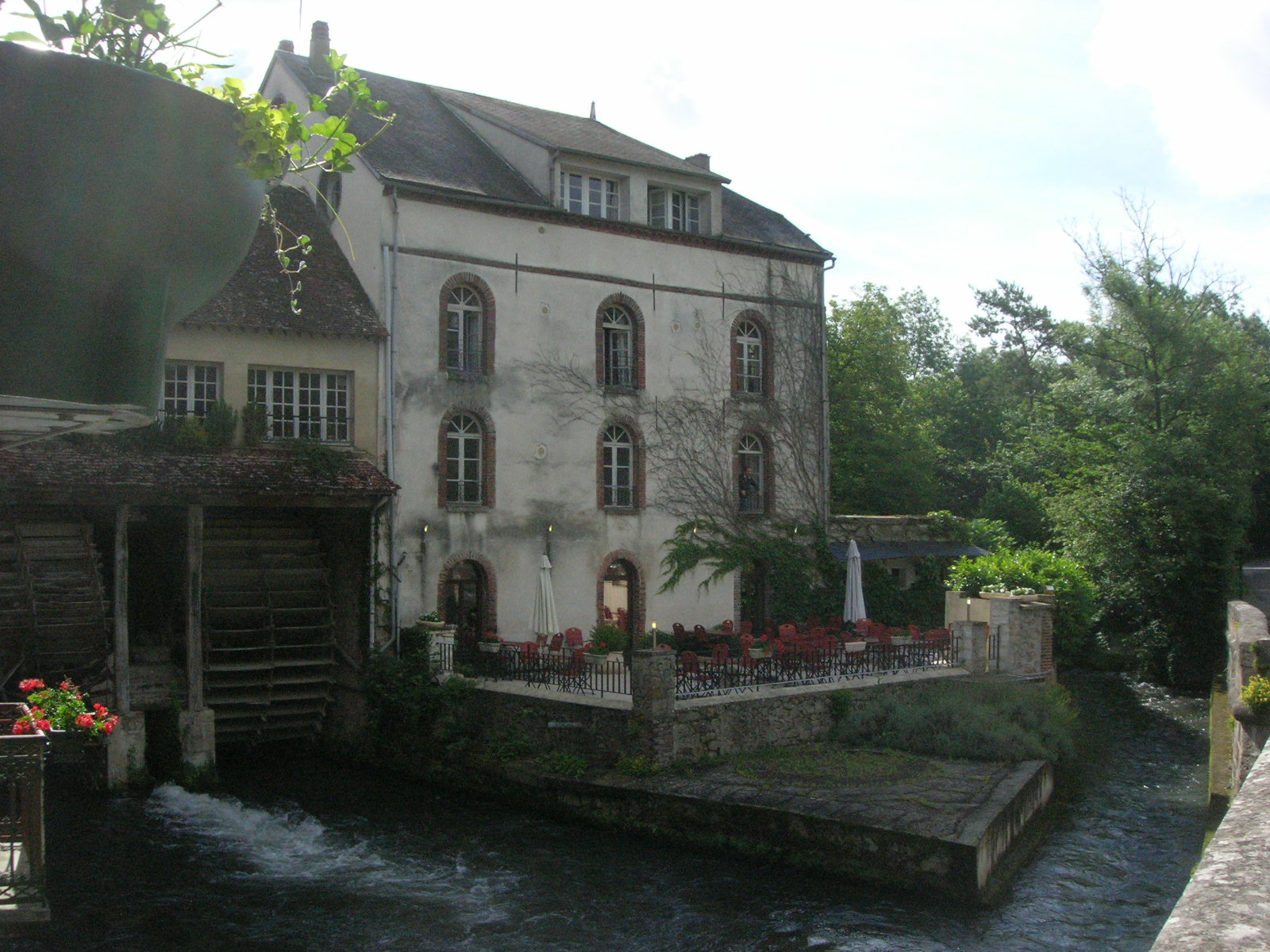
Auberge des Vieux
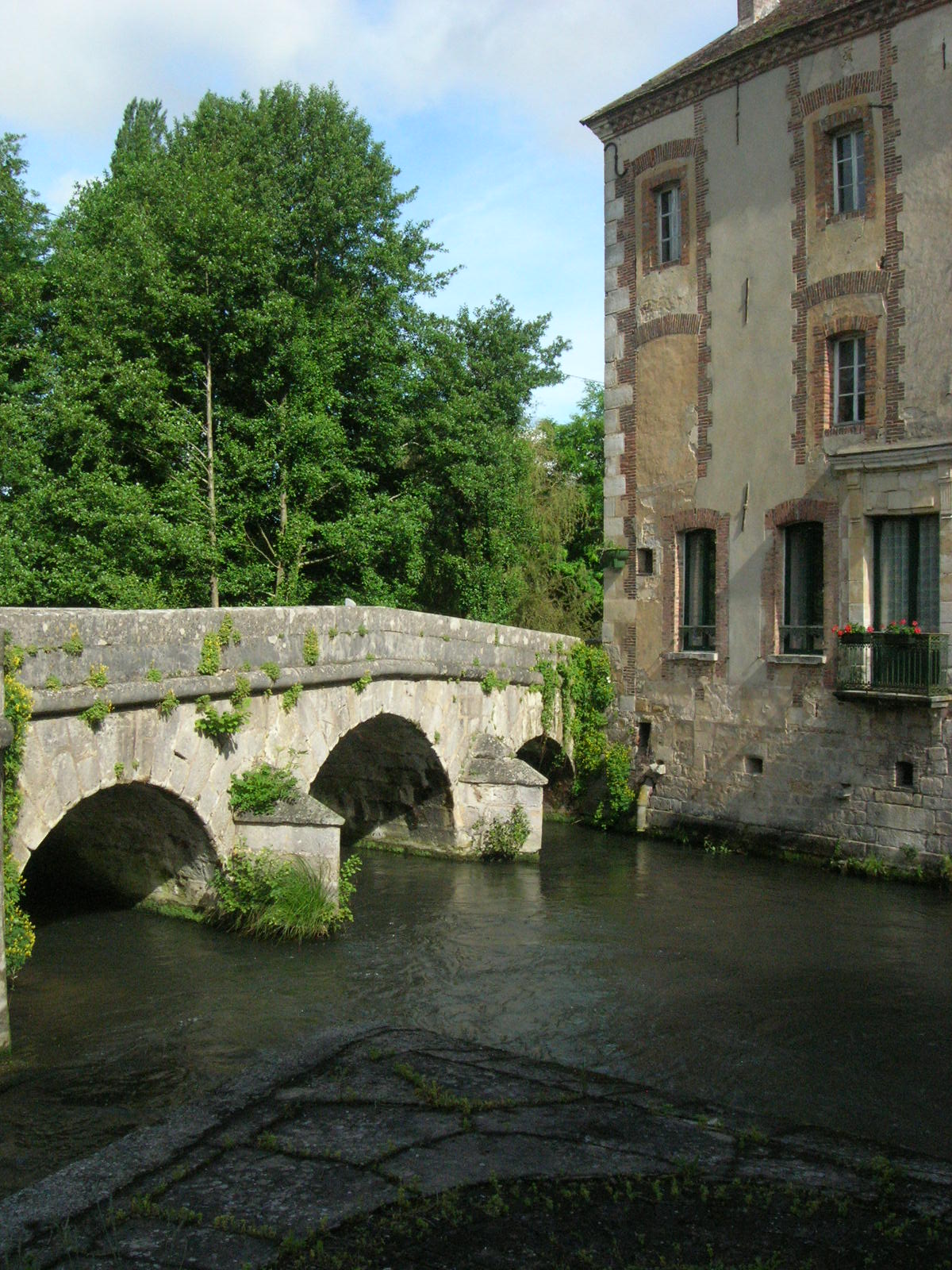
another view
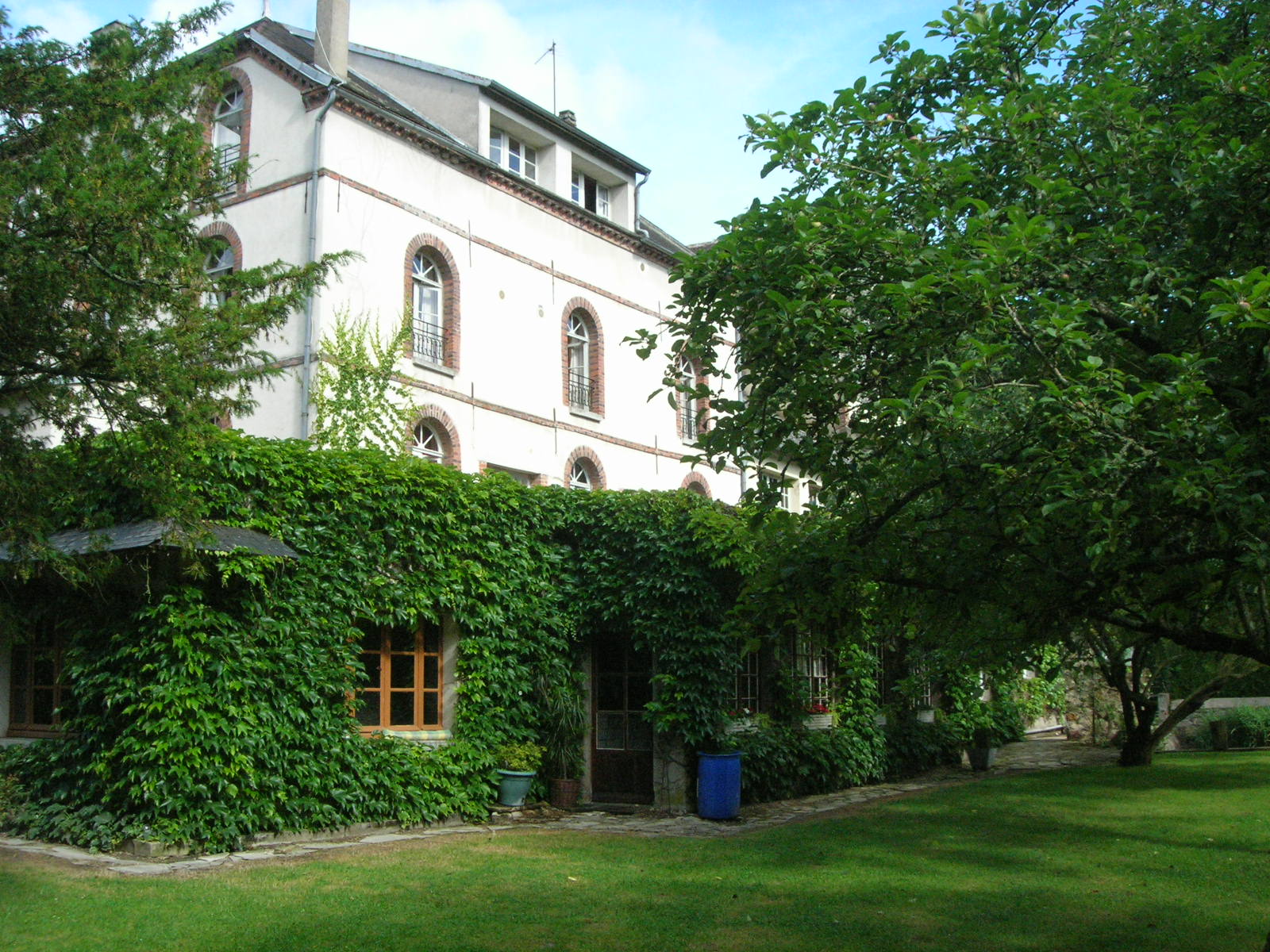
back of the building
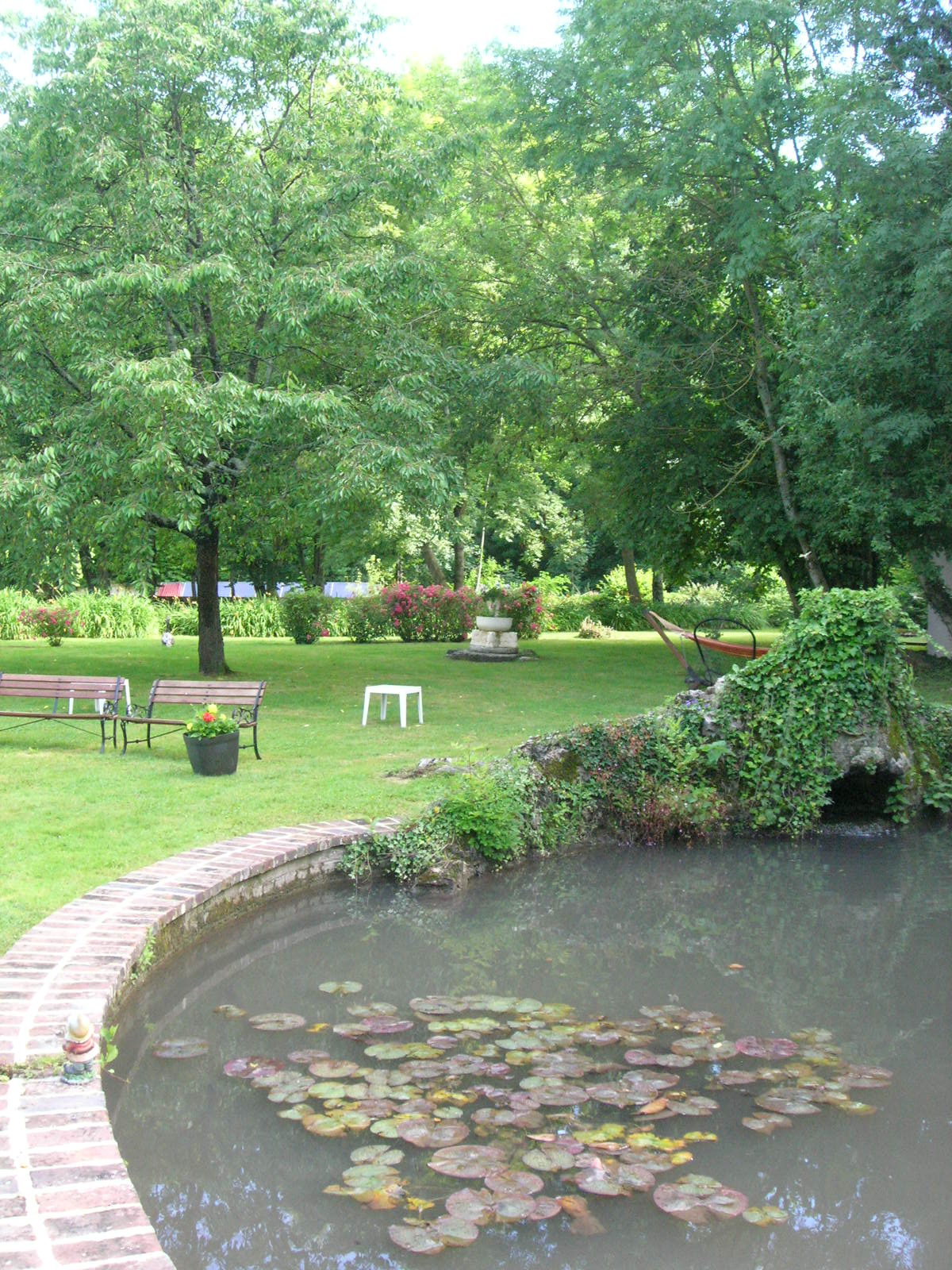
and beautiful yard
After checking in, we napped! And then it was time to party! Saturday evening we had a BBQ for the cousins, 35 of us in attendance. Sunday was to celebrate my aunt’s 90th birthday. She is the last living sibling of my father (there were 14 of them, including my father) and her 90th birthday was a great excuse to organzie a family reunion. Fifty-five of us gathered to celebrate, and it was SO wonderful to see them all, some I hadn’t ever met, some I hadn’t seen in years, and just a few seen more recently. My aunt was radiant and I was so happy to see her again!
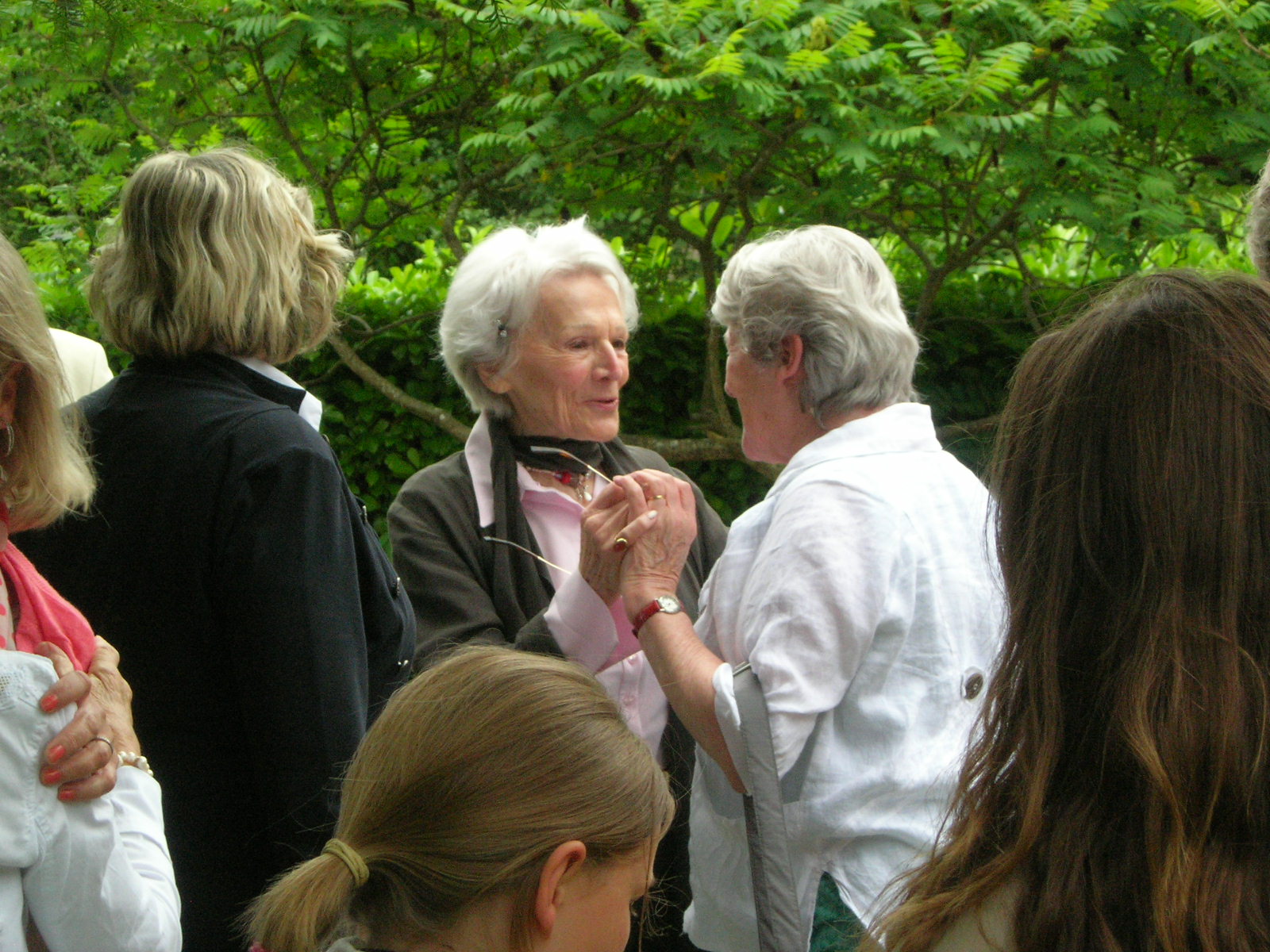
Celebrating her 90th, Tante Plony arrives
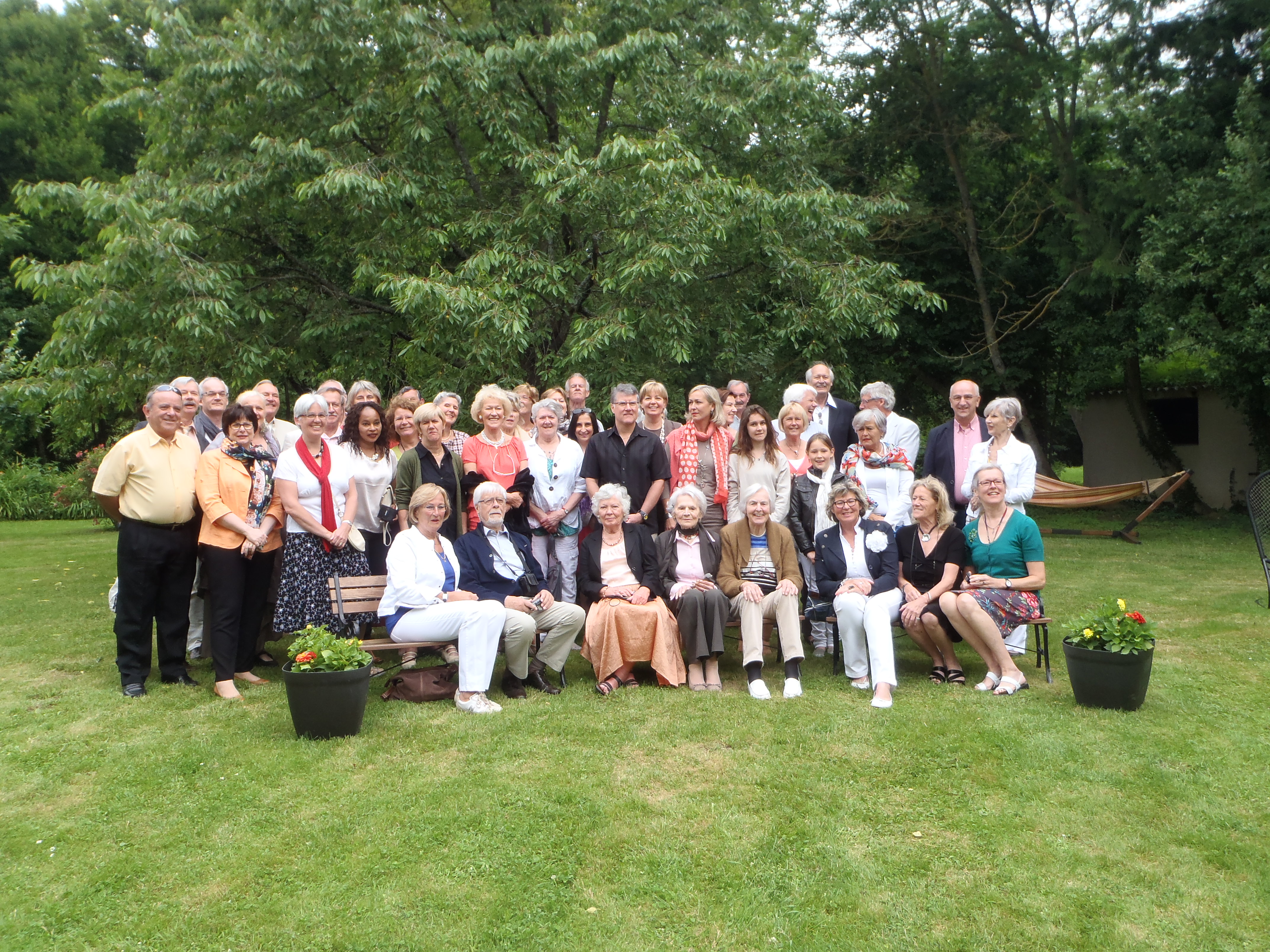
most of the group
We had a long, beautiful lunch, with speeches and singing and lots of toasting. It was a perfect day.
On Monday, after breakfast, we packed up and said goodbye to the family who had stayed, like us, at the inn.
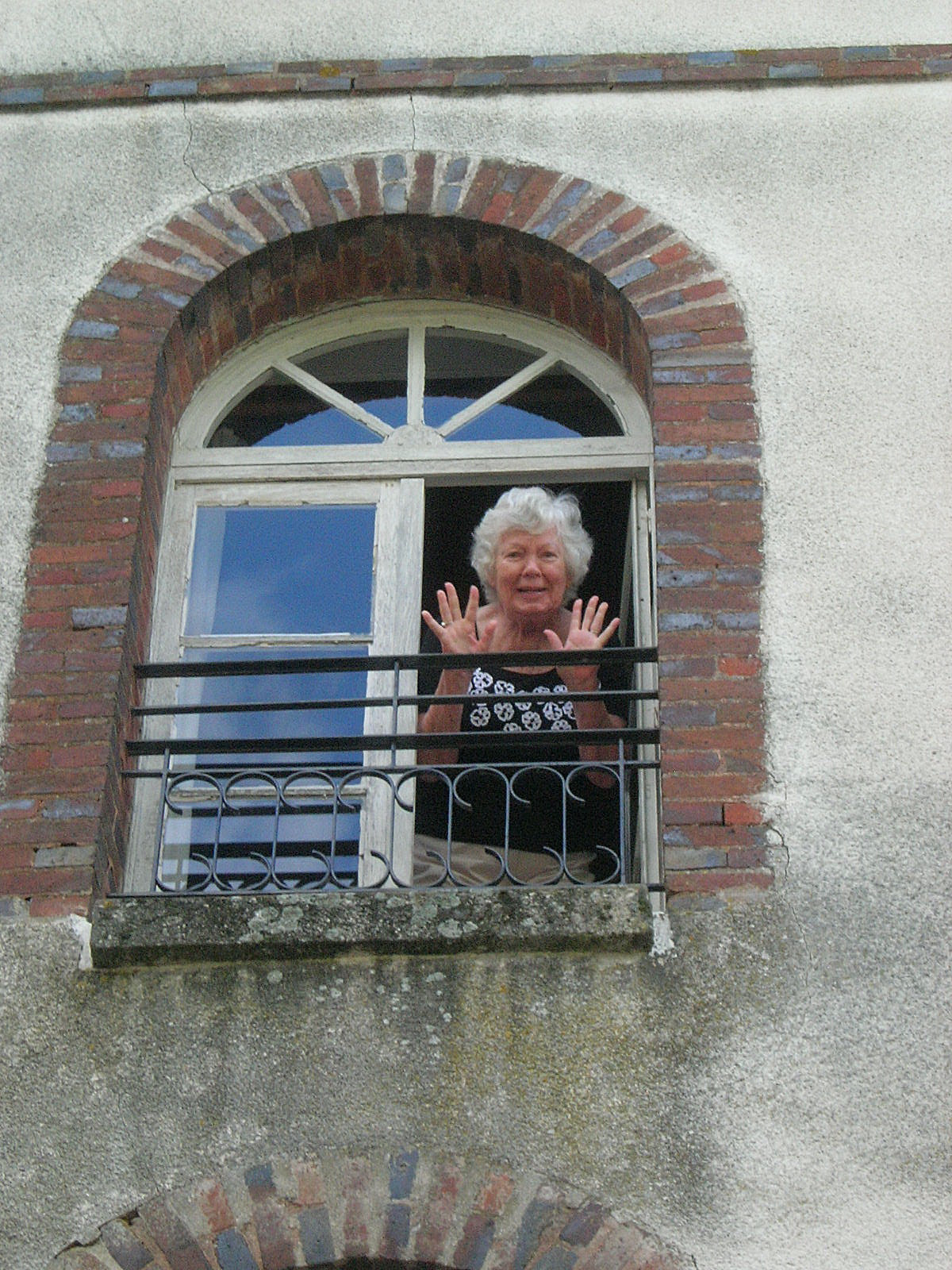
my mom from her bedroom window
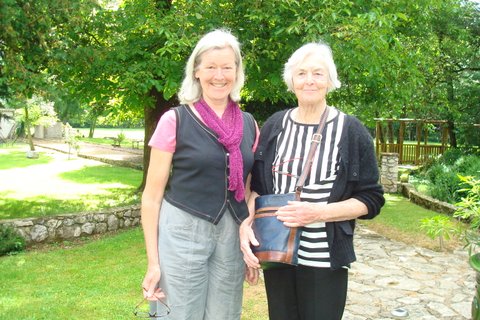
cousin Annelien, with her mother Tante Tuut
Then, the four of us headed back to Paris for five lovely days. We stayed in a small hotel at the edge of the Bastille district, close to the Marais:
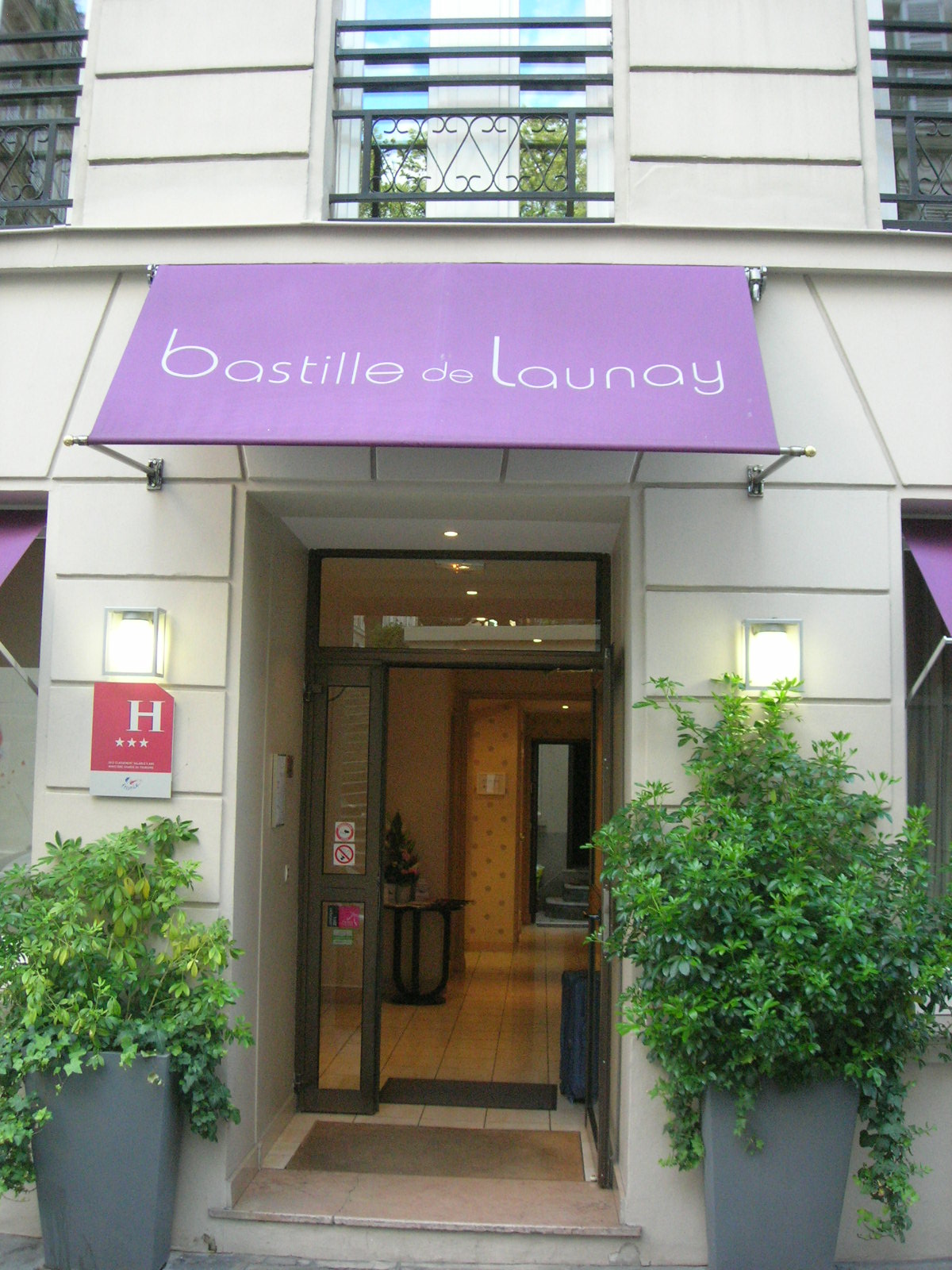
our hotel for five days
We spent lots of time walking, and visited places we hadn’t been before. One of our first stops, Monday evening, was the Shakespeare and Company book store!! The story of this book store is legend. Their motto: Be not inhospitable to strangers lest they be angels in disguise.
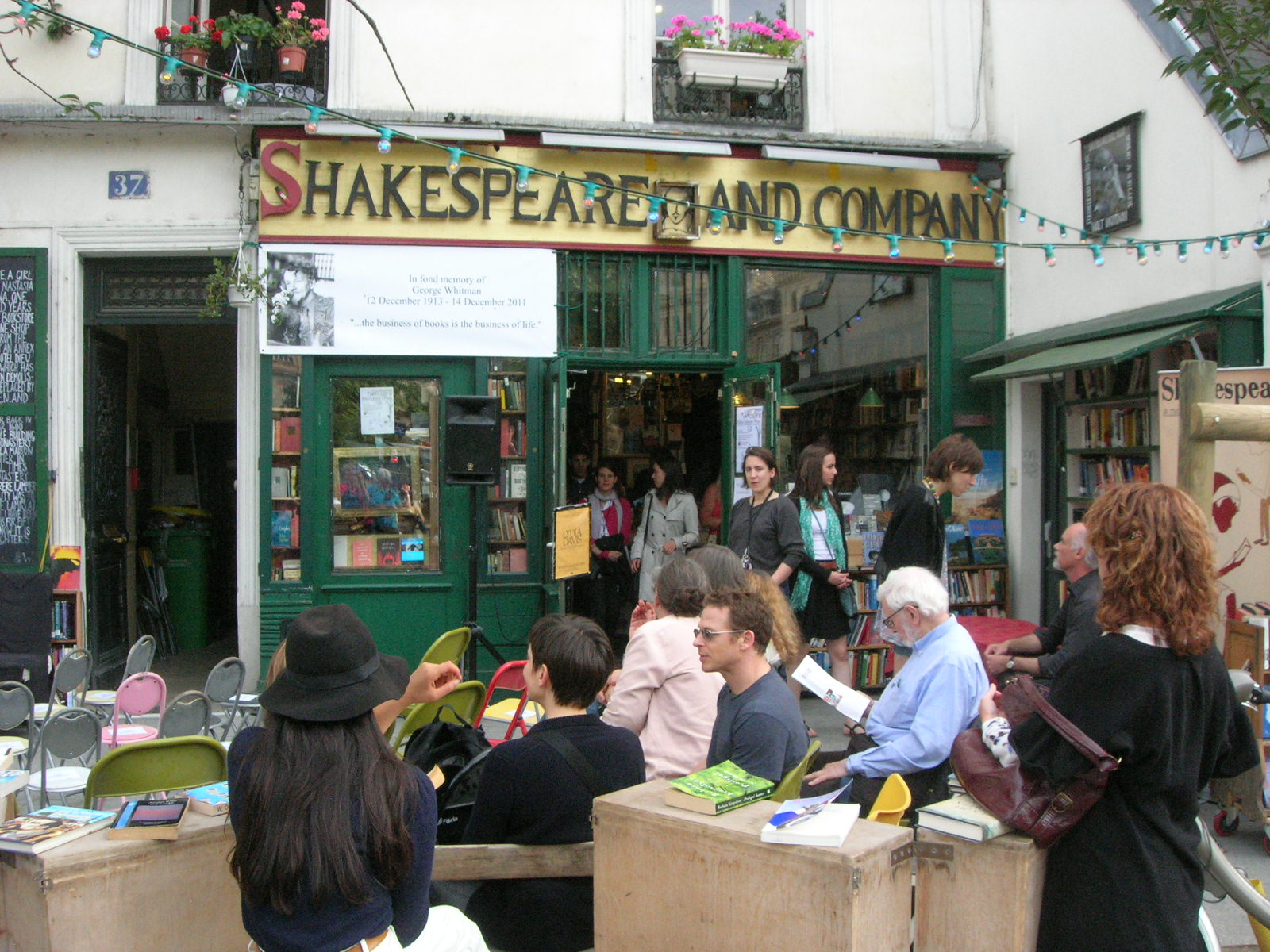
Shakespeare and Company book store
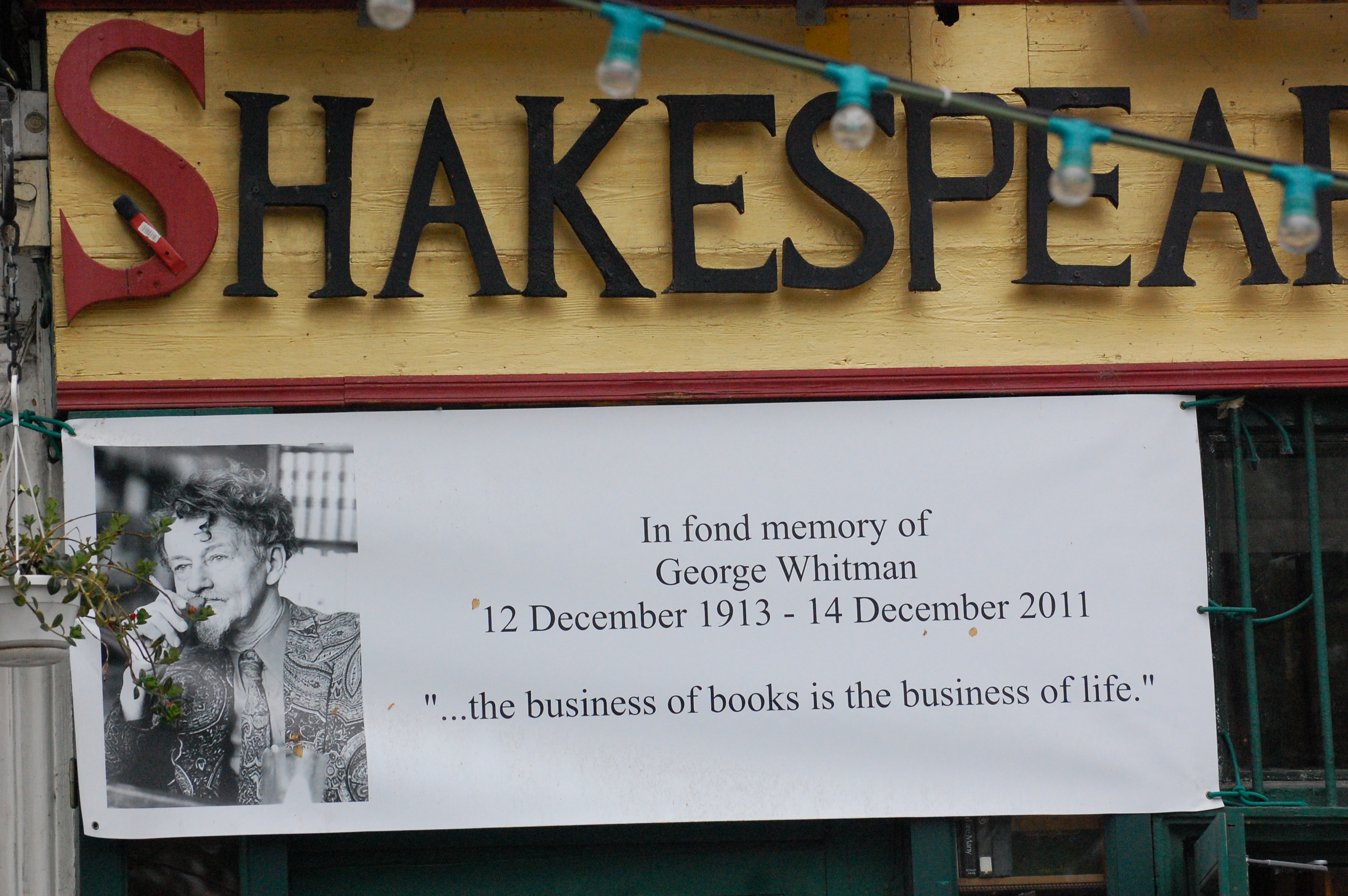
George Whitman’s presence is felt
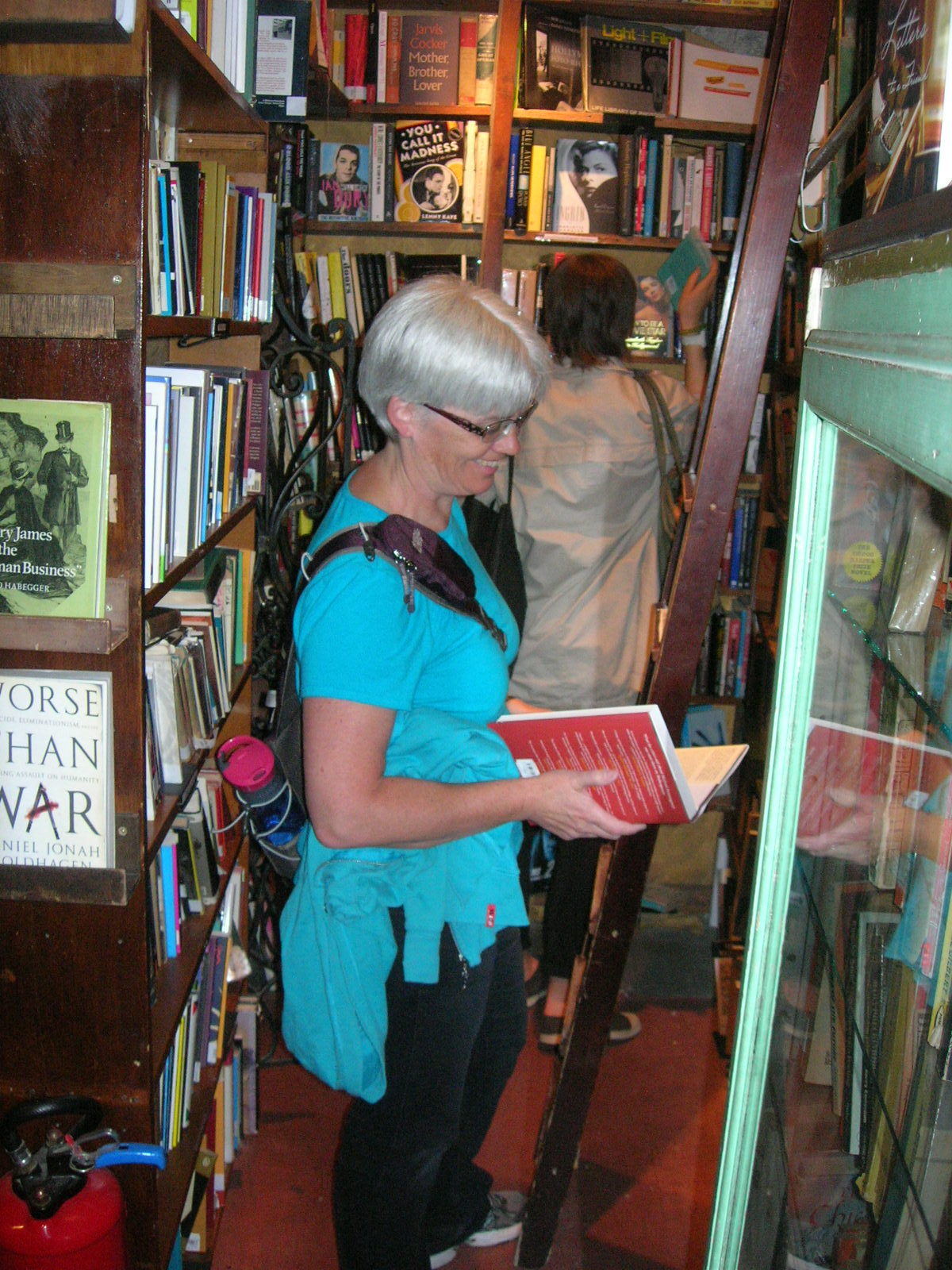
Kate browses…

Mom browses…
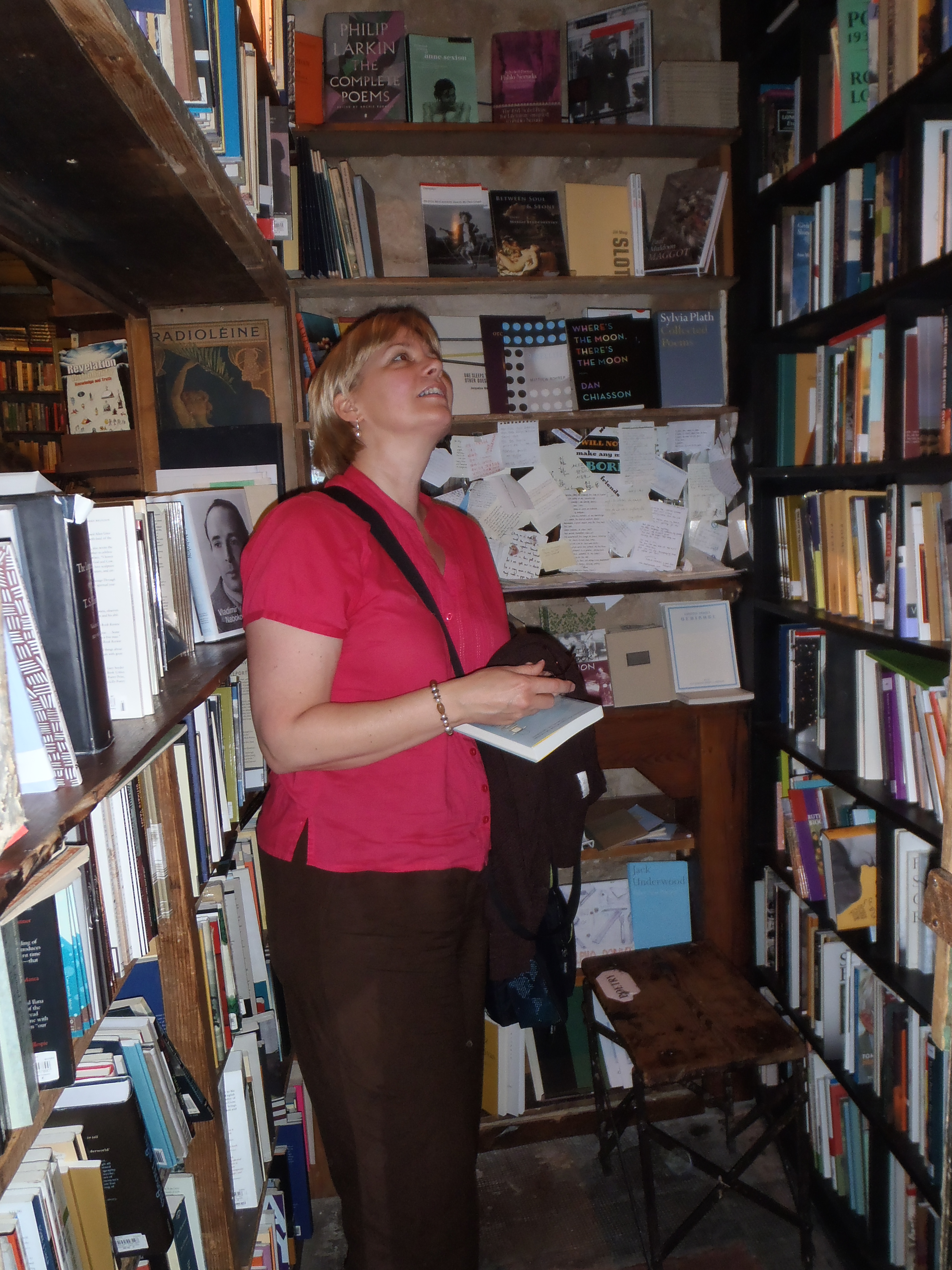
I browse…

and Don, outside the store, checks his blackberry… 😛
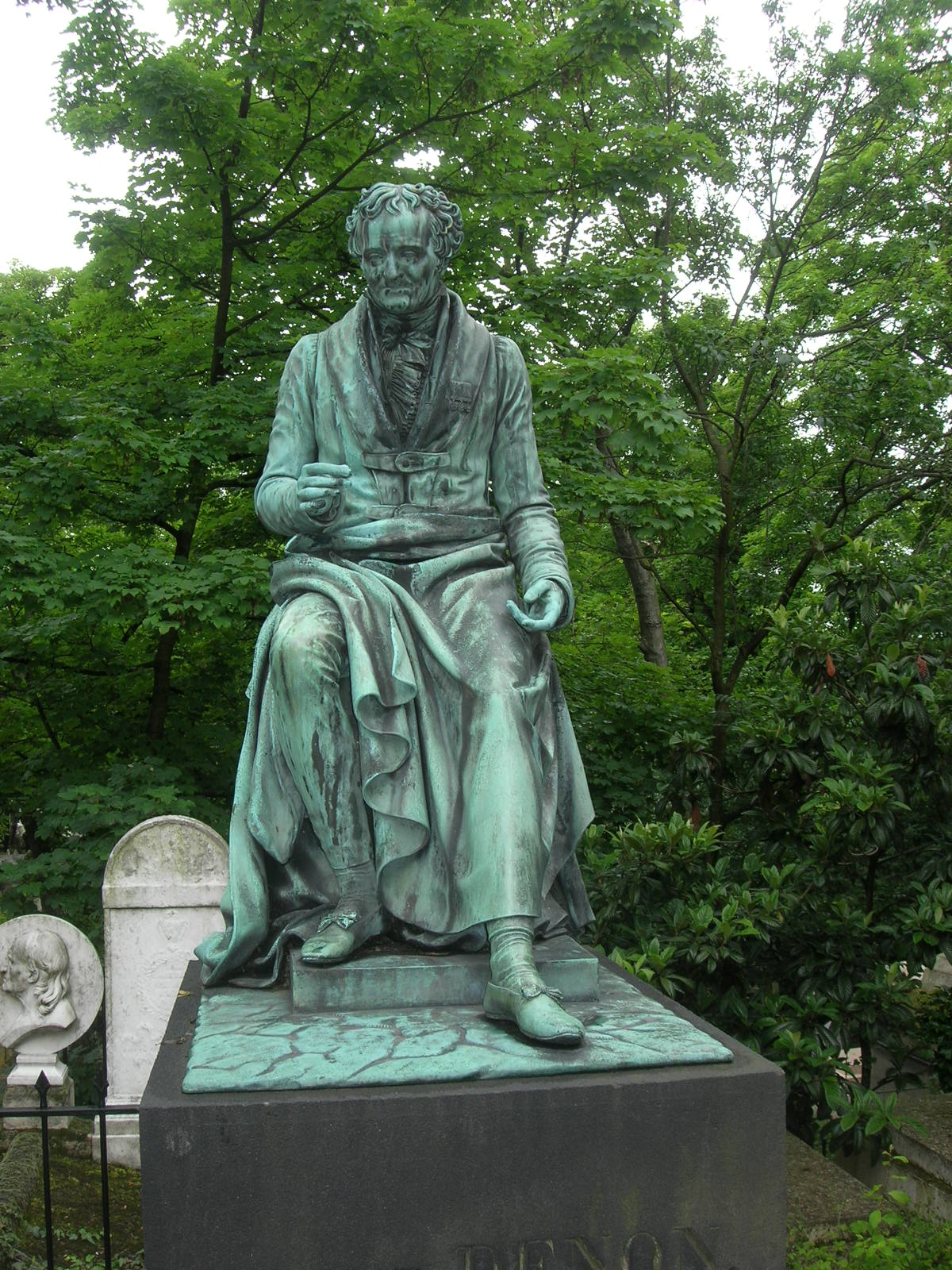
On my and my mother’s ‘wish list’ of sites, was Le Pere Lachaise cemetery, within walking distance of our hotel. Off we went Tuesday morning. According to the tour book, the cemetery is the largest in Paris, and the most visited in the world, mostly due to the fact Jim Morrison is buried there. I was more excited to see the grave of French author, Colette, whom I started reading in my early teens.
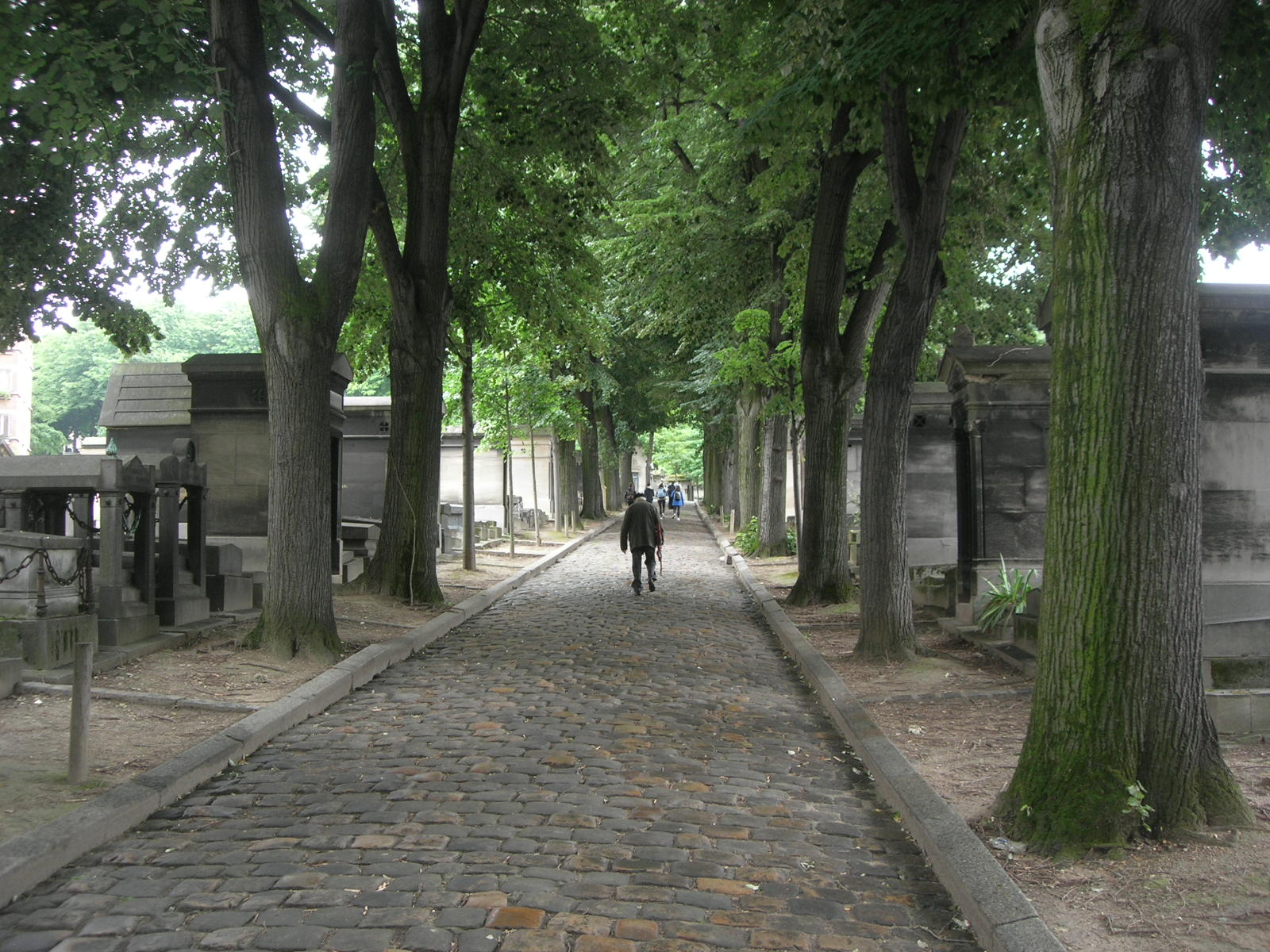
entrance to Le Pere Lachaise
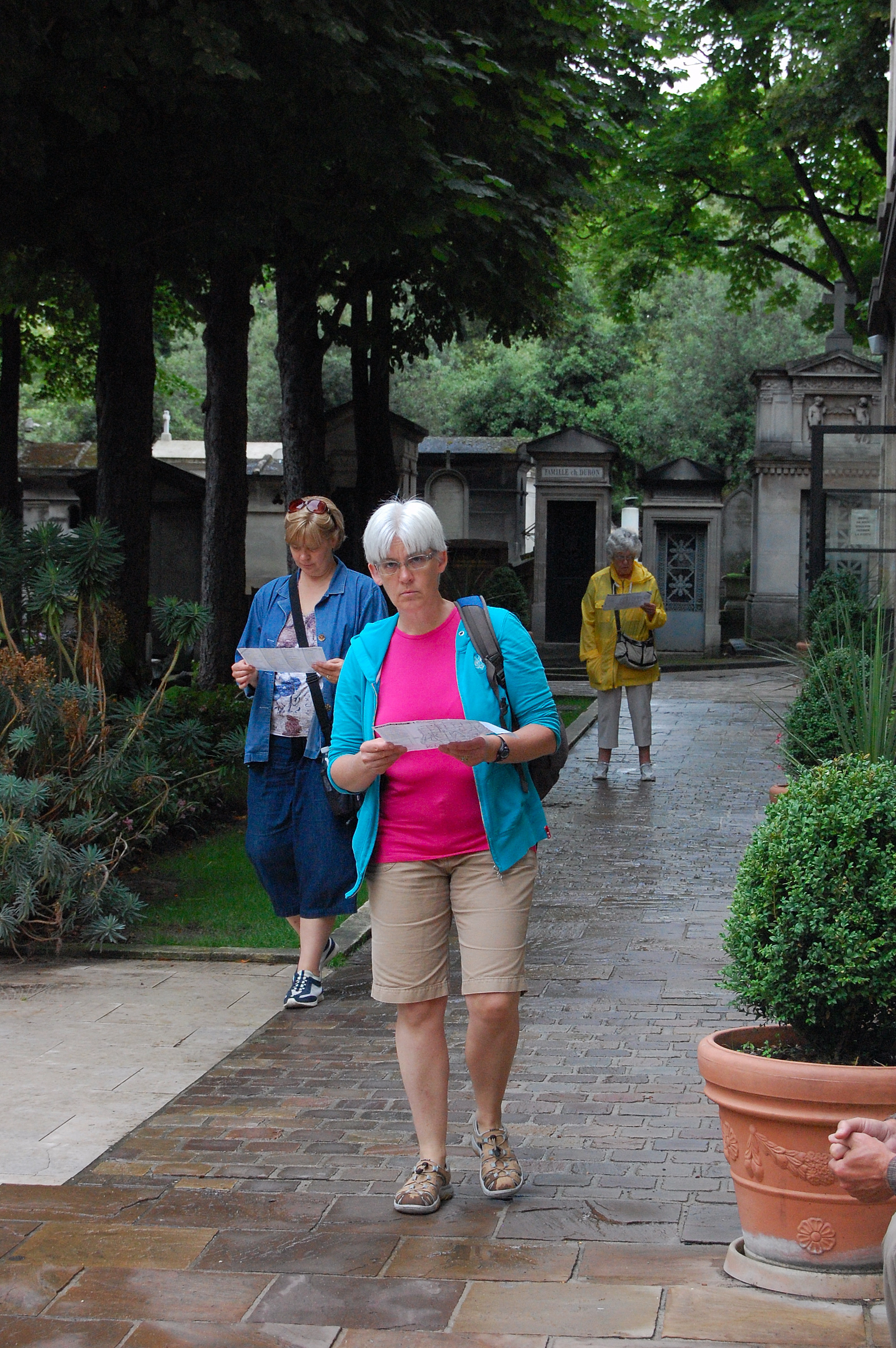
consulting the map is a necessity in the 105 acre site
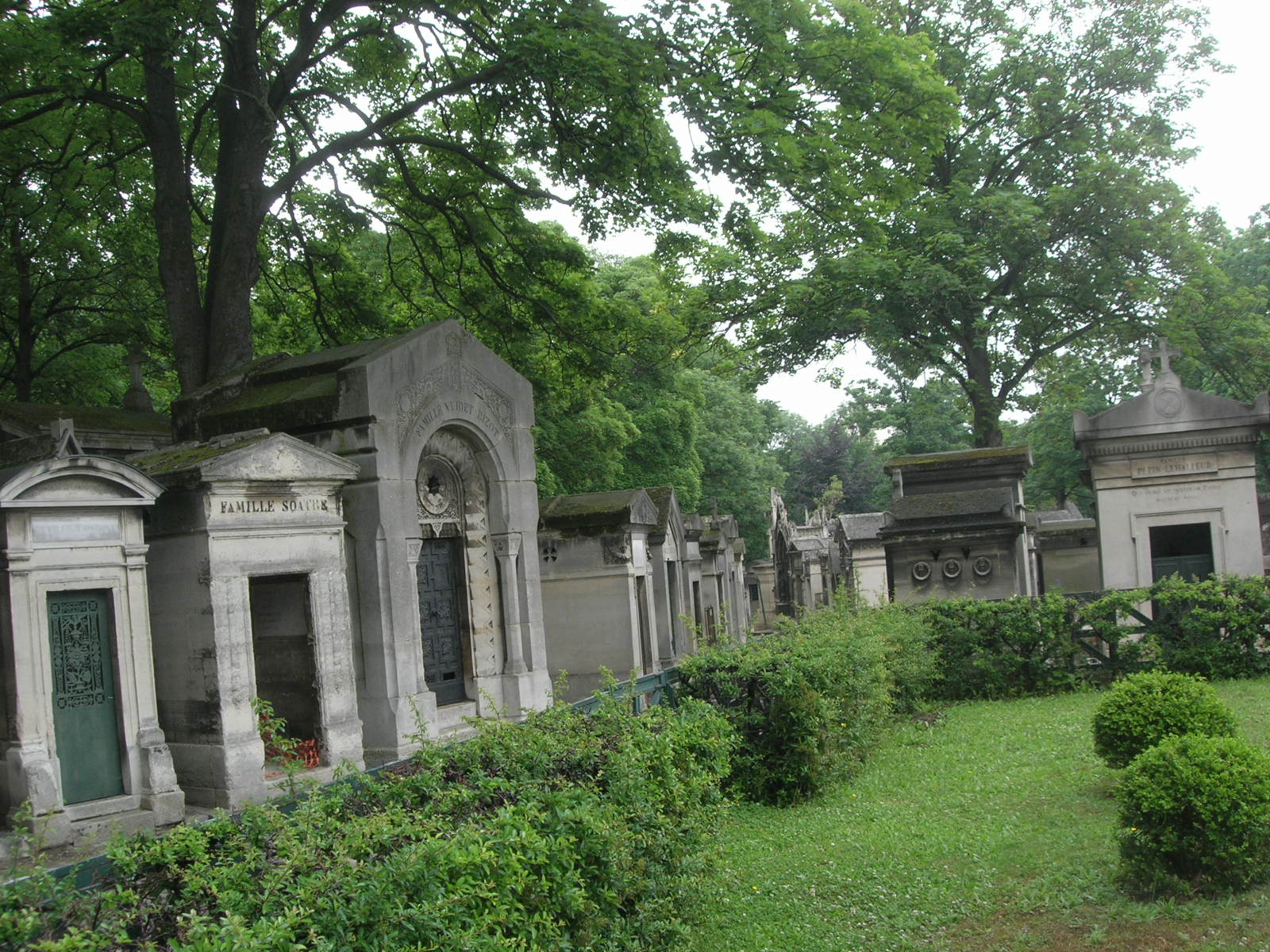
It’s a beautiful cemetery…
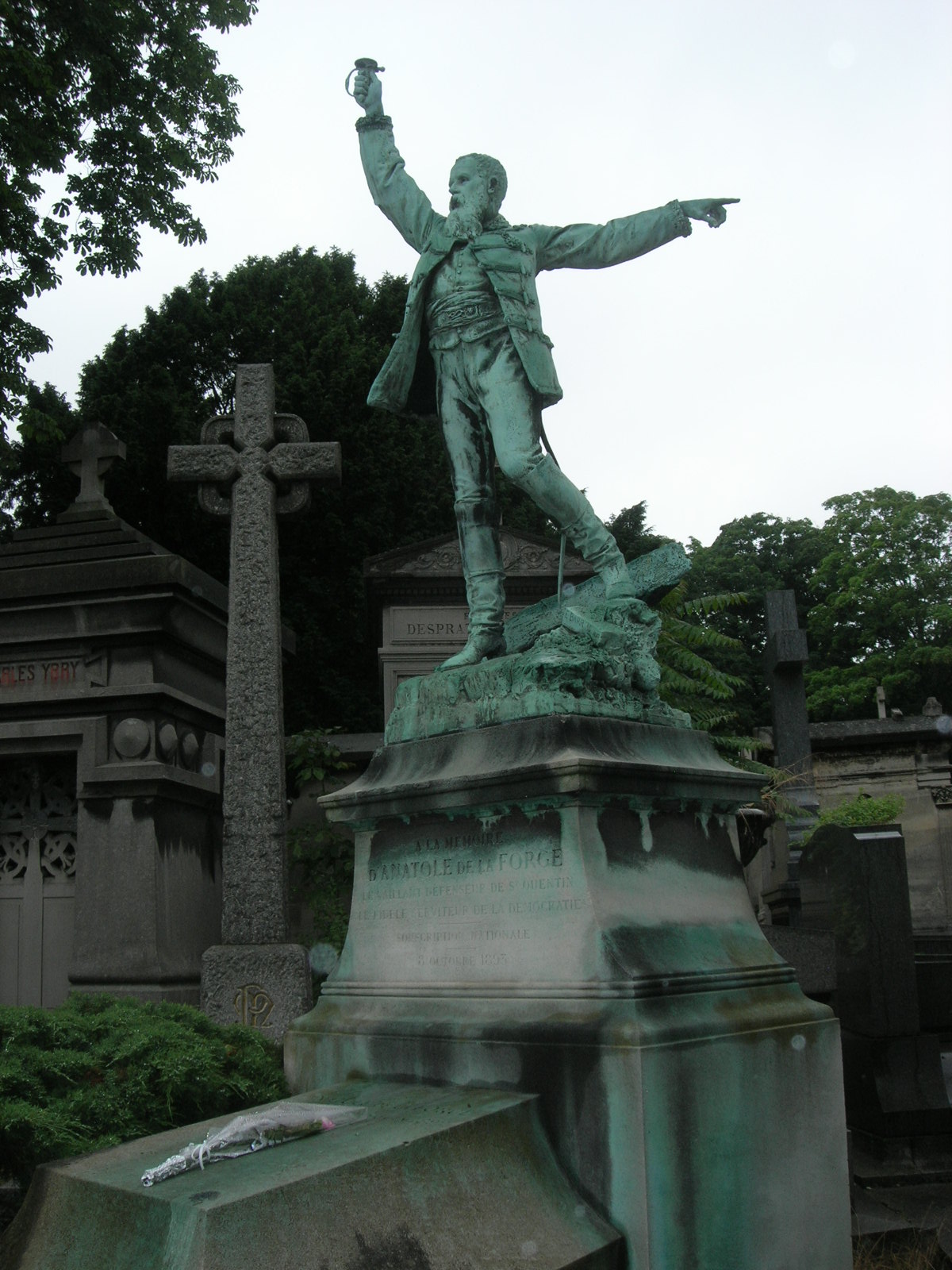
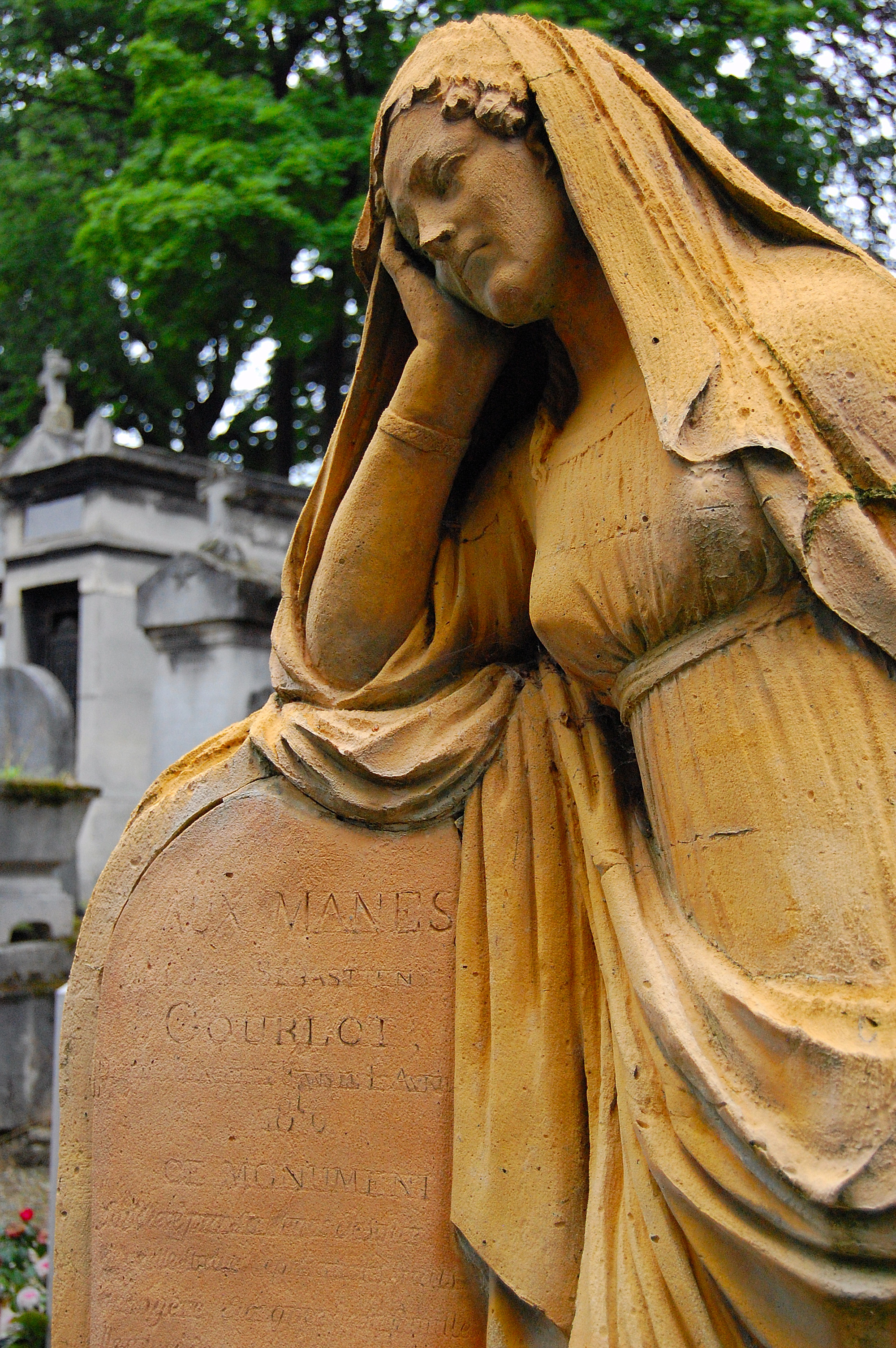
with interesting statues…
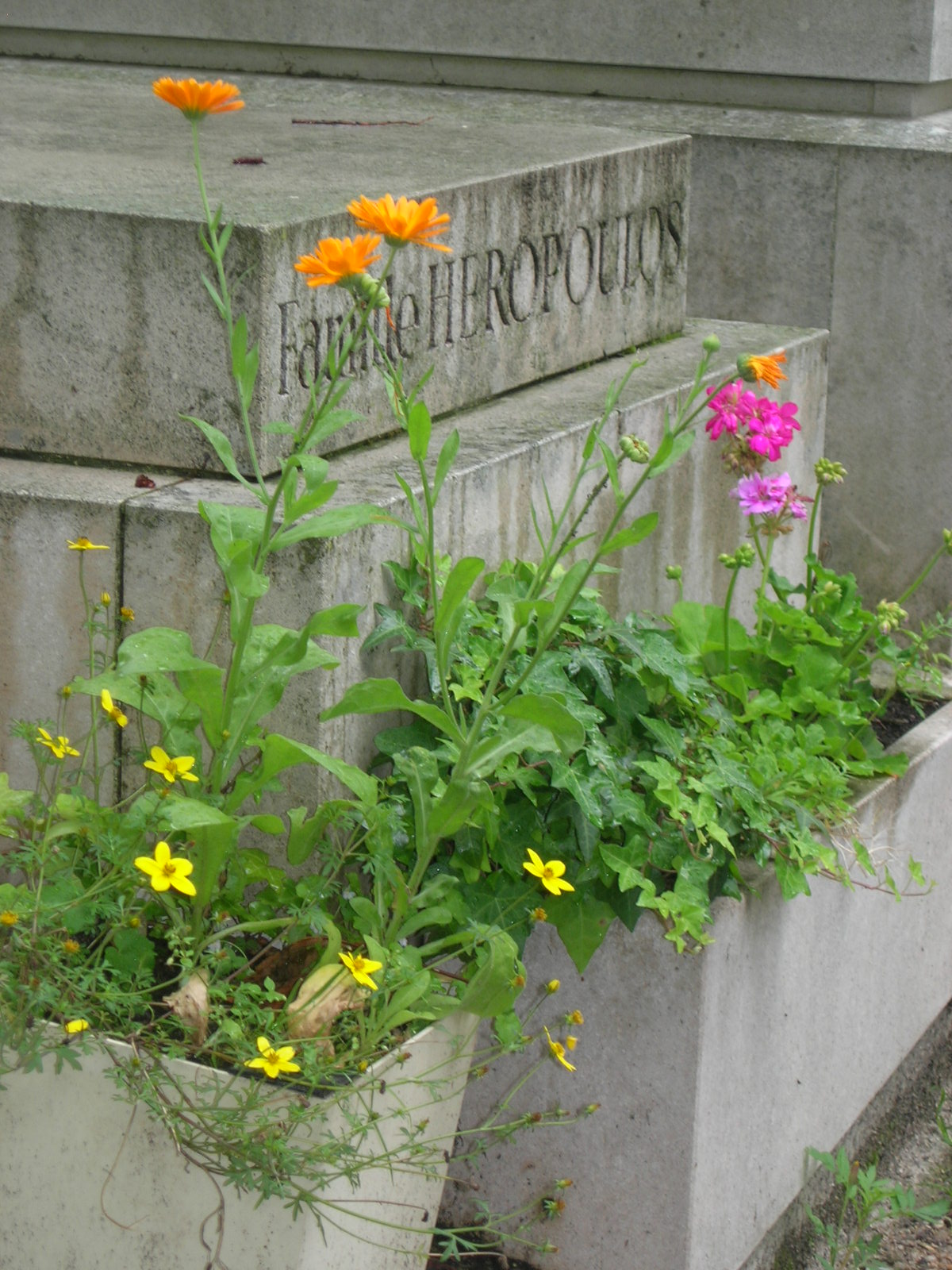
and beautiful flowers…
The oldest ‘inhabitants’ of the cemetery are Peter Abelard (1079-1142) and Heloise (1101-1164). Their star-crossed, tragic love affair is legendary, though perhaps details are open to interpretation because I have read several different versions of their story. Suffice to say, they were lovers, their correspondance survived and their remains may (or may not) be resting in Le Pere Lachaise. Regardess, they have a lovely gravesite:
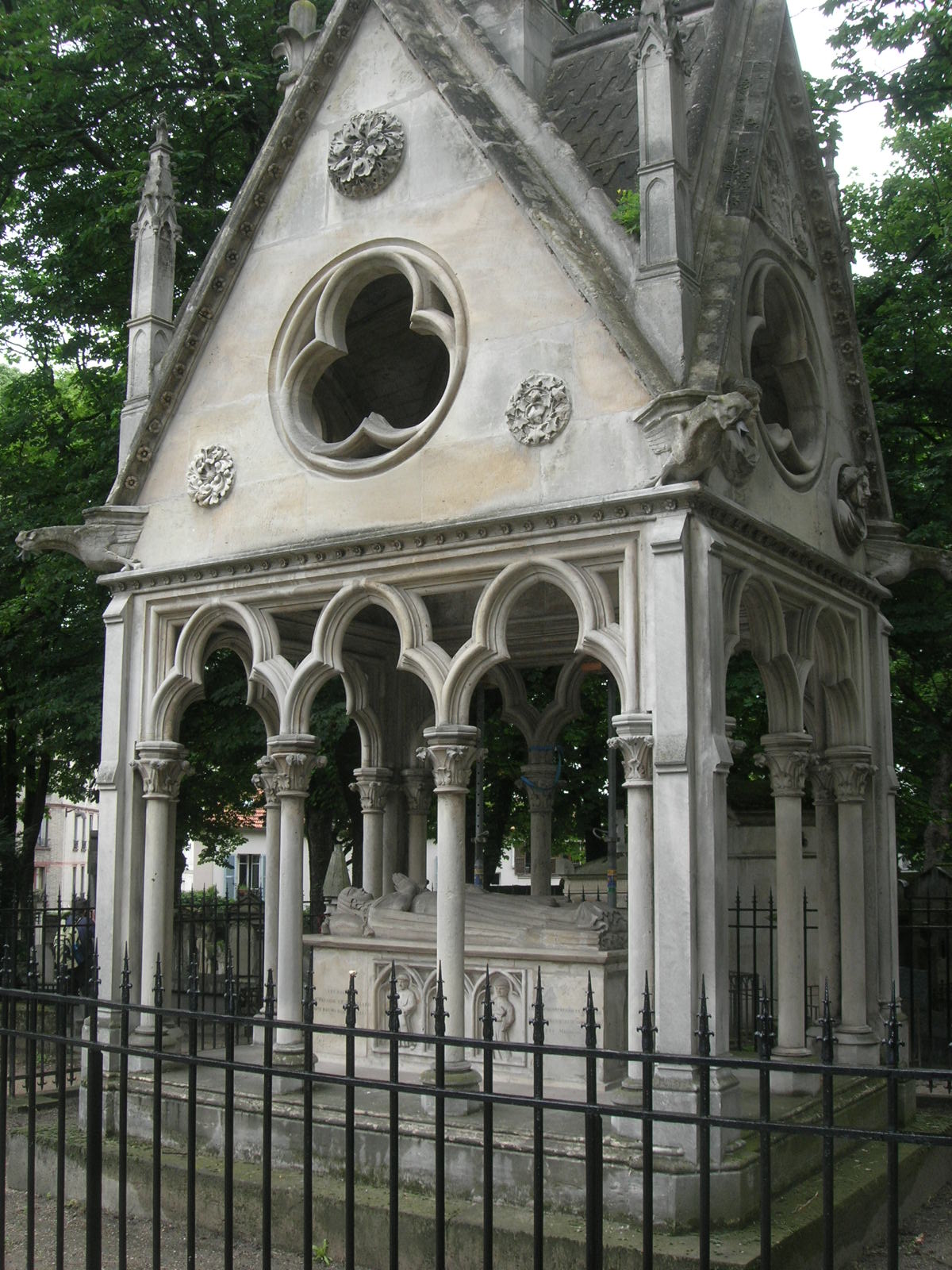
Abelard and Heloise
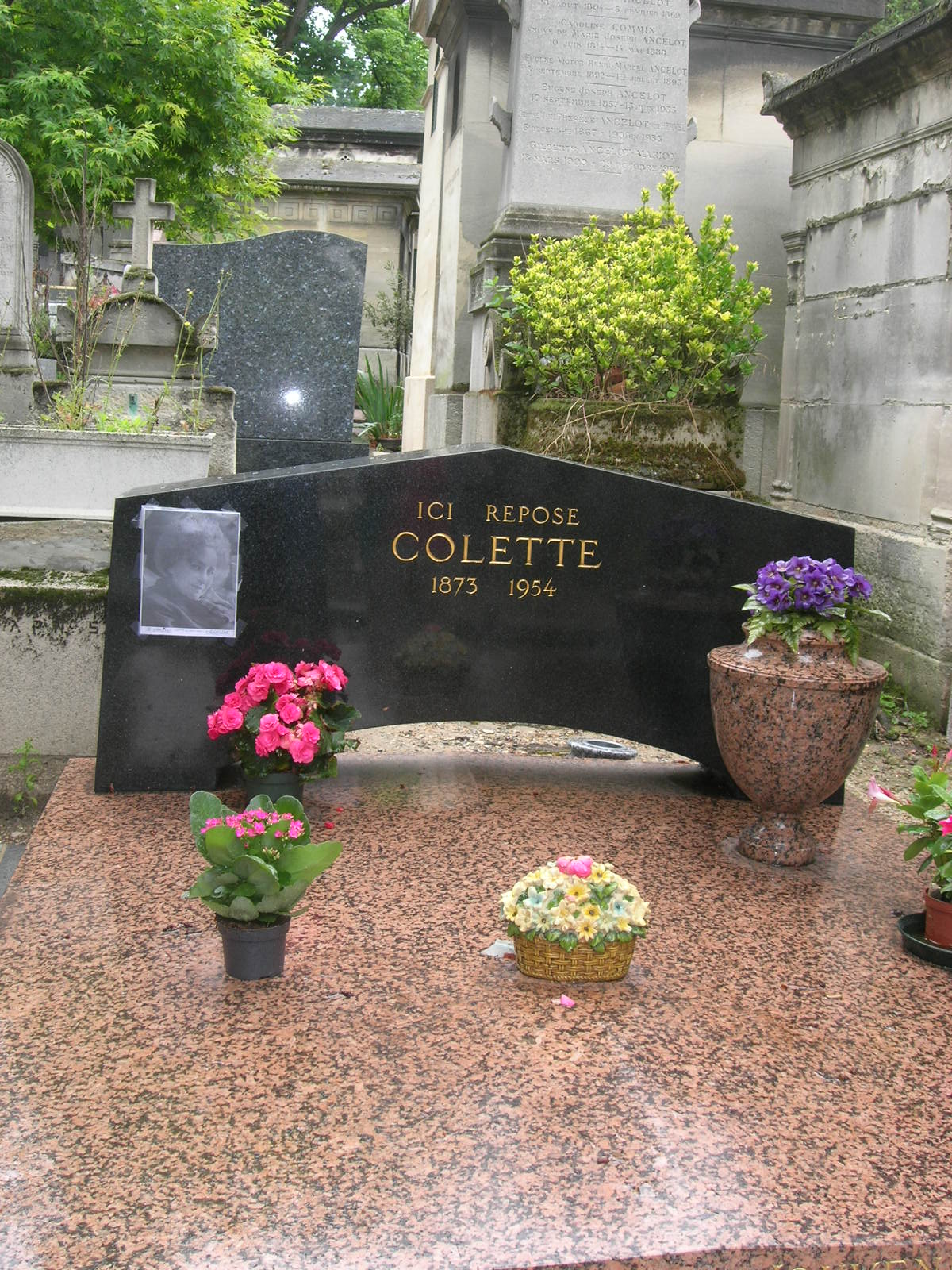
the gravesite of Colette
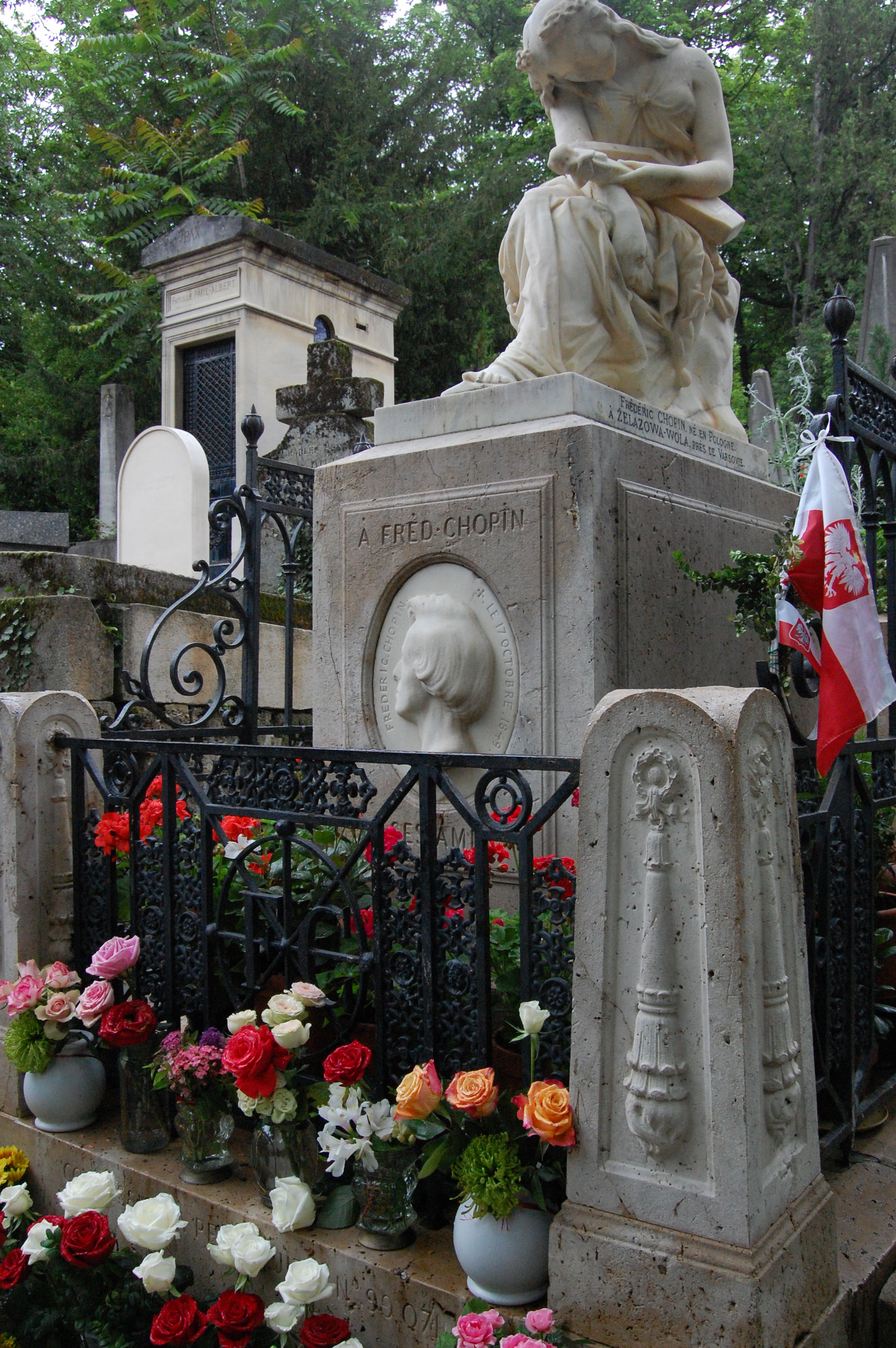
Chopin
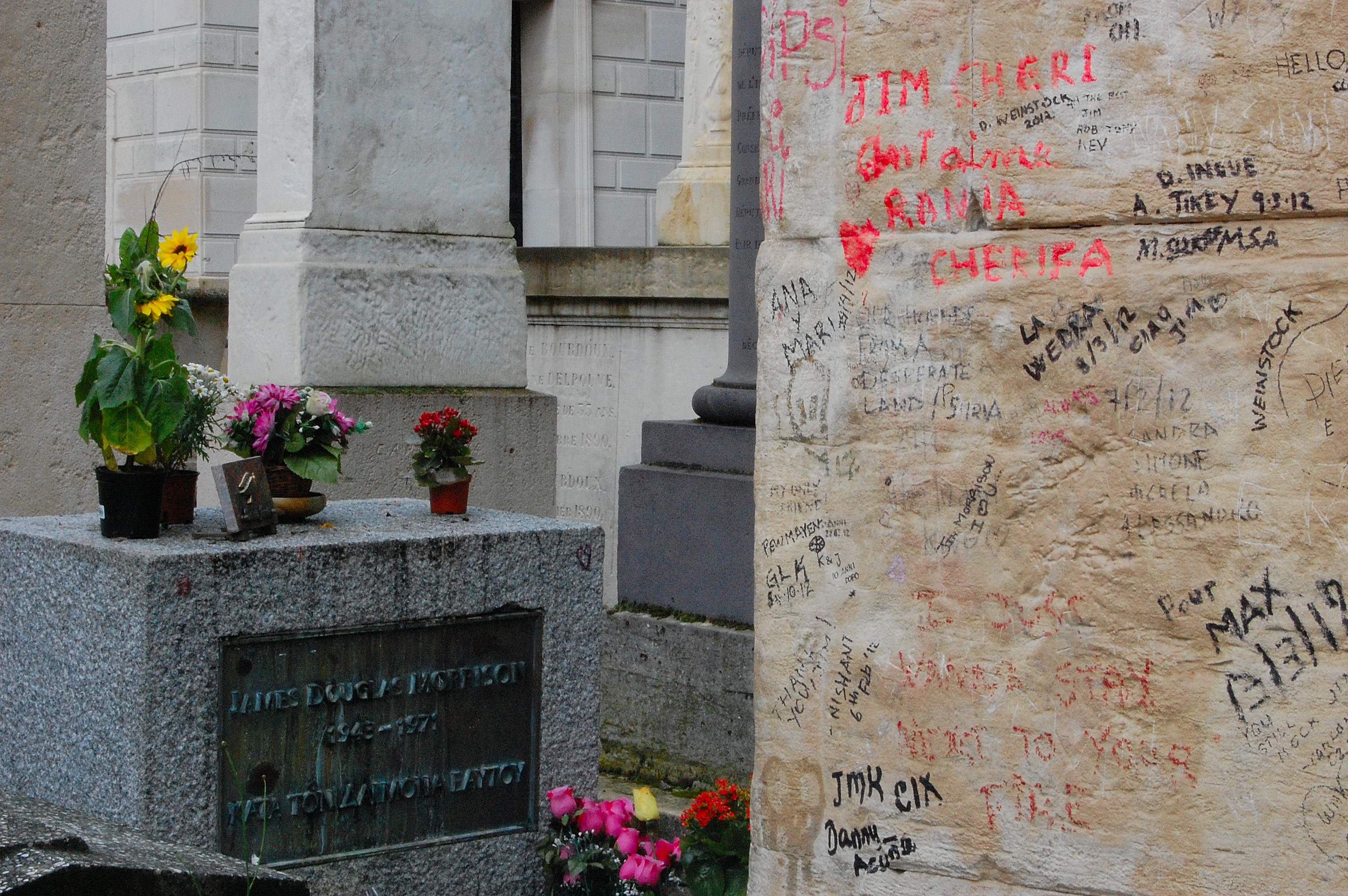
Jim Morrison

lots of graffiti at the Jim Morrison site

Marcel Marceau
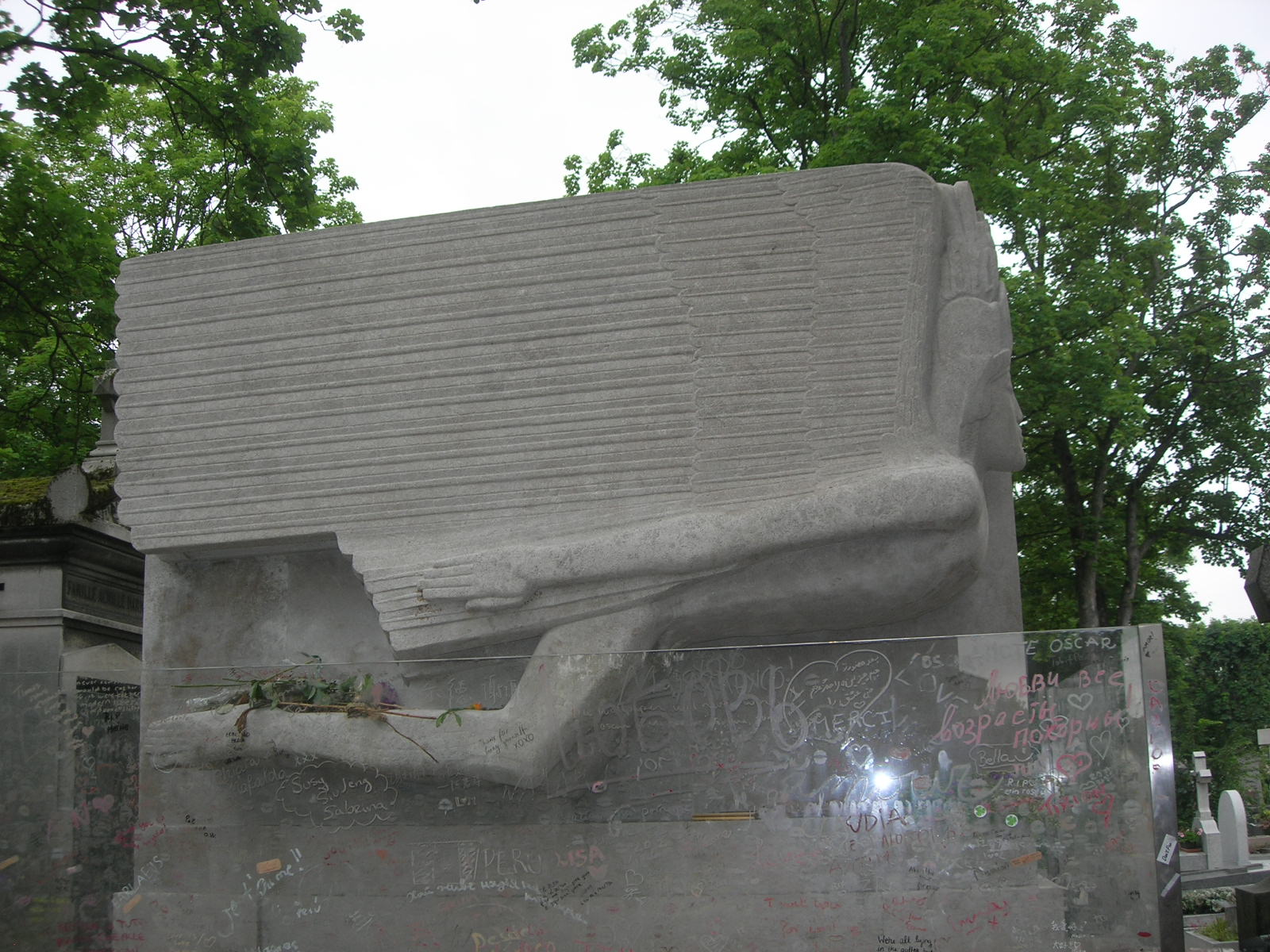
Oscar Wilde – so many people ‘marked’ the monument (with words and kisses) that plexiglass was put up all around

Oscar Wilde graffiti…
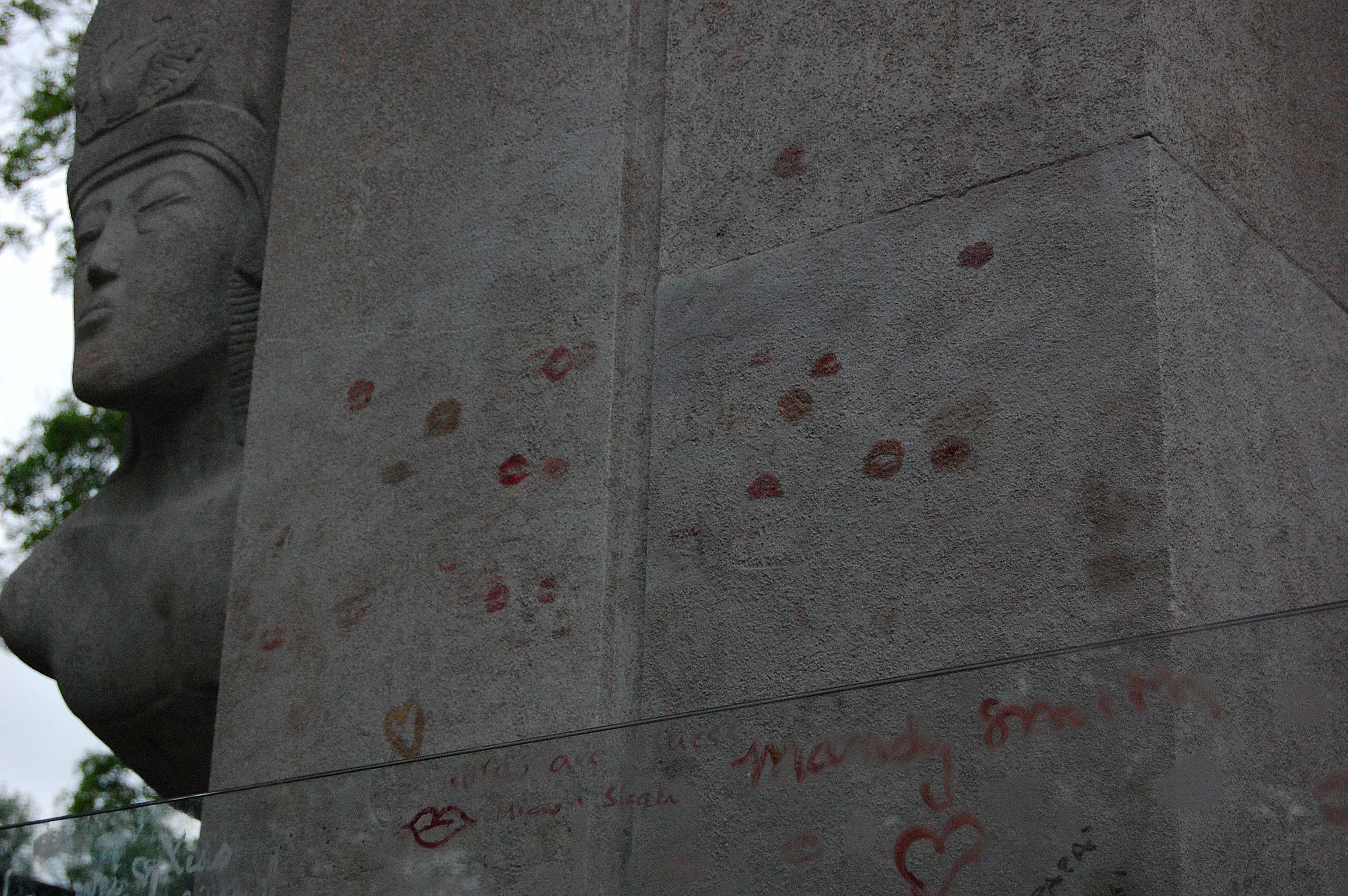
…and kisses

Gertrude Stein – Alice B. Toklas is with her here
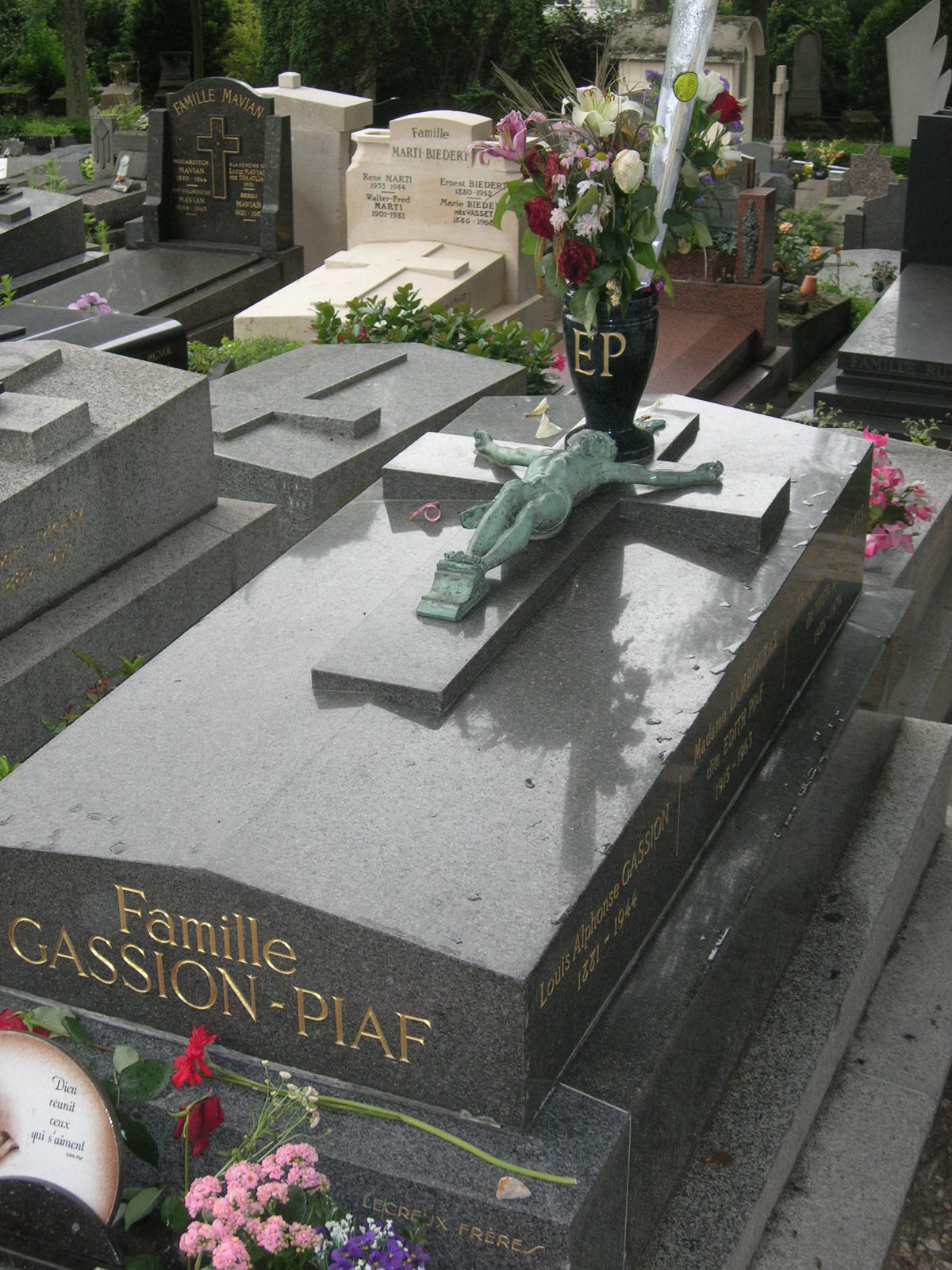
Edith Piaf and family

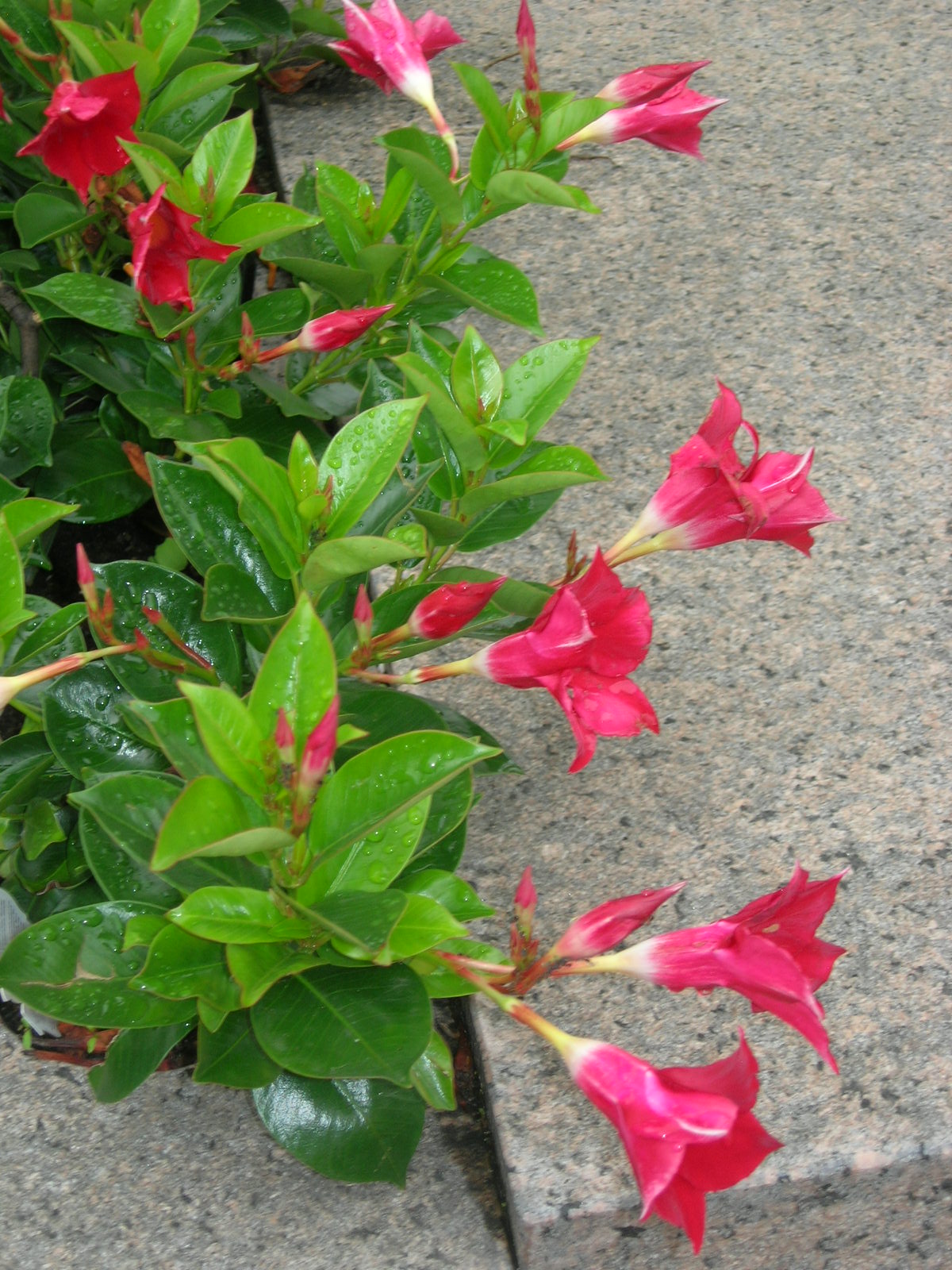
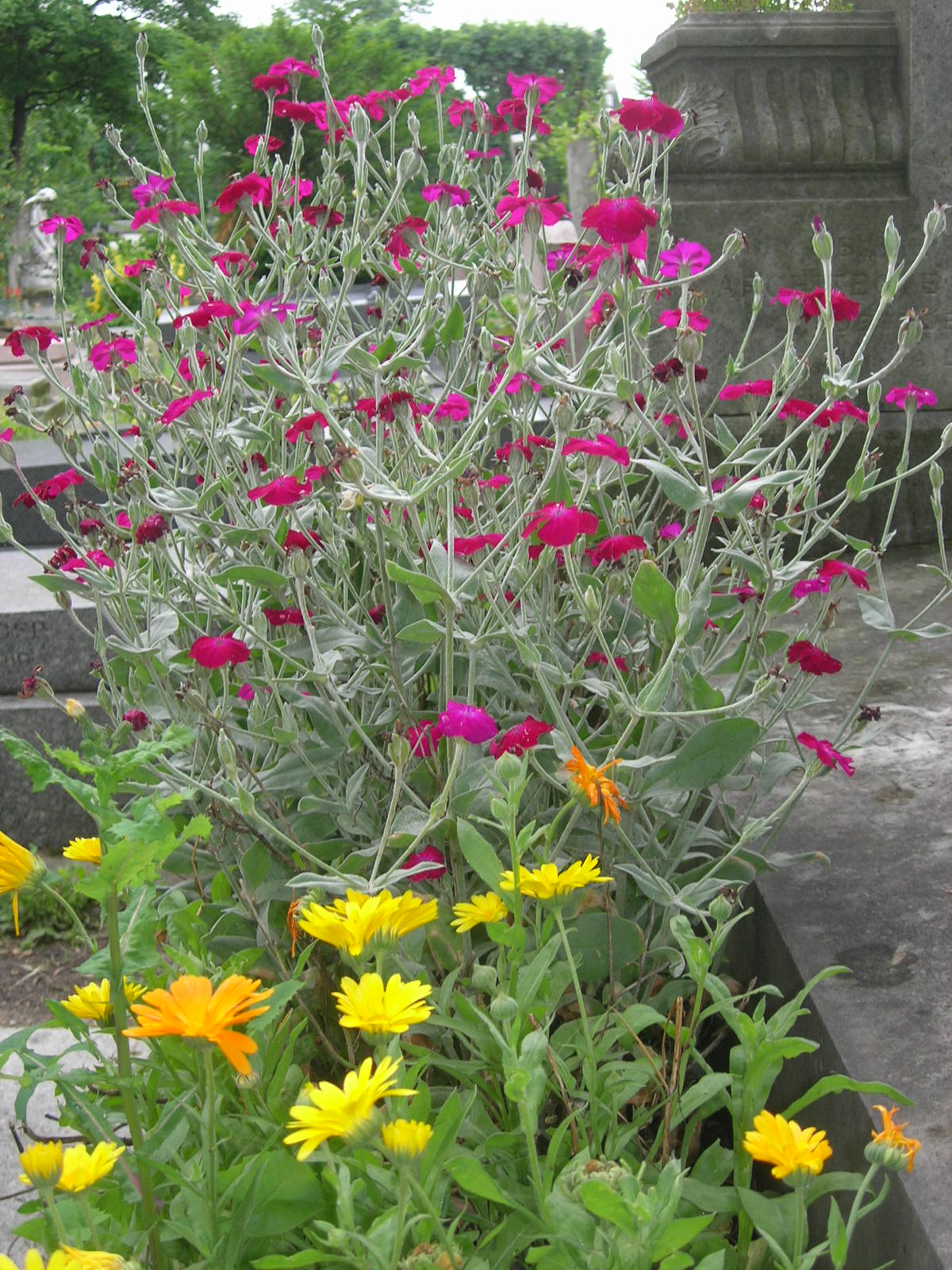
and lots more beautiful flowers
On Kate’s ‘wish list’ was Versailles, and as we had never been, we agreed. We pre-booked tickets for Wednesday. Mom had decided she wouldn’t go, which was a good decision because of how much walking we did, and the heat. We took the 1/2 hour train trip, and upon arriving, stood in a 1/2 hour line just to get through security. Once inside, we managed to move along well, despite the summer crowds.
Versailles was converted from a hunting lodge to the extravagant chateau by Louis XIV in the 1660’s. There are 2300 rooms (luckily we only see a few!), and everything is painted and gilded to the extreme. As one guide book says, “It was here that French royalty lived a life so decadent in a time of widespread poverty that their excesses spurred a revolution.”
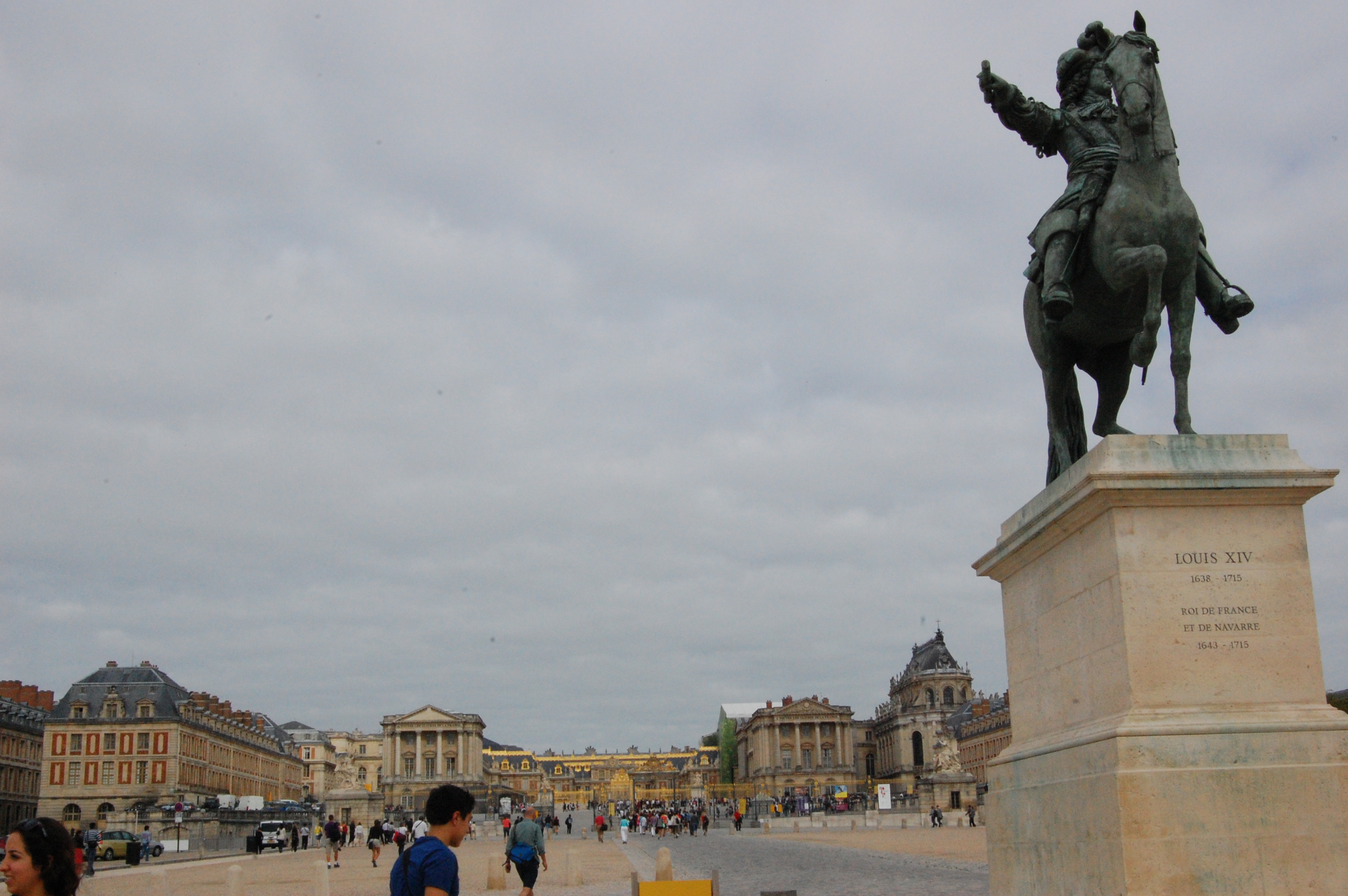
Louis XIV at the entrance
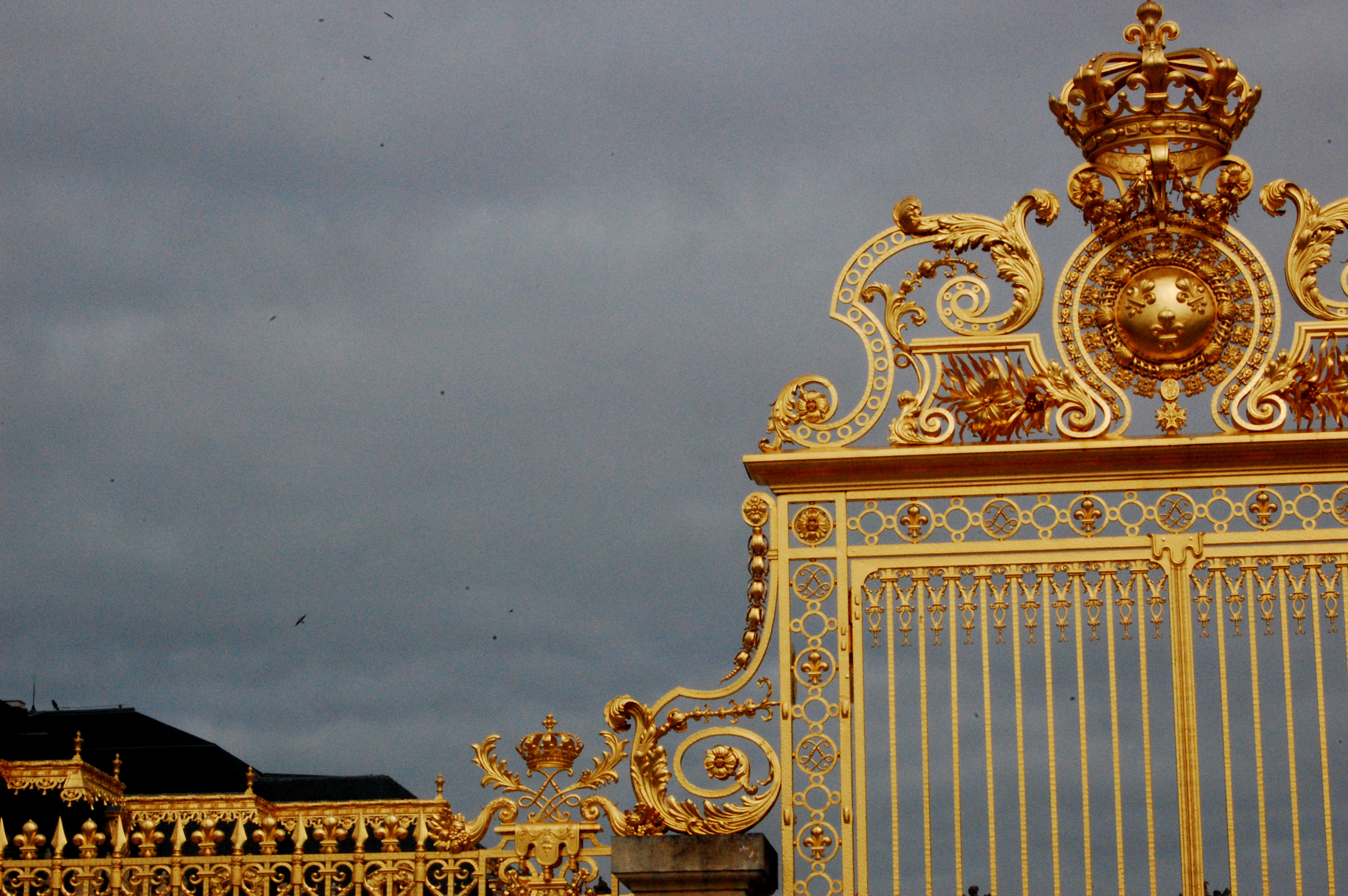
entrance gate detail
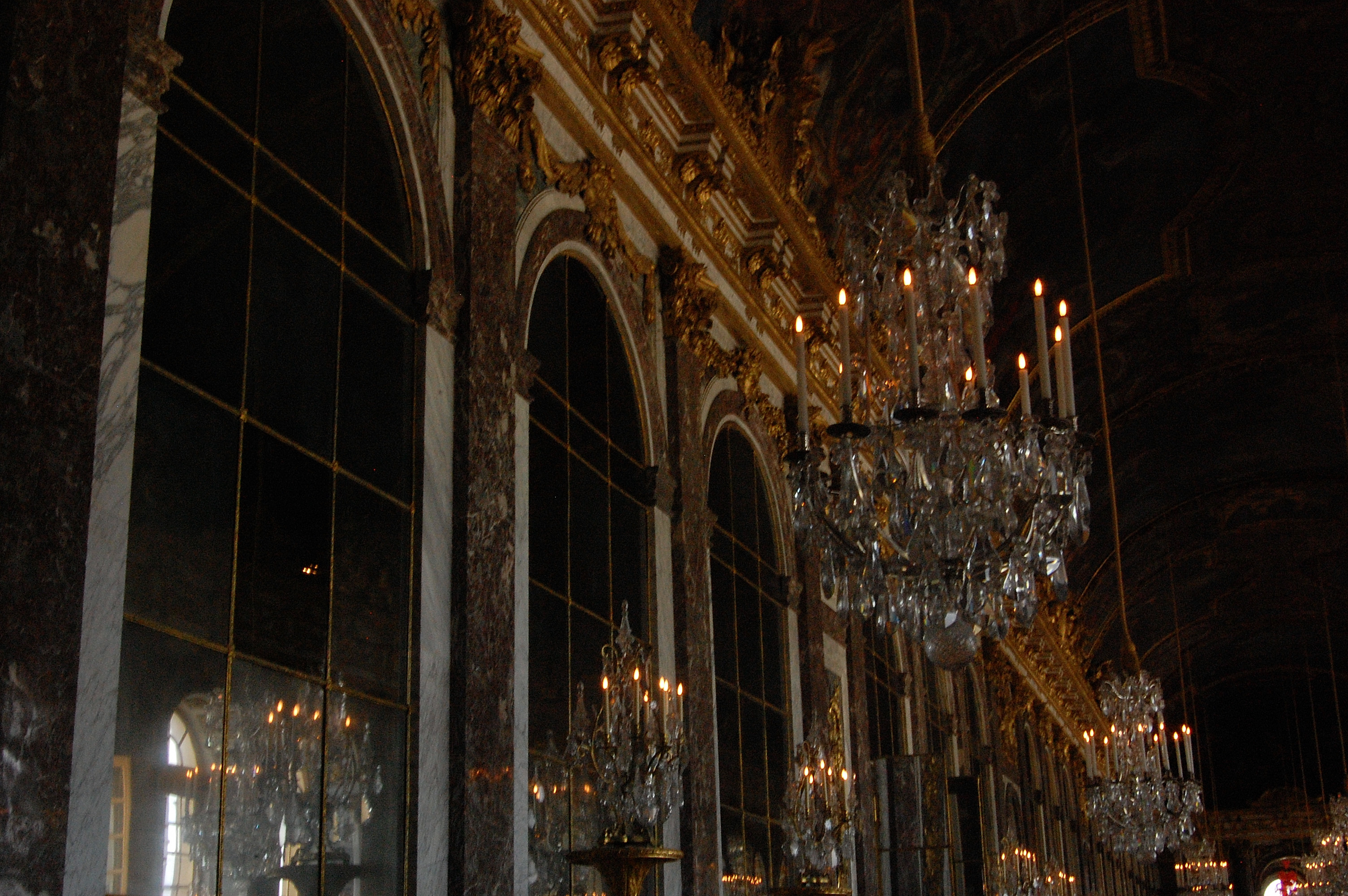
the famous Hall of Mirrors
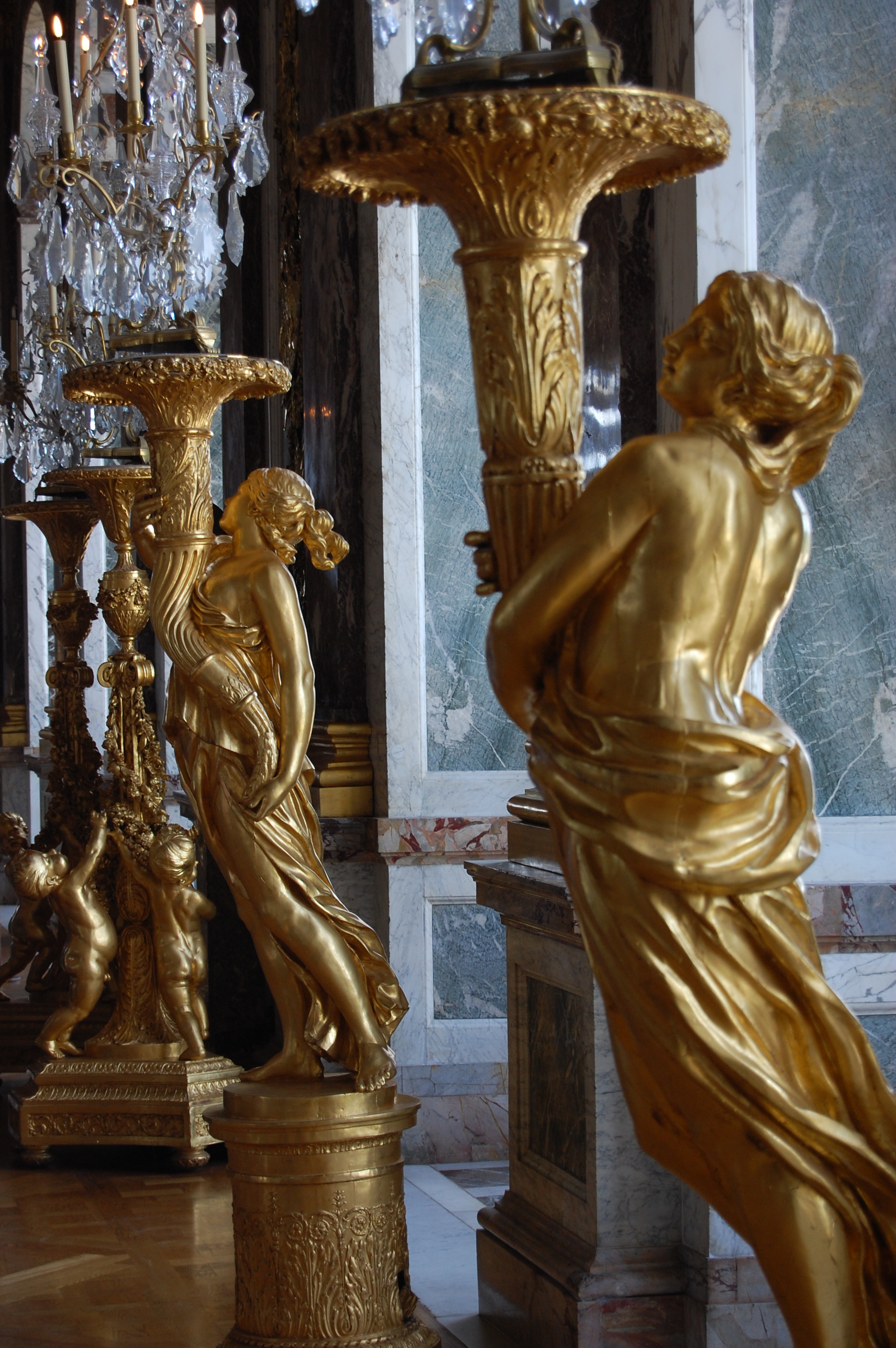
Hall of Mirrors detail
As you exit the palace, the view of the extensive grounds is stunning:

first view of the Gardens of Versaille
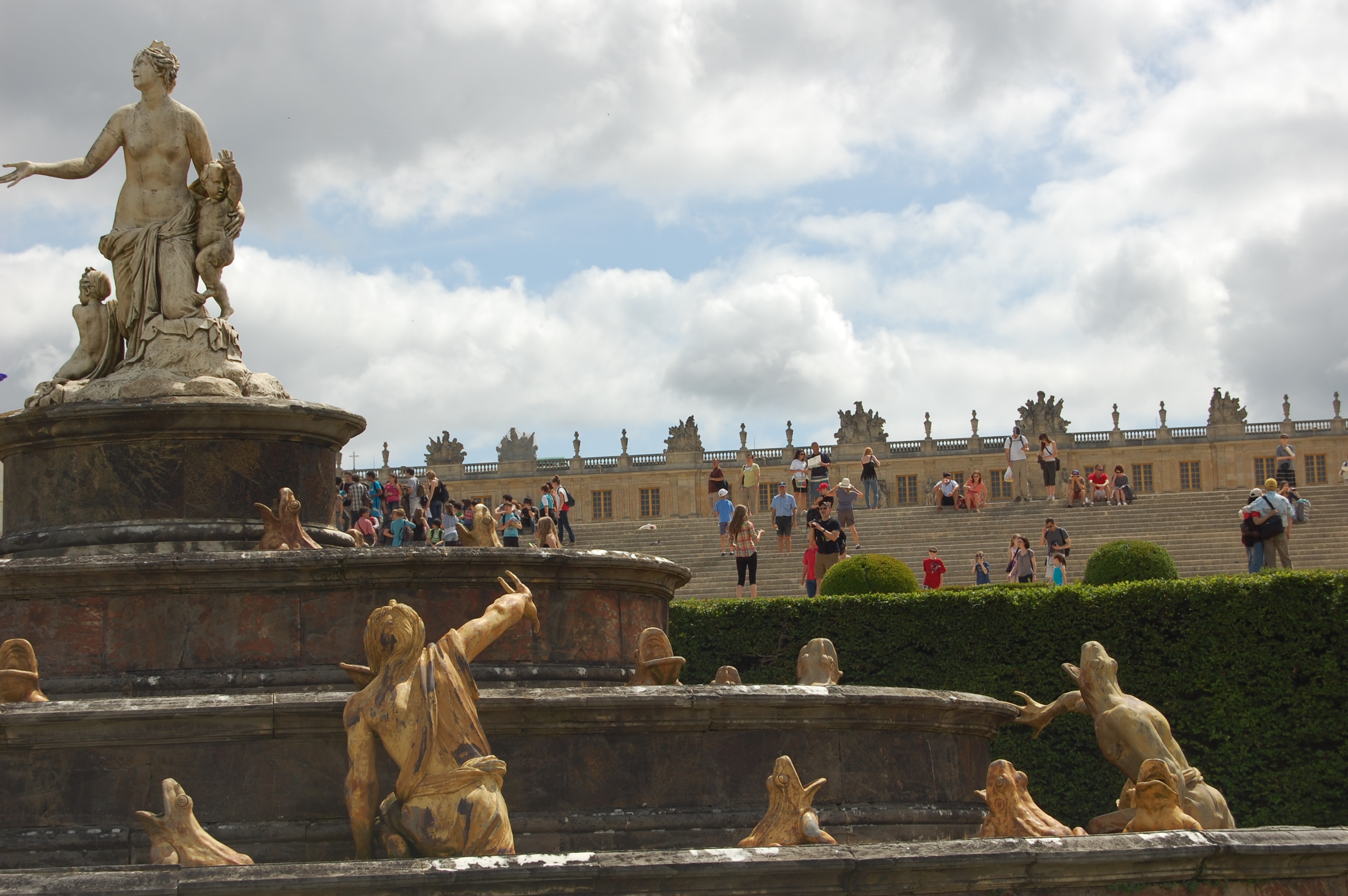
the Latona Basin – Apollo as a child, with sister and mother, Latona
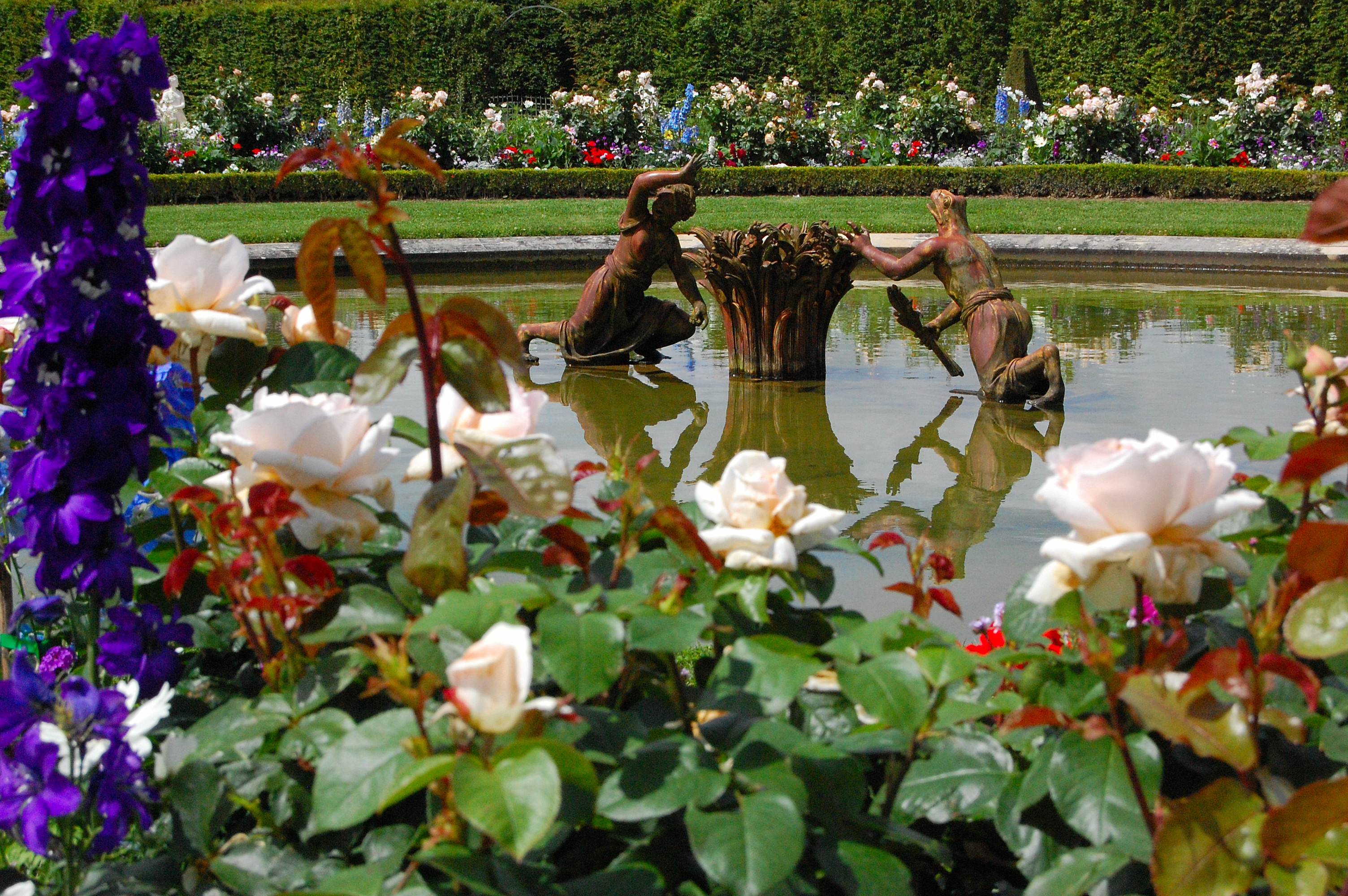
the gardens are beautiful
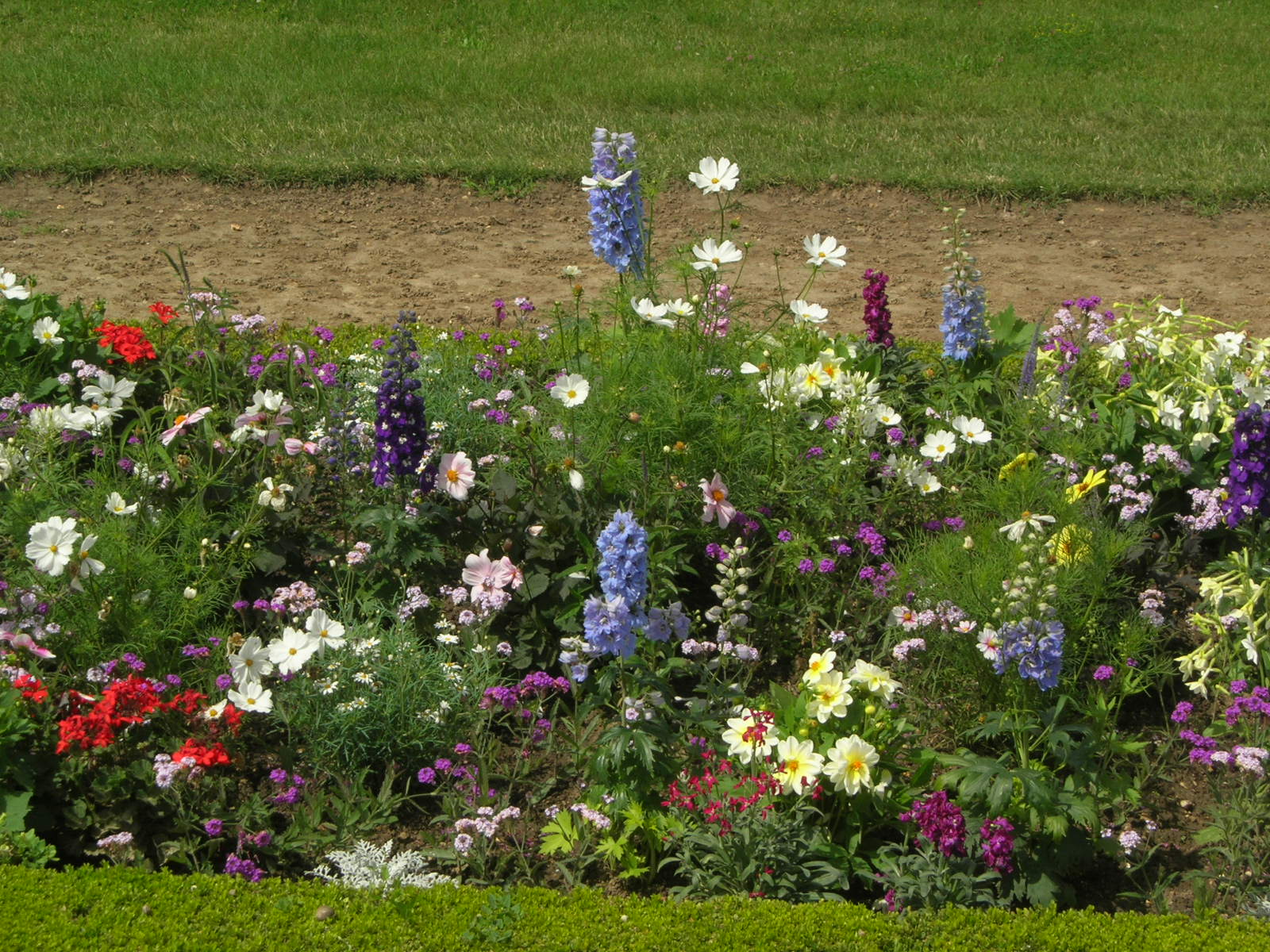
garden
From the Rick Steves’ guide book: “The fountains of Versailles were its most famous attraction, and The Apollo Basin, of the sun god, was the centerpiece. Apollo, in his sunny chariot, starts his journey across the sky. The horses are half-submerged, giving the impression, when the fountains play, of the sun rising out of the mists of dawn.”
Our only disappointment was that the fountains were not flowing.
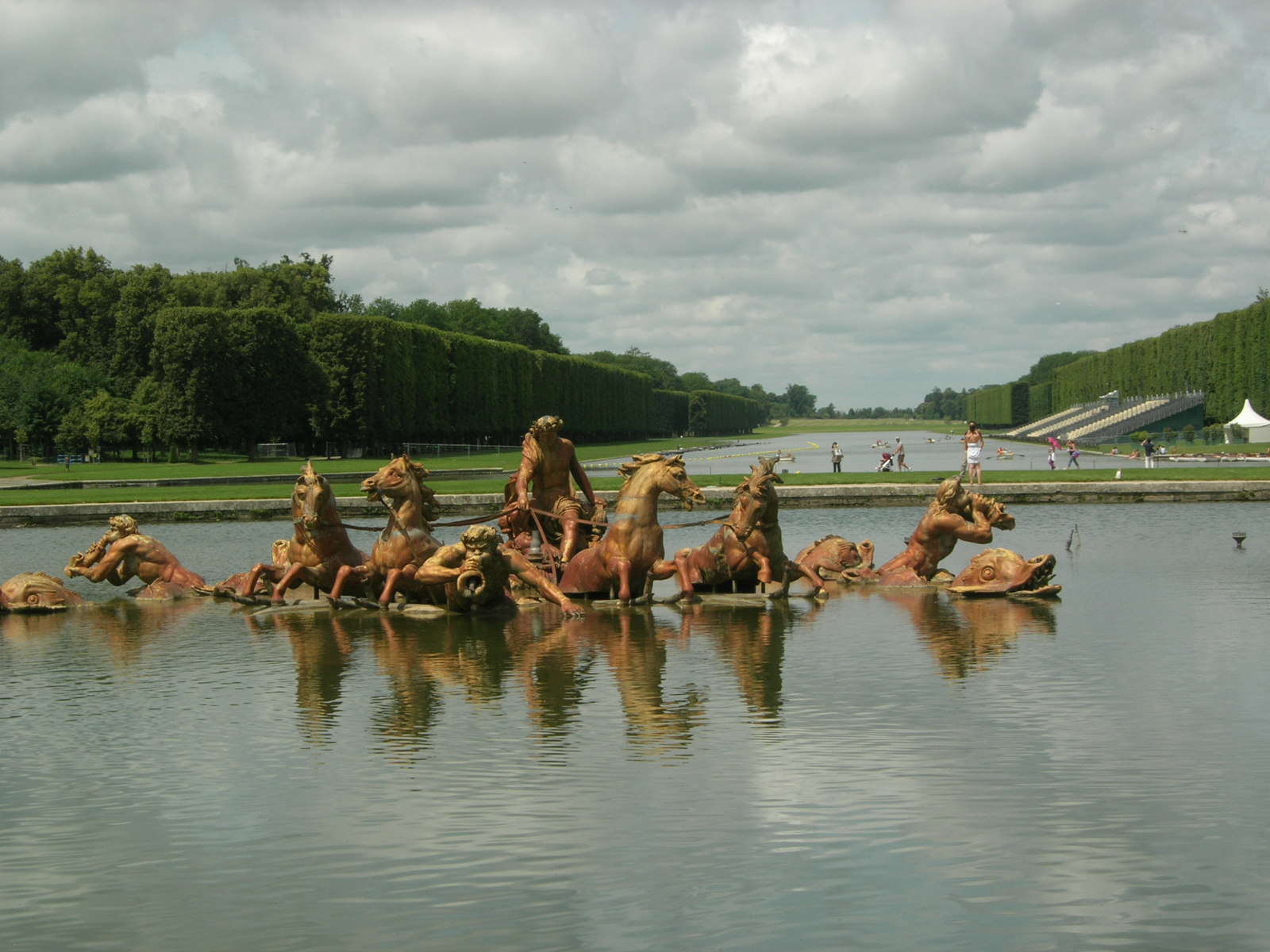
the Apollo Basin
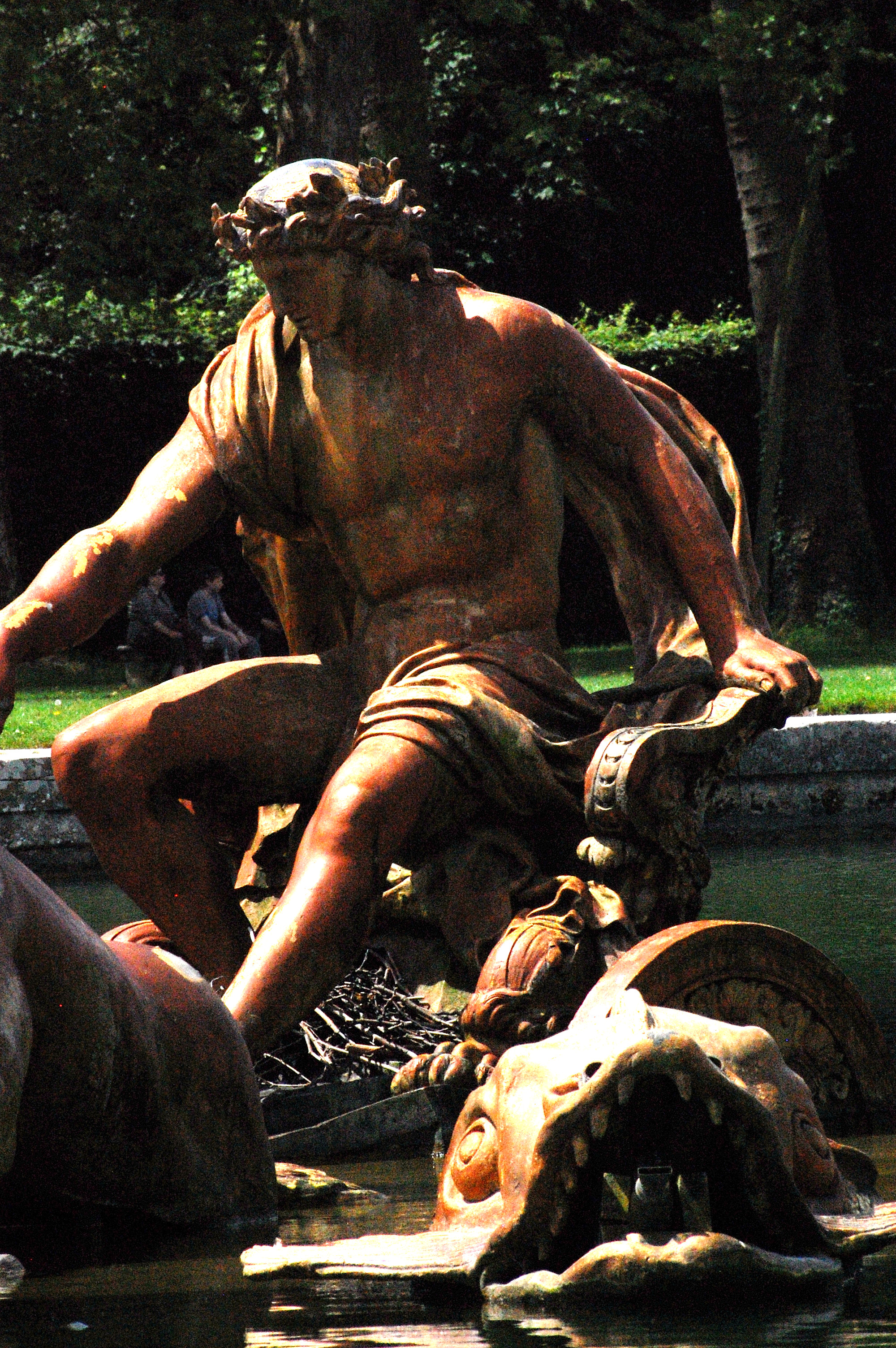
Apollo detail
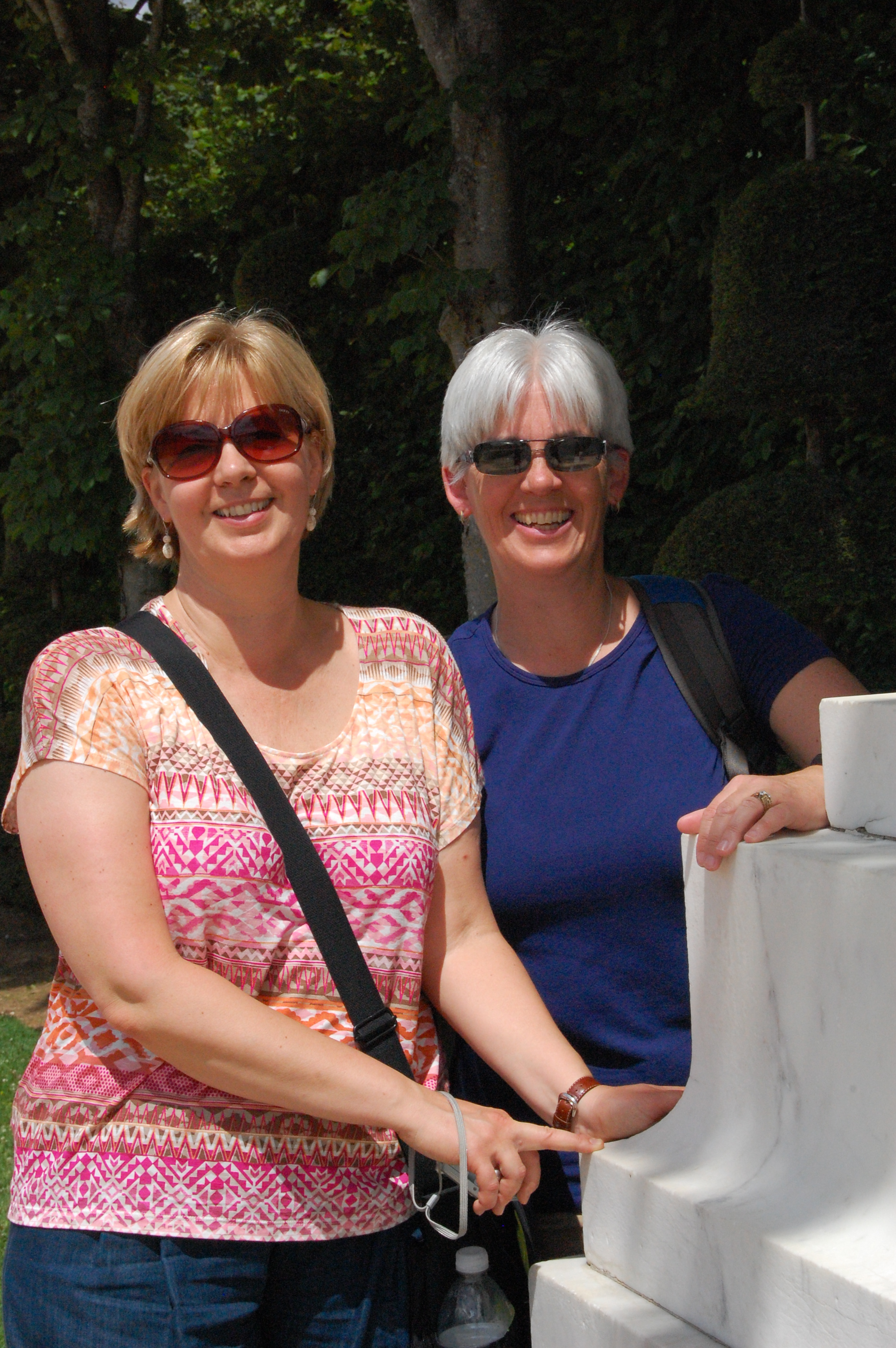
me and Kate

Grand Trianon – a summer get-away from palace life (!) Louis XIV built this for his mistress
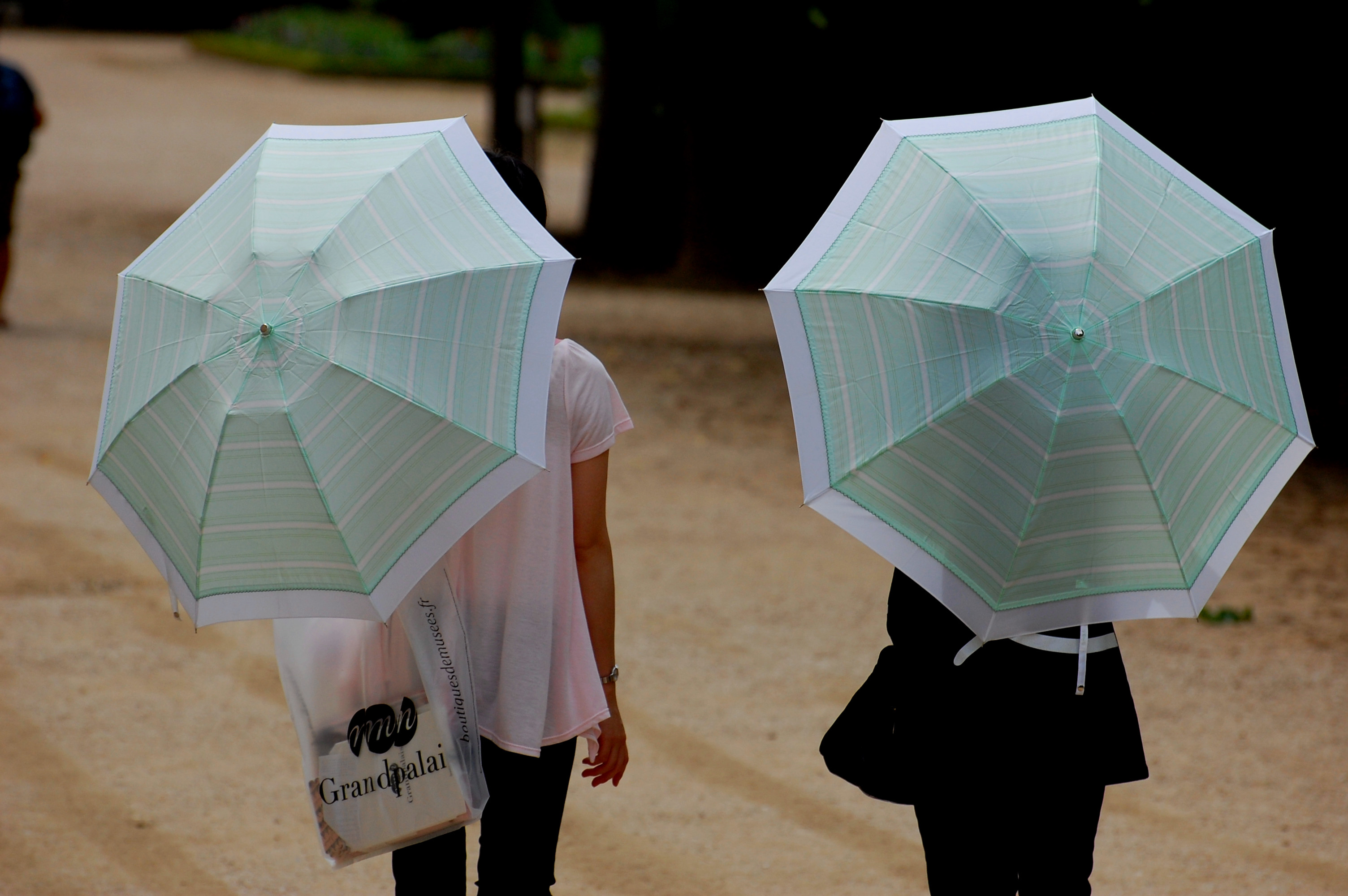
all over the world there are Asians with umbrellas. I love this picture that Don took, maybe for the Shanghai nostalgia

idyll
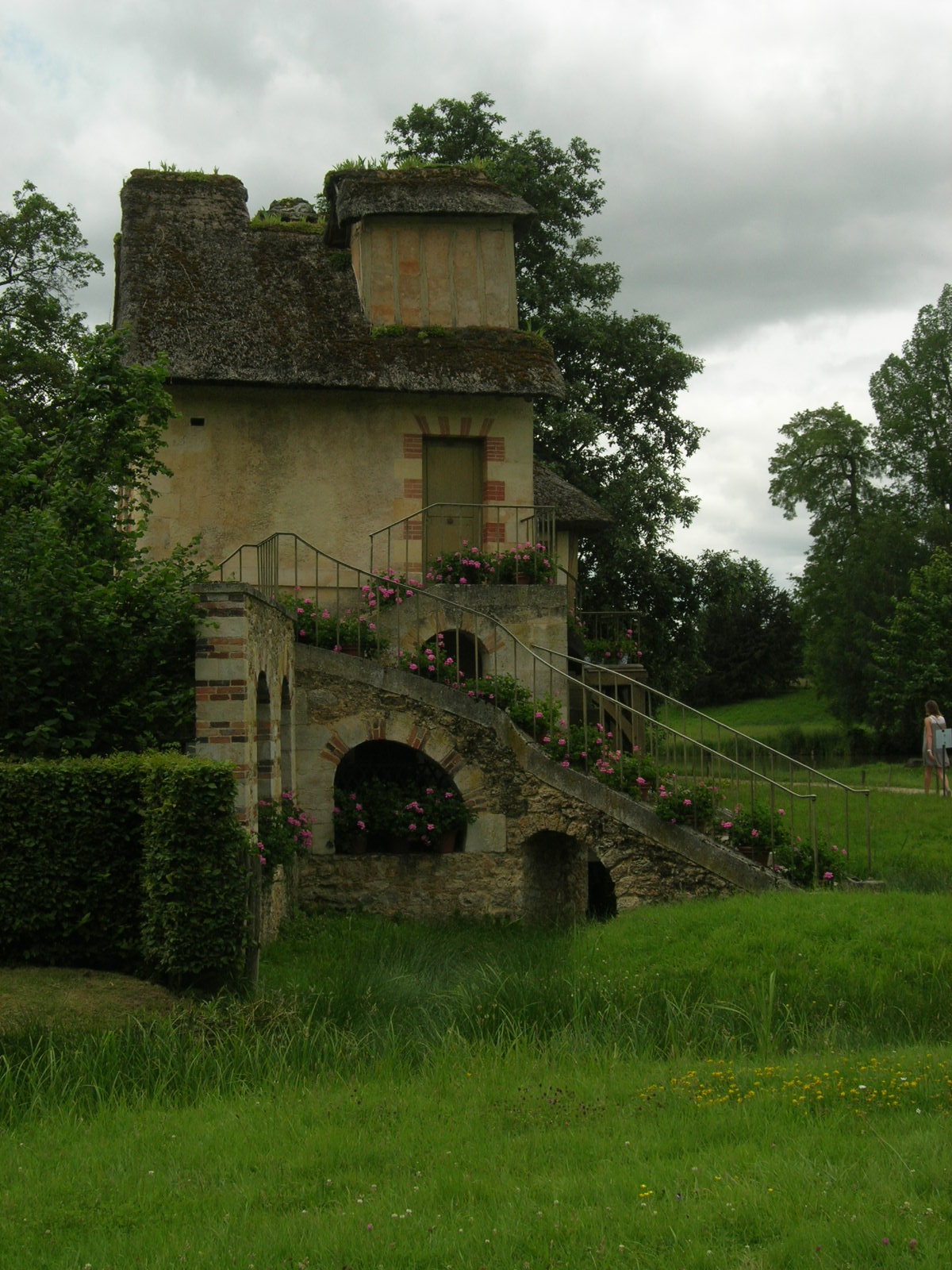
At the far end of the property is Marie Antoniette’s Estate, made up of the Petit Trianon (small palace), Queen’s Gardens and The Hamlet. From Frommer’s Guide: “Marie Antoinette is famed for her desire to flee the pomp of the Versailles court, and her retreat was this estate. Nobody could visit here without her permission.” Rick Steves adds: “Marie Antoinette longed for the simple life of a peasant – not the labour of real peasants, who sweated and starved around her – but the fairytale world of simple country pleasures. This was an actual working farm with a dairy, a water mill, a pigeon coop, and a menagerie where her servants kept cows, goats and chickens. The Queen’s House – two buildings connected by a wooden skywalk – was like any typical peasant farmhouse, with a billiard room, library, dining hall, and two living rooms.” Hmm, perhaps not “typical!” 😀

a home in The Hamlet
another home in The Hamlet
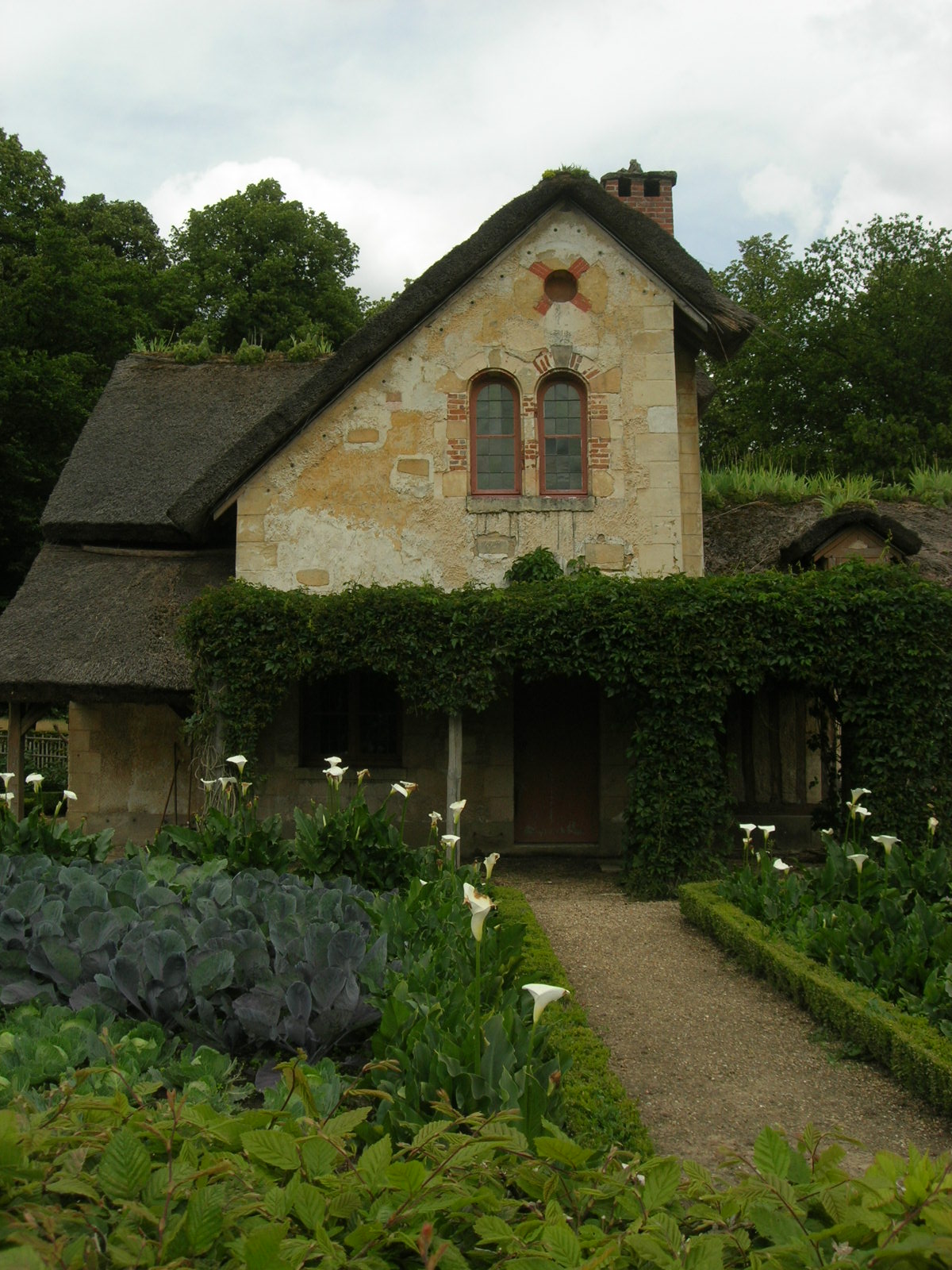
in the Hamlet
in the Hamlet – picturesque and peaceful

one last fountain – they were everywhere
On Thursday we walked and walked and walked on the hottest day of the week…. First to Sainte-Chapelle. “The Gothic masterpiece, built by Louis IX (1214-70) as a shrine for his holy relics of the passion and completed in 1248, is considered the most beautiful church in Paris, not least for its 15 stained-glass windows soaring 15 m (50 ft) to a star-covered vaulted roof. The church was damaged during the Revolution but restored in the mid-19th century. The relics collected by Louis IX now reside in Notre Dame.”
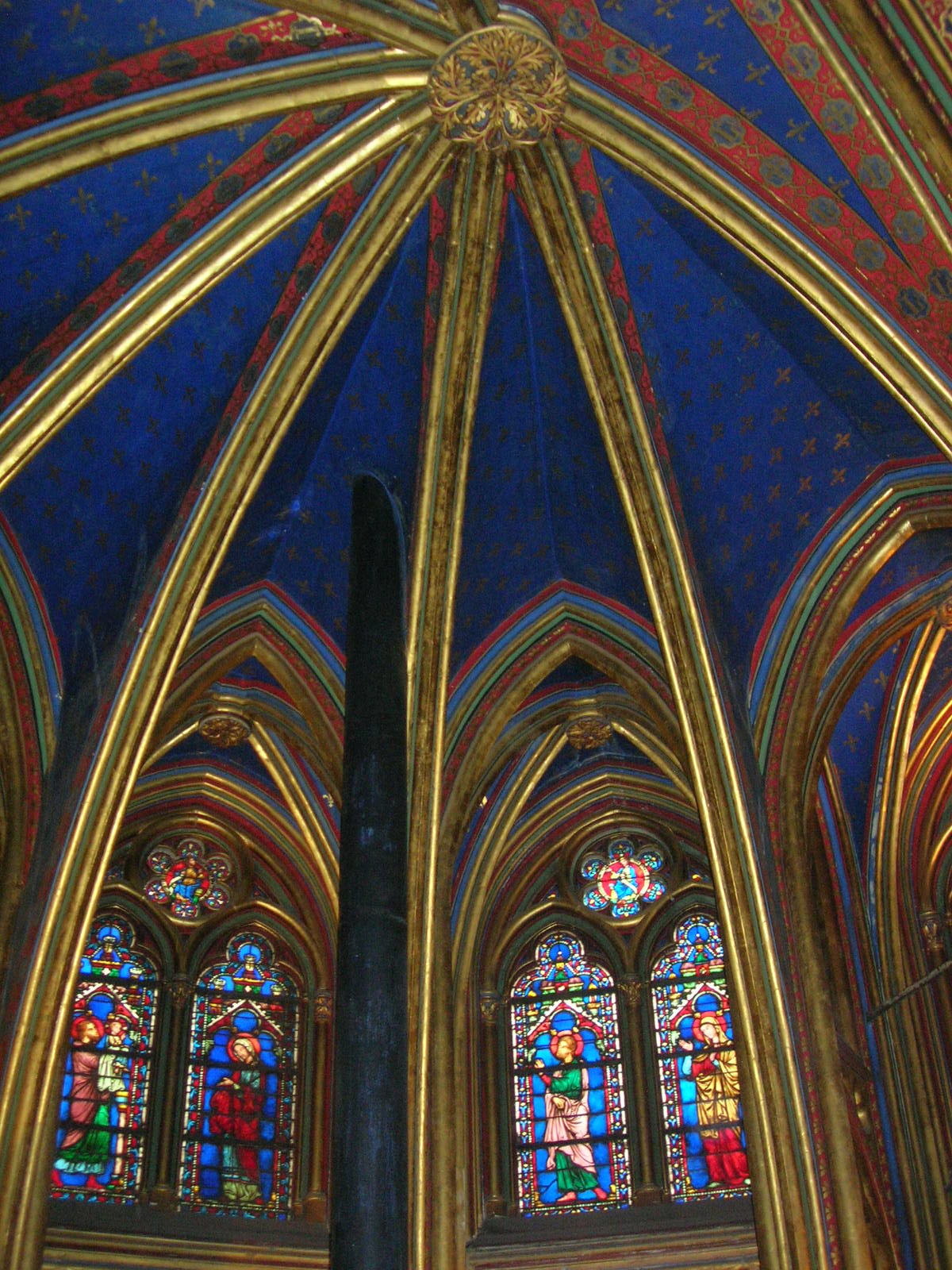
Sainte-Chapelle detail

detail
The stained-glass windows are truly spectacular! “Fifteen separate panels cover 6500 square feet, 2/3 of it 13th-century original. There are over 1000 different scenes, mostly from the Bible, that tell the entire Christian history of the world, from the Creation in Genesis, to the coming of Christ, to the end of the world.”
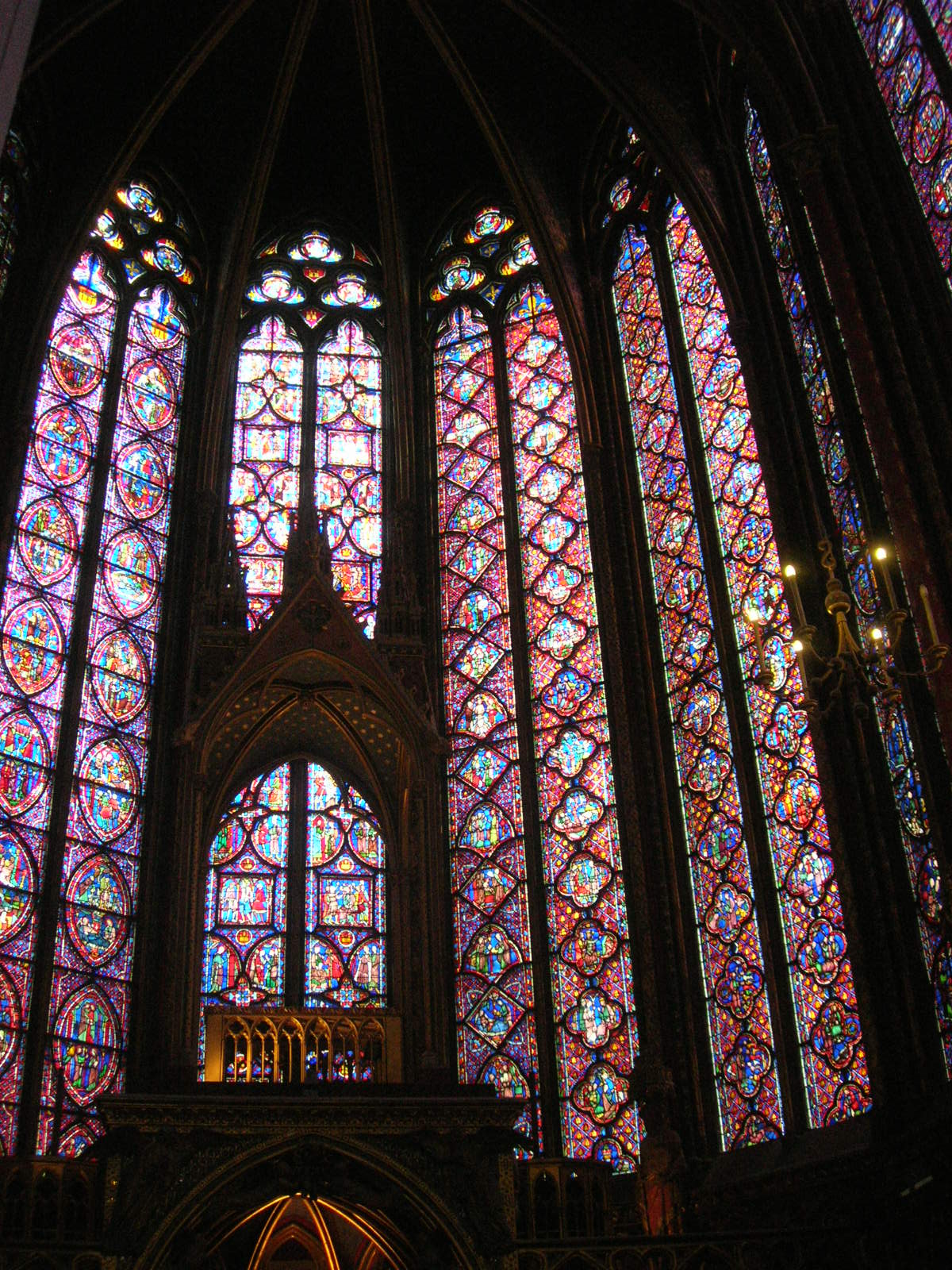
soaring stained-glass windows

stained glass detail

rose window
From Sainte-Chapelle, on Ile de la Cite, we walked to Jardin du Luxembourg…
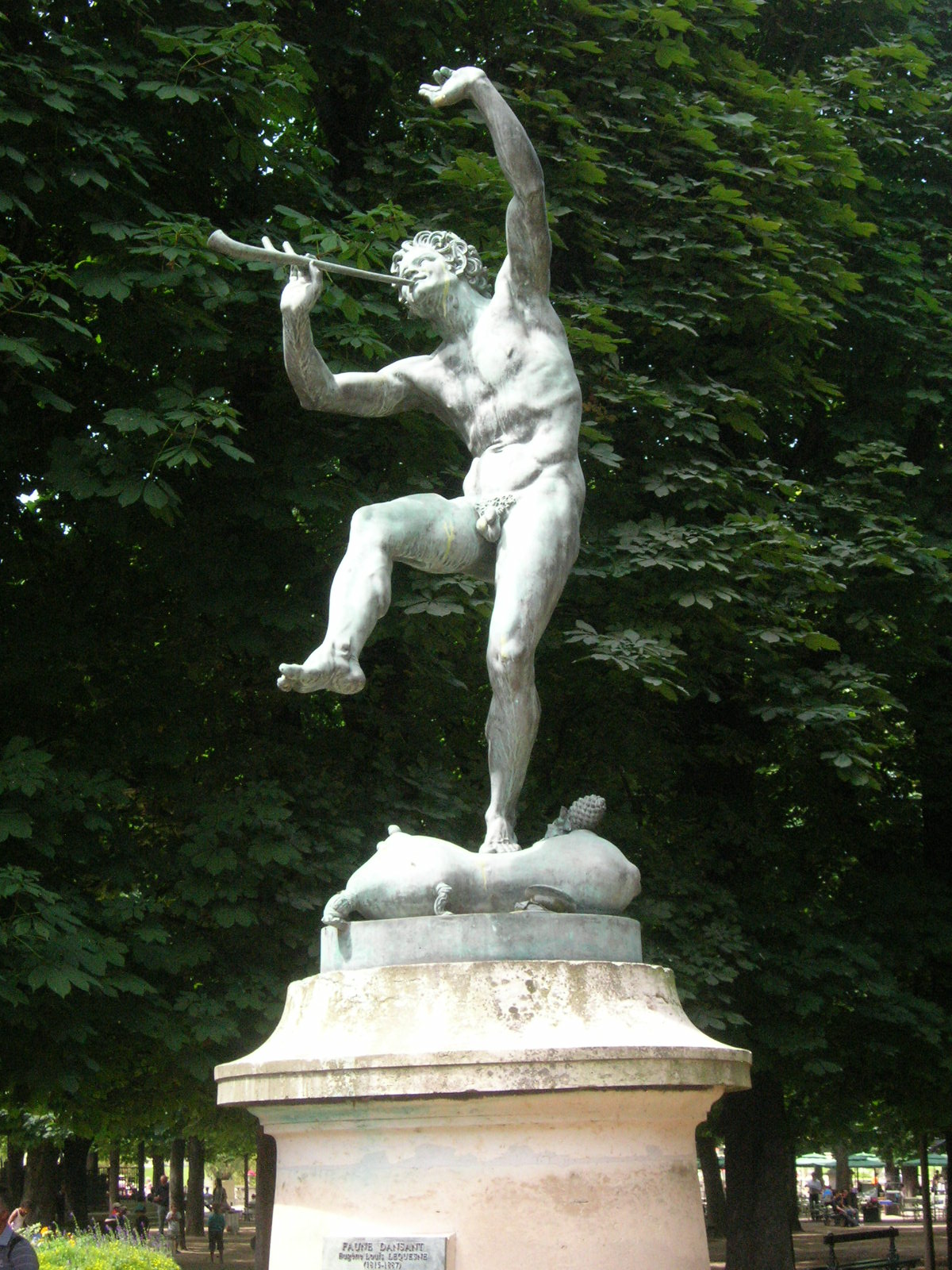
Pan, at the entrance to the garden

mom in Jardin du Luxembourg
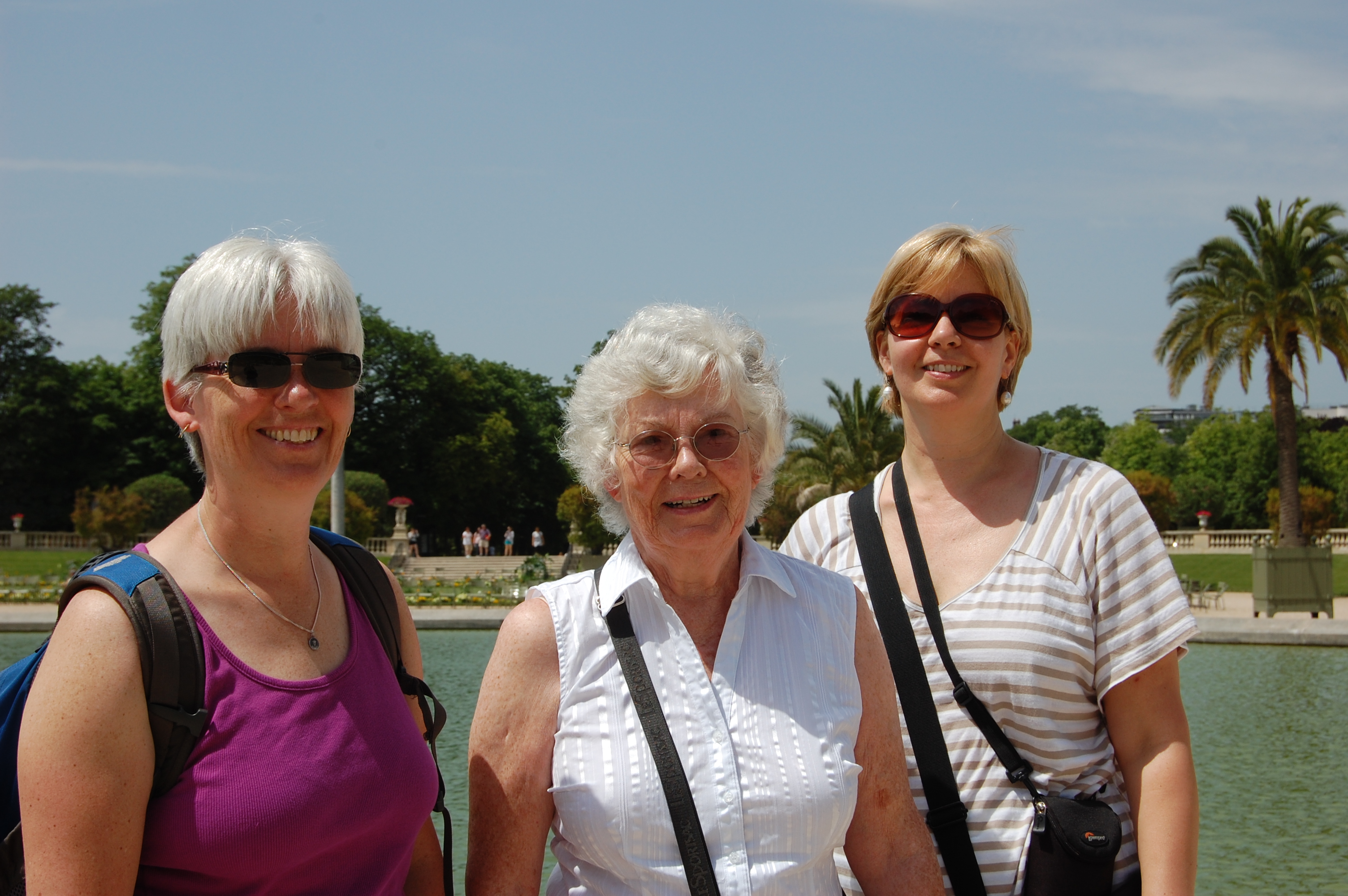
in front of the fountain of Jardin du Luxembourg
Time for lunch. We headed to Les Deux Magots, famous literary haunt of the 1920s, where Hemingway spent many hours. Most expensive beer of the week!
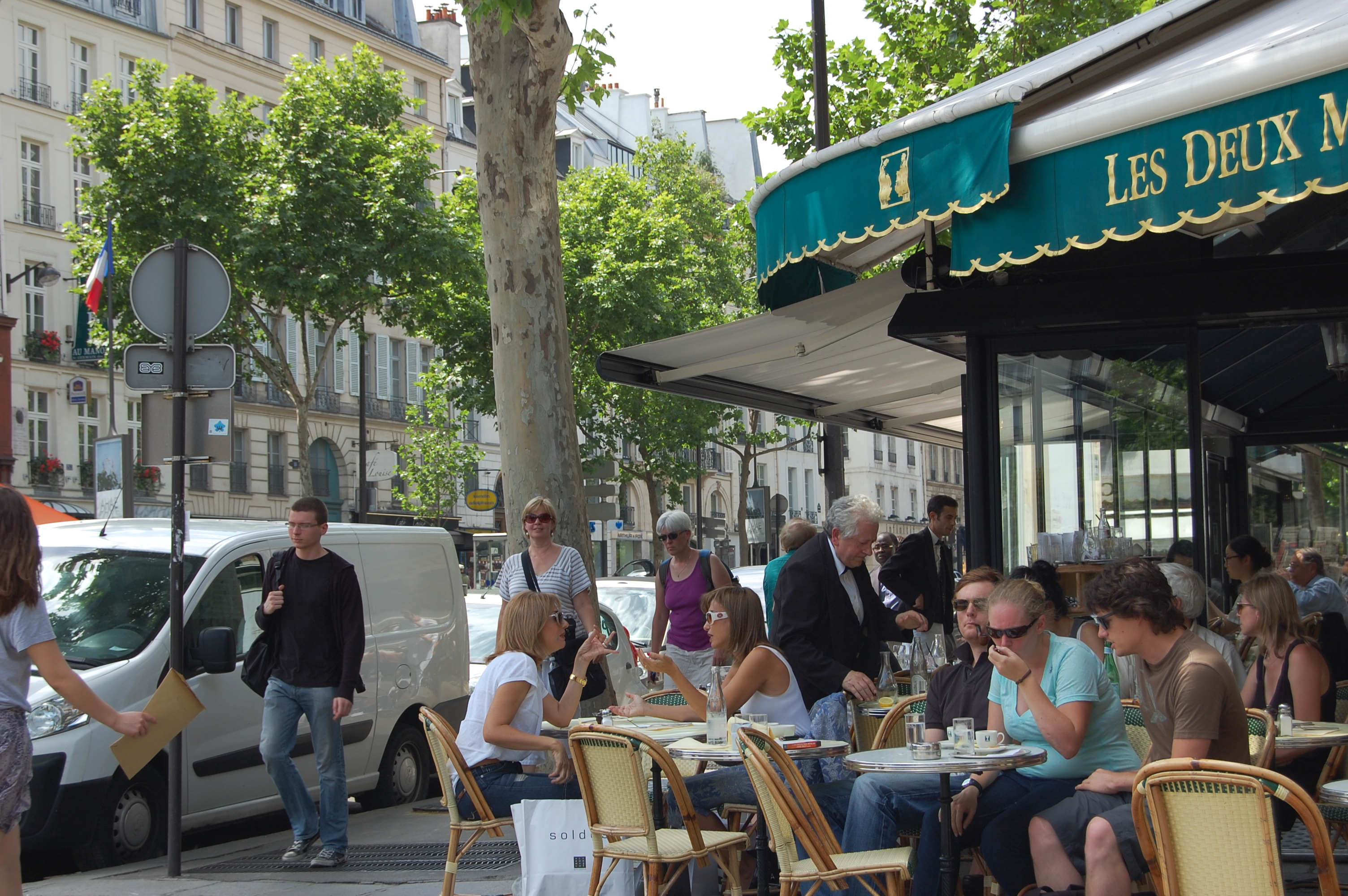
Kate and I heading to Les Deux Magots
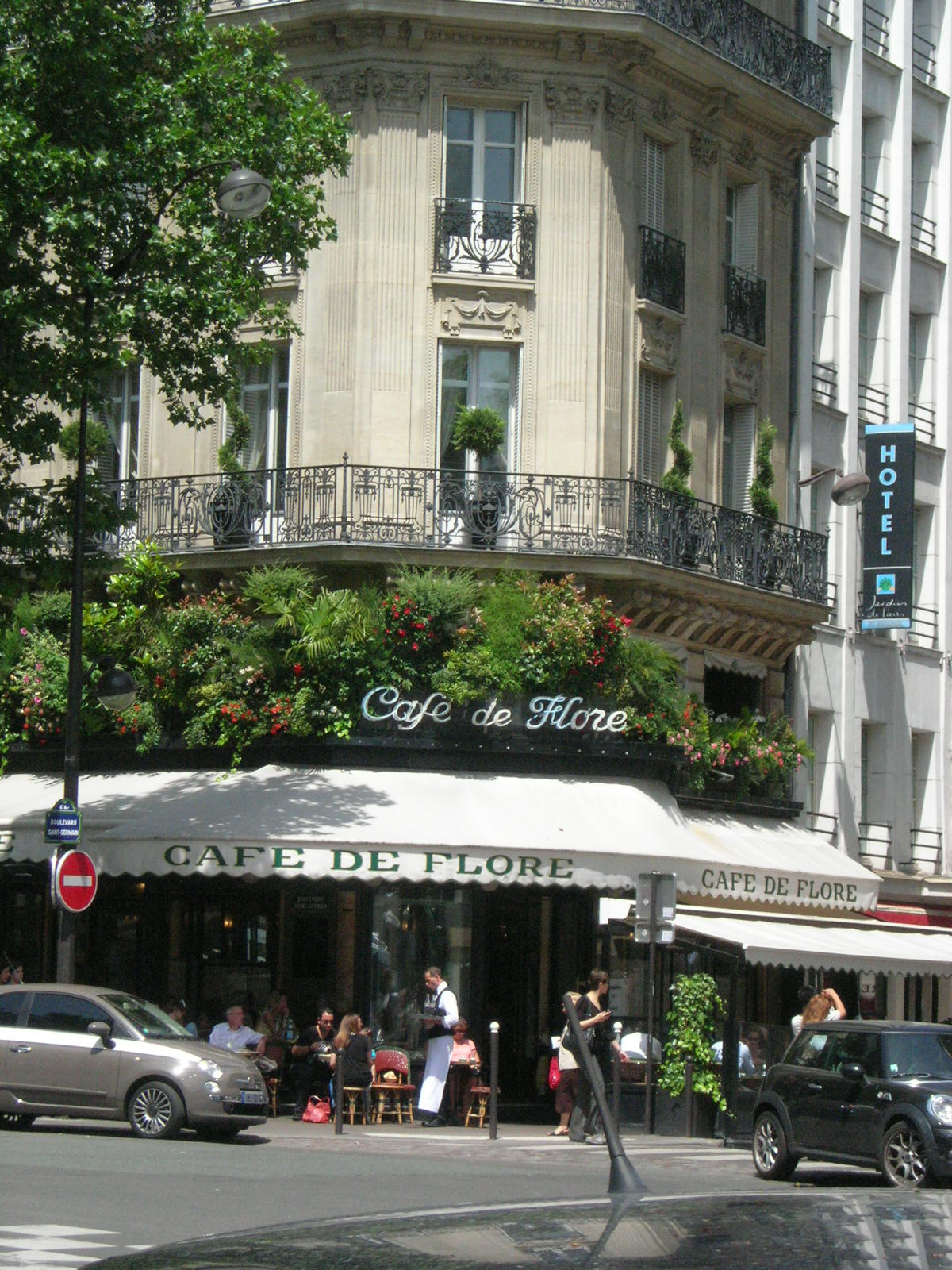
the rival Cafe de Flore across the street from Les Deux Magots
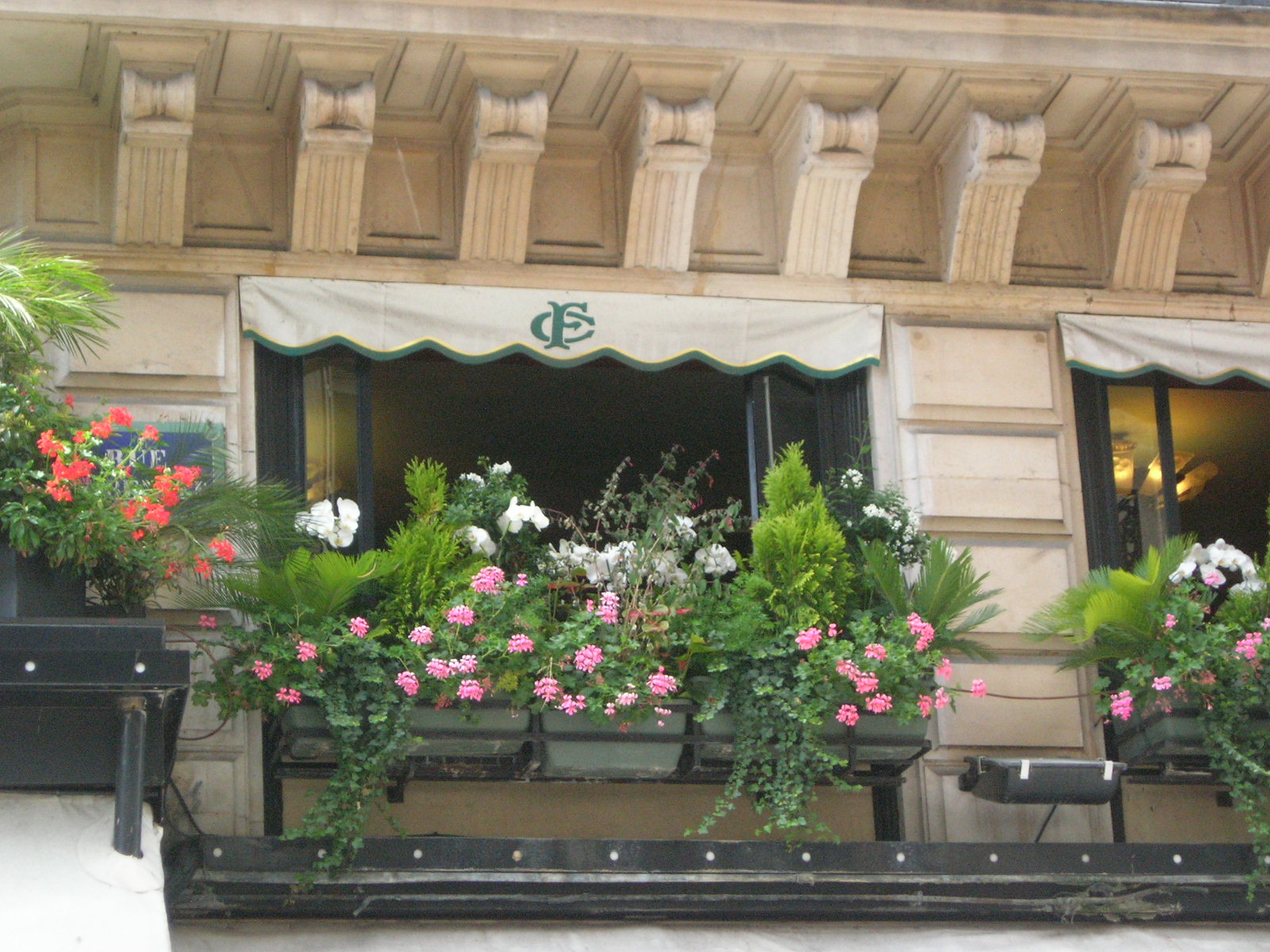
Cafe de Flore has gorgeous window boxes (and you know how much I love photographing windows!)
So here are some more windows…. 😀
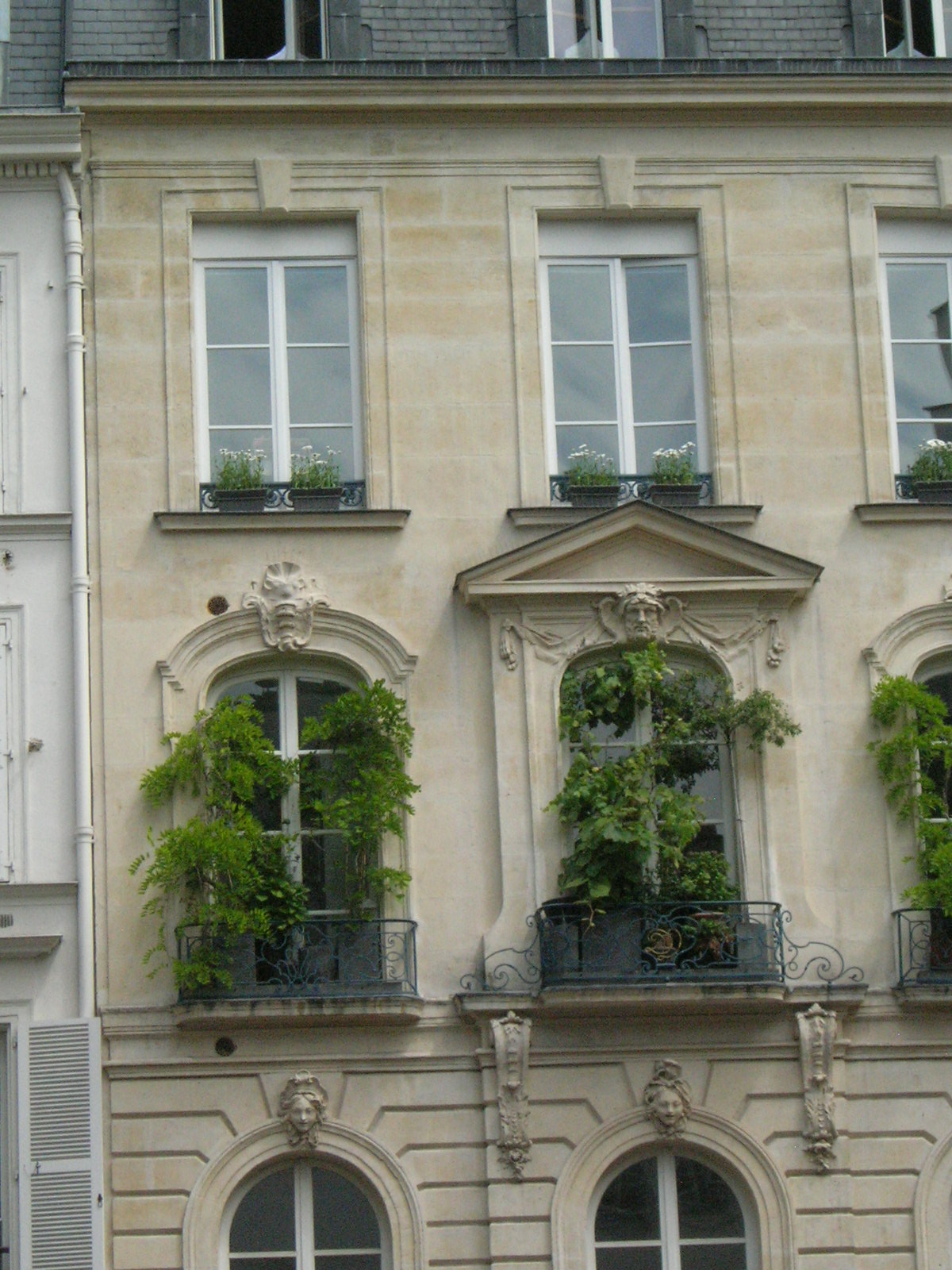
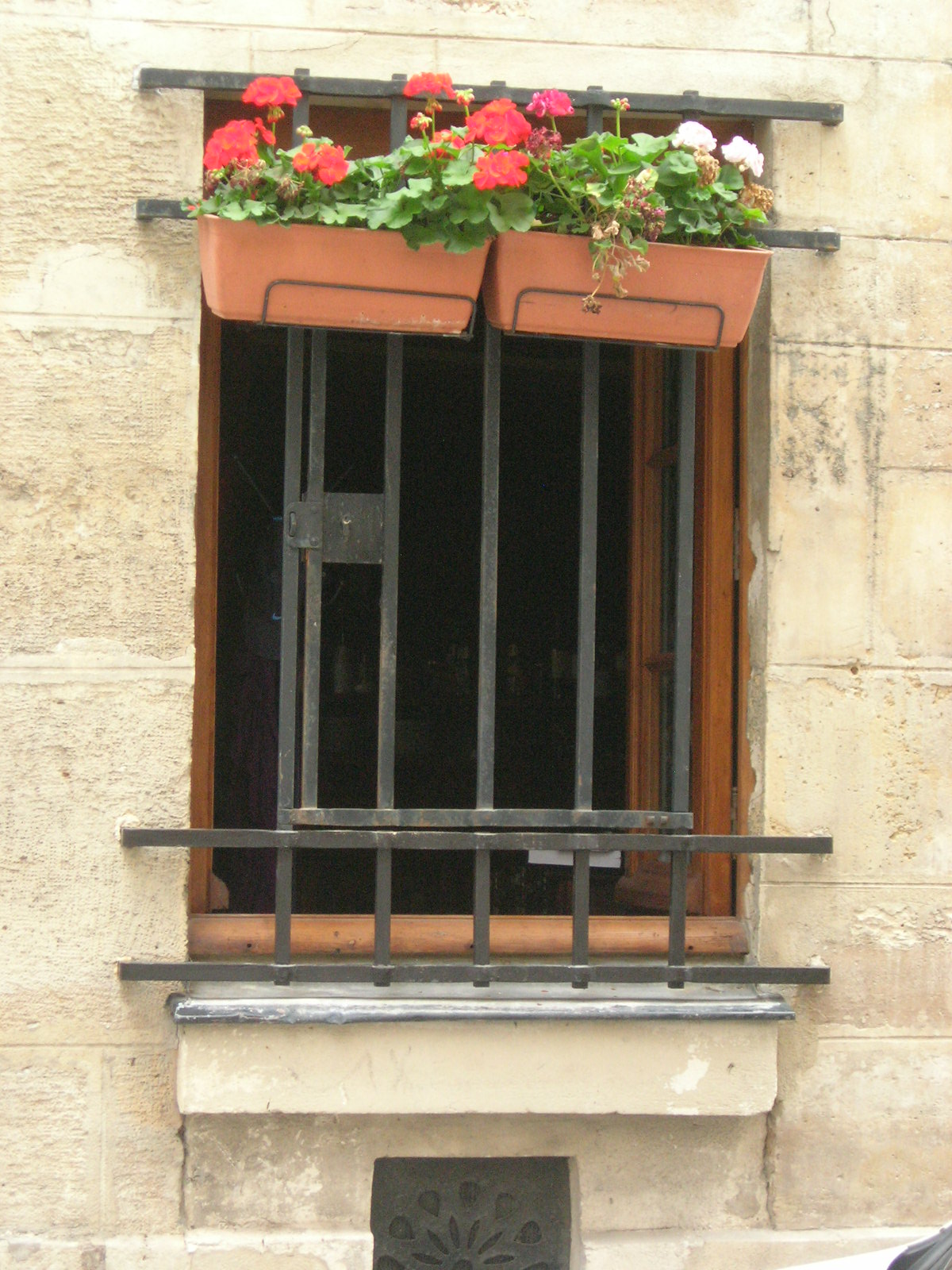
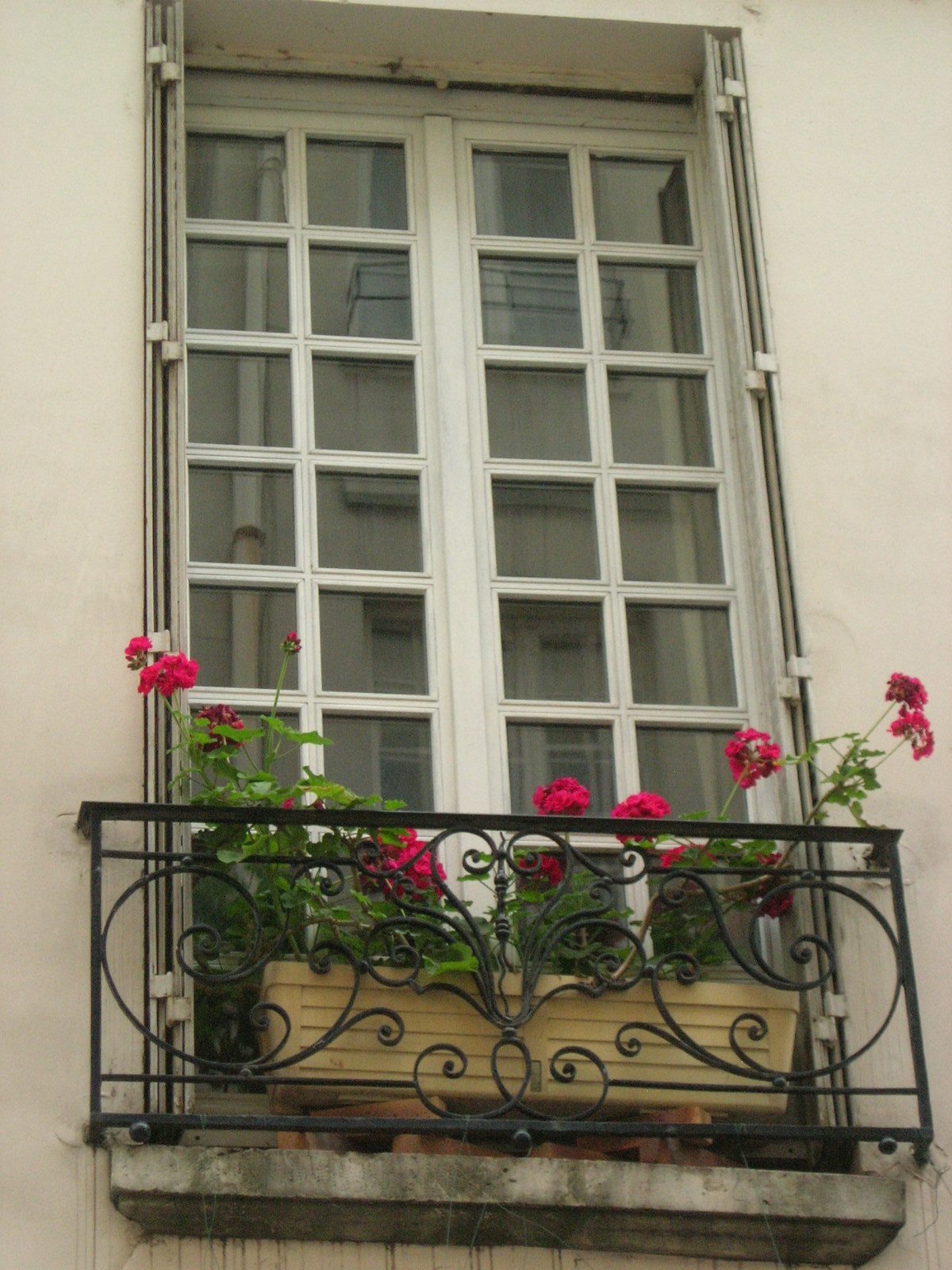
lots of wrought iron in Paris
After lunch we wandered back across the river, past the Louvre, and to Jardin des Tuileries…

back of the Louvre
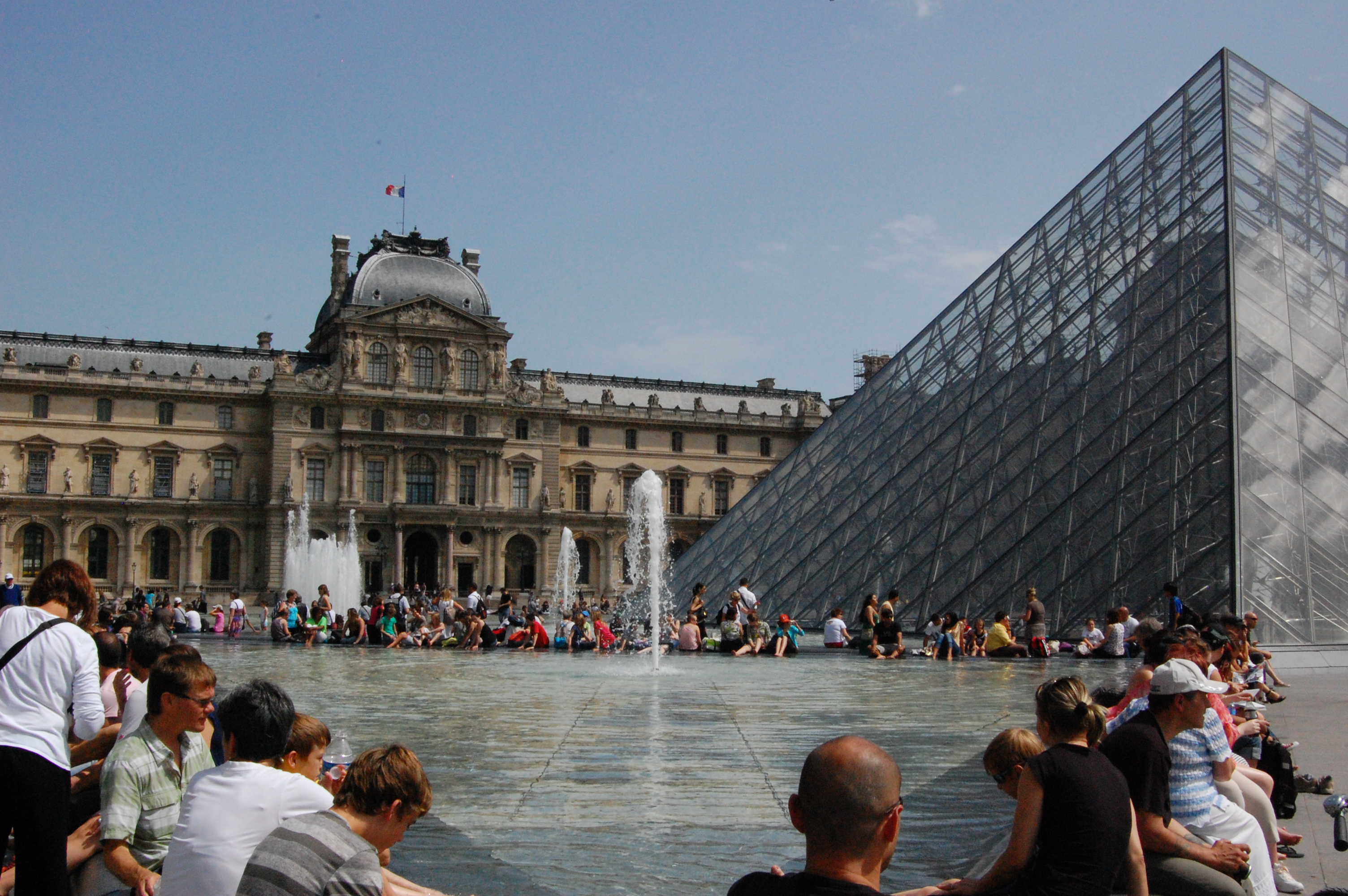
front of the Louvre
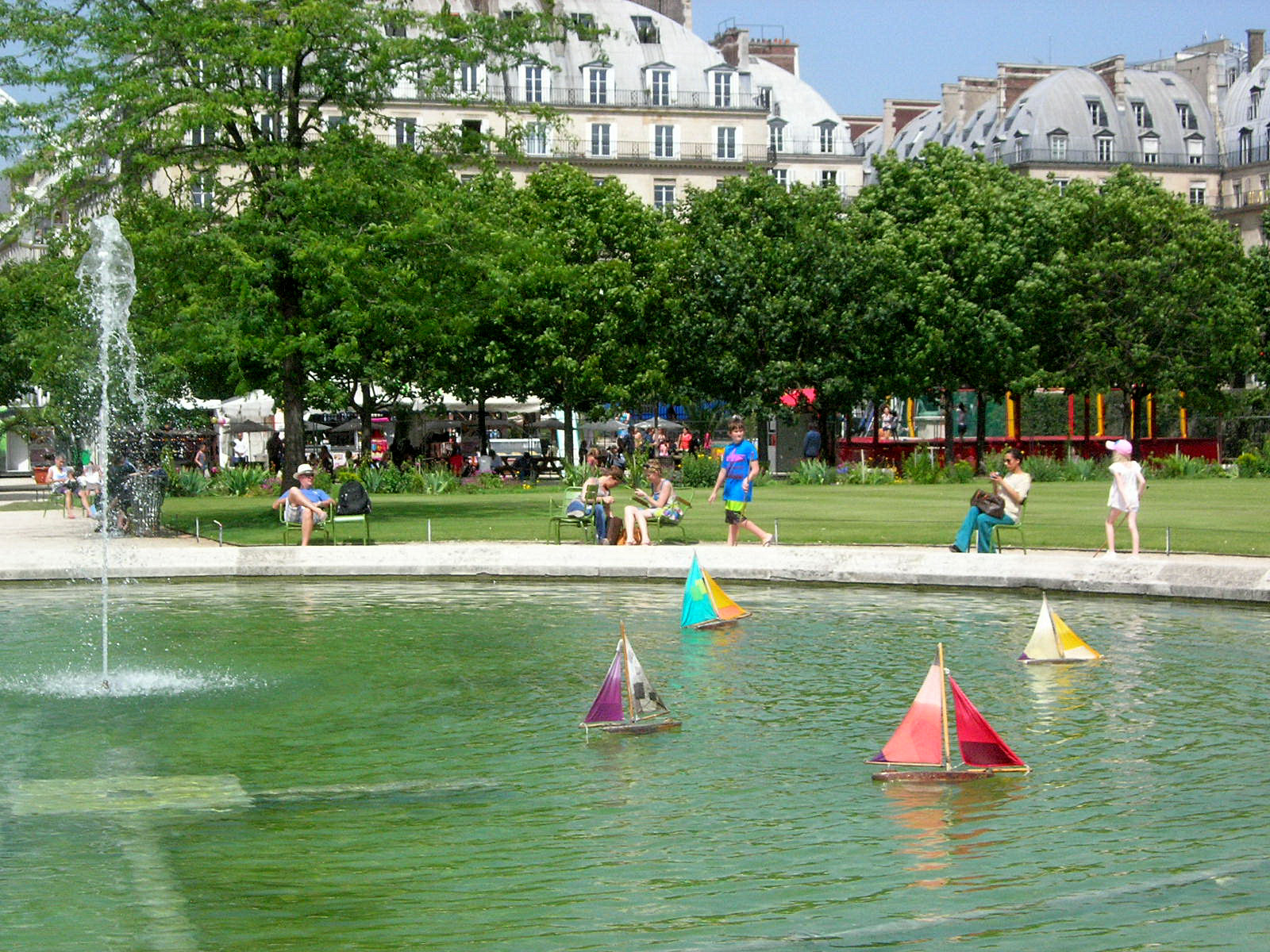
at the pond in the centre of Jardin des Tuileries
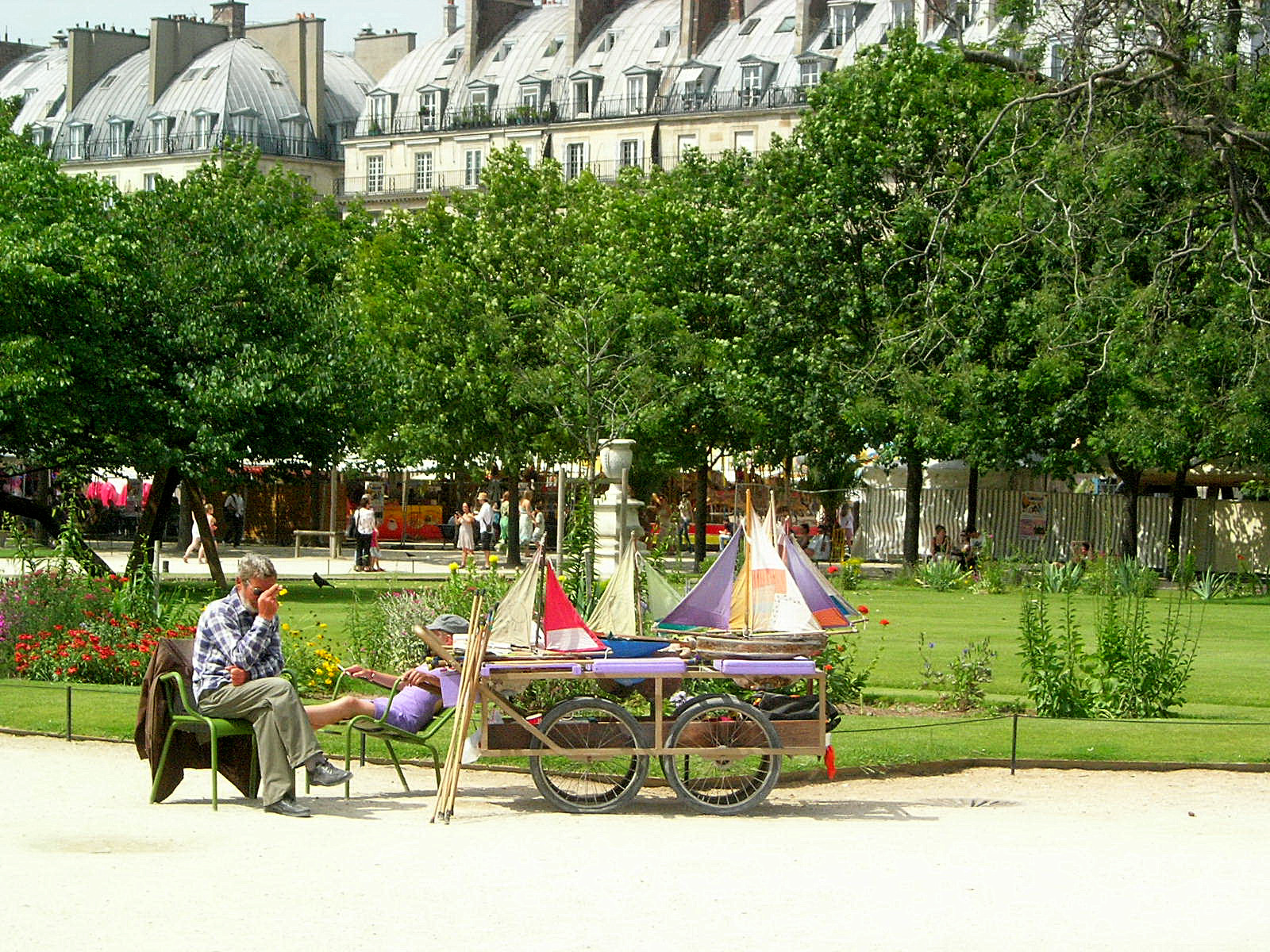
you can rent a sailboat for 1/2 hour from here…
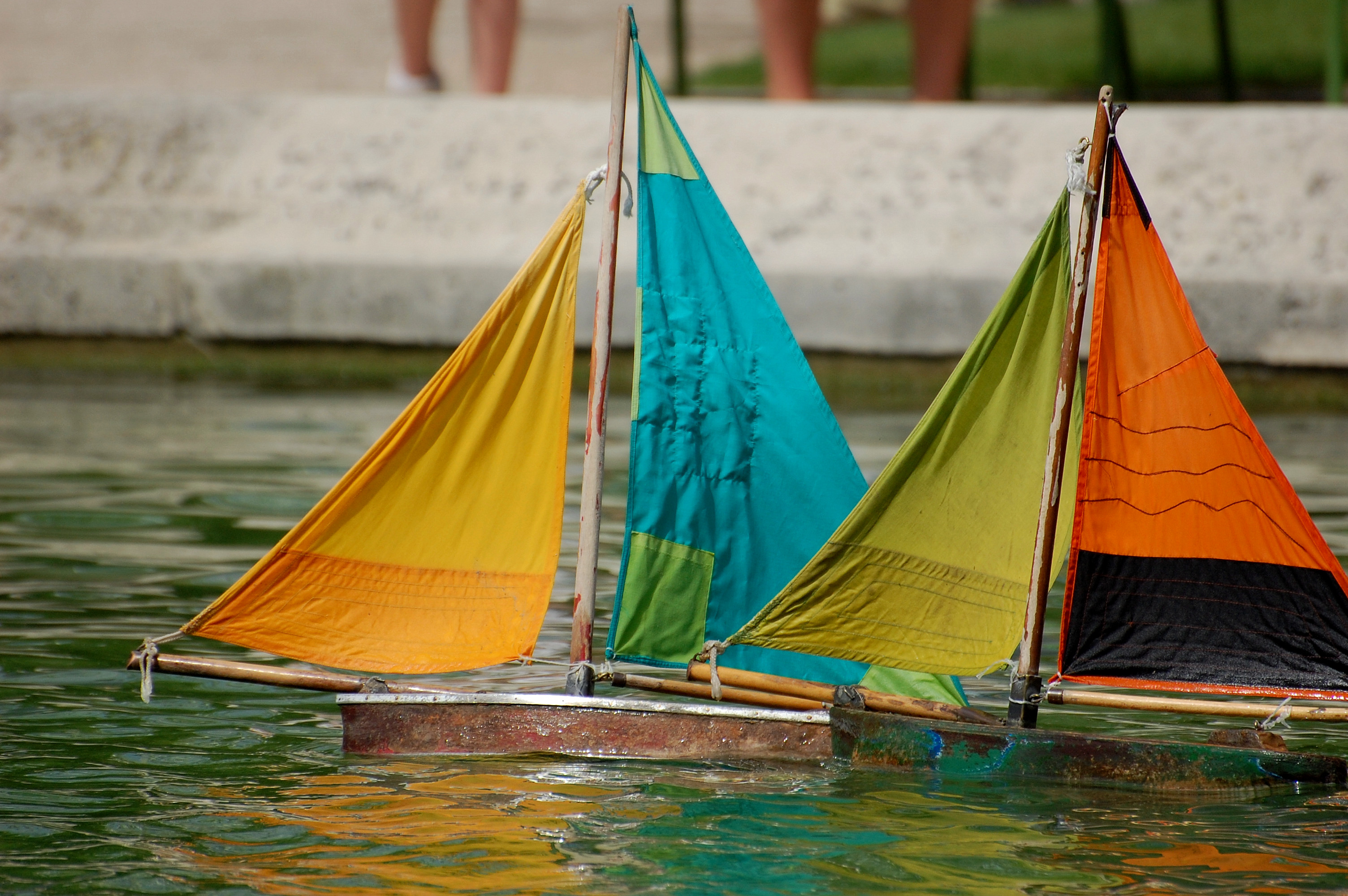
colourful sailboats
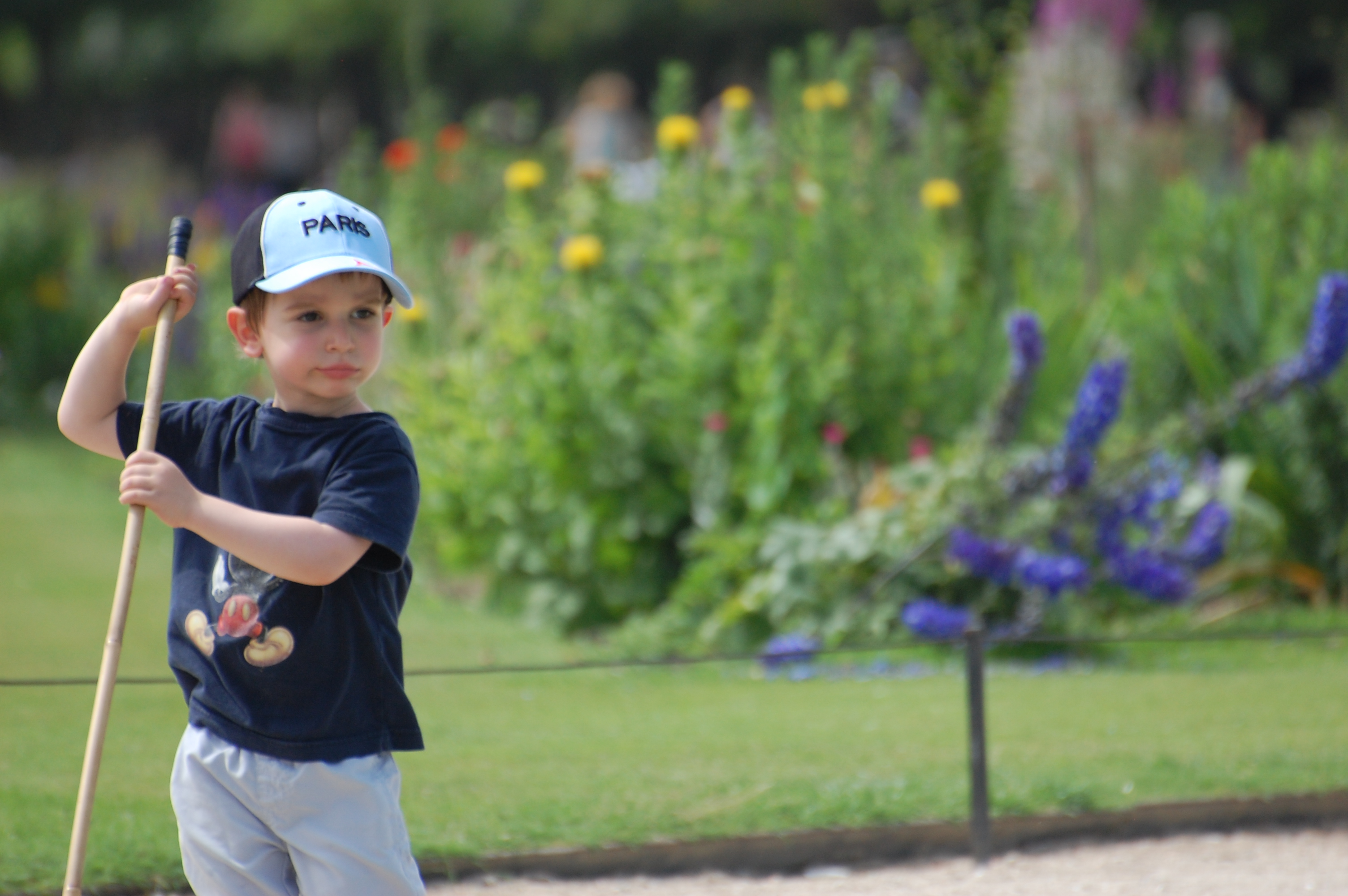
Don’s telephoto lens captured this little sailor..
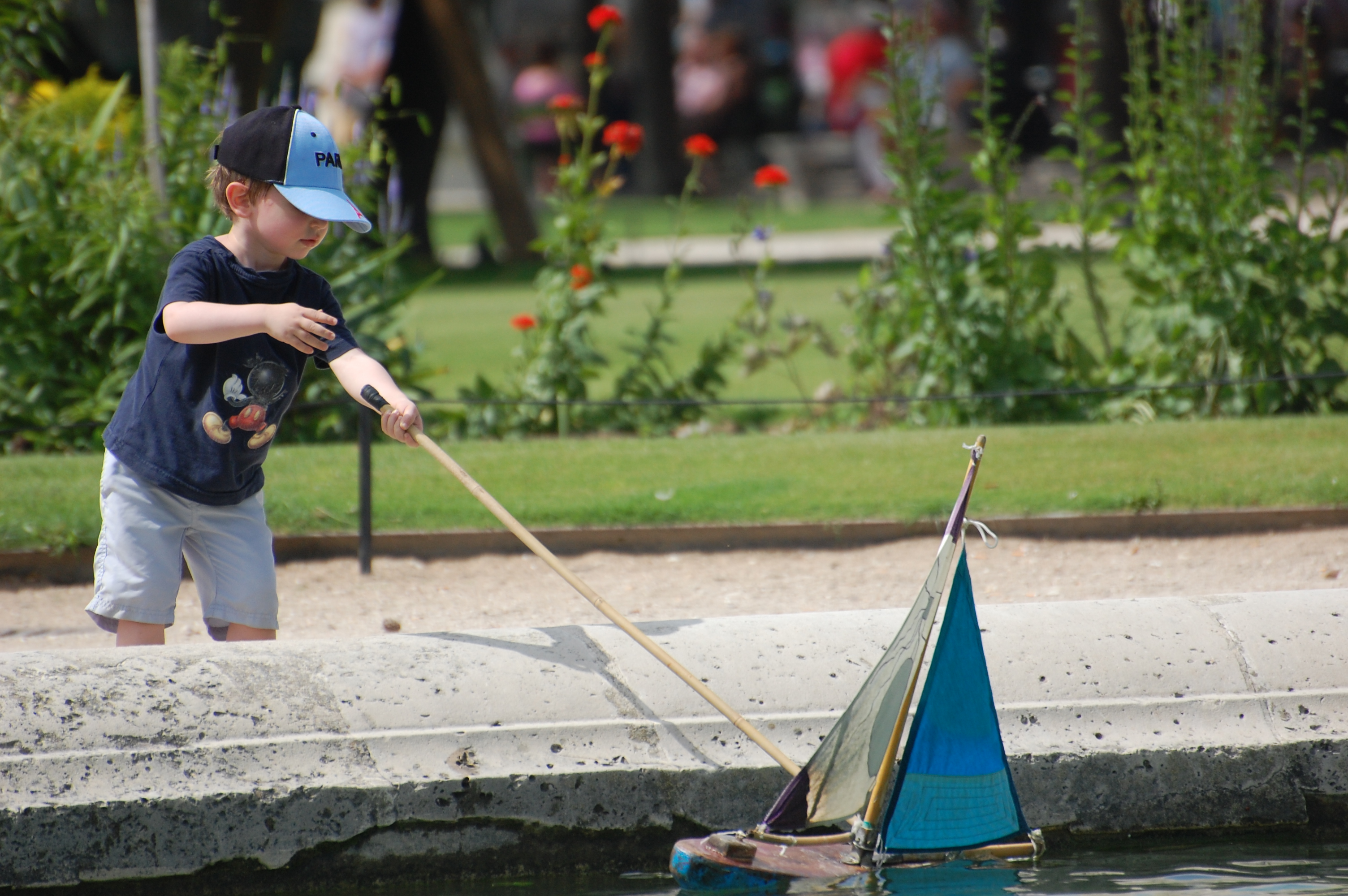
sailor at work
Back towards the hotel…
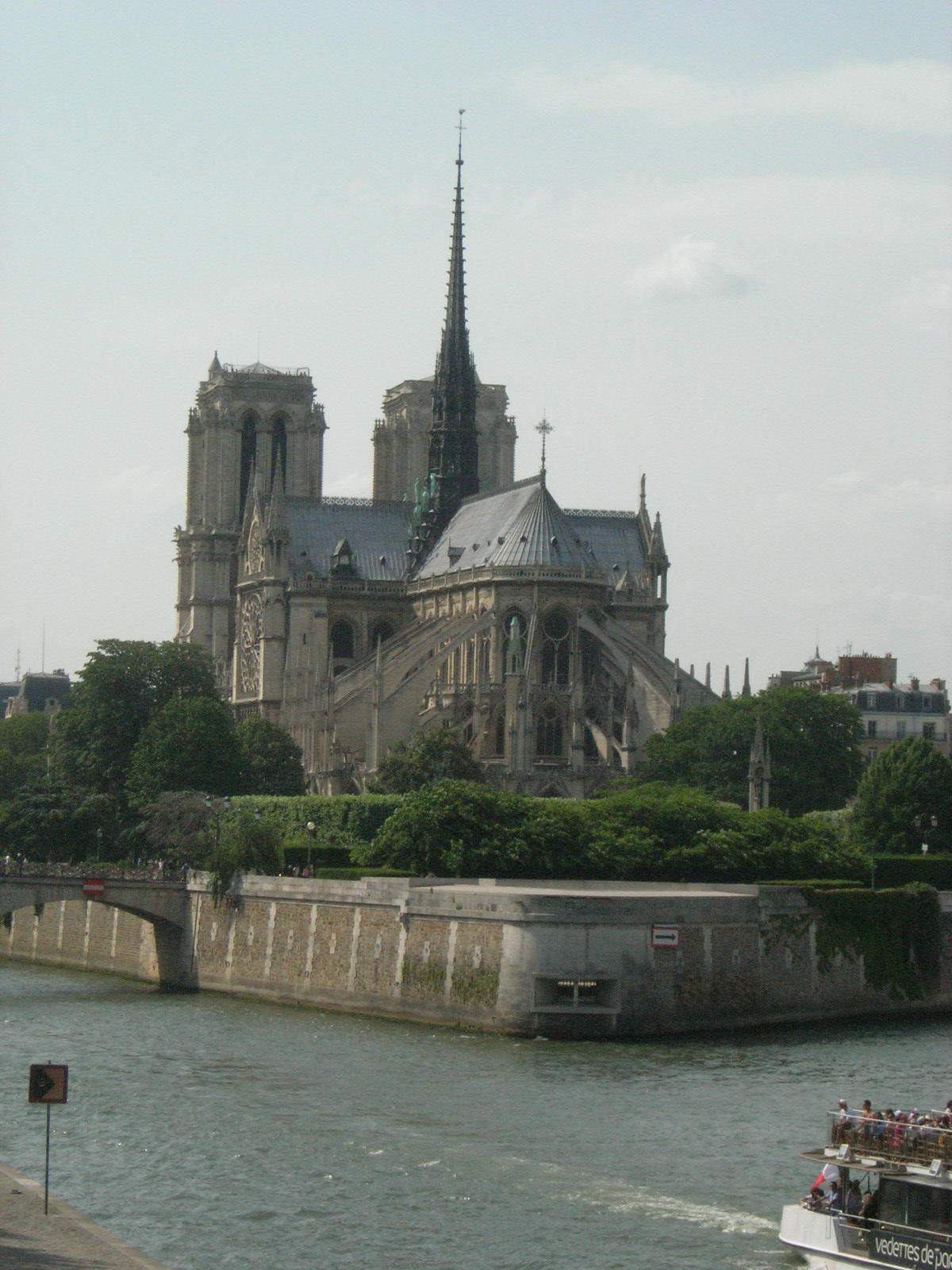
the back of Notre Dame

a barge on the Seine reminds me of Shanghai
We came upon a film shoot of some kind, and I was surprised to see I recognized the star!!

James Denton
During our 5-day stay we went to some great restaurants, all but one poorly-chosen night. The most amazing, decor-wise, was Le Train Bleu in the Gare de Lyon. The Gare de Lyon station was built as part of the major building program for the Paris Exhibition of 1900, and the station Buffet may be the “most striking manifestation of the Belle Epoque era.” Check it out here: www.le-train-bleu.com Here’s one of our pictures of the ceiling, which is amazing, but the food is excellent too!
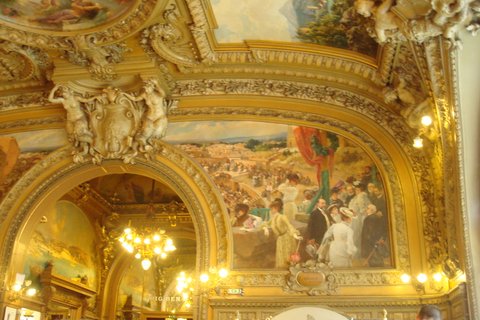
ceiling detail
A friend recommended Brasserie Balzar, on the Left Bank, and she did not steer us wrong. Check it out here: www.brasseriebalzar.com
On our last morning, we followed a neighbourhood walk through the Marais district, as suggested by the Frommer’s guide book, and Rick Steves’ Pocket Paris.
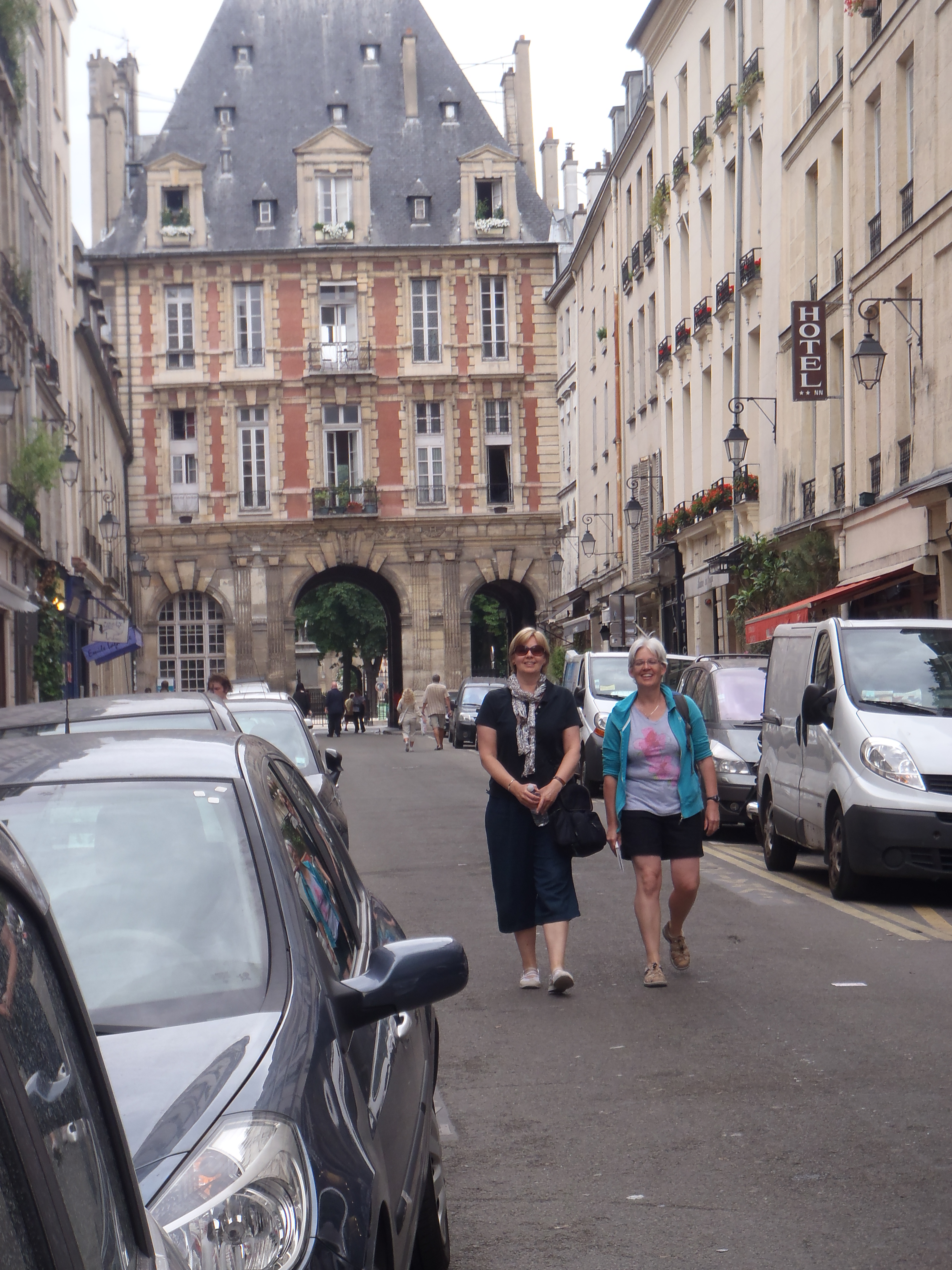
Places des Vosges behind us
Place des Vosges is Paris’s oldest square, commissioned by Henri IV, originally built for silk workers, later occupied by Cardinal Richelieu, Moliere and Victor Hugo, among others.
Hotel de Bethune Sully was designed in 1625 as the residence of the family of Maximilien de Bethune, Duke of Sully, Henri IV’s famous minister of finance.
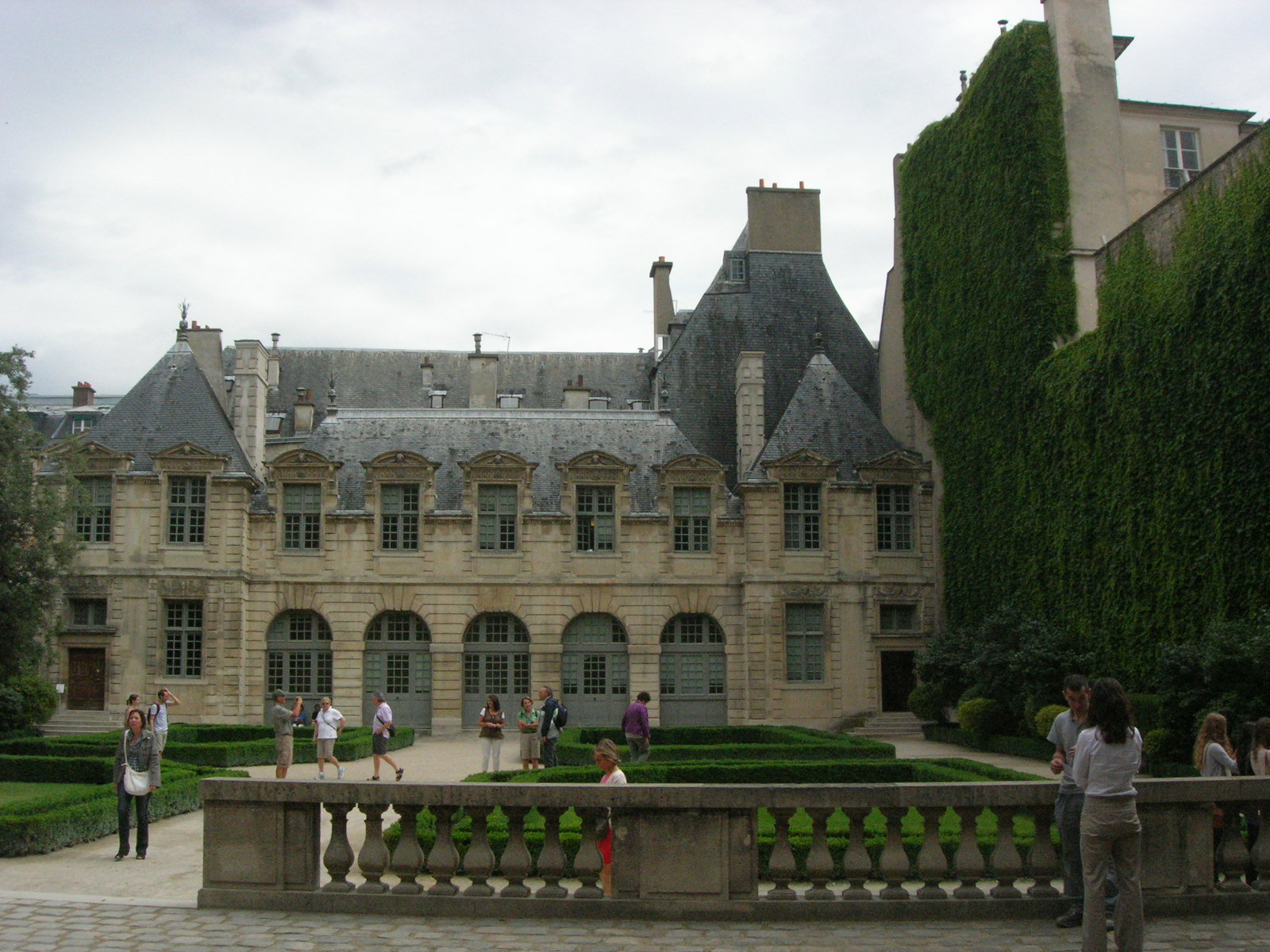
Hotel de Bethune Sully

Hotel de Bethune Sully detail
About our next location, Rue des Rosiers, Frommer’s says: “Perhaps the most colourful and typical street remaining from the time when this was the city’s Jerish quarter, rue des Rosiers (Street of the Rose-bushes) meanders among the old buildings with nary a rose to be seen. It is jam-packed with falafel cafes and shops, though…”
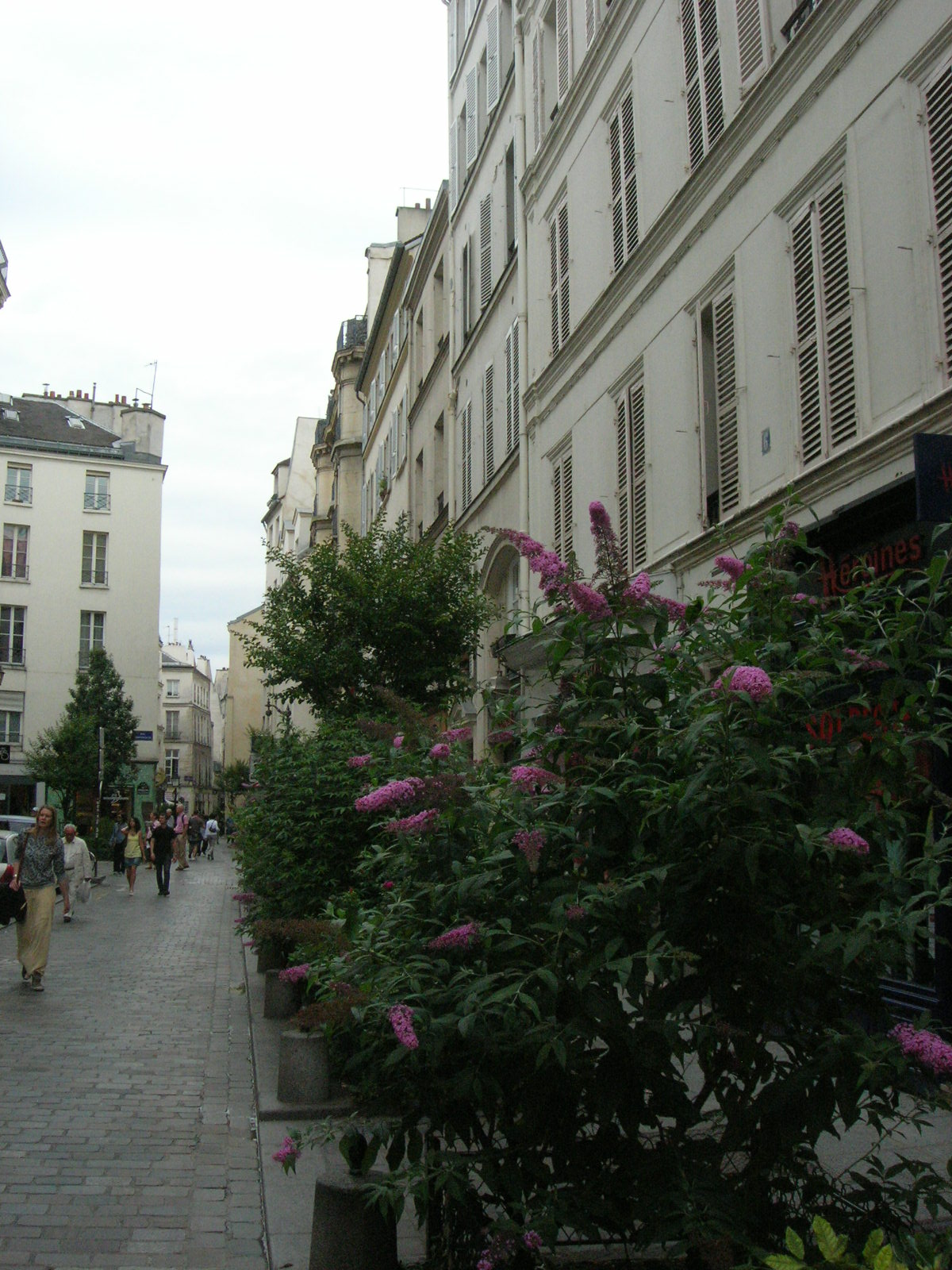
Rue des Rosiers – flowers, but no roses

in the heart of rue des Rosiers
Around the corner from rue des Rosiers, on Vielle-du-Temple, are “the most remarkable doors in all the Marais.” They are what’s called ‘carriage’ doors – wide enough for a carriage to pass through, and decorated with “an expressive and somewhat frightening head of Medusa.” (The quotes are from a memoir both mom and I read called A Corner in the Marais by Alex Karmel.)
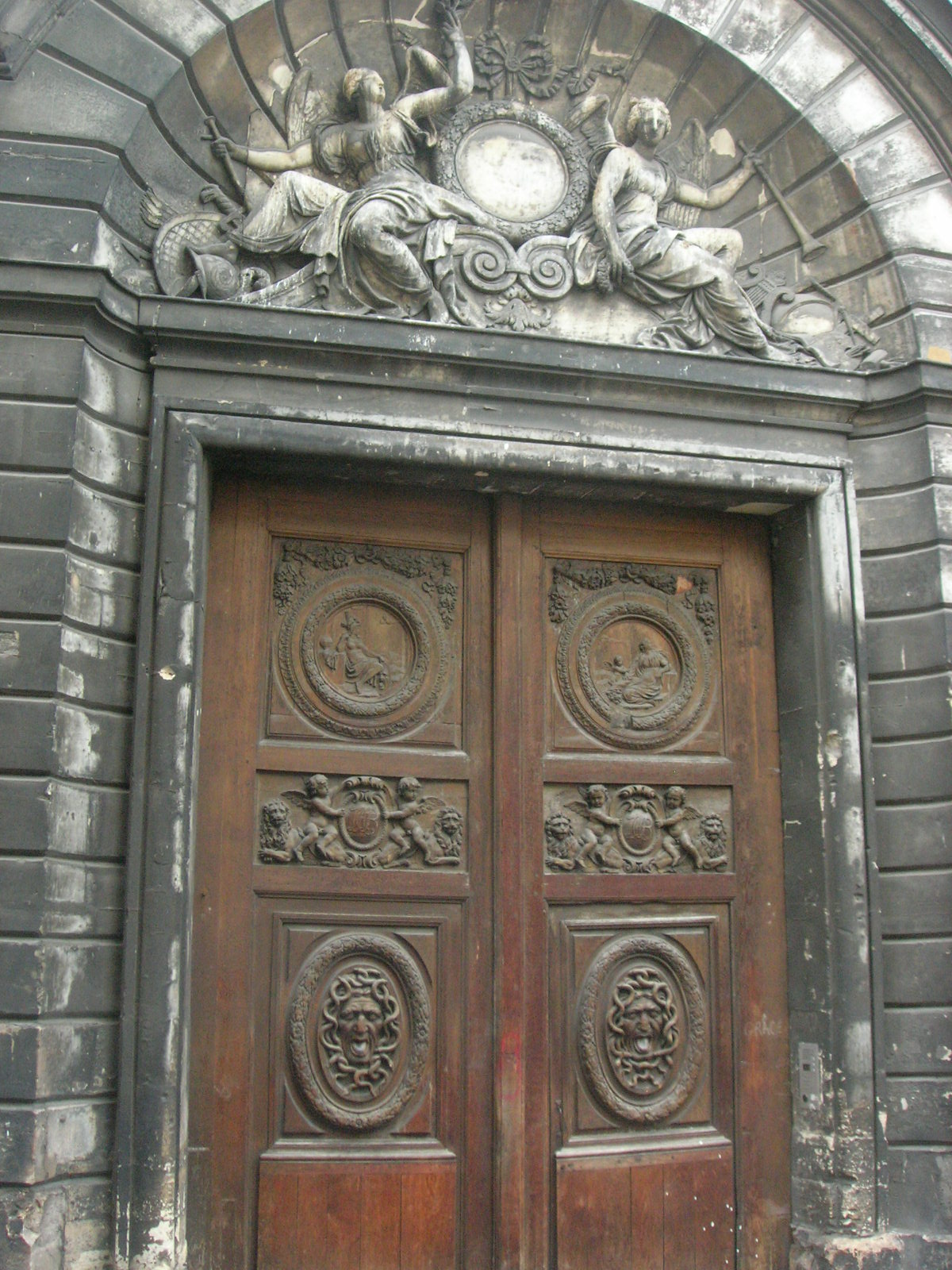
oak carriage doors
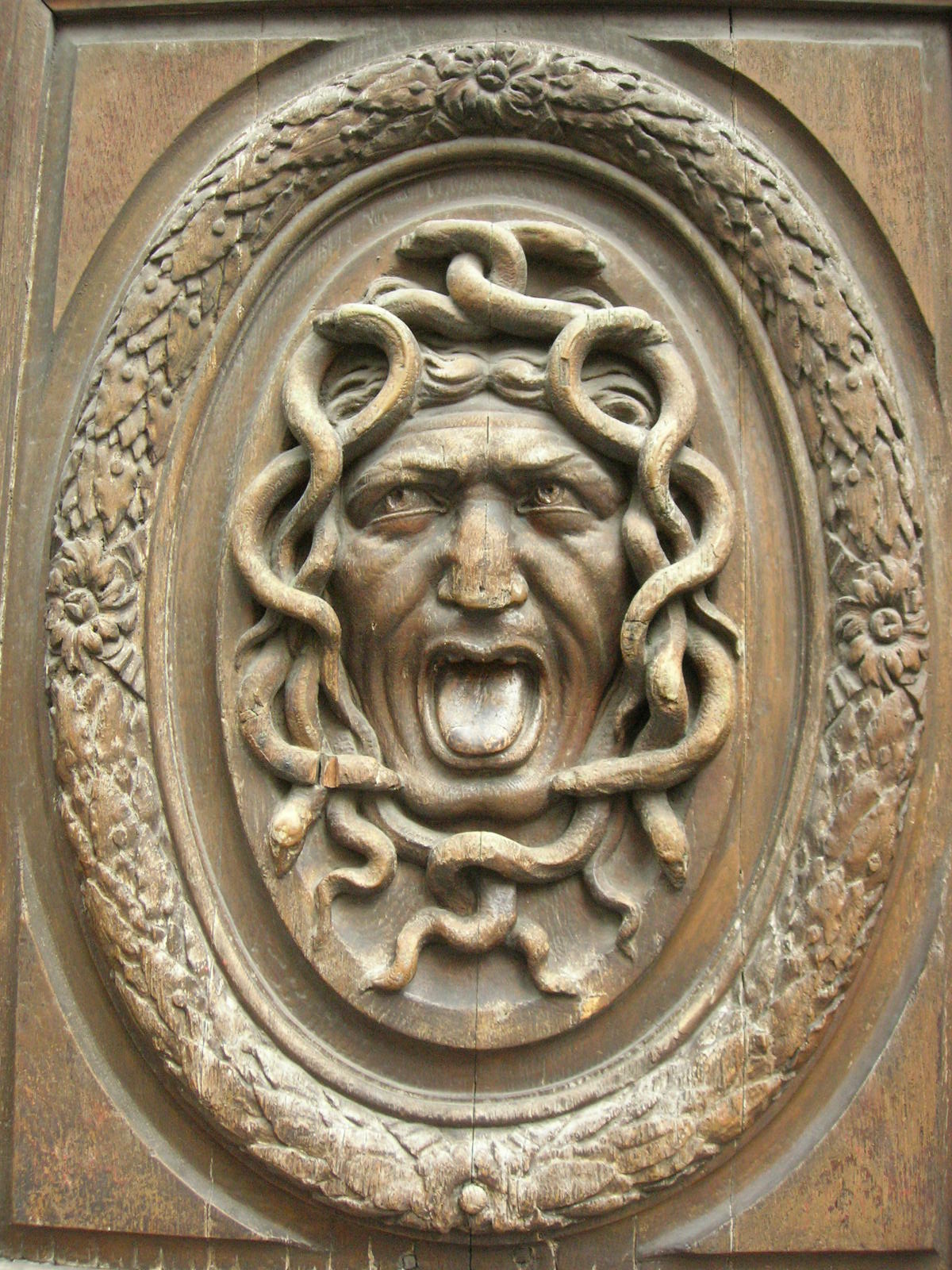
Medusa head detail
Paris is full of beautiful little parks, lovely spots for local residents to pause, and this one was noted in one of the guide books because of the clock on the wall that has just one hand (!?) …
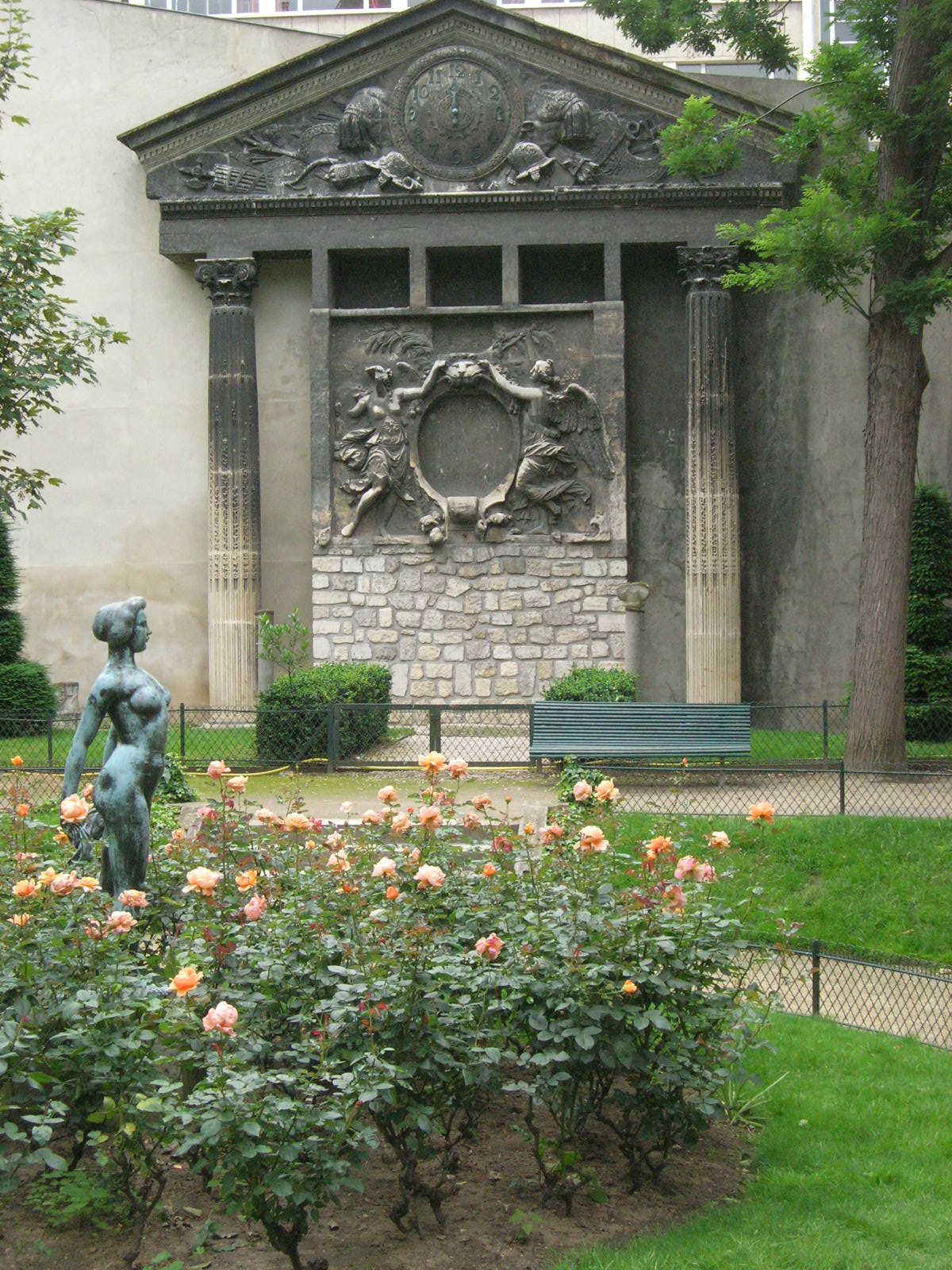
Square Georges Cain

yes this could be anywhere, but who doesn’t love a beautiful flower shop?!?
After returning mom to the hotel, we went back to walking the streets for the last time… First, a return visit to Shakespeare & Company…
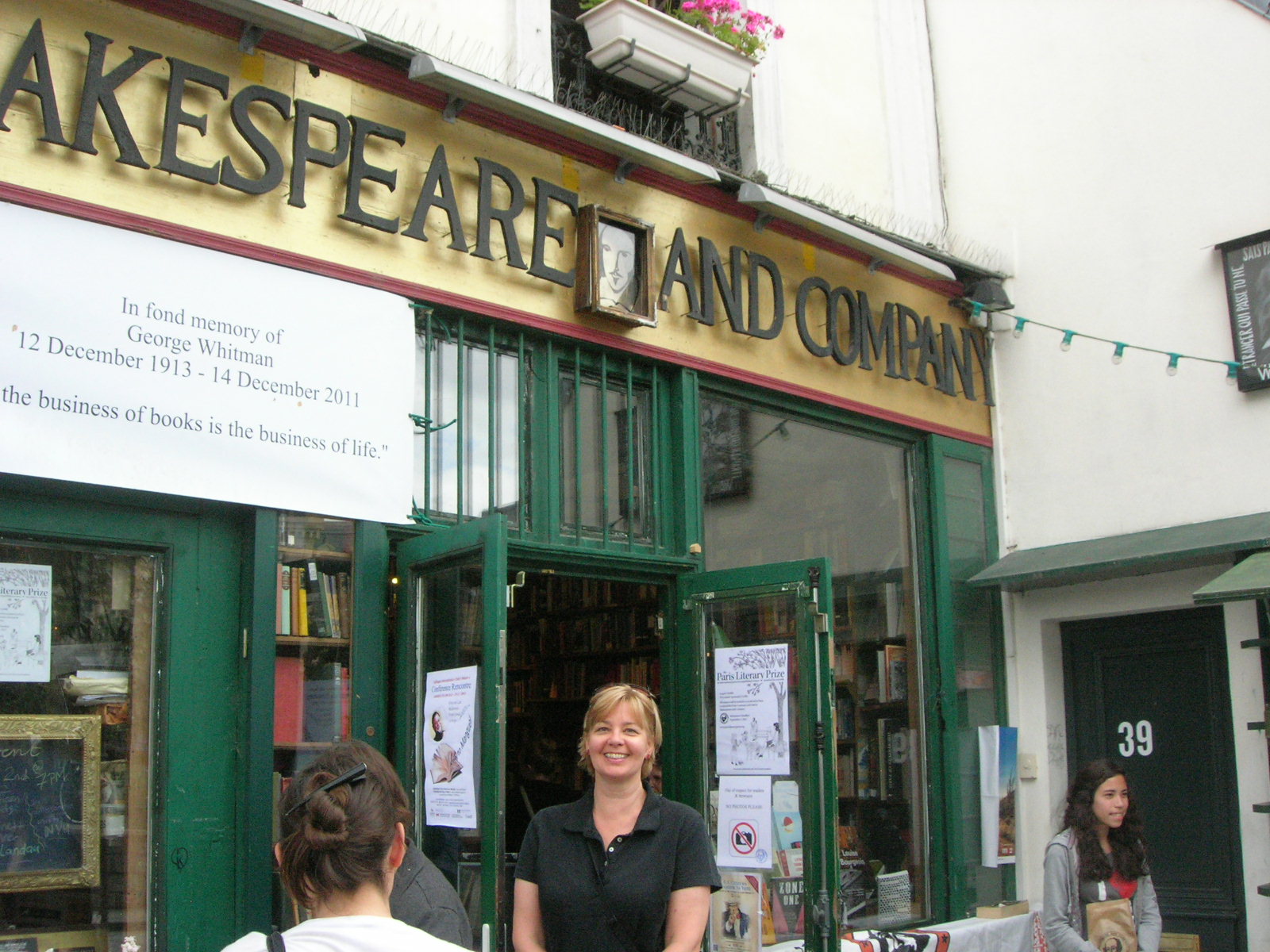
such a great book store!

book seller on the Left Bank

across the Pont Neuf
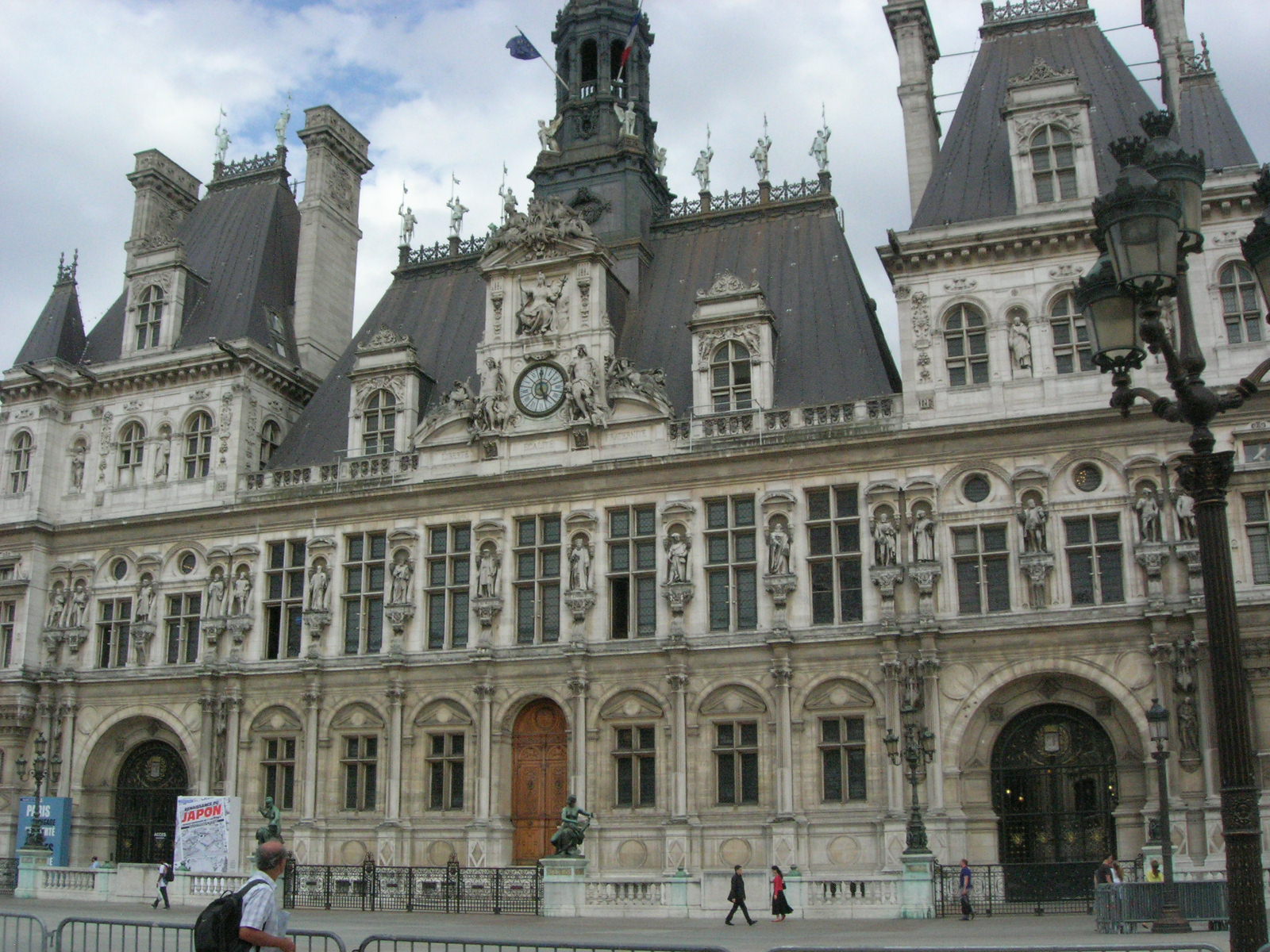
and to see the Hotel de Ville (City Hall), which is a stunning building
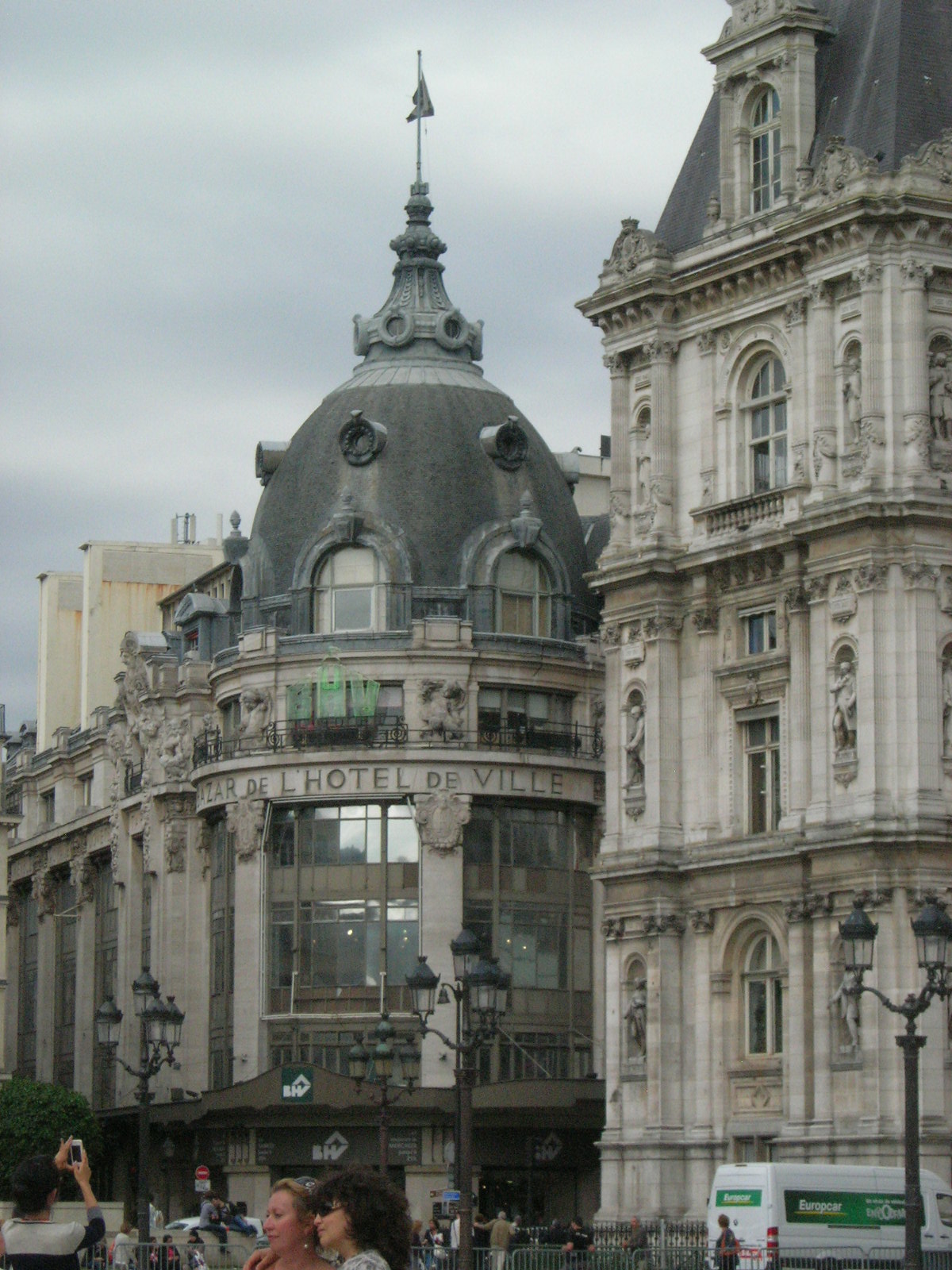
Hotel de Ville
For our last evening, we returned to the local restaurant we’d been to once before, and loved, Le Petit Italien, in the Marais district, and highly recommendable. The Eyewitness guide said it is one of Paris’s best Italian restaurants, and we agreed. I couldn’t find an official website, but this one has a great little video that shows the restaurant and the food: http://www.restovisio.com/restaurant/le-petit-italien-936.htm#presentation
last supper starts with Prosecco ^_^
Au revoir and a bientot, gay Paree!!
Istanbul January 2, 2012
Posted by freda in Birmingham, Michigan.2 comments
Happy New Year!!
I know you’re saying “finally, the promised post on Istanbul.” Yes, this has taken longer than I expected or planned. Seems December is a busy month (!) with things to do that can’t wait, so this blog has been sacrificed. We had a wonderful Christmas, with both boys with us for about 10 days. The four of us went to Chicago for two nights right after Christmas – the first time for all of us, though Don has been on business. We had a great time and realized we need several more days to see that lovely city properly. We enjoyed our time together, as always, ate and drank too much, saw a few movies, visited with good friends – everything that is wonderful about the holiday season. Now, back to reality. And without further ado…. Istanbul. I hope you enjoy the trip.
Don and I had an amazing 8 days in Istanbul – one of our favourite trips! It was a l-o-n-g haul to get there, though. We drove to Windsor, flew from Windsor to Toronto, then Toronto to Munich, and finally Munich to Istanbul. About 20 hours later we were at our lovely hotel, the family-run Hotel Kari Sonak, in the old city area of Sultanahmet. http://www.istanbulhotelsarikonak.com/
After unpacking, we headed out for a long walk around the area, to keep awake and get our first look at the city. Just up the street from our hotel, practically in our back yard, the Blue Mosque…
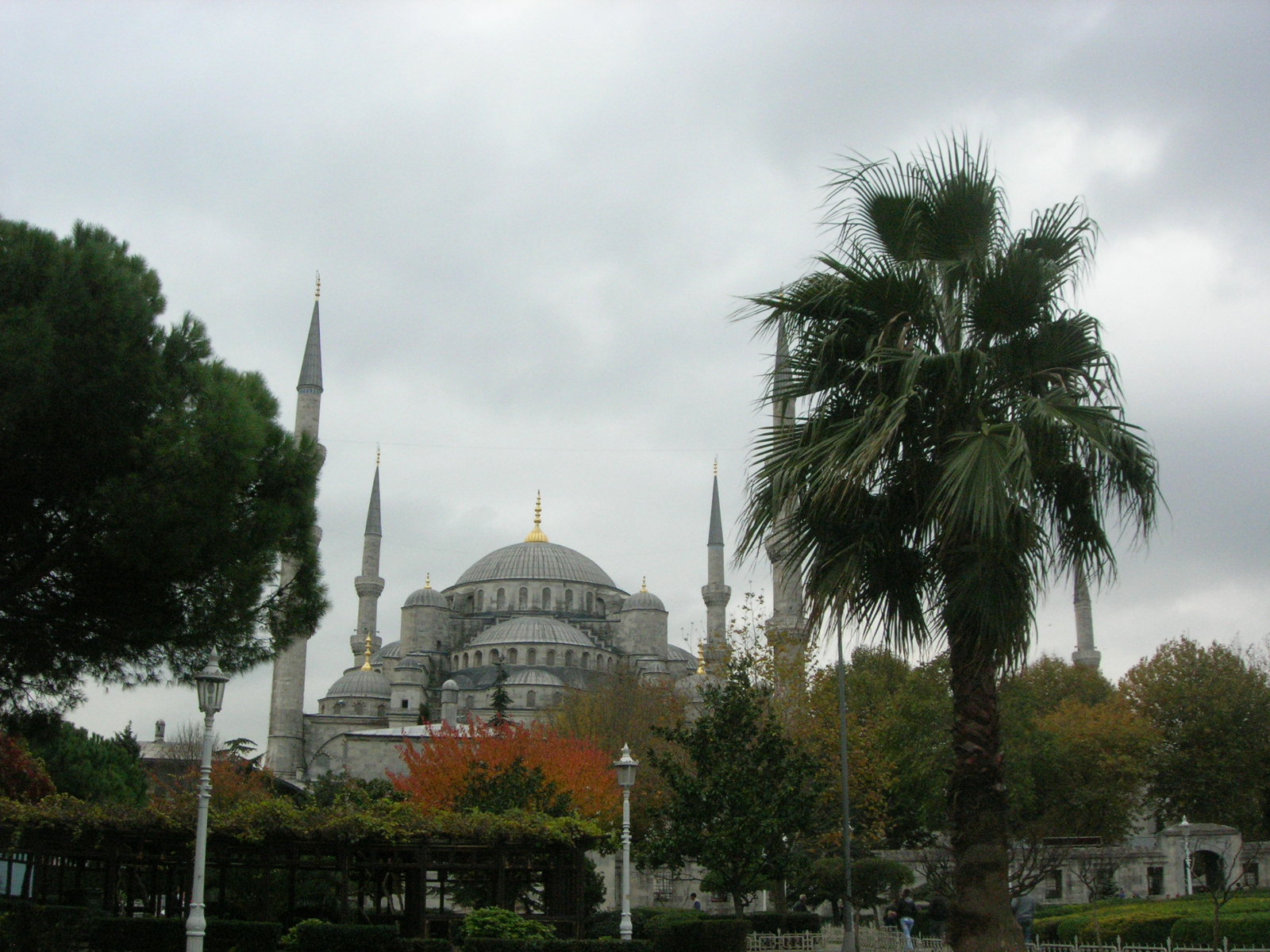
Blue Mosque
Then we meandered along winding, hilly, cobblestoned streets, past more carpet shops than you can imagine, and even carpets being sold right on the street!
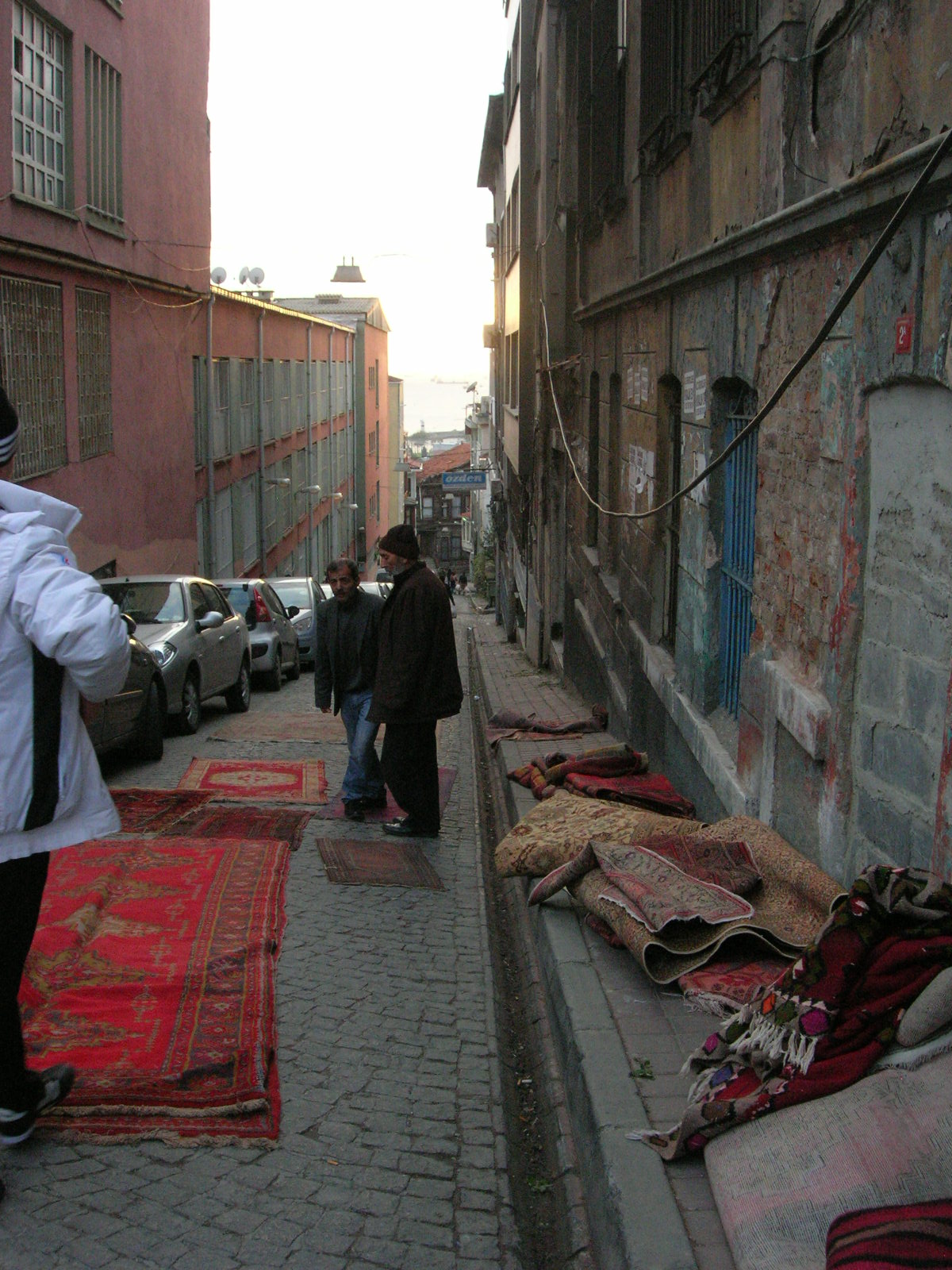
street vendor
Don was starving as he hadn’t eaten on the last plane, so he decided to try the street-seller’s bagel or pretzel-like fare, which we learned is called simit, a “crisp, ring-shaped savoury loaf.”
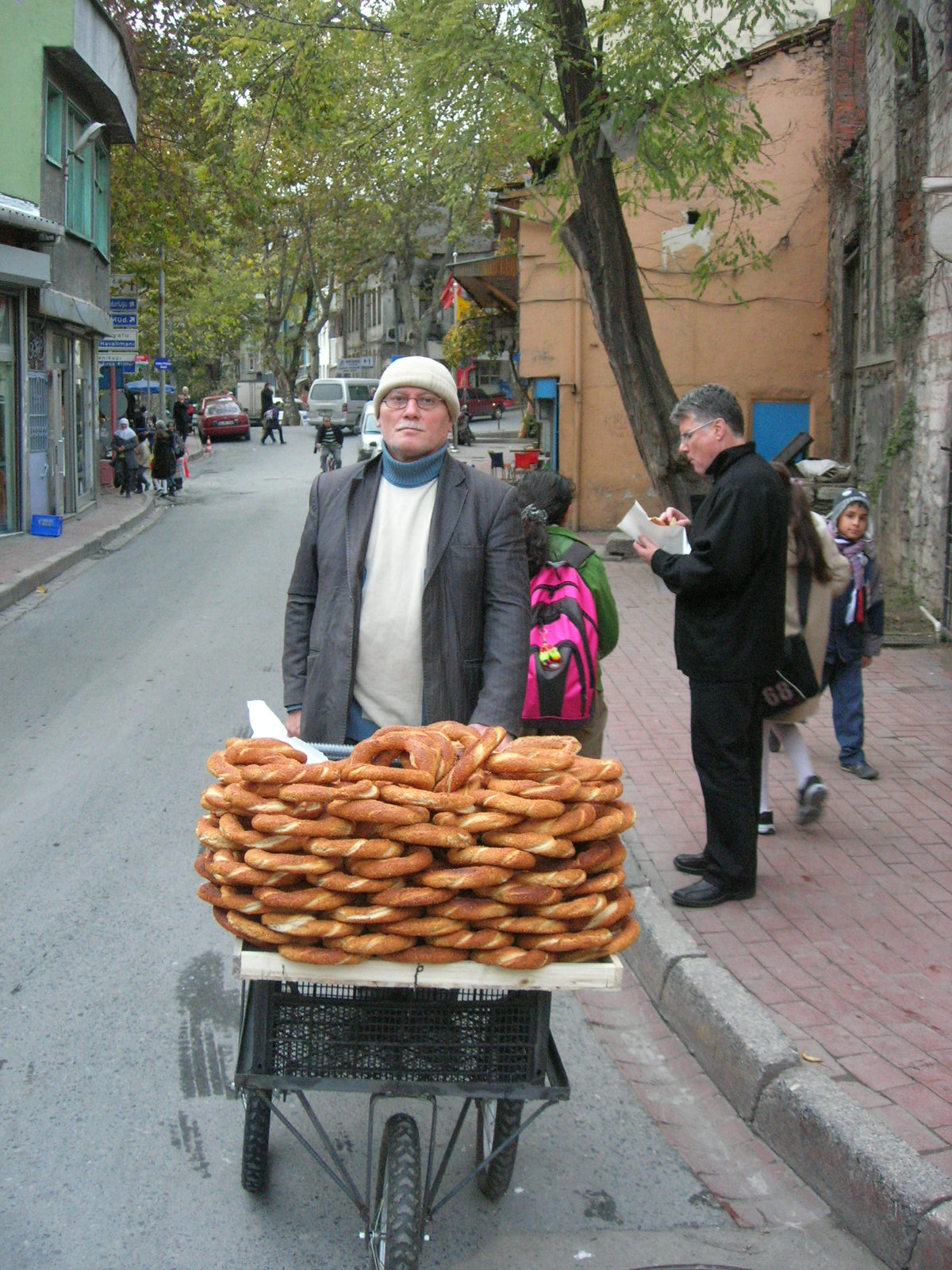
"simit" seller
After more than an hour of wandering, I was dying for a ‘cuppa’ and we headed back to our hotel for complimentary tea-time. After a reviving cup of tea, we asked Hasan (the bartender) for a beverage – beer for Don and hot mulled wine for me – and chatted with him for awhile. This became our evening routine before dinner, though we skipped the tea from then on out. (Turned out we had more tea during most days than we’ve ever had in our lives! … But those stories are still to come.) And then, from a recommendation from Hasan, we made our way to the “restaurant street” just a few metres up the hill and around the corner from our hotel, to a fantastic place, Magnaura Cafe Restaurant, where we ended up having dinner three times during our stay! They had a mix of Turkish and Ottoman cuisine, plus some western dishes we didn’t even look at, and lovely Turkish wine. We had no idea Turkey had such a good wine industry, but they do. The food was great, service was great, and after dinner, thanks to the suggestion from Hasan, our waiter gave us a tour of their underground ancient Roman-time caves.
We were back to our hotel and asleep by 8:30 after a very long overnight day of travel.
The next morning, after the delicious buffet breakfast put out daily at our hotel – excellent yogurt, dried fruit and fresh orange slices, hard-boiled eggs, tomatoes and cucumbers, feta cheese, olives, and breads – we met our personal tour guide in the lobby at 9:30. How we came to hire Gamze is a bit of a story…. When I ordered the Istanbul Eyewitness Travel Guide (my favourite guide, because of the addition of pictures to the information) from amazon (our local book store didn’t have a guide for Istanbul!), in the way that amazon does, they said, “people who buy… also buy….” and so of course I clicked on some of those suggested books to see what might interest me, and I ended up also ordering “Istanbul: The Collected Traveler: An Inspired Companion Guide” edited by Barrie Kerper. It’s an anthology of articles written by a variety of writers on all aspects of Istanbul, and I’ve only dipped into it so far. But, one thing I did read was an interview of tour guide Gamze Artaman conducted by author Tom Brosnahan, and based on that interview, I emailed her! Her detailed response, and then a few more back-and-forth emails inspired us to hire her for our first two days, plus a third day later in the week. She turned out to be the best tour guide we’ve ever had!

Gamze
We started our day with history as we walked up the hill to stand in the area that was once the Hippodrome, the centre of the Byzantine city of Constantinople. Not much is left now from the once-upon-a-time stadium, which is now a public garden, except an Egyptian Obelisk (built in 1500 BC, it once stood outside Luxor, where Don and I have also been) and Constantine’s Column (built in 330 AD, part of the celebrations to inaugurate the Byzantine capital), and I’m sorry I don’t have pictures of them. It was easy to get an idea of the size, though, as the road that runs around the garden square is what used to be the chariot racing track, chariot racing being, apparently, the most popular pastime of the Byzantines. The Hippodrome fell into ruin after the Ottoman conquest of Istanbul in 1453.
According to the Eyewitness Guide (where all my serious information will come from, and will be in italics): For almost a thousand years Constantinople was the richest city in Christendom. It radiated out from three great buildings: the Hippodrome, the Great Palace and the church of Haghia Sophia. Nothing is left of the Great Palace, but the Haghai Sophia is stunning.
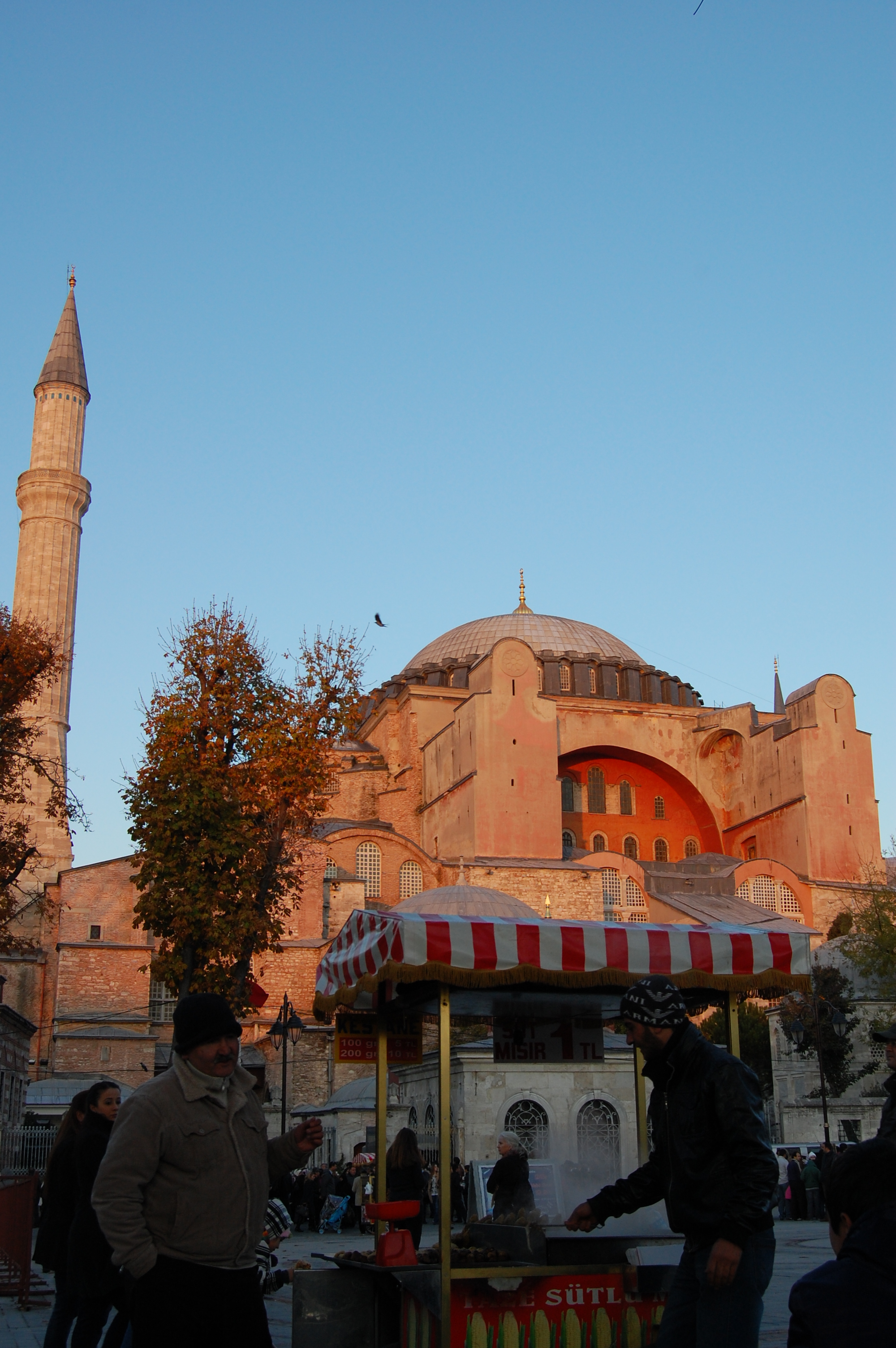
Haghia Sophia
The “church of holy wisdom,” Haghia Sophia is among the world’s greatest architectural achievements. More than 1400 years old, it stands as a testament to the sophistication of the 6th-century Byzantine capital. The vast edifice was built over two earlier churches and inaugurated by Emperor Justinian in 537. In the 15th century the Ottomans converted it into a mosque: the minarets, tombs and fountains date from this period. But, what might be the most amazing, is the open-mindedness of “the Conquerer” Sultan Mehmet II, because he allowed the Christian-themed mosaics to remain after the conversion to a mosque, side-by-side with the eight wooden plaques bearing calligraphic inscriptions, bearing the names of Allah, the Prophet Mohammed, the first four caliphs and Hasan and Hussein, two of the Prophet’s grandsons who are revered as martyrs.
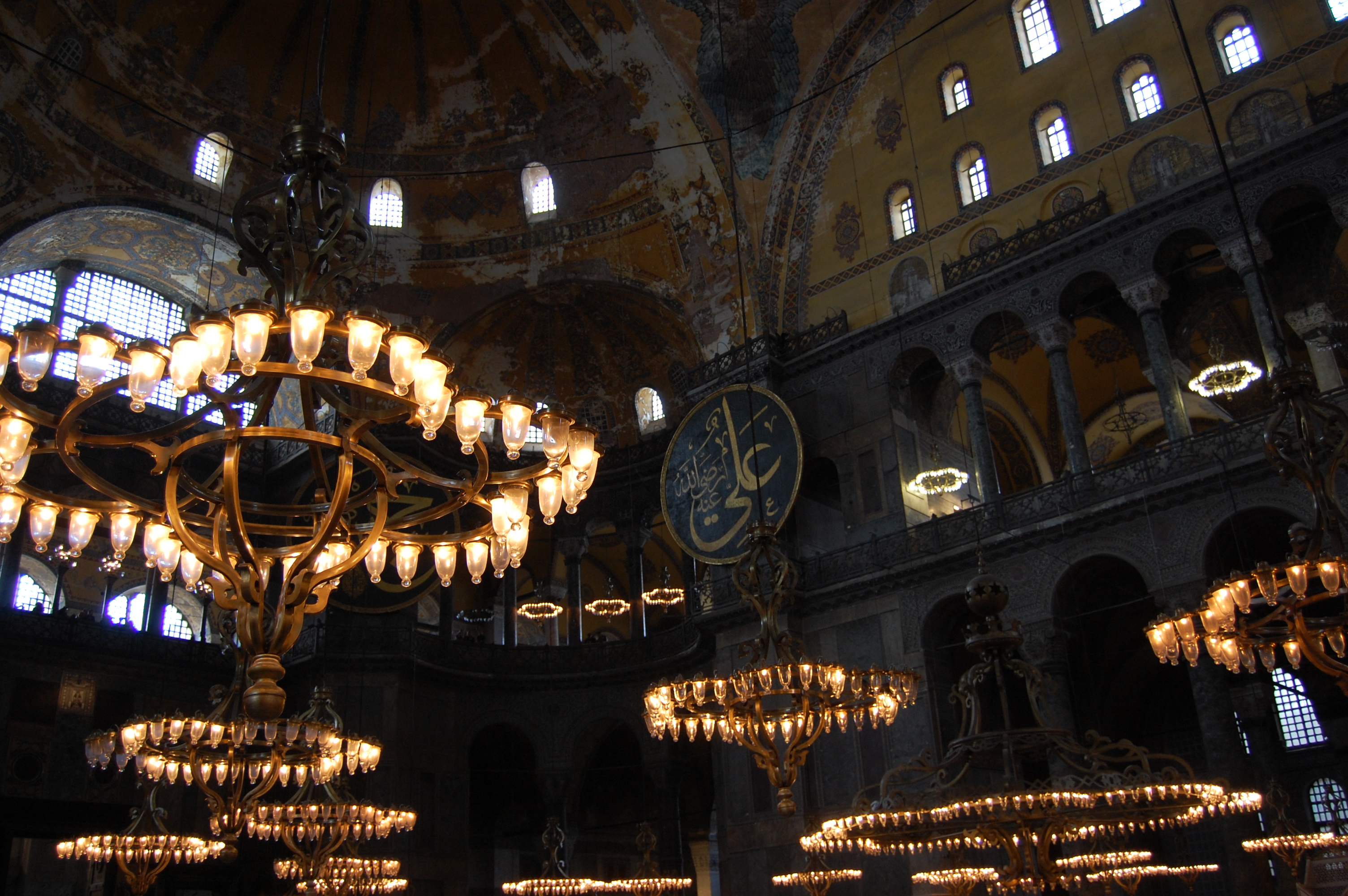
example of calligrahic roundel
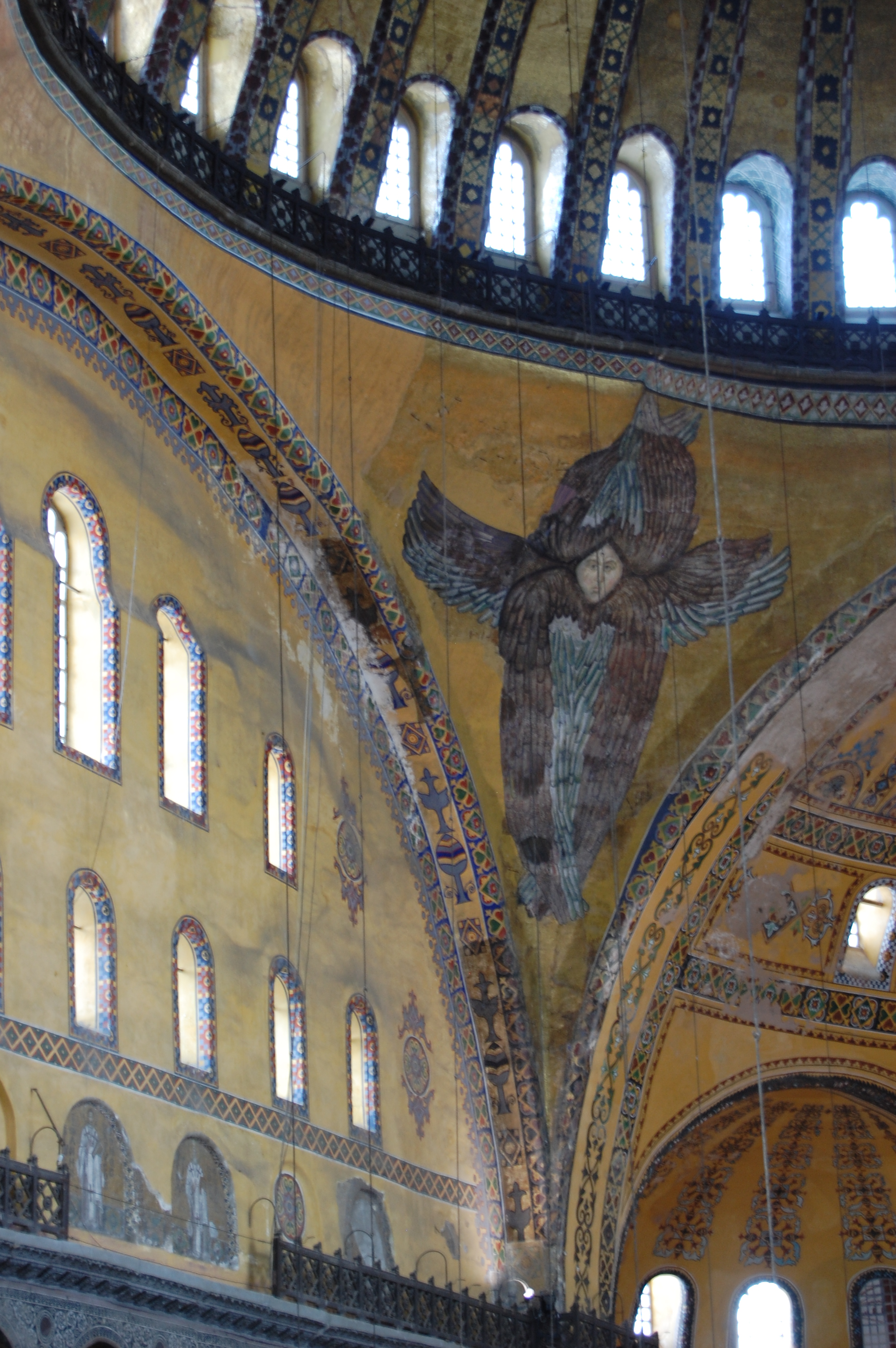
example of mosaic
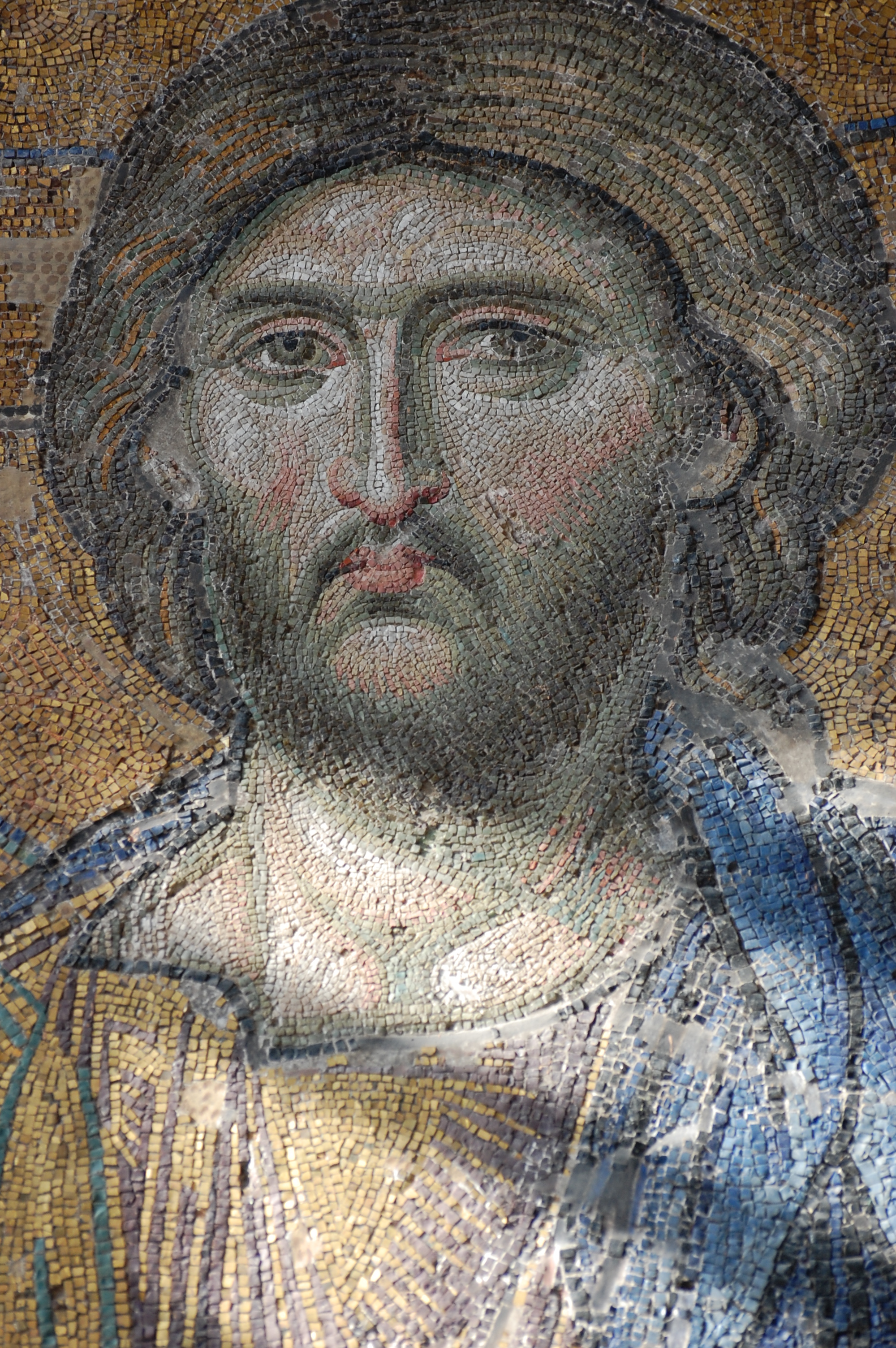
mosaic detail
We also went into the Blue Mosque, Istanbul’s most famous landmark. The blue mosque, which takes its name from the mainly blue Iznik tilework decorating its interior, is one of the most famous religious buildings in the world. Serene at any time, it is at its most magical when floodlit at night, its minarets circled by keening seagulls. Sultan Ahmet I (1603-17) commissioned the mosque during a period of declining Ottoman fortunes, and it was built between 1609-16 by Mehmet Aga, the imperial architect. The splendor of the plans provoked great hostility at the time, especially because a mosque with six minarets was considered a sacrilegious attempt to rival the architecture of Mecca itself.
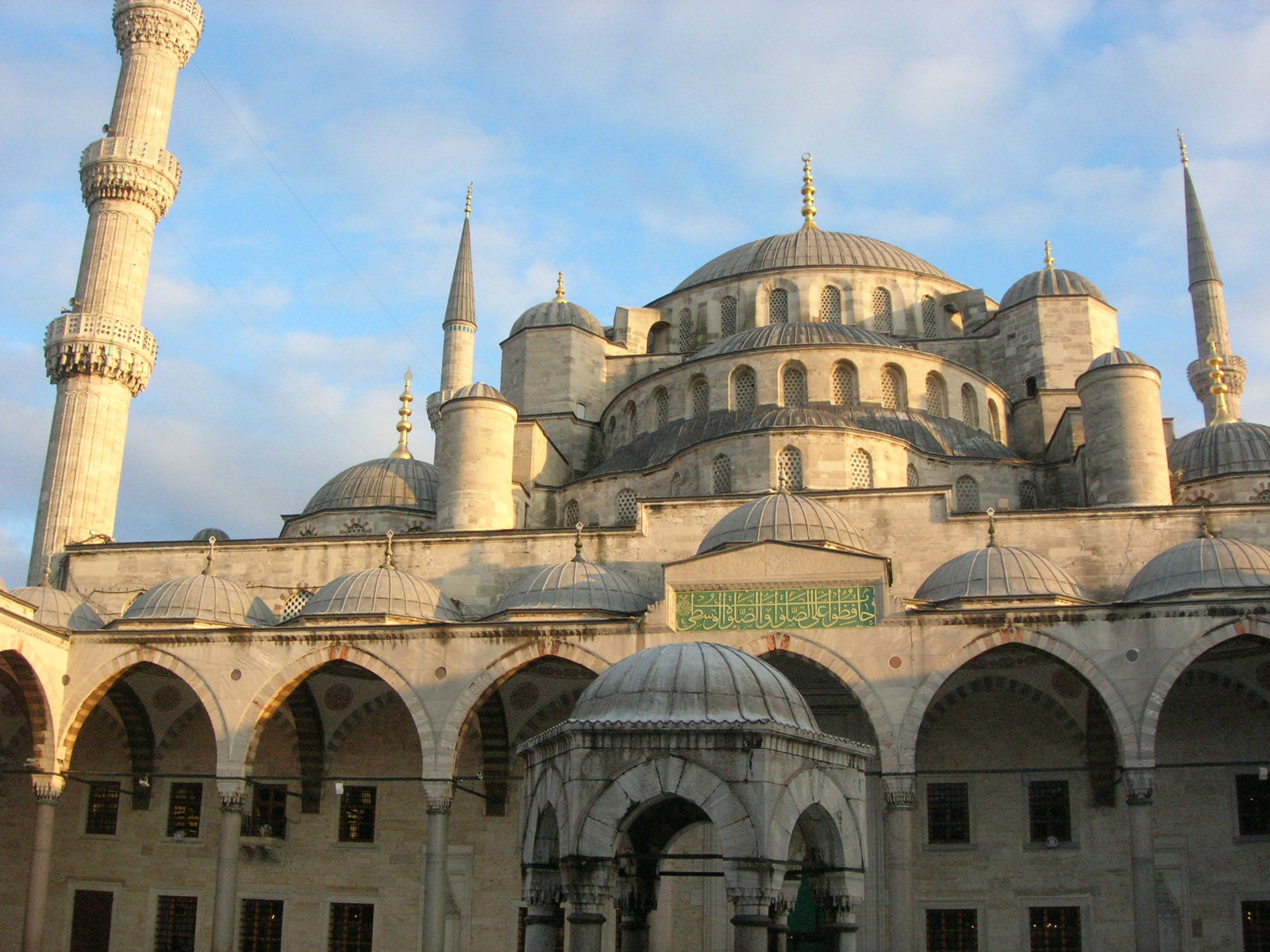
inside the courtyard, with ablutions fountain
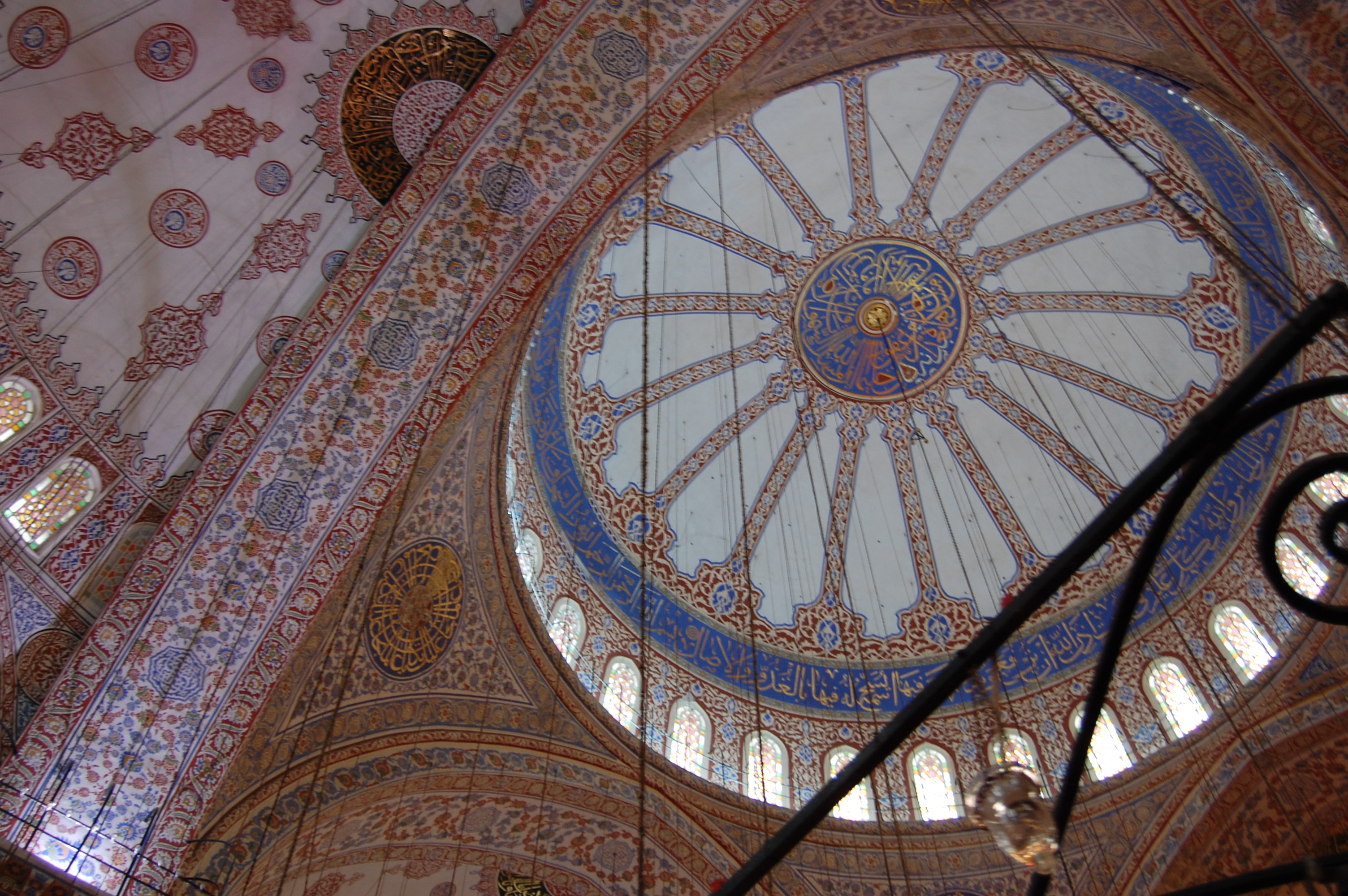
inside of the dome
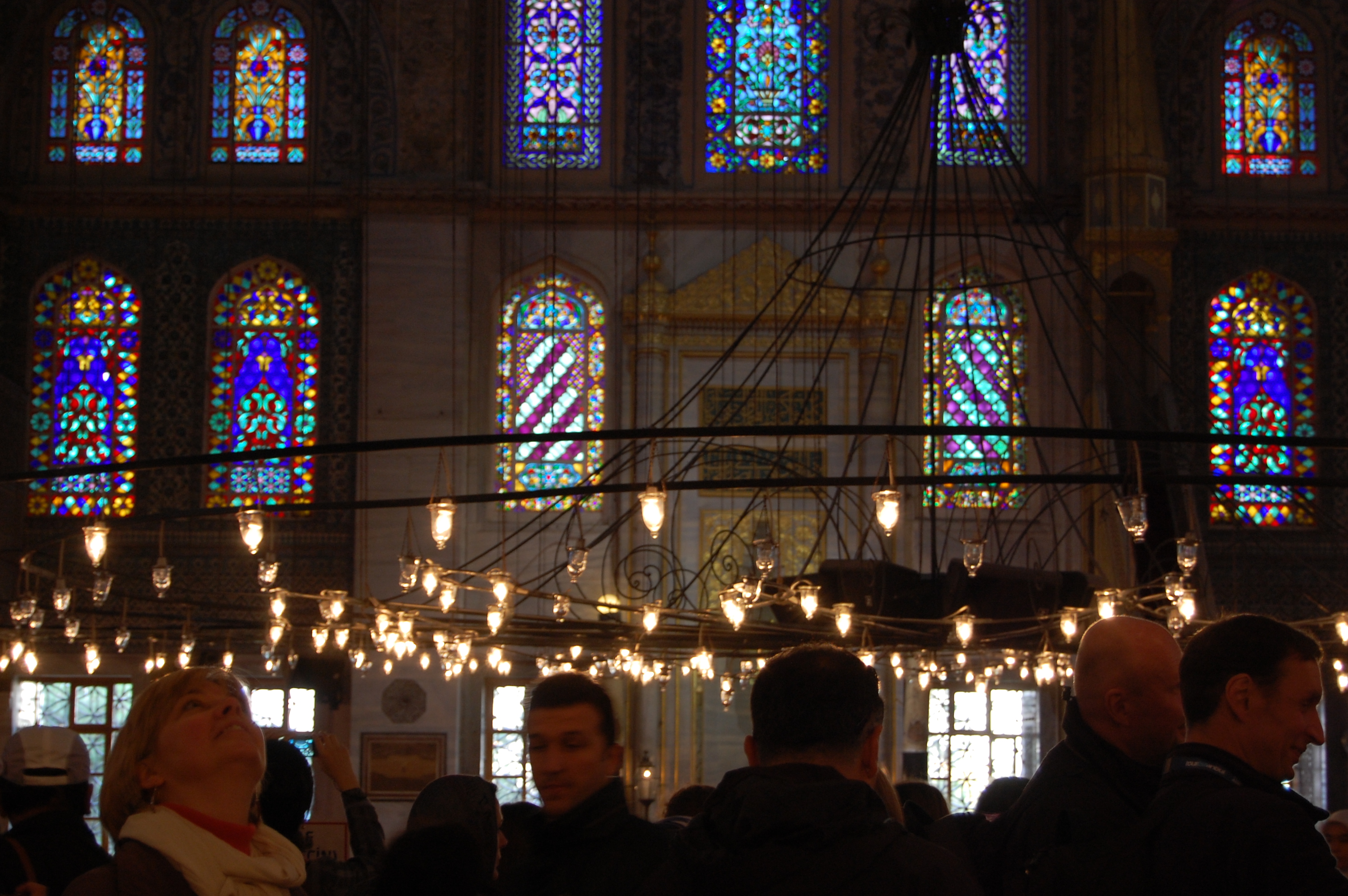
and beautiful stained glass windows
Our next stop was the Grand Bazaar, first to eat lunch and then to explore…
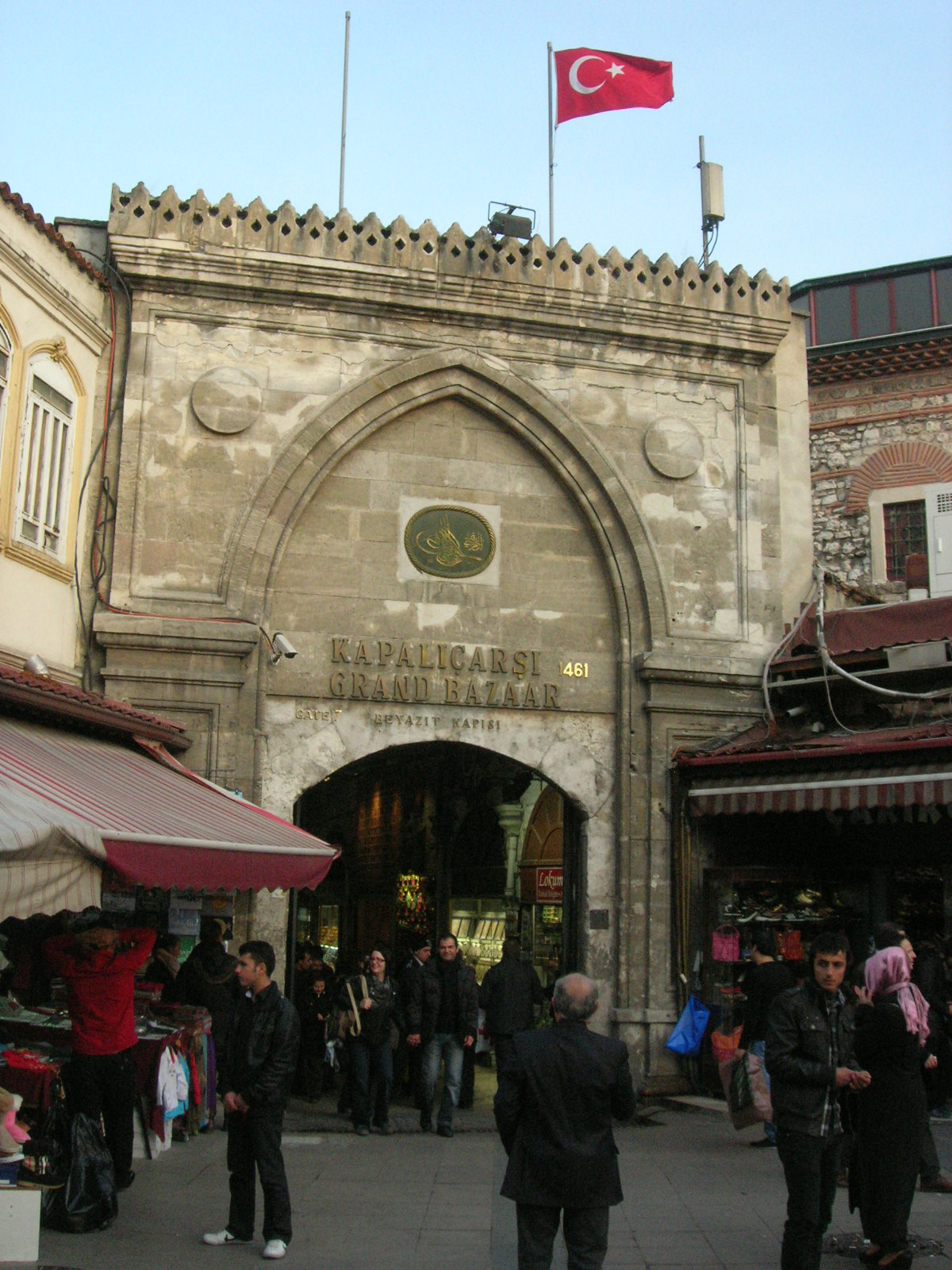
one of many gateways into the bazaar
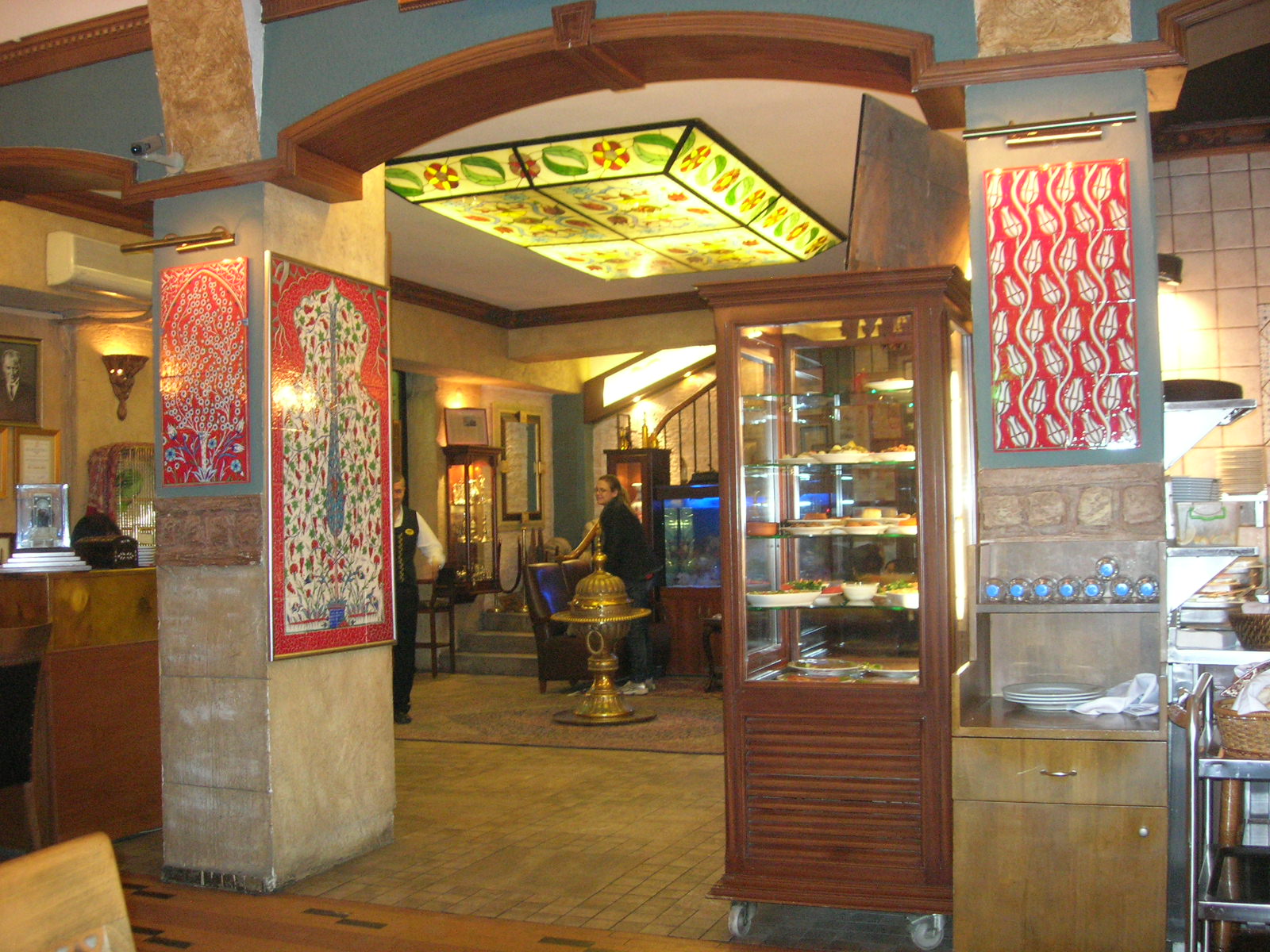
inside the Havuzlu restaurant in the Grand Bazaar
They have a website you can check out, with pictures of the restaurant, and the menu: http://www.havuzlurestaurant.com
The Eyewitness Guide says about the Bazaar: nothing can prepare you for the Grand Bazaar. (They’re right!) This labyrinth of streets covered by painted vaults is lined with hundreds of booth-like shops…. The bazaar was established by Mehmet II shortly after his conquest of the city in 1453. It is easy to get lost in the bazaar in spite of the signposting…. which is why Gamze gave us a tour, stopping by a few of her favourite shops.
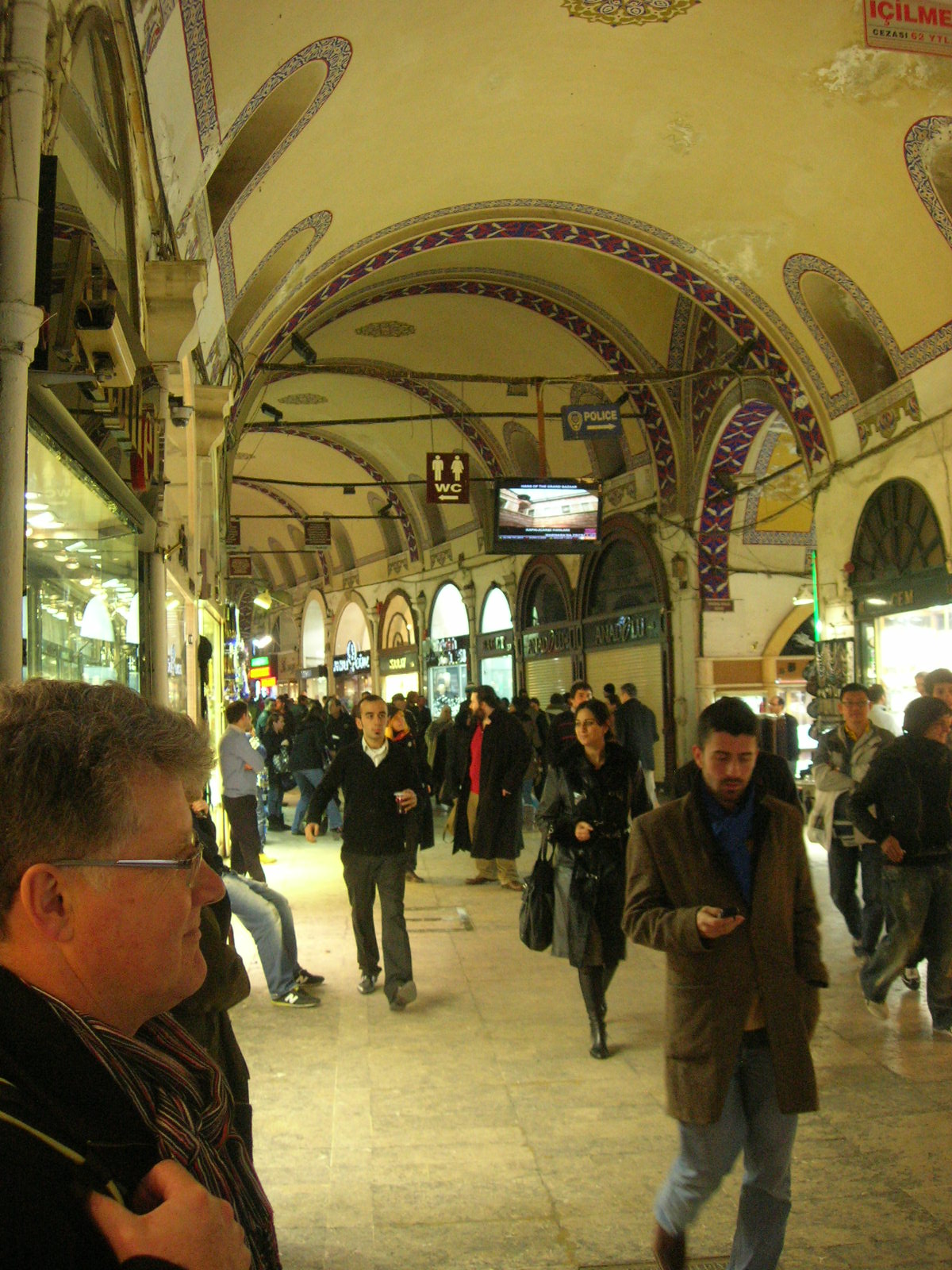
Don watching the activity in the Grand Bazaar
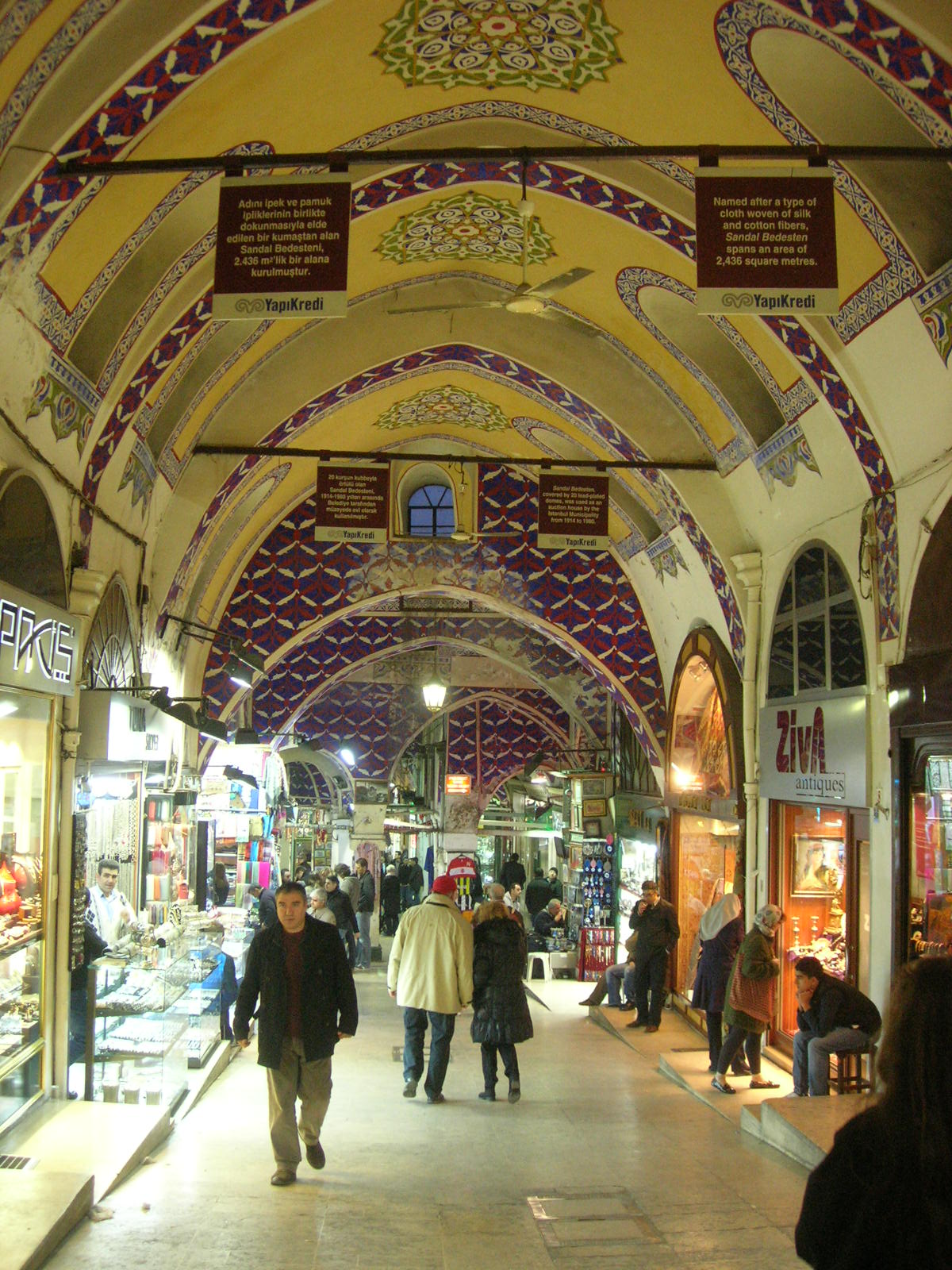
so many shops under beautifully tiled ceiling
Even with a map it was easy to get confused in this place!
Back to the hotel for a drink at the bar, and then we went out for an excellent dinner at a near-by seafood restaurant Gamze recommended called Balikgi Sabahattin.
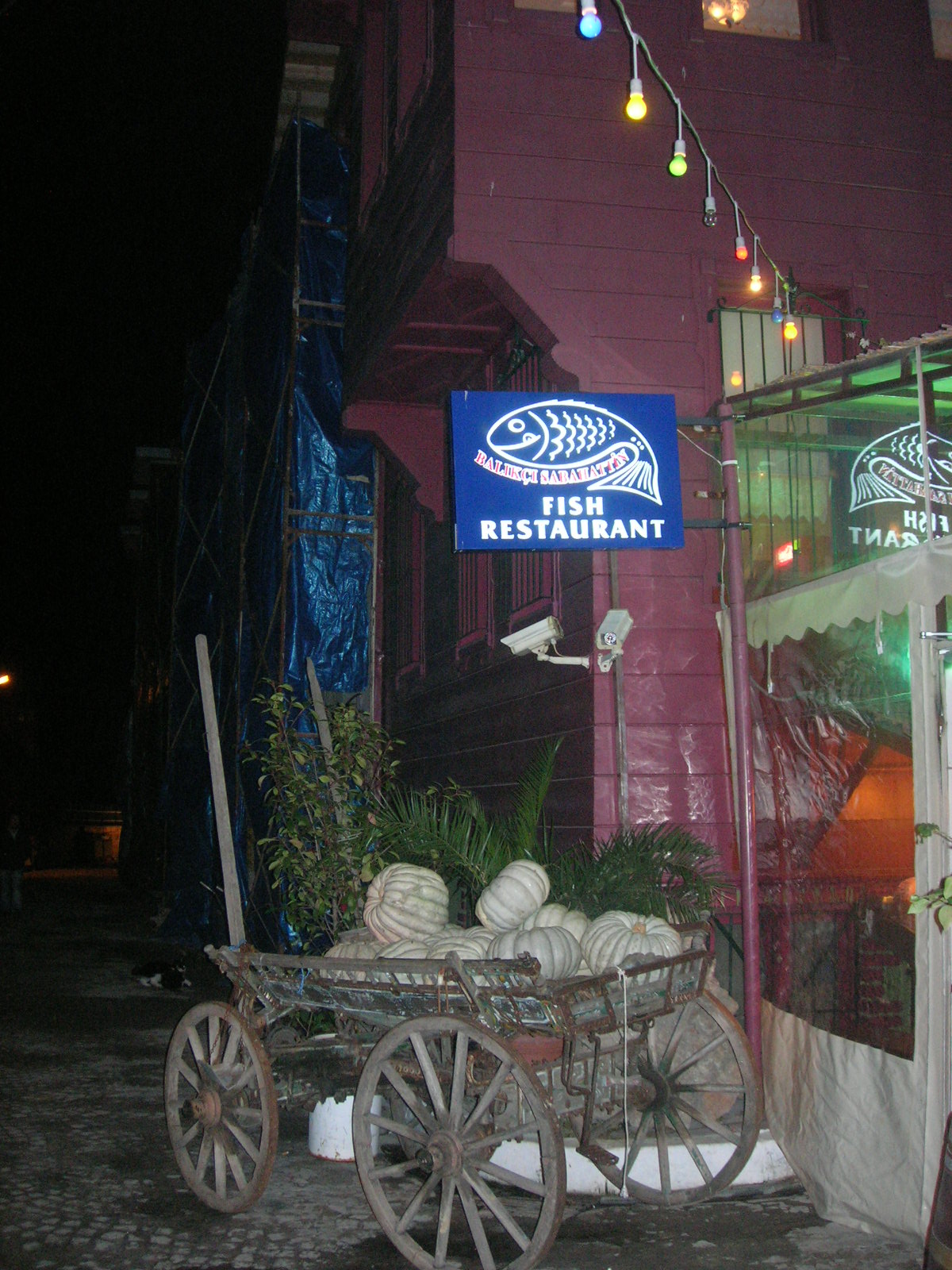
fabulous seafood here
The next day Gamze was back at 9:30 and off we went to Topkapi Palace, where we spent over 3 hours touring the huge grounds and buildings. Between 1459 and 1465, shortly after his conquest of the city, Mehmet II built Topkapi Palace as his main residence. Rather than a single building, it was conceived as a series of pavilions contained by four enormous courtyards, a stone version of the tented encampments from which the nomadic Ottomans had emerged. Initially the palace served as the seat of government and housed a school in which civil servants and soldiers were trained. In the 18th century the government was moved to another location, and in 1853 the current sultan, Sultan Abdul Mecit I abandoned Topkapi in favour of Dolmabahce Palace. In 1924 Topkapi was opened to the public as a museum. (Side note: in 1964 a movie called Topkapi was released, starring Maximilian Schell and Melina Mercouri, and co-starring Peter Ustinov – a comedy-thriller of 2 thieves out to steal the jewelry-encrusted dagger that is actually on display in the palace treasury; some of the scenes of the movie were filmed on the palace grounds.)
We wandered through the grounds, through the Harem – the labyrinth of rooms where the sultan’s wives and concubines lived – and through the treasury.
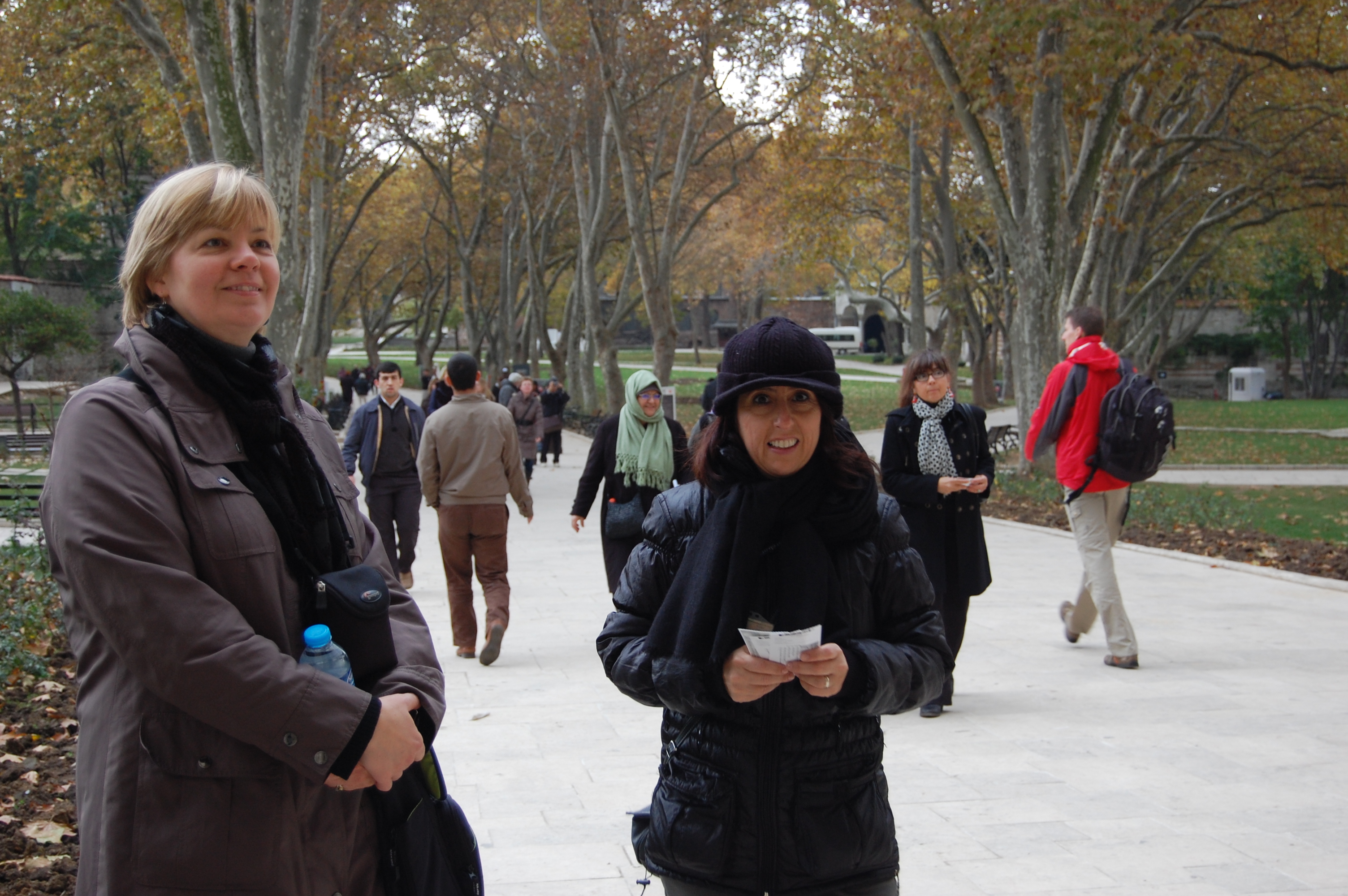
Gamze and me somewhere on palace grounds
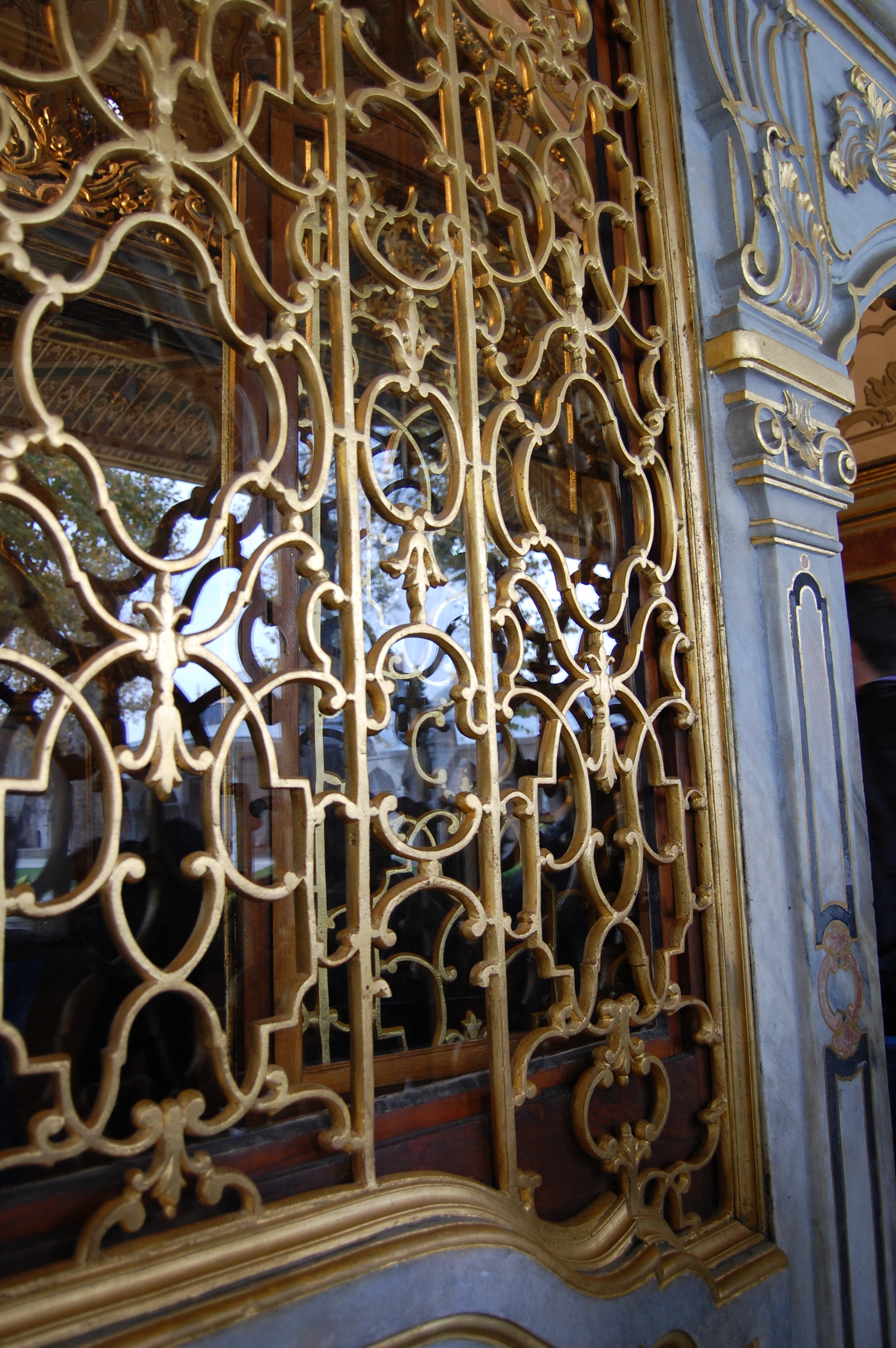
beautiful detail
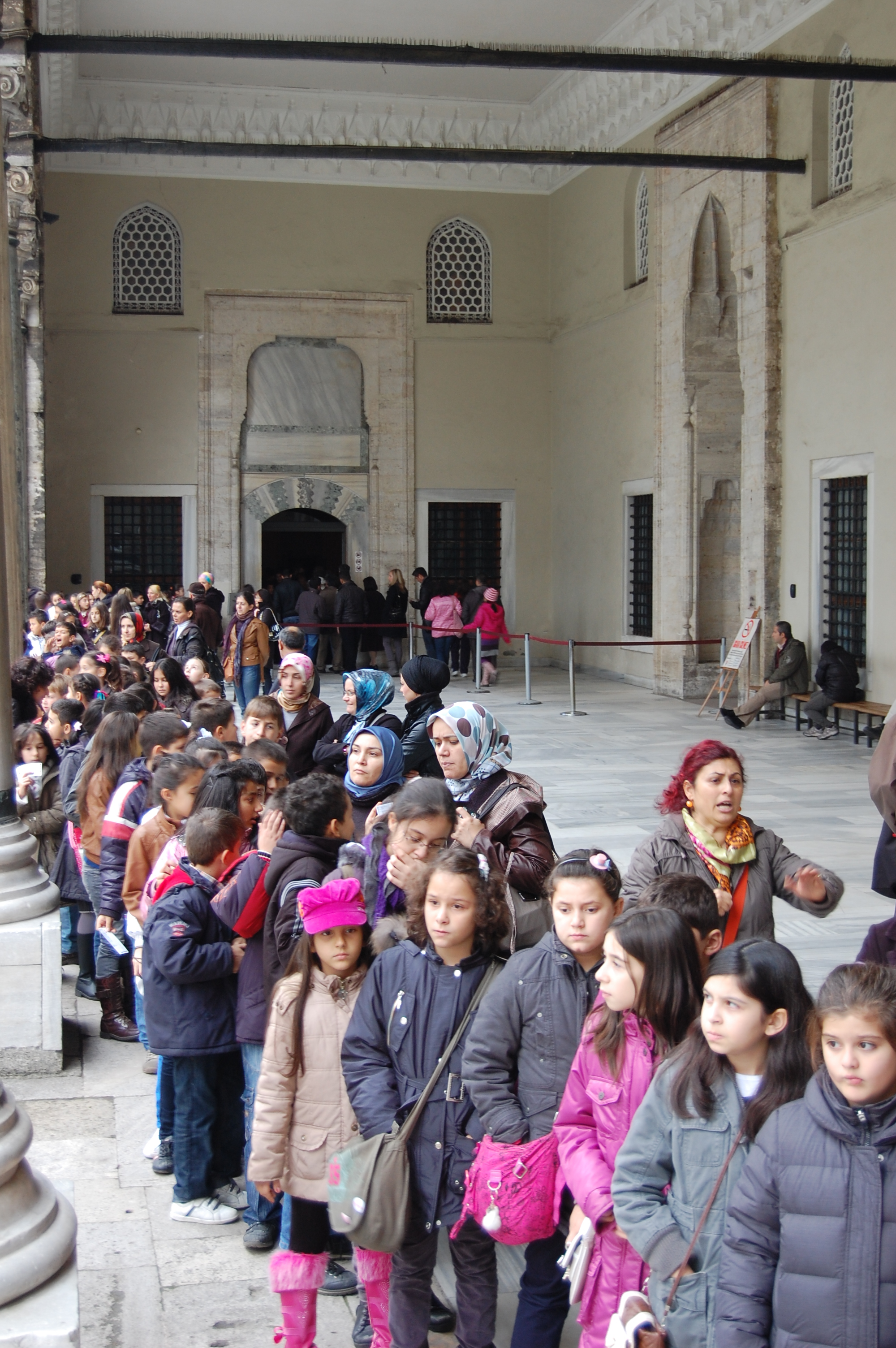
way too many school tours!
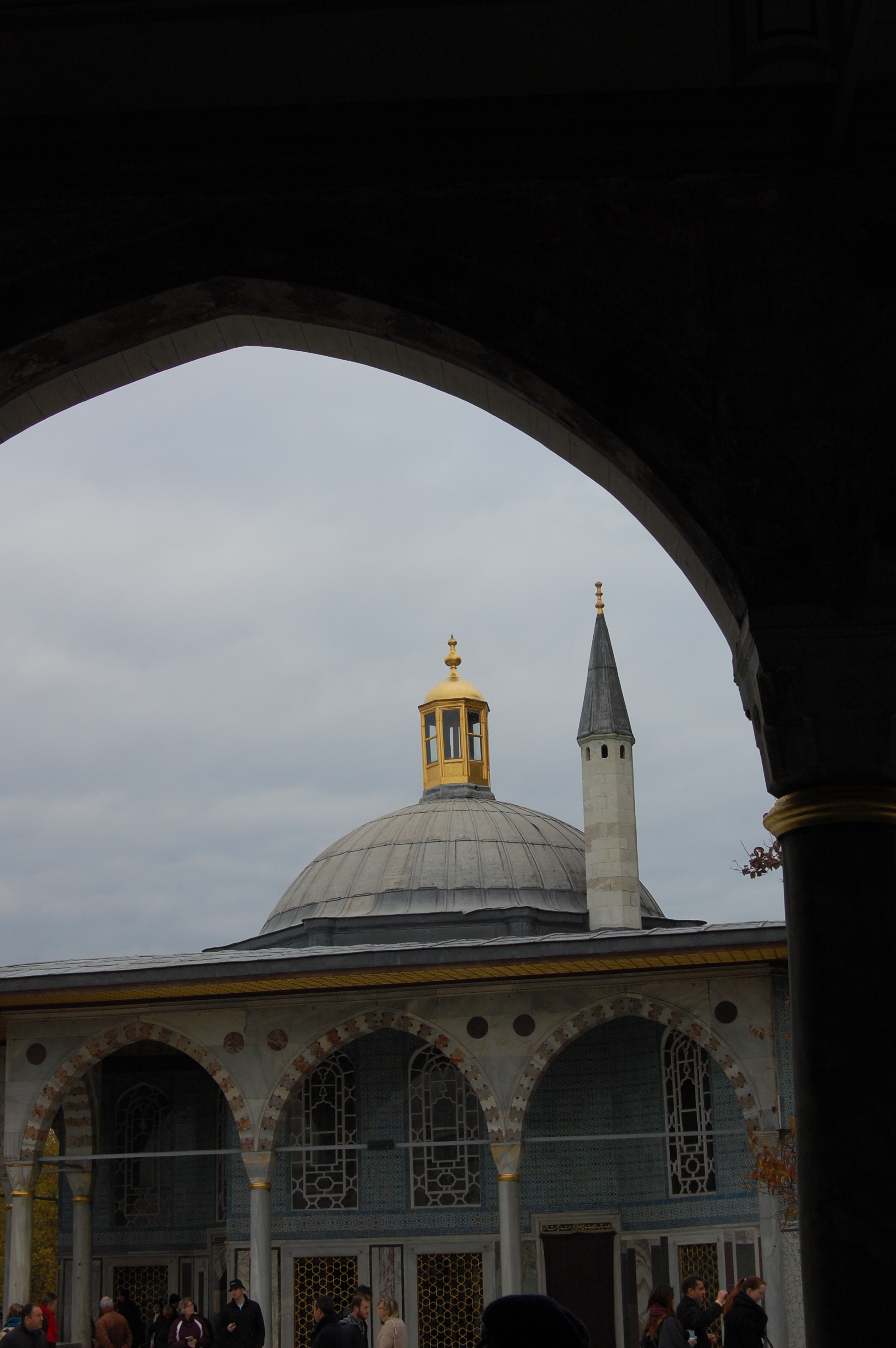
roof top detail
After a thorough visit at the palace, we moved on to the Basilica Cistern, (to me perhaps the most amazing and eerily beautiful thing we saw): a vast underground water cistern, a beautiful piece of Byzantine engineering. Although there may have been an earlier, smaller cistern here, this cavernous vault was laid out under Justinian in 532, mainly to satisfy the growing demands of the Great Palace on the other side of the Hippodrome. For a century after the conquest, the Ottomans did not know of the cistern’s existence. It was rediscovered after people were found to be collecting water, and even fish, by lowering buckets through holes in their basements. Today visitors tread walkways, to the mixed sounds of classical music and dripping water. The cistern’s roof is held up by 336 columns, each over 8 metres high. The original structure covered a total area of 9800 square metres, but today only about 2/3 of it is visible, the rest having been bricked up in the 19th century. Water reached the cistern, which held about 100 million litres, from the Belgrade Forest, 20 km north of Istanbul, via the Valens Aqueduct.
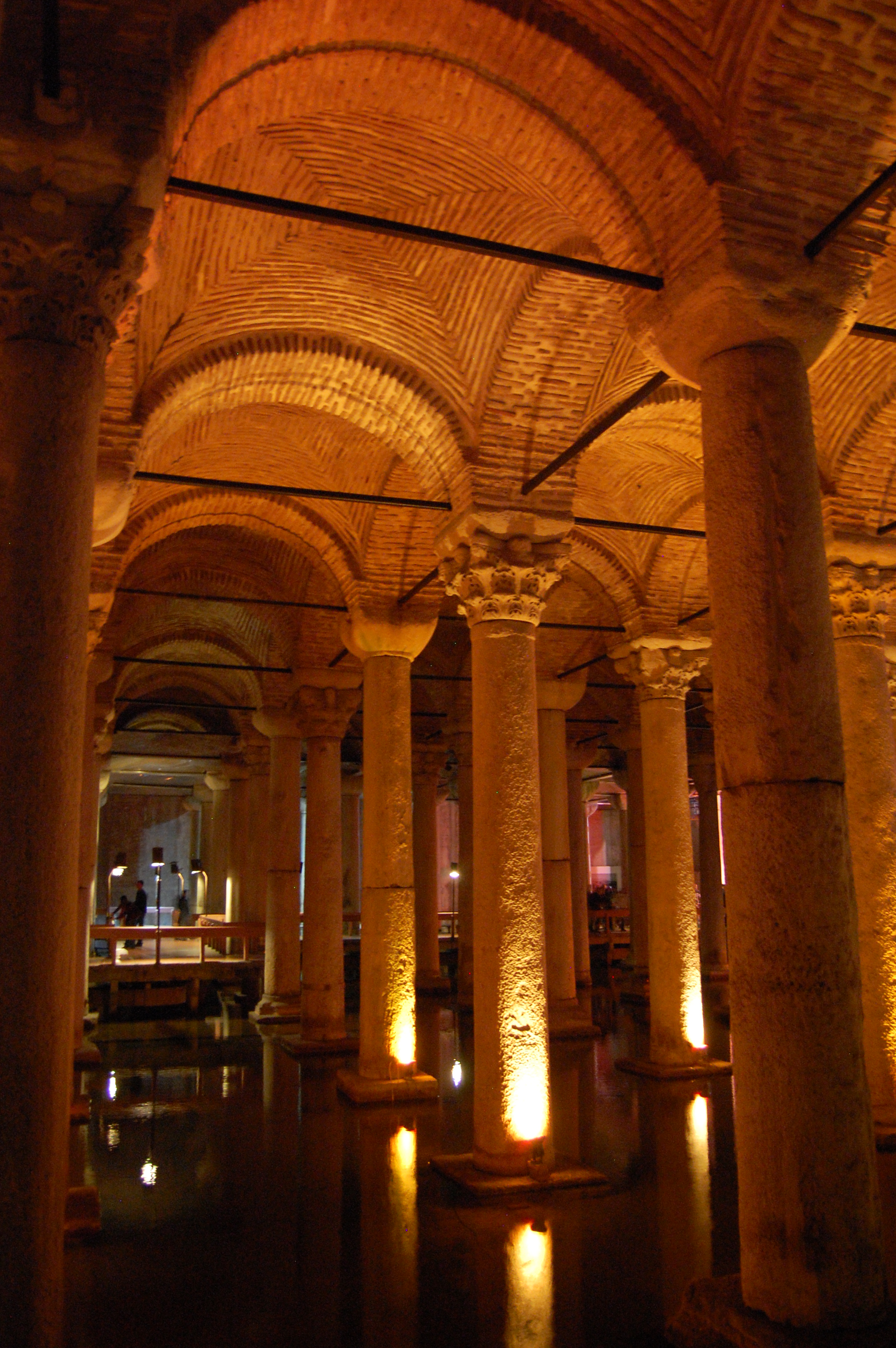
columns are lit and beautifully reflect in the water
From here, Gamze taught us how to take the tram, and off we went to the Spice Market area, first to have lunch at Hamdi Restaurant – turkish pizza and the BEST baclava we’ve ever had!
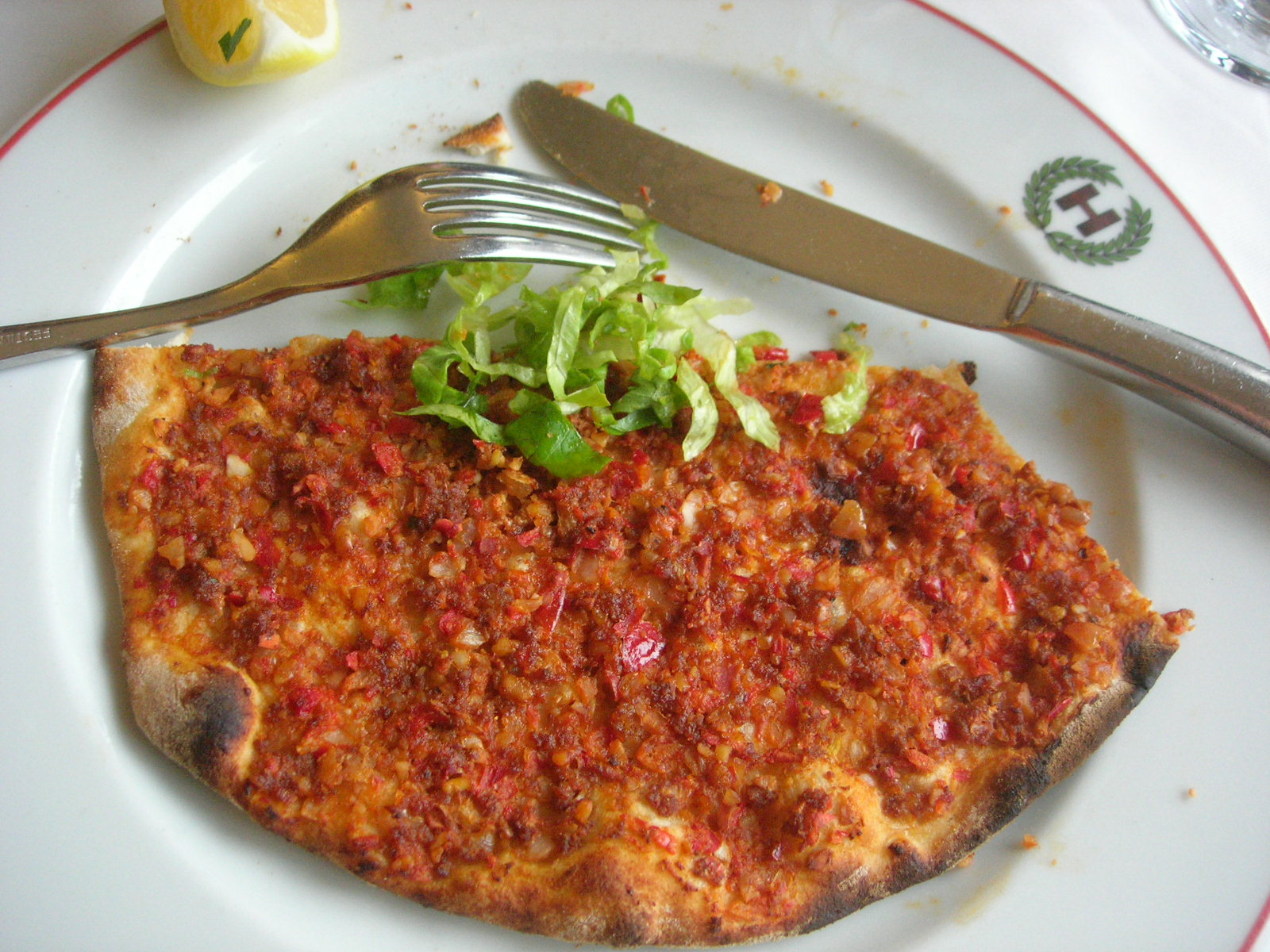
turkish pizza - very flat crust, minced meat, sprinkled with pomegranite syrup - delicious!
After lunch we wandered through the Spice Market, and bought pistachios, turkish delight and saffron to bring home. And took lots of pictures – such a picturesque area!
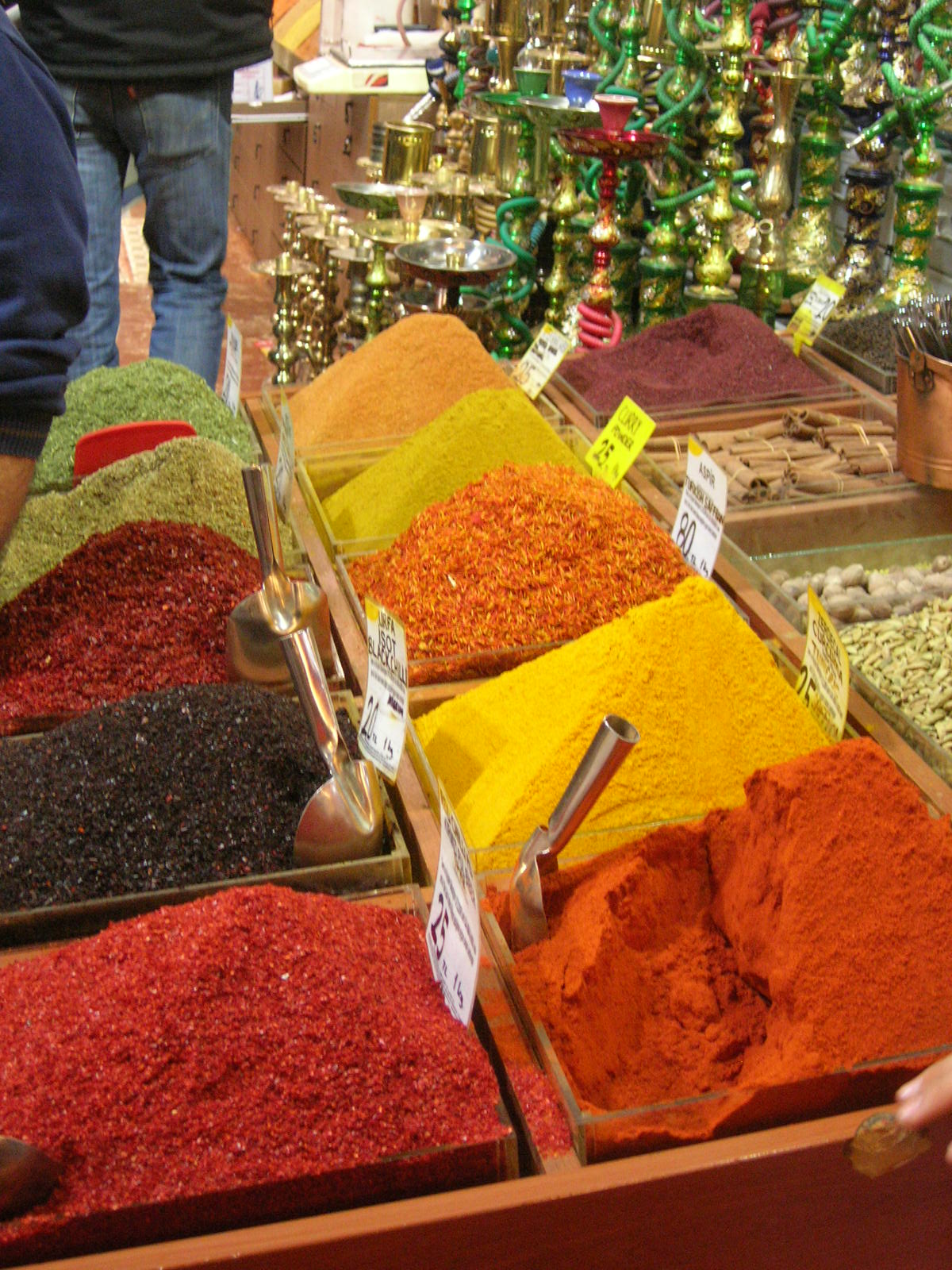
colourful spices
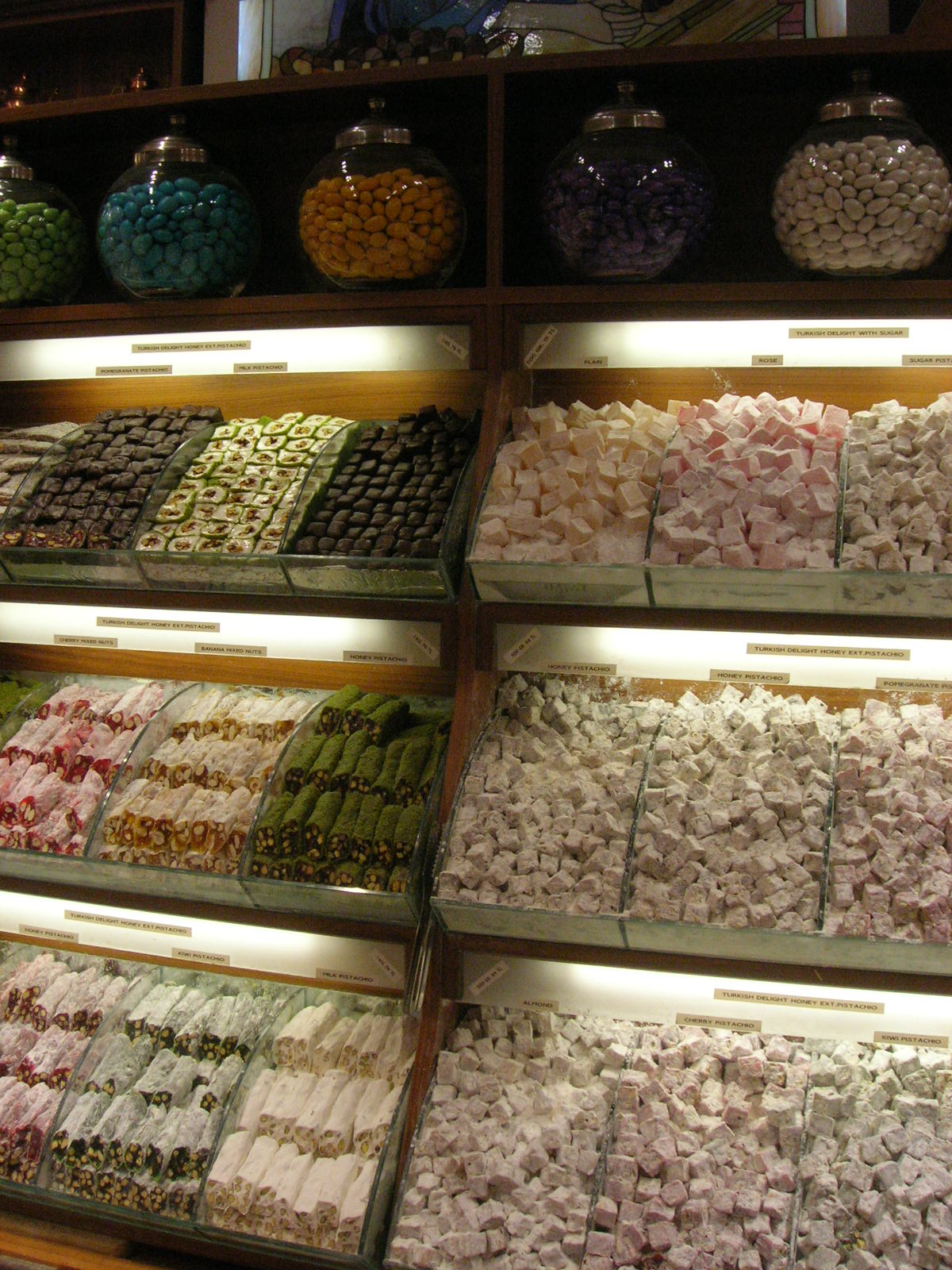
turkish delight and other treats
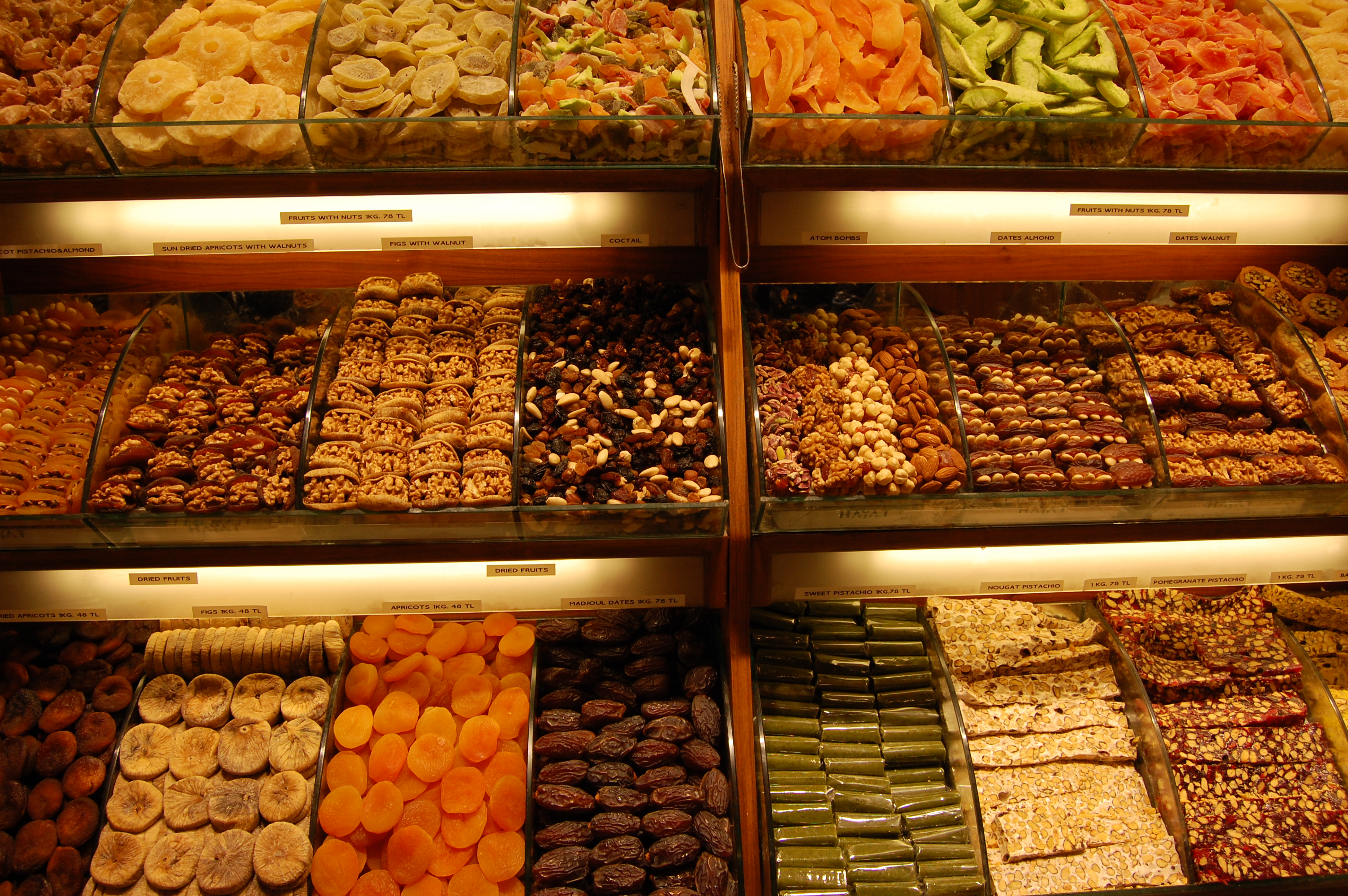
dried fruits and nuts
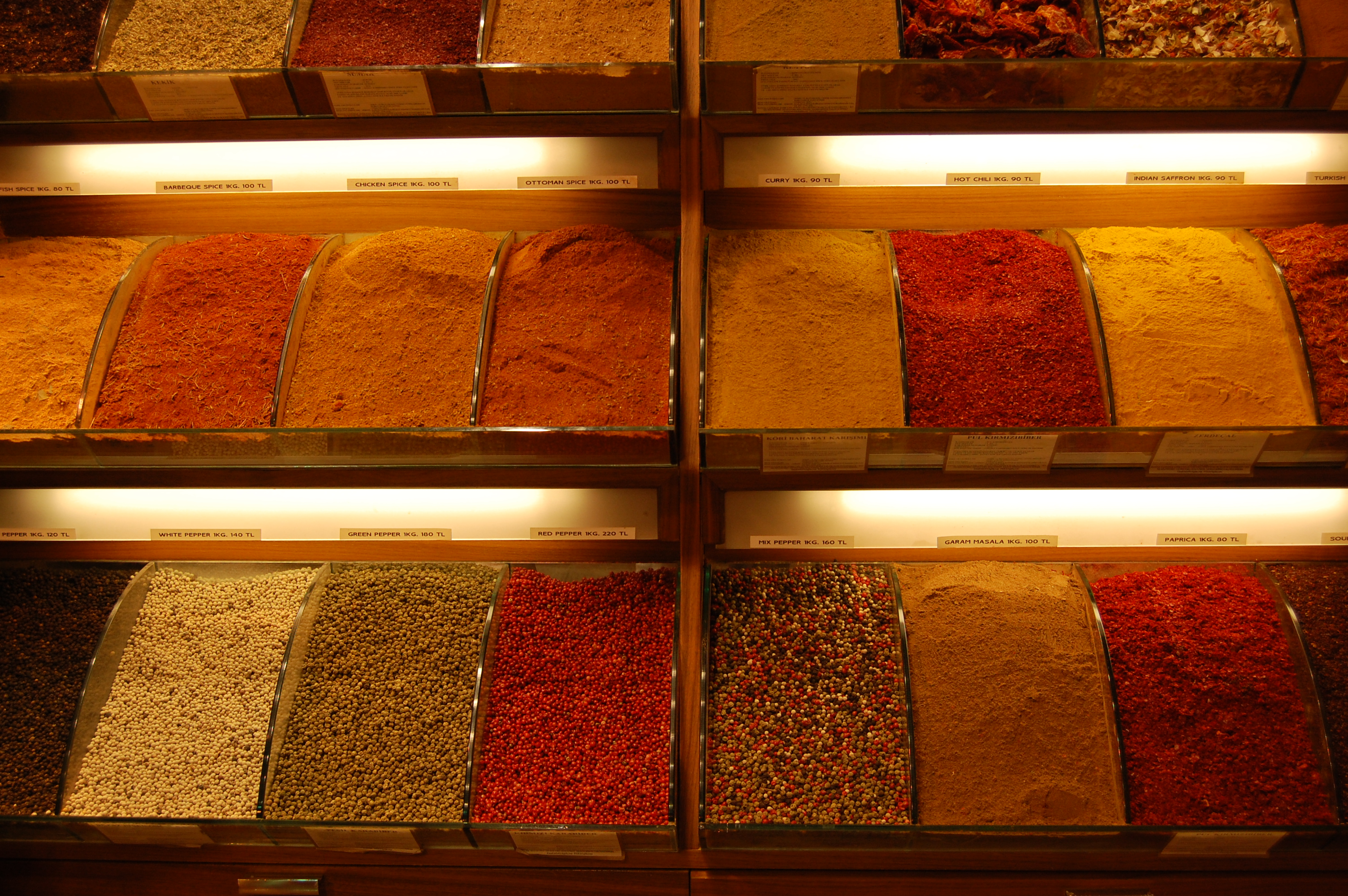
more spices
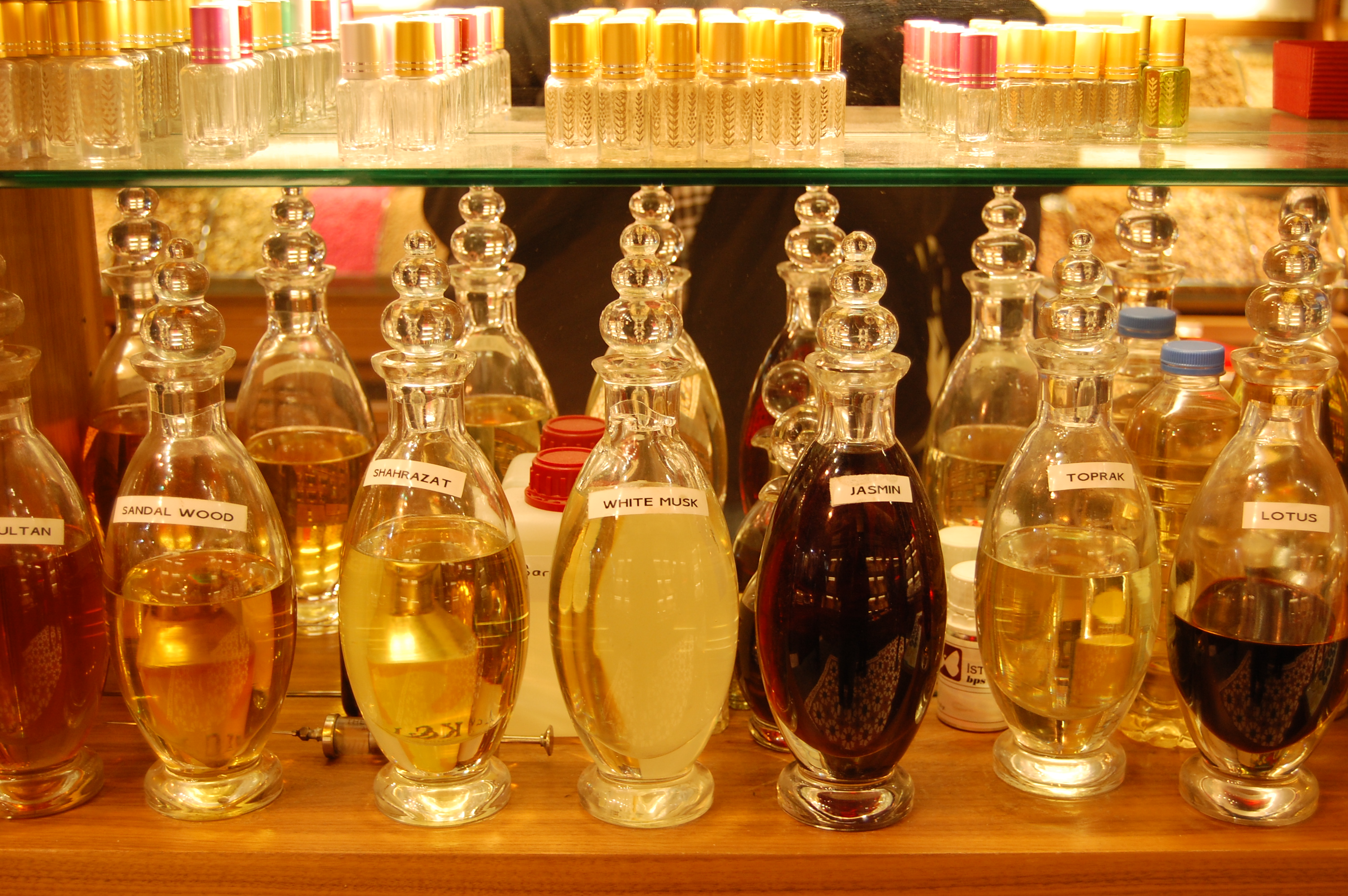
fragrances
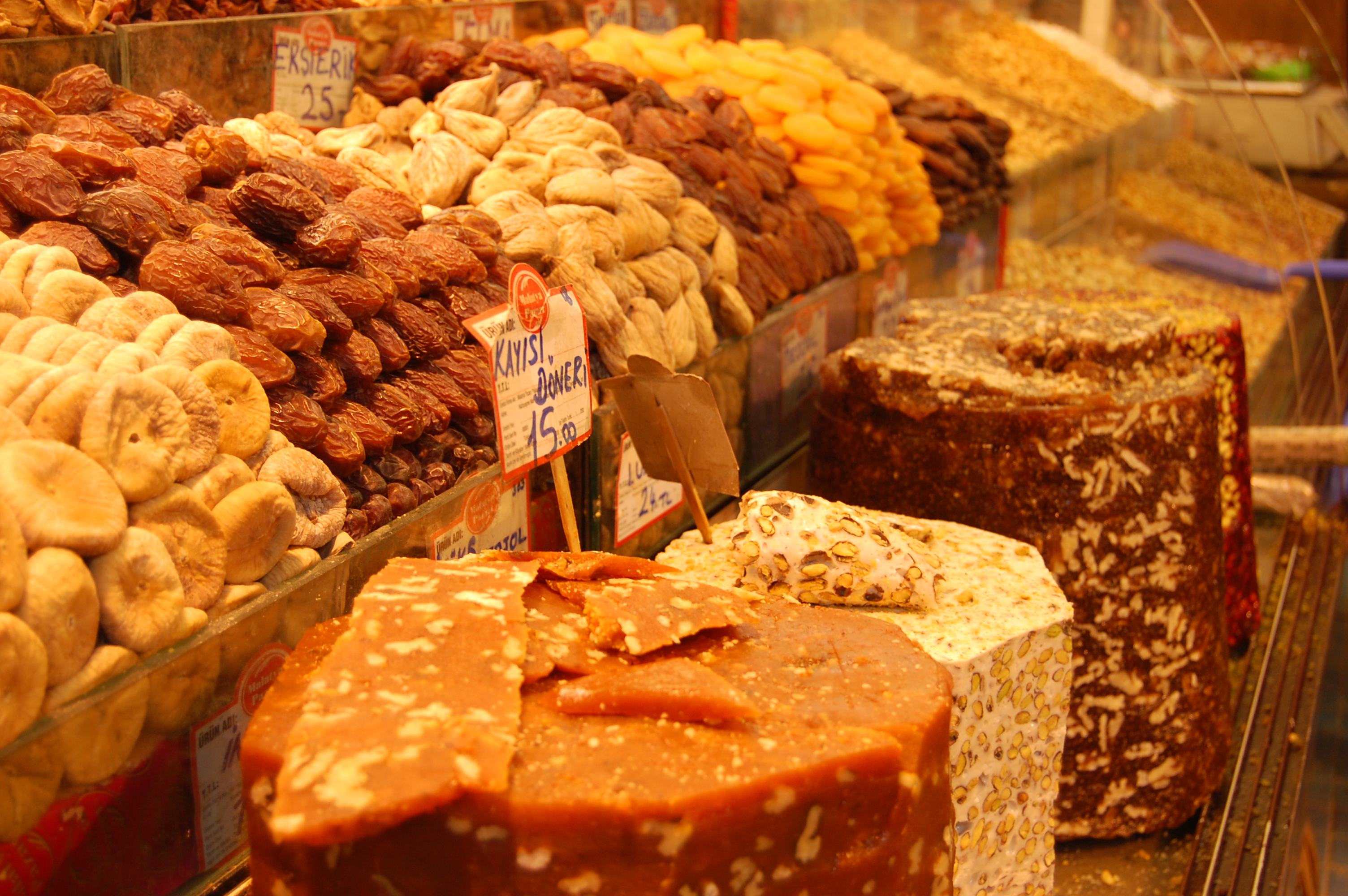
nougat
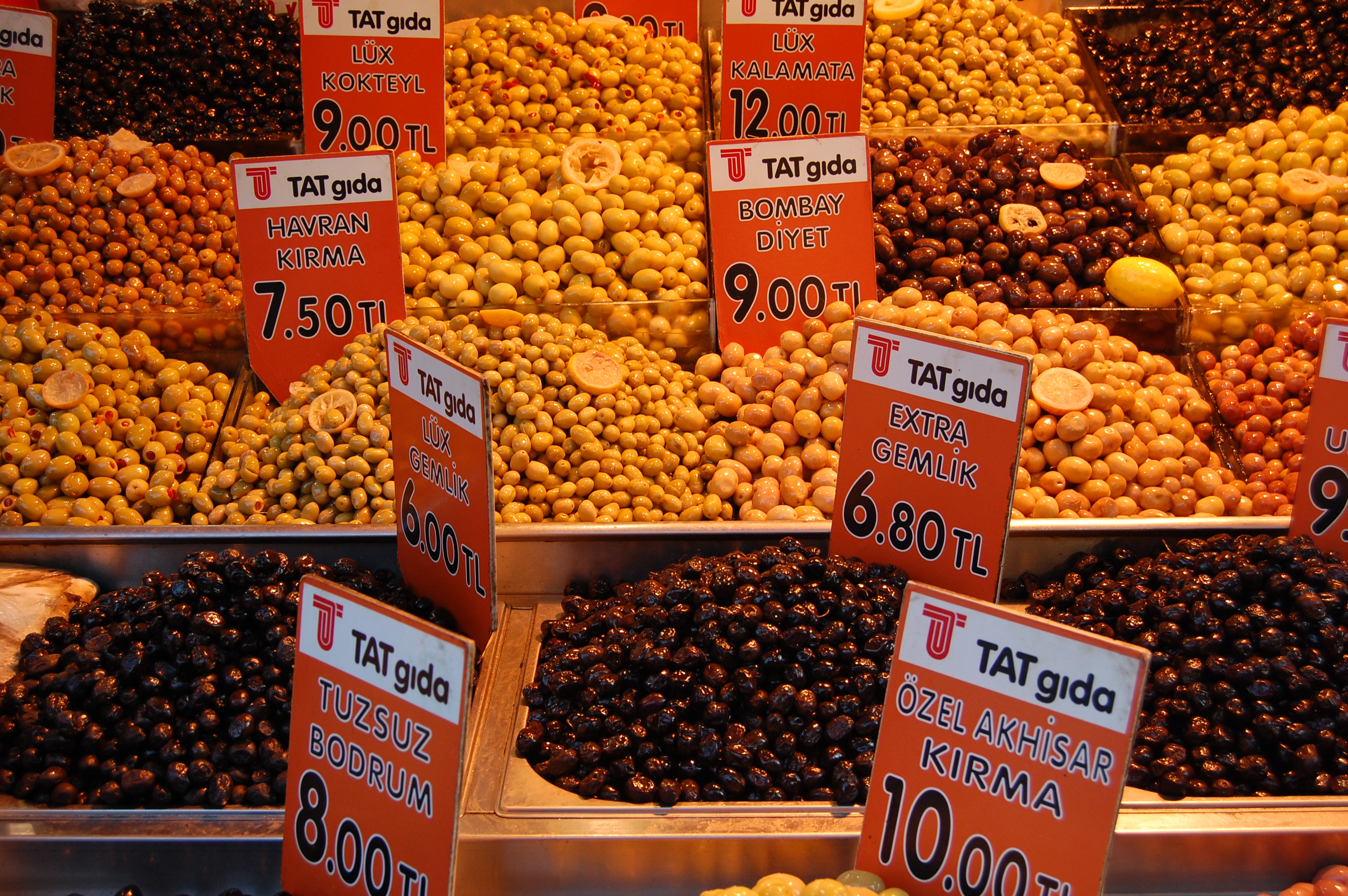
olives
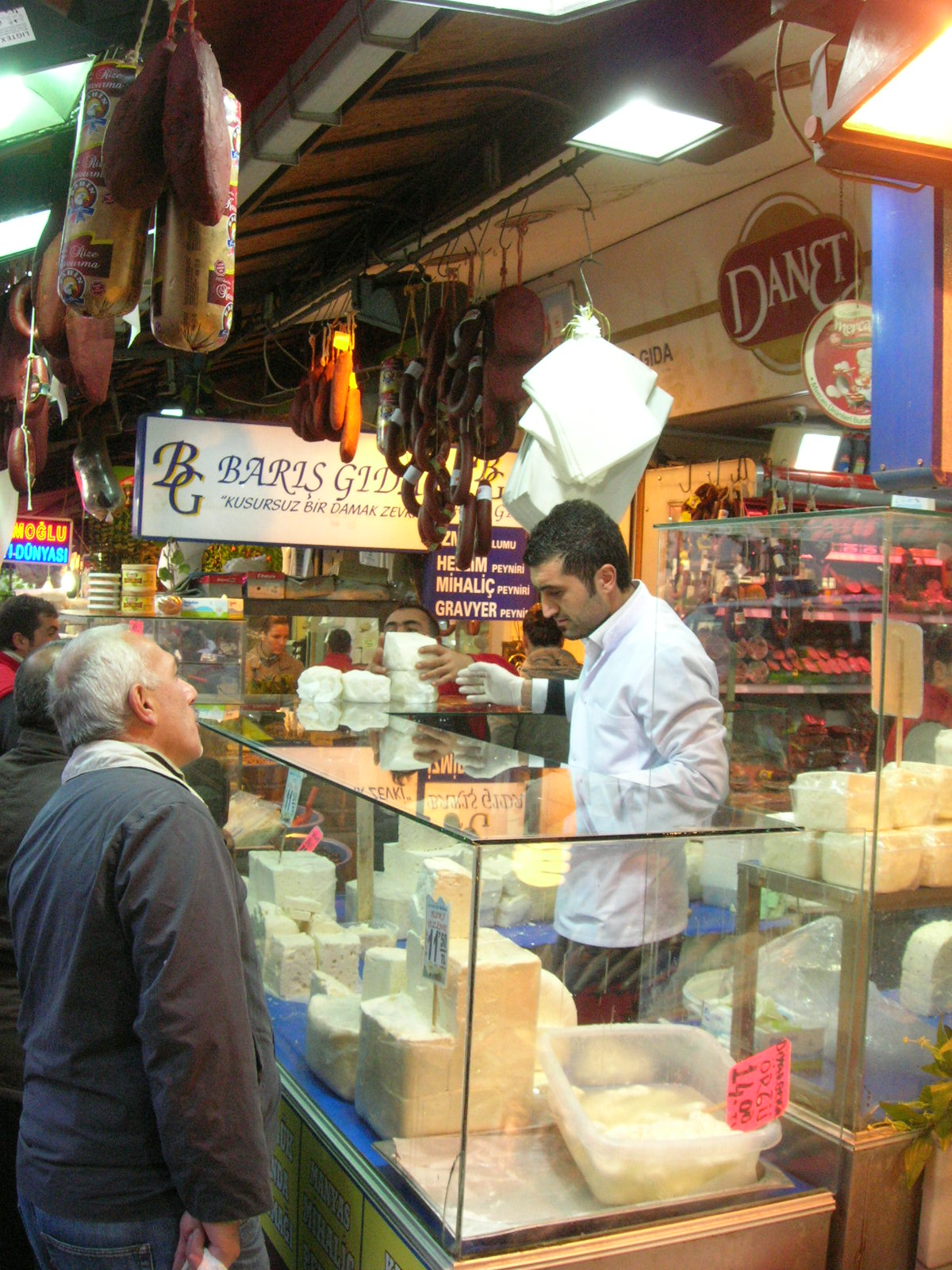
lots of feta, and other cheeses
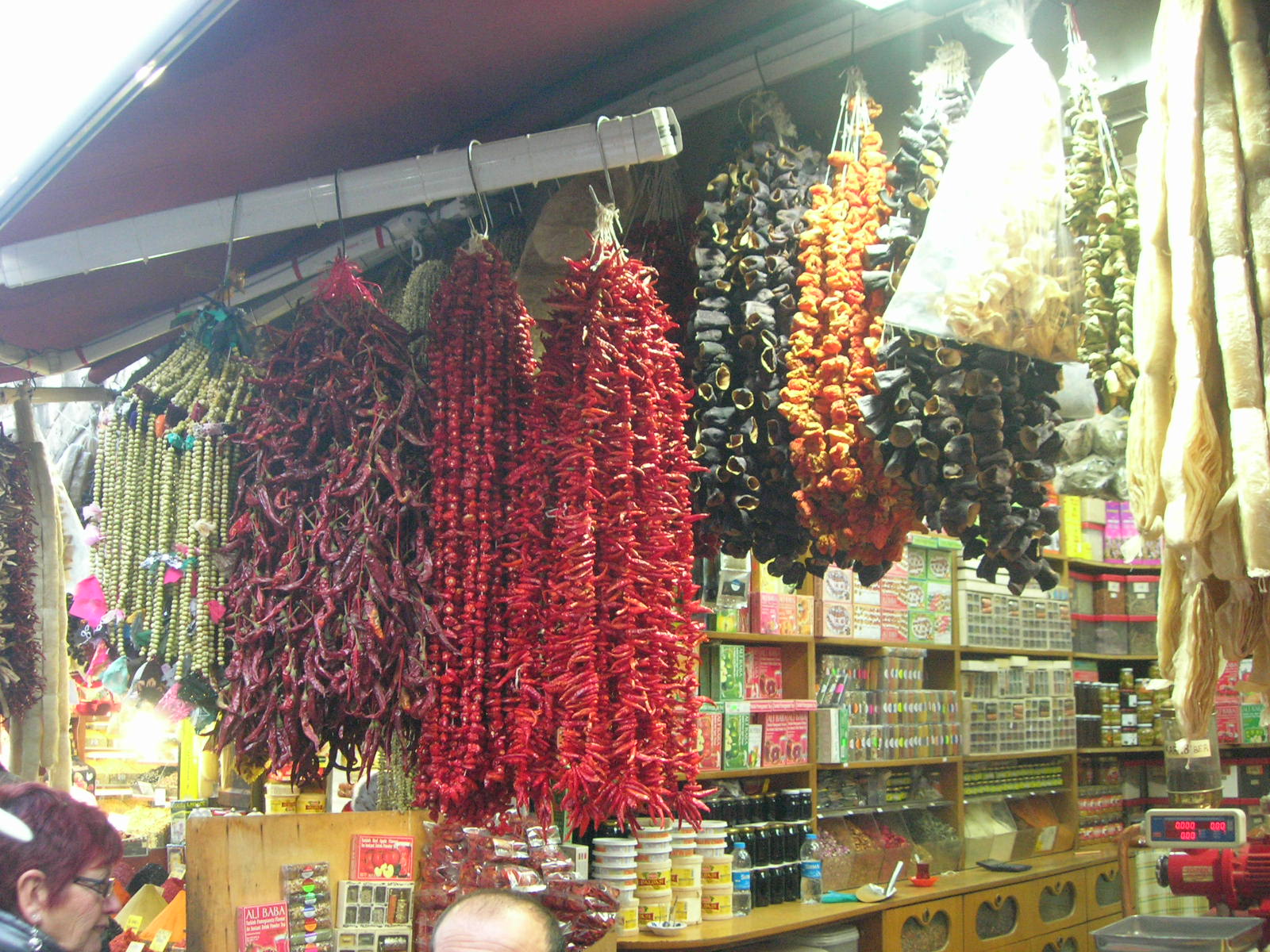
dried peppers and eggplants
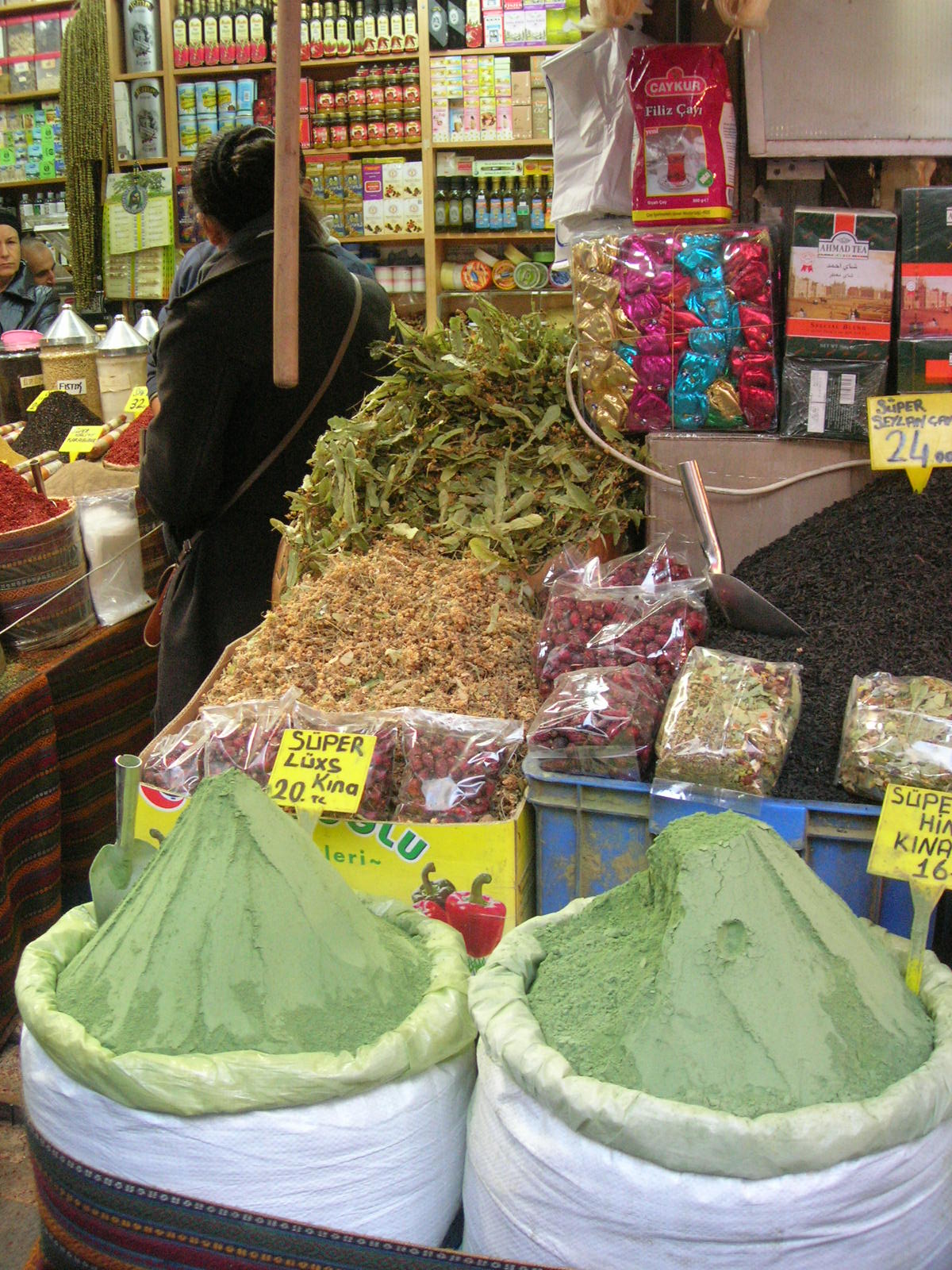
I think it's aloe
I TOLD you there were great photo opportunities!!
Our final activity for the day was to walk across the Galata Bridge, which spans the mouth of the Golden Horn, a flooded river valley which flows into the Bosphorous. This bridge is great fun, tightly lined with fishermen on the top level, cafes and bars on the lower level, and affording great views of the city.
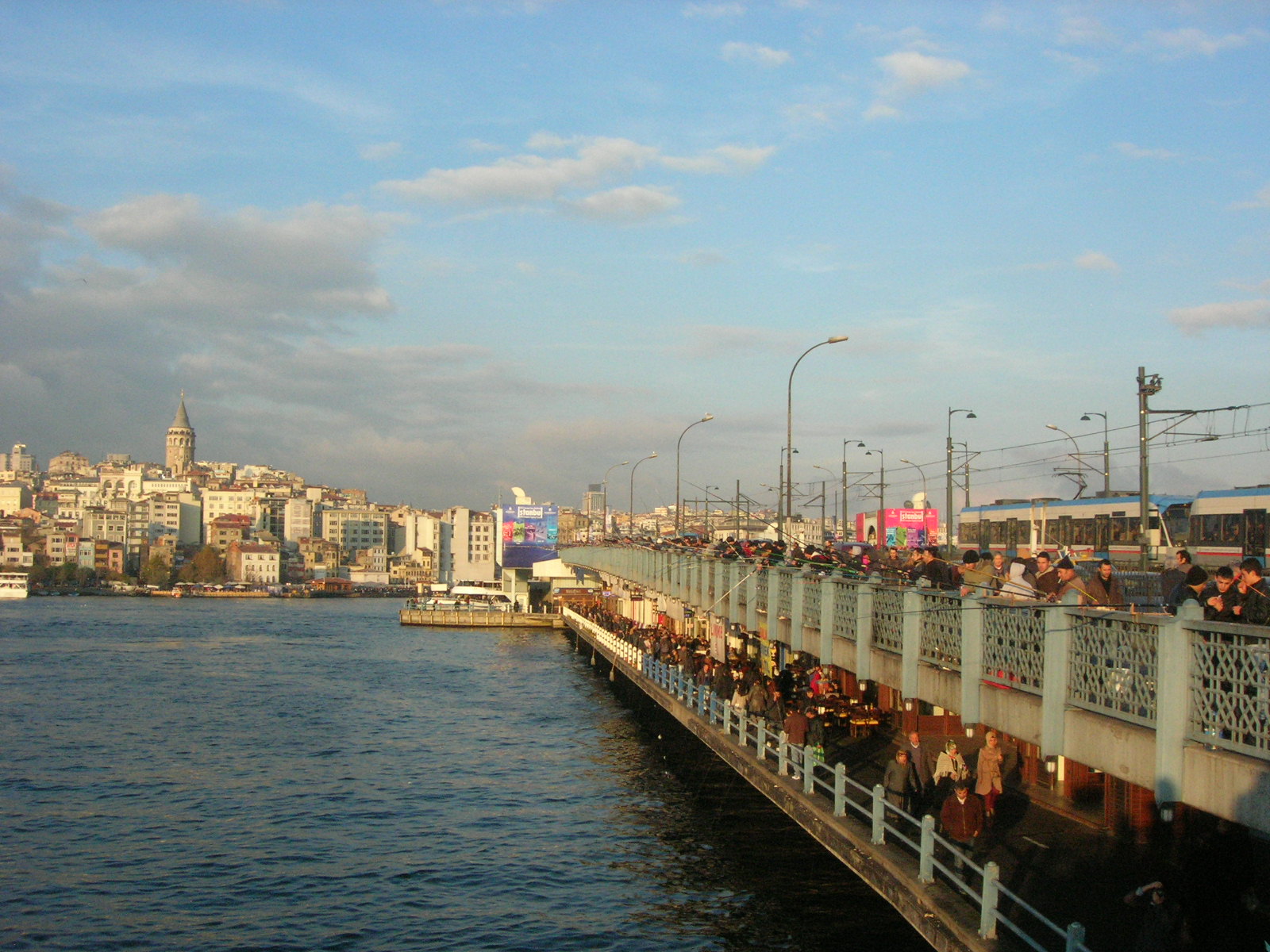
Galata Bridge, and Galata Tower on the other side
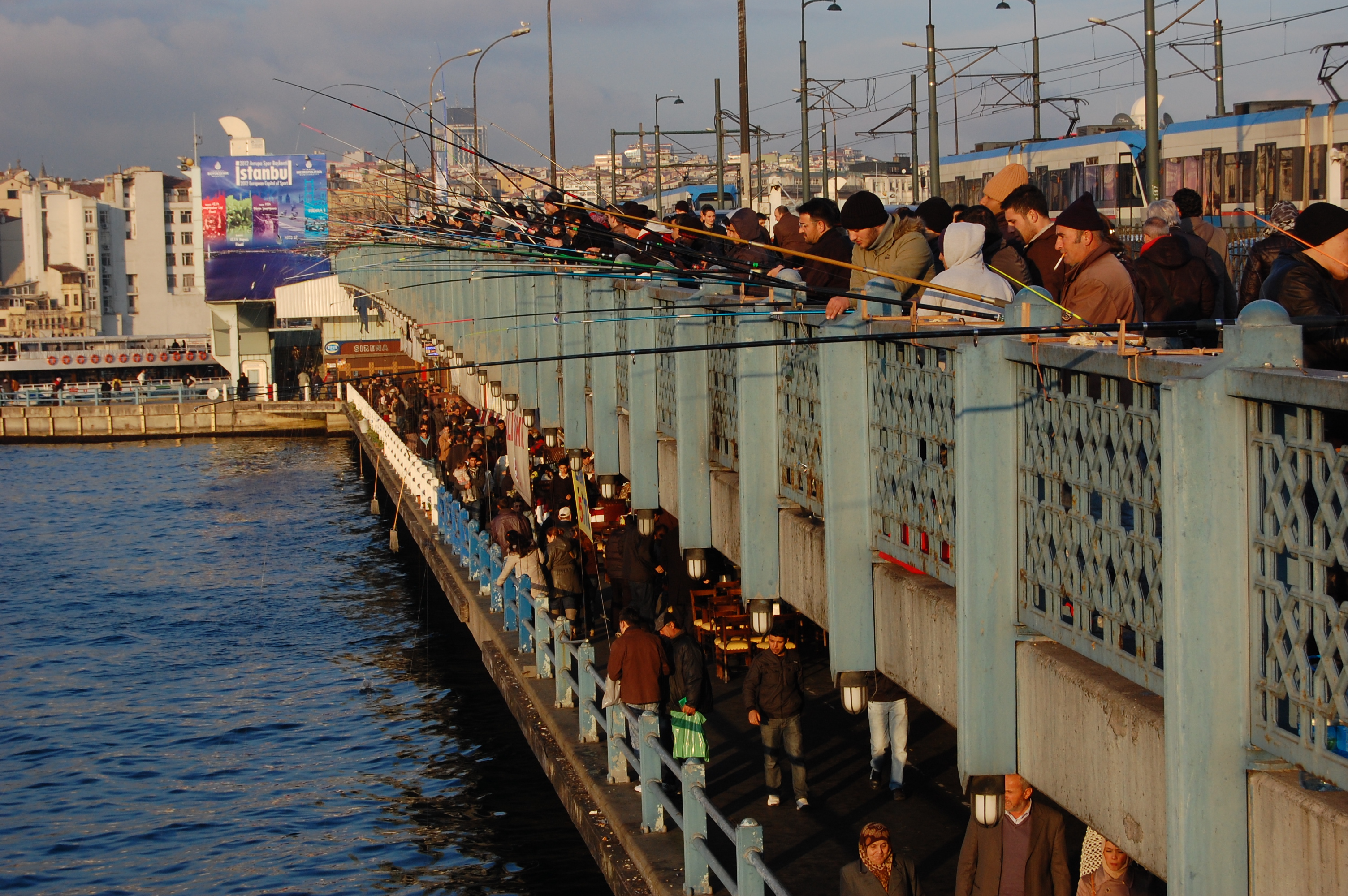
so many people fishing
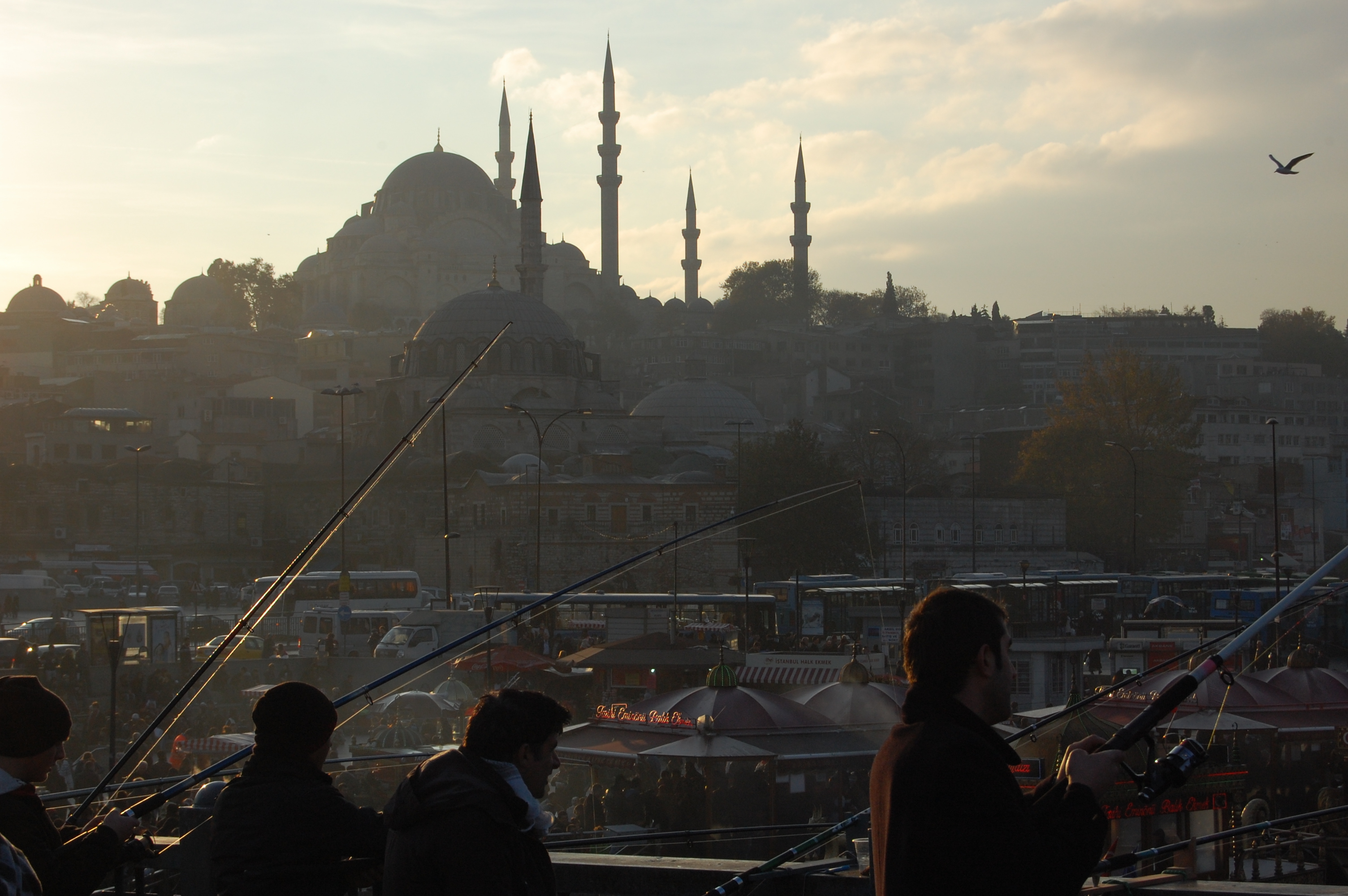
looking back
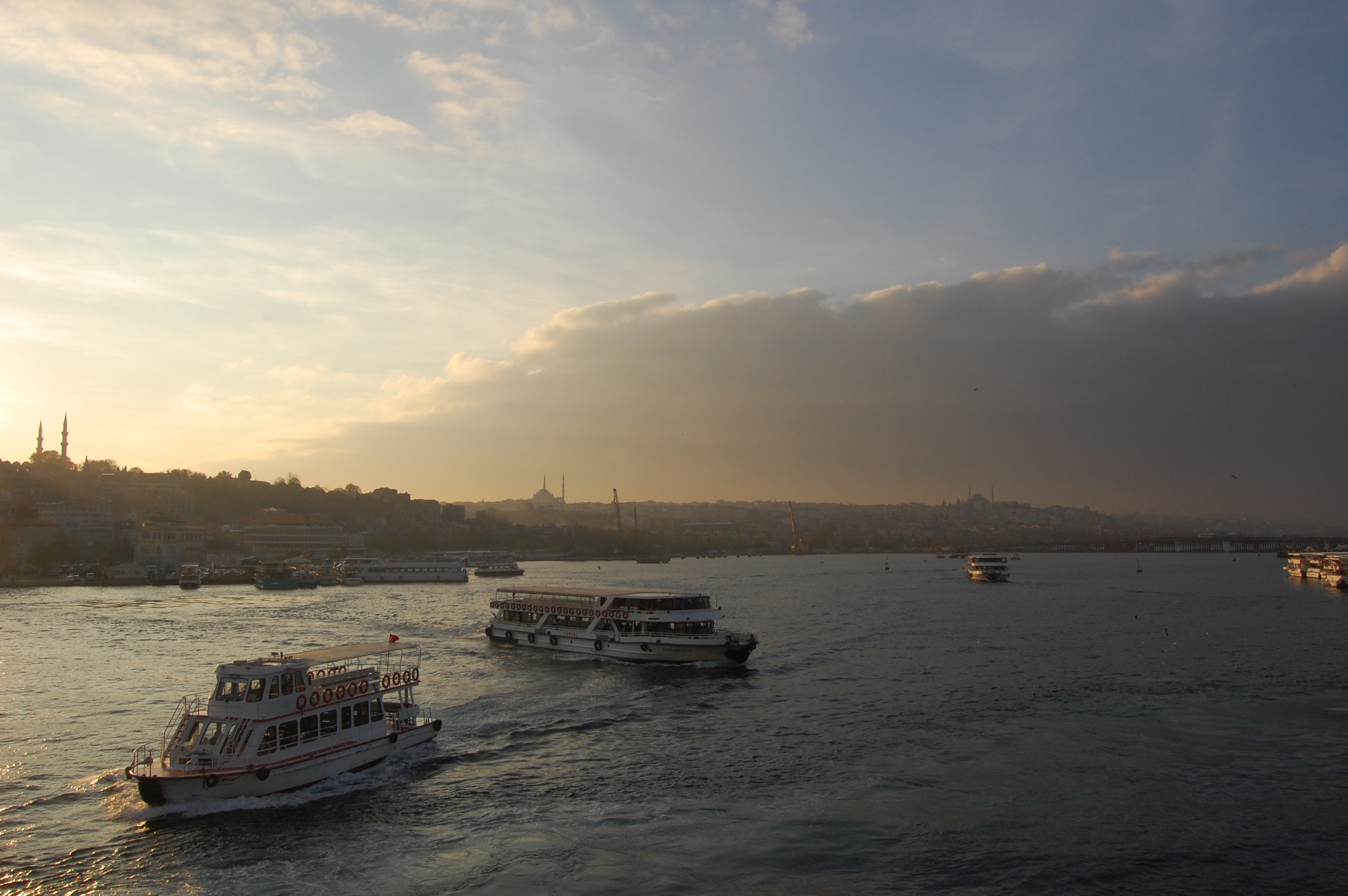
looking out - the Golden Horn
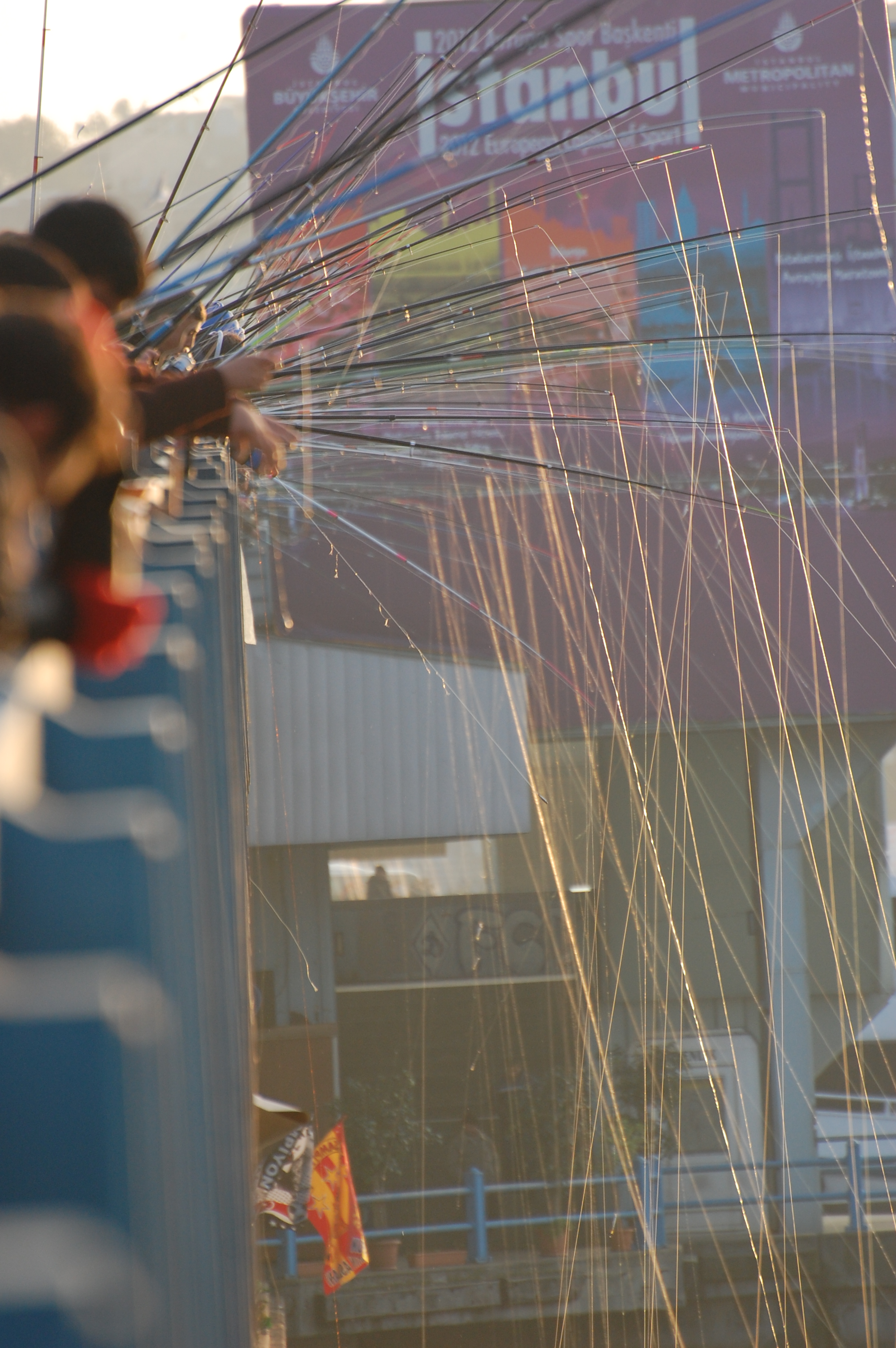
Don captures the fishing lines

tiny fish for sale
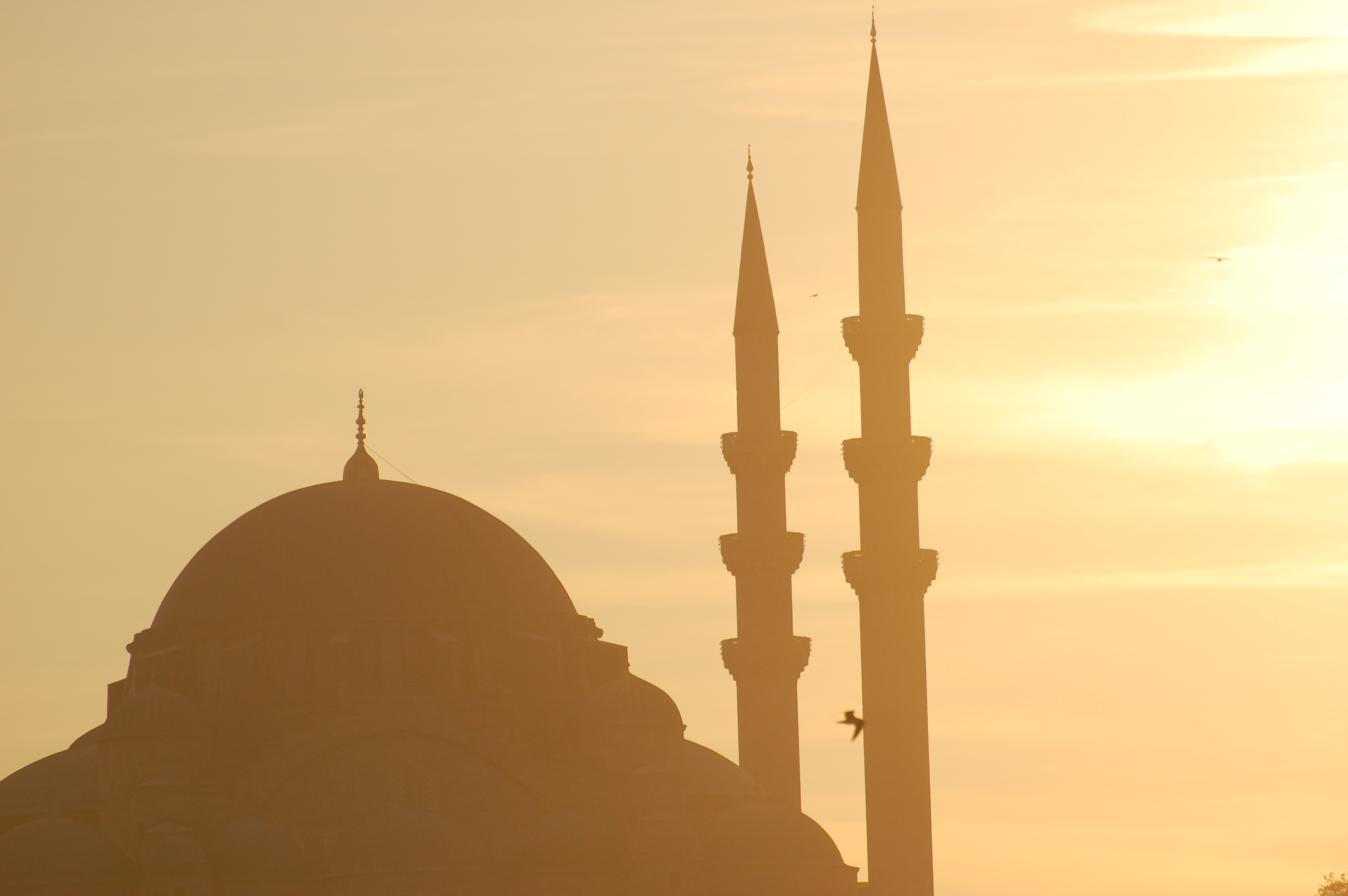
my favourite picture of Don's
We took a taxi from here back to the hotel for our now-customary happy hour and then out for a small bite to eat at a very forgetable restaurant.
On Monday we were on our own, with a challenge from Gamze to “see how well we can manage without our tour guide!” Well, we managed wonderfully, thank you very much. 😀 After breakfast we made our way towards the tram station, our plan being to get back to the Galata Bridge area, where we could take a boat tour up the Bosphorus. We were delayed along the way. As we were walking and talking, a man and woman walking past us stopped us to talk. The man speaking excellent english asked us where we’re from, and it went from there…. Turns out that though he’s from Istanbul, he lives in Florida, has visited B.C. on a fishing trip, etc, etc. Of course it turns out he’s in the carpet business. (See previous note about carpet shops everywhere.) He’s a wholesaler, he doesn’t have a “shop,” but he does have a place very nearby where we has rooms-full of carpets, and his collegue would be delighted to give us a lesson on what to look for when buying carpets so as not to be taken in by fakes. He’s on his way to a meeting, but his cousin (the woman with him) can show us the place – there’s no sign on the door because he doesn’t sell to the public – and we can make an appointment to return for our lesson. (We were a little leery about all of this and had already said we had an engagement and didn’t have time for the lesson right now.) So, we went with the woman, met the collegue, said we’d be back later. And off we went to the tram, not sure quite what to make of it all.
Down to the port to buy our tickets for a short boat tour up the Bosphorus. There are many tours, and you could be on the water for a full day, going right to the Black Sea, but that would be a better trip in warmer weather. While we had beautiful sunny days in Istanbul, the temperature was cool (between 5 and 8 degrees) and a 1 1/2 hour trip was as much time as we wanted to spend. It was a picturesque trip, and definitely a little chilly.
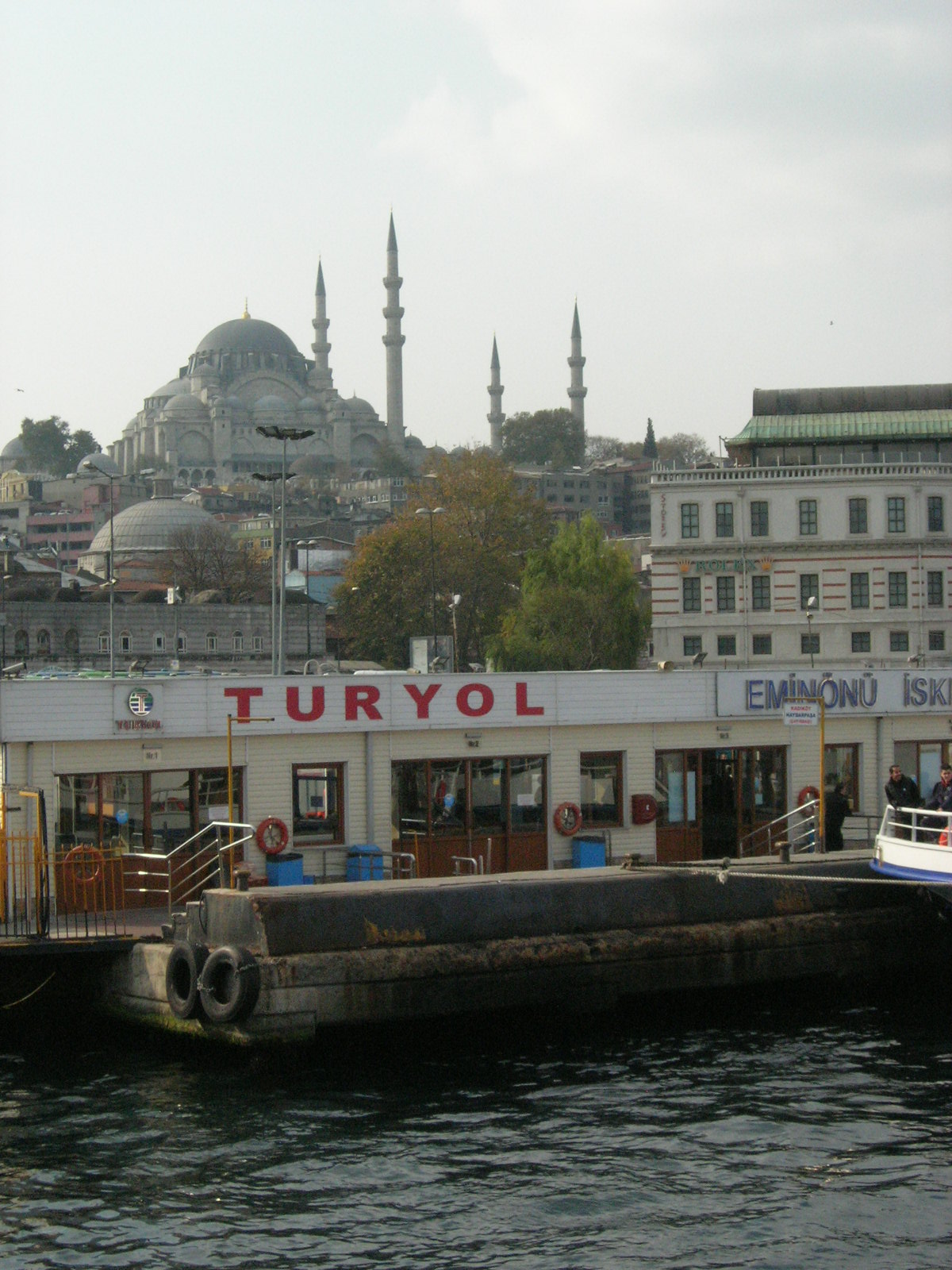
pulling away from the port
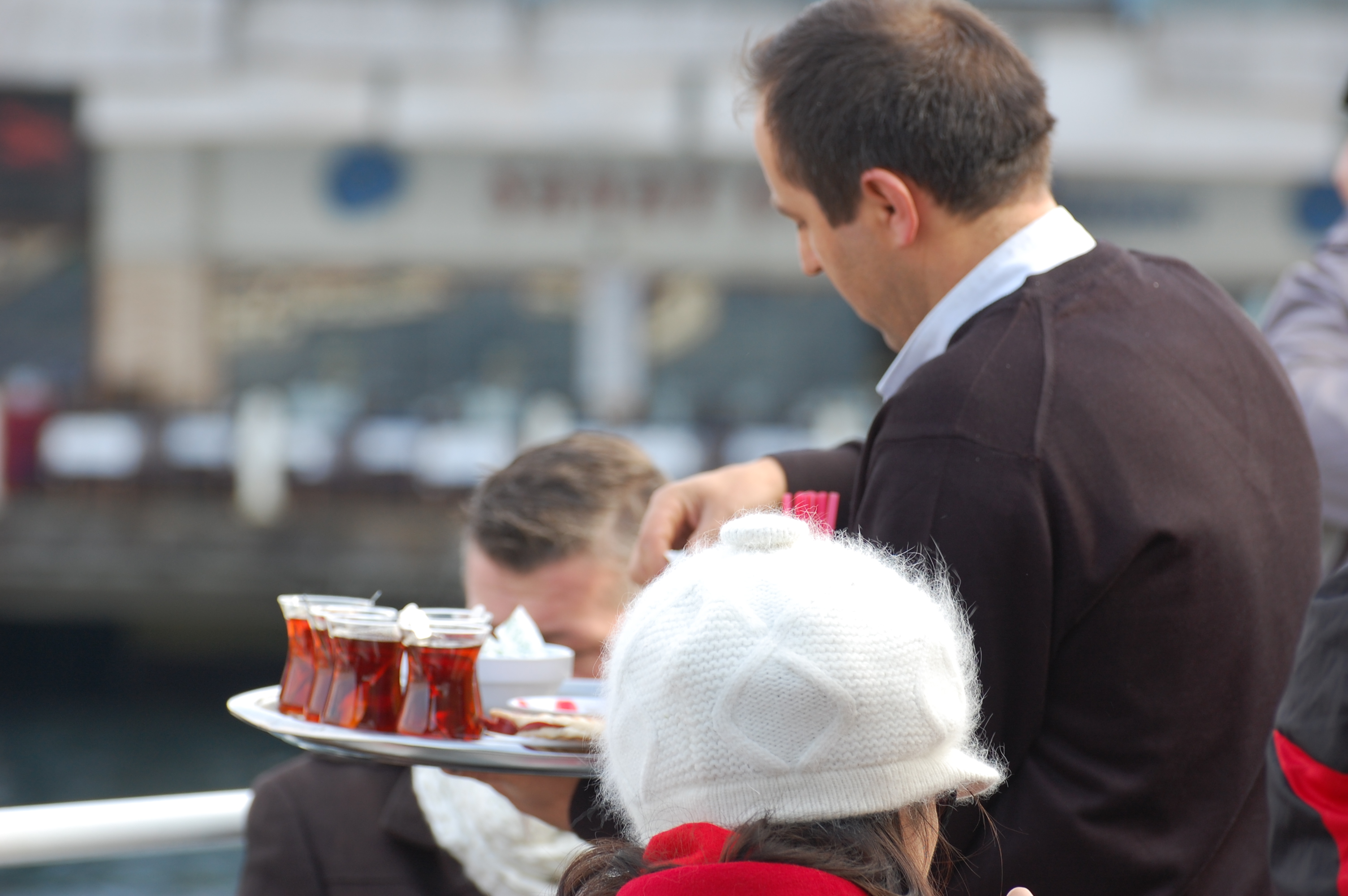
tea seller makes his rounds
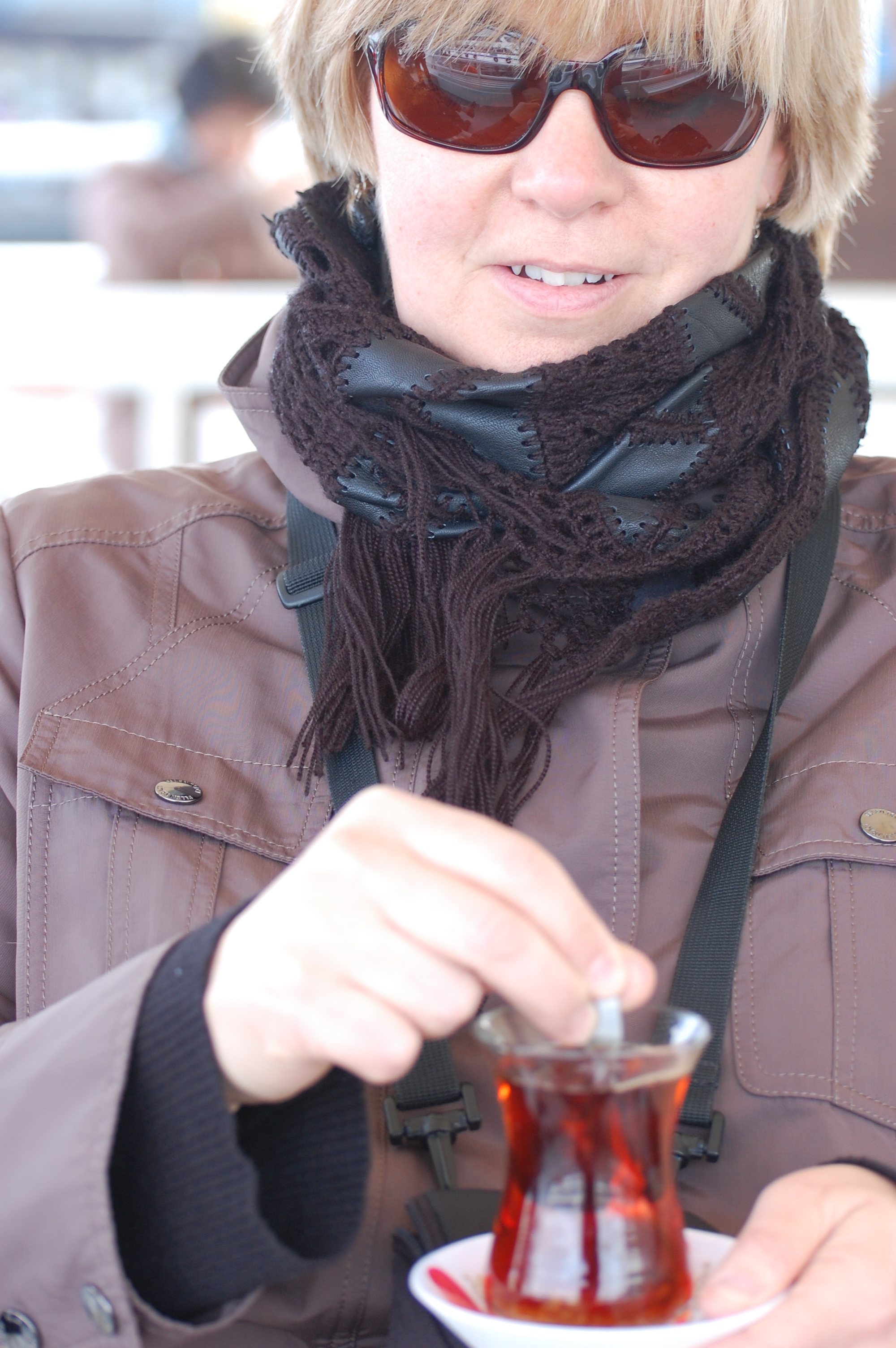
not a good pic of me, but wanted you to see how the tea is served, in tulip glasses on saucers, even on a boat!
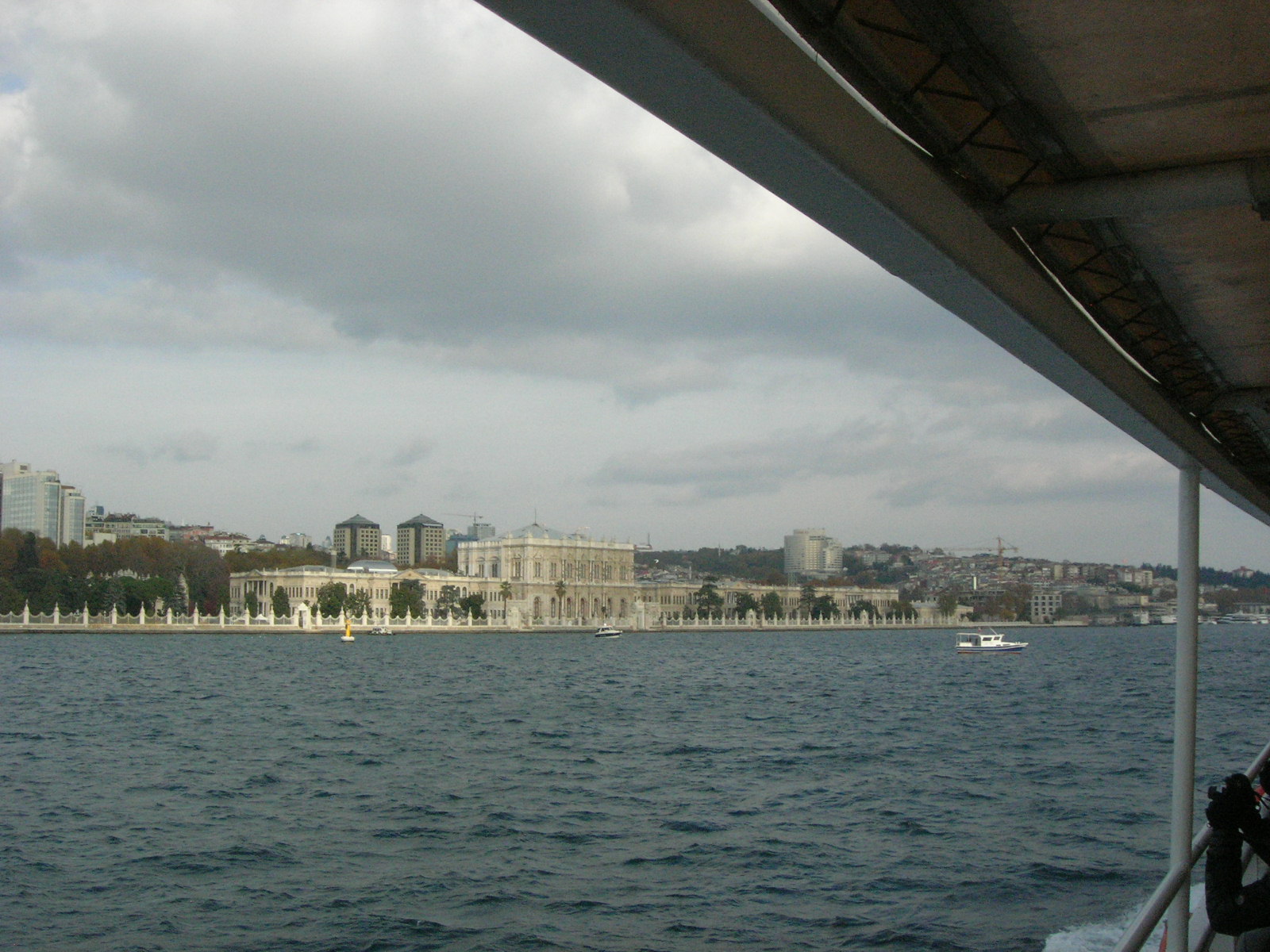
Dolmabahce Palace
This palace is the one I mentioned earlier, which Sultan Abdul Mecit built and moved to (abandoning Topkapi) in 1856, interestingly at a time when the Ottoman Empire was in decline. It is the only one of the “Top 10 Istanbul Sights” that we didn’t tour.
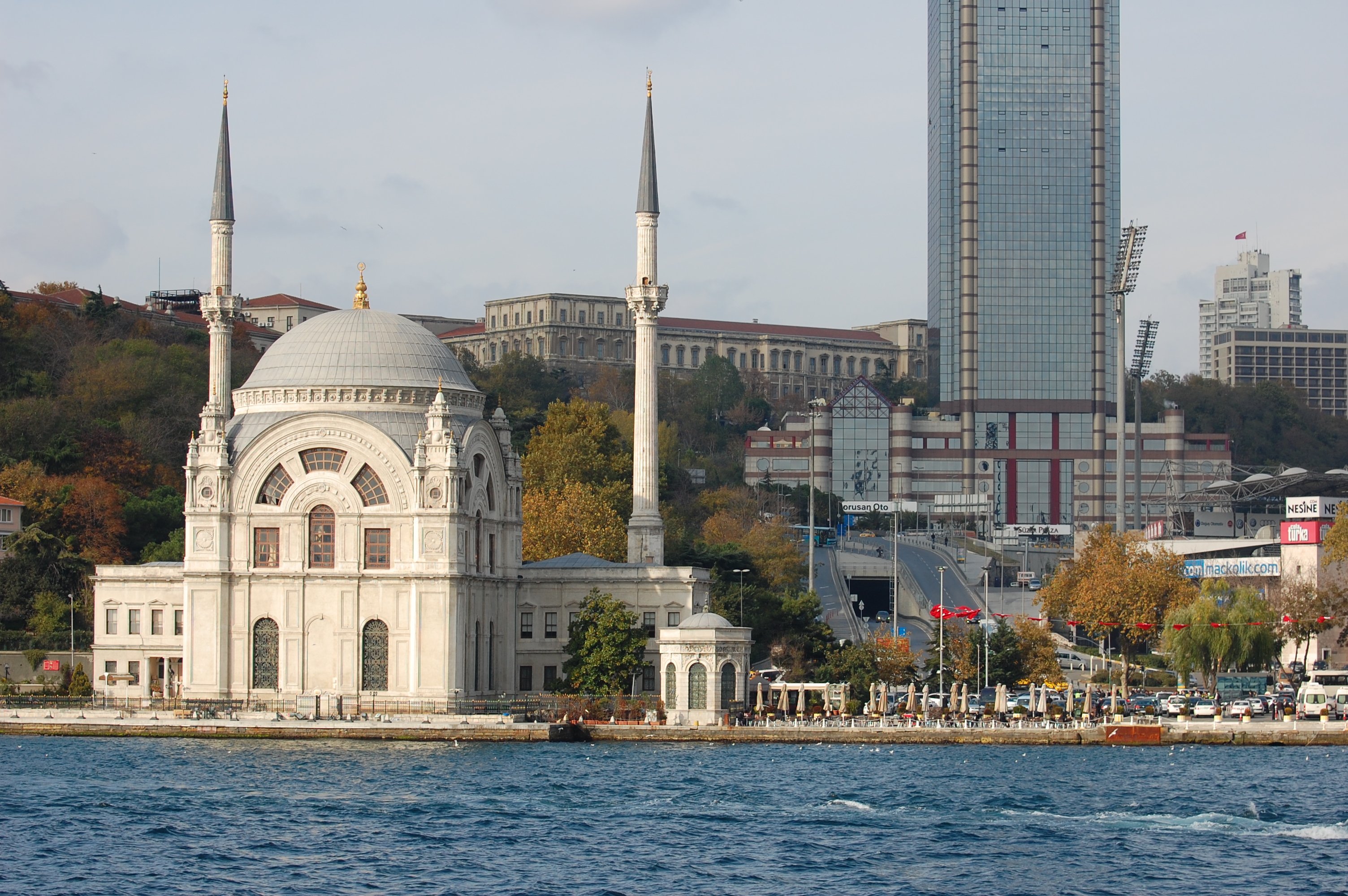
Mecidiye Mosque - love the old and new in this pic
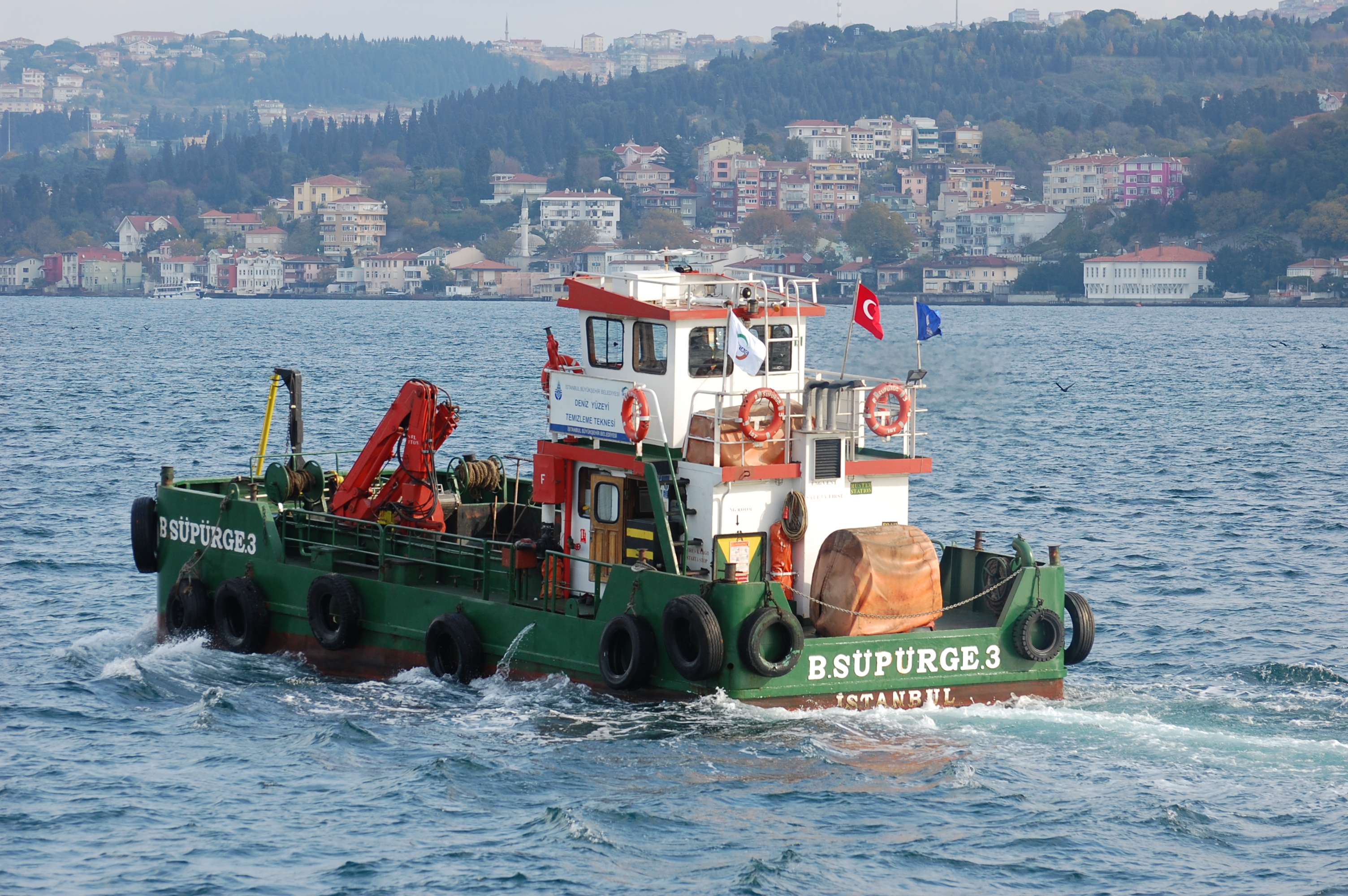
lots of boats, of course
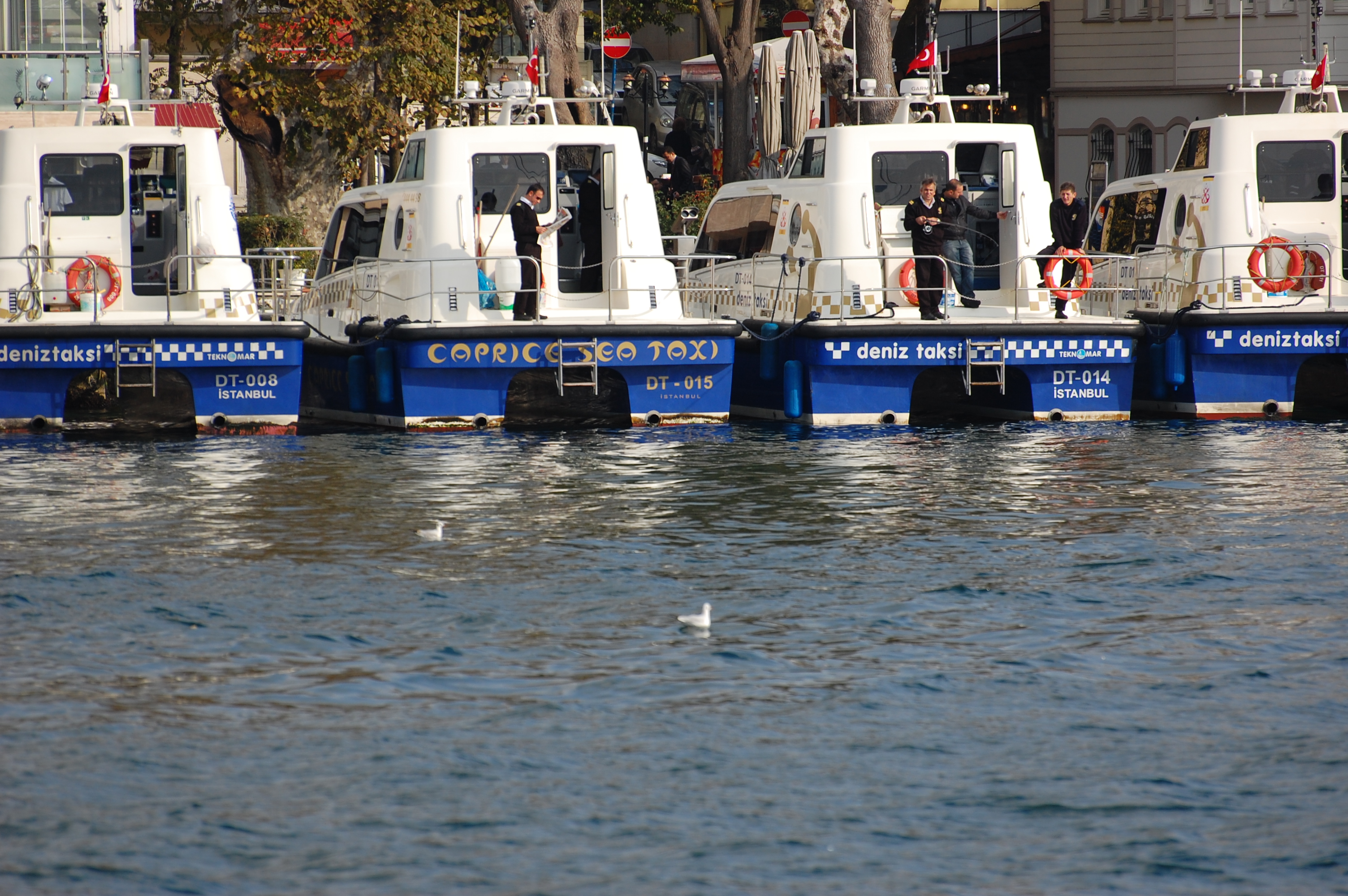
taxi boats
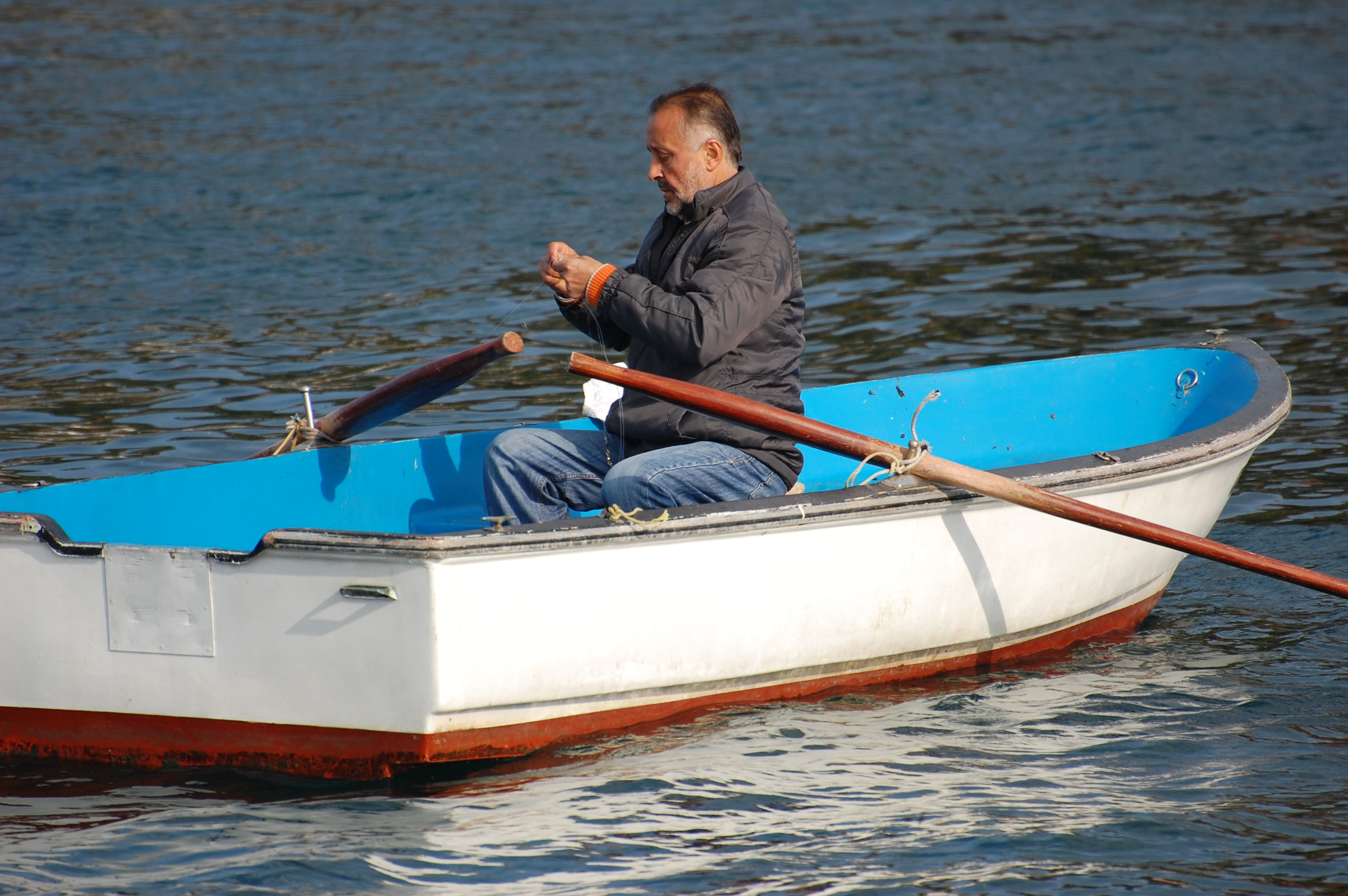
always men fishing
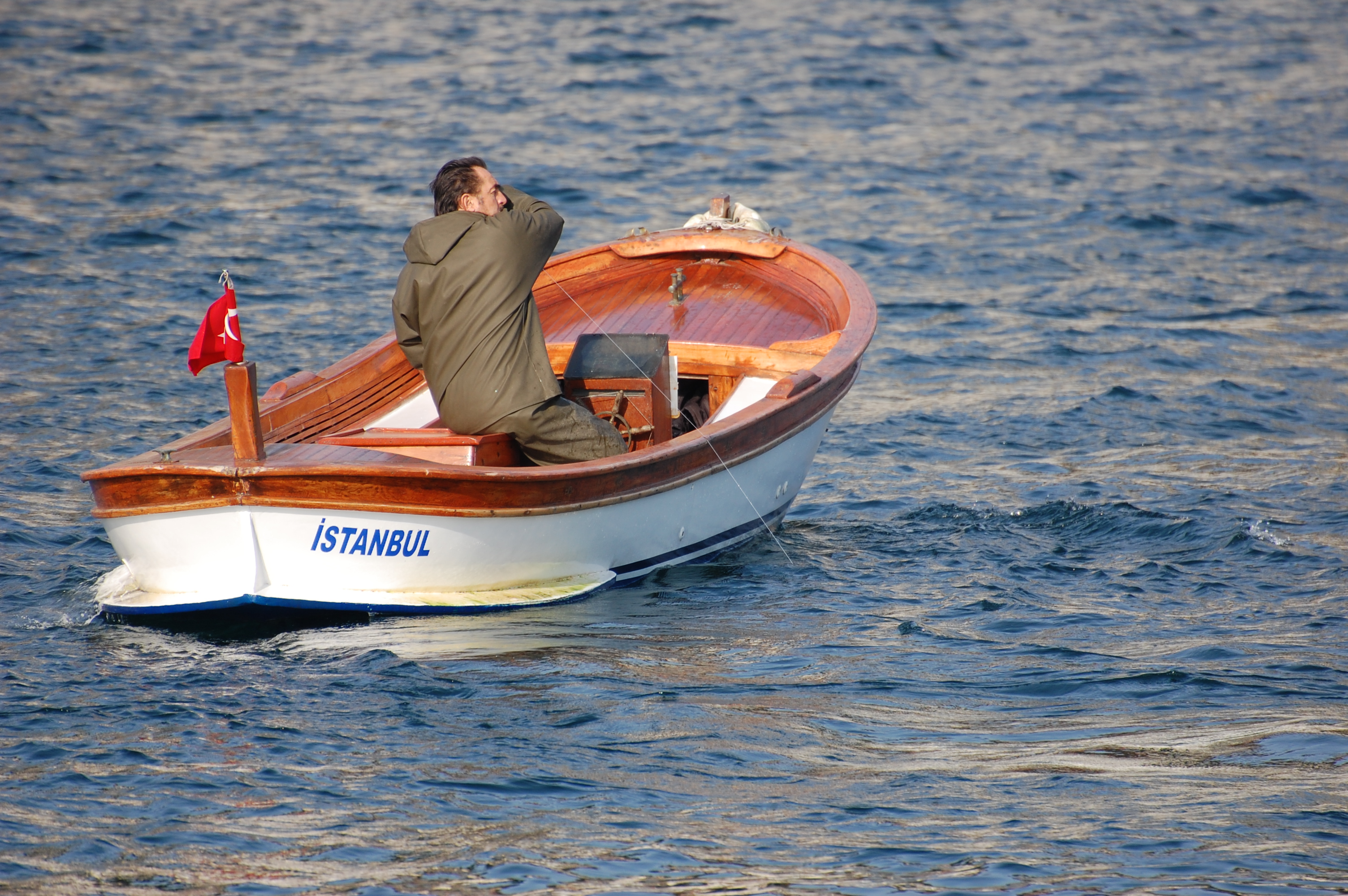
another fisherman
Don does love his boat pictures!
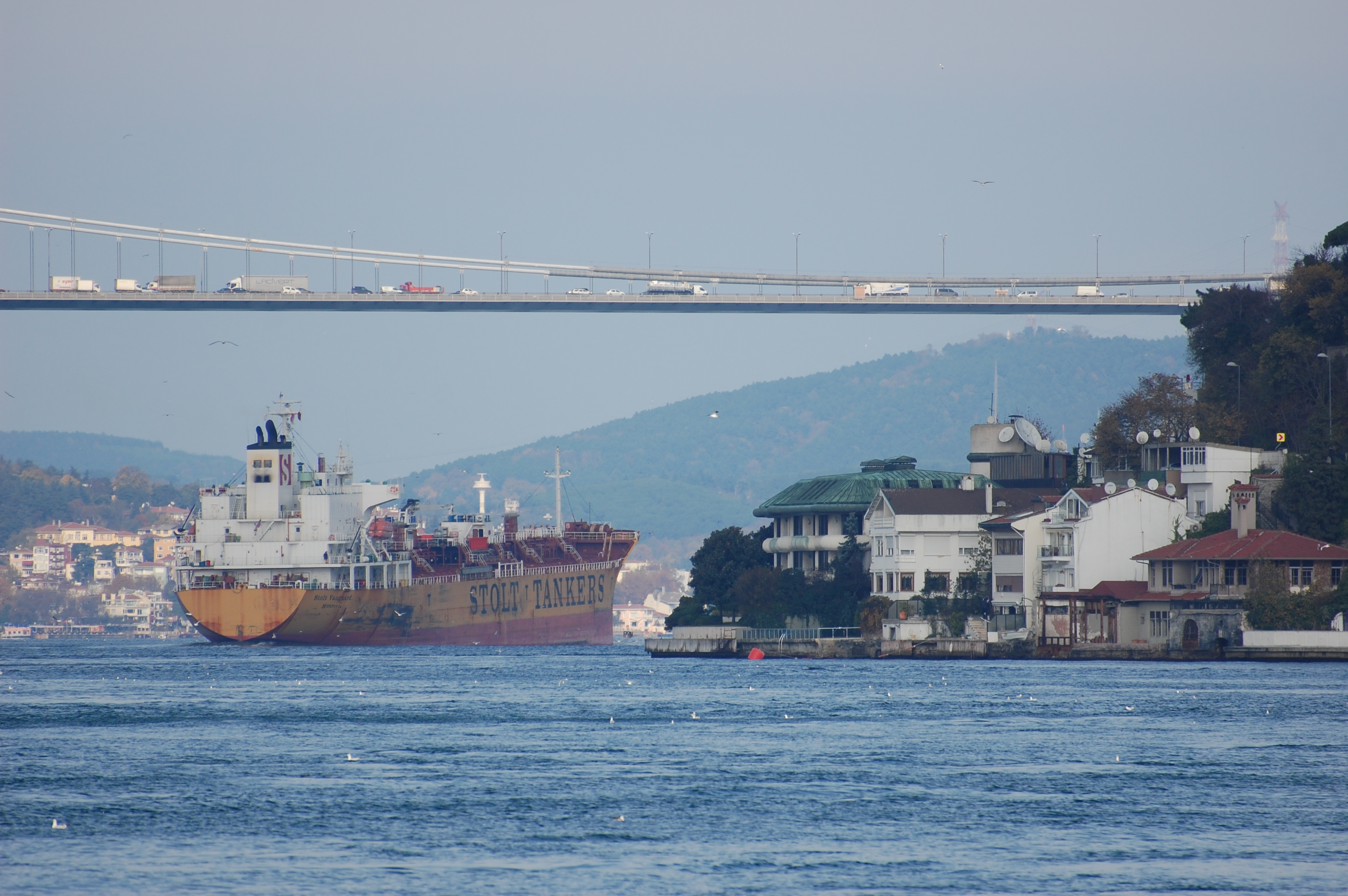
Bosphorus Bridge and tanker
The Bosphorous bridge was the first bridge to be built across the straits that divide Istanbul. Construction began in 1970 and finished on 29 October 1973, the 50th anniversary of the inauguration of the Turkish Republic. It is the world’s 9th longest suspension bridge.
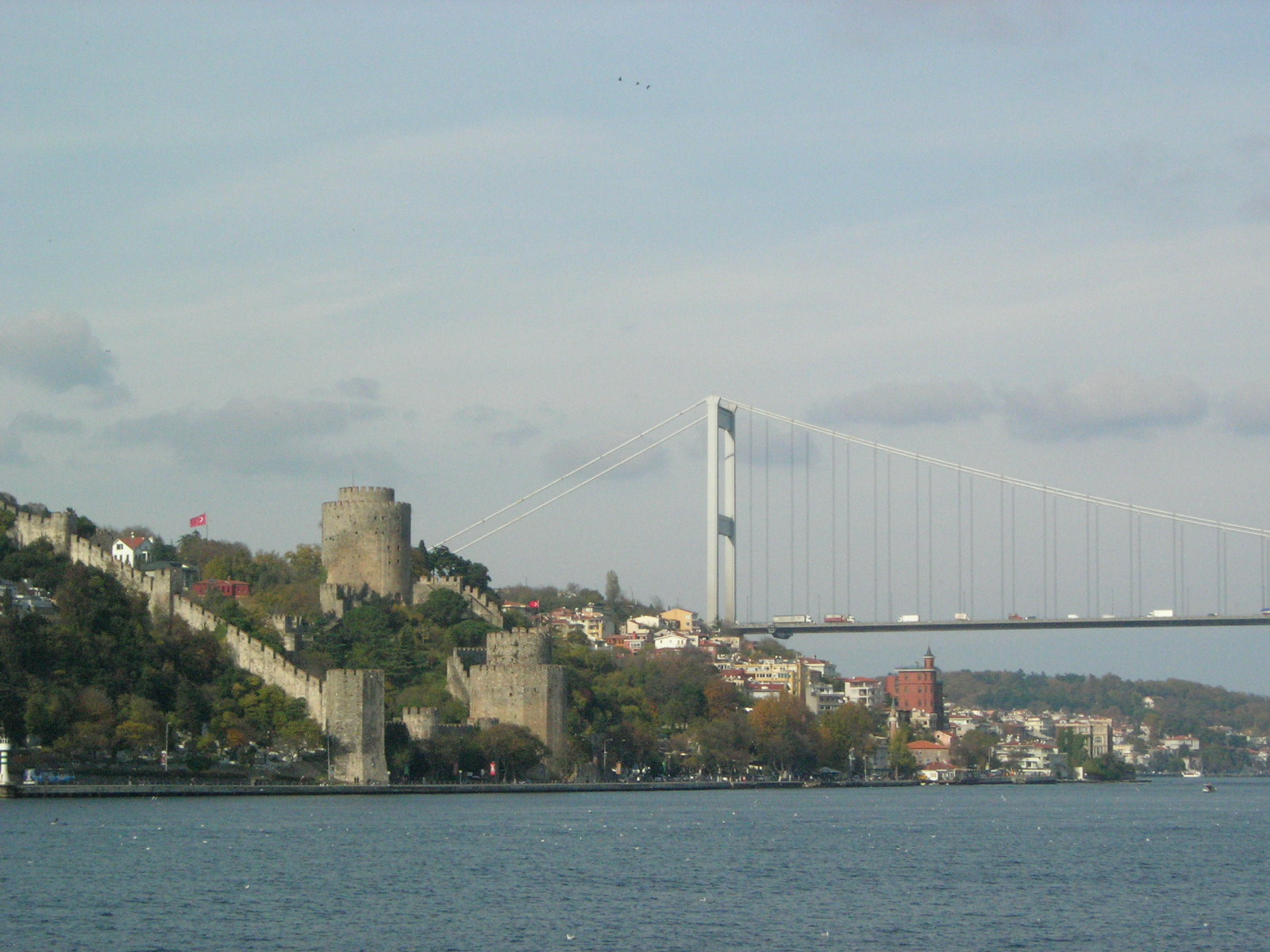
Fortress of Europe and Fatih Sultan Mehmet Bridge
The Fortress is “situated at the narrowest point on teh Bosphorus, and was built by Mehmet II in 1452, as a prelud to his invasion (and subsequent conquest) of Costantinople.”
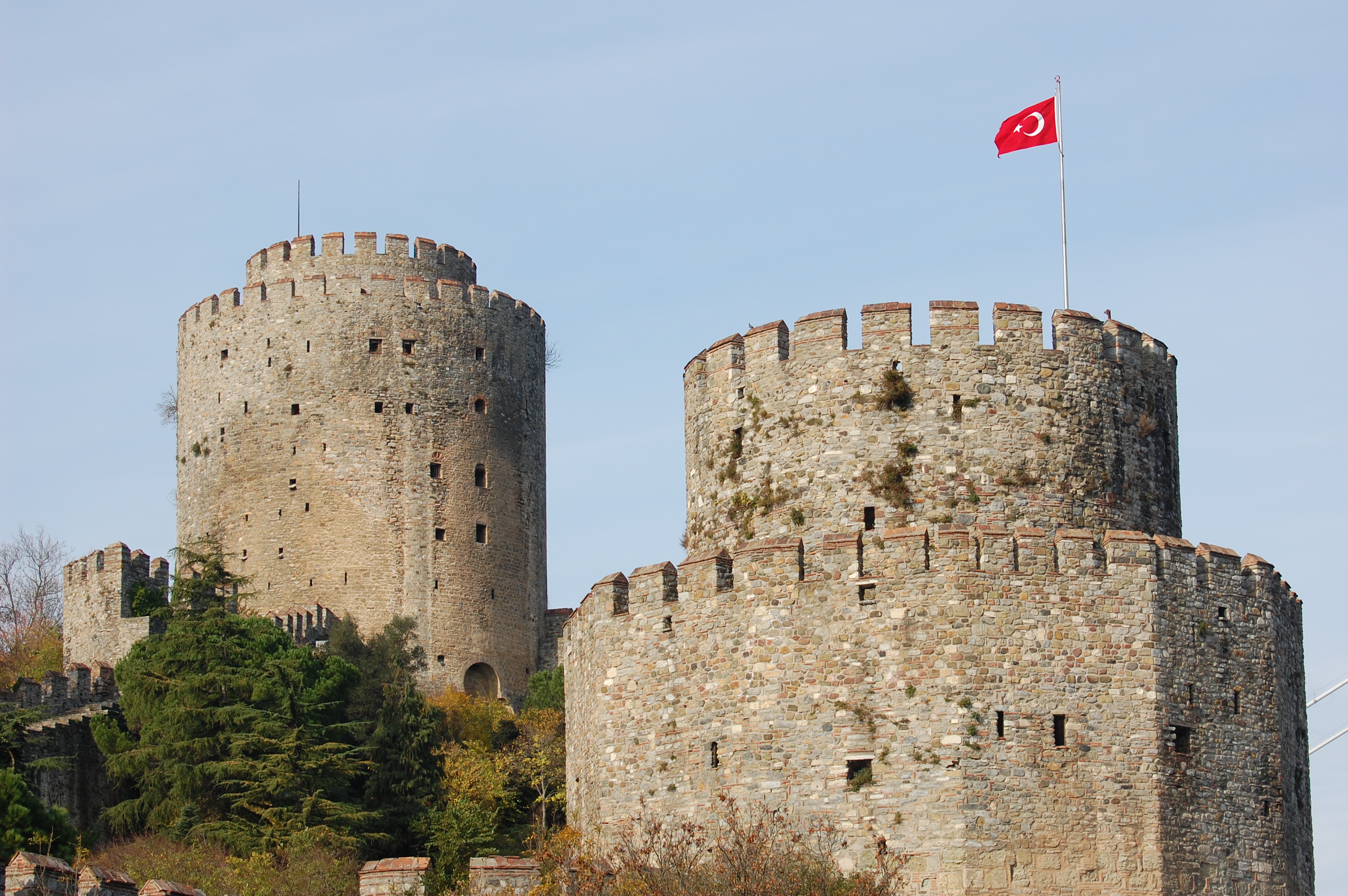
Fortress of Europe
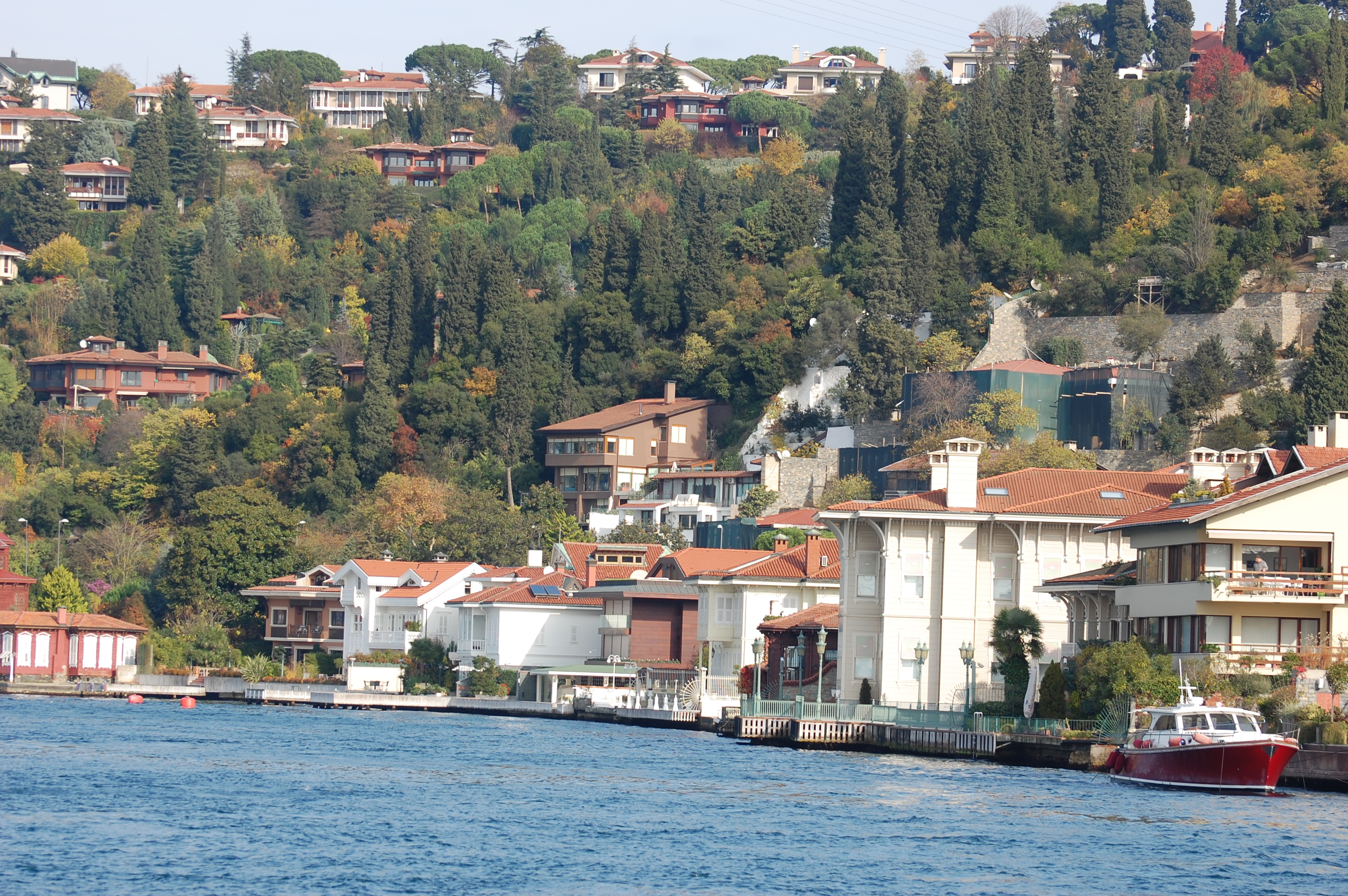
beautiful homes along the water
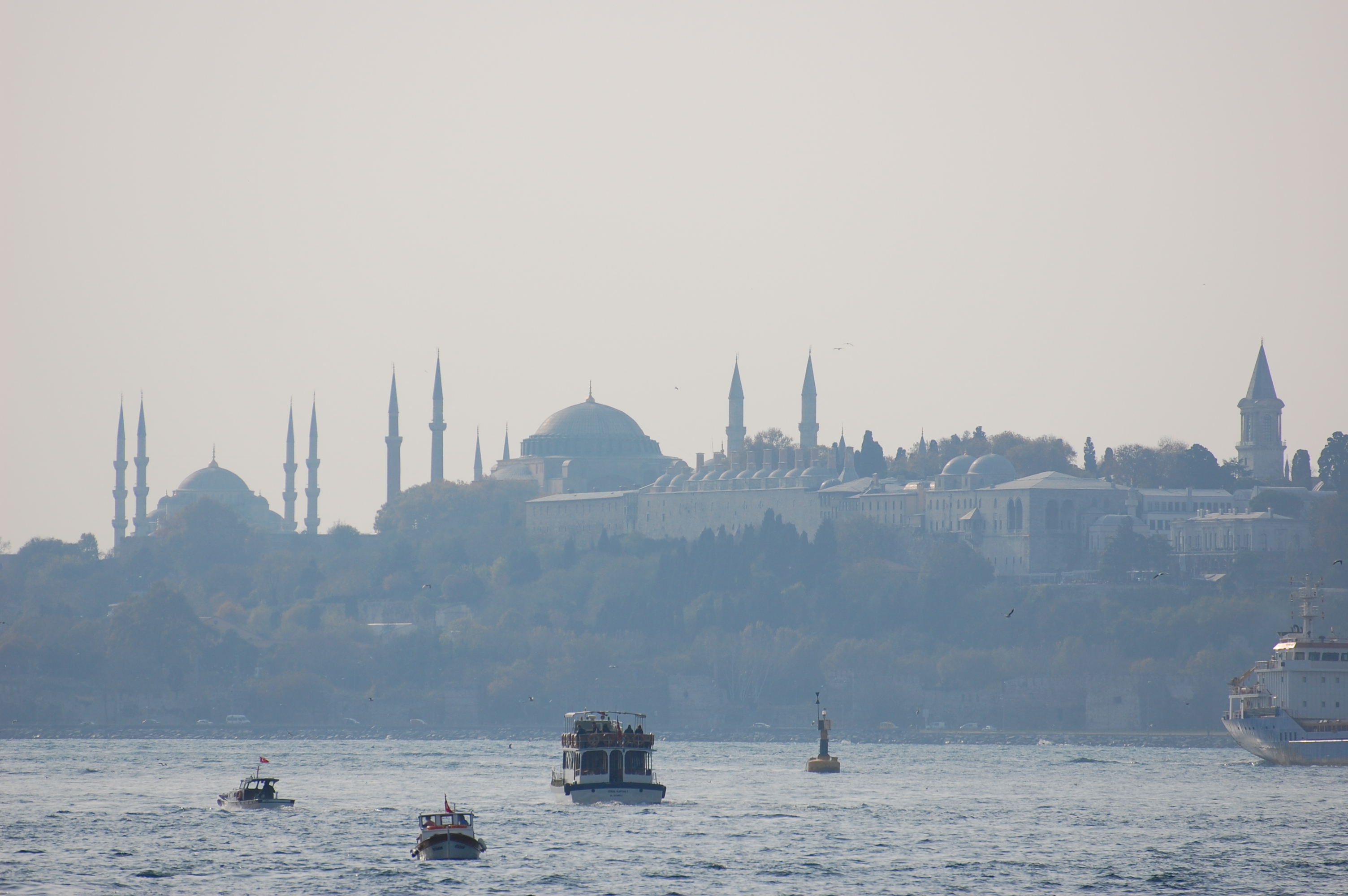
and back towards the port
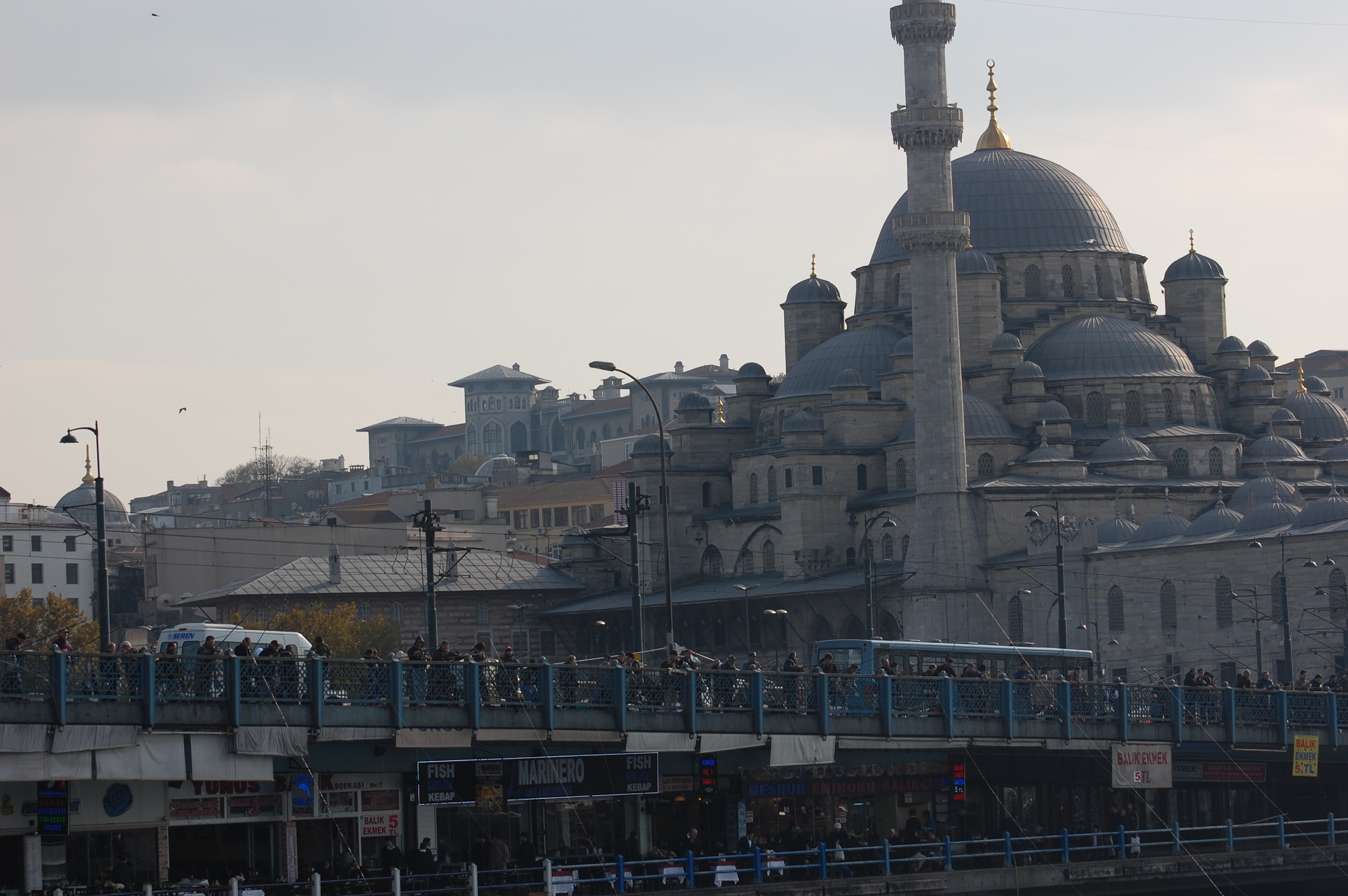
past the Galata Bridge to the dock
After the boat trip we needed to eat and warm up, so back to the delicious restaurant from the day before for pizza and that wondrous baclava. And then we walked, and walked, meandering up winding hills, and through market areas…
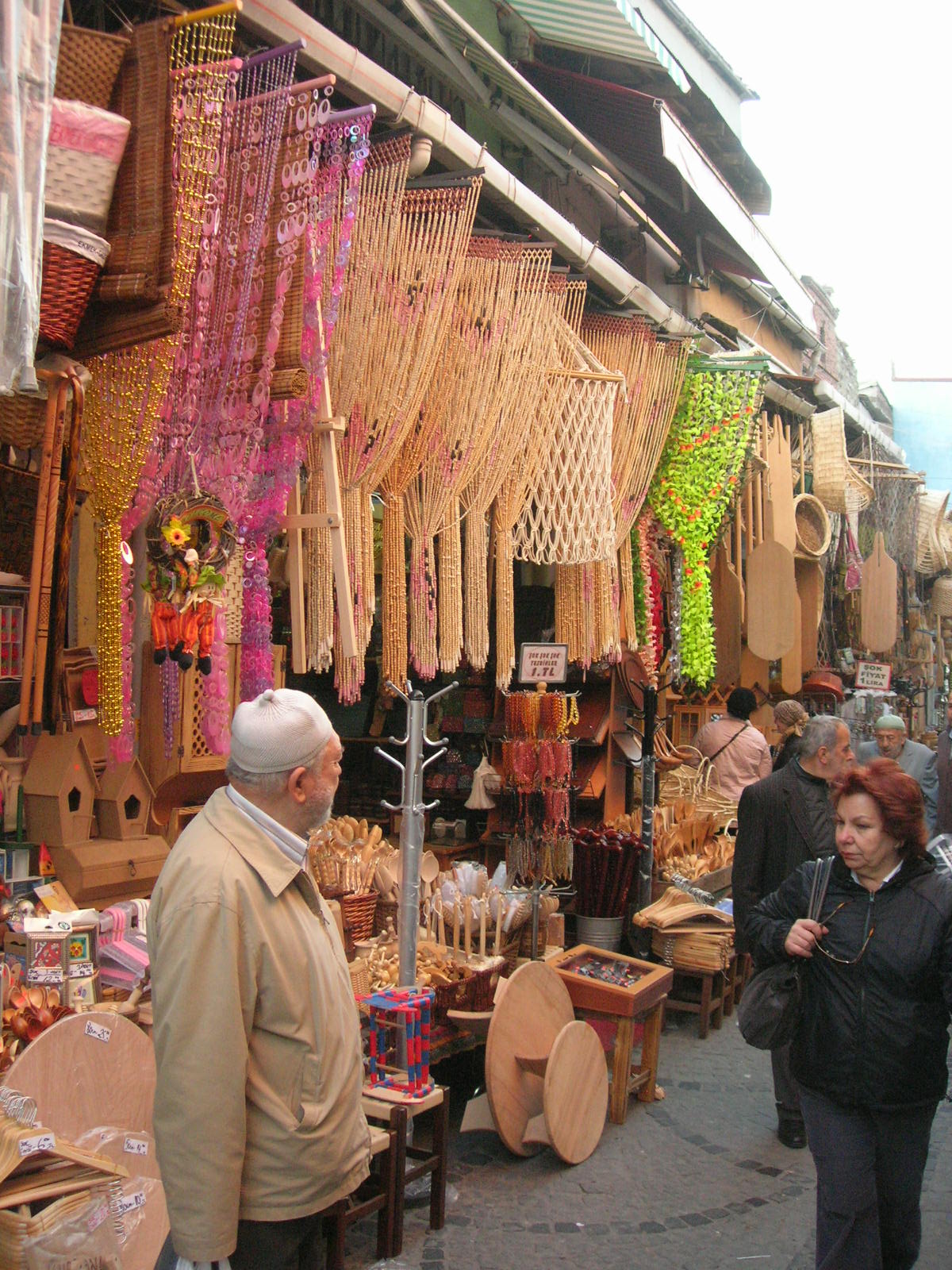
busy street market
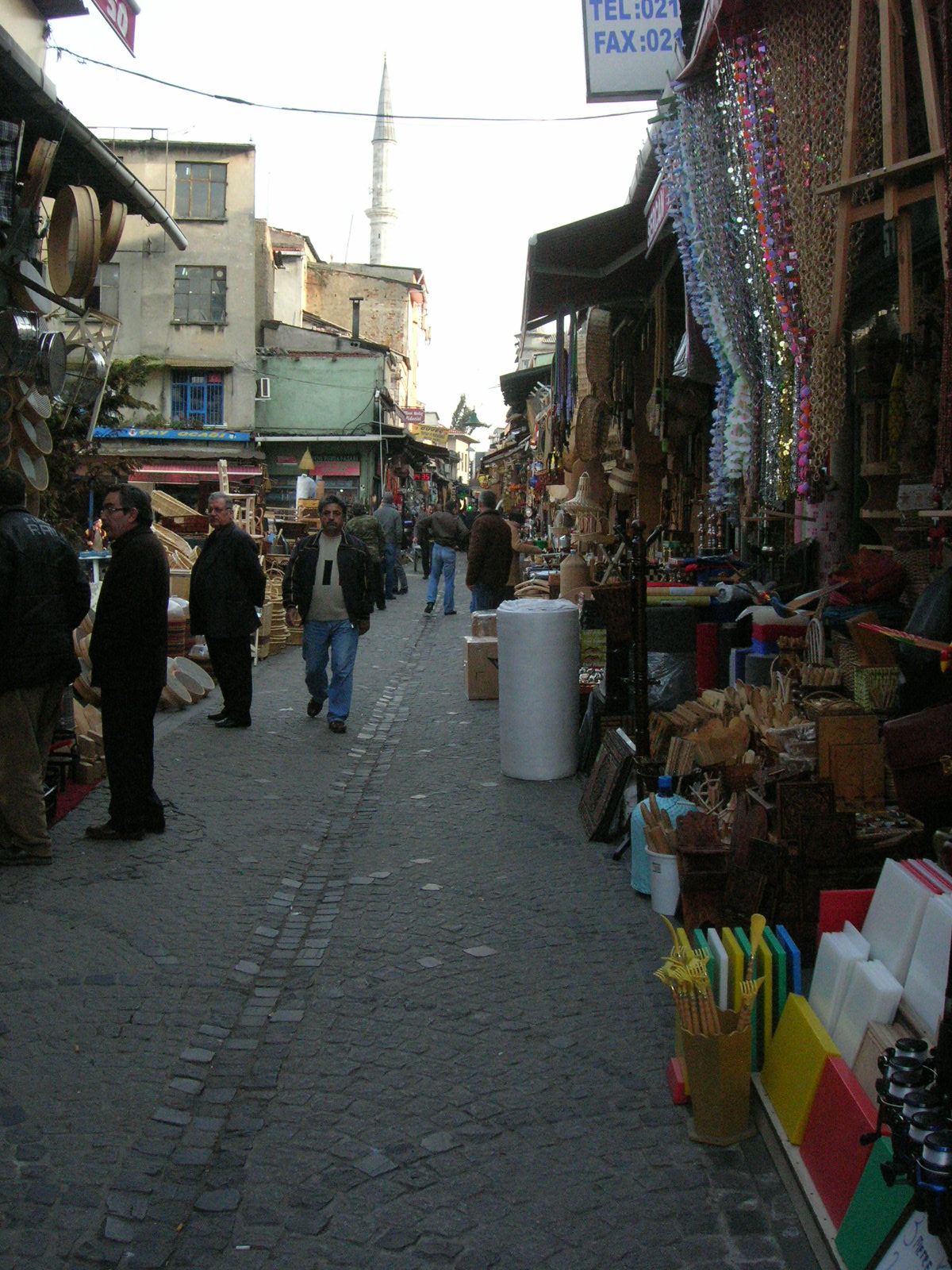
cobblestoned street
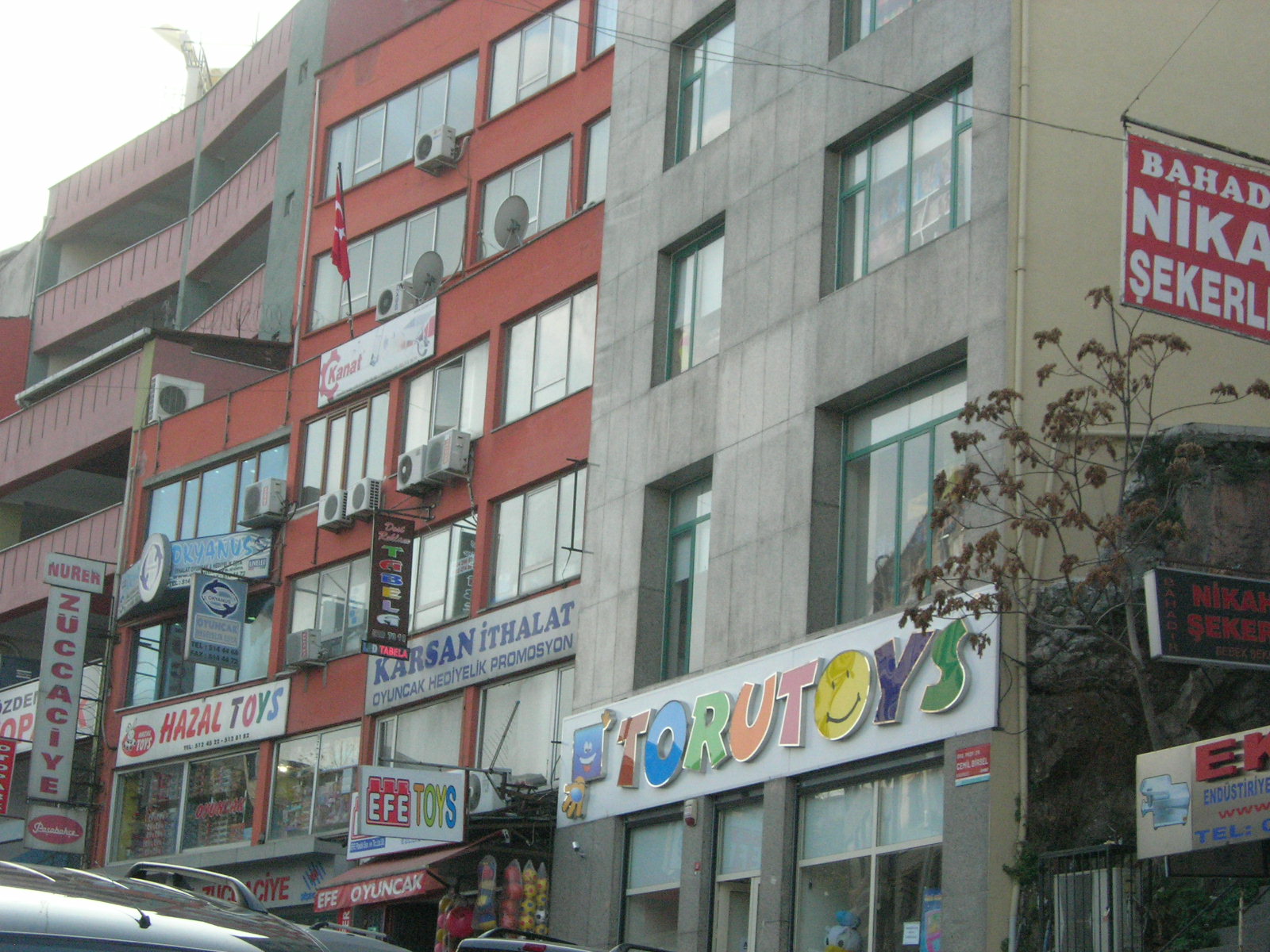
apparently the toy store street!
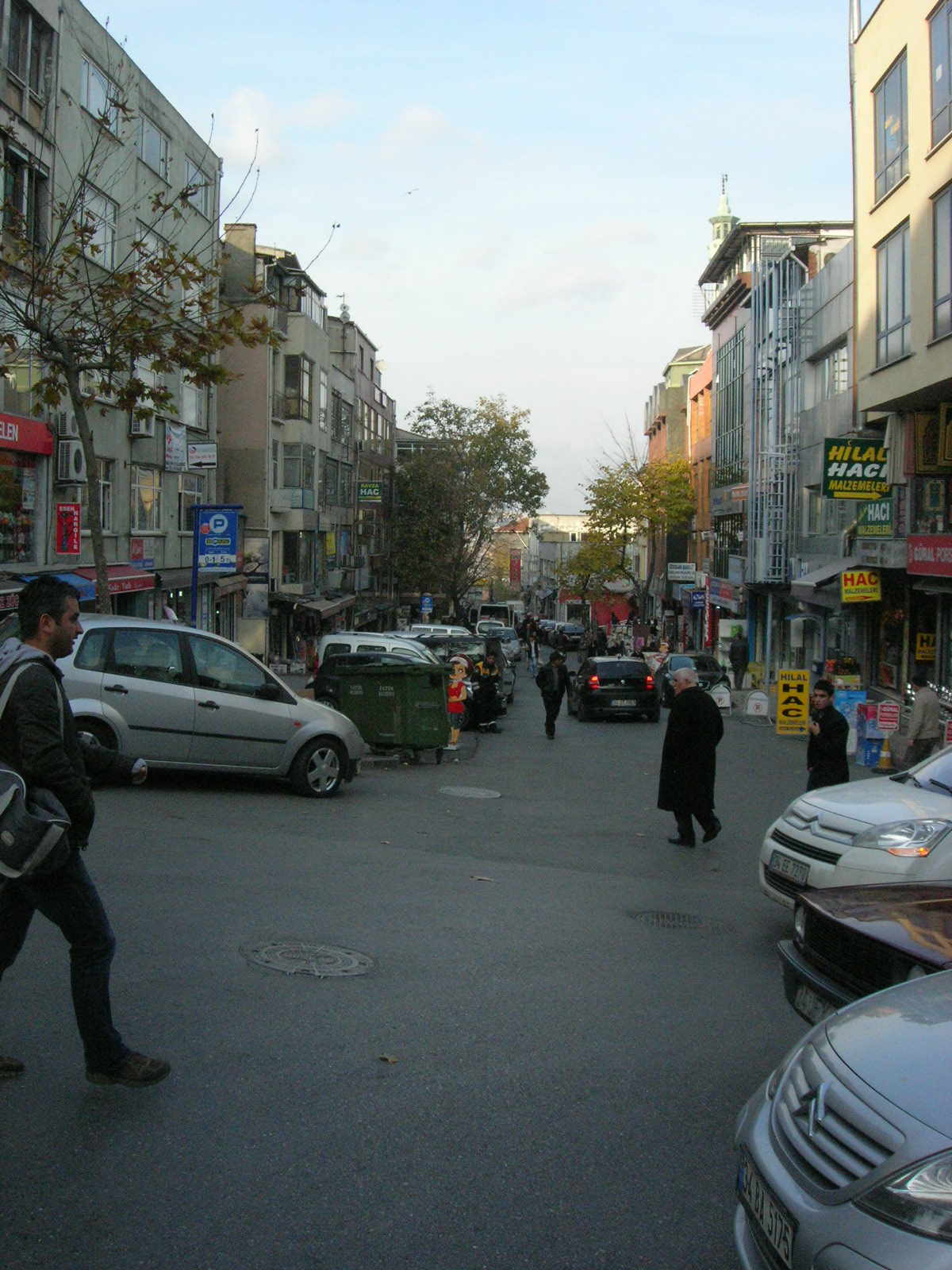
hilly, chaotic streets
past the Suleymaniye Mosque, the largest one in the city, and onto the outer grounds…
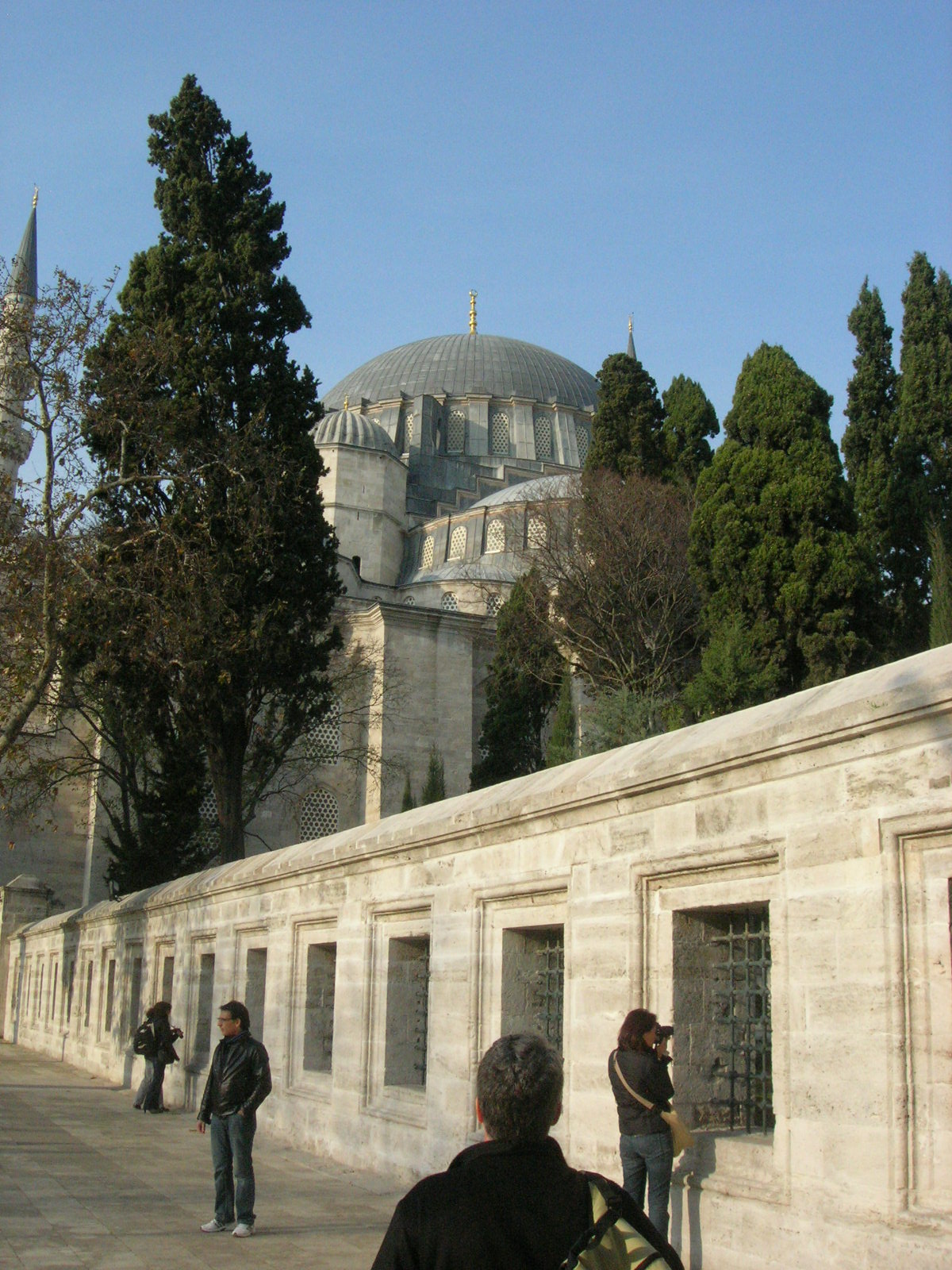
Suleymaniye Mosque, and outer wall
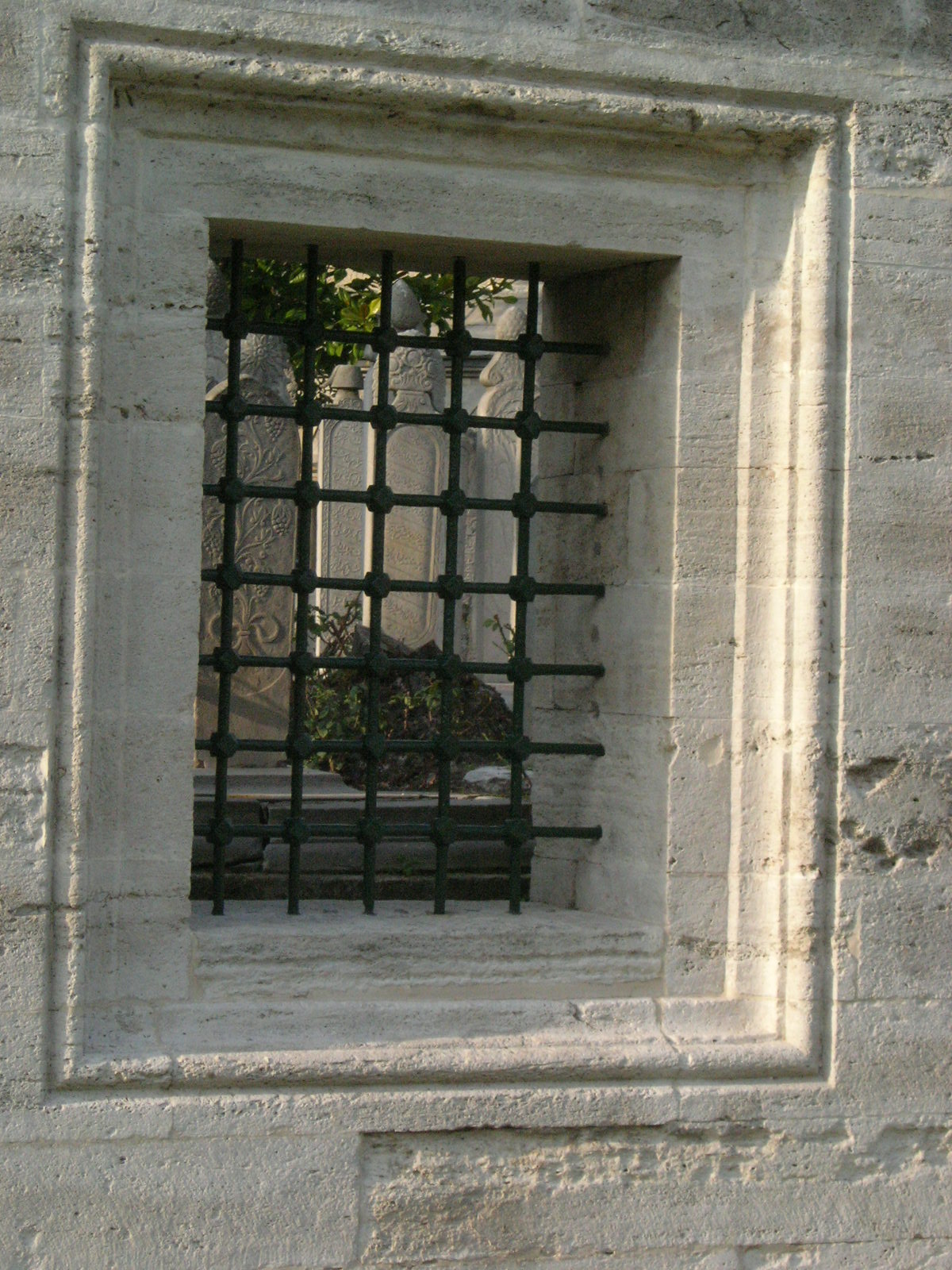
through the windows of that outer wall you can see the cemetery
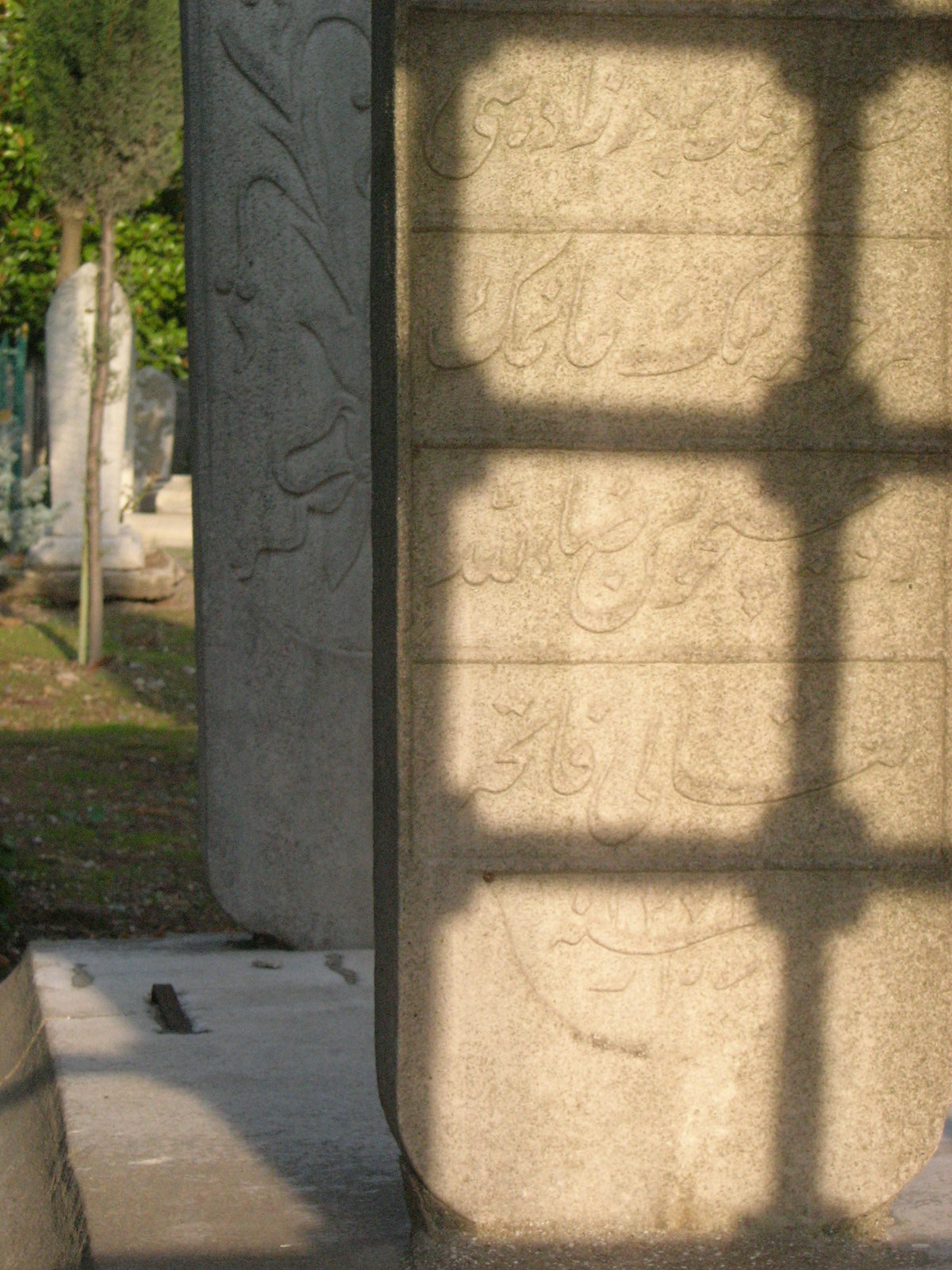
cemetery marker detail
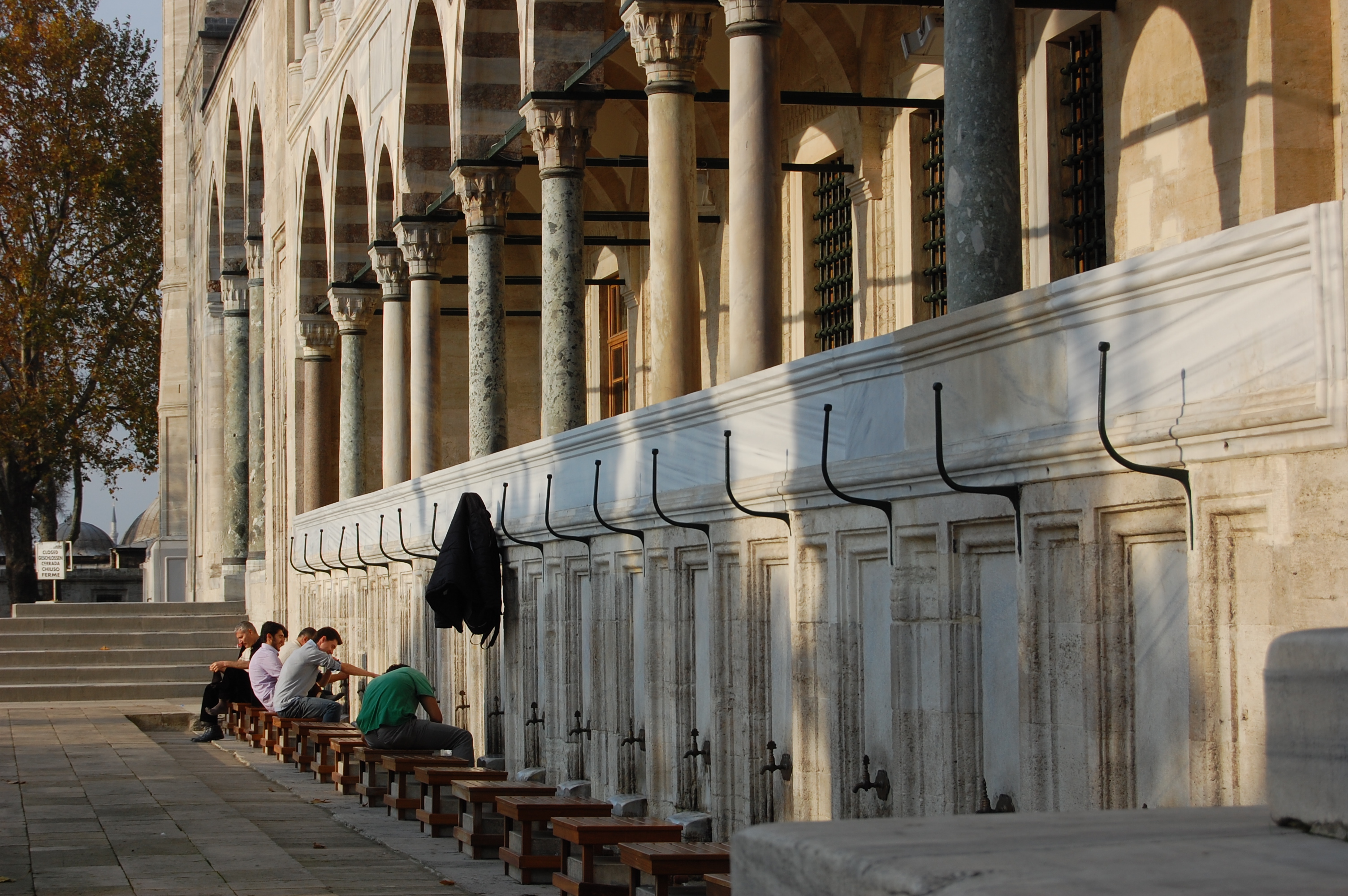
ablutions before praying
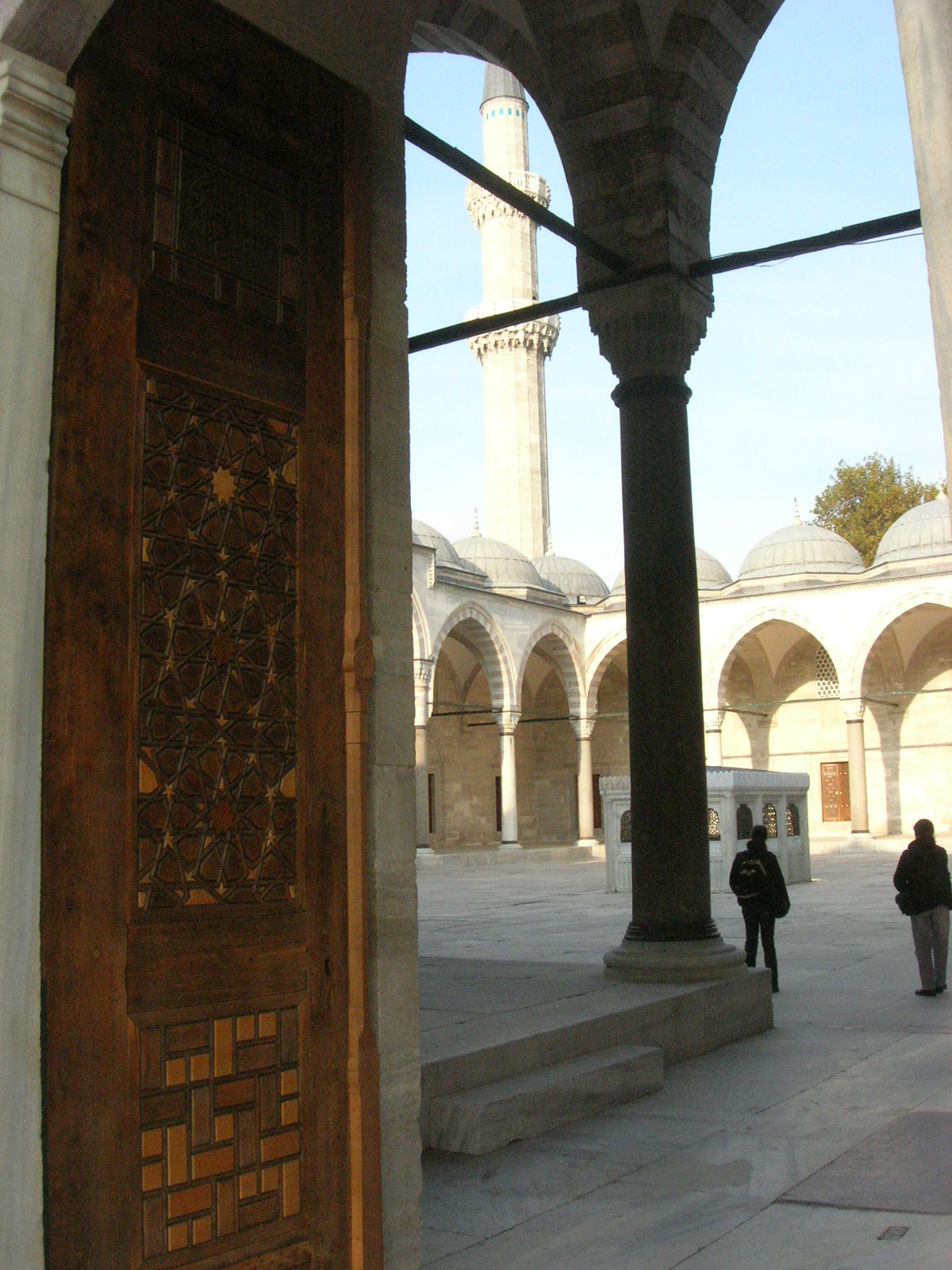
into the courtyard of the mosque
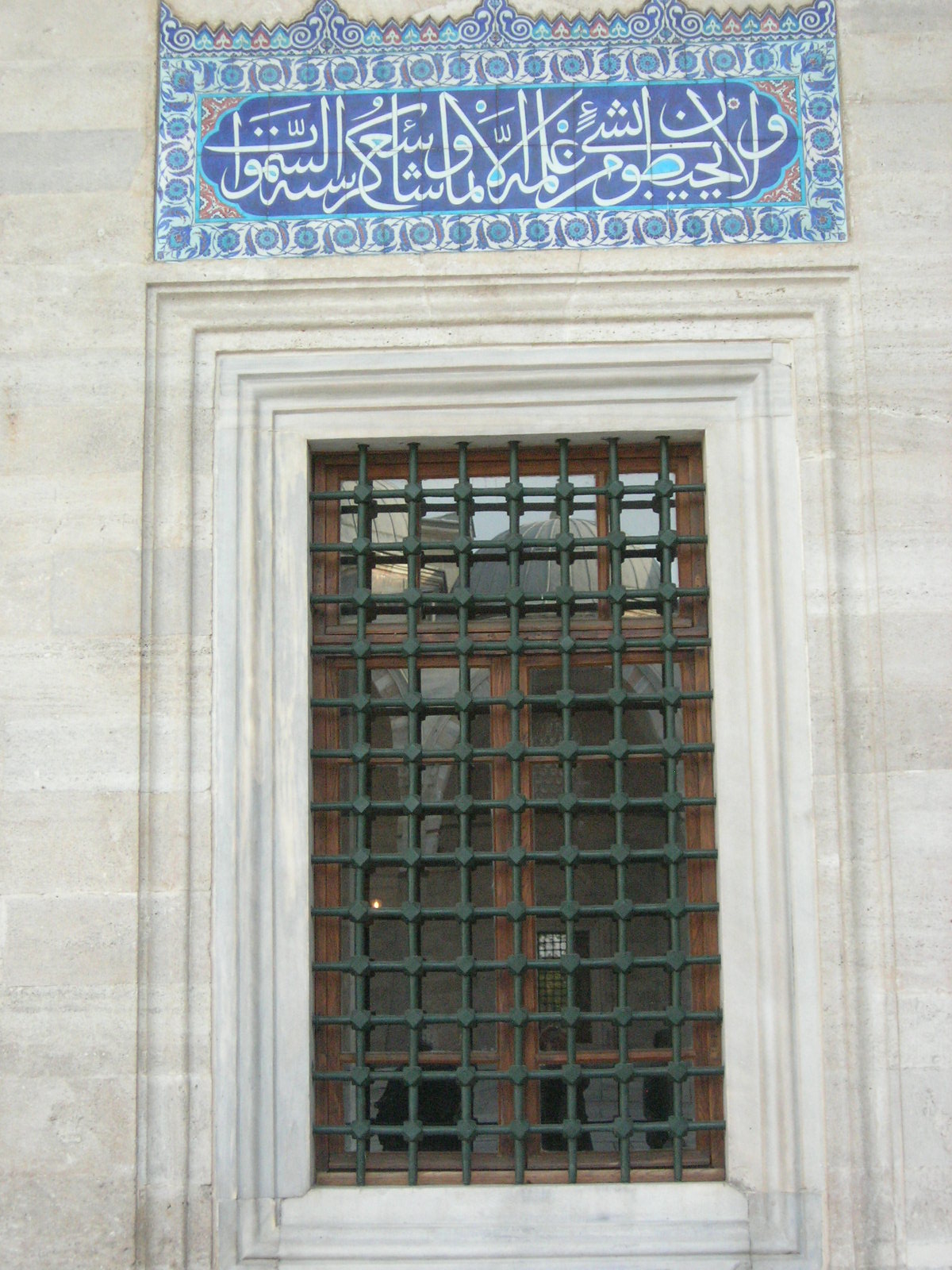
beautiful tiles over the windows in the courtyard
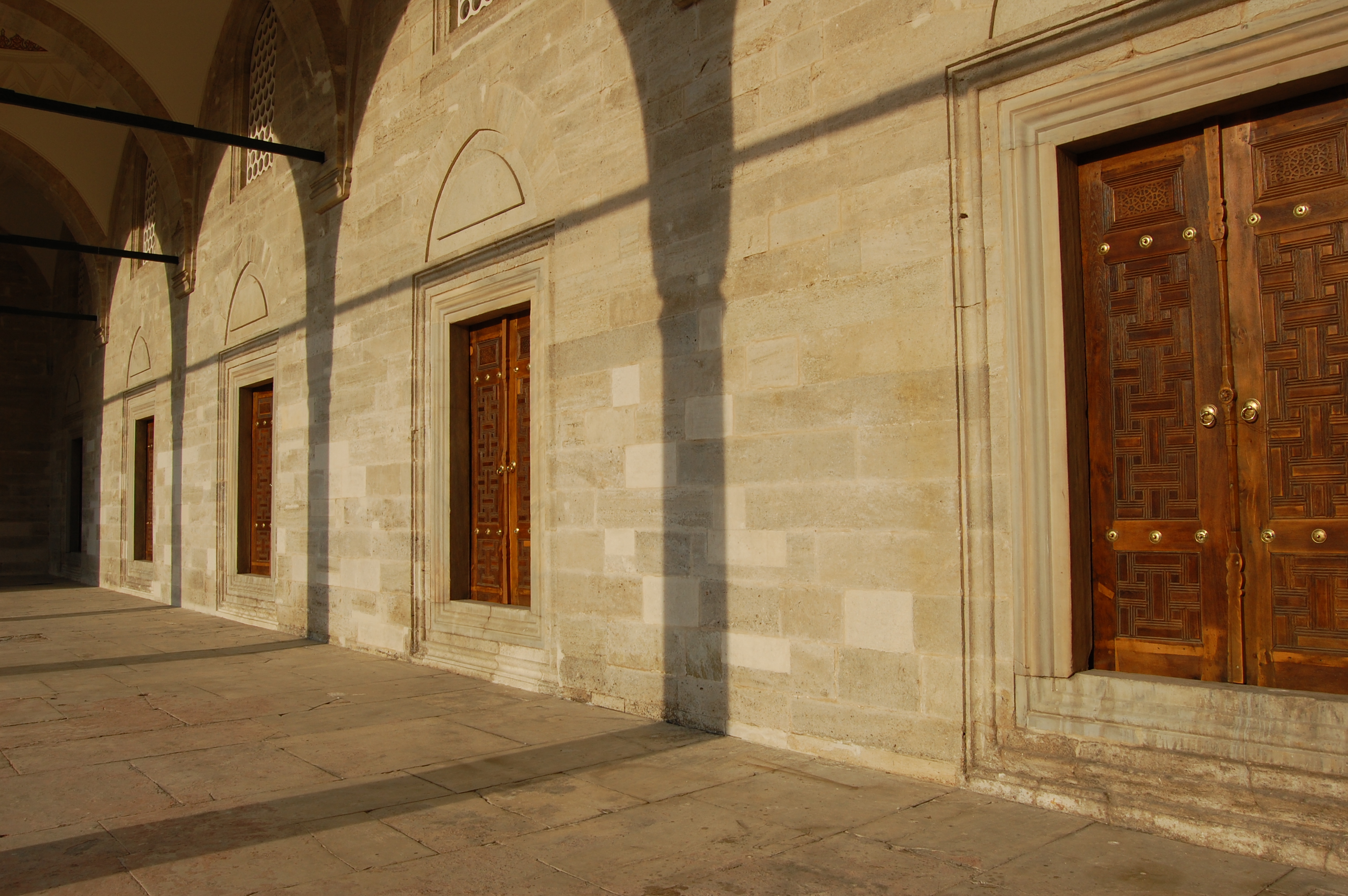
inside the courtyard, so many doors
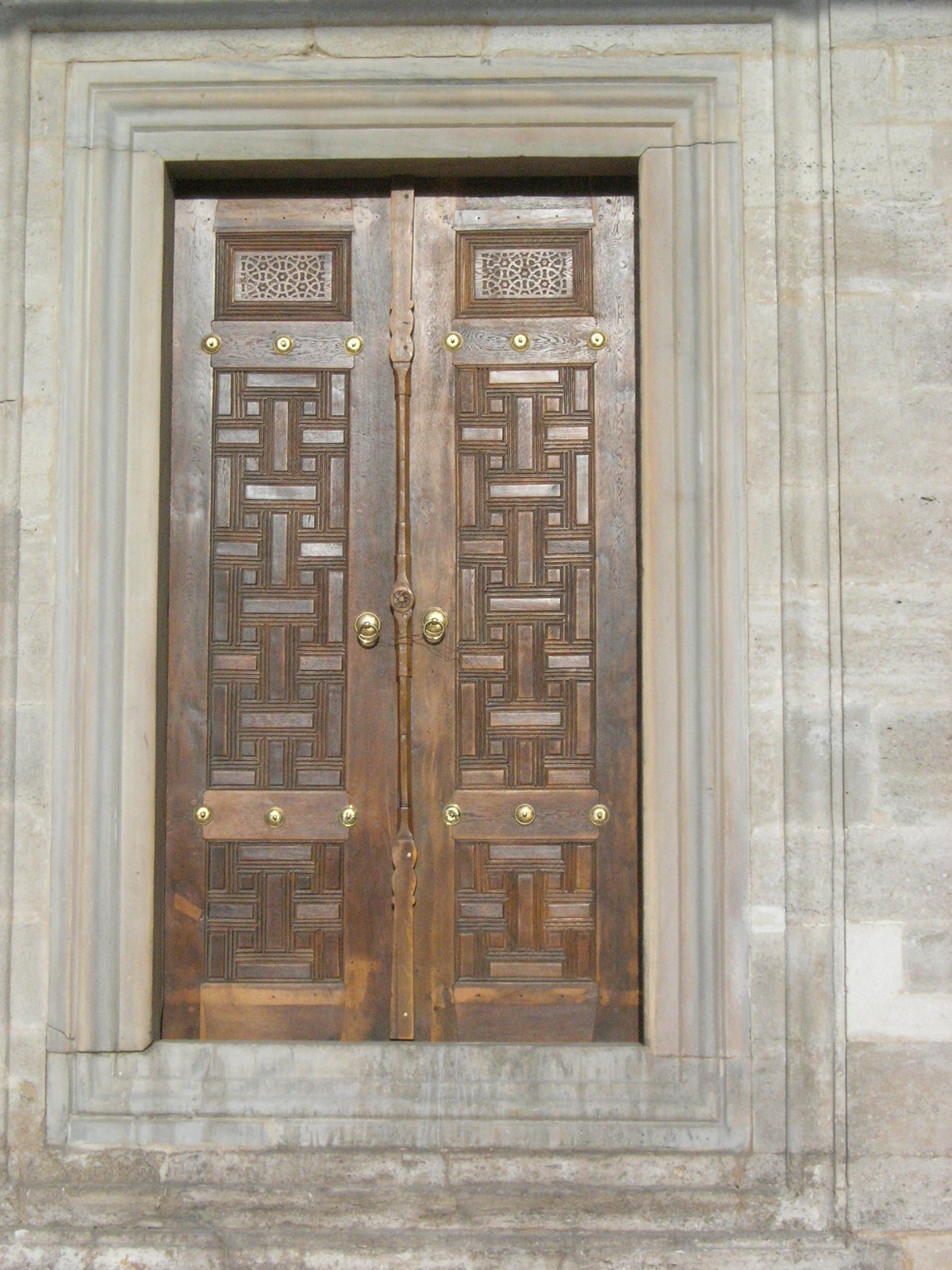
door detail
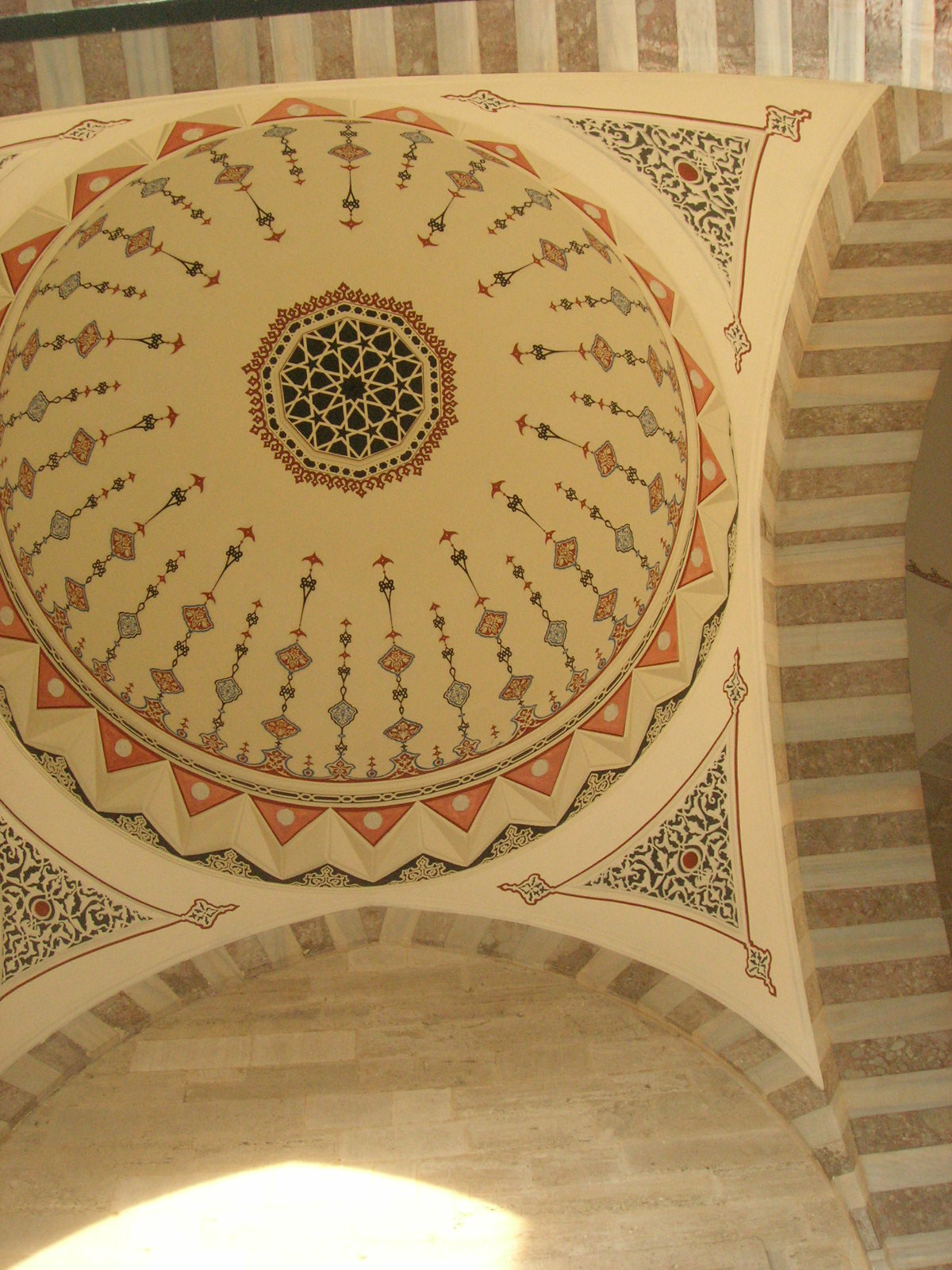
courtyard roof detail
prayer mats to borrow, piled outside the entrance
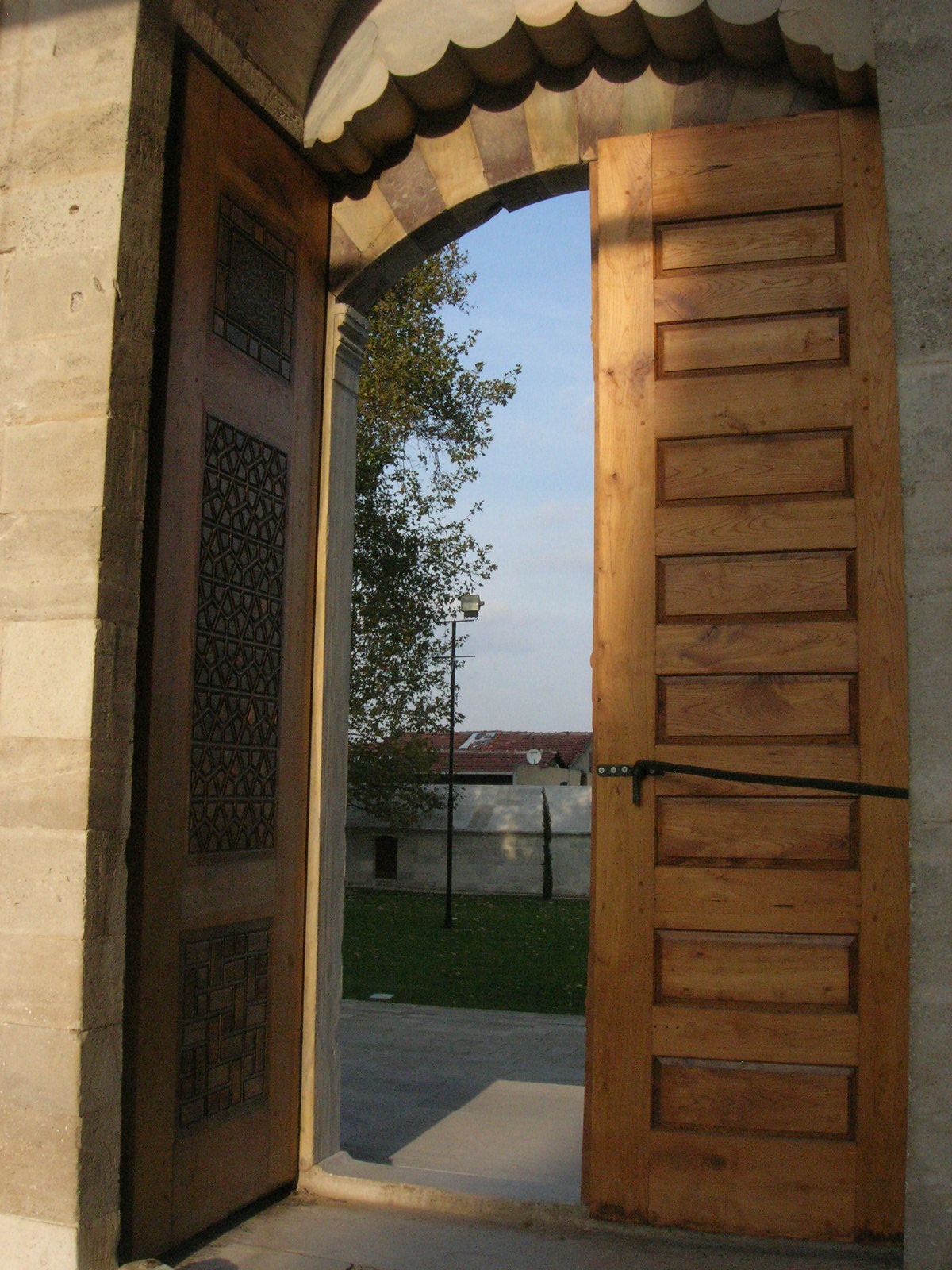
through this door to the 'back yard' for city views...

view over the city from the back of the mosque
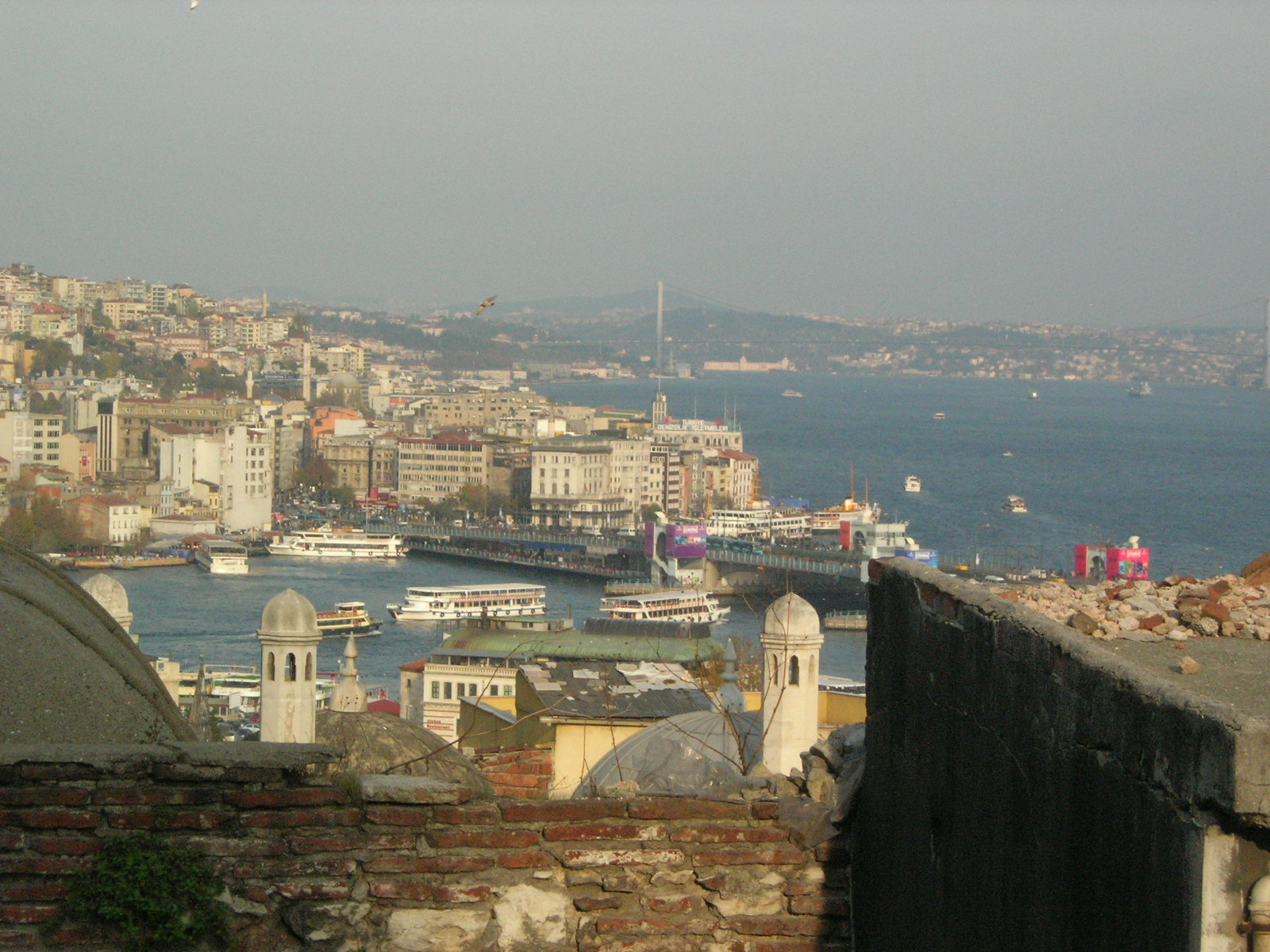
again the view from the back yard
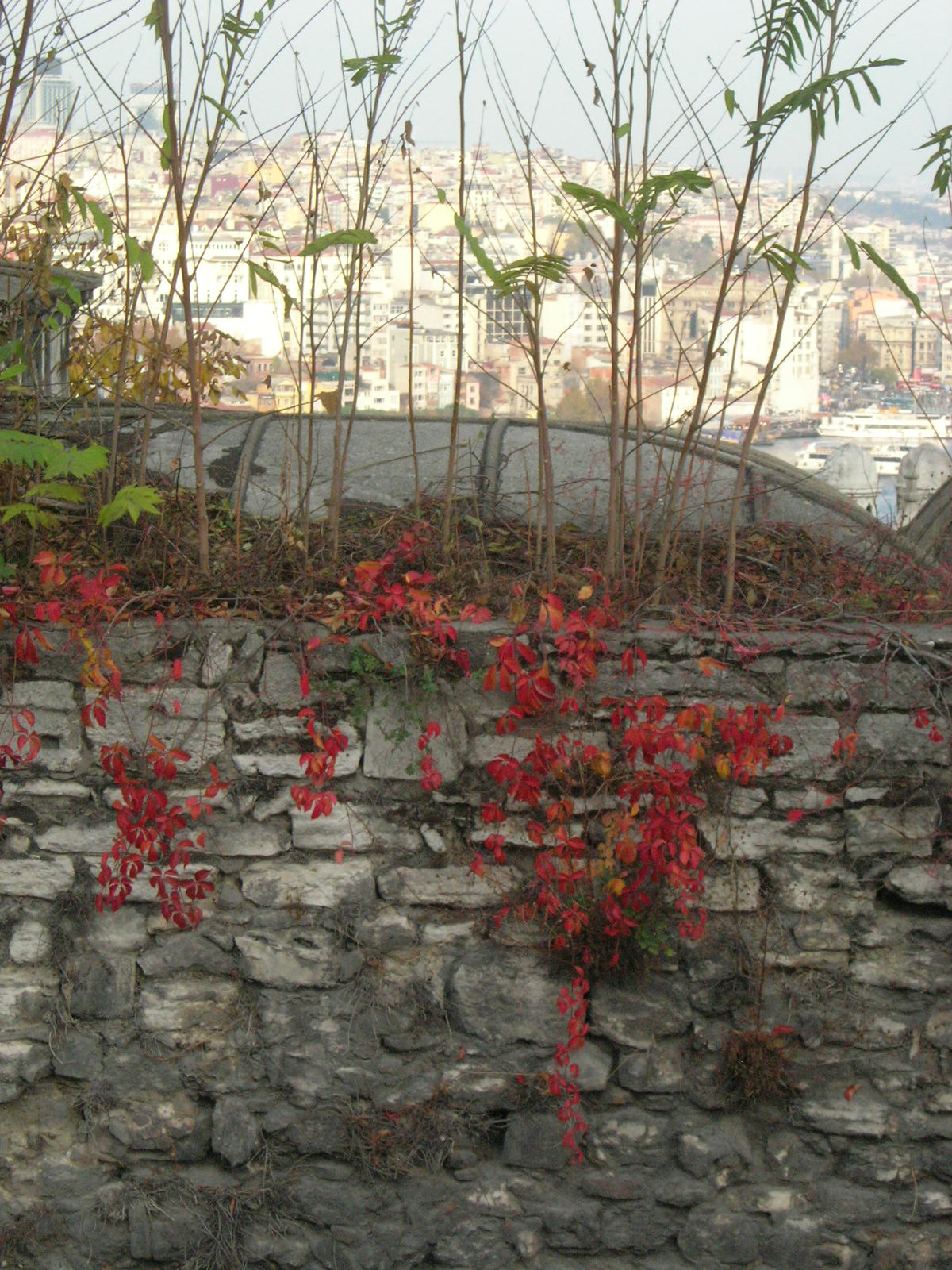
back wall detail
back to the street and past the university grounds…
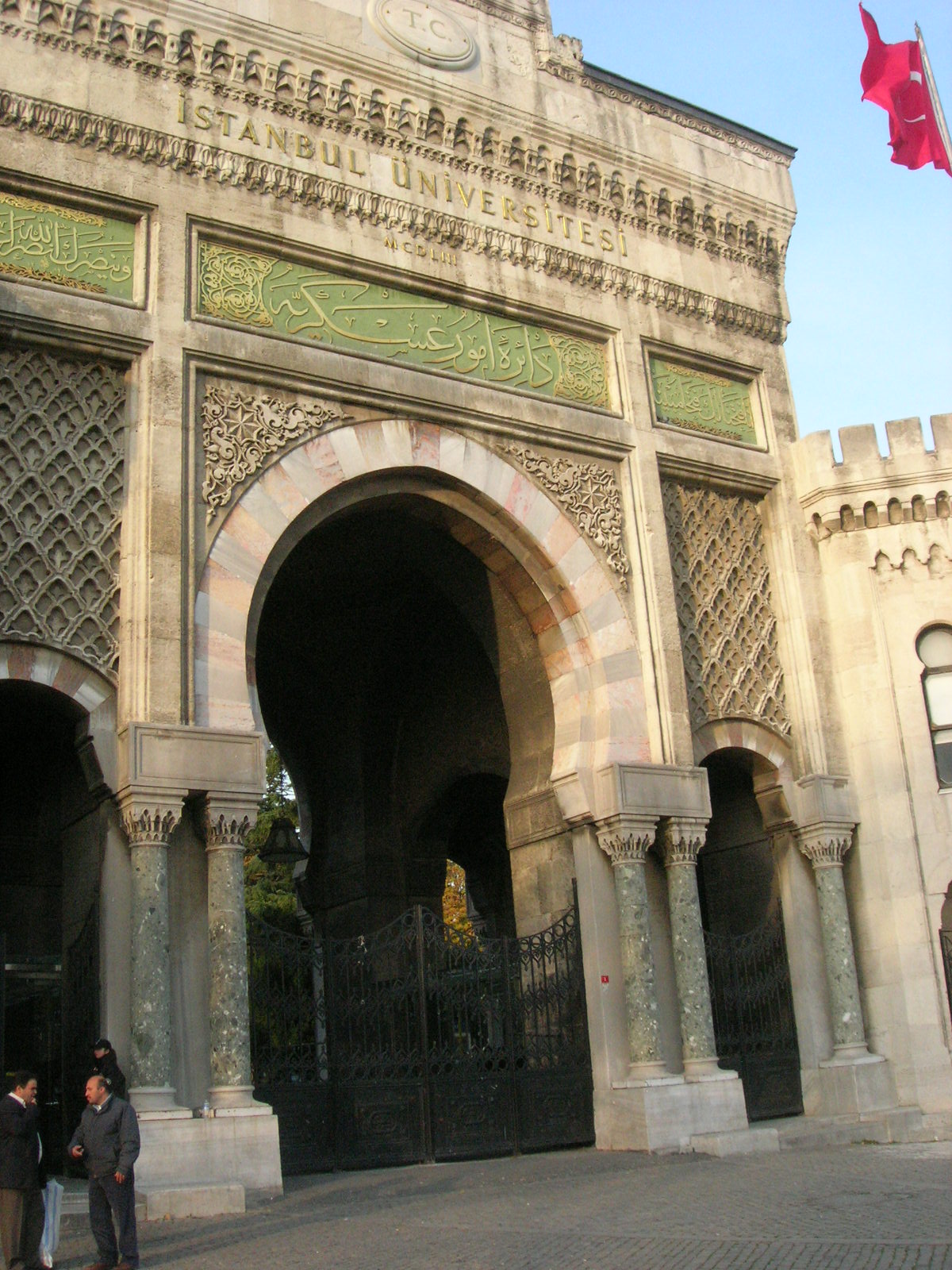
gate into university grounds
and then found the book bazaar (you knew I’d want to see that!)
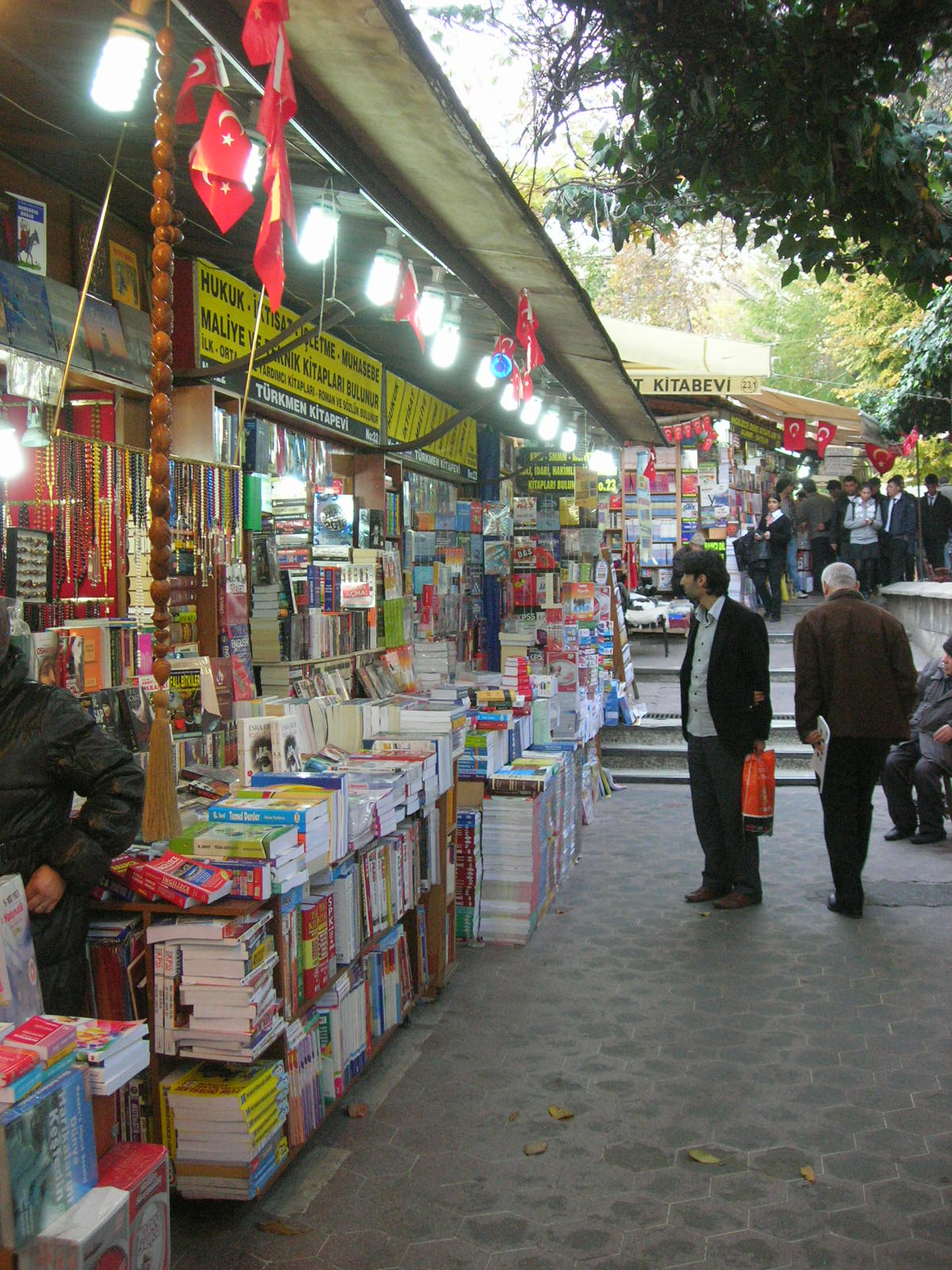
book bazaar
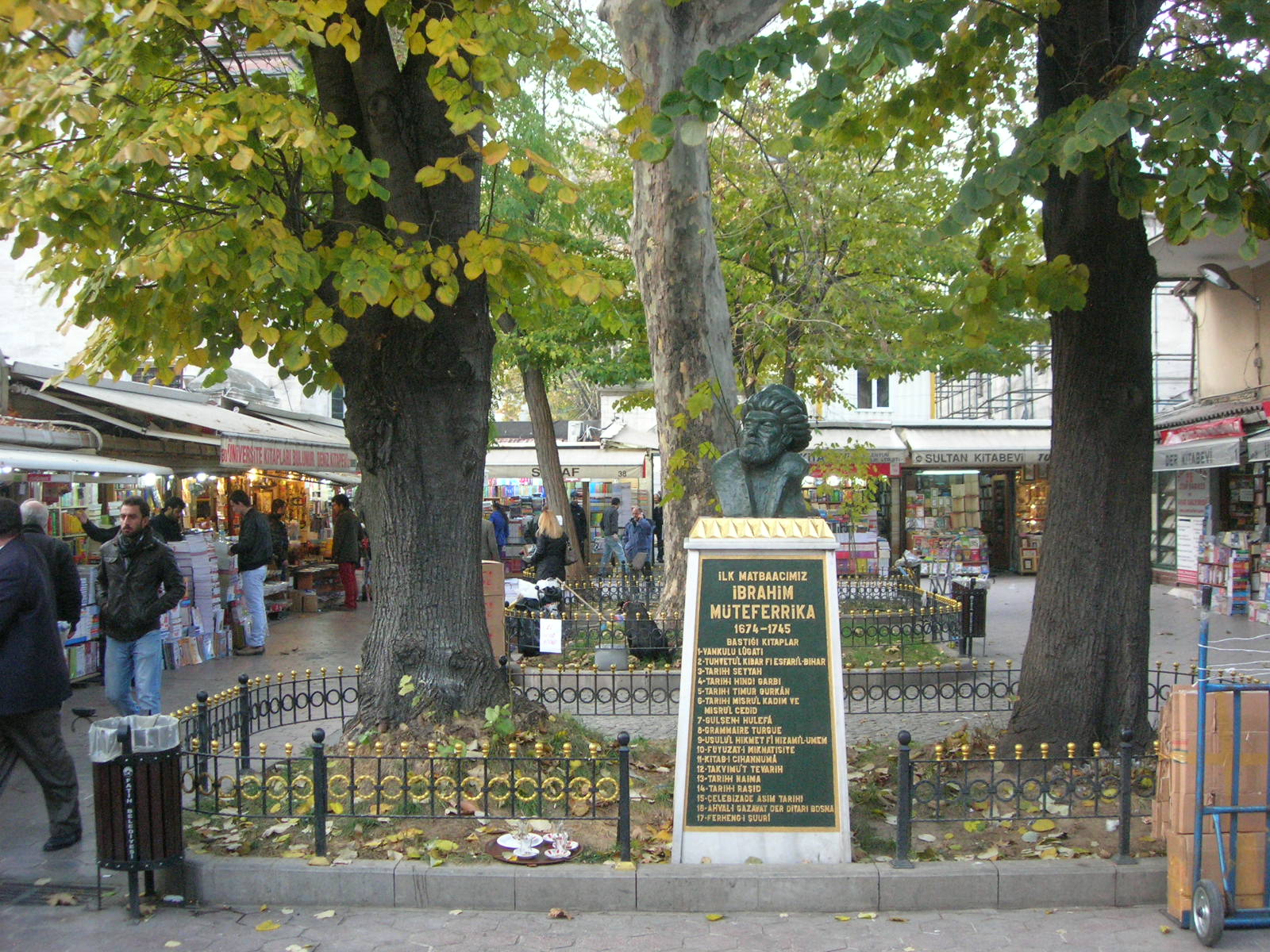
such a peaceful corner of the city for book browsing and reading
Then we went back to the Grand Bazaar to wander the maze, and check out a few products we might want to buy, including a carpet shop, where we chatted with the owner about the kilims, one of the two main kinds of rugs made in Turkey. We told him we had to think about it, and homeward we went, for happy hour with Hasan, and then back to the first restaurant for mezes (appetizers) and wine. It was an excellent day on our own, and I bragged about our success to Gamze in an email before we went to bed!!
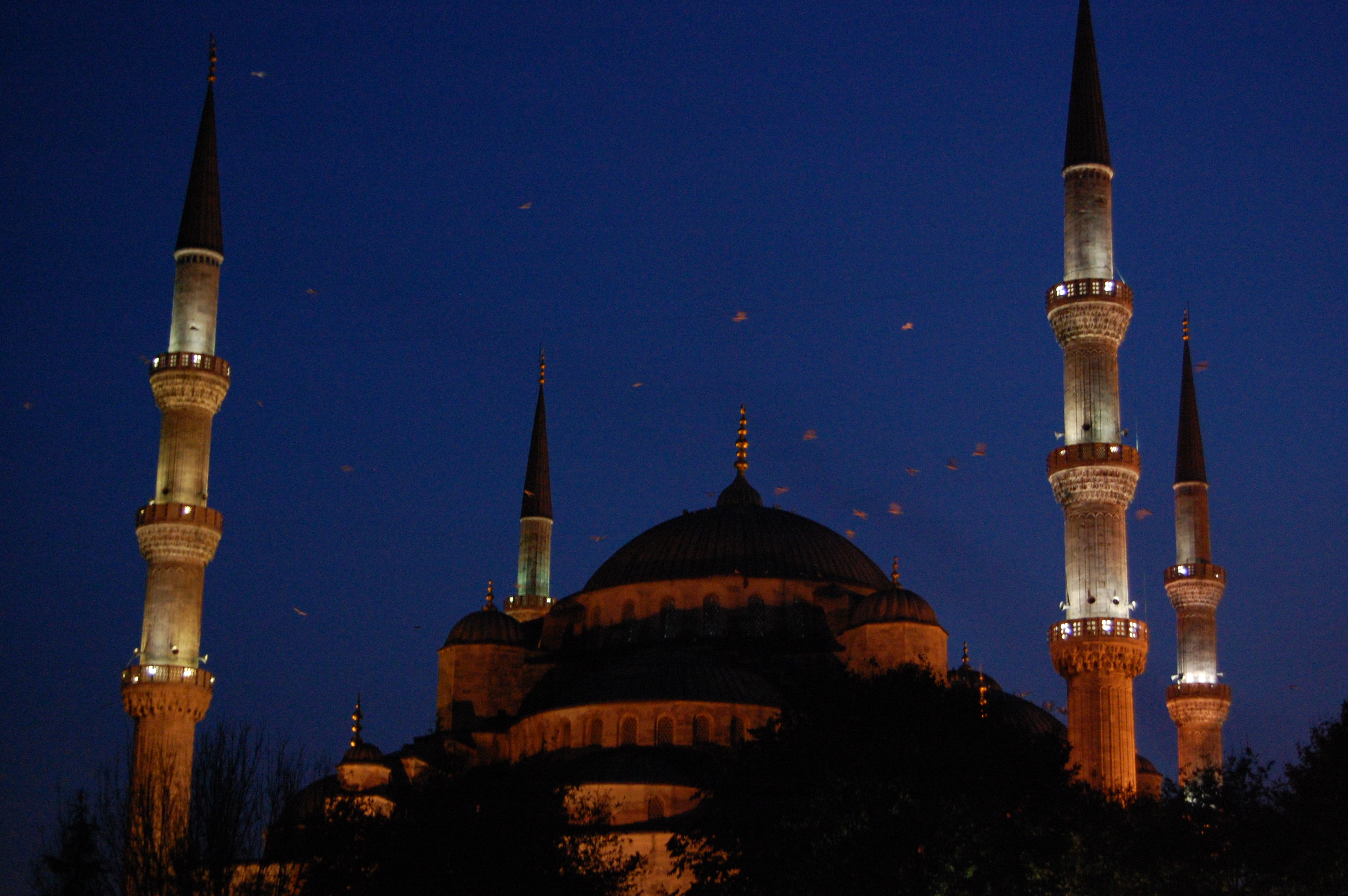
the Blue Mosque at night, the light attracts lots of birds
On Tuesday we were happily anticipating the arrival of my cousin and her husband. Edith is the daughter of my father’s oldest brother, and she and Leo had visited us several years ago in Whitby. They retired to the south-west coast of Turkey, where Leo sails most days. They flew to Istanbul to stay overnight one night at the same hotel and tour with us. They were expected to arrive by noon, so in the morning, after breakfast, we set off to visit the Museum of Turkish and Islamic Arts. You can’t take any pictures inside, but if you google the museum, I suggest clicking the the google Images and check out the excellent collection, especially their carpet collection.
Back to the hotel to find Edith and Leo just arrived, and their room not quite ready, so we all walked up the street to have a coffee – my first and only Turkish coffee, which is like sludge. Then, back to the hotel for their check-in, and then off we went to take the tram to the Galata Bridge. We walked across the bridge, climbed up a steep and winding hill to the Galata Tower, and then up the steep and winding stairs of the tower for a magnificent view of the city.
Leo (partially), Edith and I at the top of Galata Tower
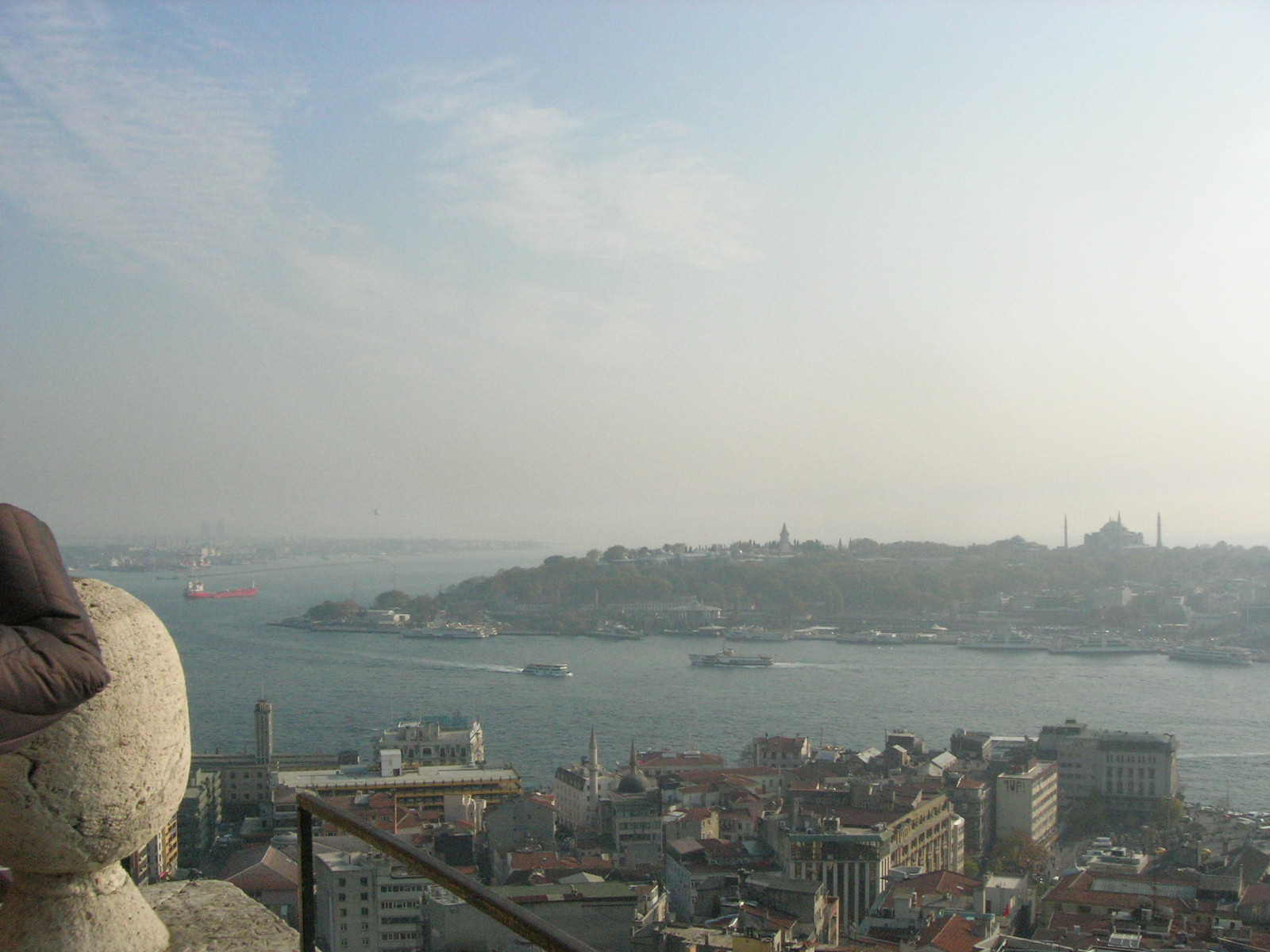
tower view
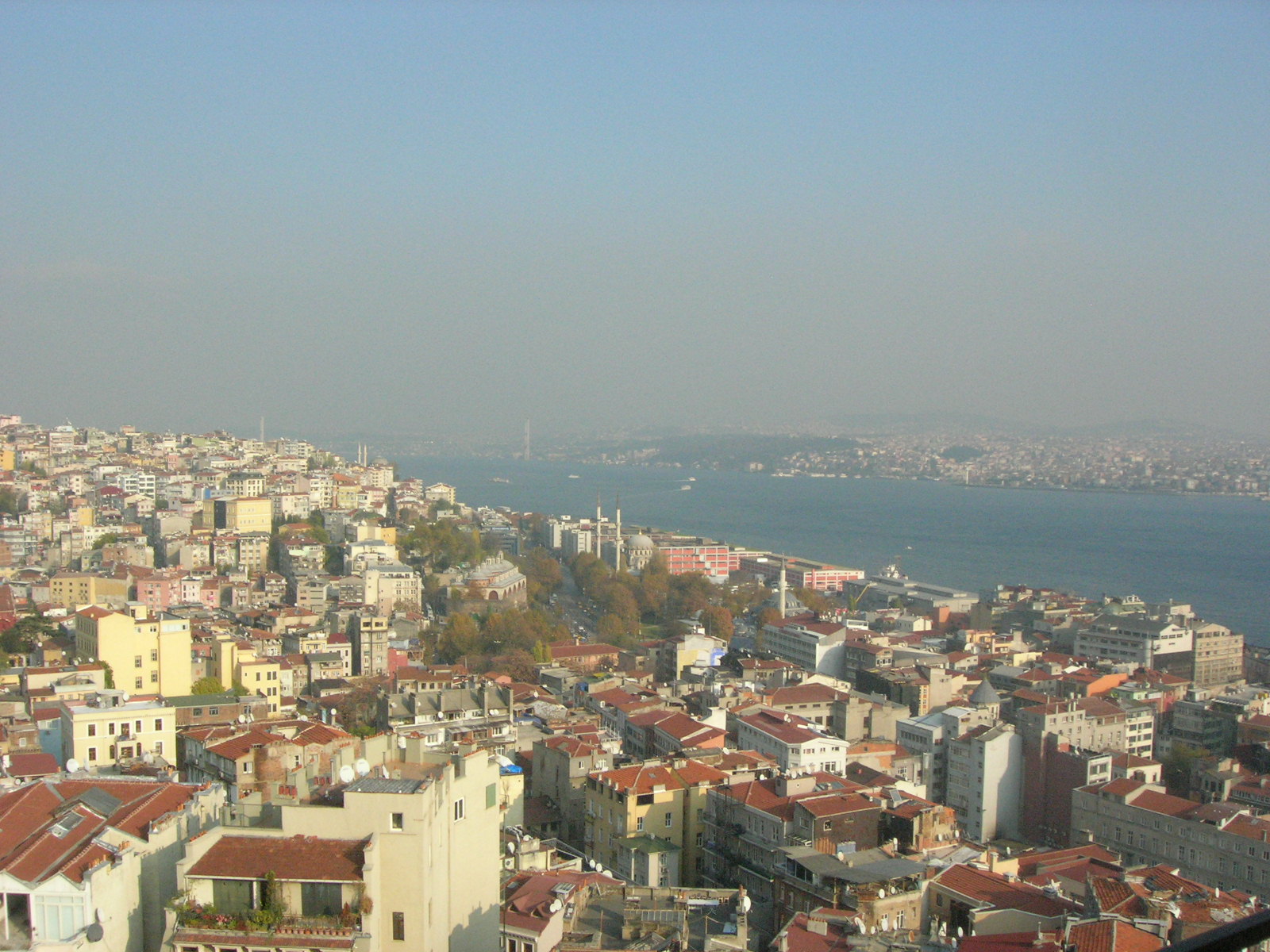
tower view
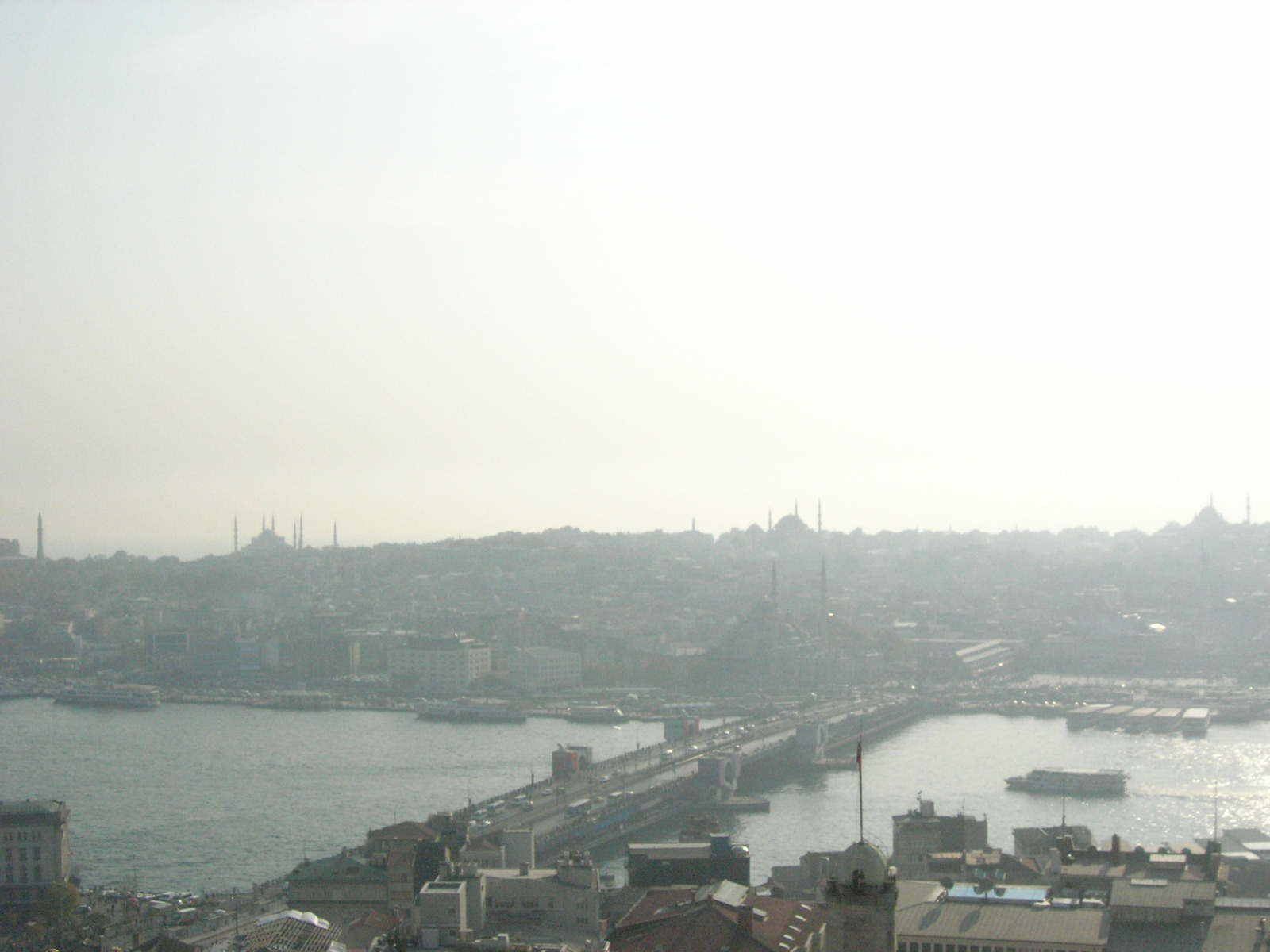
view of Galata Bridge and city
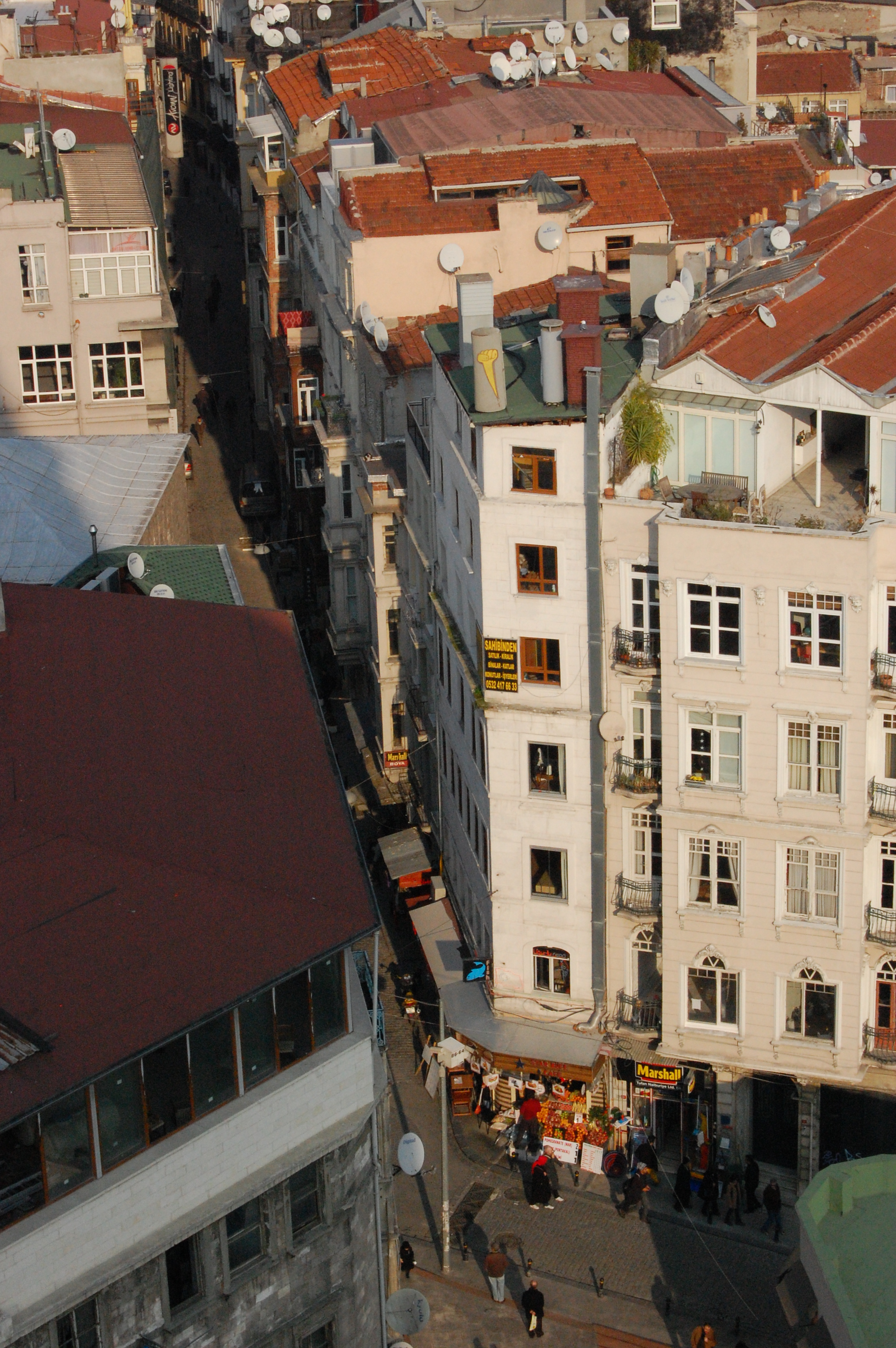
straight down
Back down on the ground, we had a light lunch at a small cafe, and then wandered along the main street of this area of the city, called Istiklal Caddesi (Caddesi means “street”), though it was once known as The Grande Rue de Pera. The street is lined with stores (chain stores like you can see everywhere in the world now), European embassy buildings, and just off the main street, lots of trendy bars and restaurants. The street was VERY busy with local people.
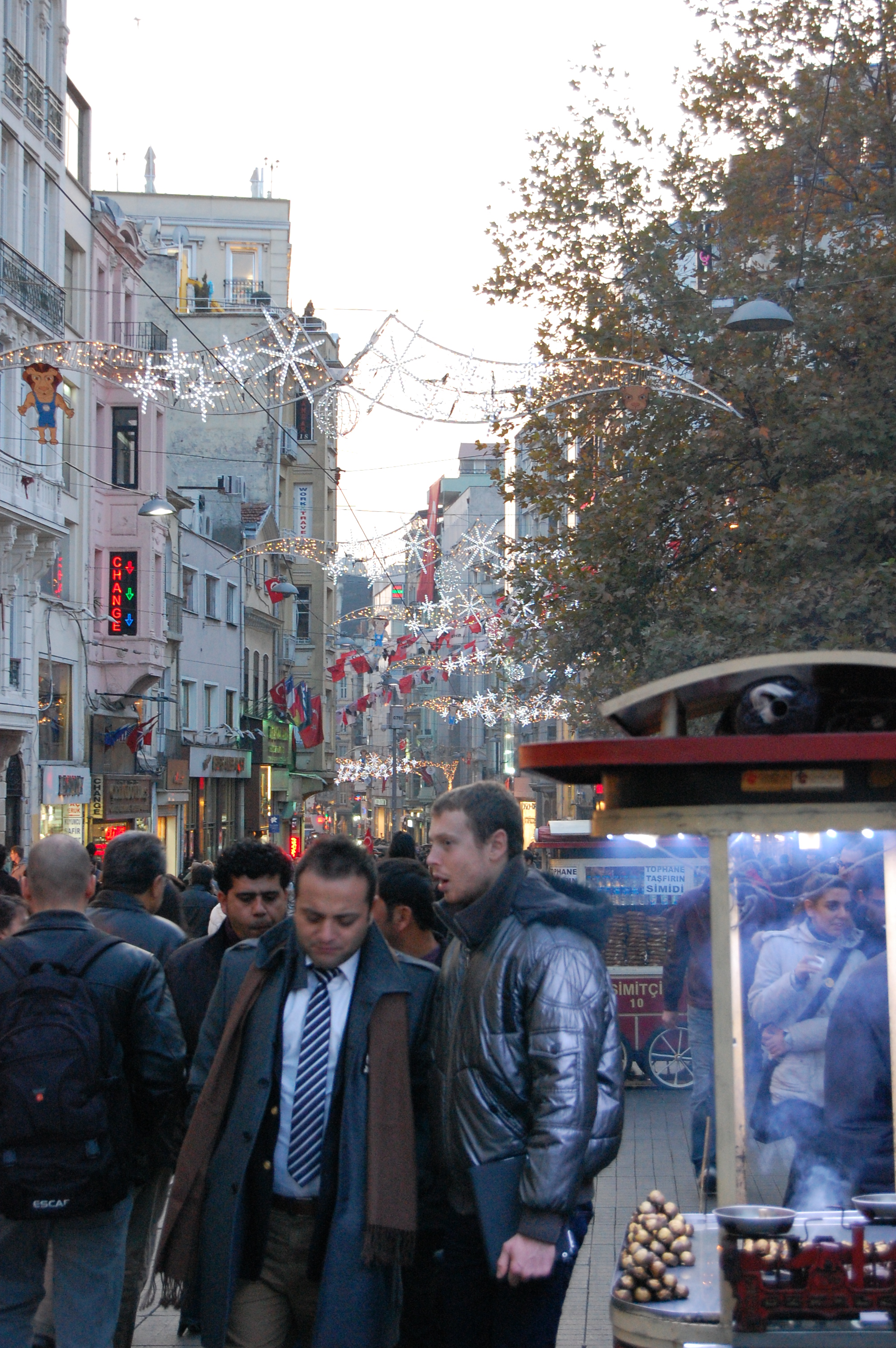
busy street
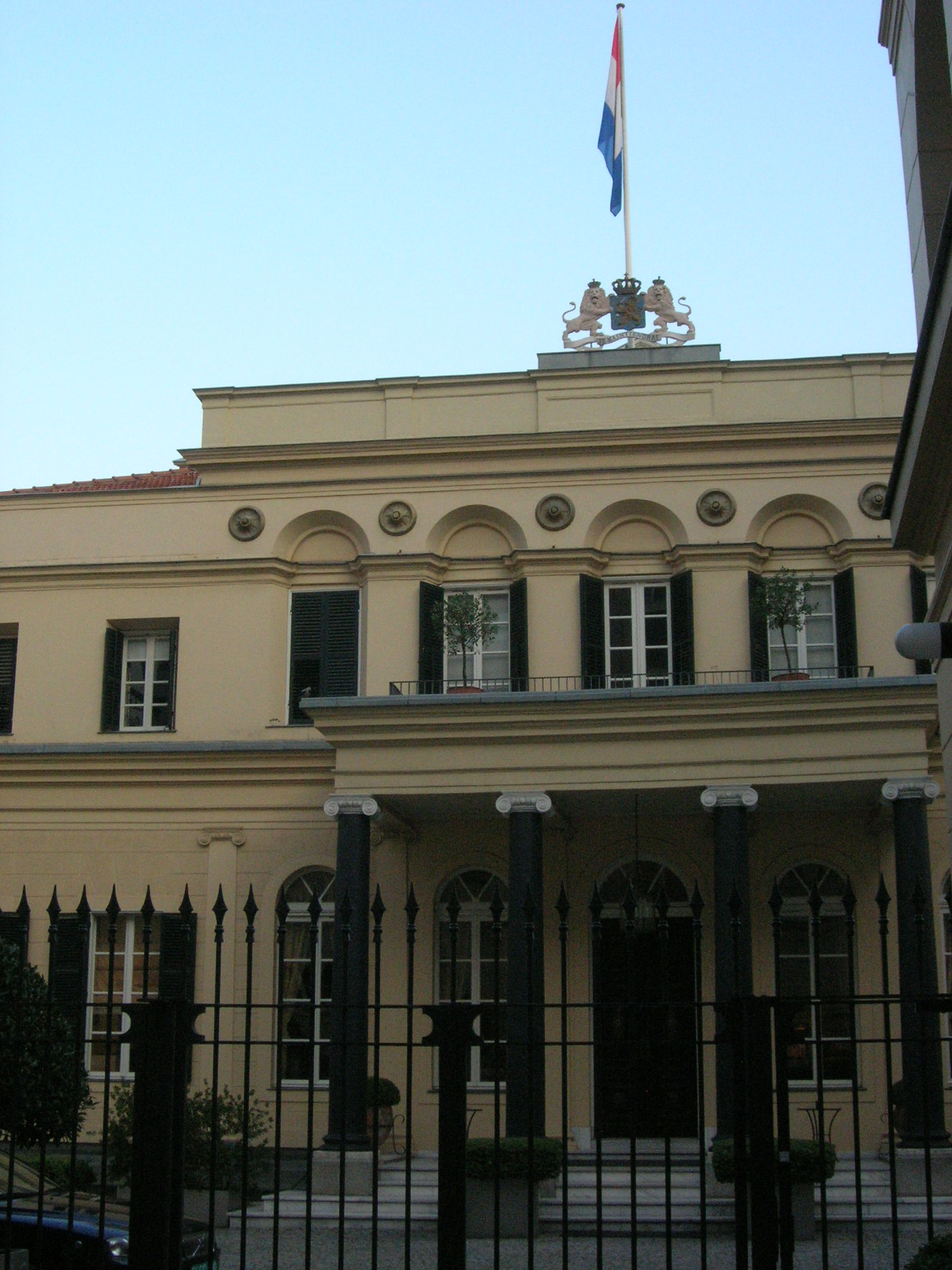
Dutch embassy
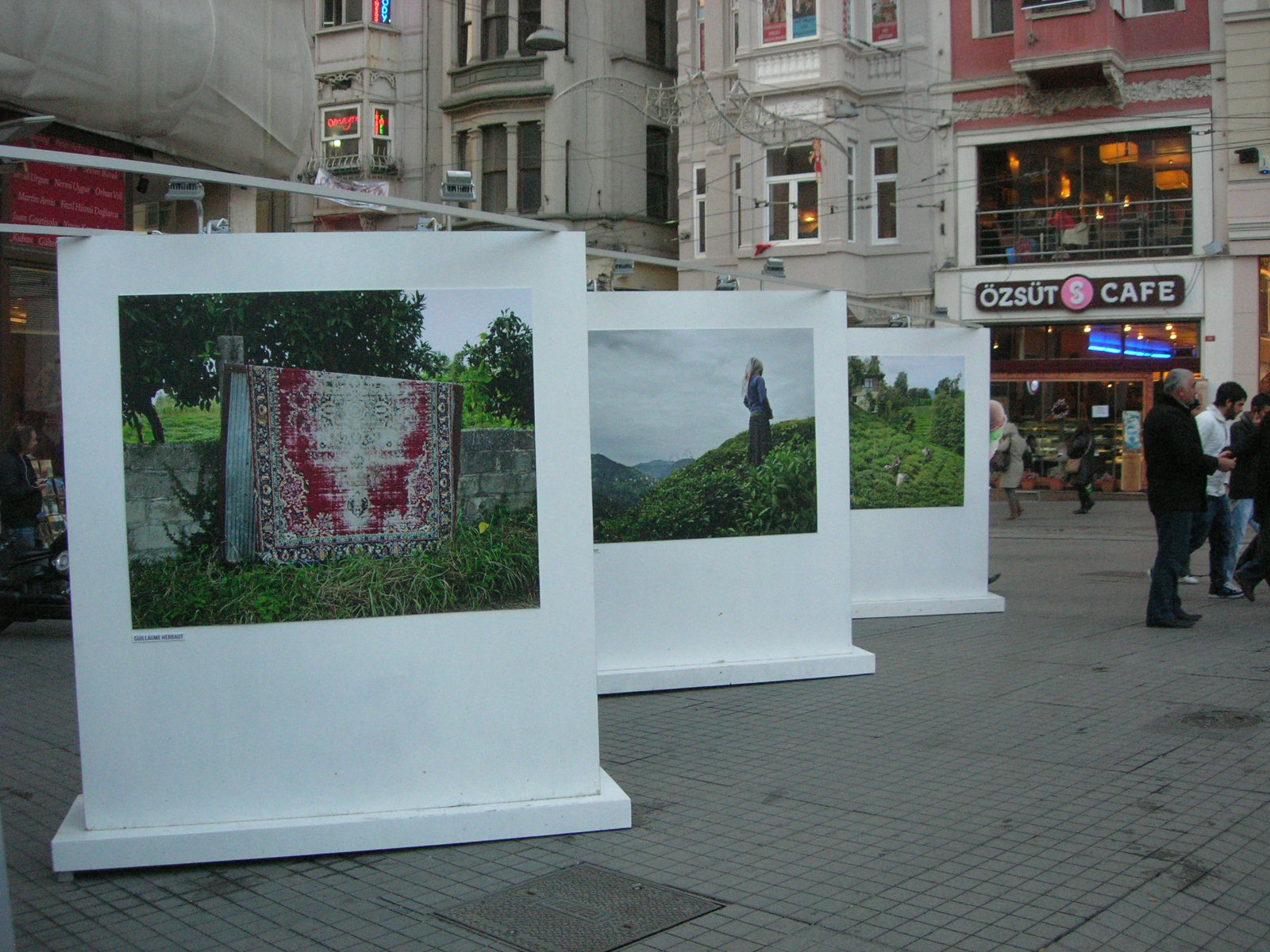
photo exhibit on the street
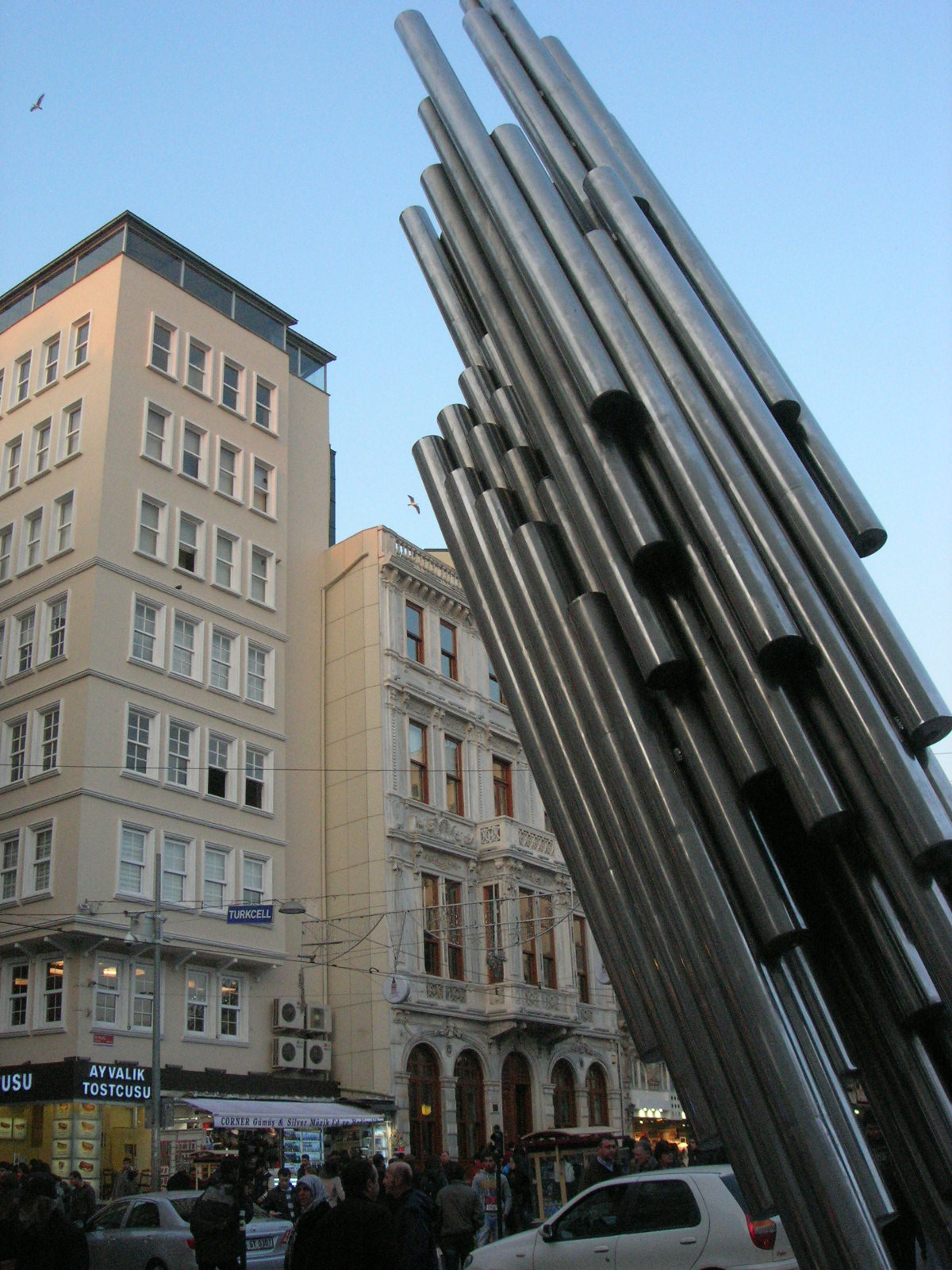
modern sculpture

old gated entrance into a lane of shops
We walked the full length of the street to Taksim Square, where stands the 1928 Monument of Independence, which shows Ataturk and the other founding fathers of the modern Turkish Republic.
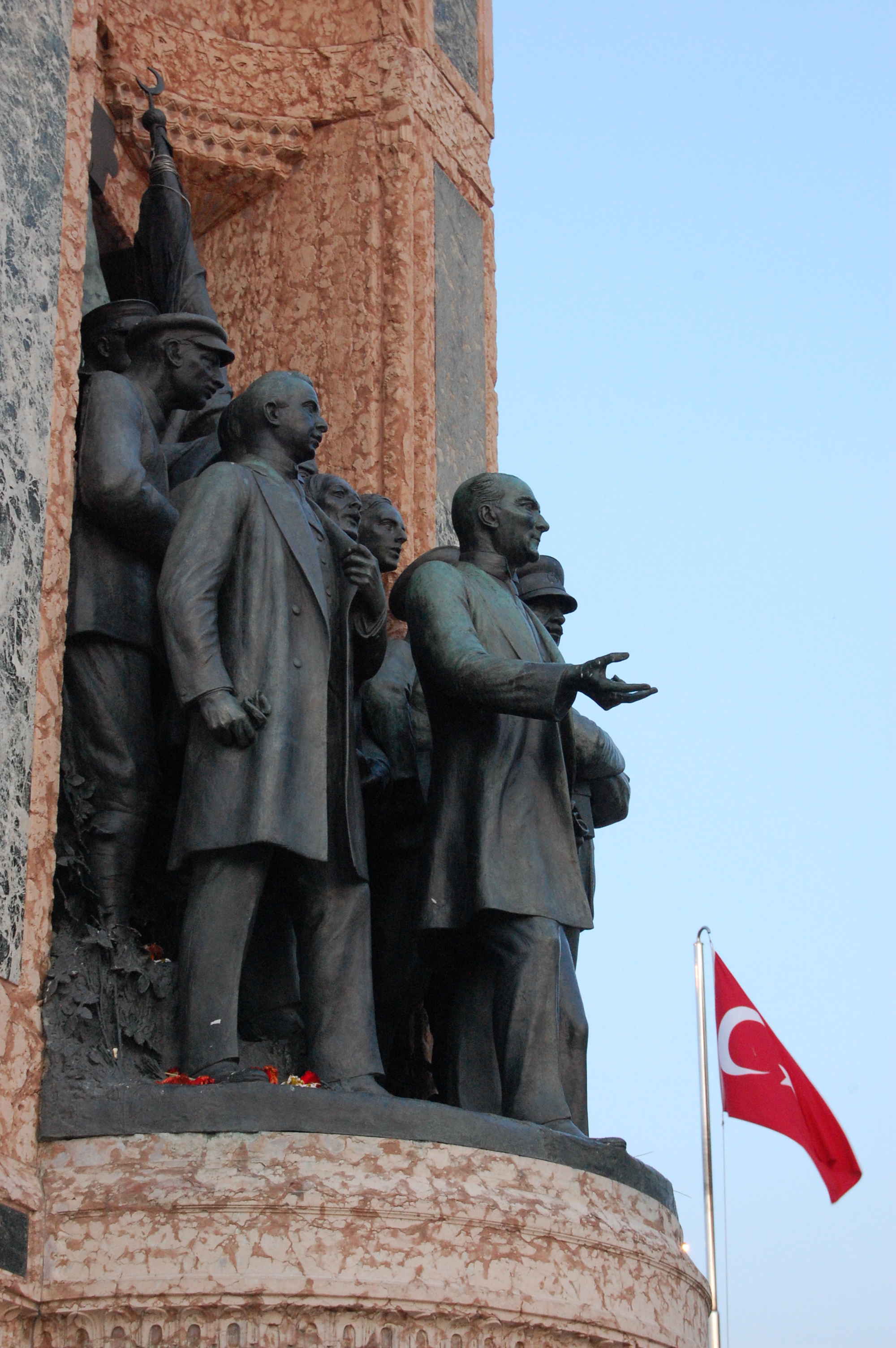
Monument of Independence
Then, all the way back down the street, much to Leo’s dismay (and tired feet) to the Pera Palas Hotel for tea. This “atmospheric period piece” opened in 1892, “mainly to cater for travellers on the Orient Express.” Famous guests include Agatha Christie (she wrote much of Murder on the Orient Express here), Ernest Hemingway, Alfred Hitchcock, Mata Hari, Greta Gardo… etc. The lobby is magnificent.
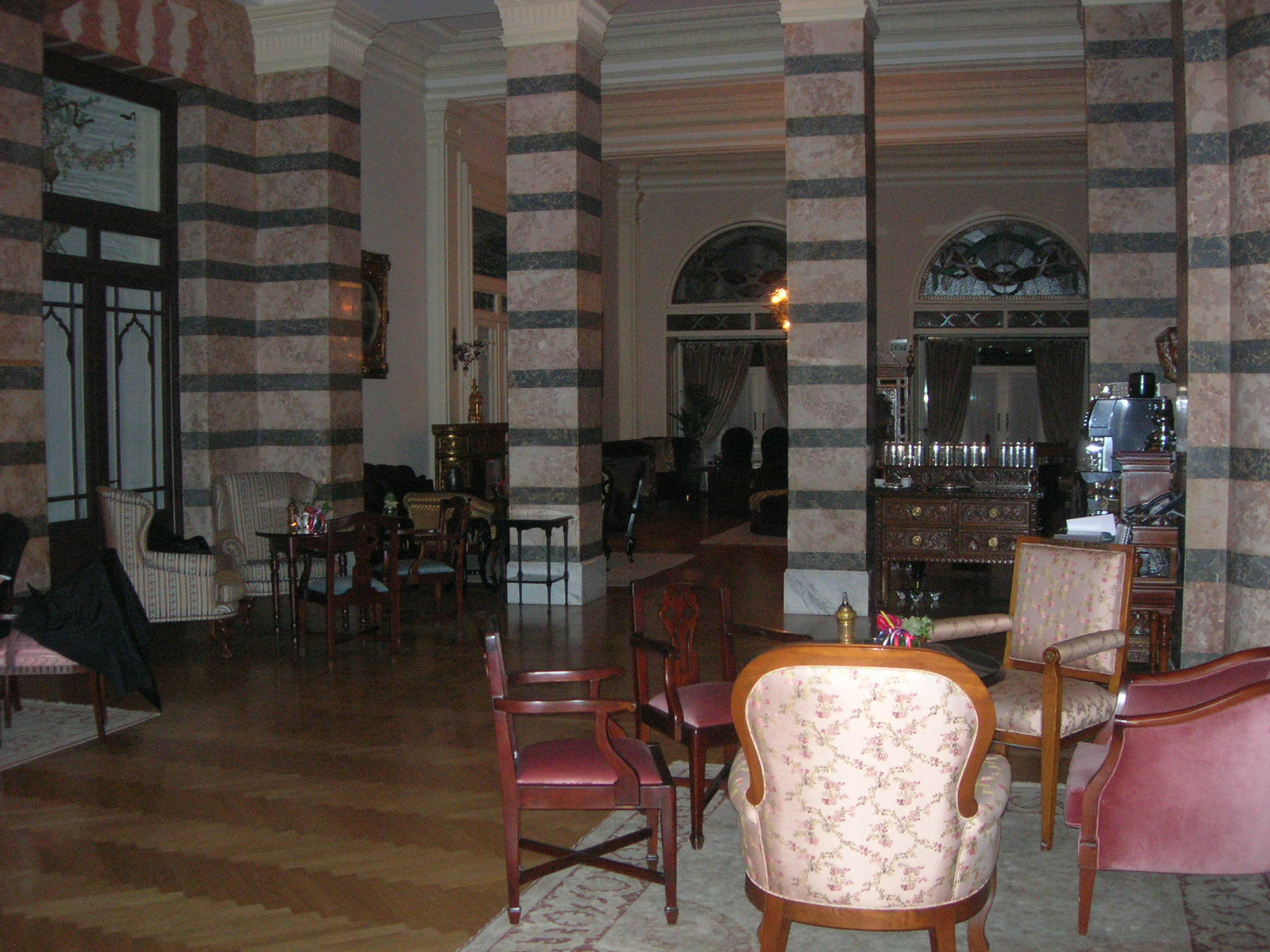
Pera Palas Hotel
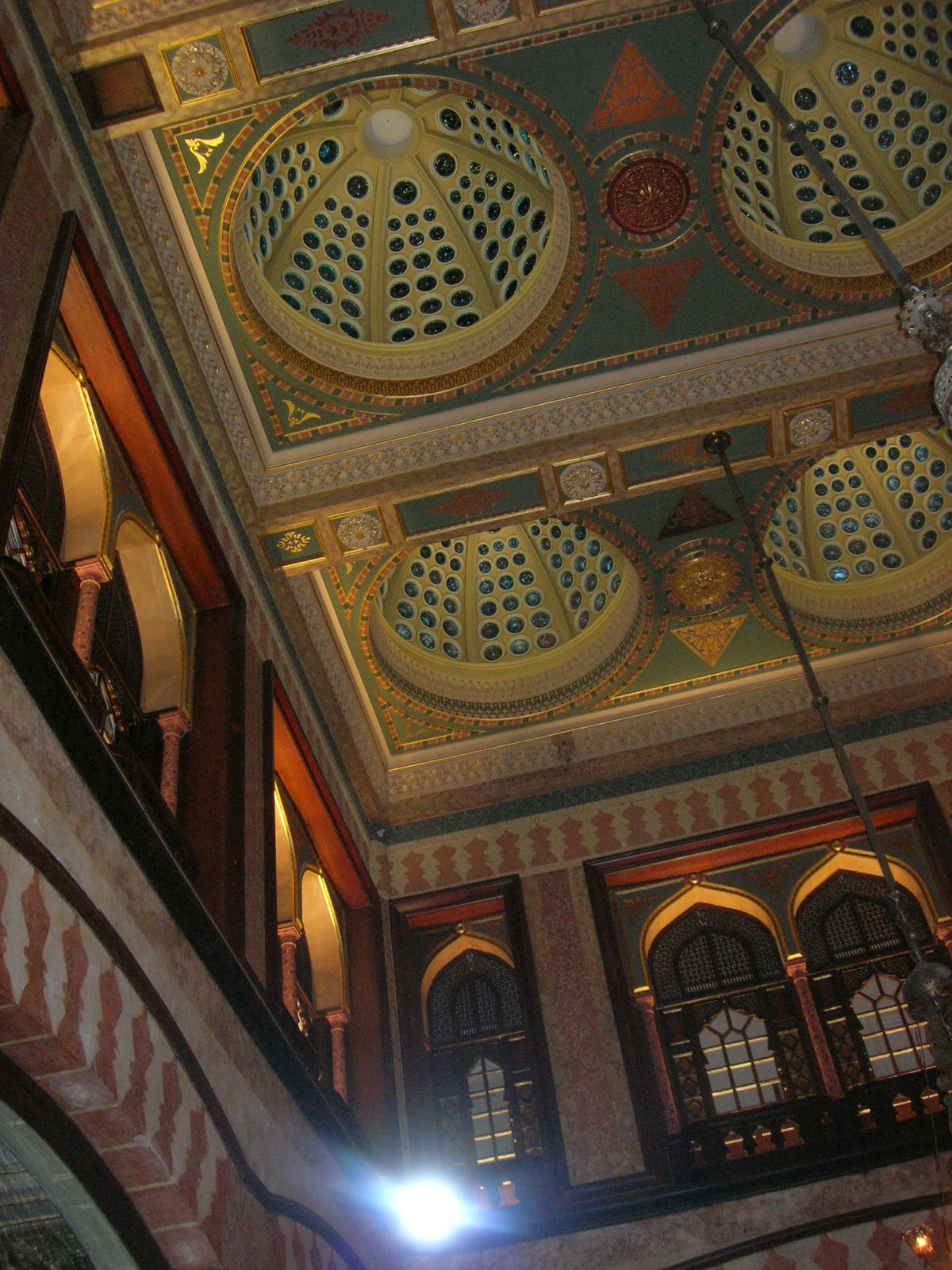
ceiling detail
with Edith and Leo inside hotel entrance
After a reviving cup of tea we wandered some more to find a bar, where we enjoyed a few drinks, and then on to find a restaurant, where we had a fabulous meal. We took a taxi back to the hotel.
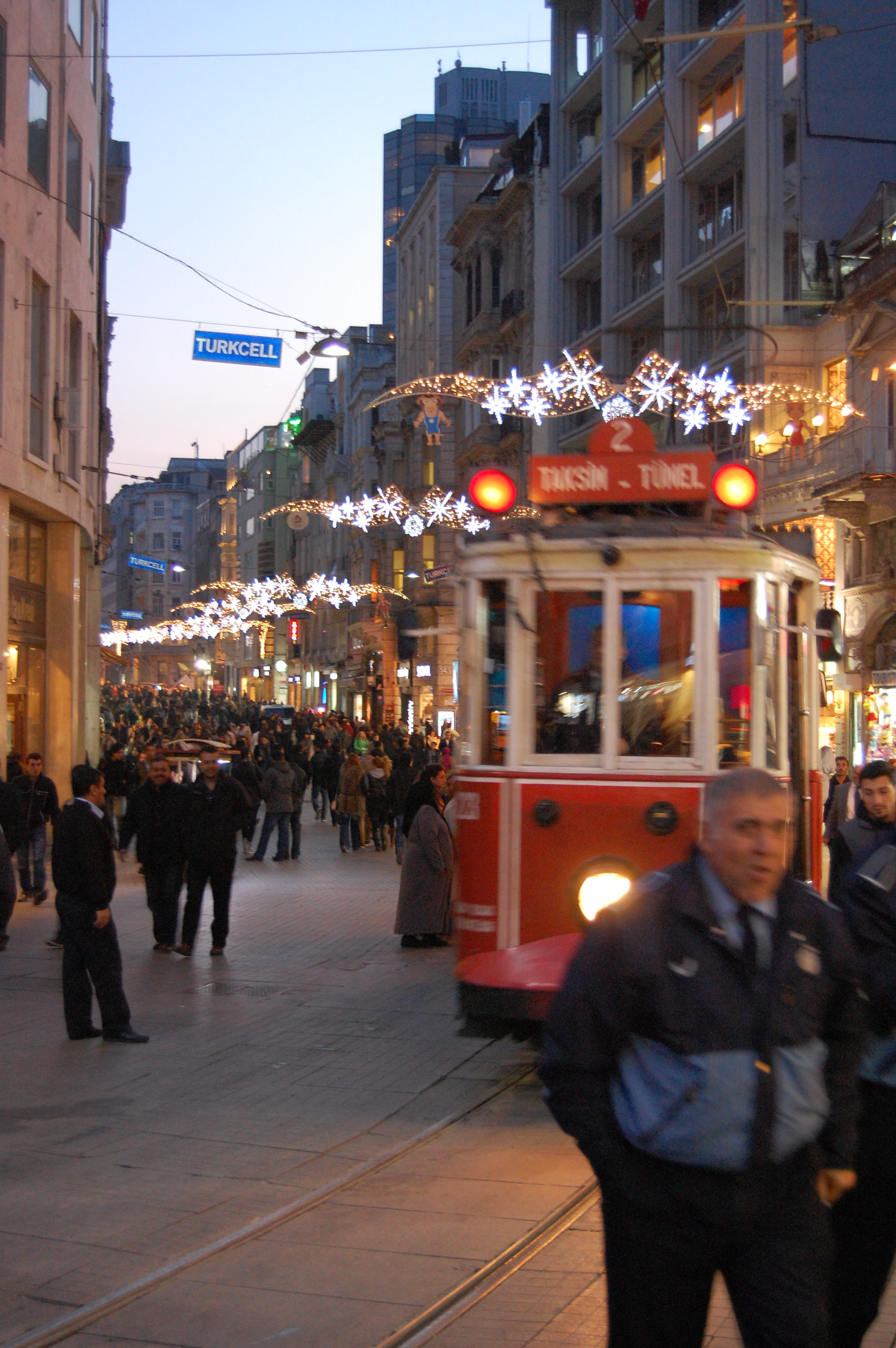
Istiklal Caddesi tram in the evening
Gamze met us in the morning, after breakfast, for a full day of touring. We started the day by driving to Eyup, a village area in “greater Istanbul,” a little outside the downtown core. Eyup is “the burial place of Eyup Ensari, the standard bearer of the prophet Mohammed, and is a place of pilgrimage for Muslims from all over the world. Its sacrosanct status has kept it a peaceful place of contemplation. The wealthy elite established mosques and street fountains in the village but, above all, they chose Eyup as a place of burial….” We first visited the Eyup Sultan Mosque. “Mehmet the Conquerer built the original mosque in 1458, five years after his conquest of Istanbul, in honour of Eyup Ensari. That building fell into ruins, probably as a result of an earthquake, and the present mosque was completed in 1800 by Selim III.”
Much of it was under renovation, but we wandered through what areas we could.
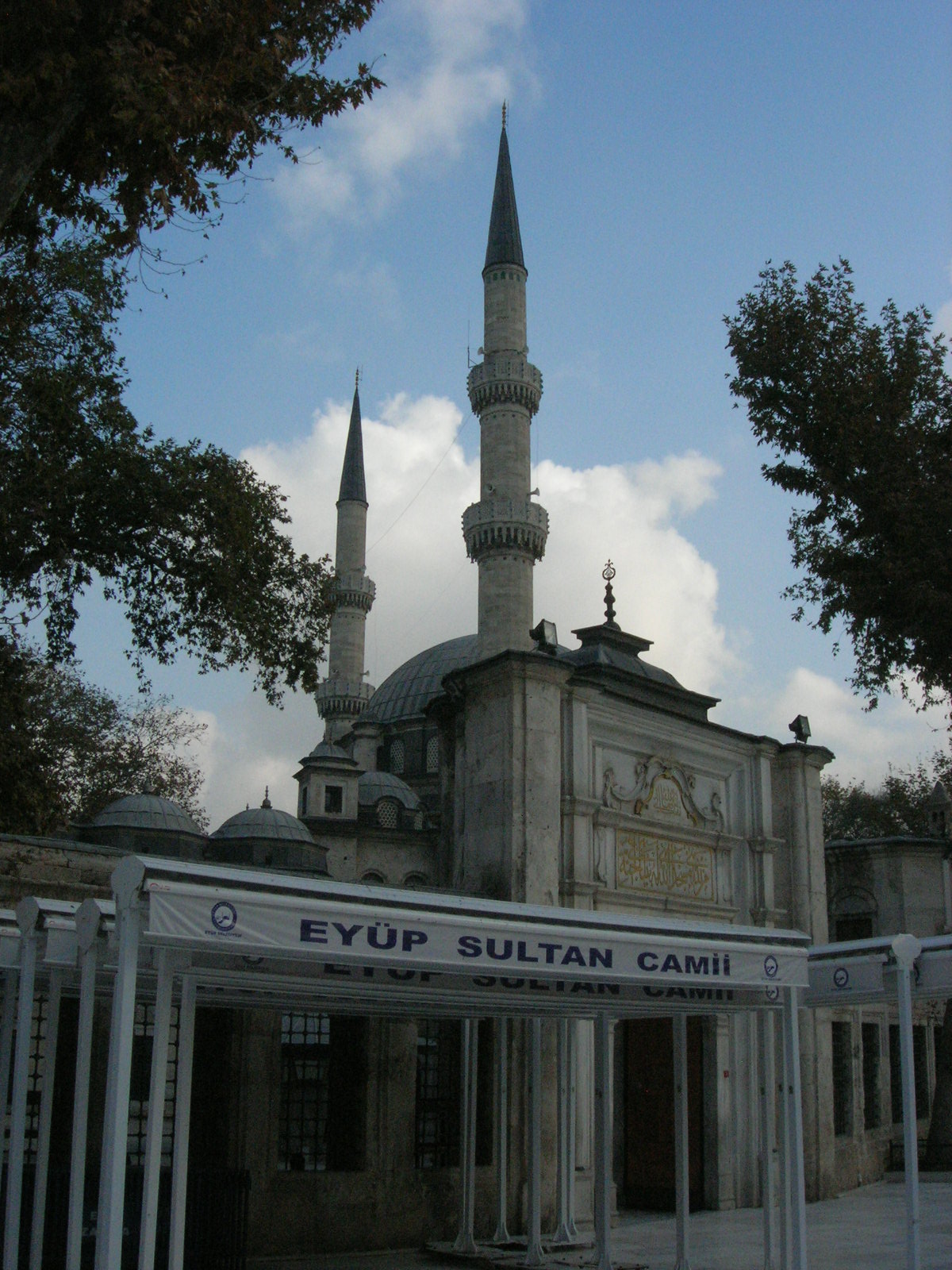
Eyup Sultan Mosque
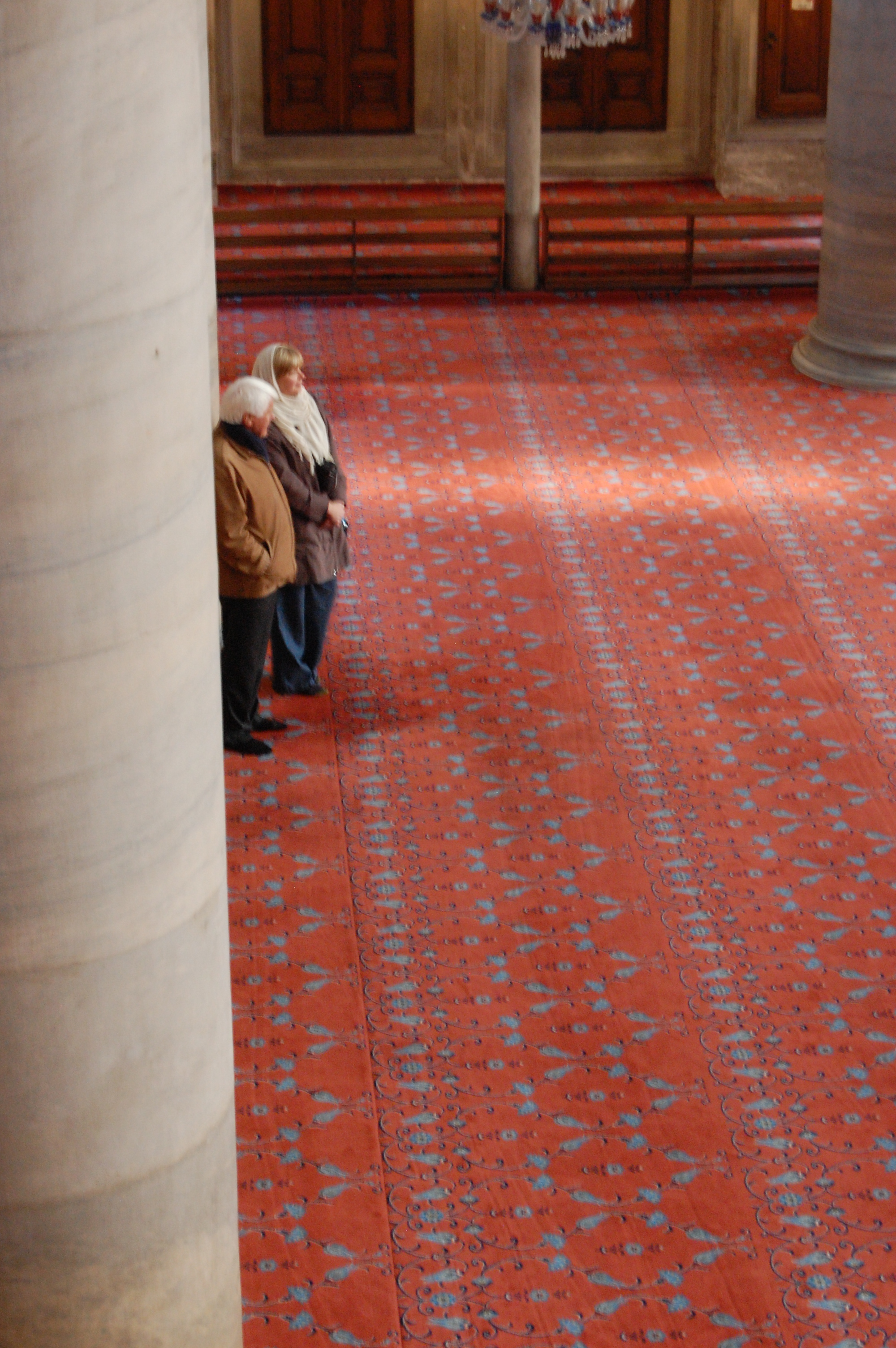
Leo and I inside the mosque
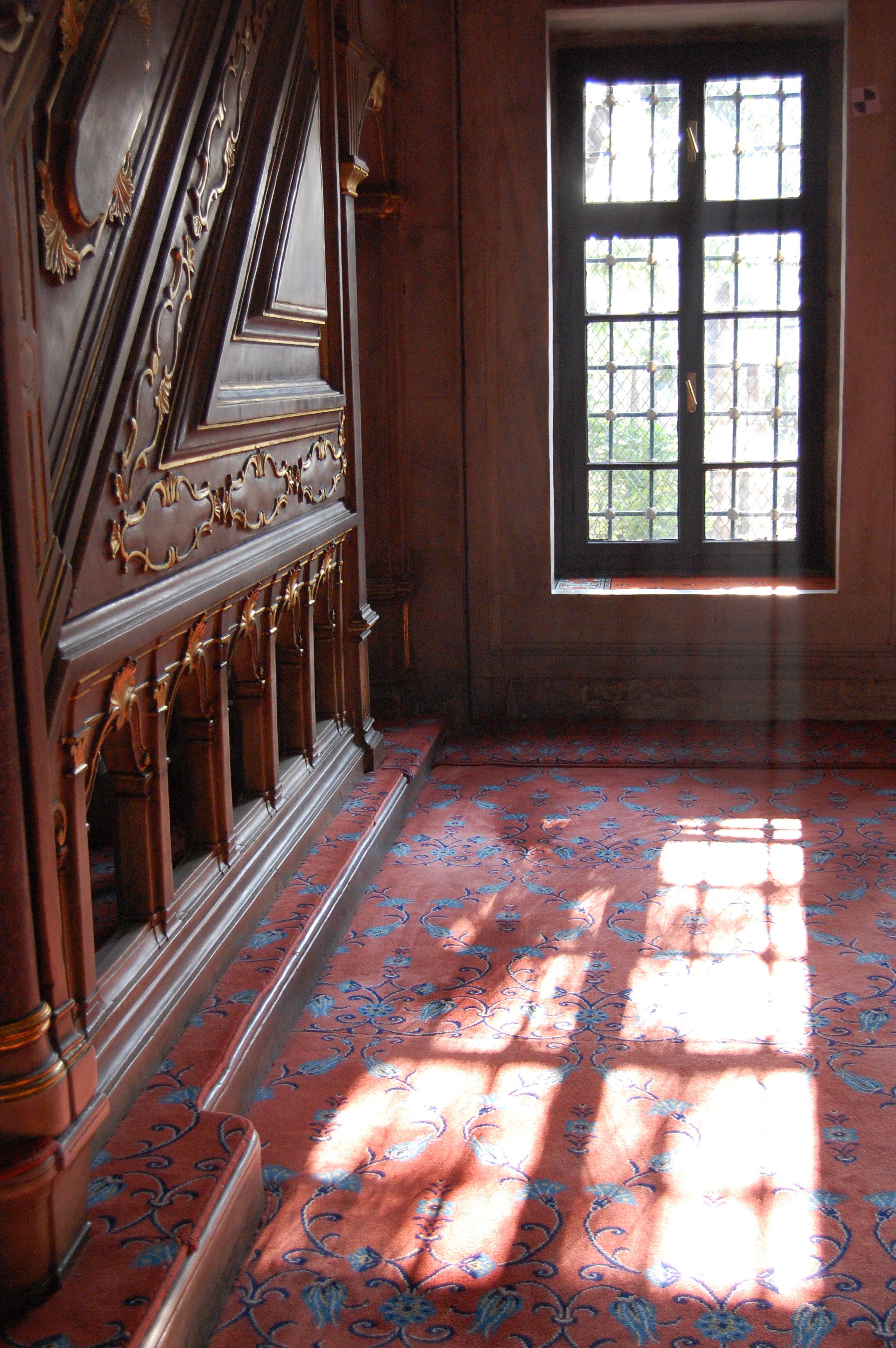
detail
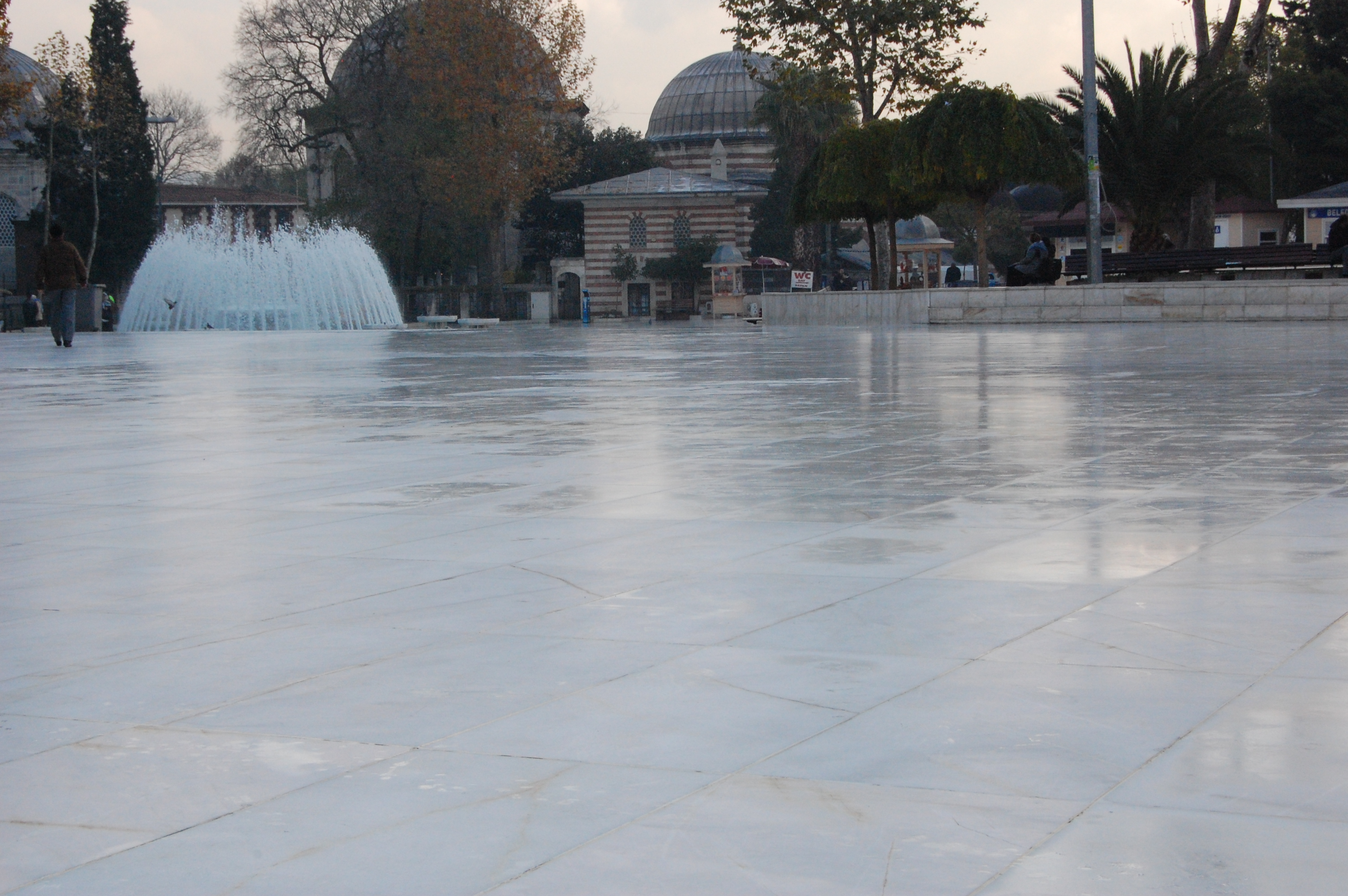
street fountain
After visiting the mosque, we climbed the hill of the Eyup Cemetery to the Pierre Loti Cafe that stands at the top of the hill. The path is lined with tombstones, most dating from the Ottoman era. The gravestone decorations indicate sex, occupation, rank and number of children.
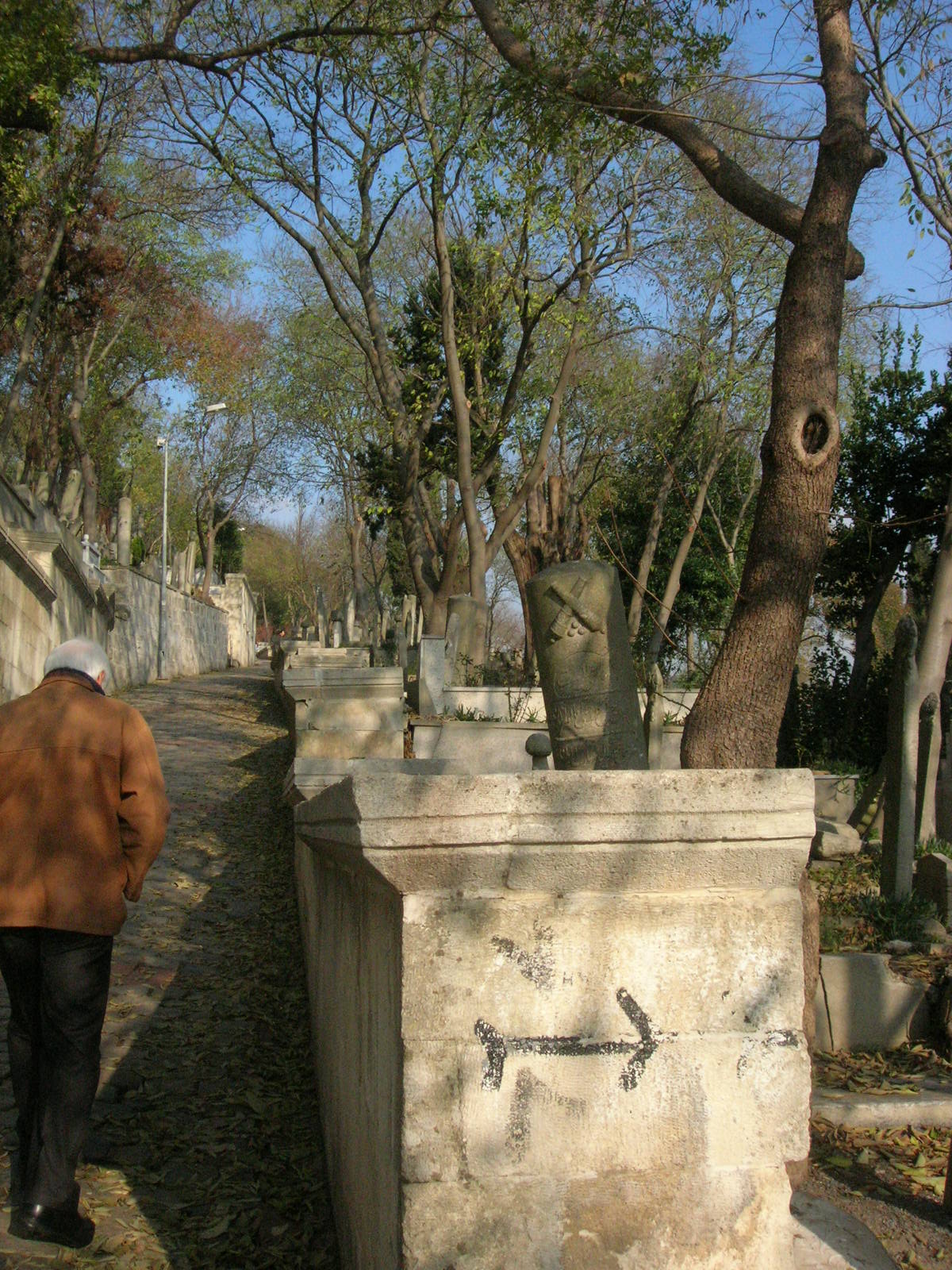
walking up the hill of the cemetery
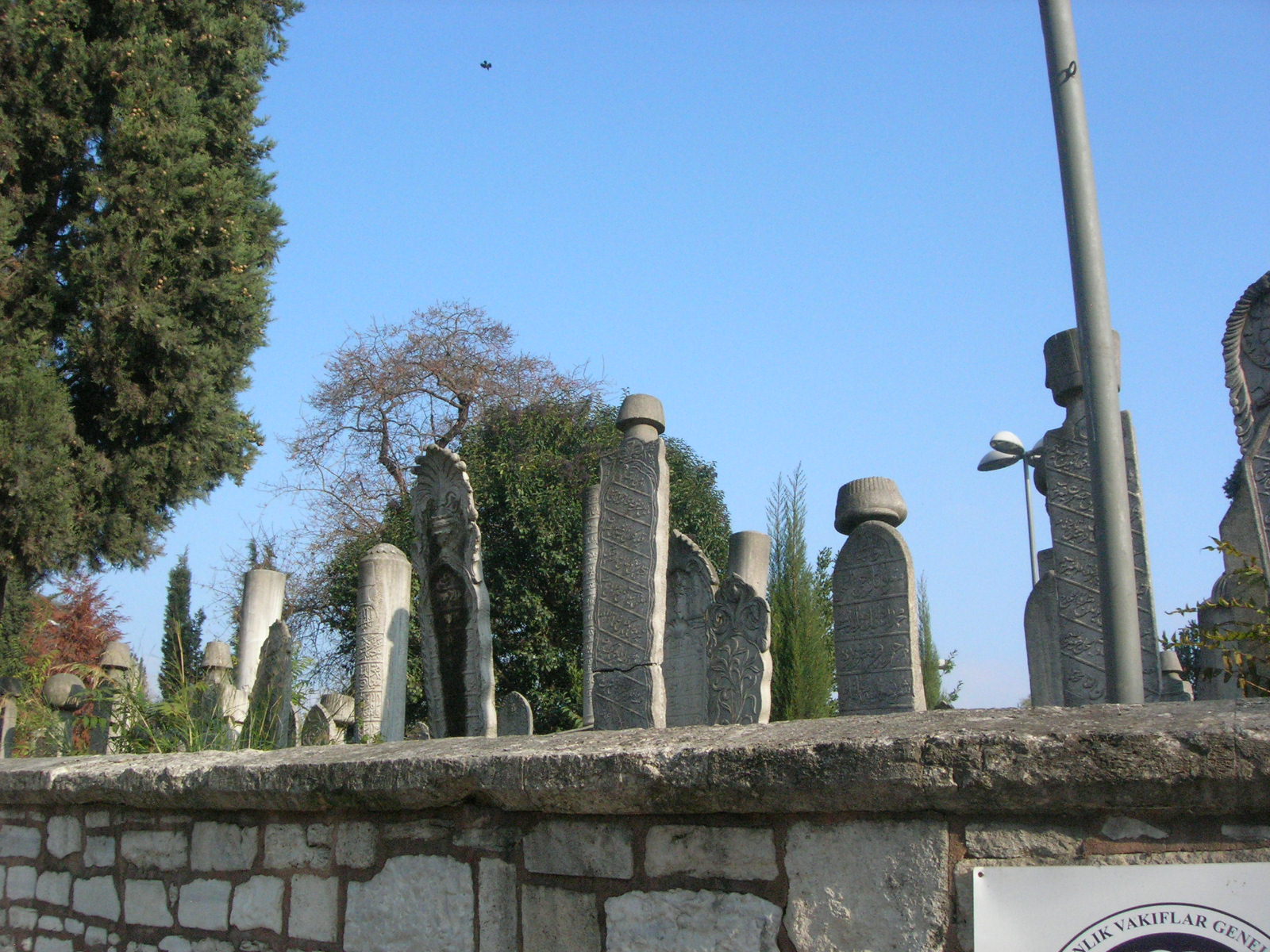
Ottoman gravestones
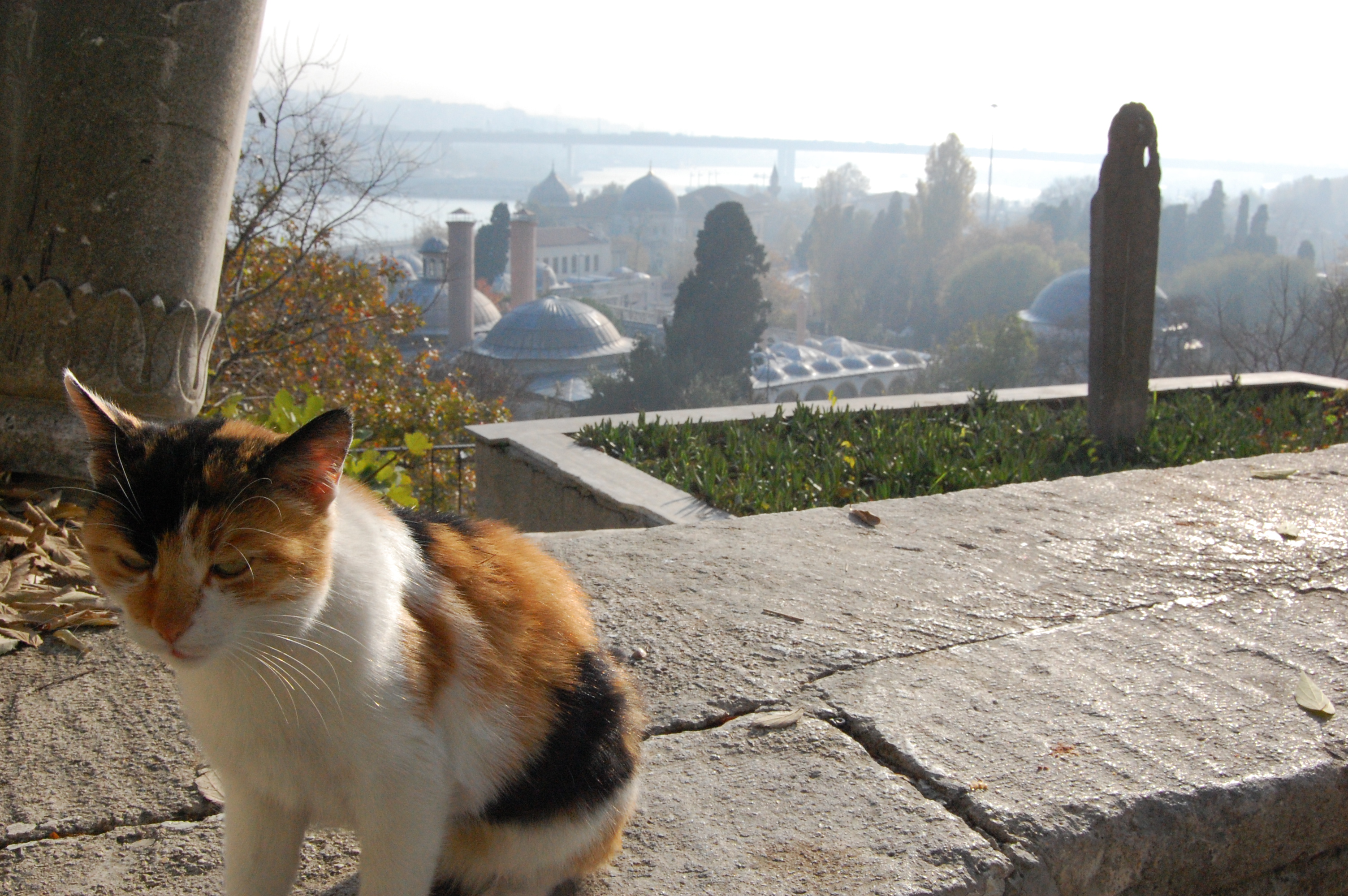
at the top

reviving tea and coffee at the Pierre Loti Cafe
Pierre Loti was a French navel officer and novelist who frequented this cafe during his stay in 1876, when he supposedly fell in love with a harem girl and wrote an autobiographical novel about their affair. Regardless of the history of the cafe, it is a delightful spot with a gorgeous view.
We walked back down the hill, returned to the car, and drove to the Fatih, Fener and Balat neighbourhoods. From the book: “A visit to these neighbourhoods is a reminder that for centuries after the Muslim conquest, Jews and Christians made up around 40 per cent of Istanbul’s population. Balat was home to Greek-speaking Jews from the Byzantine era onwards; Sephardic Jews from Spain joined thme in the 15th century. Fener became a Greek enclave in the early 16th century and many wealthy residents rose to positions of prominence in the Ottoman Empire. Hilltop Fatih is linked to the city’s radical Islamic tradition and you will see far more devout Muslims here than anywhere else in Istanbul. All three areas are residential, their maze of streets the preserve of washing lines and children playing.”
Gamze grew up in the neighbourhood of Fener, so knew the area well. She took us to see the Church of St. Mary of the Mongols, for which you usually need an appointment, but she knows the caretaker, who would let us in for a small fee. We parked and Gamze rang the bell for the caretaker, but there was no answer. She called someone, to be reminded it was market day, and the woman would likely be out for awhile. We walked the winding, hilly streets for a look at the neighbourhood…
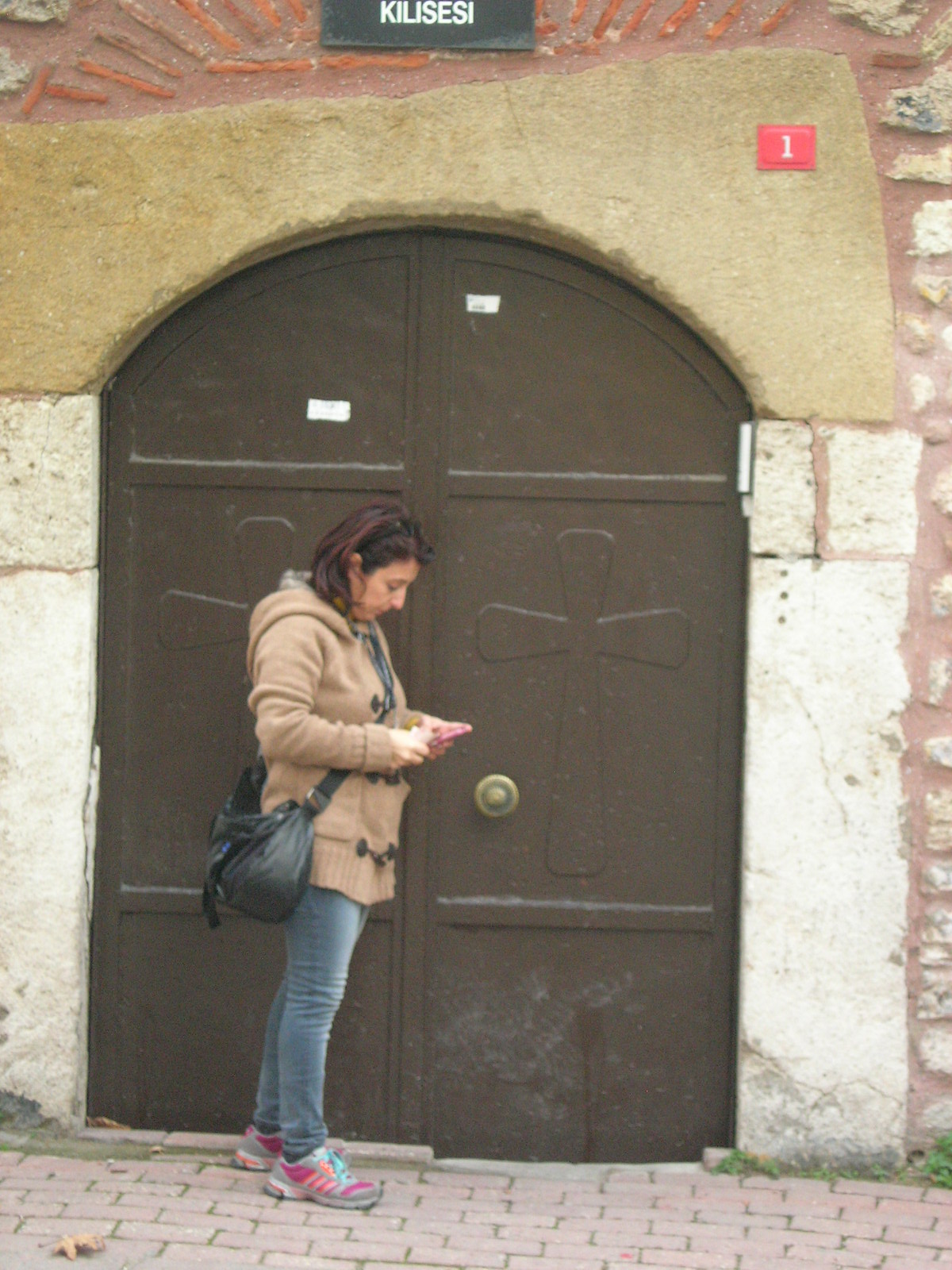
Gamze waiting for a response at the door to the church
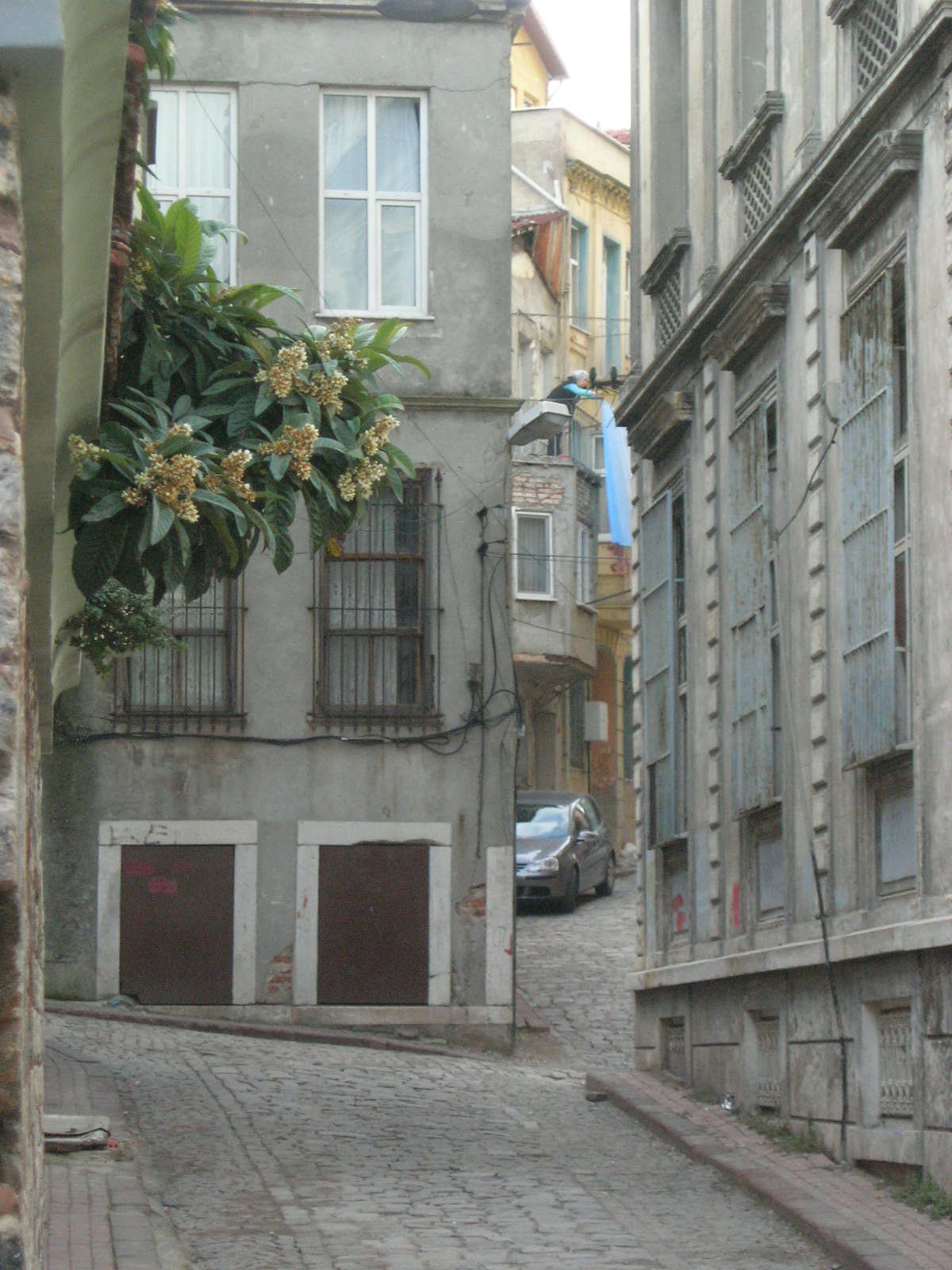
street scene in Fener district
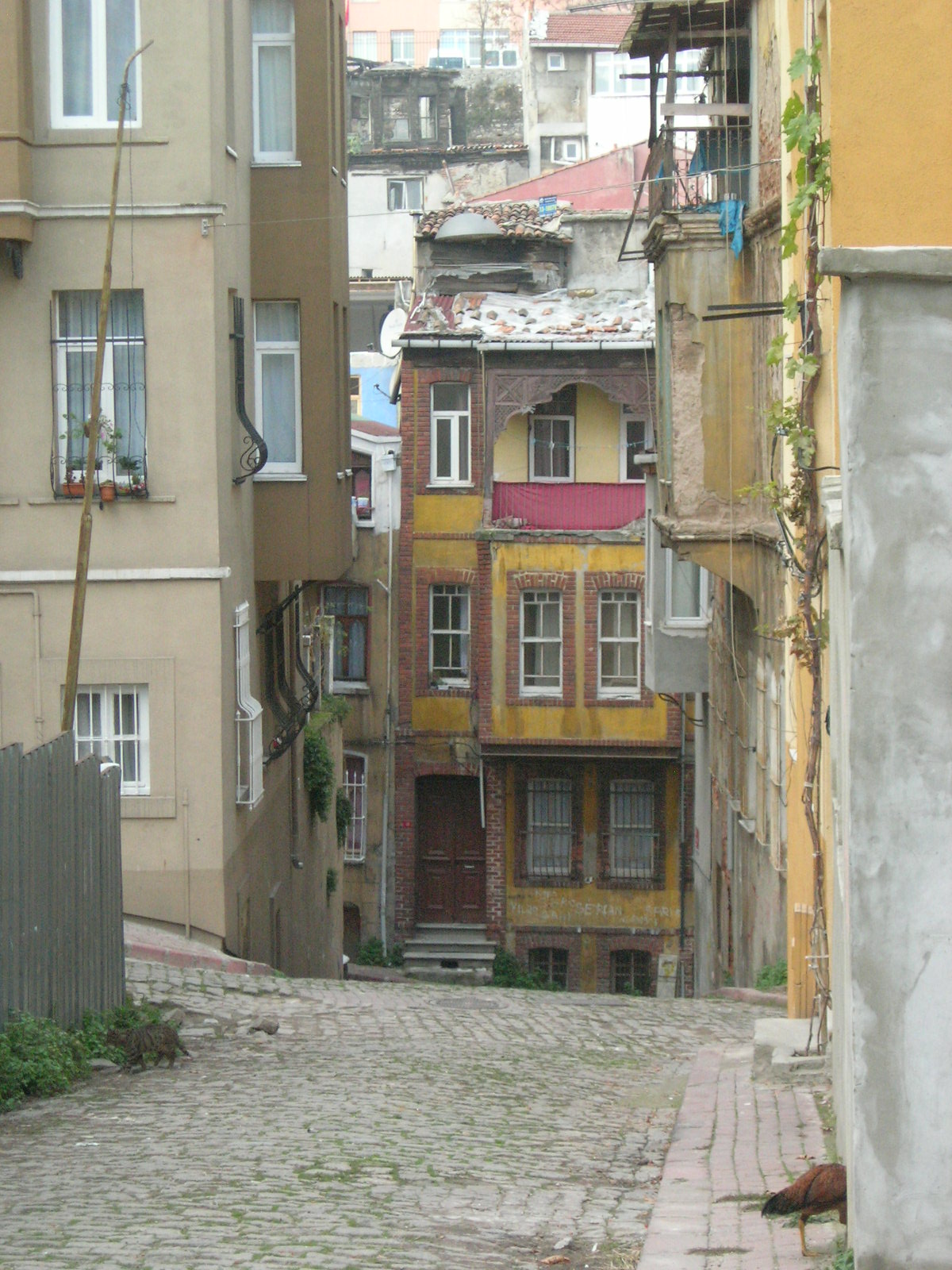
street scene

street scene (and Don)

street scene (you know how I like my window pictures!)
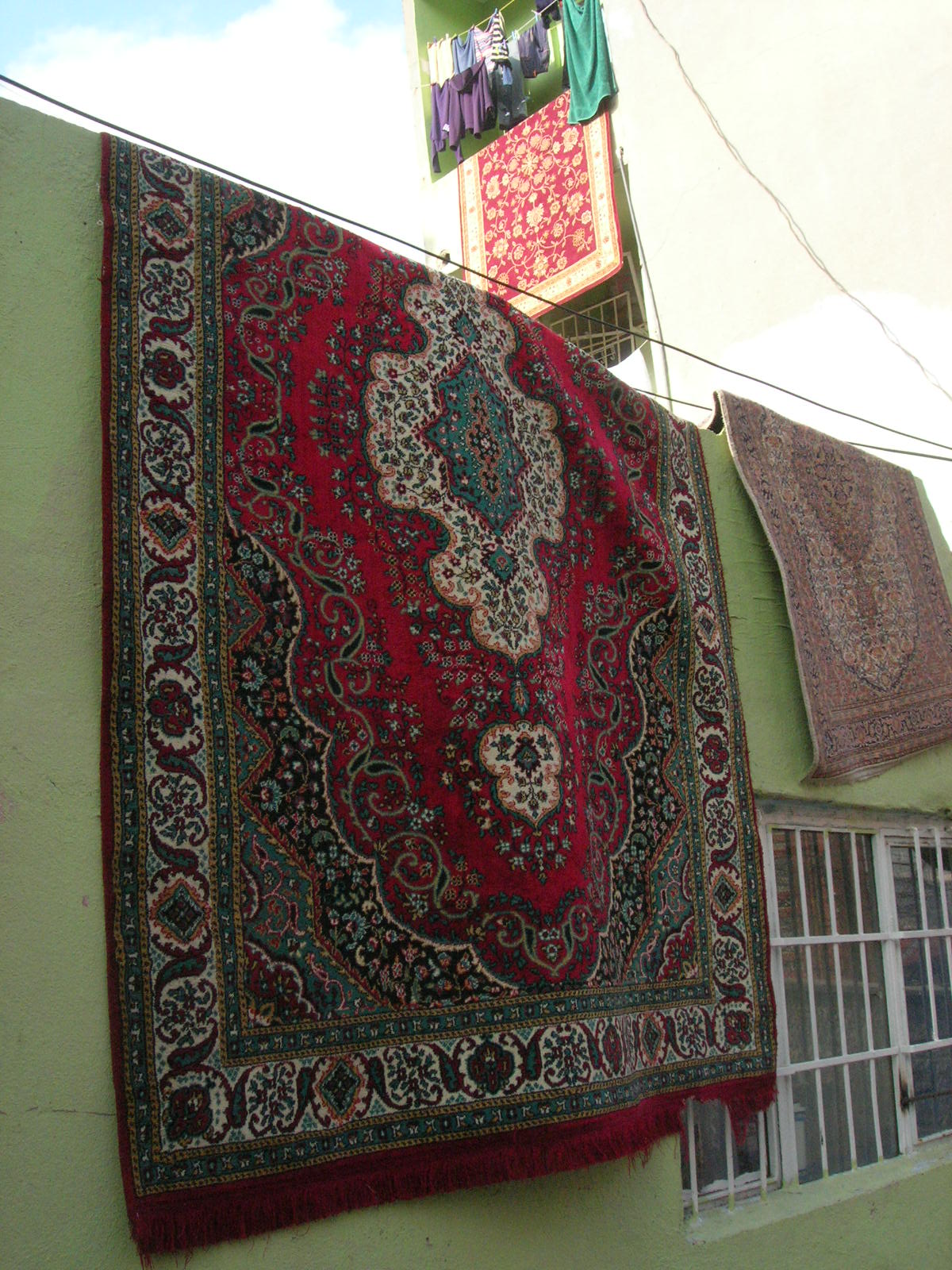
carpets airing
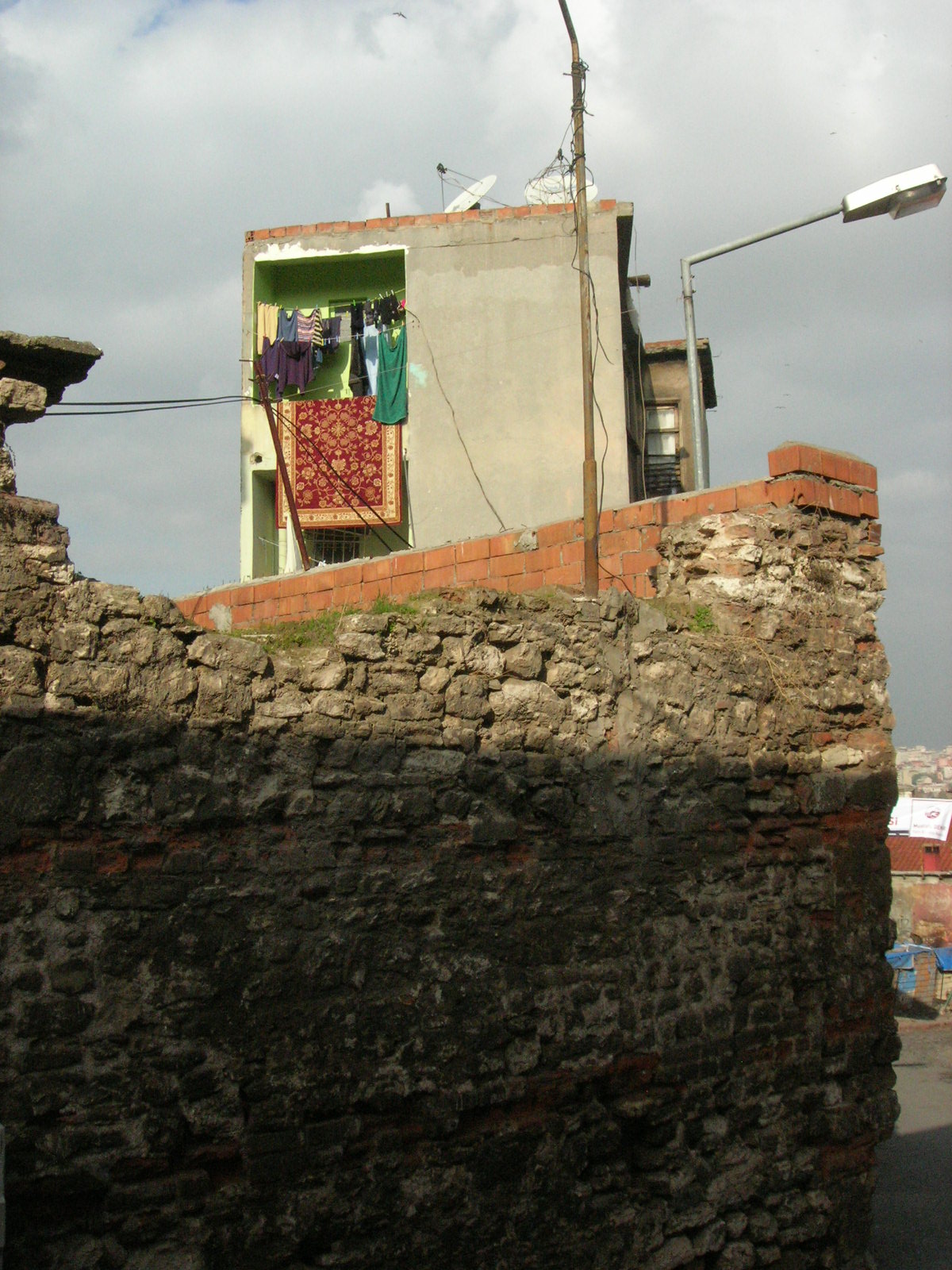
laundry and carpets
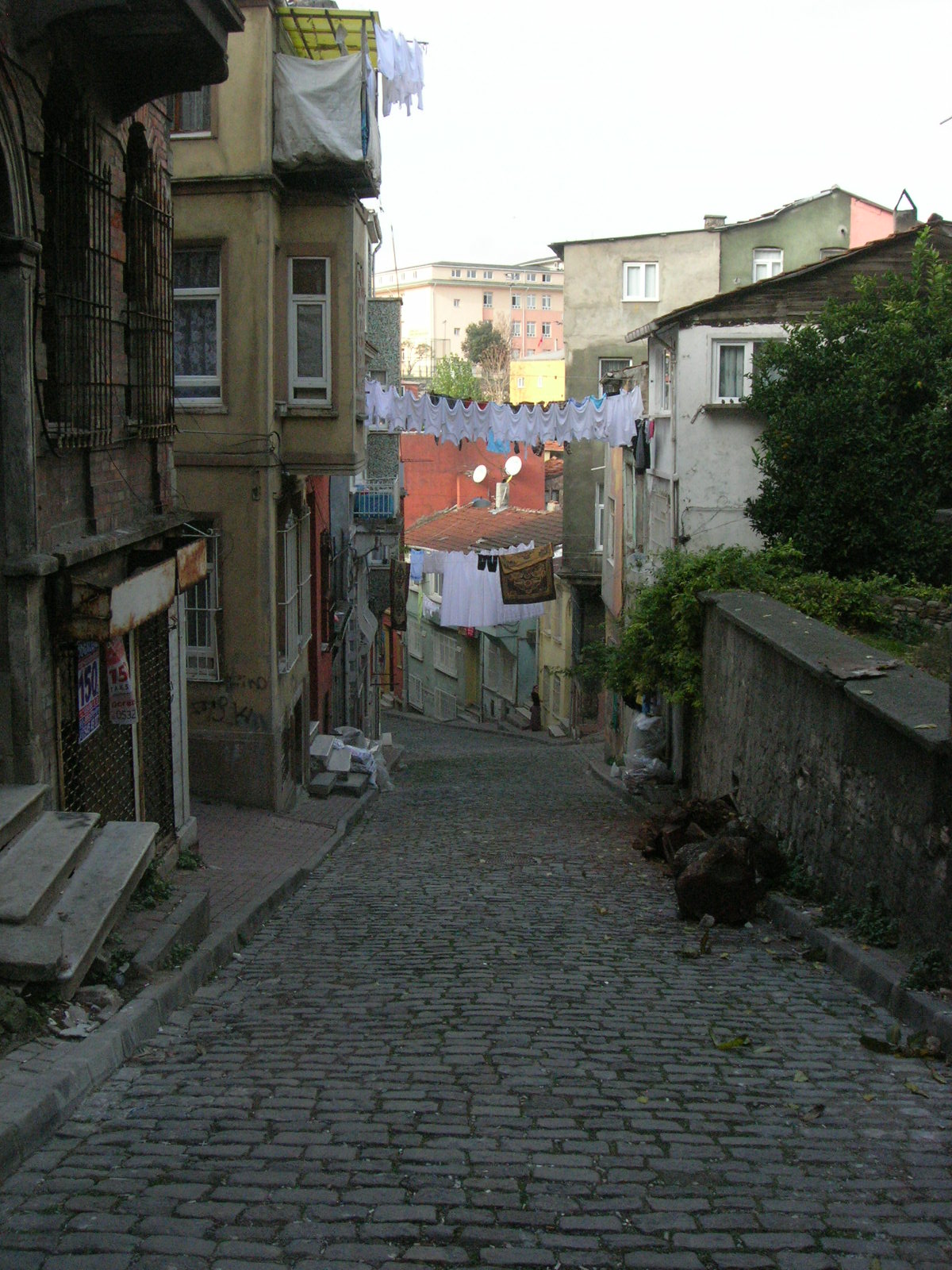
street scene
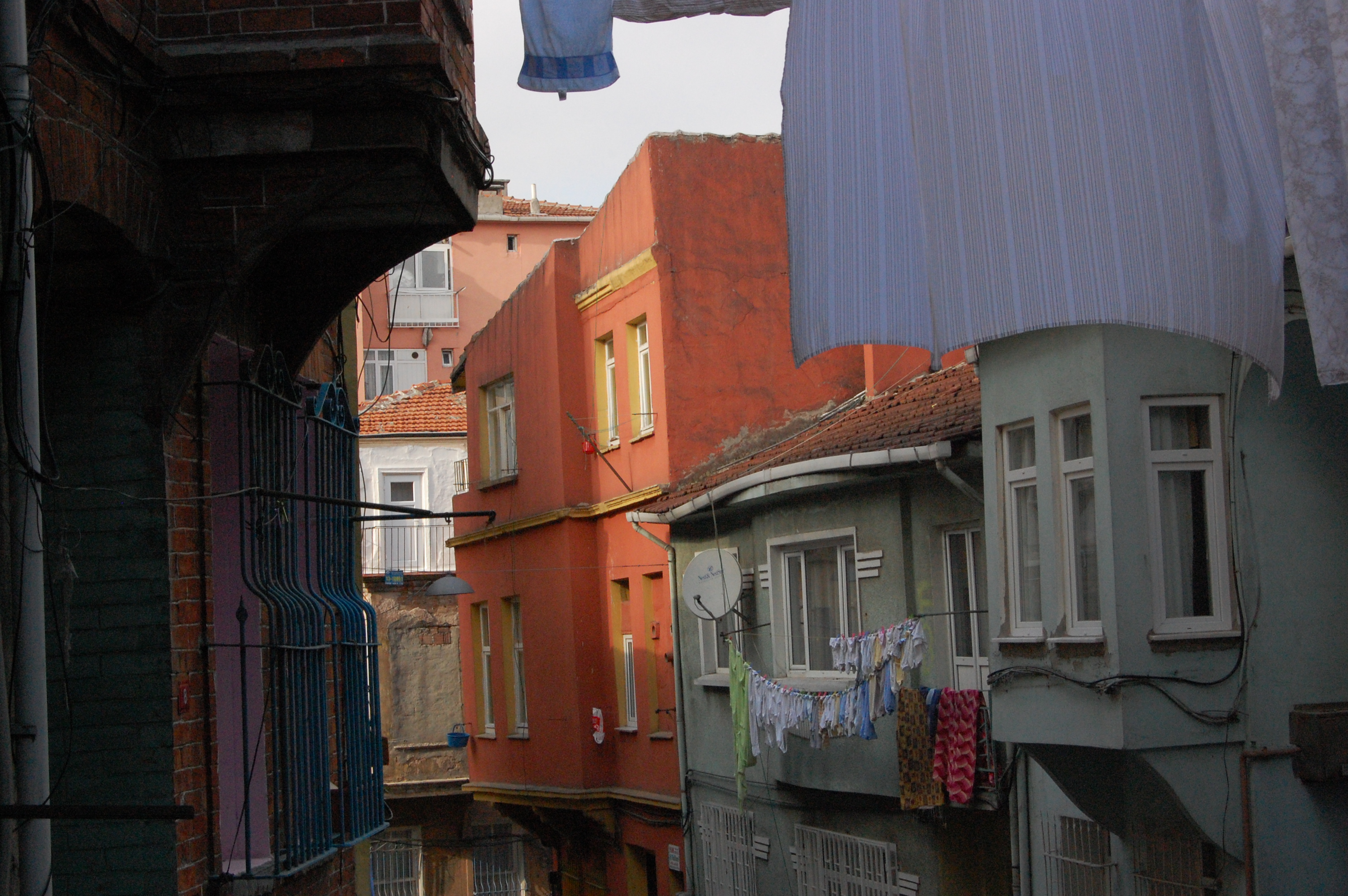
some very colourful buildings
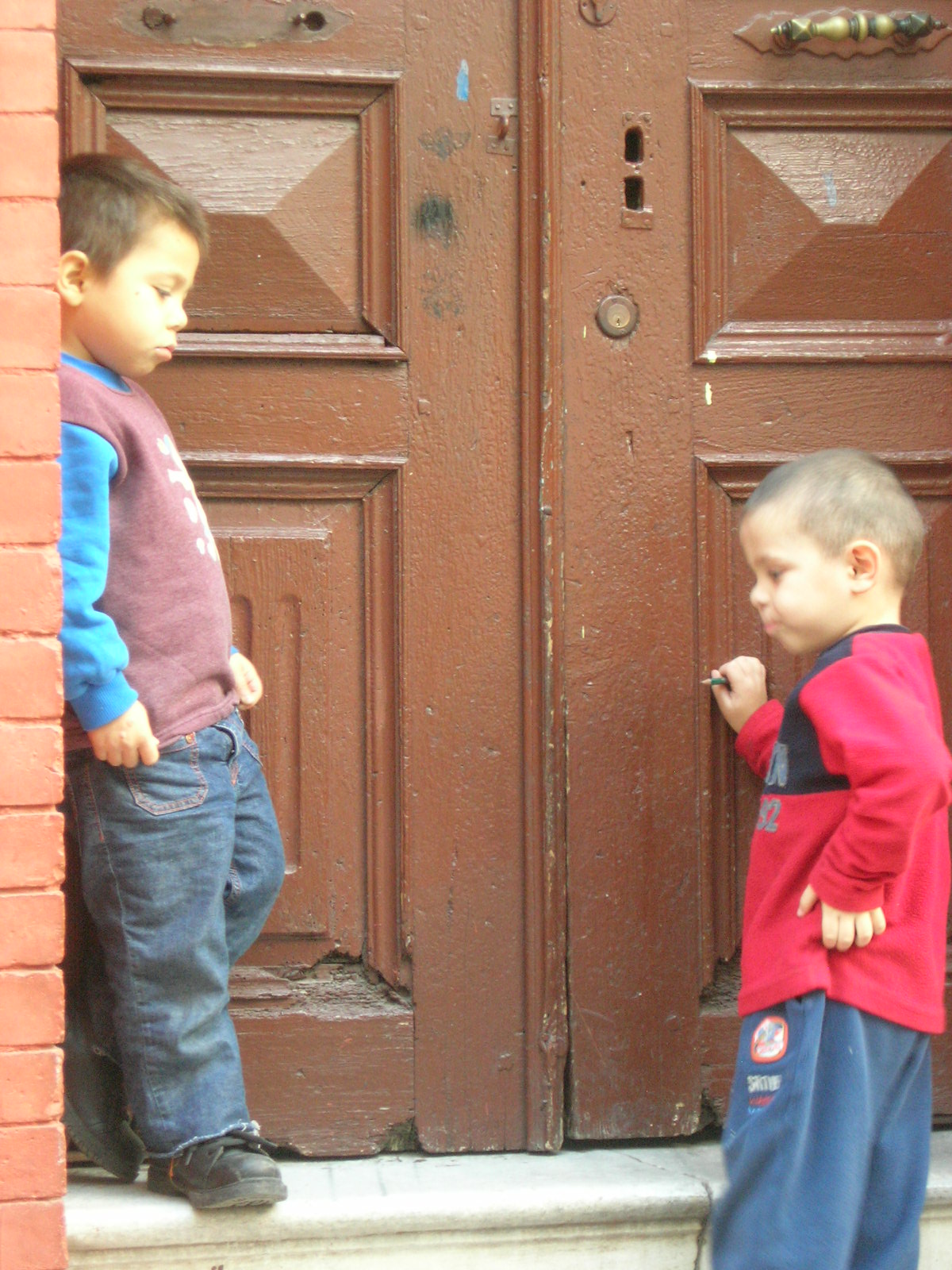
a few young boys at play (it was a school day, so not so many kids around)
Because the caretaker of the church would likely be away for awhile, we decided to have lunch, and off we drove to a restaurant Gamze knew and liked…
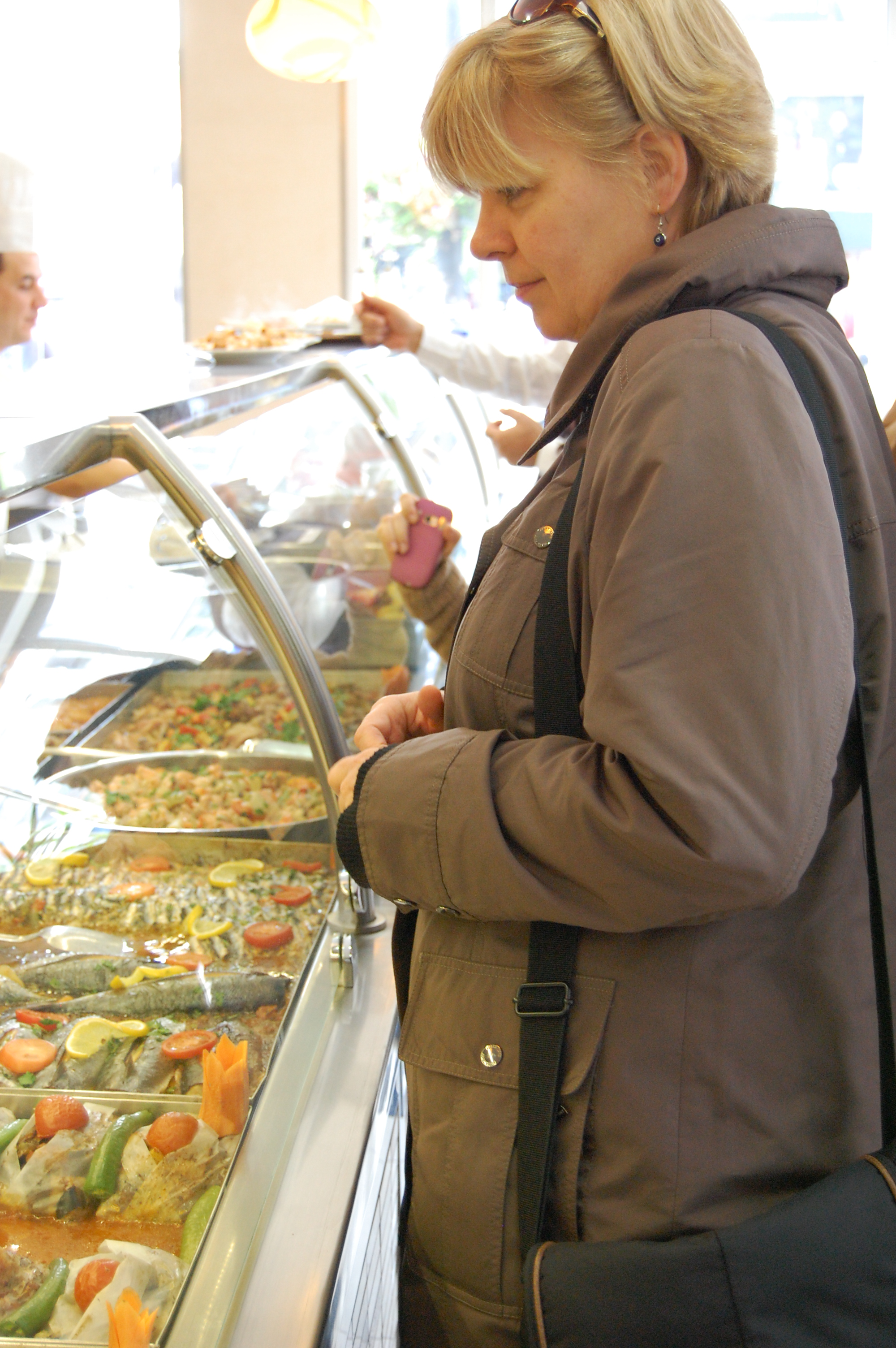
choosing my lunch dishes
After lunch we went to the largest mosque in the city, the Suleymaniye Mosque, where Don and I had wandered a few days earlier. This time we went inside. “Istanbul’s most important mosque is both a tribute to its architect, the great Sinan (the Michaelangelo of Istanbul), and a fitting memorial to its founder, Suleyman the Magnificent. It was built above the Golden Horn between 1550-57. Like the city’s other imperial mosques, the Suleymaniye Mosque was not only a place of worship, but also a charitable foundation. The mosque is surrounded by its former hospital, soup kitchen, schools, and bath house. This complex provided a welfare system which fed over 1000 of the city’s poor – Muslims, Christians and Jews alike – every day.”
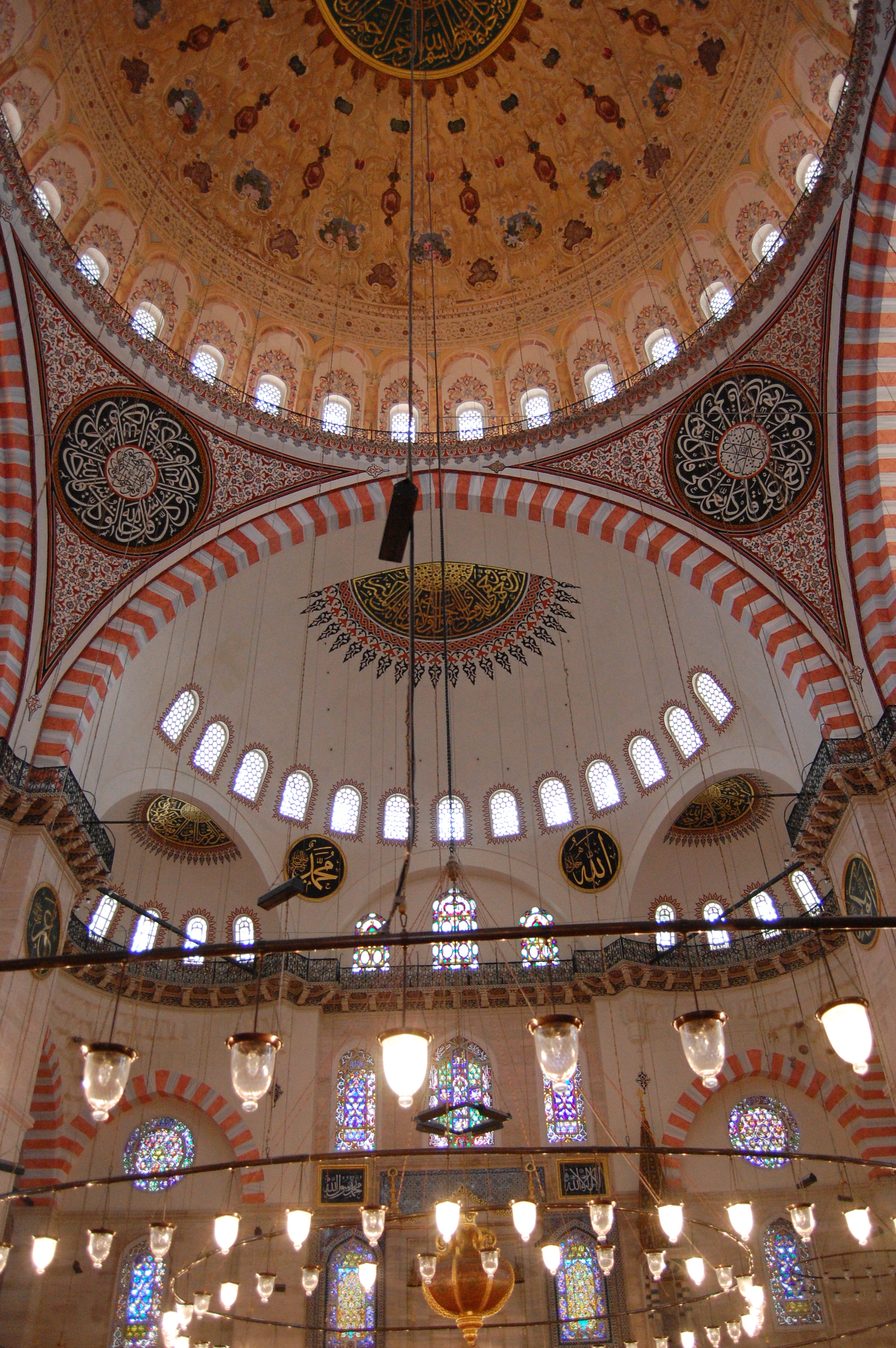
dome ceiling detail
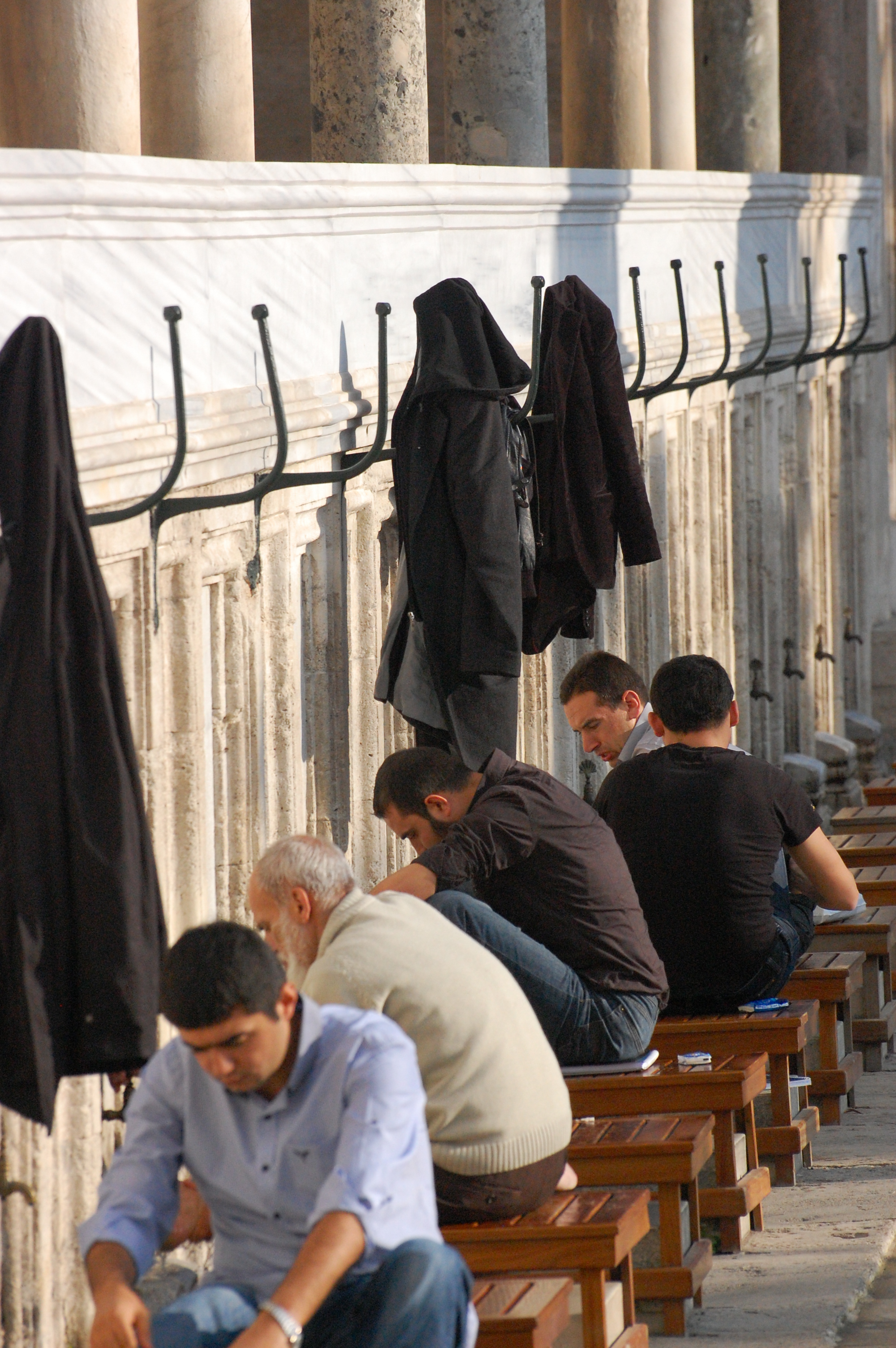
ablutions before prayer
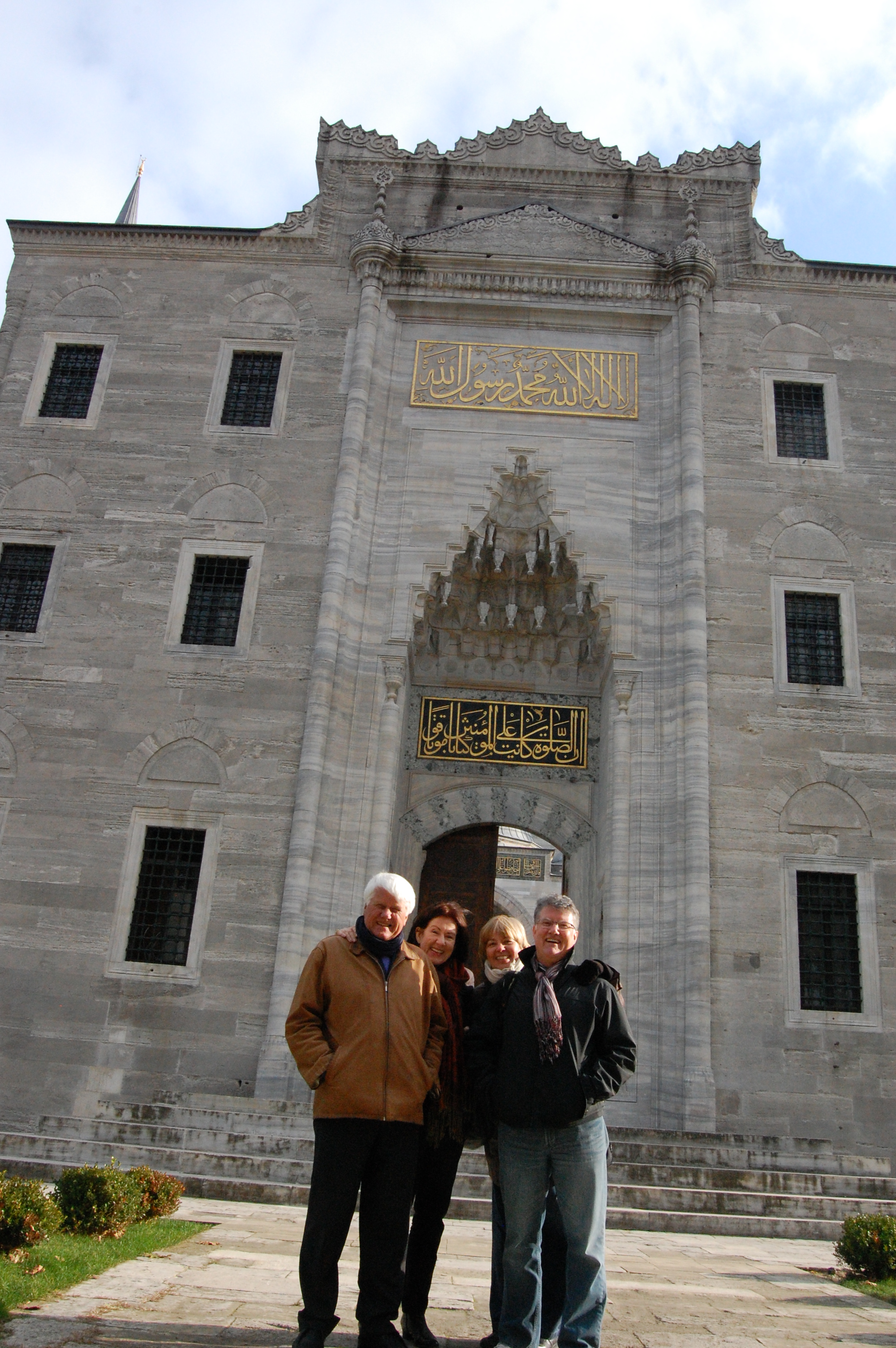
in front of Mosque entrance
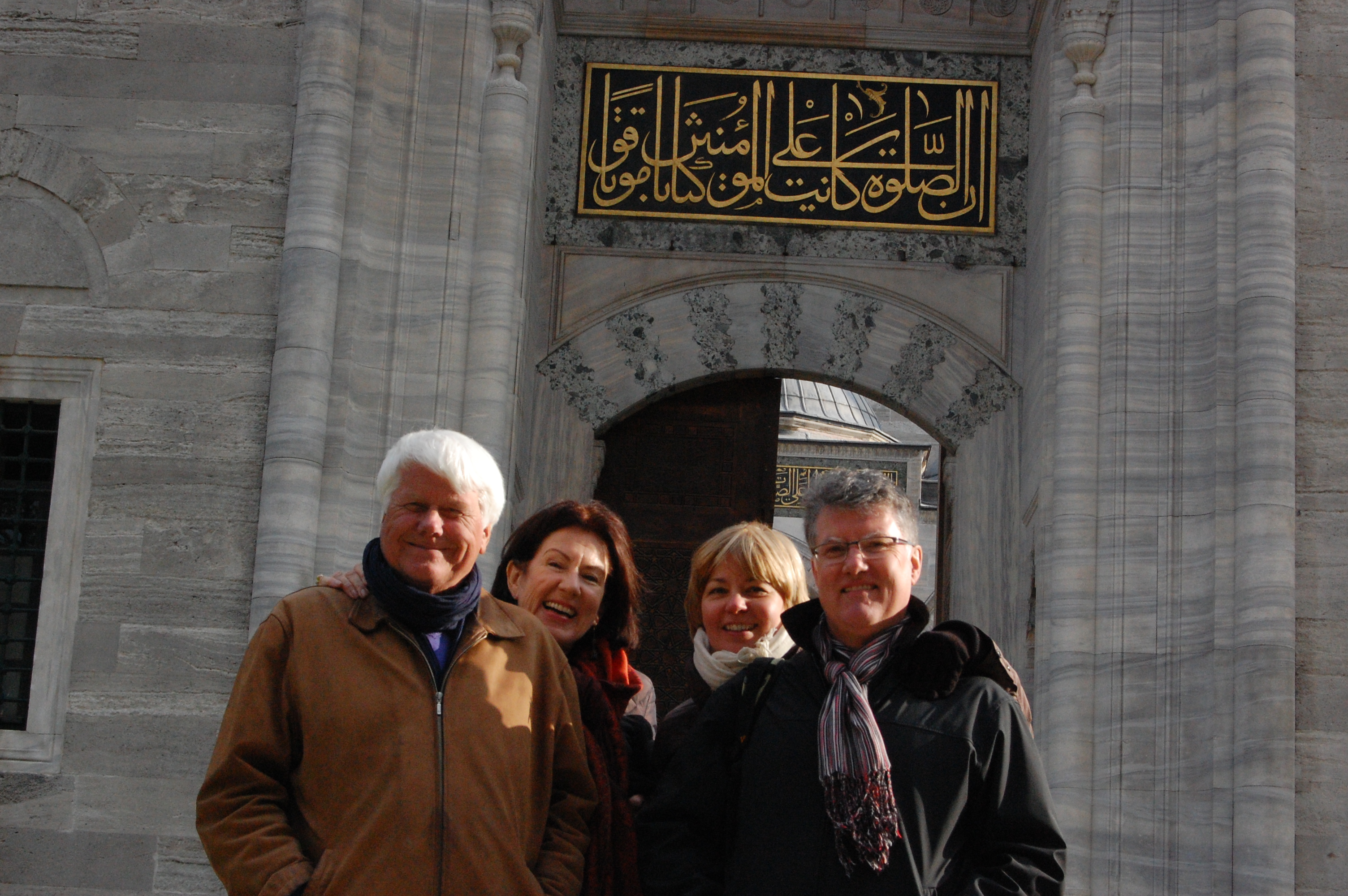
our close-up
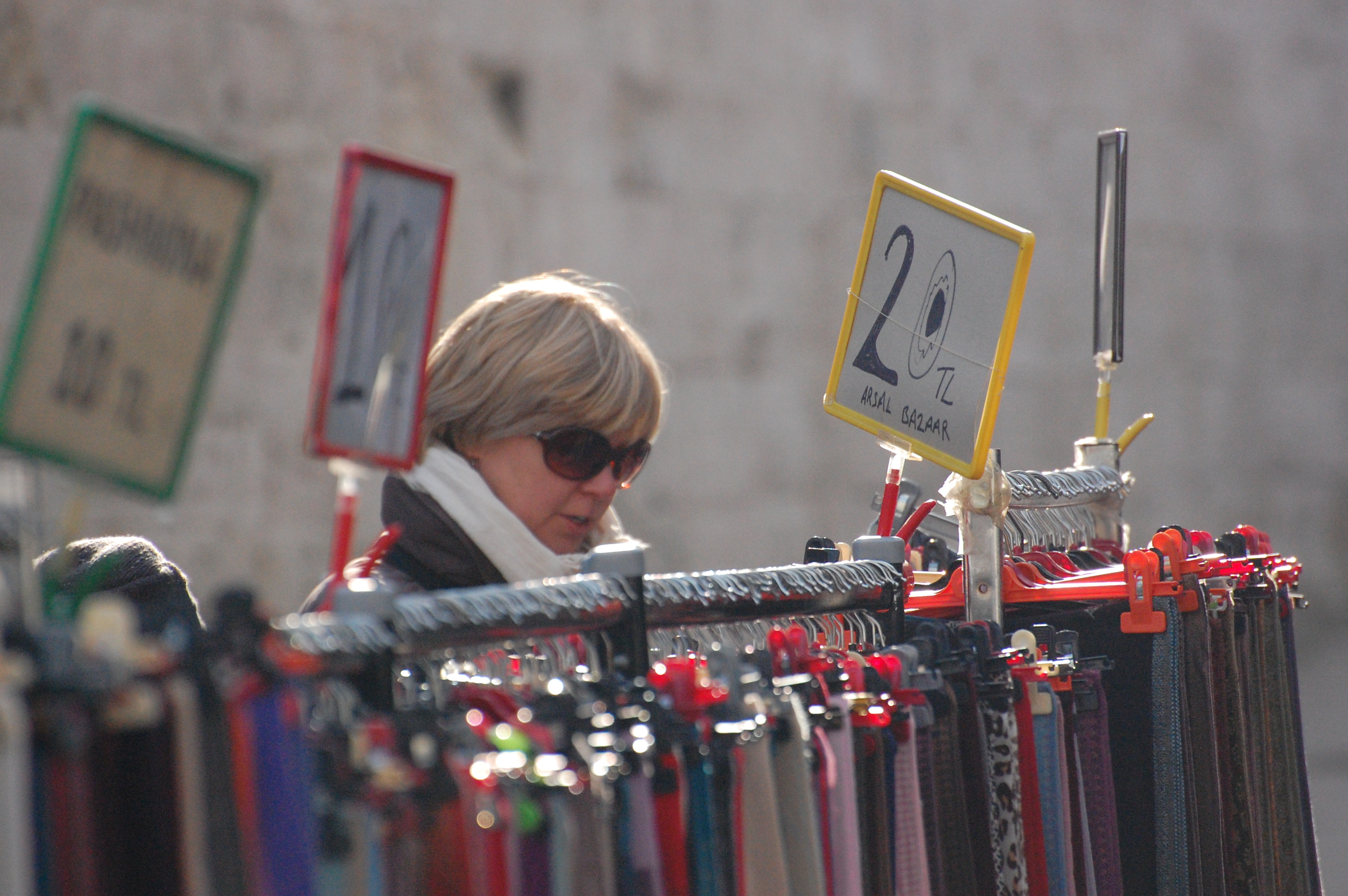
browsing the goods for sale around the Mosque
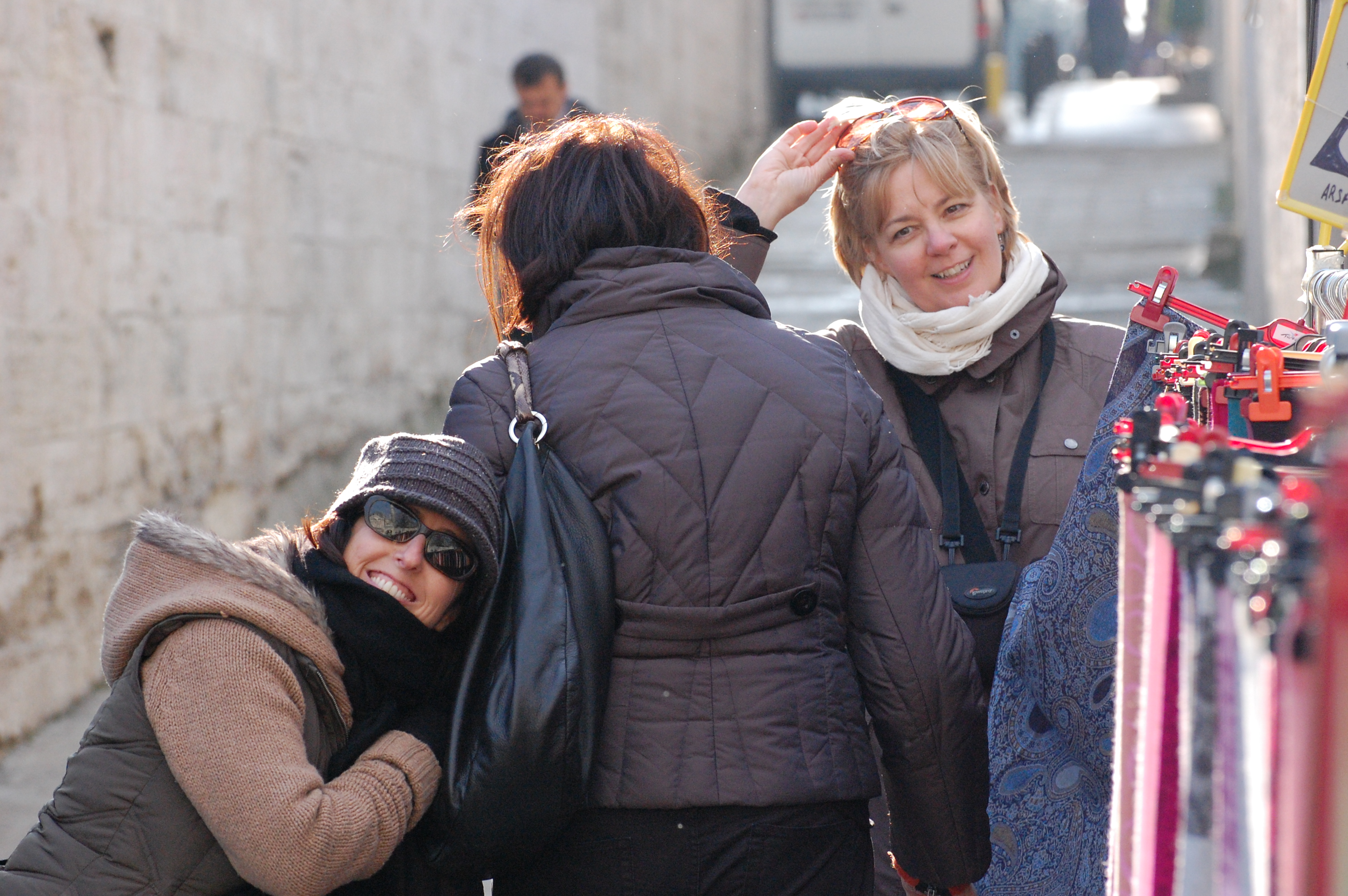
fooling around, choosing a shawl
We then went back to Fener to see if the caretaker was back, and she was, so we entered the Church of St. Mary of the Mongols. “Consecrated in the late 13th century, the Church of St. Mary of the Mongols is the only Greek Orthodox church in Istanbul to have remained continuously in the hands of the Greek community since the Byzantine era. Its immunity from conversion into a mosque was decreed in an order signed by Mehmet the Conqueror. A copy of this is kept by the church to this day. The church gets its name from the woman who founded it, Maria Palaeologina, an illegitimate Byzantine princess who was married off to a Mongol khan. Upon his assassination, she returned to Constantinople, built this church and lived out her days in it as a nun.”
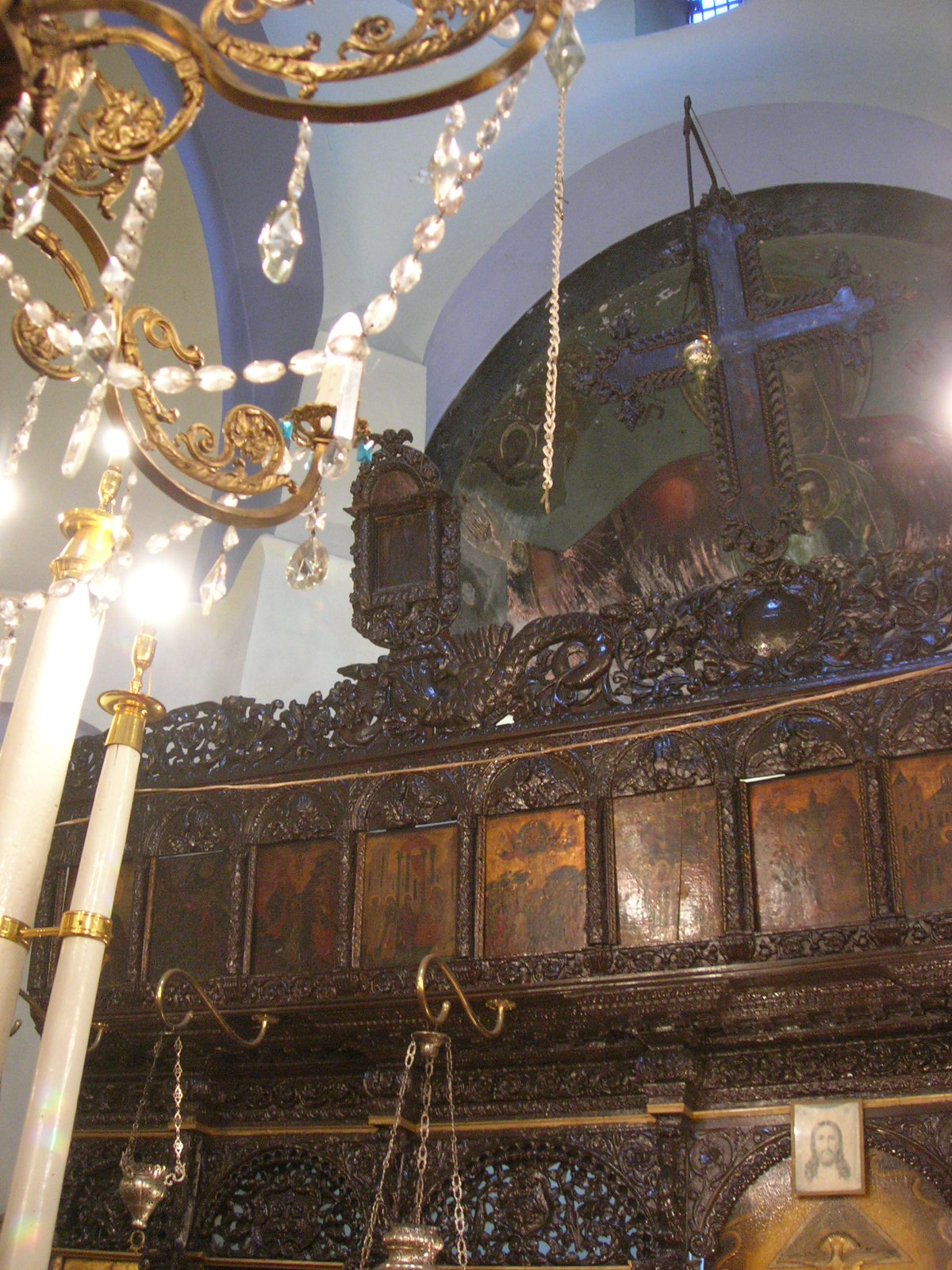
inside the Church of St. Mary of the Mongols
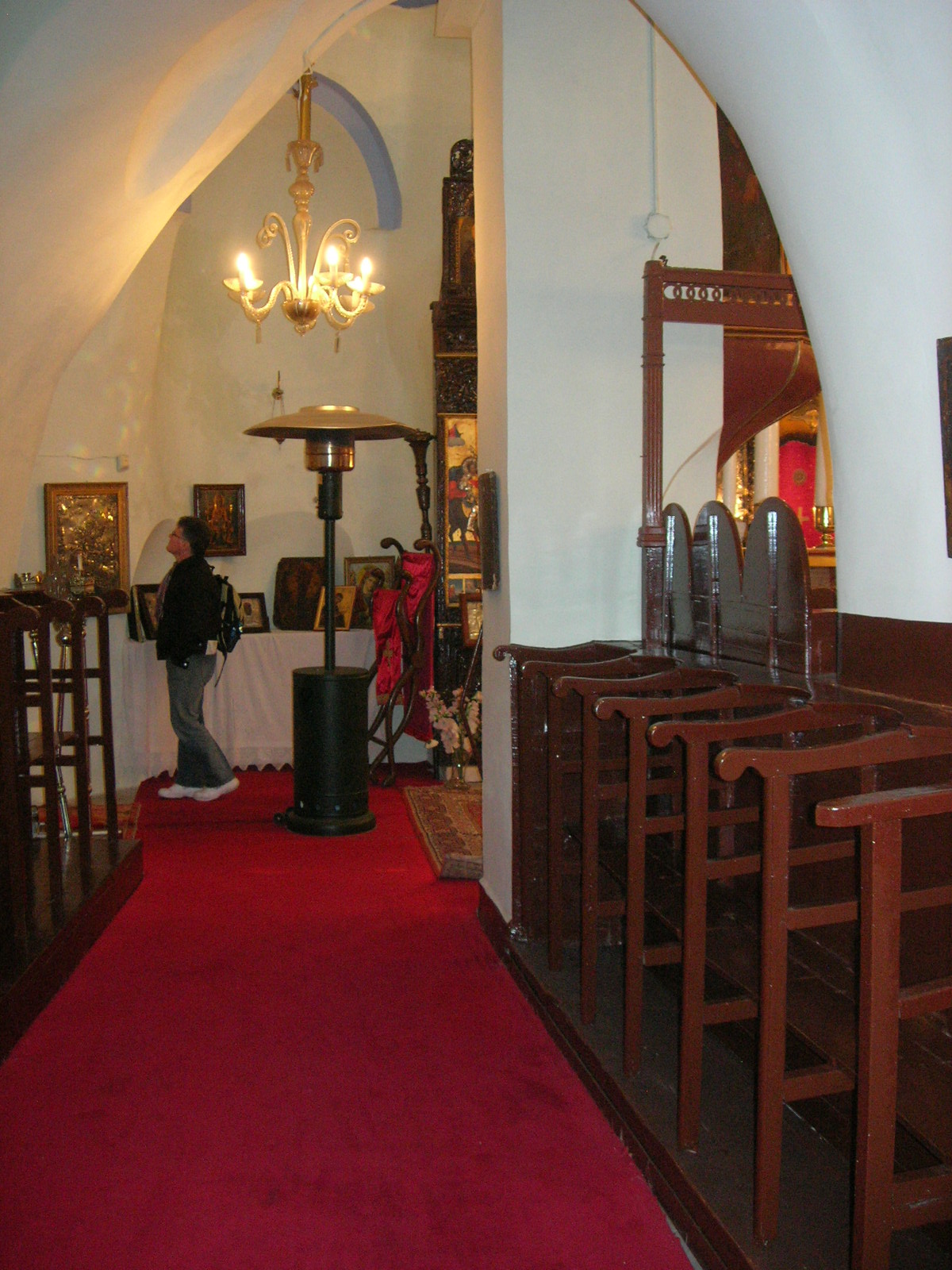
there's Don
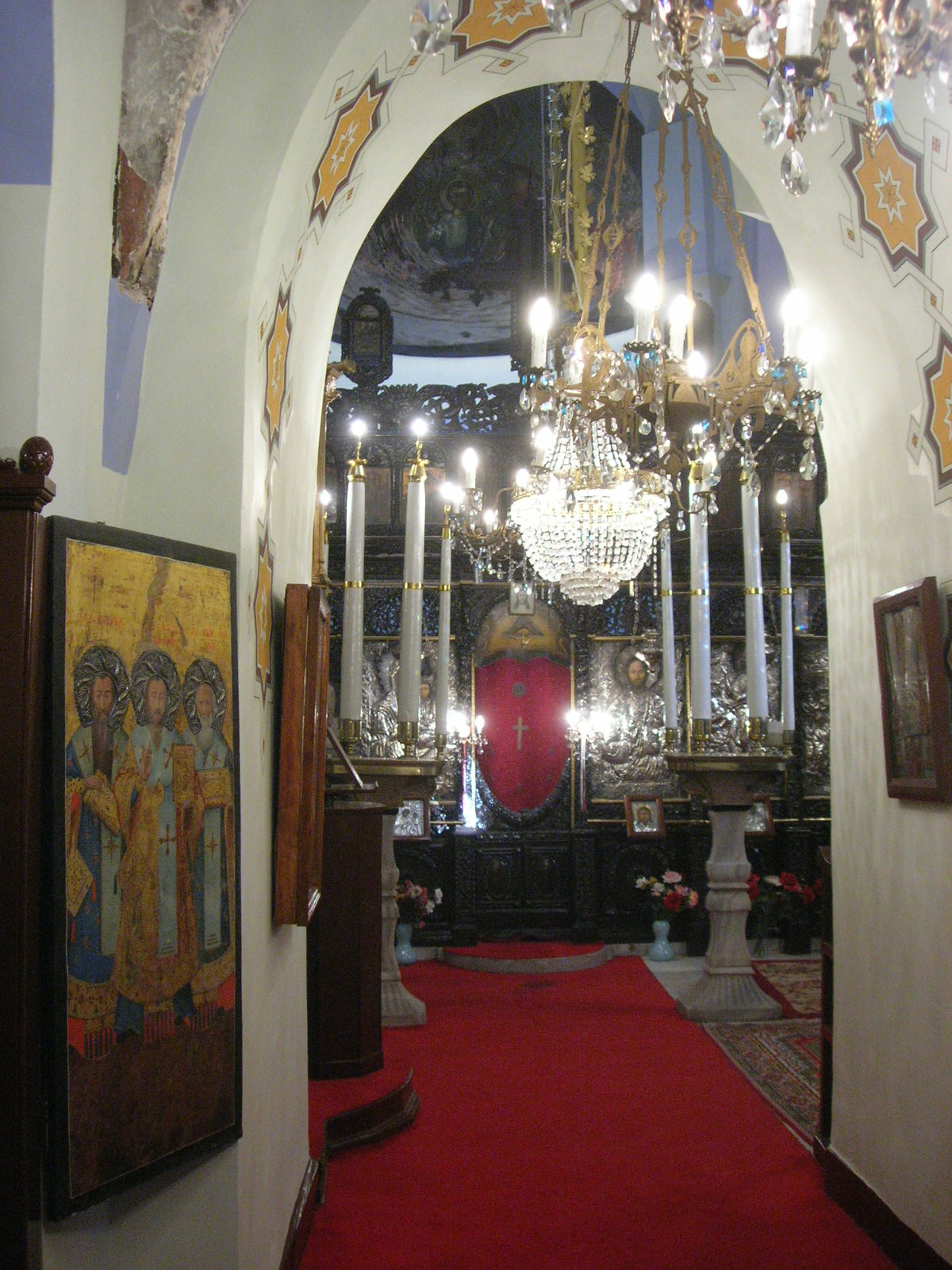
inside the church
It was time to say goodbye to my cousins as they had to catch their plane back home. We dropped them at the bus station to get back to the airport. It was so wonderful sharing time with Leo and Edith in Istanbul, and next time we will visit them in their home and go sailing! (And see what the rest of the country has to offer.)
Back to our hotel for a drink in the bar with Hasan, and dinner at a different restaurant on the restaurant street, the Albura Kathisma Cafe, another excellent and highly-recommended spot. We ate outside, under heat lamps, and chatted with an Australian couple who were eating at this same place every night of their stay in the city, that’s how good the food and service was!
Thursday was carpet-buying day! We had gone to Turkey with plans to buy a carpet, and took an extra suitcase in which to bring it home. Leo and Edith had introduced us to the owners of the carpet shop up the street from our hotel, and we started our day there by asking them to teach us about carpets. They brought us to an upstairs showroom, served us tea, and commenced a lesson on carpets (which are knotted) and kilims (which are flat-woven), the differences between handmade and machine-made carpets, and natural dyes vs. synthetics. They laid out carpet and kilim after carpet and kilim, looking for our preferences. The large floor was soon covered and piled with samples, and they were all lovely. We spent almost three hours there. And then said we had to think about it, talk it over, thanked them and left.
Our second stop was that little house we’d been taken to a few days back, owned by the fellow we ‘met’ on the street. We rang the bell, and not-surprisingly, they were delighted to see us. Again we sat down, again tea was brought, and again we had a lesson on carpets and kilims, knots and weaves, and dyes. And again, carpet after carpet was piled up in front of us. Turns out there are approximately 67,000 carpets stored in this ‘little’ house!!
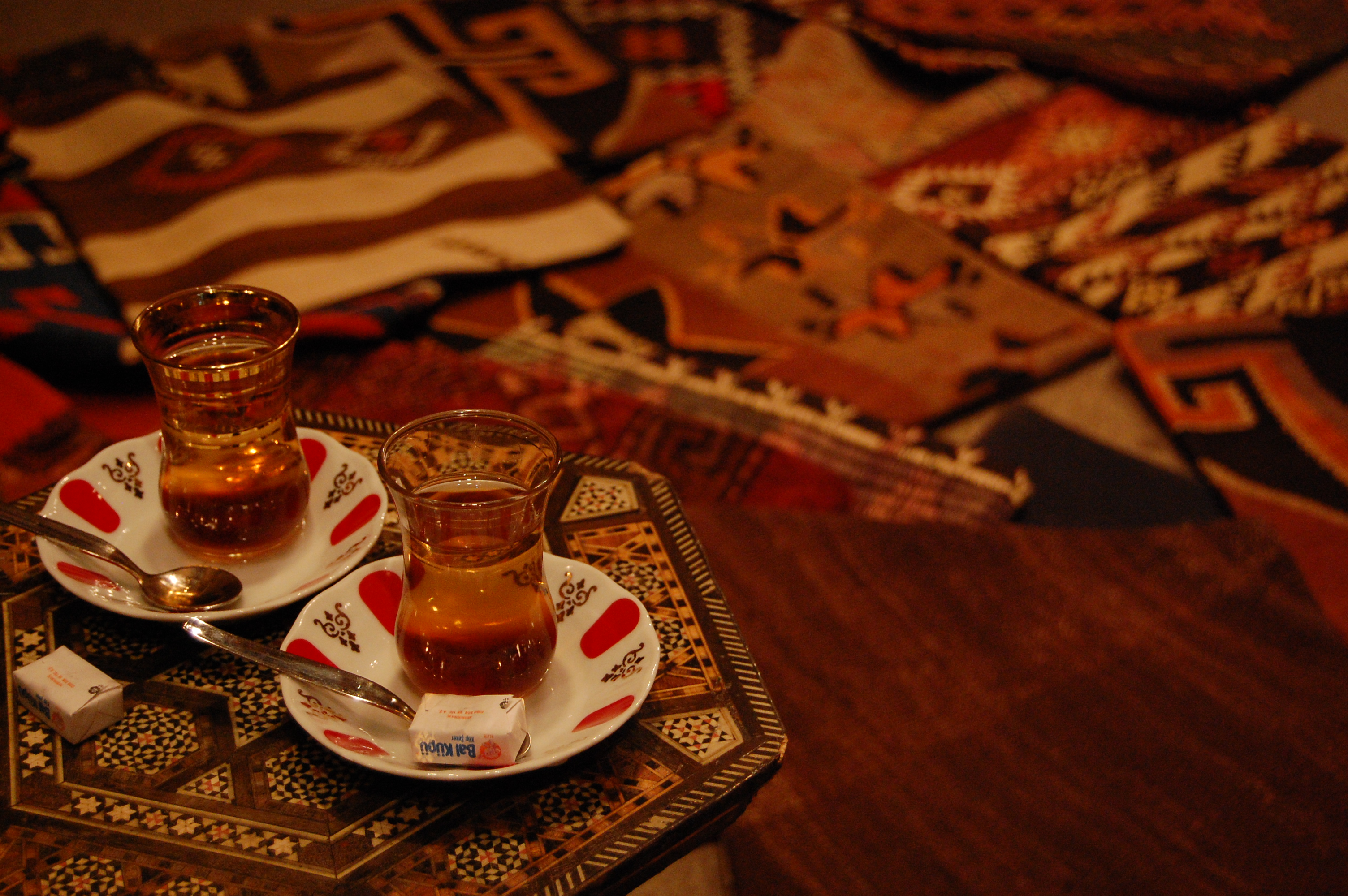
tea, always served in tulip glasses with saucers
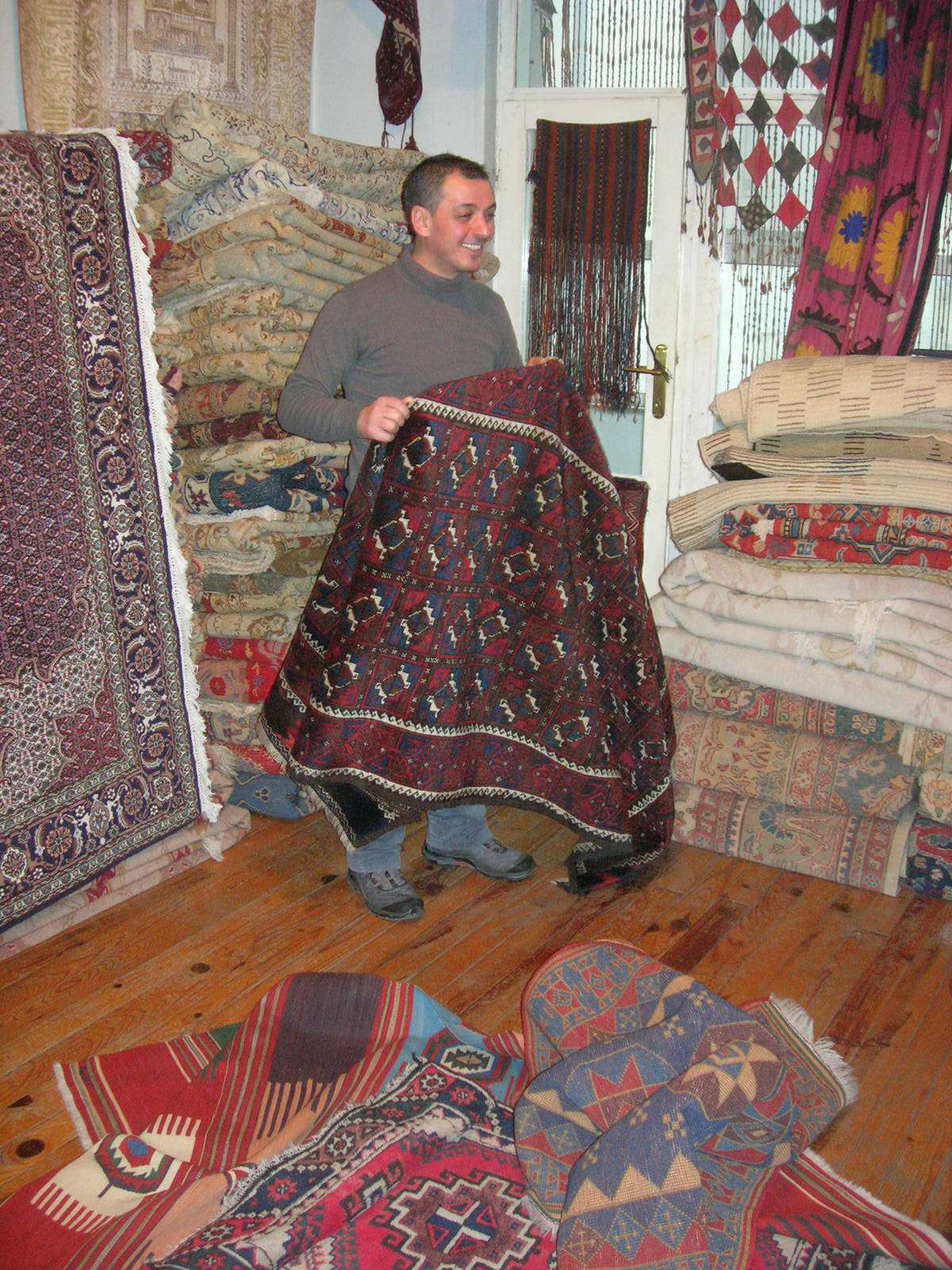
carpets, carpets, carpets
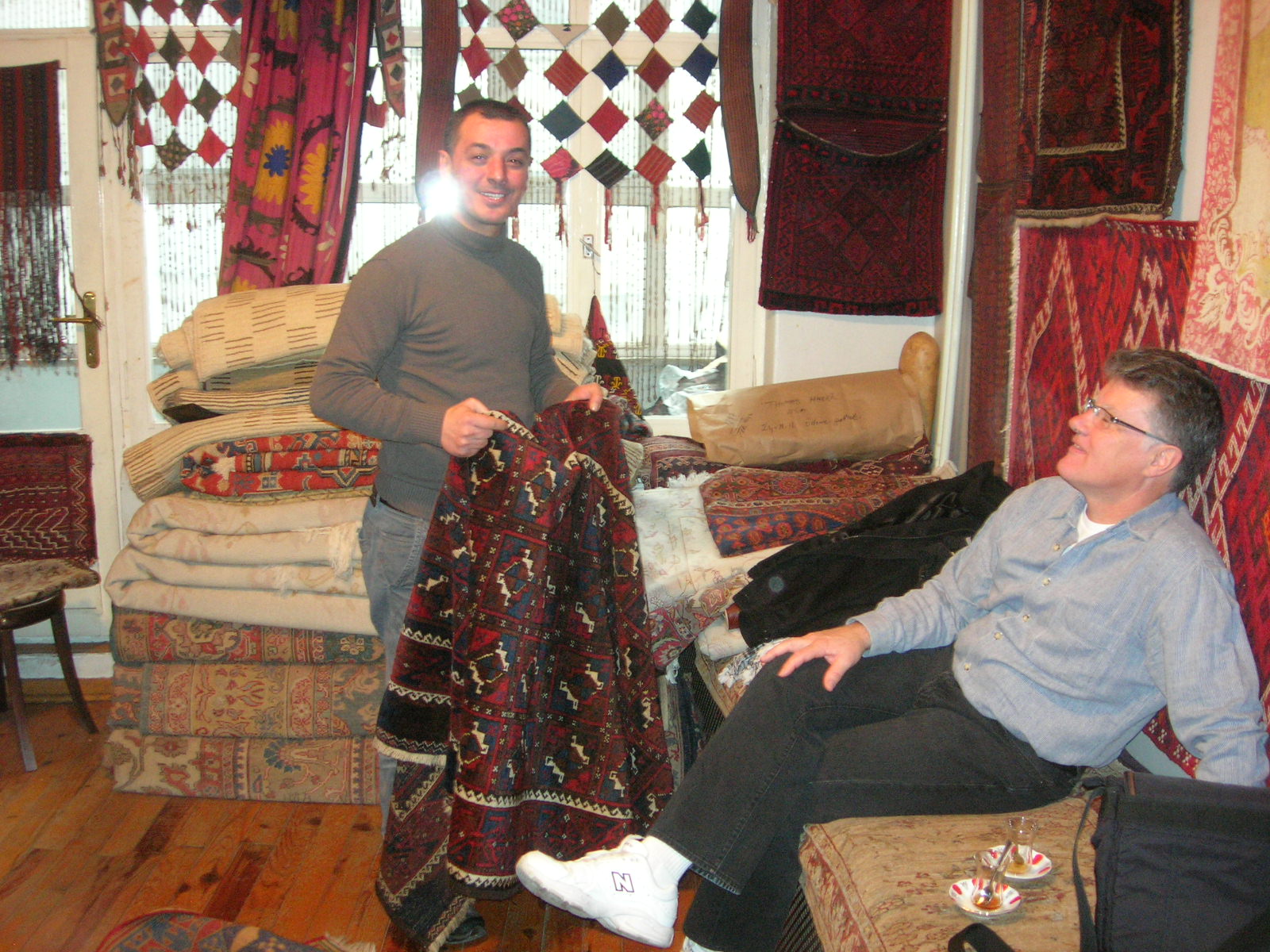
viewing carpets
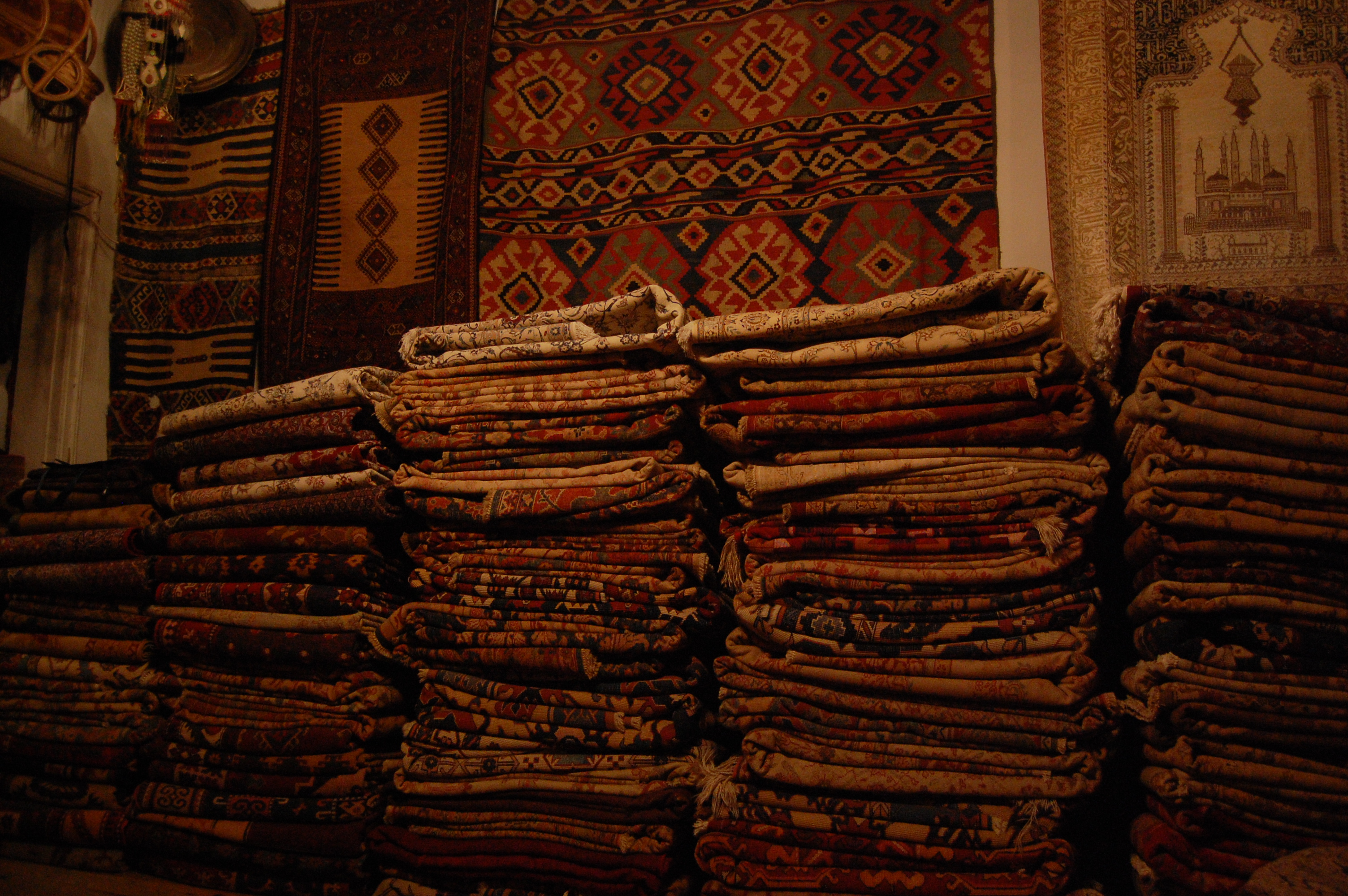
carpets folded and stacked
Again, after a few hours of talking and viewing carpets, we said we had to talk it over. Also, we were starving! Off we went to the Grand Bazaar, first for lunch and discussion. With a “plan” in place, we wandered the labyrinth of streets and found our carpet man in the bazaar. Here we again had tea, but we didn’t have to have the long lesson because we’d already had that from him a few days earlier. We had decided we really liked a kilim in this shop in the bazaar – naturally dyed, newly made – and so only what was left was the bargaining. We came to a mutually-accepted price and our 4 foot x 6 foot carpet was folded and packaged up and stuffed into Don’s backpack. Yes, stuffed into his backpack, because we had also decided to buy a 2nd carpet from the ‘house’ of carpets, and we didn’t want them to know we’d first bought elsewhere! Back to the house, and agreed on an older carpet we really liked, probably between 80-100 years old, and not very big, about 3 feet x 4 feet. We love them both, they fit into our suitcase with room to spare (oooh, should’ve bought a third!), and no problem at customs. Our only problem was the feelings of guilt about not buying from the first shop, where they’d spent so much time with us, so we “snuck home” by a back road so we didn’t have to walk past their shop and fend off enquiries! And here’s what we bought:
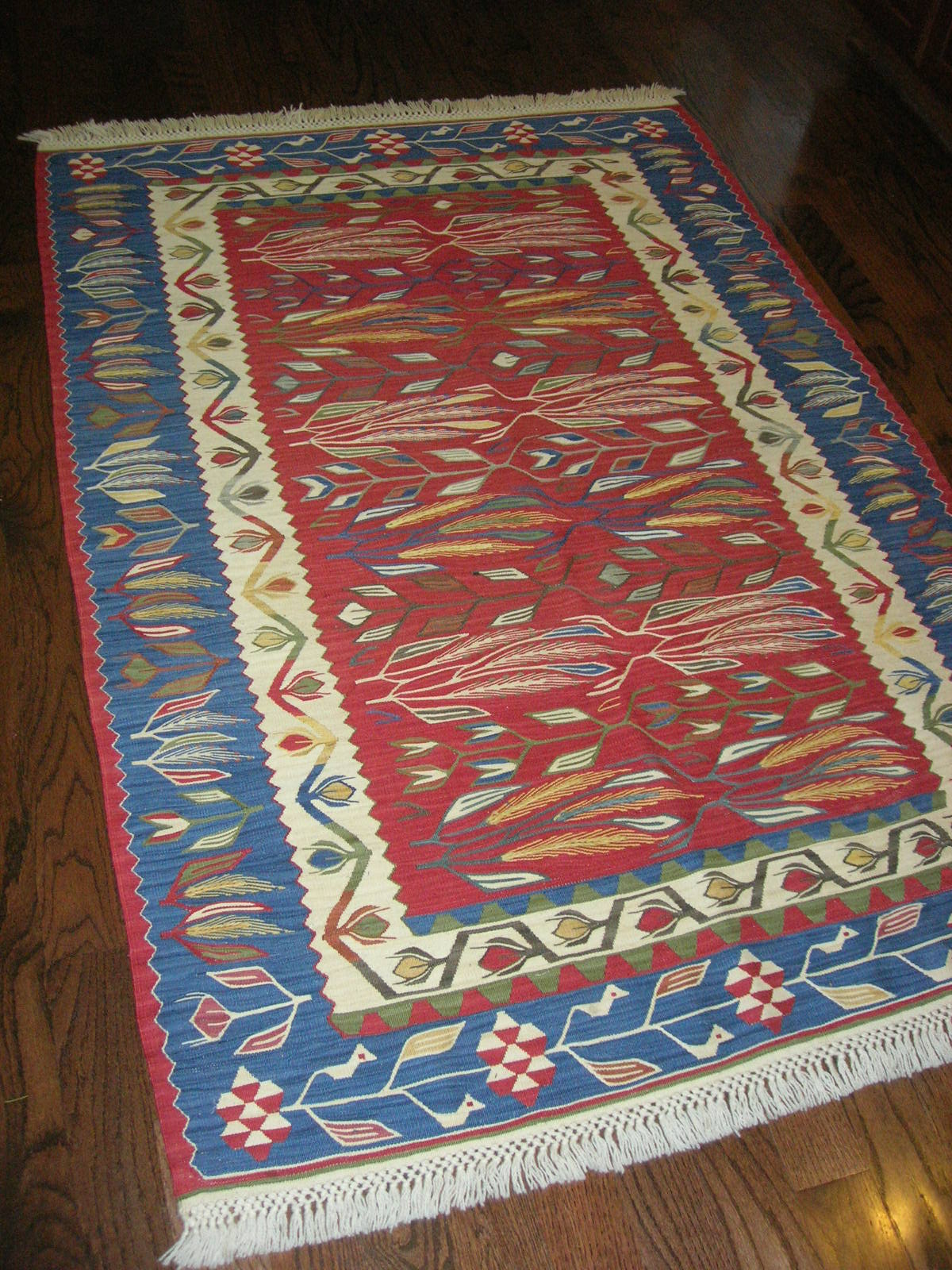
this kilim is in our kitchen
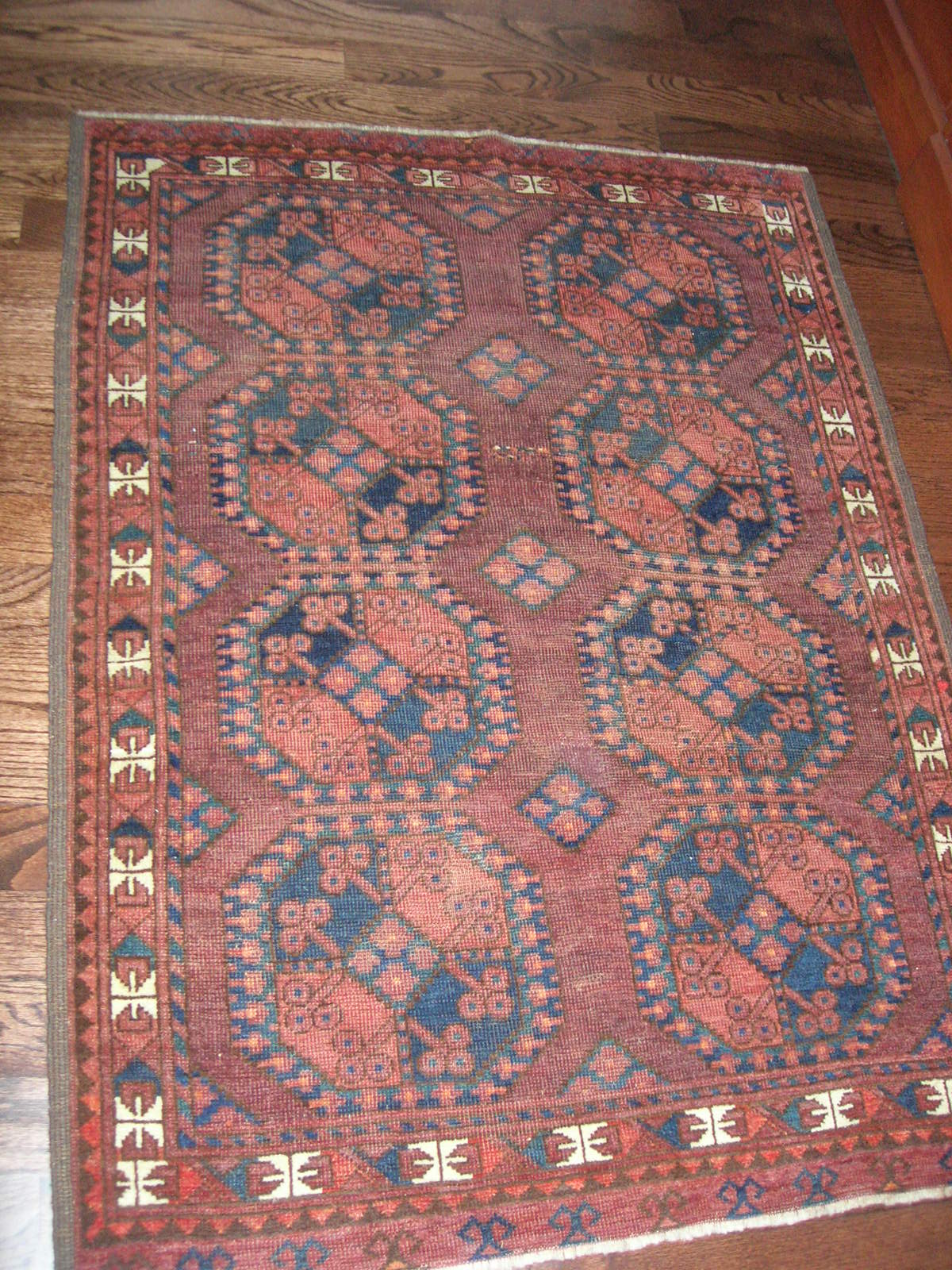
and this smaller, 'antique' carpet is in our family room
All that carpet buying was exhausting. We literally spent 8 hours on carpets!! Definitely time for a glass of wine, or two, with Hasan, and then out for dinner.
Friday was our last day in Istanbul. Our first stop was the Archaeological Museum, where we spent a few hours, impossible to see everything in one visit.
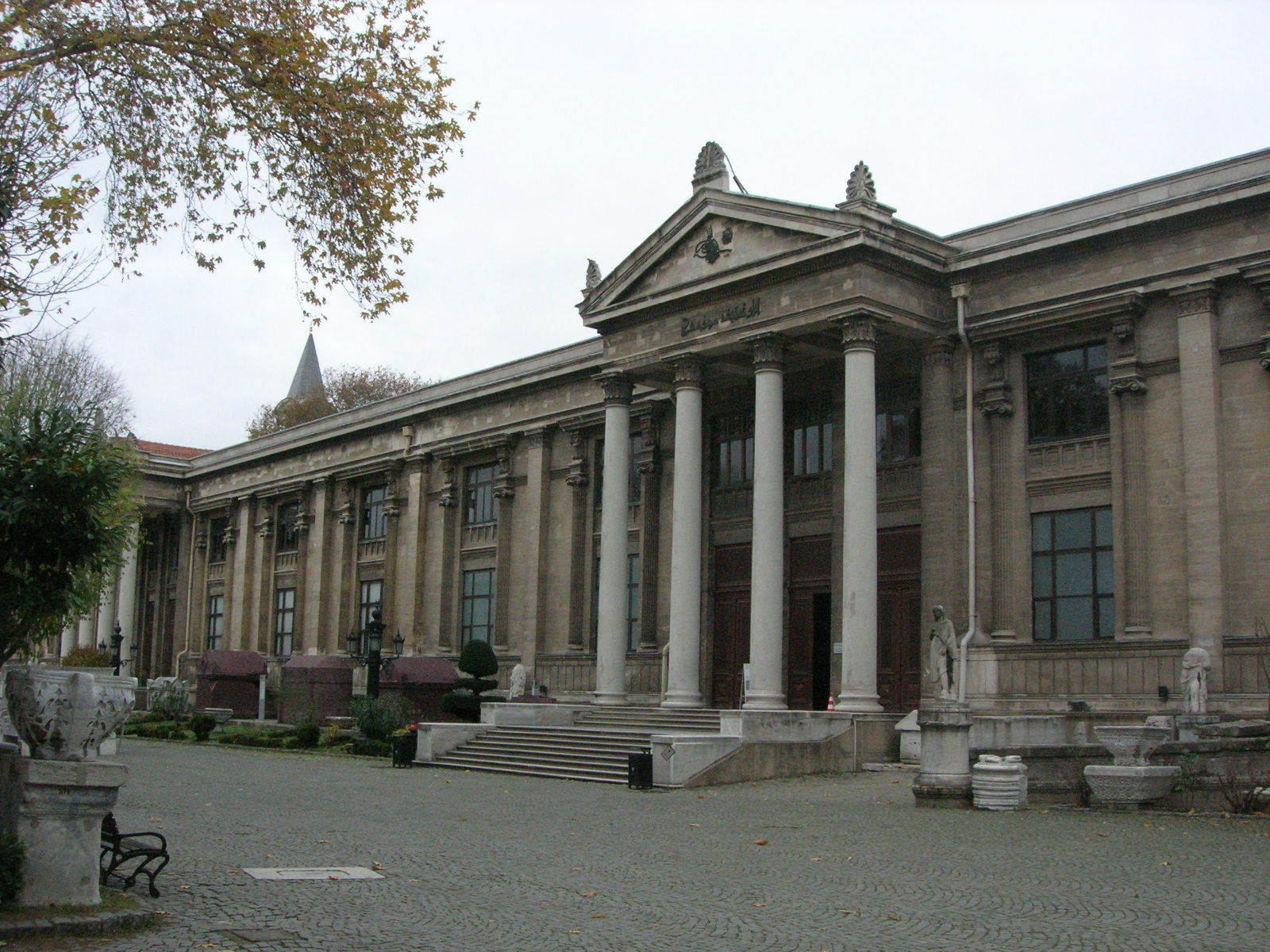
Archaeology Museum
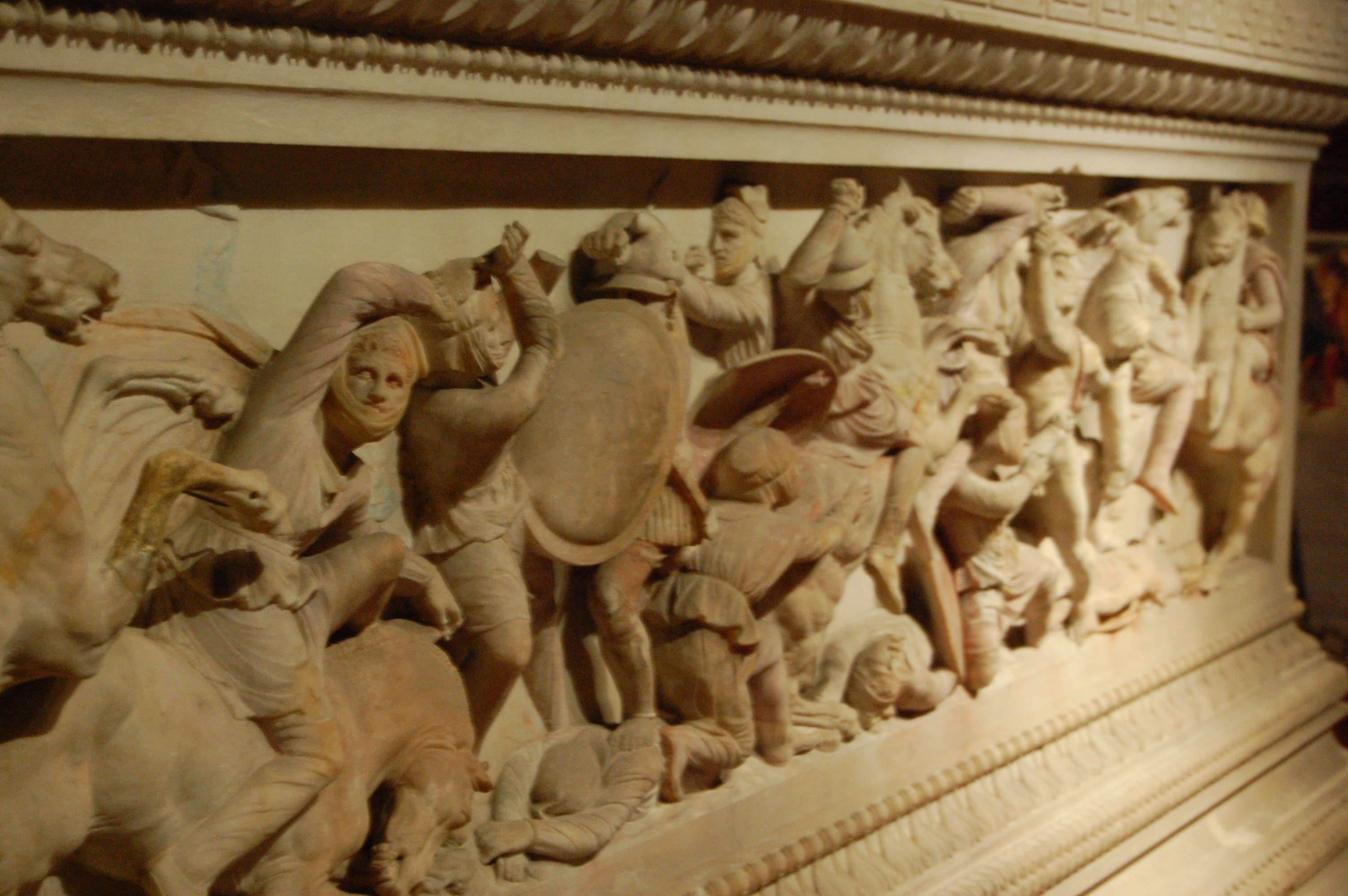
frieze showing the battle is Issus (333BC) on the side panel of Alexander Sarcophagus
The Alexander Sarcophagus is a “fabulously” carved marble tomb from the late 4th century BC, thought to have been built for King Abdalonymos of Sidon. It is called the Alexander Sarcophogus because Alexander the Great is depicted on it winning a victory over the Persians.
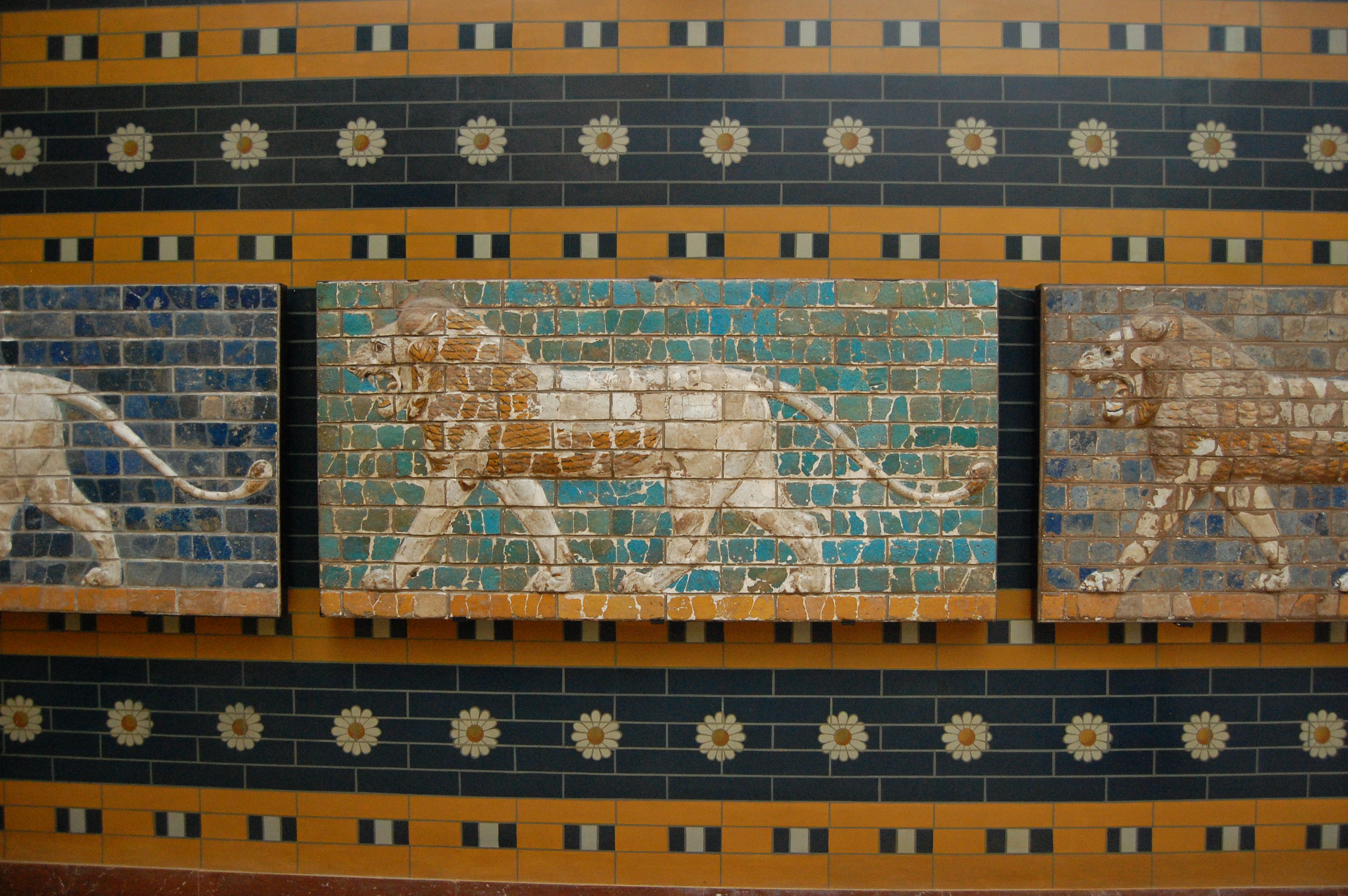
glazed brick friezes from Babylon's main entrance, the Ishtar Gate
In the Ancient Orient section of the museum, these glazed friezes are the star attraction. “The monumental glaed brick friezes from Babylon’s main entrance, the Ishtar Gate, date from the reign of Nebuchadnessar II (605-562 BC), when the capital of Babylon experienced its final flowering.”
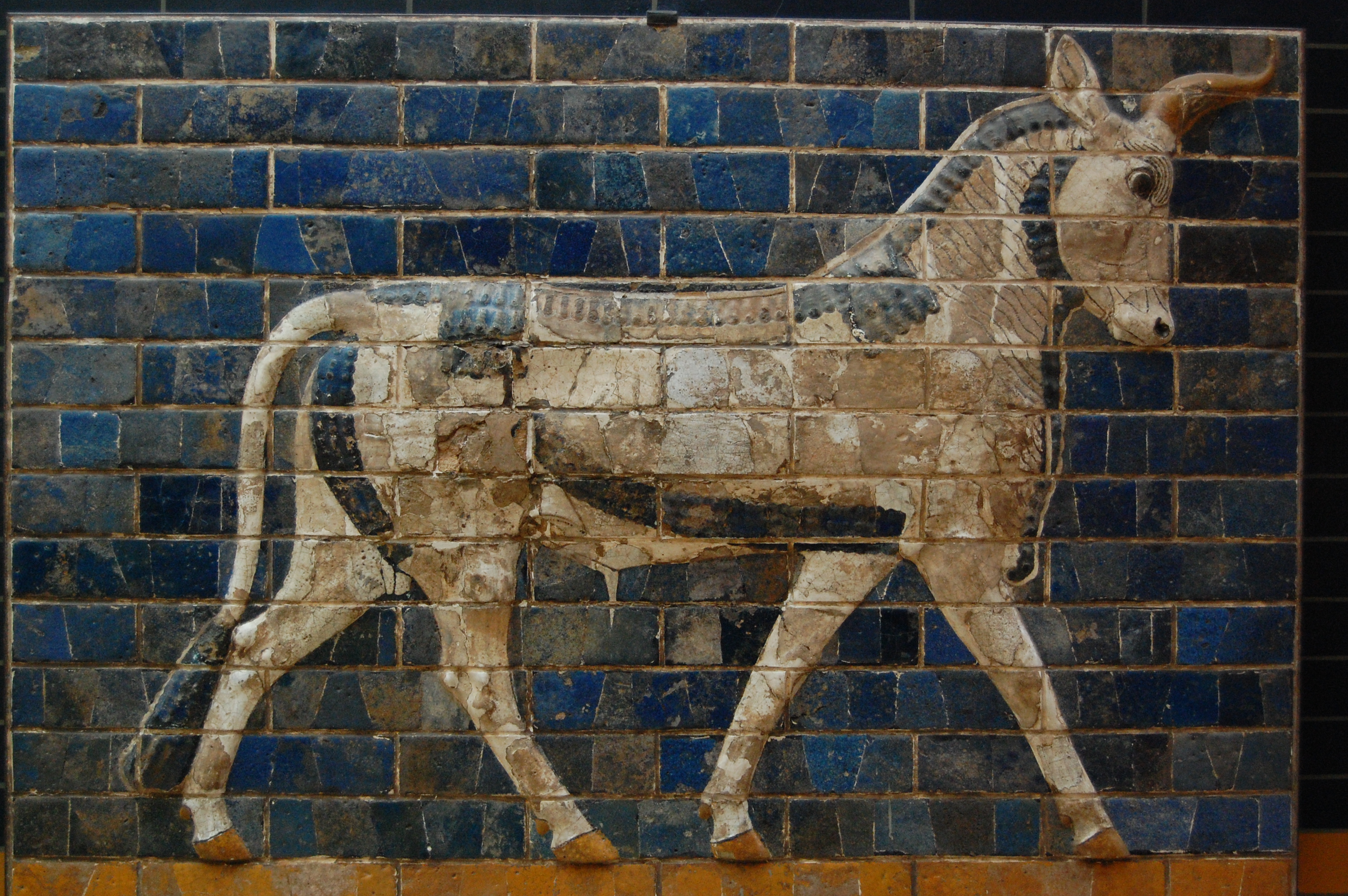
glazed frieze of a bull from Ishtar Gate, Babylon
From the museum we took a taxi to an area along the old city walls, to see the Church of St. Saviour in Chora, also known as the Mosaic Church. Gamze had wanted to take us here on Wednesday, but it is closed on Wednesdays. According to the guide book, “some of the very finest Byzantine mosaics and frescoes are found in this church. Little is known of the early history of the church, although its name, “in Chora,” which means “in the country,” suggests that the church originally stood in a rural setting. The present church dates from the 11th century. Between 1315-21 it was remodelled and the mosaics and frescoes added….” The mosaics were amazing.
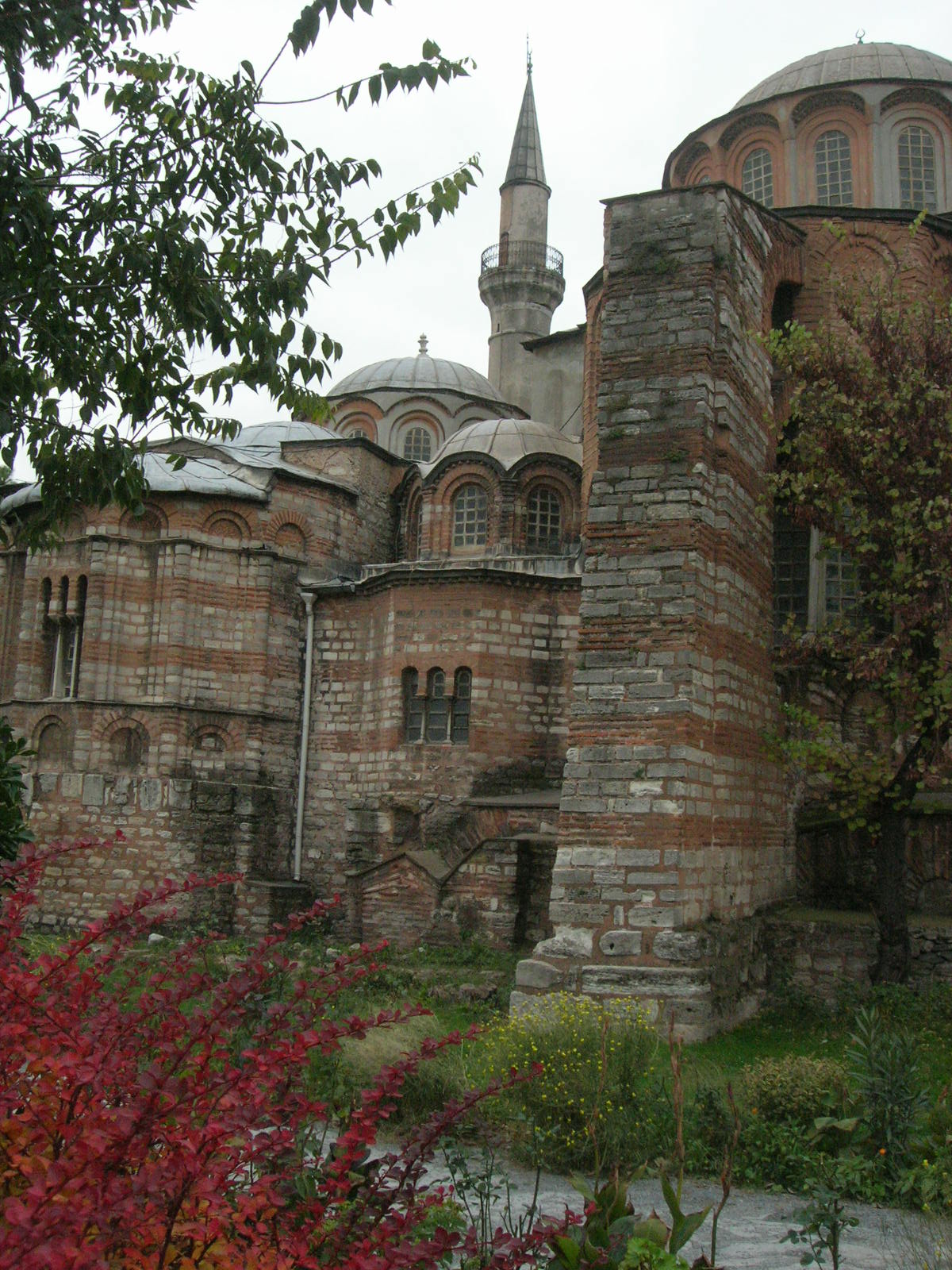
the outside of the church
inside
frescoe
mosaic
mosaic
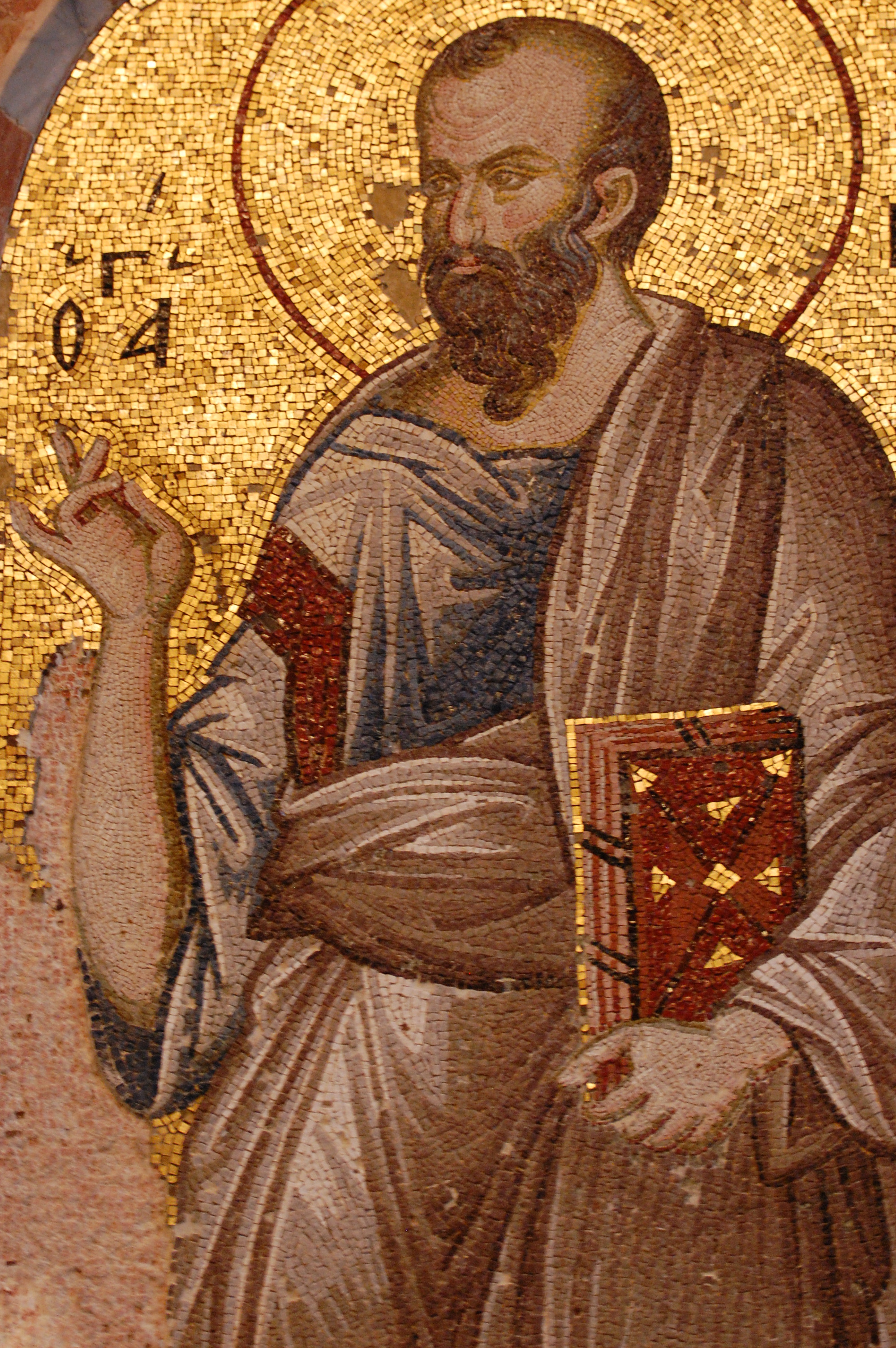
mosaic
mosaic detail
From the church we walked, and walked, and walked. First to lunch, and then to find a small grocery store where we’d been told we could find wine for sale (yes, the wine produced in Turkey is quite fine and we brought home two bottles), and then back to the spice market to buy a few gifts, and then a final trip to the Grand Bazaar for a few gifts. Oh… and a stop here, because they are almost everywhere in the world, for a chai latte for me…
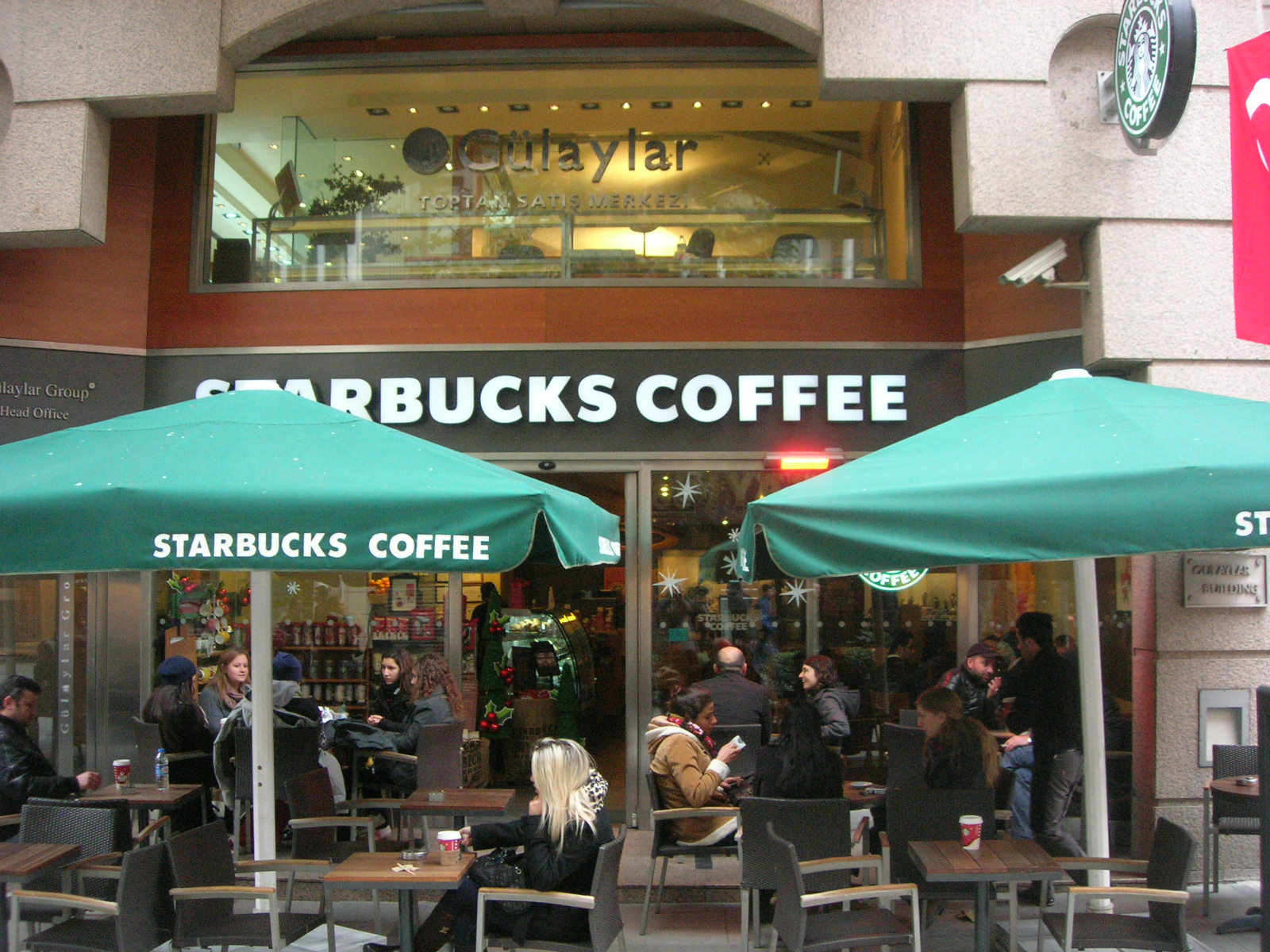
Starbucks in Istanbul (could be anywhere!)
Somewhere along the way, we saw these women through the shop window, busy making the teeny-tiniest of some kind of dumpling. They were stuffing a mixture, probably minced meat, inside dough, and piling them on their tables, and their hands were a whirlwind of activity – pinch meat, enclose in dough with a pinch or two, move on to the next one, and creating each one much faster than it took me to explain.
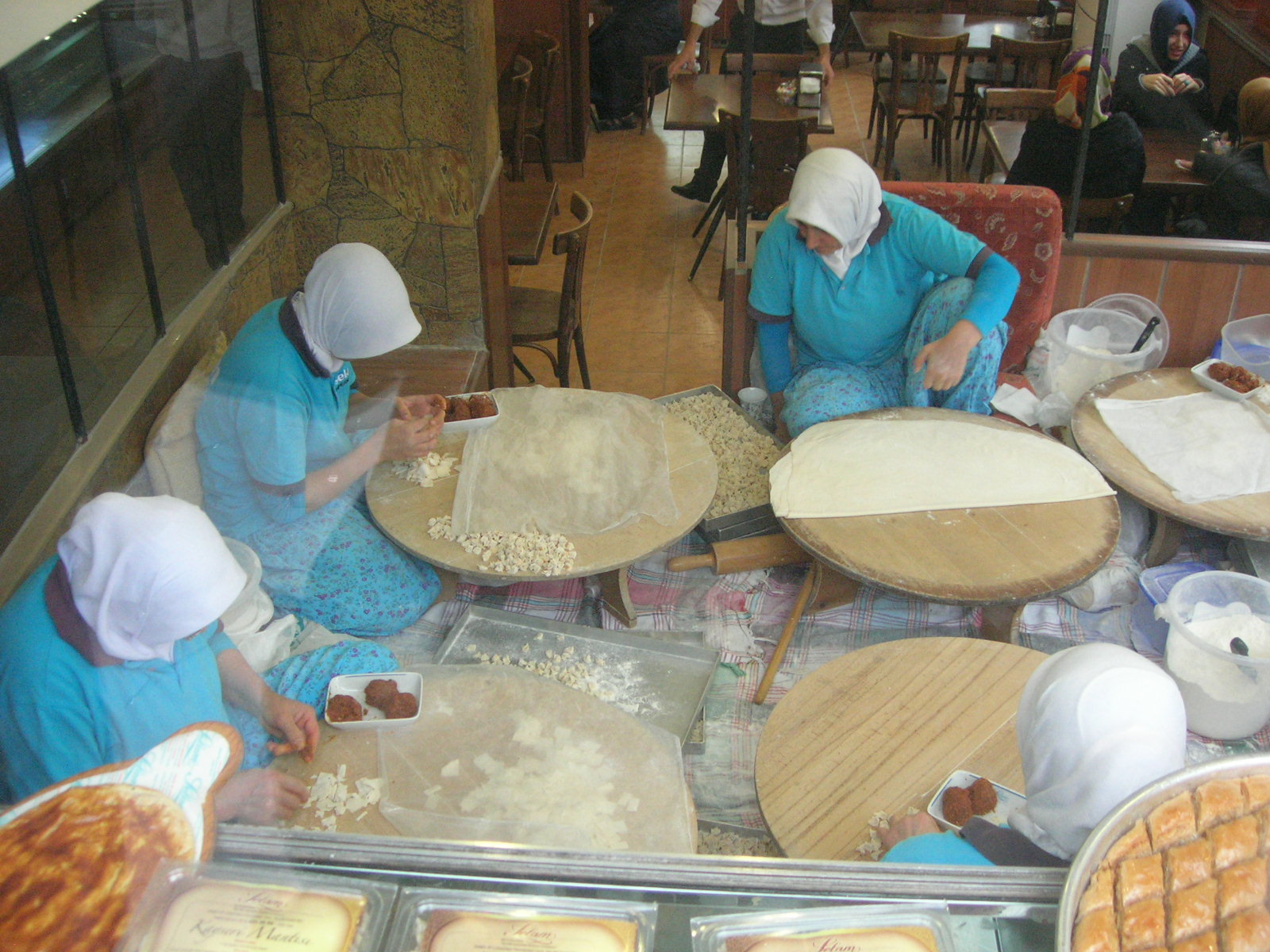
food production
Back to the hotel to pack, and then to the bar for our last glass of wine with Hasan.
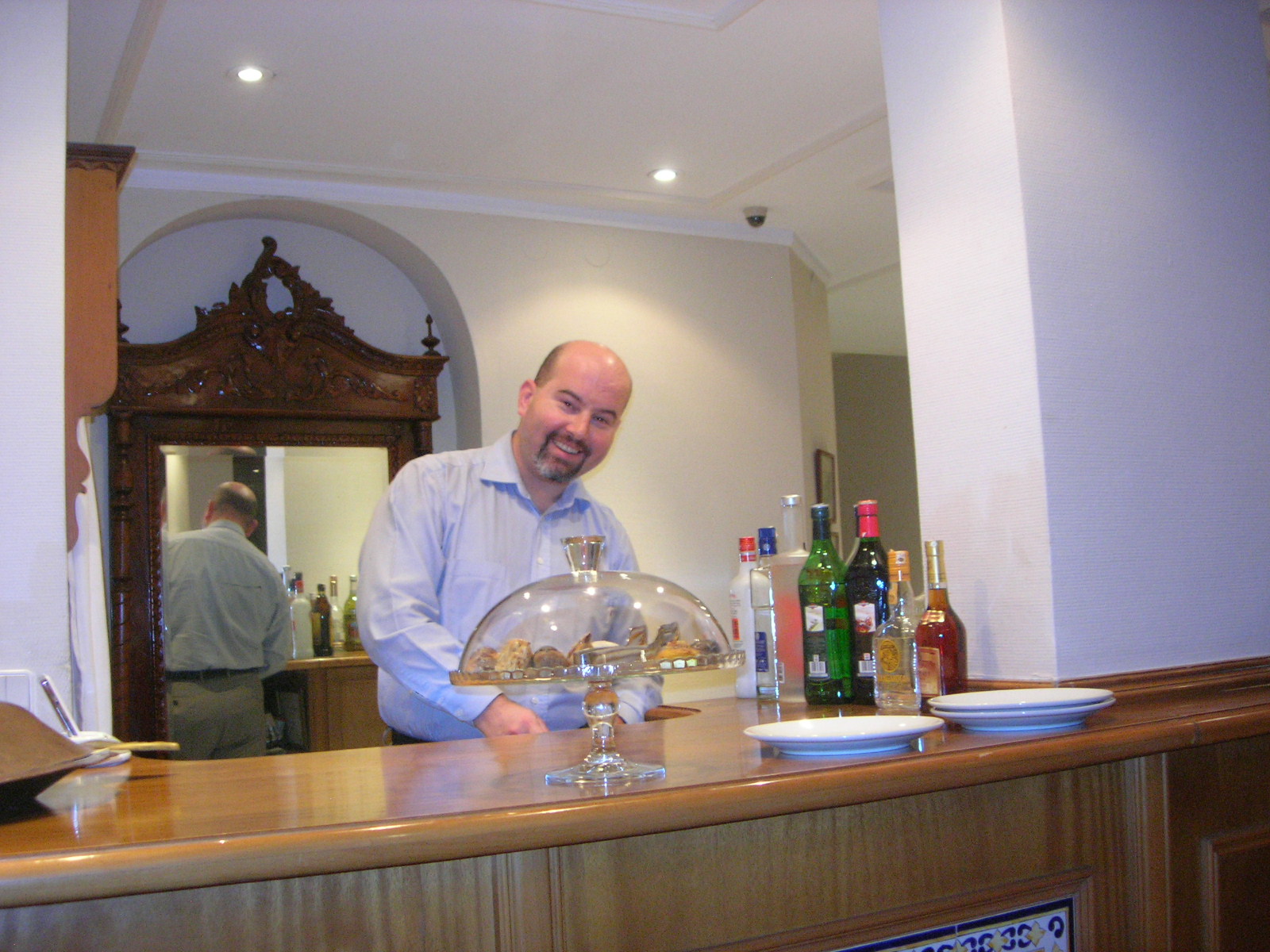
Hasan behind the bar
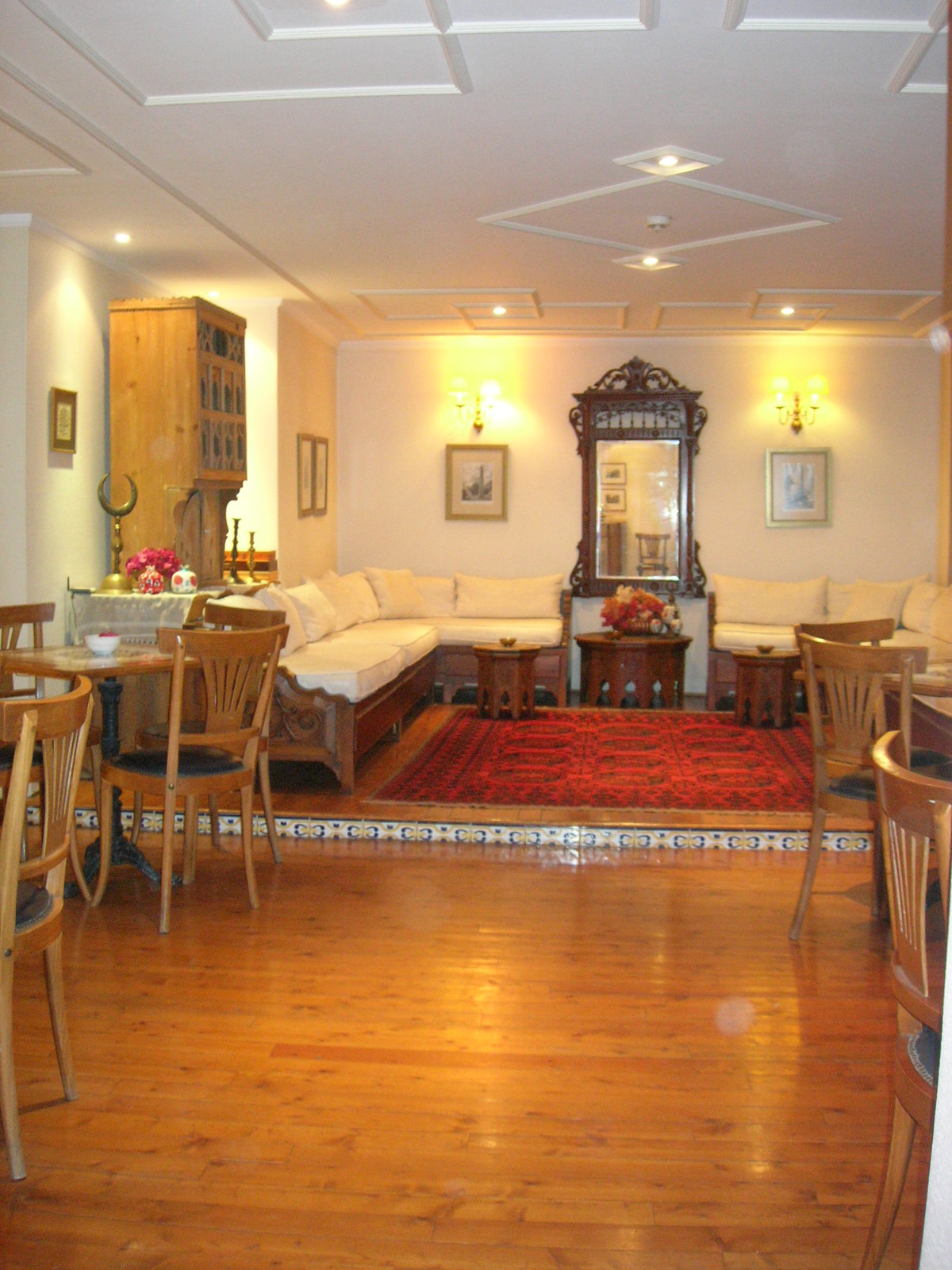
bar area is also breakfast area, but always a warm and comfortable stop
While we’re at the hotel, here are a few more pictures…
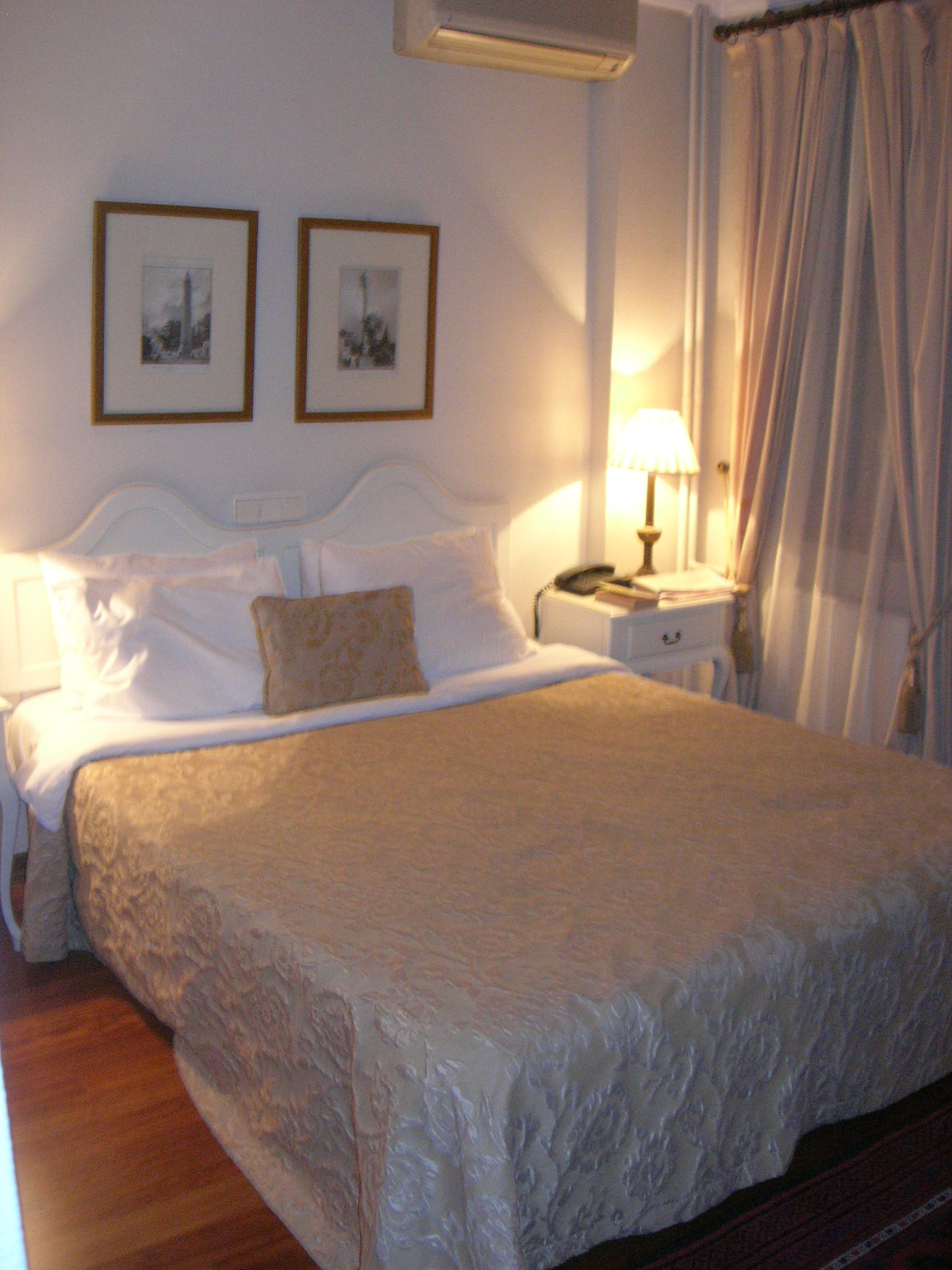
our room, simple but comfortable, with a window seat (not seen here) and small desk
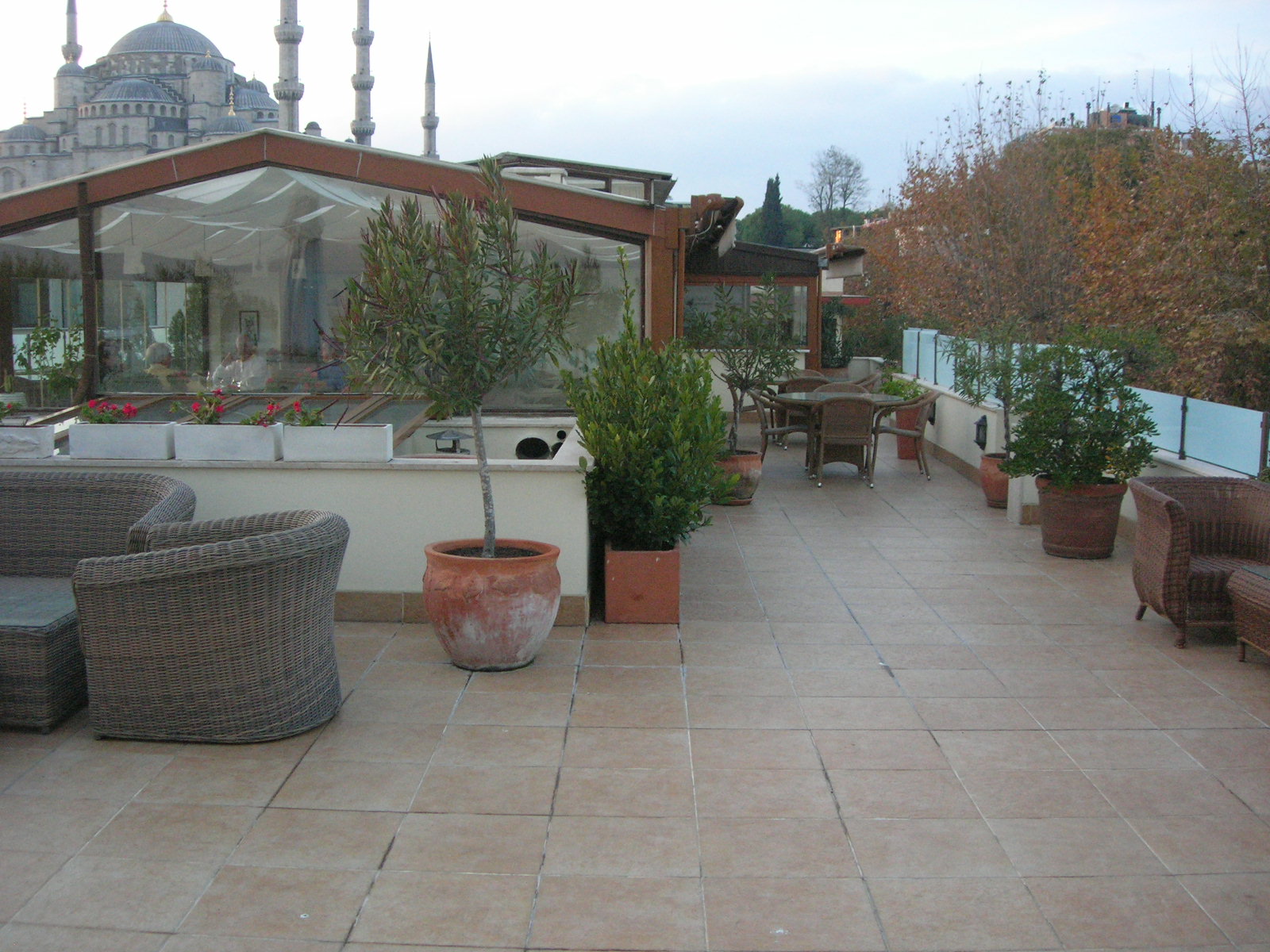
the open deck, which in the summer is the bar area
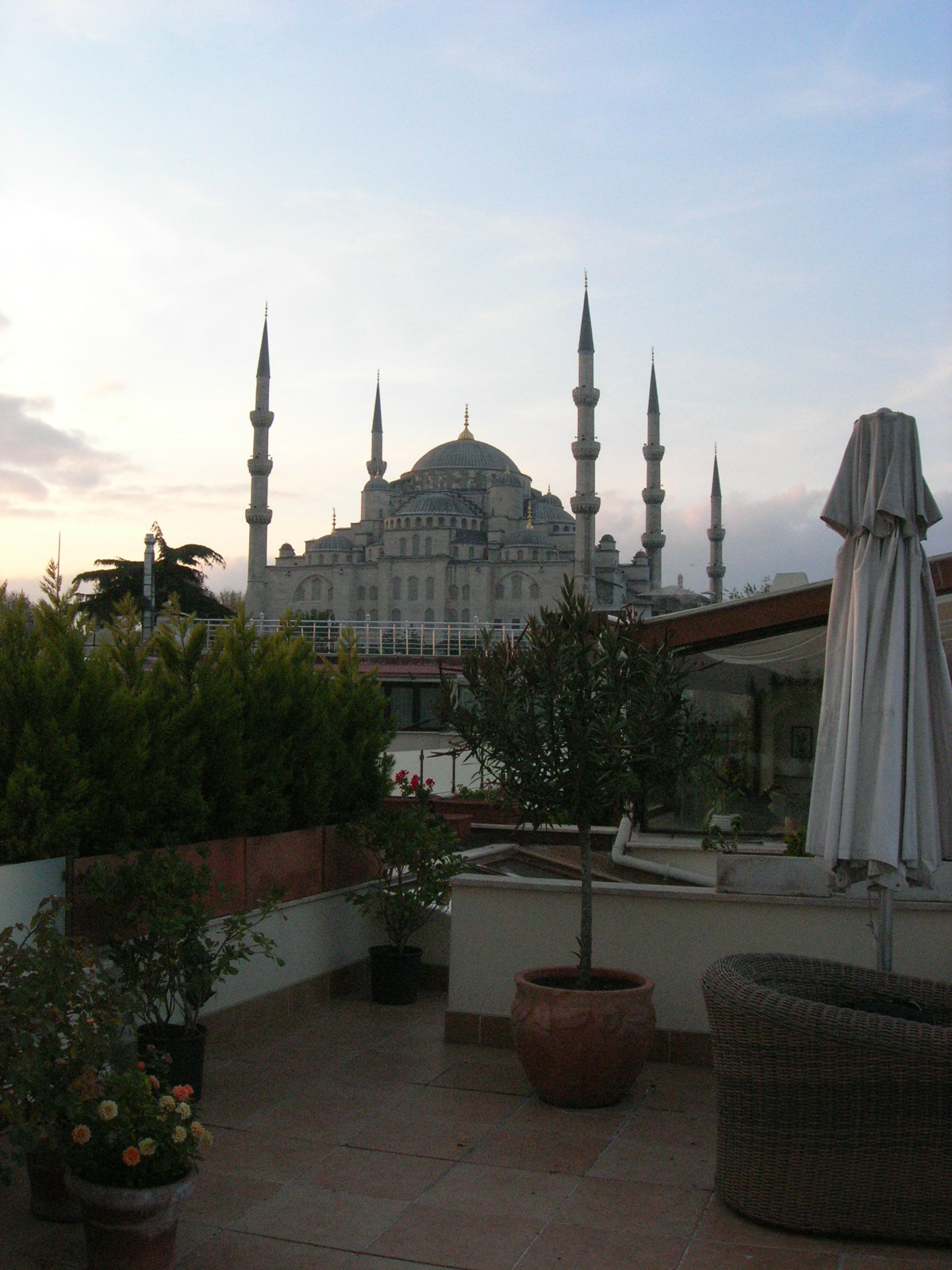
where you can watch the sun set and the Blue Mosque light up
And then we went out for our last dinner, back to the very first restaurant again.
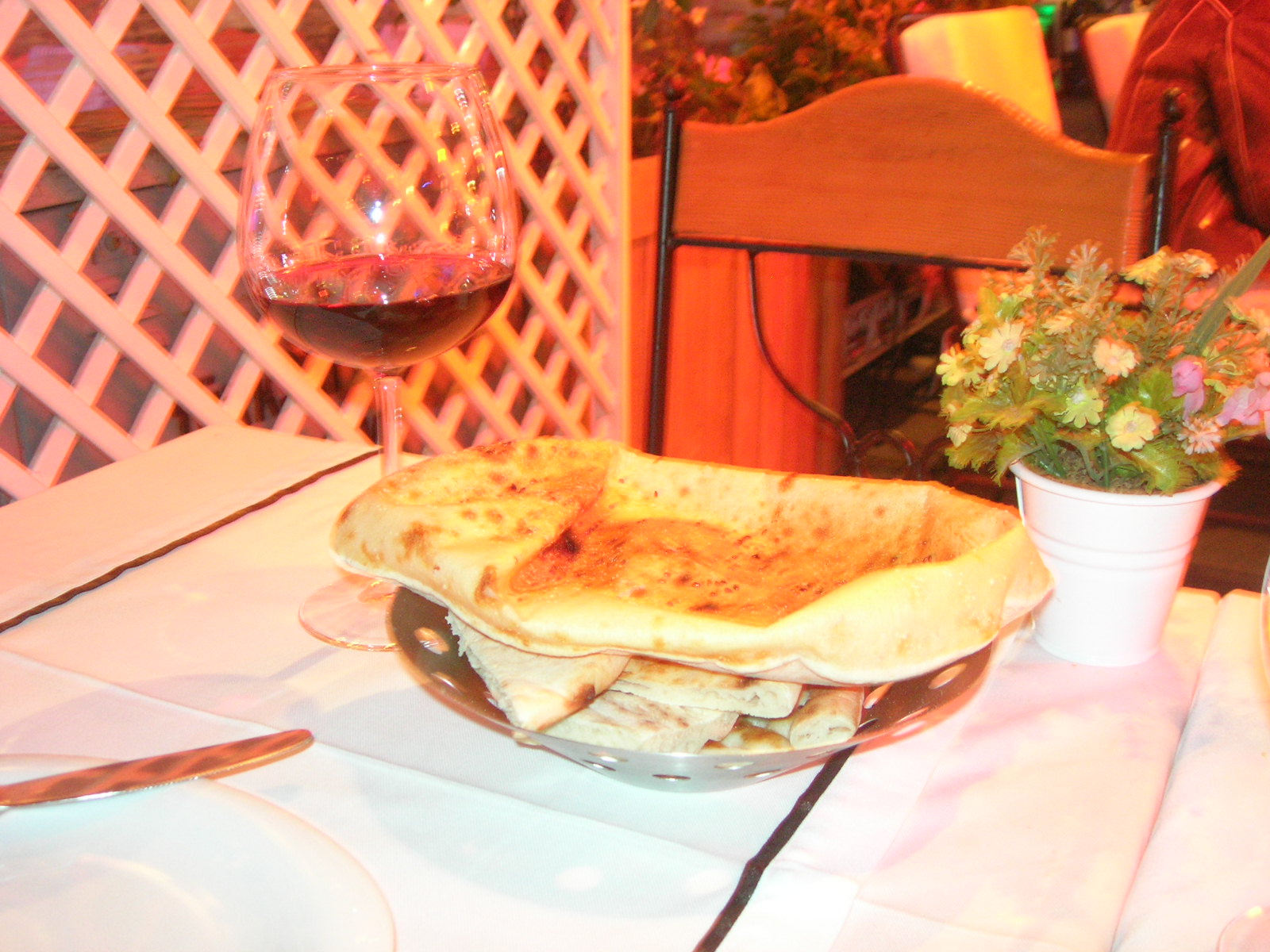
bread and wine and later an Ottoman stew
We had to be up before 4 a.m. as we left the hotel at 4:15 to get to the airport for our first flight from Istanbul to Frankfurt. It was a L-O-N-G trip back, even longer than getting there, but the our time in Istanbul was worth it. Istanbul was cleaner and more organized than we had expected, and the people were some of the friendliest people we’ve encountered in our travels. The history is like no other city, the food was great, and it was very easy to spend a week. But, my favourite thing of all was listening to the call to prayer five times a day. The first one woke us up, of course (though we always went back to sleep), and sometimes we didn’t even hear it, but when we did, it was always mysterious, eerie and beautiful.
Where did the summer go (and autumn, for that matter)… a few highlights… November 16, 2011
Posted by freda in Birmingham, Michigan.4 comments
Yes, (eep), I’m deliquent – summer is long gone, autumn is fast fading, and Don and I are now getting ready for an exciting trip to Istanbul, which means I need to hurry and get a few pictures from this summer posted before it’s time to blog about this new trip. So, here are the highlights….
First up, at the end of May, we attended Lucas’s graduation ceremony at UBC. He received a BFA with honours, in creative writing, and we couldn’t be more proud! 🙂
Lucas, and students file into theatre

the University of British Columbia

our graduate
After the ceremony, Don and I took the available family out for a celebratory dinner. In attendance, besides the four of us, Don’s mother Elsie and her husband Bill, Don’s sister Janet, her husband Lex, and son Keeghan. We had a lovely evening and an excellent meal at the Salmon House in North Vancouver.
the menu

the table
Lucas, Keeghan, Nico

Elsie and Janet
Bill and Lex
toasting the graduate
Unfortunately my mother couldn’t be there because she was in Calgary witnessing my younger niece, Brianna, graduate from high school and give the valedictorian address. We’re so proud of her, too, and wish we could have been there!
congratulation Brianna! With (her mom) my sister, Kate, and (dad) Vince
with my mom, before the dinner/dance
my beautiful nieces, Brianna and Kirsten
Don and I were back in Vancouver in July – Don for the first two weeks, and I stayed the whole month. We visited family and friends and enjoyed time with the boys. We also went to the interior of B.C., to Peachland, where Don’s father and his wife live, and spent a day touring and tasting at a few of the local wineries.
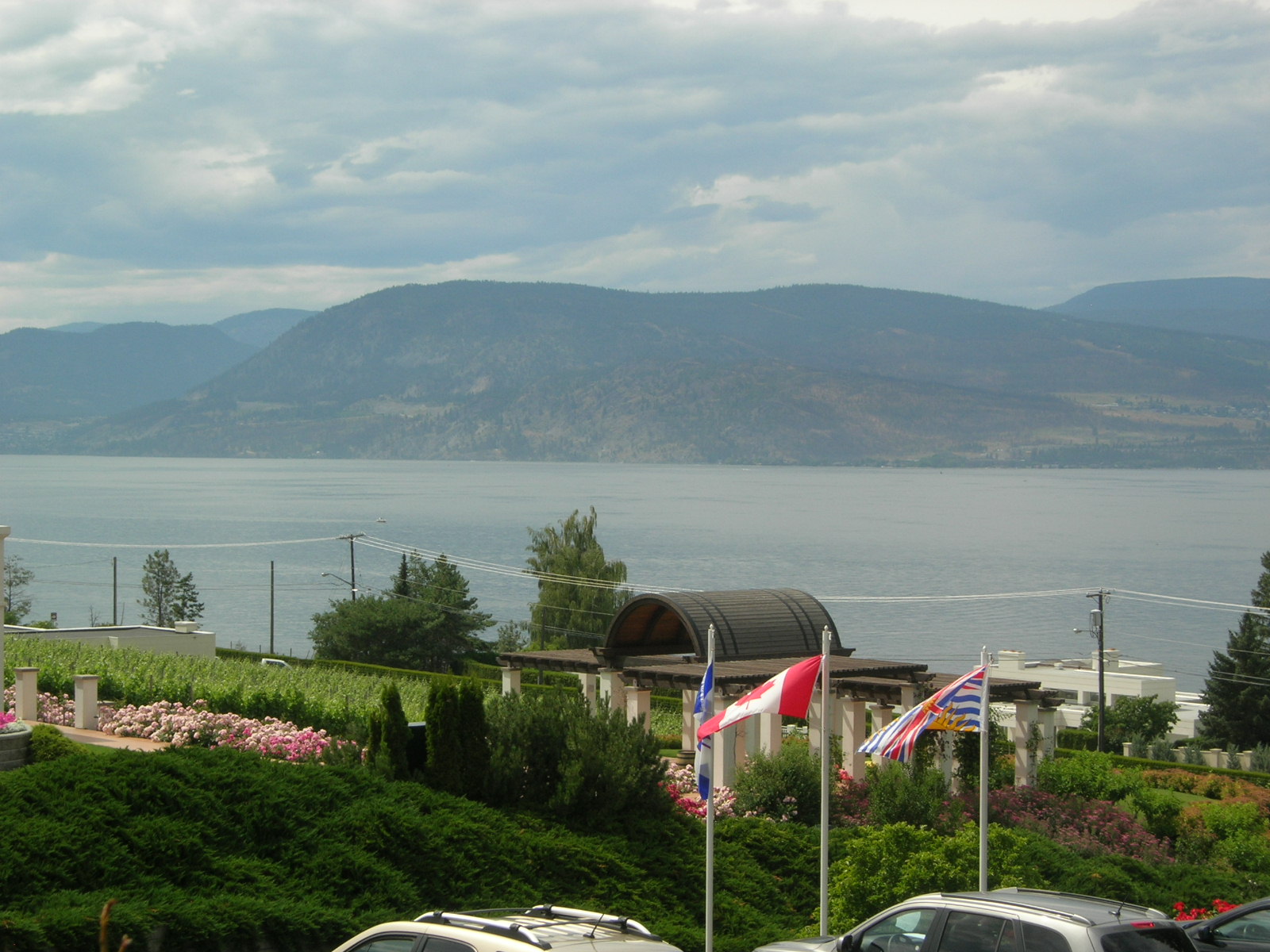
at a winery, overlooking Lake Okanagan
family shot
The last day of July was my last day in Vancouver, and also Gay Pride Parade day. The night before, Lucas held his annual Pre-Pride-Party and I made rainbow jello shots!
rainbow jello shots
the gang played Cranium
The weather was perfect for the parade.
parade marshall
Lucas, friend Spencer, and me
Santa???
August was busy with weekend events. On the first weekend we headed to our good friends’ cottage in the Muskoka Lakes, Ontario for a long weekend. Warren and Maureen were celebrating their 30th wedding anniversary and decided the theme of their party would be “Across the Universe/Beatles/60s.” Don and I took the theme to heart and became John and Yoko during their Bed-In for Peace:
"all we are saying is give peace a chance..."
with Warren and Maureen
the boathouse, festooned with Union Jacks

with Graziano, from Venice, and the gorgeous lake behind...
we look *just* like the real deal! Thanks, Gary, for the photo-shop.
The second August weekend, we flew to Boston for two nights…. Our first night we were guests of Bobby and Peggy Orr, and Don was able to pay off his lost Stanley Cup bet to Bobby.
Don, Freda, Bobby, Peggy
Our second night we stayed in a hotel on the Long Wharf in Boston and packed in as much touring as we could in 24 hours. We walked the Freedom Trail, wandered through Boston Common, went on a Duck tour, had a drink at the Quincy market and a fantastic seafood dinner at one of the Legal Seafood locations.
George Washington, Public Garden, Boston Common

a few of the 8 duckling statues from Robert McCloskey's beloved children's book, "Make Way for Ducklings"
kids LOVE the ducklings

so cute
commemorative placque to Robert McCloskey's book
Highlights along the Freedom Trail walk:
The Freedom Trail marker
Massachusetts State House
Park Street Church

revolutionary history is found in the Old Granary Burying Ground
Samuel Adams also in Old Granary Burying Ground
Old South Meeting House

Old South Meeting Hall
Of course we stopped by the TD Gardens….
Bobby Orr statue outside Bruin's arena
and from the Duck tour:
the "Ducks" - WWII era, amphibious vehicles
into the river we go..
And more walking, first past Trinity Church and the (closed) library, and on to fashionable Newbury Street, where we had lunch at Trident Bookstore and Cafe, because you know I’d have to check out a local bookstore!
Trinity Church (under restoration)

Trinity Church, up close
the square in front of the church (Don and the rabbits)
the library, unfortunately closed on Sunday
All too quickly it was time to head to the airport. We had a wonderful overview of a lovely city full of history.
The third weekend of August was the famous “Woodward Dream Cruise.” You can look it up on wikipedia: http://en.wikipedia.org/wiki/Woodward_Dream_Cruise It’s a one-day extravaganza, but all week leading up to the event, the cars are on parade. Here’s a sampling of what we saw….

Dream Cruise parade, through Birmingham

beautiful
crazy

furry passenger
is this a car?!?
a long, slow traffic jam... at least there's lots ot look at!
such a variety

celebrating 100 years of Chevrolet
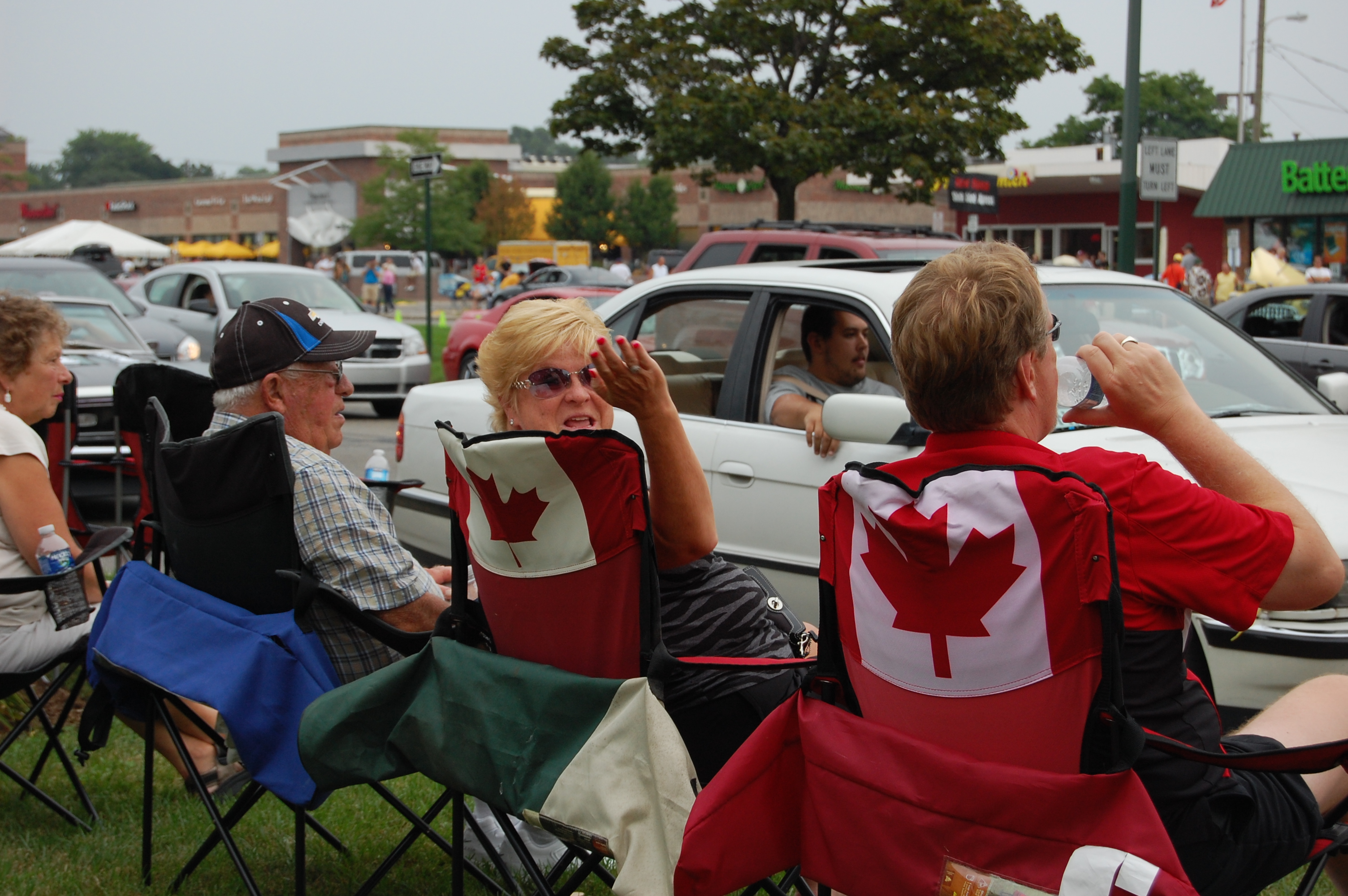
turns out we knew these Canadians! how weird is that?!?
And there you have it, the summer “highlights.”
Next up: Istanbul!!
Reading Challenges June 27, 2011
Posted by freda in Birmingham, Michigan.add a comment
I’ve been meaning to blog about my Reading Challenges for a while now, and then just today (June 27th) I read this article in The Globe and Mail about the very same topic:
Read the article first, or read me and then go to the article.
I decided I should put my ‘challenges’ in print, creating a public record, because I think that will cement the deal: I am going to want to complete the reading because I’ve pledged to do so. (Though, being an avid reader, I guess you know I would most likely complete the challenges, whether I blogged about them or not :)) I first learned about ‘reading challenges’ from a couple of blogs by avid readers that I somehow started following (who knows where the links begin and end..), and as I’ve always loved reading books about books, following readers’ blogs seems a natural extension of that. Besides, you can get all kinds of great recommendations that way – books you’d never have heard of otherwise. One blogger was participating in a few interesting challenges and I decided (once I checked out the details) they would be fun to try. In telling Barb (avid reader friend living in Windsor) about them, she decided to join me, and then we could discuss what we were reading, as well, which always increases book enjoyment. I decided I wasn’t going to ‘officially’ sign up for these challenges (which is encouraged), and because of that, I can not ‘officially’ display on my blog the reading challenge logos, though I can obviously tell you the names of the challenges. In addition, Barb and I decided we wanted to read all of this year’s short-listed Orange Prize nominees, so we’ve made that our own personal ‘challenge.’ And of course I’m in a book club here in Michigan, as well as participating-from-afar in my Ontario book club (we are just about to celebrate our 20th anniversary of being a book club!!), which you could consider a version of a reading challenge, so I’m going to list those books here, too.
Here, therefore, is my ‘planned’ reading for 2011, and if I’ve read the book already, I’ve included that detail (I will edit the list to tell you when I’ve completed the other so-far-unread books:
Michigan Book Club reading list:
The Cellist of Sarajevo by Steven Galloway – read in January
Hotel on the Corner of Bitter and Sweet – Jamie Ford – read in February
The Lotus Eaters – Tatjana Soli – read in March
The Good Earth – Pearl S. Buck – read in May
The Shadow of the Wind – Carlos Ruiz Zafon – read in June
Cutting for Stone – Abraham Verghase – read in Sept 2011
One Thousand White Women: The Journals of May Dodd – Jim Fergus – read in Oct 2011
The Camel Bookmobile – Masha Hamilton – read in Oct 2011
Ontario “Third Thursday” Book Club reading list:
The Secret Daughter – Shilpi Gowda – read in January
The Secret River – Kate Grenville – I didn’t read this again as I’d read it a few years ago
The Englishman’s Boy – Guy Vanderhaeghe (haven’t read it yet, but I will…) – read (finally) in Oct 2012
The Promise of Rain – Donna Milner – read in April
Cool Water – Dianne Warren – read in May
Little Bee – Chris Cleave – read in June
The Help – Kathryn Stockett – read in Aug 2011
The Other Wes Moore – Wes Moore – read in Sept 2011
Moll Flanders – Daniel Defoe – not read
Orange Prize Short List:
Room – Emma Donaghue – read in January
The Memory of Love – Aminata Forna – read Dec 2011
Grace Williams Says It Loud – Emma Henderson – read Nov 2011
The Tiger’s Wife – Tea Orbrecht – read Nov 2011
Annabel – Kathleen Winter – read in June
Great House – Nicole Krauss – not read
What’s In A Name 4 Reading Challenge:
Here I’m going to first list the challenge category descriptions, then the book I’ve picked to fit the category, and then when I’ve read it….
1. Book with a number in the title: Sizzling Sixteen – by Janet Evanovich – read in June
2. Book with jewelry or gem in the title: The Silver Swan – Benjamin Black – read in Nov 2011
3. book with size in the title: Little Bee – Chris Cleave – read in June (hope you don’t think it’s cheating that I’ve used a book I read for book club here!)
4. book with travel or movement in the title: Lost on Planet China – Maarten Troost – read in May
5. book with evil in the title: Evil Genius – Catherine Jinks – not read
6. book with life stage in the title: Secret Daughter – Shilpi Gowda – read in January (again, book club book used twice)
Criminal Plots Reading Challenge:
1. Book by a new-to-me author who’s blurbed a book I enjoyed: (thought I had one, but what I picked was a new-to-me author who had been blurbed by an author I like, so that’s wrong… so, still looking for a book in this category… if you have ideas, let me know..)
2. Book made into a movie: The Feather Men – Ranulph Fiennes (movie in production)
3. Book with protagonist that is opposite to me: Motor City Blue – Loren D. Estleman – read in February (I’ve read so many mysteries with male protagonists)
4. Book set outside country in which I live: Random Violence (it takes place in S. Africa) – Jassy Mackenzie
5. Book that is first in a new-to-me series: Her Royal Spyness – Rhys Bowen – read in July
6. Book by 2011 debut author: Before I Go To Sleep – S. J. Watson – read August 2011
And that’s it. As I mentioned, I’ll update this post whenever I read another book in any of the challenges. And I’ll continue to list books as I read them on the little side bar to this blog, because of course I’m reading books other than required for these reading challenges. I’m also thinking I should add a rating system (my rating out of 5 stars) to that side bar list, but I’m not sure how to go about that yet, so we’ll see.
This blog was inspired by that newspaper article I read today, but I will now get back to working on my blog post about my trip to Shanghai in May. It should be done by the end of the week. Cheers!
Happy year of the Rabbit February 18, 2011
Posted by freda in Birmingham, Michigan.2 comments

Well, actually, Happy belated year of the Rabbit!! Yesterday was the Lantern Festival, which signals the end of the Chinese New Year celebrations. But, better late than never, right?!? I wish all of you a wonderful year. 🙂
I am sadly behind in blogging. January turned out to be rather a full month, and I’ve been “frittering-and-wasting the hours of the days in various and sundry offhand ways” (to paraphrase the great Pink Floyd song, Time) during these weeks of February. I promise to get back to it, with a post about my trip with Lucas to NYC for 6 days in January coming to you shortly. Until then, a few statistics … At the beginning of the New Year (our New Year, that is), I received an email from wordpress, the site which houses my blog, to tell me how well I’m doing with my blog. They tell me my blog was viewed 1400 times in the last year; I wrote 20 new posts; I uploaded 773 pictures; and the most popular post was the one entitled “Kindergarten – Keeping Warm – Fish – Mahjong.” They also tell me the “about” page of my blog was the second most popular – which makes me feel bad, since I haven’t put any information there. So, I promise to revise that this year.
New to my blog, some of you may already have noticed, is a side bar that lists the books I’ve read, as I read them. I’ve listed all the books starting in January 2010, since that’s when I, effectively, started this blog. As I finish a book, I will post the title and author. A caveat, though: I’m just listing the books I read – a record for me, a reference for you – but not saying if I thought they were worth reading, or not. If you’re interested in what I thought about a particular book, send me an email.
I’ll be back soon with pictures from New York City. Until then, keep warm.
Hello world! November 23, 2009
Posted by freda in Vancouver.add a comment
Stay tuned! I’ll be chatting about our transfer to Shanghai and my “look-see” trip very soon.
 freda's world adventures