Spain – October 2016 November 27, 2016
Posted by freda in Birmingham, Michigan.2 comments
We chose Spain for our trip this year because we have two sets of friends living there – personal tour guides! Don and I flew from Michigan to Madrid, arriving at noon on October 5th. We gathered our luggage, then got a cab to the home of our friends Jaime and Marta, both of whom were at work. Their housekeeper let us into their lovely 2-floor apartment on the outskirts of the city. We settled in, napped, showered, and relaxed on their beautiful patio while waiting for their return.
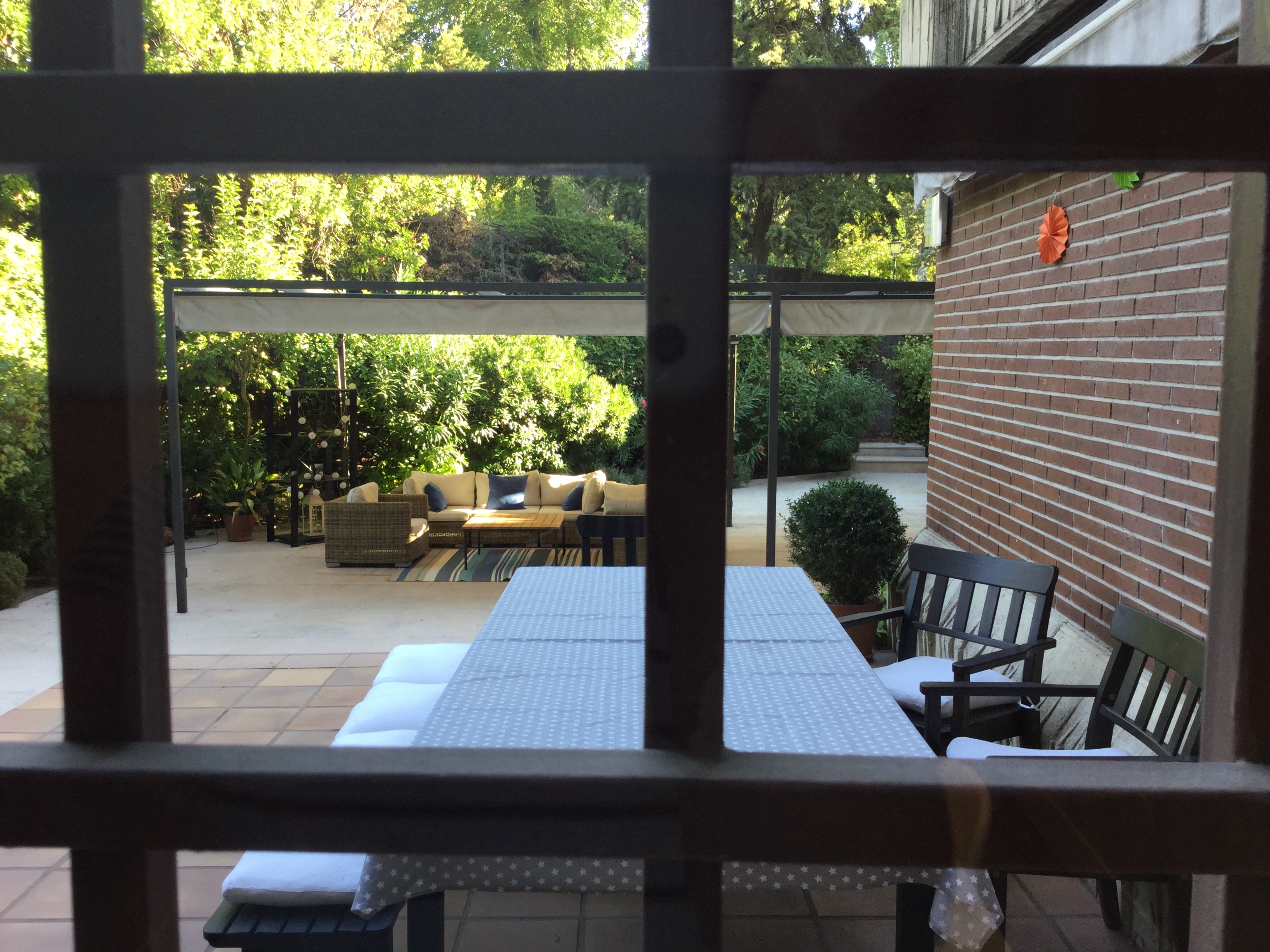
from the inside looking out at the patio
Jaime and Marta are both originally from Madrid, though we met them through General Motors when we all lived in Florida. They also lived in Shanghai at the same time as us, and then in Michigan for awhile. Jaime now works for L’Oreal. Marta and their girls – Olivia, 8, and Emma, 5 – were home first, and we enjoyed a good visit and some food, while the girls entertained us. Then, after Jaime was home, the four of us went into the city. We wandered awhile and then stopped at the trendy, urban Mercado de San Ildefonso for a drink. I didn’t take a picture, but this website has good pictures and details: http://www.nakedmadrid.com/2014/06/08/san-ildefonso-market-malasanas-new-food-palace/
From there we drove to family-favourite restaurant, Quenco, at which their girls are the fourth generation of Jaime’s family to dine. We sat outside on a lovely warm evening to enjoy personal service and delicious food and wine. We fell into bed and slept like logs.
The next day, after a late start, Don and I took the bus, from the stop just outside Jaime & Marta’s apartment complex, to the metro, and from there to the historic centre of Madrid, Puerta del Sol, to begin our sight-seeing. We started at the statue of the bear pawing a tree, a symbol of Madrid since medieval times: bears used to live in the royal hunting grounds outside the city, and the madroña trees produce a berry that makes the traditional madroña liqueur. (Everything italicized is a quote from the Rick Steves tour book.)
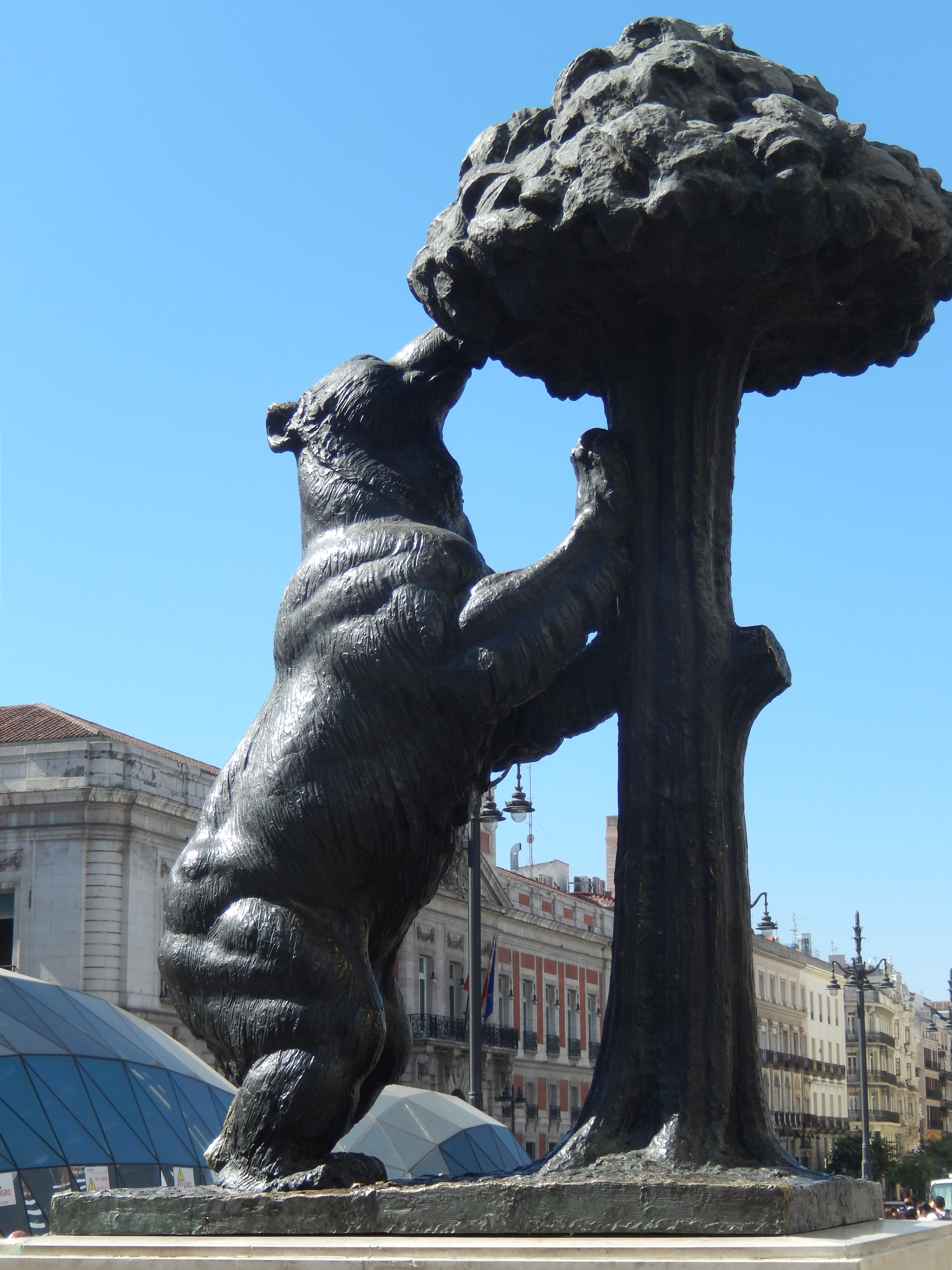
symbol of Madrid
Also in the square, King Charles III (1716-1788), whose enlightened urban policies earned him the nickname, “the best mayor of Madrid.” He decorated city squares with beautiful fountains, got the ‘meddlesome’ Jesuits out of city government, established the public school system, mandated underground sewers, opened his private Retiro Park to the public, built the Prado Museum, and generally cleaned up Madrid.
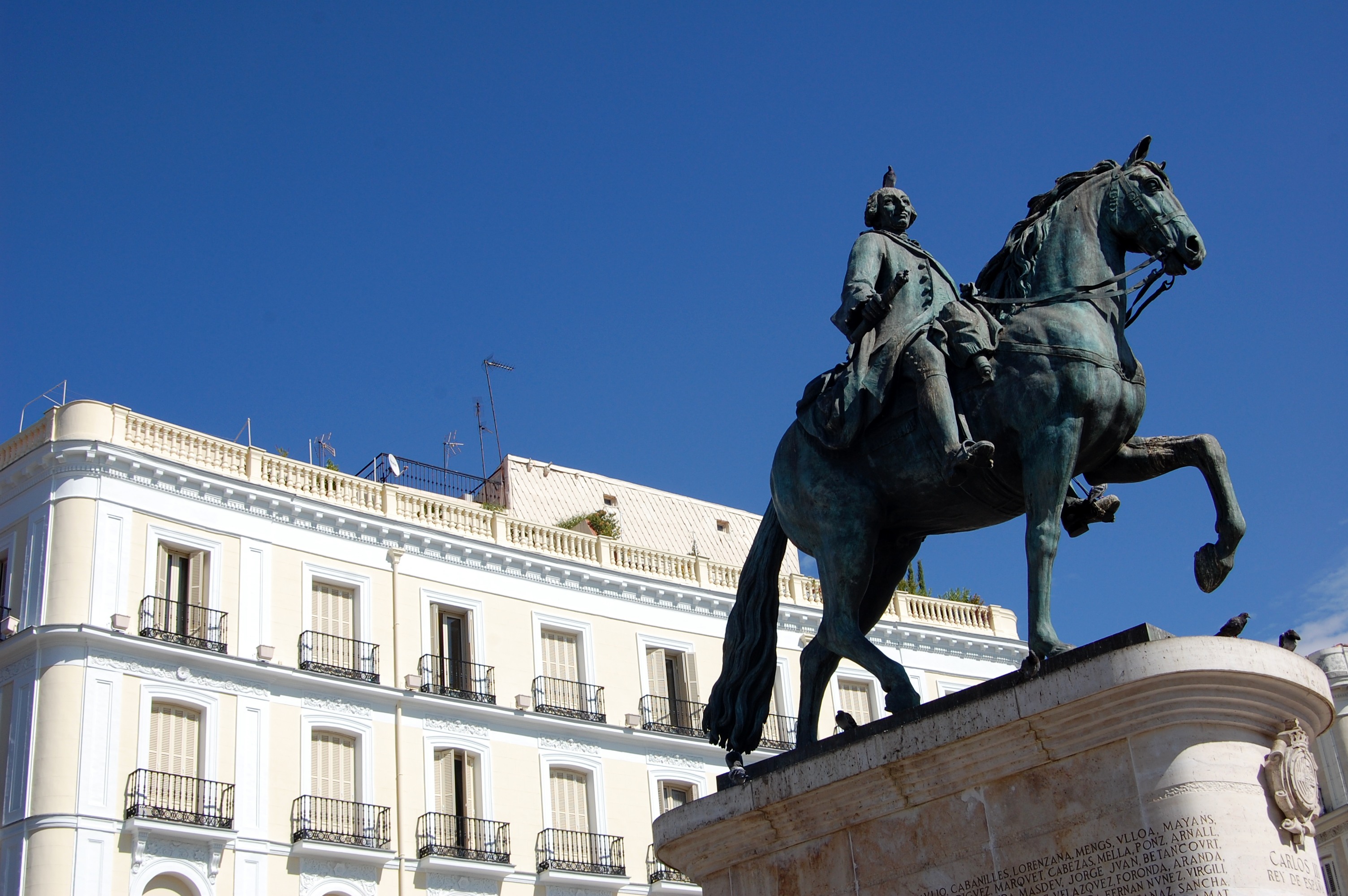
King Charles III
Across from King Charles, and founded by him in the 1760s, is what was Madrid’s first post office, but is now the county governor’s office. The building was also used by dictator Franco for his police headquarters.
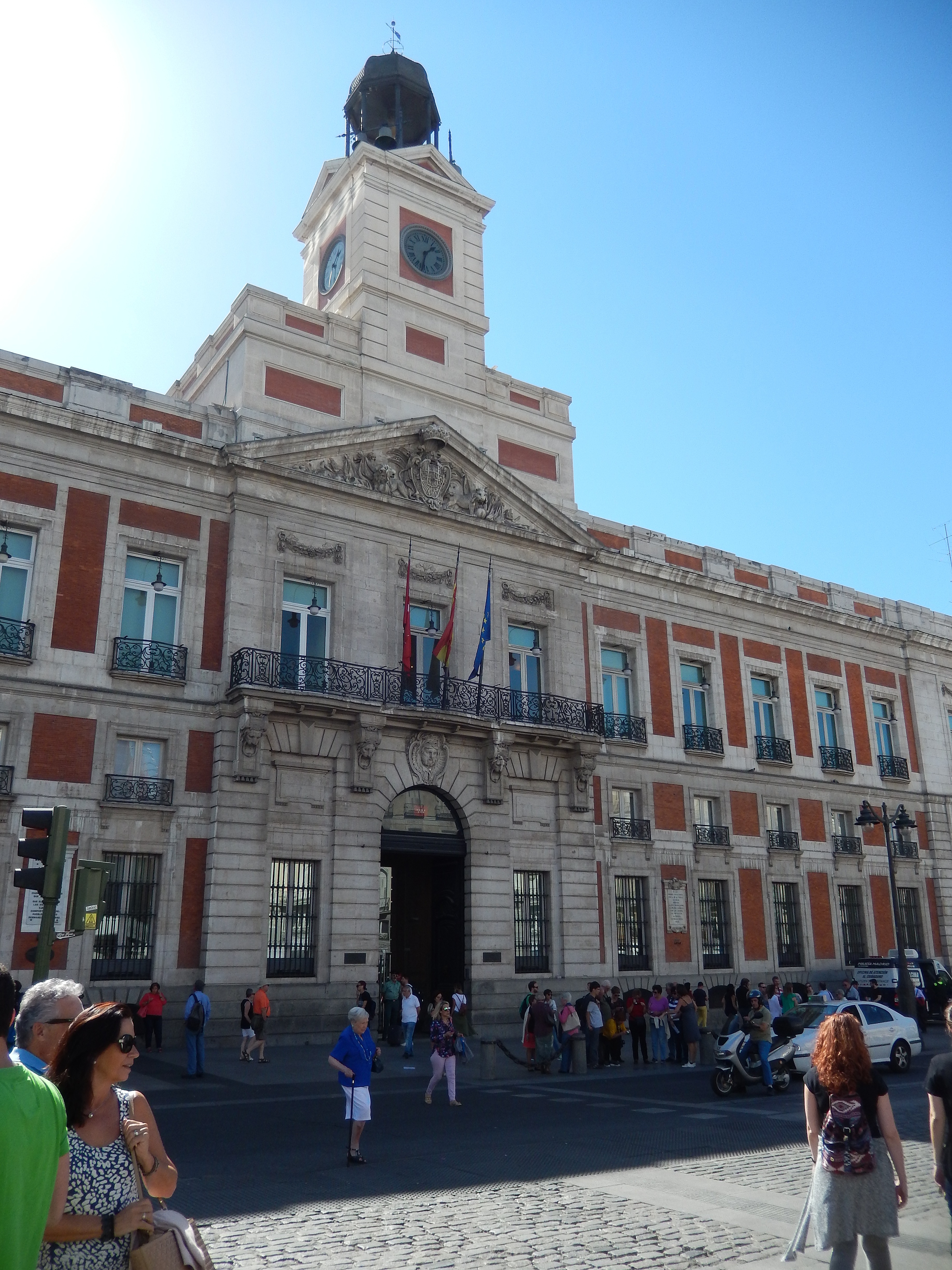
county governor’s office
And right in front of the building, the marker for “kilometer zero,” the symbolic centre of Spain…
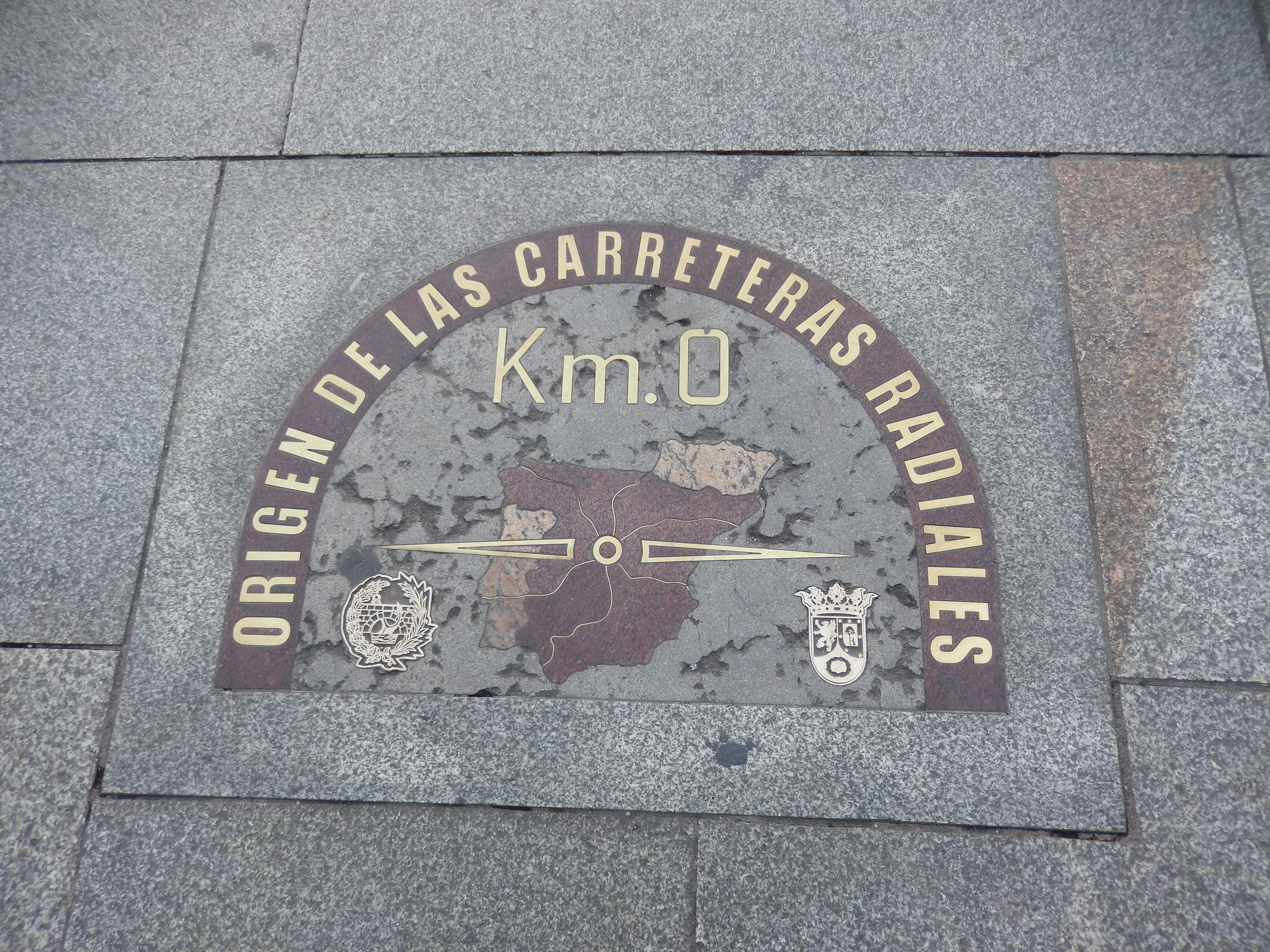
kilometer zero
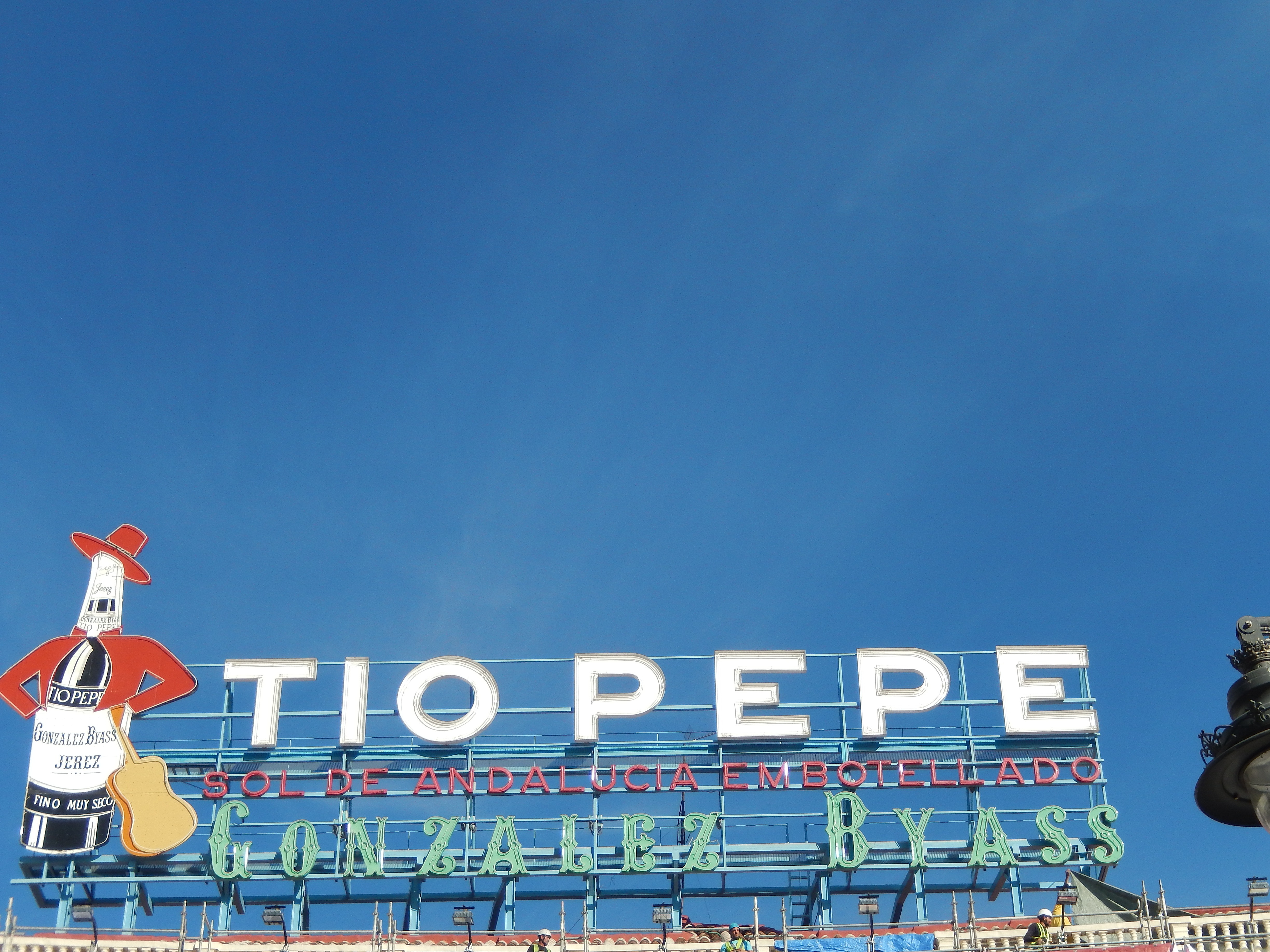
Tío Pepe is a brand of sherry, and this sign, in the Puerta del Sol, is a landmark
We wandered our way to the famous Prado Museum, getting a gelato along the way, enjoying the weather, taking note of a few interesting sights:
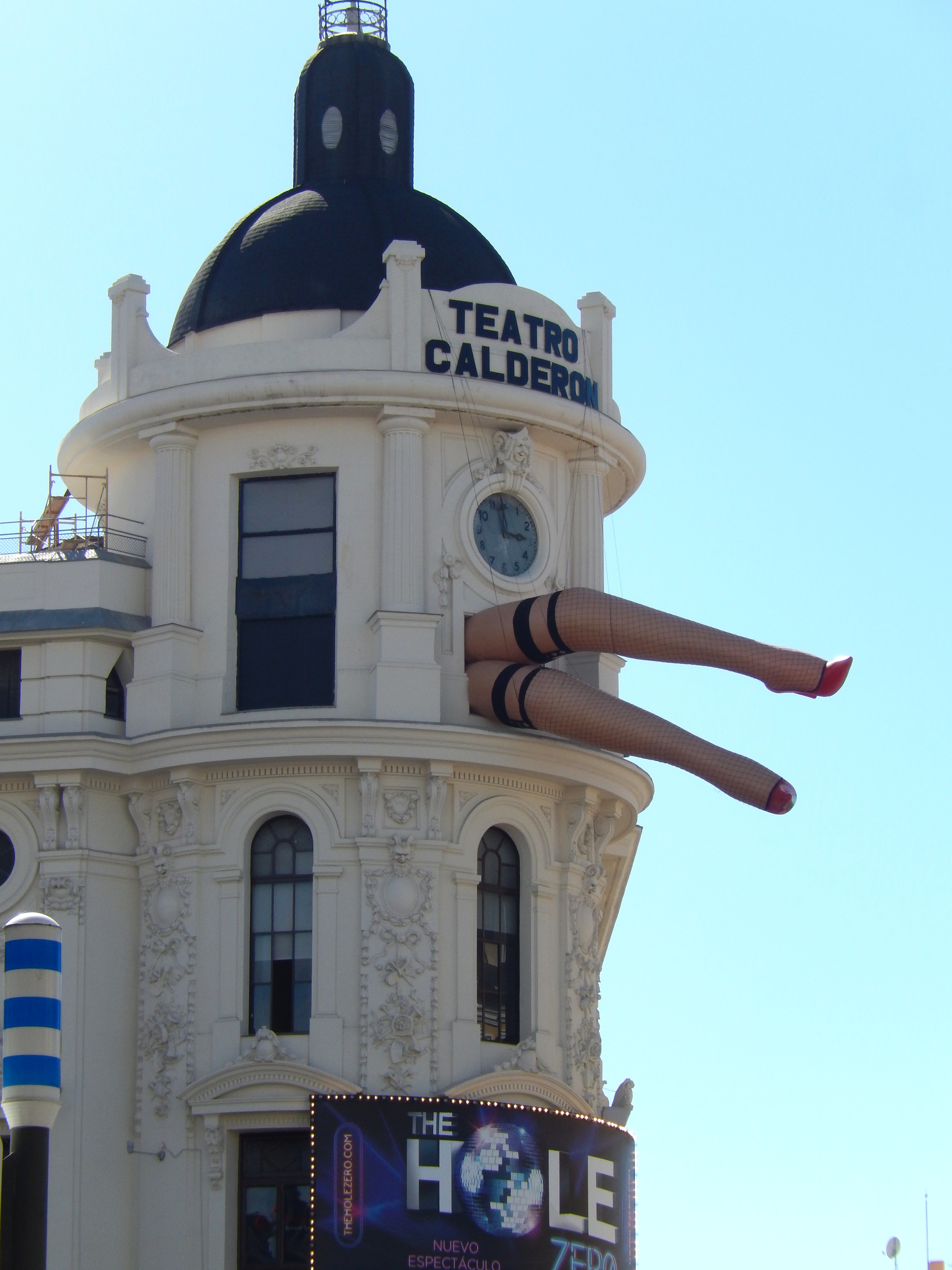
I found this amusing 🙂
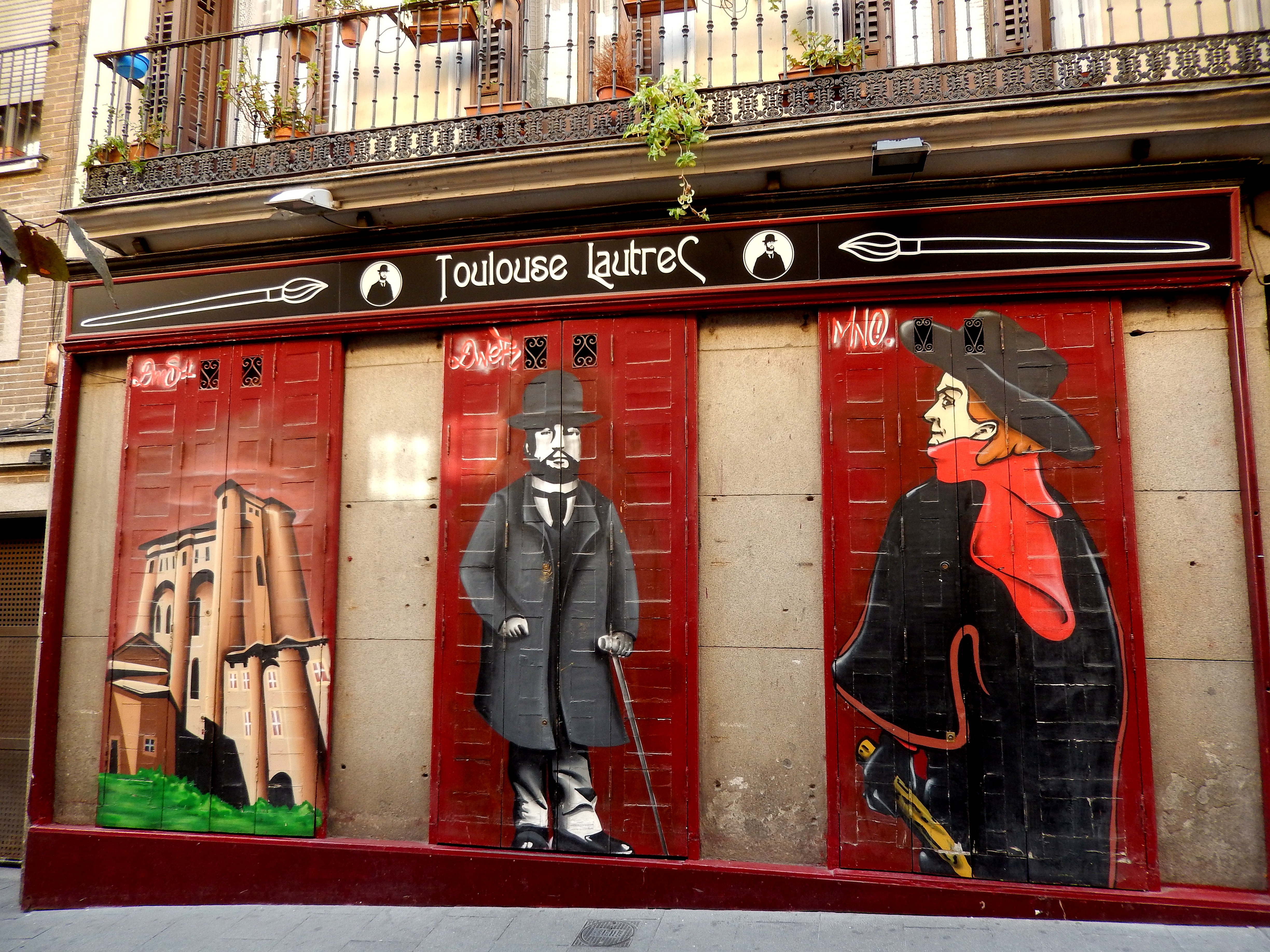
and I loved this street art
The Prado is one of the top museums in the world, it’s huge, and there is more to see than can be seen in one day. We decided to concentrate on the Spanish painters, and spent a full three hours taking in as much as we could. No photos allowed.
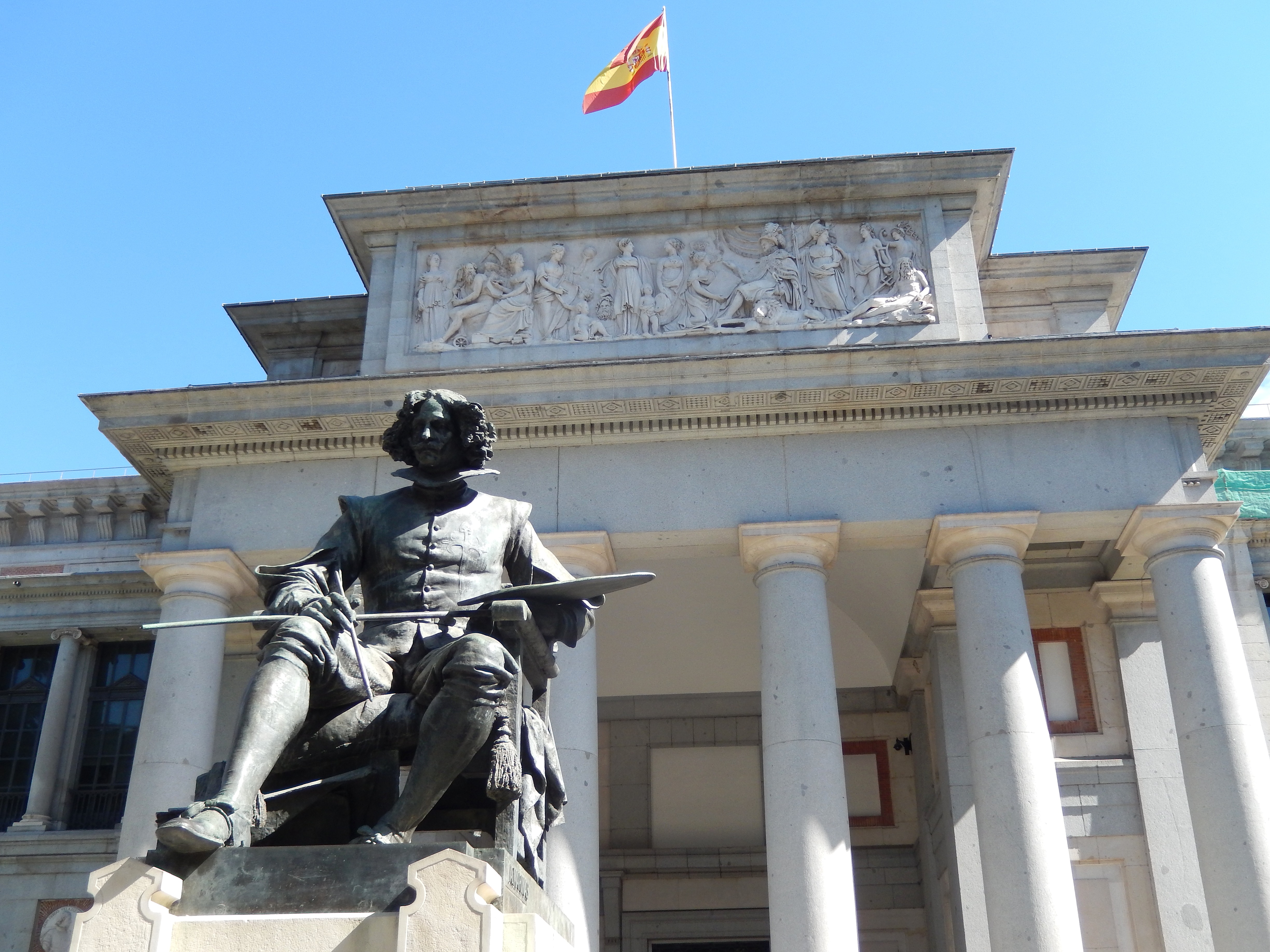
Spanish painter Diego Velázquez, outside the Prado
When we exited the museum we were tired, thirsty and hungry. We wandered a little …
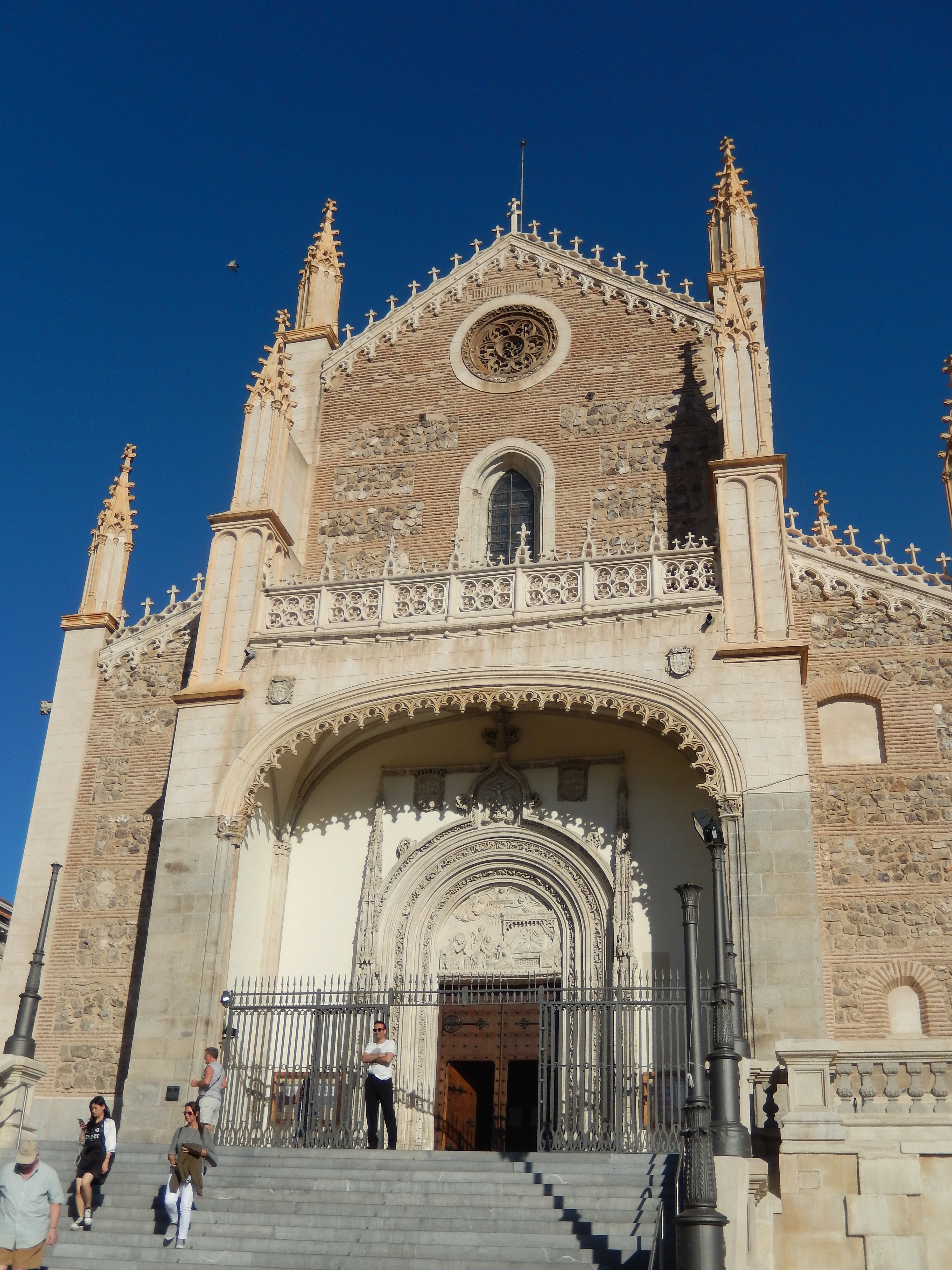
San Jeronimos behind the Prado
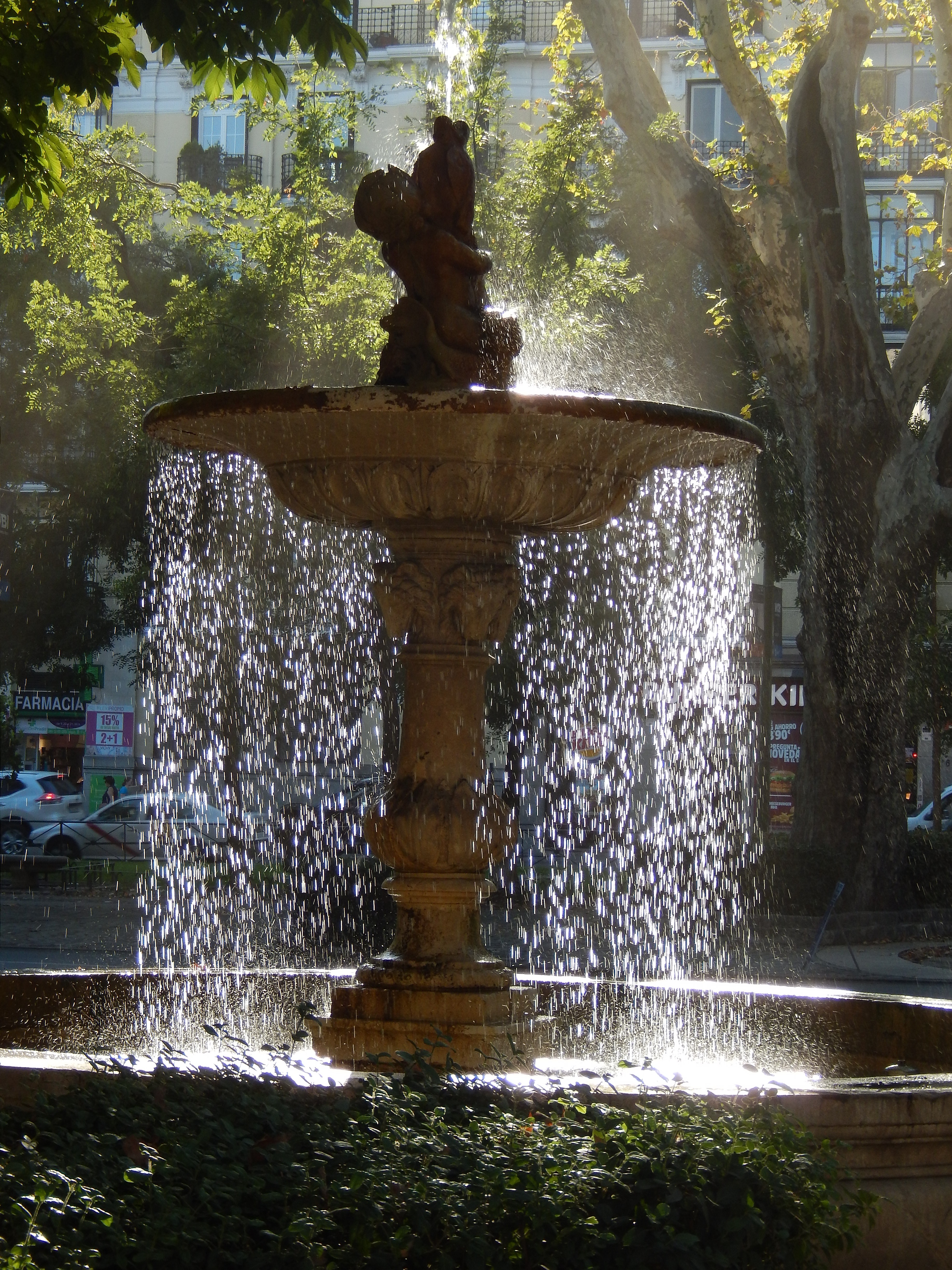
fountain in front of the Prado
..and settled at an outdoor bar to revive ourselves with a couple of tapas and sangria. It turned out Jaime had to come into the city after work, so we arranged to meet him at an apartment they had just recently bought for renting out (if you are ever in need of a place to stay in Madrid). We walked for an enjoyable half hour to get there…

not sure who these people are, watching the street
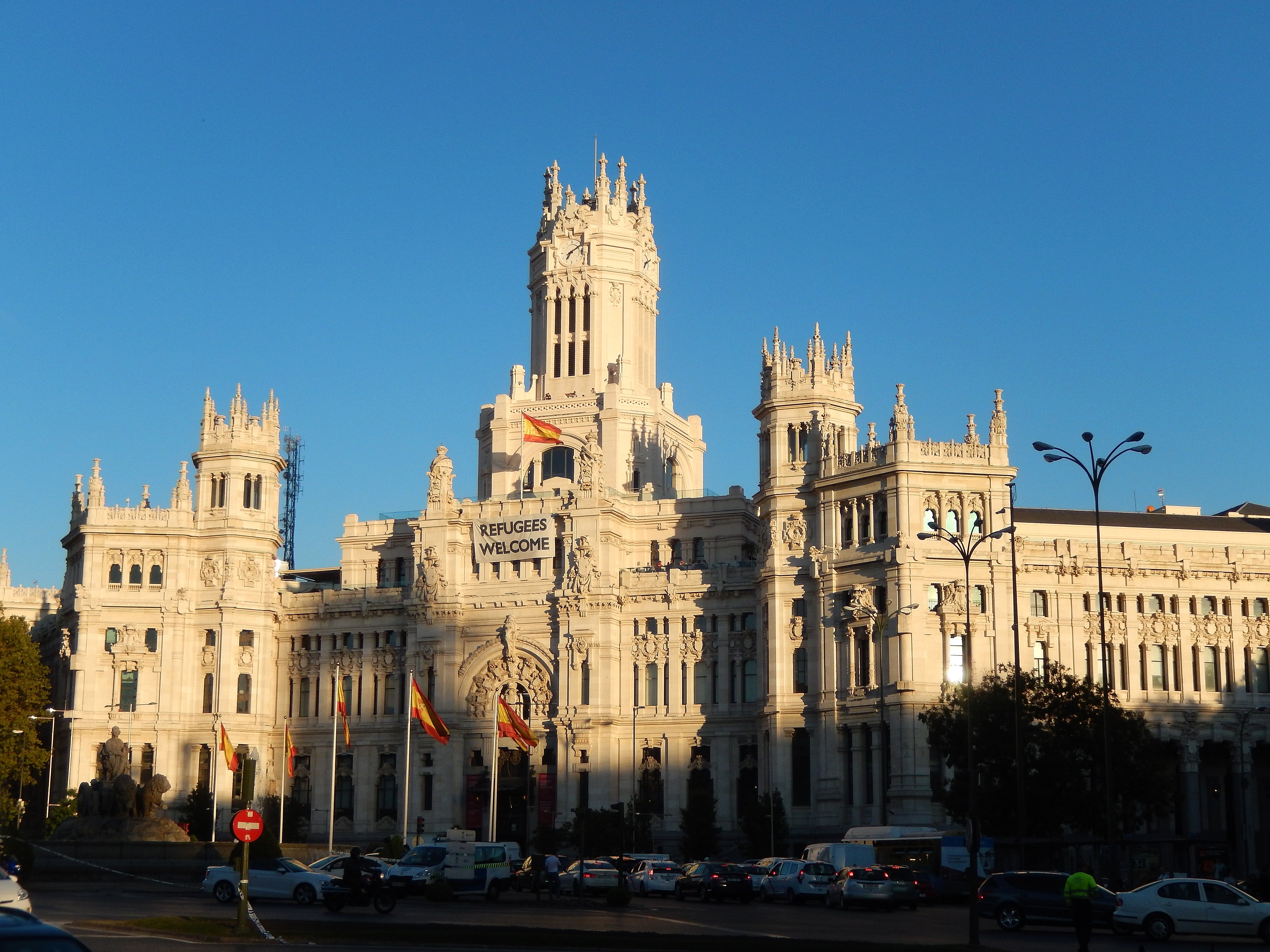
the gorgeous Madrid Town Hall
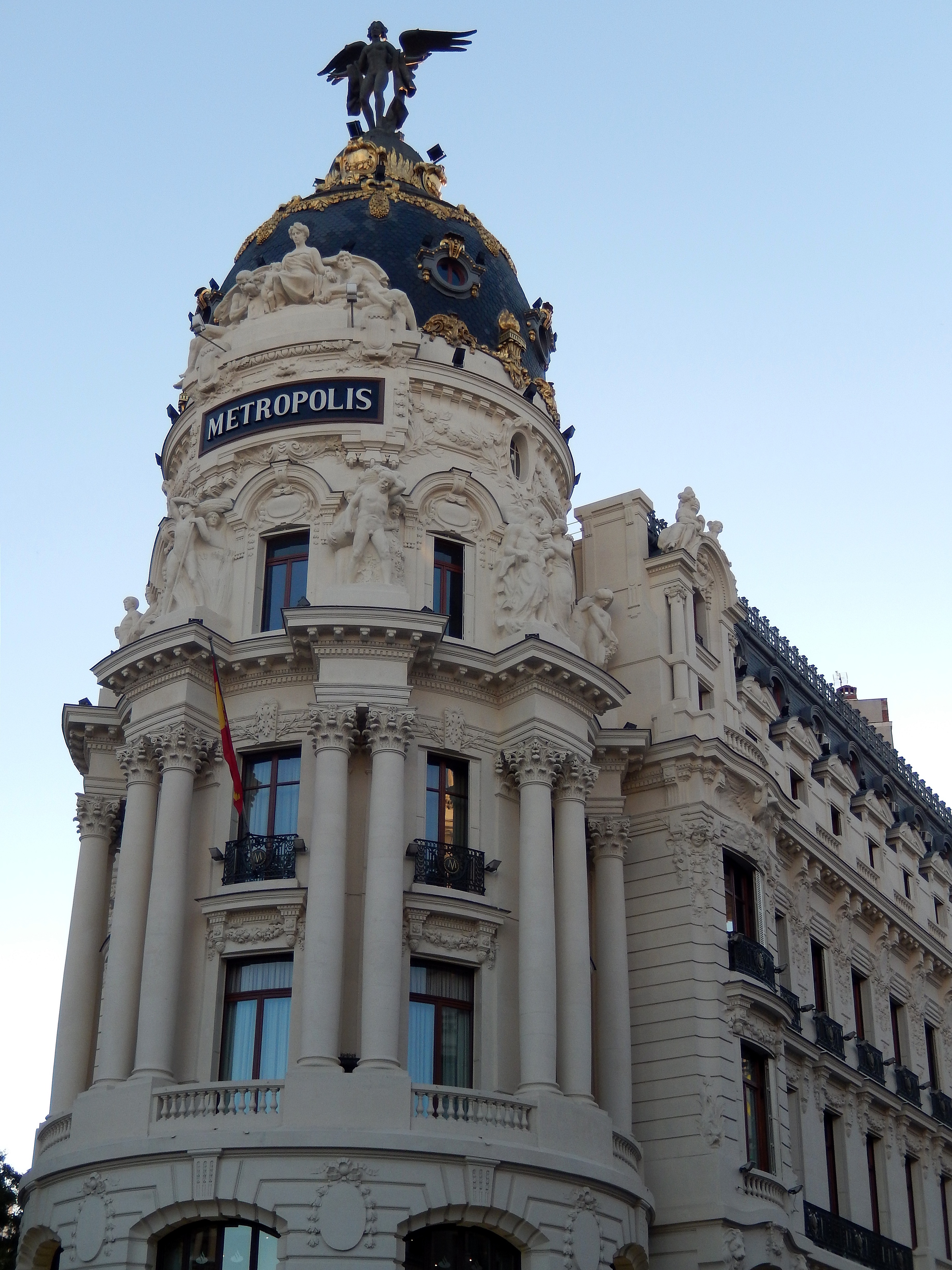
the Metropolis is an office building
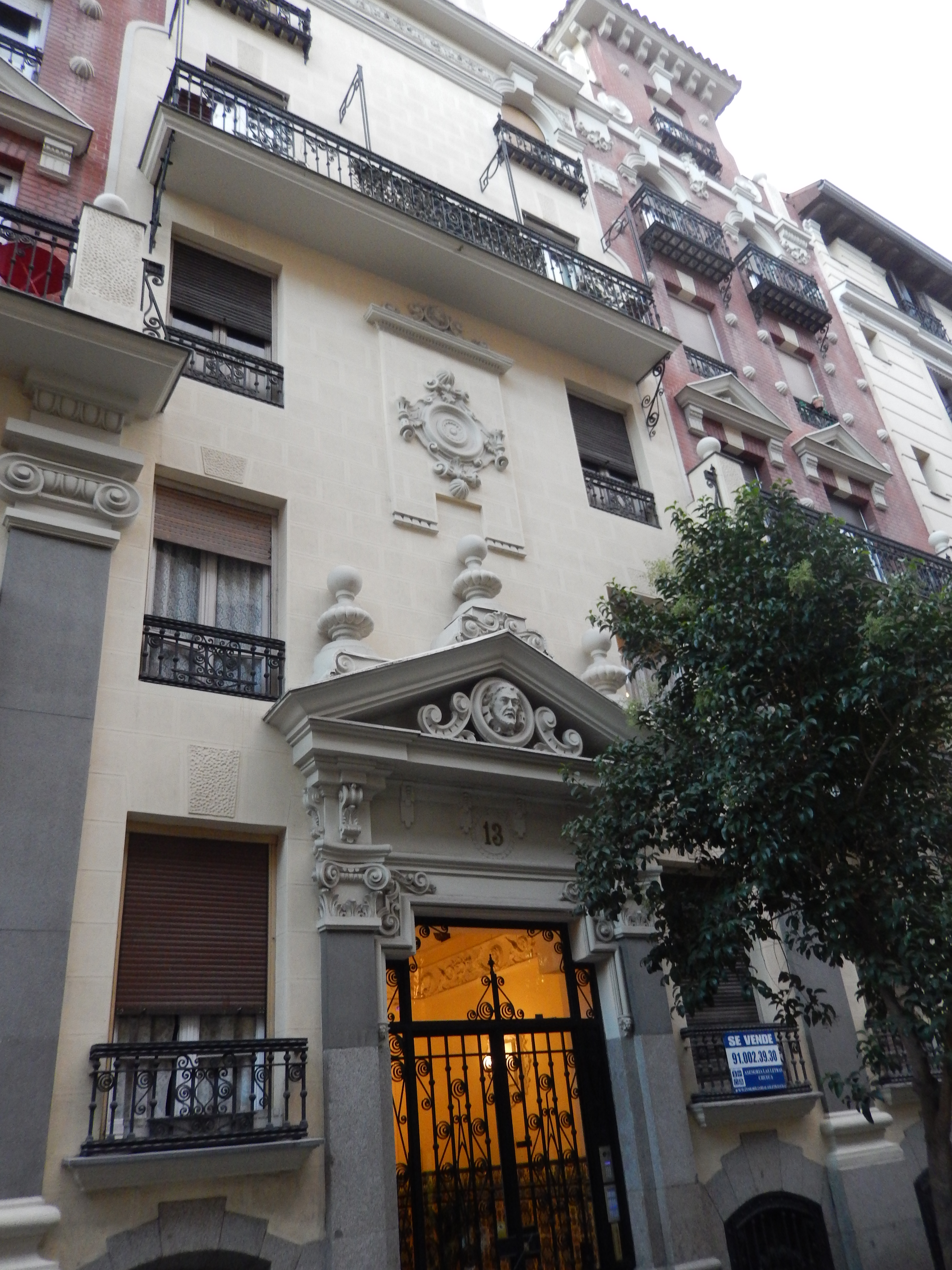
Jaime & Marta’s apartment for rent is in this building
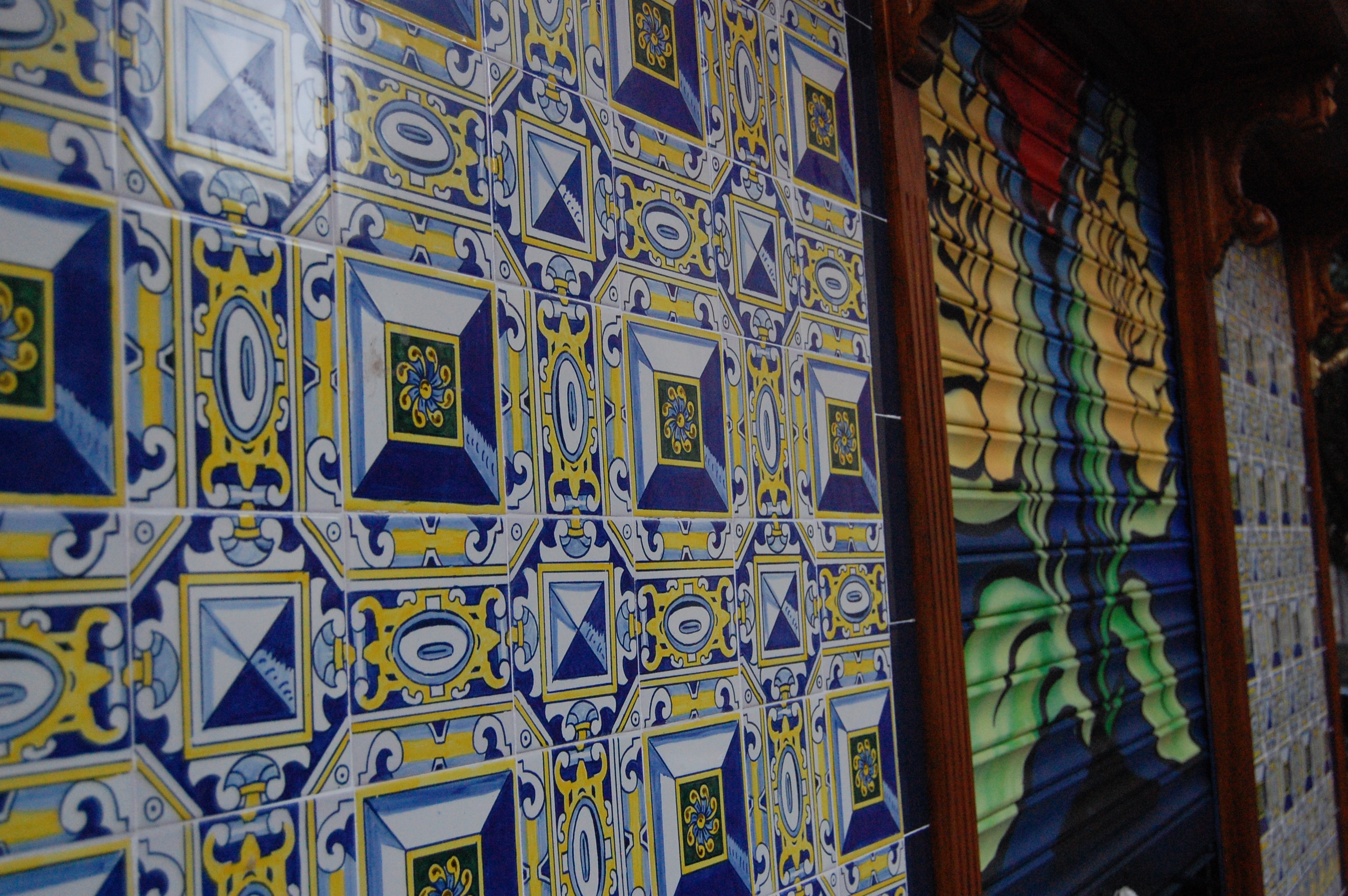
beautiful tile work in, and beside, their building
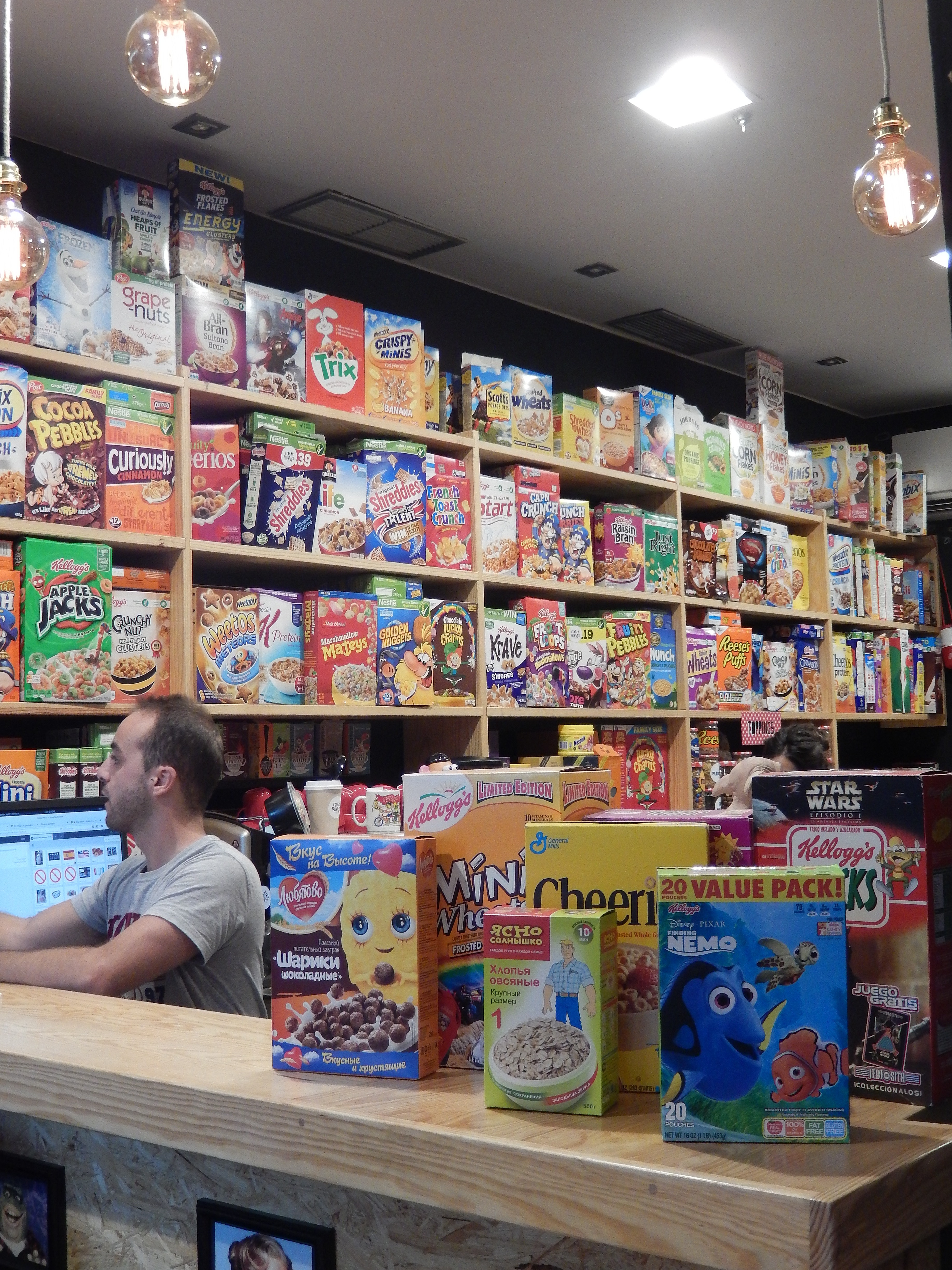
the craziest restaurant I’ve ever seen, serving (solely) American cereal
We went back to Jaime and Marta’s home and enjoyed an evening in with the family.
The next morning we were up and back on the bus and subway to Puerto del Sol. When we got there, we discovered a demonstration going on.. interestingly, Rick Steves says about the square, “..it’s a popular site for political demonstrations. Don’t be surprised if you come across a large, peaceful protest here.” And we did.
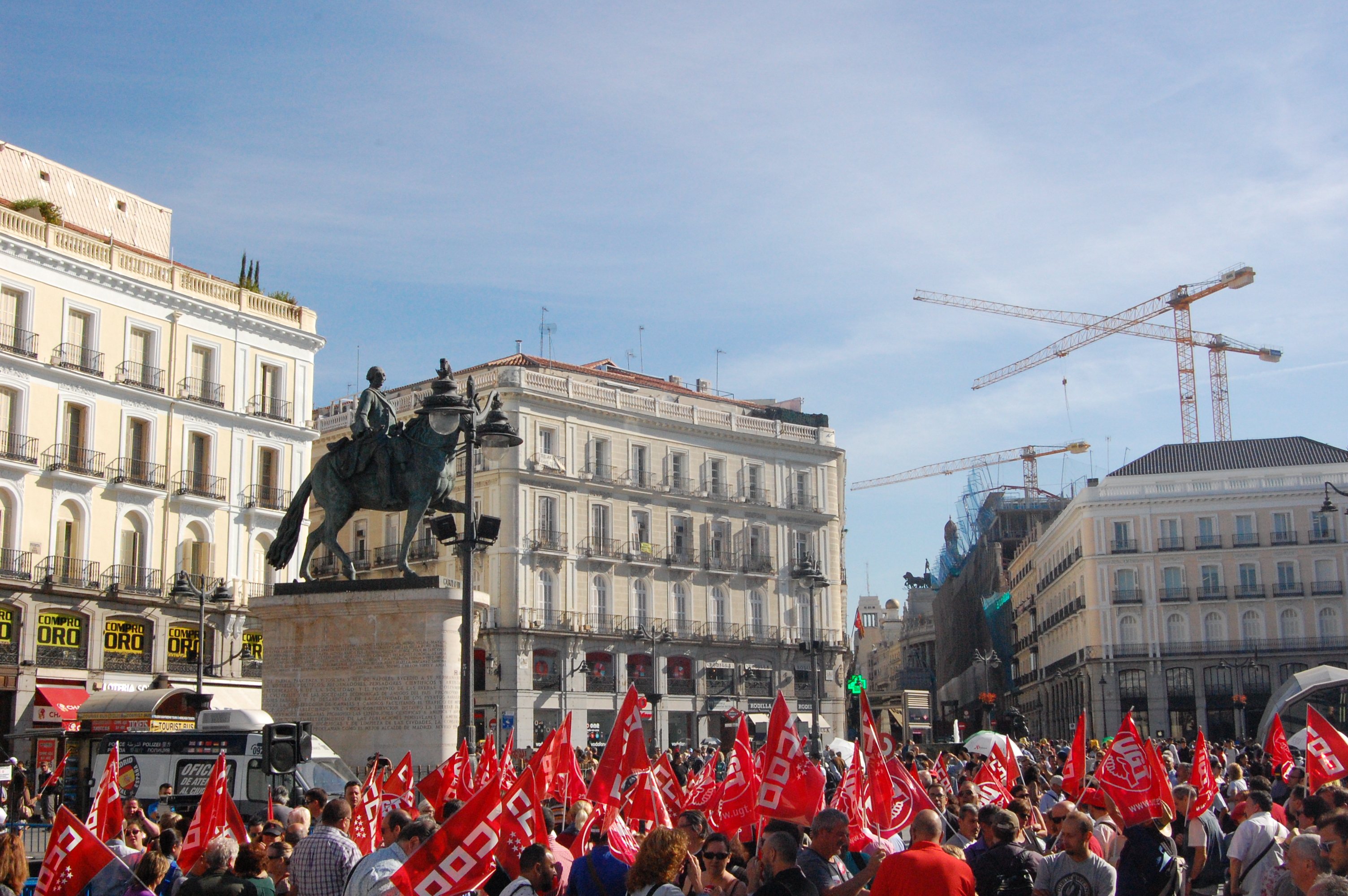
demonstration in Puerta del Sol
We stopped in at the corner confitería, La Mallorquina, for their famous cream-filled Napolitana pastries…
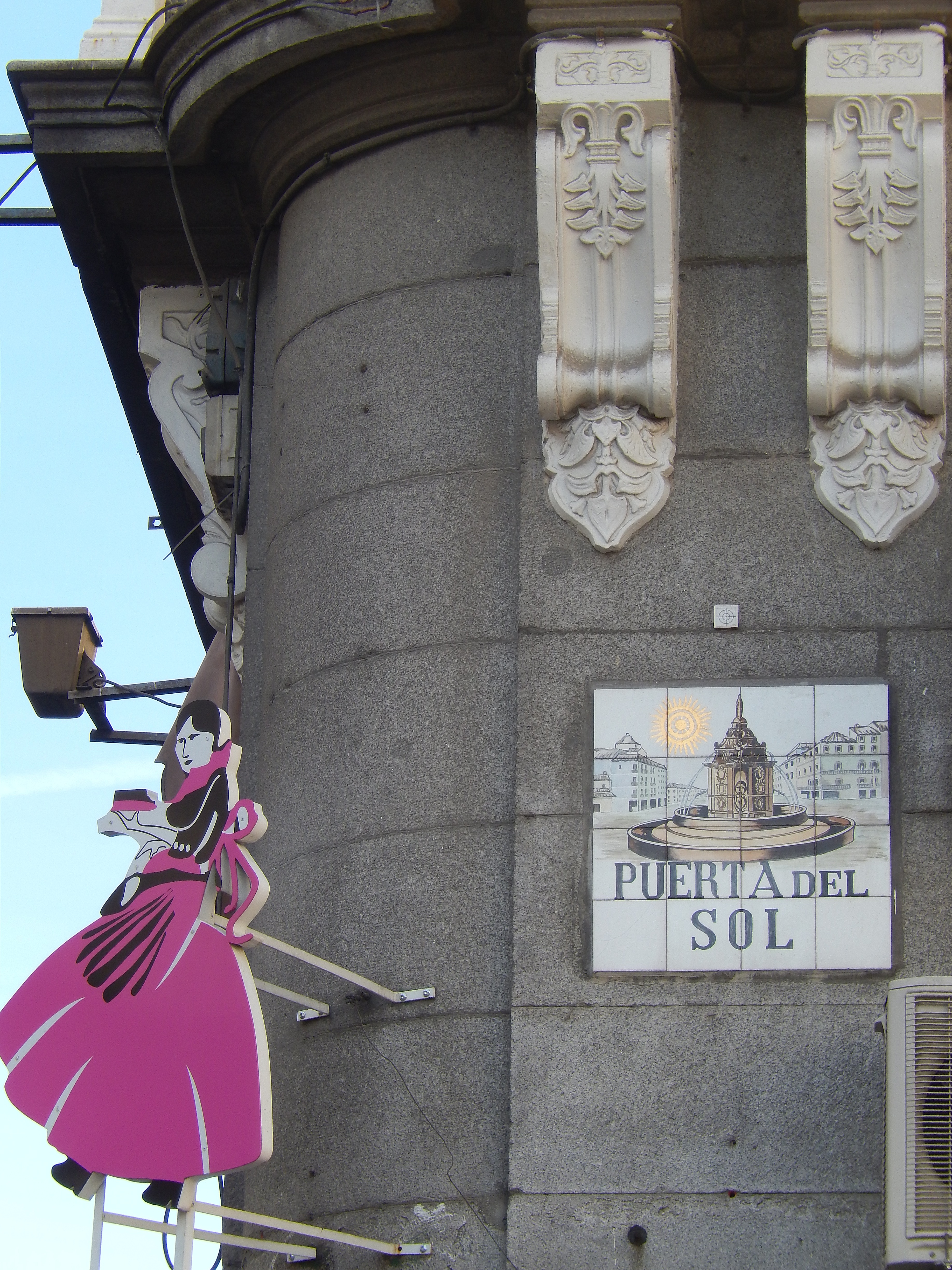
La Mallorquina (means the “girl from Mallorca”) shop sign
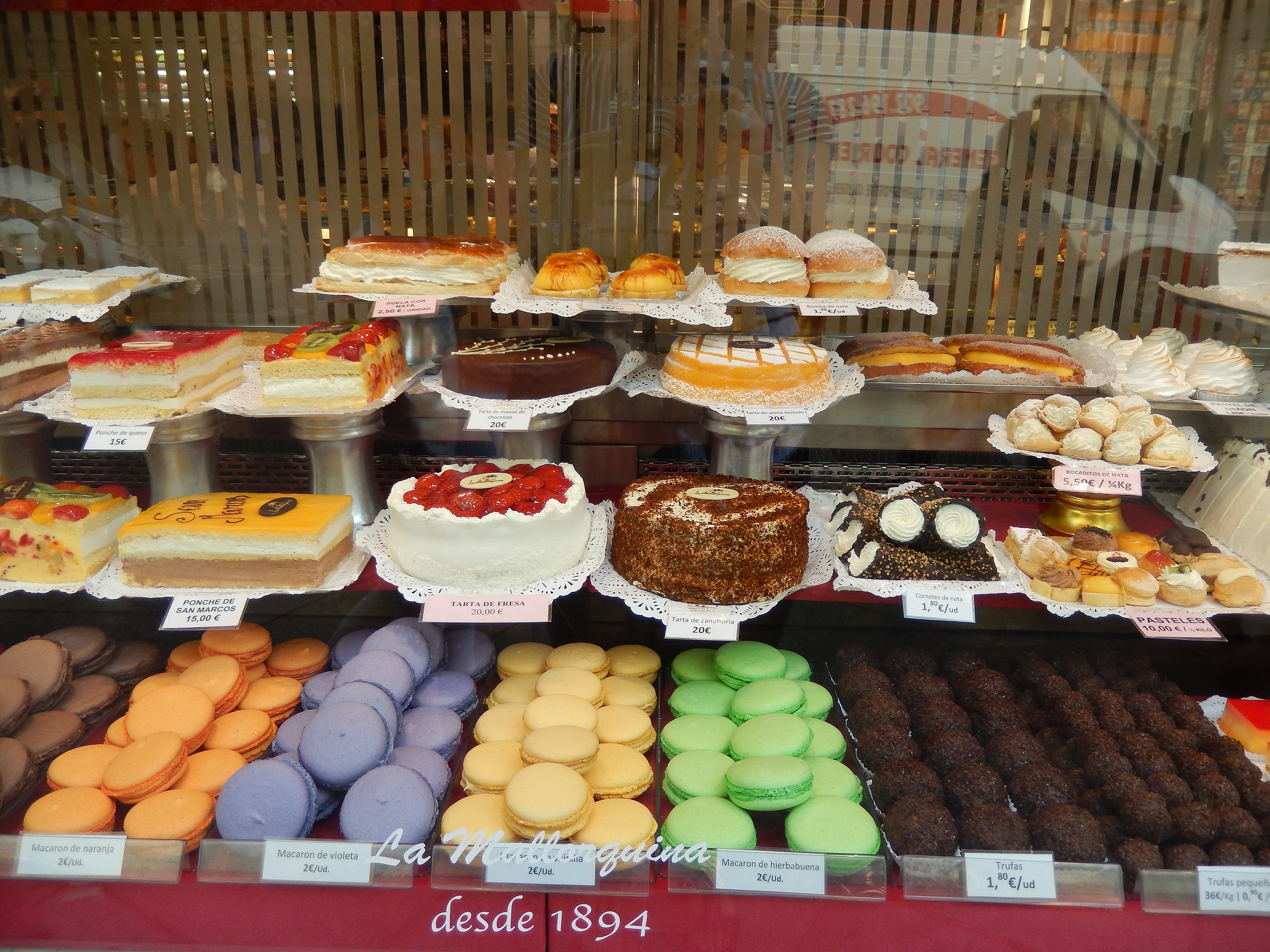
hard to choose just one treat
…and checked out Casa de Deigo, in the business of selling fans, umbrellas and walking sticks since 1858..

beautiful Spanish fans
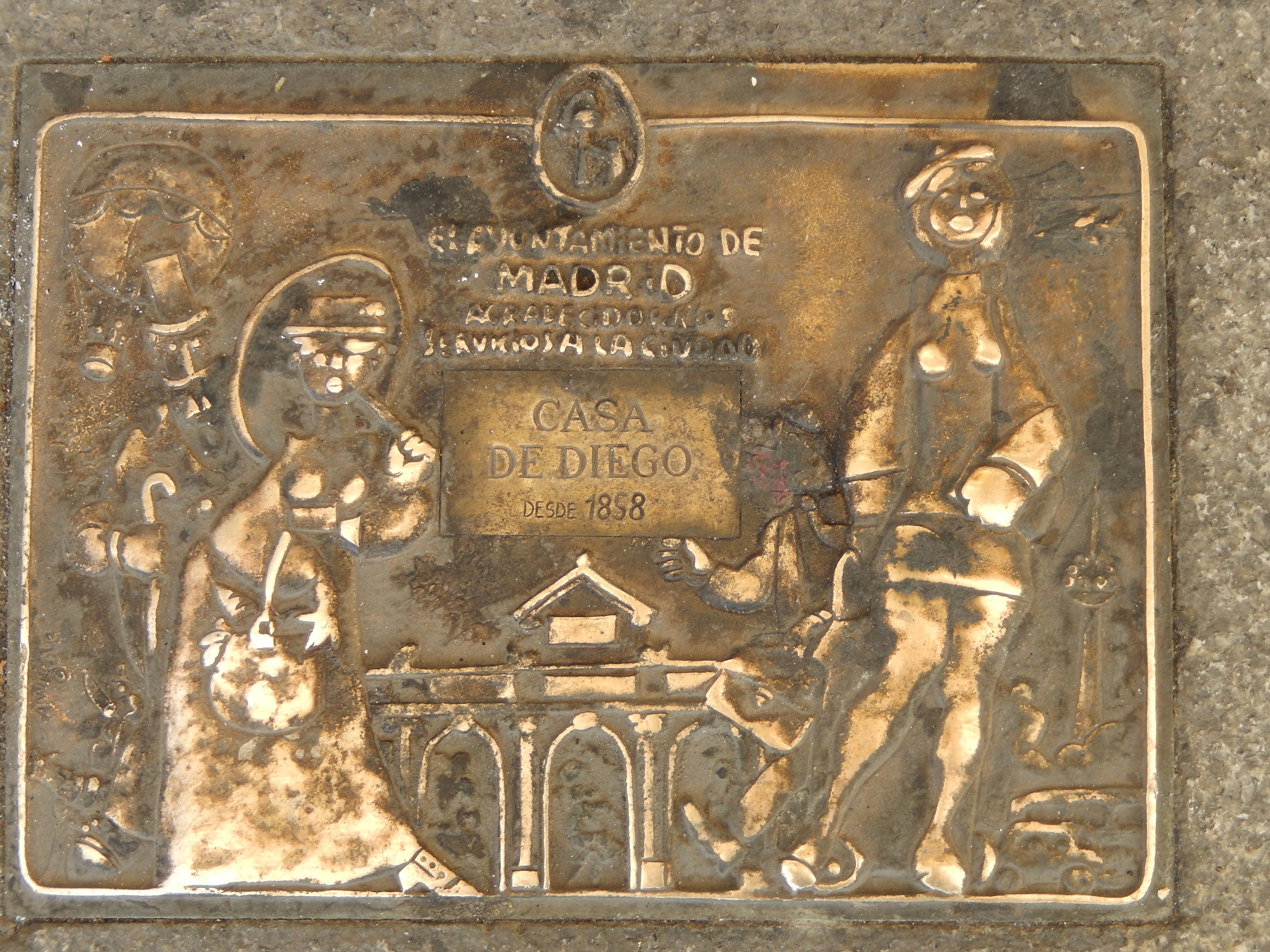
loved the old marker in the street
And then, following Rick Steves’ walking tour, we headed towards Plaza Mayor… I loved the street signs: Medieval street signs ..included pictures so the illiterate could ‘read’ them.
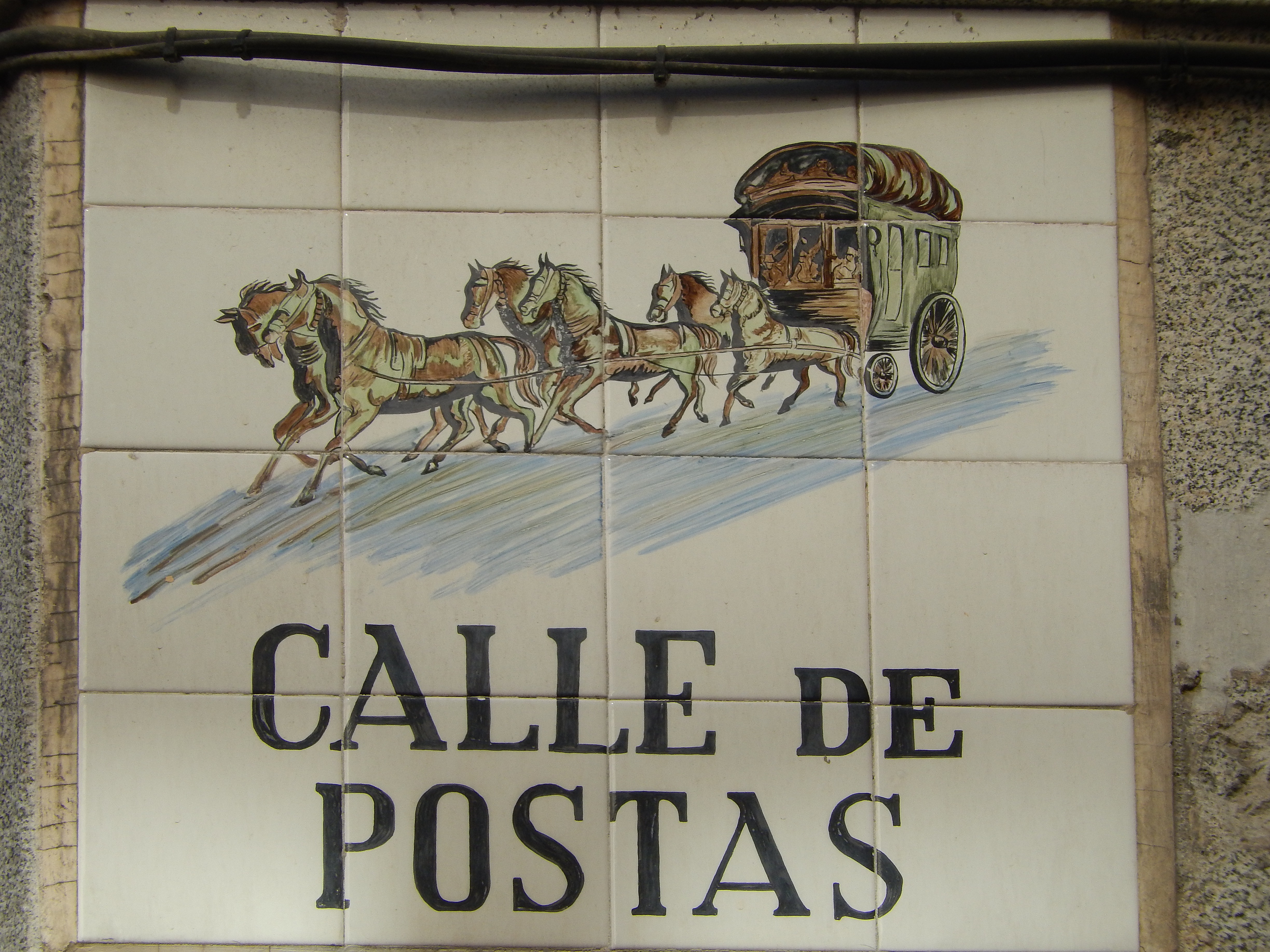
this street sign shows the post coach heading for that first post office in Puerta del Sol
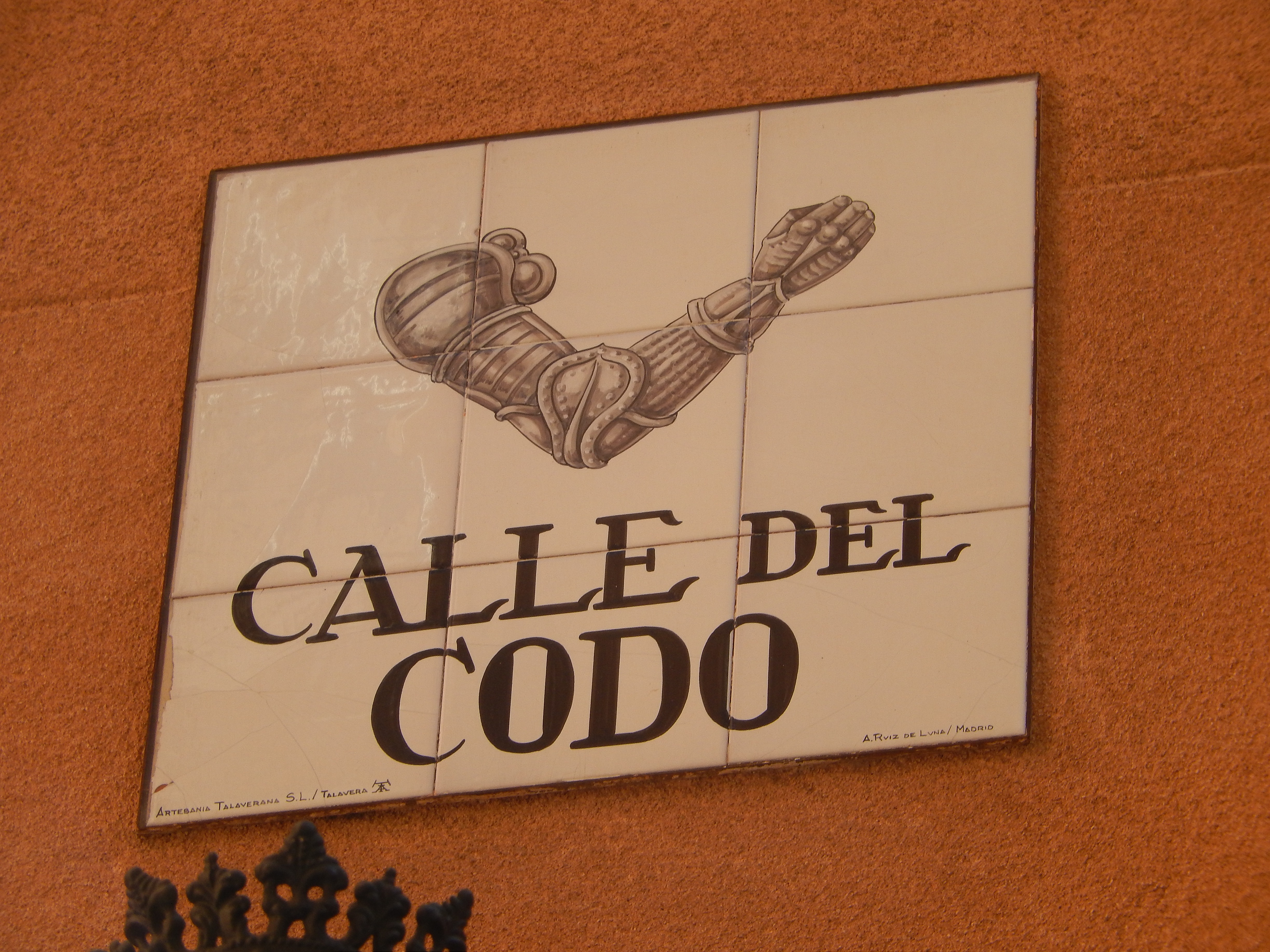
this street used to sell armor
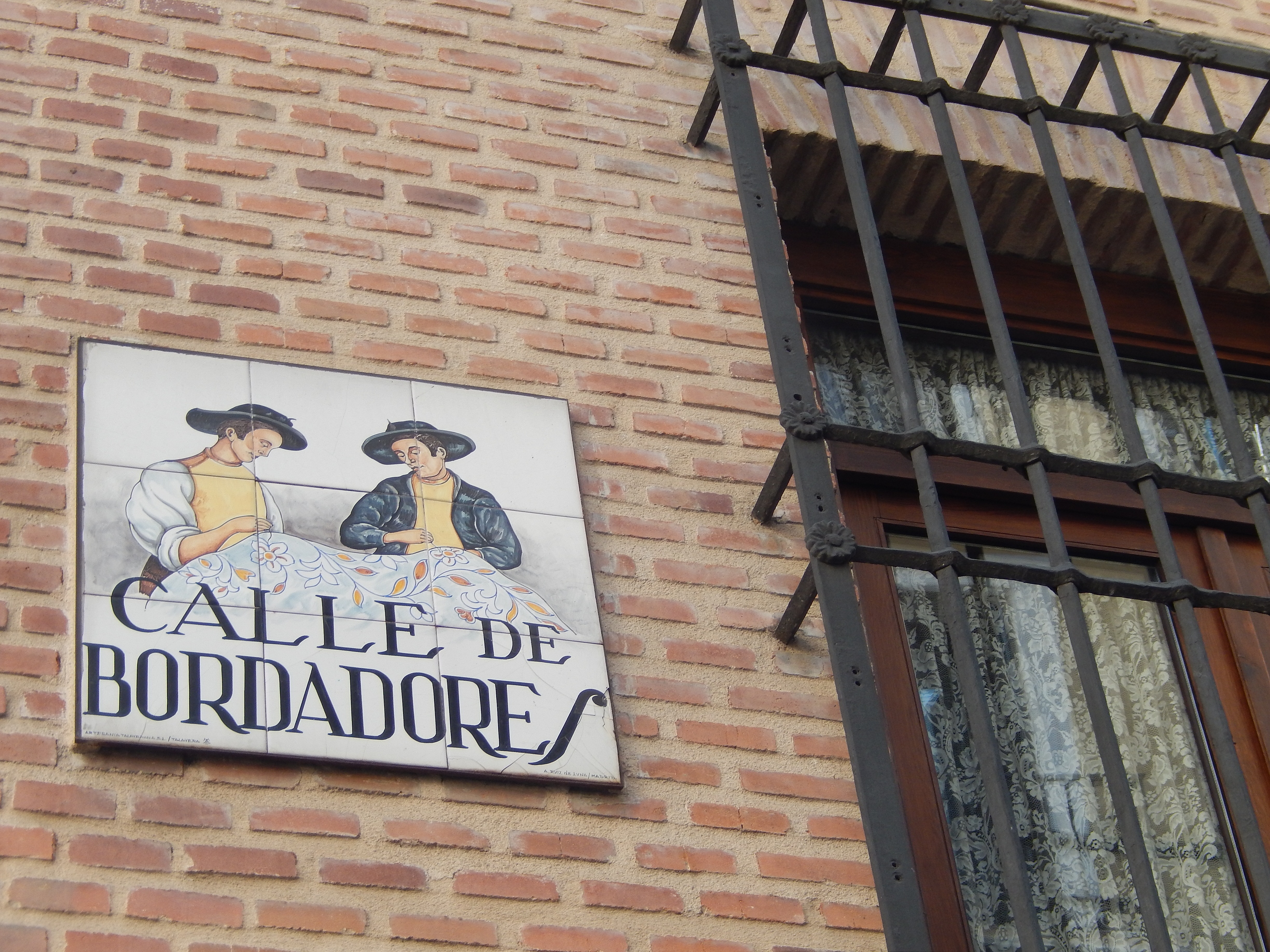
and on this street were the lace-makers
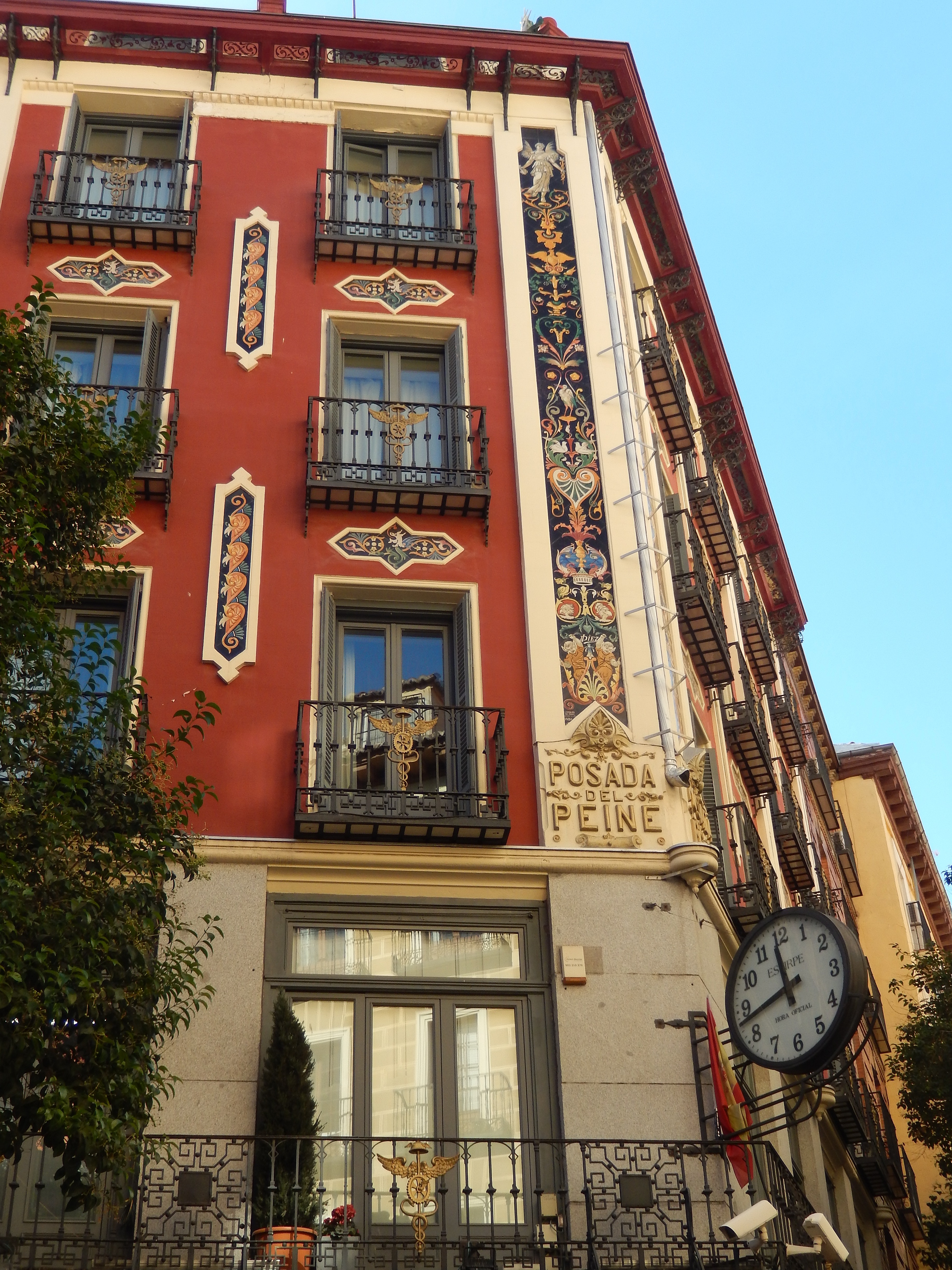
such beautiful buildings…
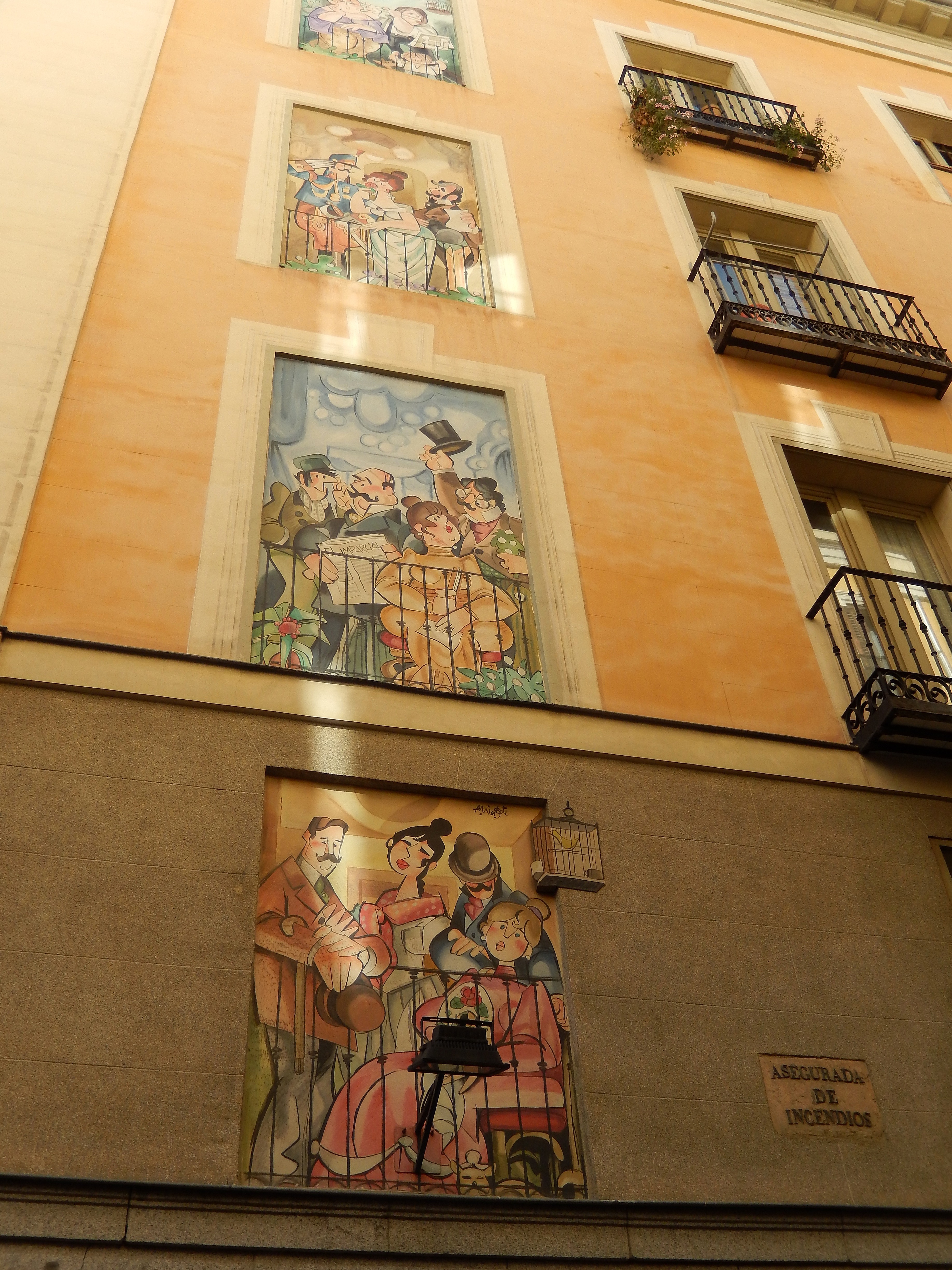
…and frescoed walls
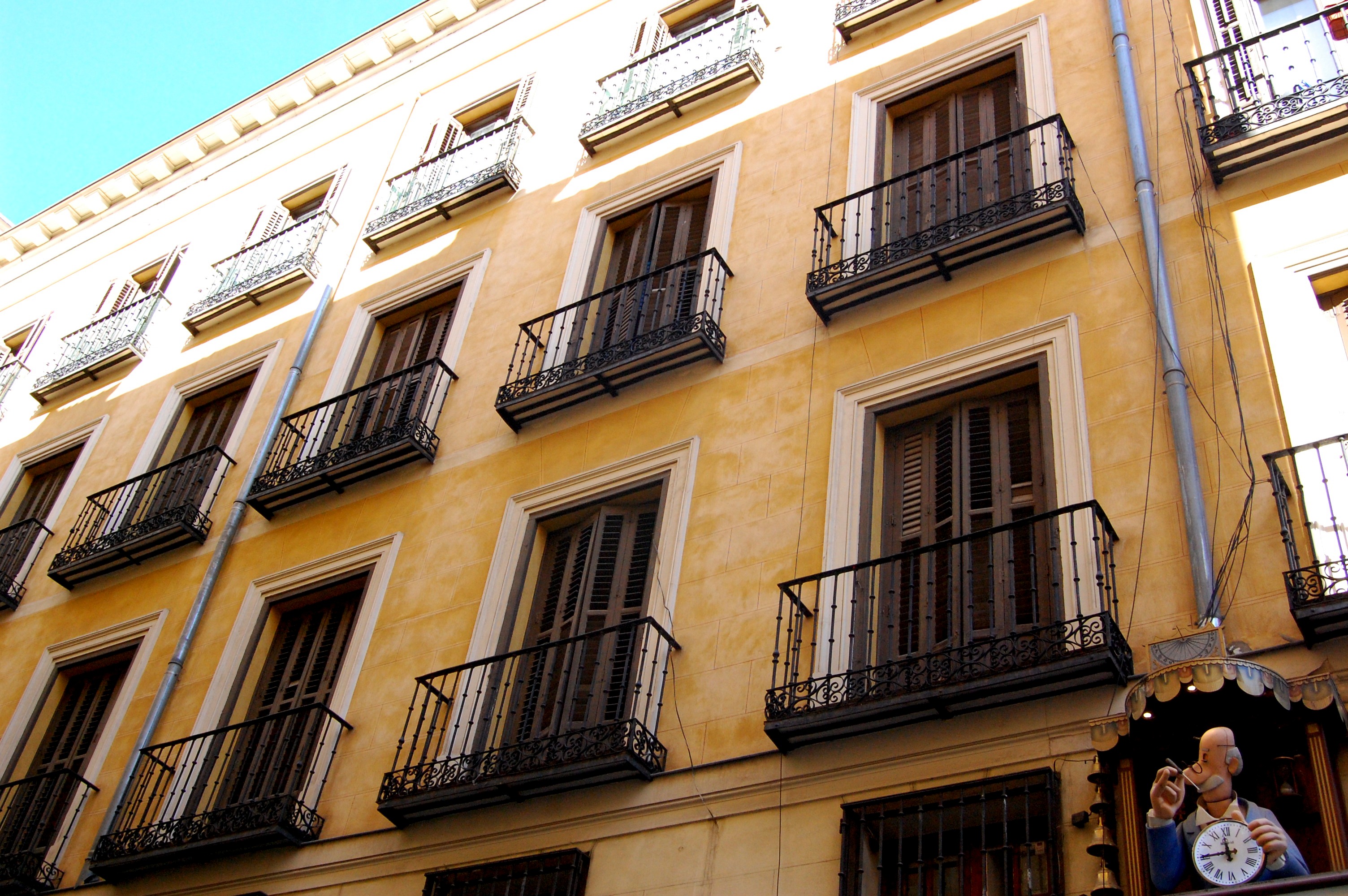
note the clock-maker in the lower right corner
…finally, through the arcade into Plaza Mayor, a vast, cobbled, traffic-free example of 17th-century Spain. In medieval times, this was the city’s main square, where much history was played out: bullfights, fires, royal pageantry, and events of the gruesome Inquisition.
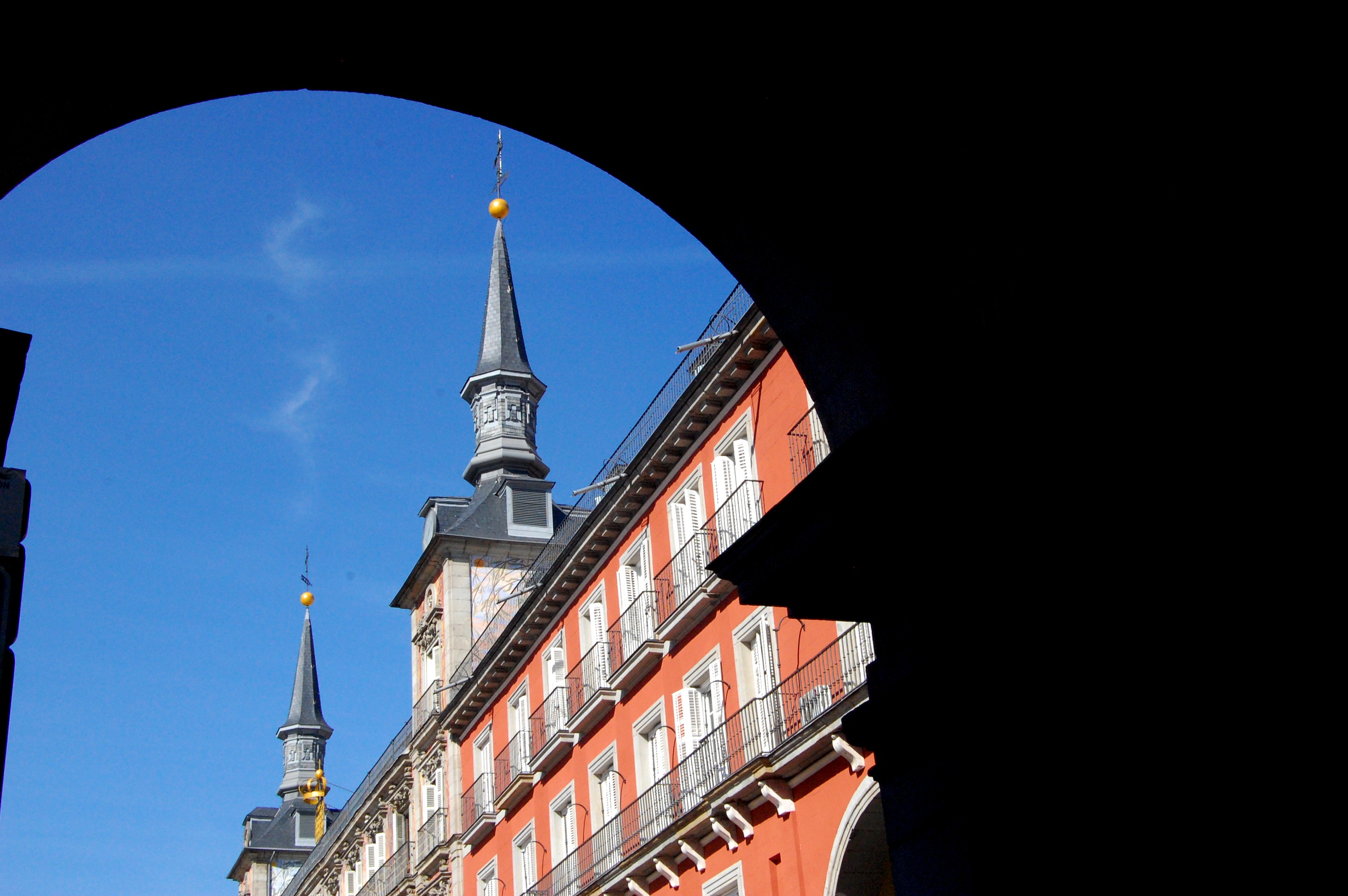
looking through the arcade into Plaza Mayor

Casa de la Panadería is a municipal and cultural building in square of mainly private apartments
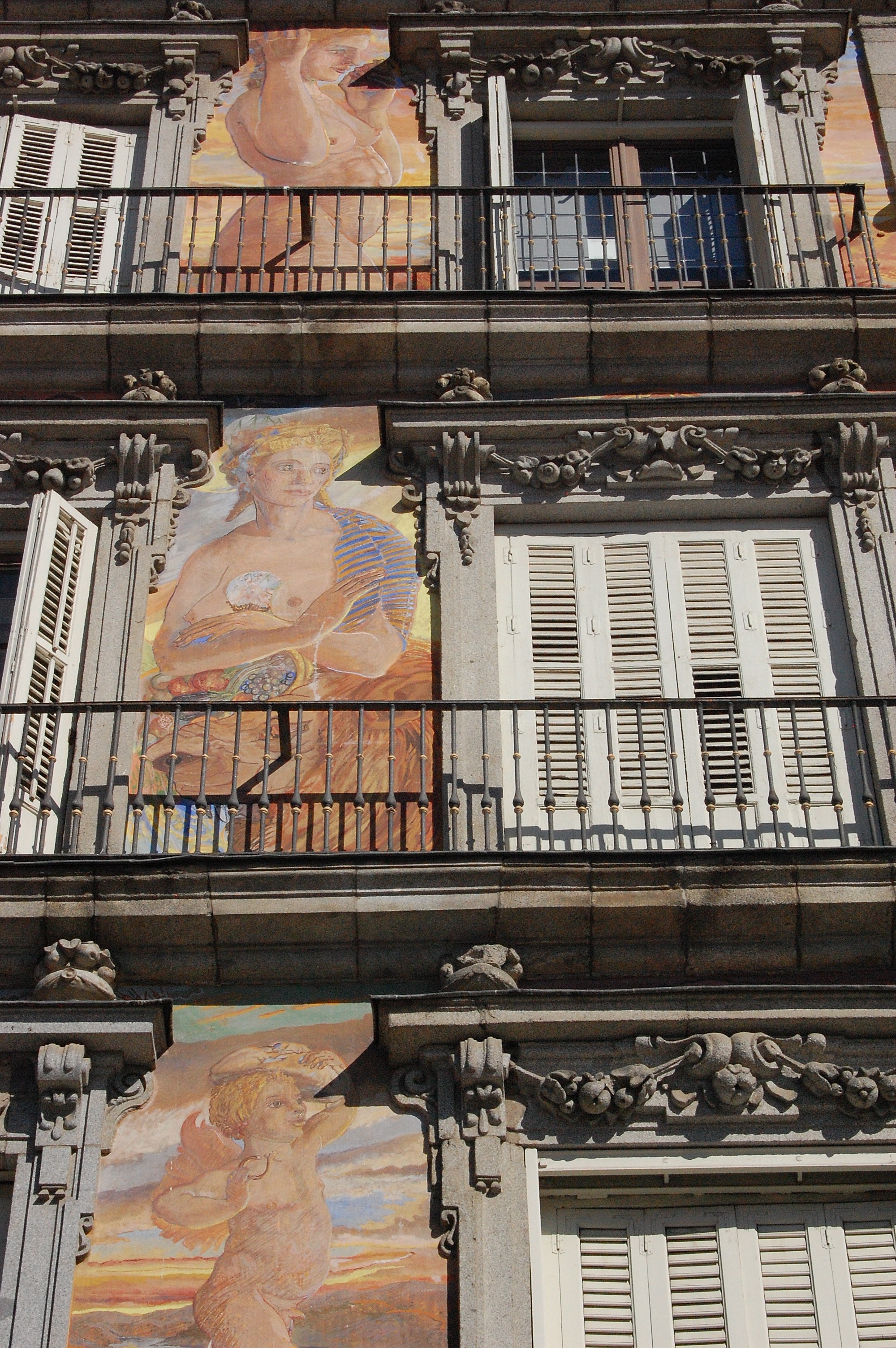
great frescoes on this building
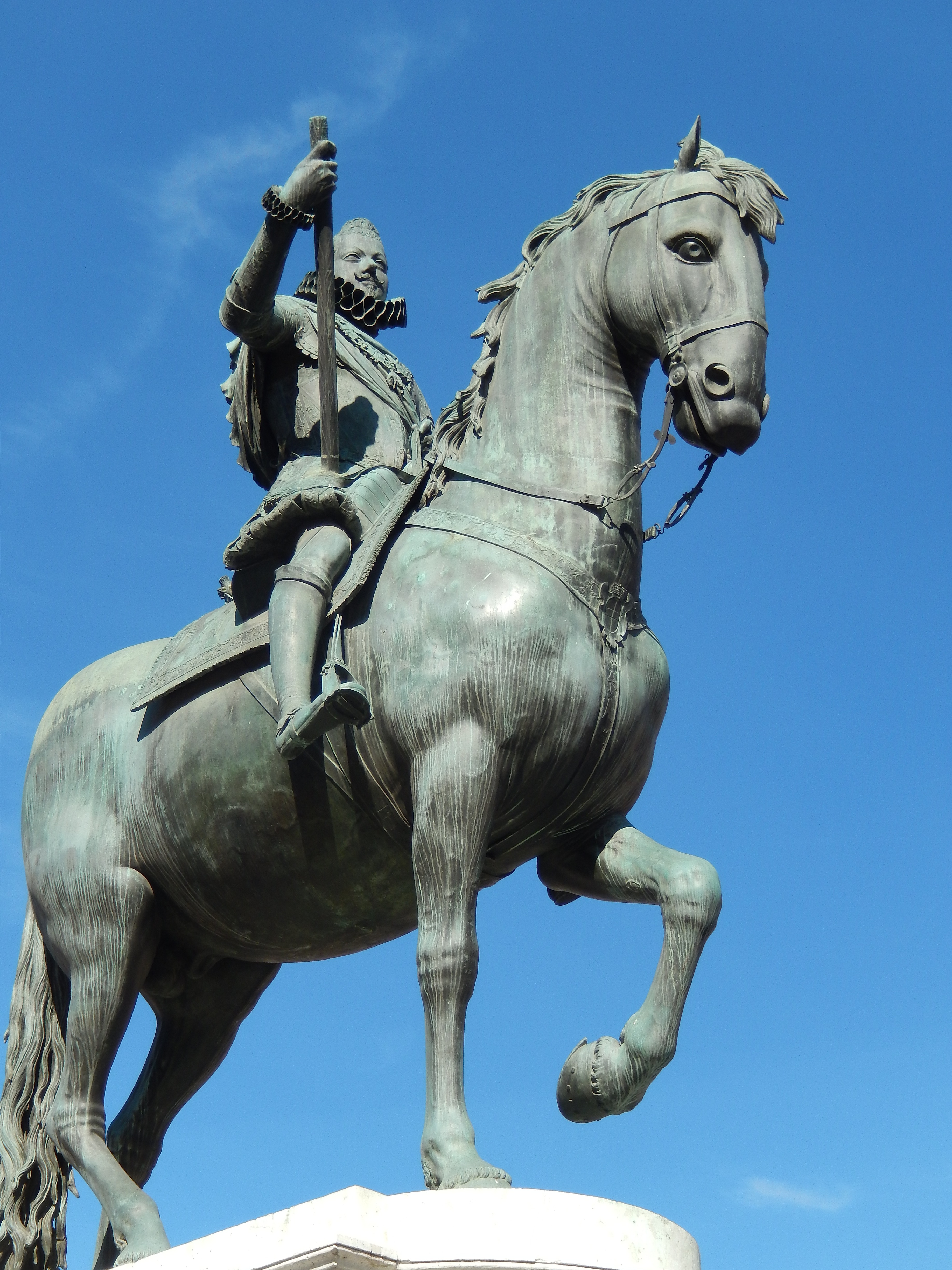
in the centre of the square, Philip III, who transformed the medieval marketplace into a Baroque plaza
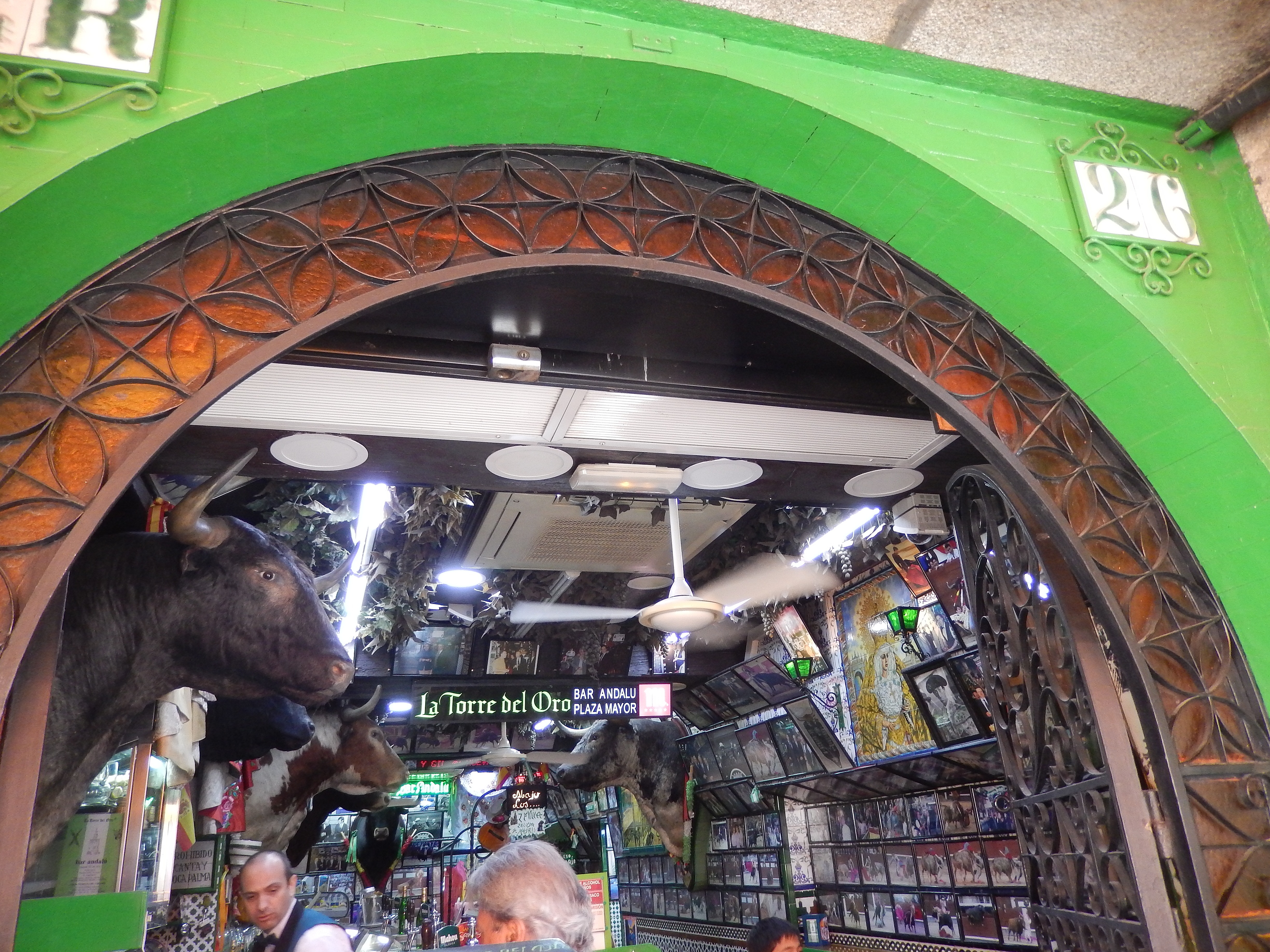
La Torre del Oro Bar Andalú, dedicated to bullfighting, in every detail
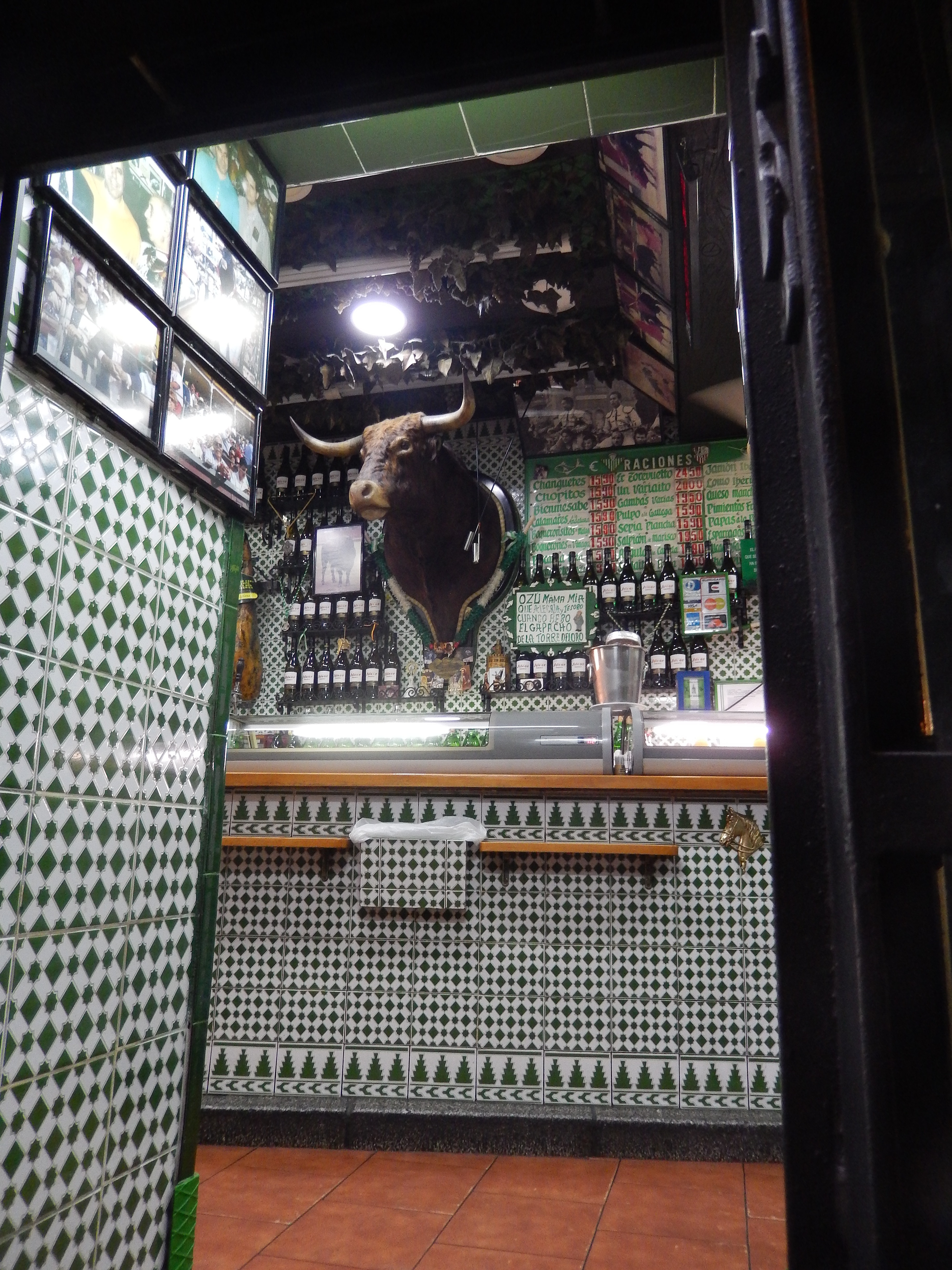
I look into the bar, the bull looks out
Carrying on, we were directed (by Rick Steves) to notice an old door, made of wood, lined with metal, set in a Moorish keyhole, and considered to be the oldest door on Madrid’s oldest building – inhabited since 1480…
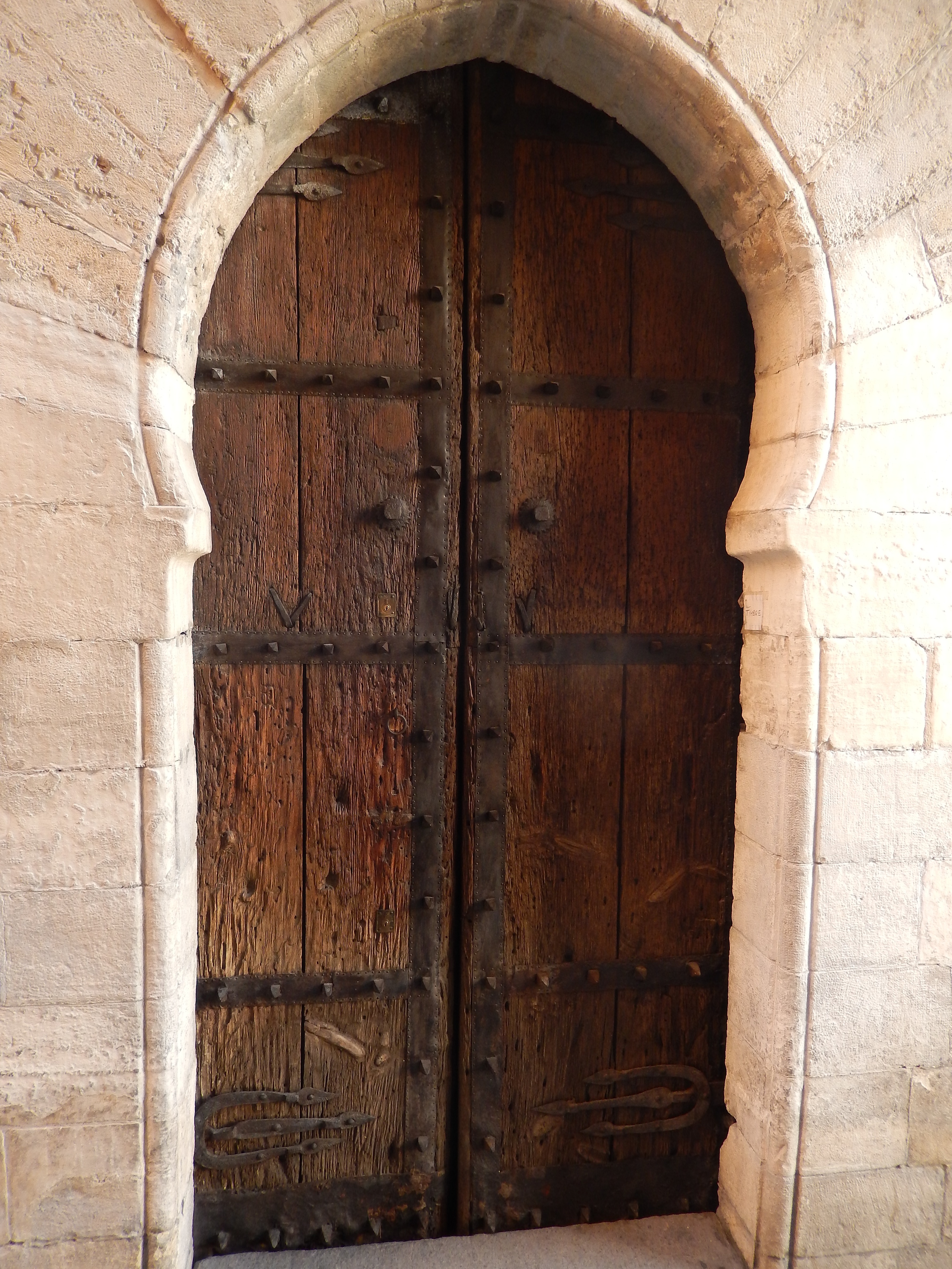
Madrid’s oldest door
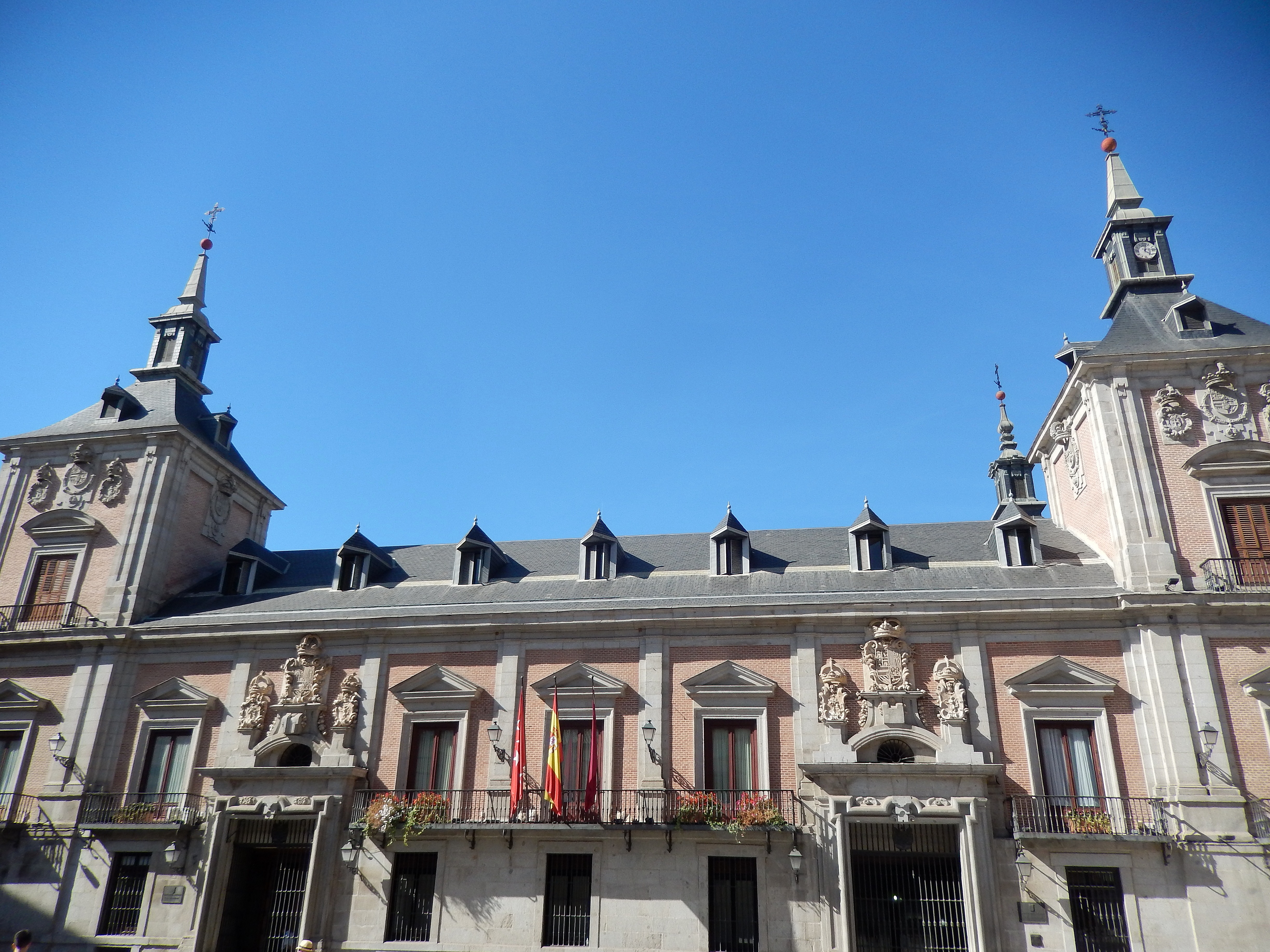
Madrid’s ceremonial town hall
From the Plaza de la Villa, (town hall), we came to the Assassination Attempt Memorial: the statue memorializes a 1906 assassination attempt on King Alfonso XIII and his bride, Victoria Eugenie, as they paraded by on their wedding day. An anarchist threw a bouquet lashed to a bomb, which missed the royals but killed 23 people. The king and queen lived a long life, producing many great-grandchildren, including the current king, Felipe VI.
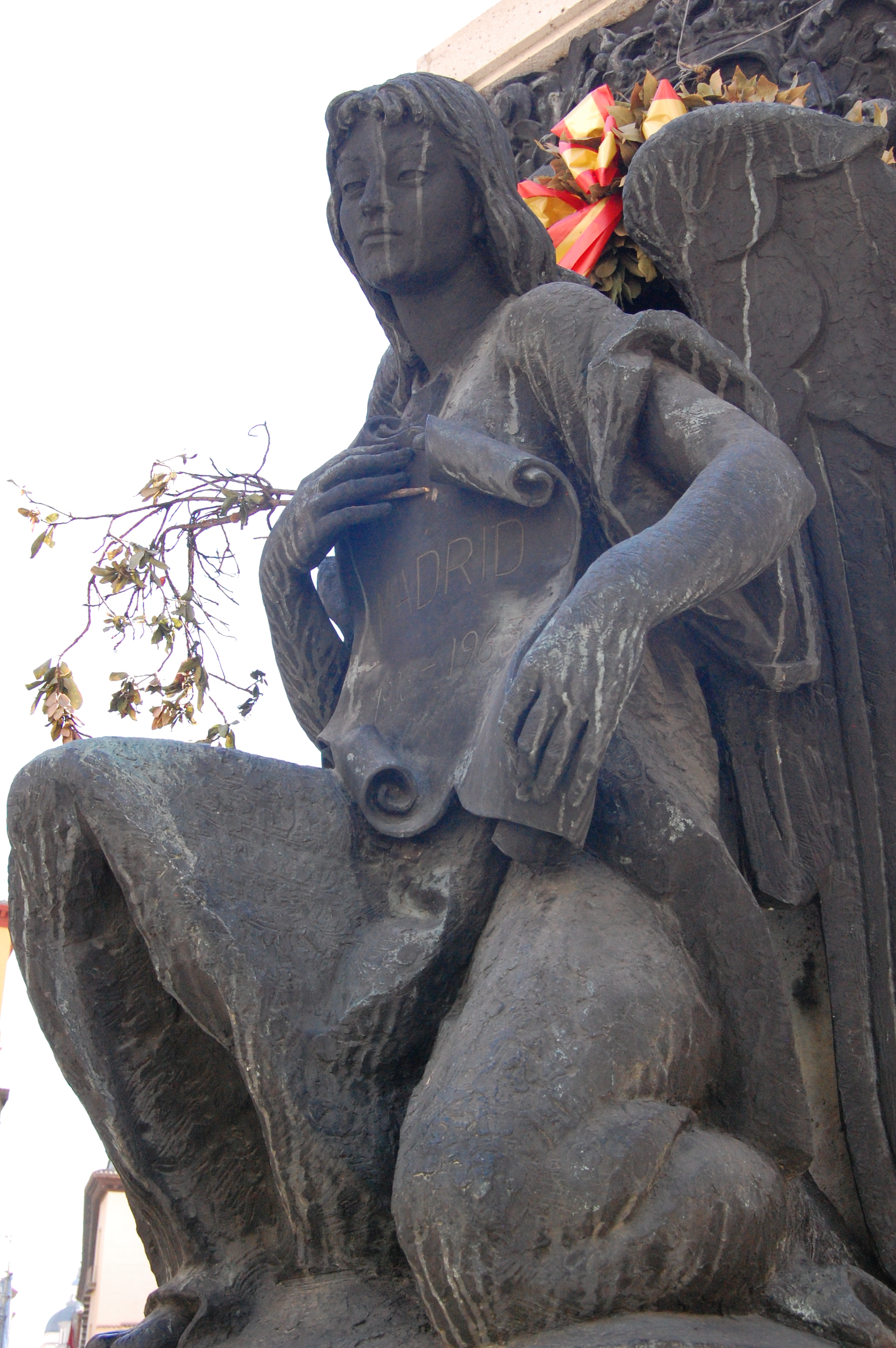
Assassination Attempt Memorial
Next up, the Almudena Cathedral, which opened in 1993, 100 years after workers started building it.
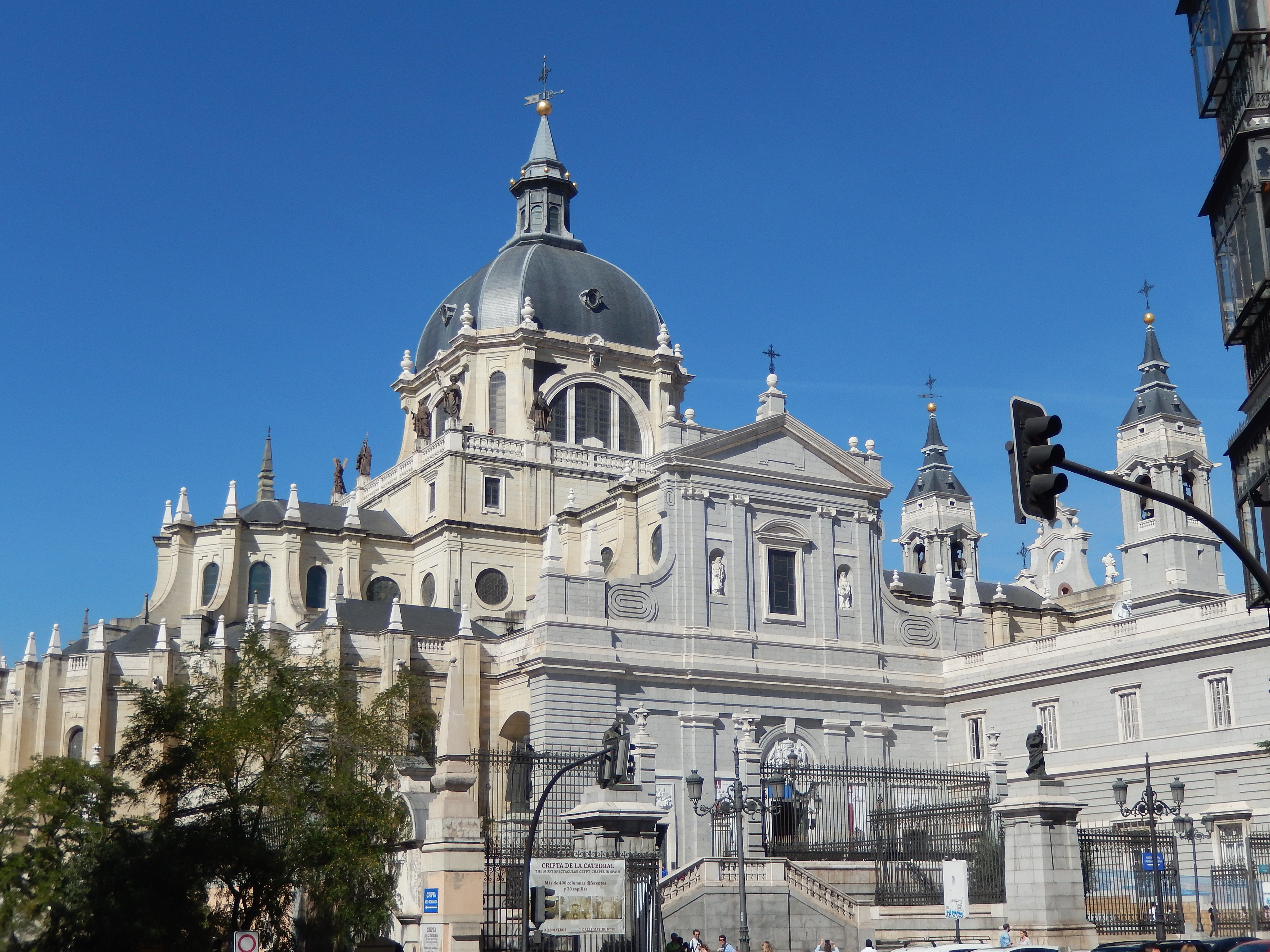
Almudena Cathedral
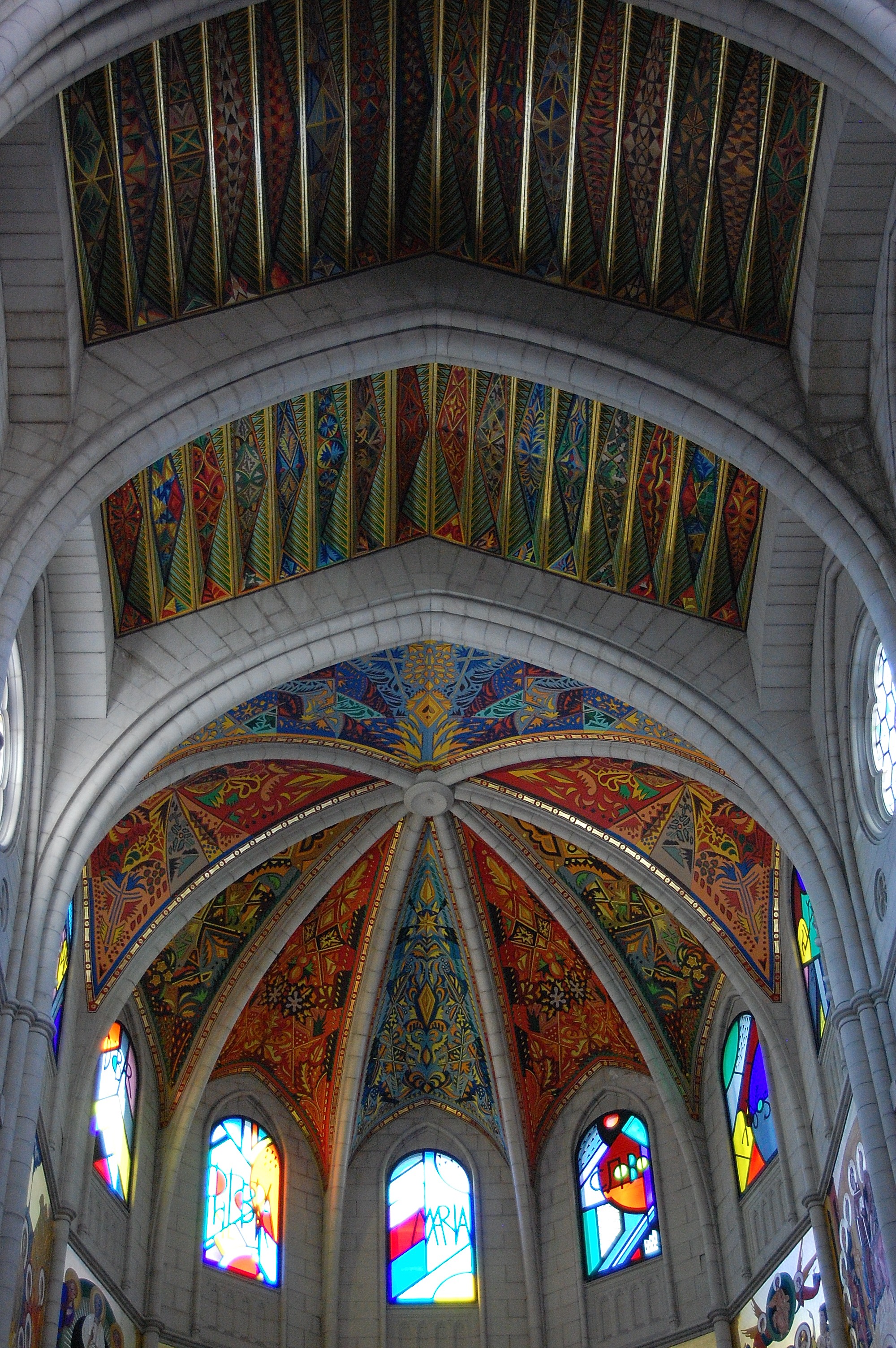
inside, a beautiful ceiling
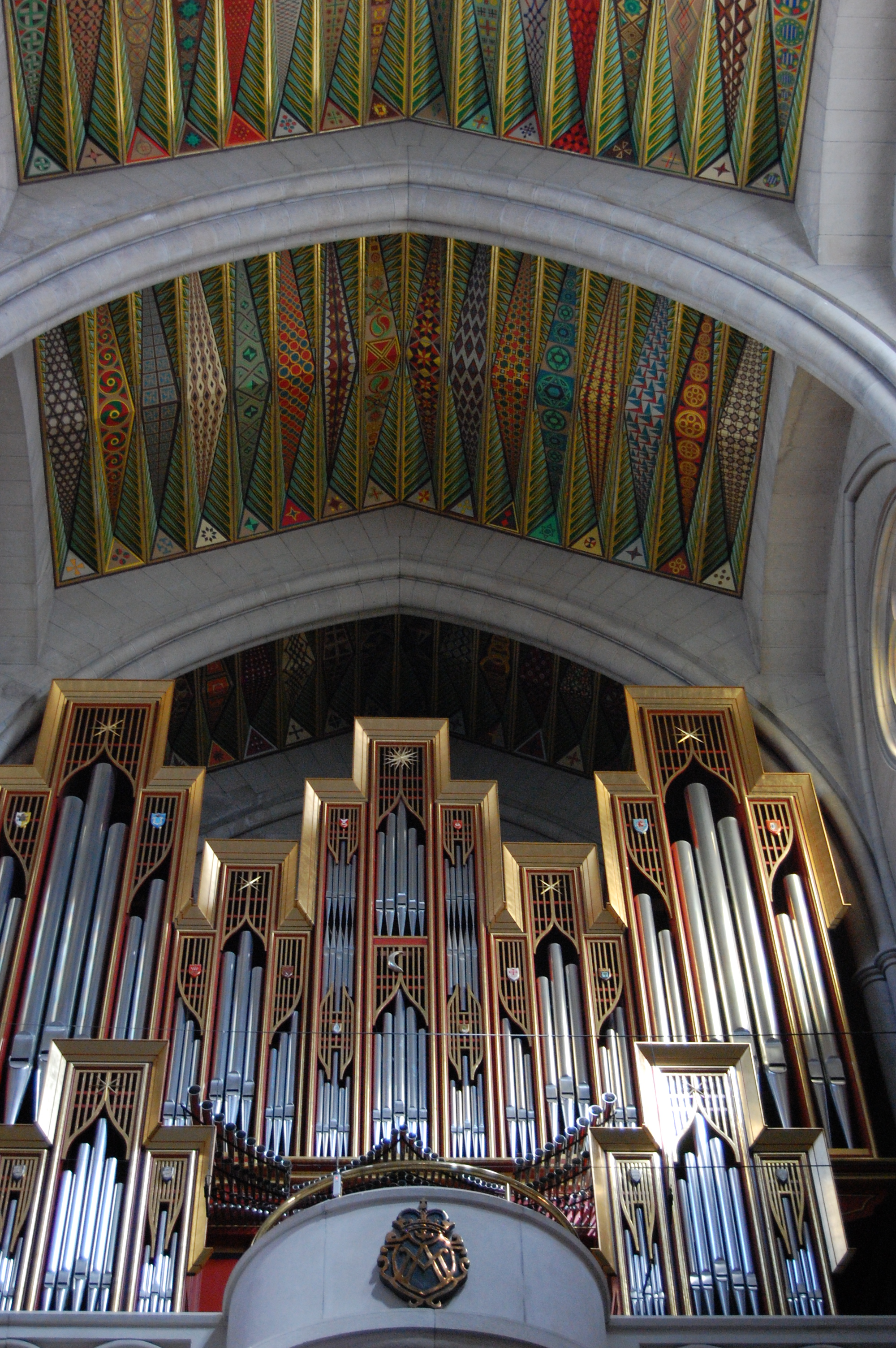
5,000-pipe organ
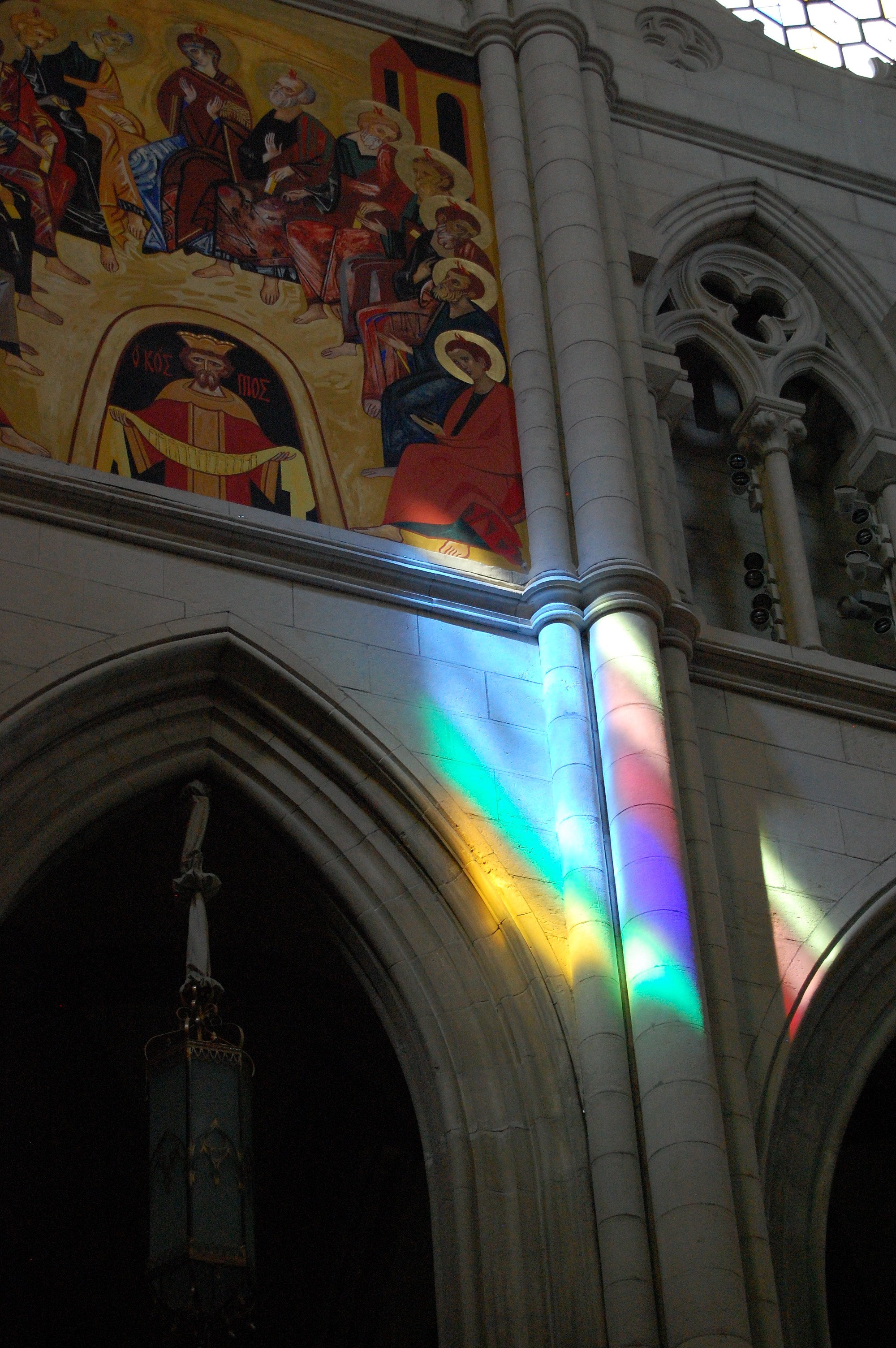
rainbow lighting
Right beside the Cathedral is the Royal Palace. Since the 9th century, this spot has been Madrid’s centre of power, from Moorish castle to Christian fortress to Renaissance palace to the current structure, built in the 18th century. It’s 2,800 rooms, totaling nearly 1.5 million square feet, make it Europe’s largest palace. We just looked at it from outside…
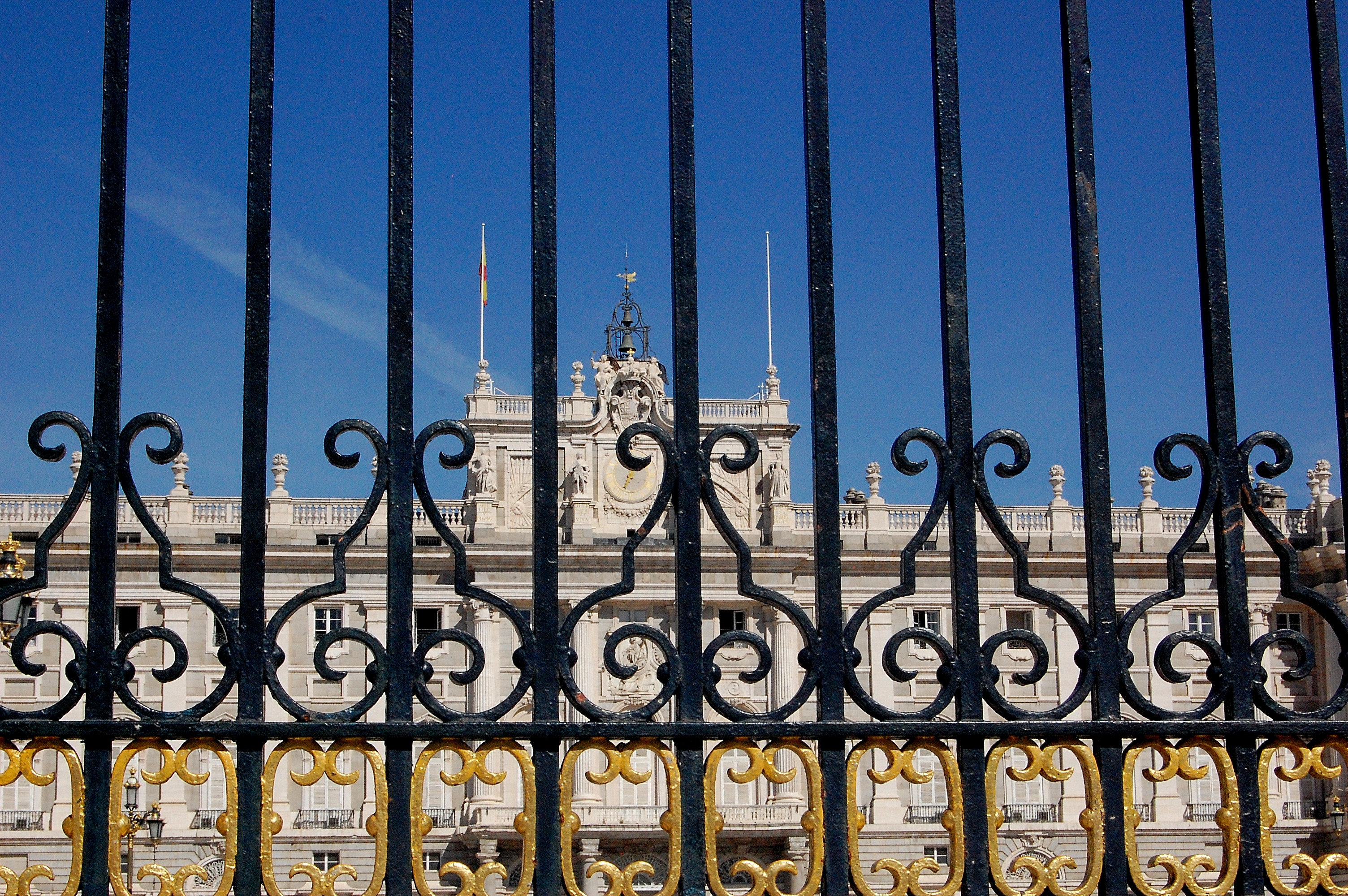
the Royal Palace, through the wrought-iron gate
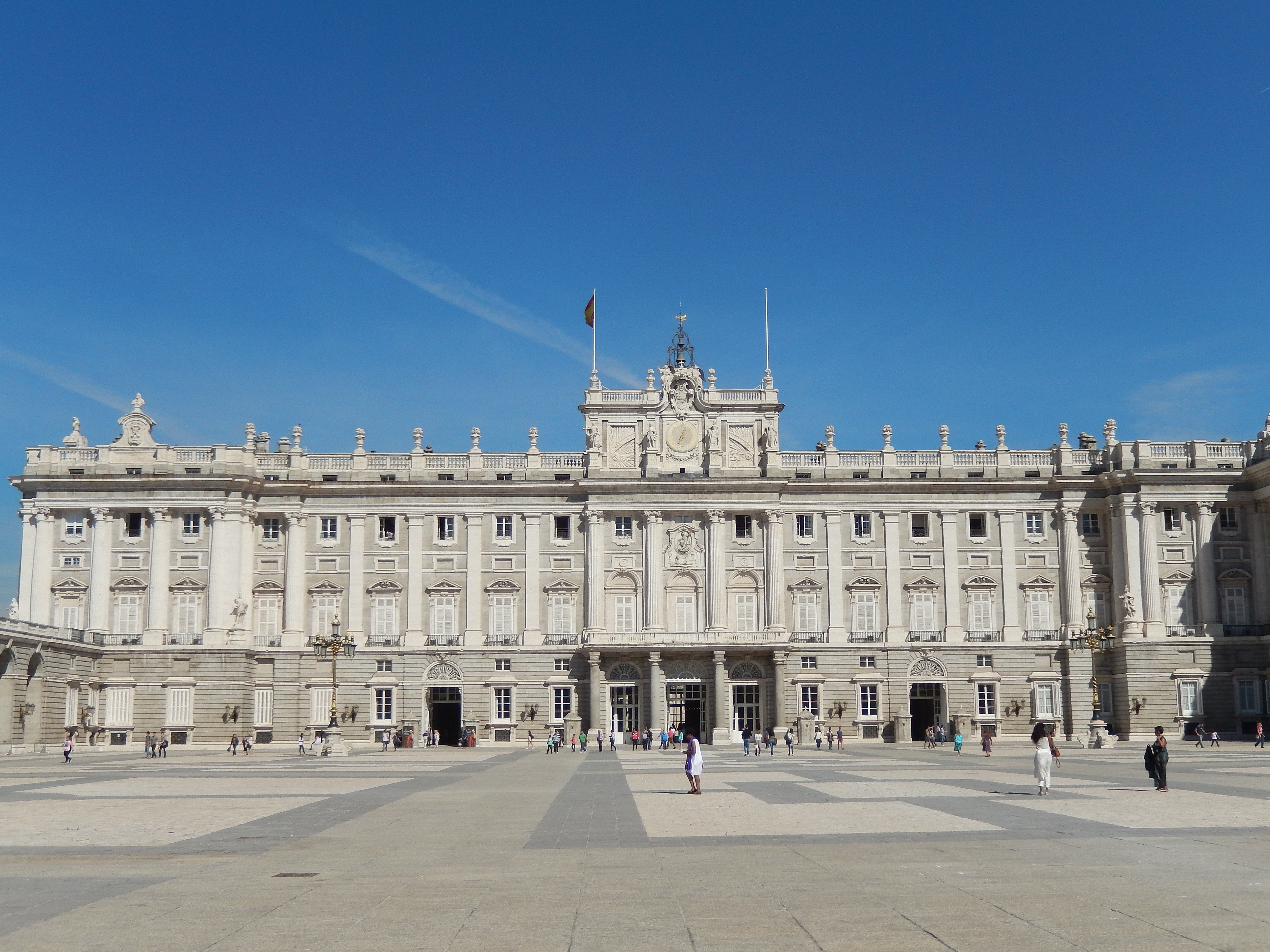
the Royal Palace
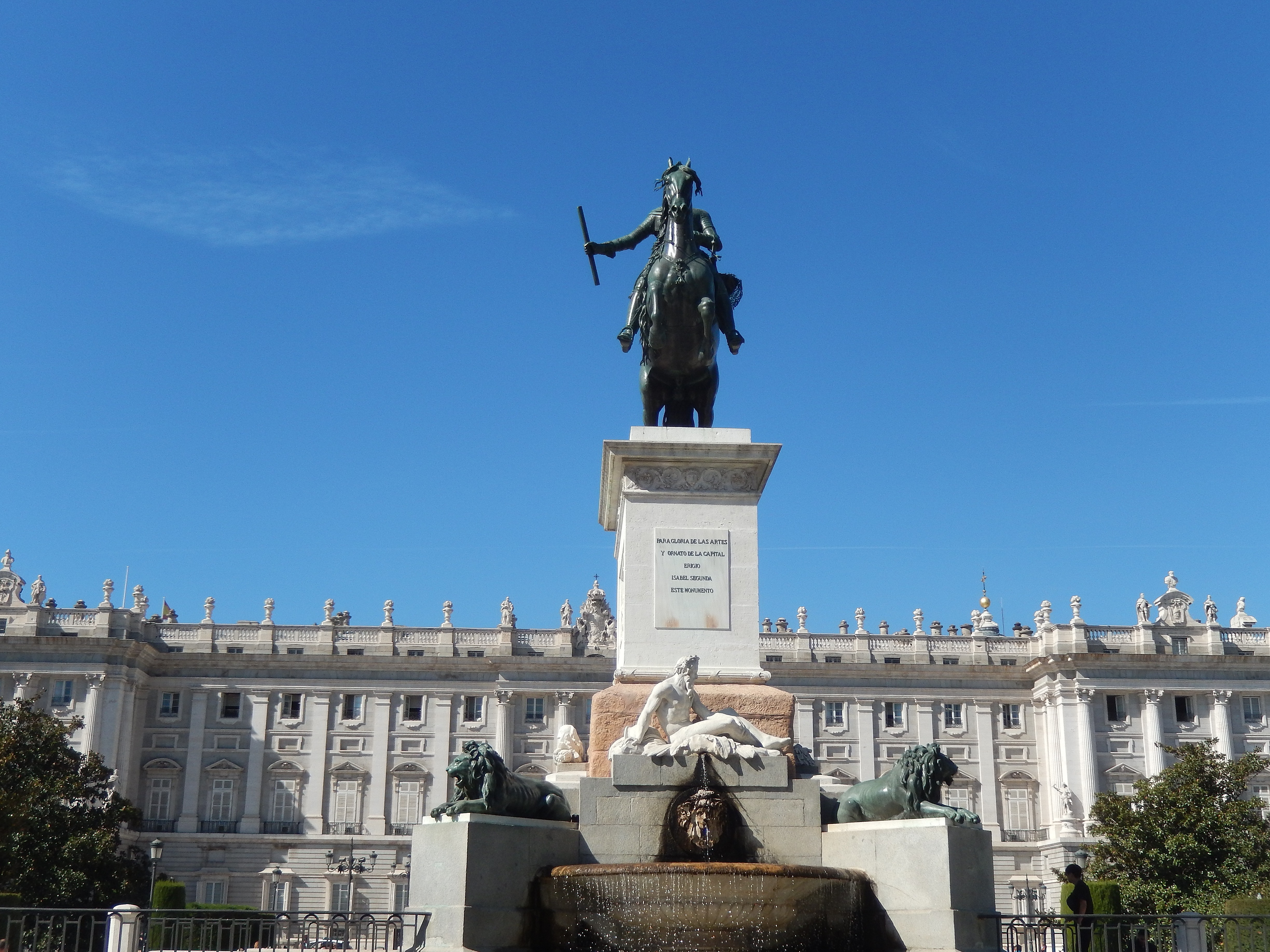
Philip IV (the king who built the Royal Palace), with the palace behind, from the Plaza de Oriente
Continuing on, along Calle del Arenal, “the street of sand” – where sand was stockpiled during construction…
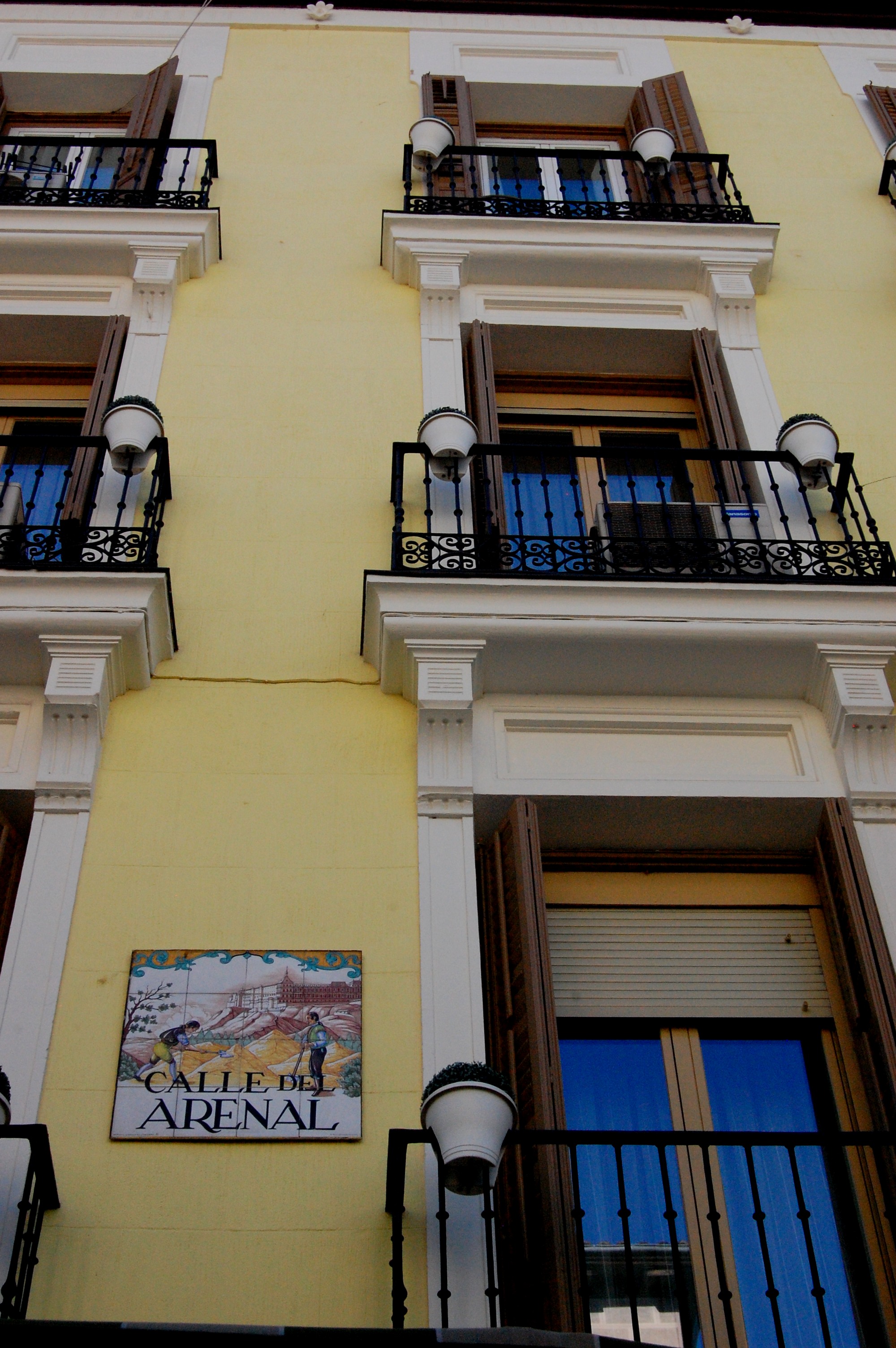
Calle del Arenal
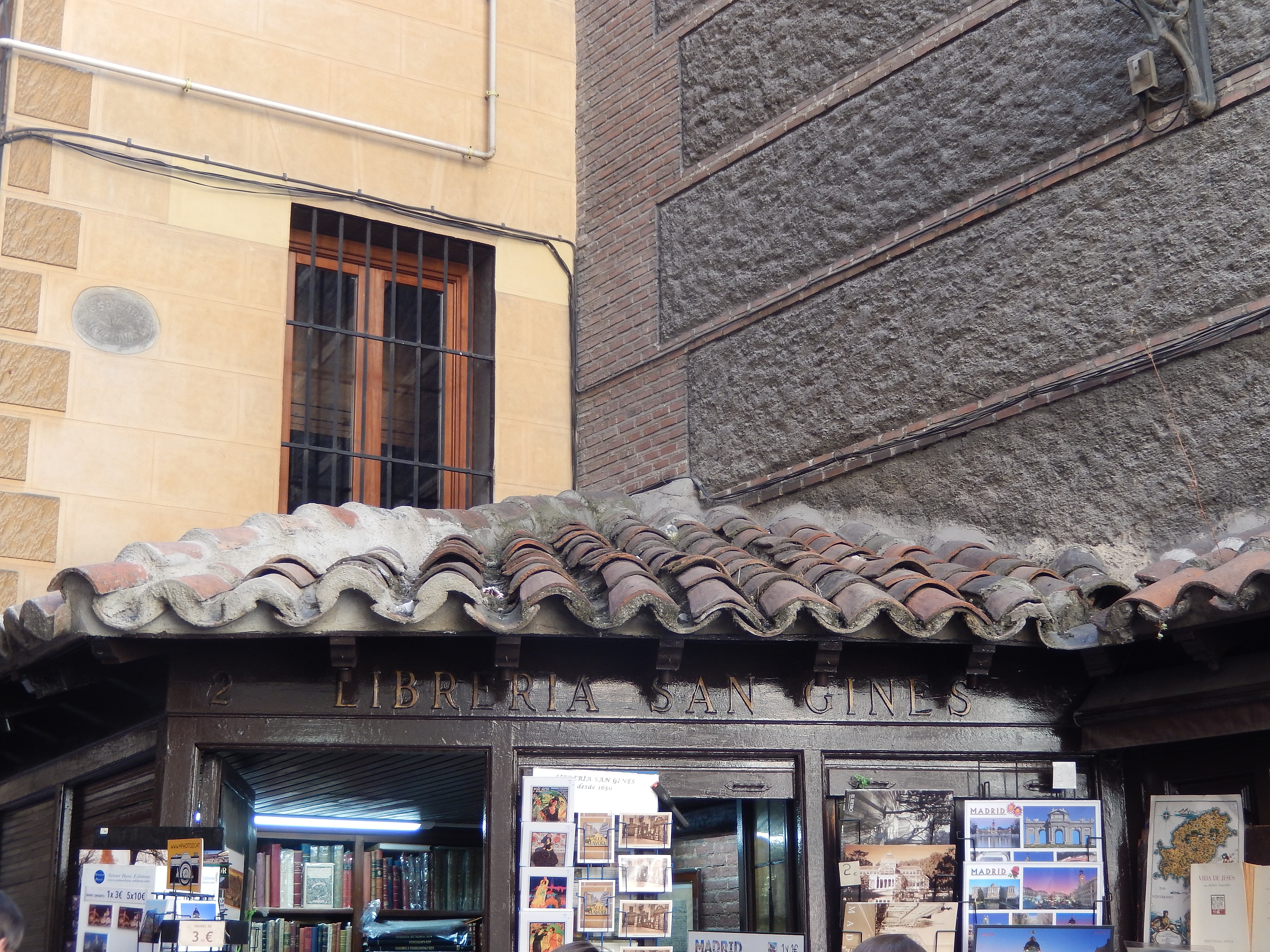
this little bookstore has been selling books at this location since 1650!
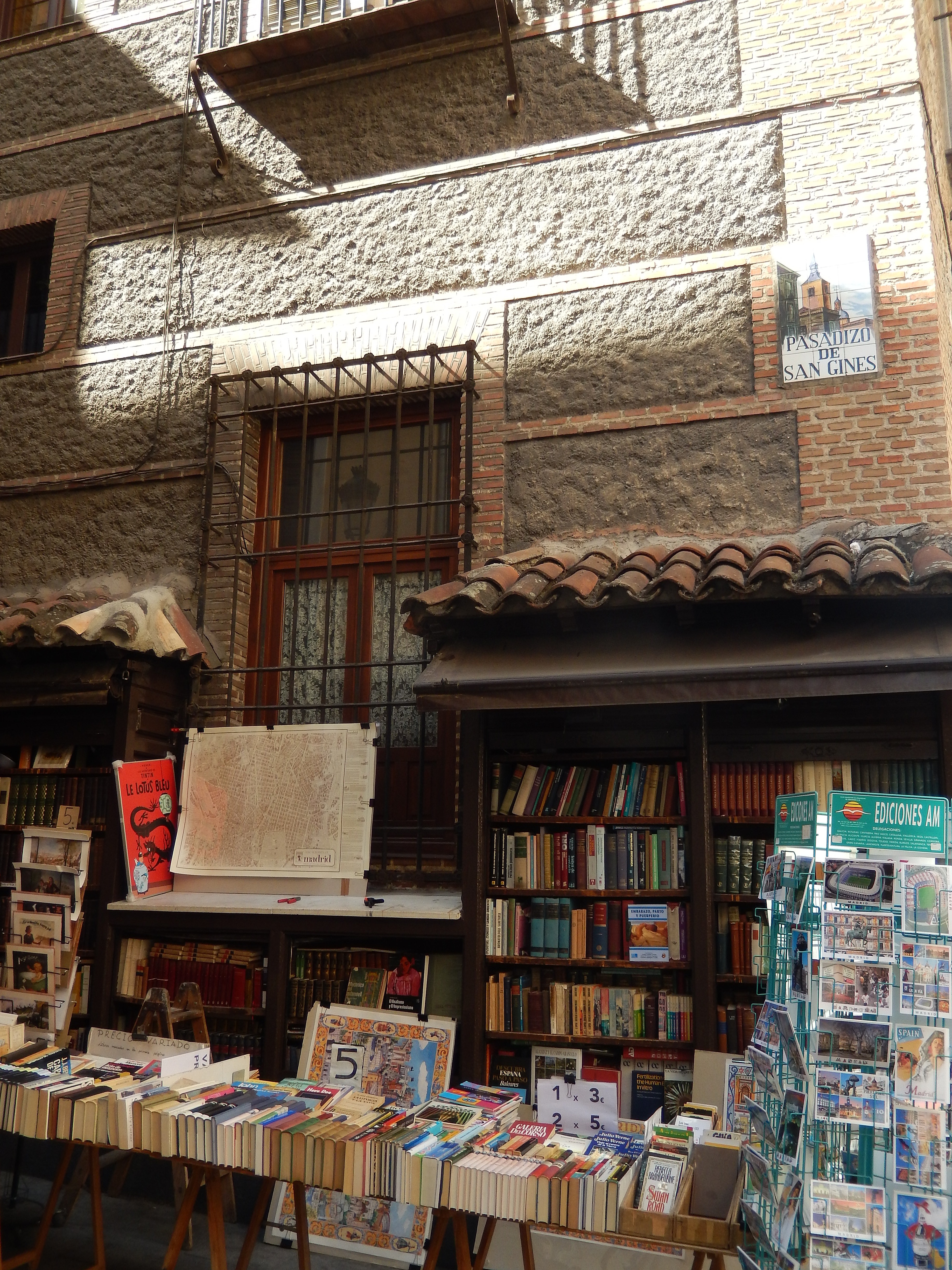
the bookstore is attached to the wall of the church
Inside a small mall, a 6-inch-tall bronze statue of a mouse, Ratoncito Pérez, which turns out to be the Spanish version of the tooth fairy!! I love that Rick Steves includes little details like this in his tour guides. 🙂
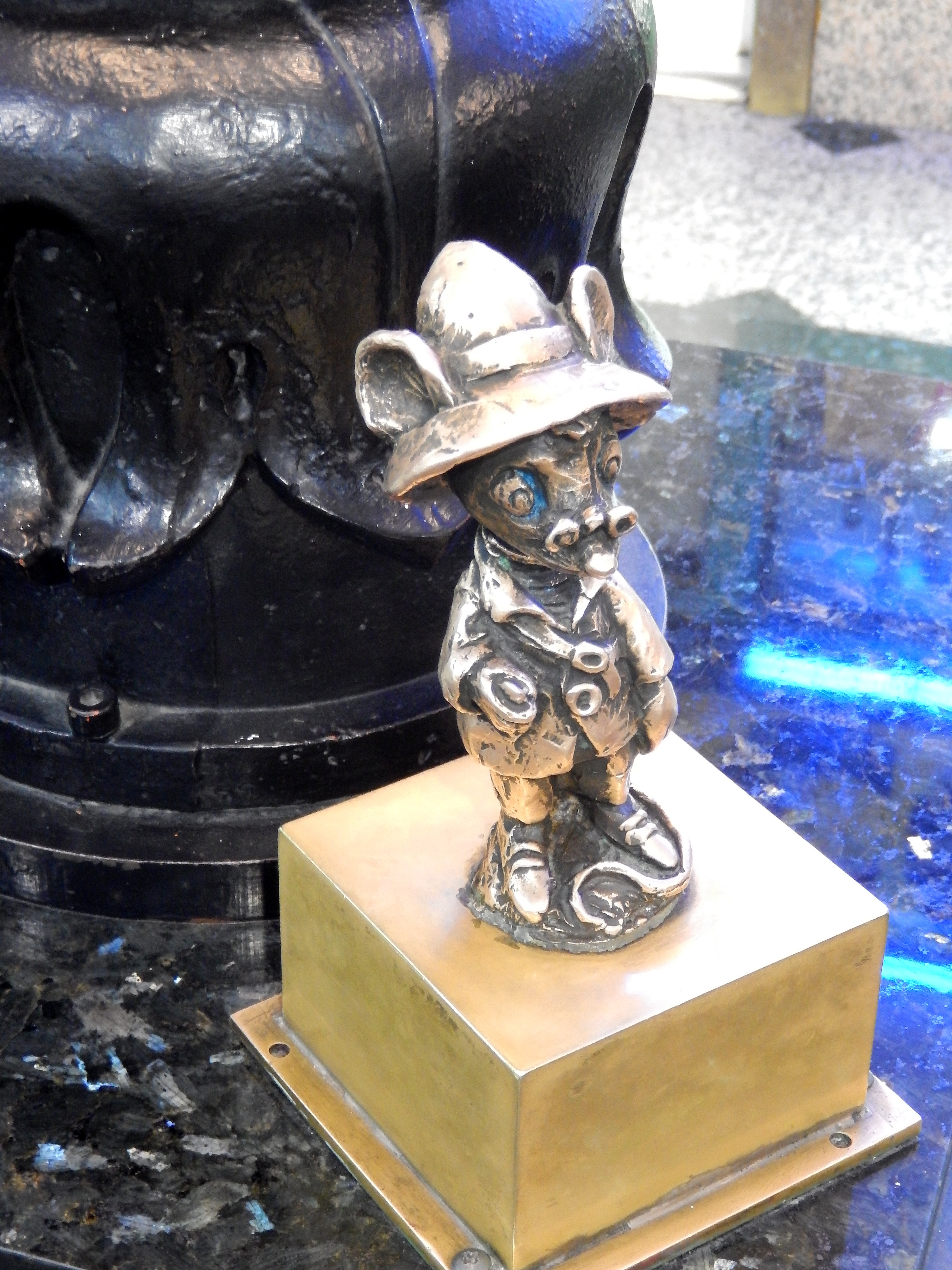
Ratoncito Pérez
We paused for lunch, and then we took the Hop-On-Hop-Off city bus tour, sitting on the top deck, in the sunshine. Much of what we saw, we had already seen, but it was nice to get a better understanding of the layout of the city, and we managed a few good photos from the bus, especially the tops of buildings and tops of statues. 😉
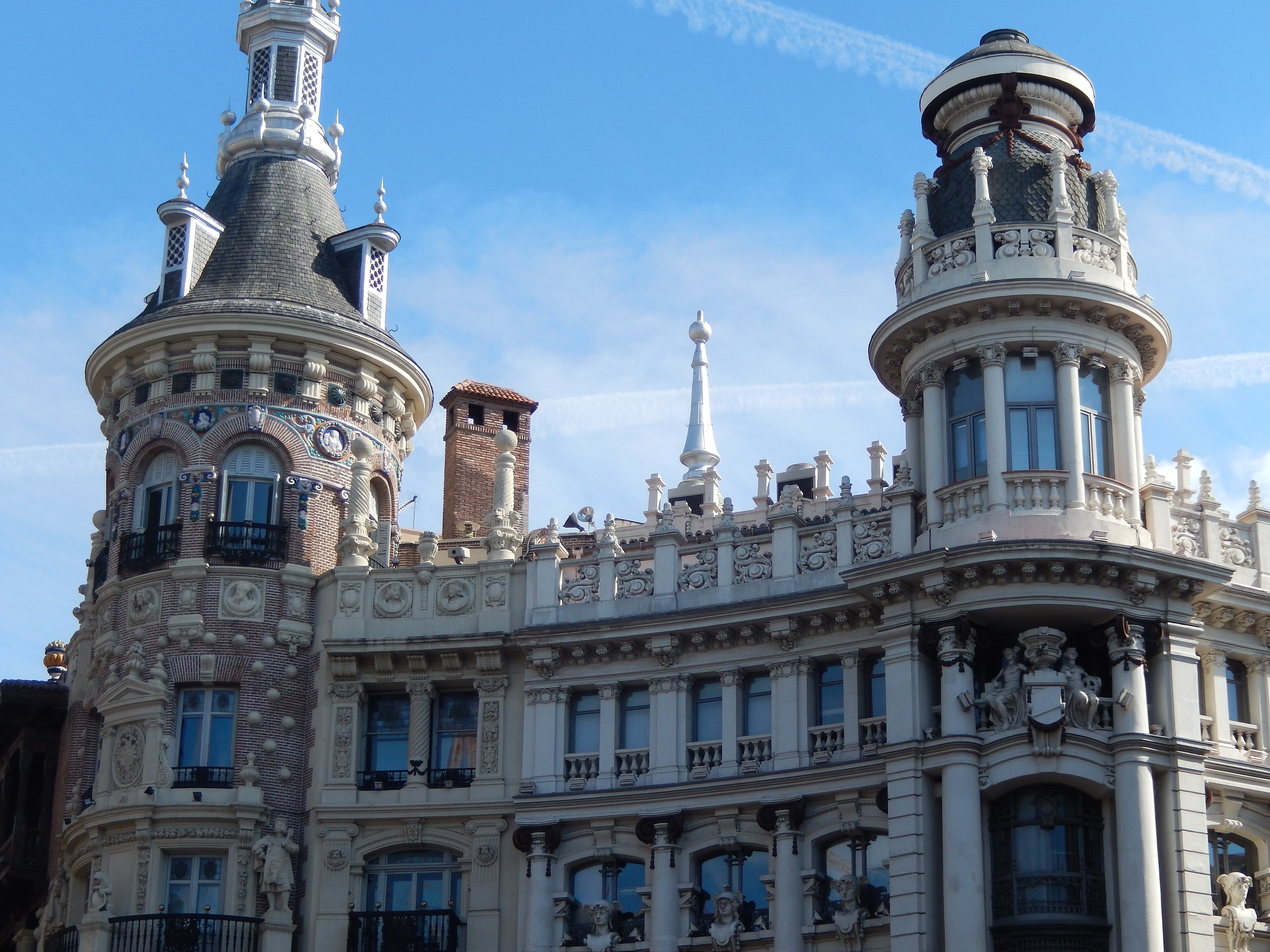
beautiful buildings

Metropolis roof detail
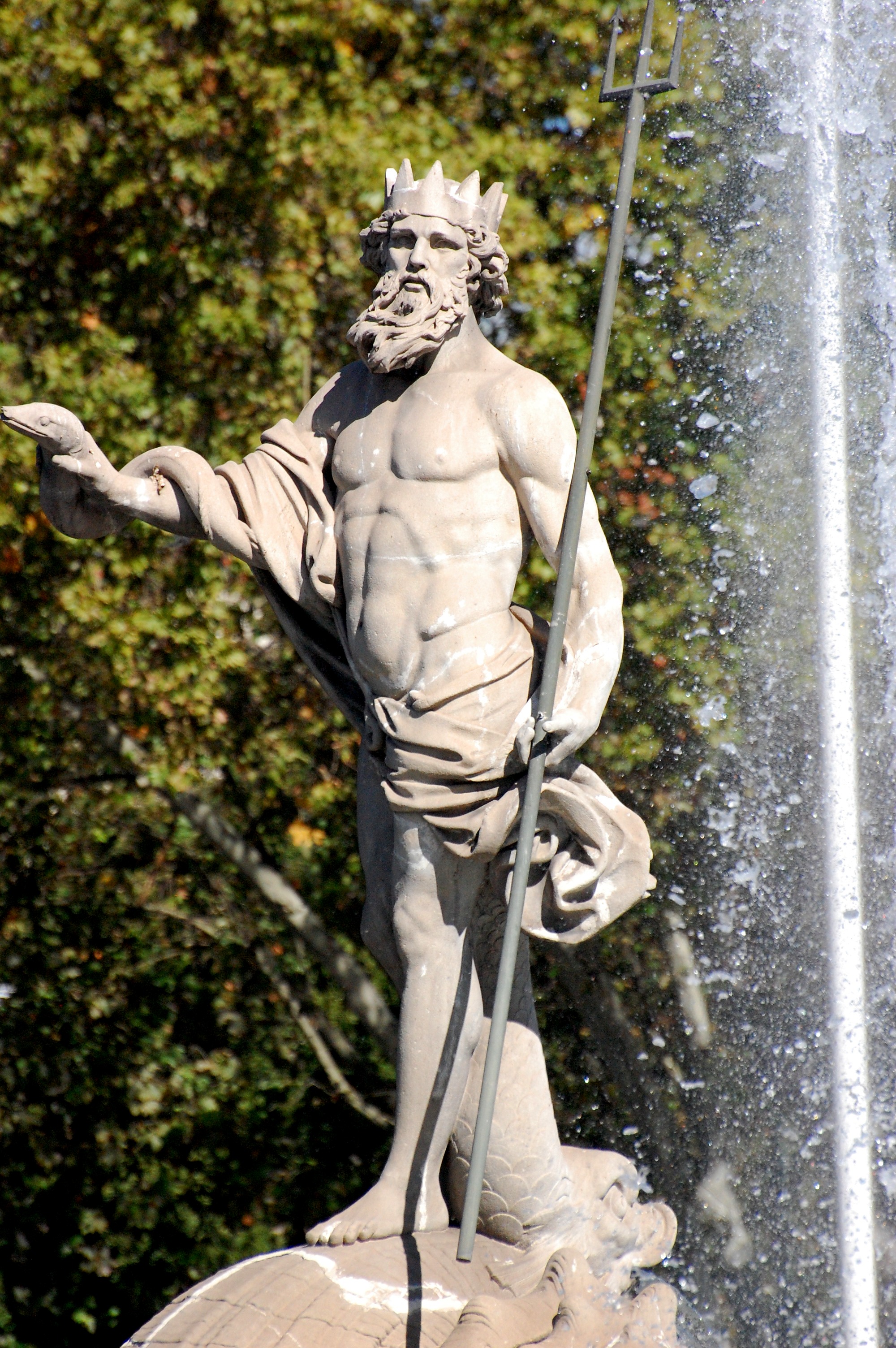
Neptune fountain
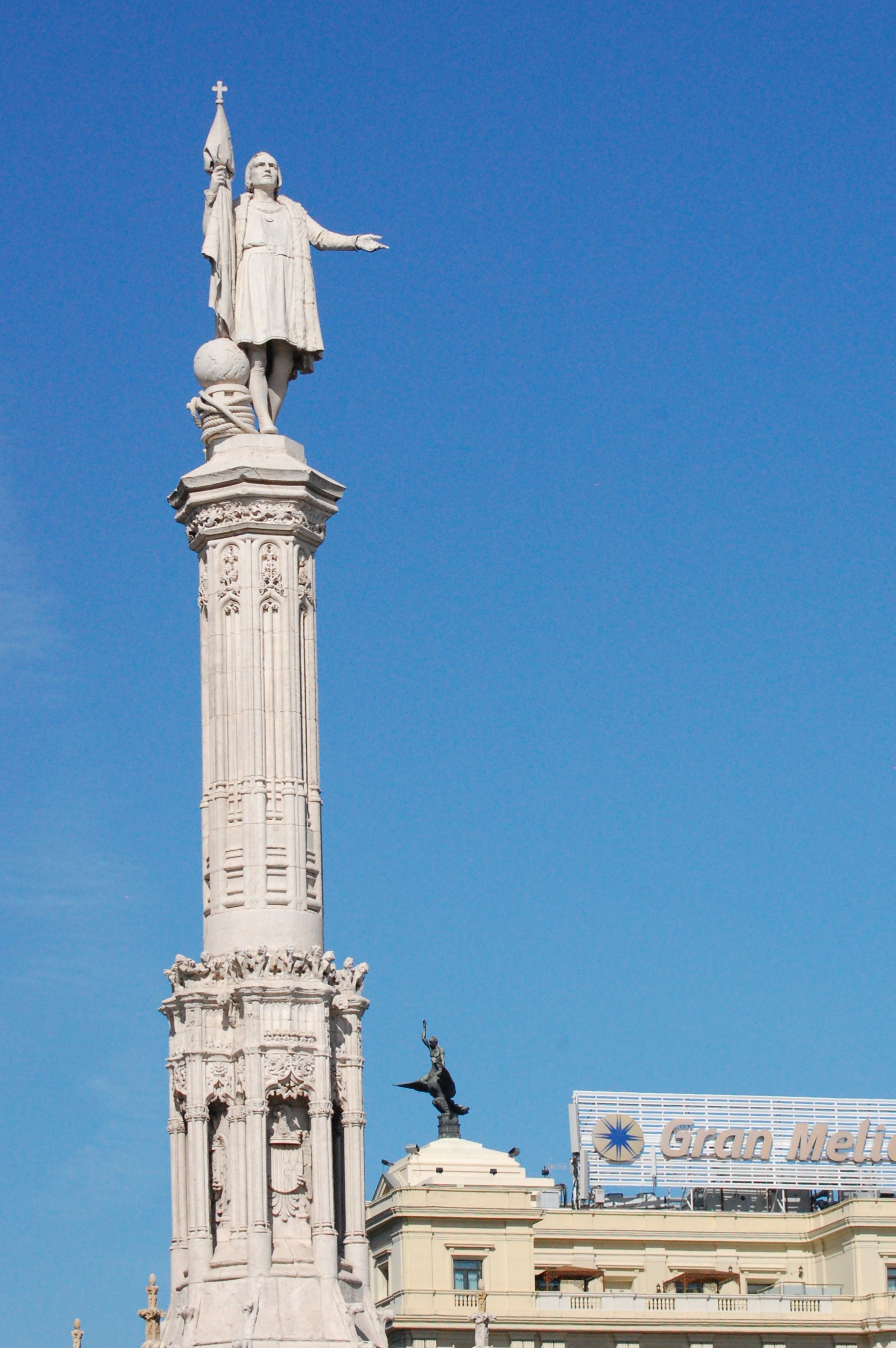
Christopher Columbus
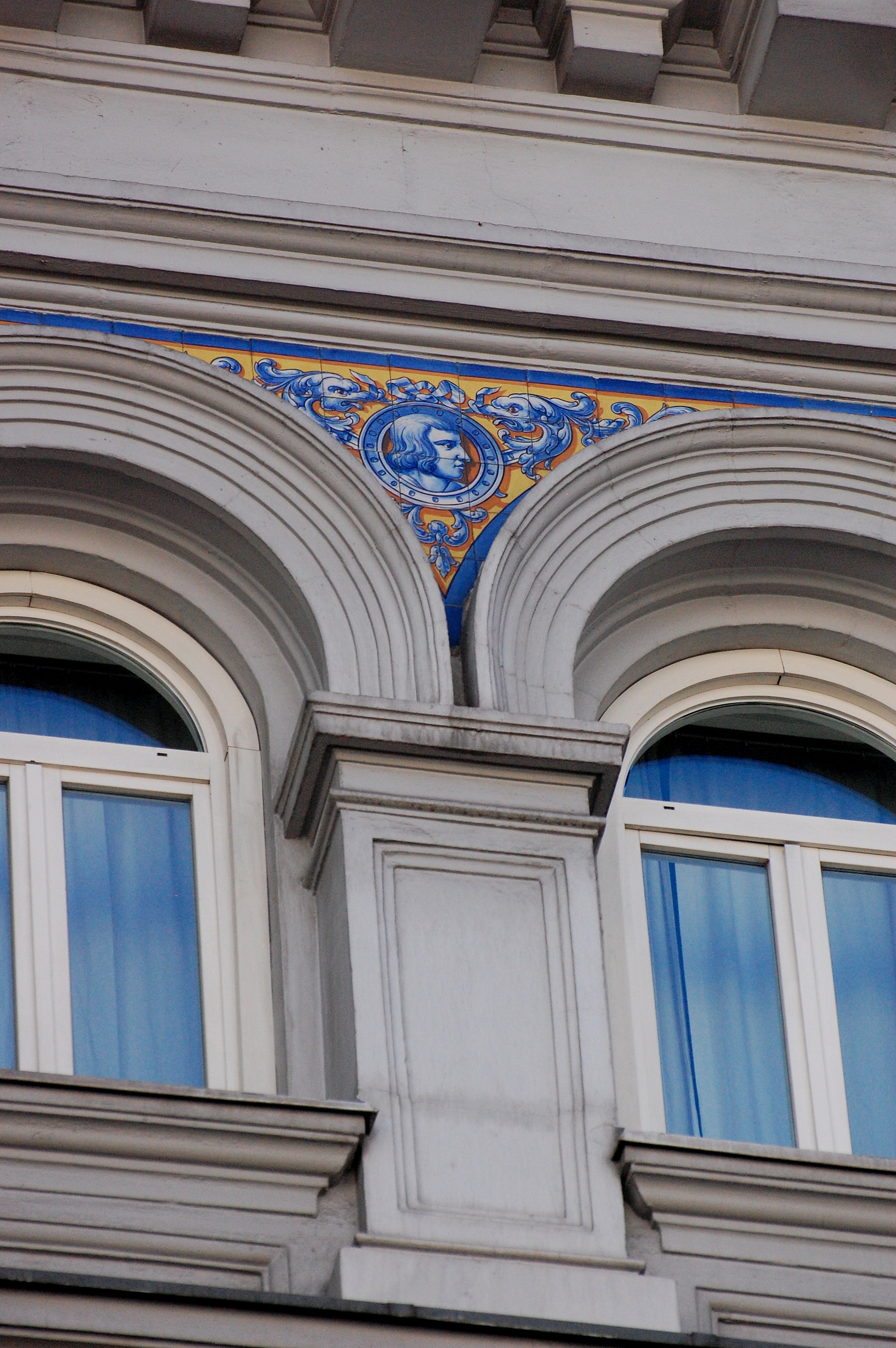
lovely tile work
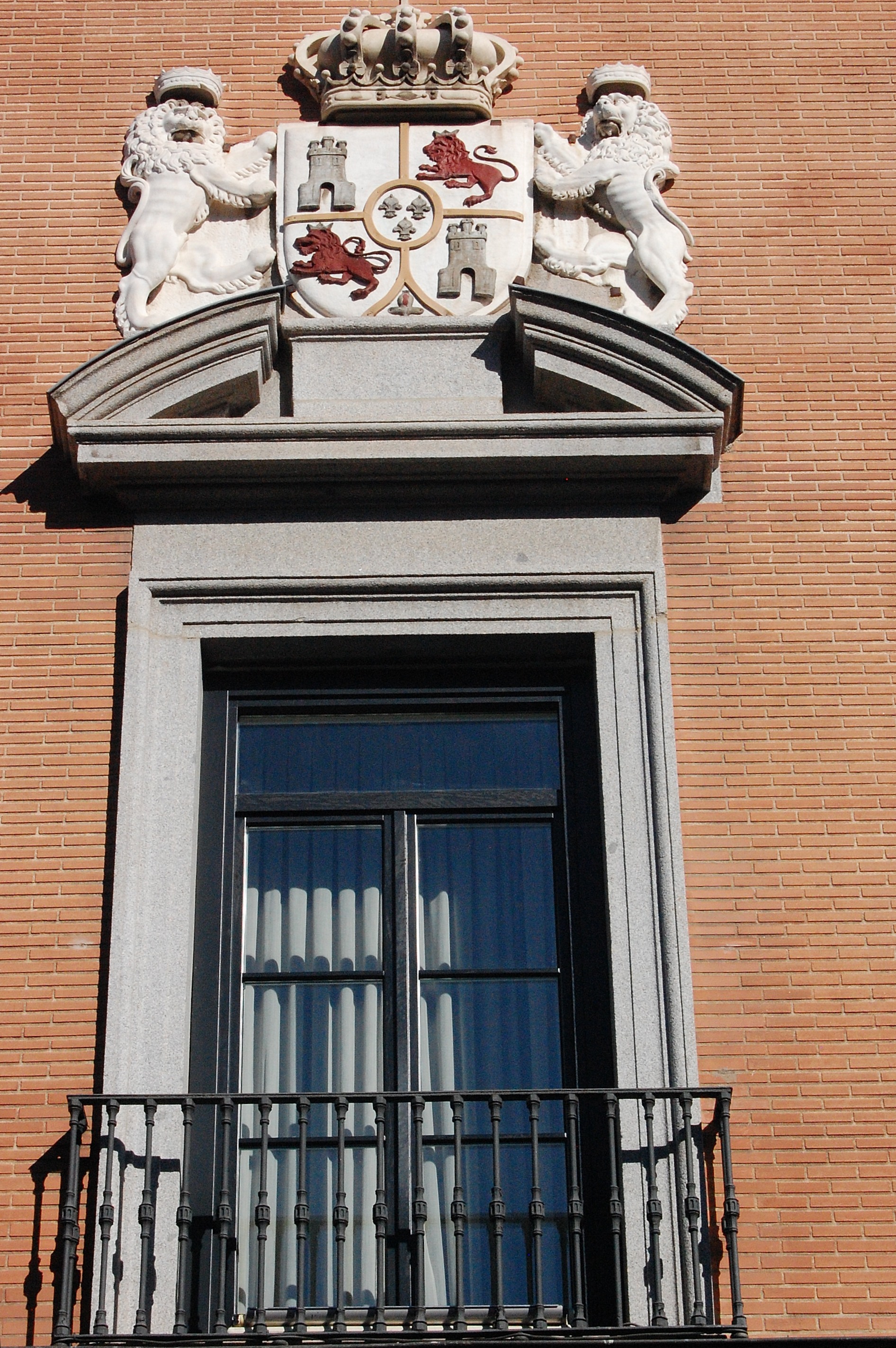
window and coat of arms
We took the subway and then bus back to Jaime and Marta’s, for a little rest before getting ready for Friday night on the town. Back into the city, we first had drinks and tapas at a hopping little bar called Ultramarinos Quintin. We stood at the bar, with our drinks in hand, and enjoyed watching the carving of a ham leg …
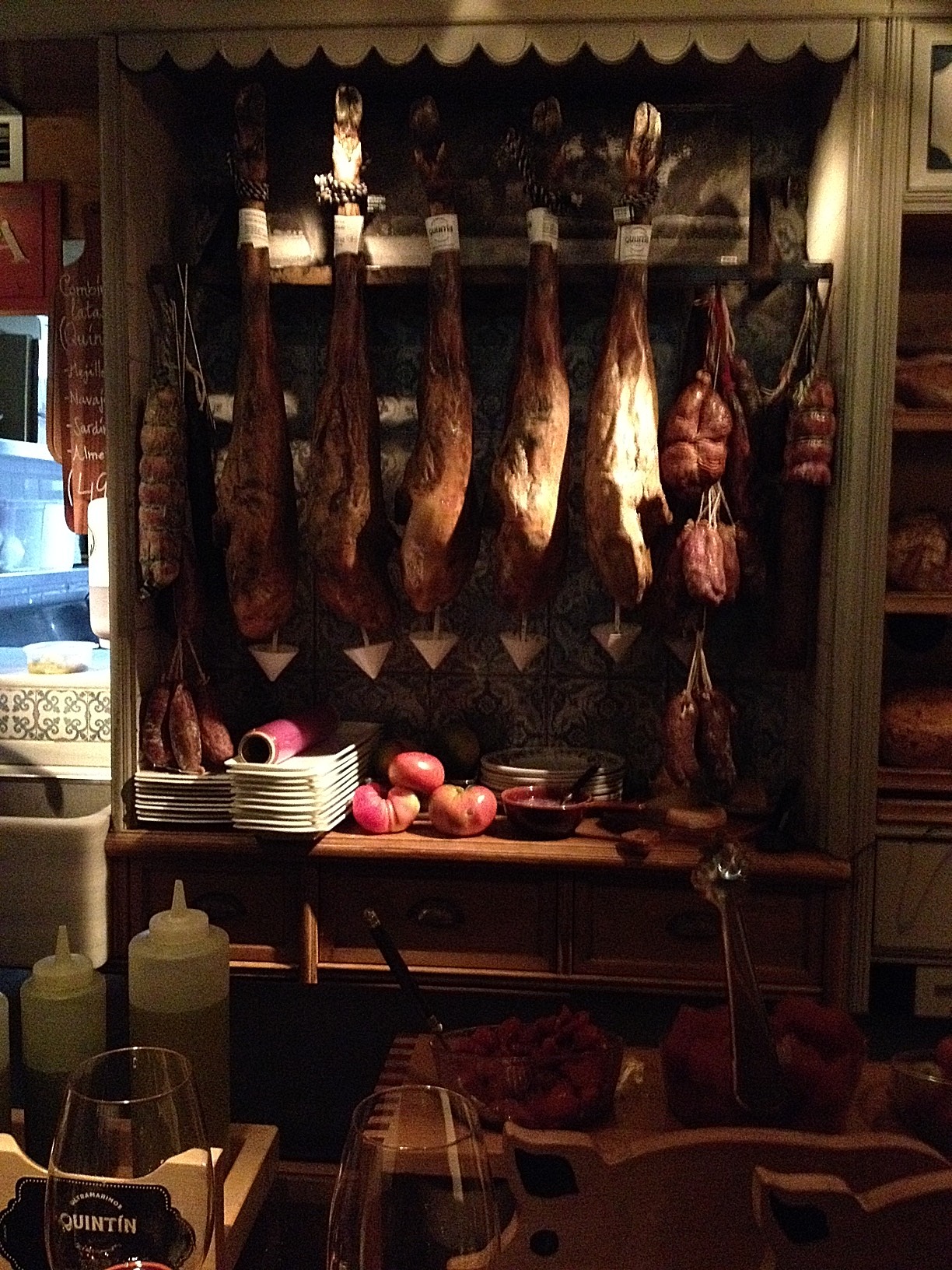
the hams hanging behind the bar
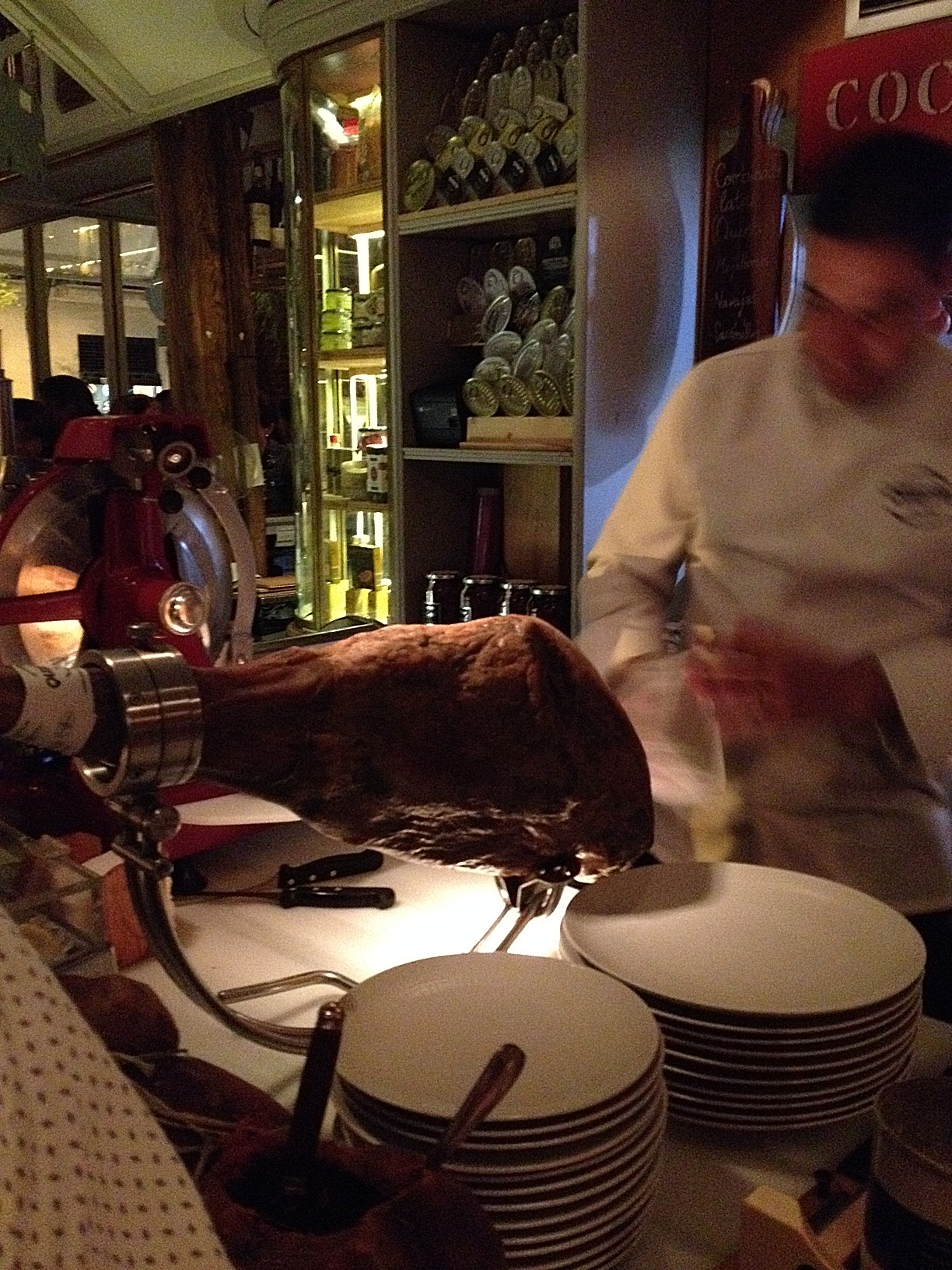
ham in a holder, ready for carving
…and then to our restaurant, Amazonico, one of the latest trendy restaurants in Madrid, at which Jaime and Marta made reservations for us several weeks ago, and we still couldn’t get in until 10 p.m. (!) The decor is “amazon-like,” and the food was amaz-ing. 😉 A perfect last night in Madrid.
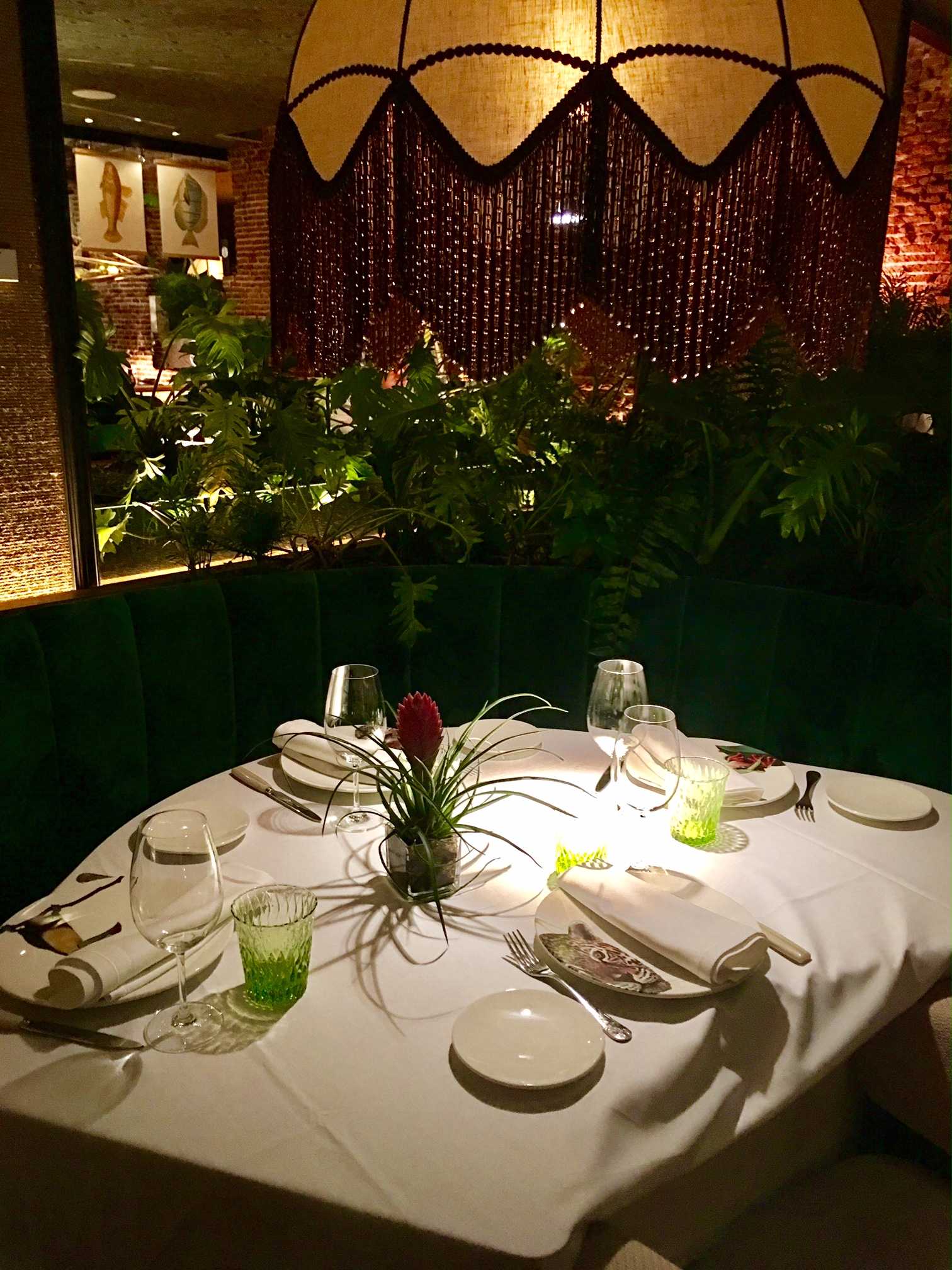
our table
the colourful menu
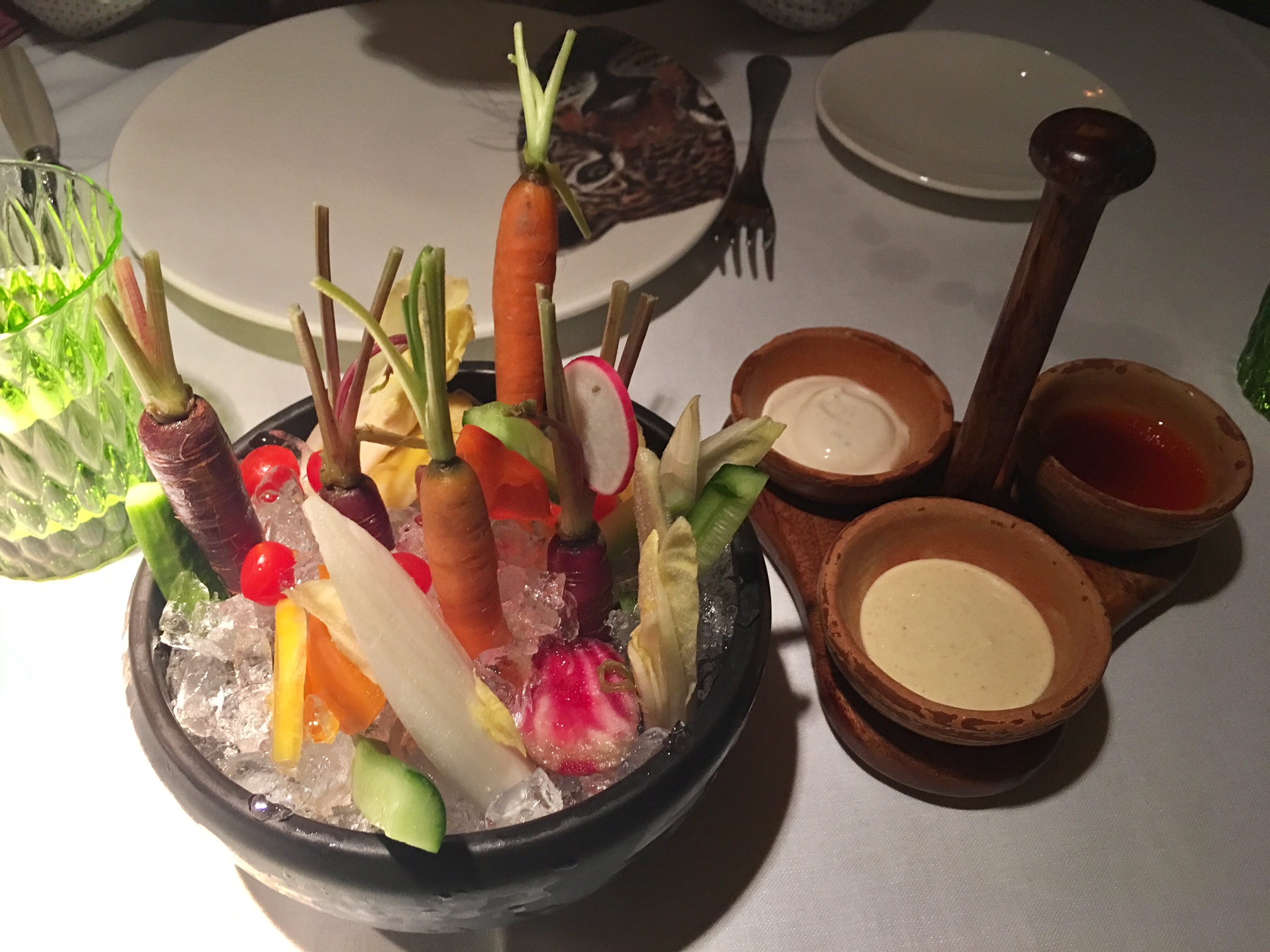
hors d’oeuvres
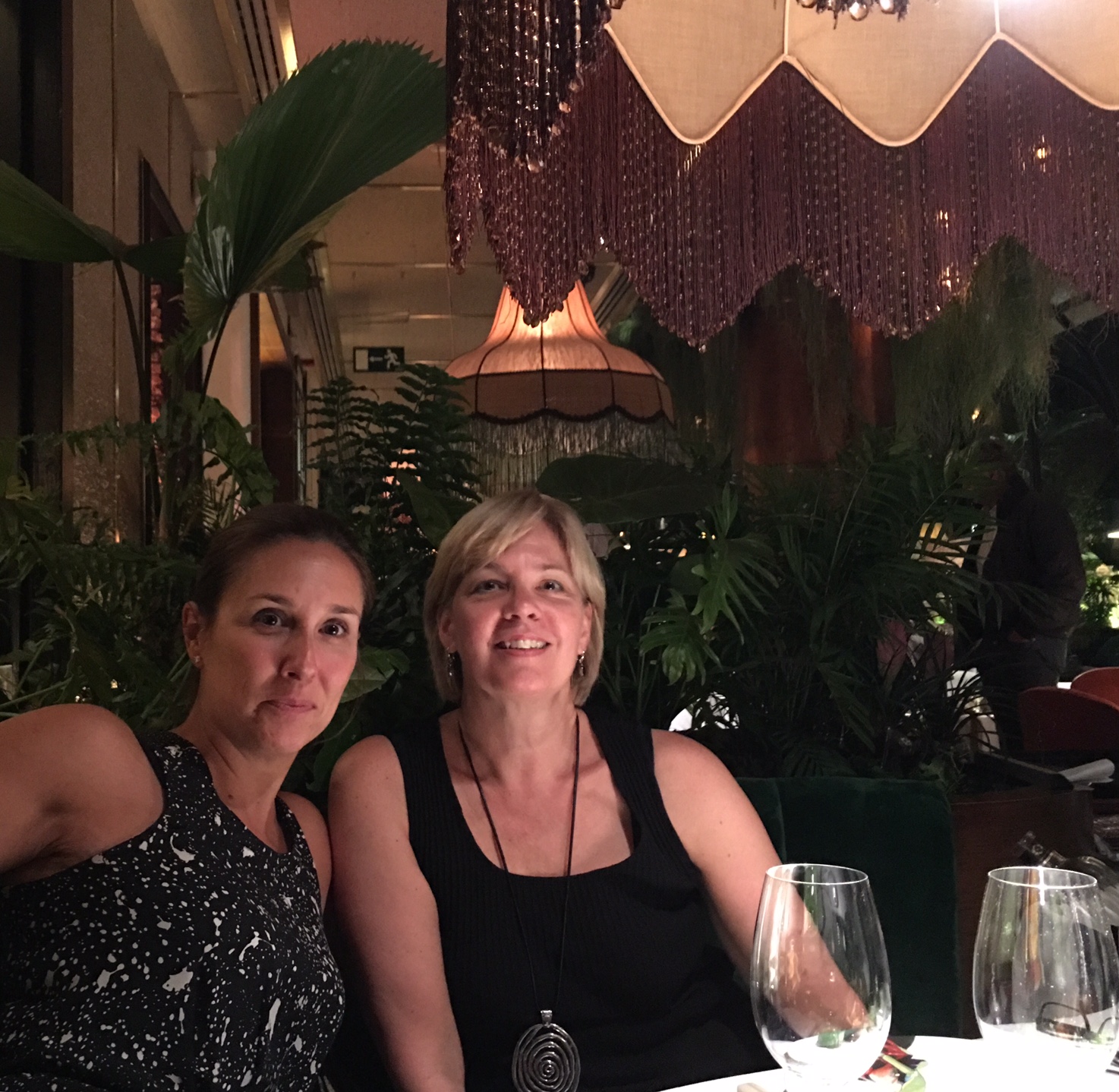
with Marta
The next morning, Saturday, we were up fairly early, to enjoy breakfast with the family, and then Jaime drove us to the train station, where we took the train to Zaragoza, to meet Diane and Julio.
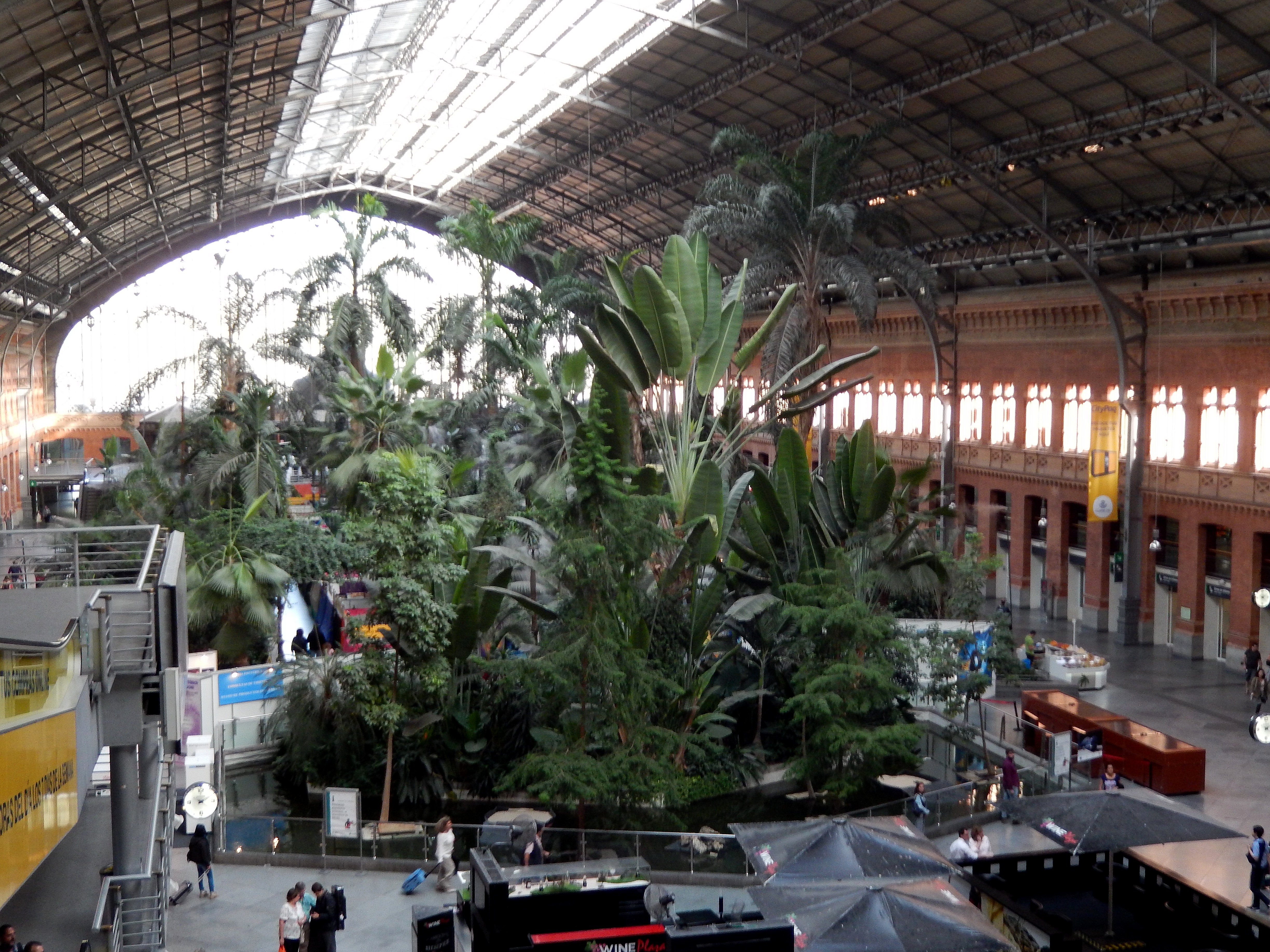
inside the Madrid train station
I knew Madrid was at a high altitude, and very dry, and yet I was still surprised by how desert-like the landscape was as we headed out of Madrid, racing towards Zaragoza.
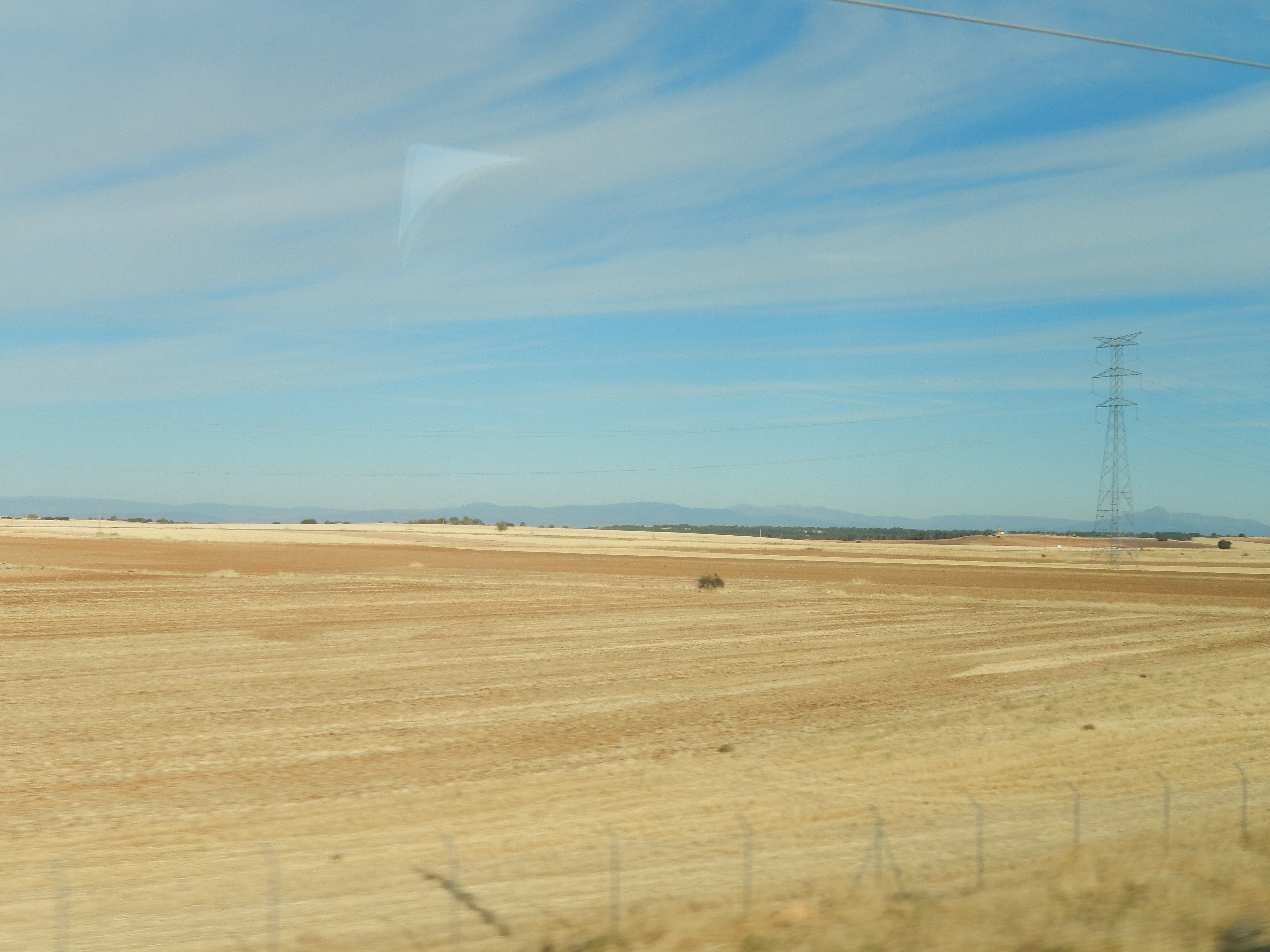
landscape from the train window

lots of windmills
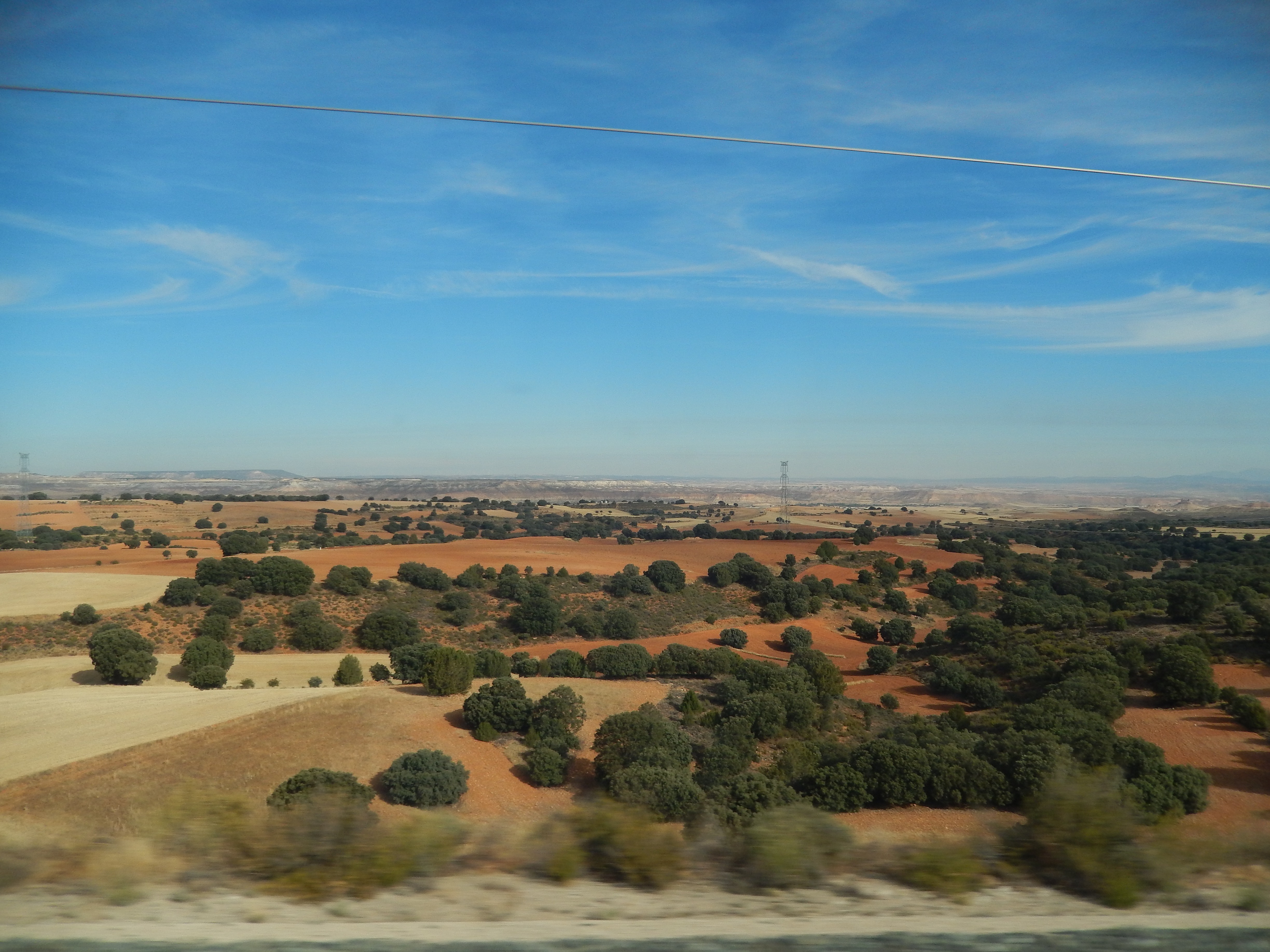
landscape
We arrived in Zaragoza just before noon, after a very smooth, high-speed ride, and were picked up at the station by Diane and Julio. We know them through General Motors, as well. Diane worked with Don in Florida, and they also lived in Shanghai at the same time as us. From Shanghai they went to Mexico City (where we visited them a few years ago..see blog posted in March 2013), and briefly to Michigan, before Diane left GM, and they returned to Spain, where Julio is from. They currently live in Alicante, but they drove to Zaragoza to meet us, and begin our journey together. Julio is from Zaragoza, and they have a lot of friends and family here – we were about to meet some of those friends, and learn all about celebrating a patron saint. We were arriving in Zaragoza for the beginning of The Fiestas del Pilar.
But first, we checked into our hotel, quickly got organized, donned our Zaragoza Fiesta scarves, then headed out to walk into the city centre, about a 1/2 hour walk, that allowed for a little sight-seeing as we went.
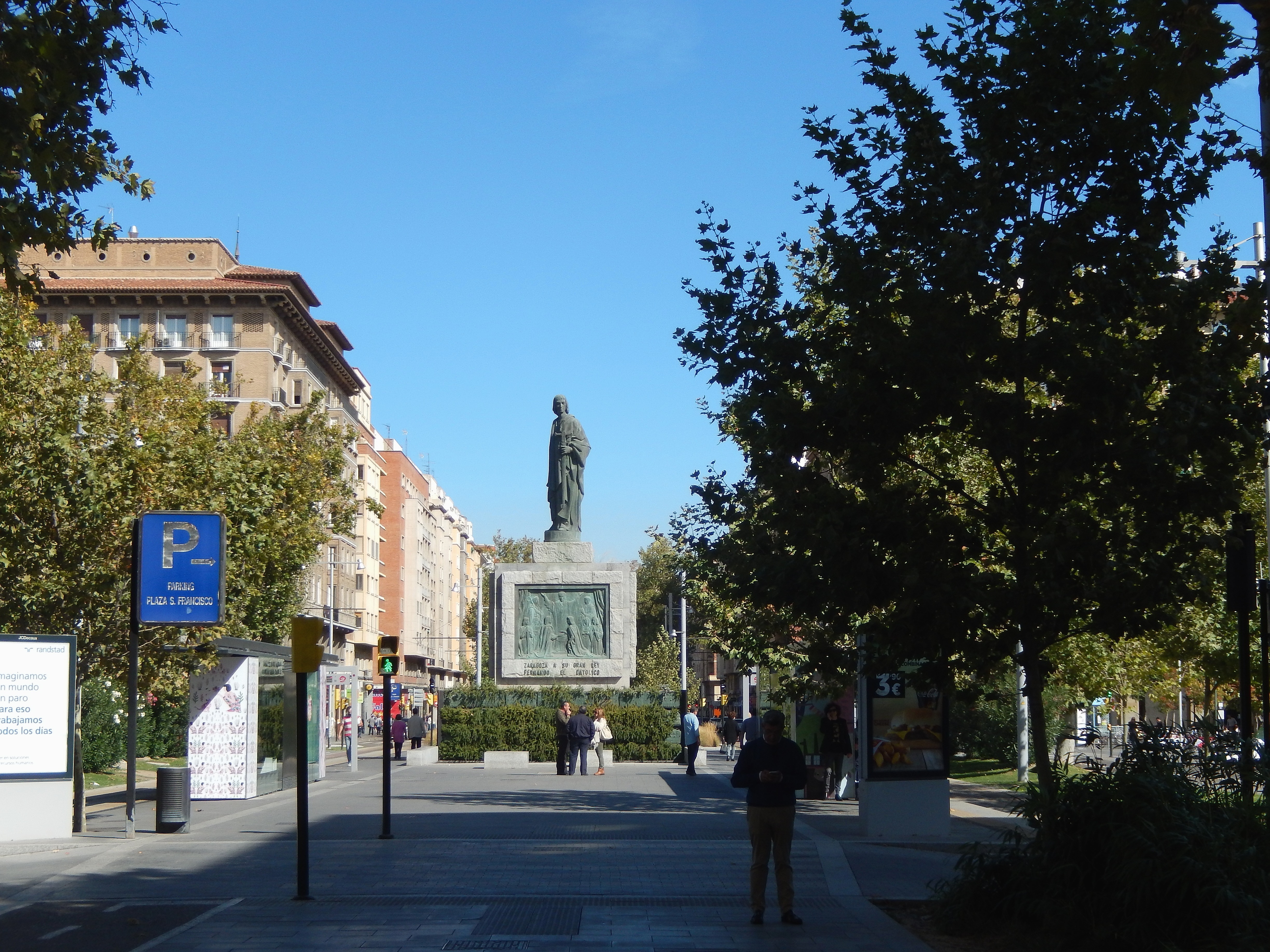
walking down Gran Via
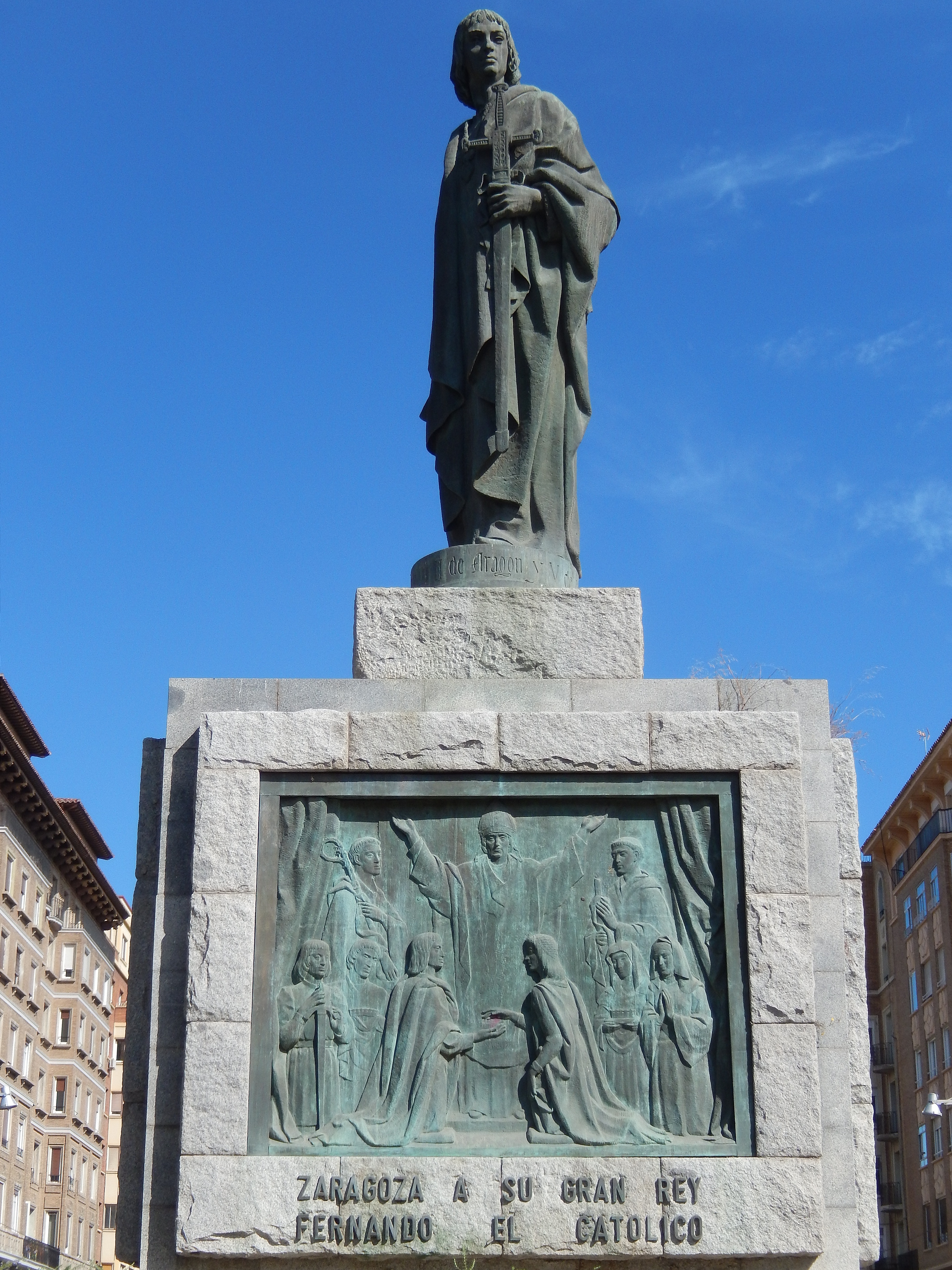
Ferdinand II of Aragon
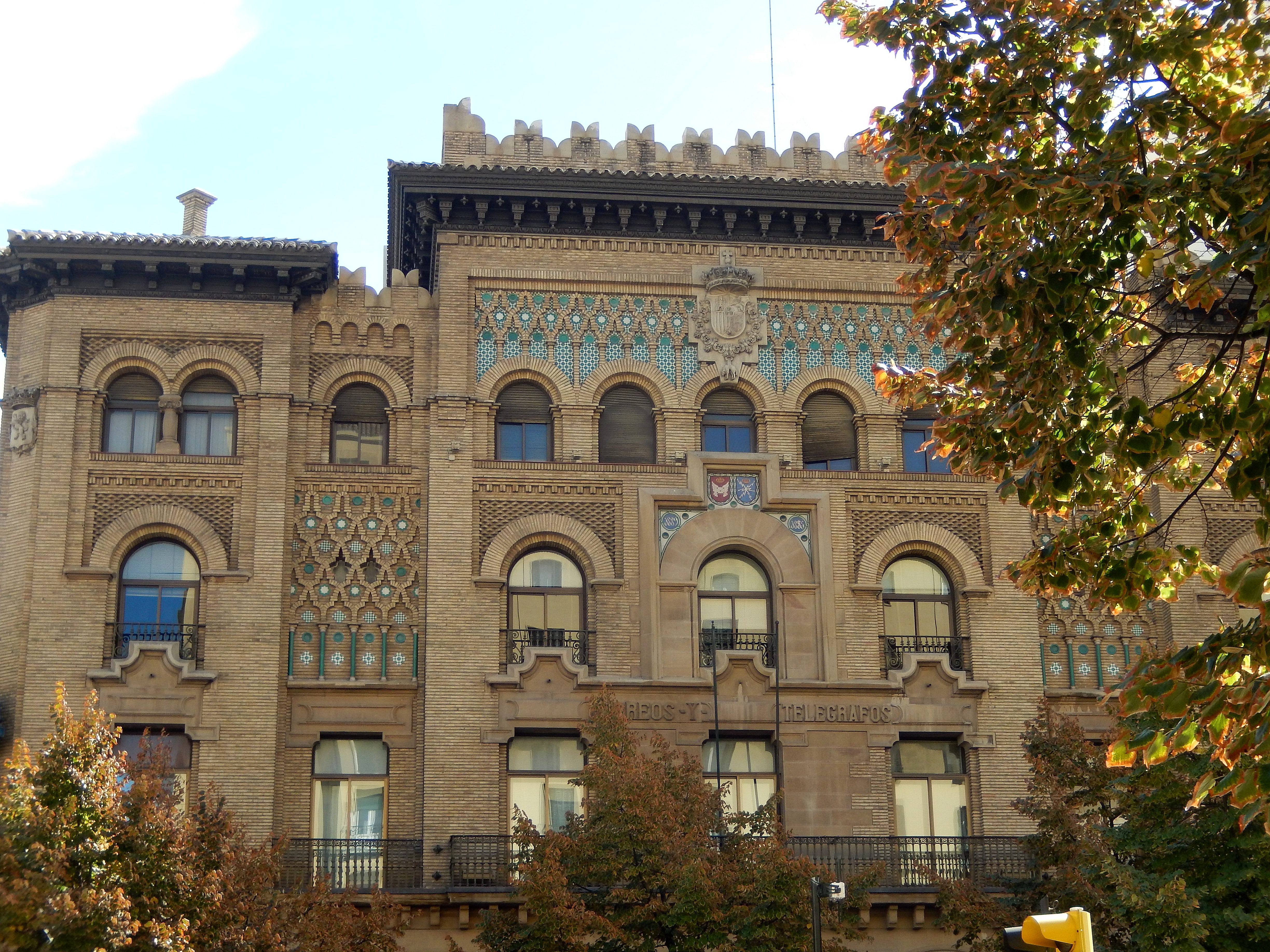
post office – love the architectural mix
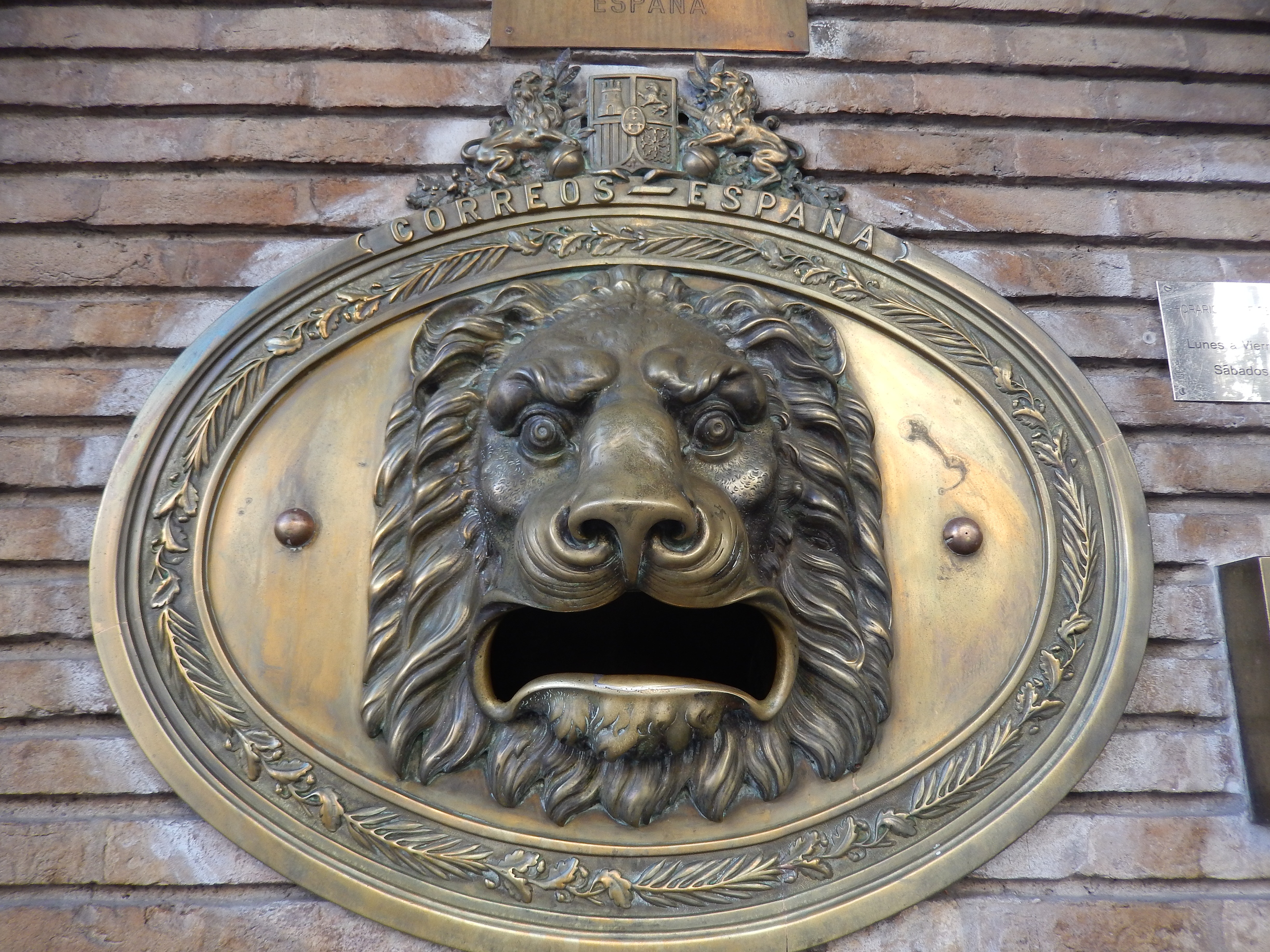
and love this is where you put your mail 🙂
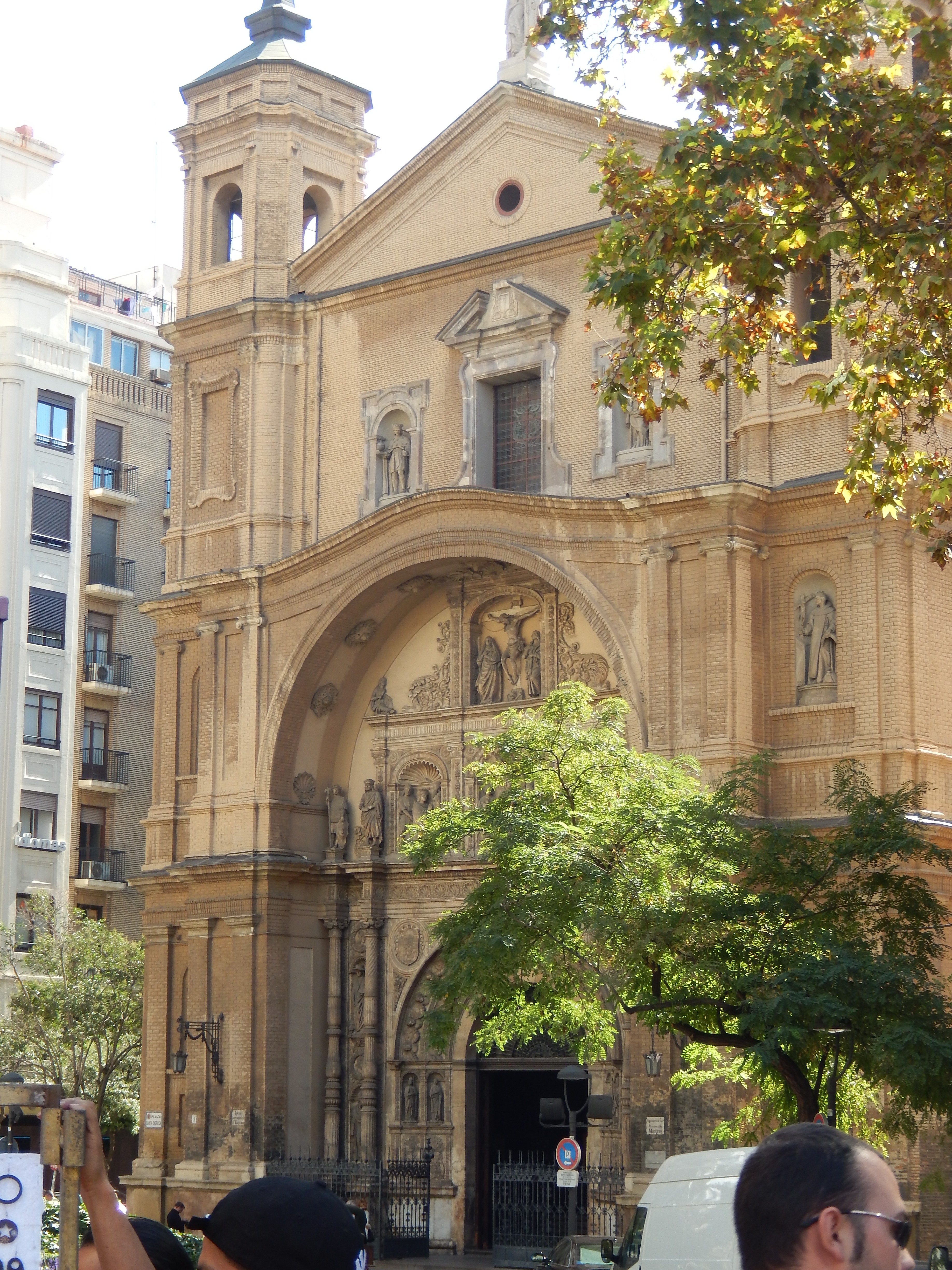
Julio’s grandson was recently christened in this church
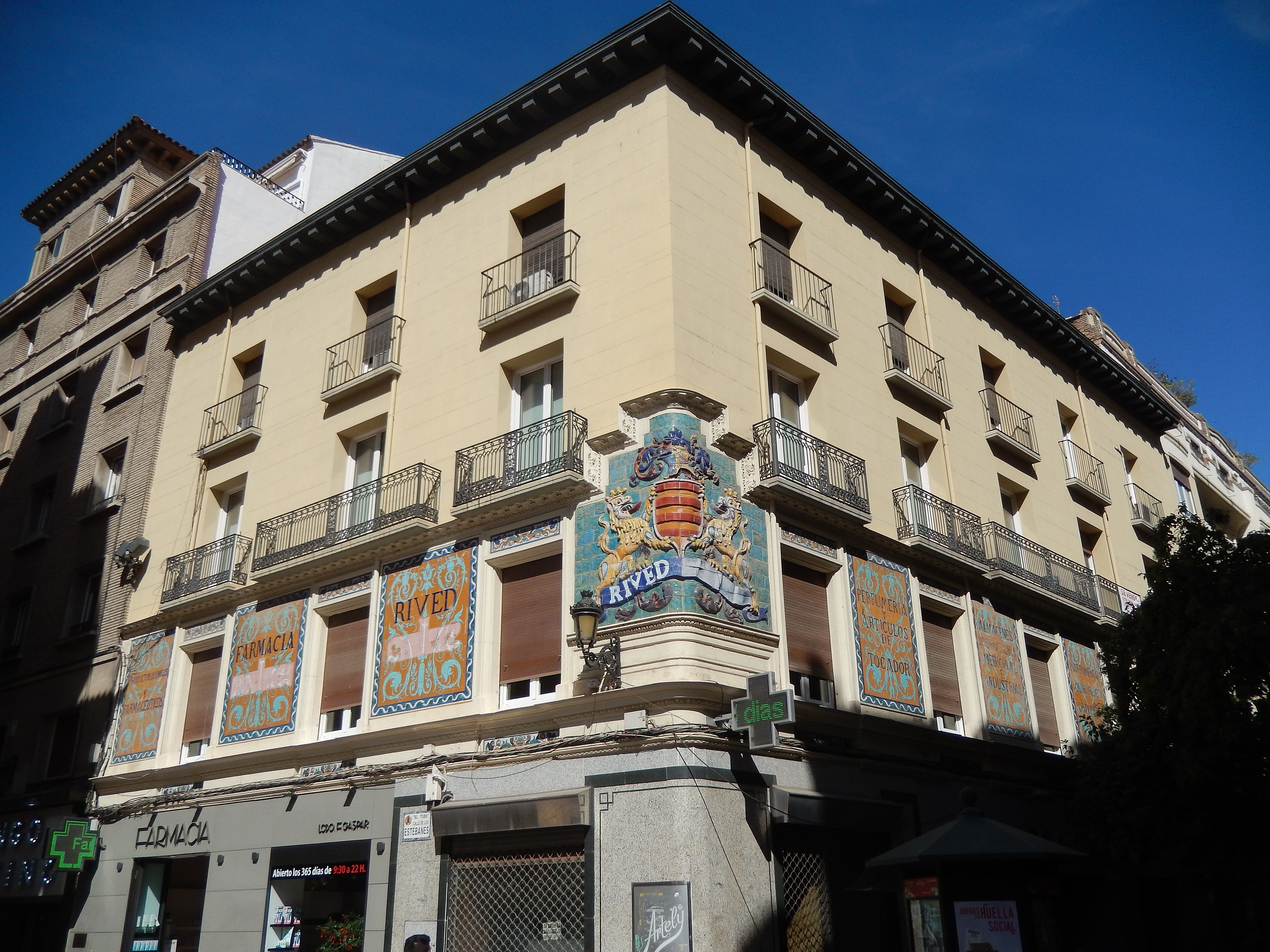
pharmacy, with beautiful tile
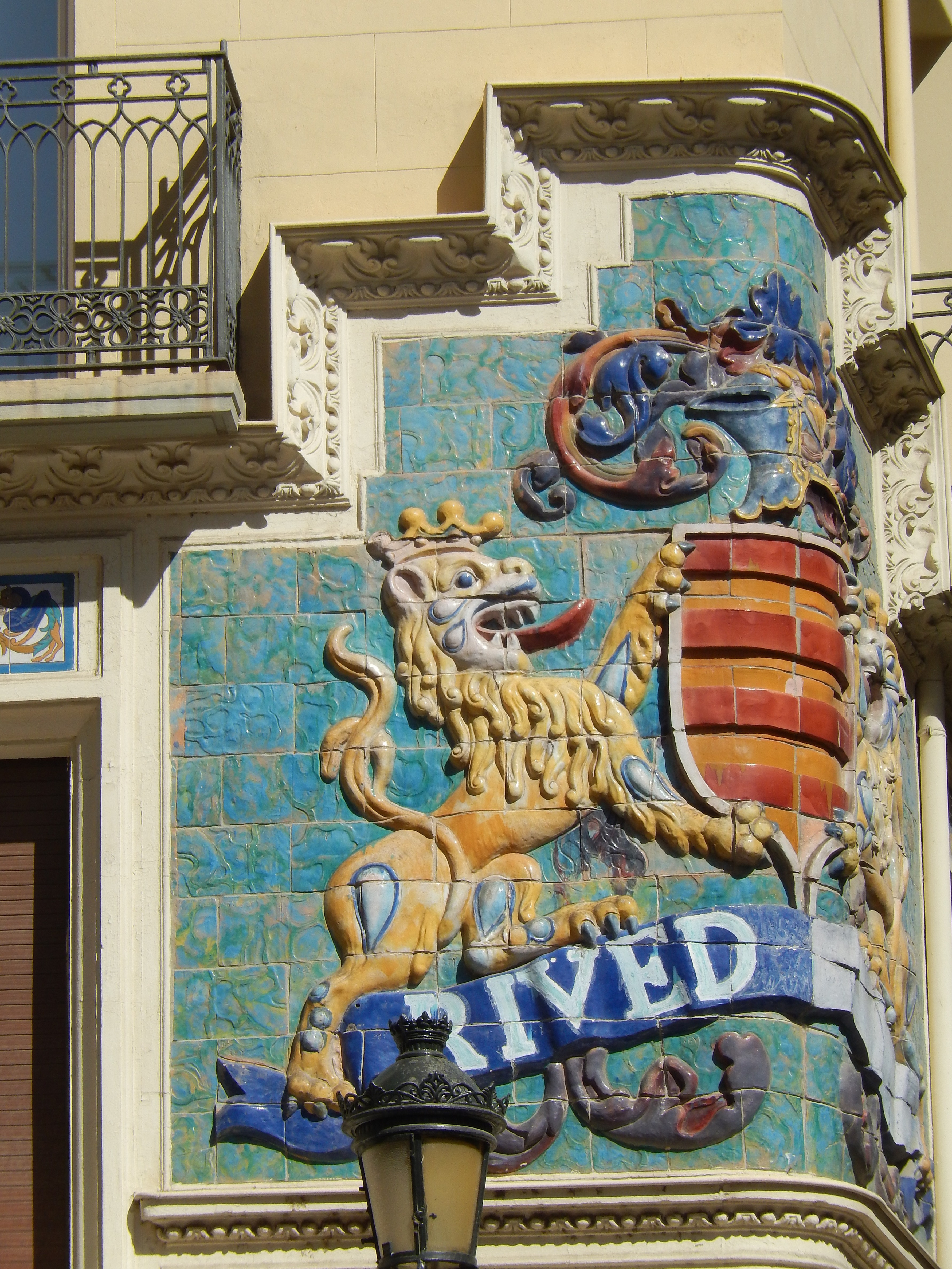
beautiful tile detail
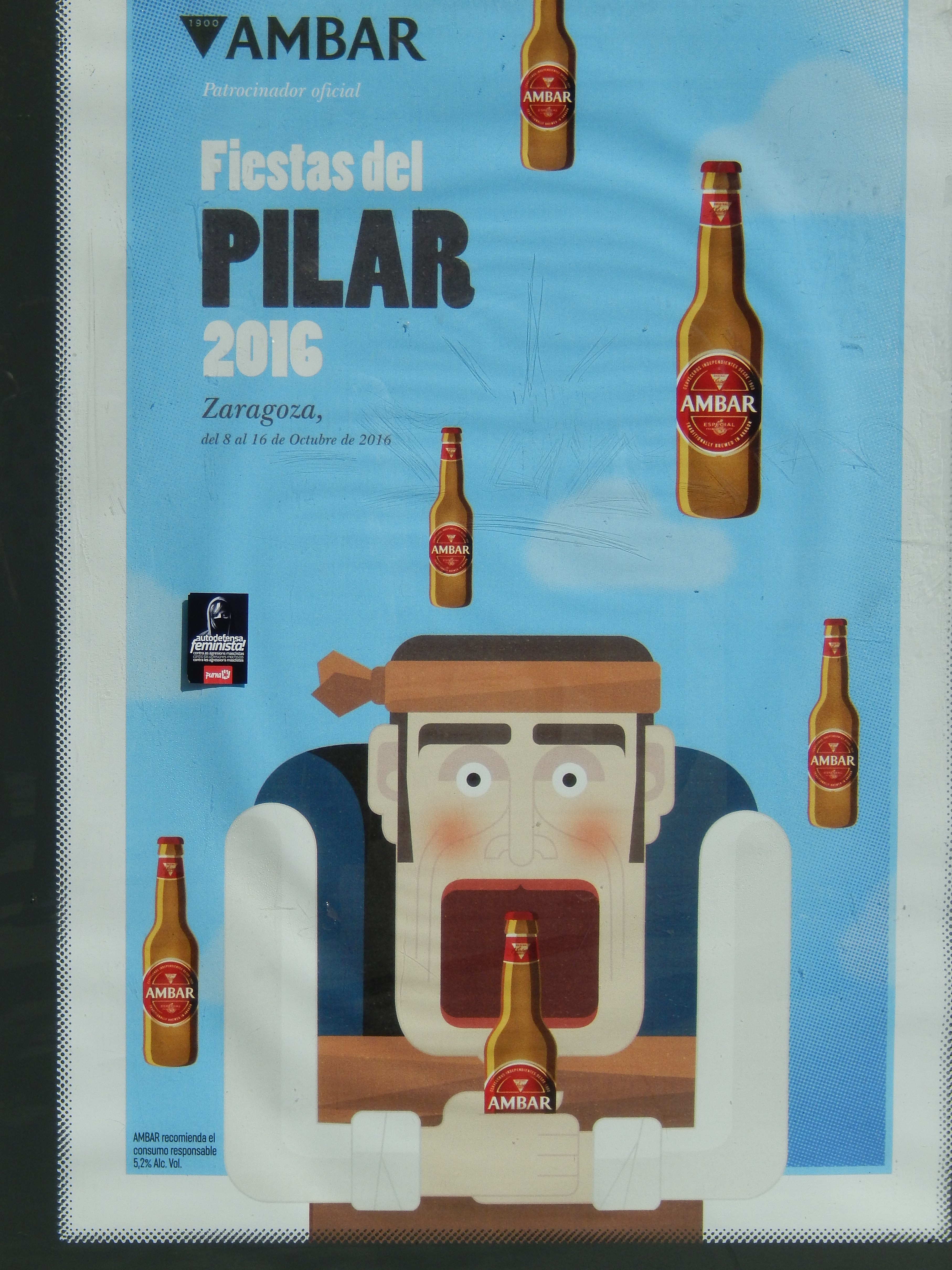
time to begin the Fiesta celebration!
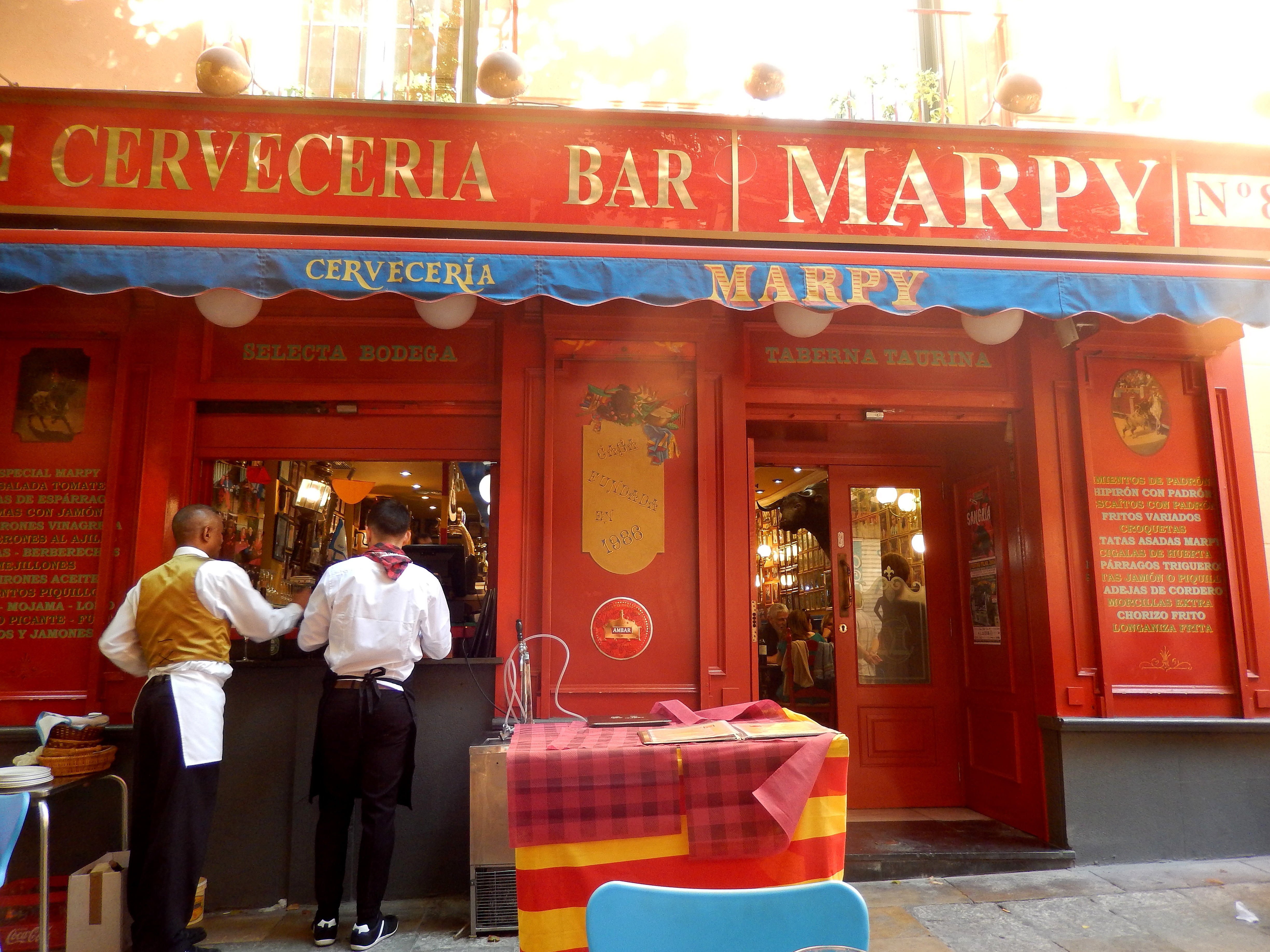
first, drinks and tapas at this bar, which is…
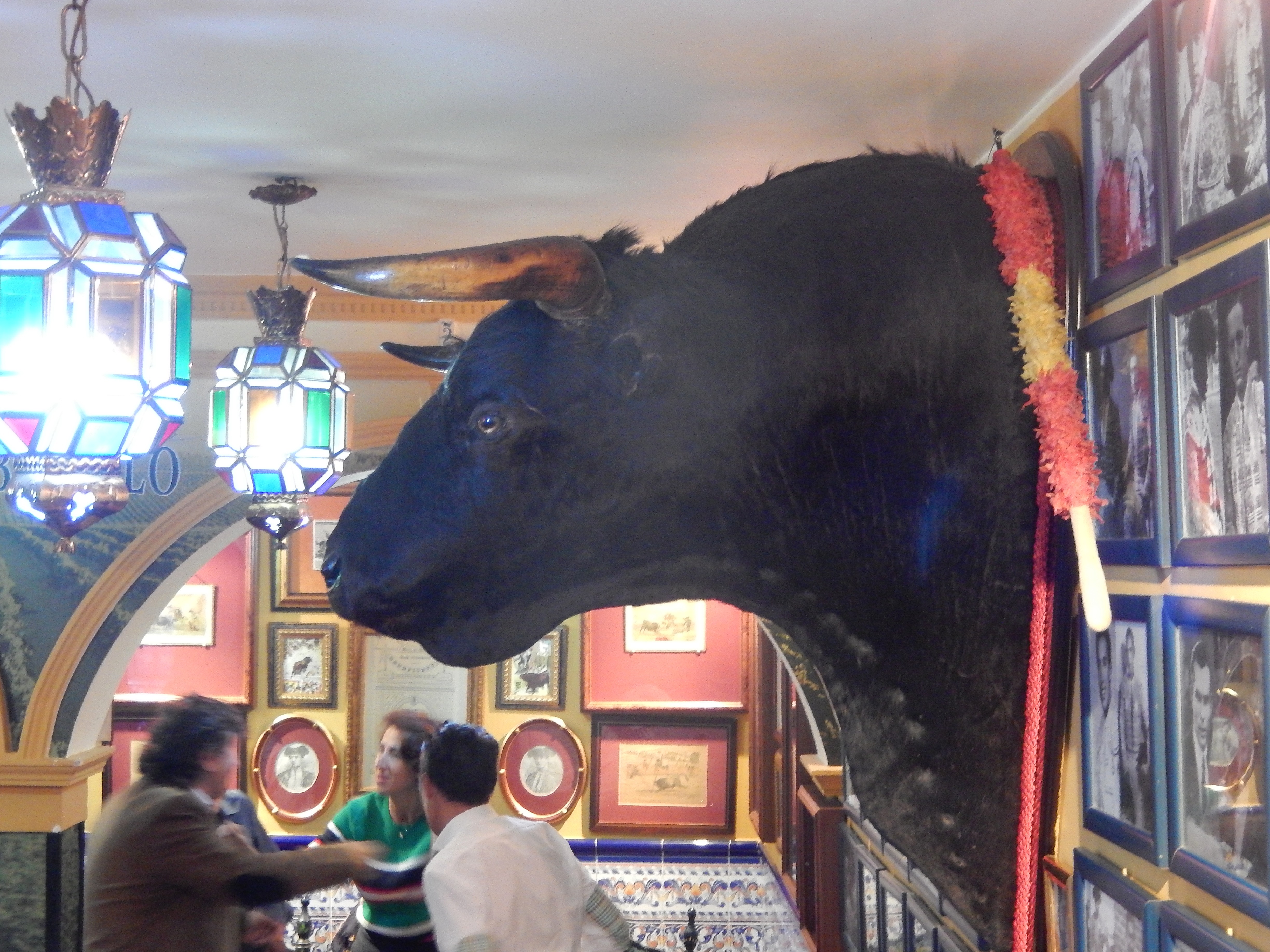
..another bar dedicated to the bull
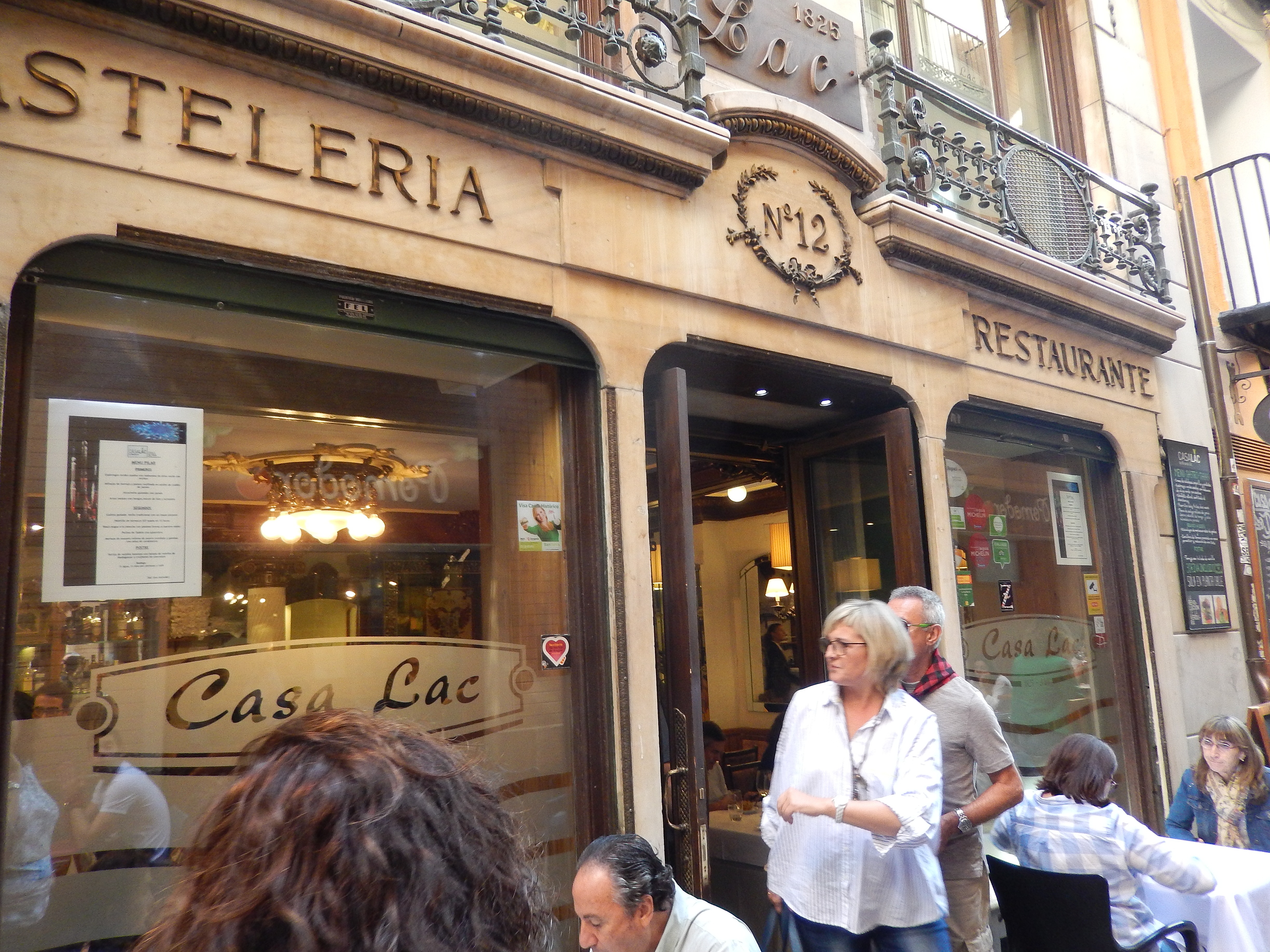
and then our 3 p.m. lunch at this restaurant..
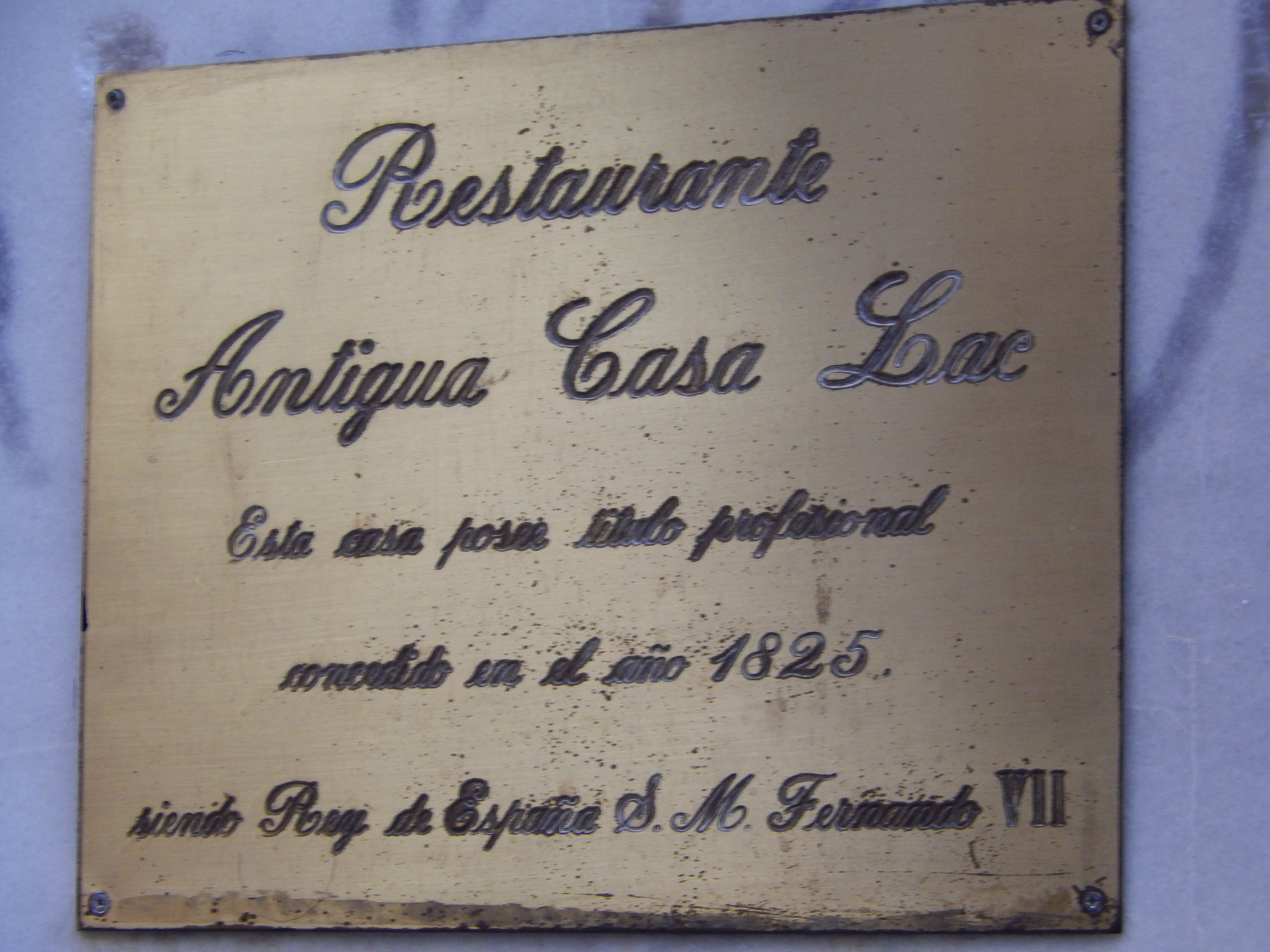
..which dates back to 1825
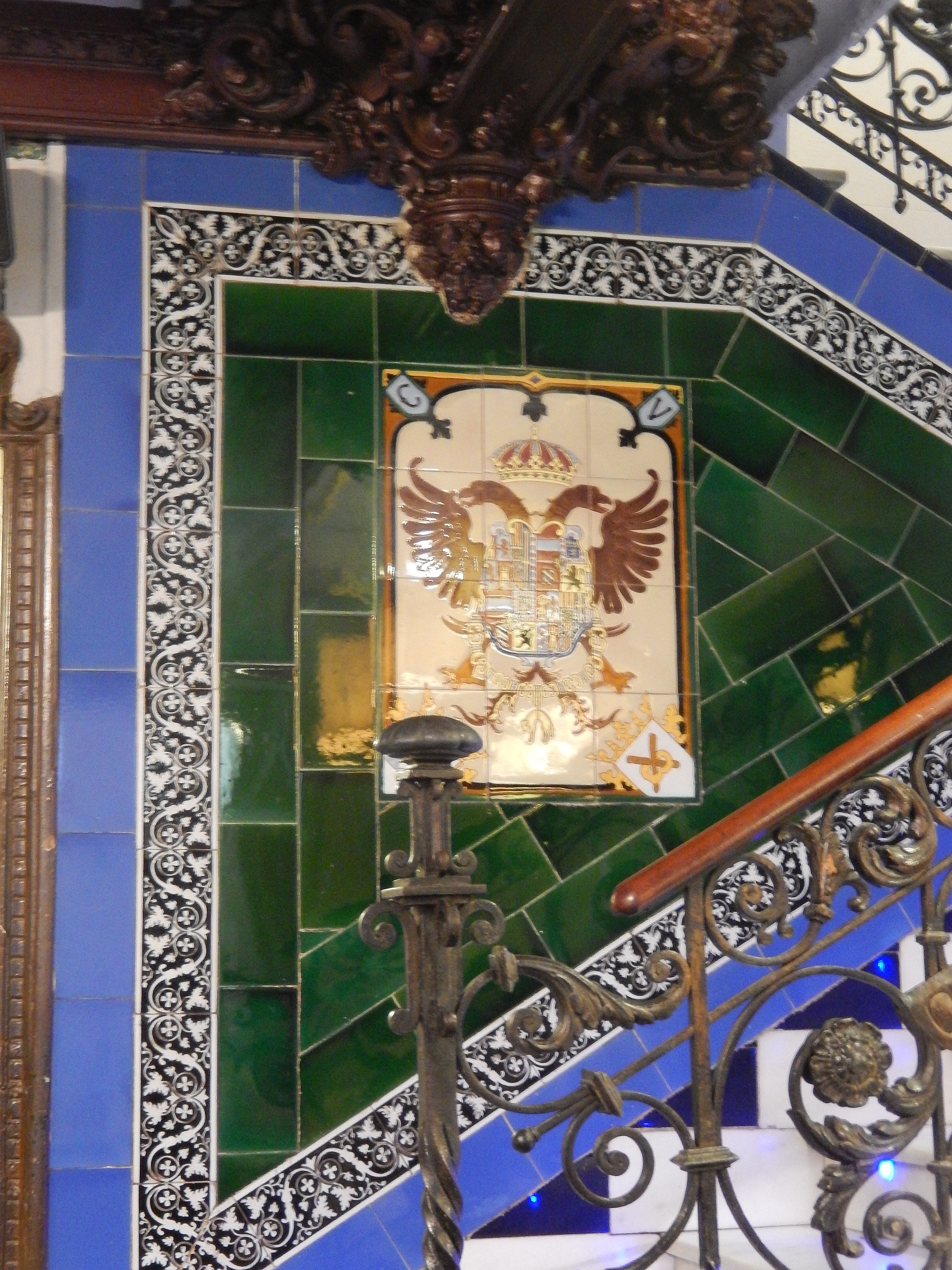
beautiful tile. wrought iron and woodwork in the restaurant

the lunch gang
Lunch was excellent – delicious food and lots of wine, and it lasted for 2 1/2 hours!! Finally, we got up, and went on to join the crowds at the Plaza del Pilar. Along the way…
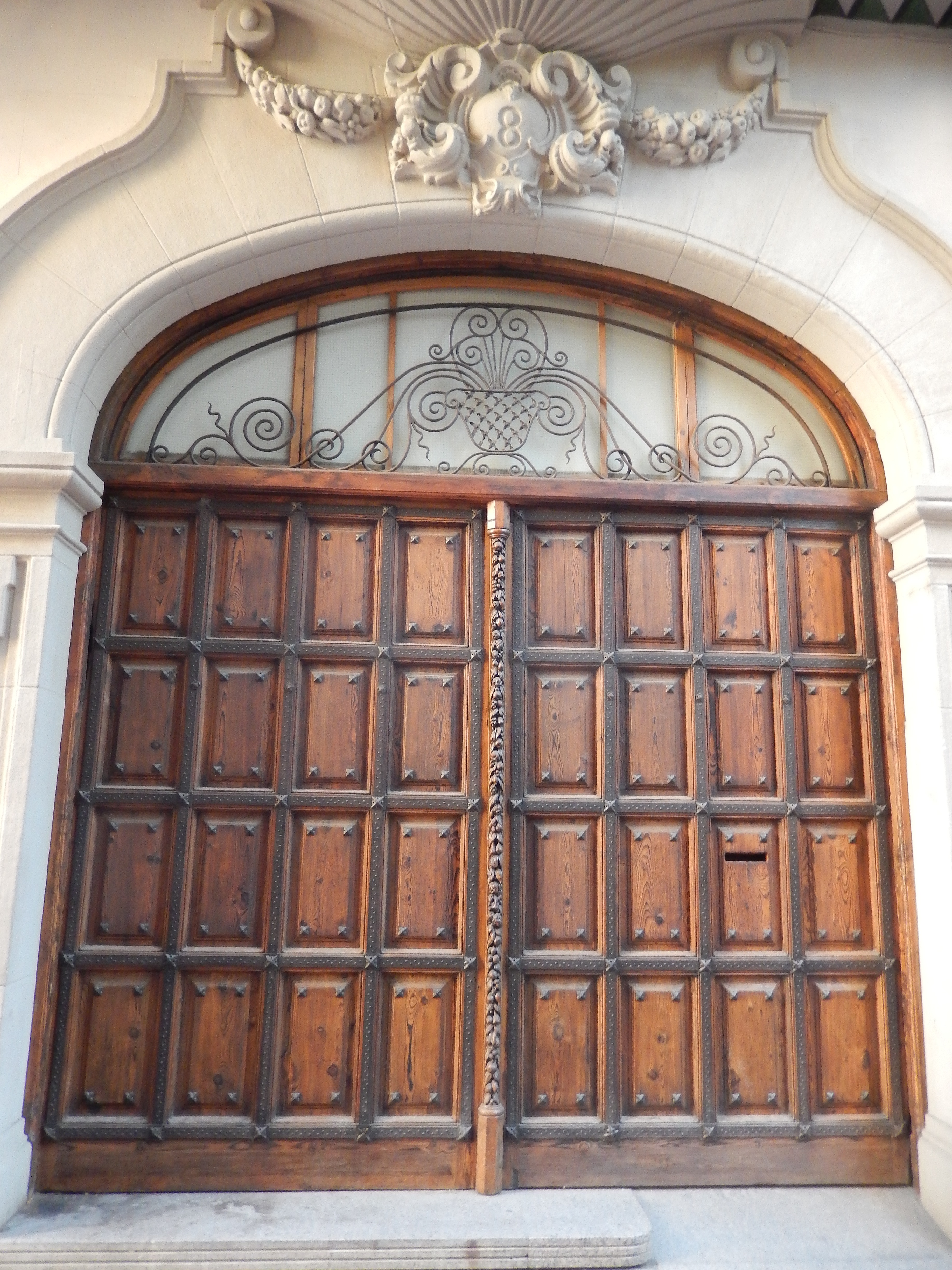
usually windows are my thing, but a few doors caught my eye ..
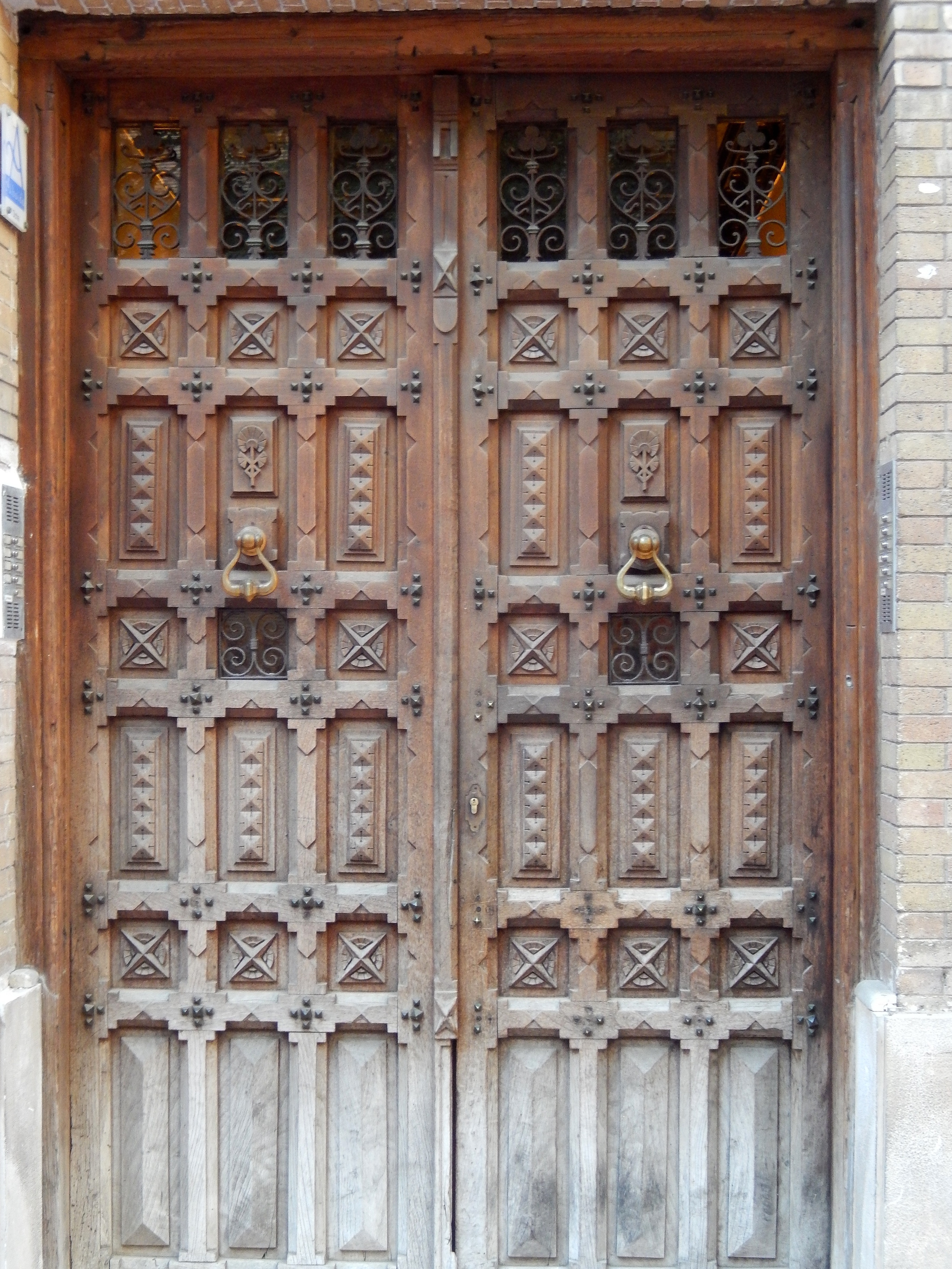
another door
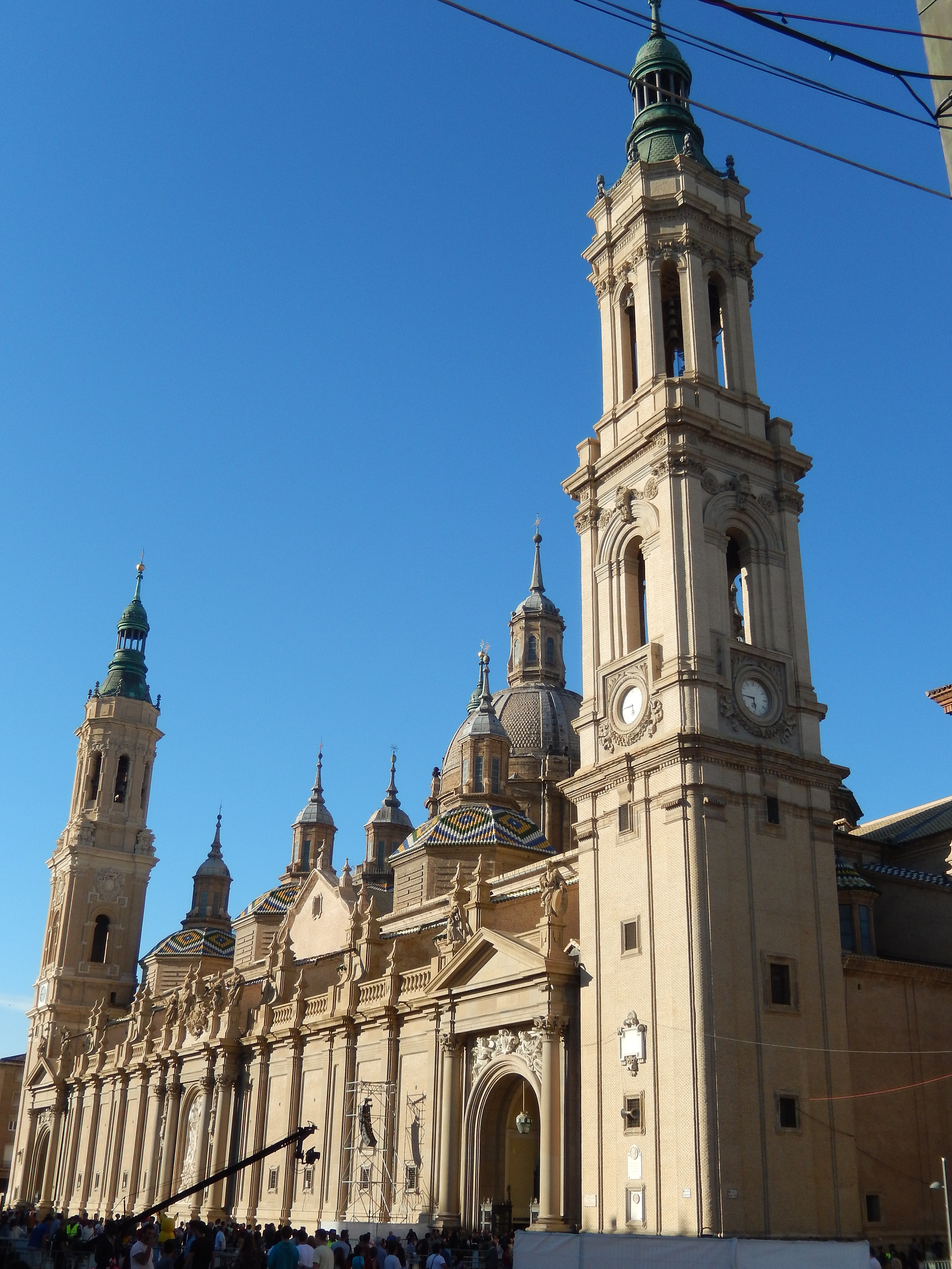
Cathedral-Basilica of Our Lady of the Pillar
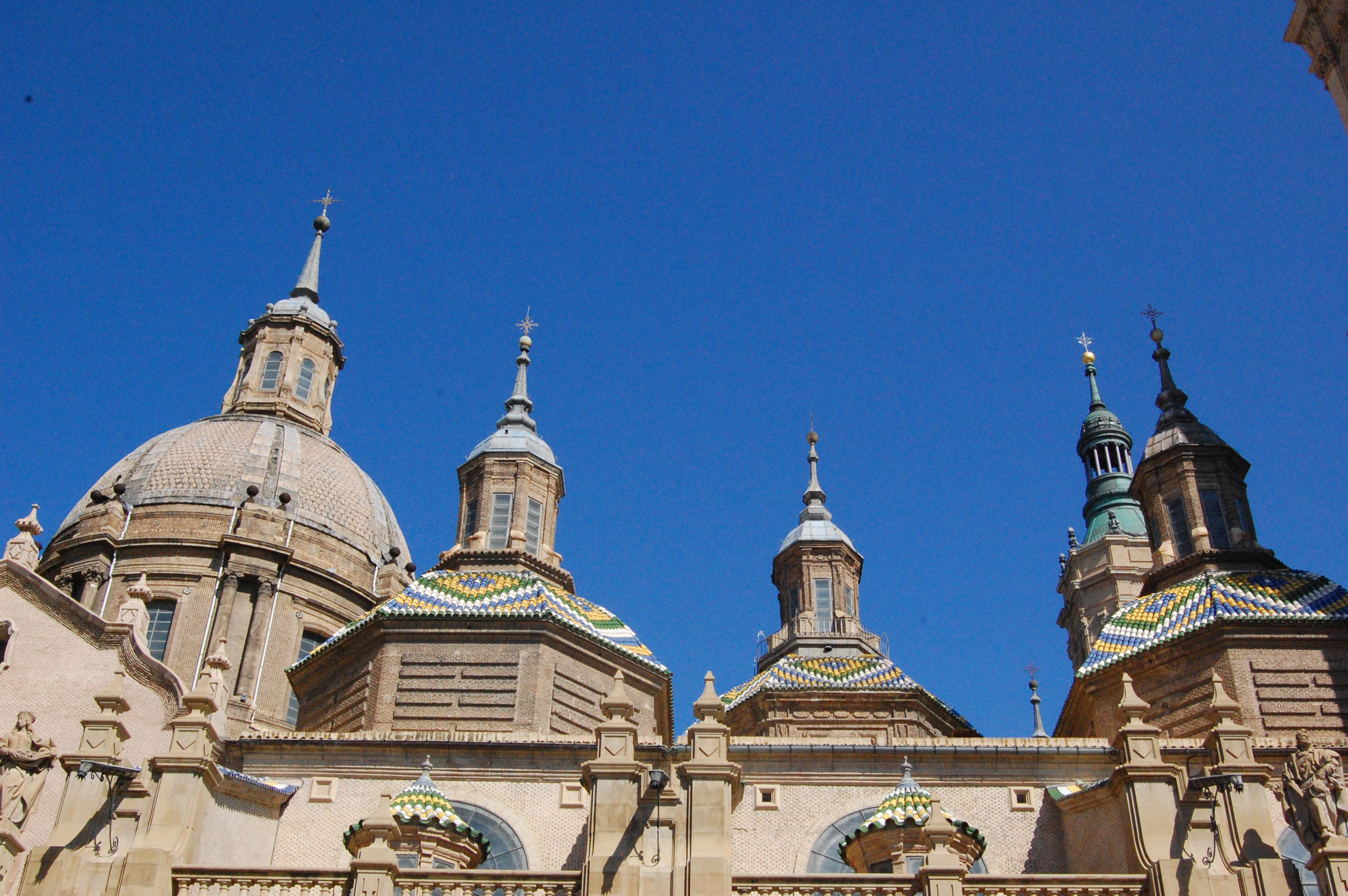
beautiful tiled roof
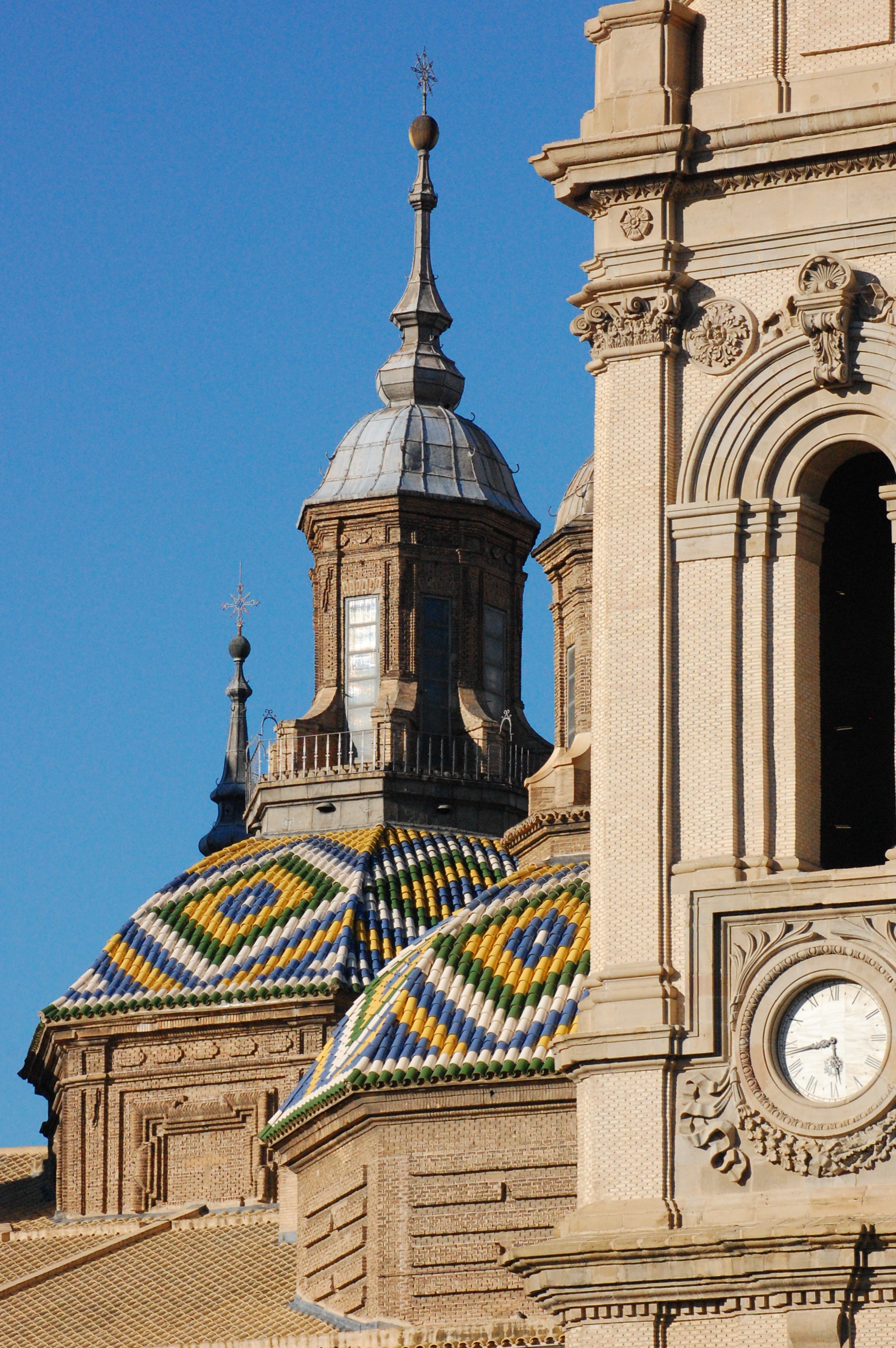
roof detail
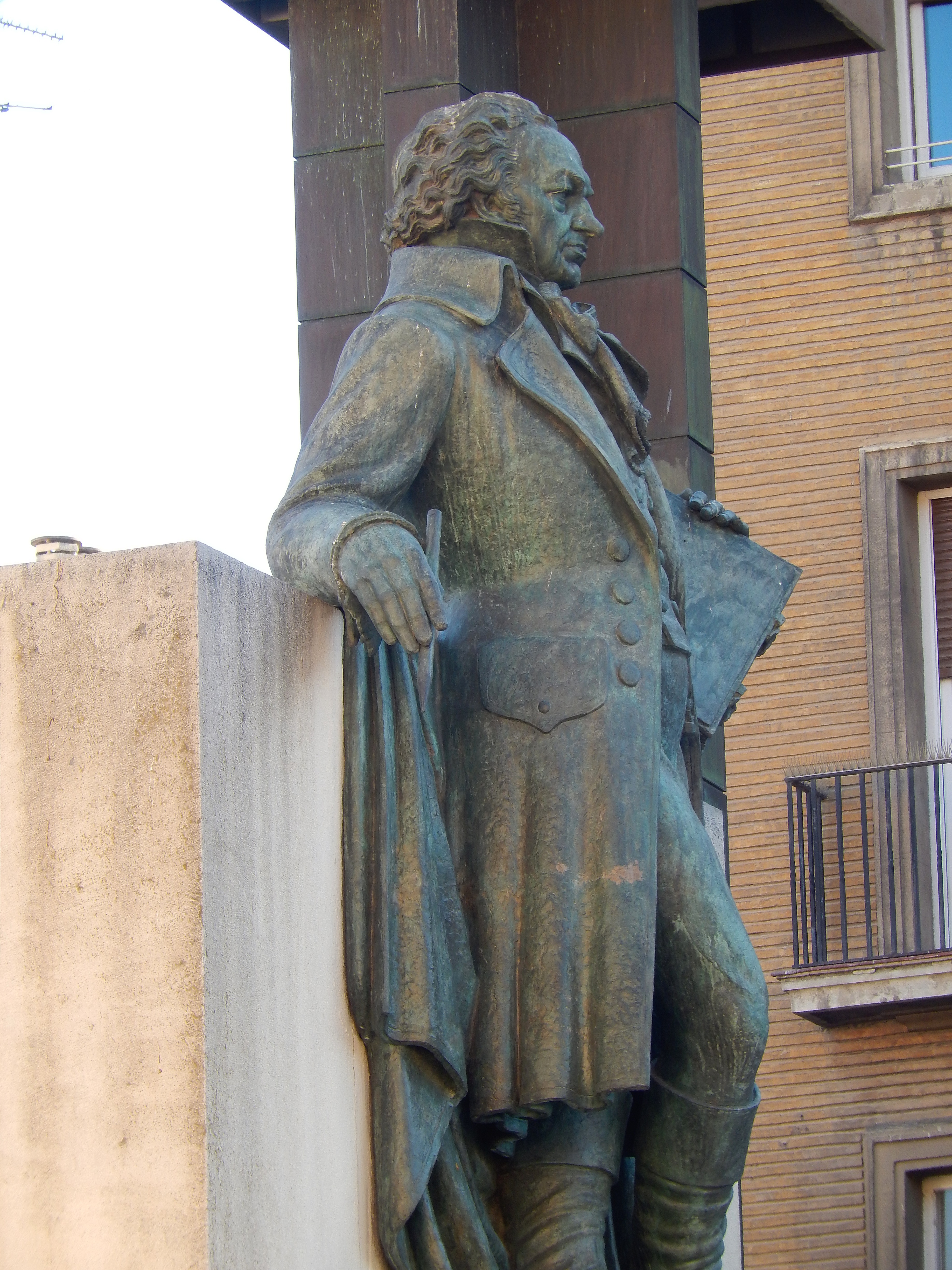
the Spanish painter, Goya
We did not go into the Basilica because of the crowds. We did, however, go into the other cathedral in the square, La Seo, which features a fascinating mix of styles: 12th-century Gothic, Mudejar (a style of art and architecture, native and unique to the history of Spain, being an amalgamation of Christian and Islamic), and 18th-century baroque. No photos allowed inside, but Don managed a few…
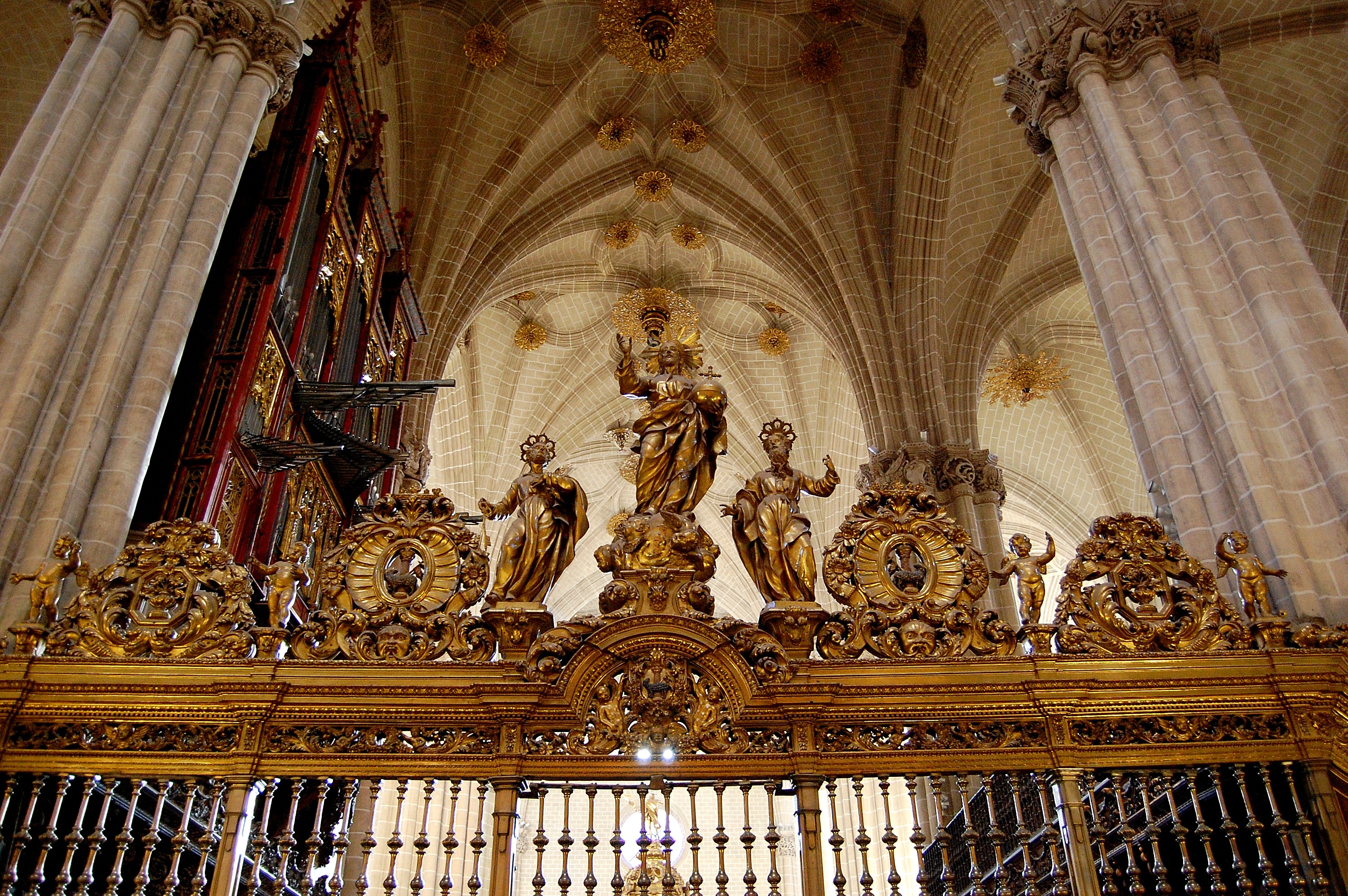
inside La Seo Cathedral
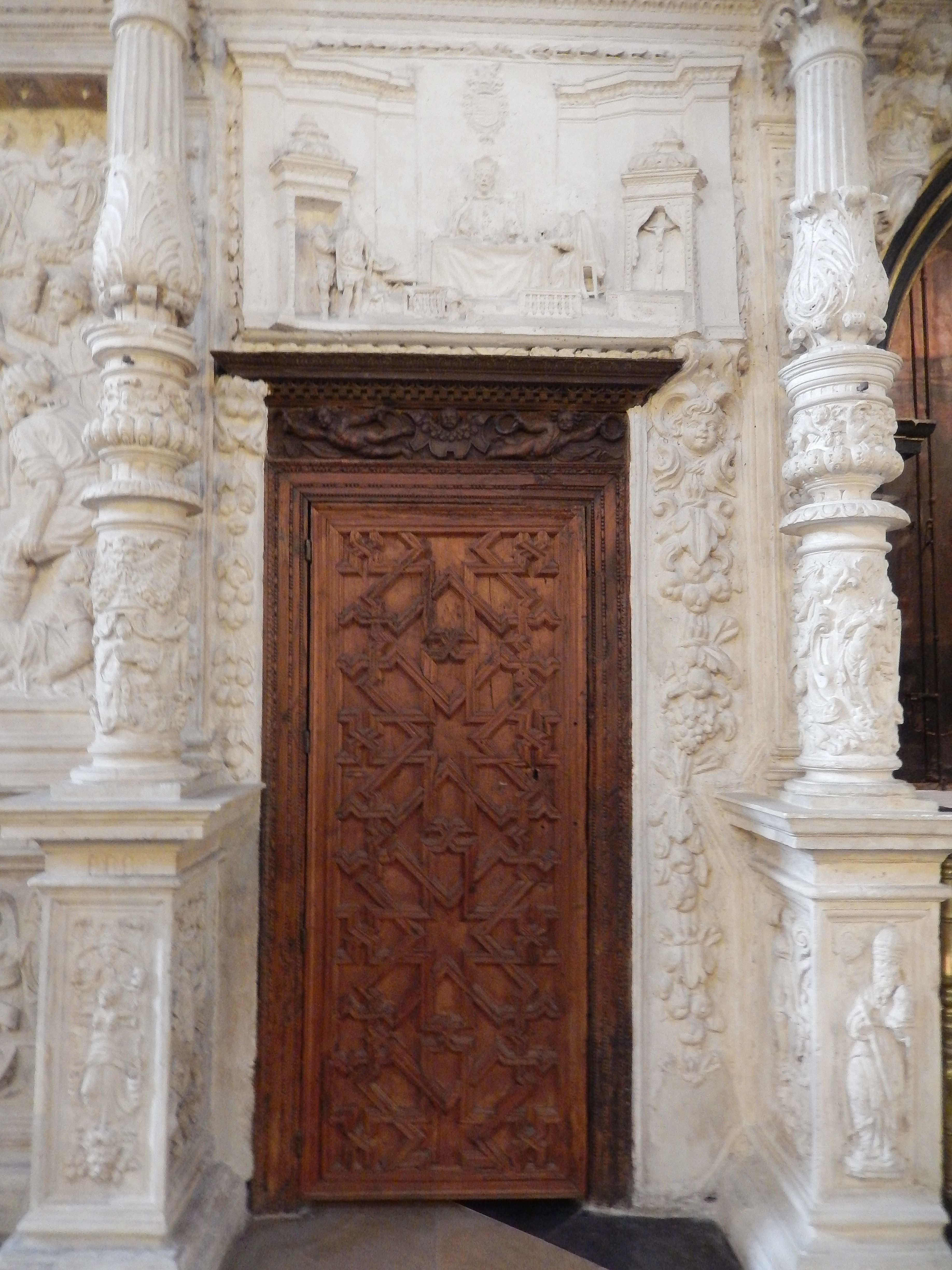
talk about a crazy mix: Mudéjar door, entrance to the choir, on which is placed a relief with St. Peter presiding over the court of inquisition (translated from the explanation inside the church)
We walked around the outside of the cathedral to get a better understanding of the mix of architectures…
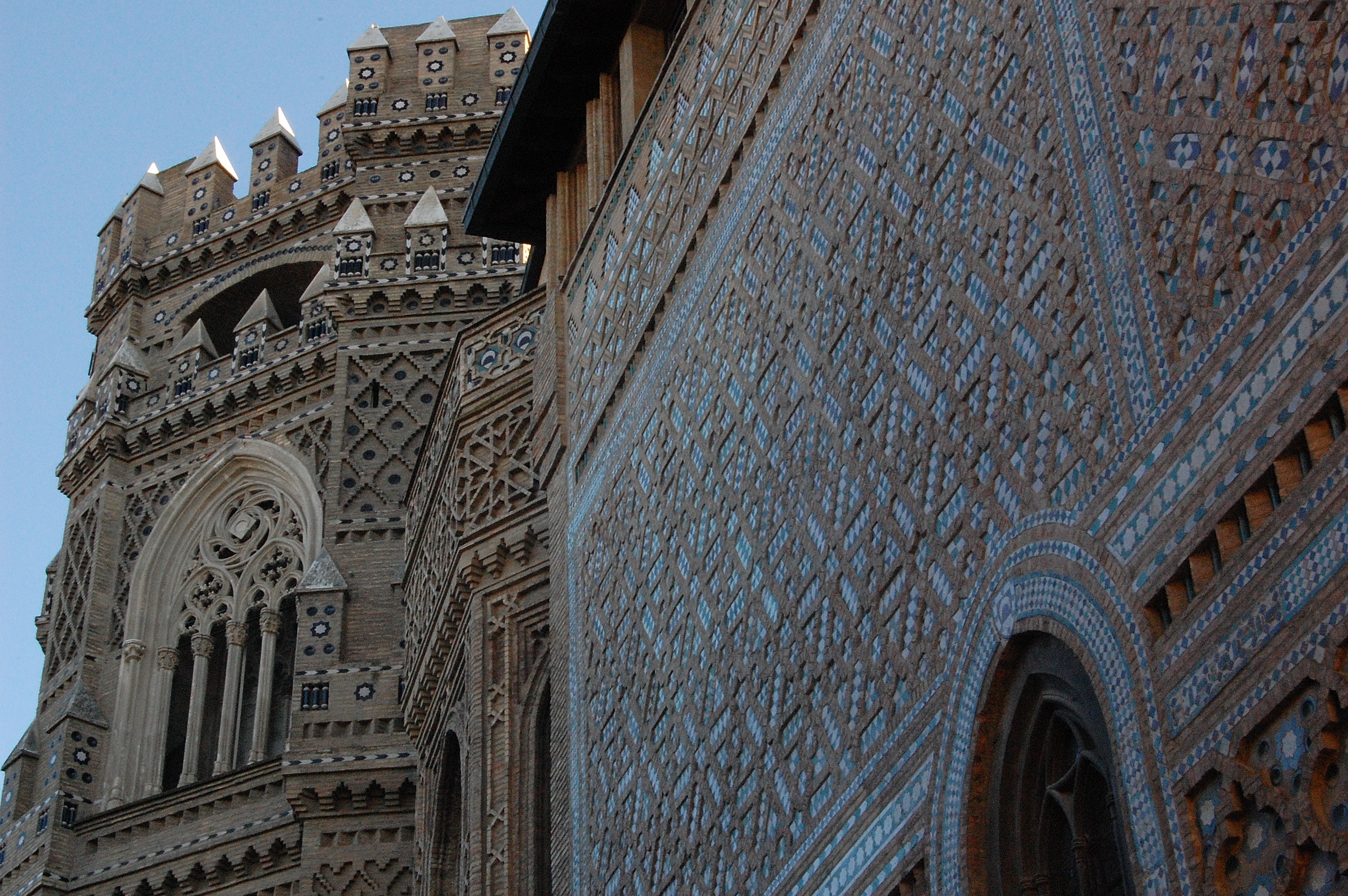
alongside La Seo Cathedral
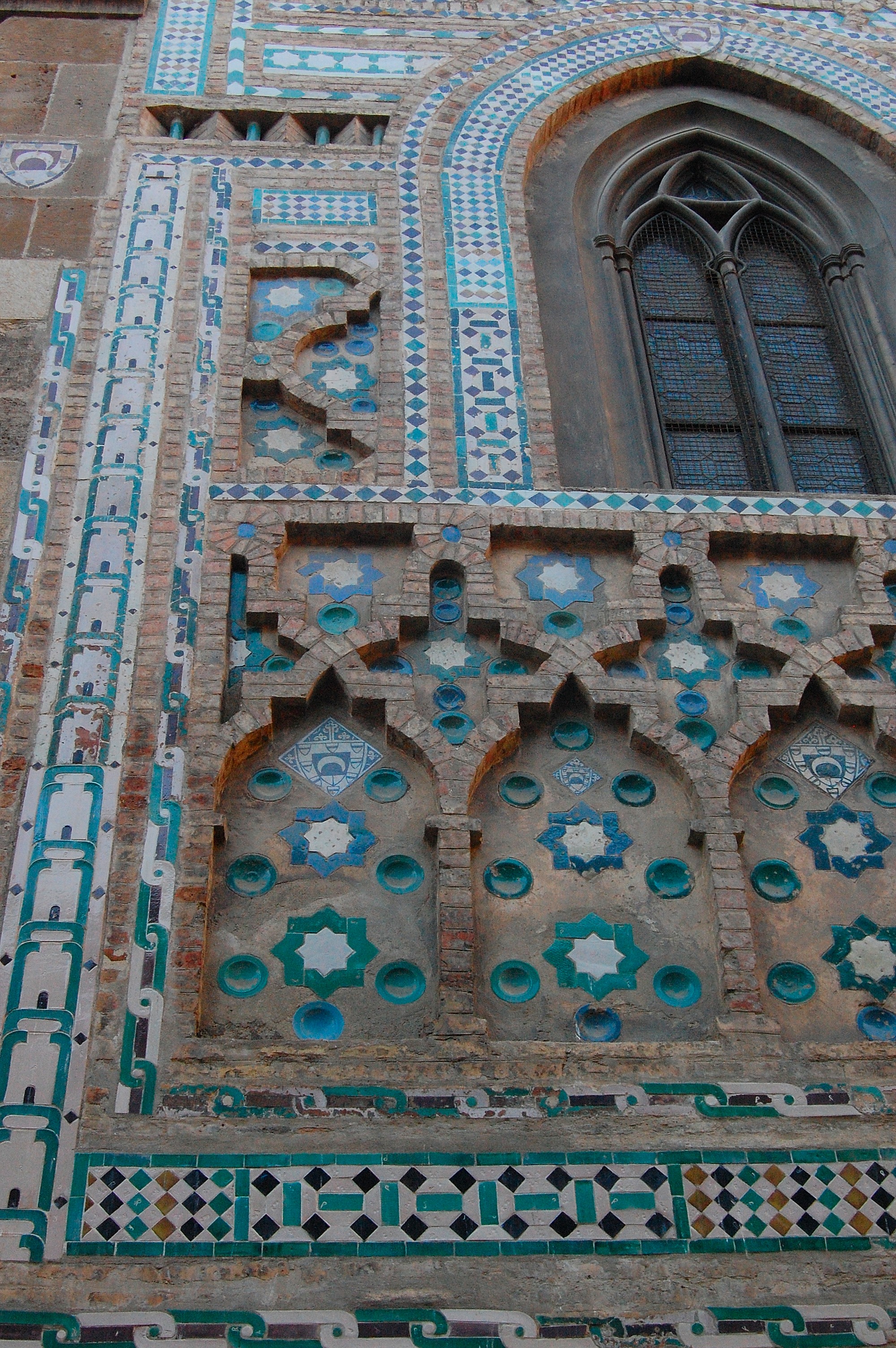
Mudejar tiles and windows
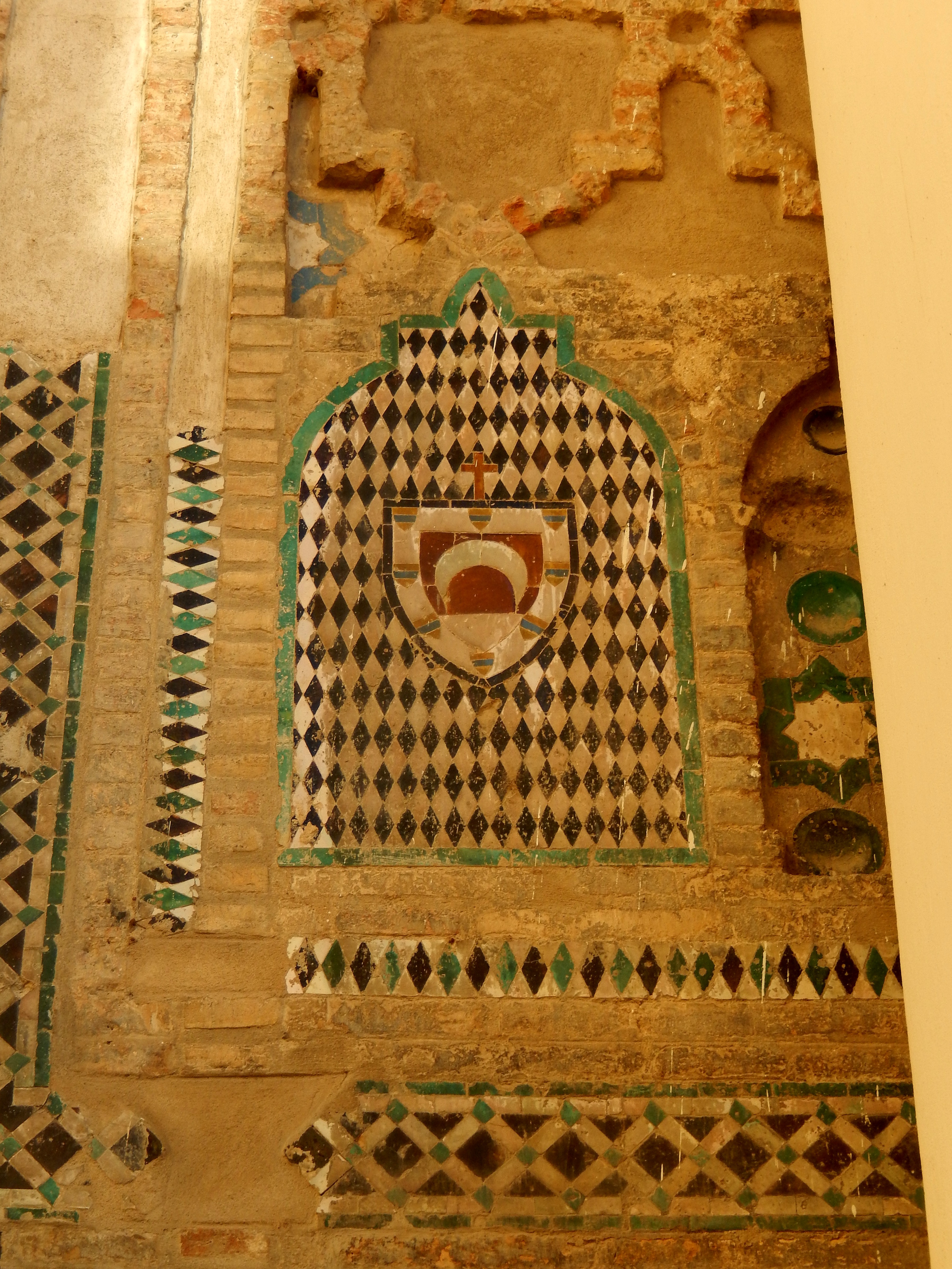
more detail
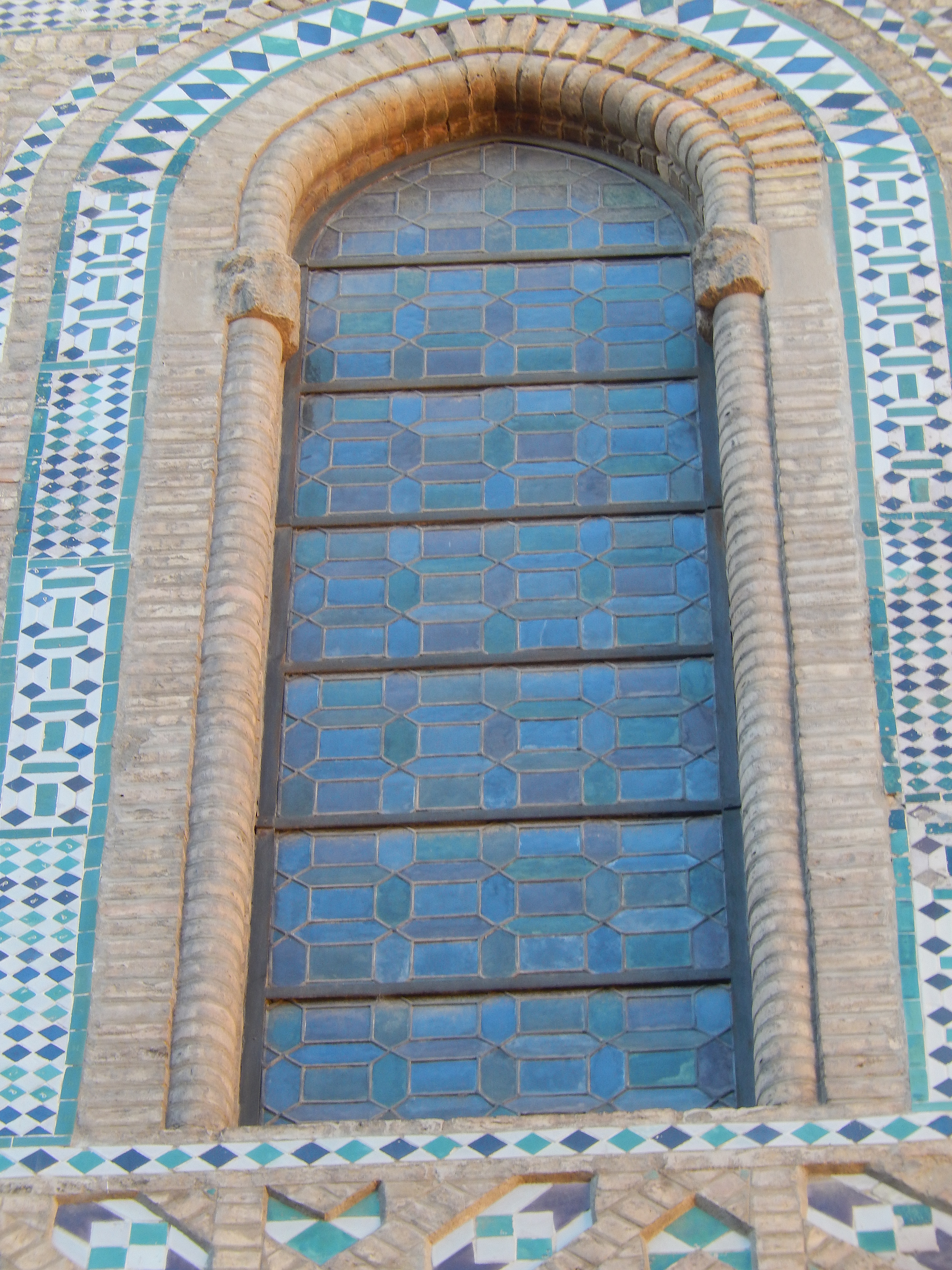
window detail
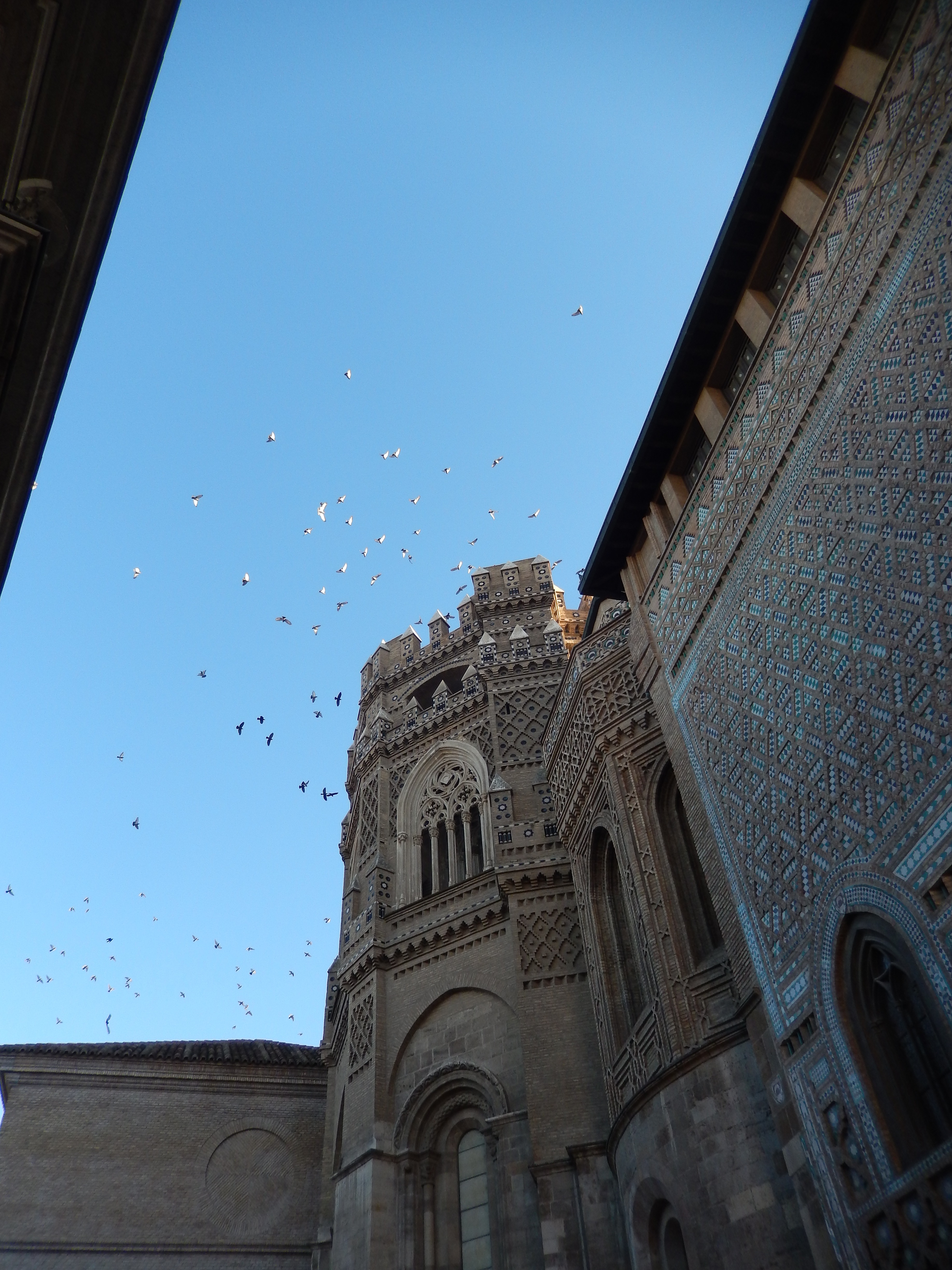
swooping birds around the tower
We walked down to the river, to see the old Roman bridge, and then back up to the area by the cathedral for more drinks…
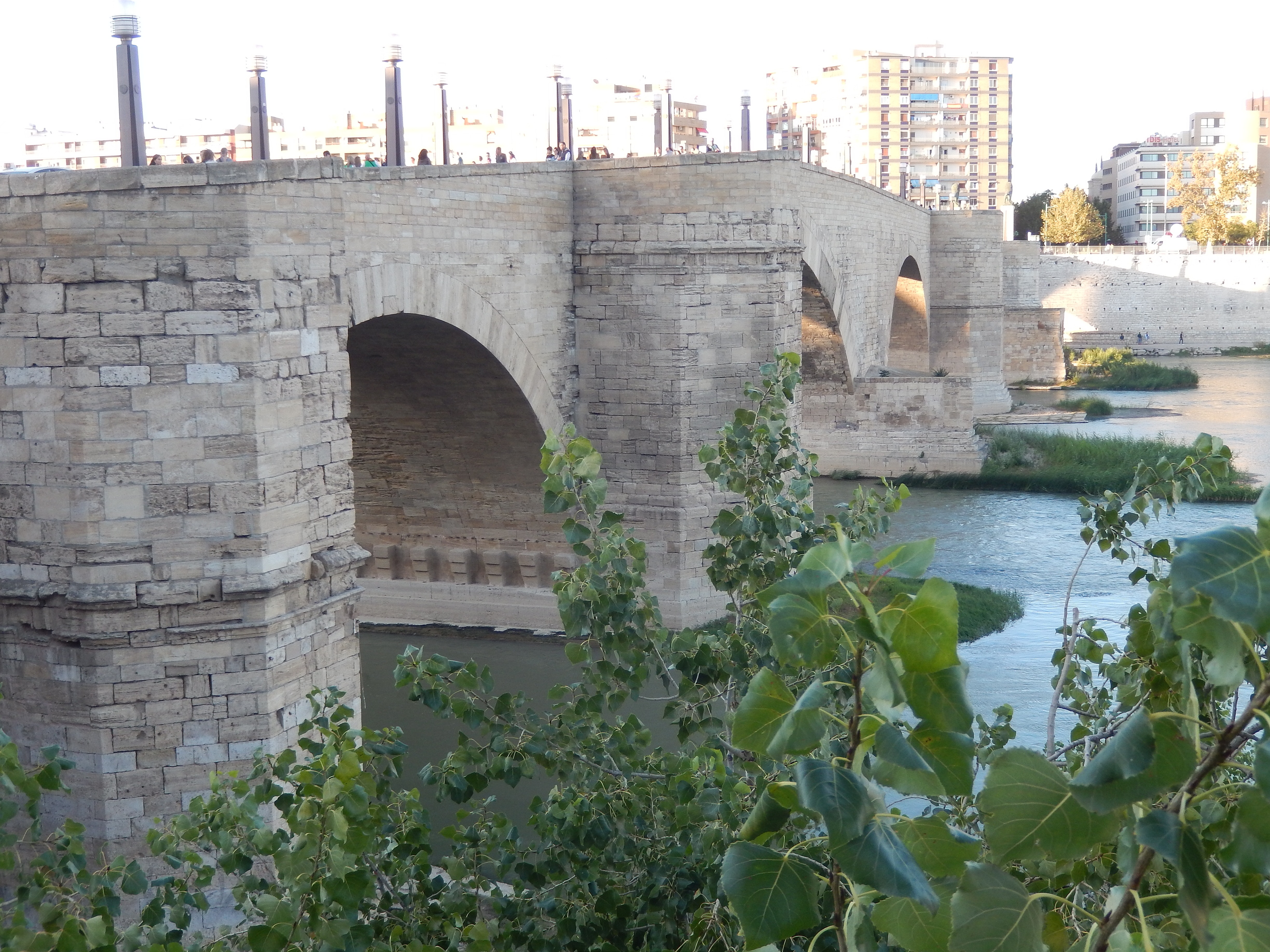
old Roman bridge that crosses the Ebro river
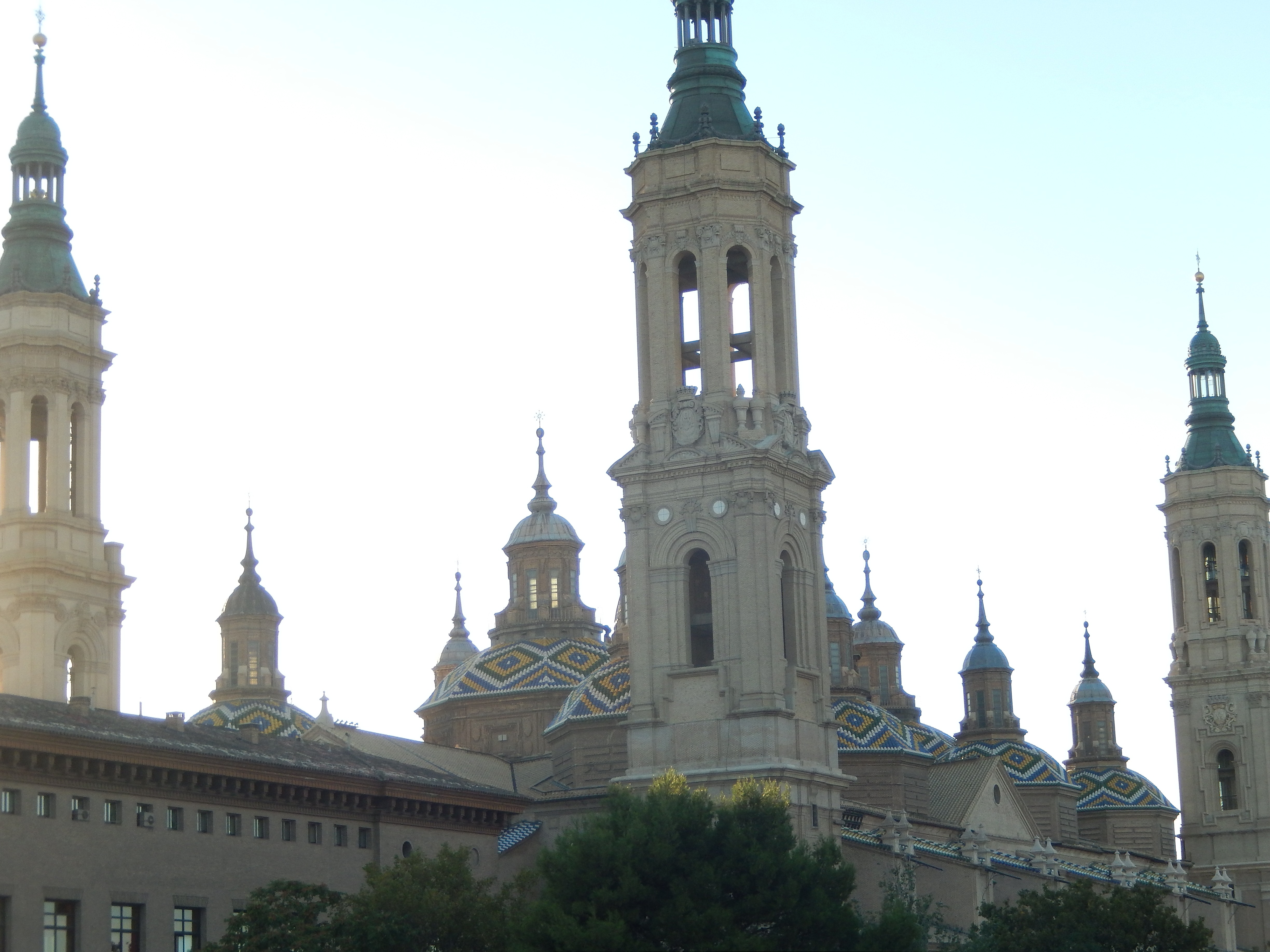
late in the day, great lighting behind Basilica
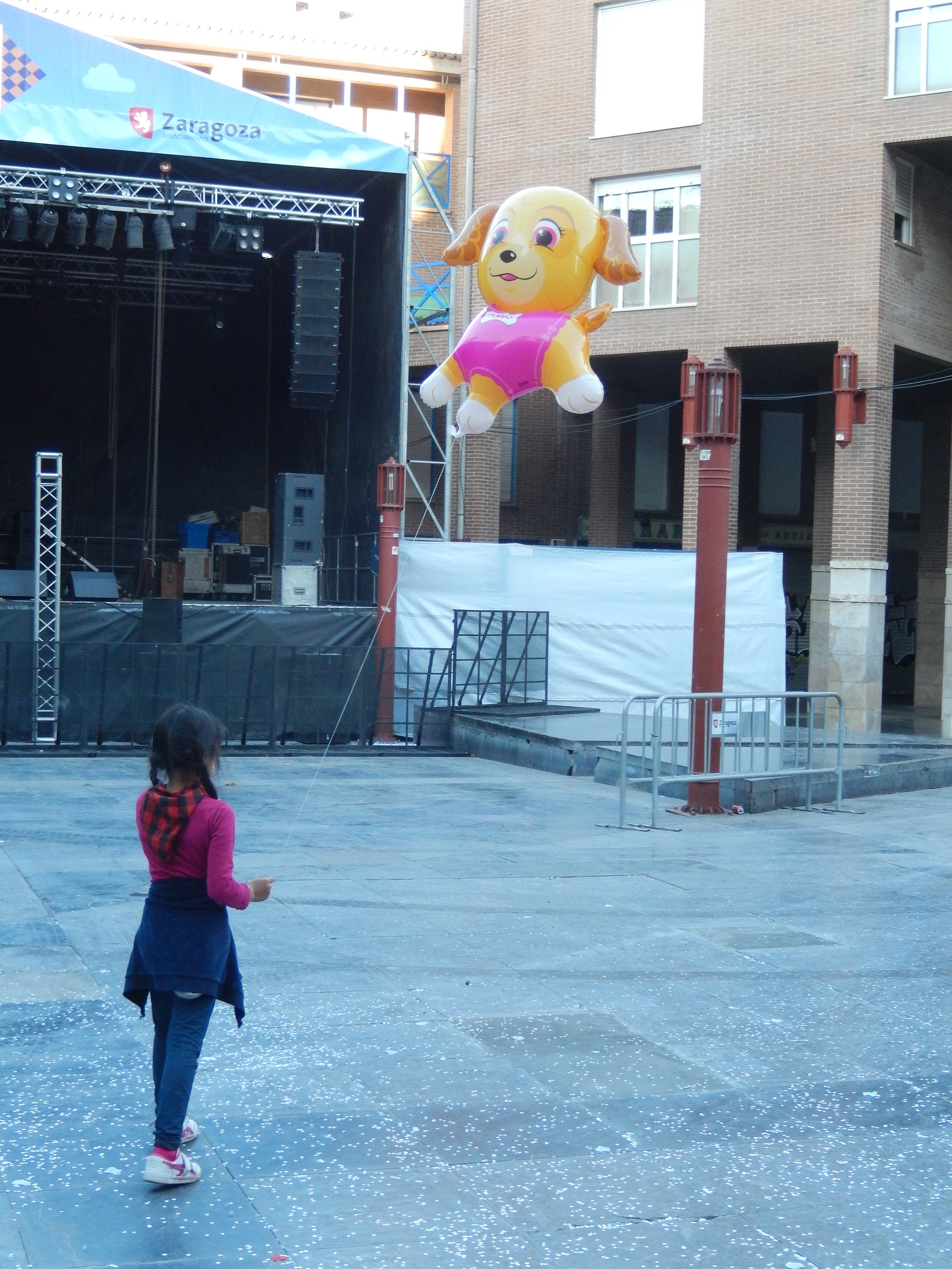
waiting for the festival parade
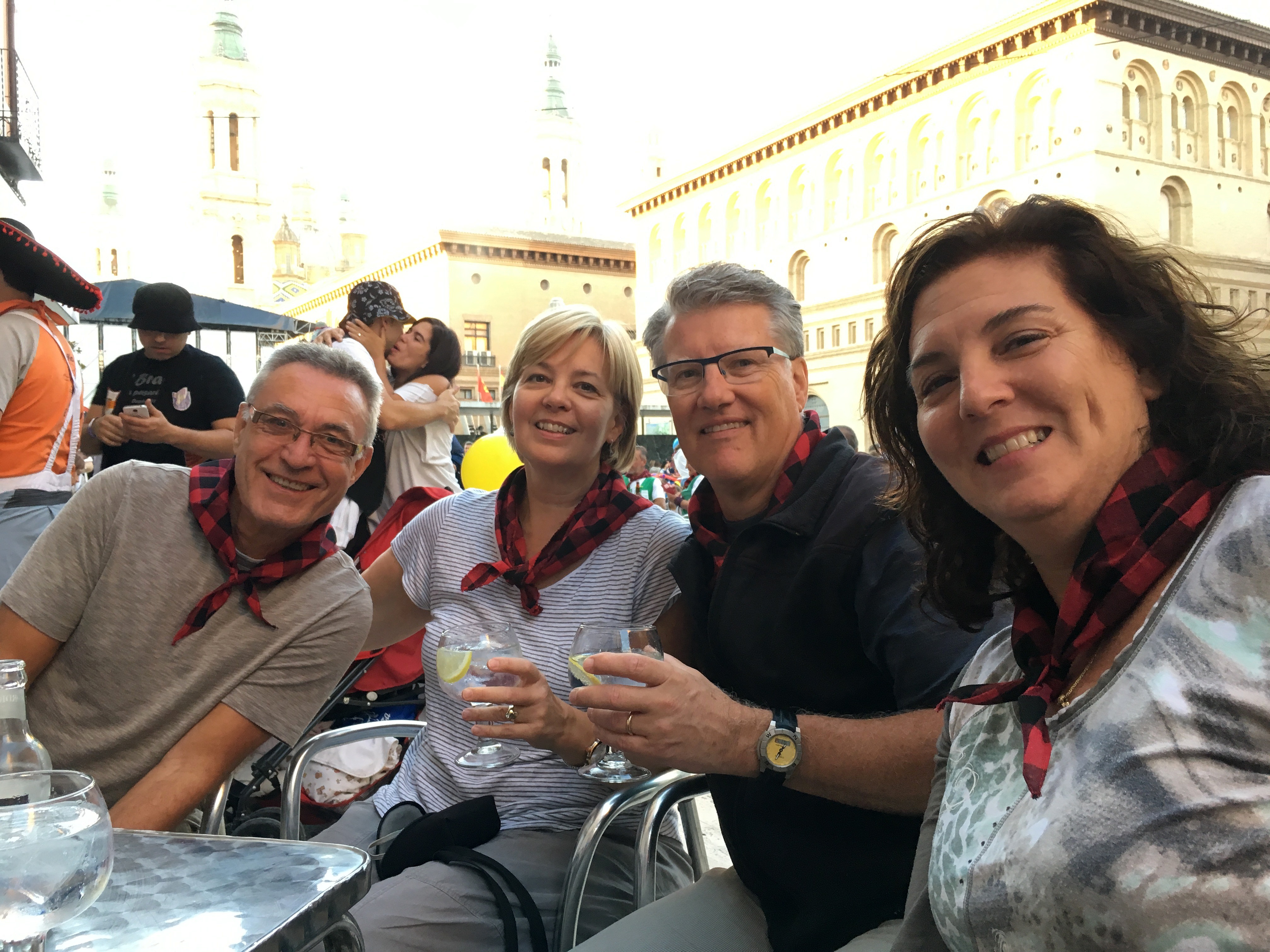
cheers! – with Julio and Diane
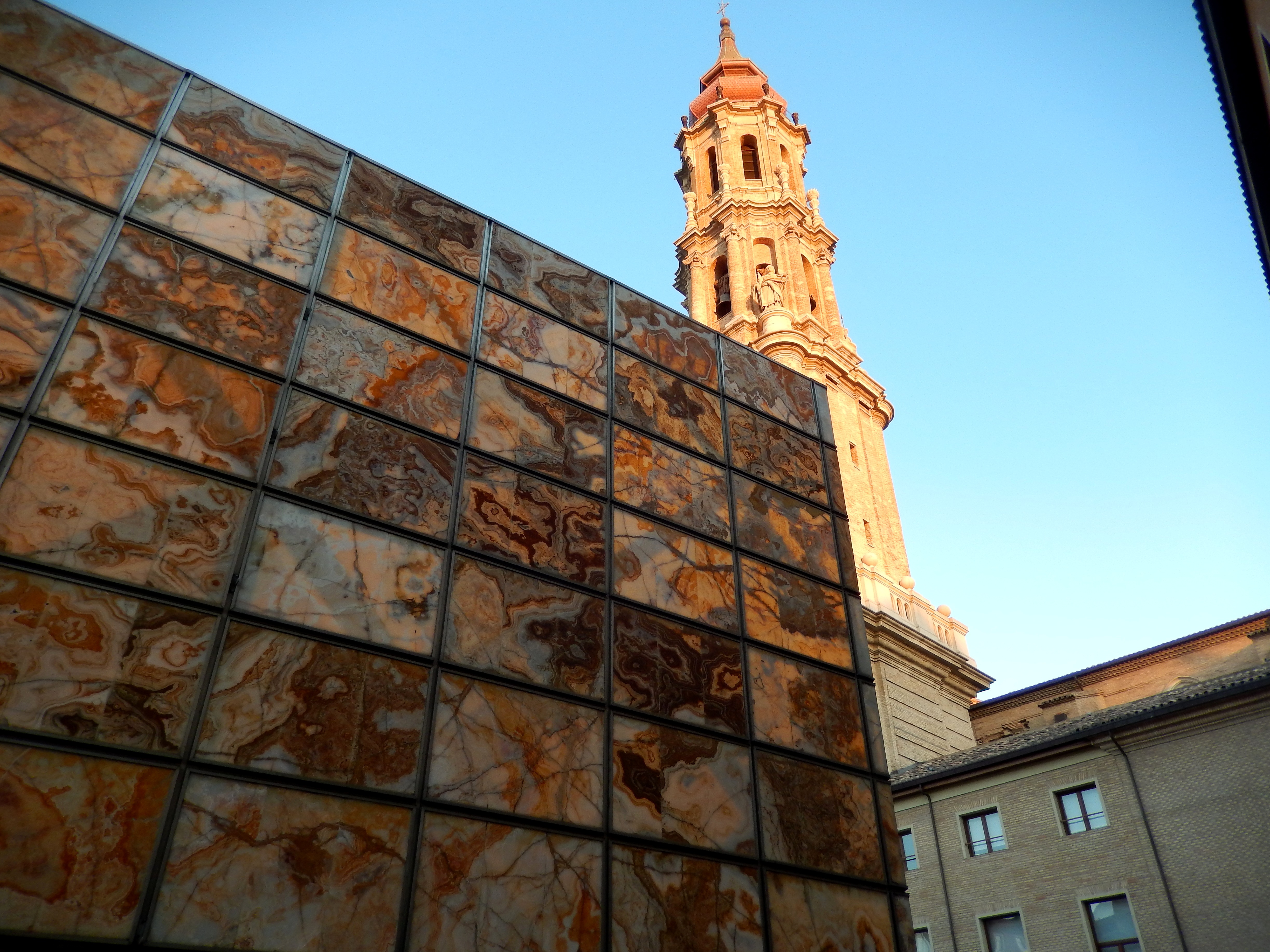
what we looked at as we drank
From here, the men-folk went to a bar to watch the Zaragoza football team badly lose their game, while the women-folk stopped in at a bar or two and window-shopped until it was time to all meet up again for more drinks and tapas.
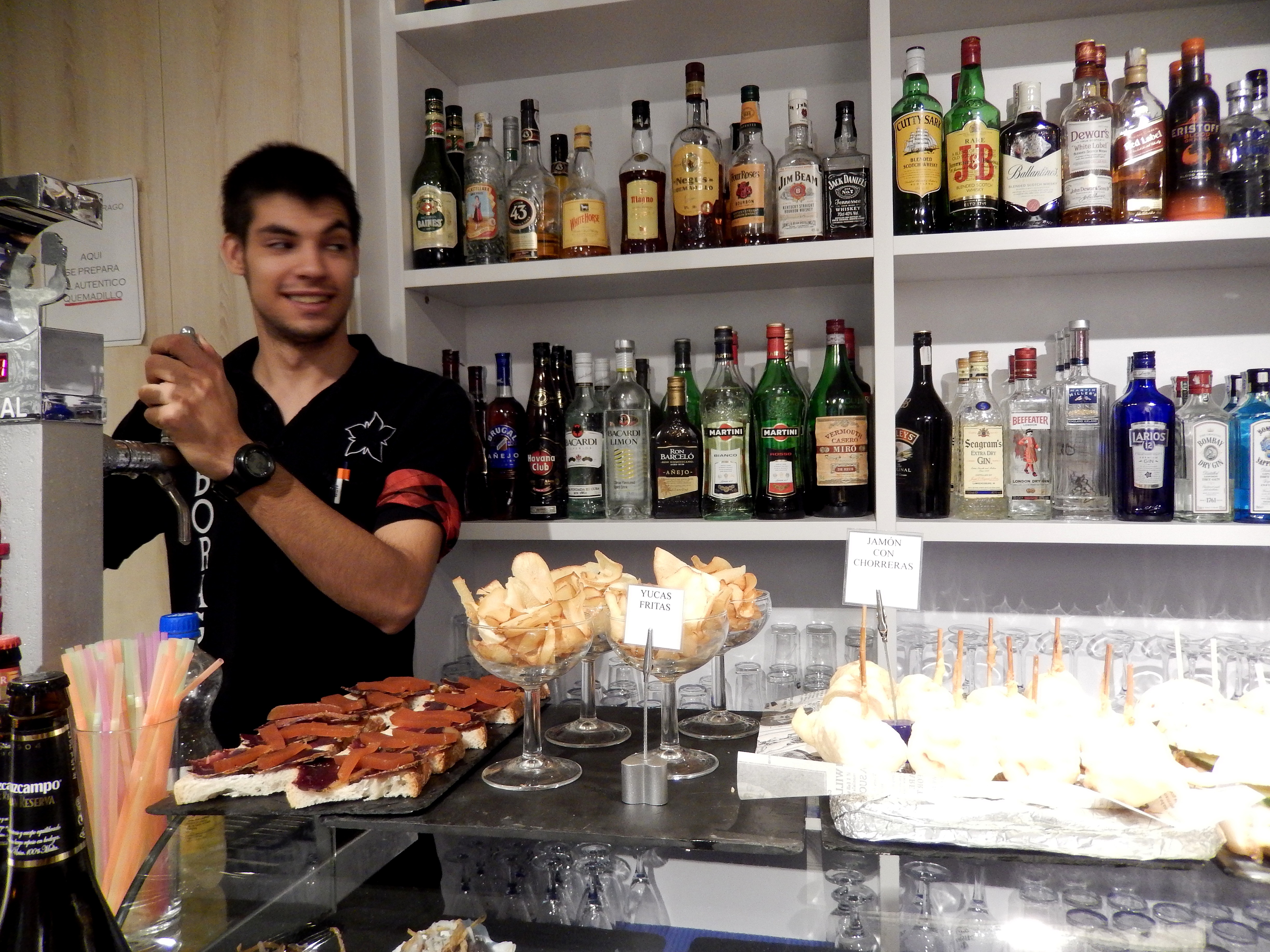
one of the bars
The day that had begun at 2 p.m. with drinks and tapas, ended with the same at 2 a.m.!! The celebrating of a patron saint is hard work!
The next day, after breakfast, the four of us went to see the Aljafería Palace, a fortified medieval Islamic palace, built during the second half of the 11th century. It was later a medieval Christian palace in the 12th century, and the palace of the Catholic King and Queen, Ferdinand and Isabel. The architecture is a fascinating mix…
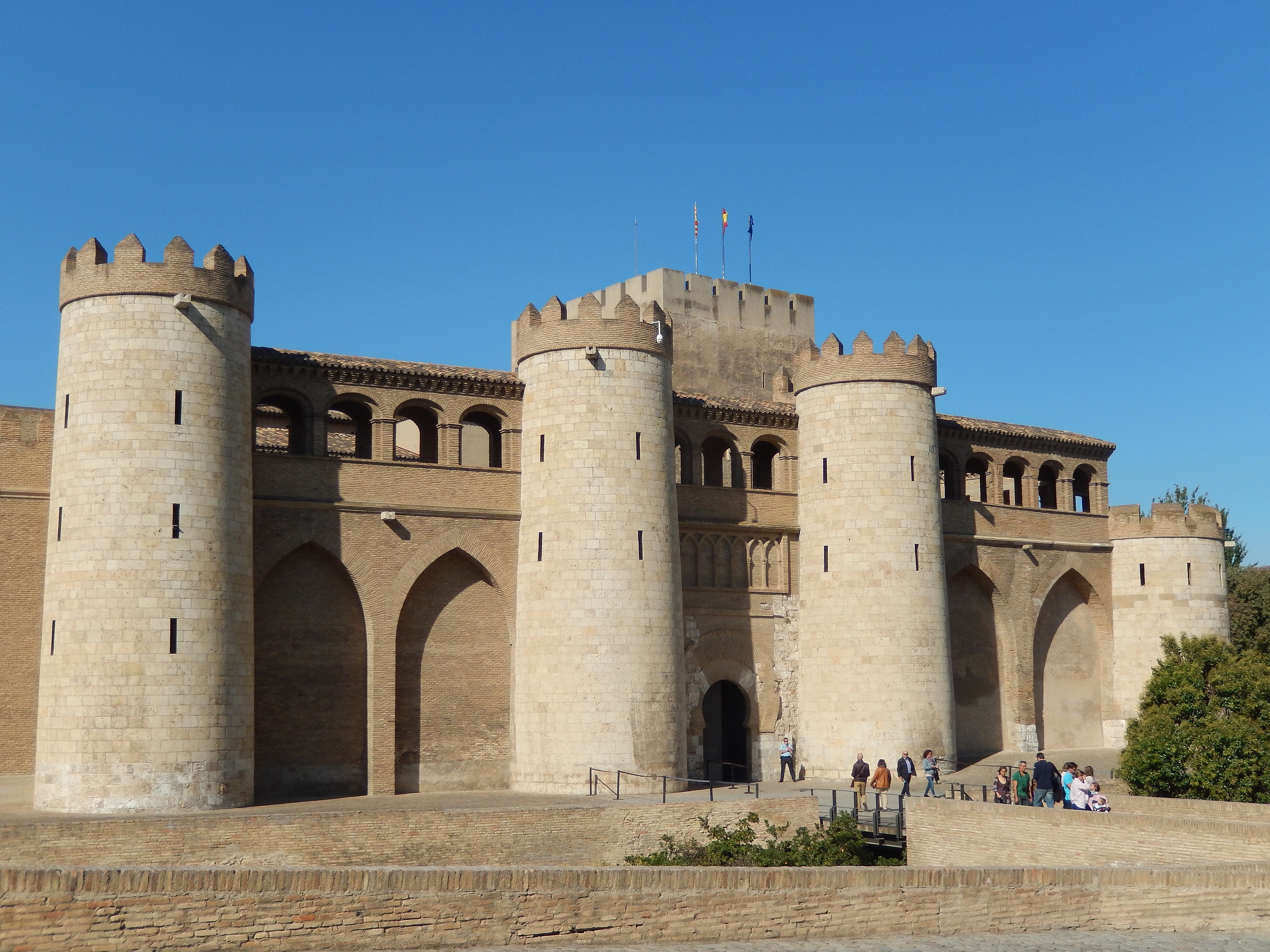
Aljafería Palace
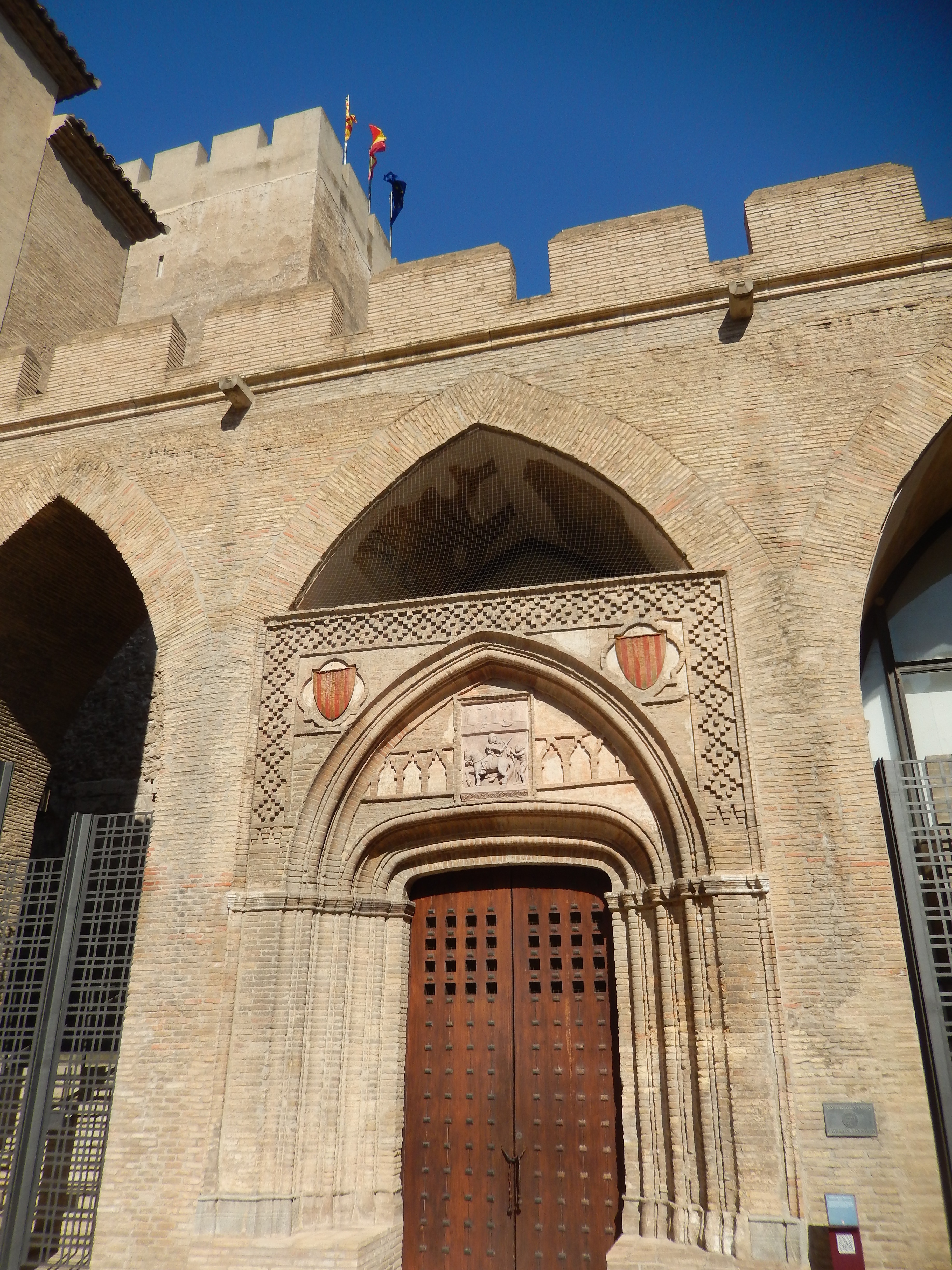
arches and door
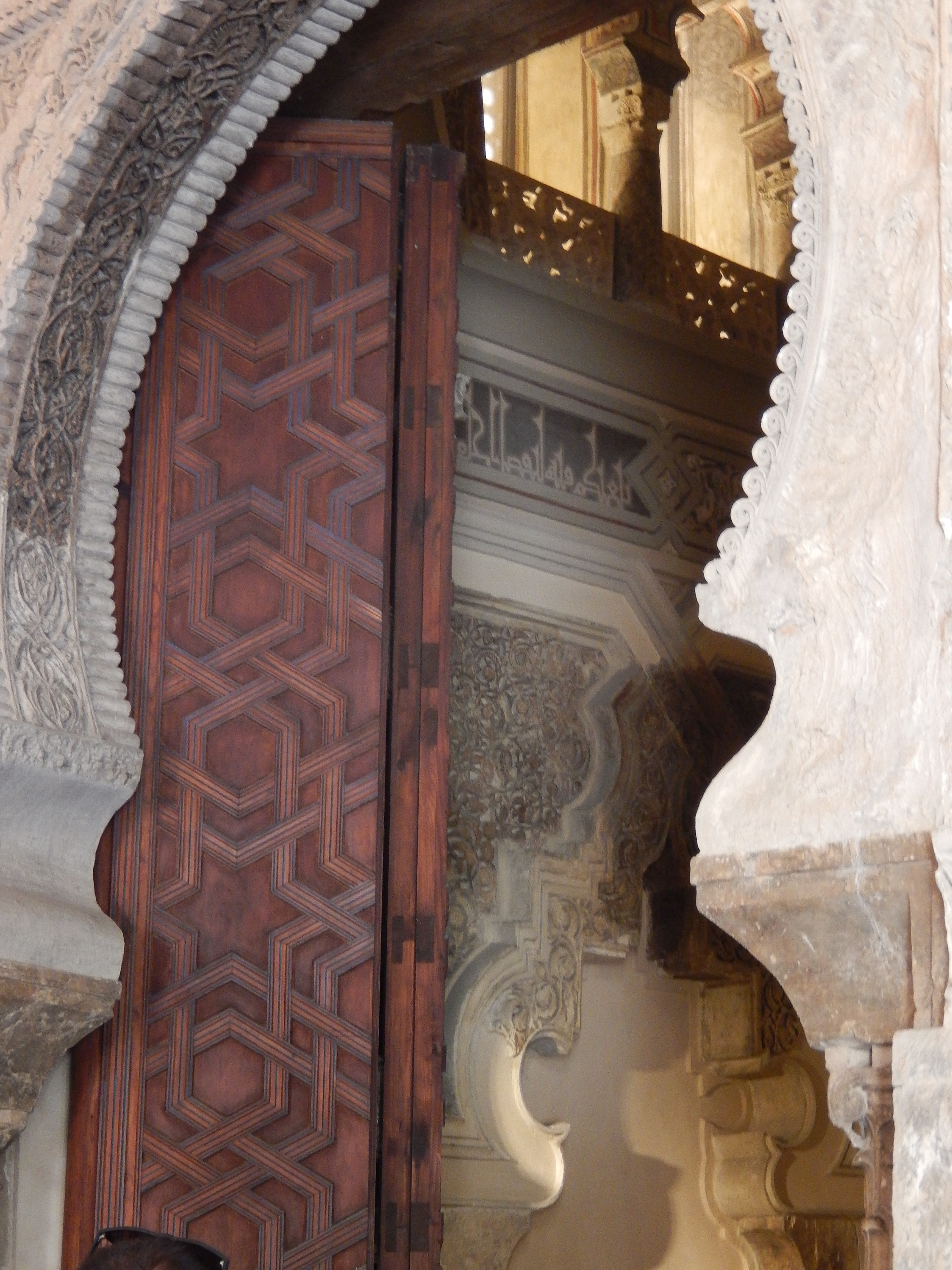
inner arches and doorways
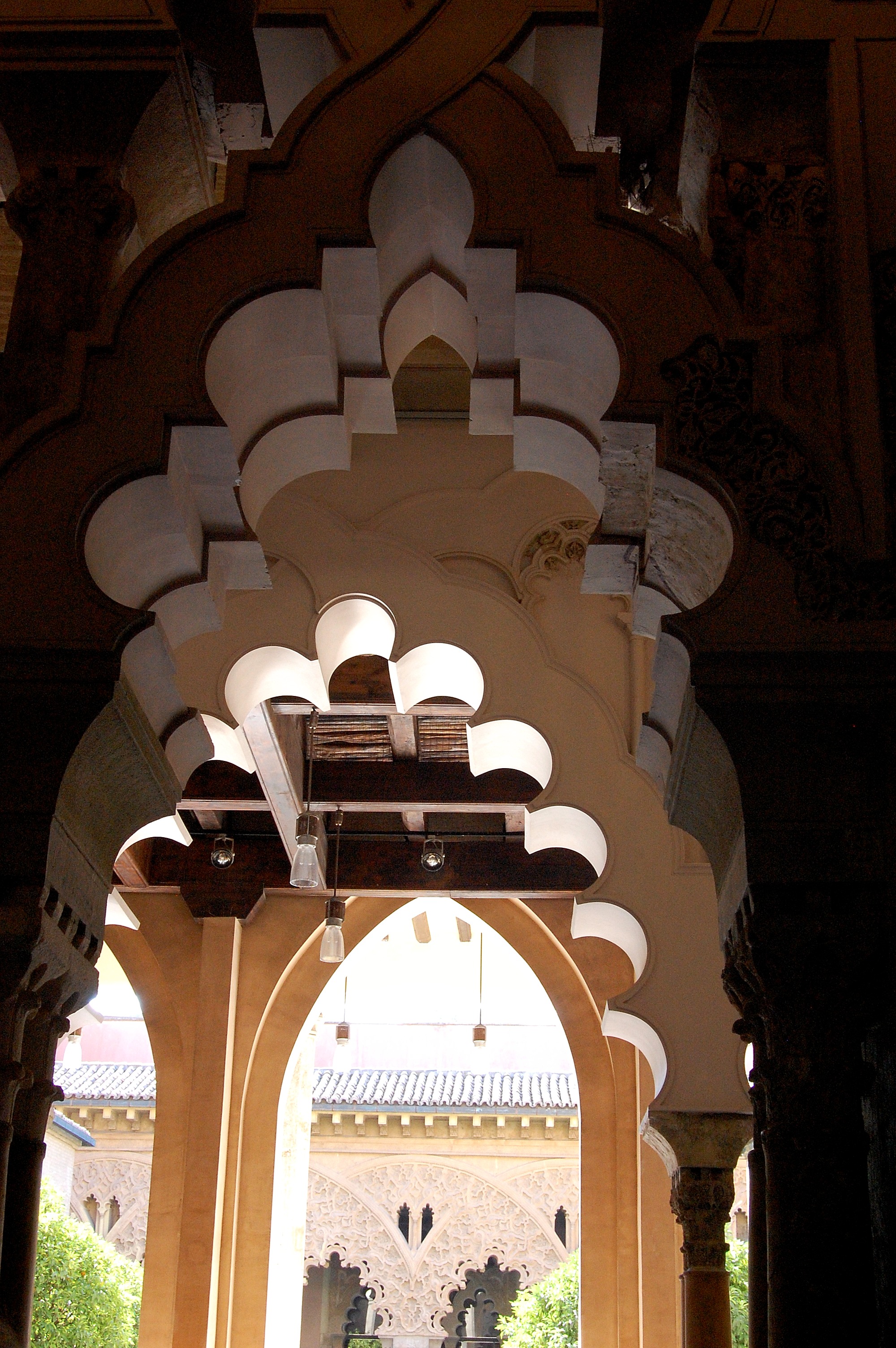
arch detail into courtyard
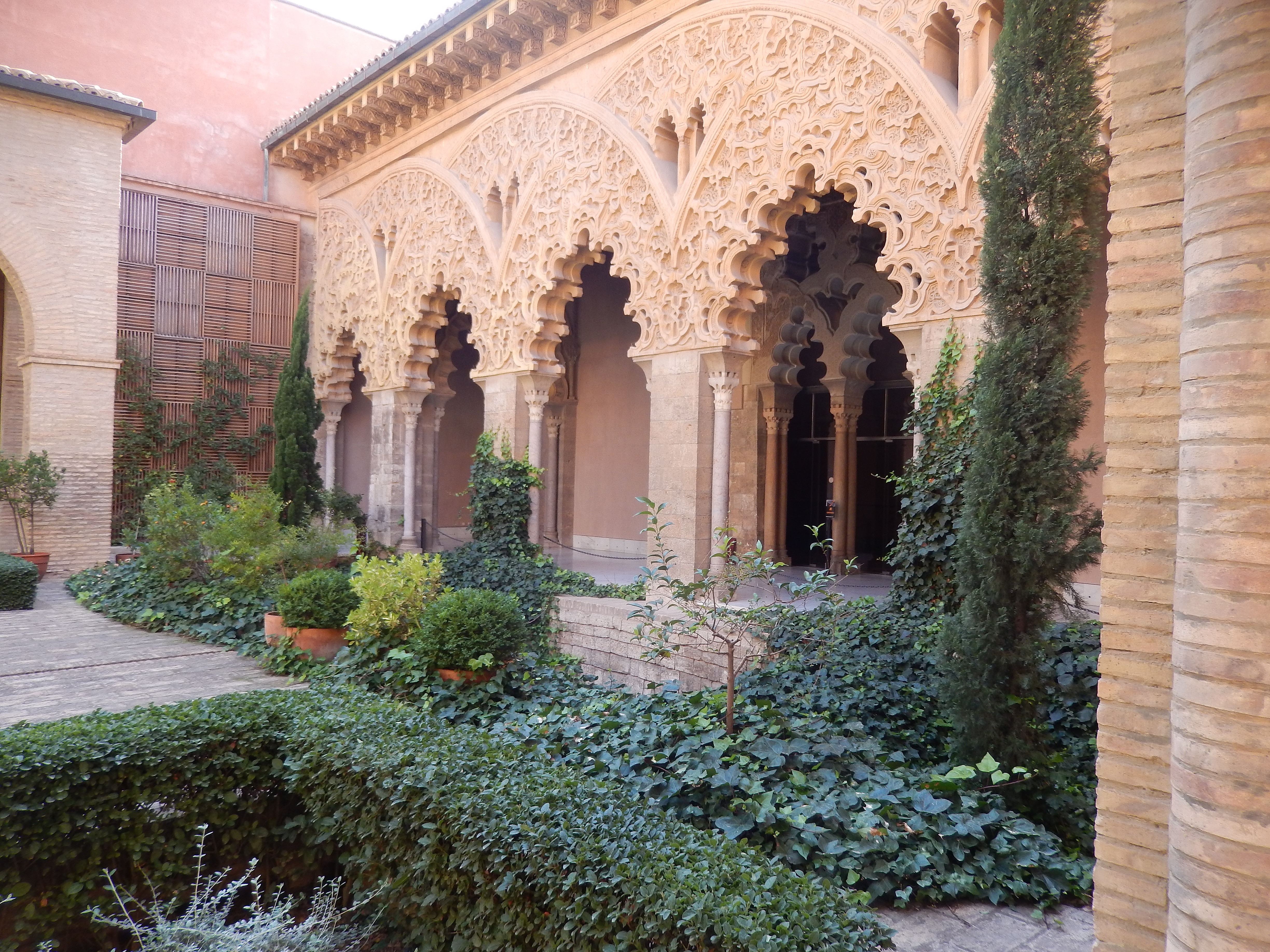
beautiful inner courtyard
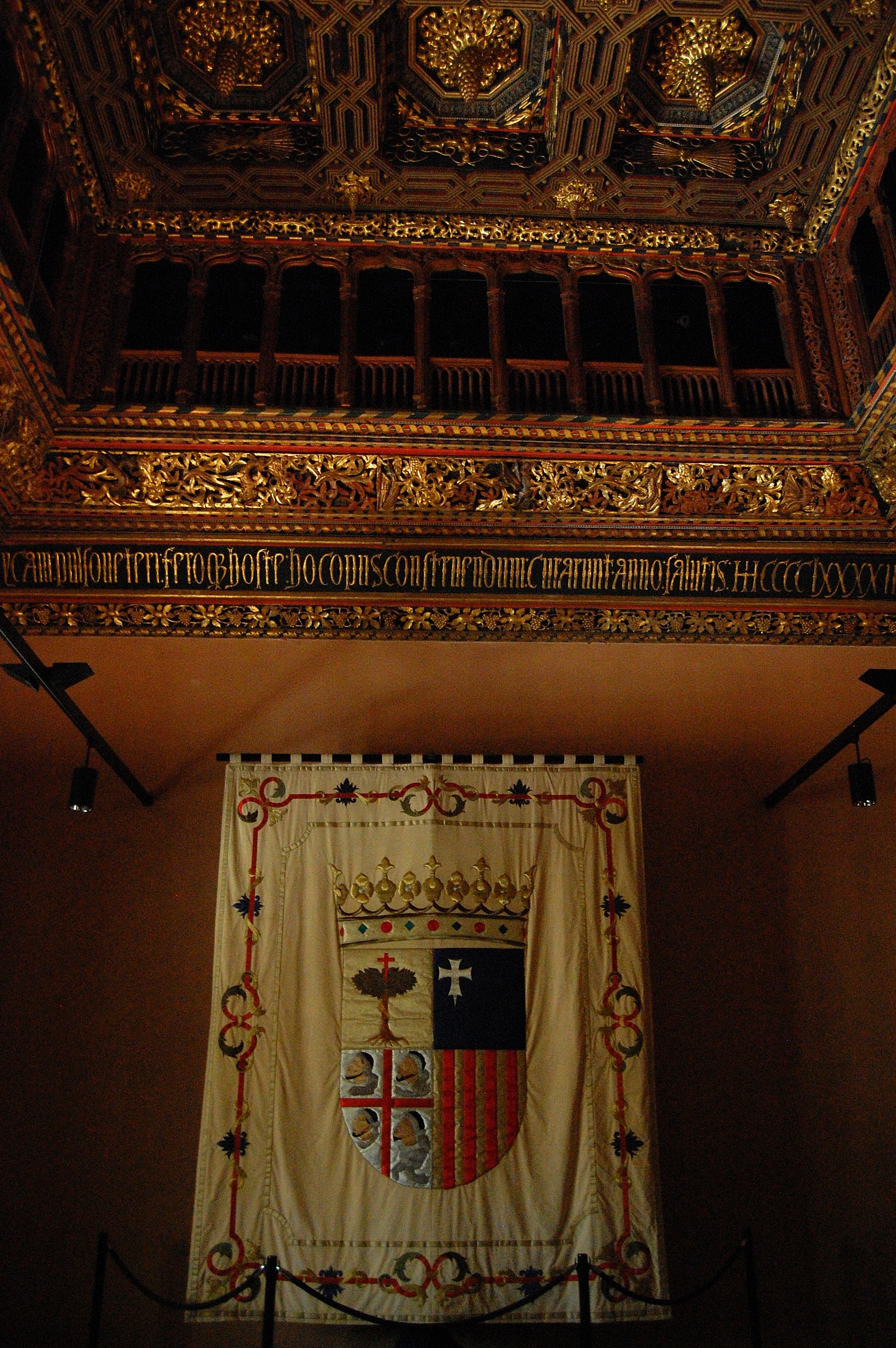
coat of arms for the province of Aragon, and stunning ceiling
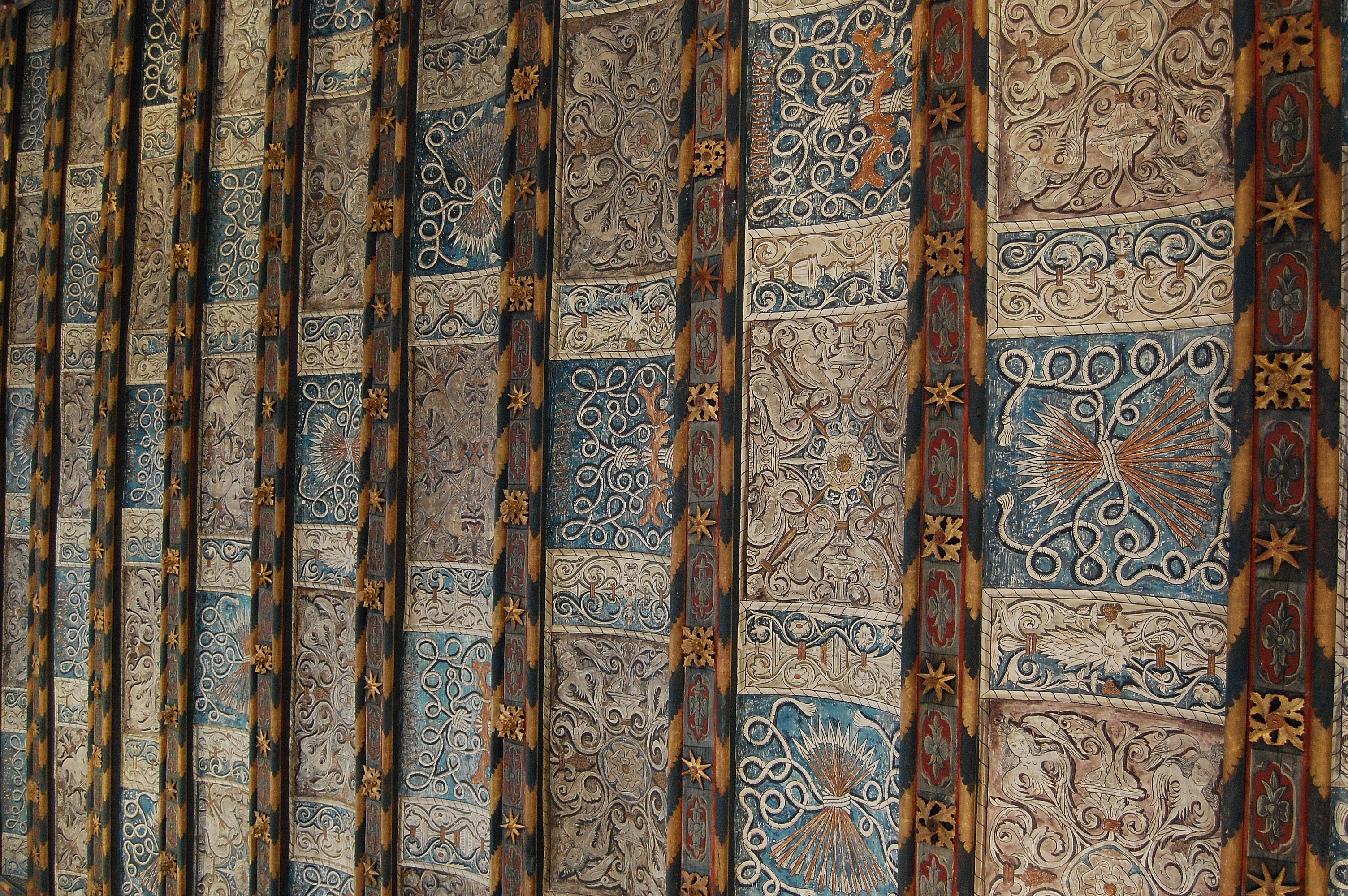
ceiling detail
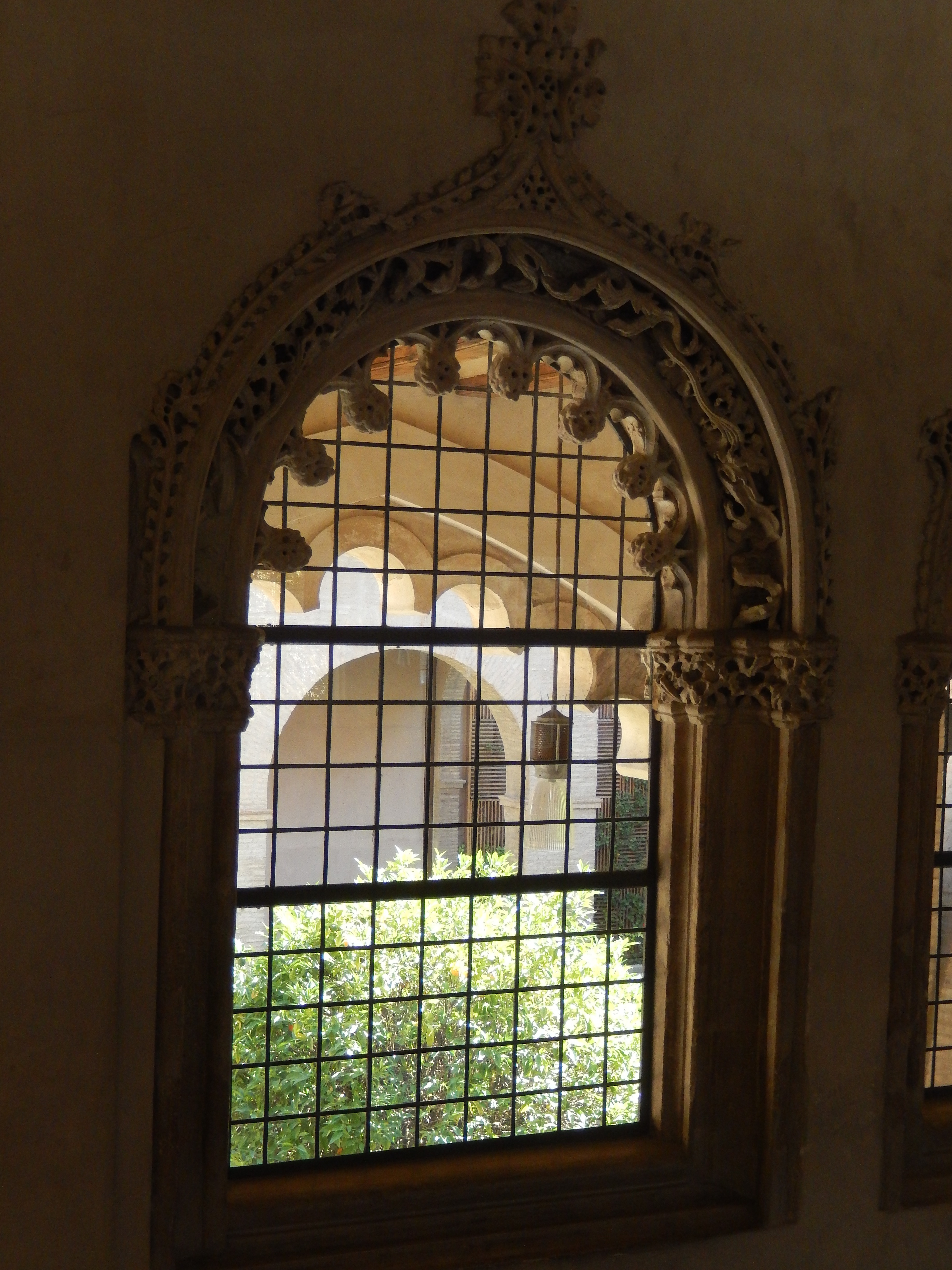
inner window
We went back to the city centre to see some more of it before it was time to meet up with Julio’s family…
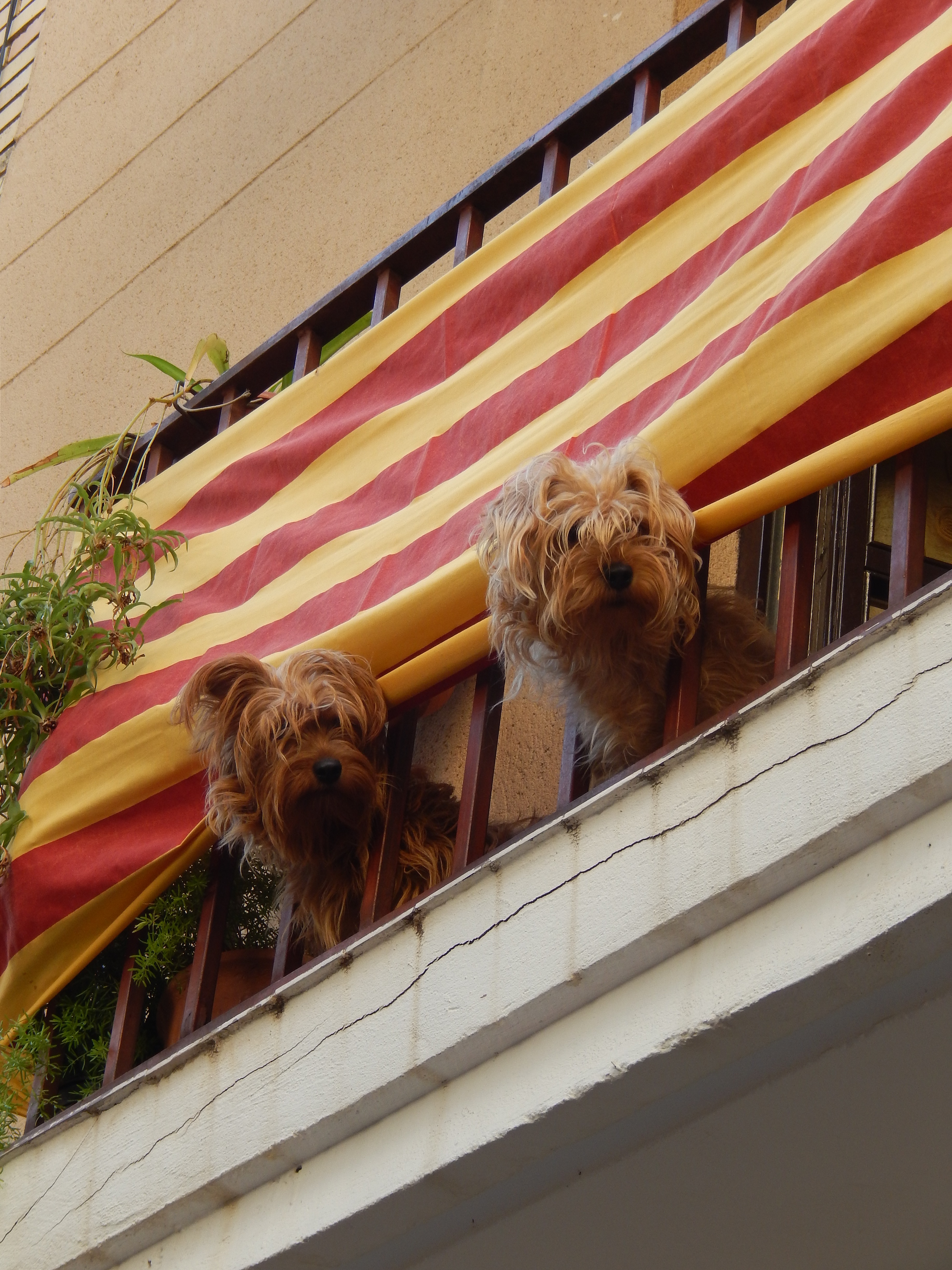
two cuties watching us
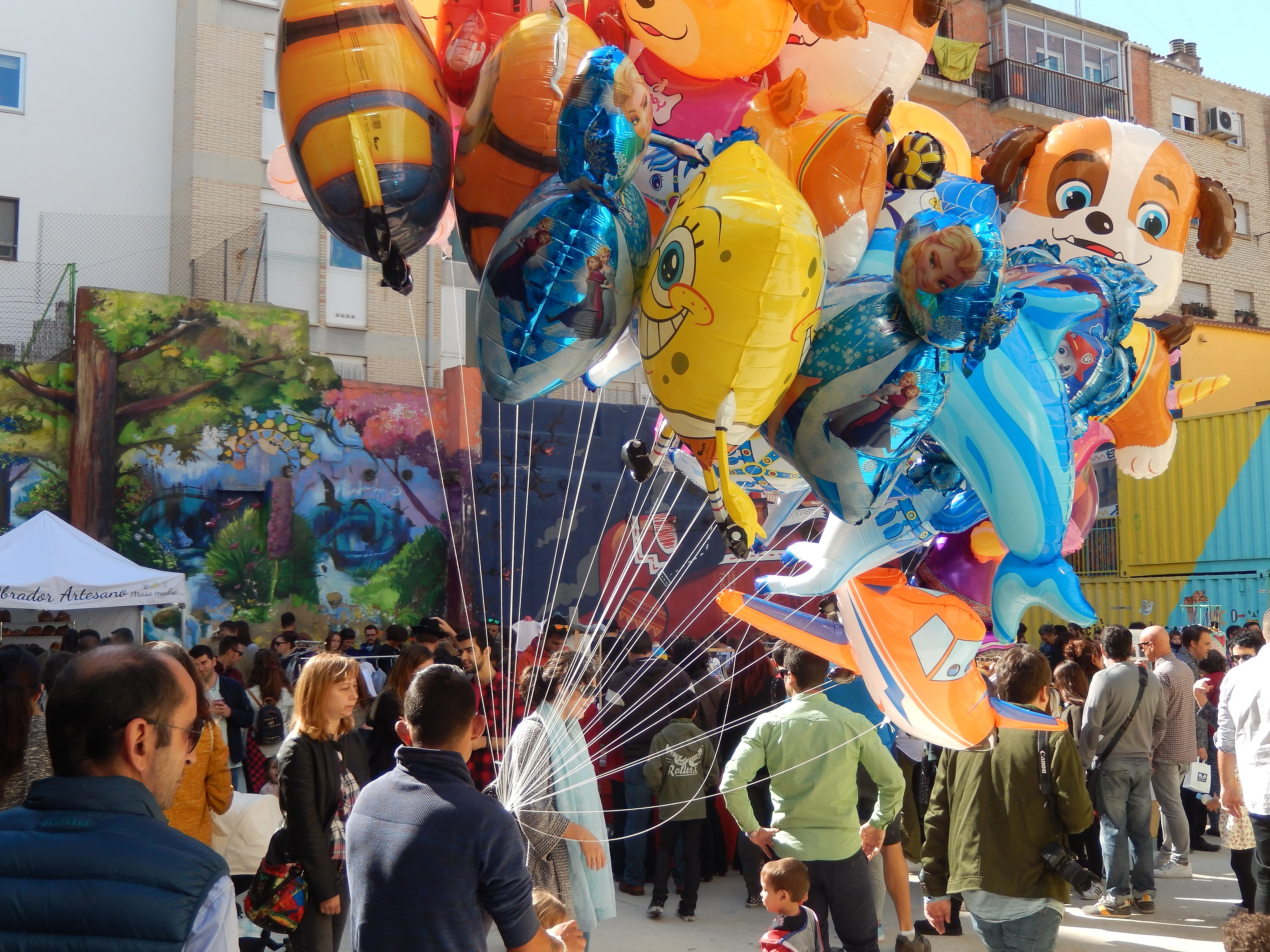
a neighbourhood party
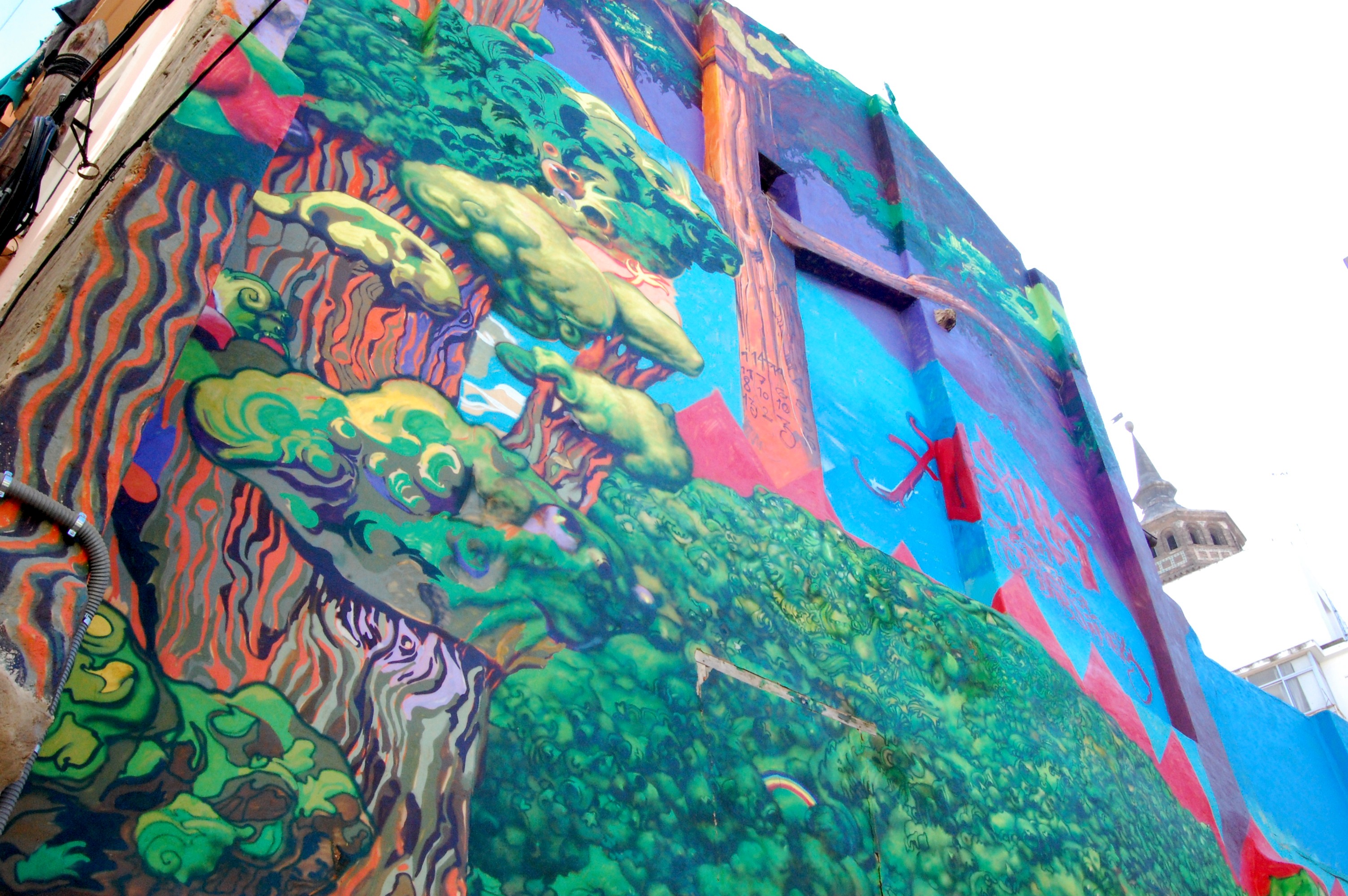
great street art
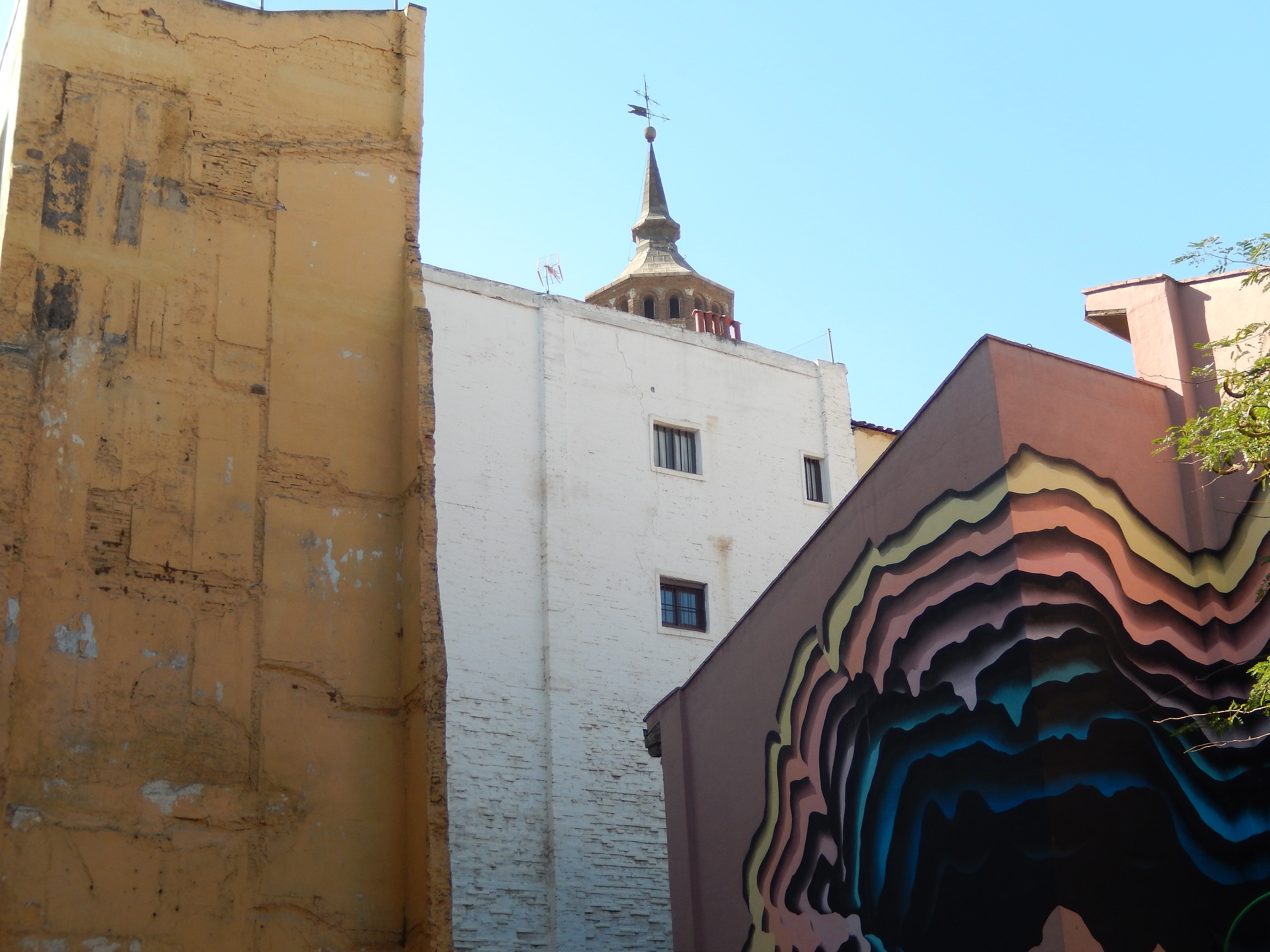
interesting mix of buildings
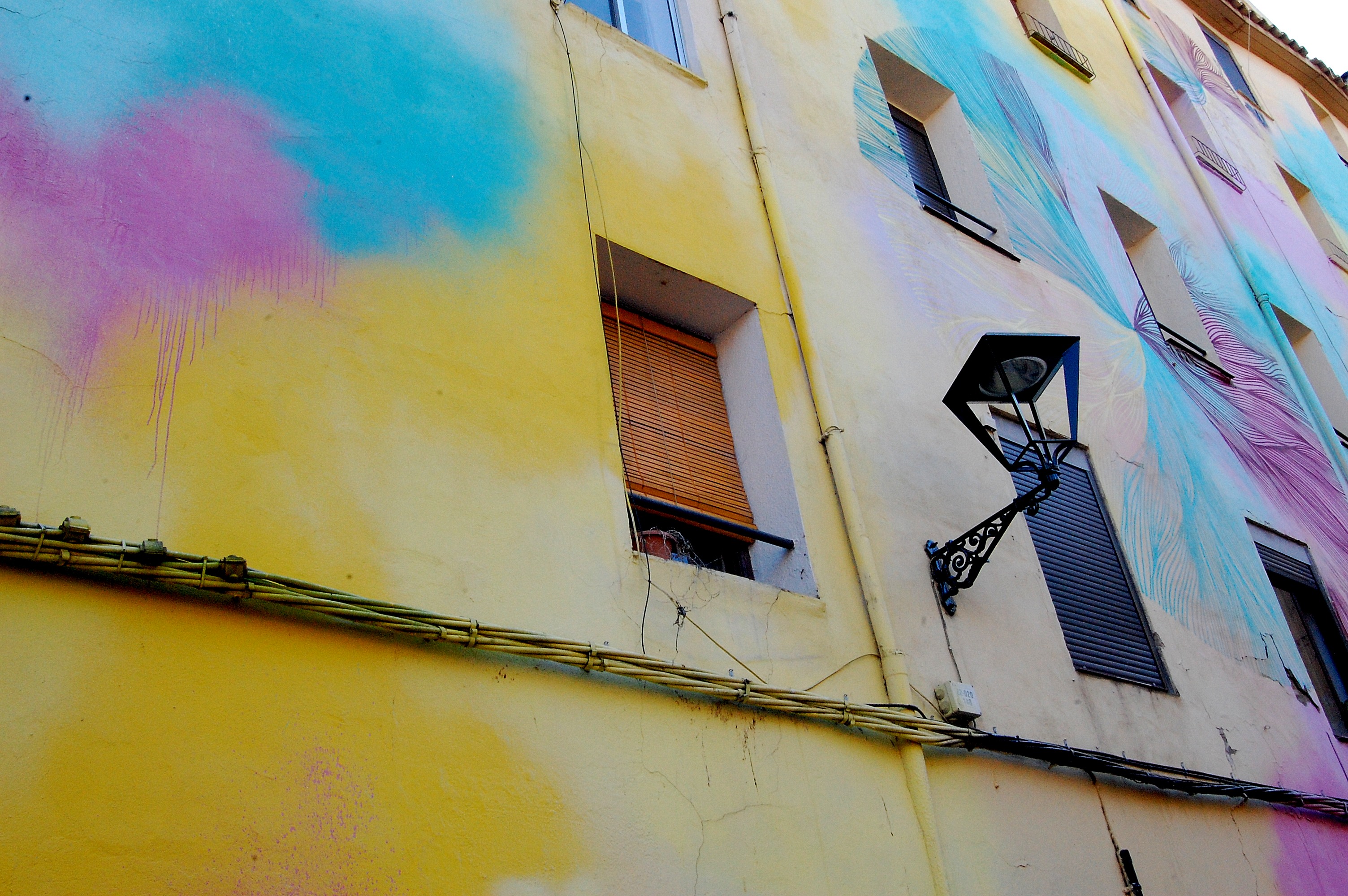
another interesting building
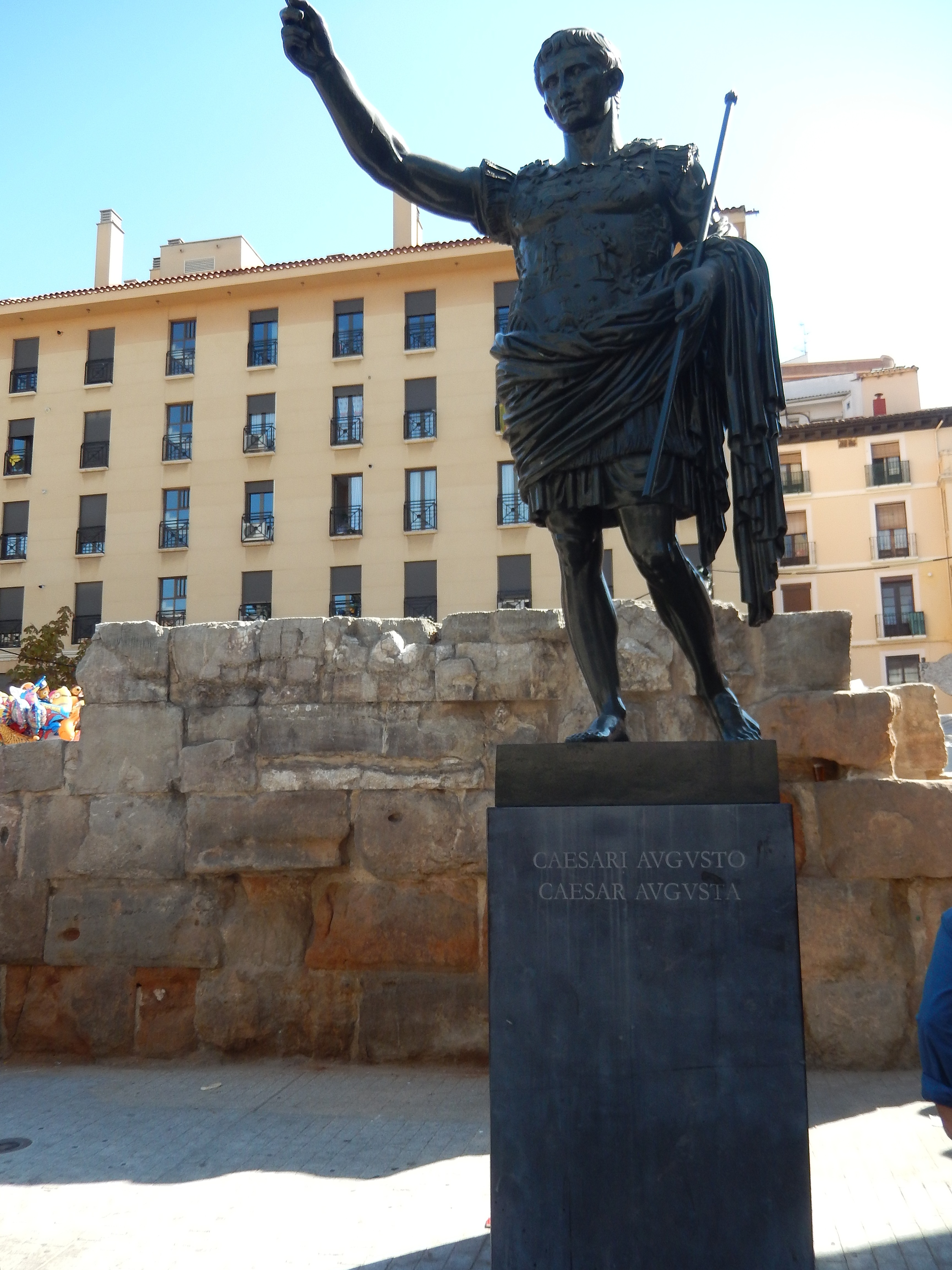
Caesar Augustus, and the ruins of the old Roman wall behind him
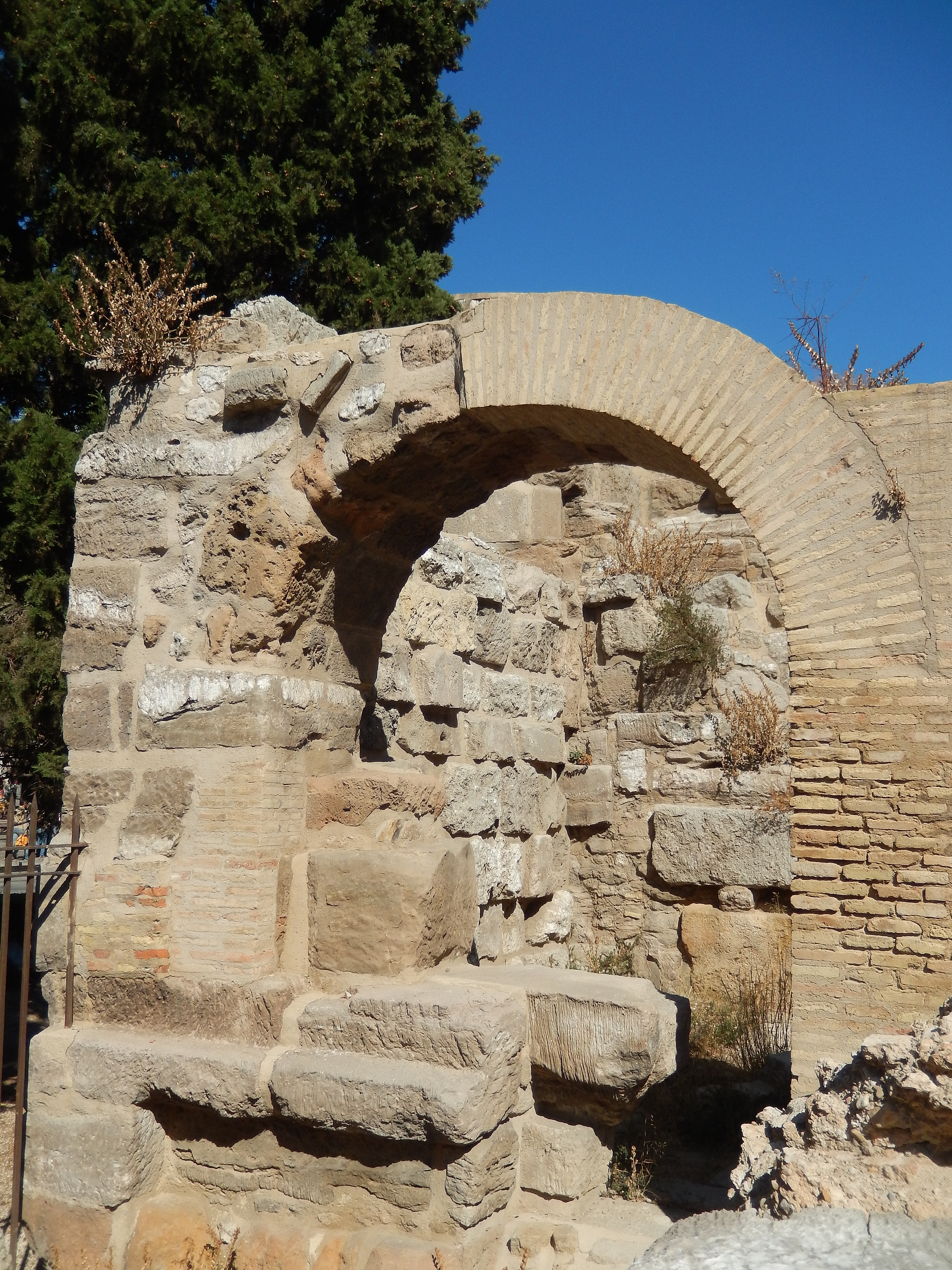
just a small bit of the Roman walls are still standing
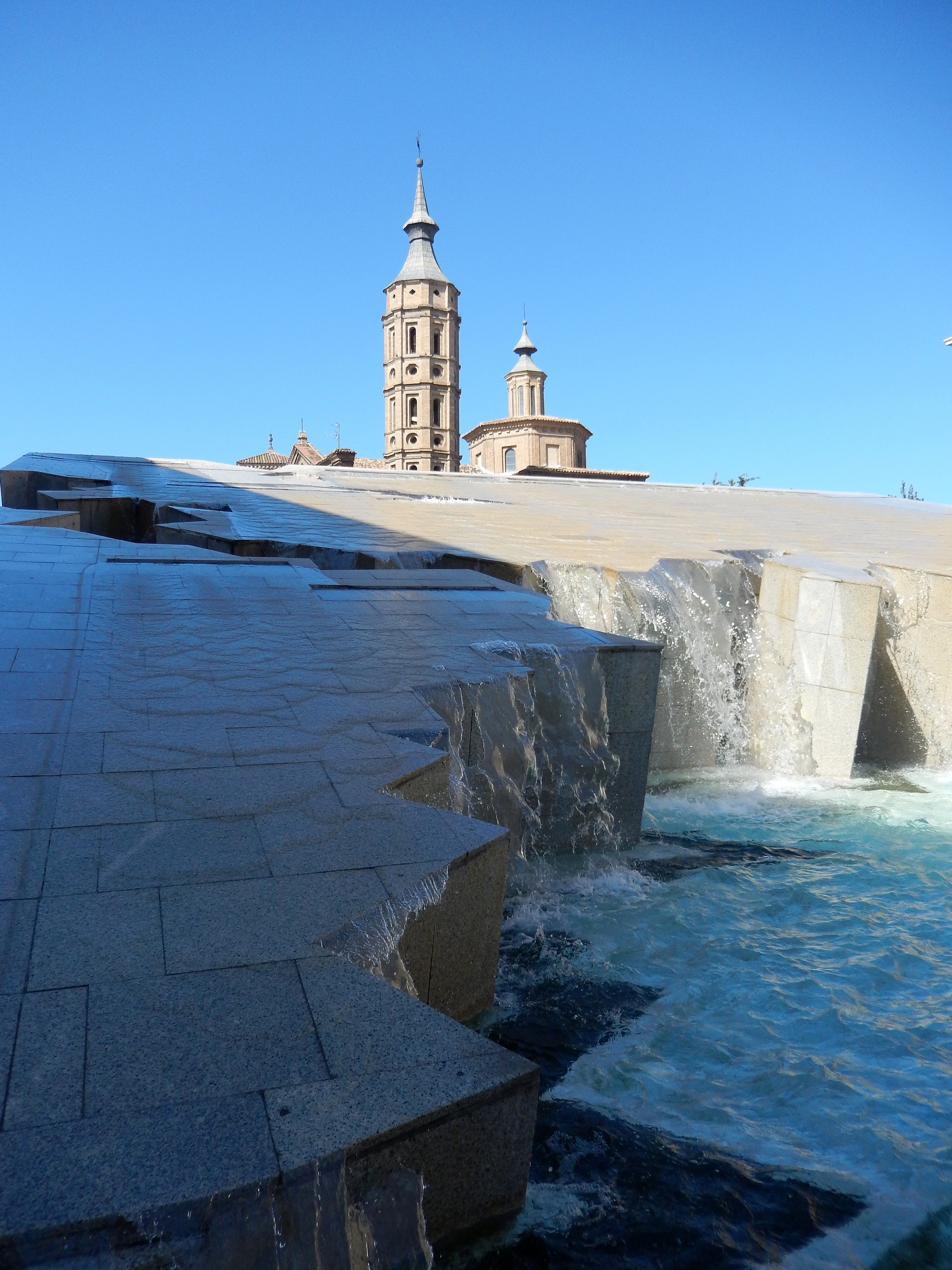
Fuente de la Hispanidad (fountain representing Latin America)
This time, even though it was busy, we went inside the Basilica… no pictures allowed, but Don got a couple with his phone…
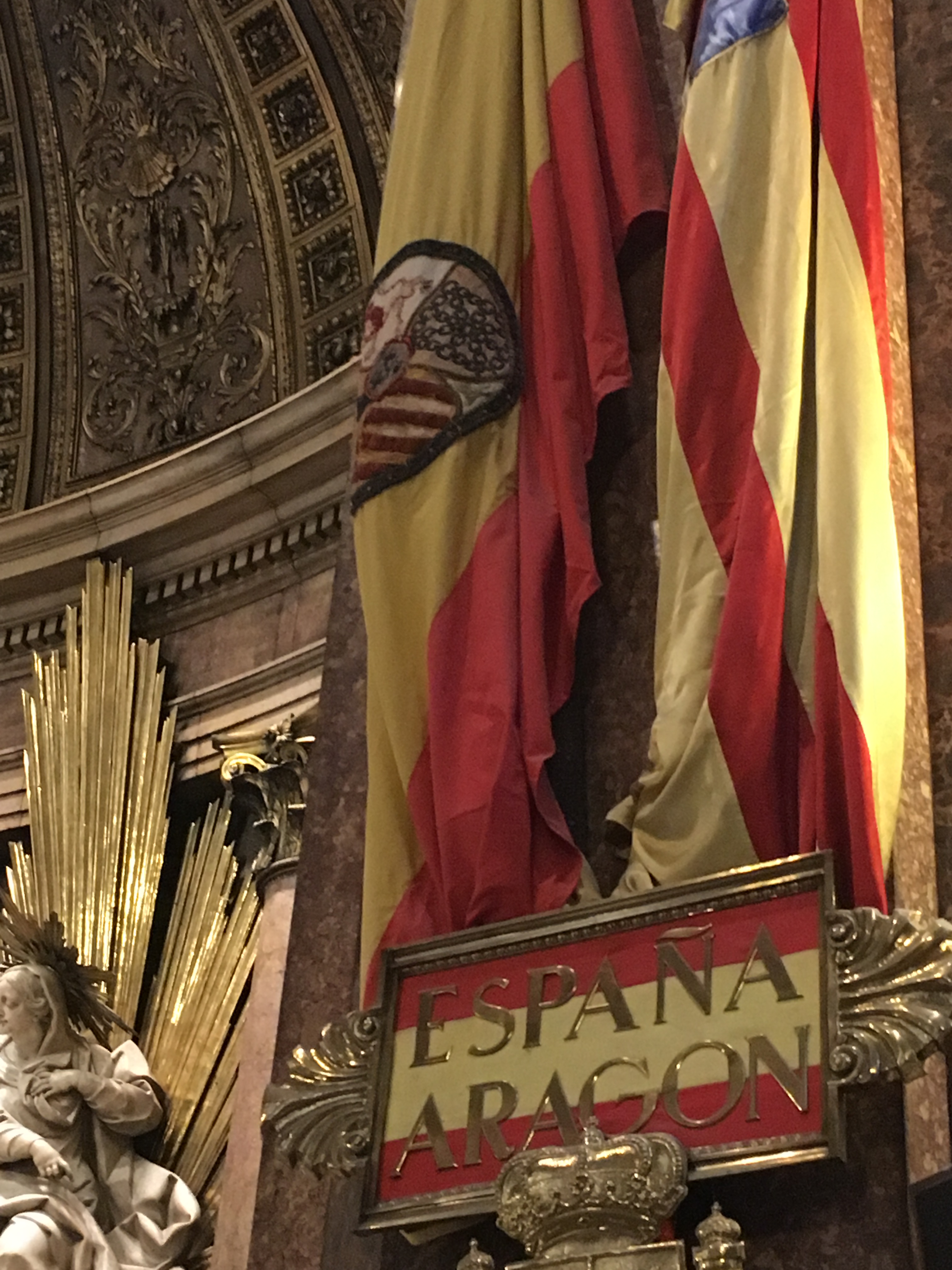
inside the Basilica
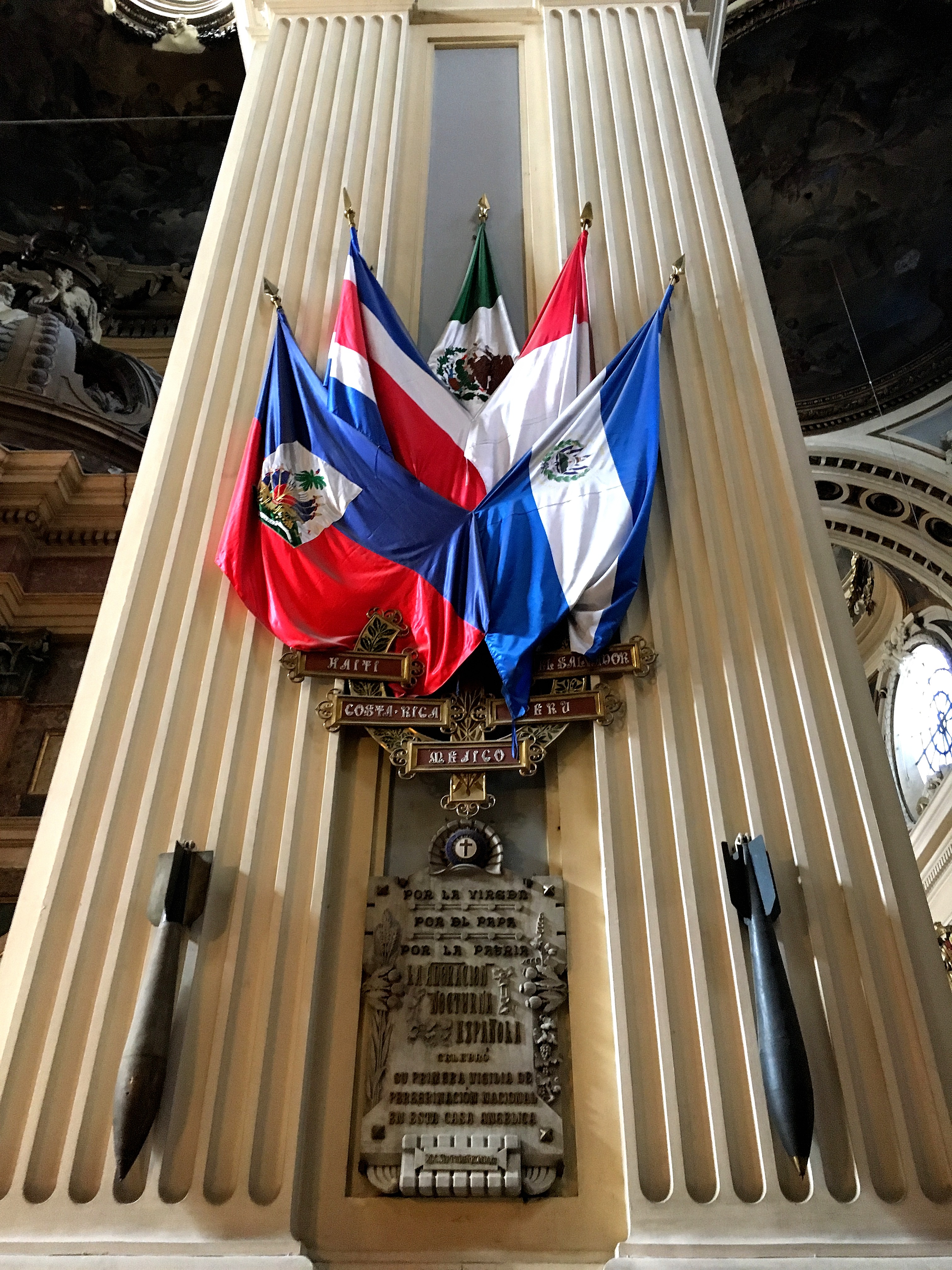
two of the three bombs dropped on the church during the Spanish Civil War, which did not explode
And then it was time to meet some of Julio’s family for refreshments in the Plaza del Pilar, and from there, to their friend’s restaurant for a (typical) late Spanish lunch.
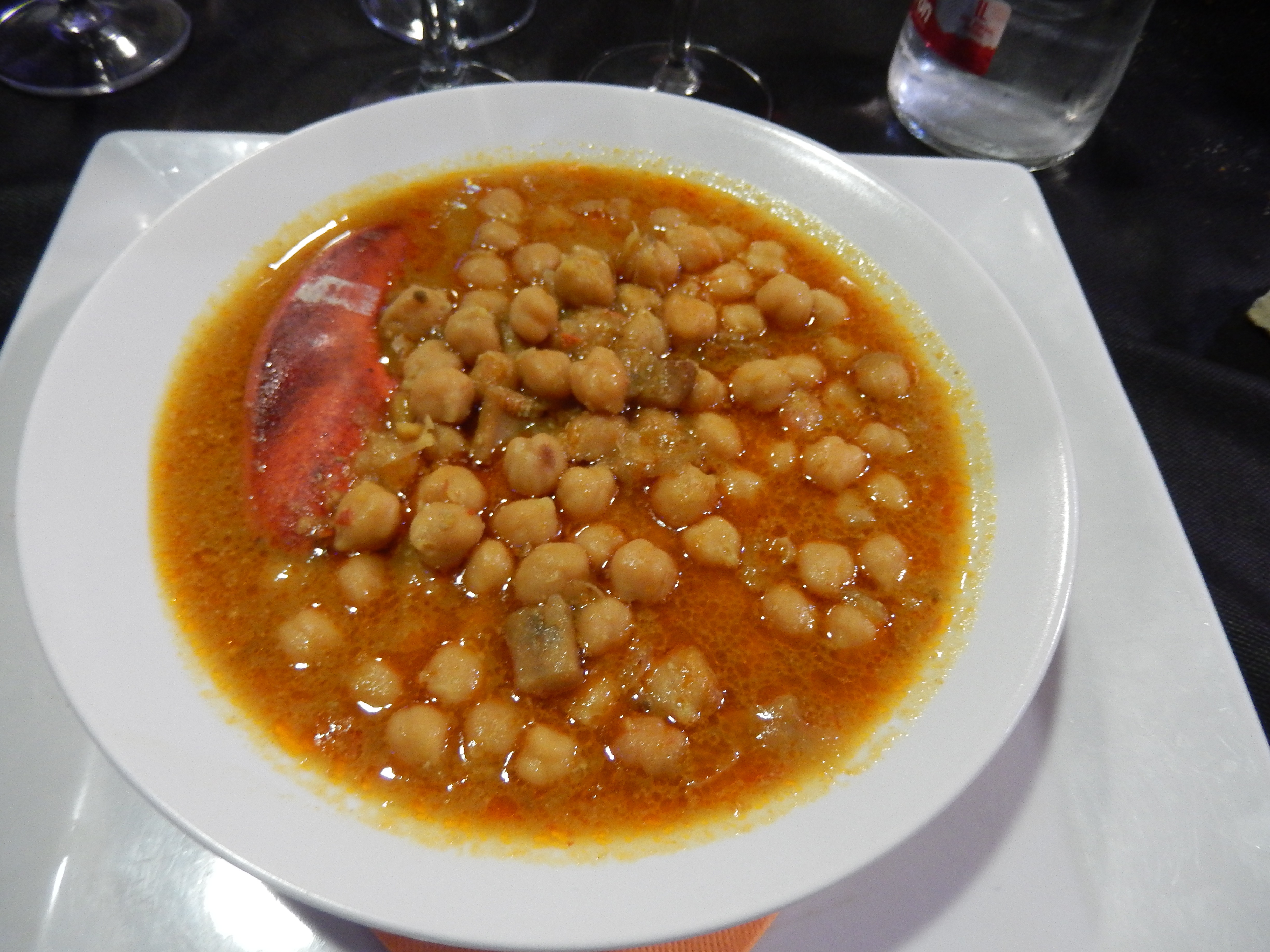
delicious chick pea and lobster soup – should have been my meal, but it was just the first course!
After lunch (5 pm!) we said goodbye to the family and went back to our hotel for a much-needed siesta. In the evening we walked back into the city to meet up with friends for some bar-hopping. First, one small place for drinks and tapas, and then to a bar with live music.
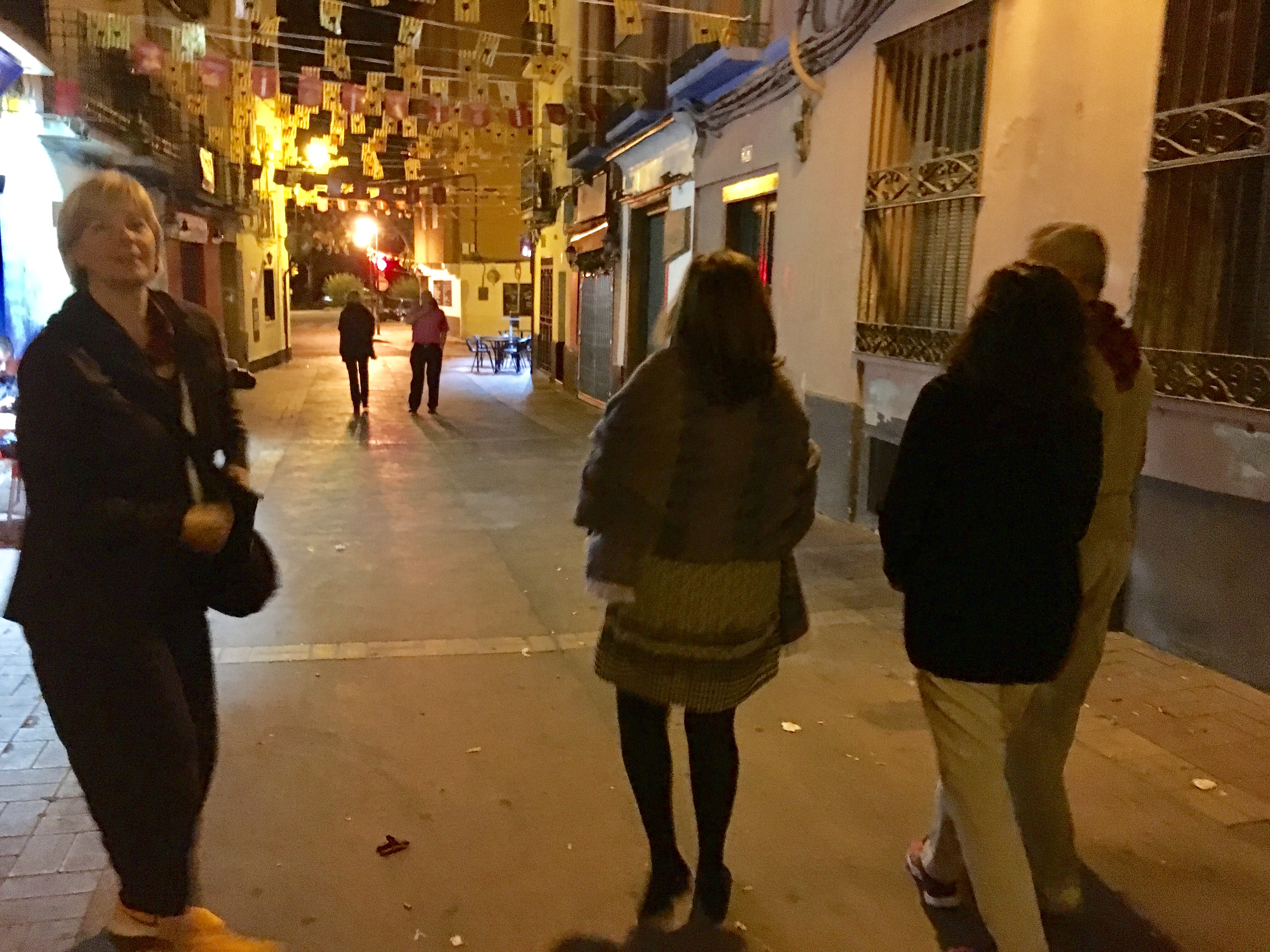
walking the street lined with little bars
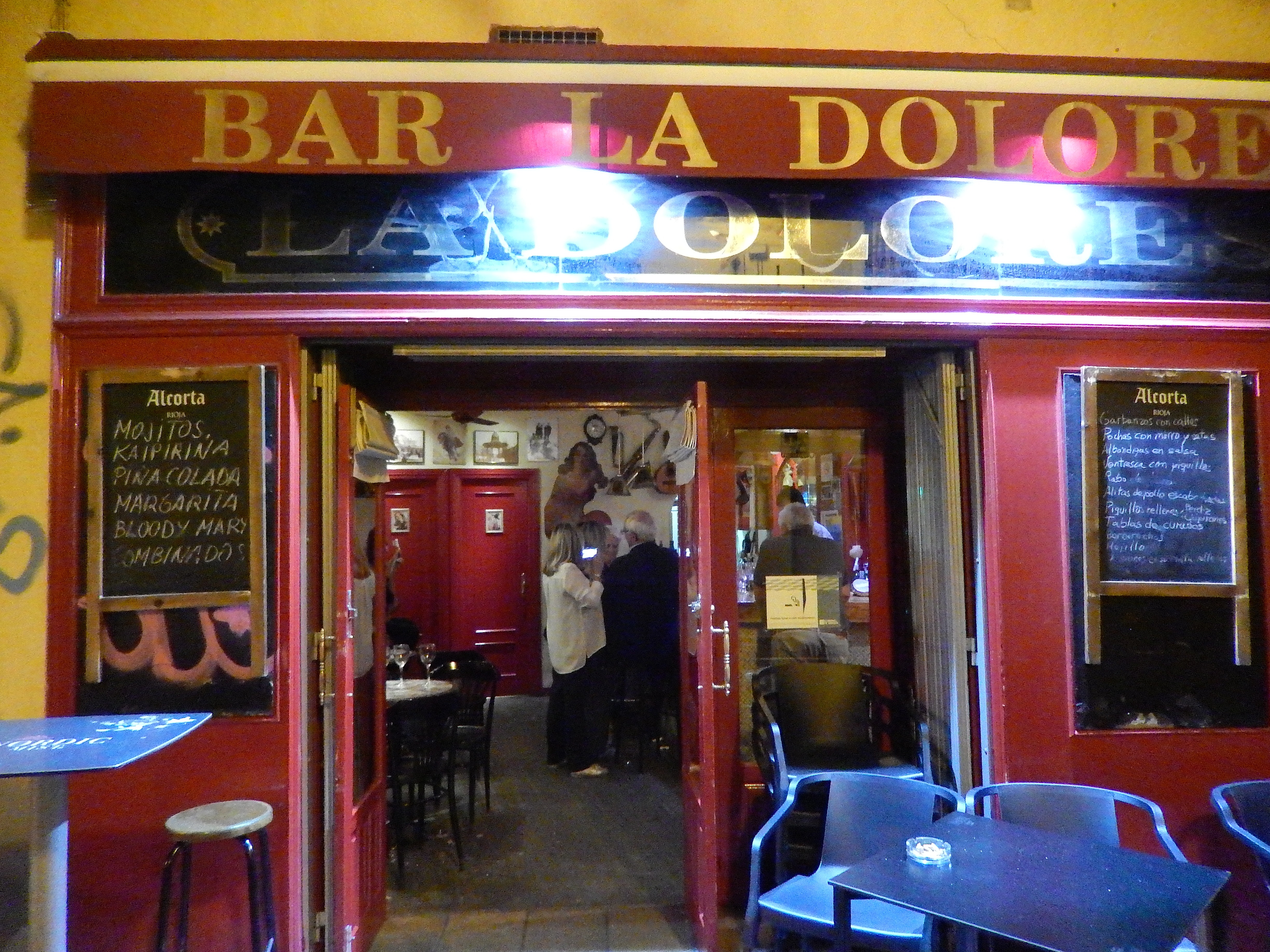
inside here, live music, and a ton of fun!
If you listen carefully, in the background of this one-minute clip, you can hear Diane tell us the meaning of what is sung..
Don taking a photo of the singer with his phone caught her attention 😉 ..
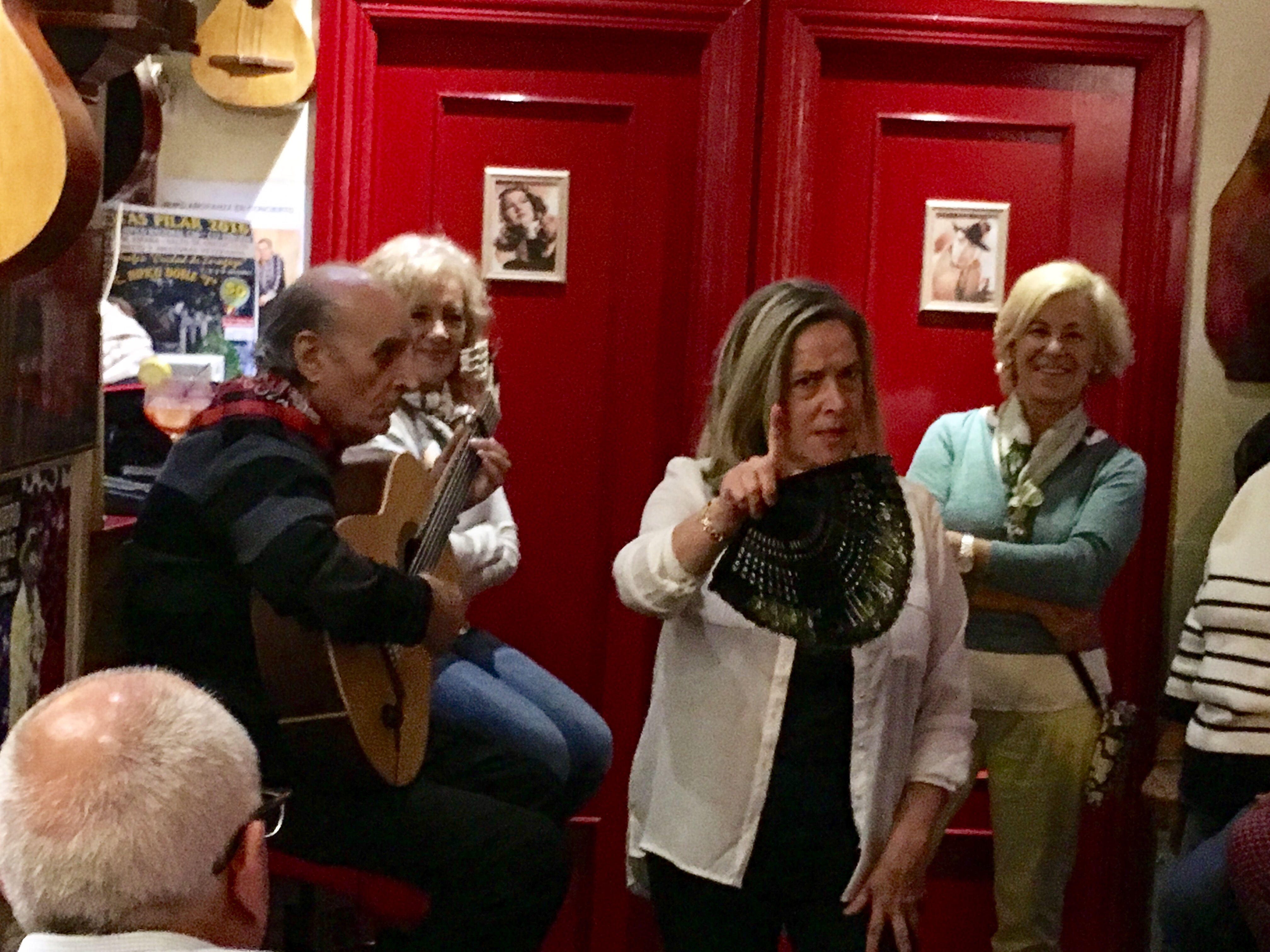
“don’t take my picture!”
We had a blast in this bar! But, we moved on, for one last drink in one last bar…
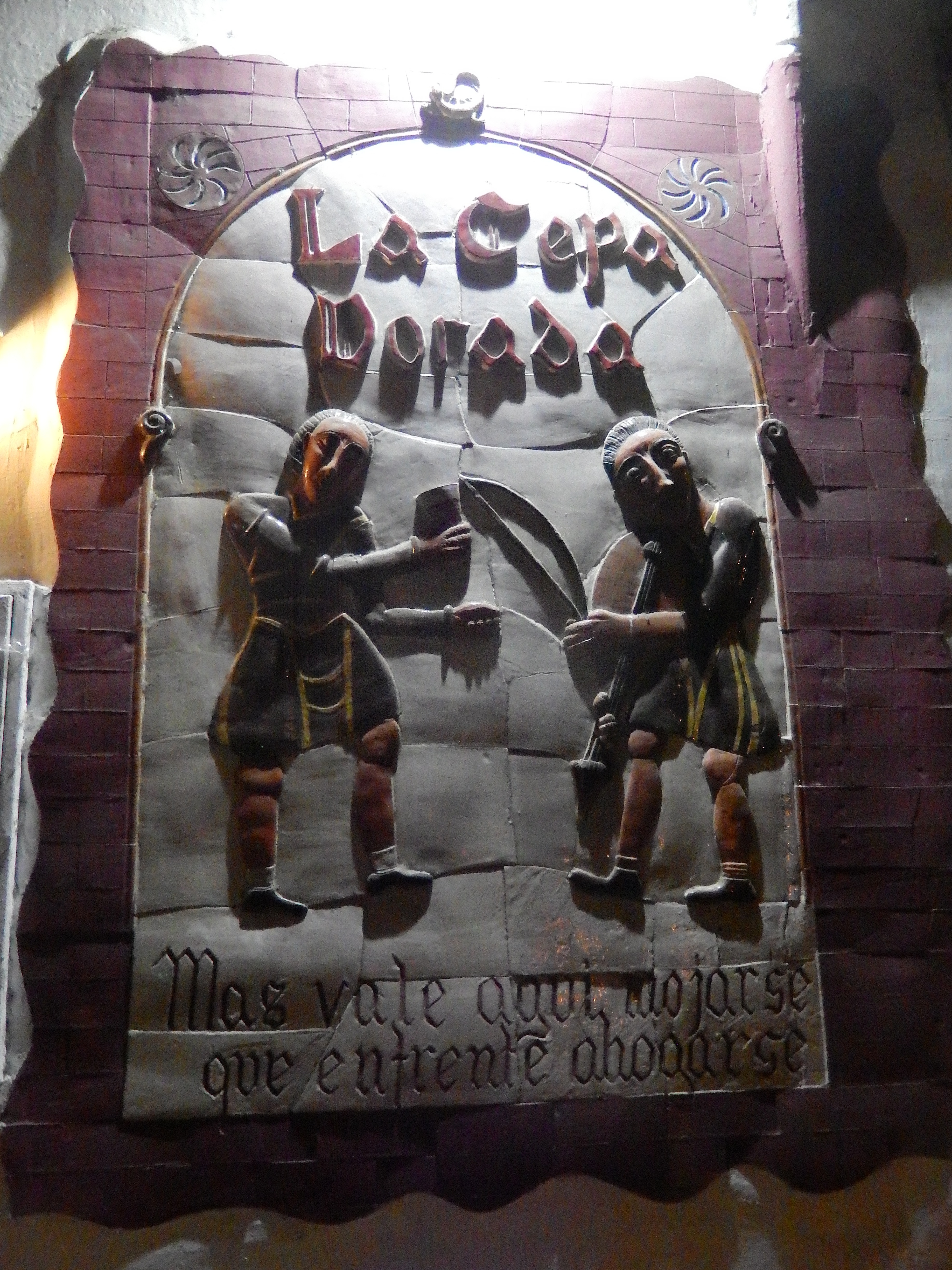
the bar sign
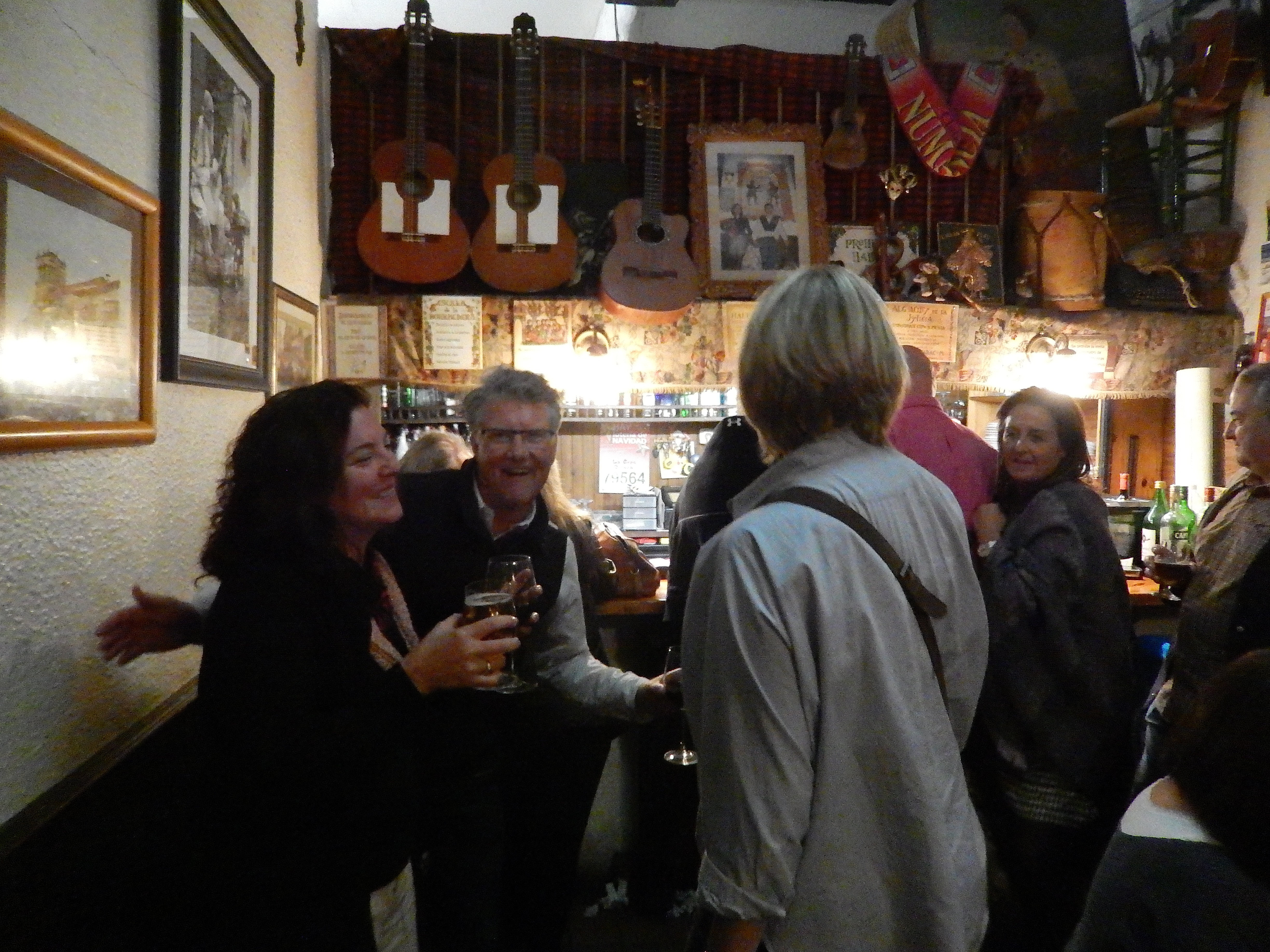
inside the bar
Diane’s good friend, Paloma, looks like my cousins, and apparently I look like her cousins
This fun-filled weekend in Zaragoza was full of eating and drinking, with a little sight-seeing thrown in for good measure. It was now time for the four of us to hit the road on our week-long loop around the northern area of Spain, for more eating and drinking and a little sight-seeing. On Monday morning we began by heading to San Sebastián, with a few stops along the way. The first stop, SOS Del Ray Católico, a walled medieval town on a hill, was so-named because it was the birthplace of King Fernando of Aragón. It was picturesque, and worth a stop.
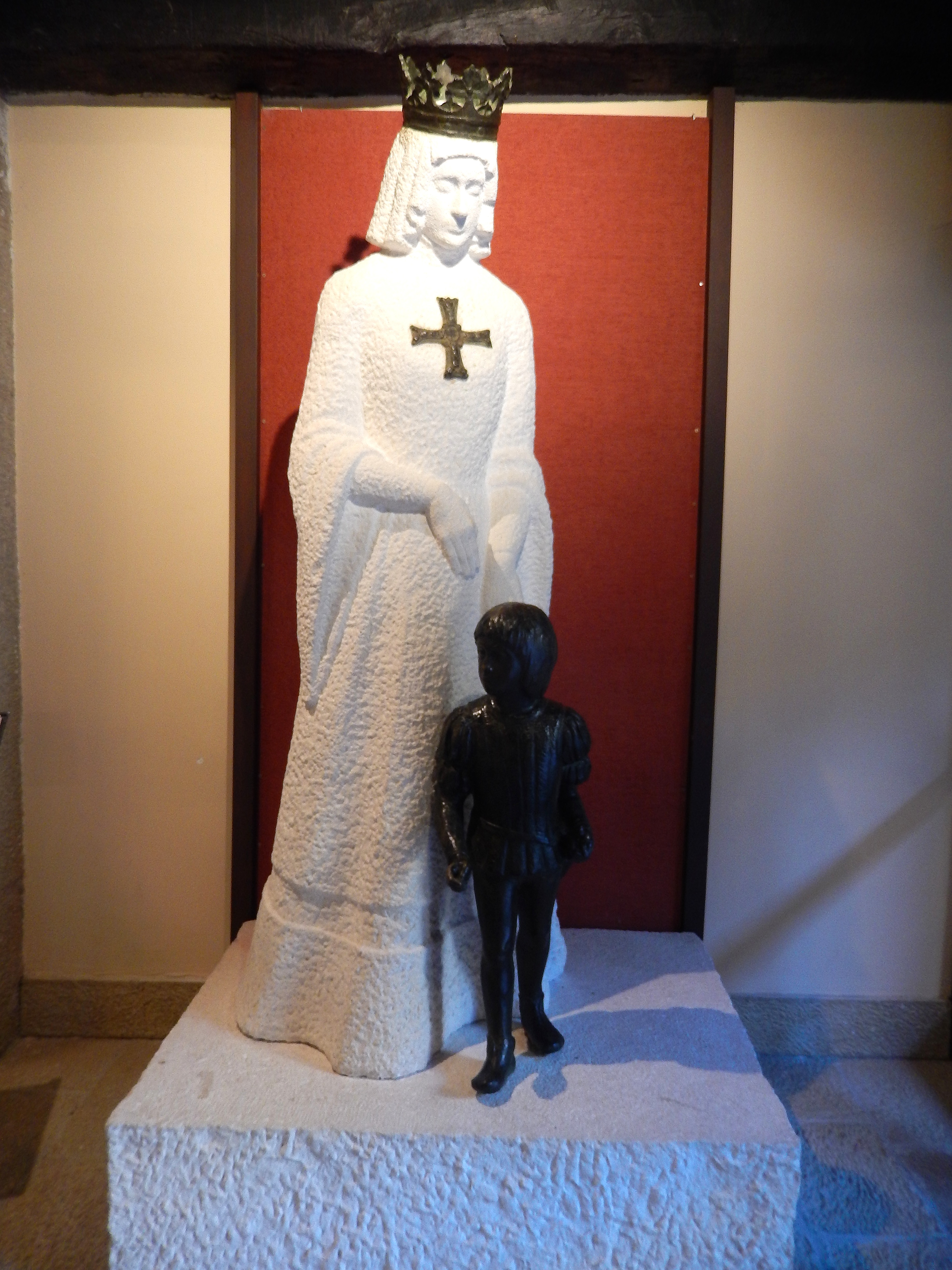
statue depicts Ferdinand as a boy, with his mother, Queen Juana
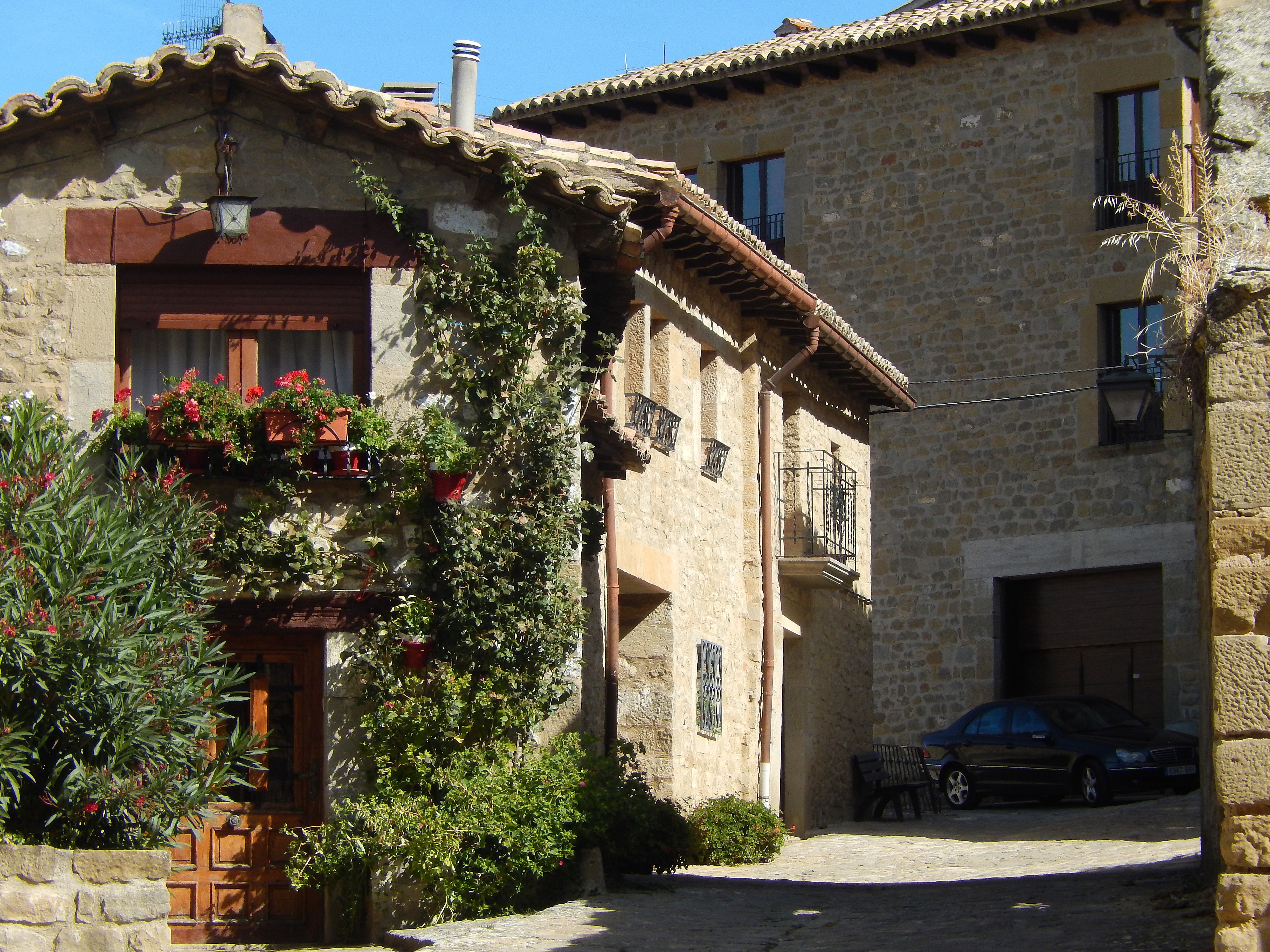
picturesque homes in the town
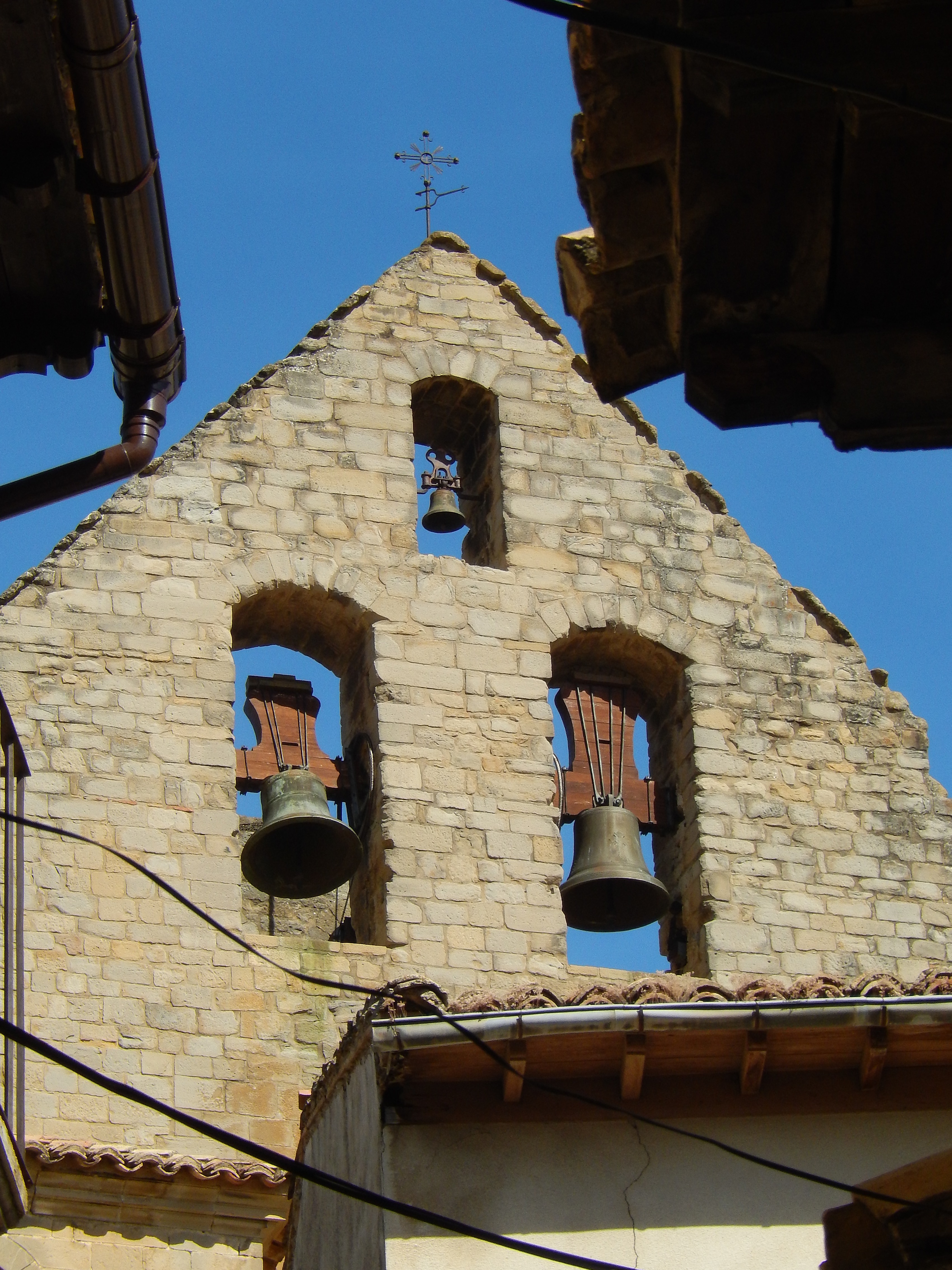
ring the bells
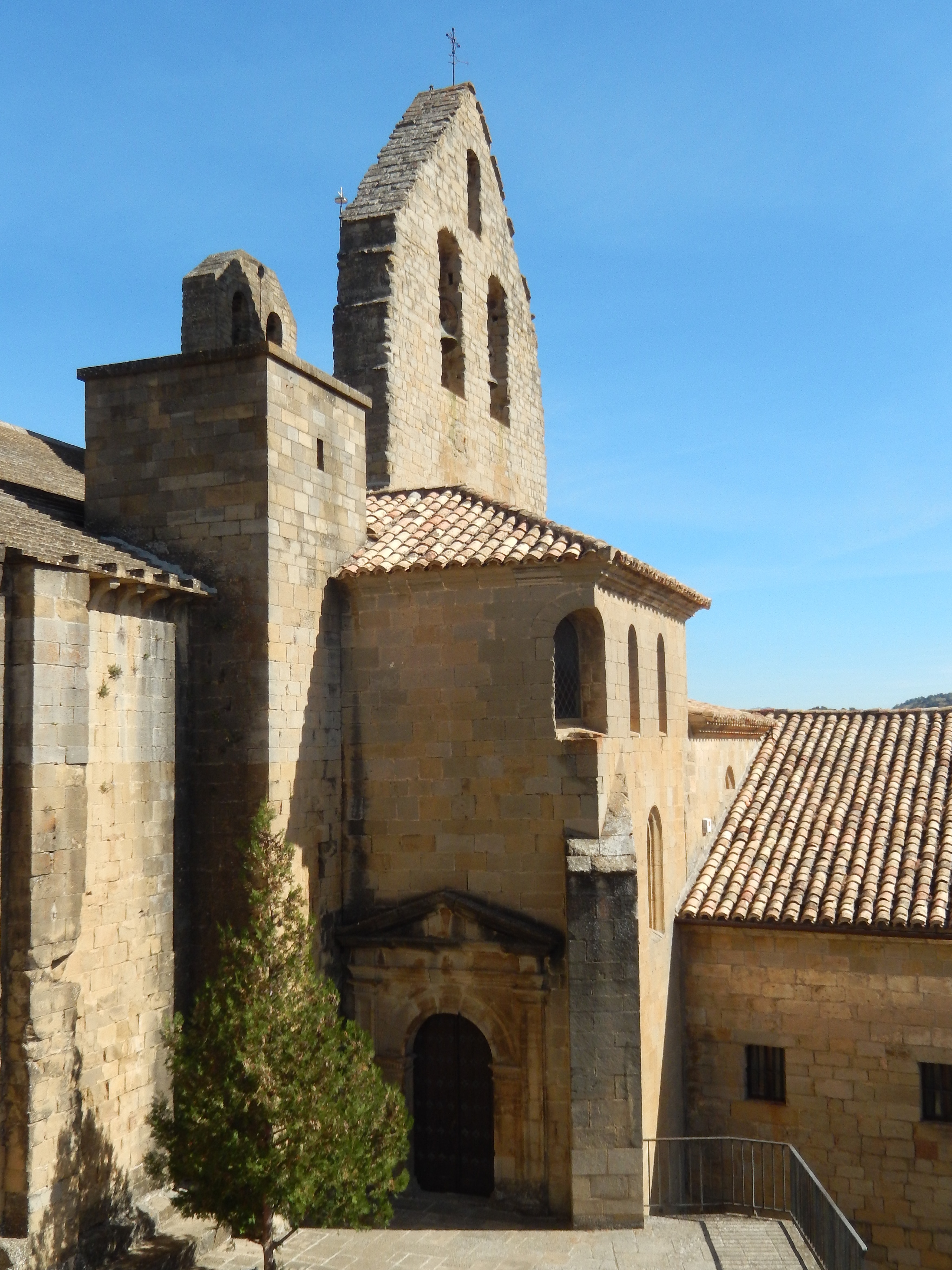
old walls

roof detail
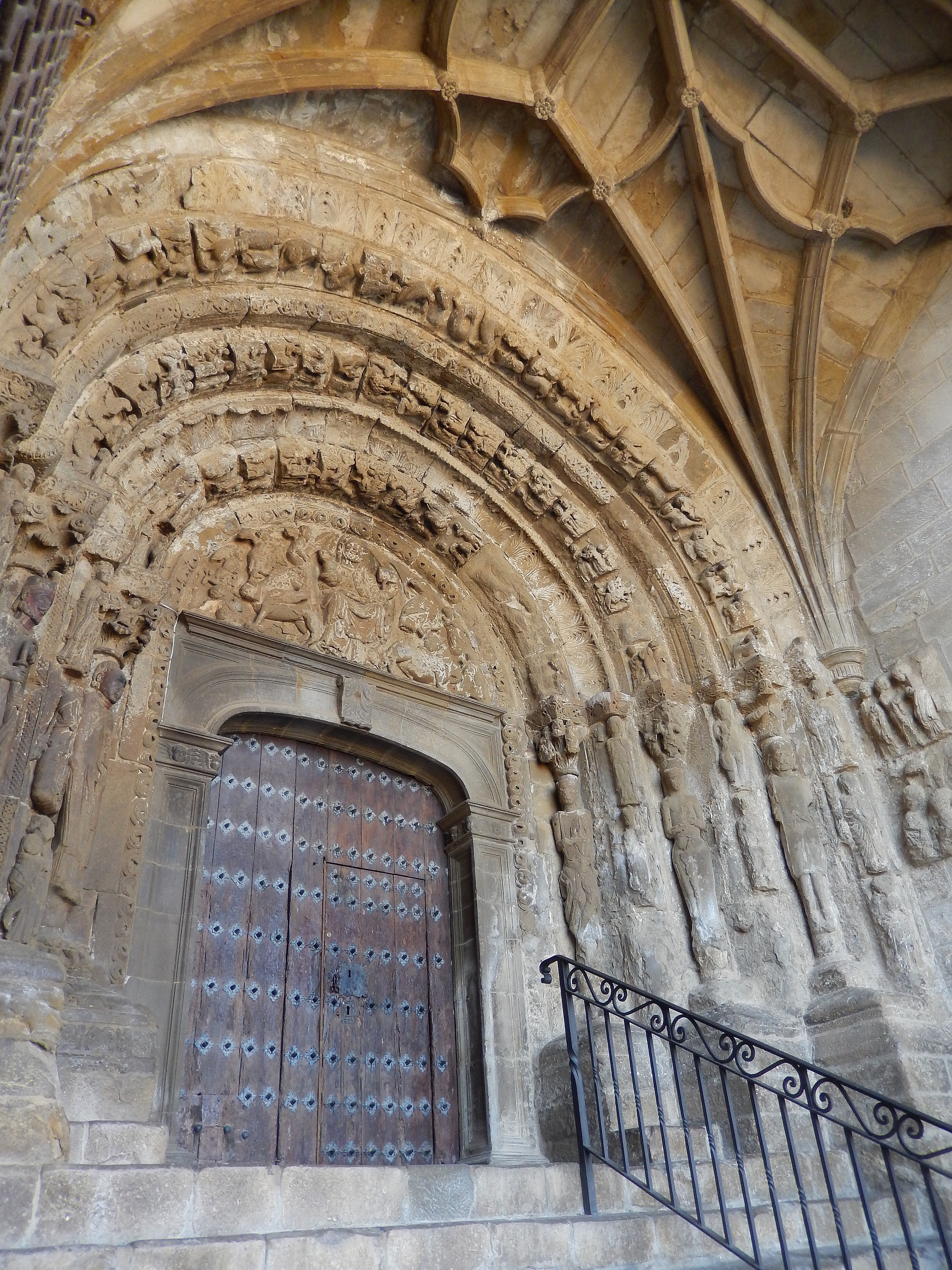
entrance to the 12th-century church, Sant Esteban, the oldest building in SOS, where Ferdinand was christened
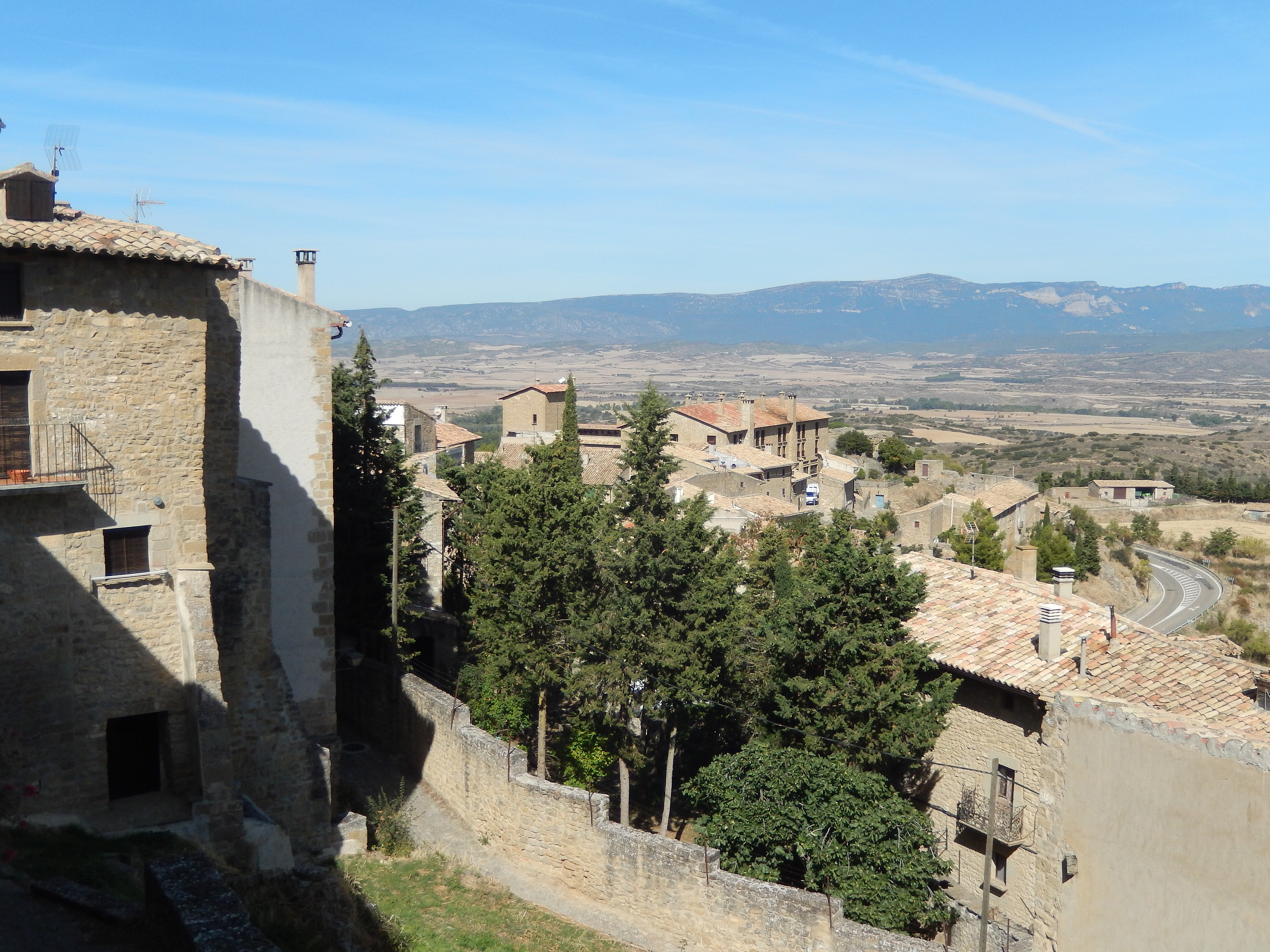
view from the church grounds, over the valley
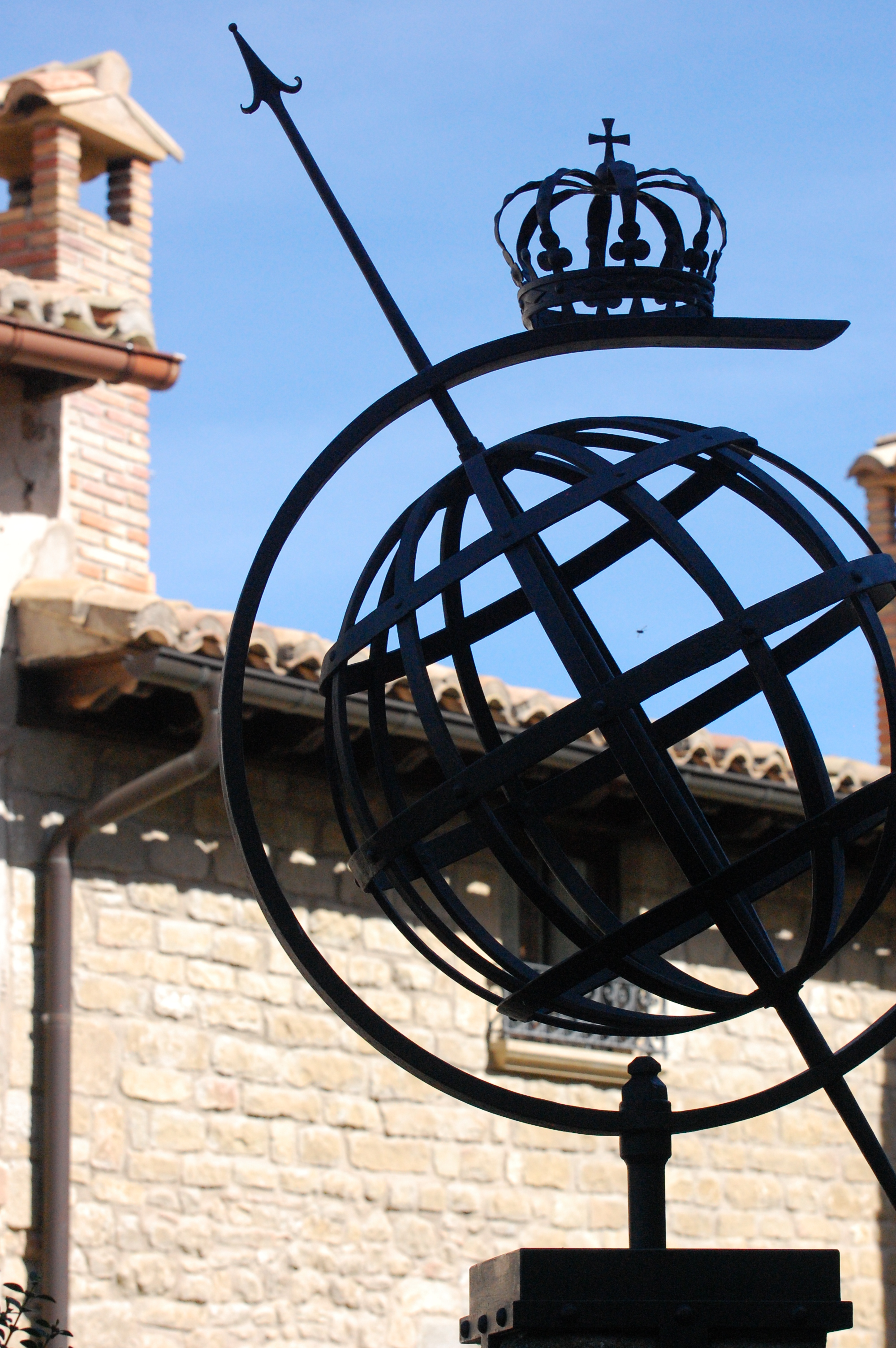
in front of Casa Palacio de los Sada, where Ferdinand was born
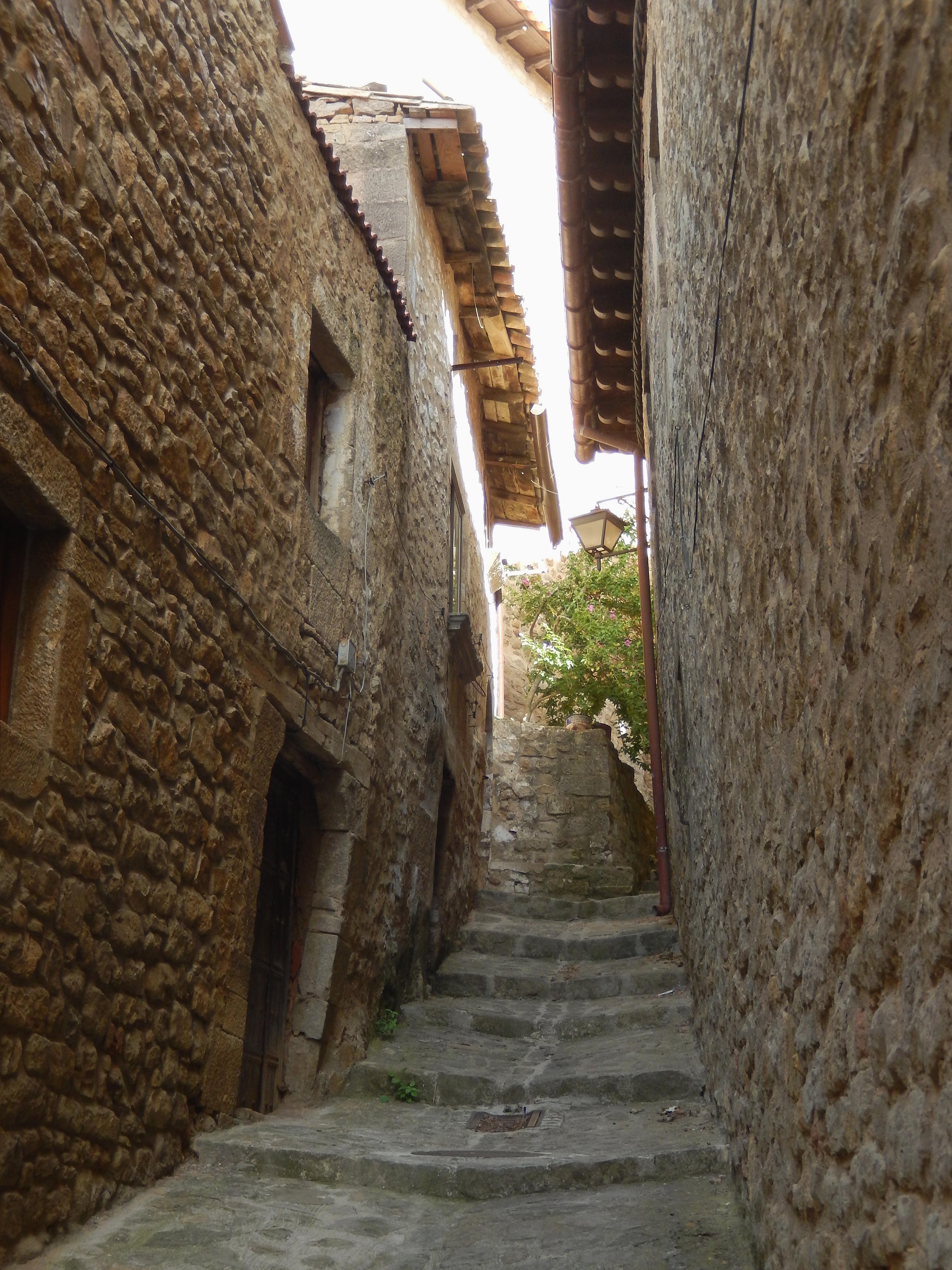
old narrow streets
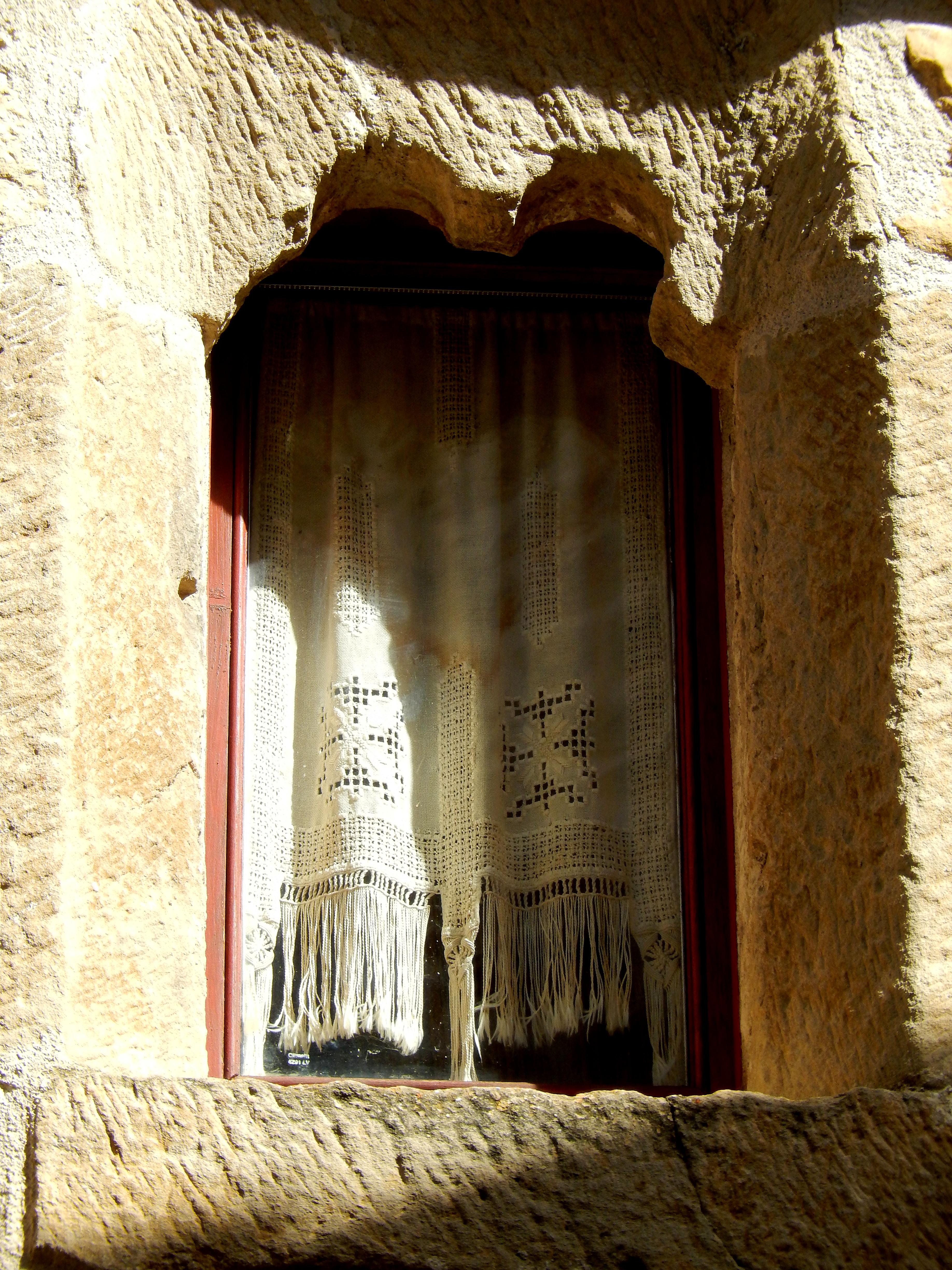
pretty windows
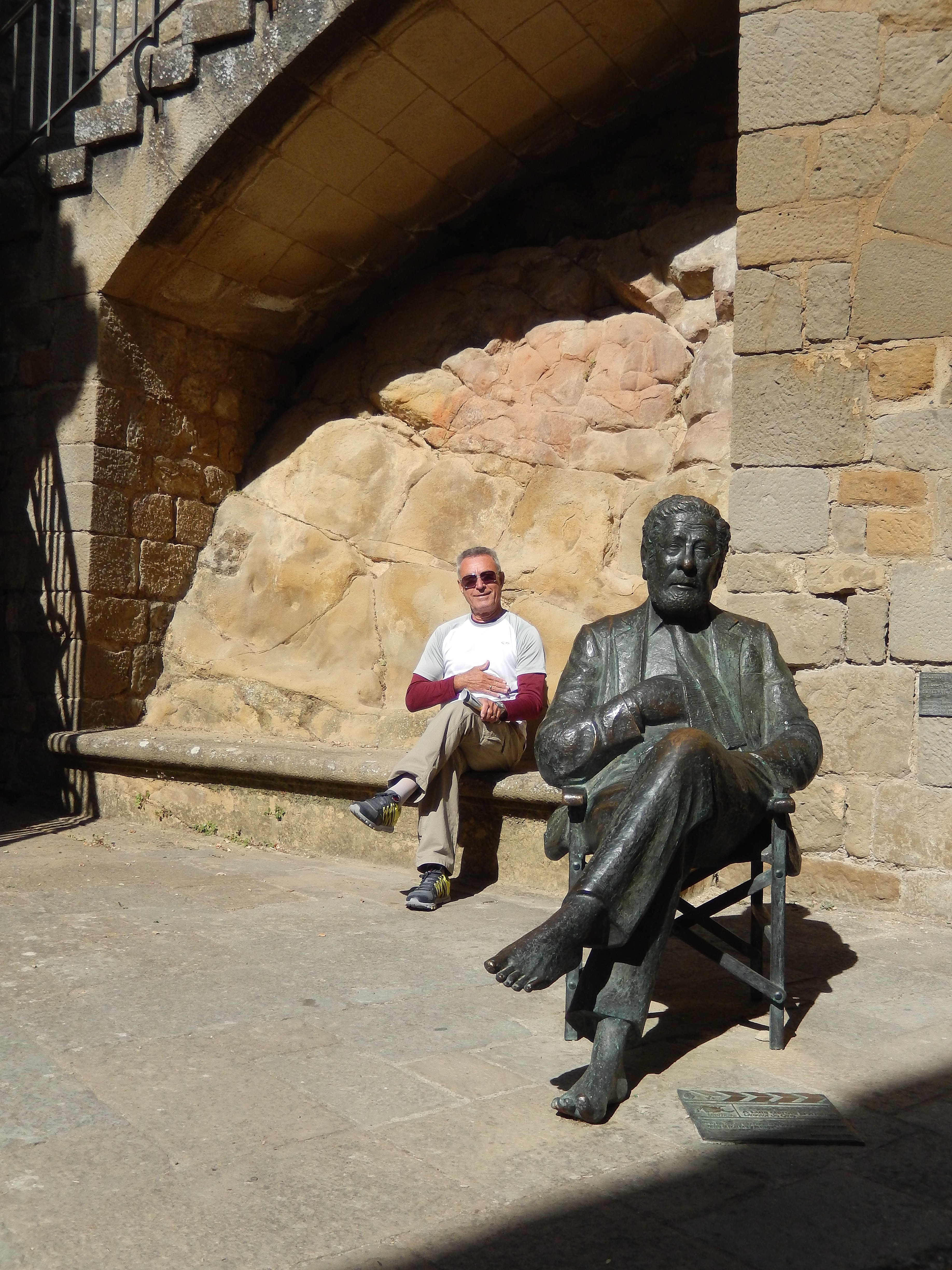
Julio poses with statue of Spanish director Pablo Garcia Albano; his movie La Vaquilla, a comedy of the Spanish Civil War, was filmed in this town and used several of the locals
We had lunch at a little restaurant in town called El Leñador, with delicious grilled lamb chops, and then back to the car for the next leg of the journey, to Pamplona. Pamplona was one of my ‘requests’ for our journey, once I knew we’d be close. While the town has been a town forever, Ernest Hemingway put it on the world map with the publication of his novel, The Sun Also Rises.
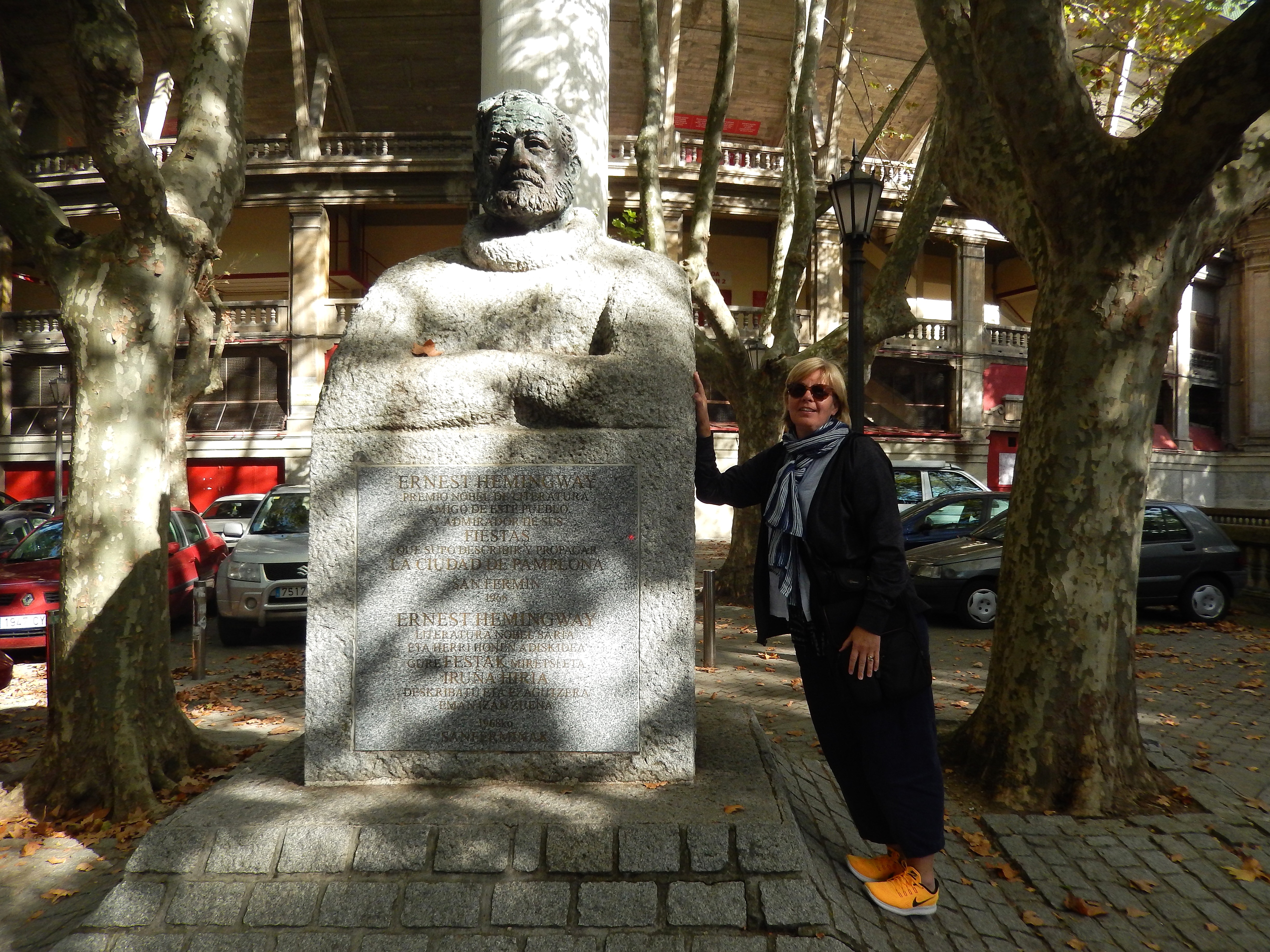
with Hemingway, in front of the bullring
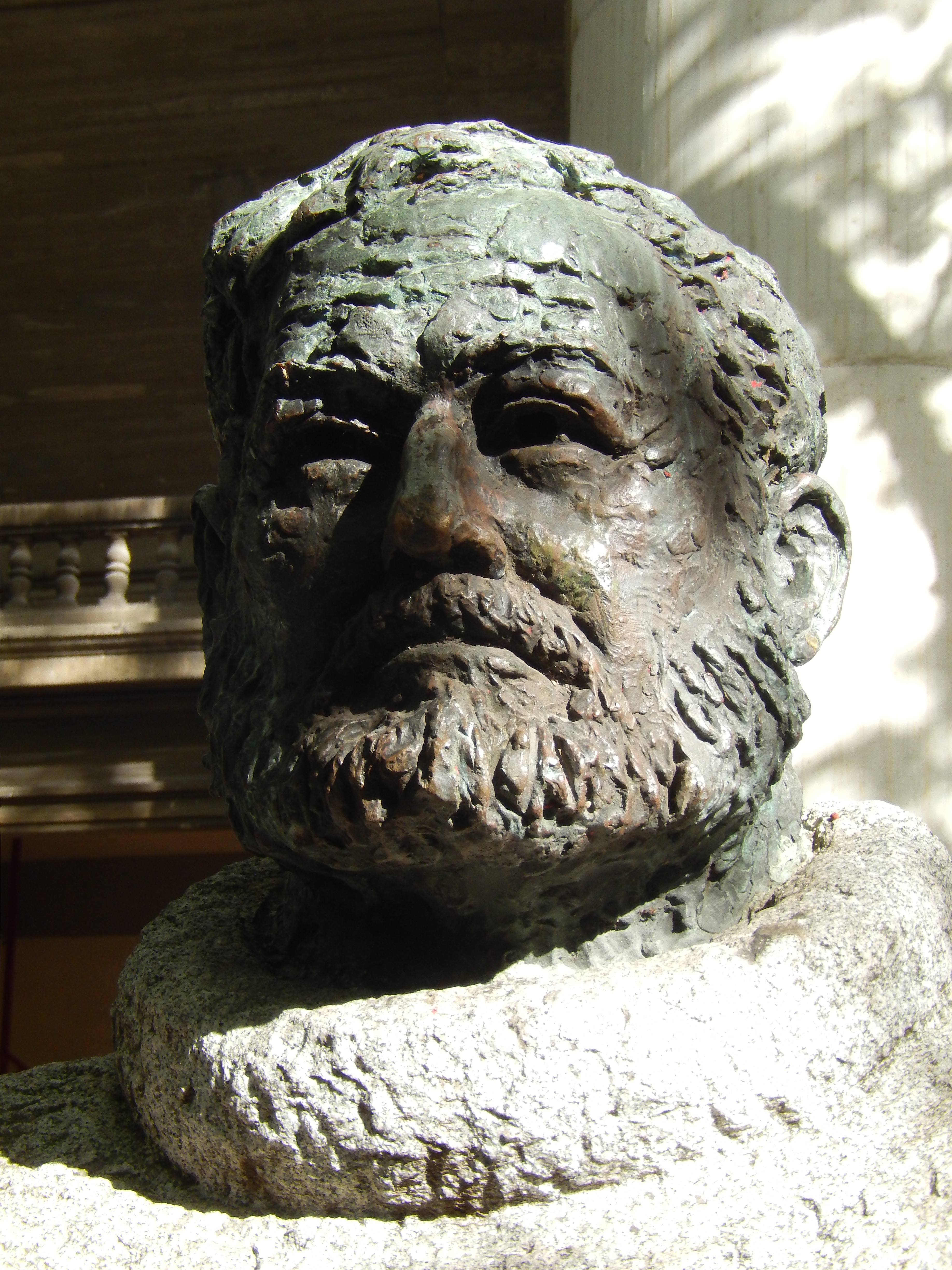
Ernest Hemingway
We walked the path of the Running of the Bulls, the festival for which Pamplona is best known…
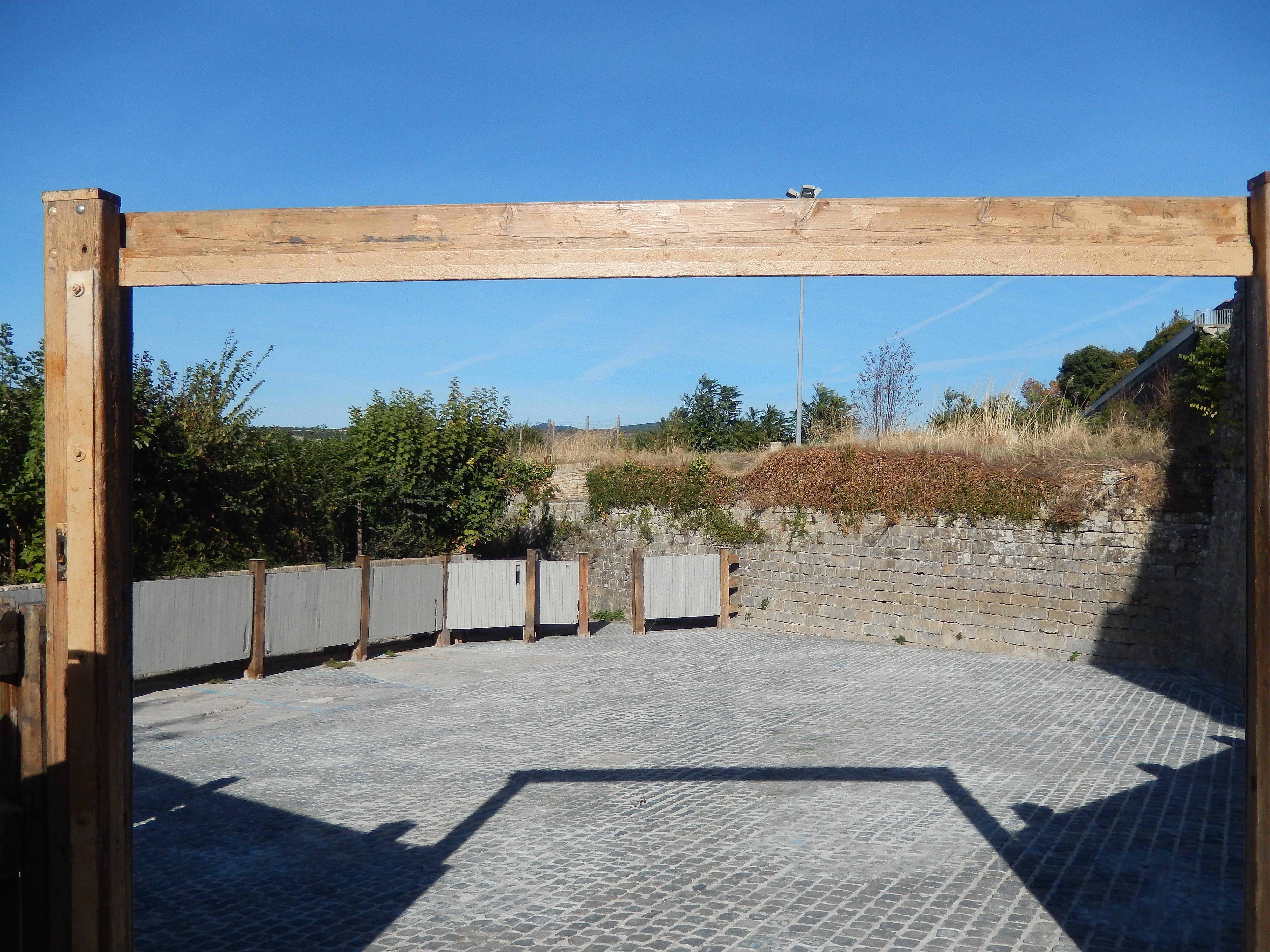
bull corral (confinement)

procedure details
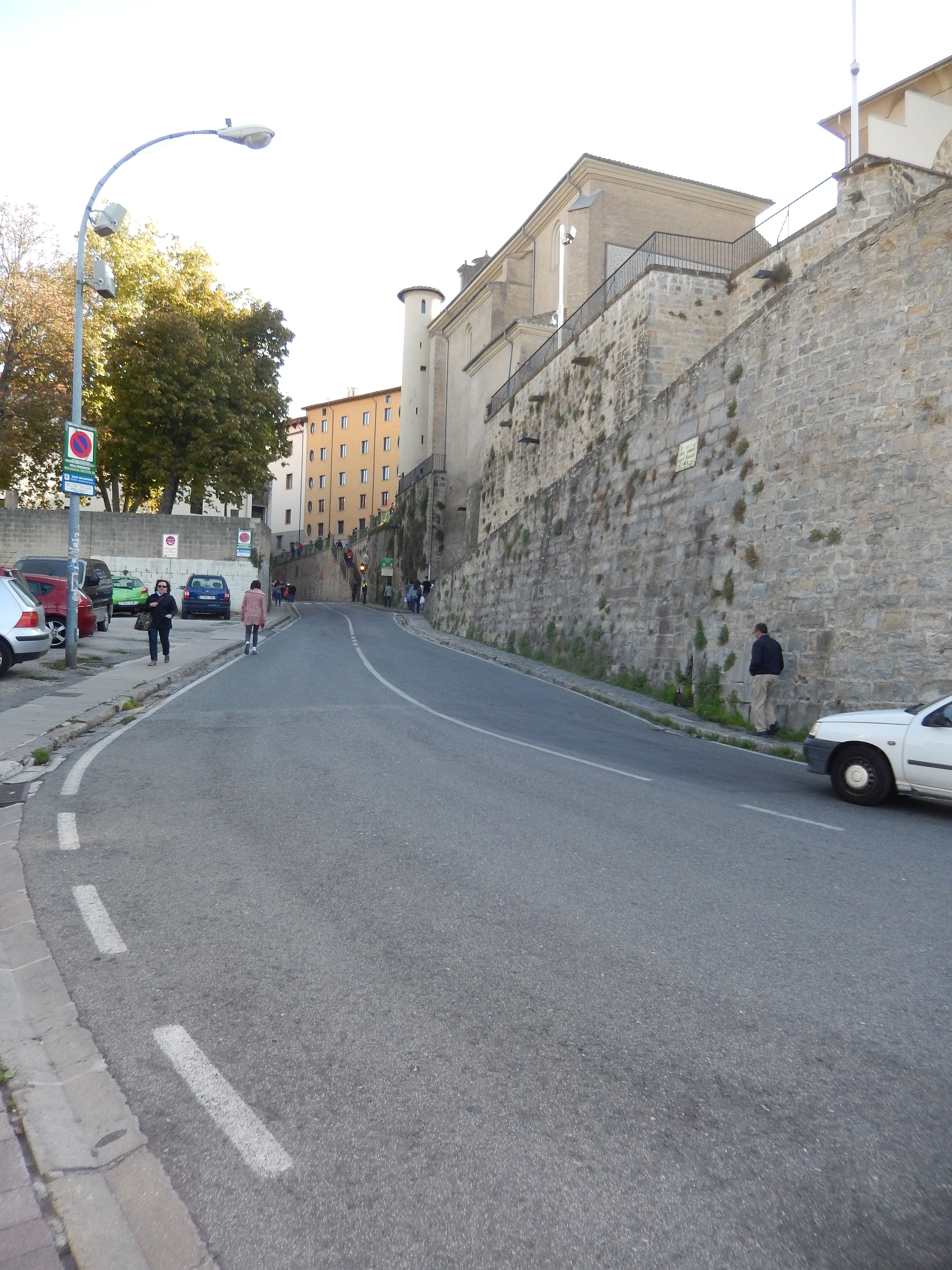
from the corral, up this hill
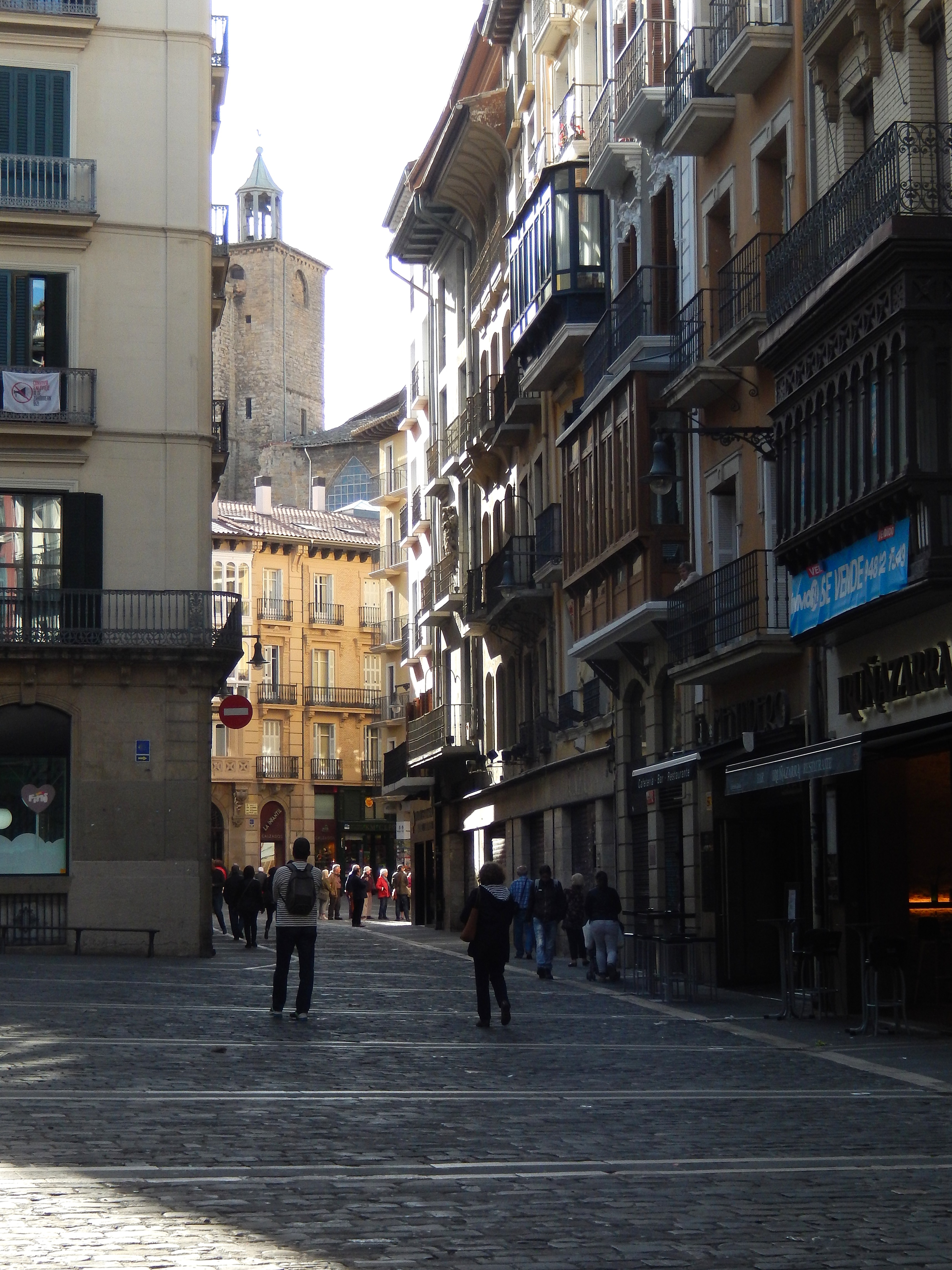
running must be difficult on the cobble-stoned streets and around that tight corner
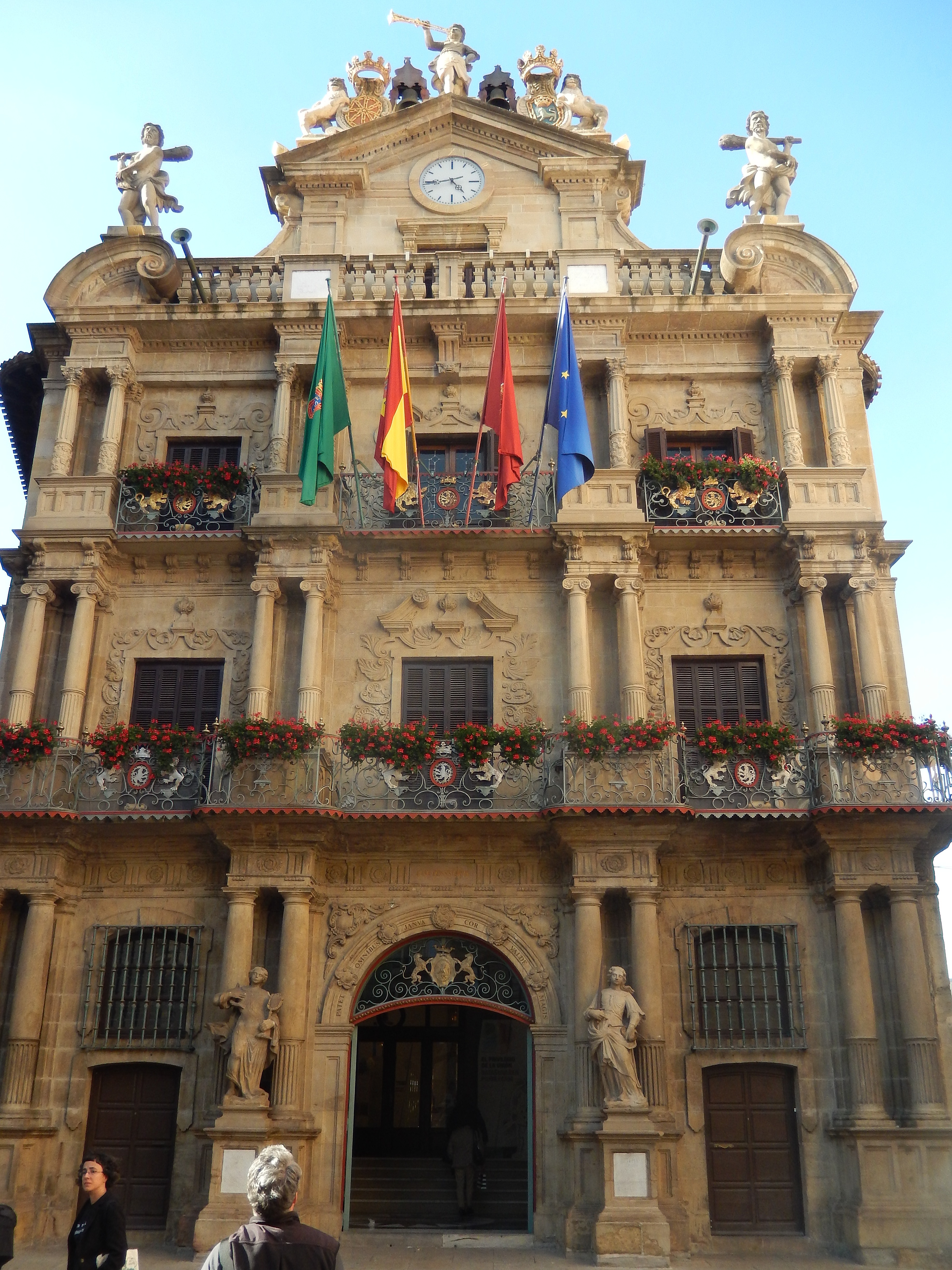
they run past this beautiful city hall
..then stopped for a coffee in the lovely Plaza del Castillo…
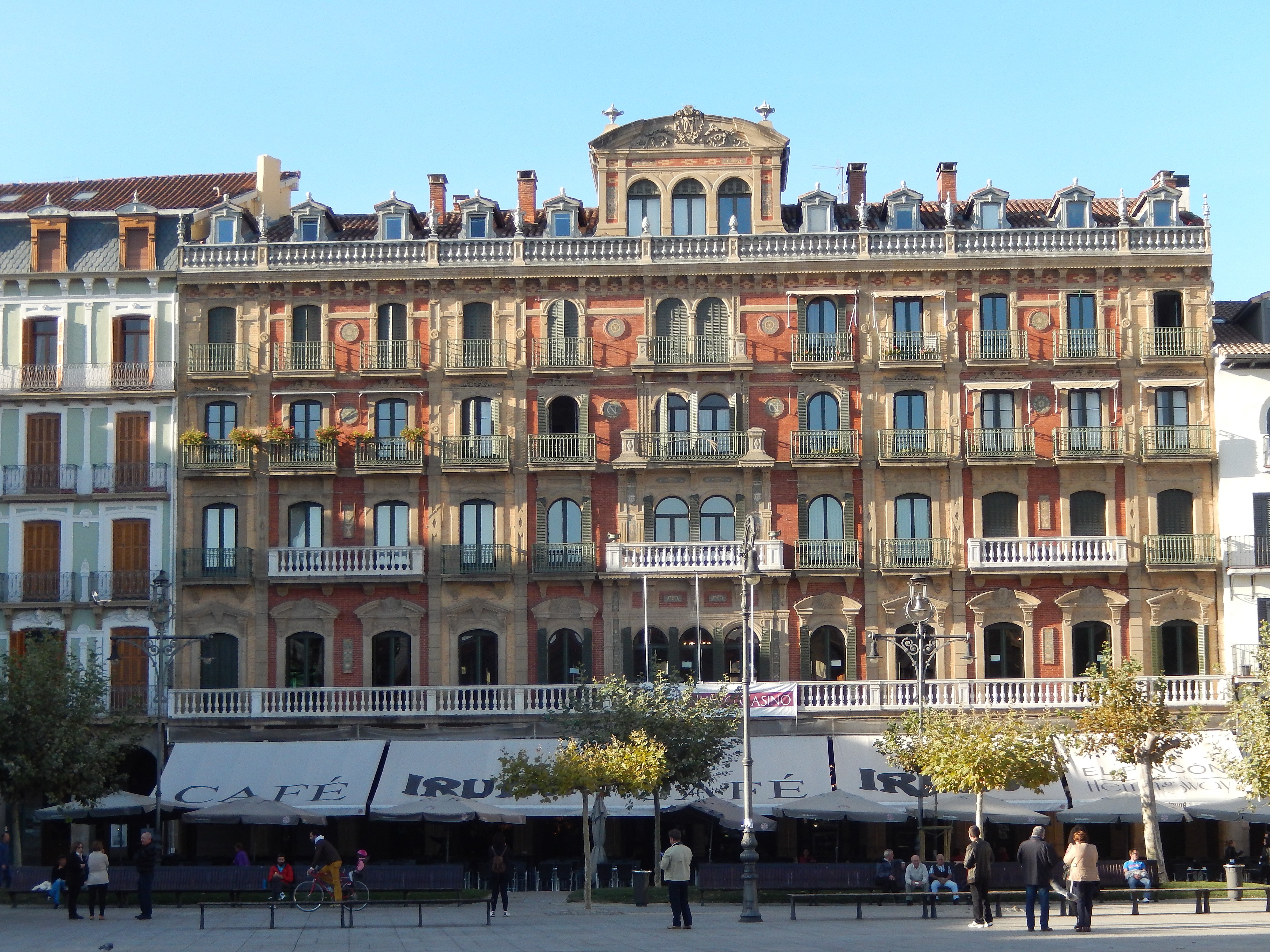
in the Plaza del Castillo
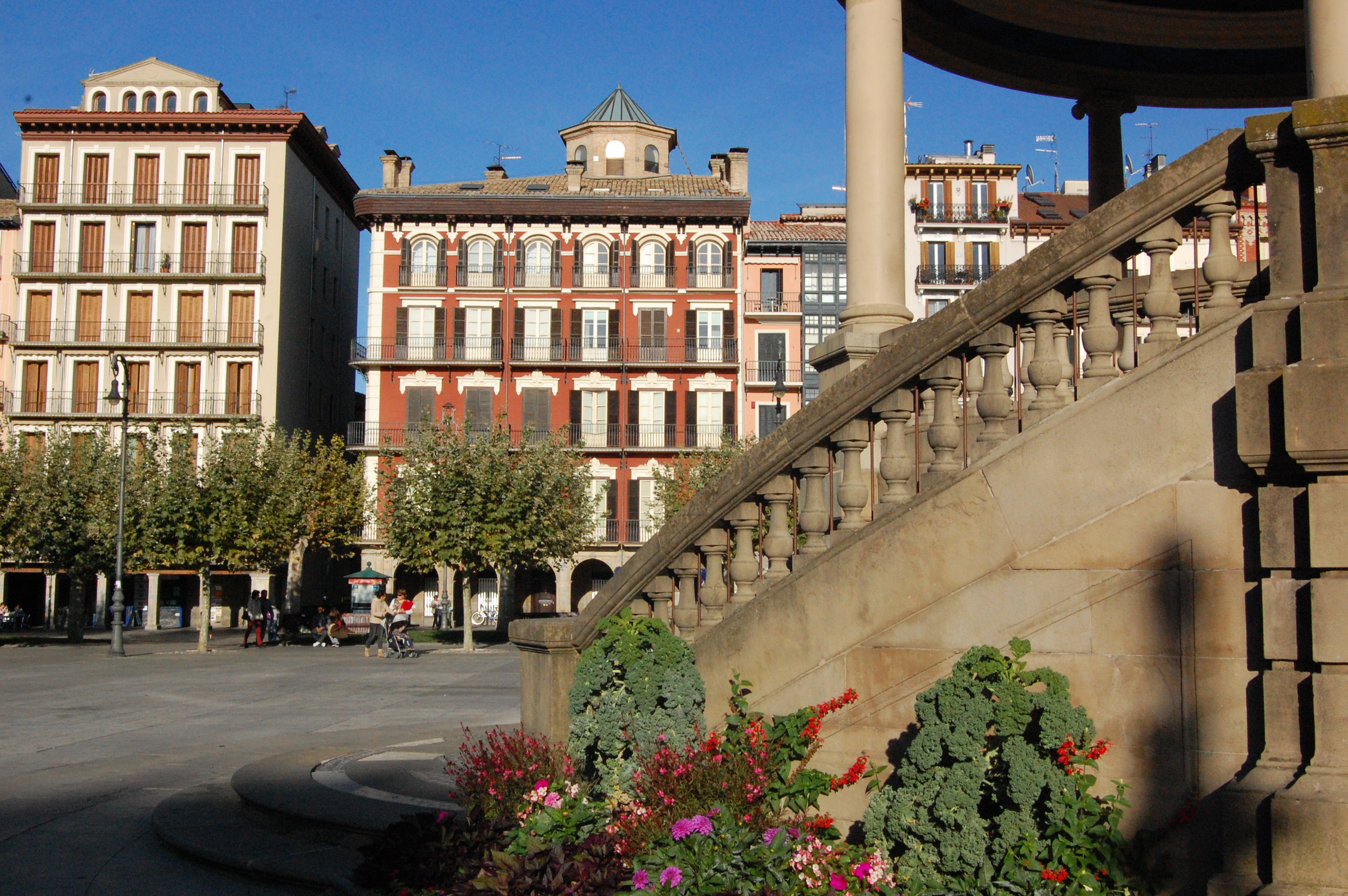
Plaza del Castillo
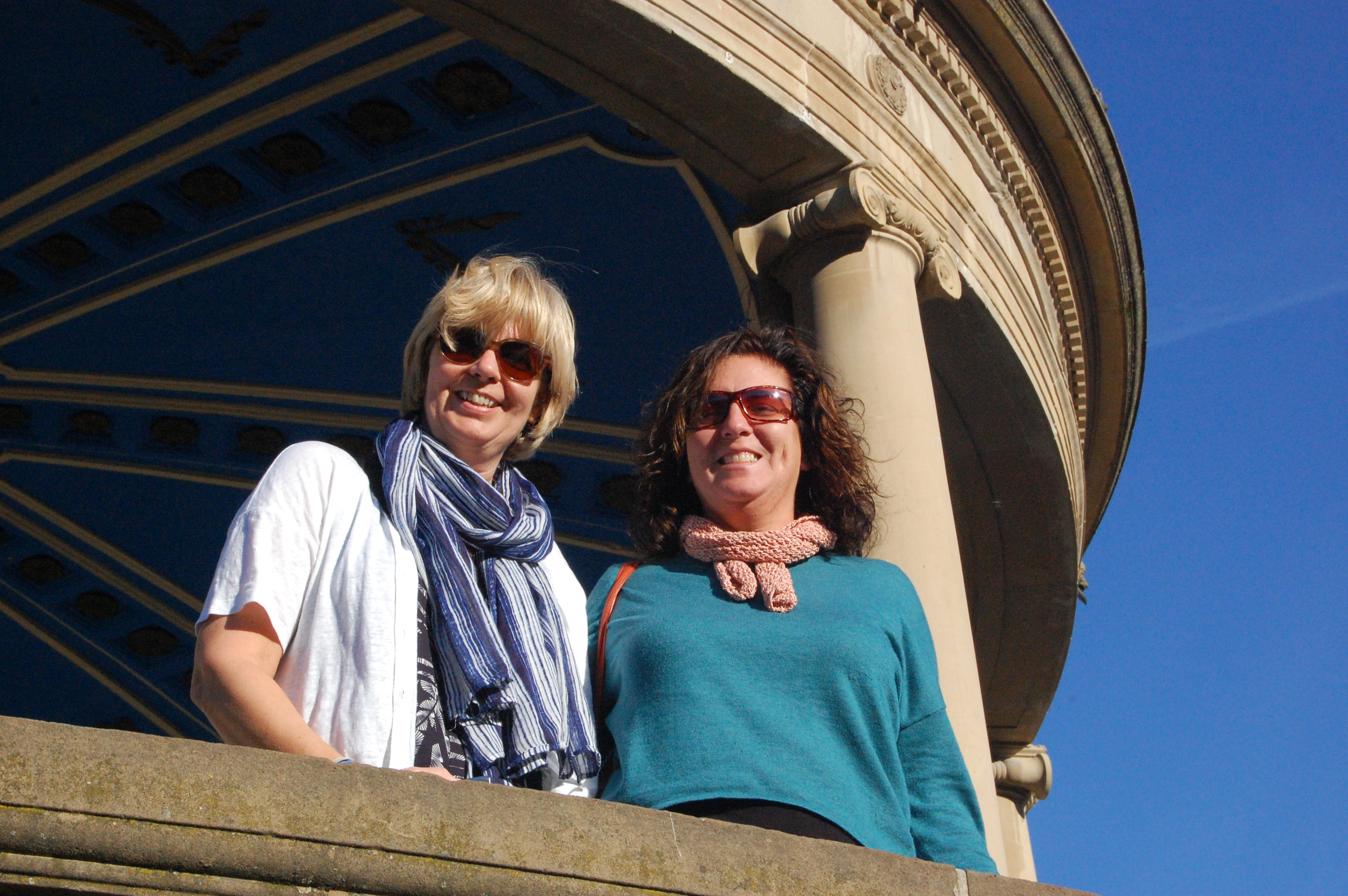
hello from the bandstand in the plaza
…and then walked to the Running of the Bulls Monument, installed in 2007, which shows 6 bulls, 2 steer, and 10 runners in action. It’s very impressive. The sculptor included himself, in the group, lying down, about to be gored!

in front of the Running of the Bulls Monument
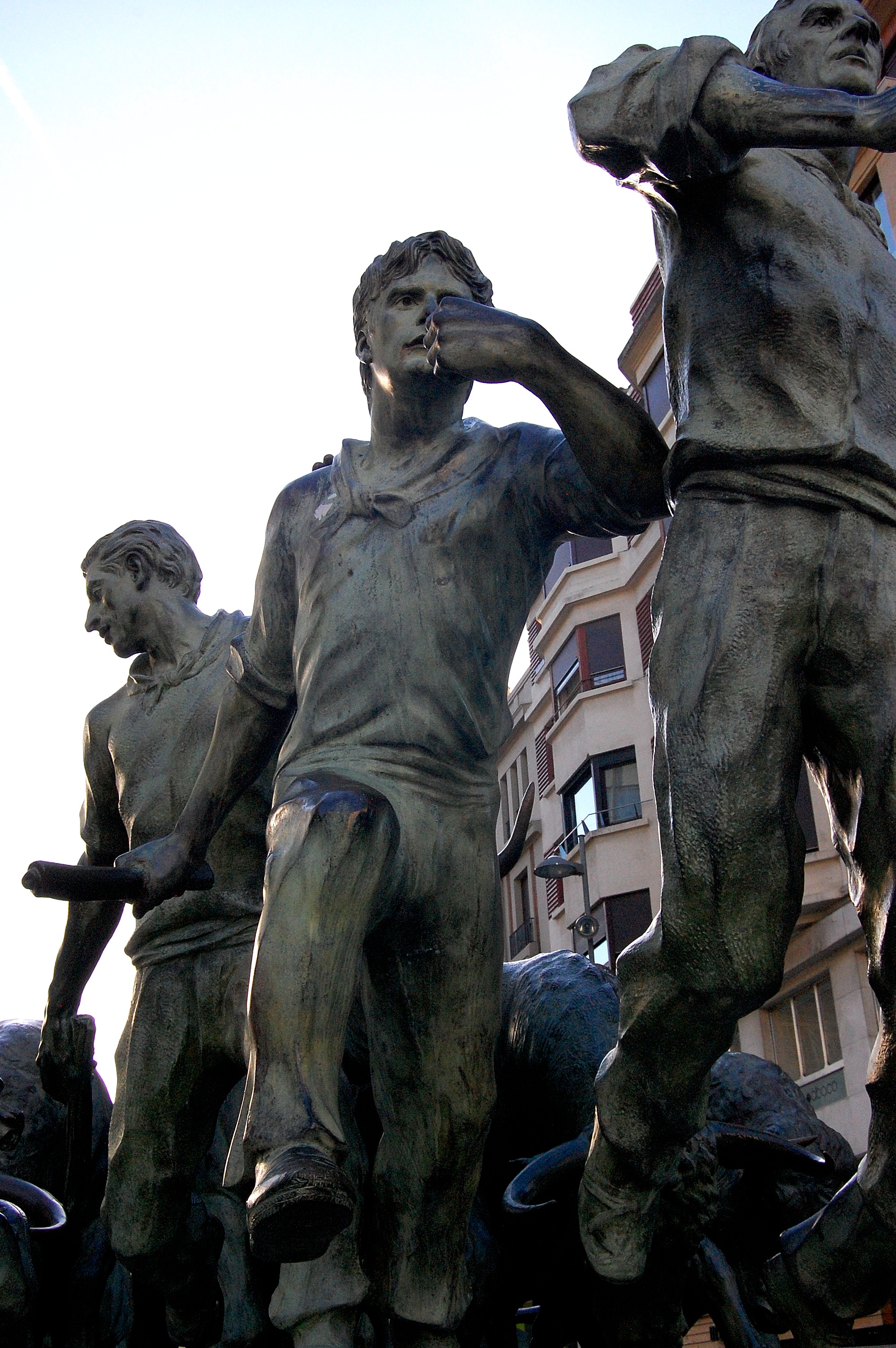
running in front of the bulls
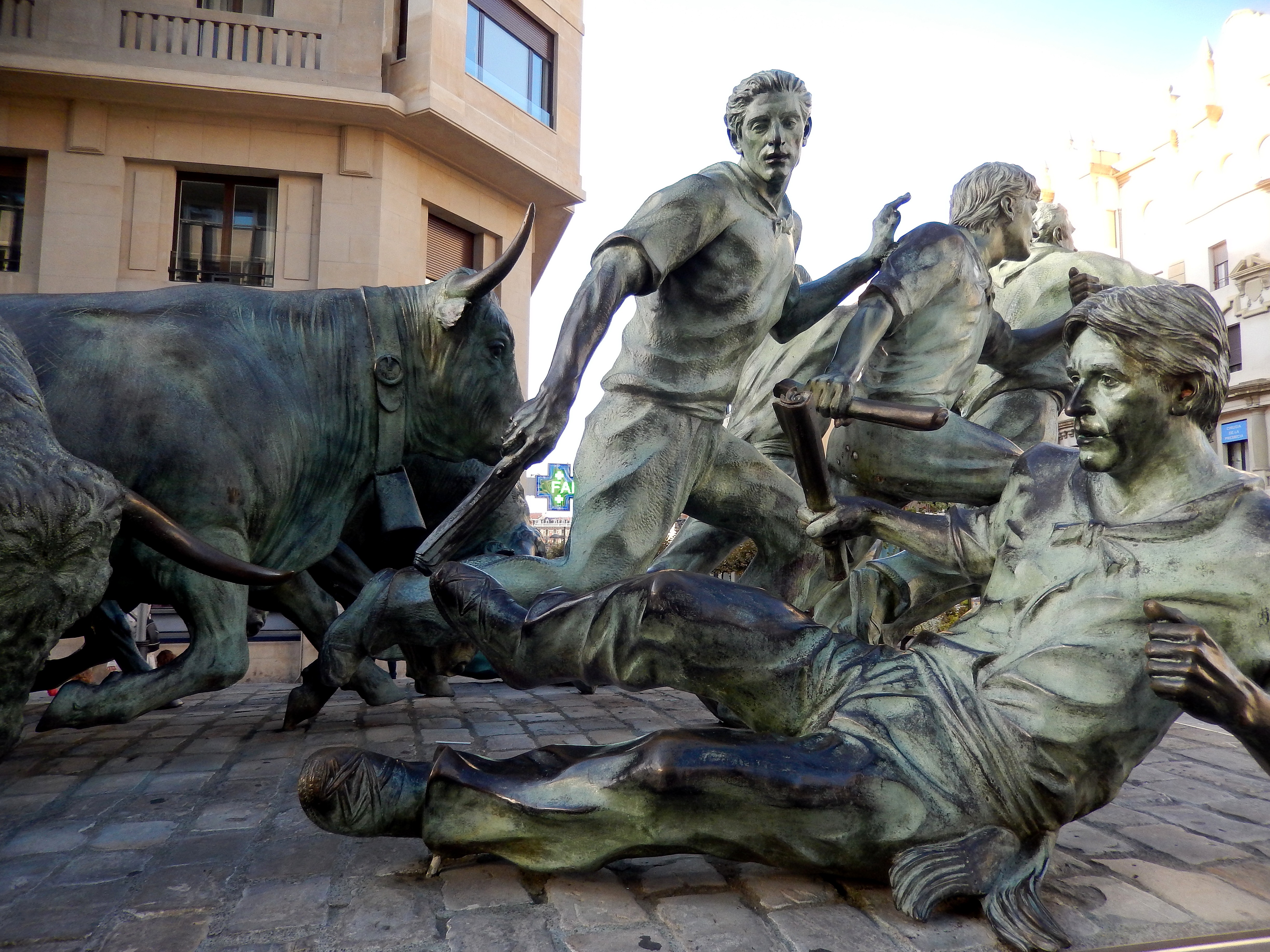
running from the bulls
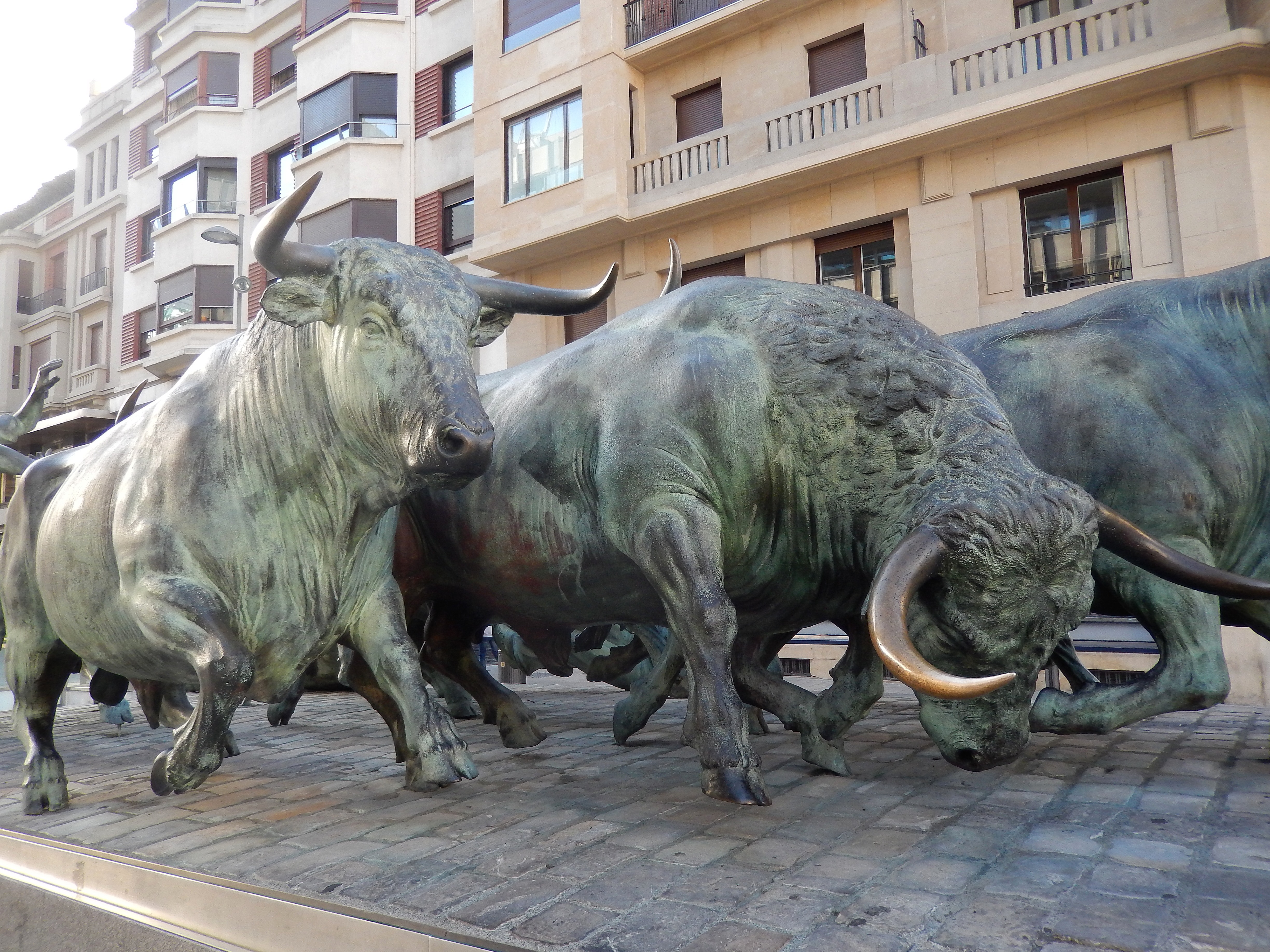
can you imagine being faced with these bulls?
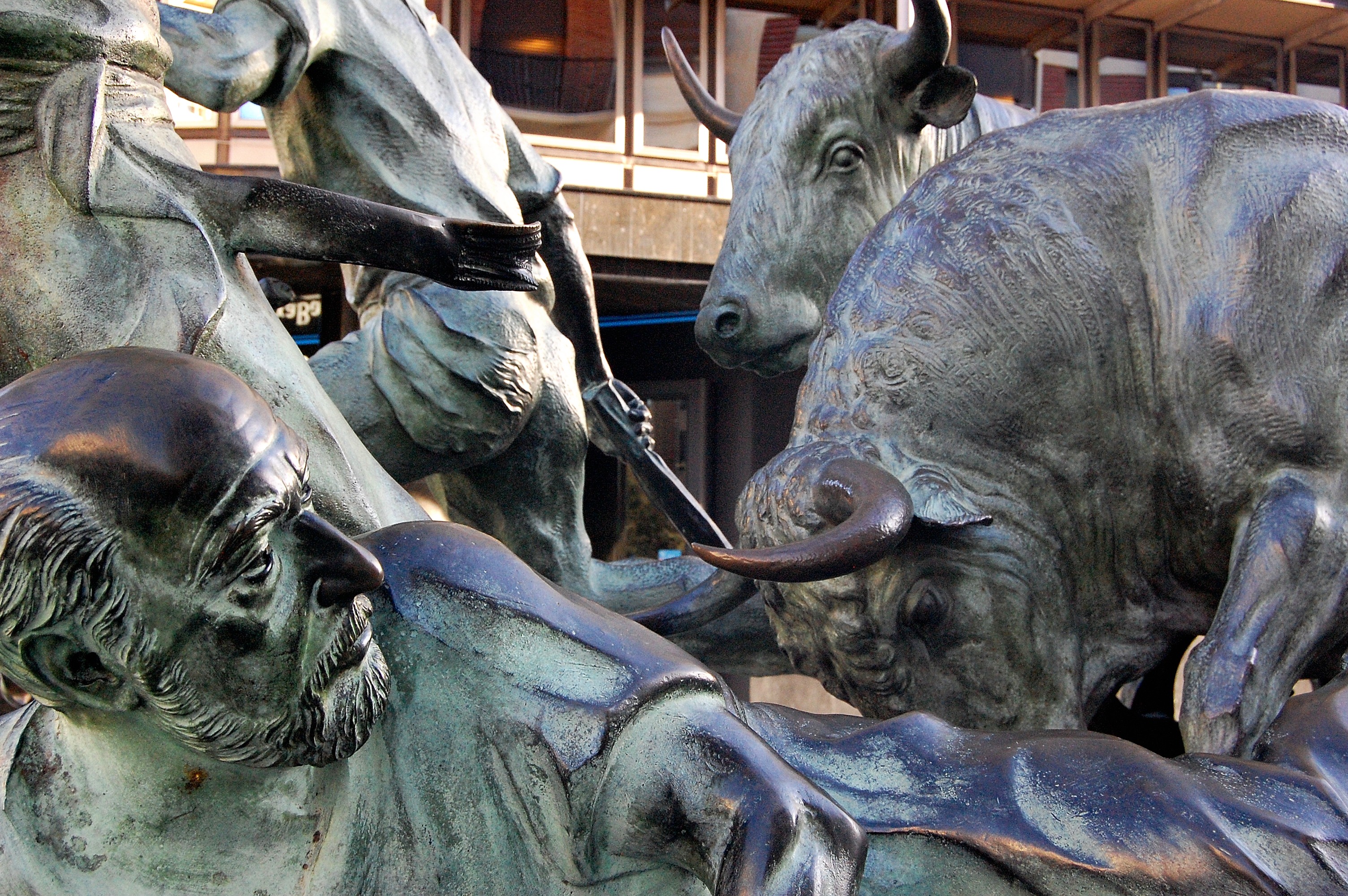
the sculptor, close up
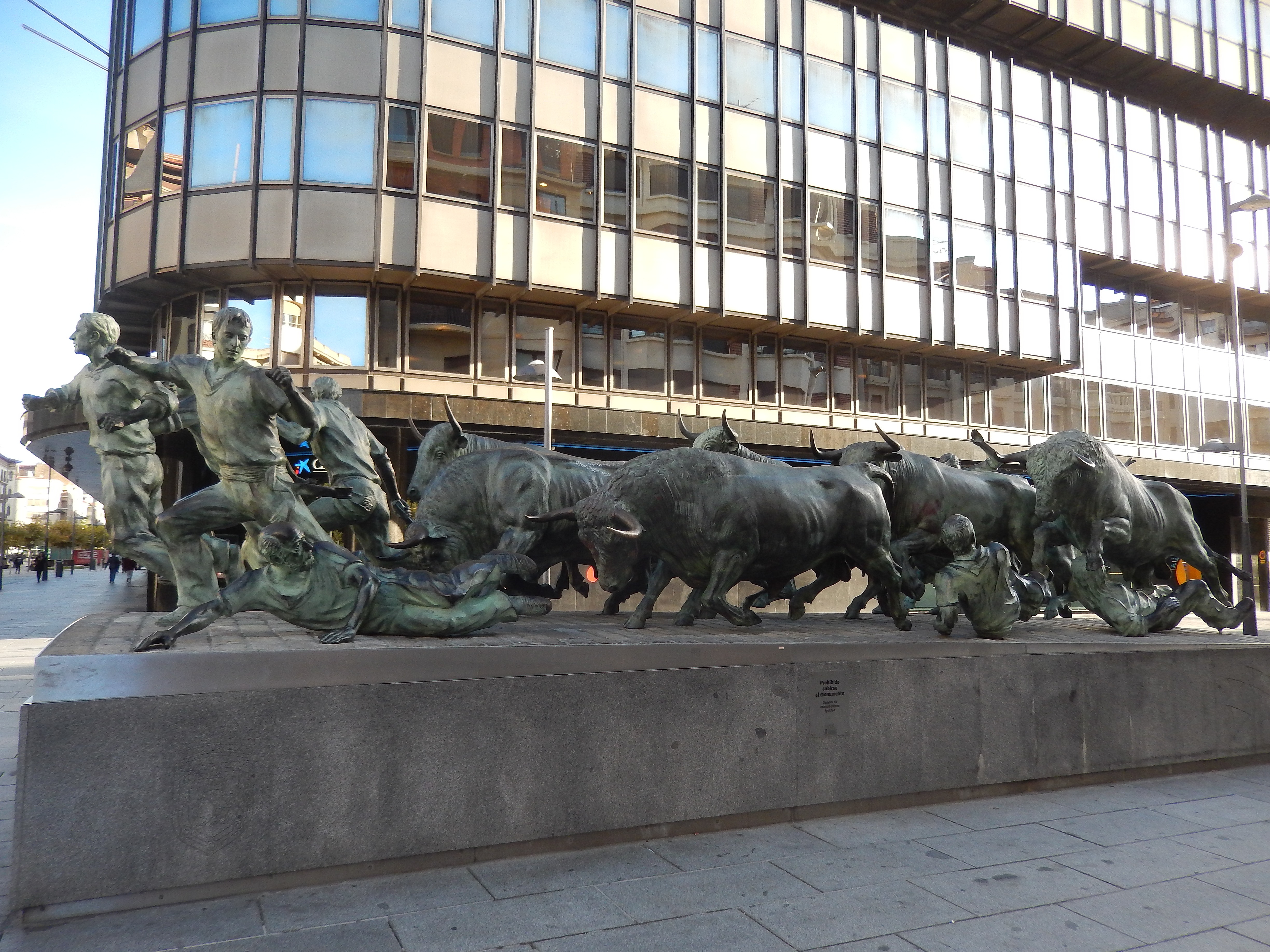
the full monument
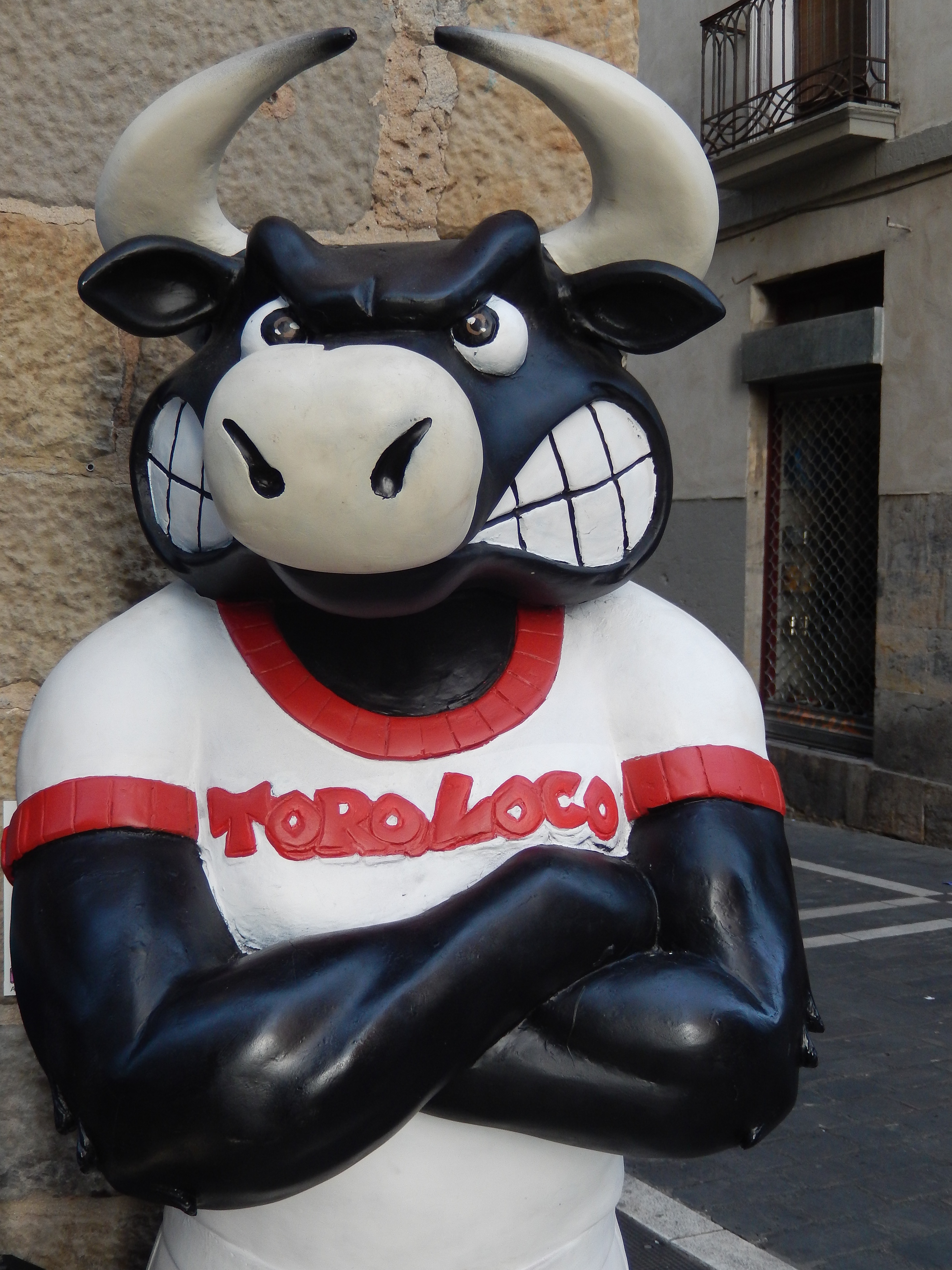
this bull has the last sneer
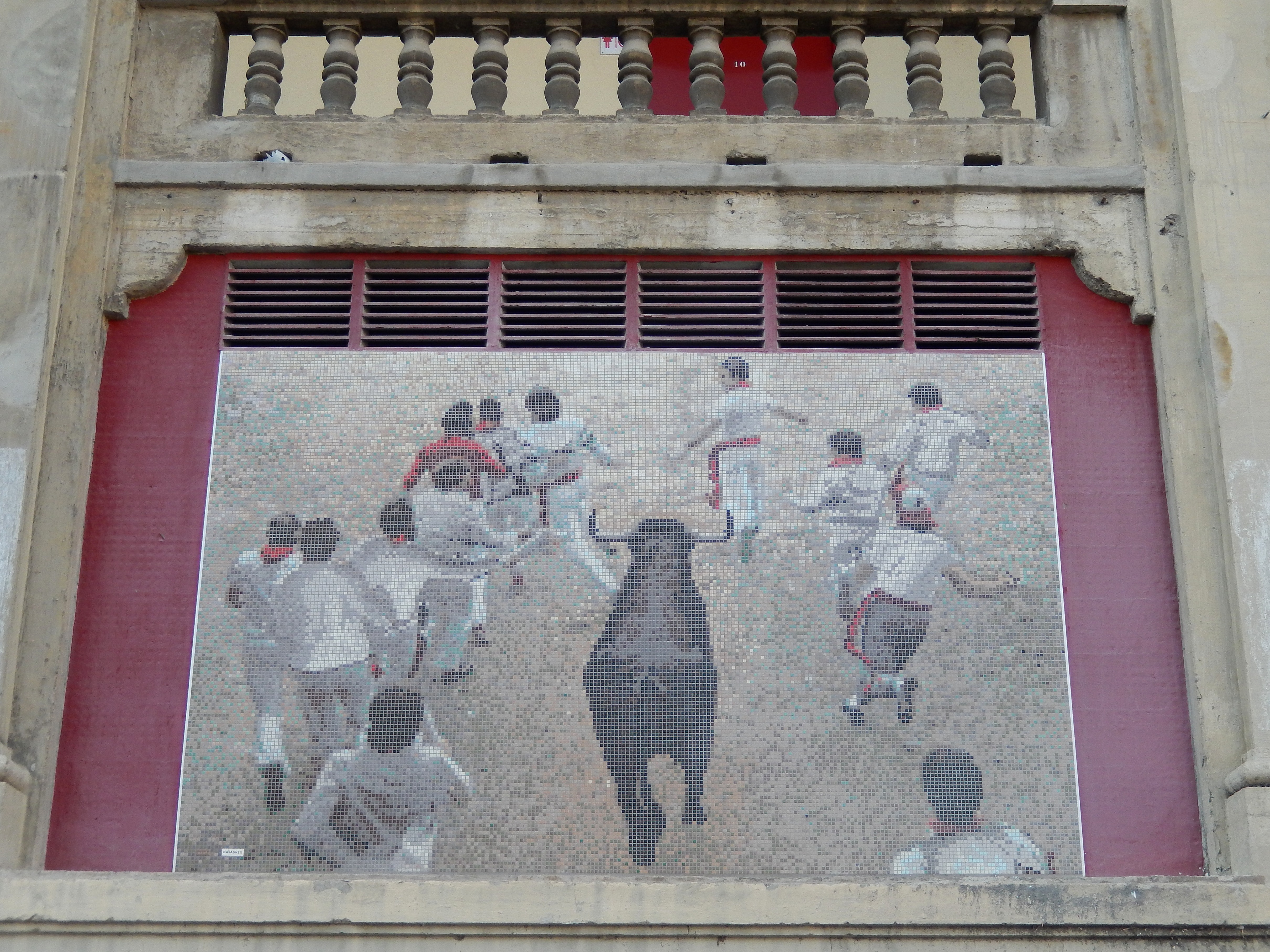
this mosaic was on the wall of the bull ring
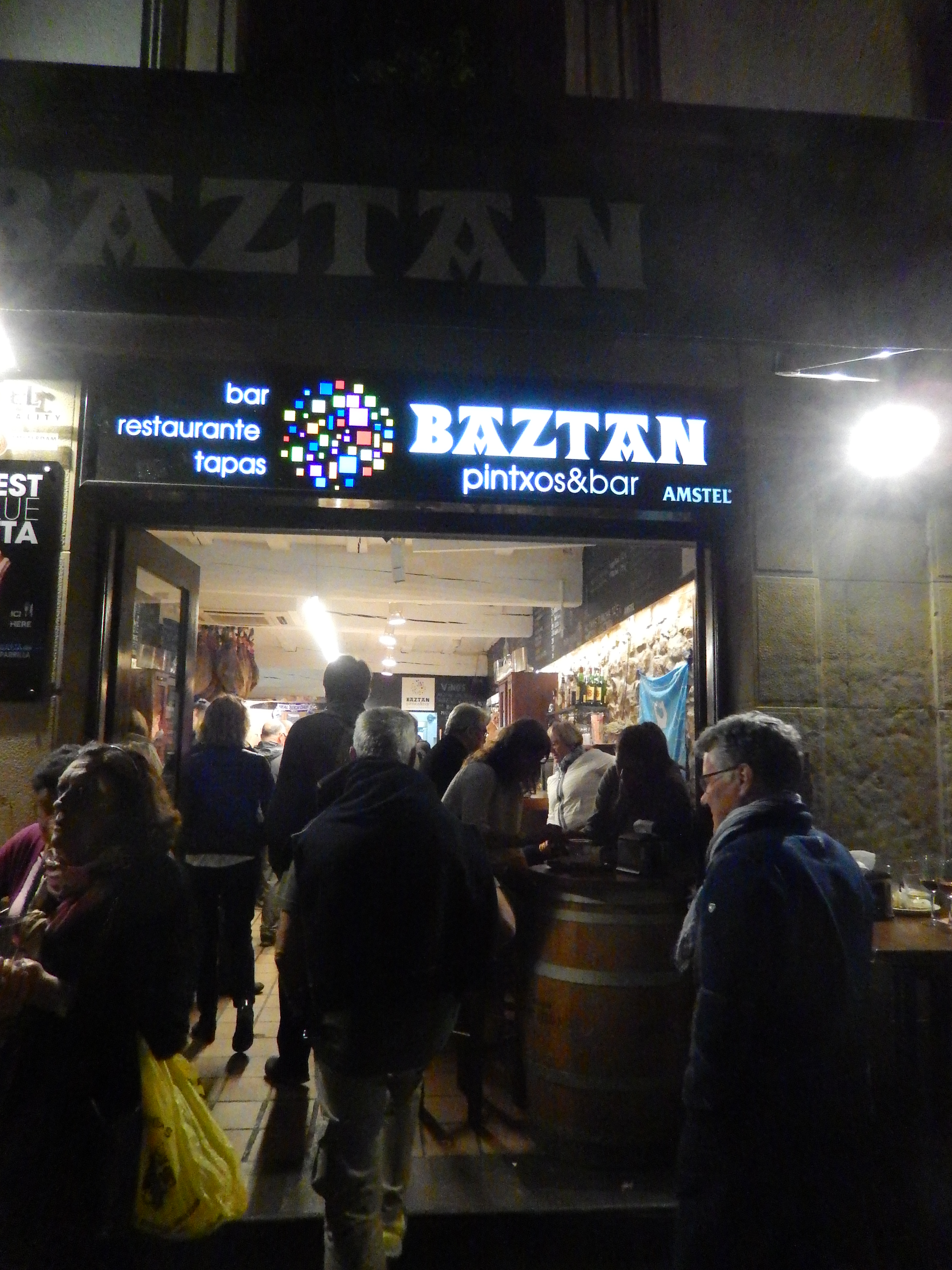
From Pamplona we drove to our destination for the next two nights, coastal town, San Sebastián, a holiday destination for many. We checked into the very nice Hotel Codina, only a few blocks from the beach, and a 2-km walk into the Old Town. After settling into our rooms, we headed out to walk those 2 km. along the water front to the Old Town for a true San Sebastián experience of “pintxos” and drinks. The area is full of bars, and the idea is to have a drink and a pintxos (a version of a tapas, in the Basque tradition) or two, and then move on to the next pintxos bar. Each place has their speciality (though, I don’t think we specifically honed in on those), and a bar-long array of tasty choices. It was Canadian Thanksgiving this day: our Thanksgiving meal was deliciously different.
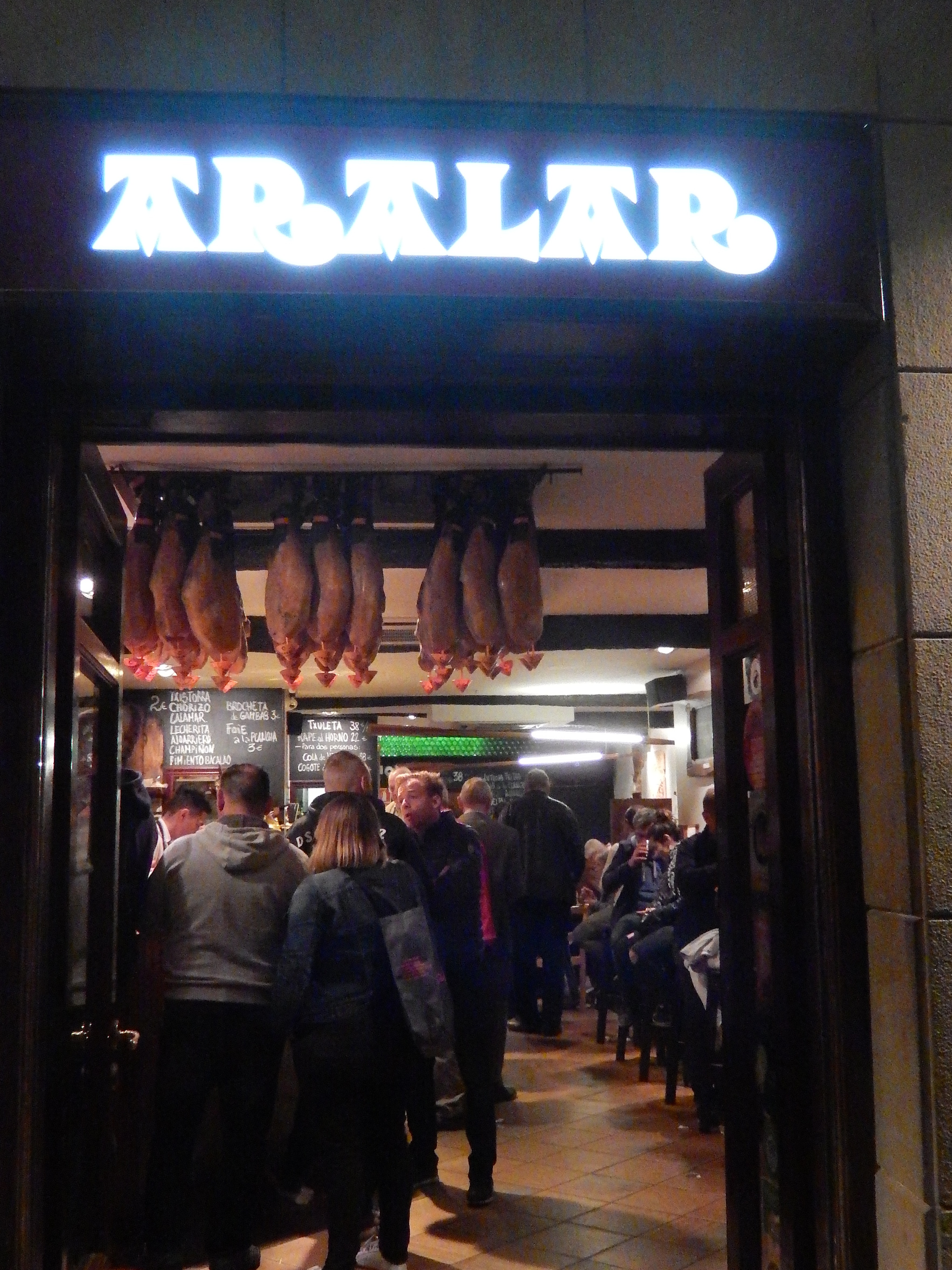
here first…see the hanging hams
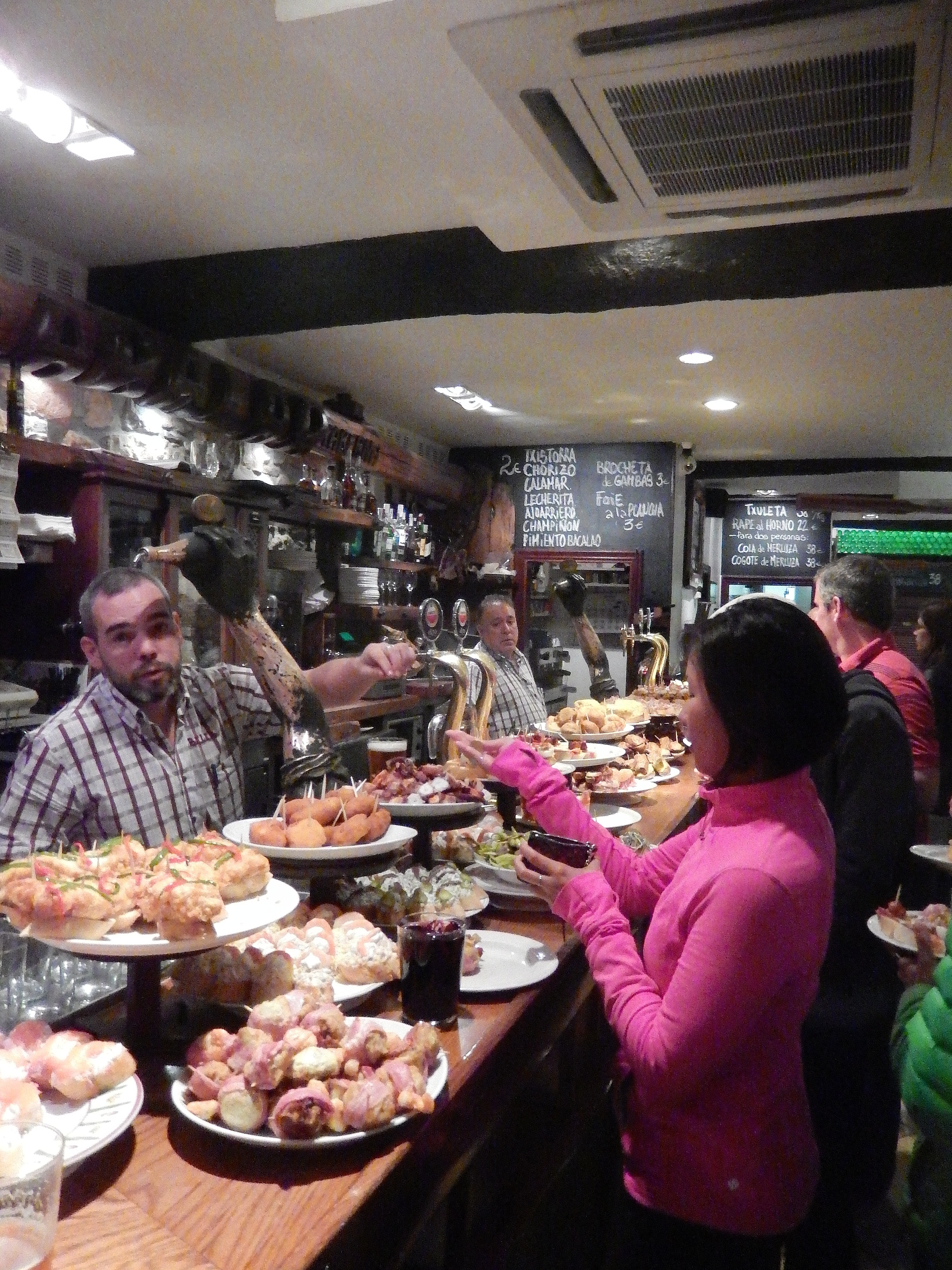
what a selection of food!
next…
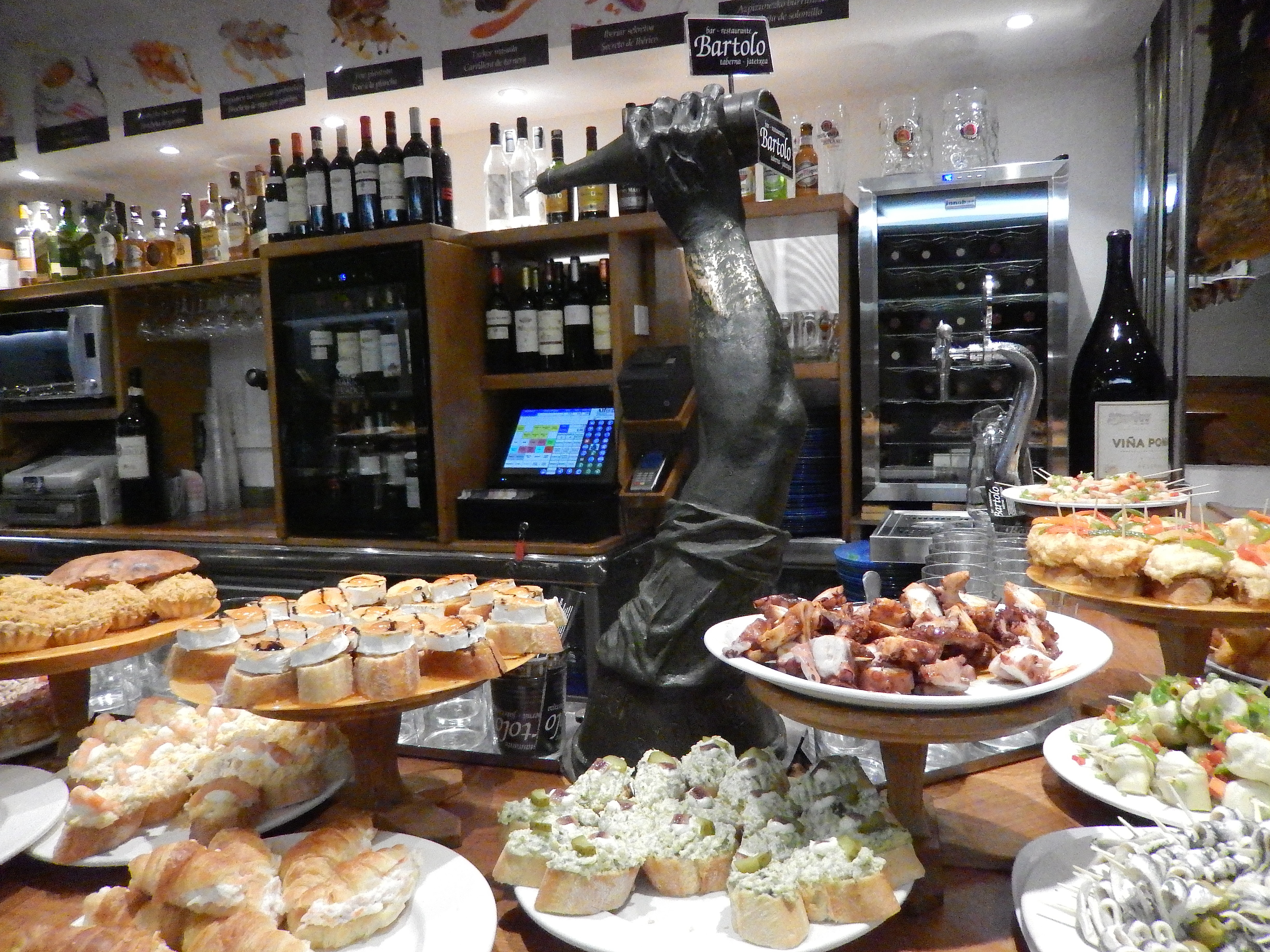
what an array
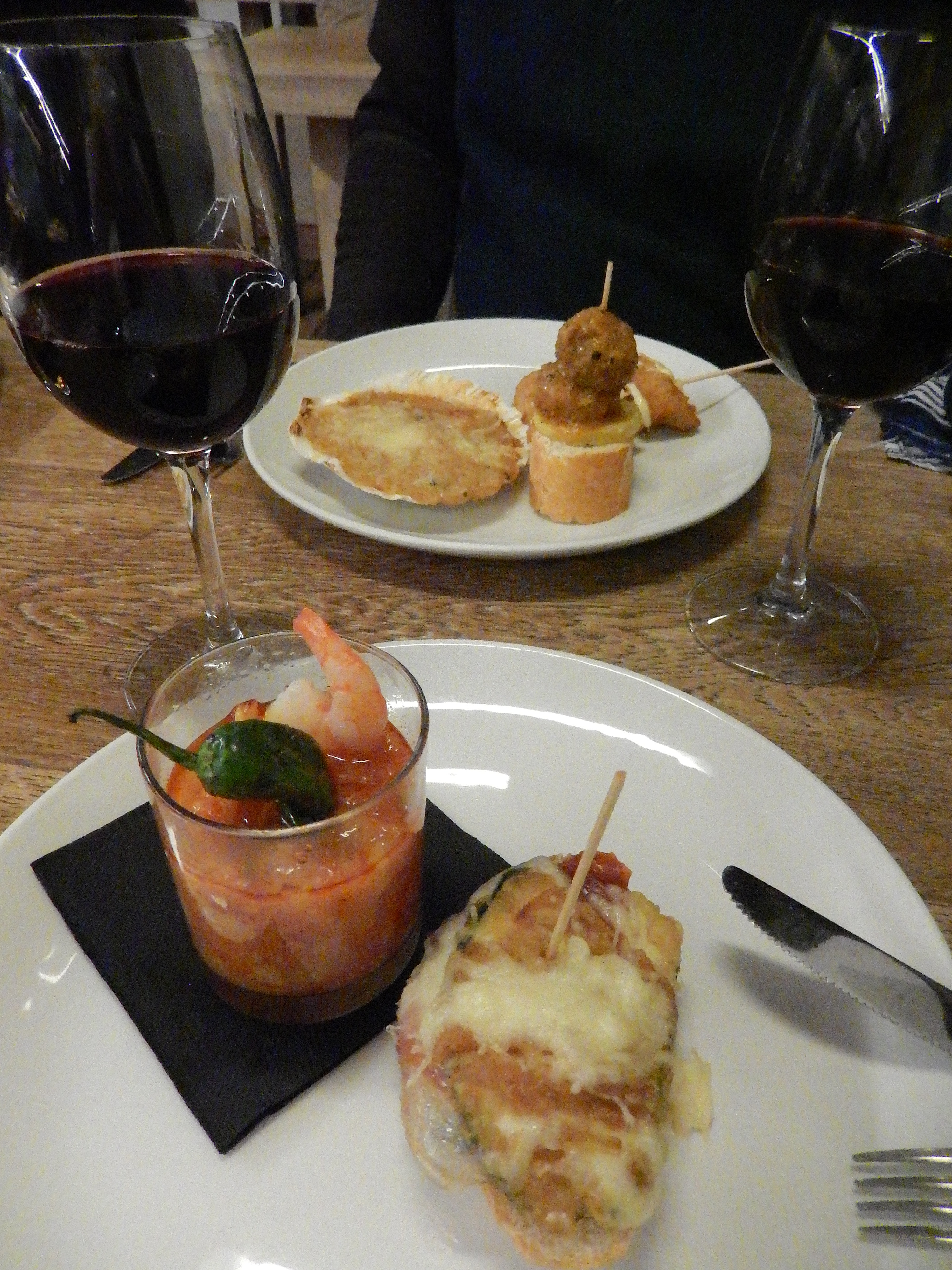
Happy Thanksgiving dinner!
The next day, we walked along the beach in the beautiful sunshine, back towards the Old Town…
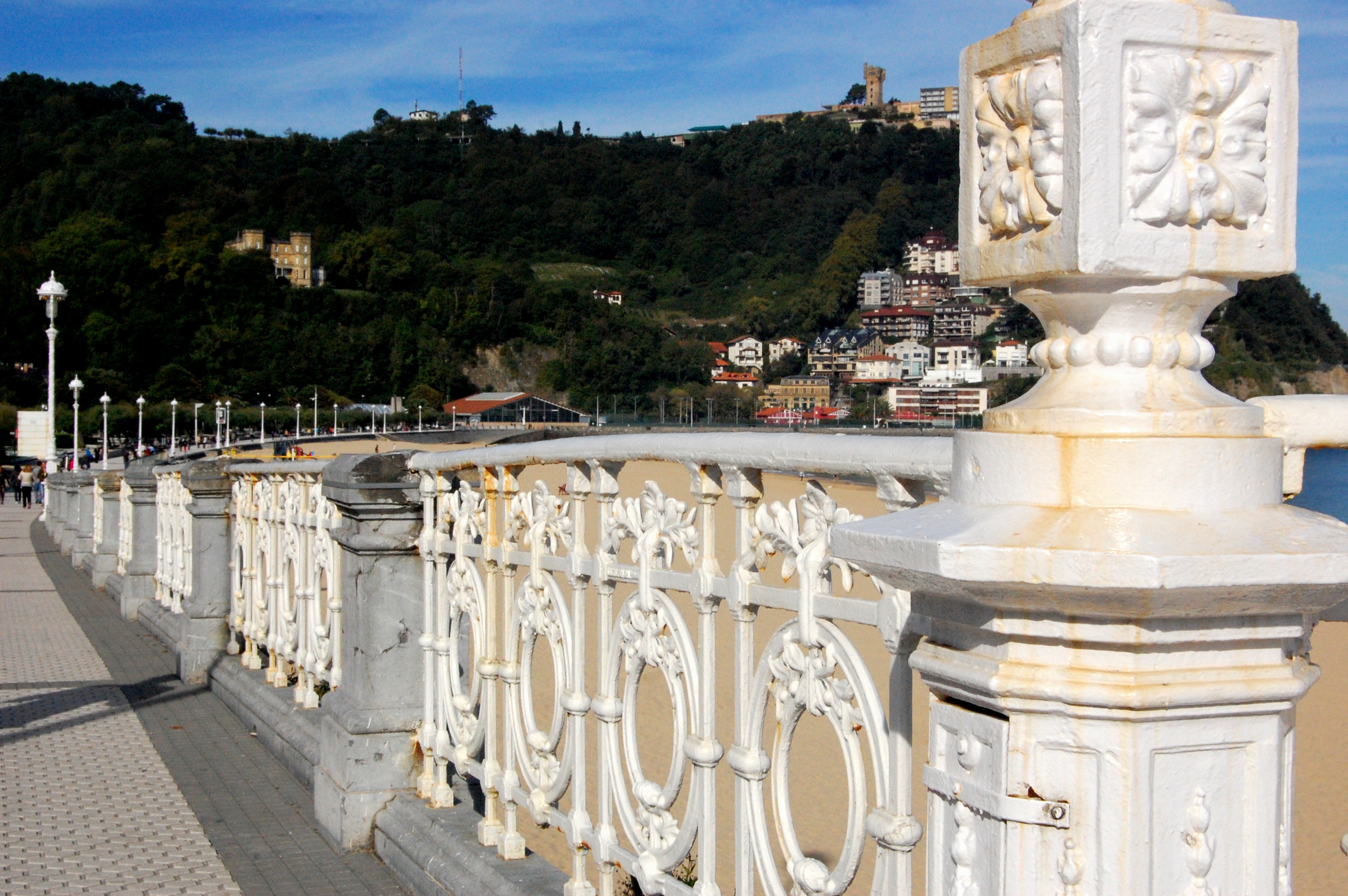
beautiful railings line the board walk

crescent-shaped Playa de la Concha
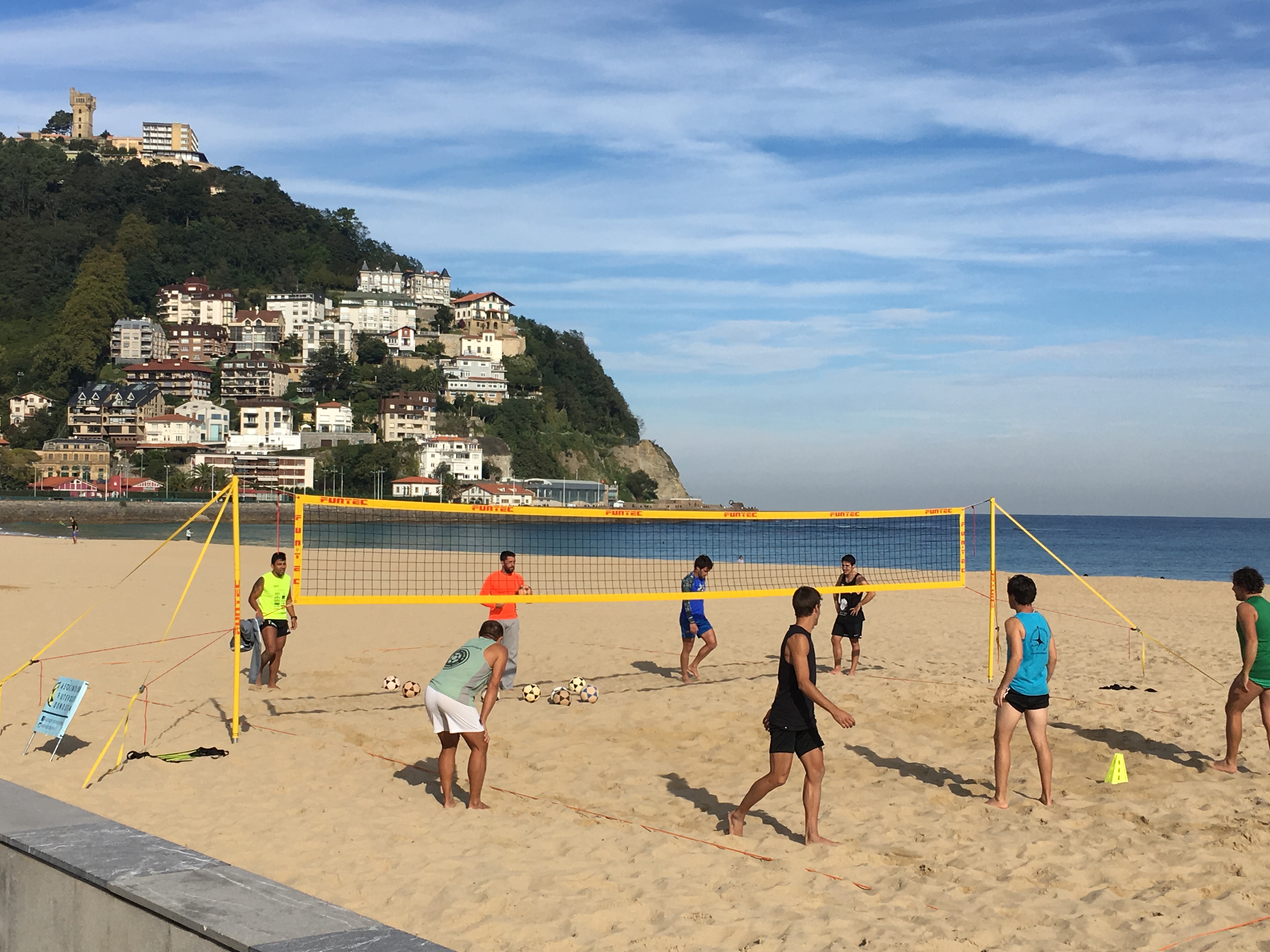
beach volleyball
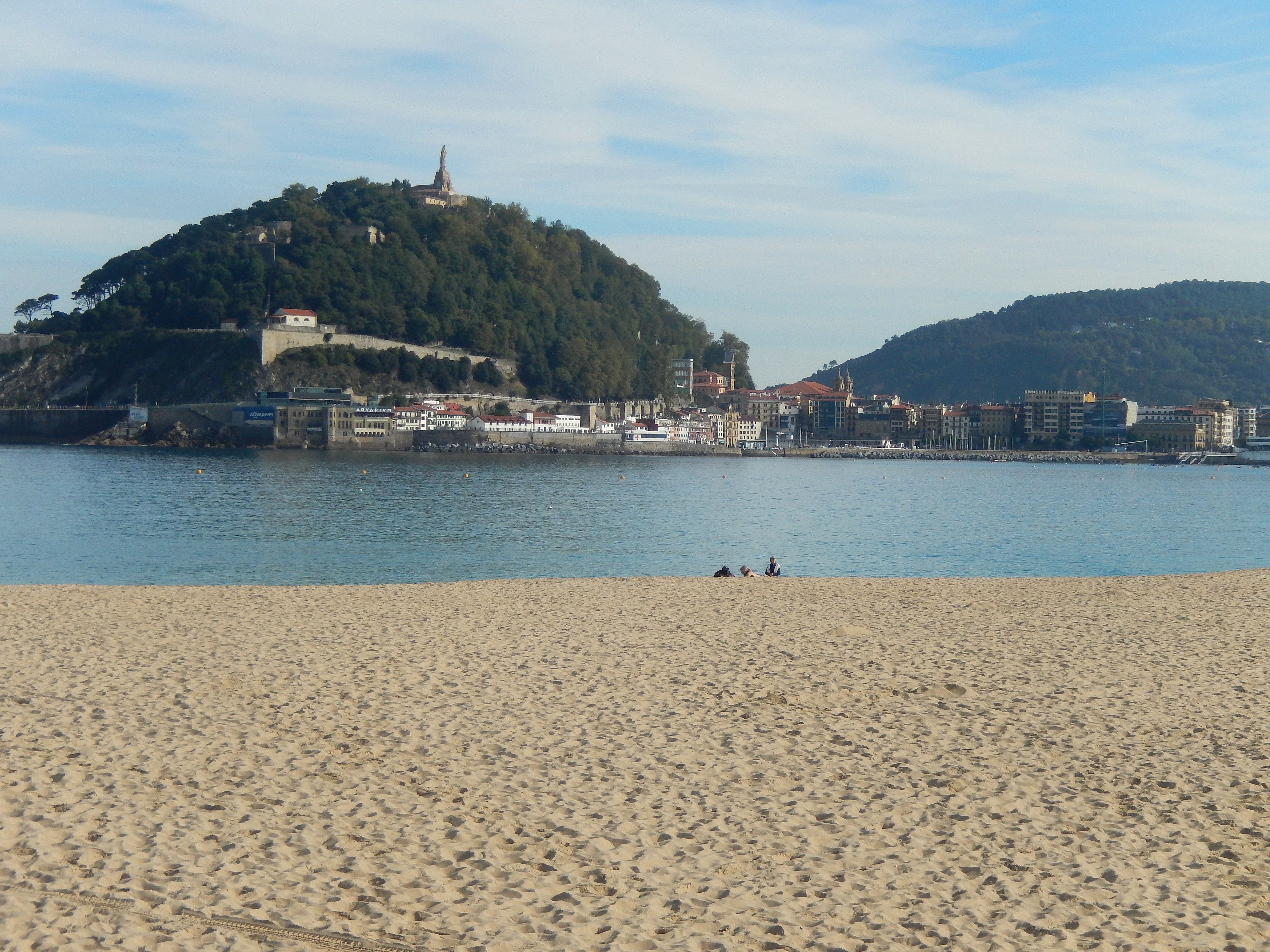
Old Town, Mount Urgull, castle ruins on the hill
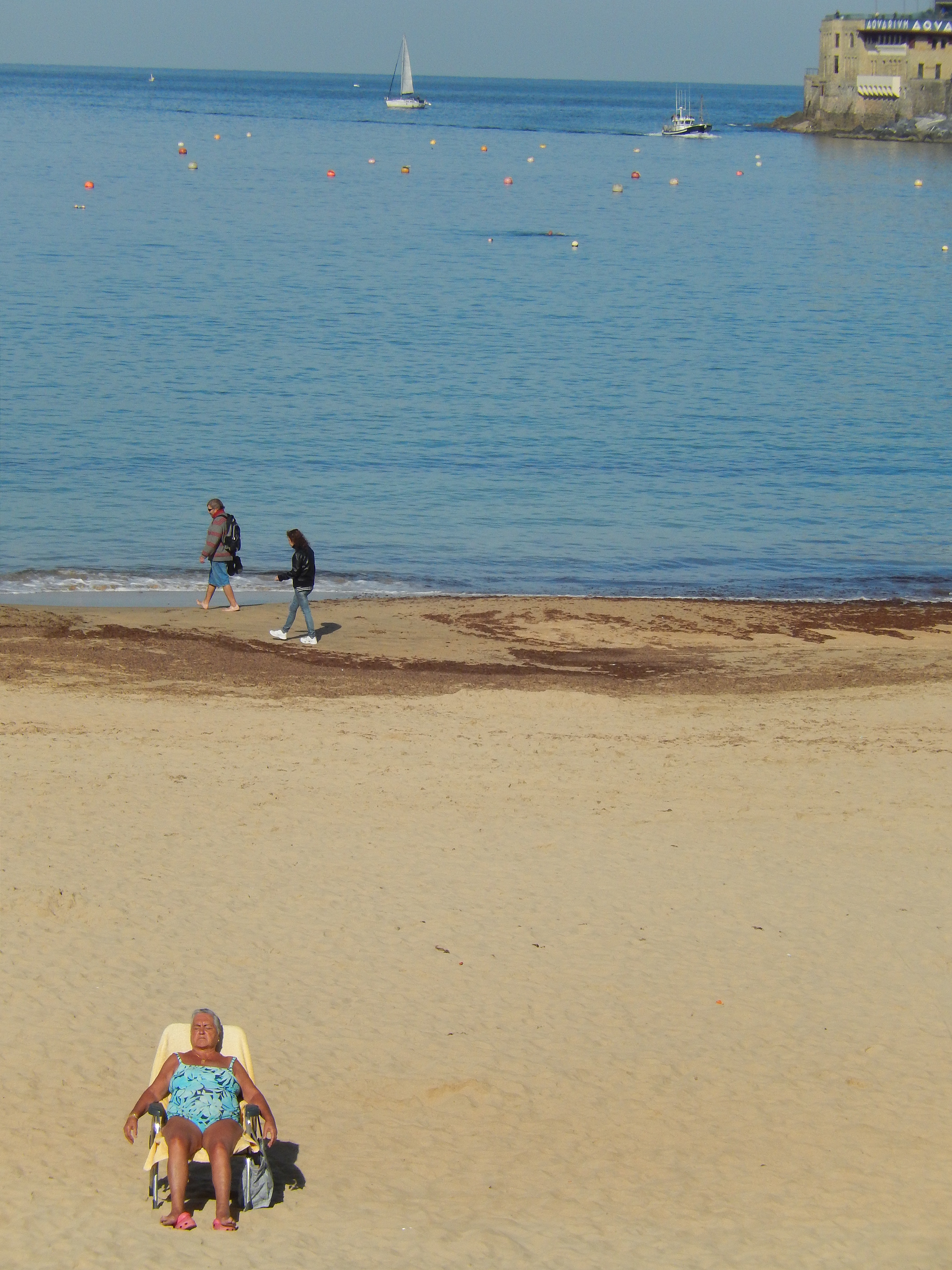
swimmers, walkers, sunbathers
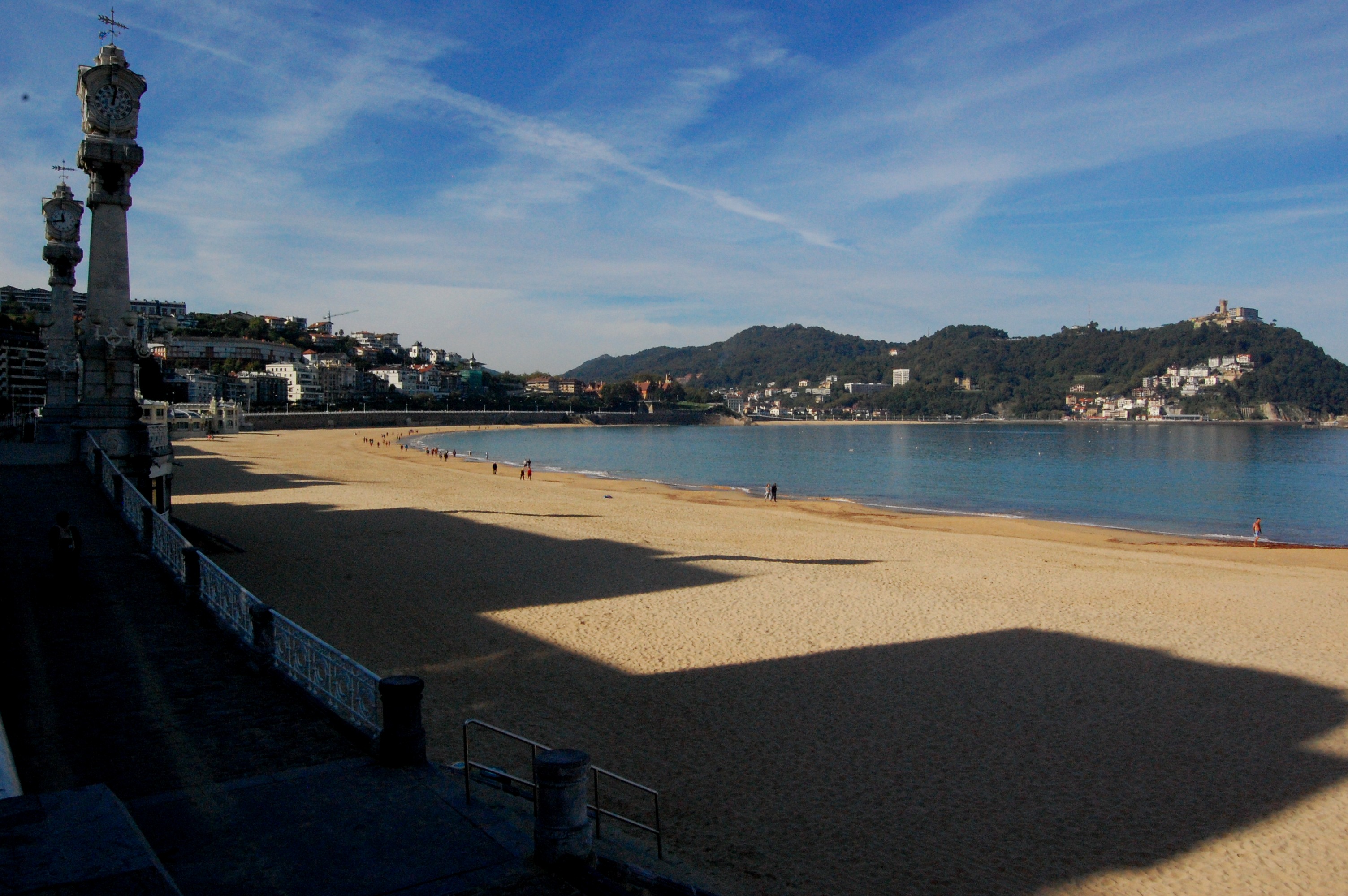
looking back towards where we started
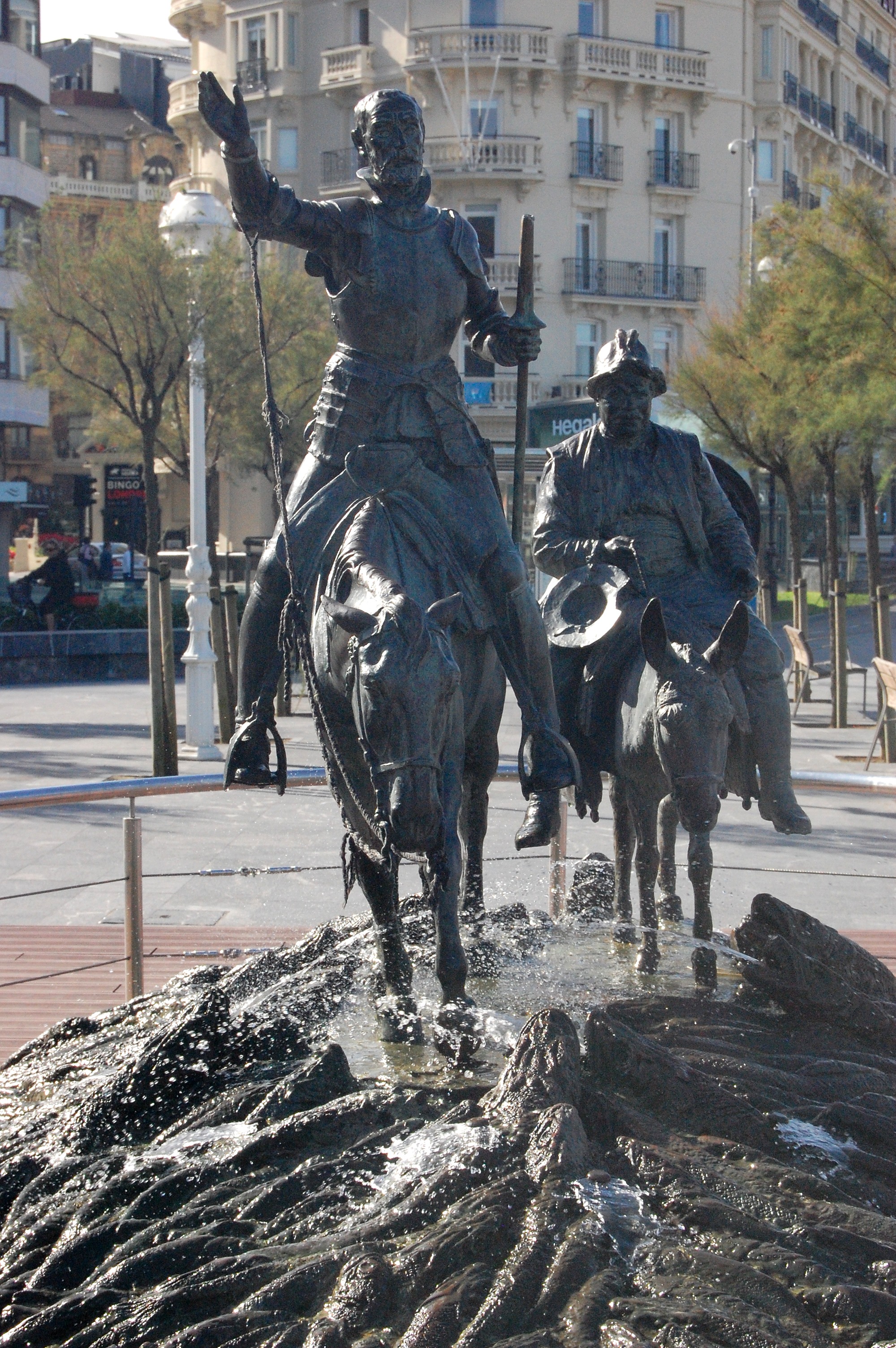
Don Quixote and Sancho Panza
Walking on, we headed to the newer part of the town…

local mushrooms in a market
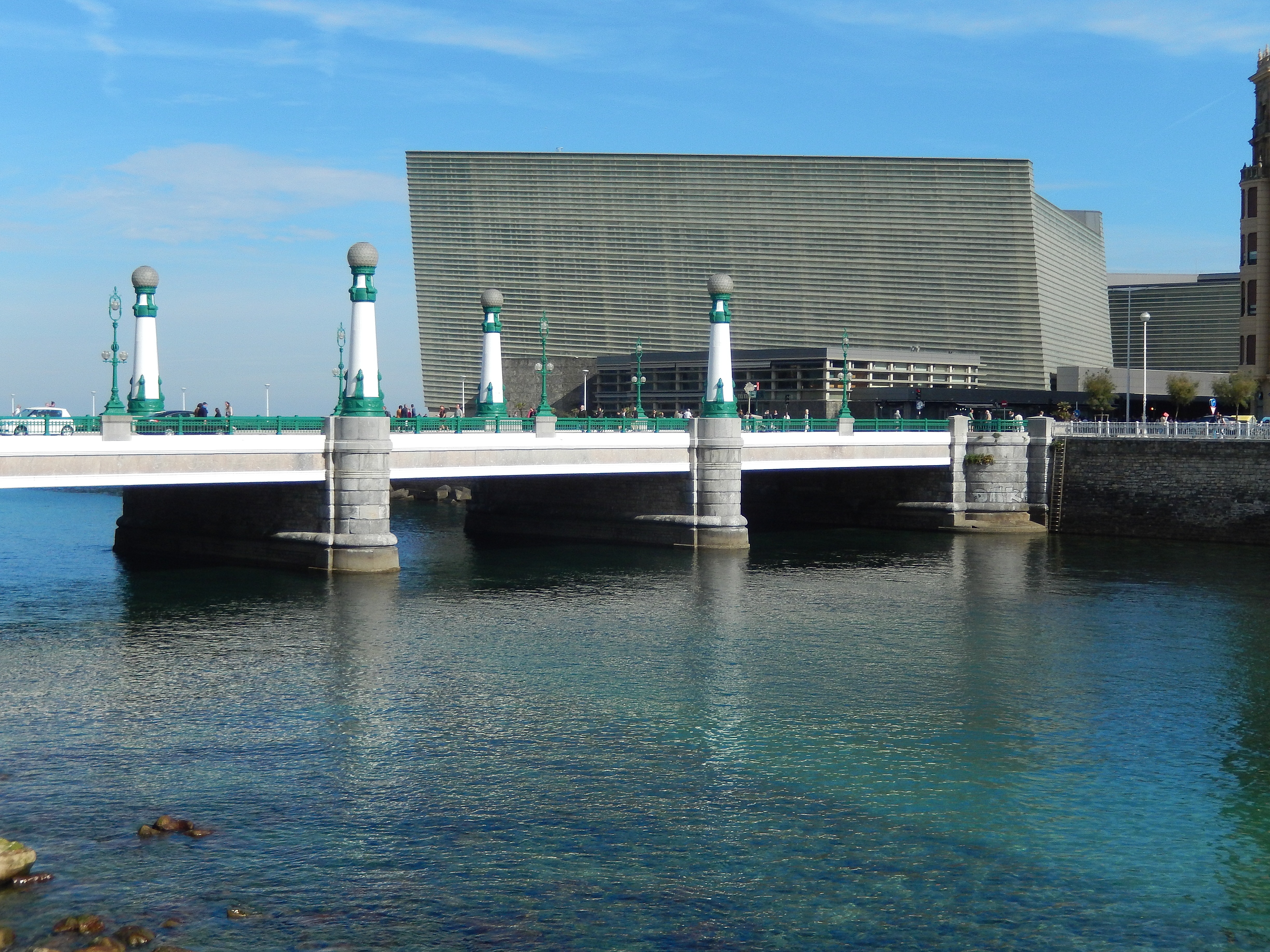
Kursaal Center, home to the biggest film festival in Spain, among other uses
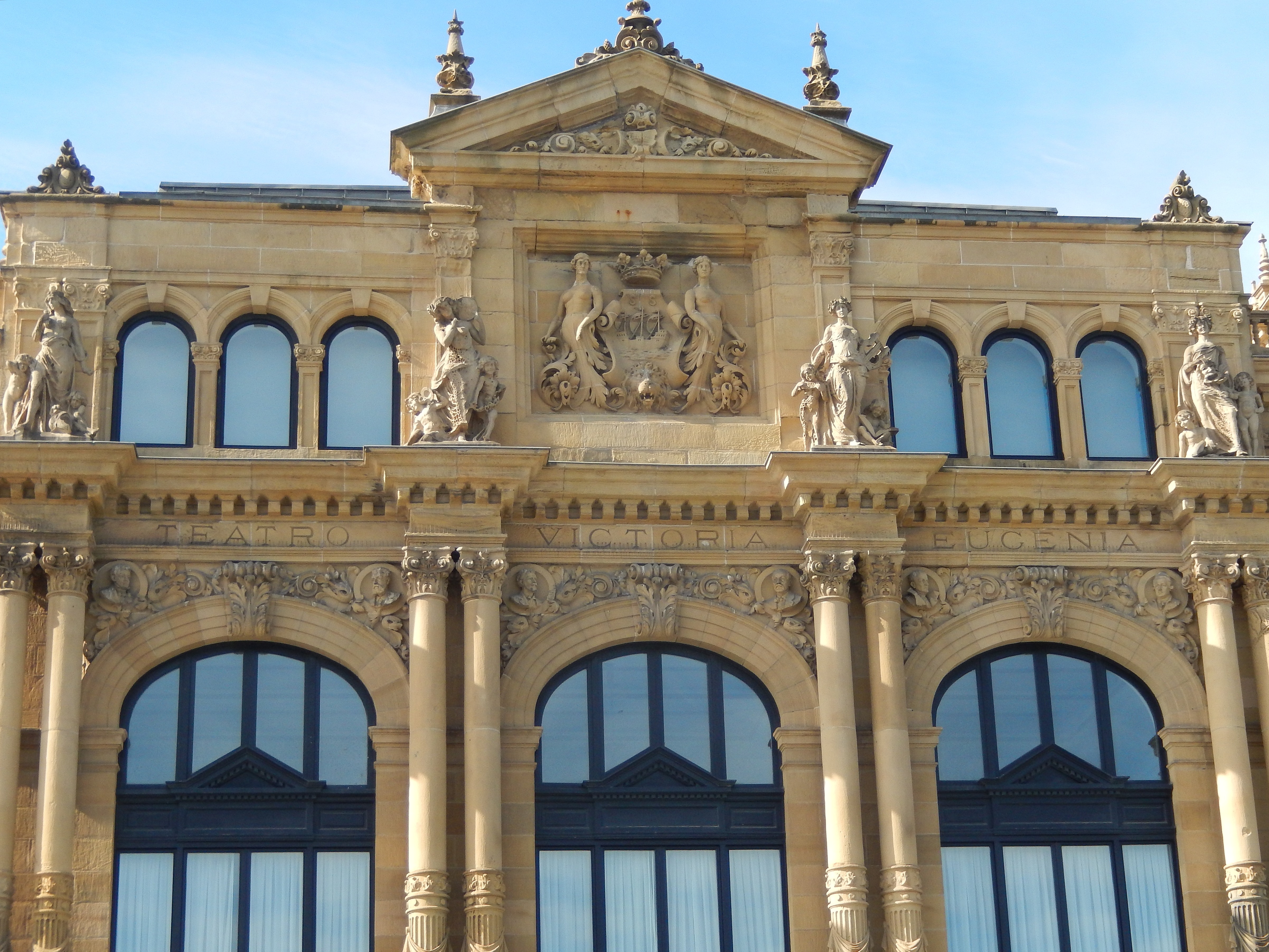
the beautiful Victoria Eugenia Theatre
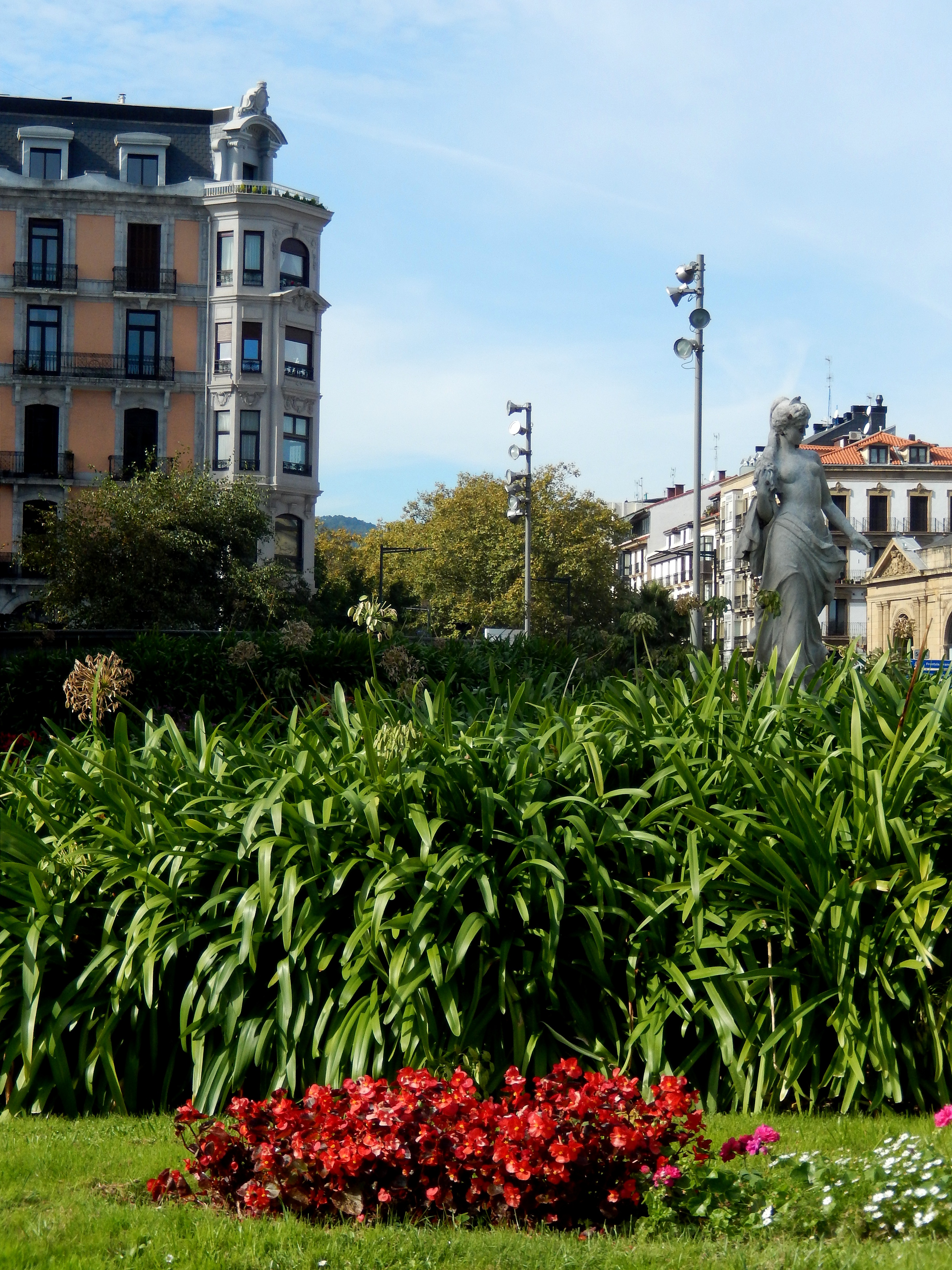
gardens between the theatre and Maria Cristina hotel
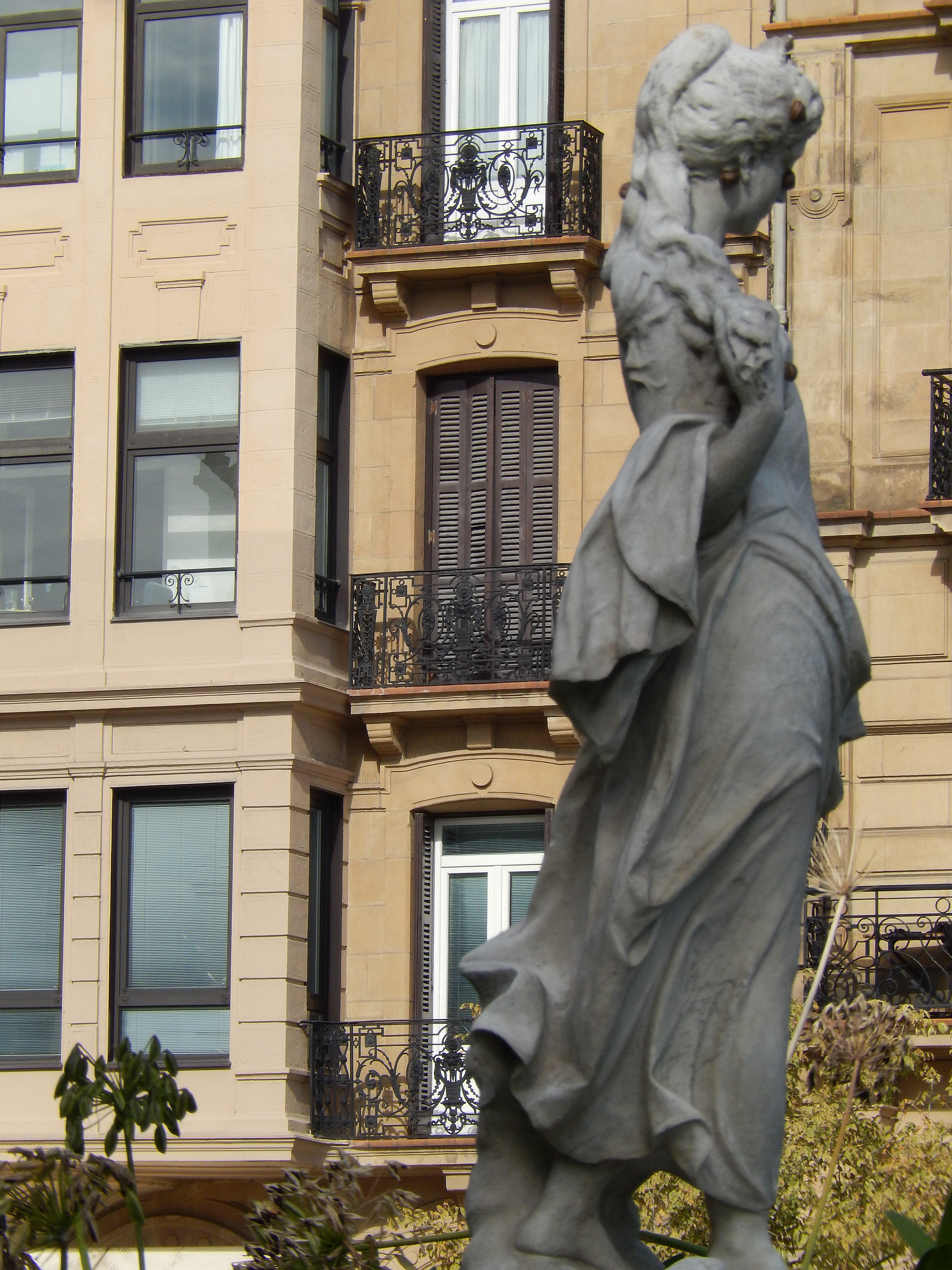
statue detail
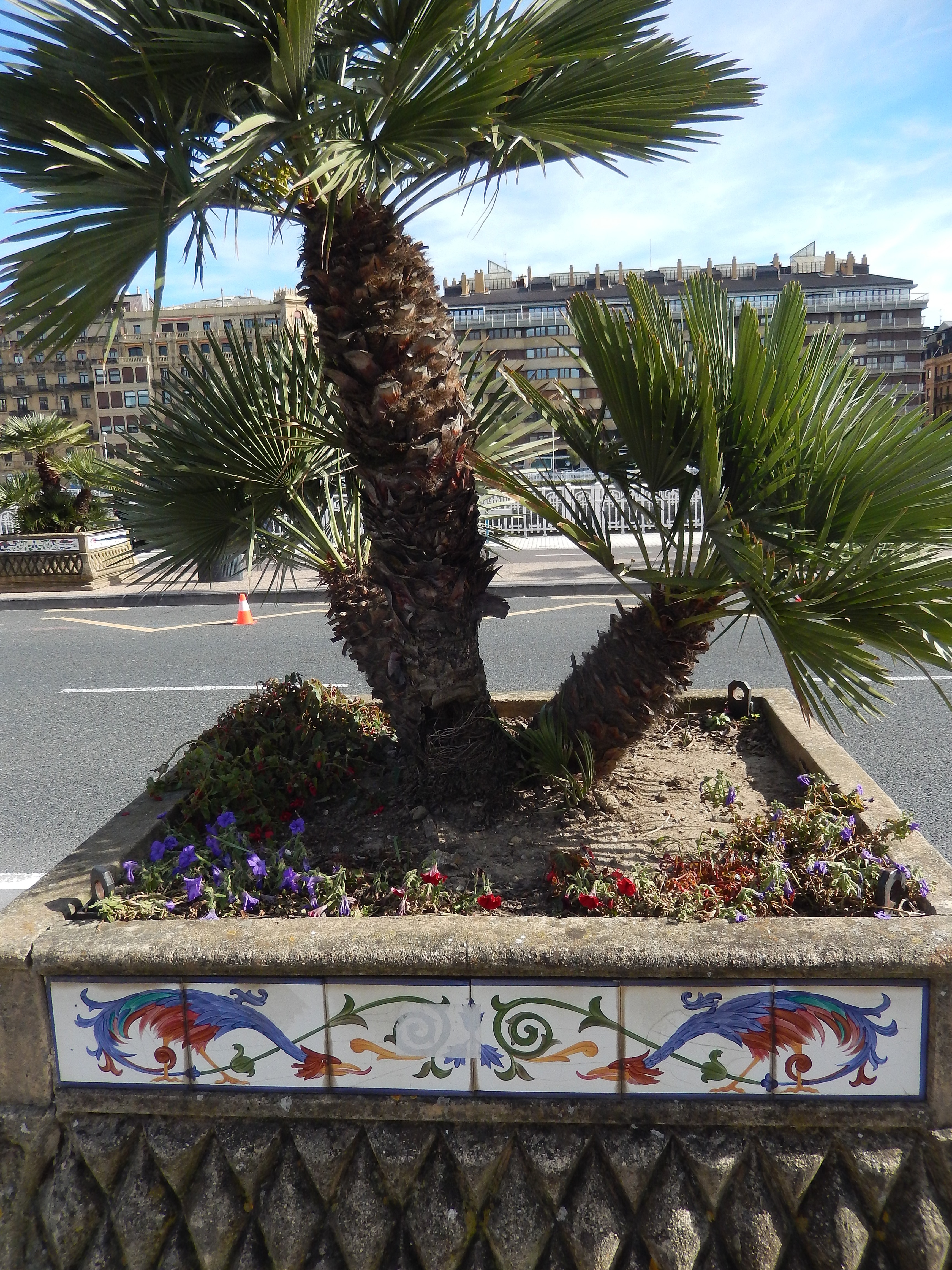
even the planters are lovely here
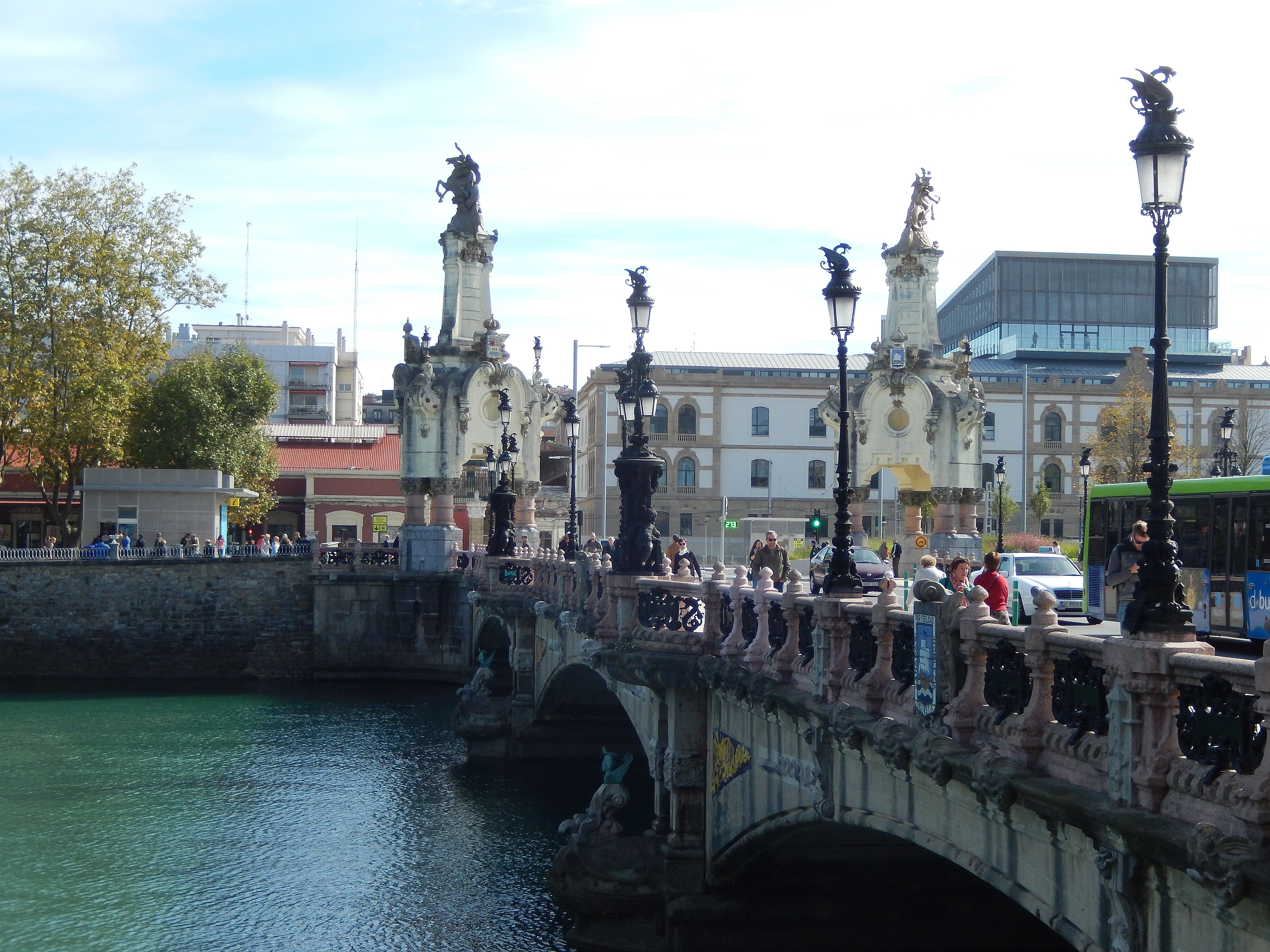
Maria Cristina bridge
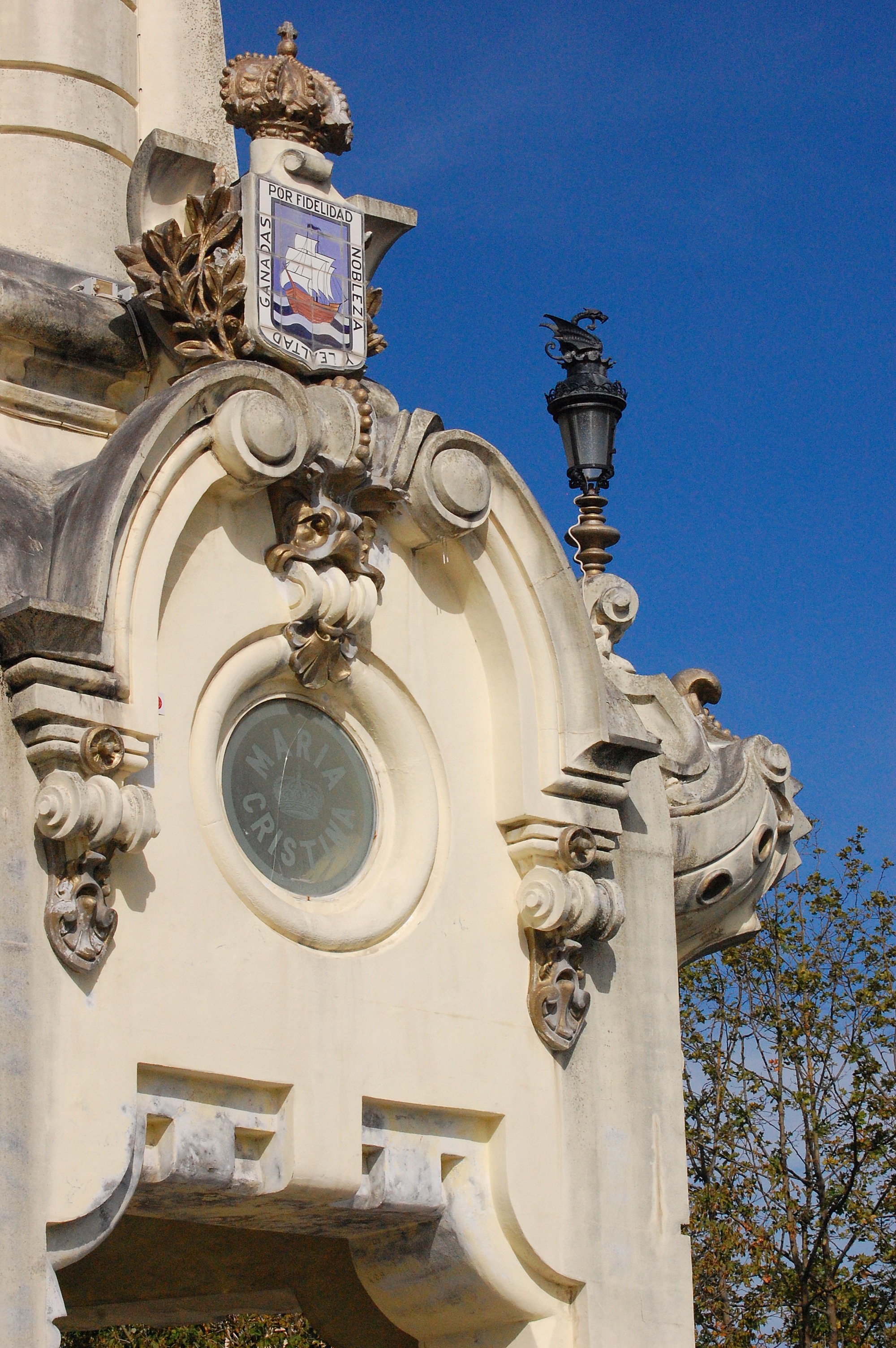
bridge detail

bridge detail
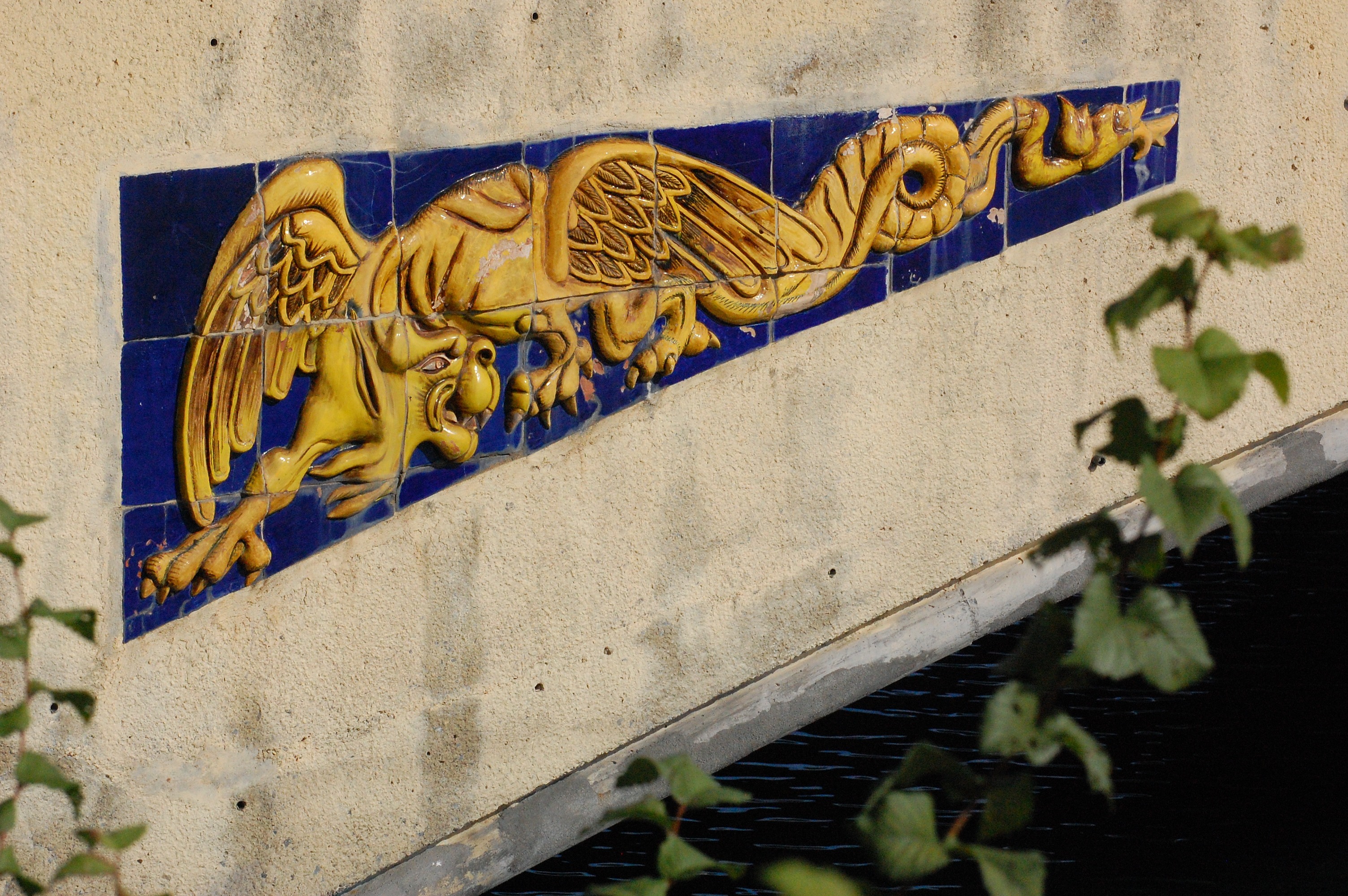
bridge detail
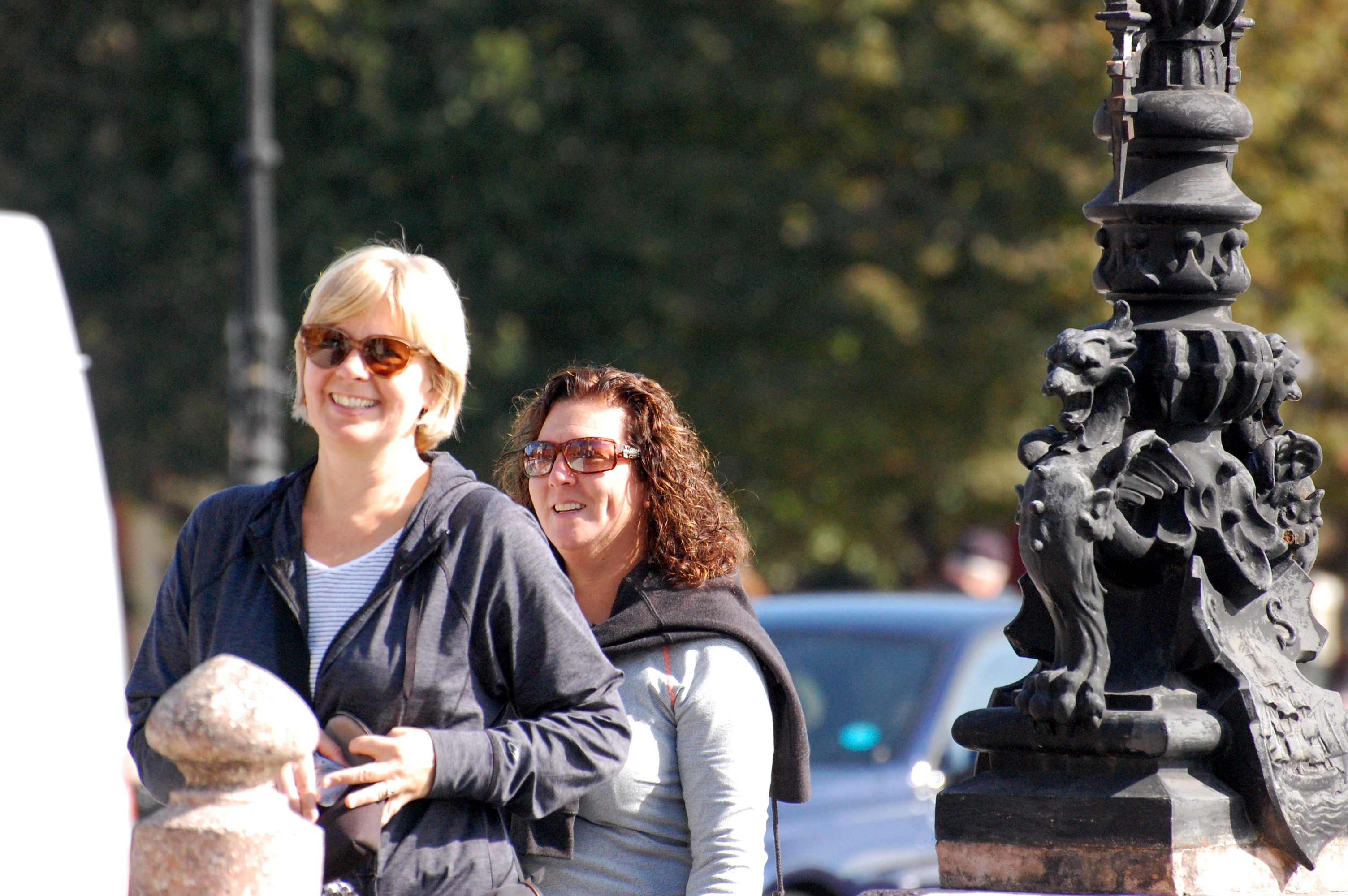
crossing the bridge
After a long walk around this pretty town, we said, “let’s go to France for lunch,” because yes, it’s that close. But, by the time we walked back to our hotel, got our car and set out, it was getting late and we were hungry, so we stopped in Hondarribia, a border town on the Spanish side, with a large number of bars and restaurants. As you may have already gathered, the Basque area is known for great food!
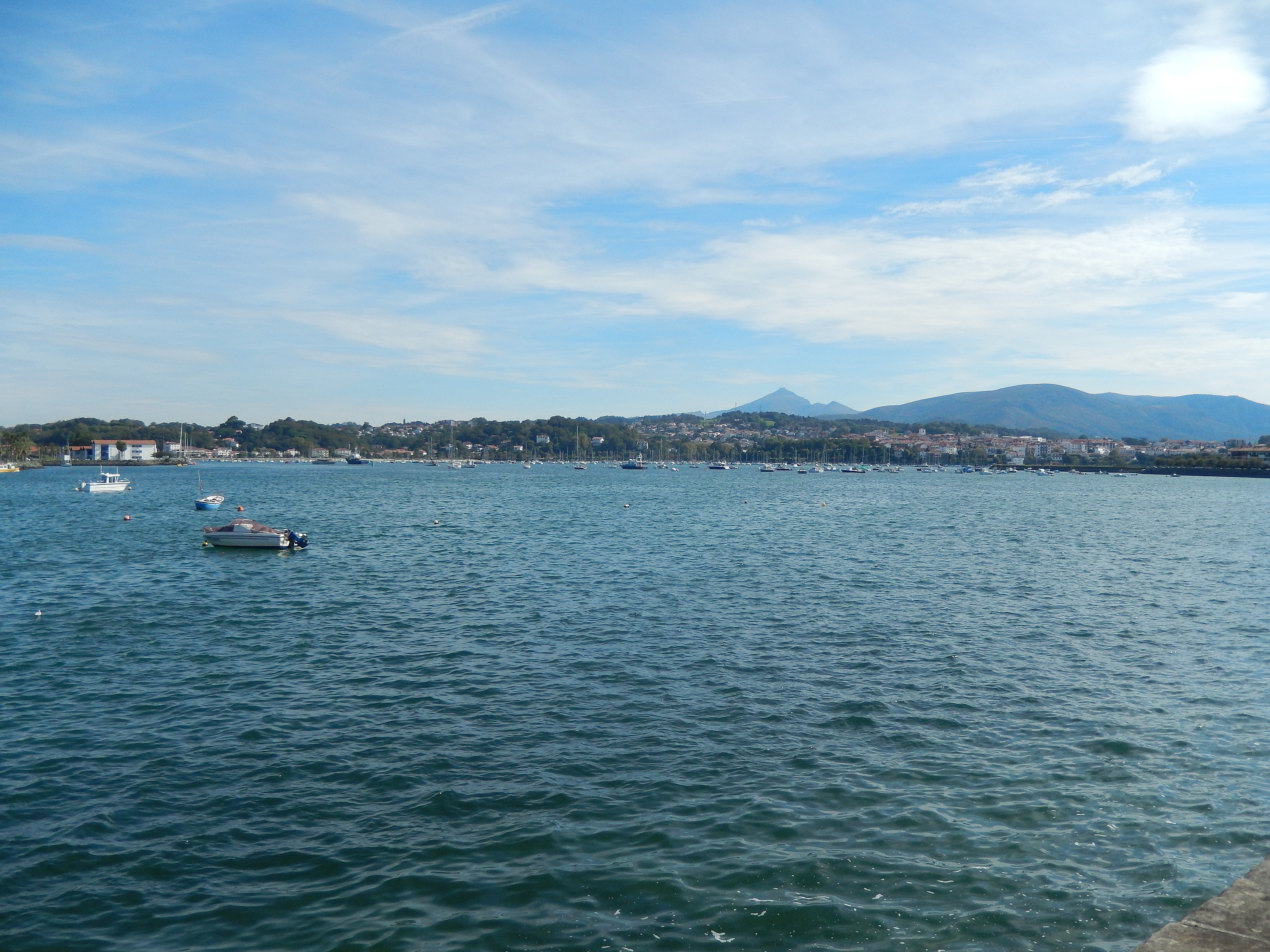
Hondarribia harbour area
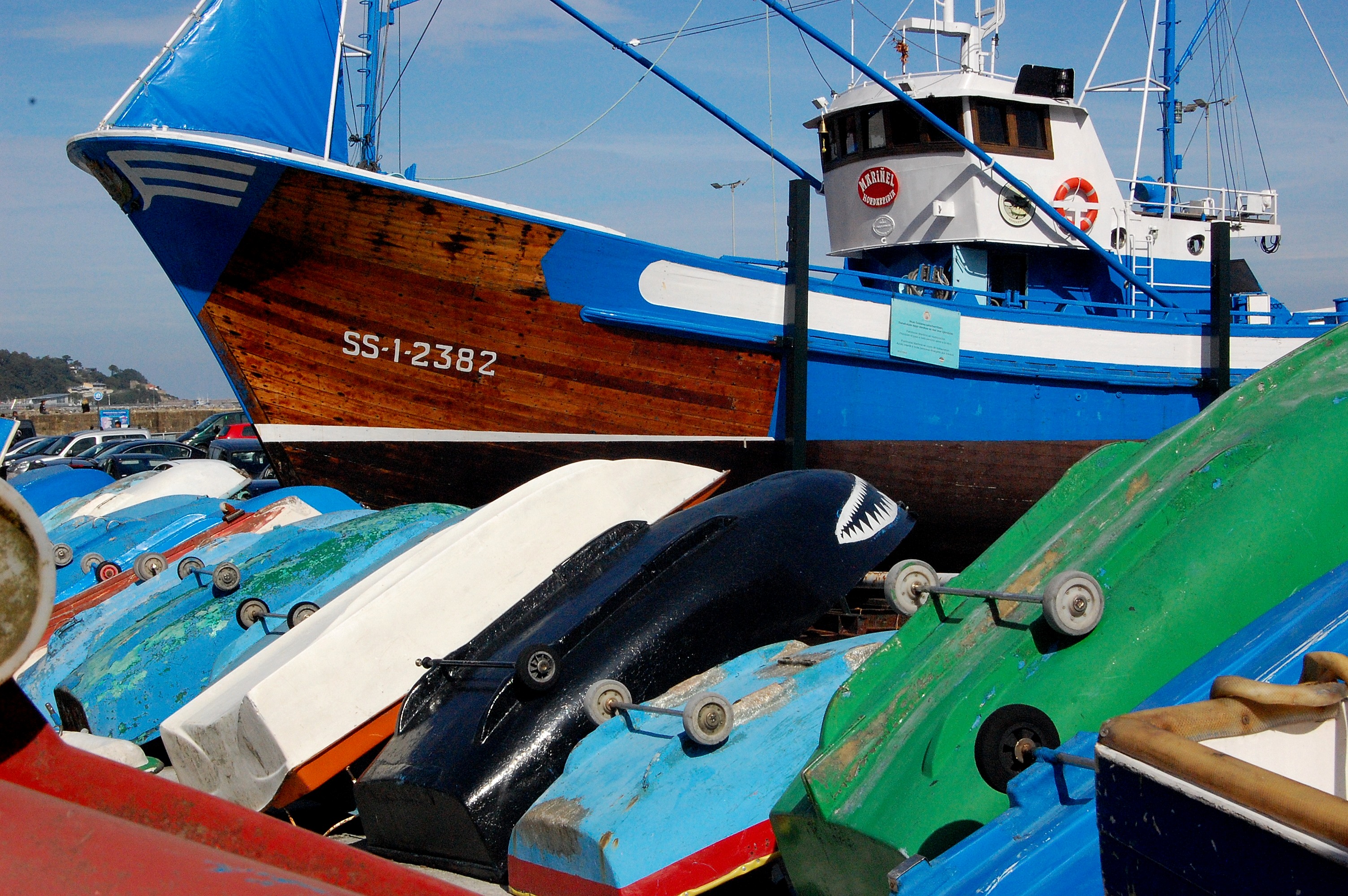
boats!
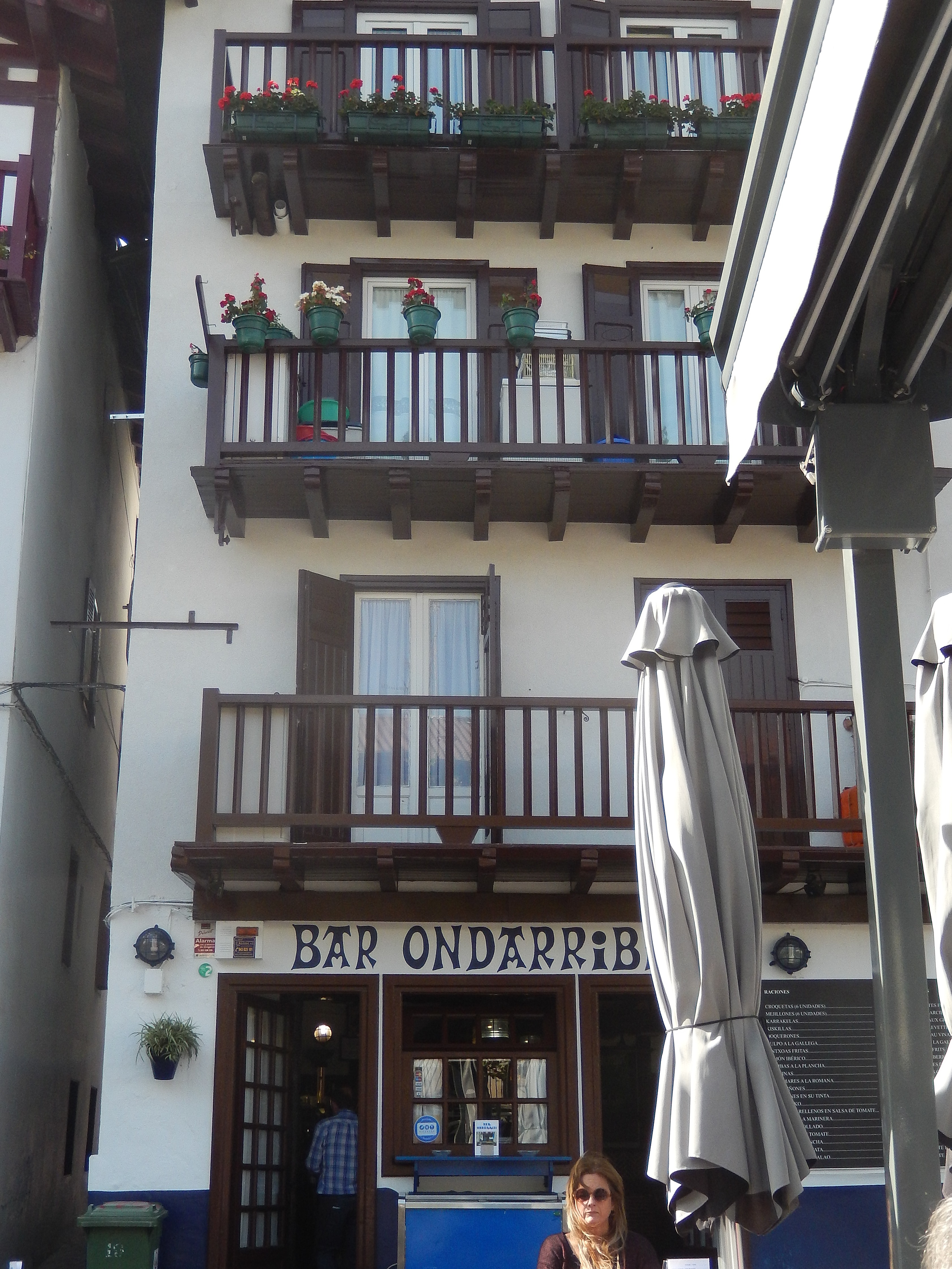
first stop for wine and pintxos
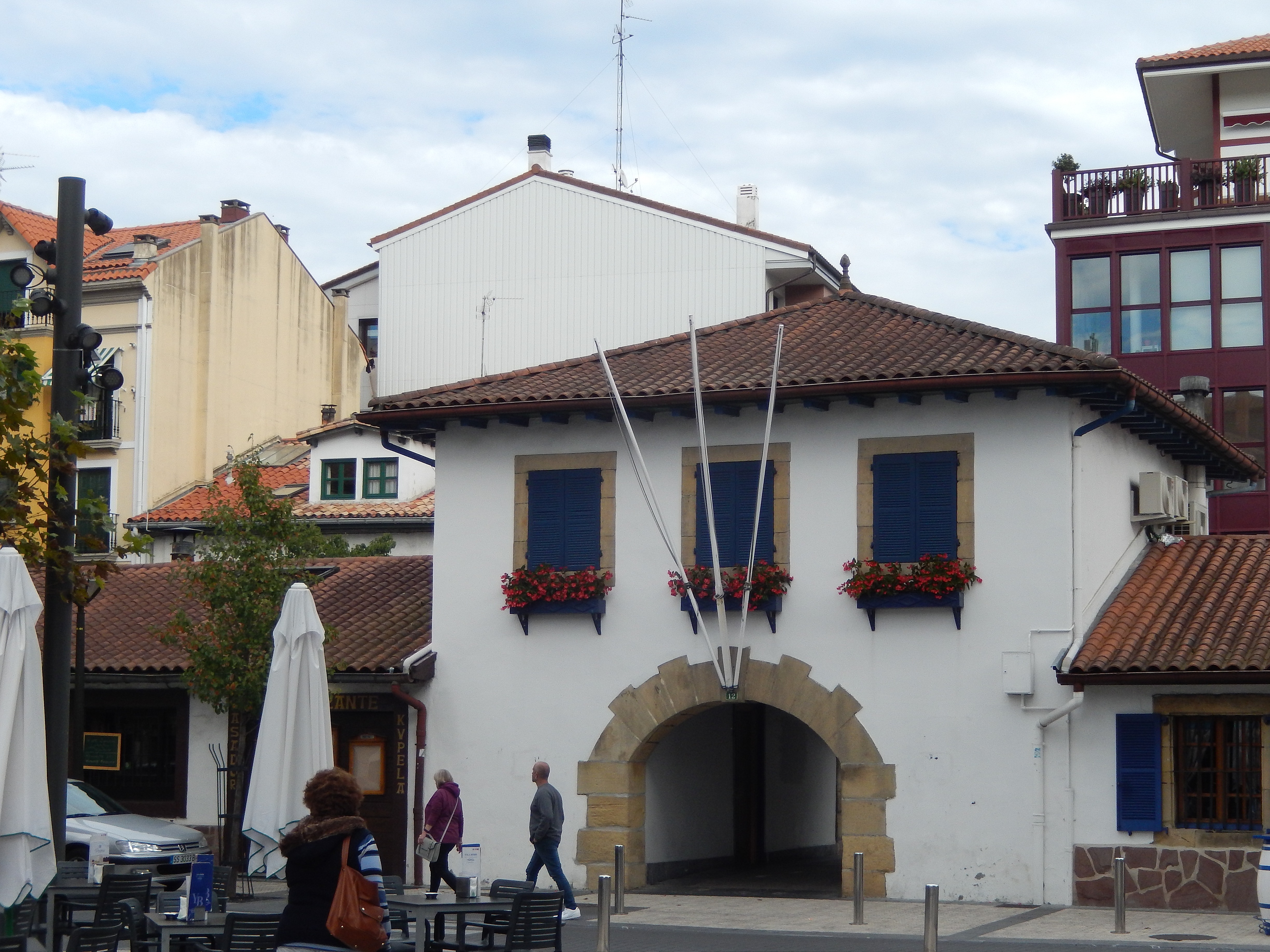
it’s a picturesque town…
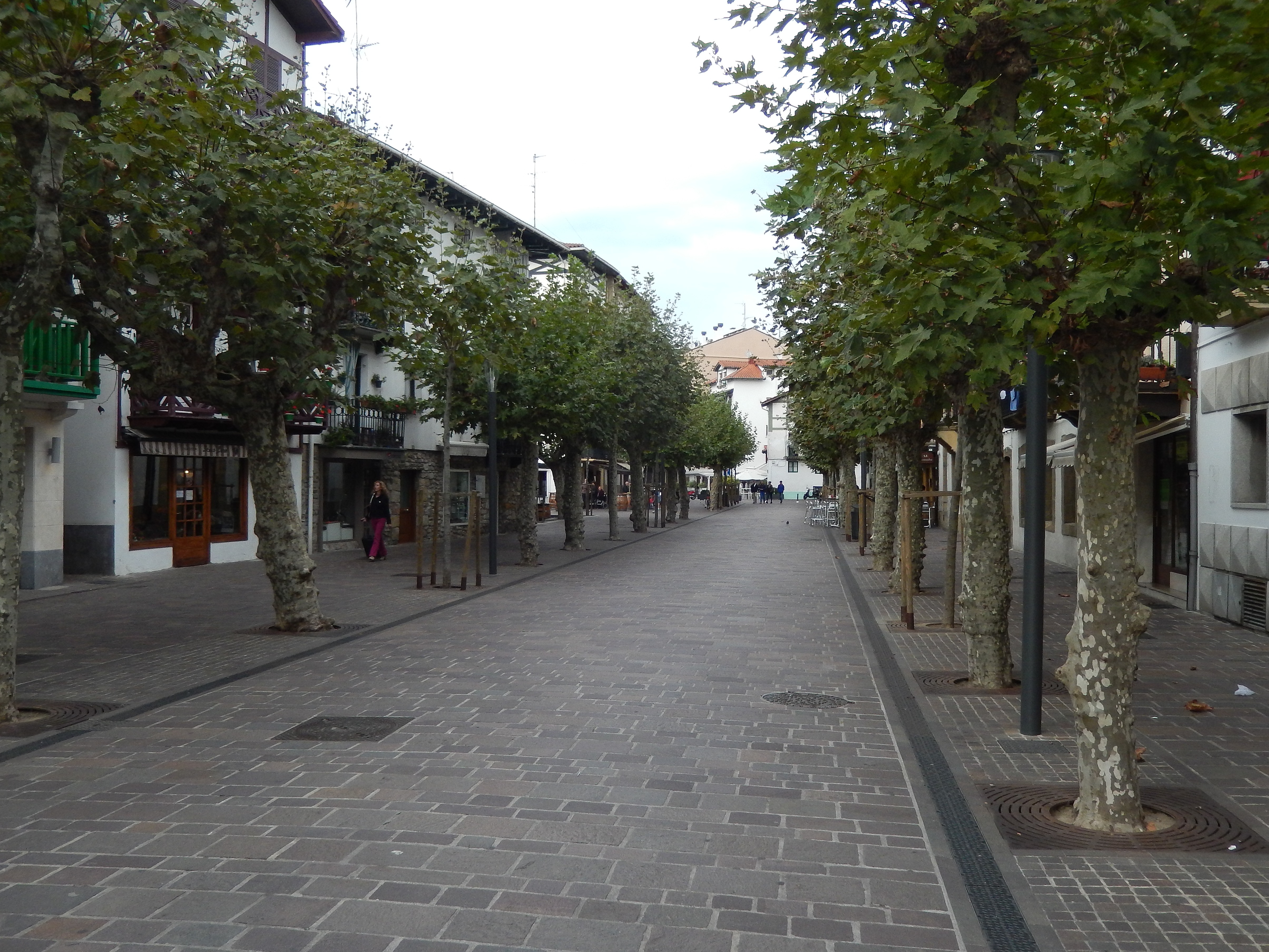
..with a lovely tree-lined boulevard…
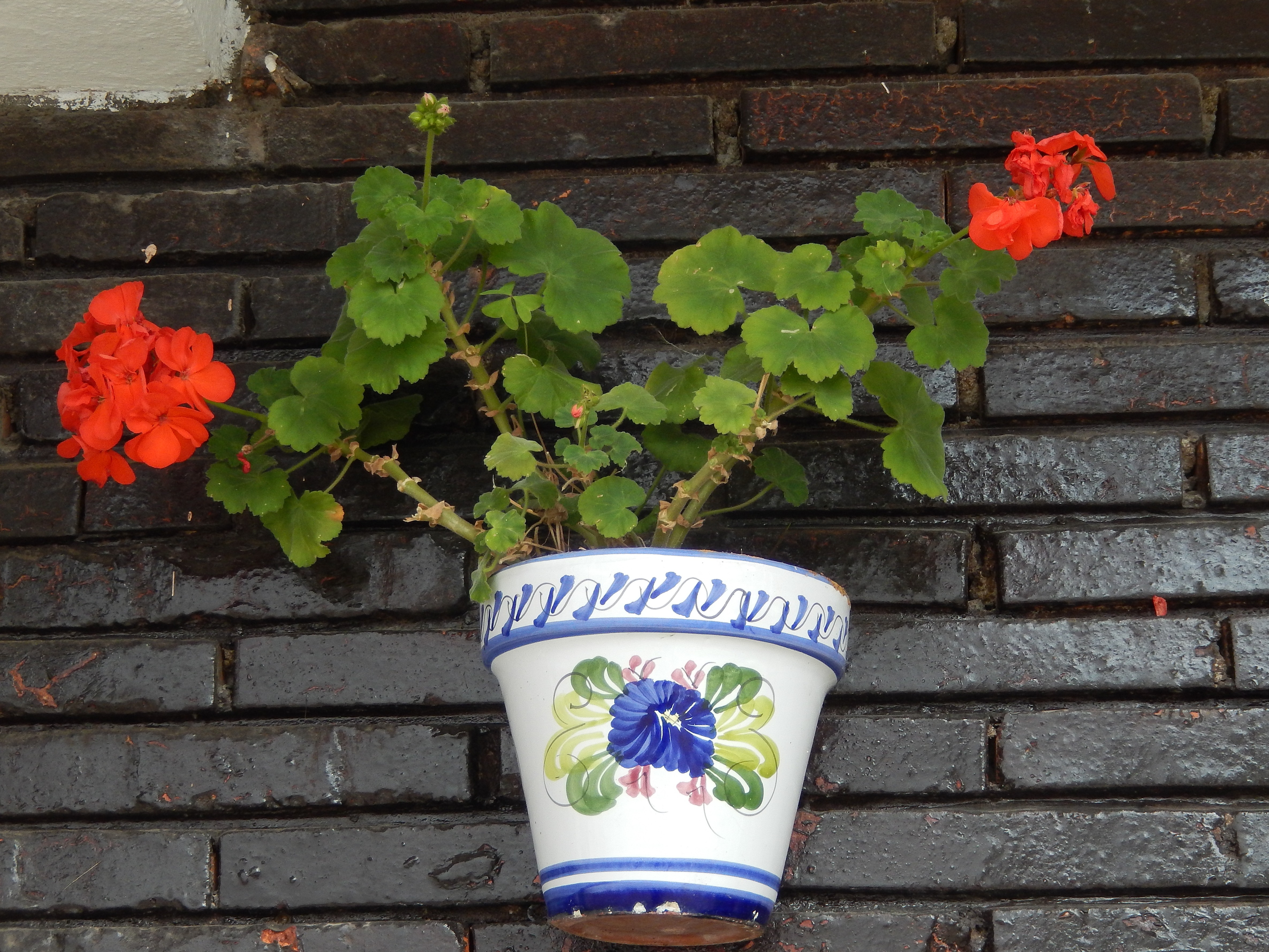
…and adorable flower pots
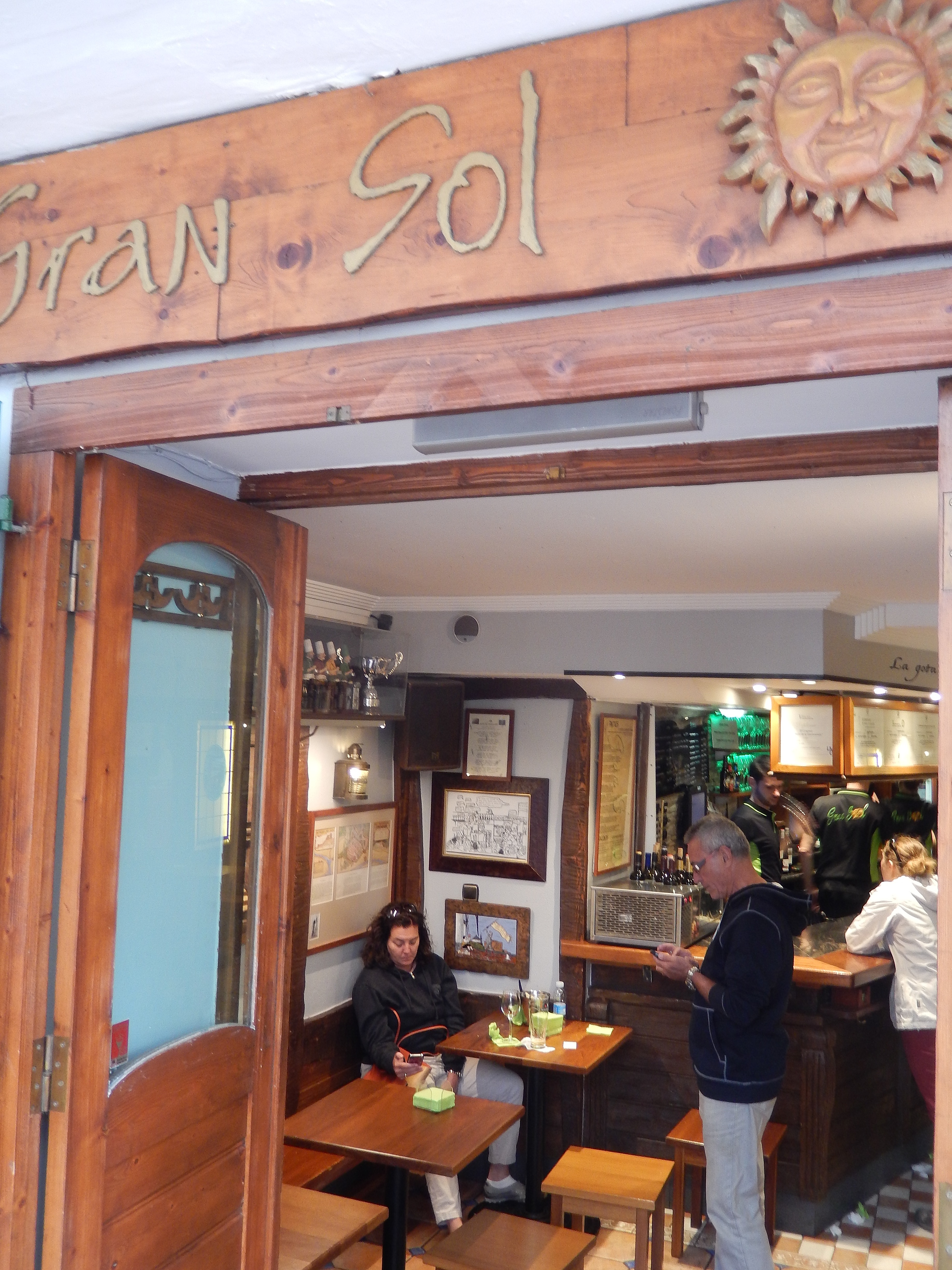
second stop for wine and pintxos (I *may* now own a wine glass borrowed -by Diane! – from here 😉 )

delicious pintxos
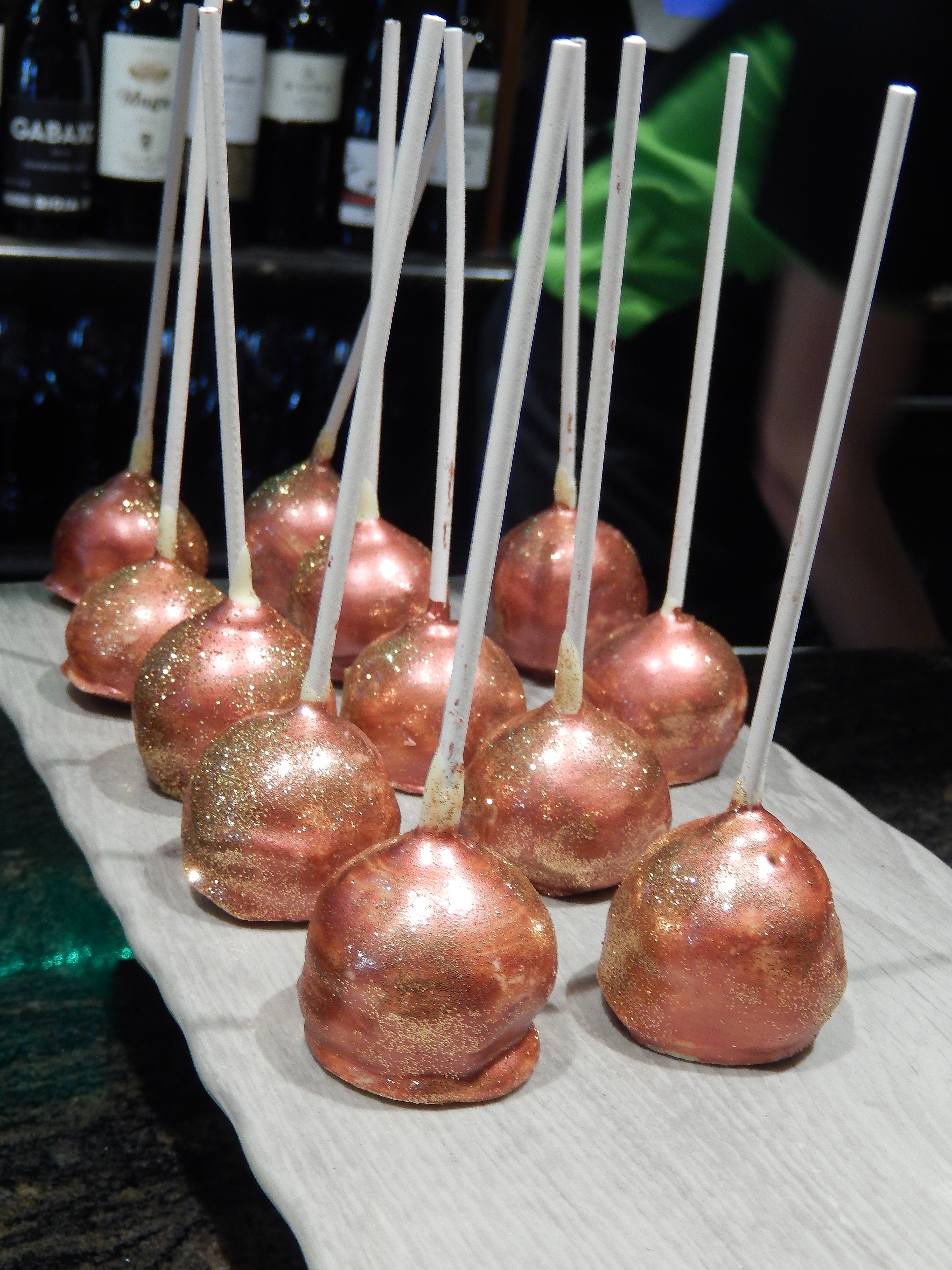
and to-die-for dessert pintxos, covered in white chocolate – very pretty and SO good!
After our lunch, we drove just across the border, into France, to a little town called Saint-Jean-de-Luz. The tourist office had a little guide book of a walk around the town, so we followed it for some highlights…
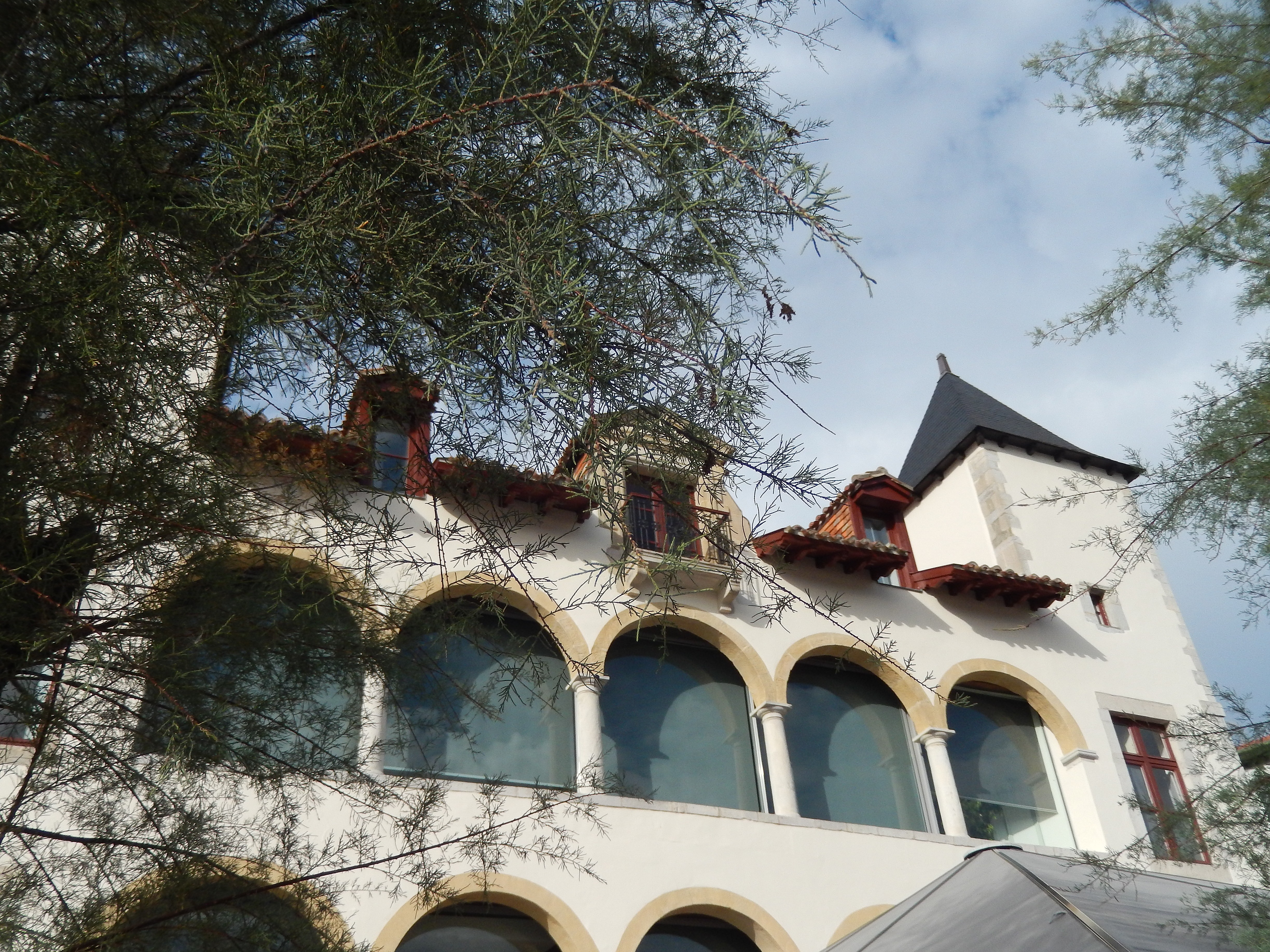
the Maison Lohobiaguenea, also known as Maison Louis XIV, built between 1643-1645
In 1659, the Treaty of the Pyrenees put an end to the war between Spain and France. Peace was sealed by the marriage of Louis XIV and María-Teresa, the Infanta of Spain, on 9 June 1660 in the local church, Église Saint-Jean-Baptiste. Louis XIV and his entire court took up residence in Saint-Jean-de-Luz from 8 May to 16 June of that year. During his stay the king resided on the second floor of Lohobiaguenea, hence the origin of its alternative name, Maison Louis XIV. (This comes from the little guide book from the tourist info.)

Maison Louis XIV
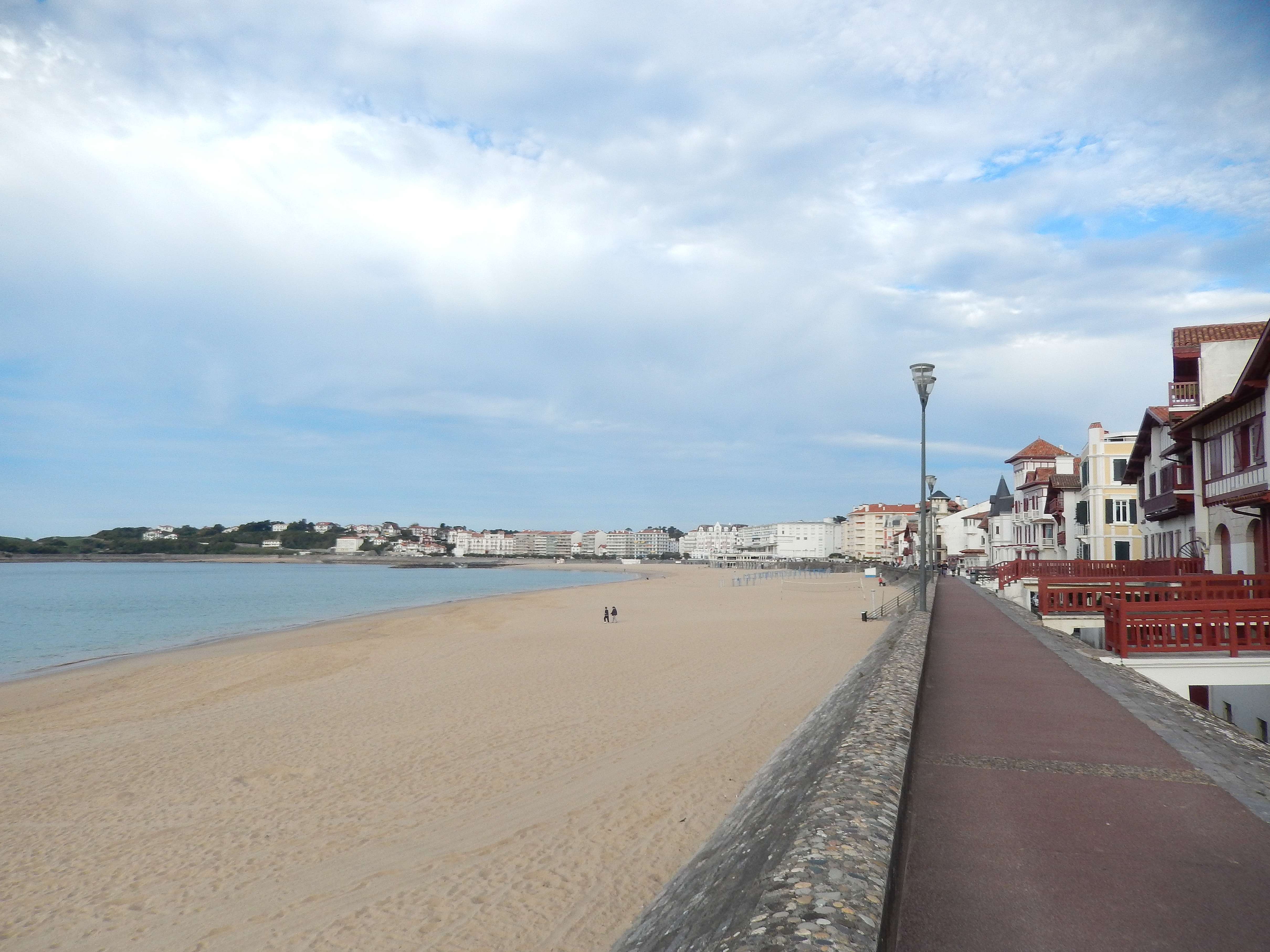
the town has a lovely long beach
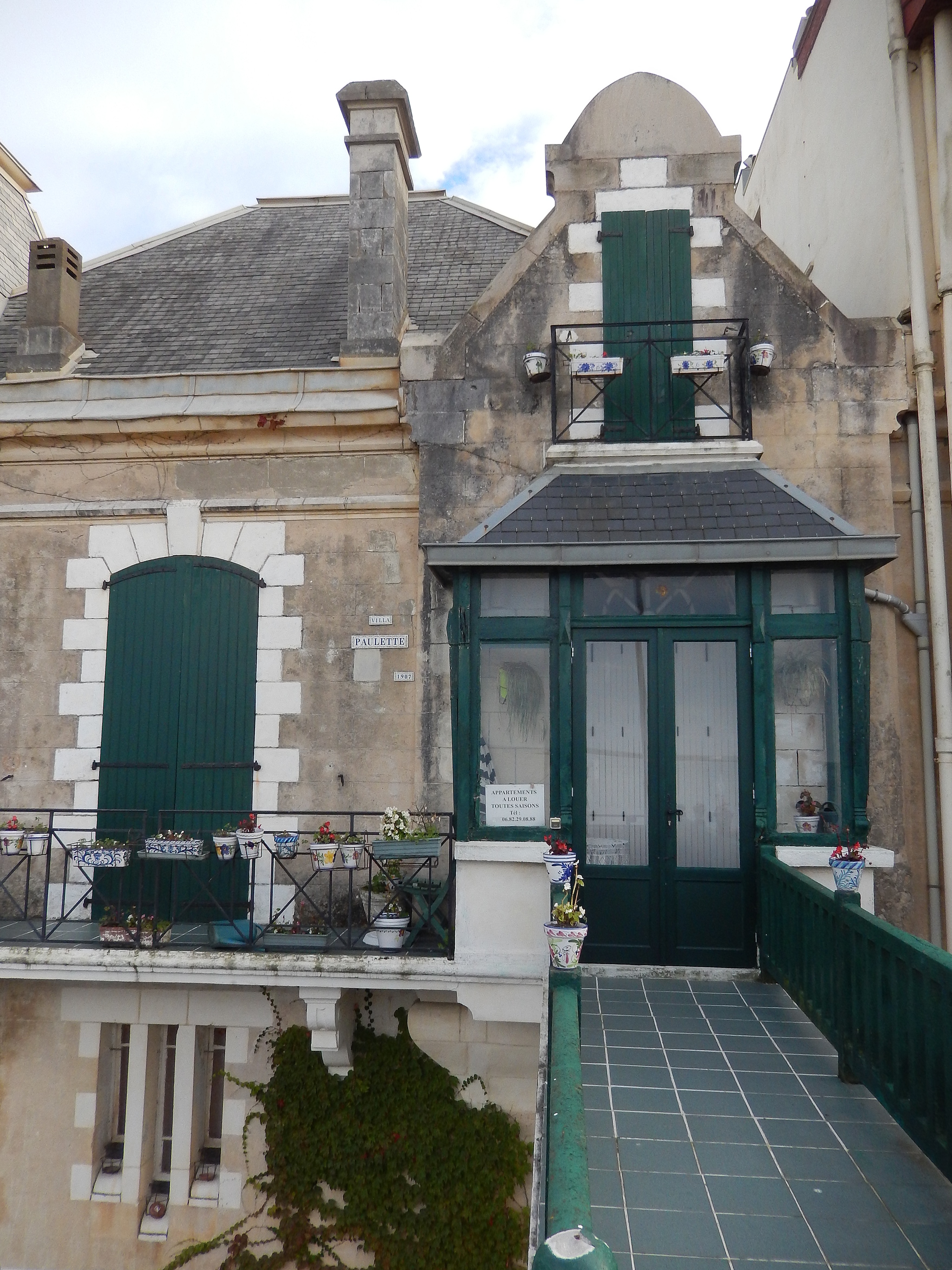
and interesting walkways from beach to homes
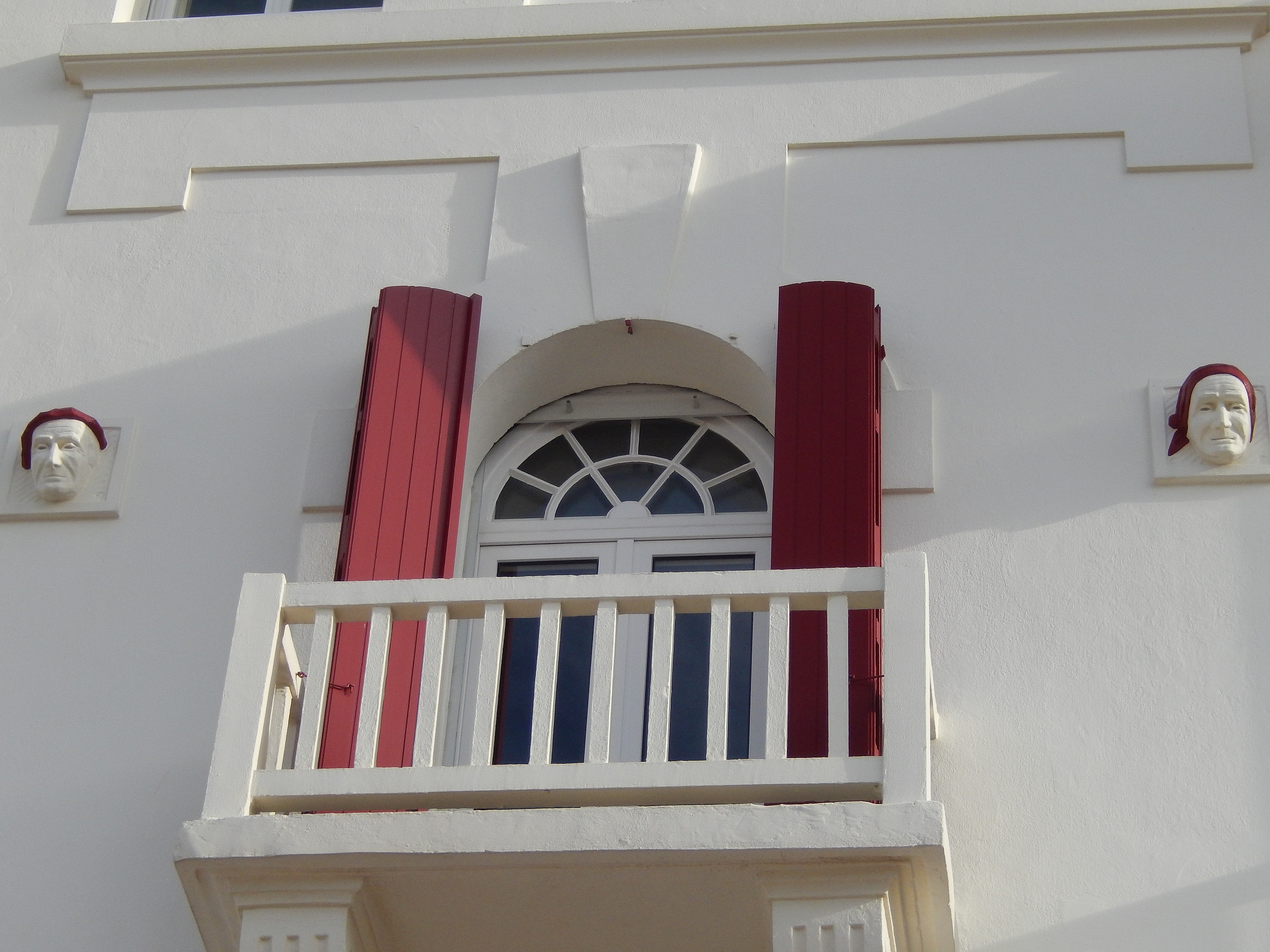
love the heads on either side of this window
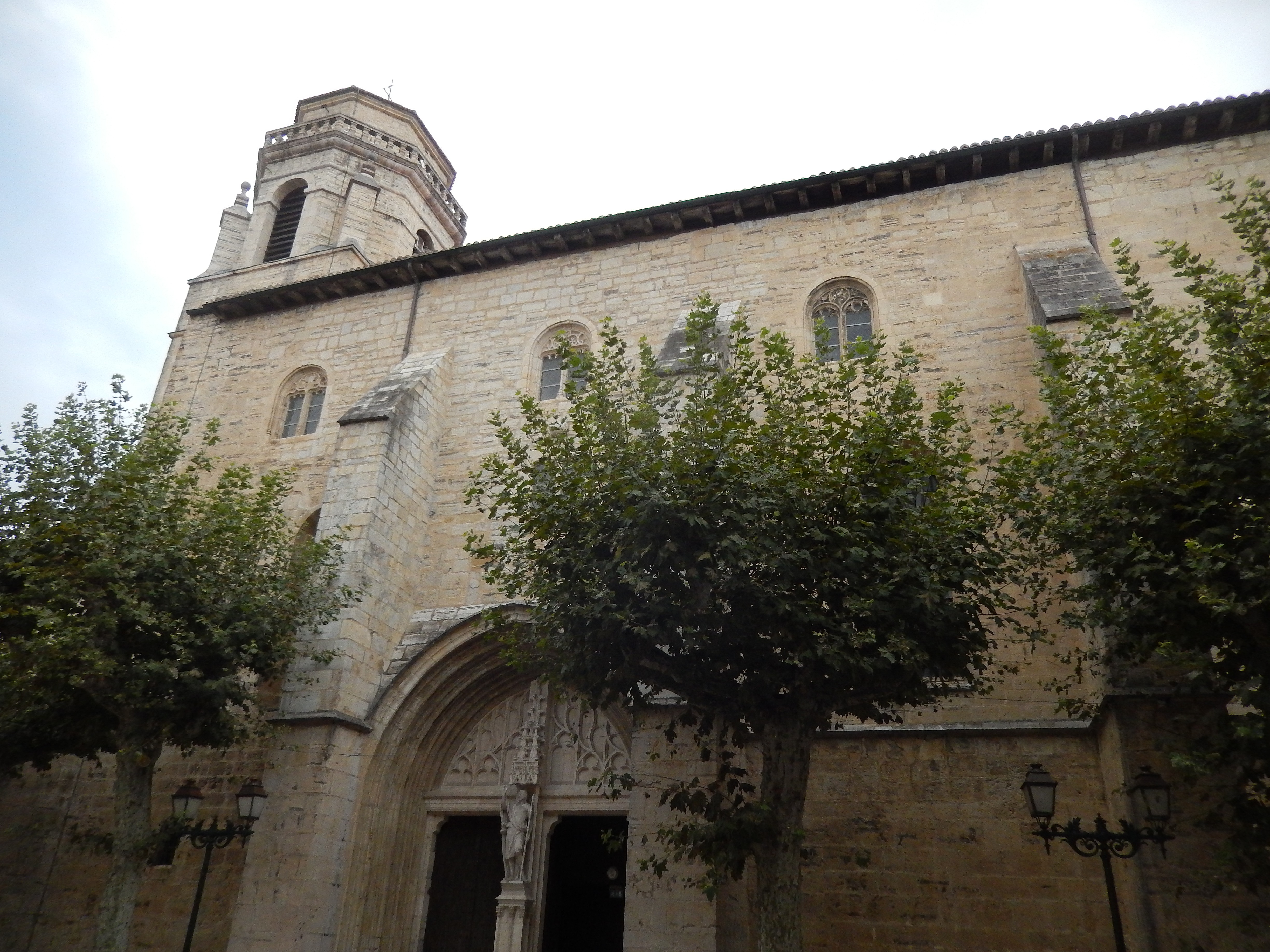
the Church of St. John the Baptist, the town’s patron saint, and where Louis XIV was married
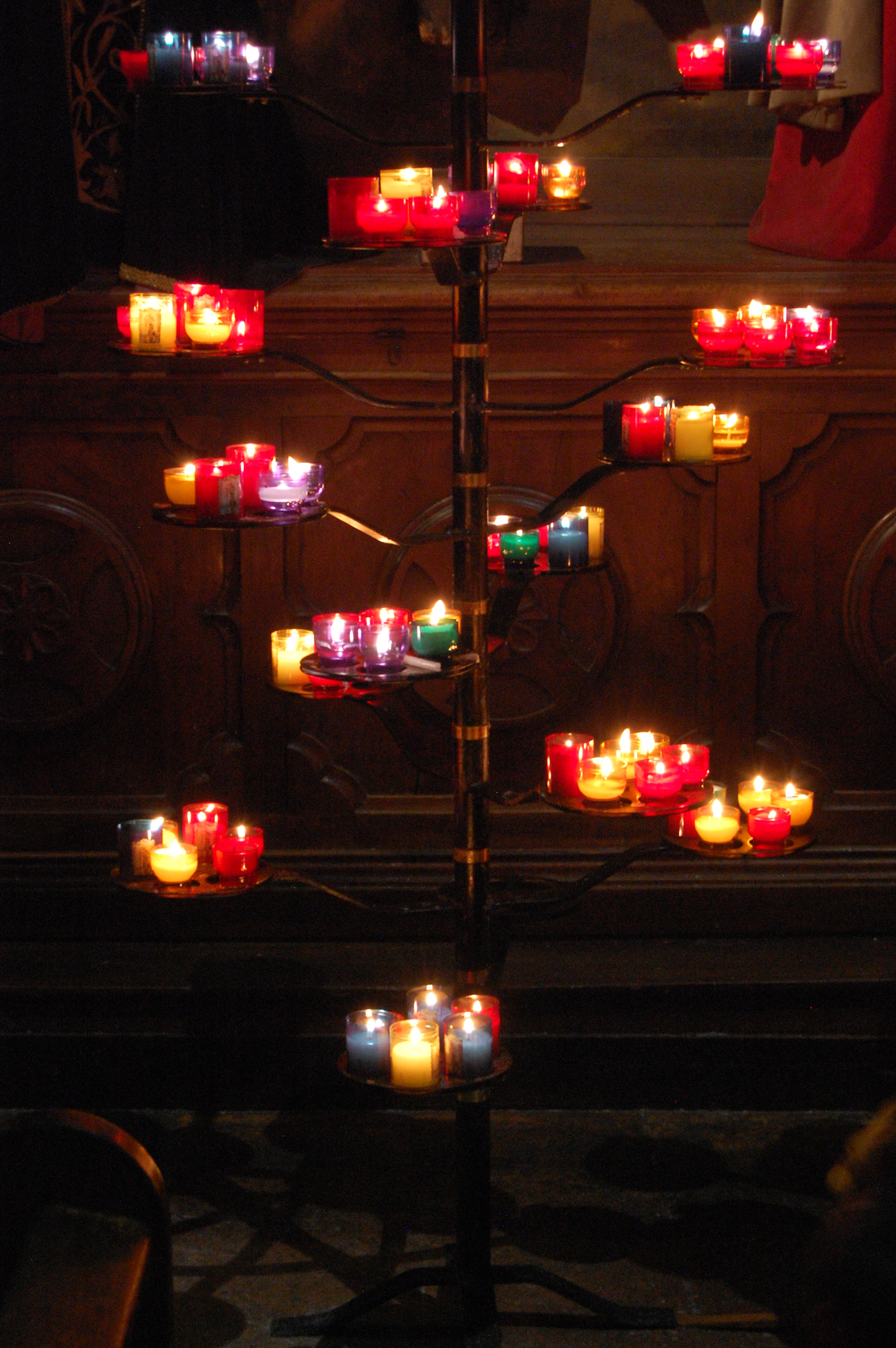
candle offerings, in the church
In the early evening we drove back to San Sebastián, and found a delightful bar close to our hotel for wine and a few tapas, before falling into bed on our last night in town. The next morning we were off to Santillana del Mar, stopping in Bilbao on the way, to visit the famous Guggenheim Bilbao Museum. The Guggenheim was another of my ‘requests,’ not because I like modern art so much, (though some of it I do), but because of the building itself. Architect Frank Gehry is a Canadian-born American, and responsible for the design of, among others, the Walt Disney Concert Hall, the Art Gallery of Ontario in Toronto, the Louis Vuitton Foundation in Paris and the Dancing House in Prague – which we saw when we were there, and you can see pictures of on my blog. In addition, I’ve been to both of the other Guggenheim Museums, in Venice and New York City. It’s nice to be consistent. 😉
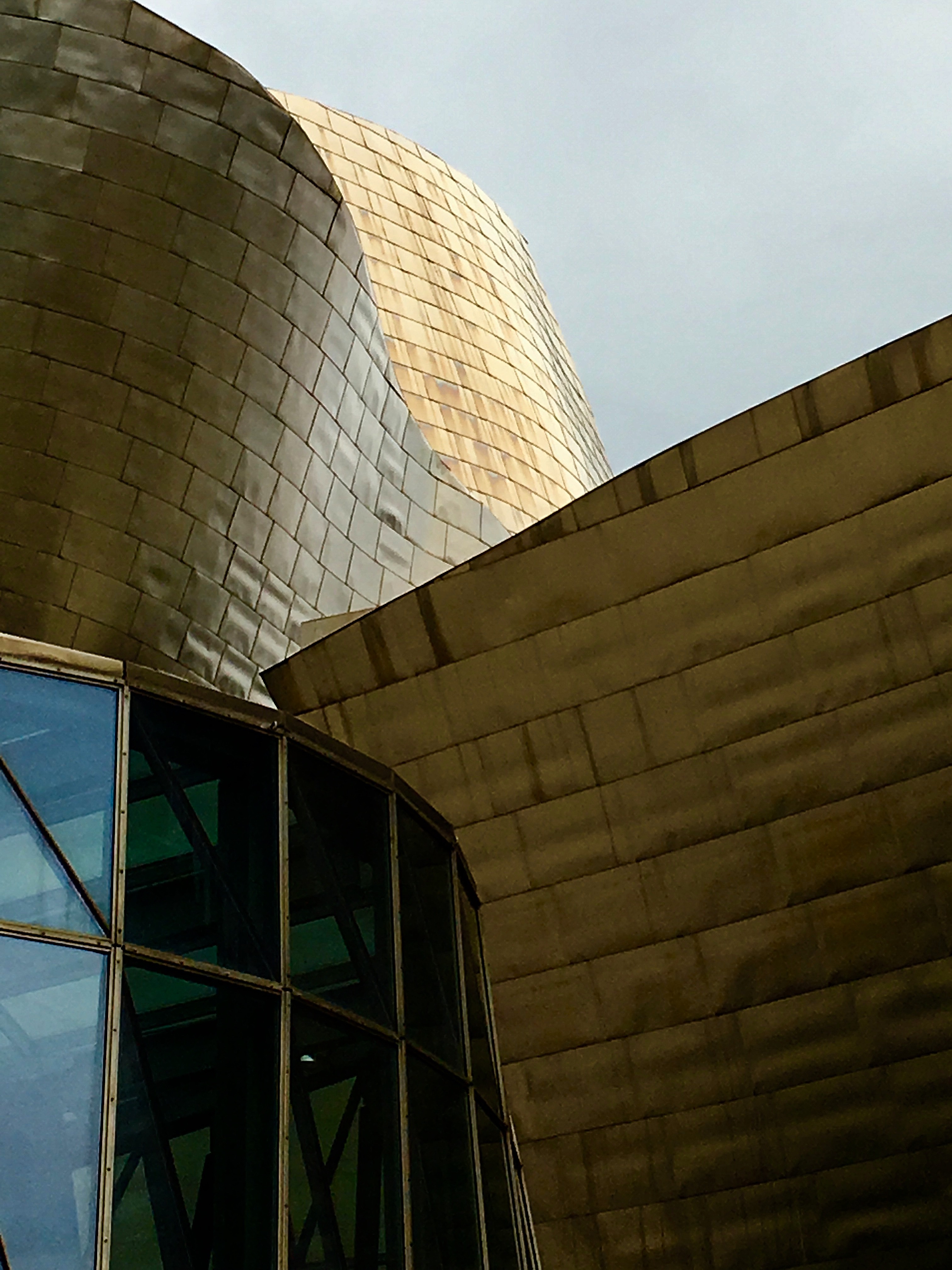
As it turned out, the building really was the best part of this excursion. None of us were that taken with the art on display, except for the very large and impressive permanent exhibit, The Matter of Time by Richard Serra. The building, though, was very cool. It’s covered in glass, titanium and limestone.
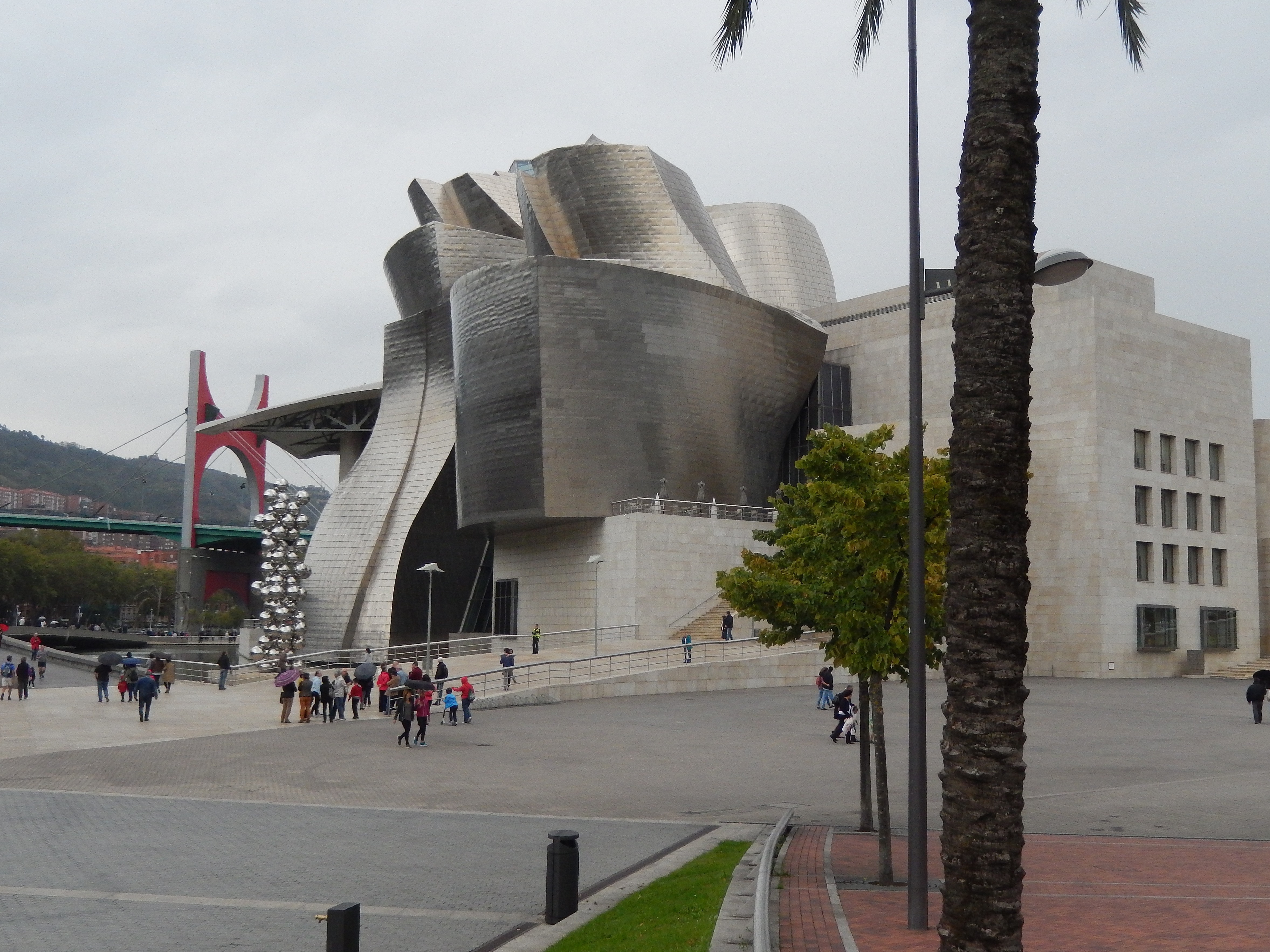
the Guggenheim, as we approached
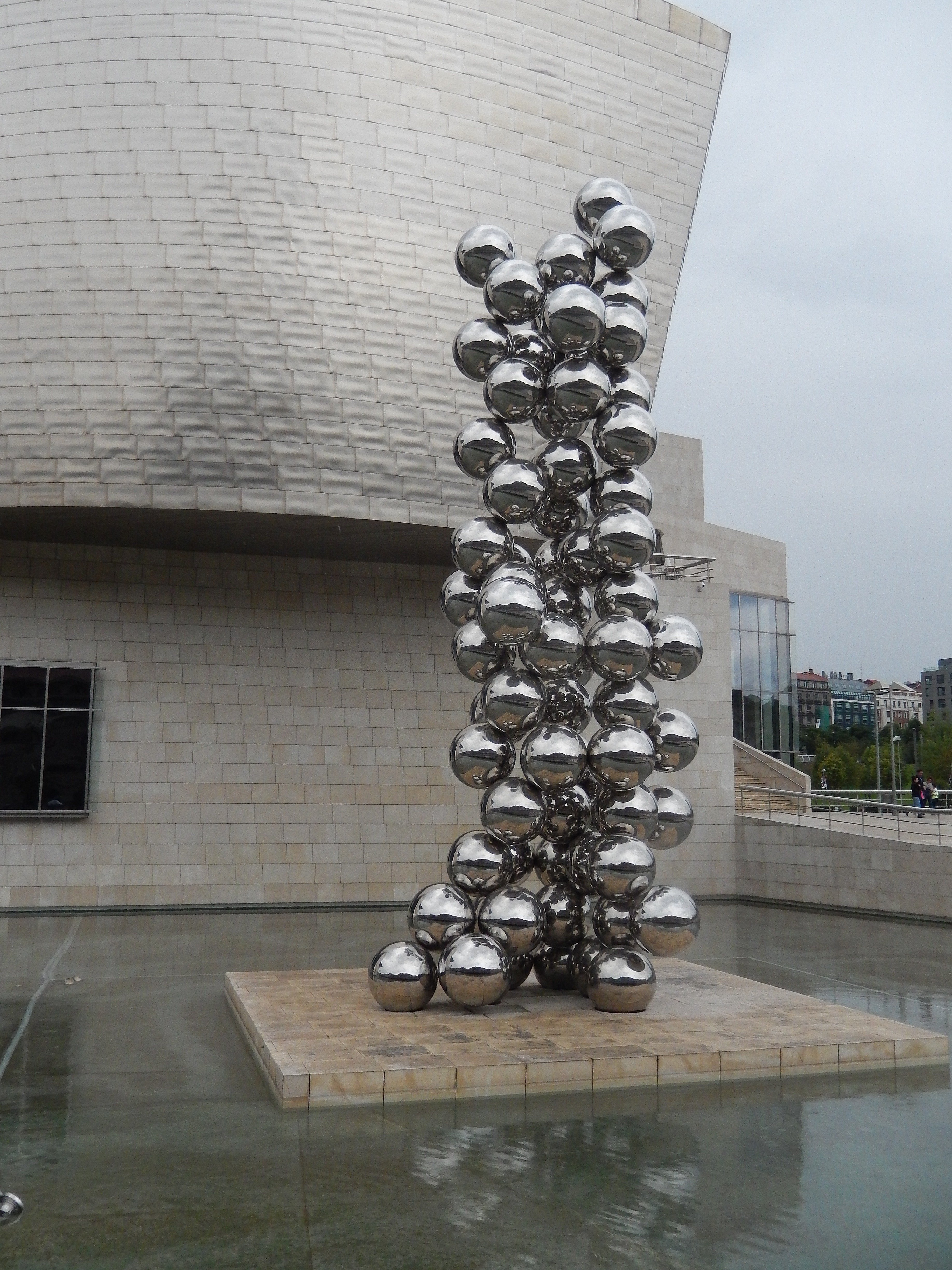
interesting sculpture of balls
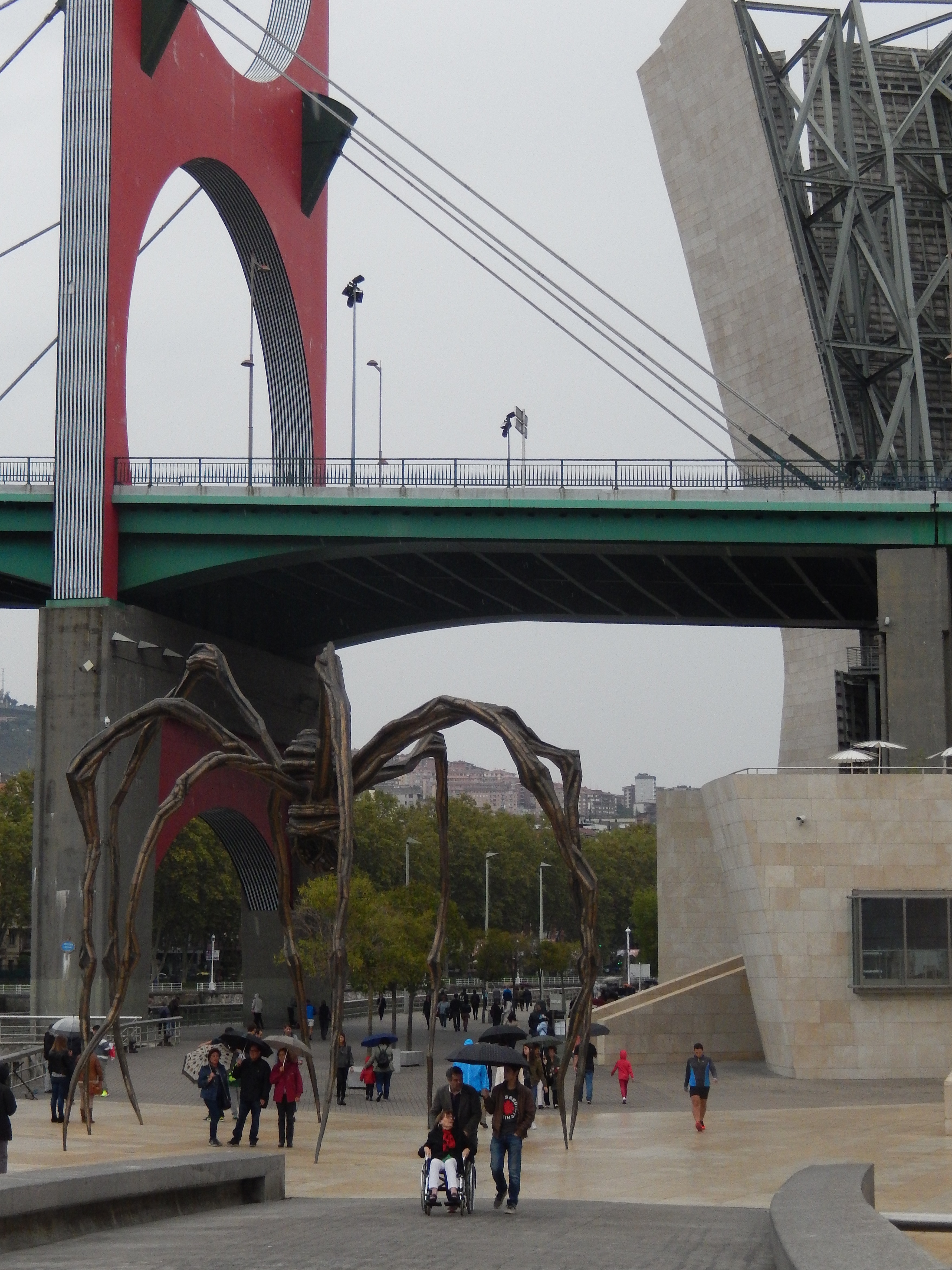
creepy spider sculpture
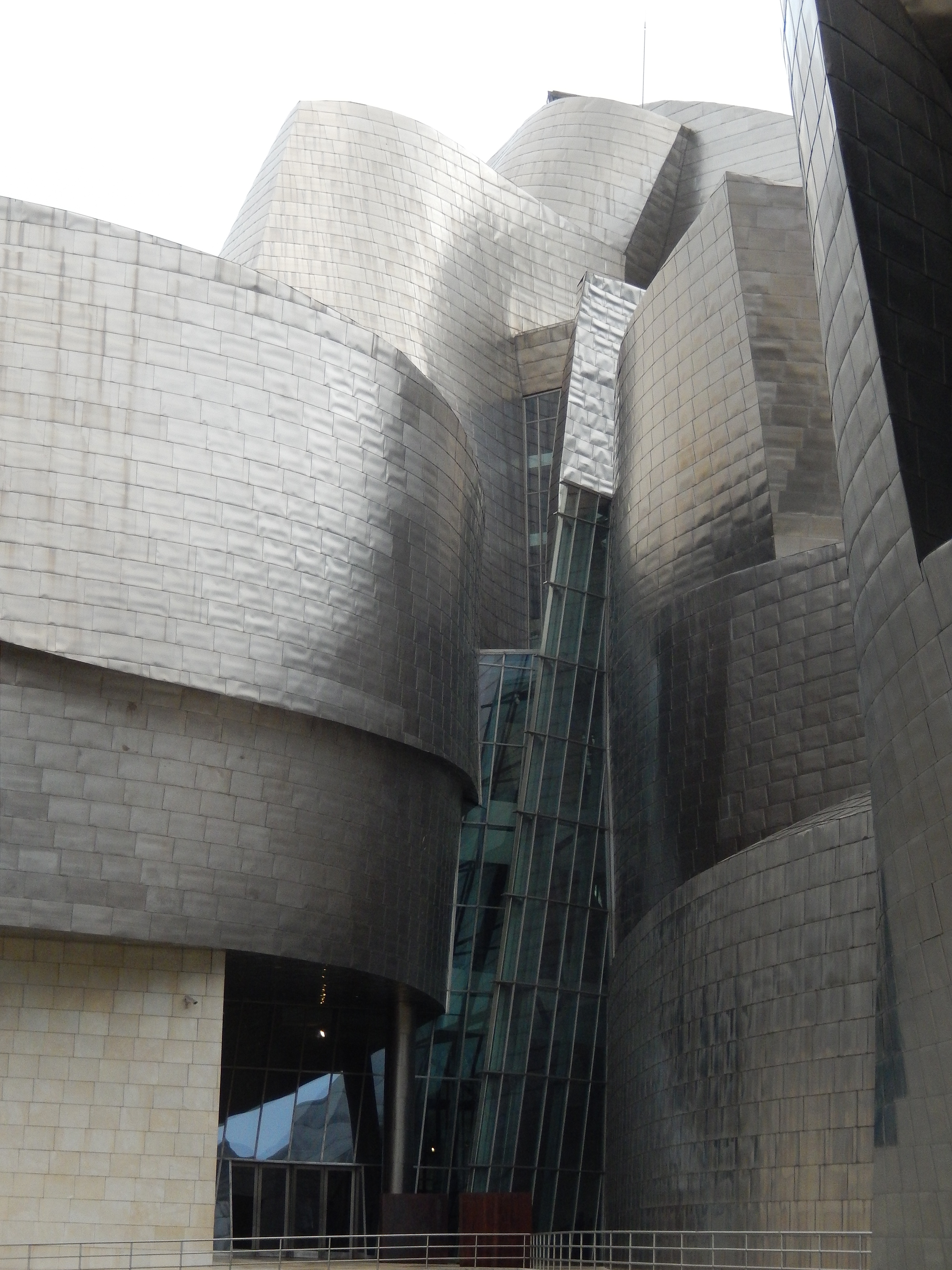
curves and angles
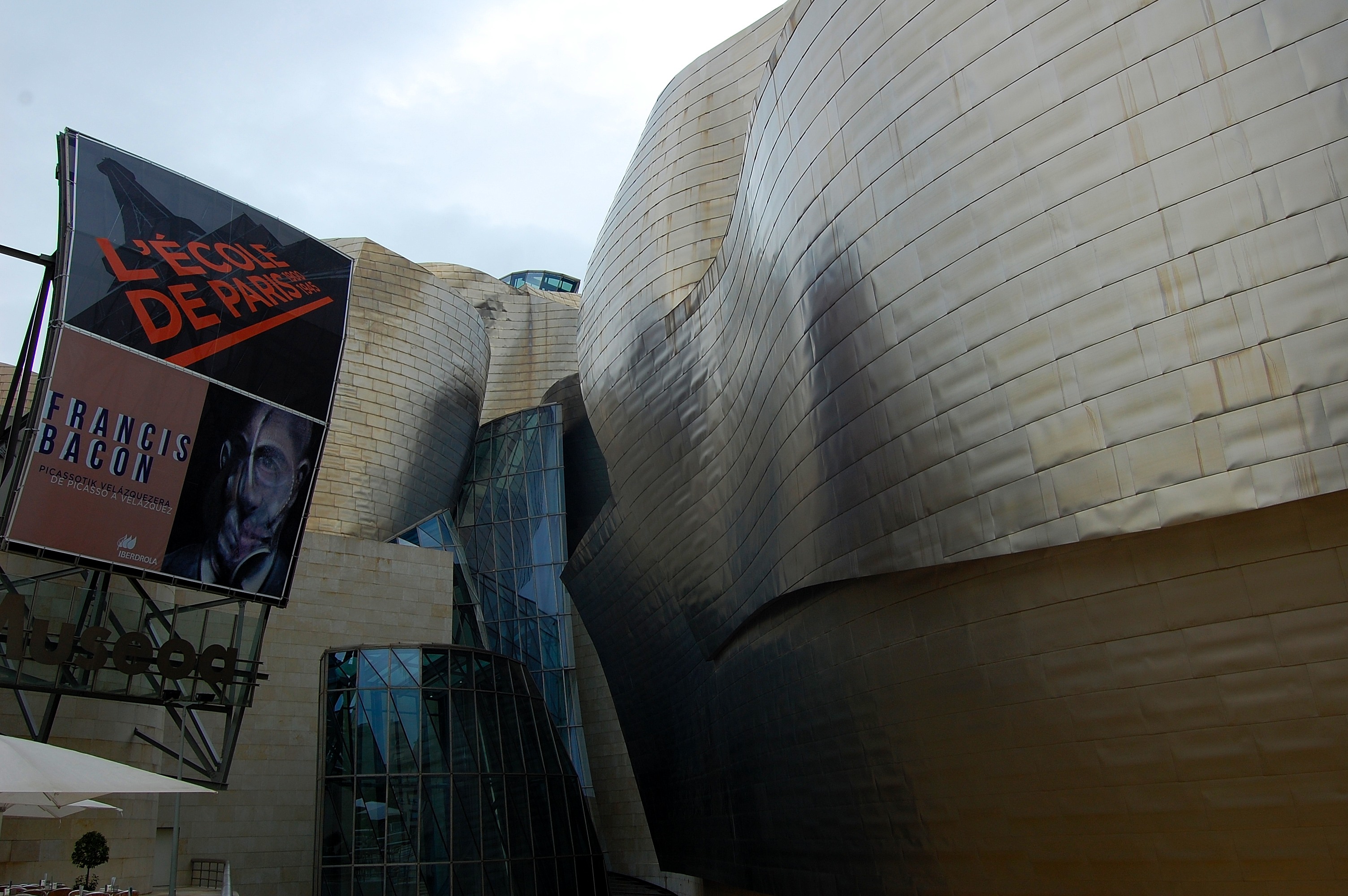
entrance
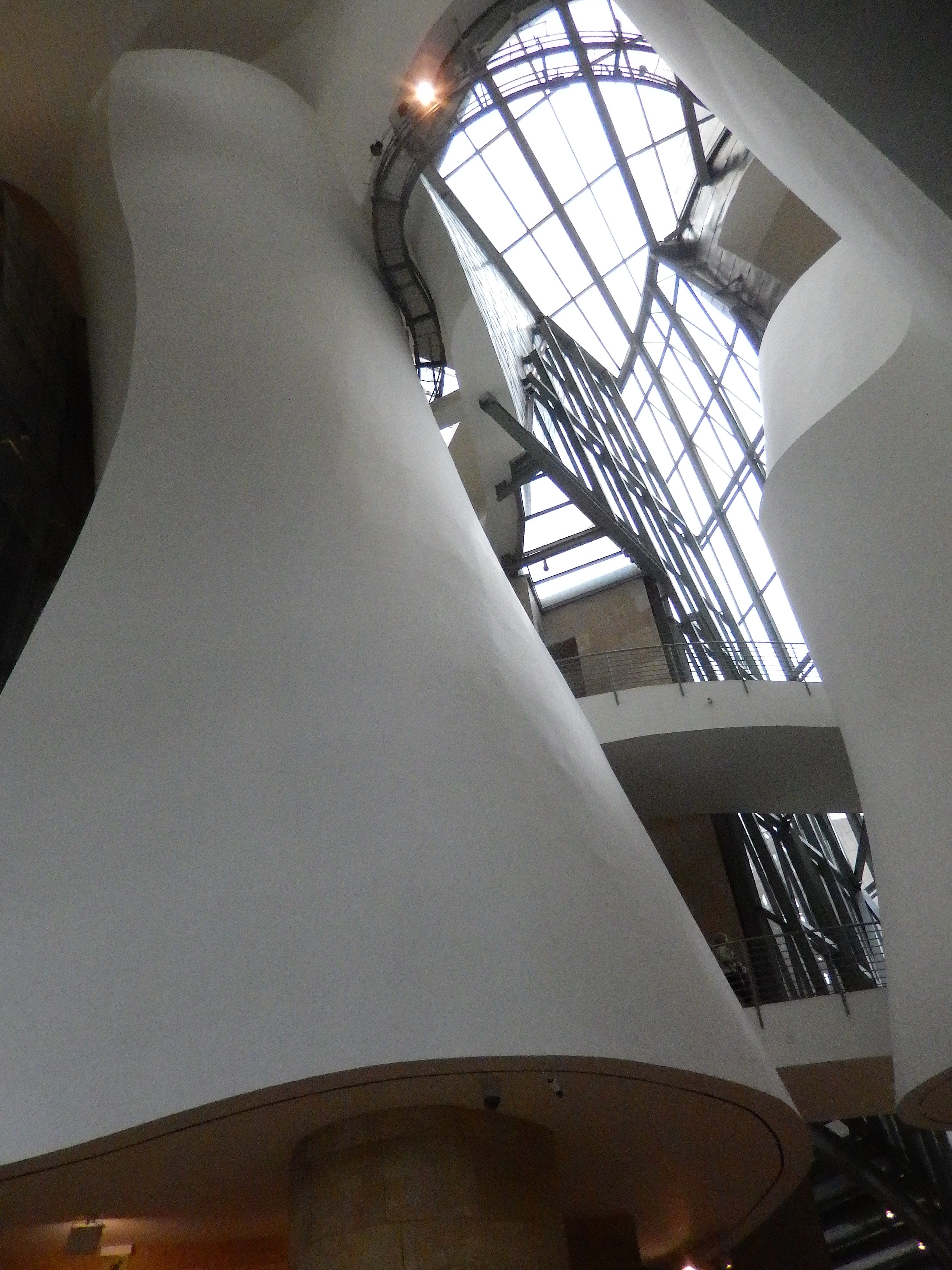
inside – this reminded me of the Dancing House in Prague
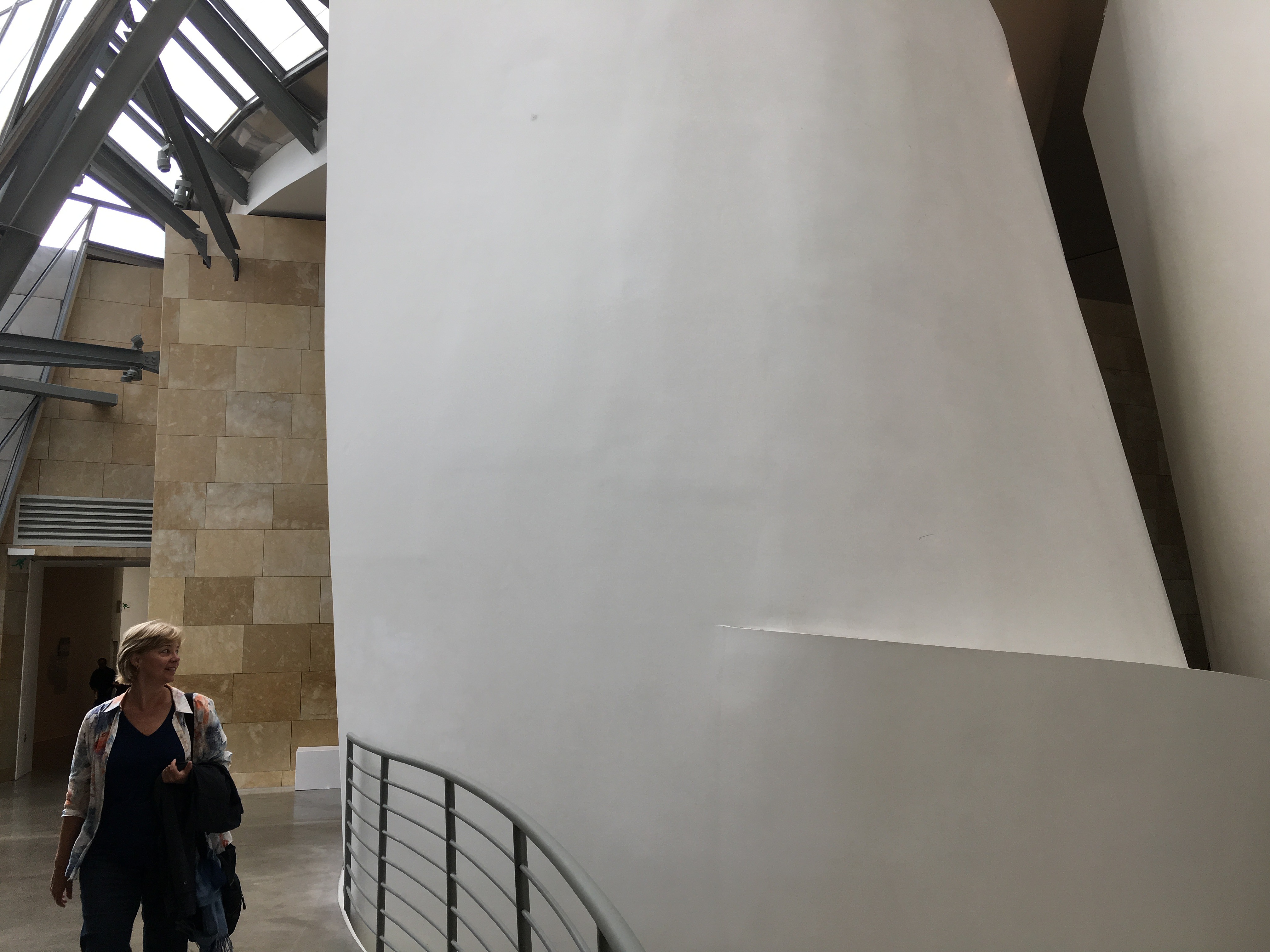
inside
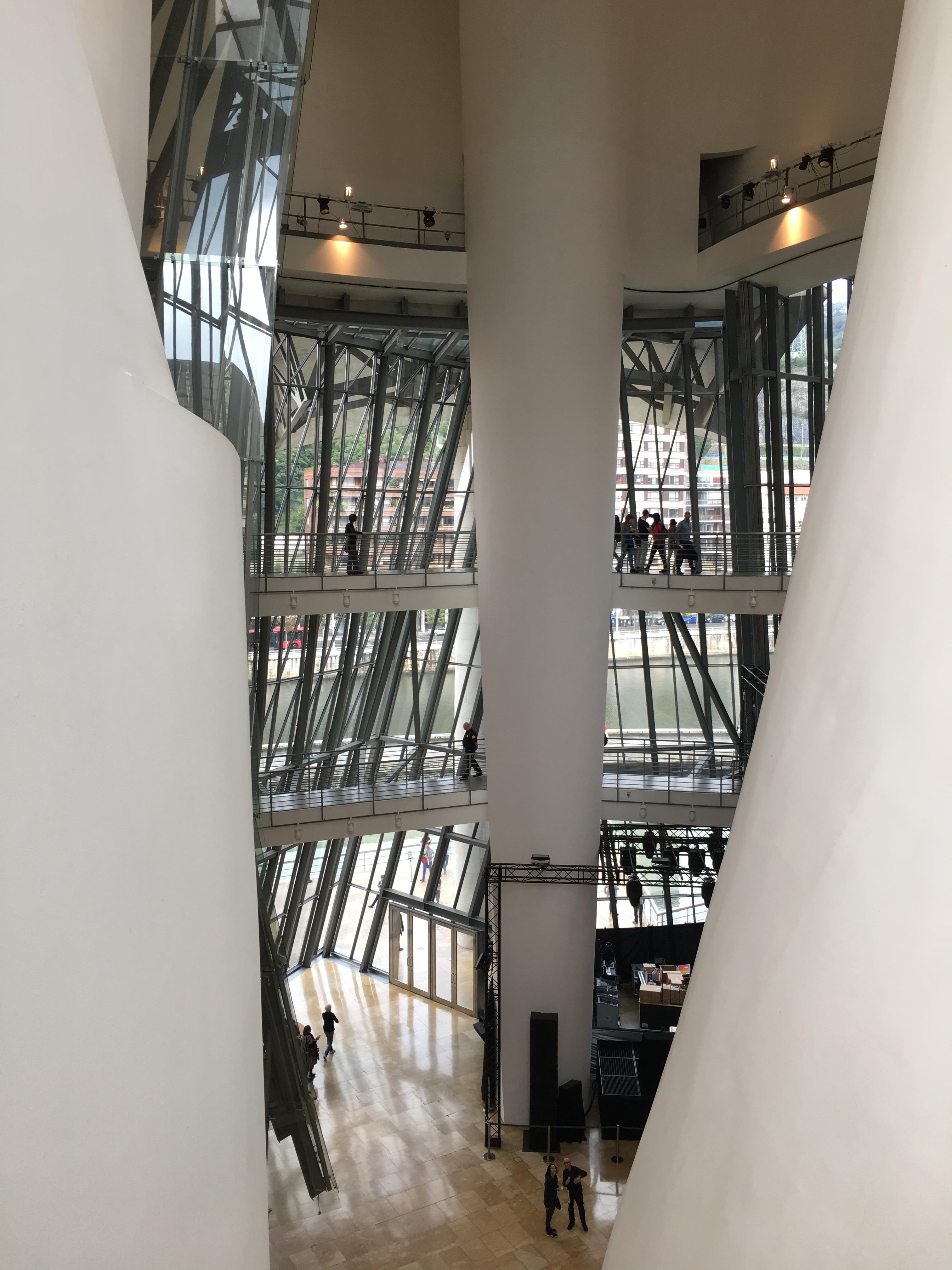
inside
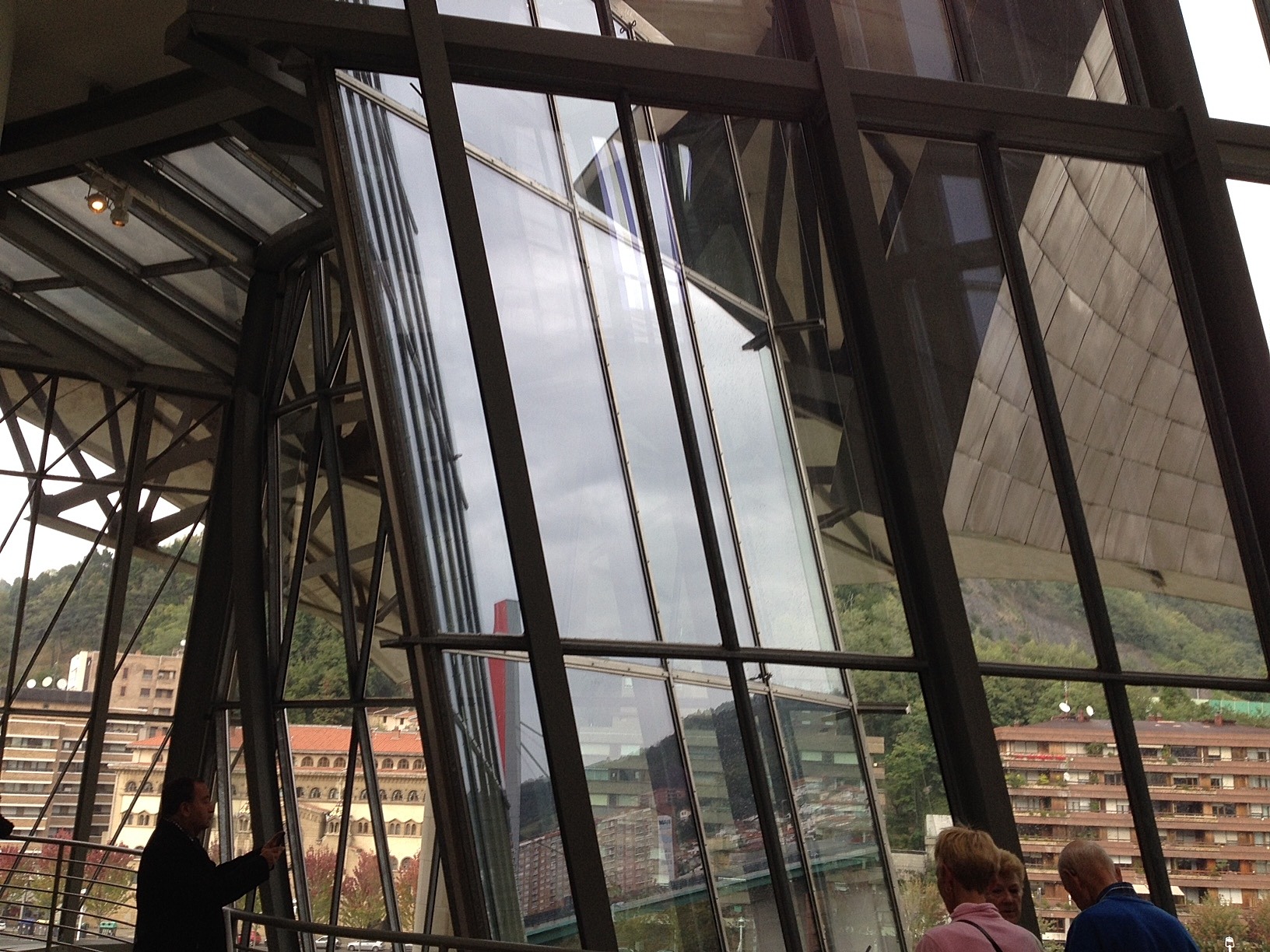
inside, looking out
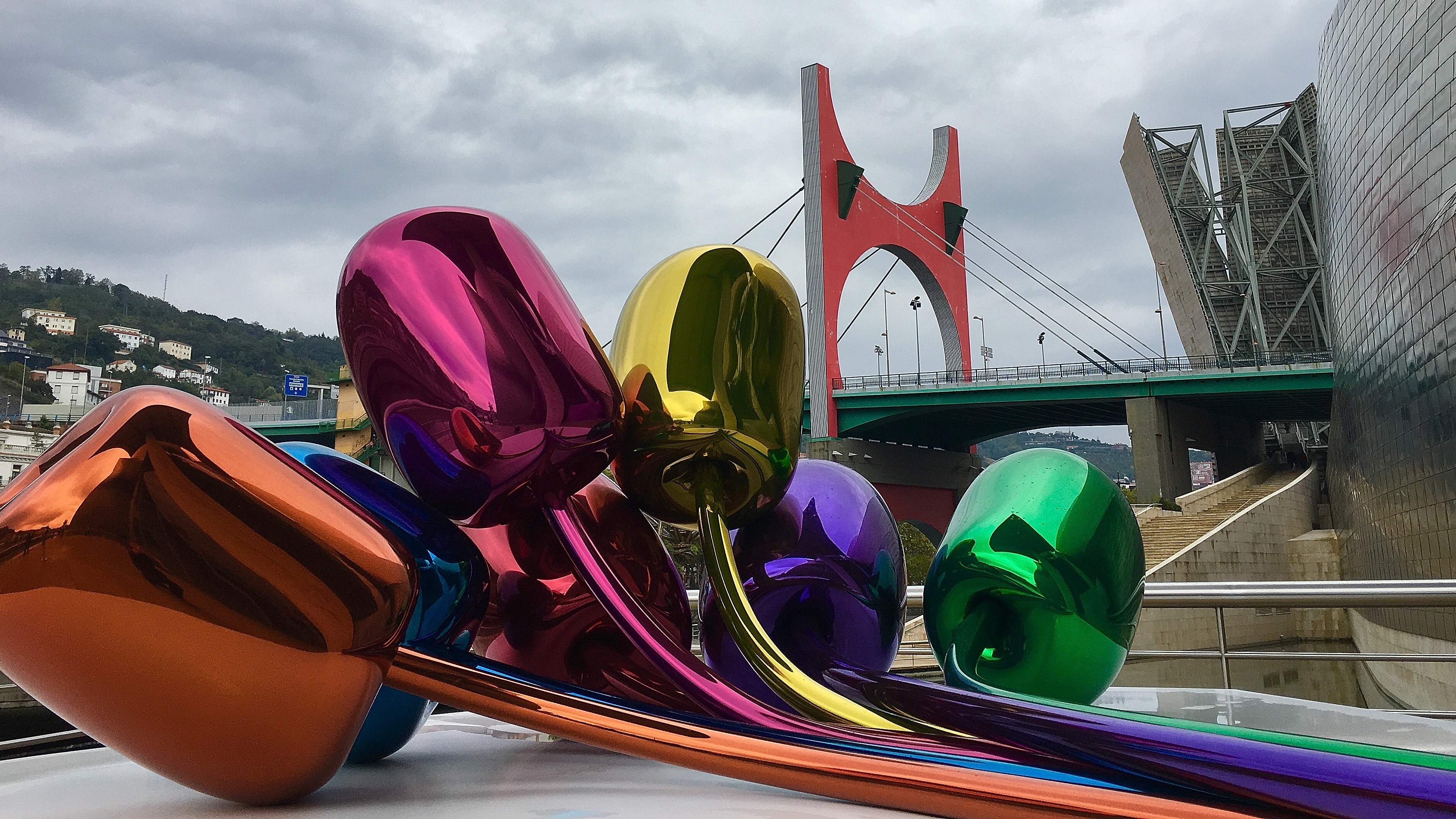
my favourite picture, which Don took with his phone: sculpture called “Tulips” by Jeff Koons
the sun came out as we ate our lunch on the outside patio of the museum
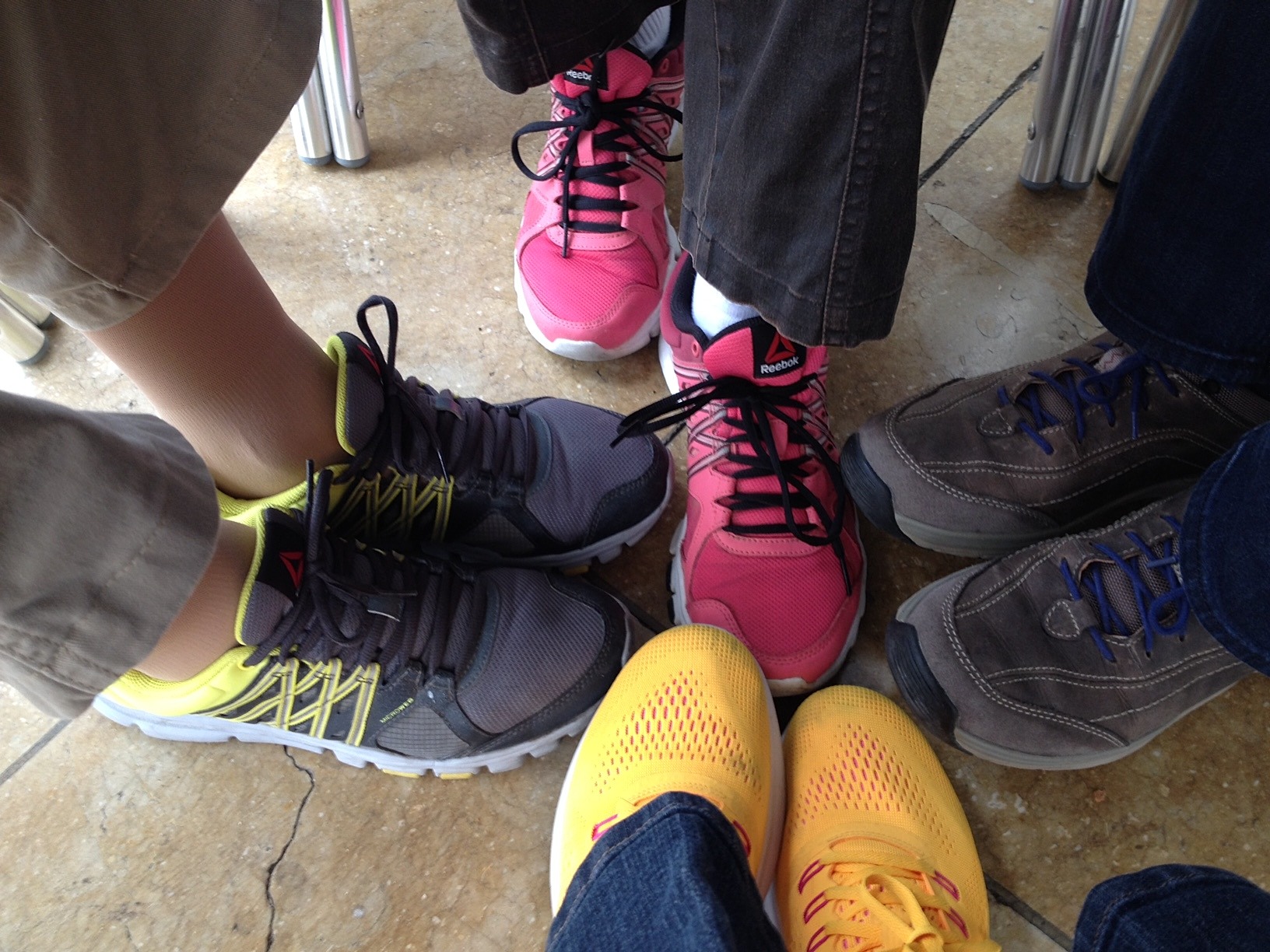
our feet under the lunch table are a colourful, modern work of art! 🙂
After our museum visit, we got back in our car to drive to the little town of Santillana del Mar, the name of which incorporates three lies: it is not saintly (sant); it is not flat (llana); it is not by the sea (el mar). It is actually named for Santa Juliana, whose remains are kept in the Colegiata, a Romanesque church and former Benedictine monastery.

our hotel in Santillana
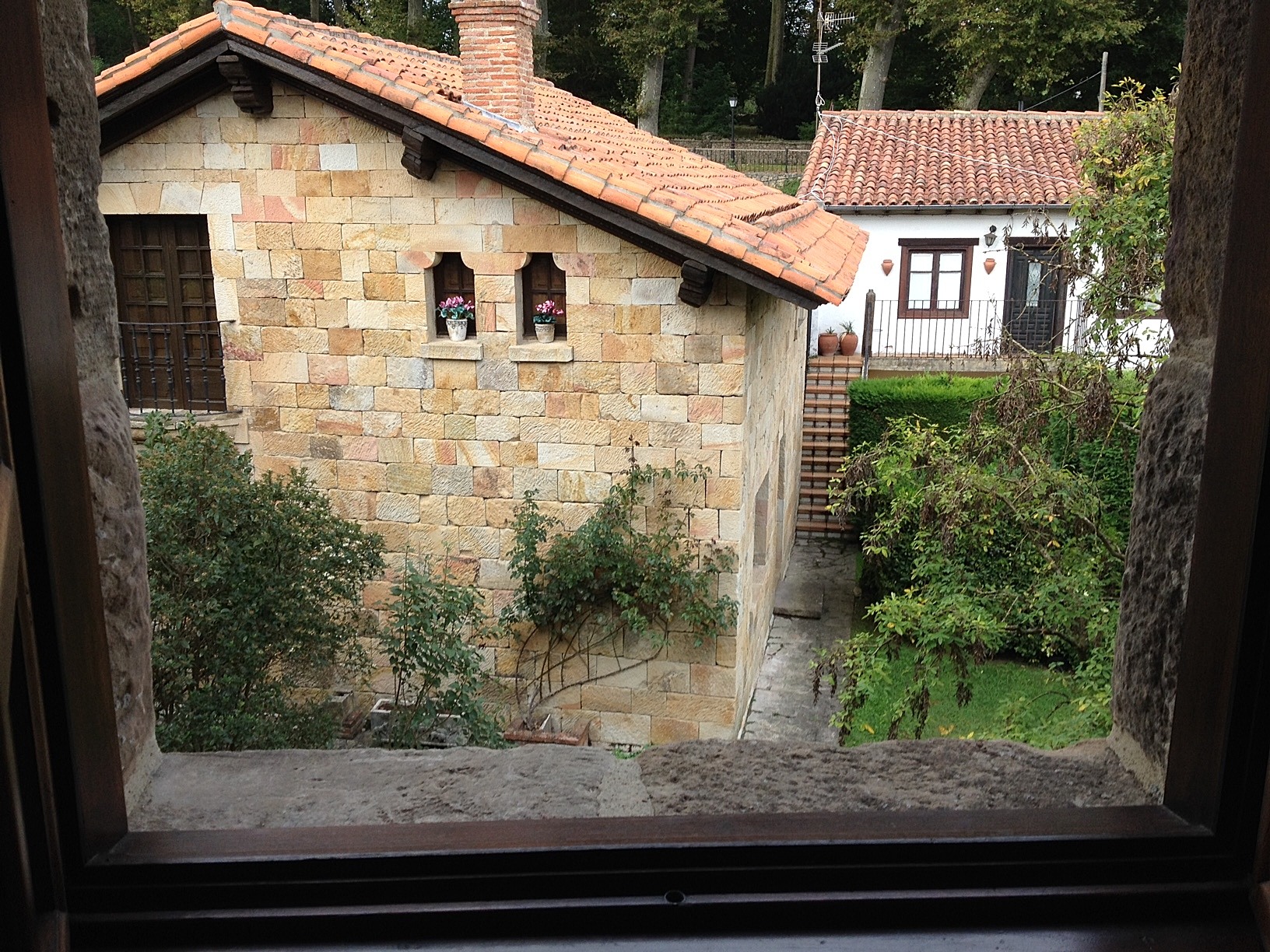
the view from our room
Once we settled our belongings, we set off to walk through the picturesque little town.
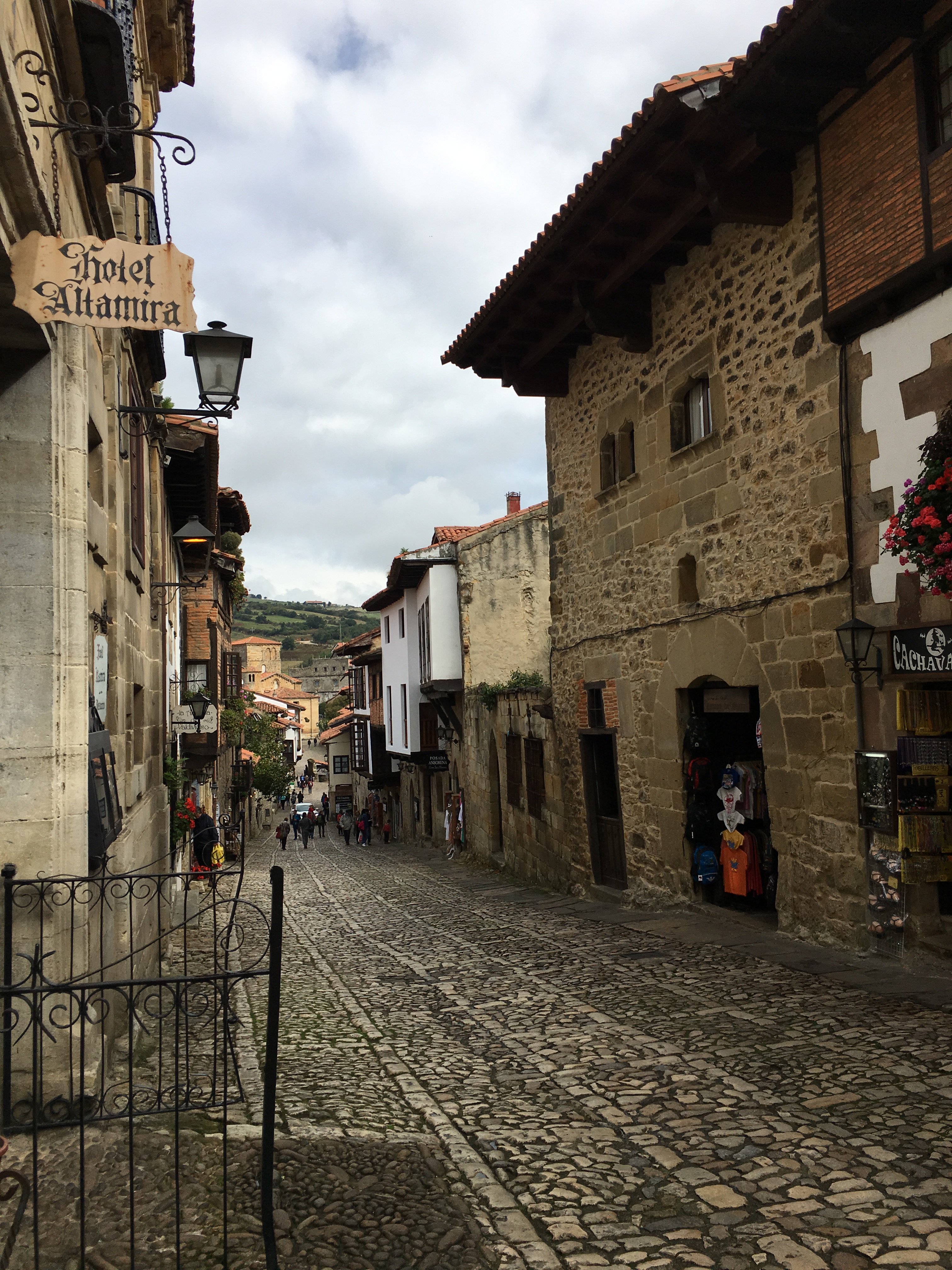
old world charm
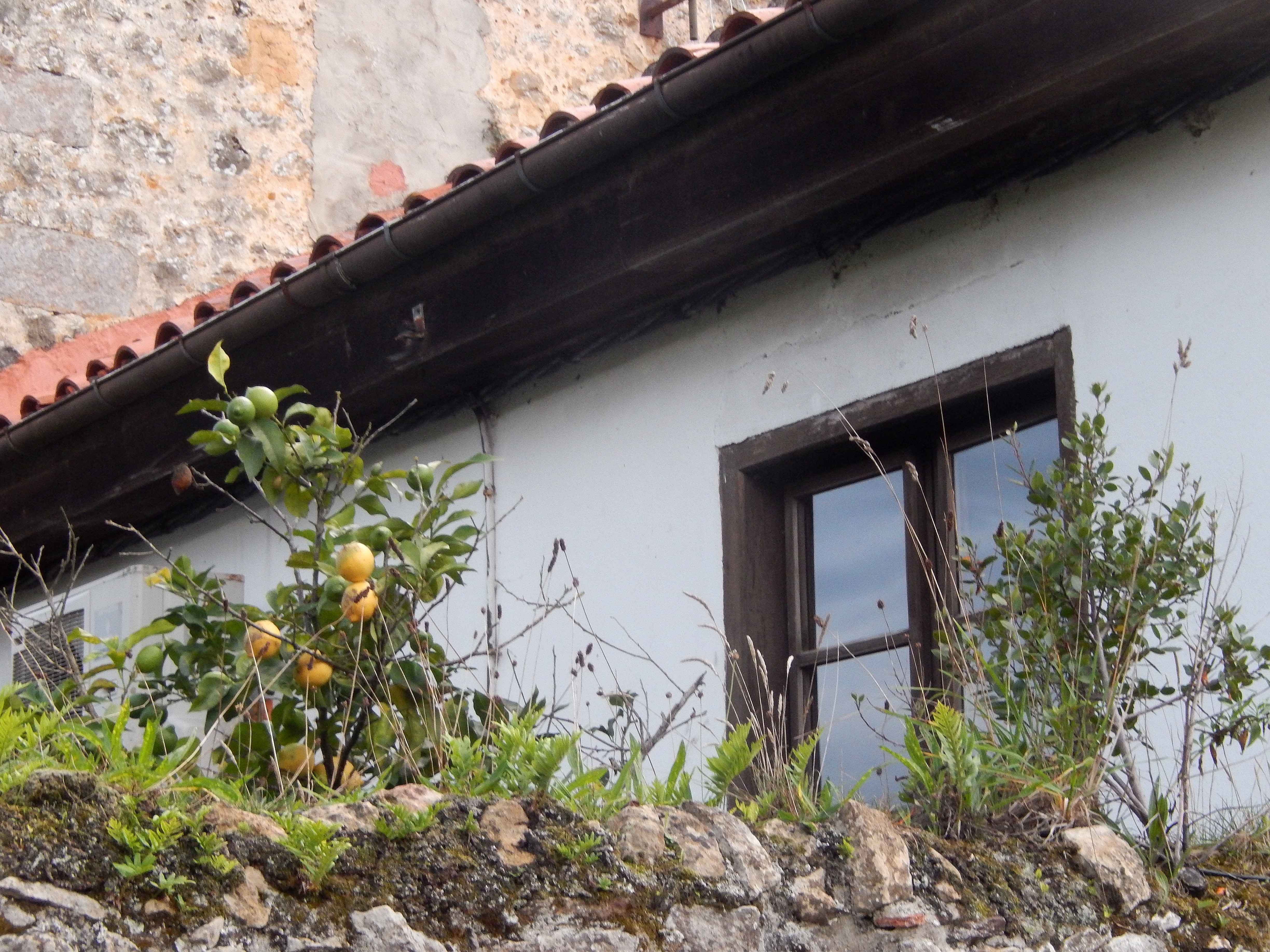
lemon tree behind the wall
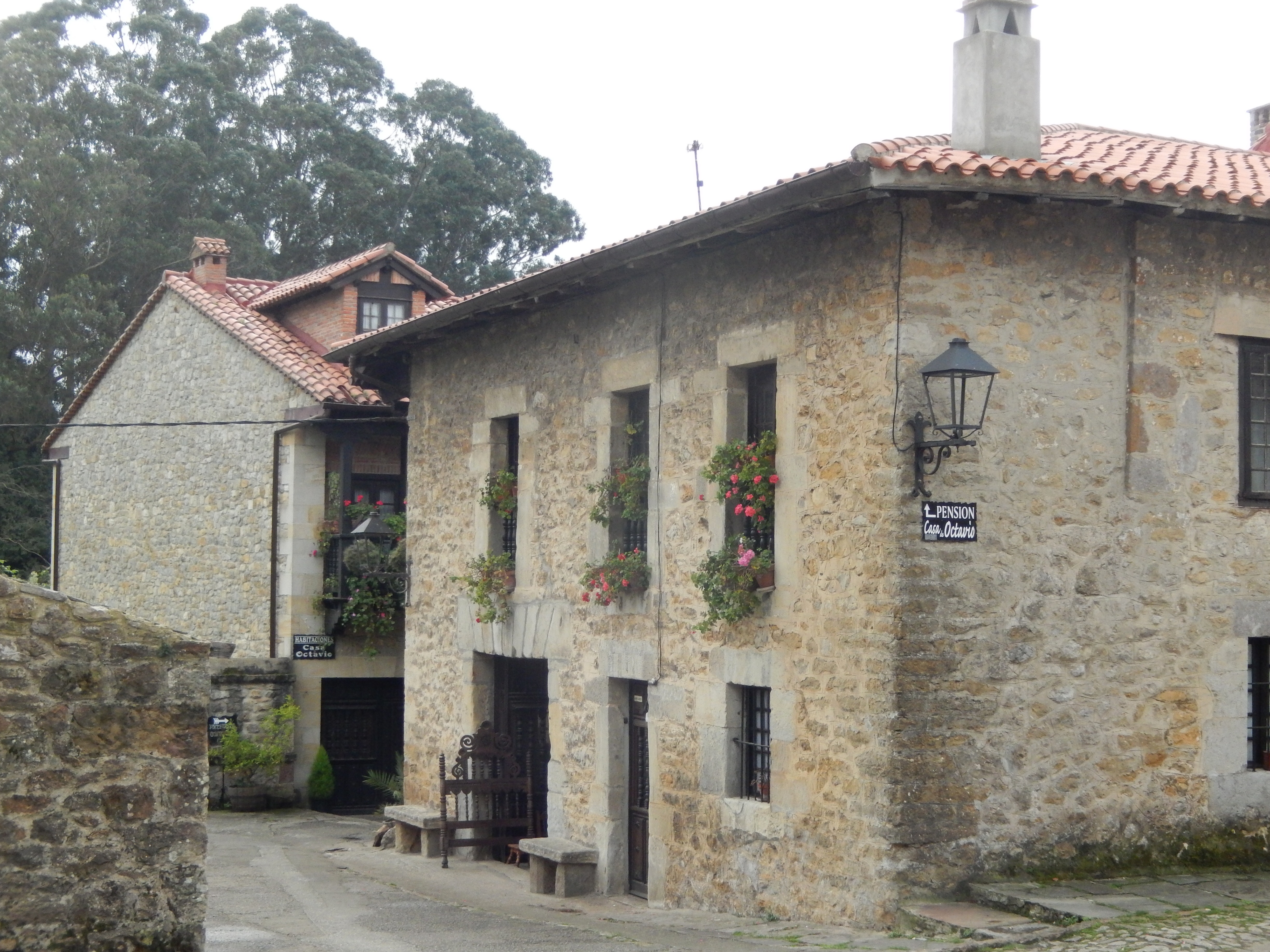
beautiful home and window boxes

interesting door-knocker
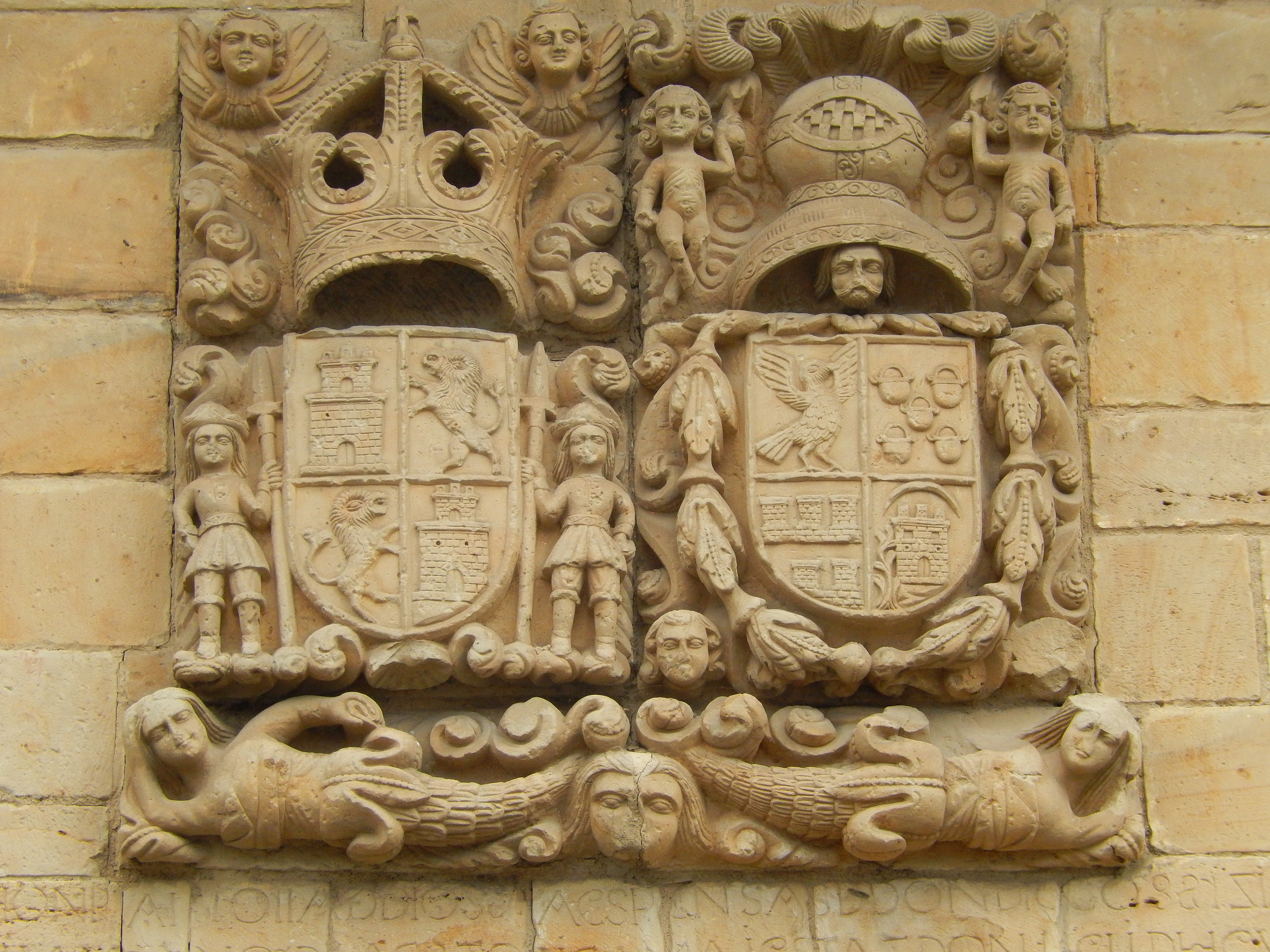
intricate coat-of-arms
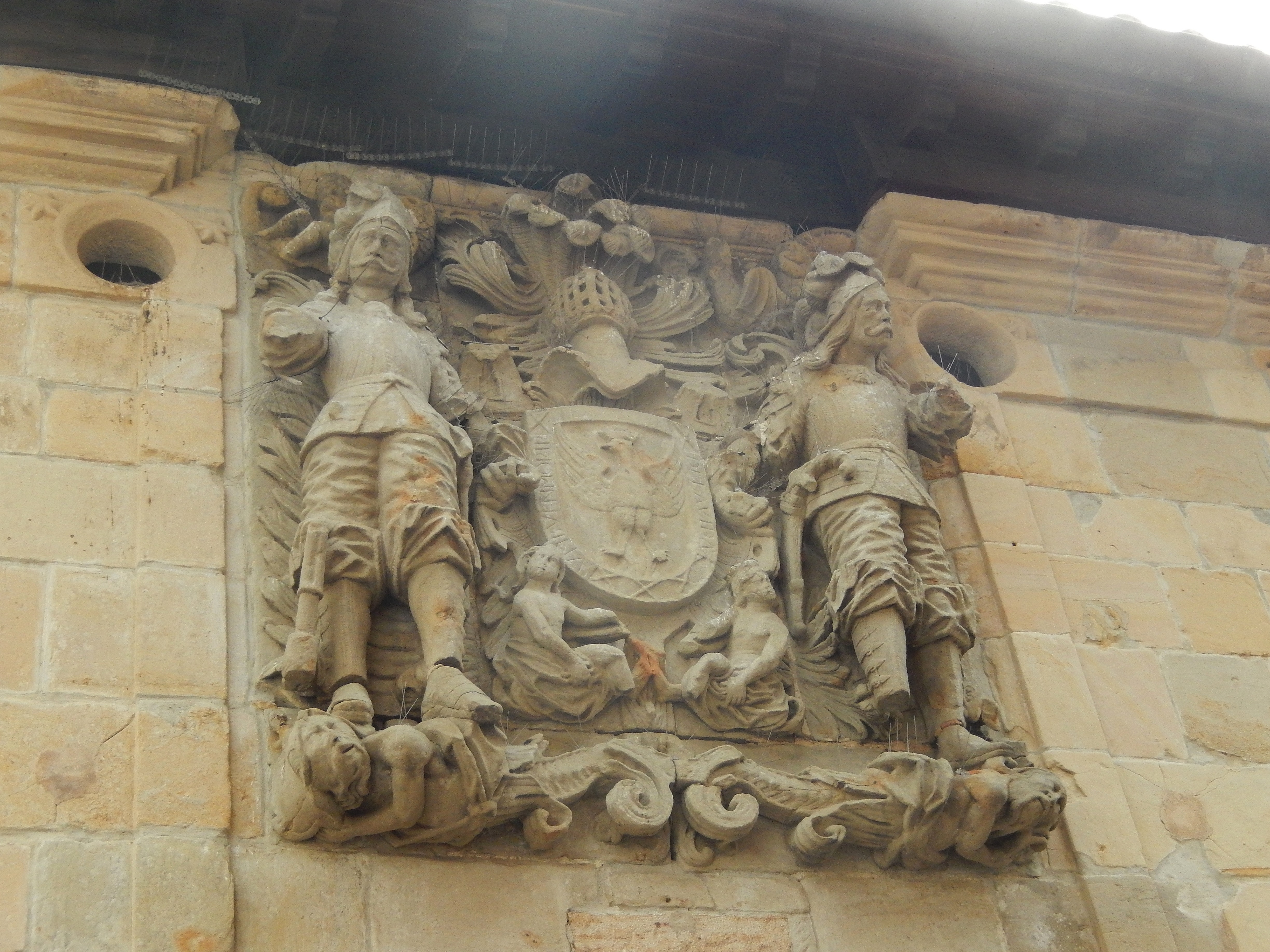
the coats-of-arms really were amazing
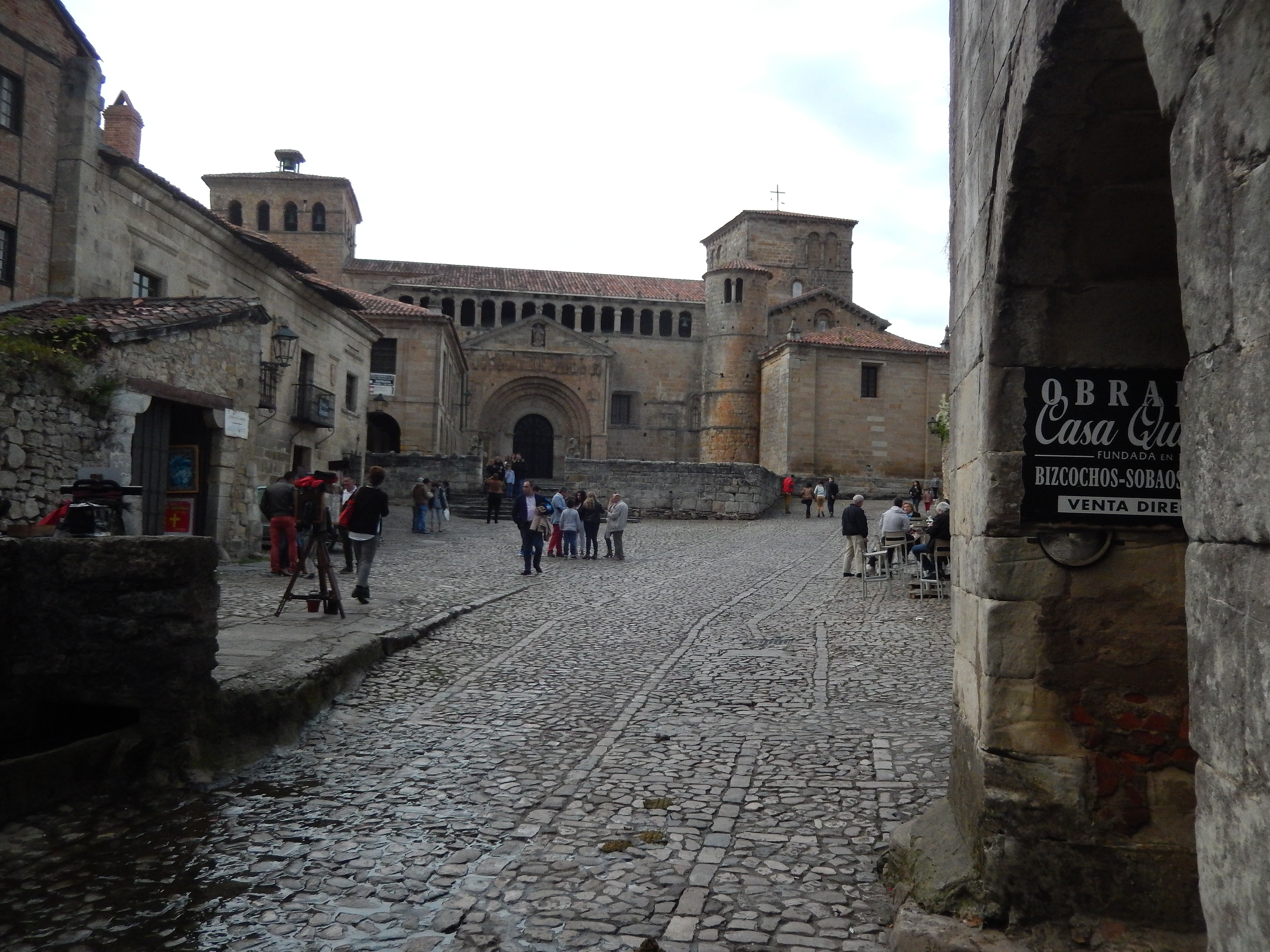
the main square and Colegiata. Sadly, we missed seeing the not-to-be-missed Cloisters, which were closed both times we tried.
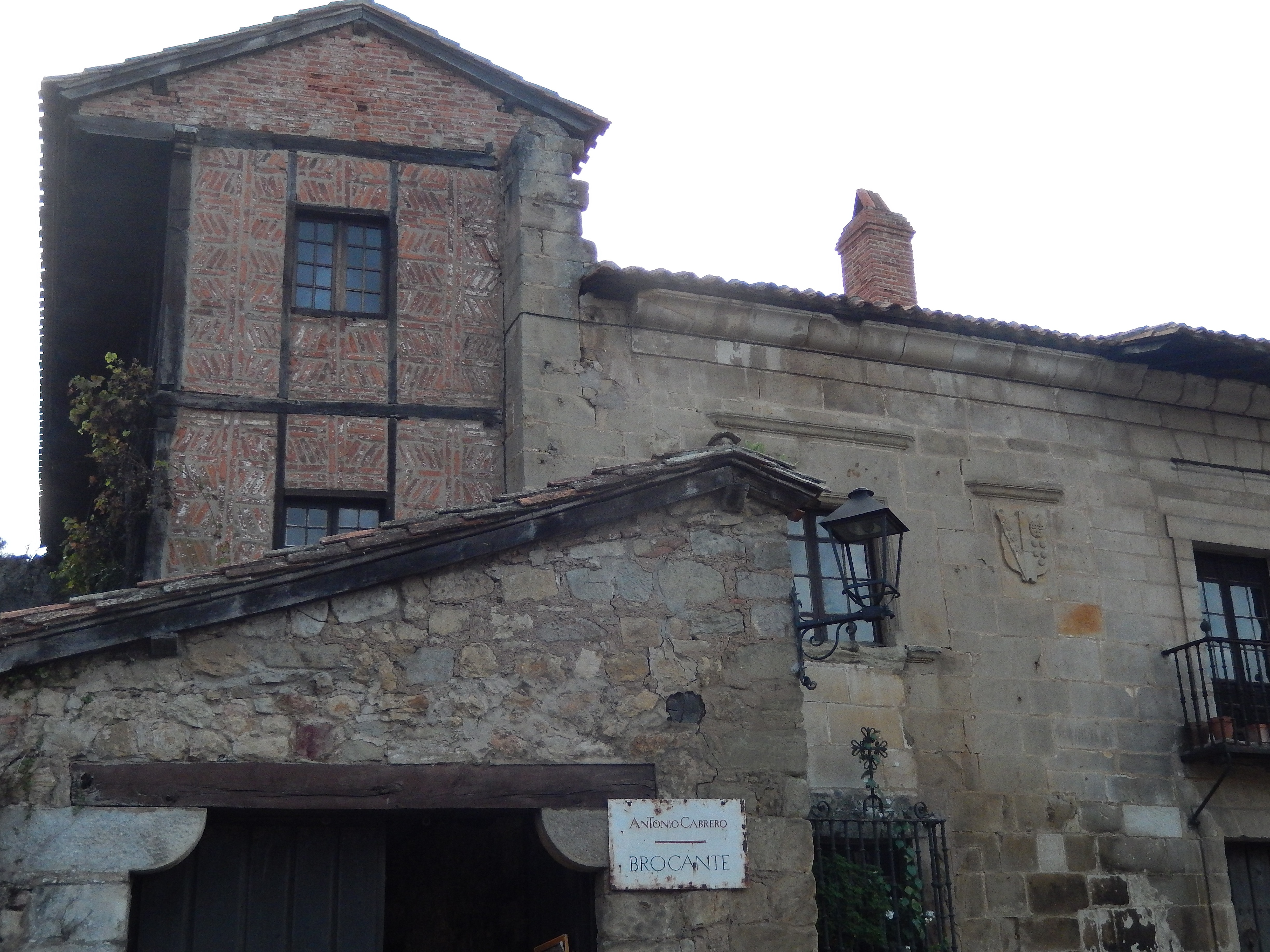
old building detail
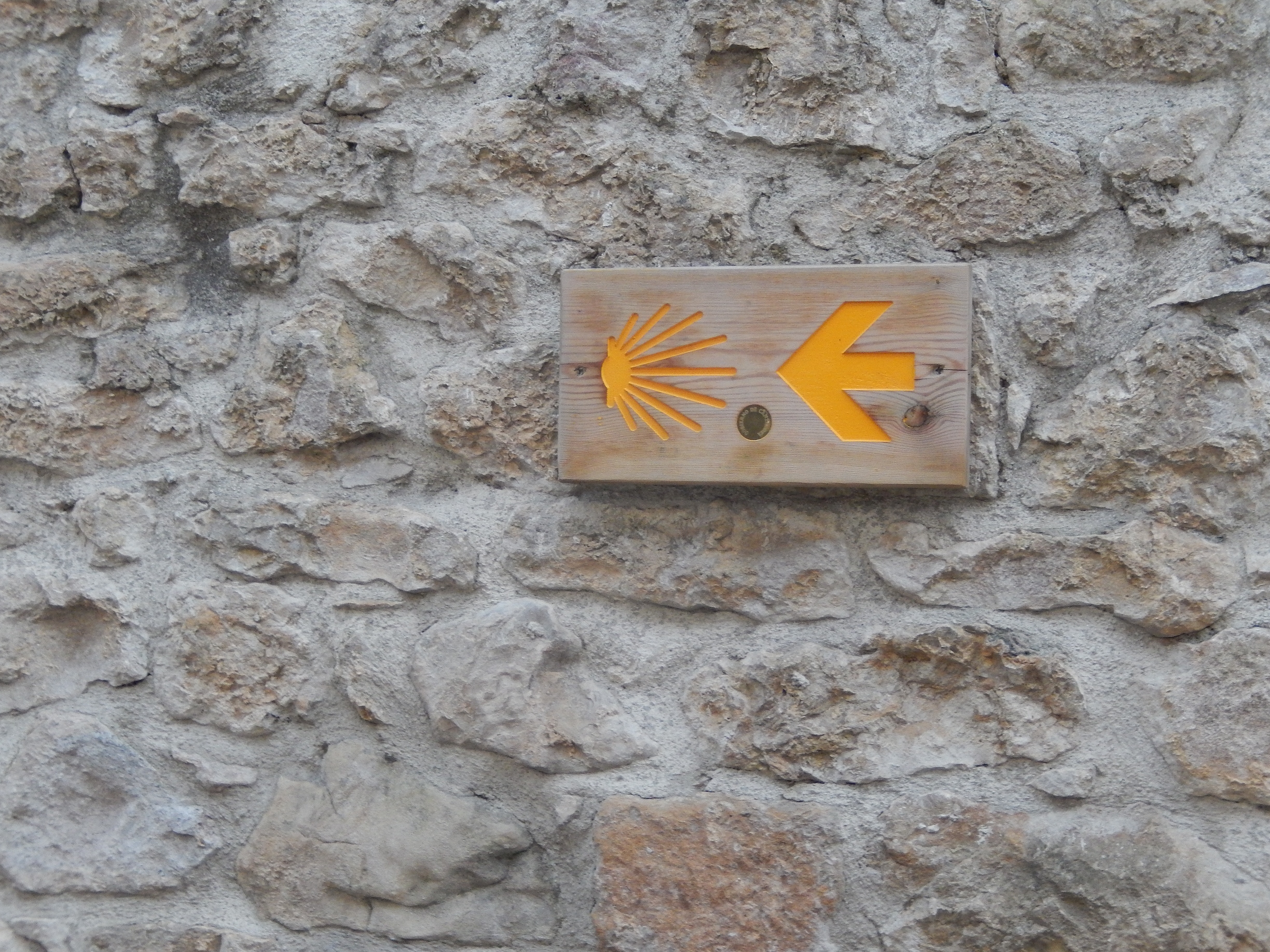
this town in on the northern route of the famous Camino de Santiago, and this sign points The Way
We stopped for a cider, because this is the area of Spain for which cider is famous. This is nothing like the British cider I know and love. And it has a special way to be poured…
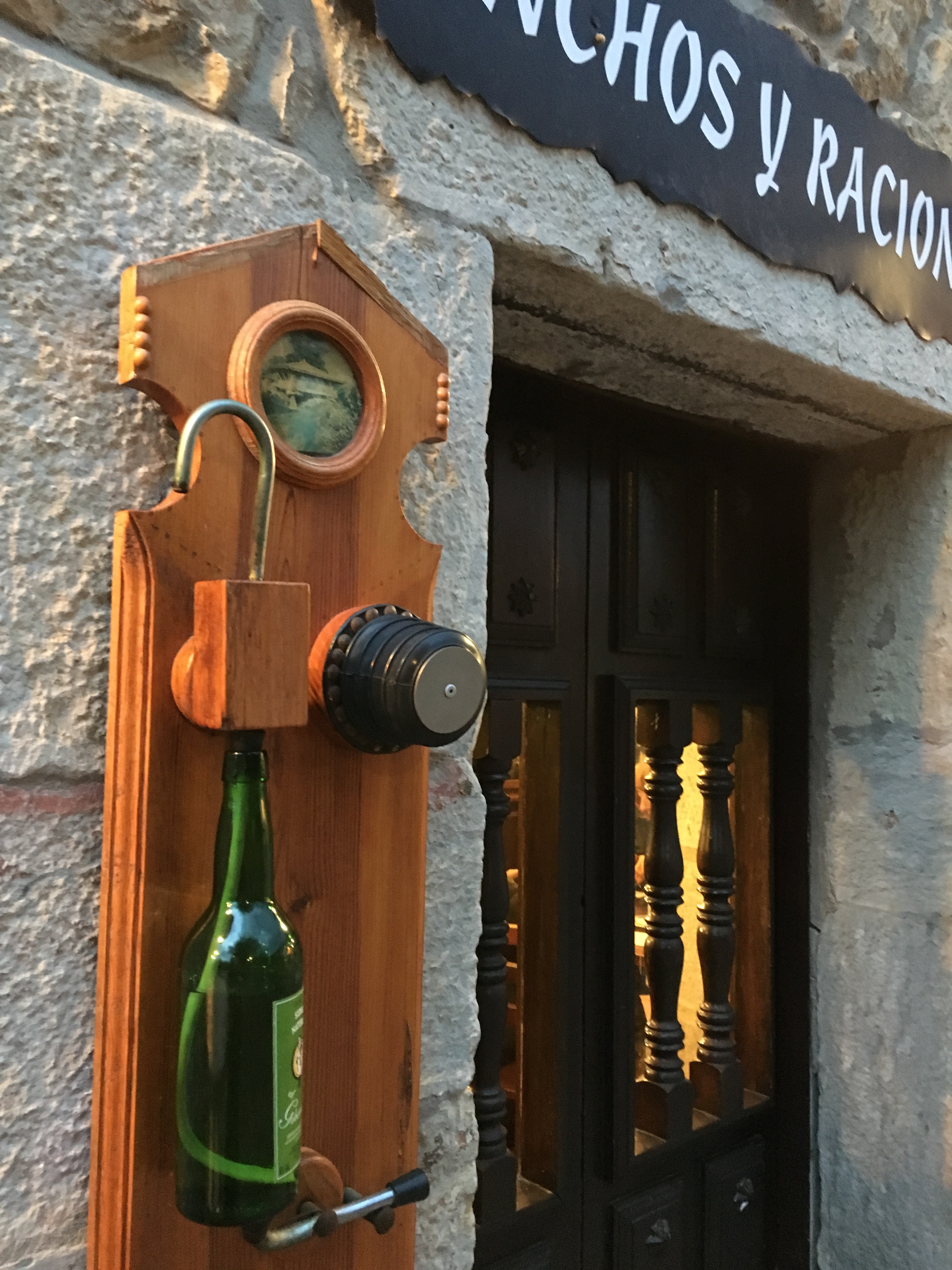
the cider house
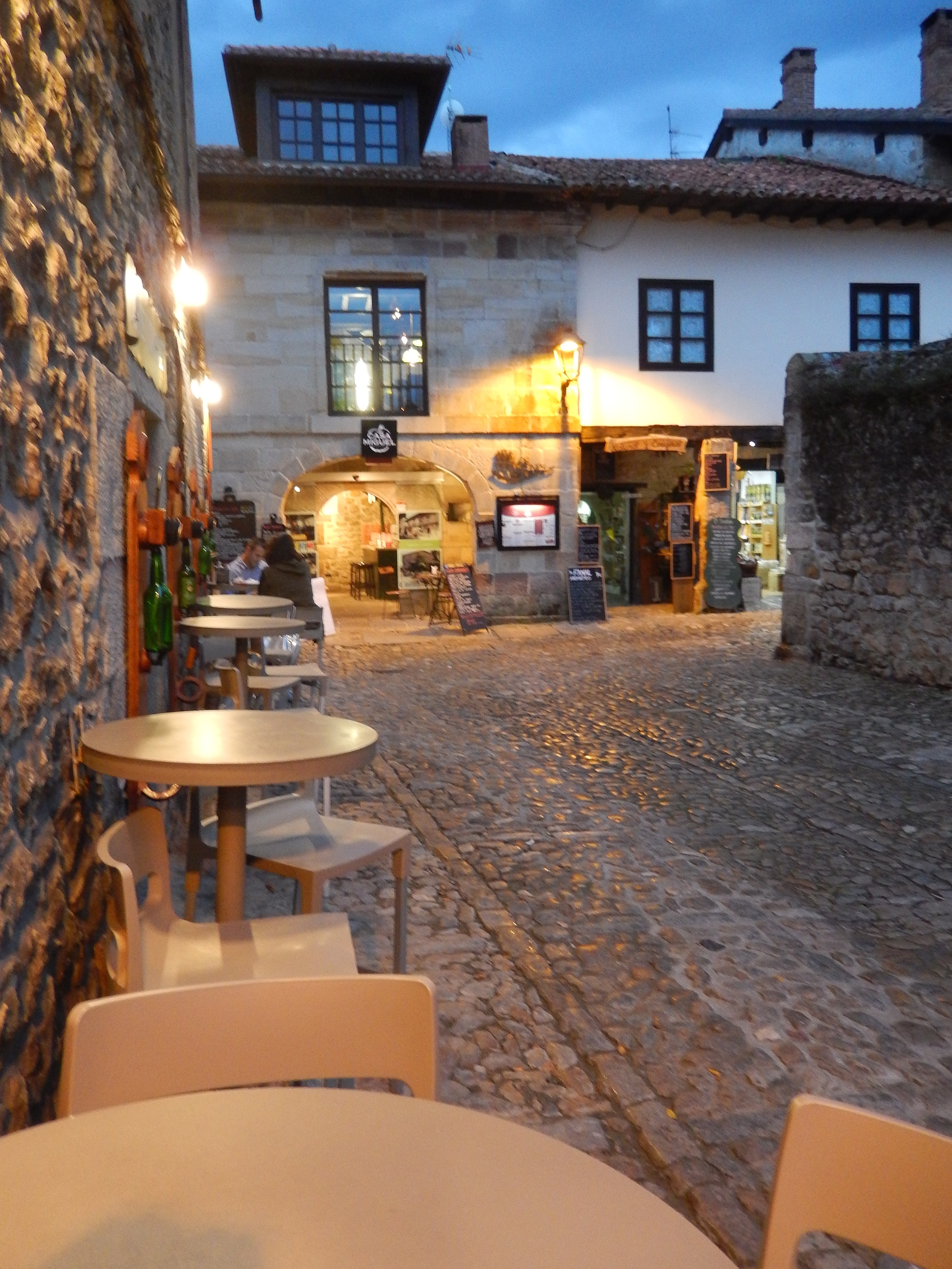
the outdoor tables of the cider house
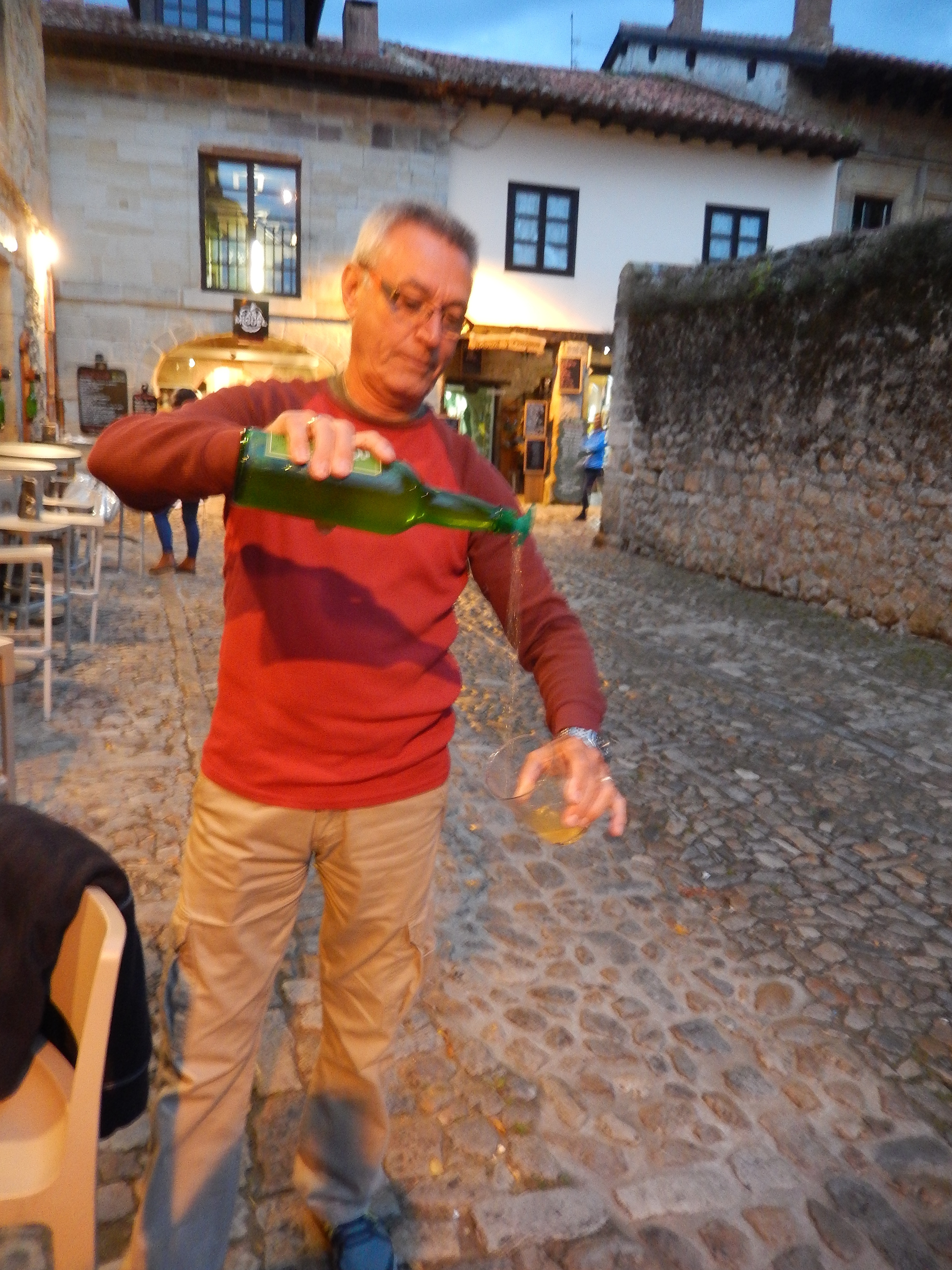
Julio demonstrates the way to pour this cider. It’s fizzy, needs to be aerated, and you only take a bit, which you need to drink in a shot.
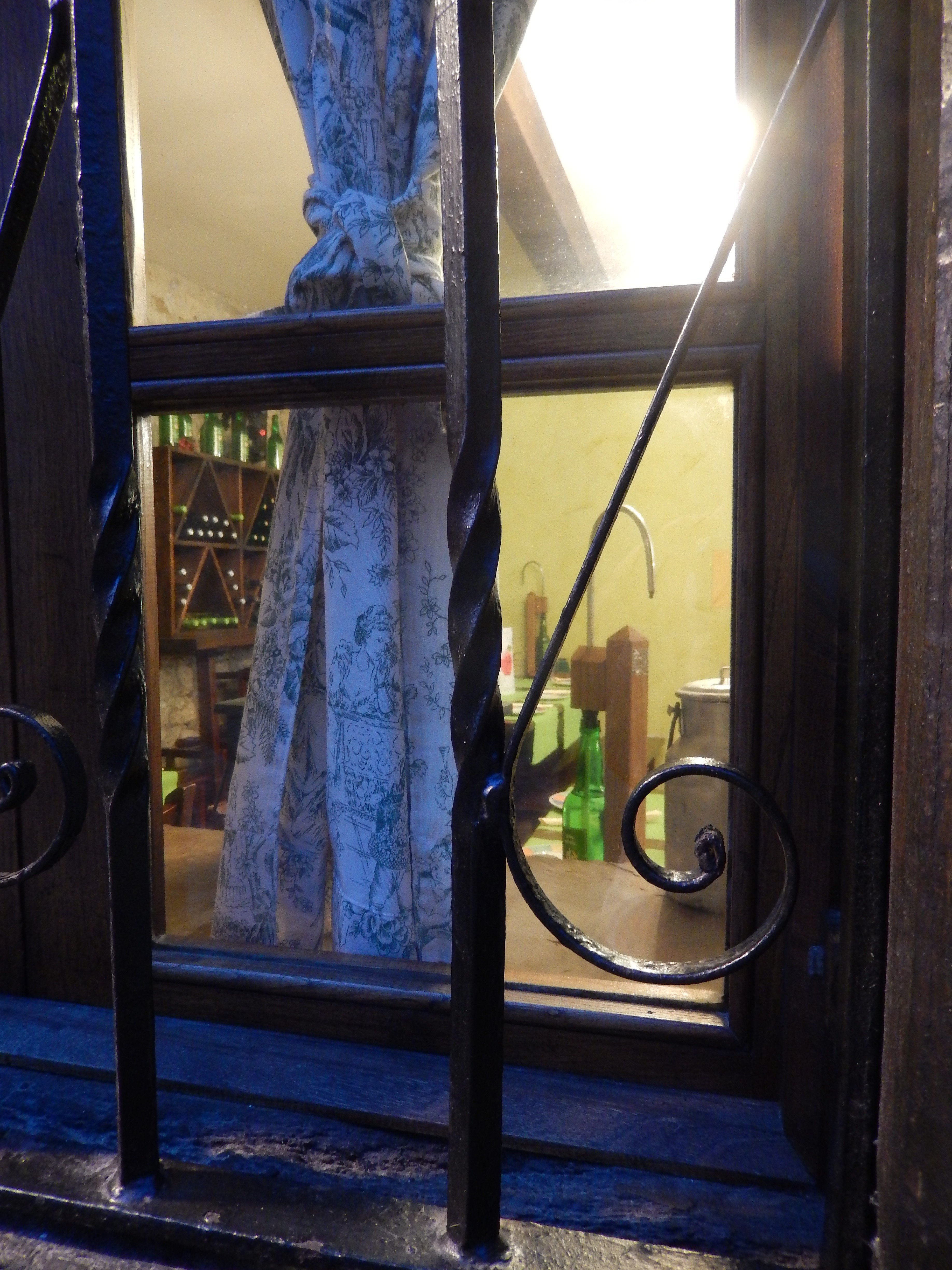
outside the cider house looking in
Later, we found an excellent restaurant for dinner; walked a little more after dinner; slept like logs.
The next day we went to the Museum of Altamira. In approximately 1868, the Cave of Altamira was first discovered, and in it, rock art paintings from the Upper Palaeolithic age, between 14,000 & 18,000 years ago, as well as some lesser paintings from as long ago as 35,000 years ago! “When the discovery was first made public in 1880, it led to a bitter public controversy between experts which continued into the early 20th century, since many did not believe prehistoric man had the intellectual capacity to produce any kind of artistic expression. The acknowledgment of the authenticity of the paintings, which finally came in 1902, changed the perception of prehistoric human beings.” (Wikipedia) The caves are now a UNESCO World Heritage Site, and practically impossible to visit, as it is necessary to preserve them. However, there is a very worthwhile museum, with an exact replica of the cave and its art, as well as exhibits about prehistoric man. You can’t take pictures, but if it interests you, definitely check out the website. We were glad we went.
From here we drove a short distance to a small town called Comillas. We were in search of an Antoni Gaudi home, but first, from a bit of a distance, saw the former home of the Comillas Pontifical University (which has since moved to Madrid), a beautiful building…
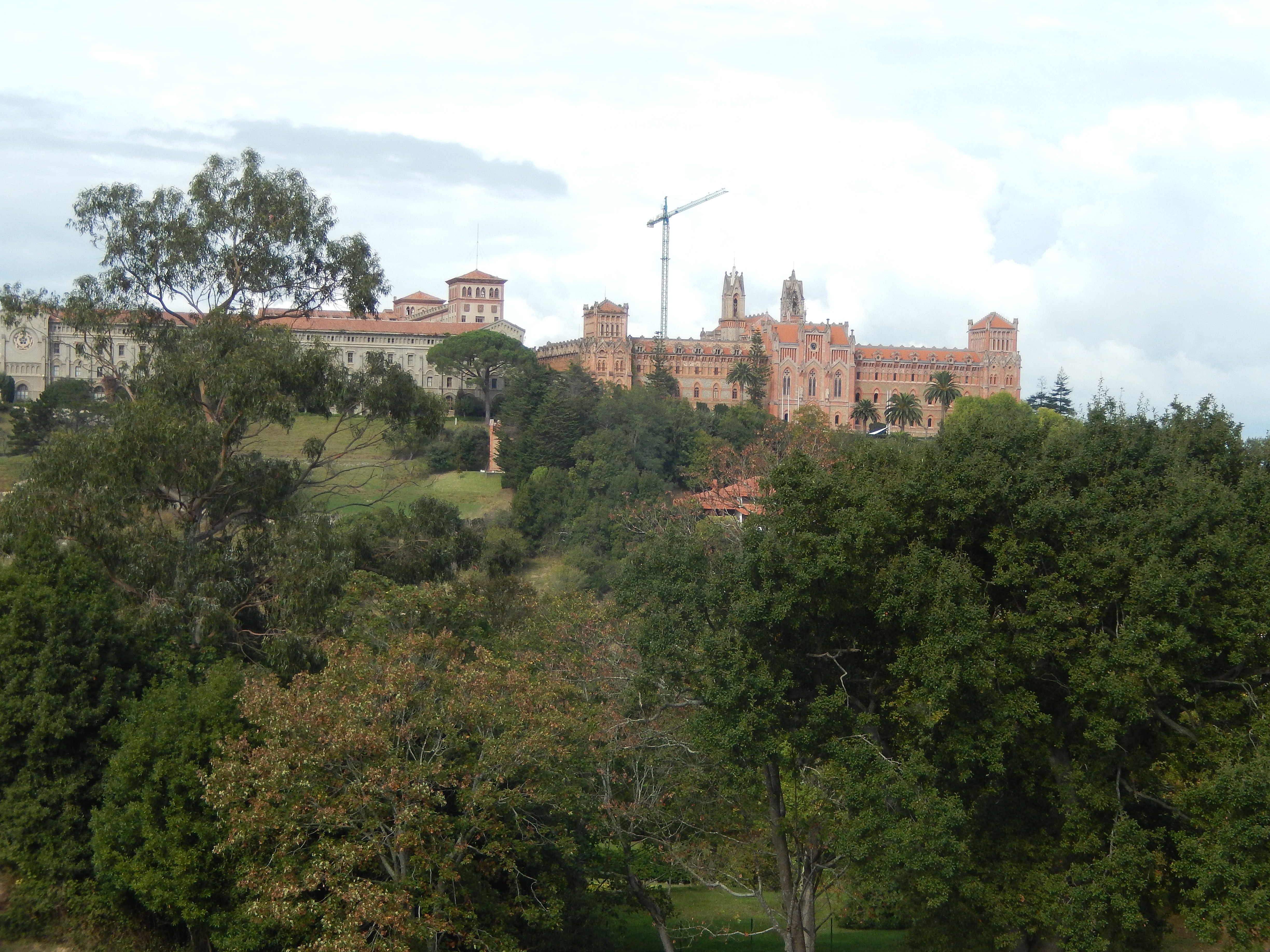
Comillas Pontifical University
It took a bit of meandering, but we finally found our way to the Palace of Sobrellano and the Chapel-Pantheon of the Palace, home of the Marquises of Comillas..
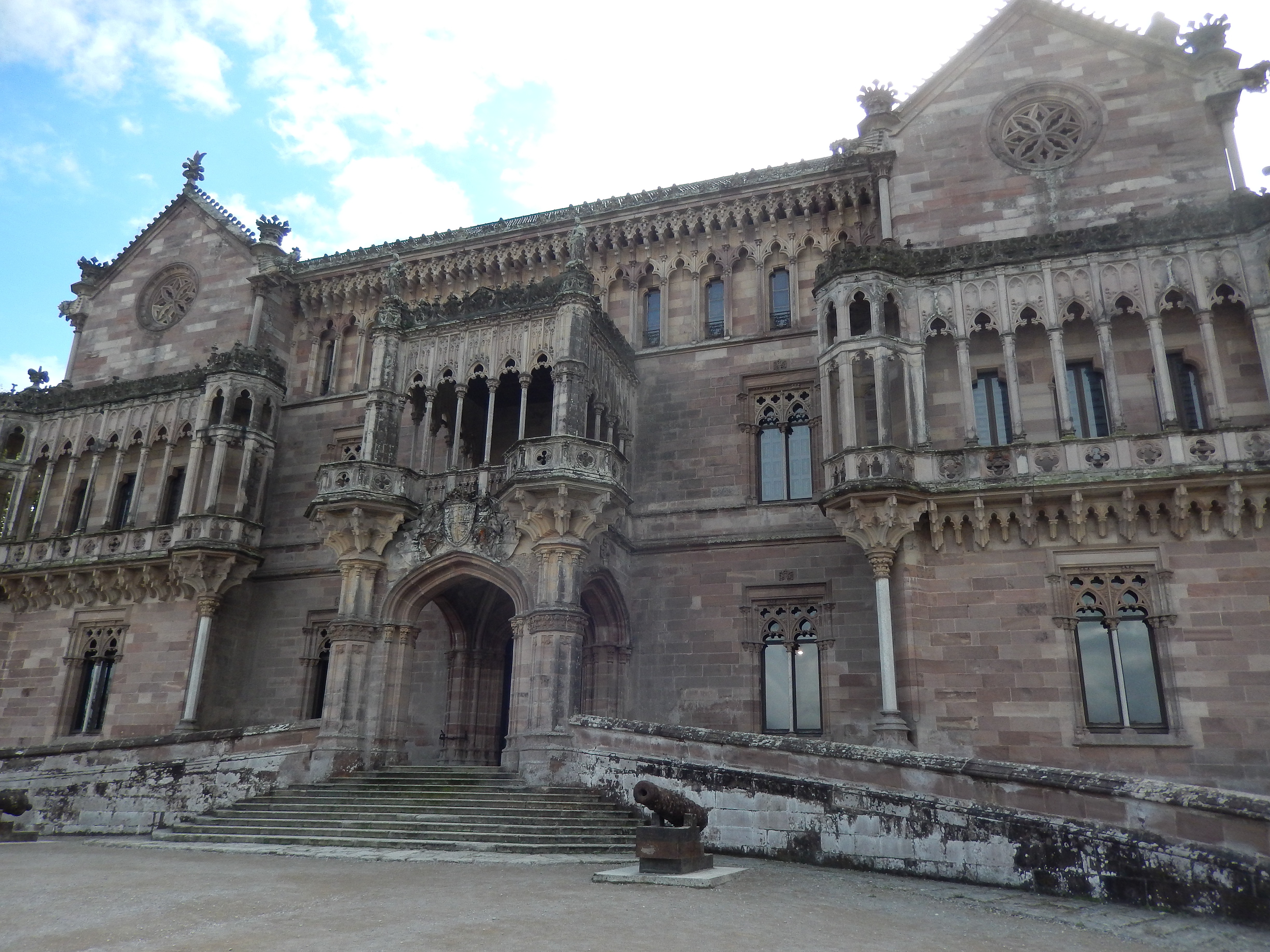
Sobrellano Palace
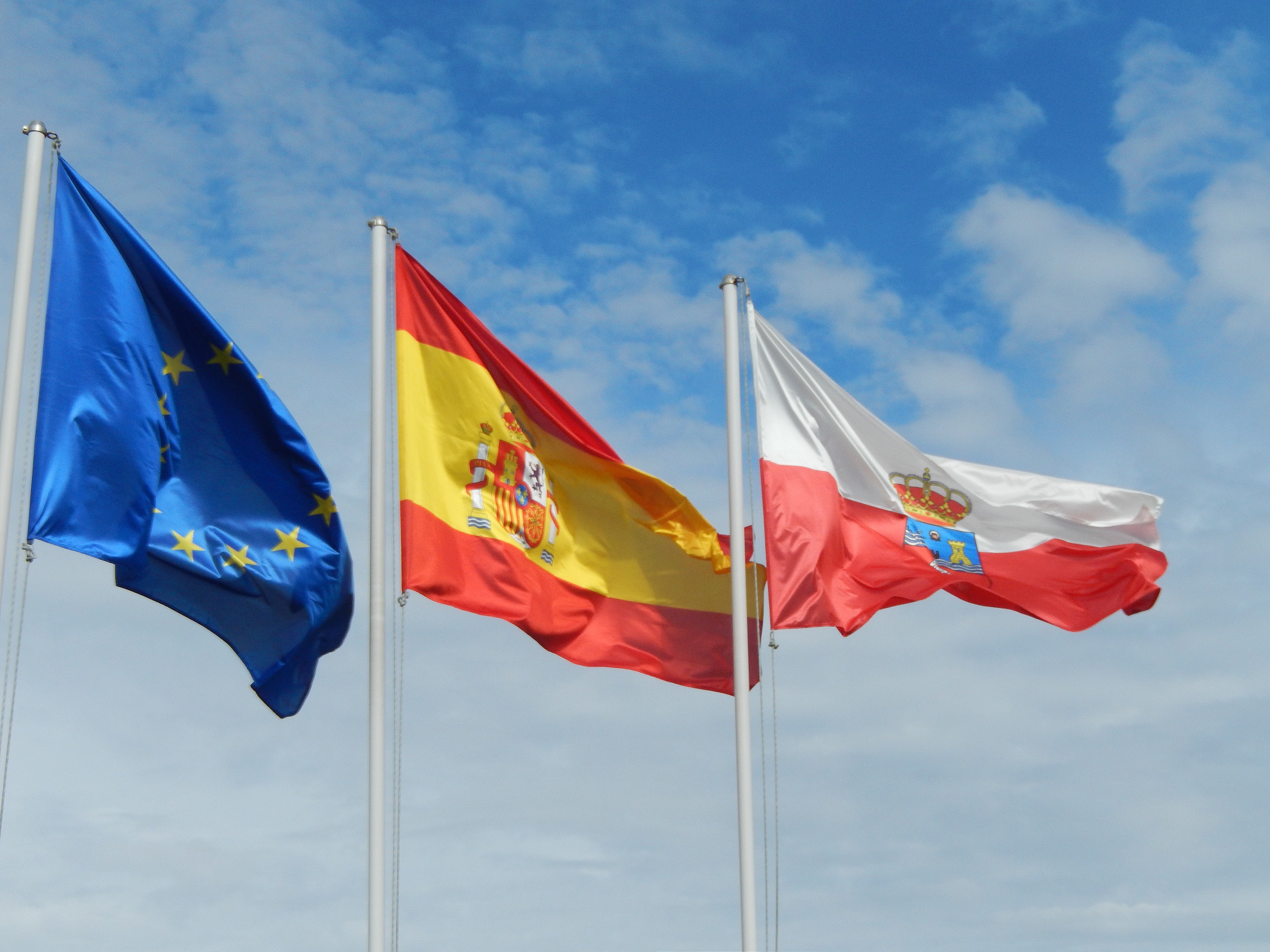
flags flying in front of the palace
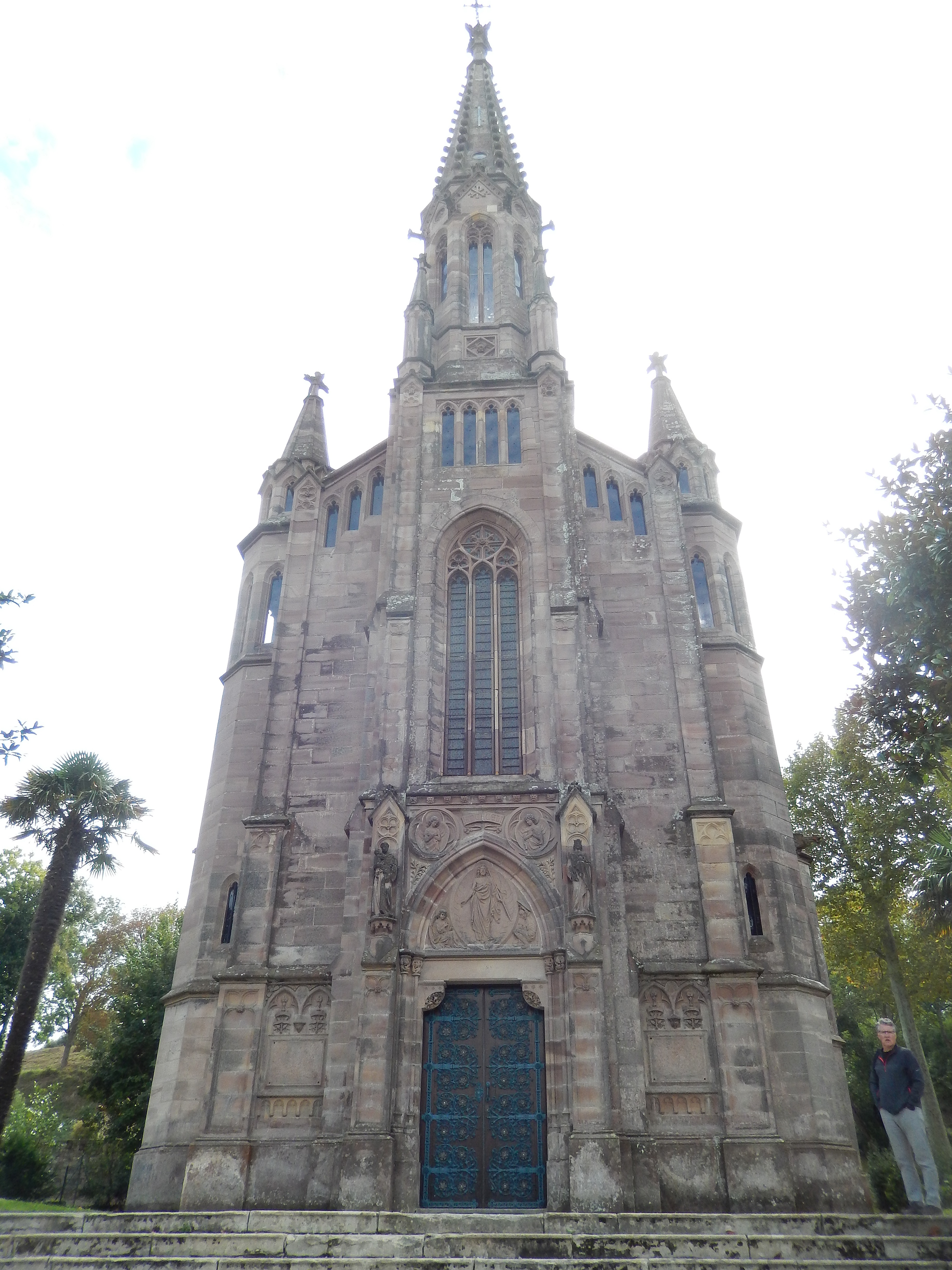
Sobrellano Palace Chapel
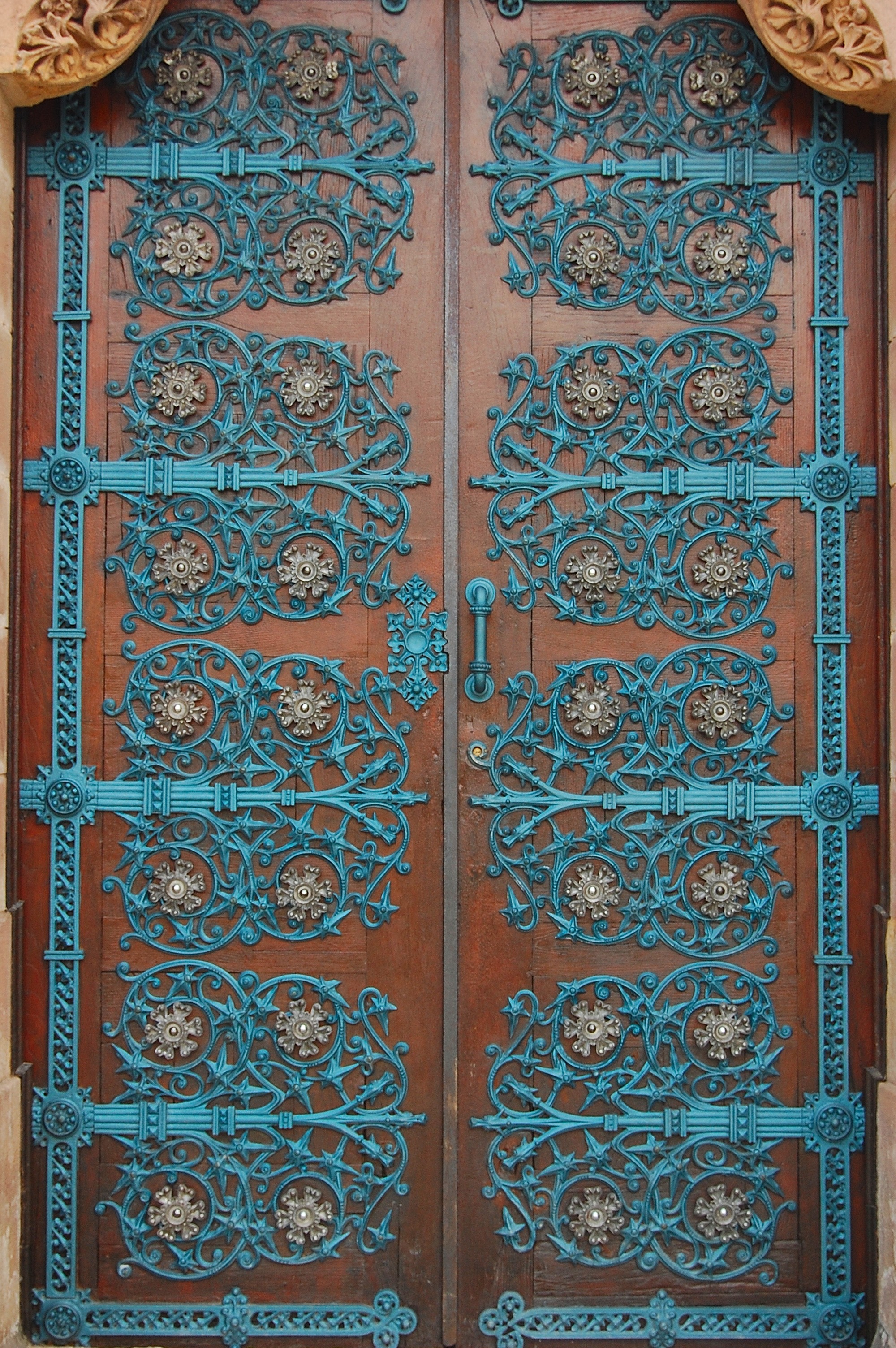
chapel door detail
..and, next door, El Capricho, the Antoni Gaudí building, unique, as always…
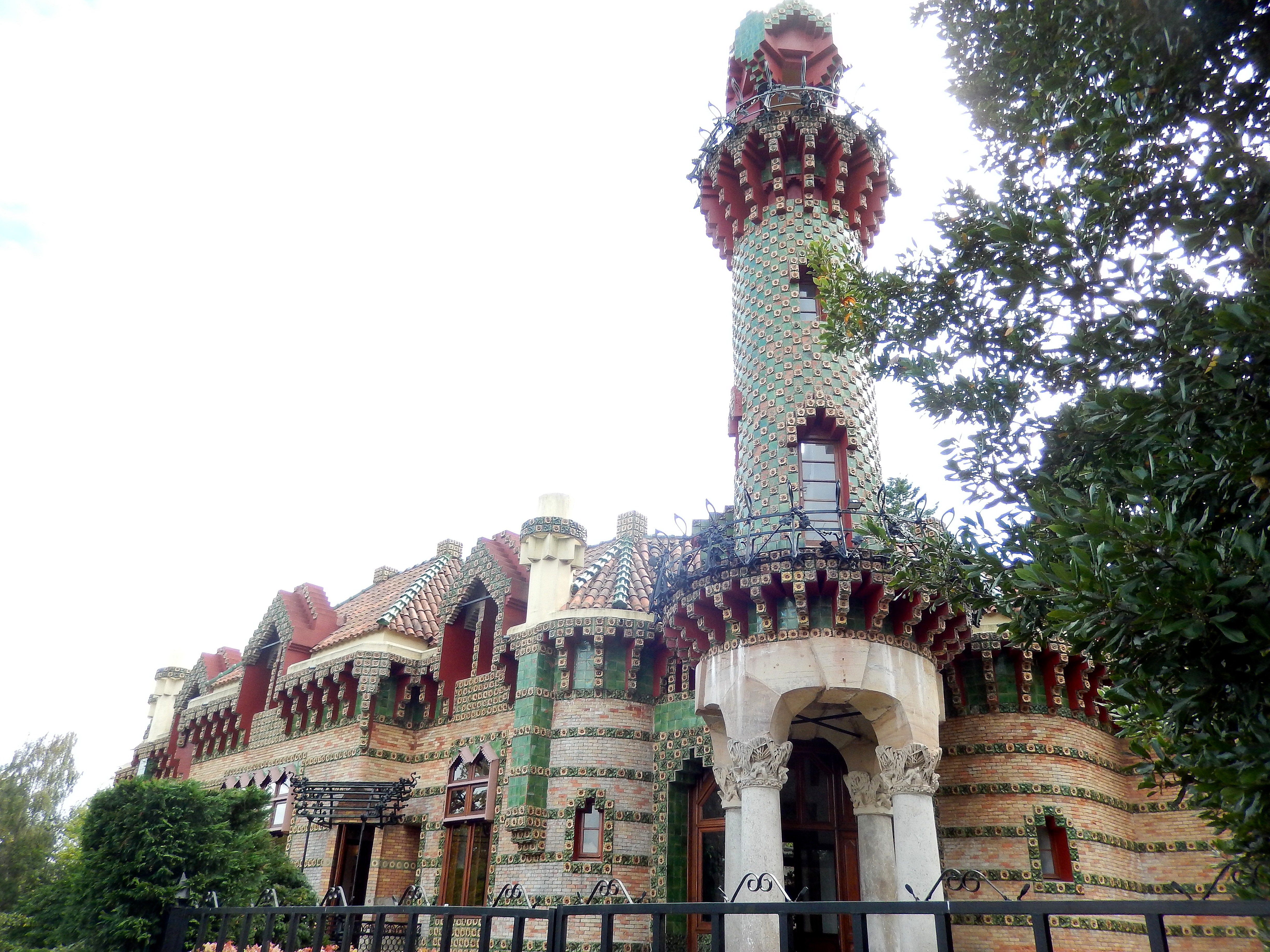
El Capricho
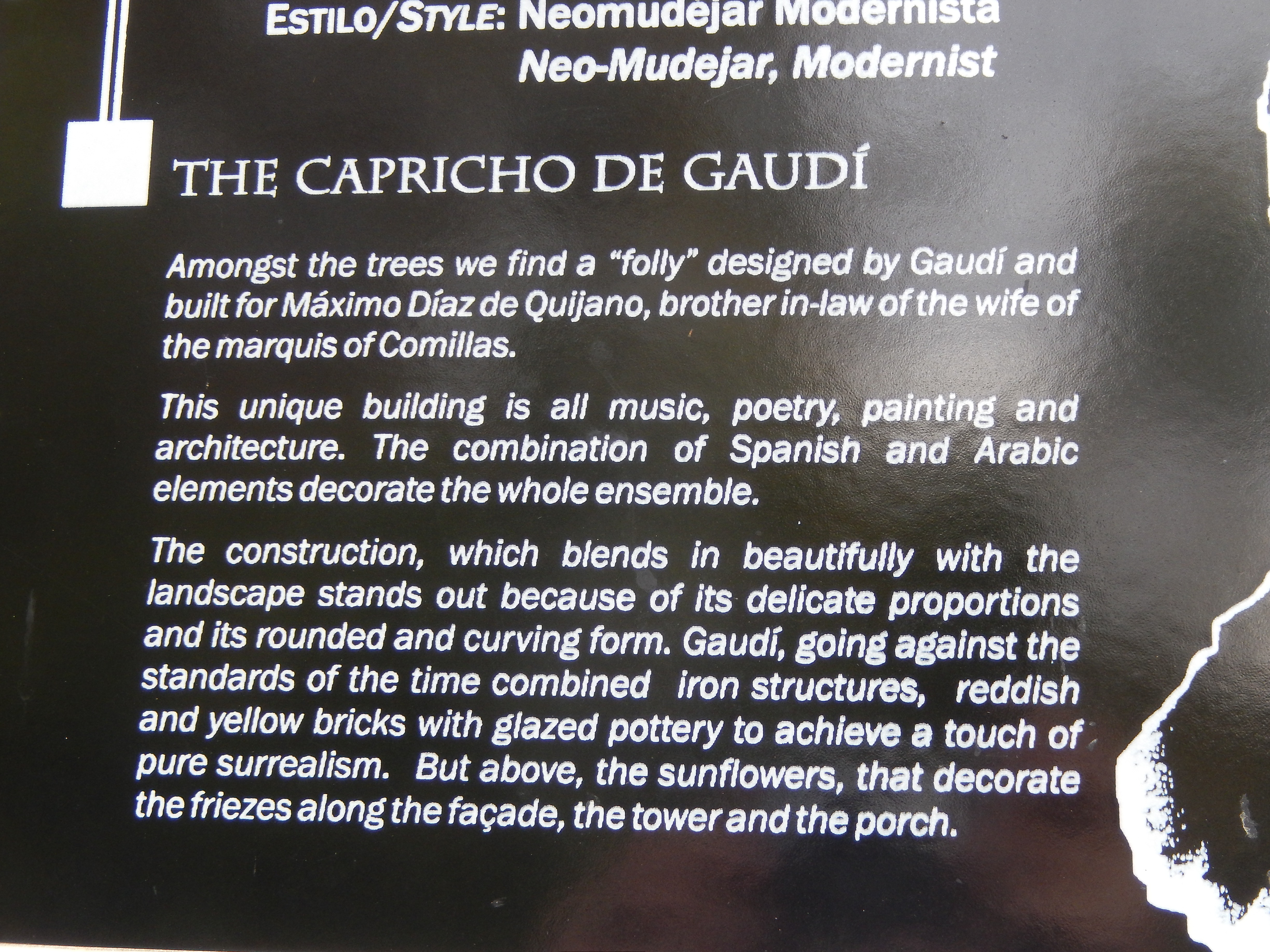
house information
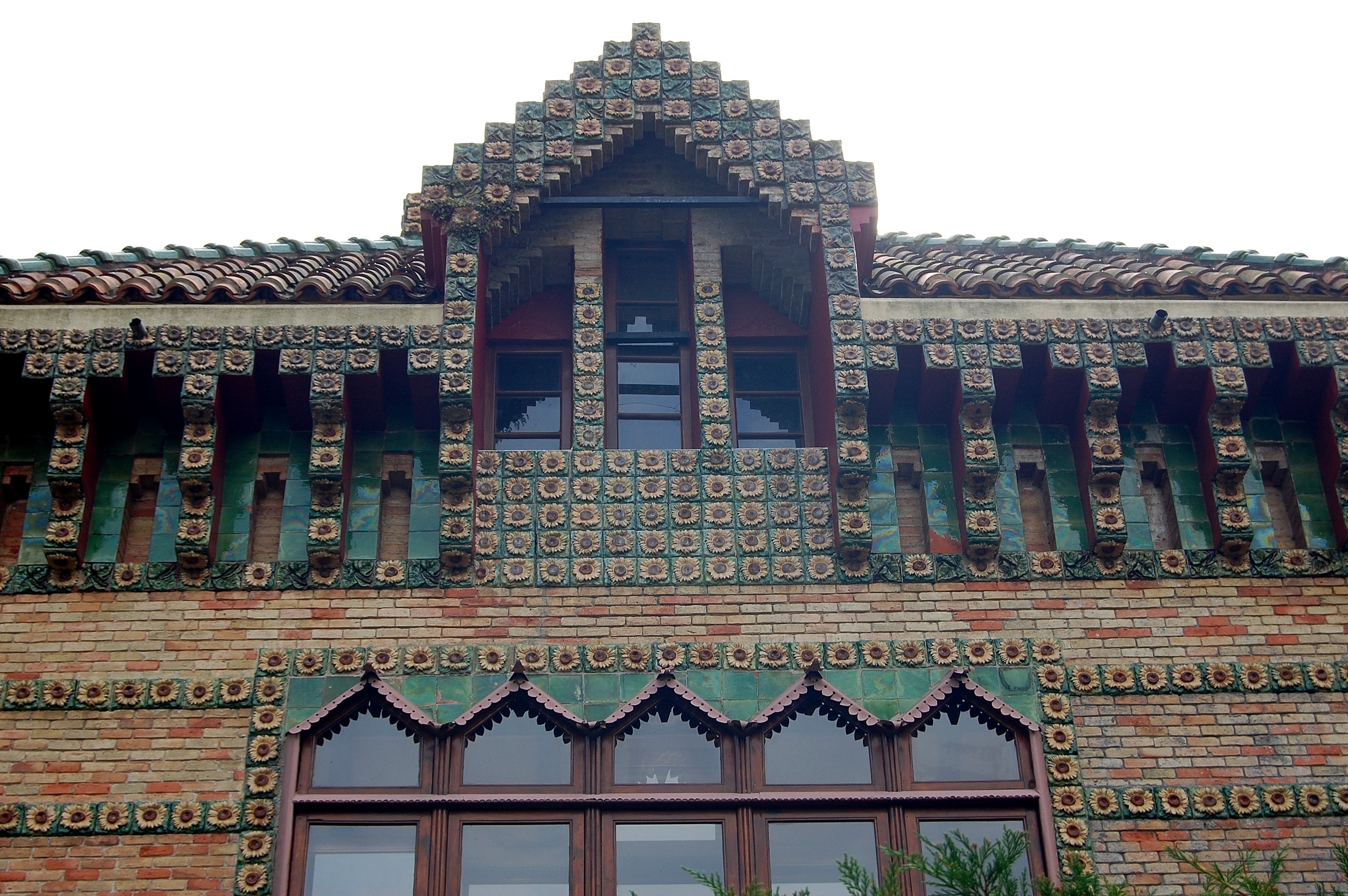
house detail
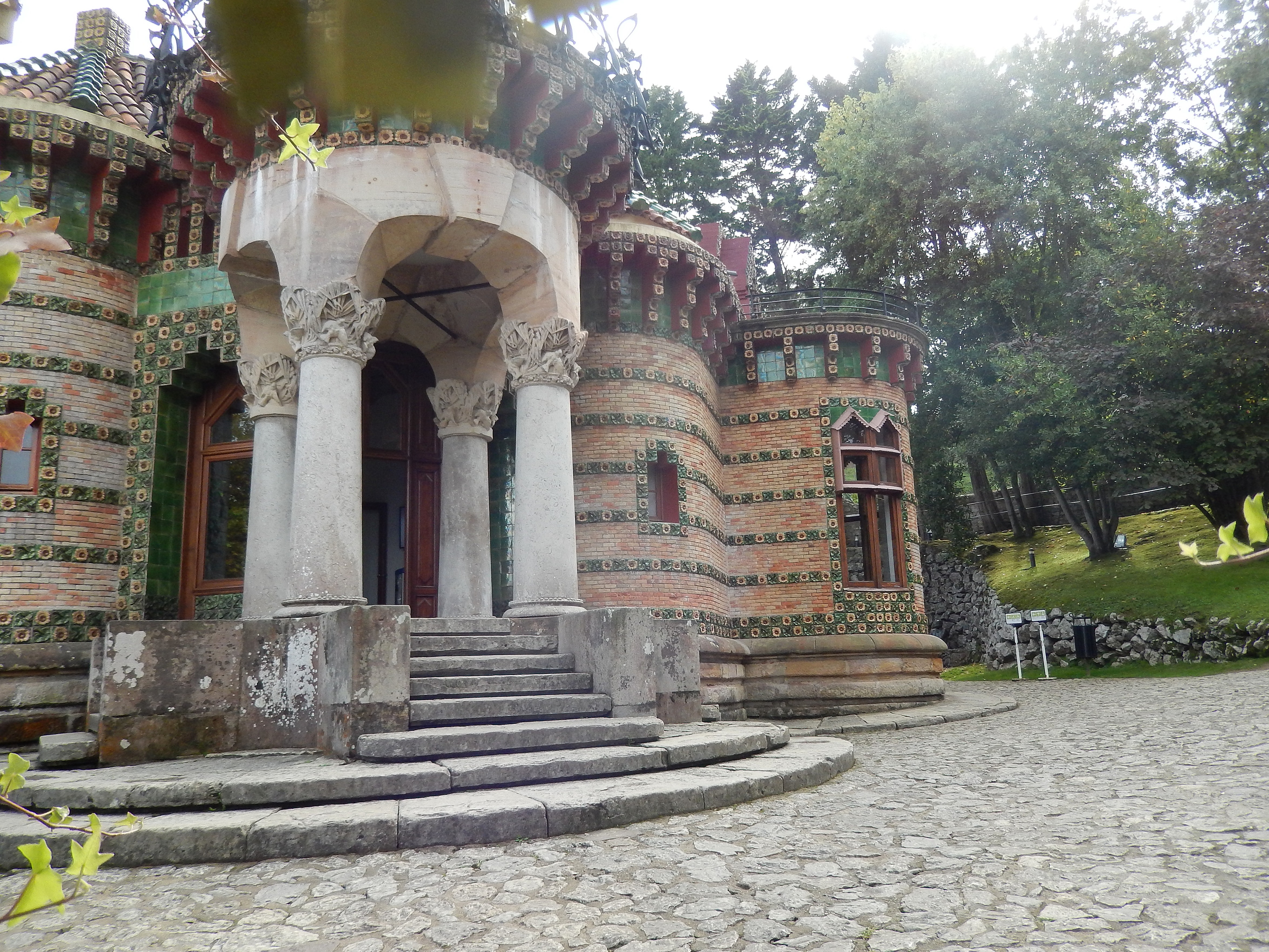
entrance
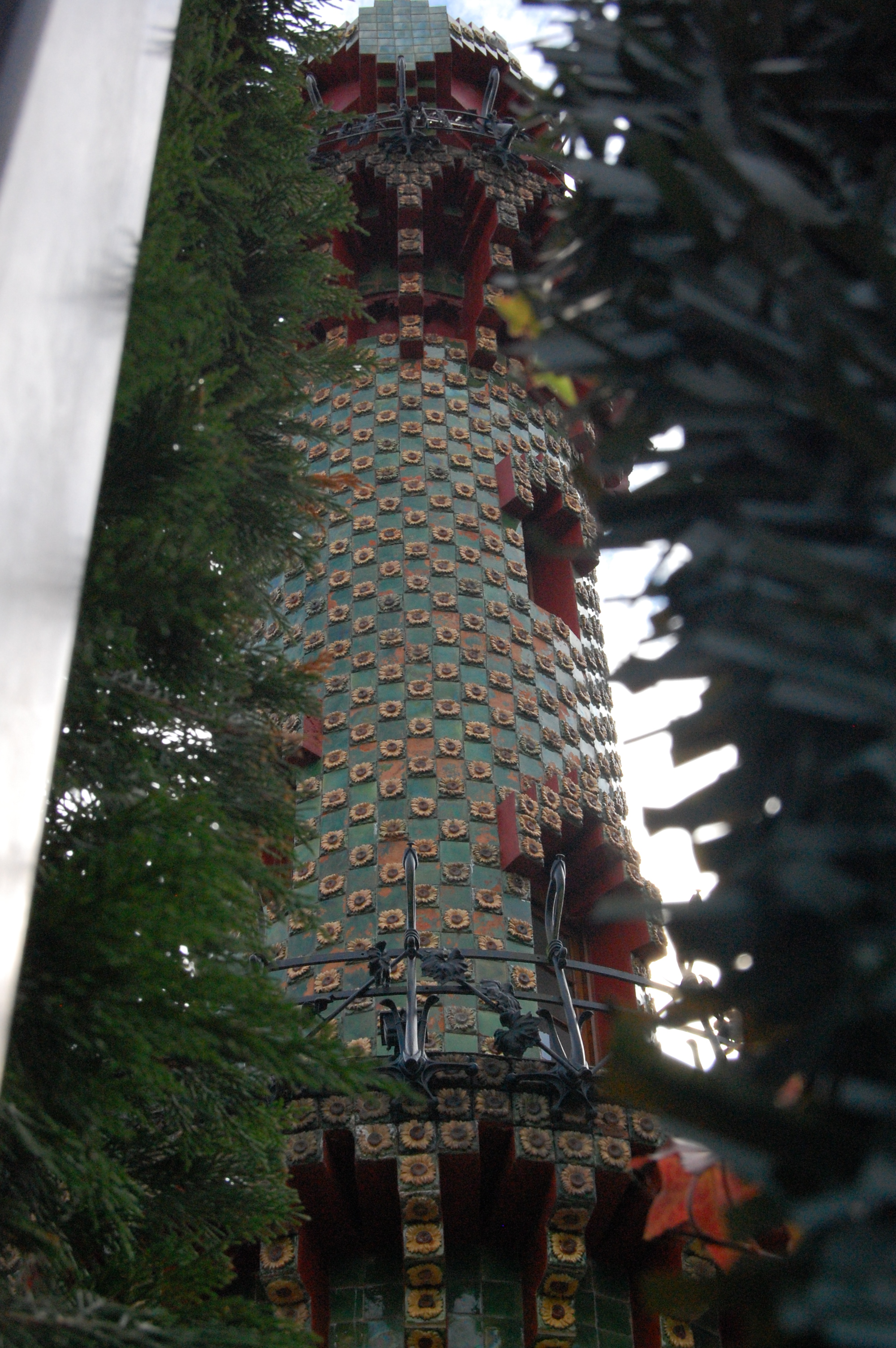
peeking at the tower
We were hungry: time to find a lunch place. We drove on to the next little town, S. Vicente de la Barquera, for lovely fresh seafood. We had to cross a really long bridge to get into town, which you can just see in the first photo..
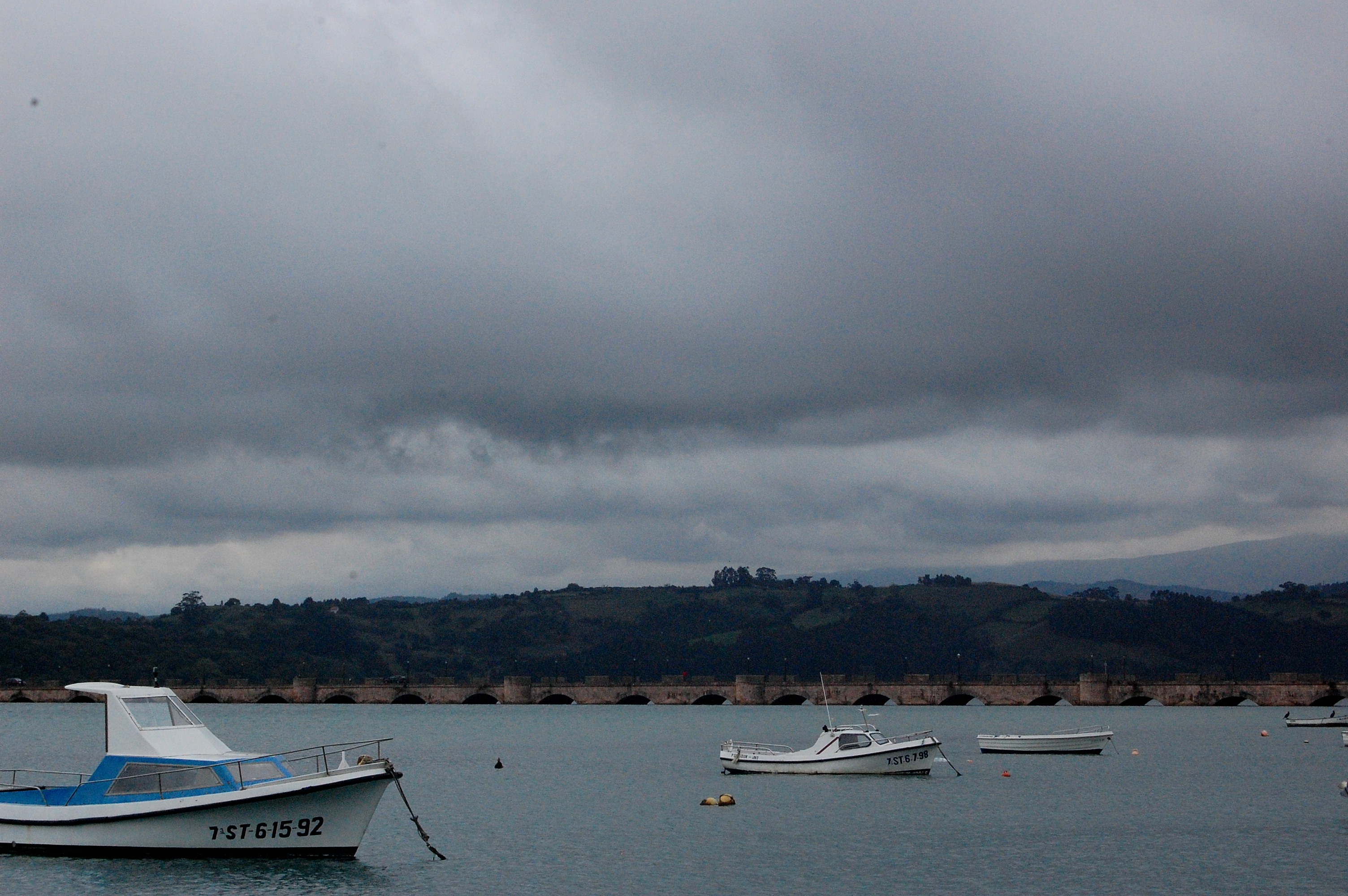
the Maza bridge to S. Vicente de la Barquera
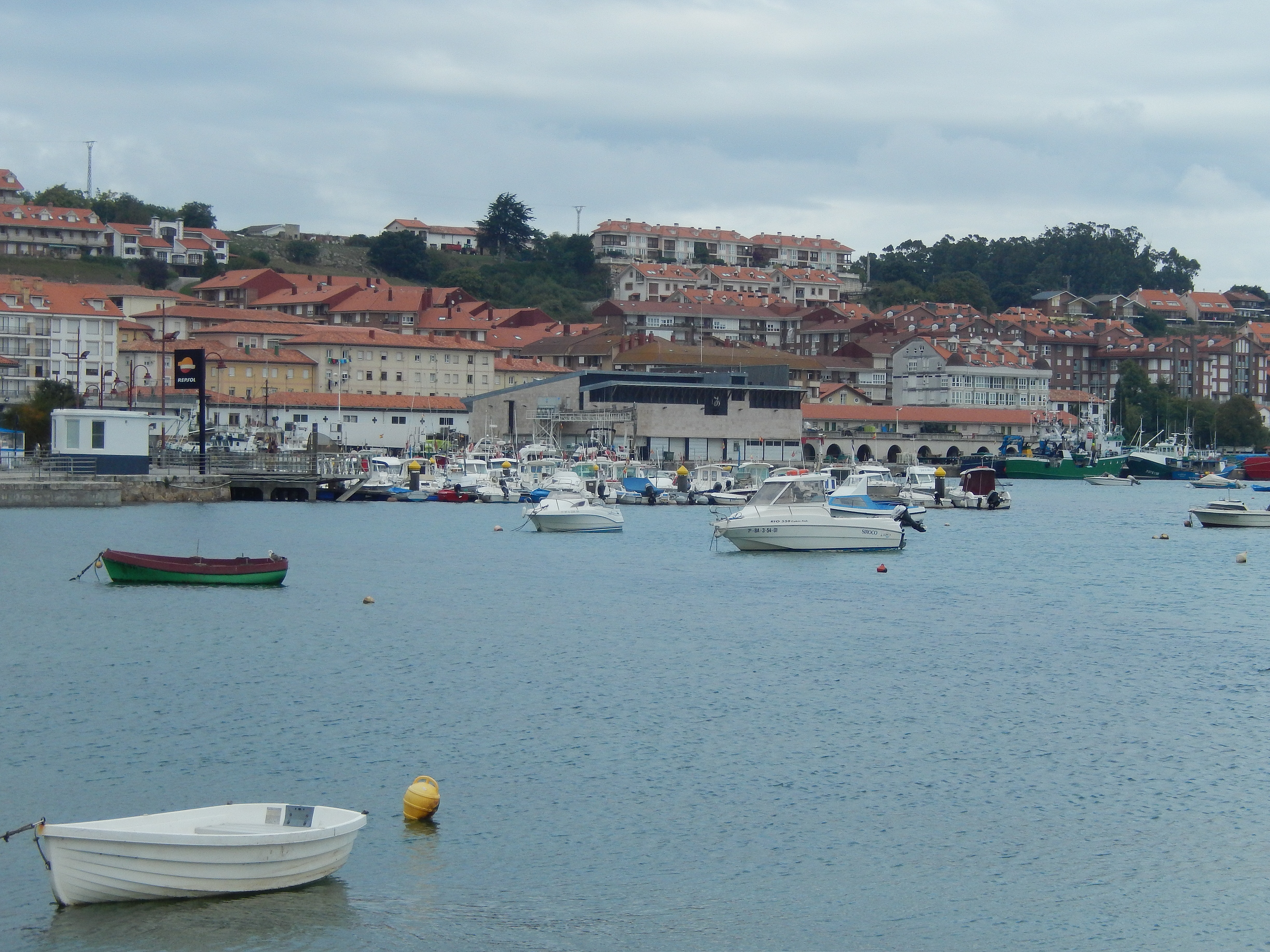
San Vicente de la Barquera harbour
We decided to carry on to the next town for coffee and dessert… Llanes is a pretty fishing port town.
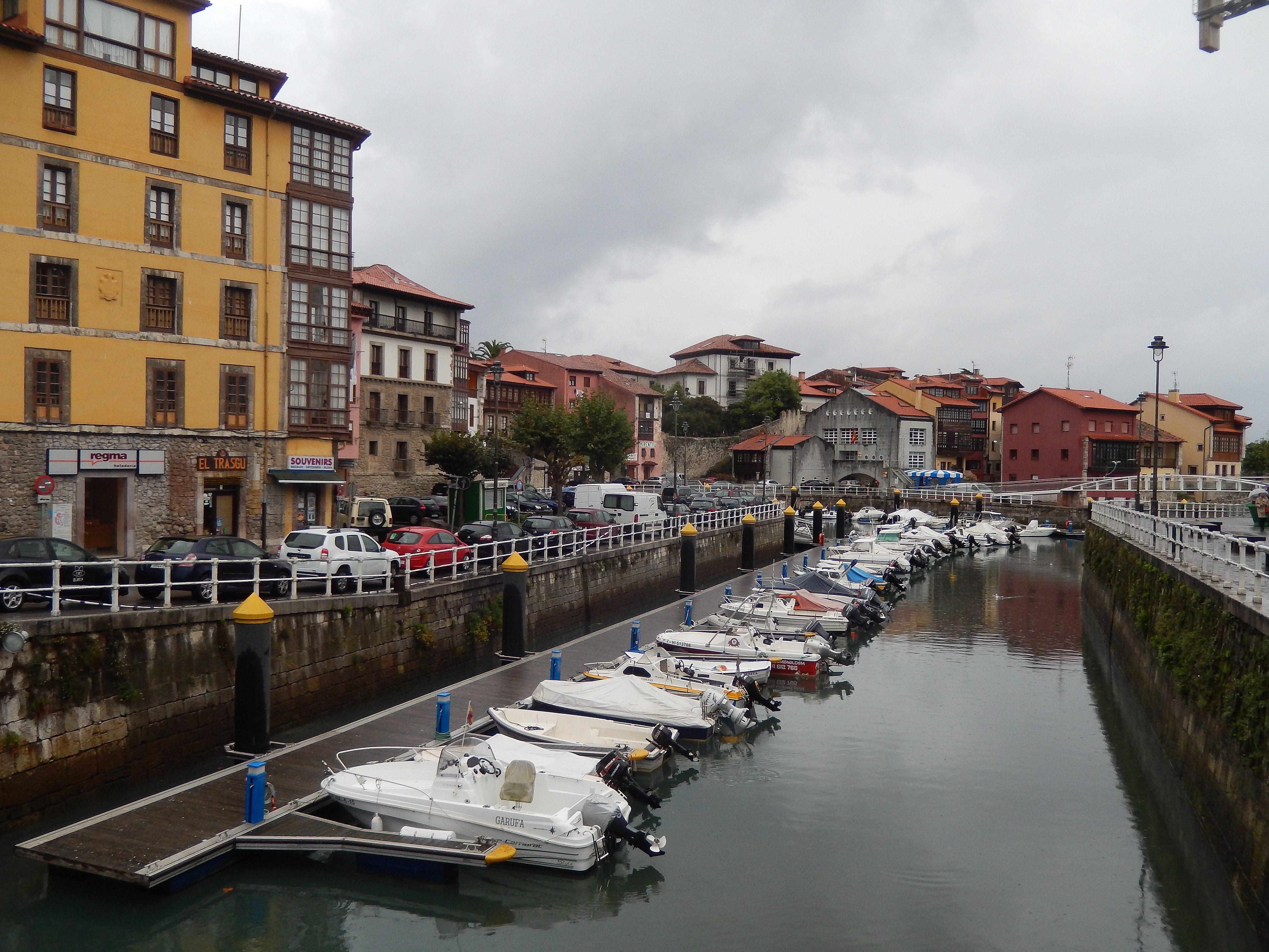
Llanes harbour
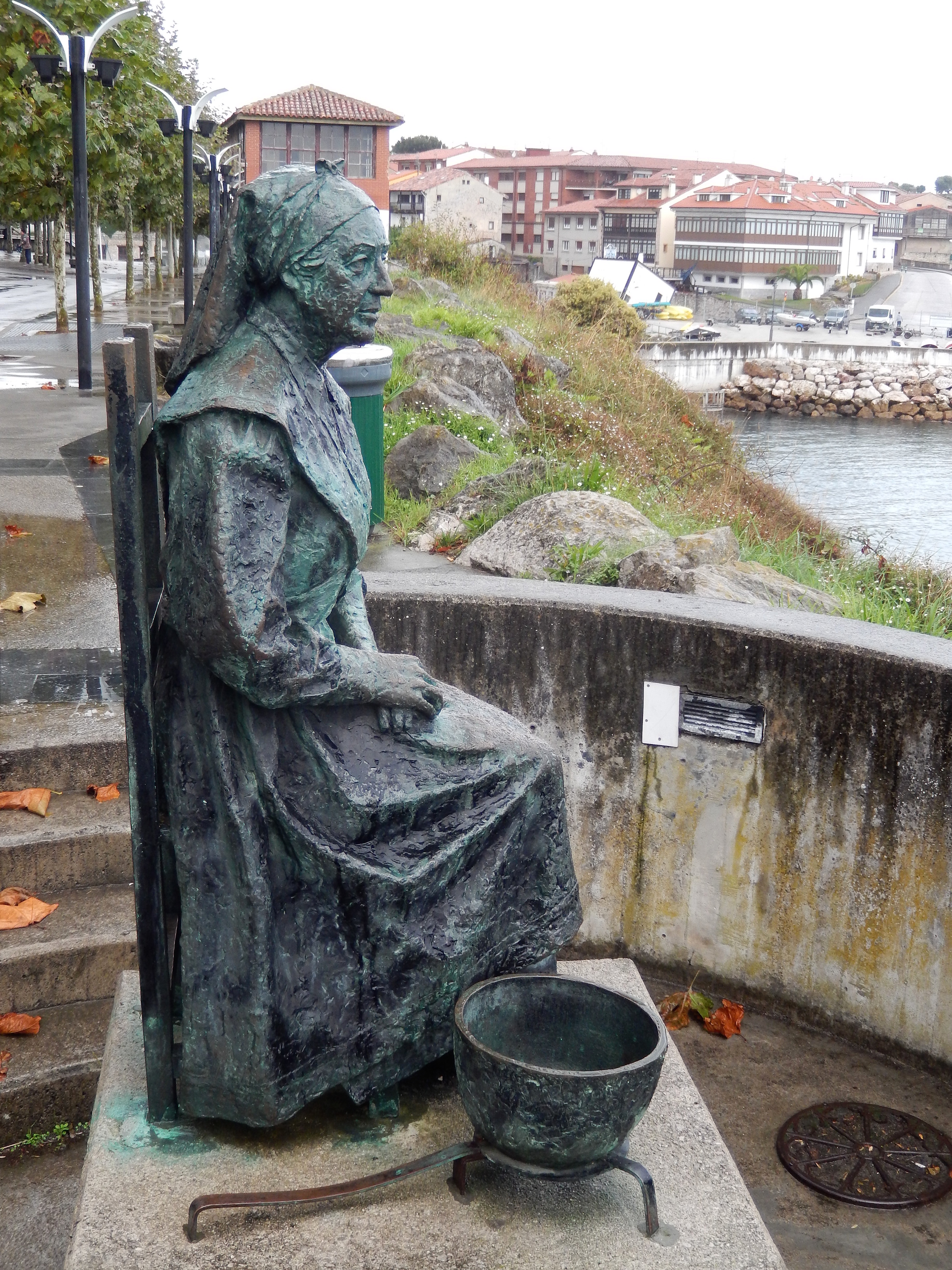
waiting for loved ones to come home from sea
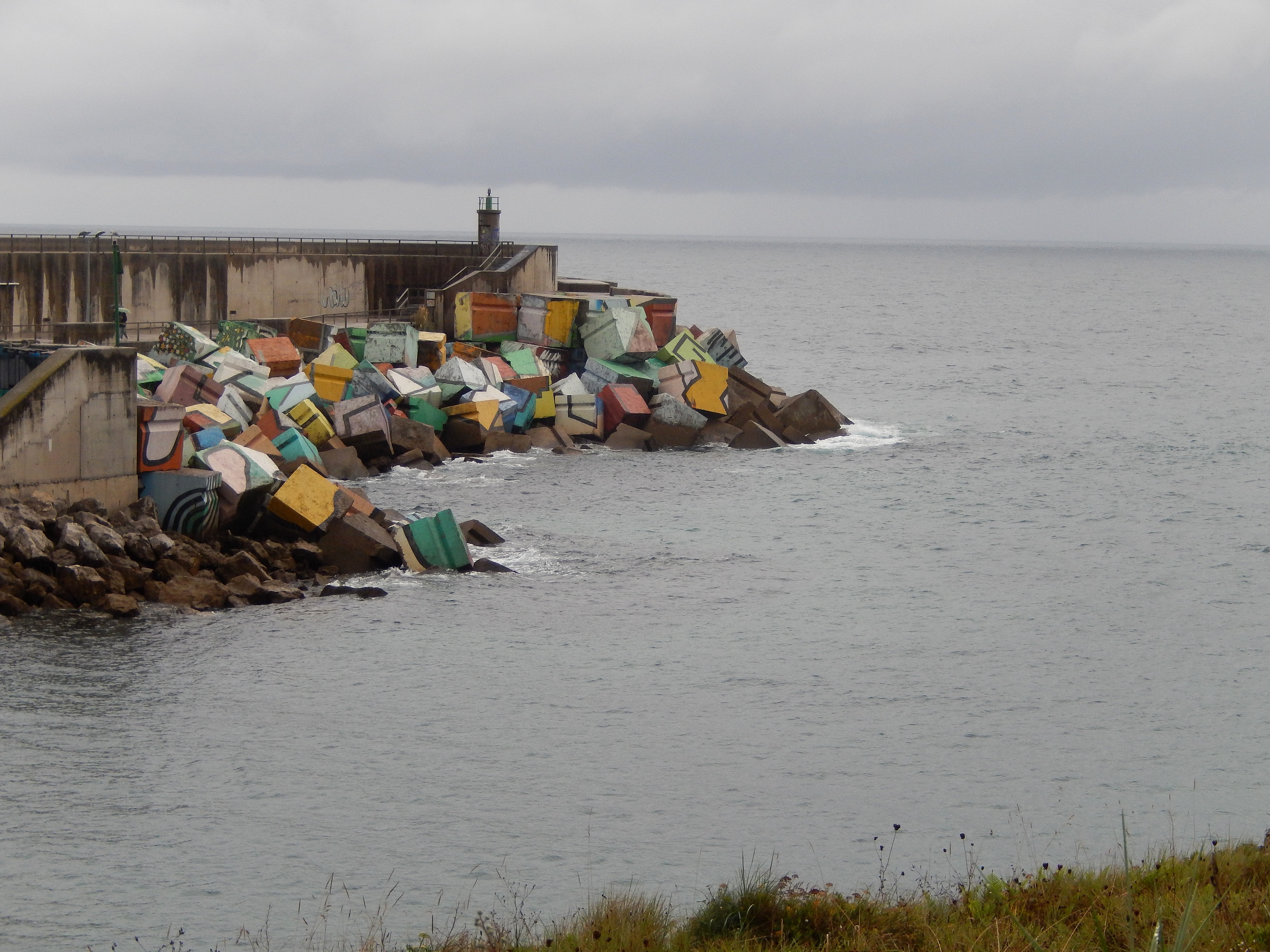
The Cubes of Memory, by Augustin Ibarrola, not just a work of art, but acting as a break-water
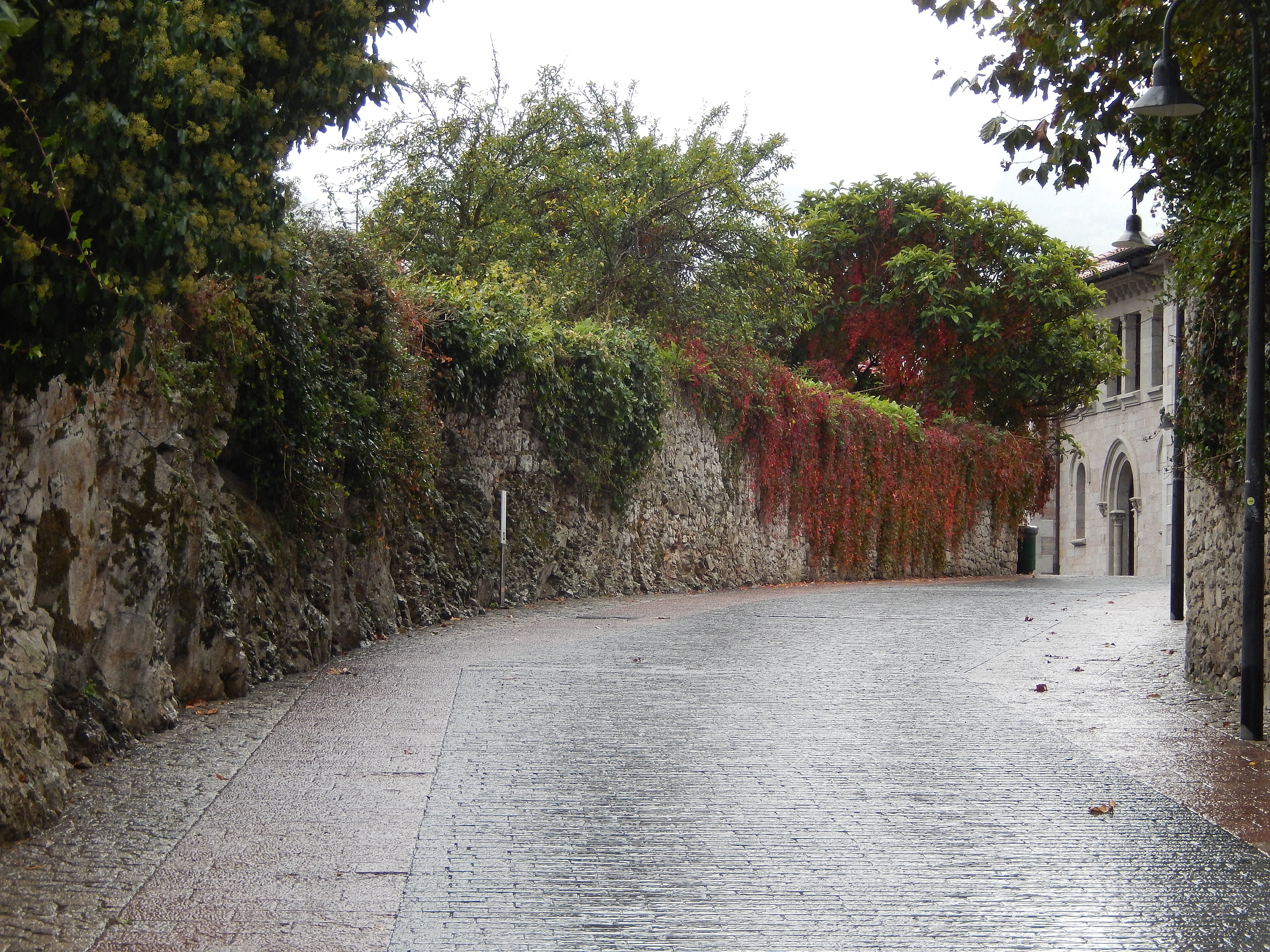
pretty street
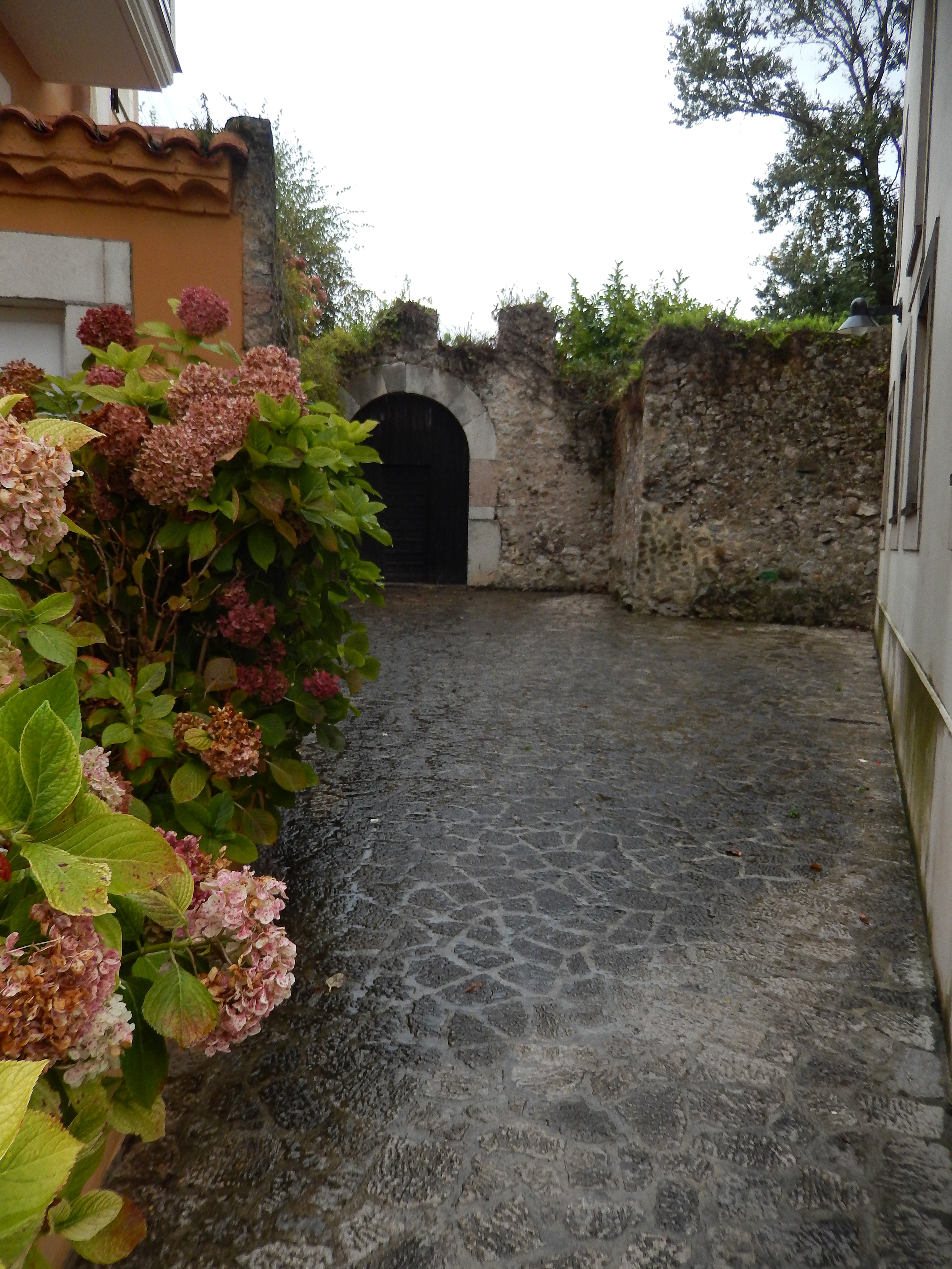
pretty courtyard
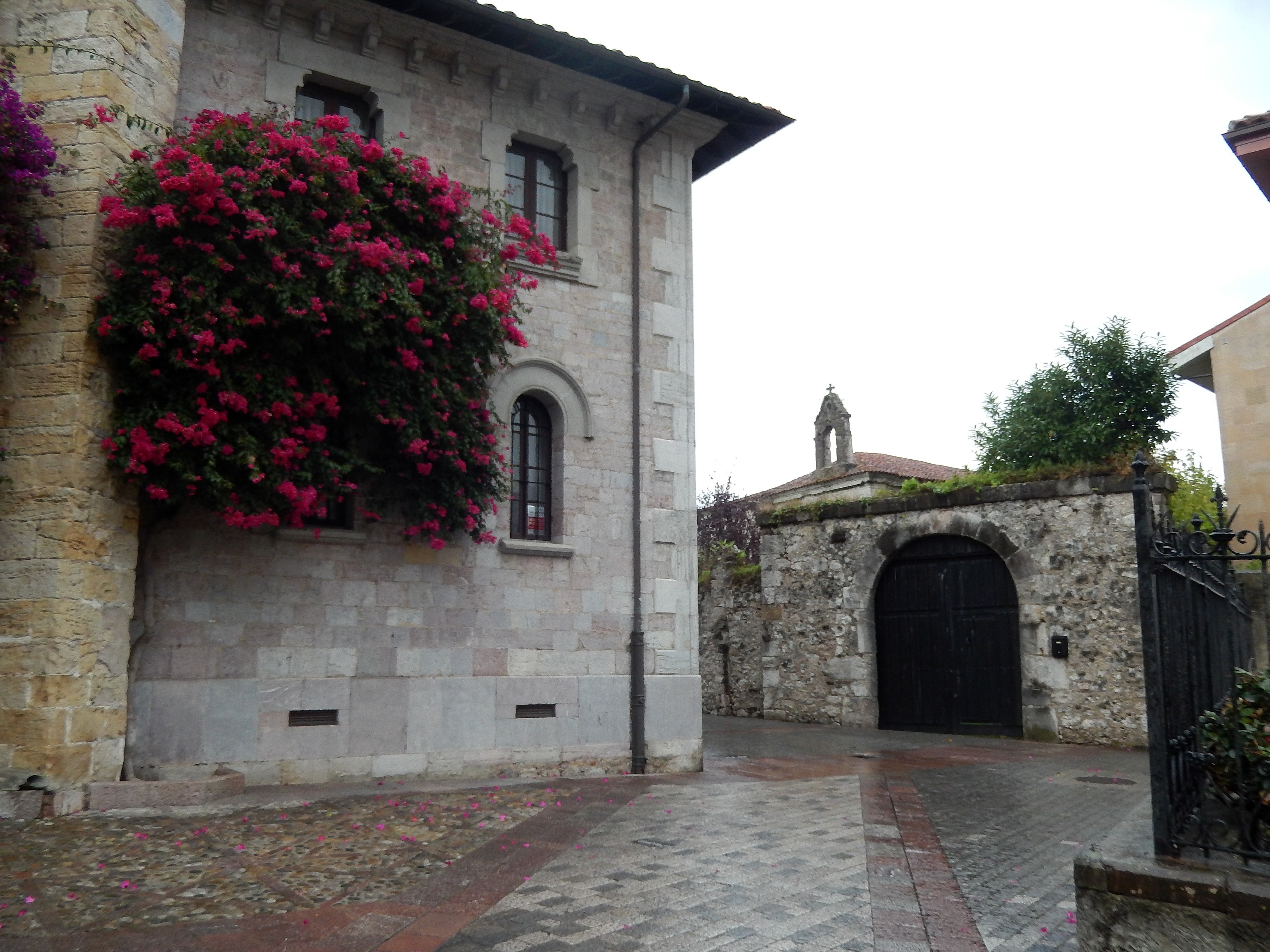
beautiful flora on the church wall
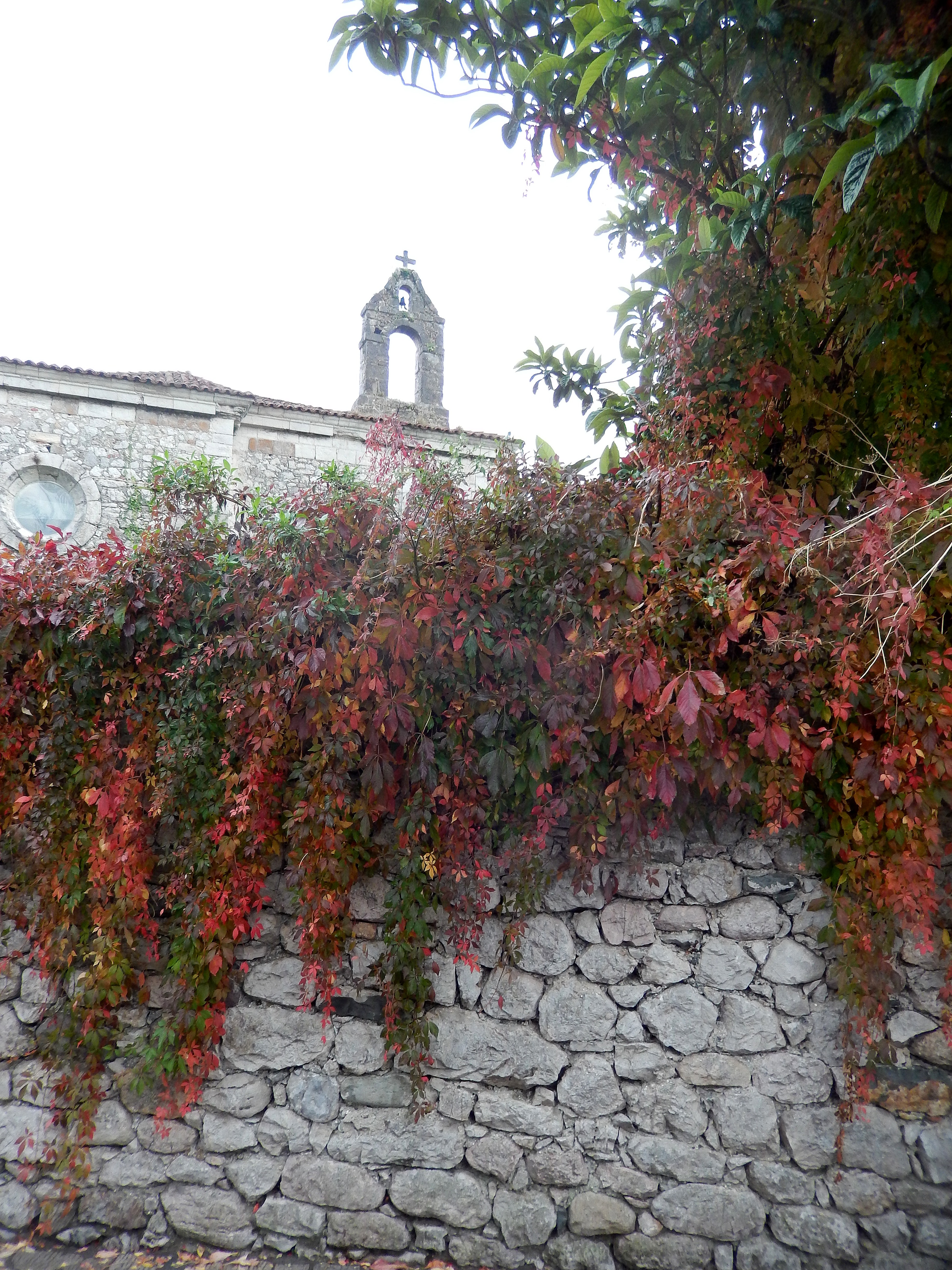
love the autumn ivy
And then, our home for two nights: Ribadesella, another pretty little seaside town, on the River Sella outlet. It had been raining off and on all day, our only day of rain for the trip, and still rainy when we checked in, so the Picos de Europa (Peaks of Europe) were obscured from view in this first picture, taken from our hotel balcony…
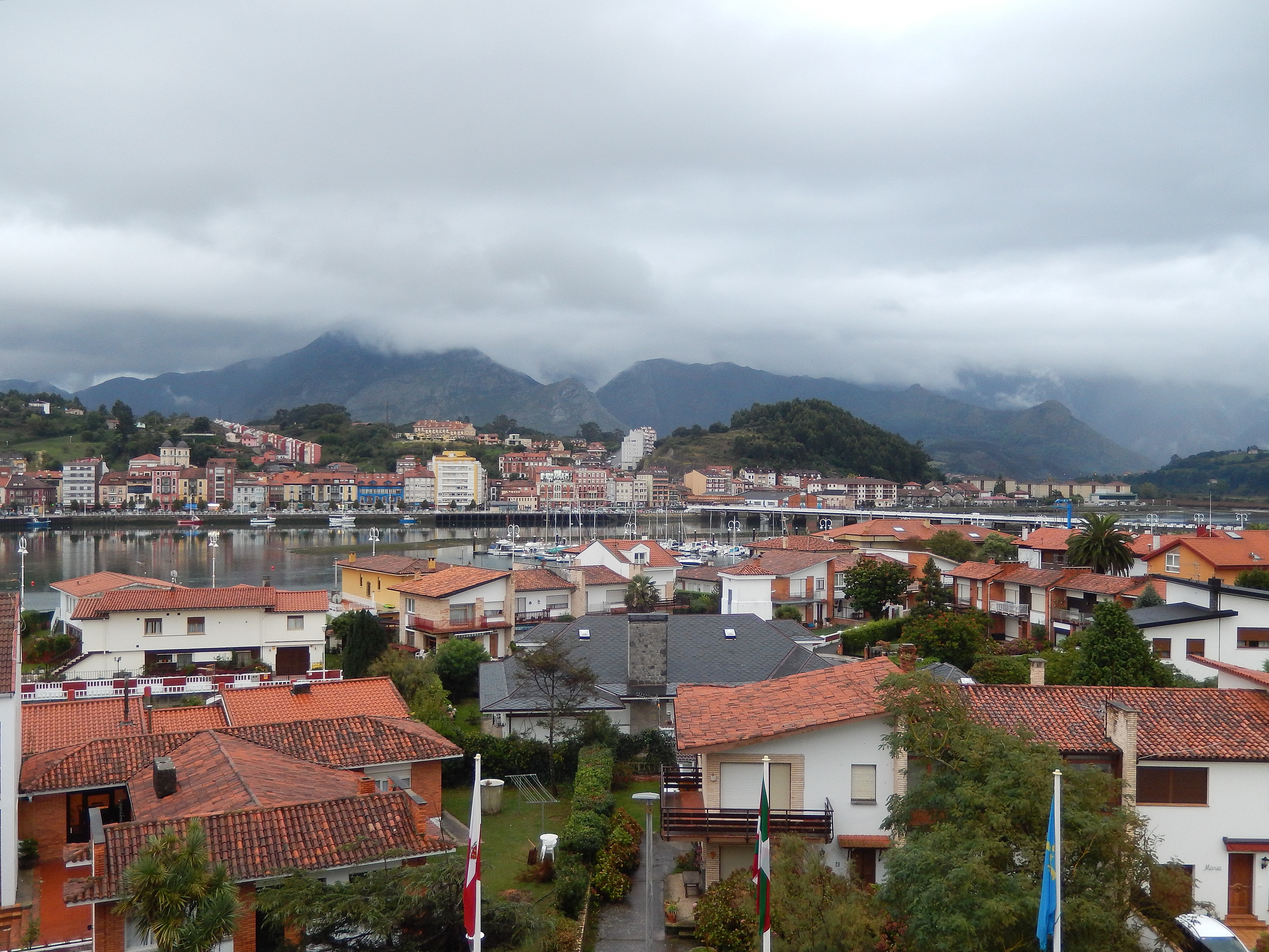
from our hotel balcony, view of Ribadesella, across the harbour, clouds over the mountains
…but, the next morning when we woke to a beautiful sunrise, they were sharp and beautiful..
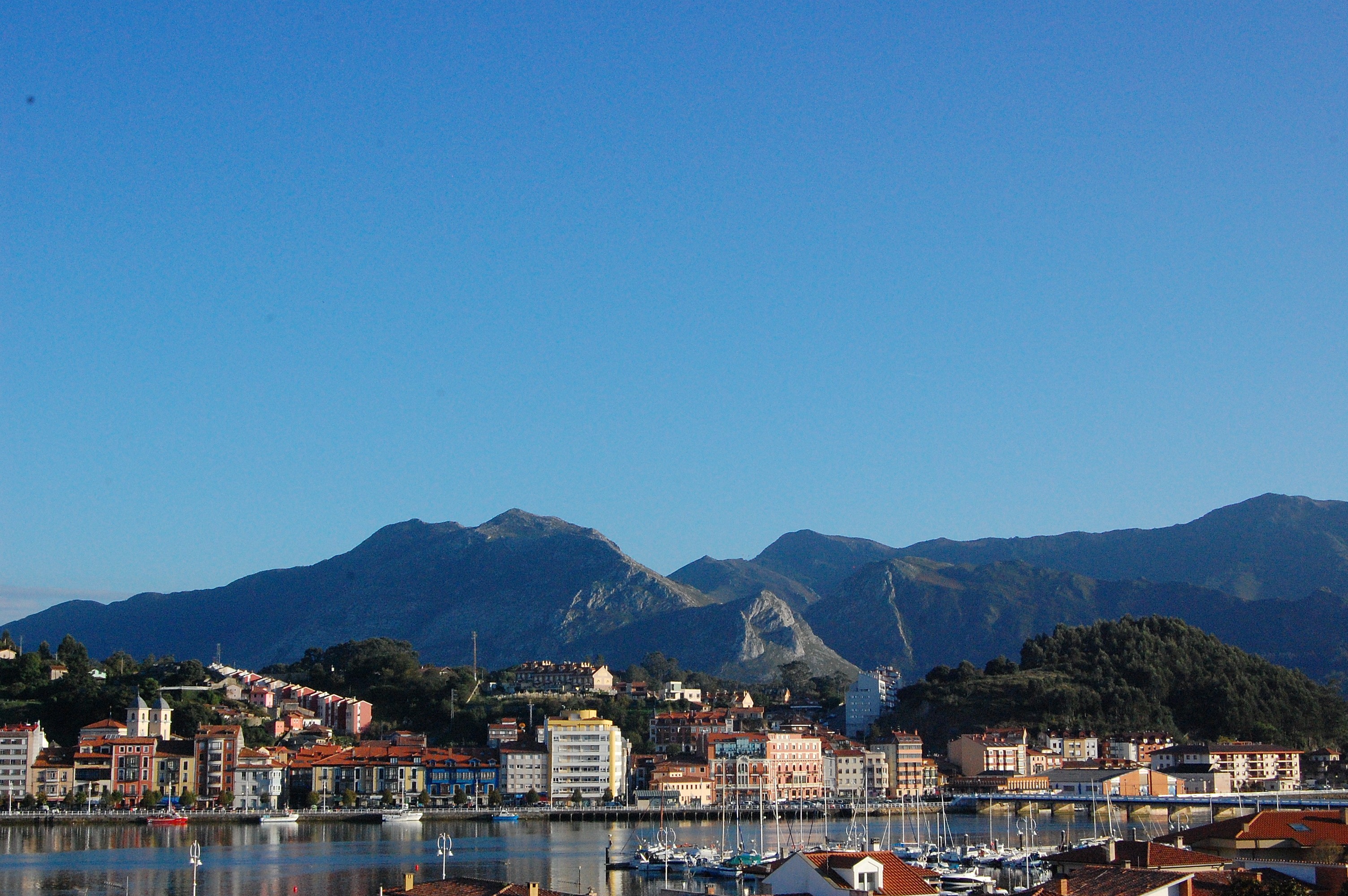
look at those peaks!
…and after breakfast, we were on our way into those peaks. But, first, we stopped in the little town of Cangas de Onís, for some tourist information about hiking, as well as to see their famous Roman Bridge, originally built by the Romans, but what we see dates from the 13th-century. From the middle arch hangs a replica of the ‘Cruz de la Victoria’ (Victory Cross), the symbol of Asturias that celebrates the victory of King Pelayo over the Arabs in Covadonga.
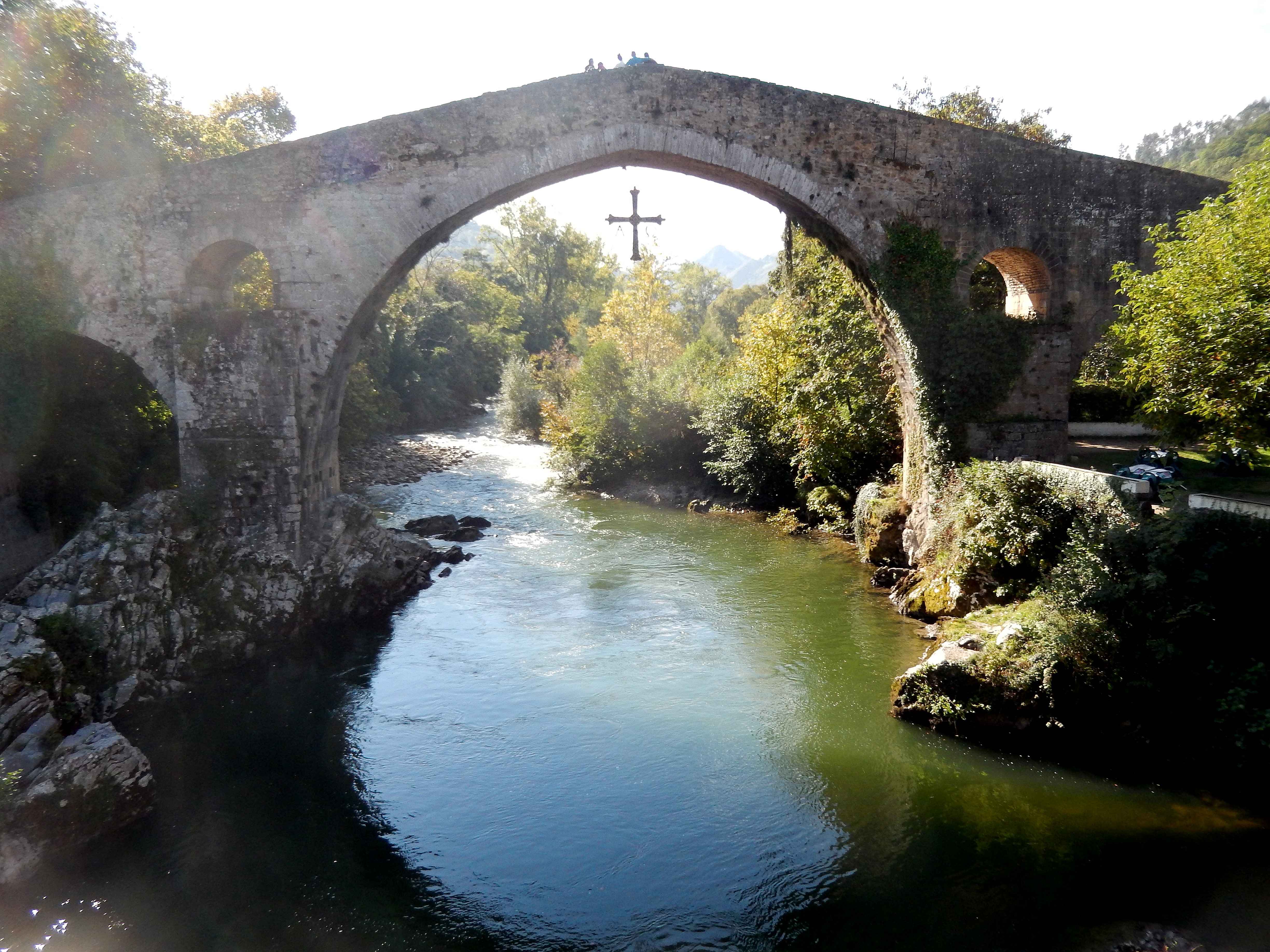
Roman bridge
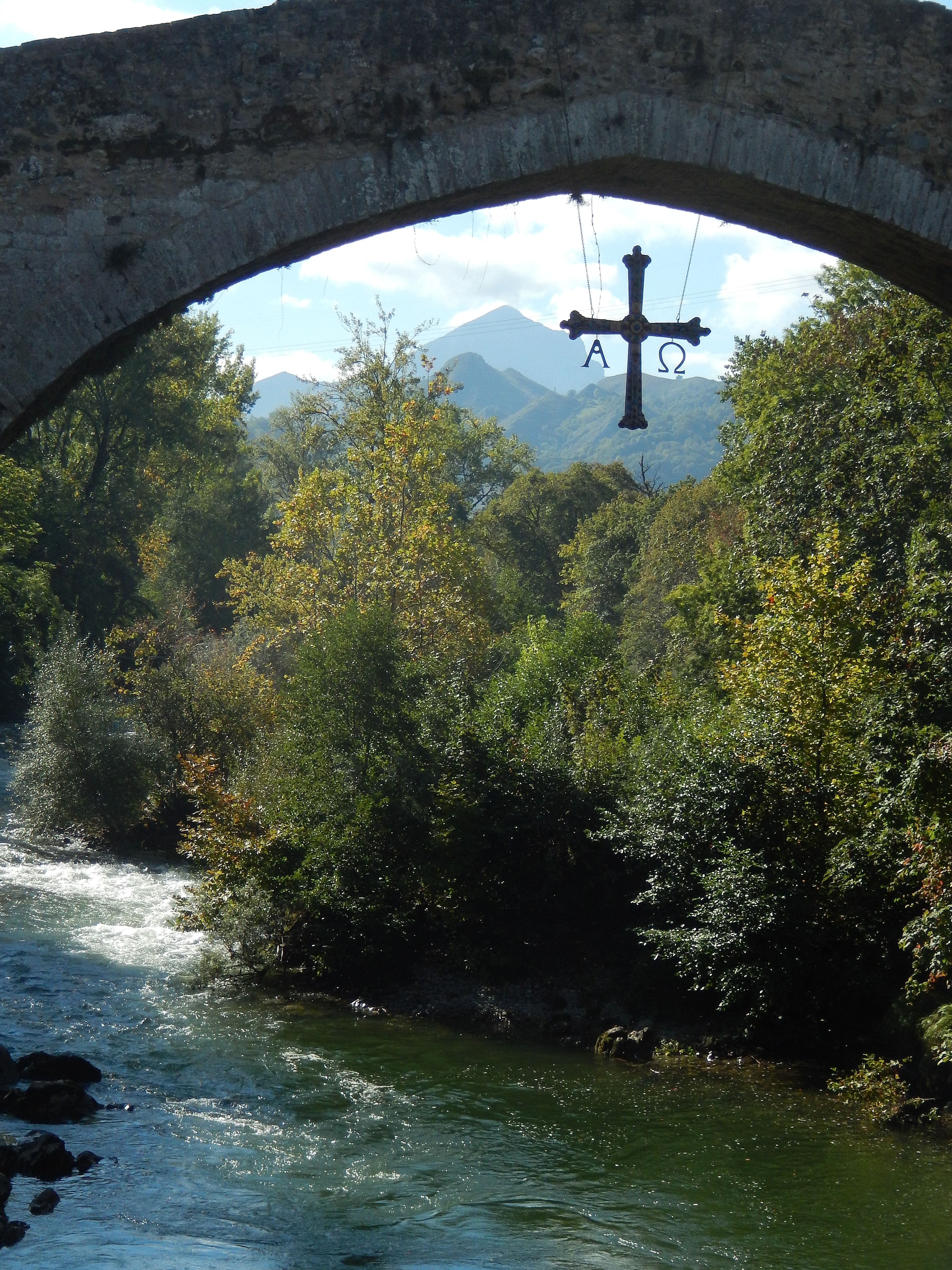
Victory Cross detail
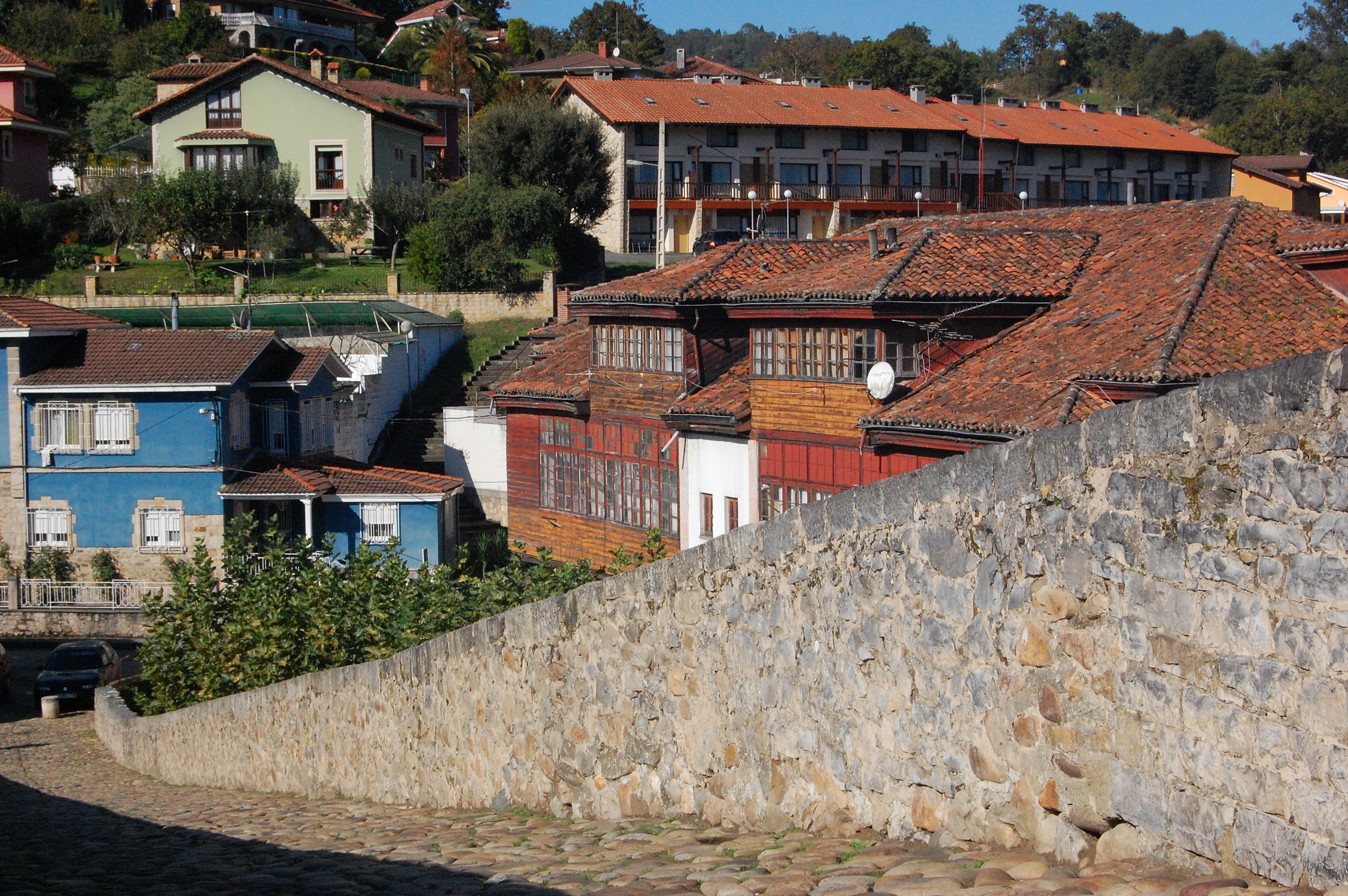
from the bridge, looking down
Our next stop was the village of Covadonga, a place of pilgrimage. It has an interesting history: Covadonga is the place where the Re-conquest began under King Pelayo (Pelagius, in English), who founded the Kingdom of Asturias (now the province of Asturias) and ruled it from 718 until his death. His victory at the Battle of Covadonga is credited with beginning of the Christian reconquest of the Iberian peninsula from the Moors. He established an independent Christian state in opposition to Moorish hegemony. (various sources)

Basilica of Nuestra Senora de las Batallas, built between 1877 and 1901
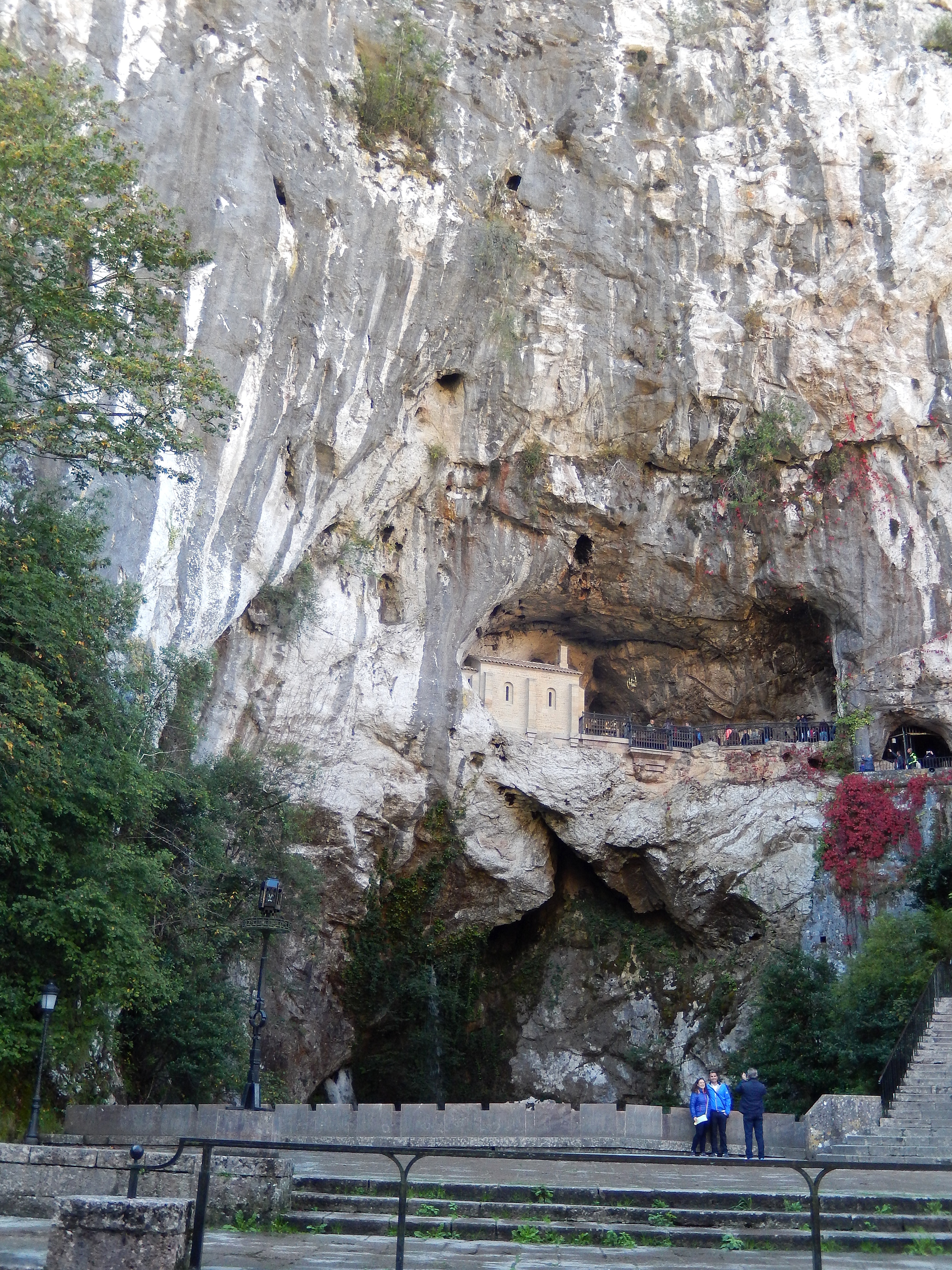
an overview of the astonishing Chapel of Our Lady, above the cave where Pelayo and his followers took refuge from battle
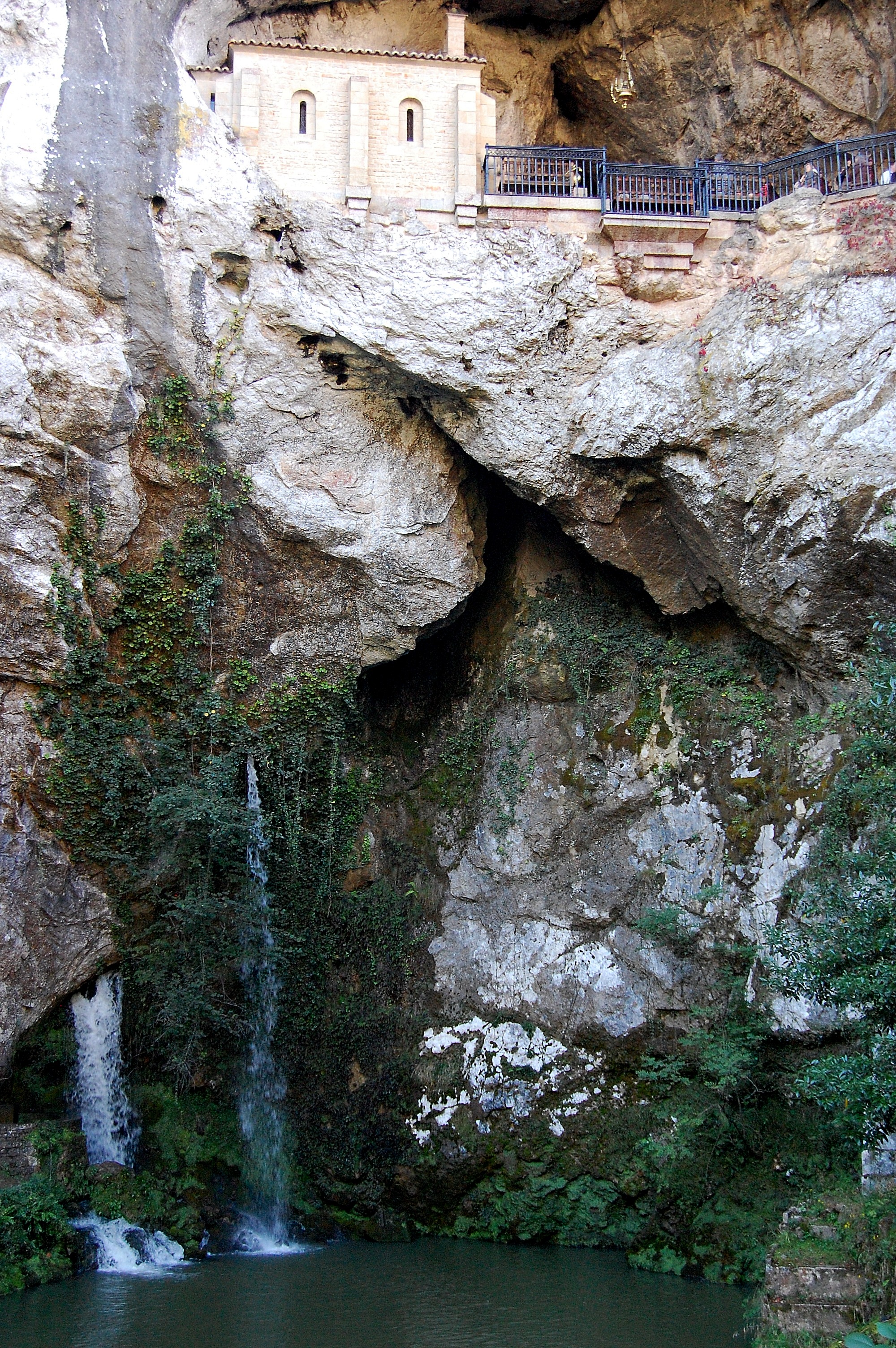
chapel above the cave and waterfall
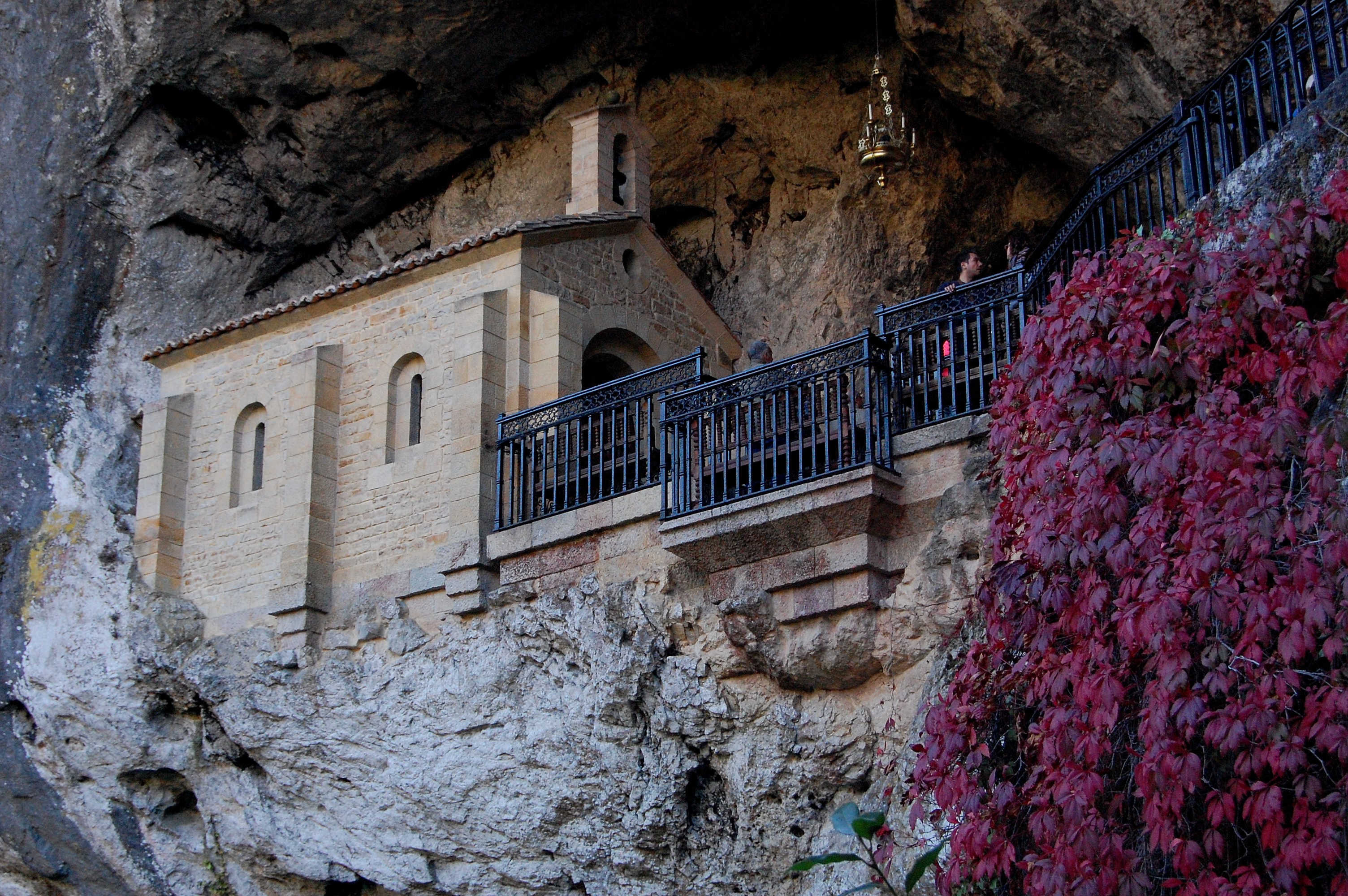
closer detail, as we climbed the stairs
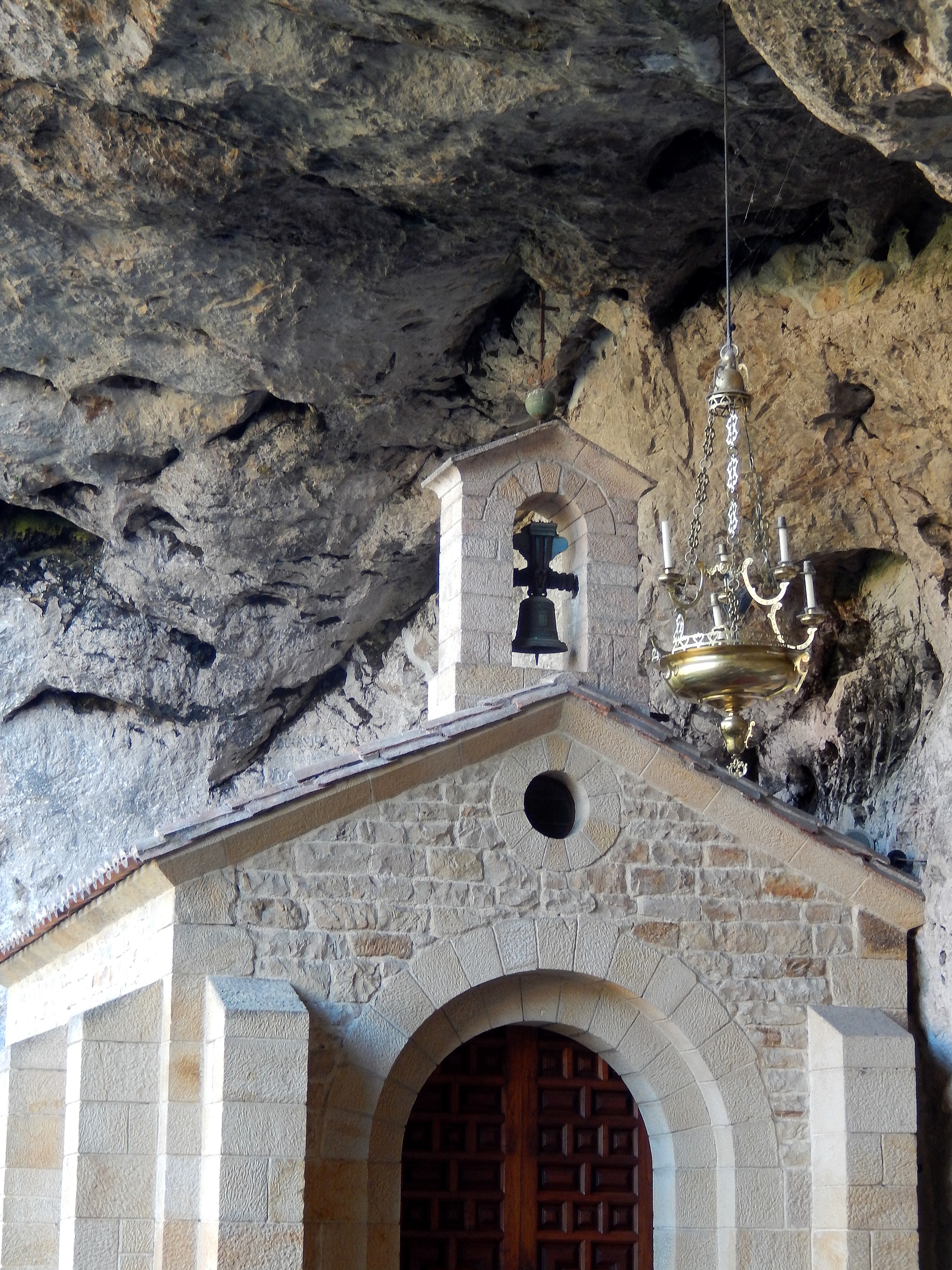
the chapel in the rock has frequently been destroyed and restored, most recently after the Spanish Civil War
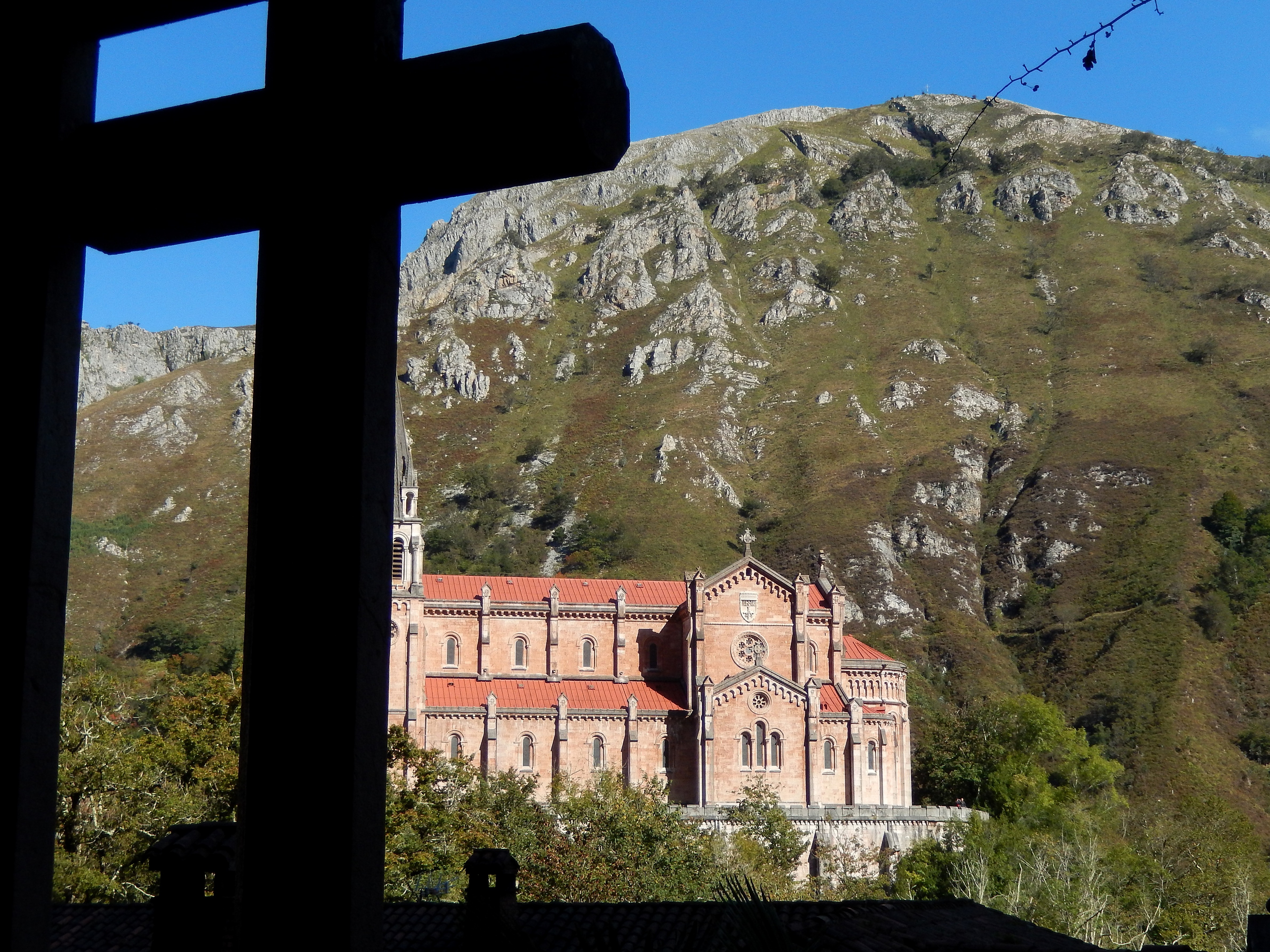
a view of the Basilica from the chapel area
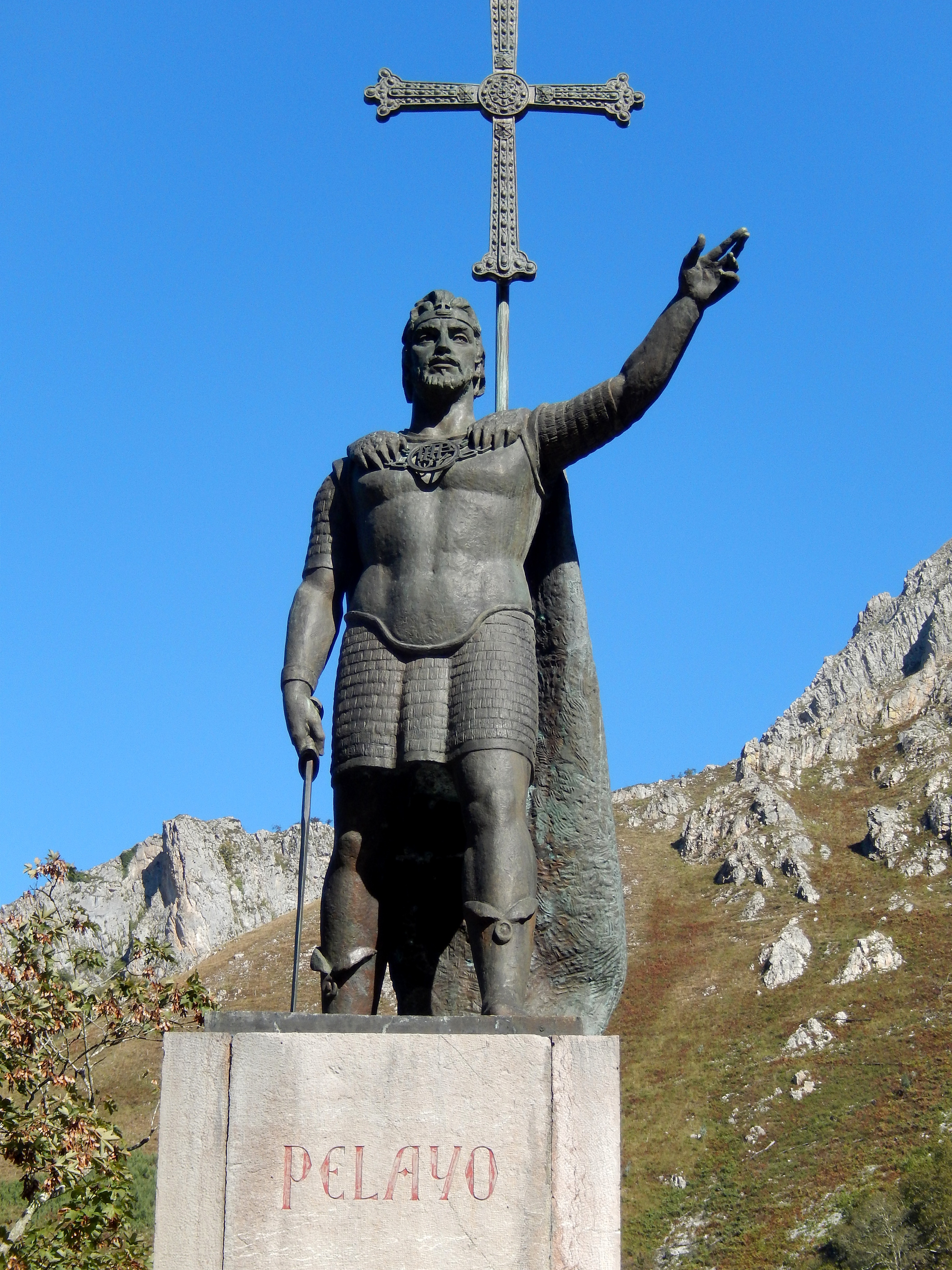
the hero, Pelayo
It was now time to make our way further into the Picos… The road was narrow and winding, like all mountain roads, with gorgeous views…and then we came to a spot where we could hike around.
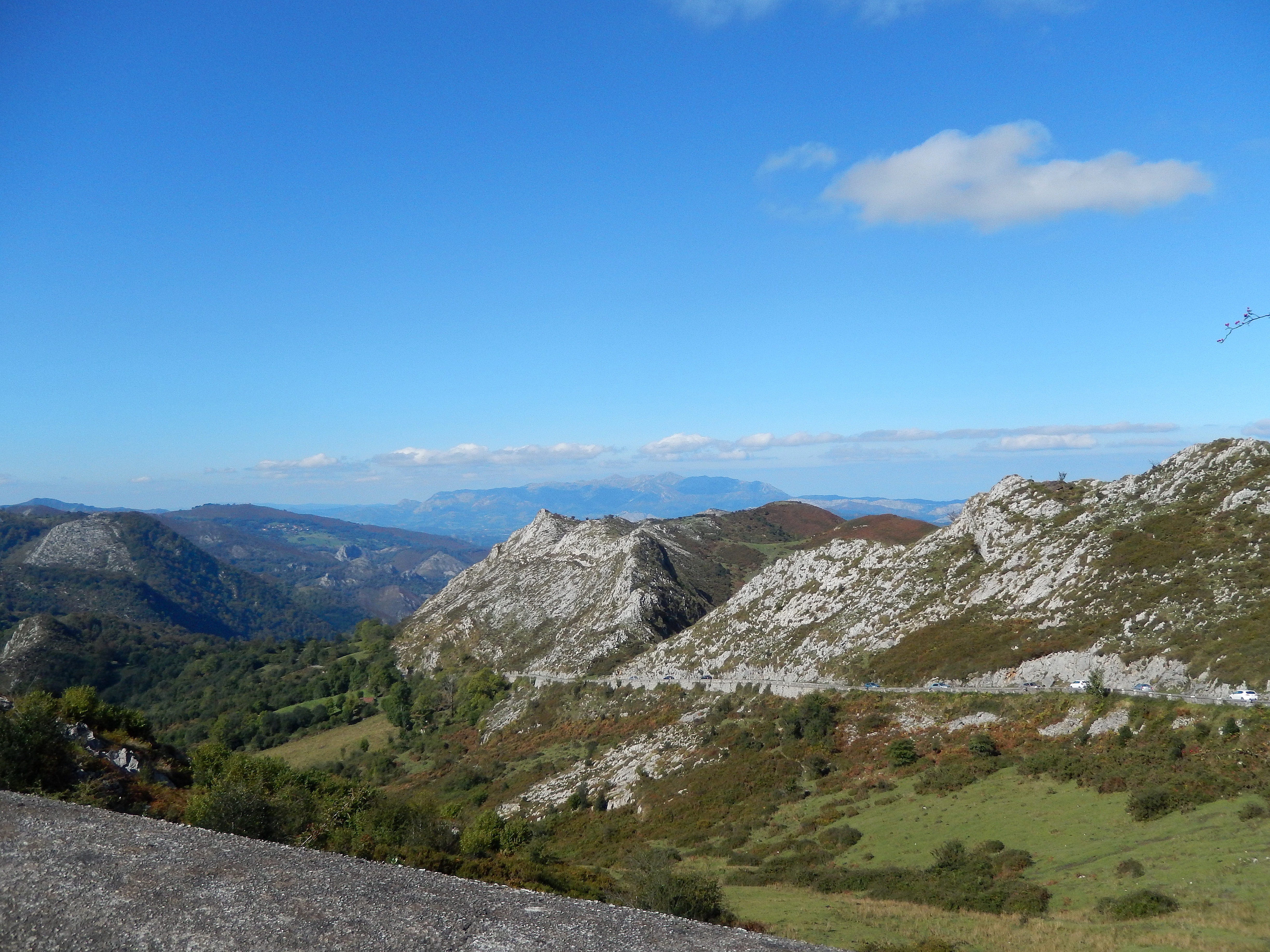
viewpoint along the way
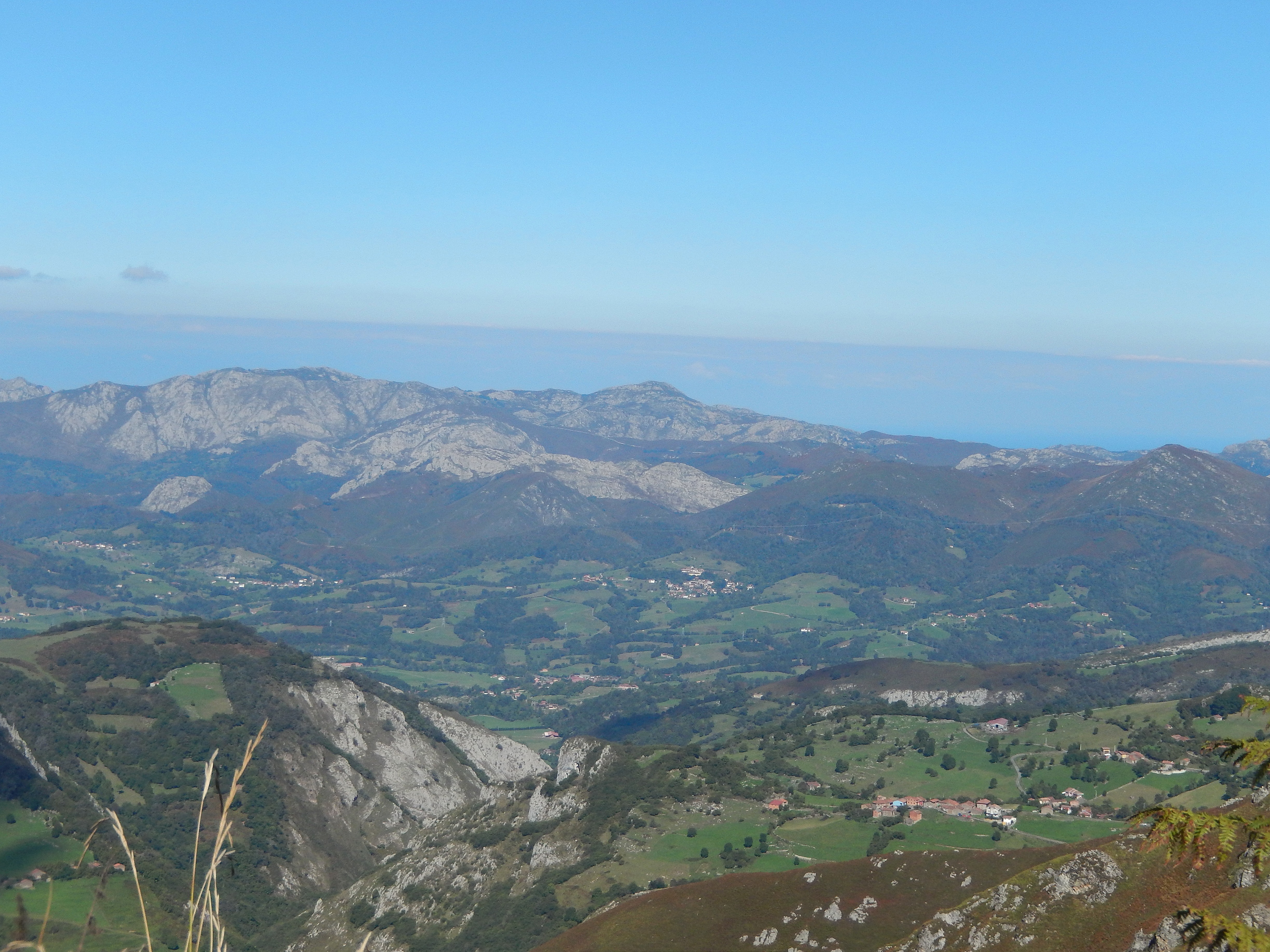
looking down and out
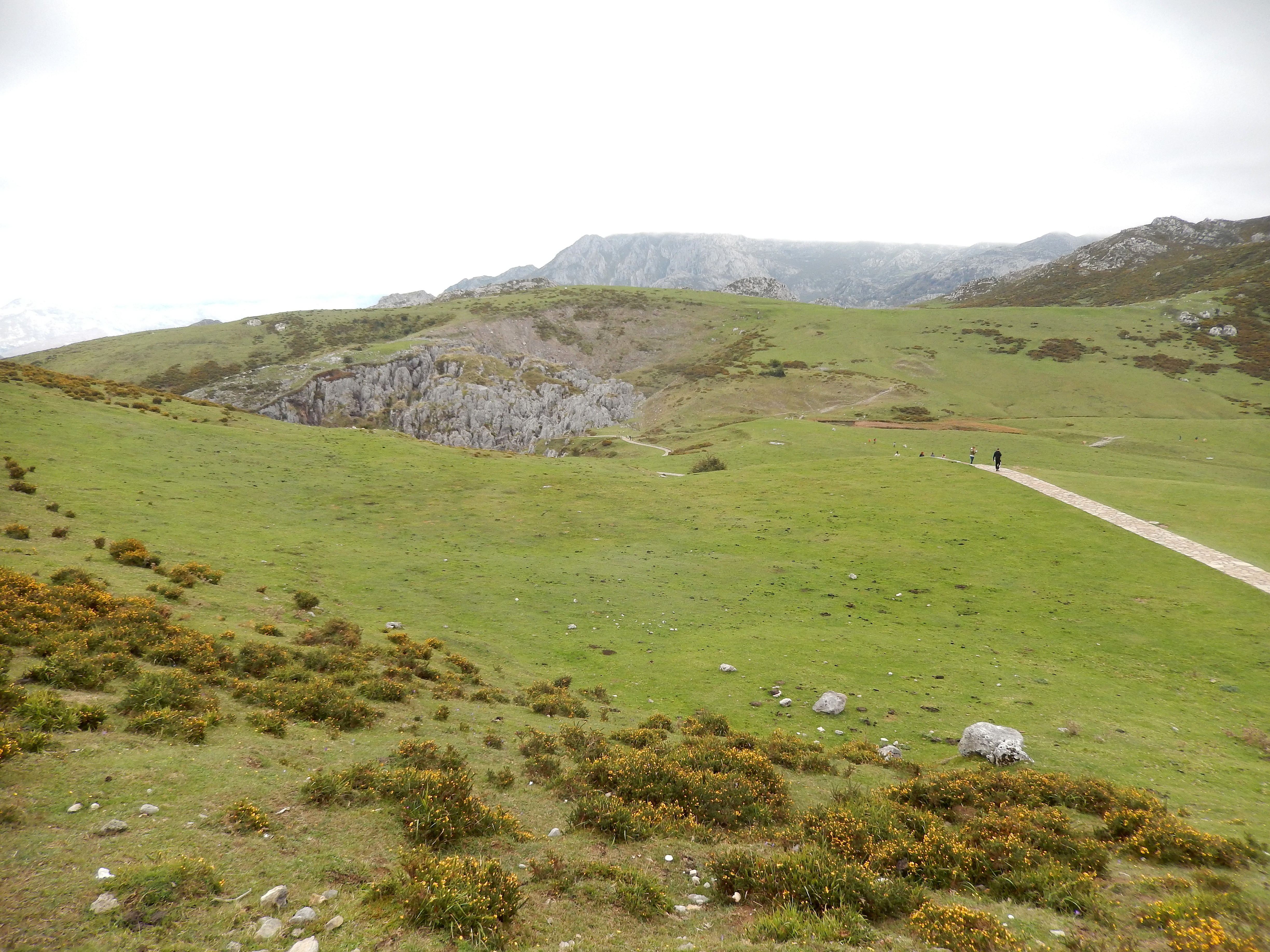
we enjoyed hiking in the hills
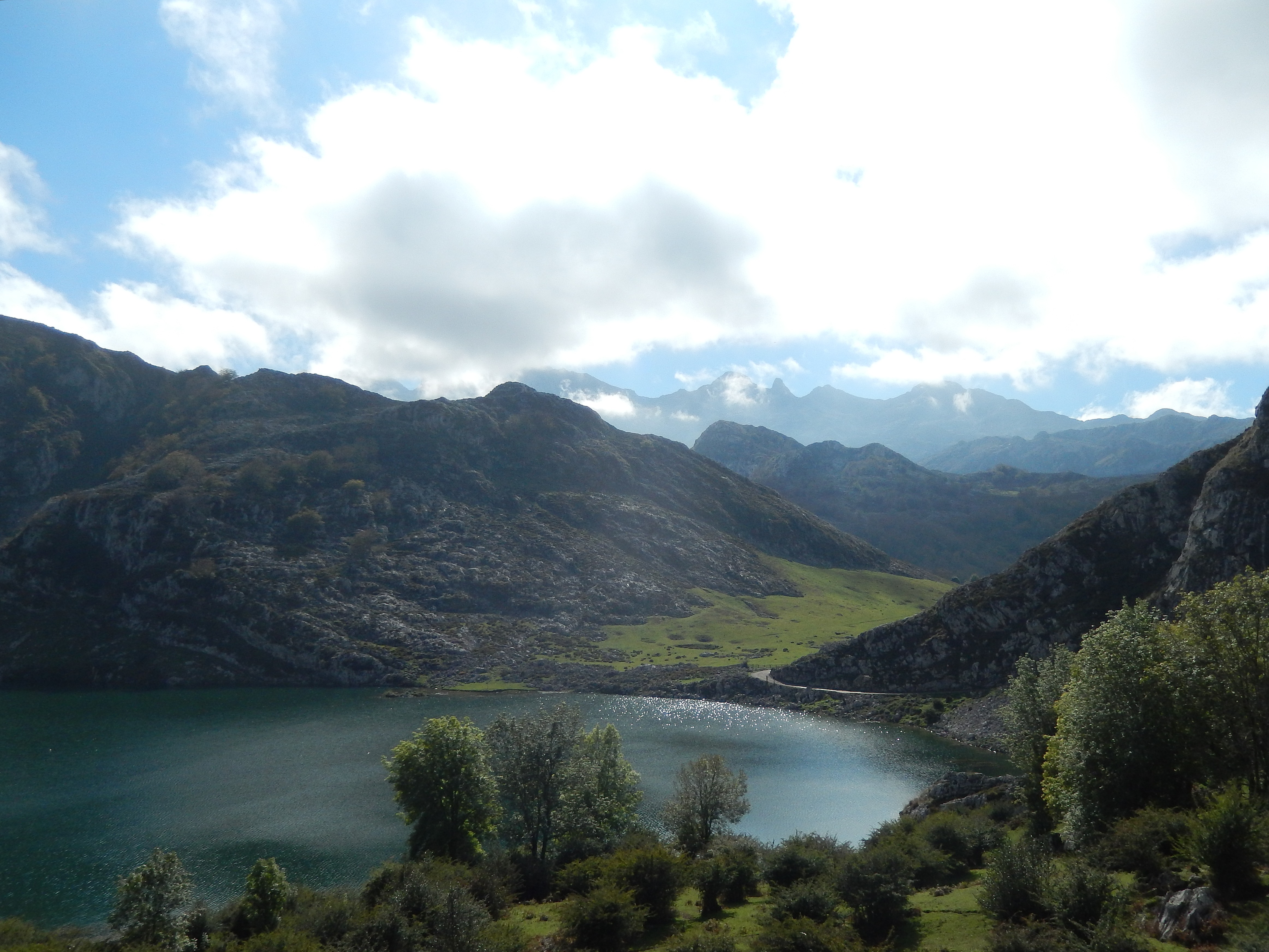
with this pretty little lake behind us
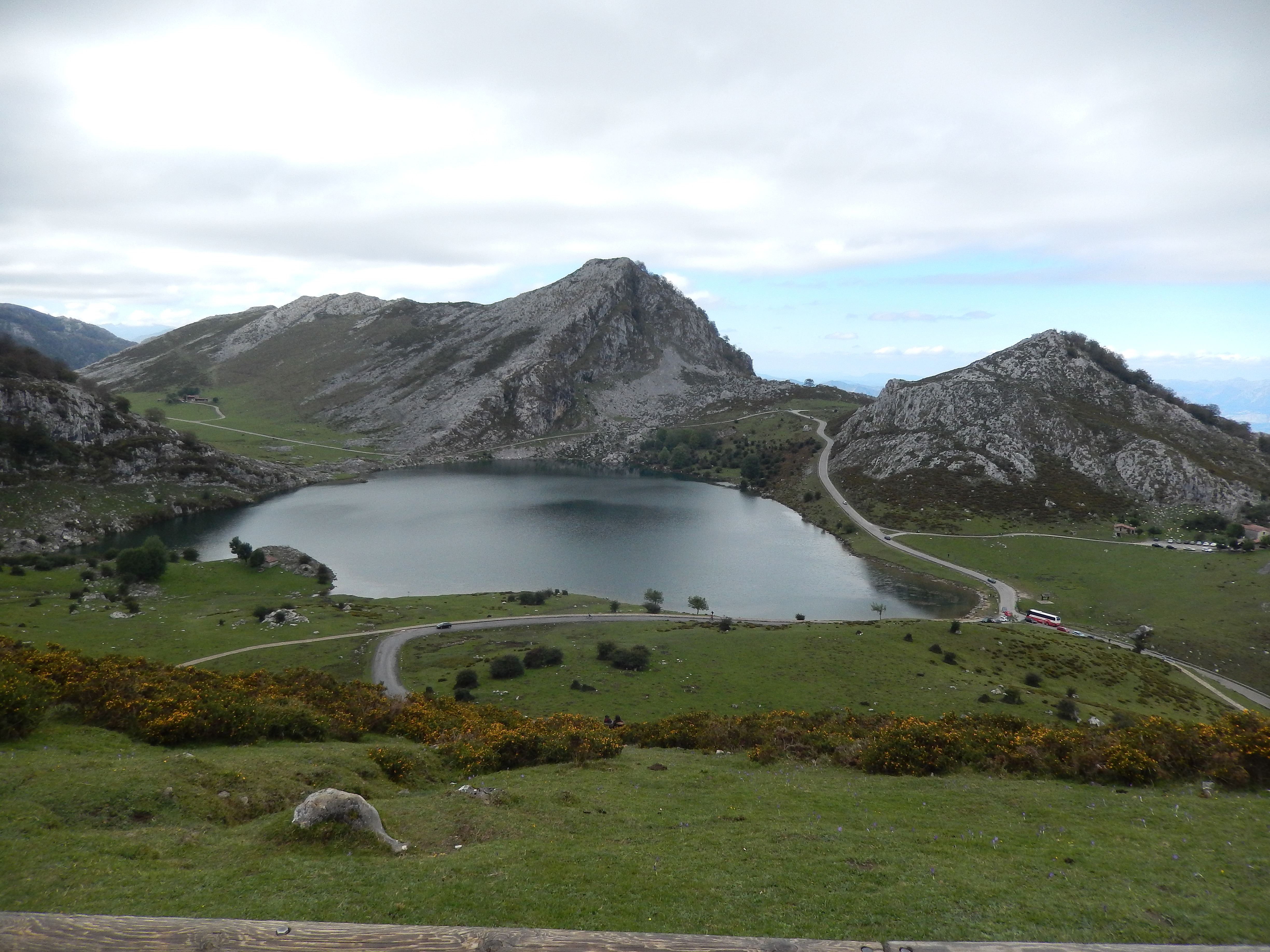
a second lake worth climbing a steep hill to see
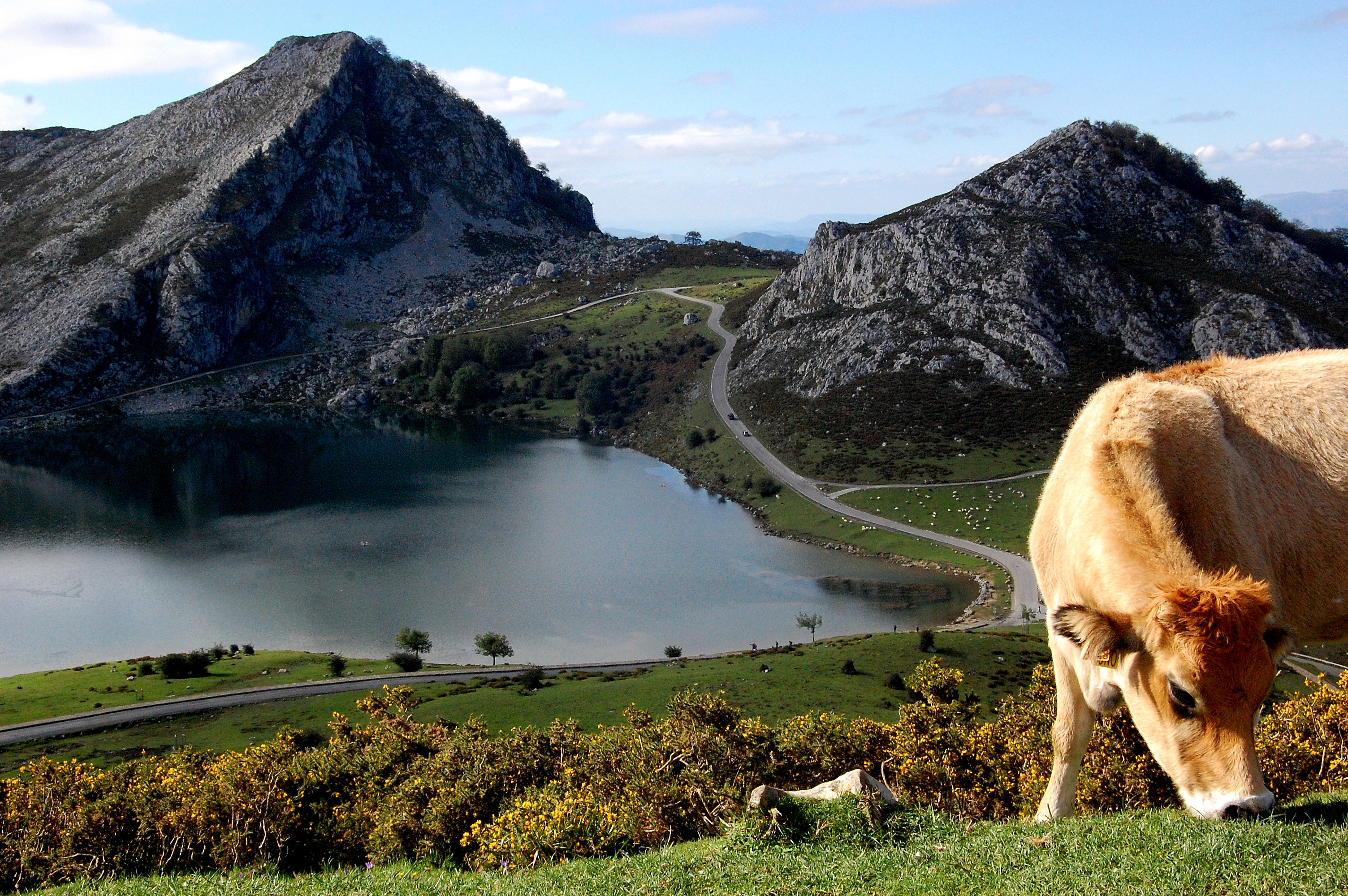
especially when a cute cow showed up 😉
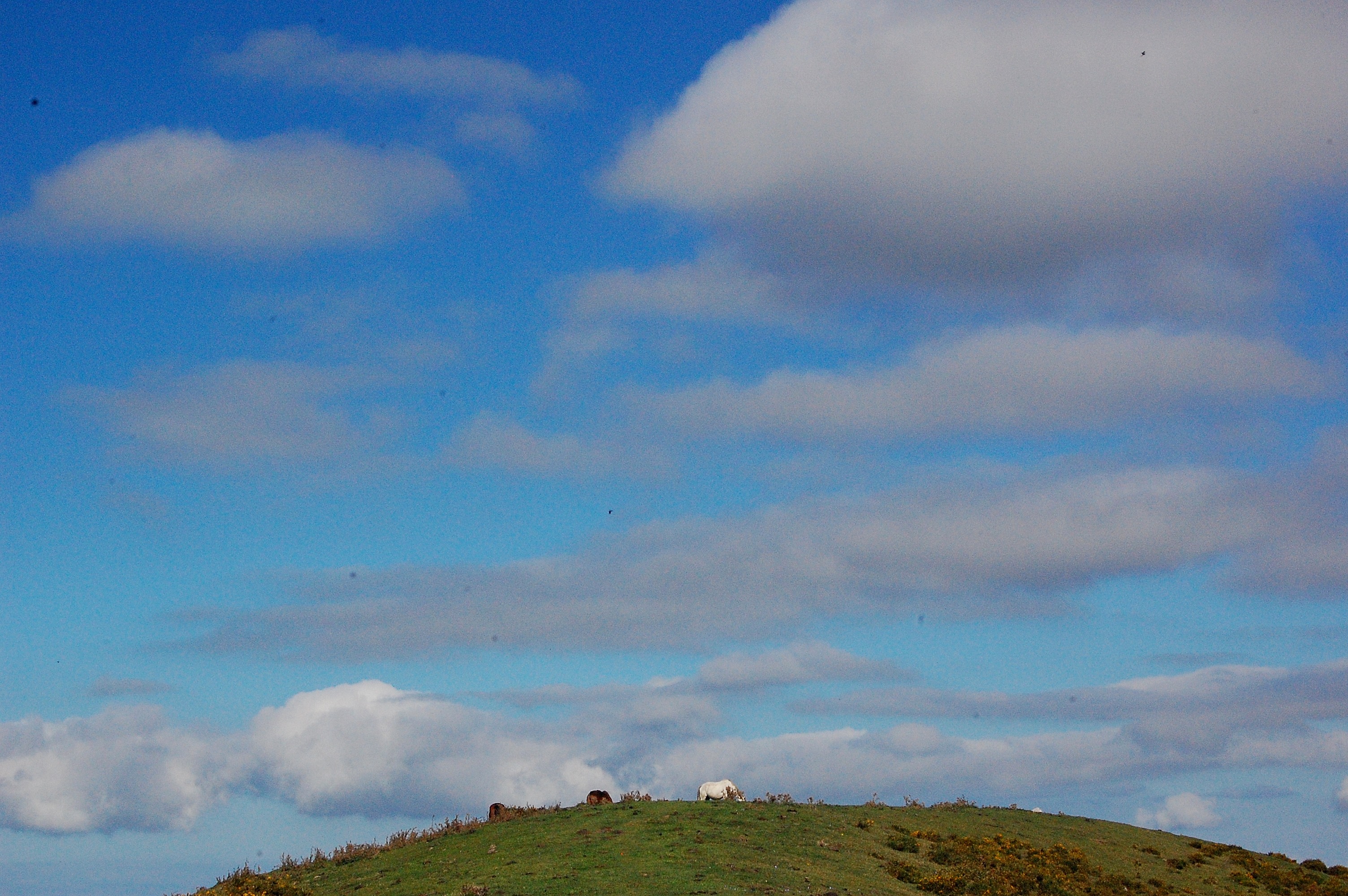
hills and cows and birds
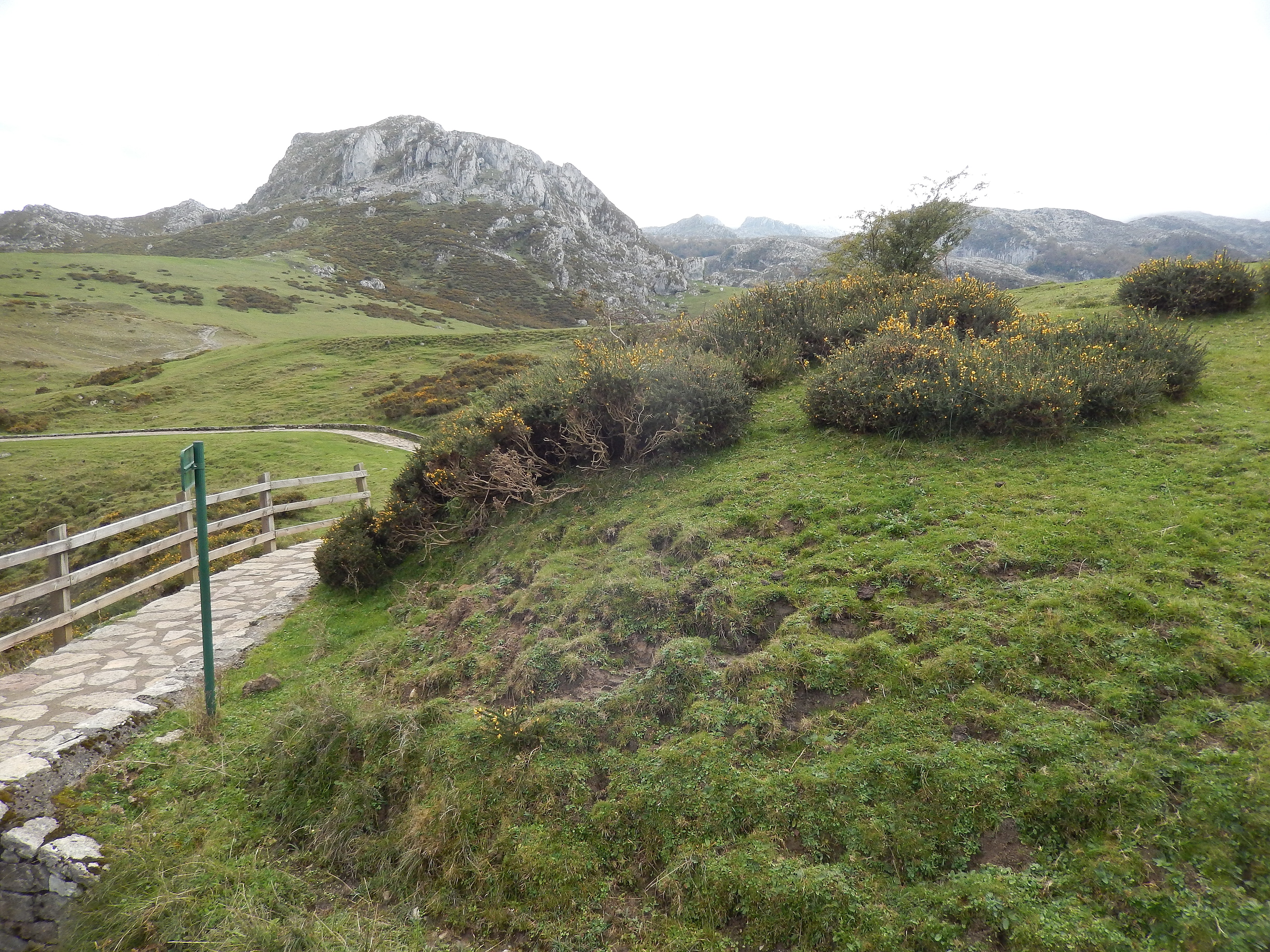
along another little path, to an old mine area..
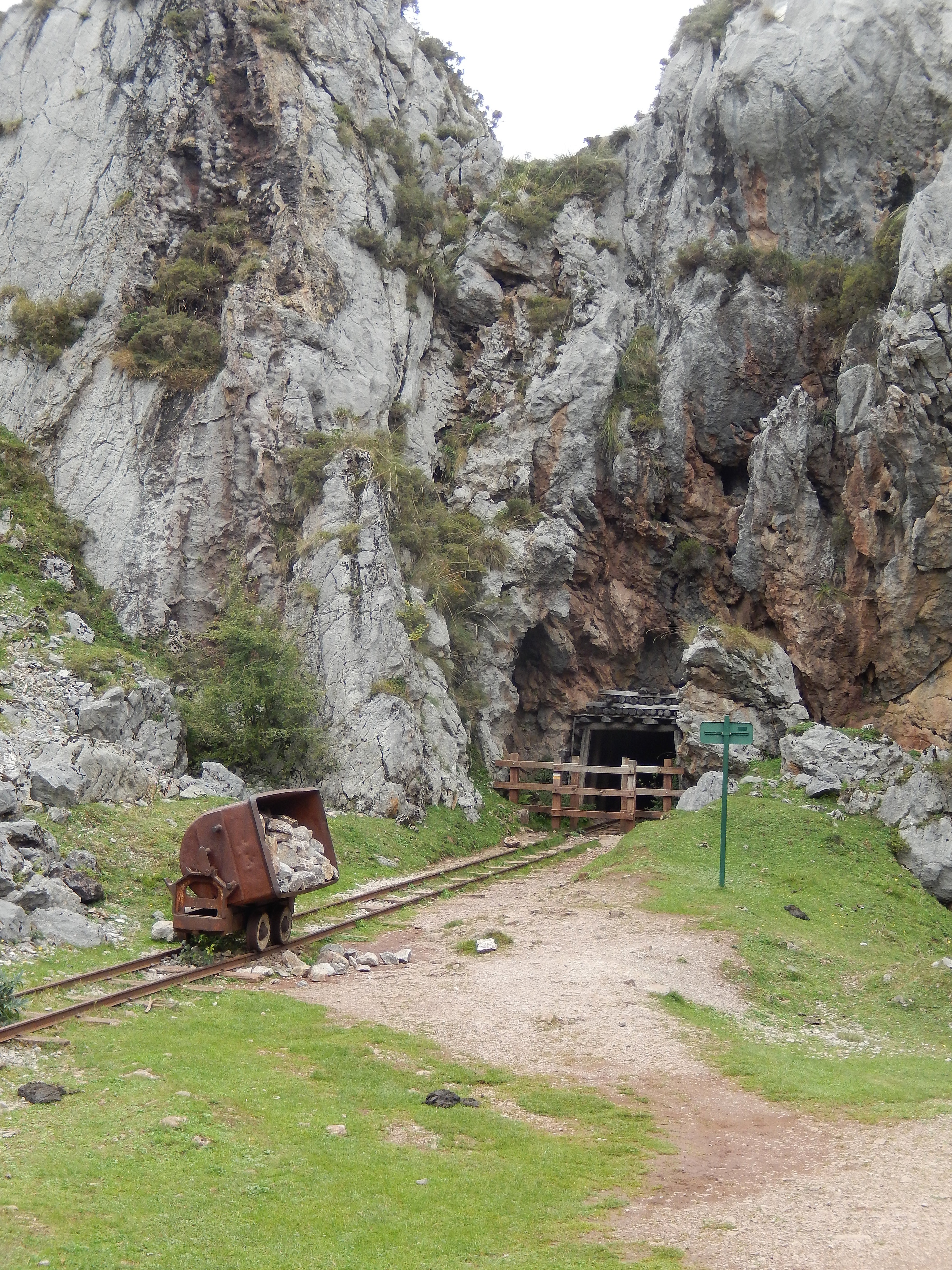
old mine area…
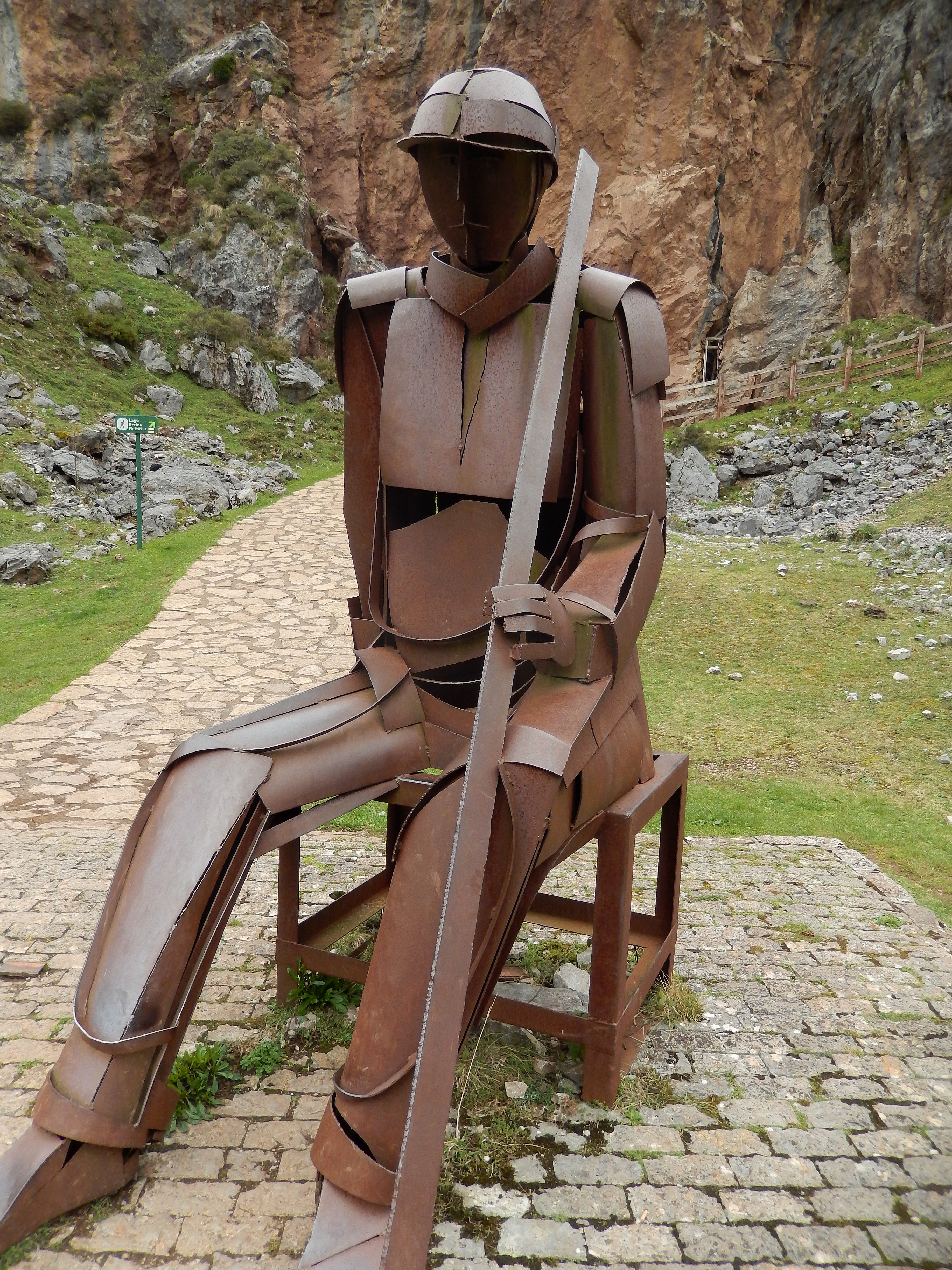
..where we found this guy, left behind when the mine closed down
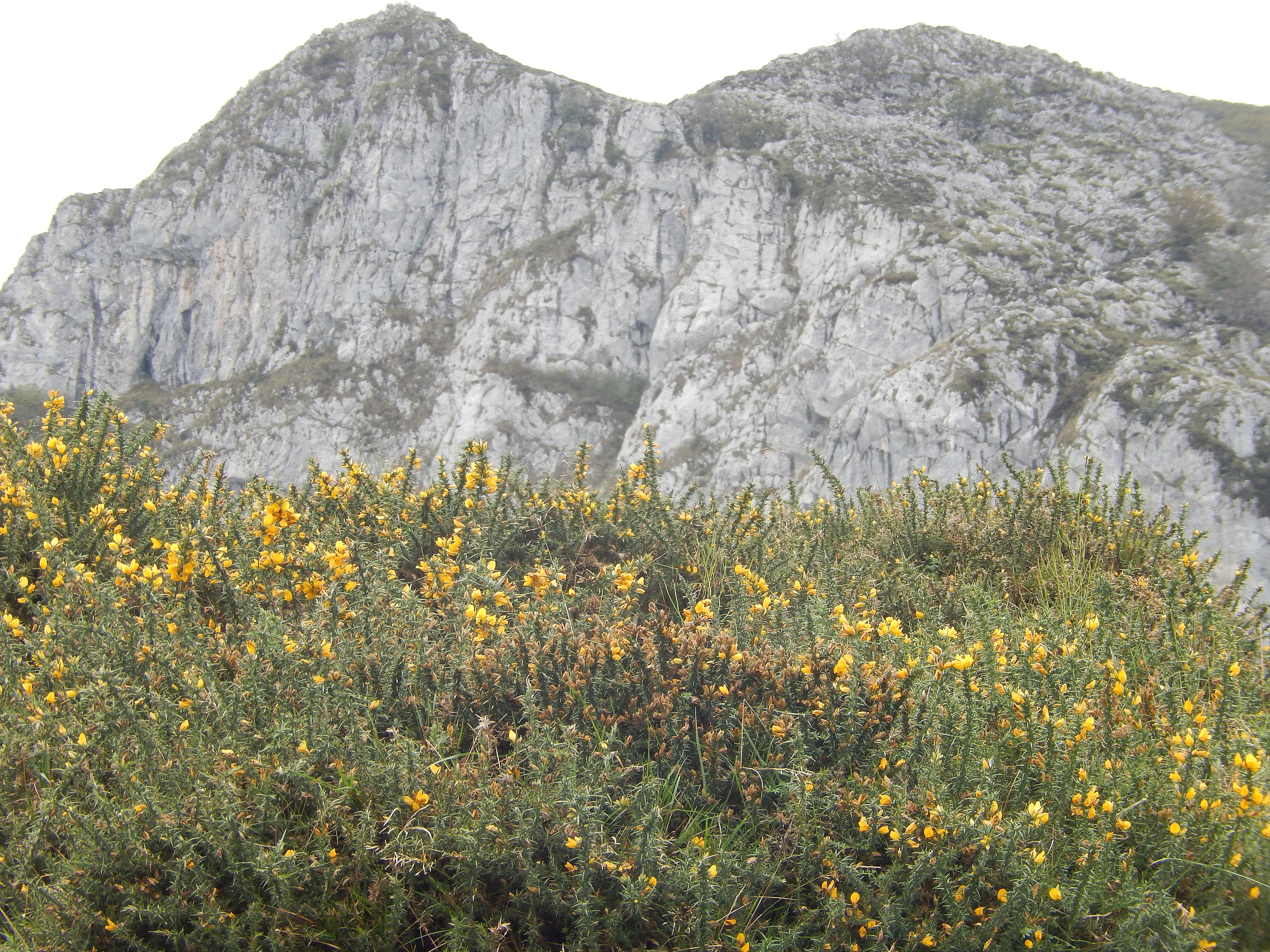
mountain flowers still blooming
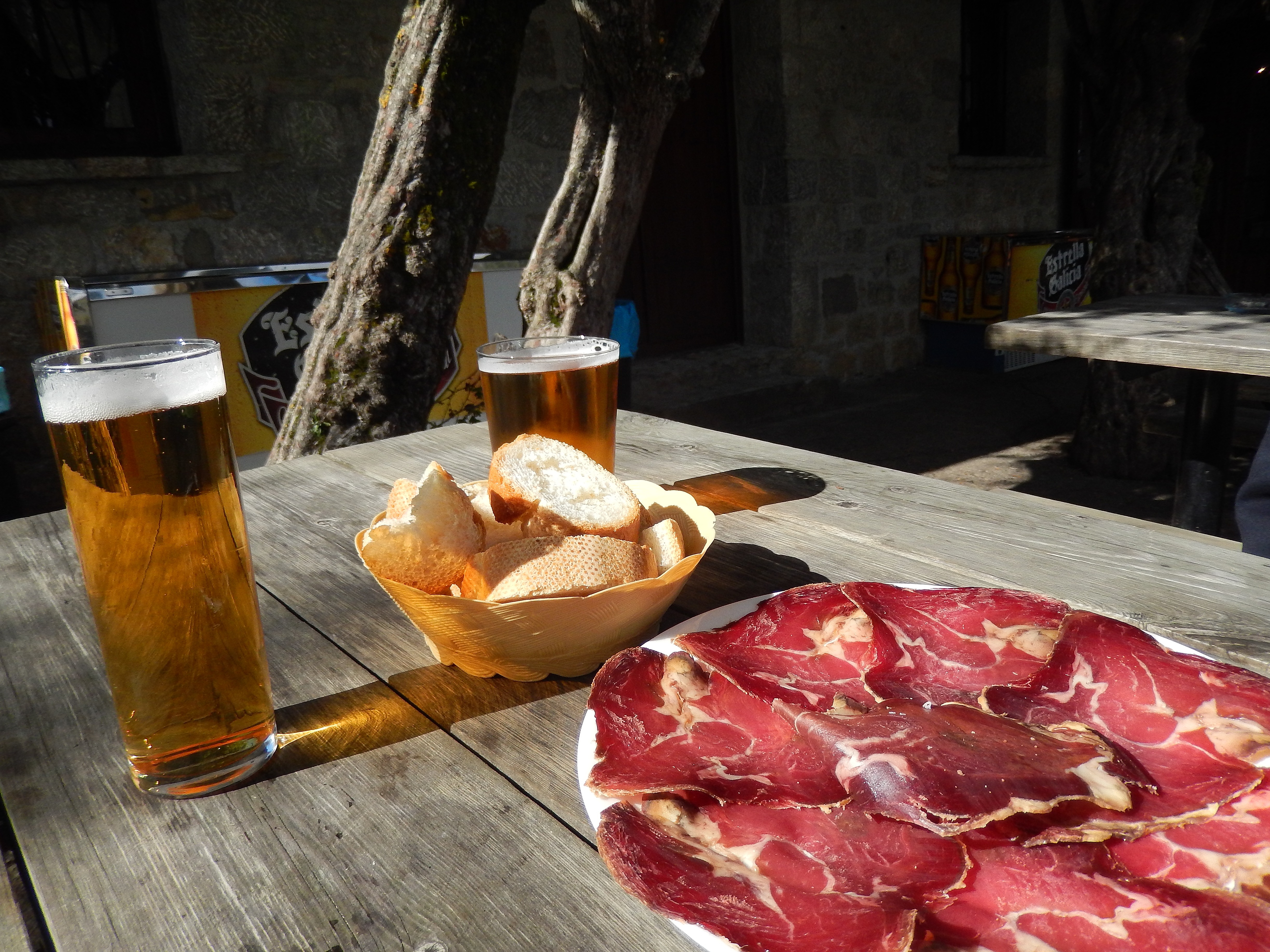
a little snack after our walk
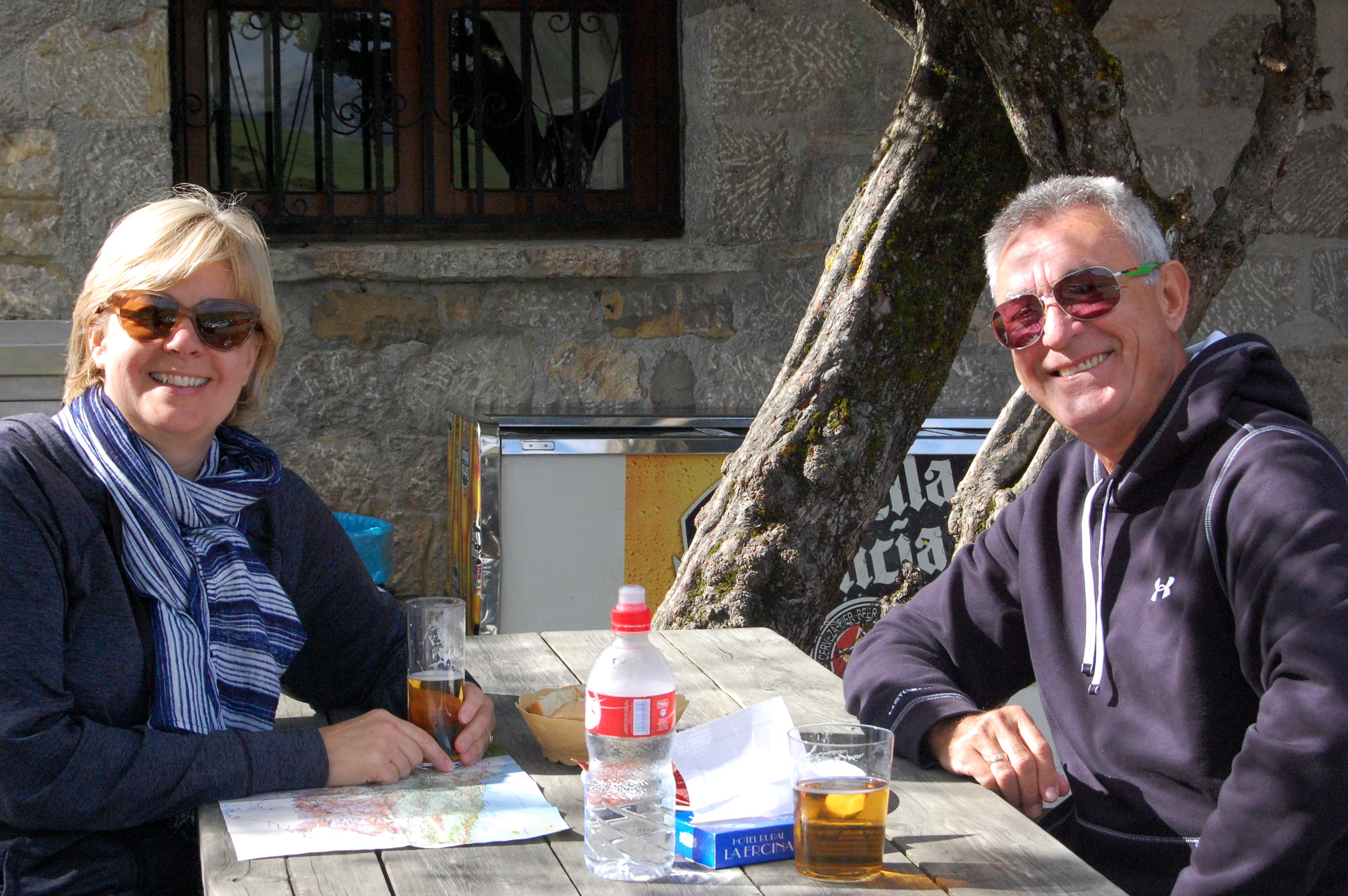
enjoying the sunshine and refreshment
and listened to the cows walk home…
And then it was time to drive down the mountain. Along the way we found a lovely restaurant still open, where we ate a VERY late lunch, which was maybe an early dinner. 😉 Back in Ribadesella, we wandered into town, to see it in the fading light, (the night before it had been raining), and to enjoy a glass of wine, or two, to end our day. The moon was rising as we headed into town..
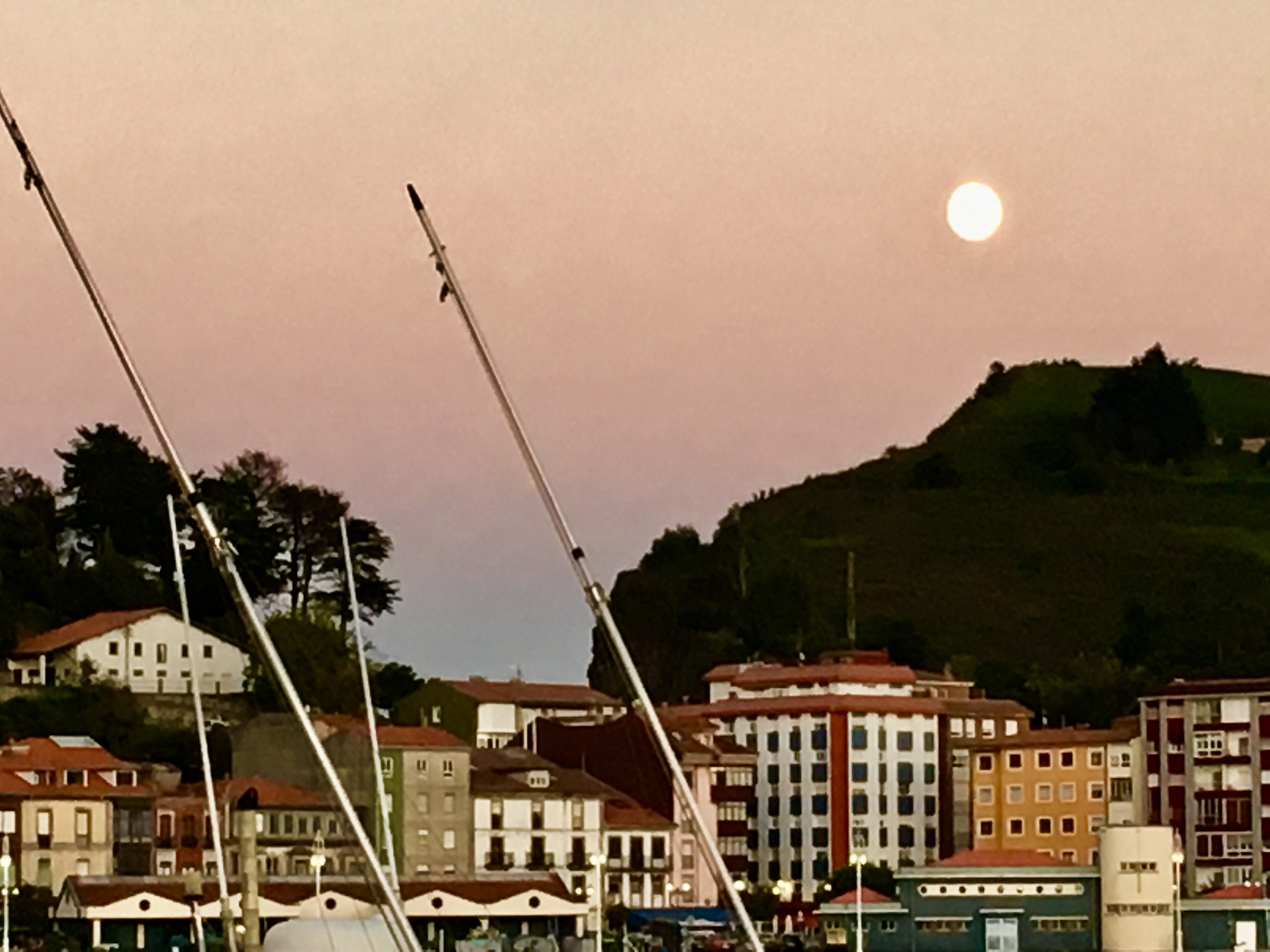
It’s a marvelous night for a moon dance…
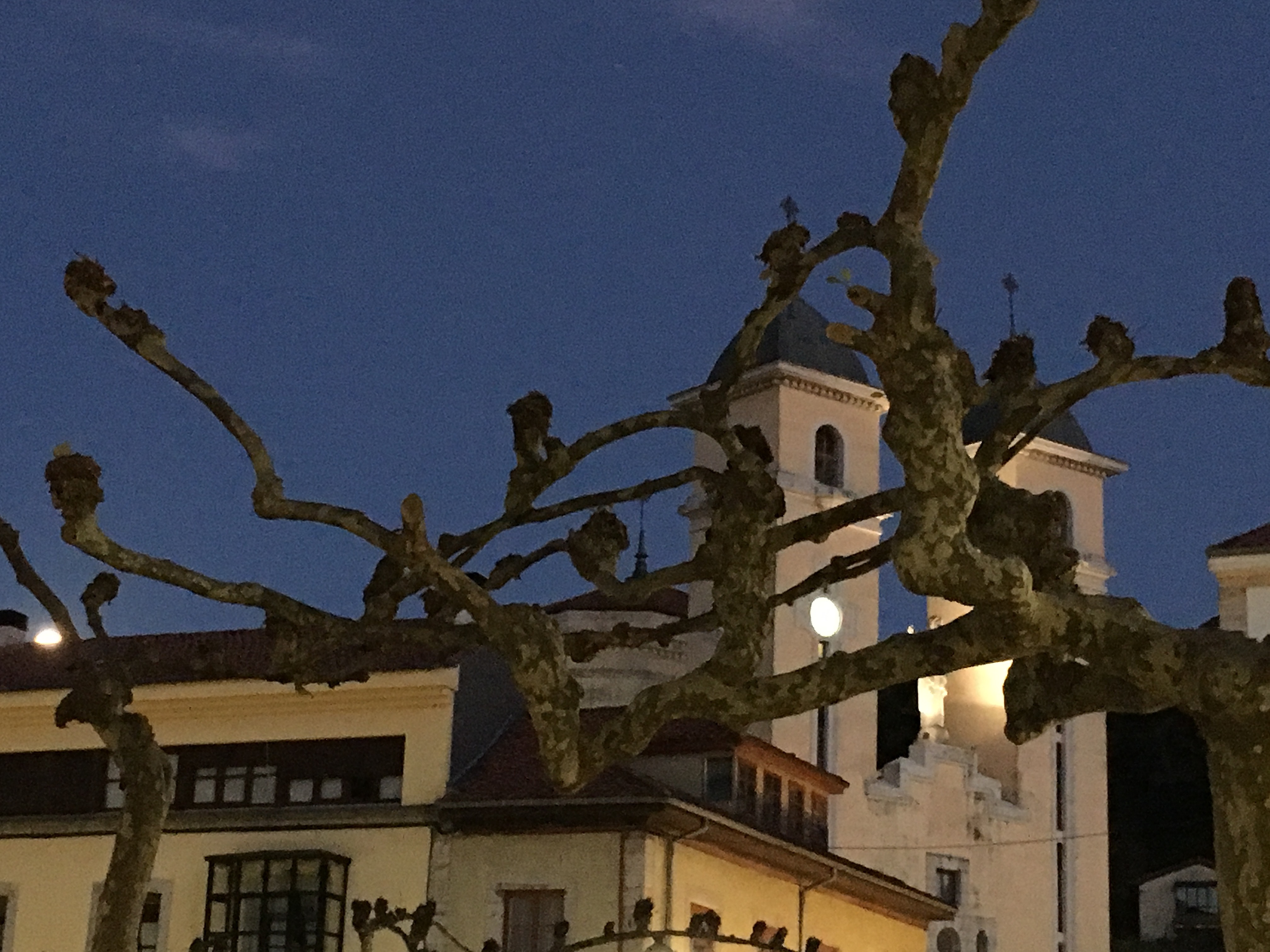
the town church at night

this is a chocolate shop, and the purse and boot are made from chocolate (I have more than a few friends who will think this is the best thing ever!)
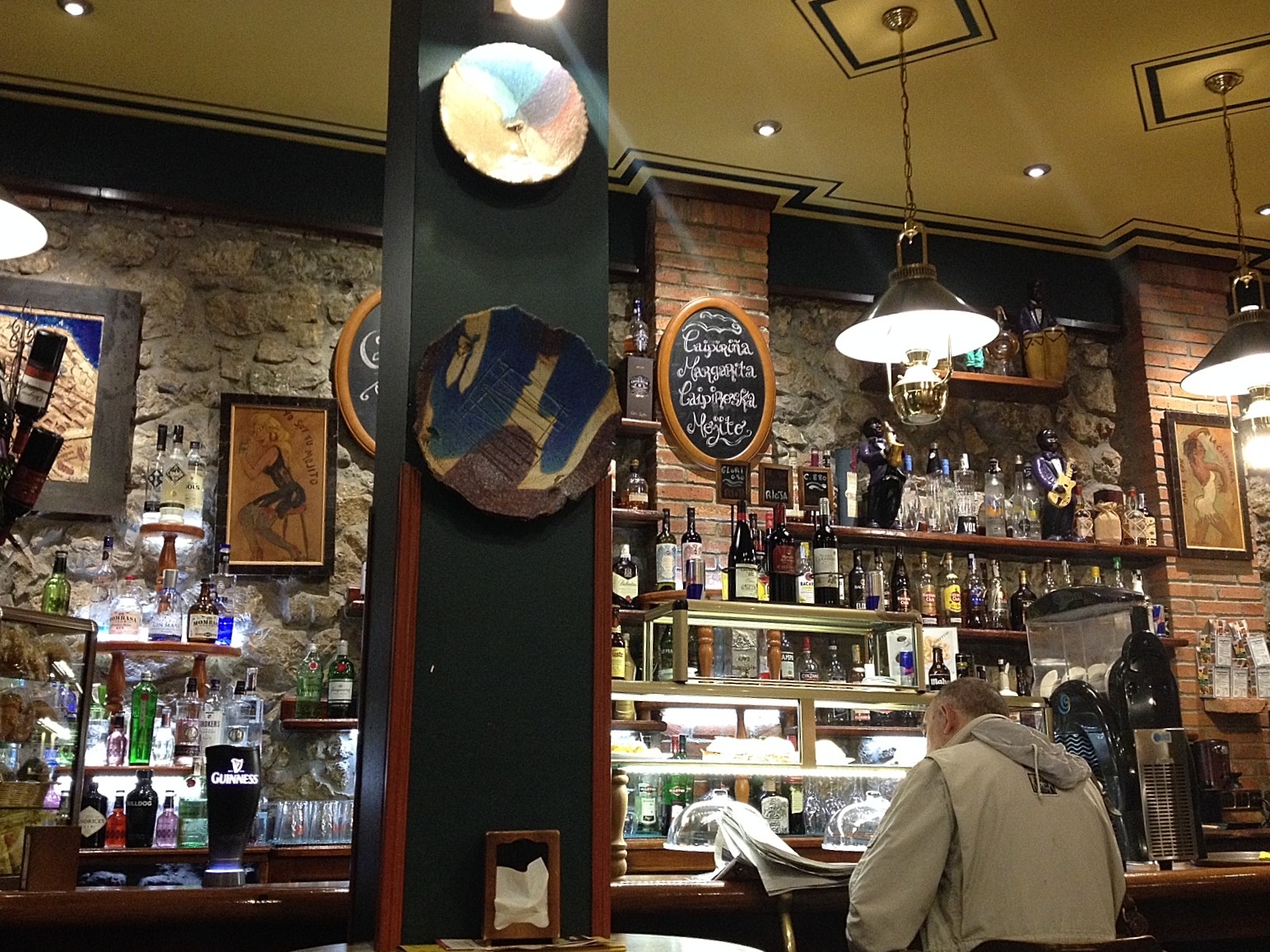
love this atmospheric little bar

cheers!
The next day, Saturday, we drove to the city of Burgos for our last two nights together. Like so many towns in the north of Spain, the burg of Burgos was founded during the Reconquista to hold on to land that had been won back from the Moors. Its position on the Camino de Santiago, and the flourishing trade in wool (sent to the Low Countries to become Flemish tapestries), helped it to thrive. Beginning in 1230, it became the capital of the kingdom of Castile for half a millennium. The town’s favourite son is the great 11th-century Spanish hero El Cid, who valiantly fought against the Moors. This city on the Way of St. James also has one of Spain’s greatest Gothic cathedrals, and we booked rooms-with-views of that cathedral in the Meson del Cid. Luckily, for our sleep, the bells only rang on Sunday just before noon…
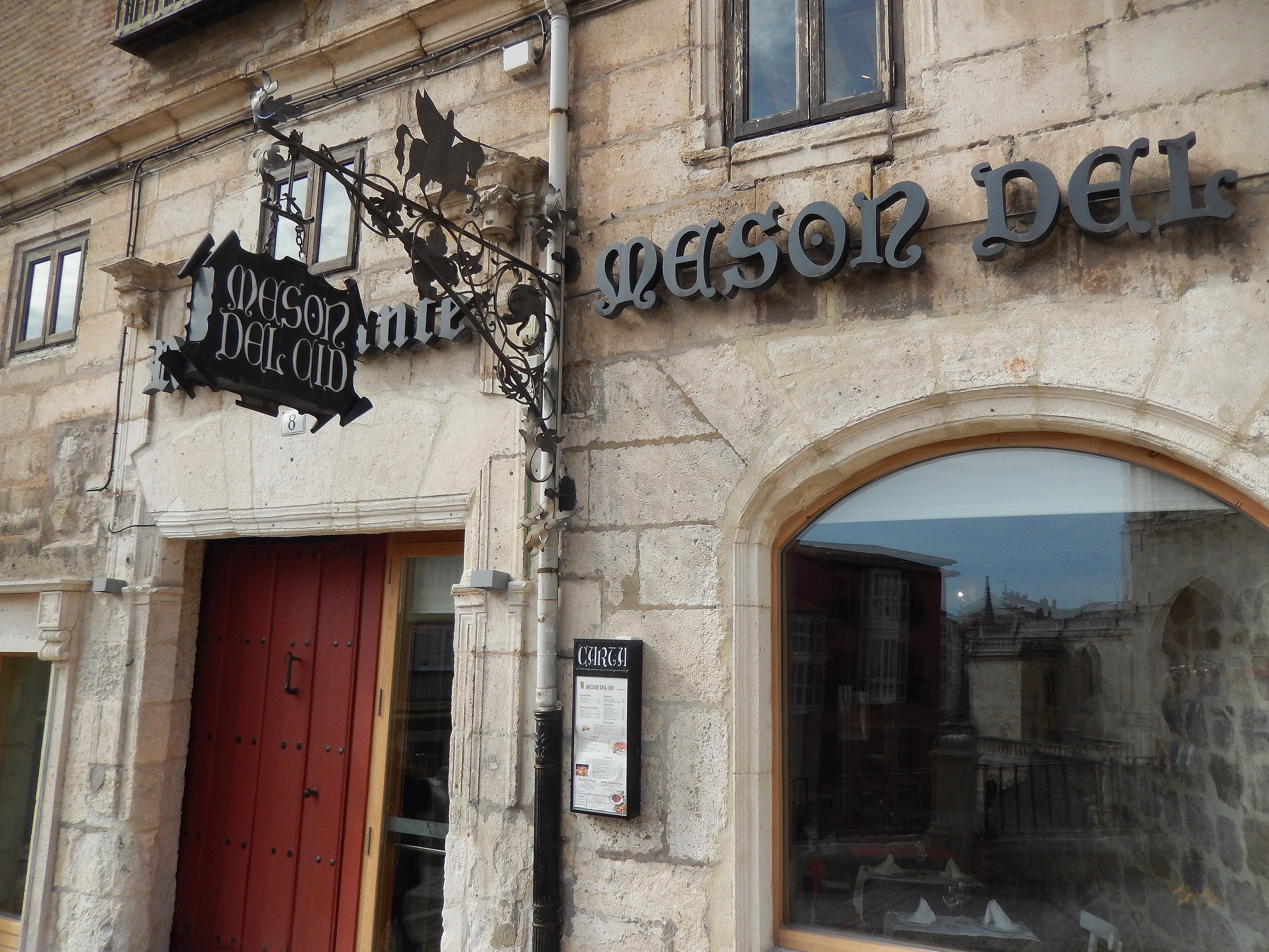
Meson del Cid
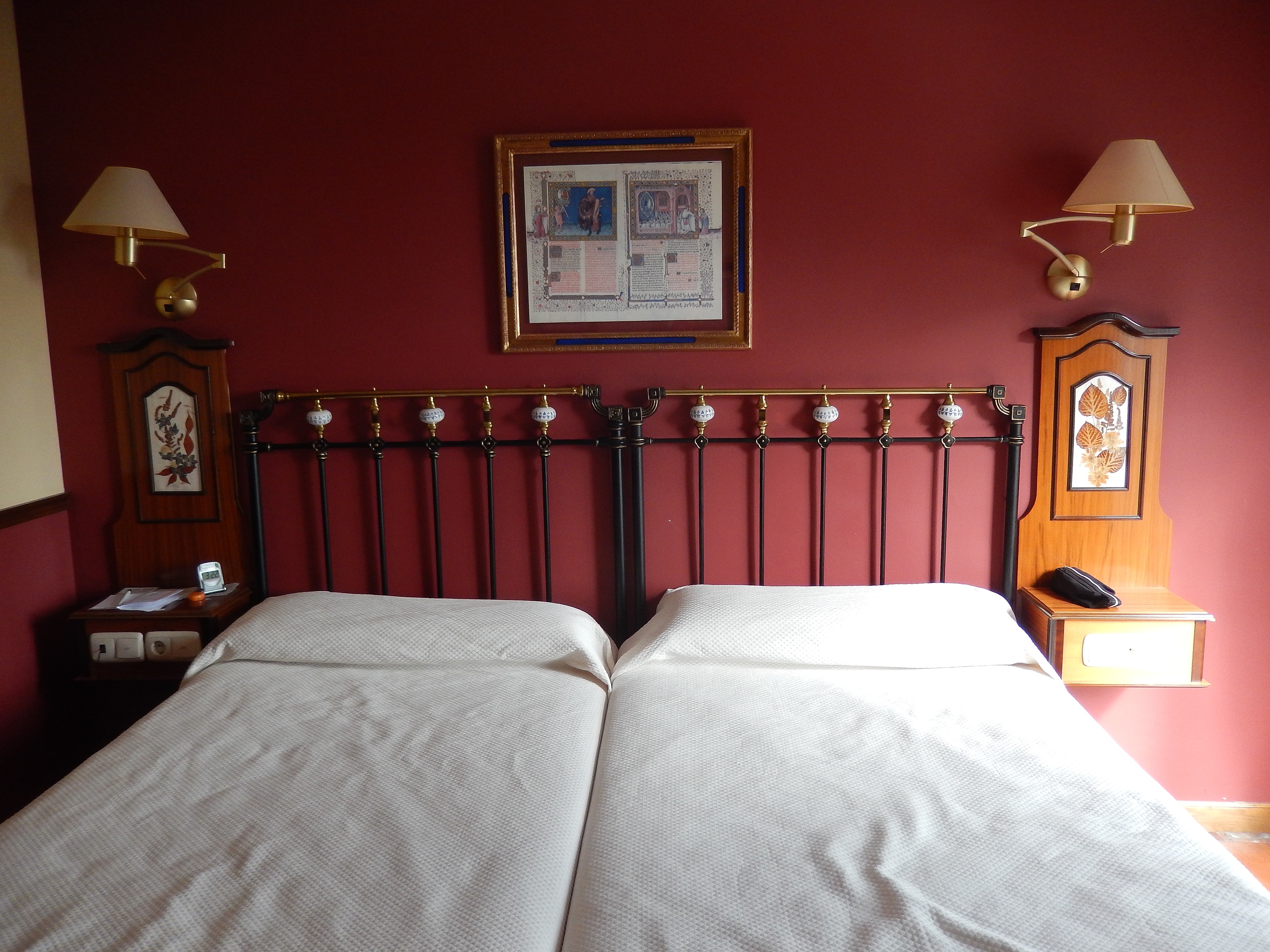
our room
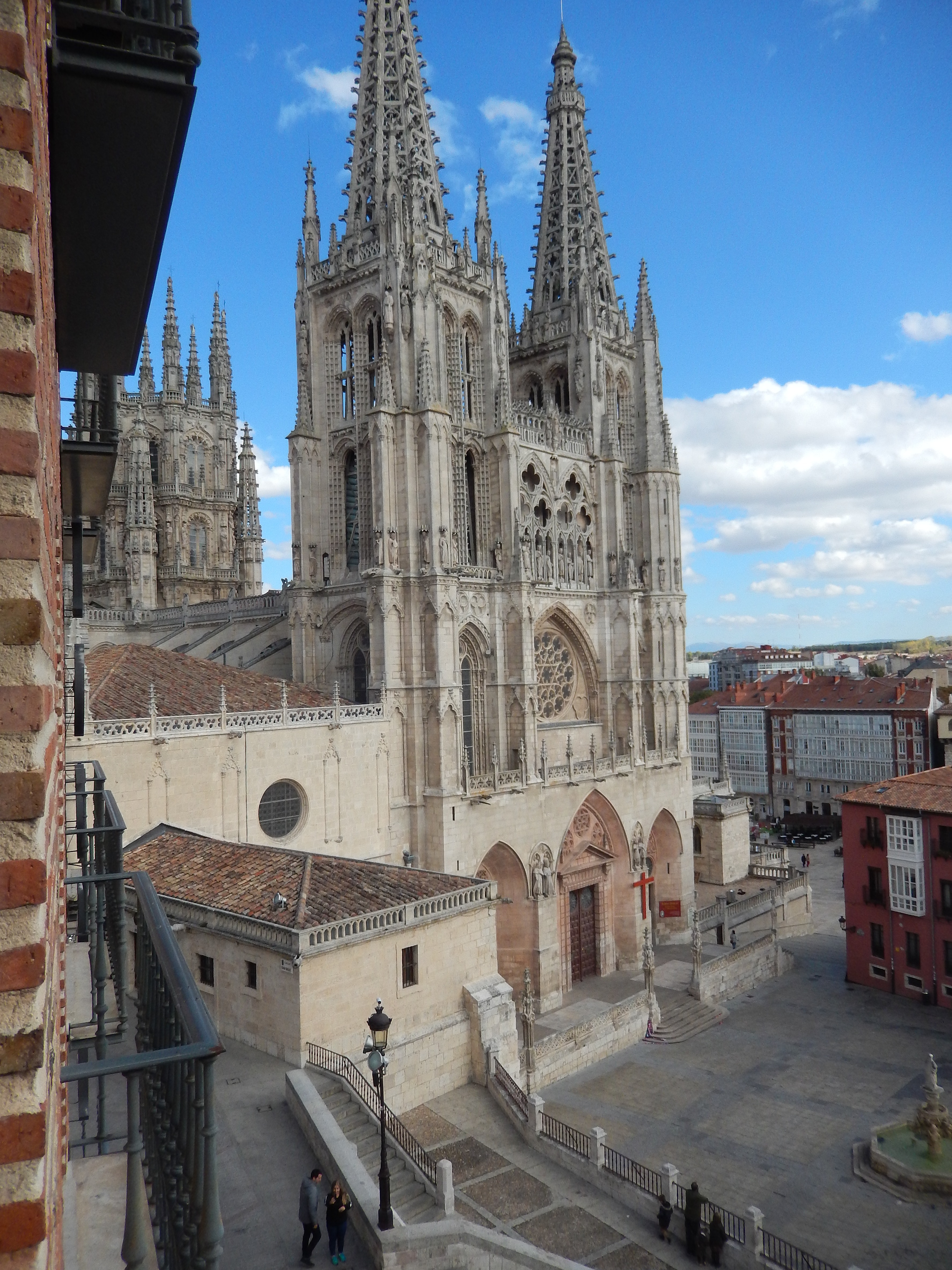
the view from our balcony
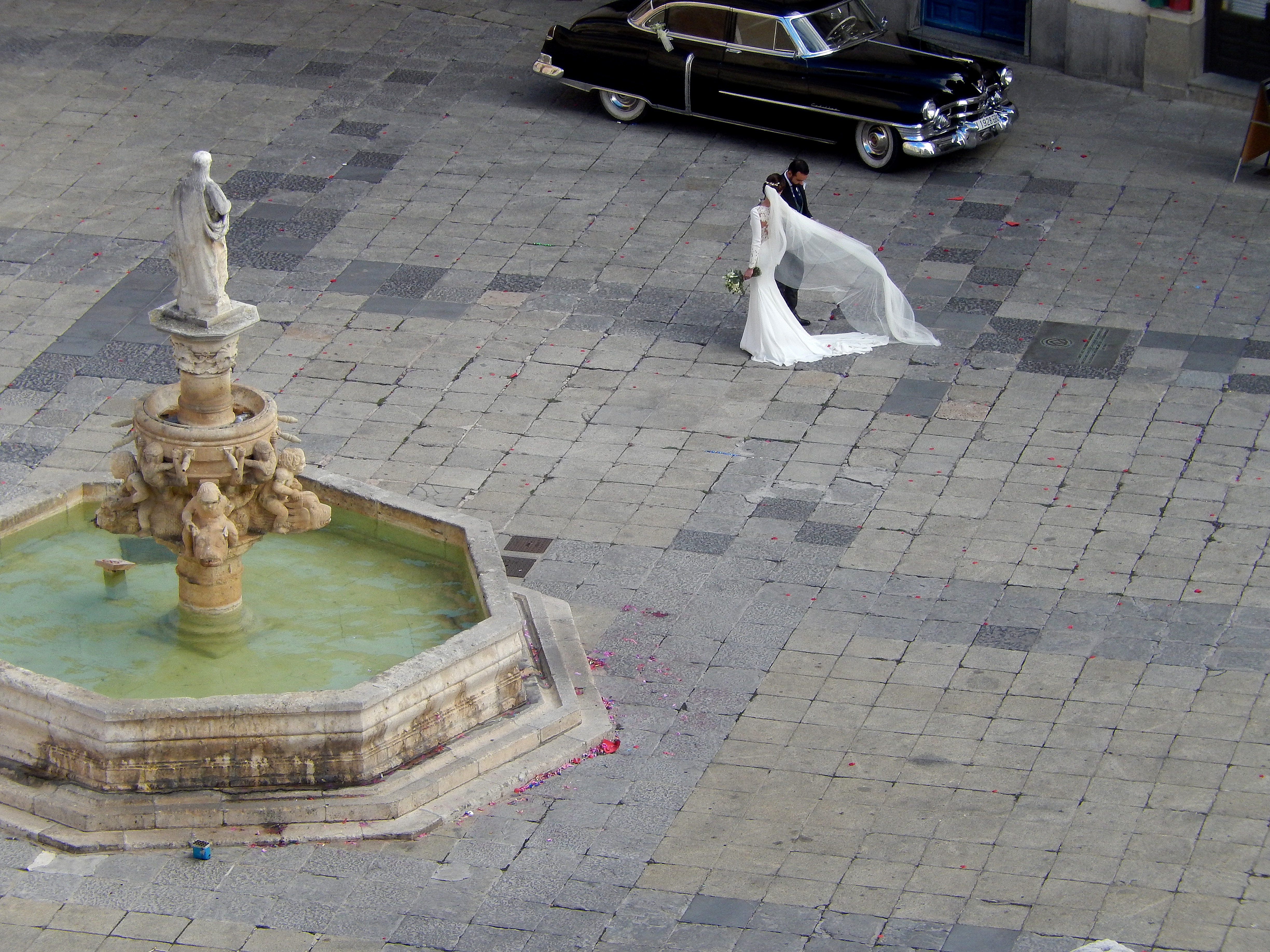
there was a wedding in the square as we were settling in
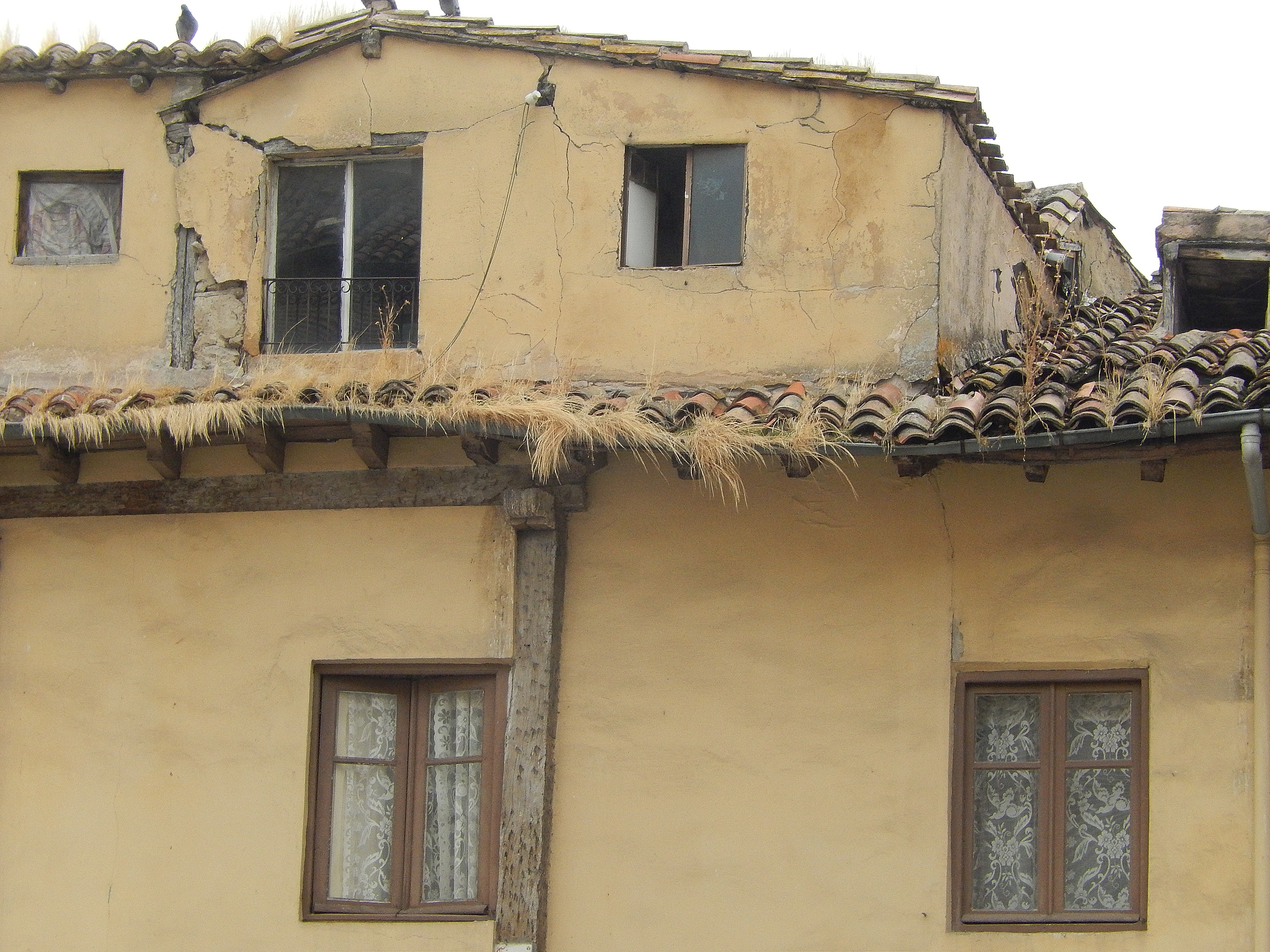
detail of the building across from our room
We set out to walk around the city, have the usual late lunch, and then do some shopping, because the next day, Sunday, all the shops would be closed, and we wanted a few souvenirs.
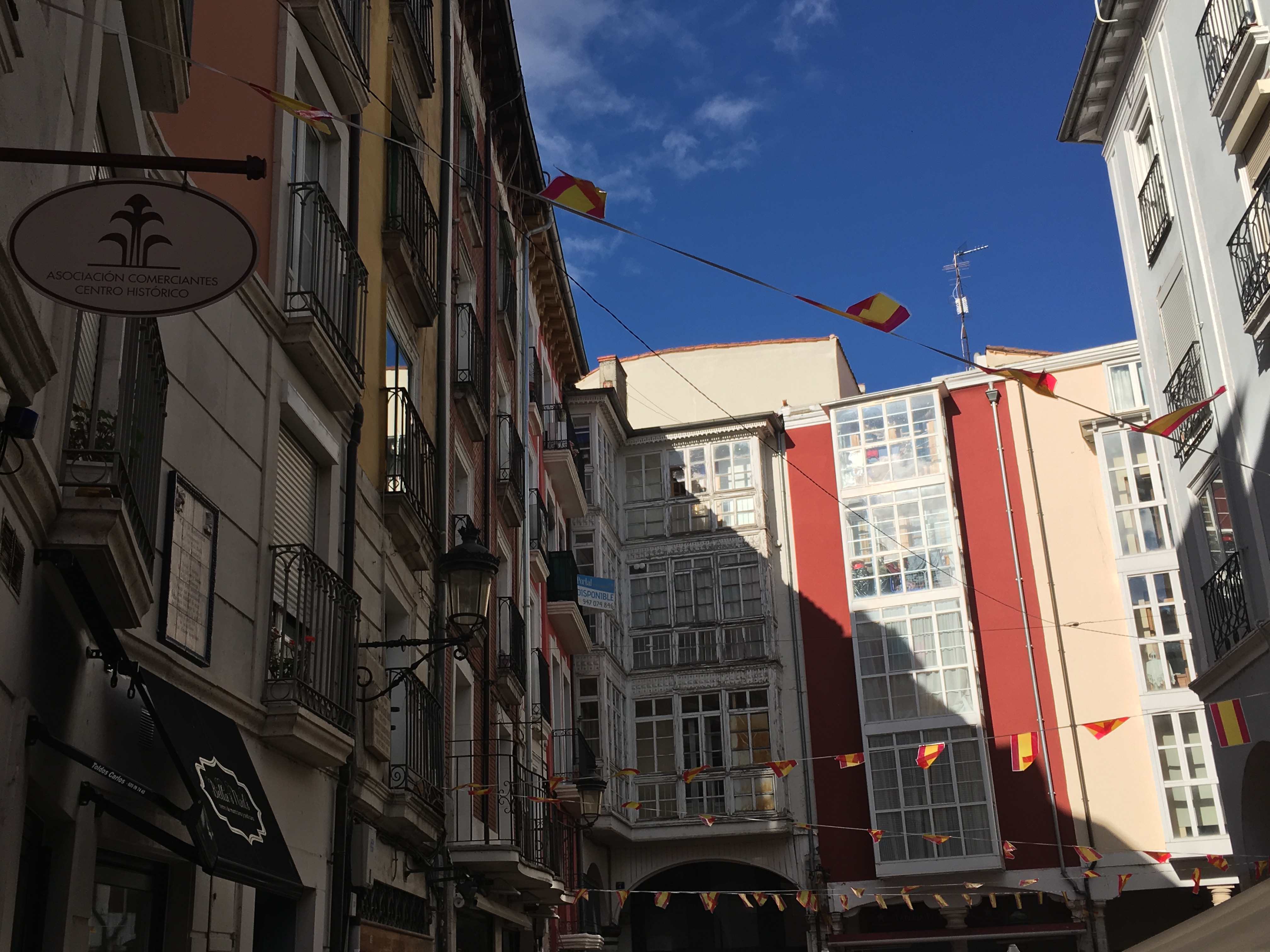
street scene
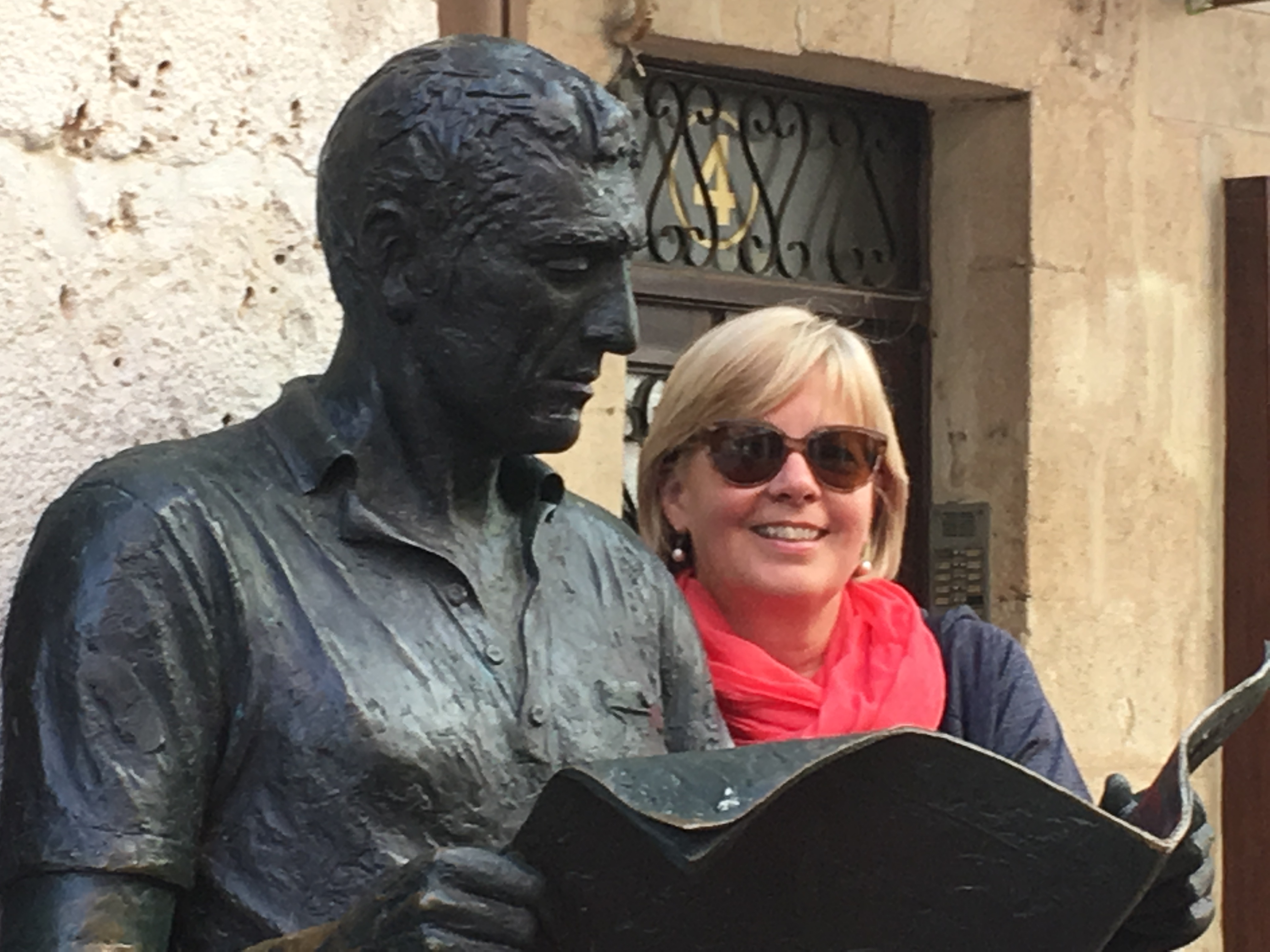
reading over his shoulder
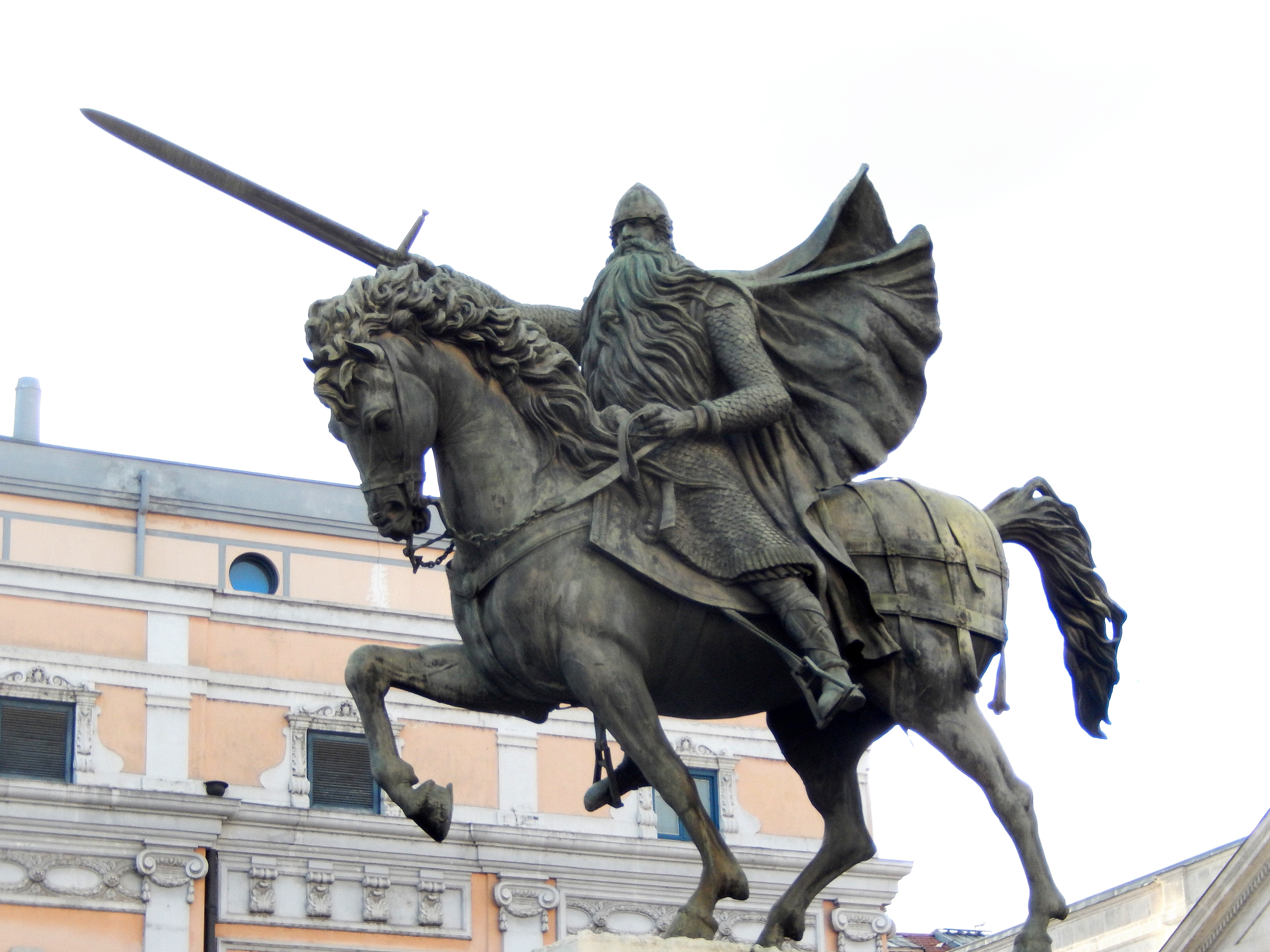
El Cid
We came upon another wedding, with ‘troubadours’ singing, as the bride and groom slowly emerged from the church. These singers are students who are energetic and love to sing, and they form groups that are called “La Tuna,” and then hire themselves out for events, or just wander from bar to bar singing for their supper, always in these costumes…
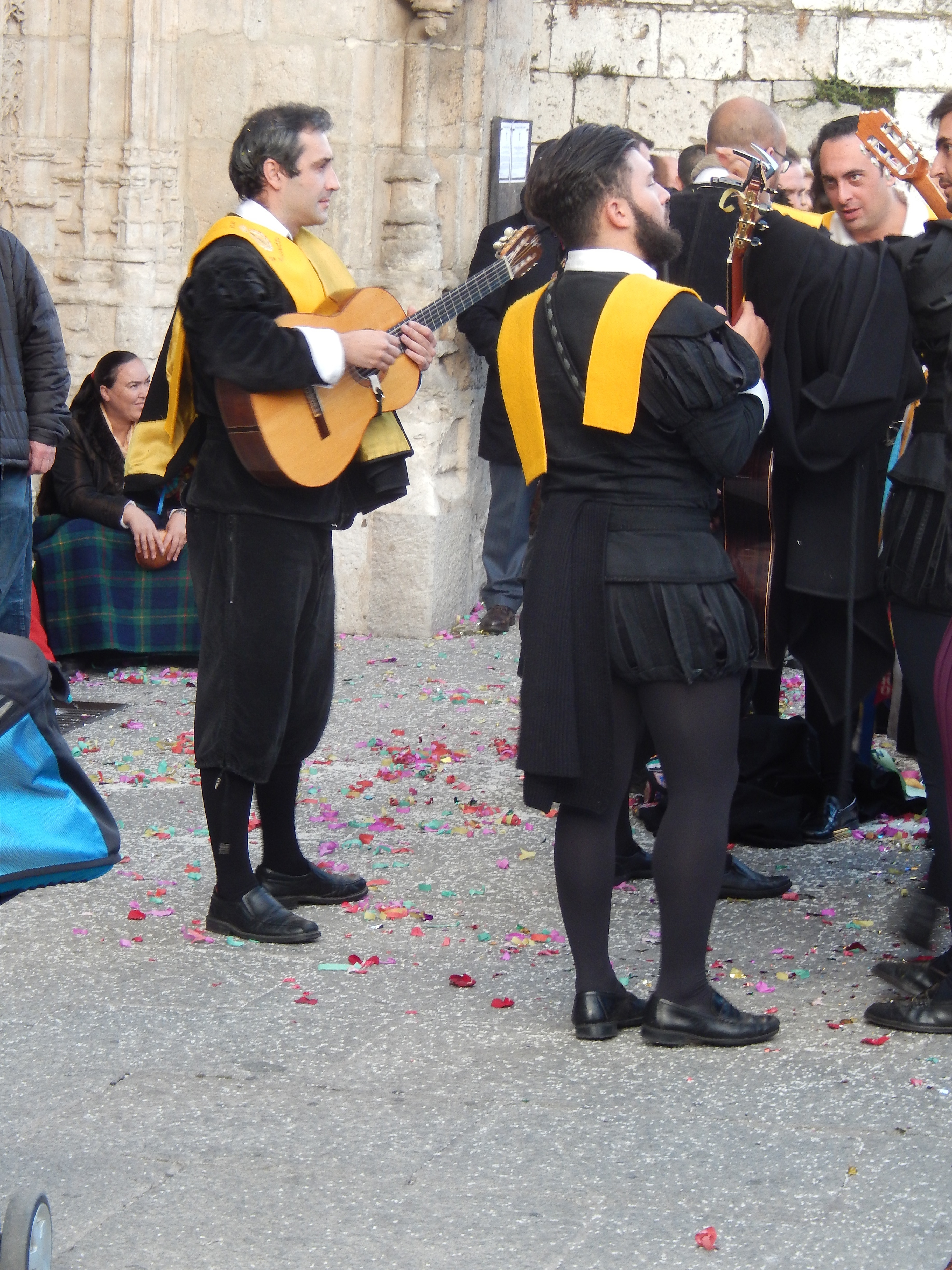
a closer look at the Tunas
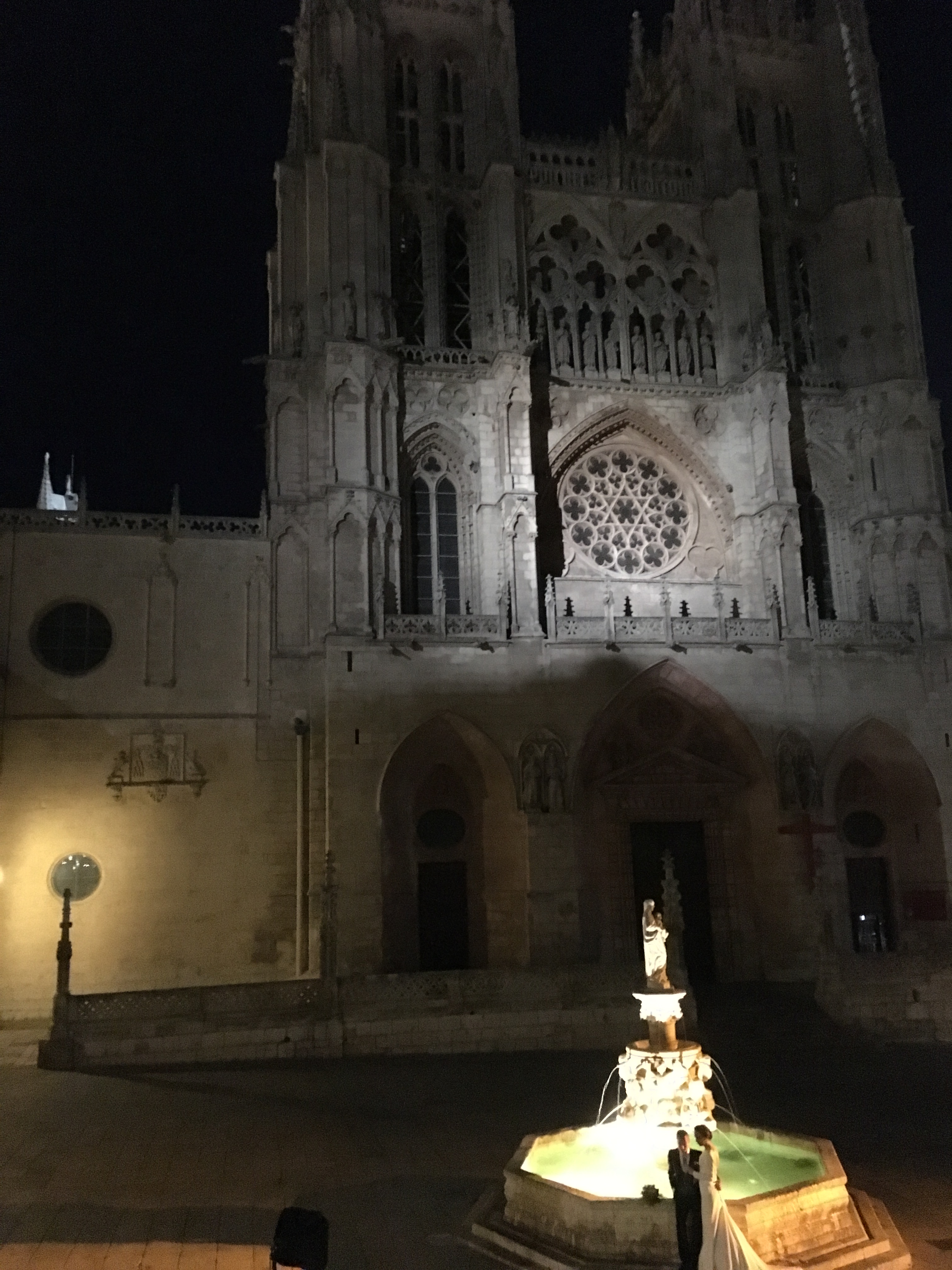
later that evening, in front of the cathedral, popular for photos
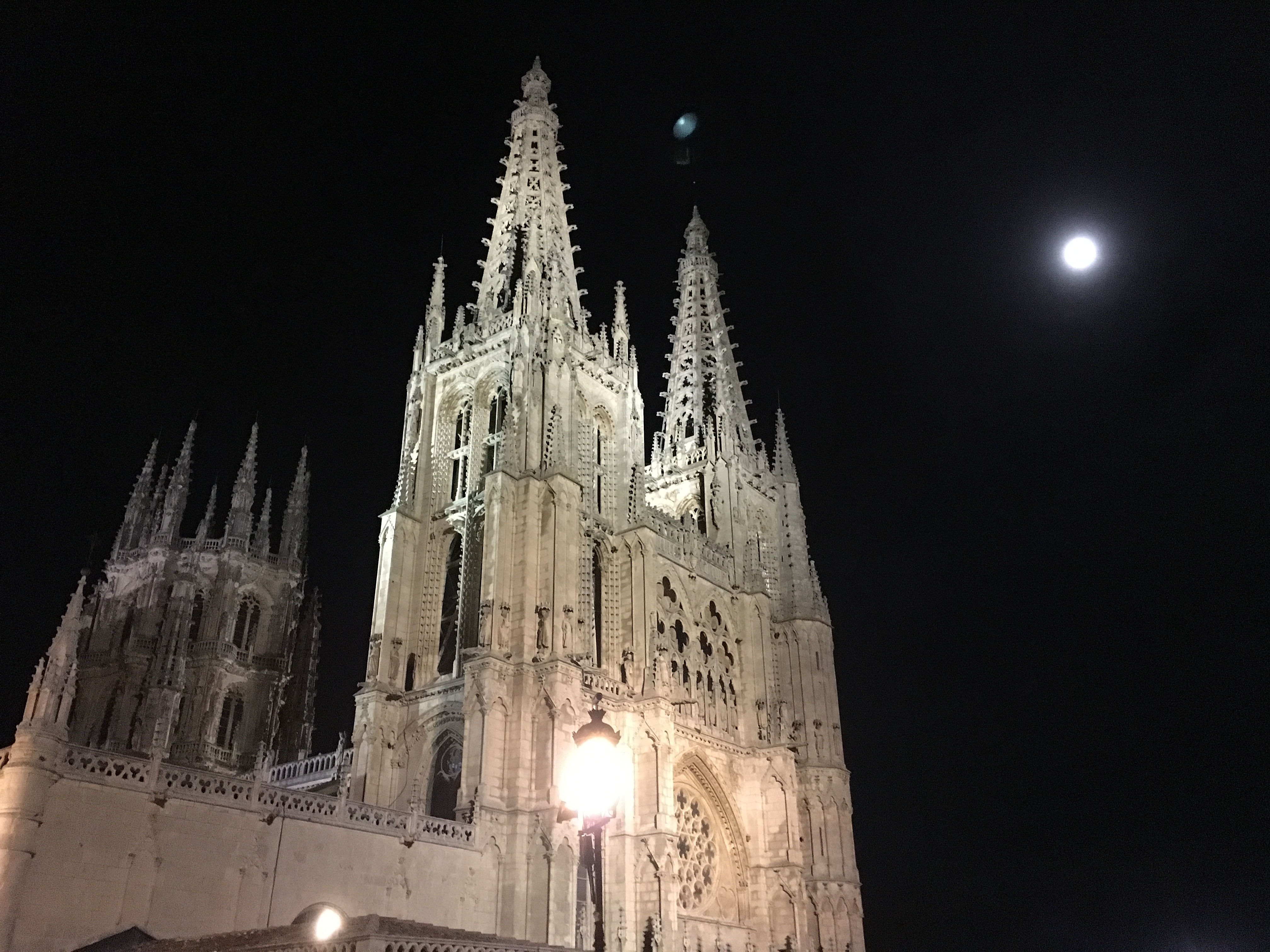
beautiful night
The next day we toured the stunning cathedral.. The cathedral was built over the course of a century. It was started in the 13th-century by French architects, who used a simple, graceful style similar to Paris’ Notre-Dame. In the 14th century, German cathedral-builders took over, adding the fringe to the tops of the towers, similar to the cathedral in Cologne, Germany.
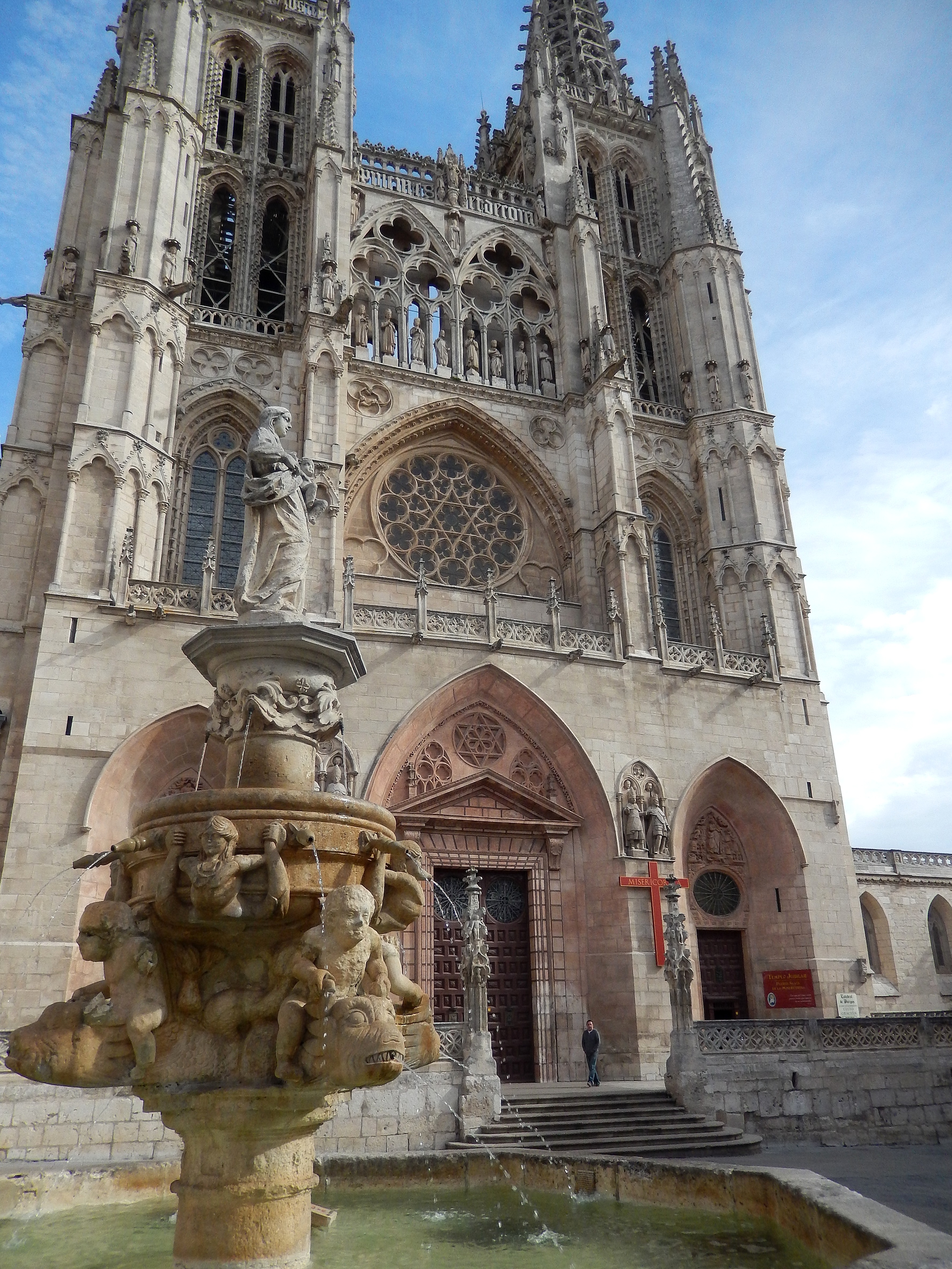
the main facade
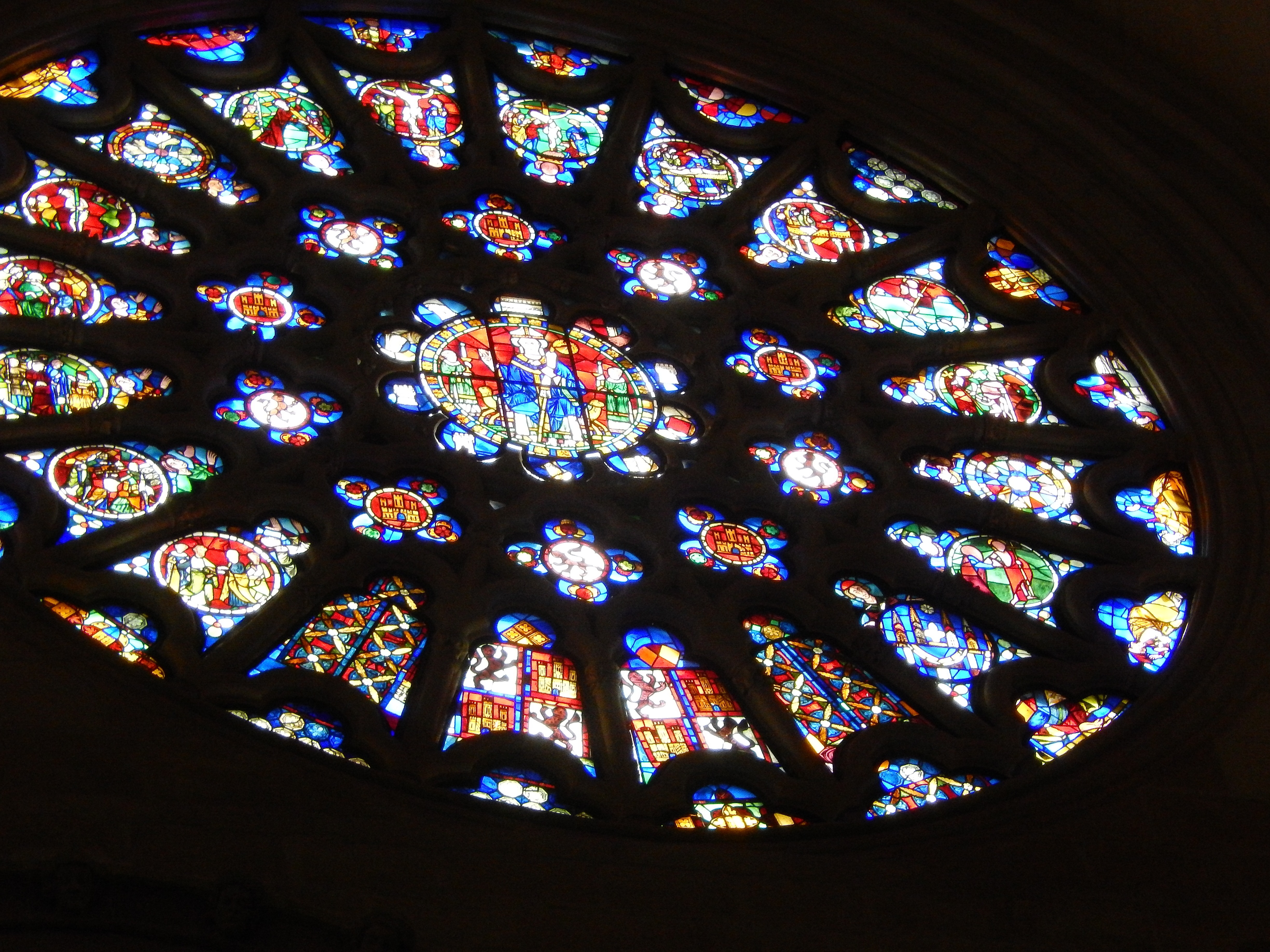
beautiful stained glass
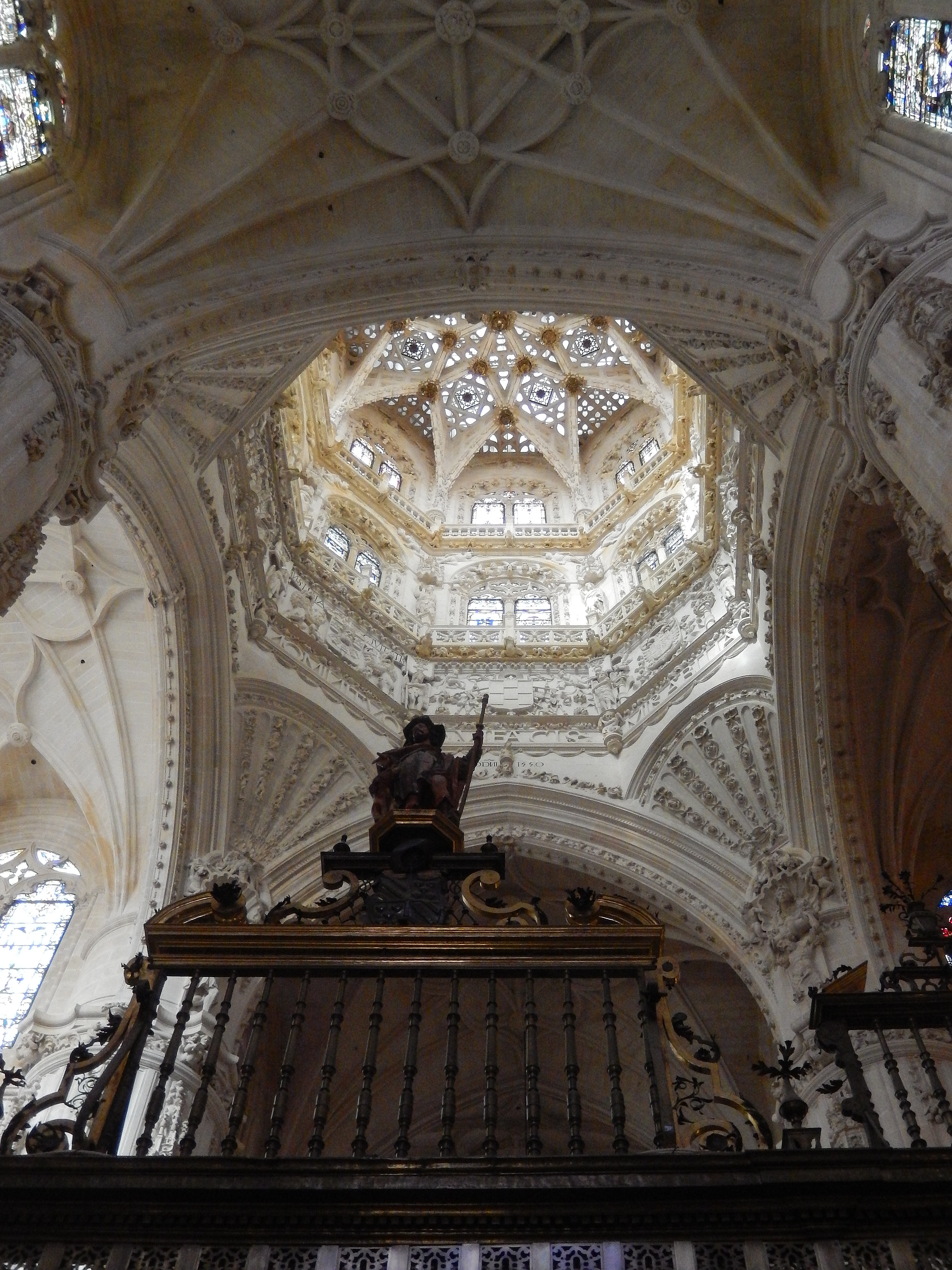
arches look like they’re made of lace
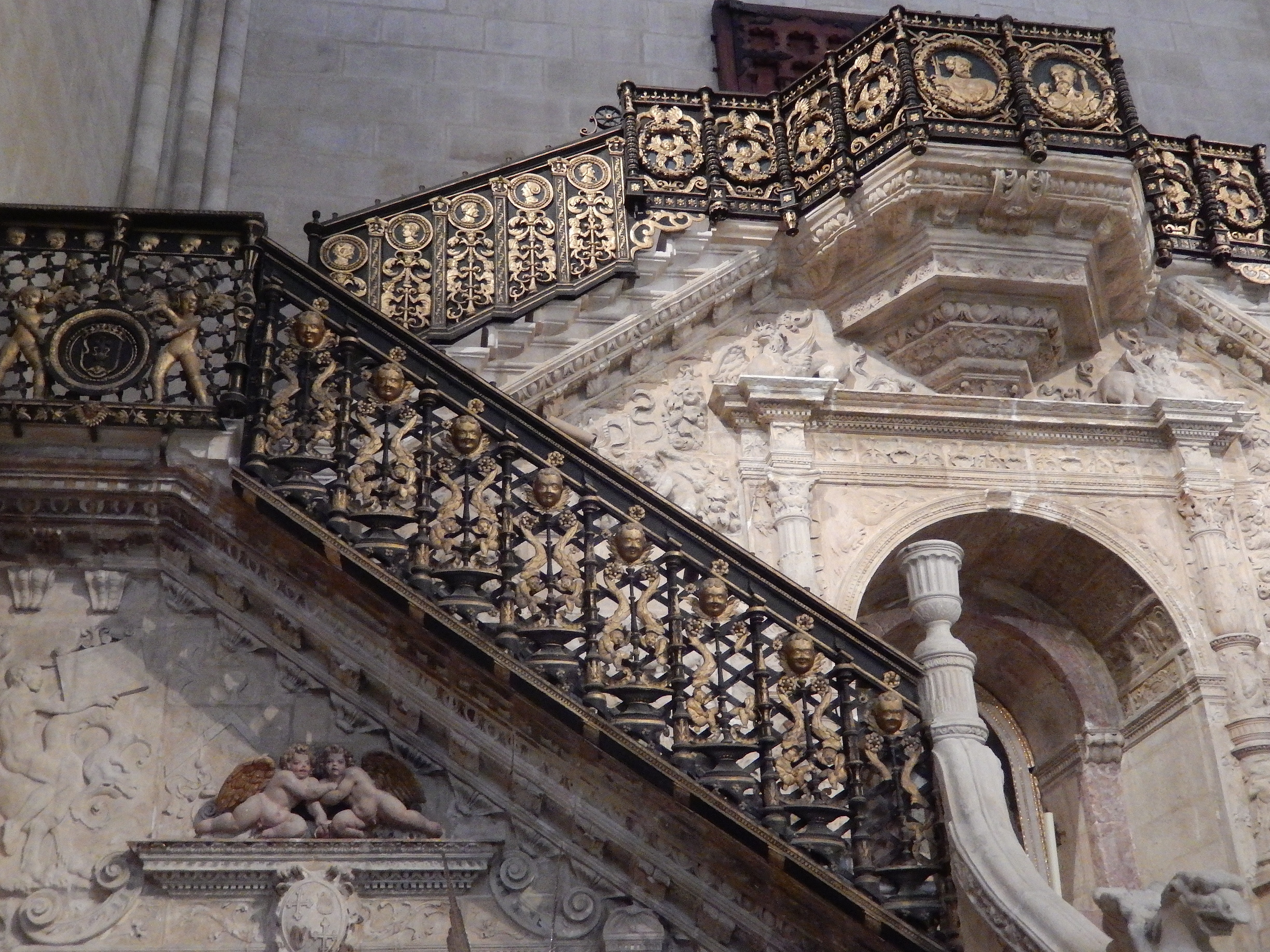
Golden Stairs, designed by a Flemish Renaissance master who studied under Michelangelo
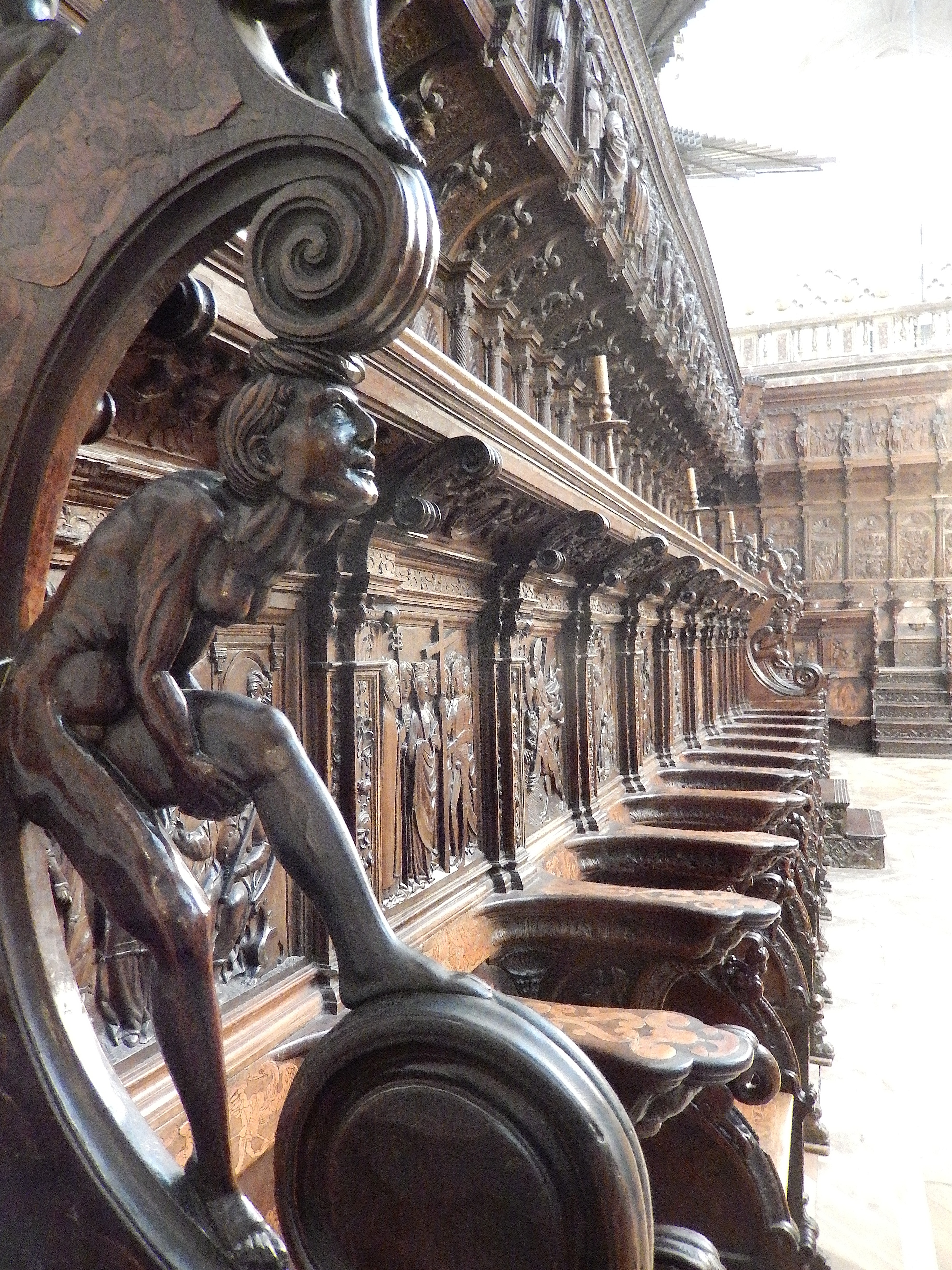
gorgeous wood carvings in the choir
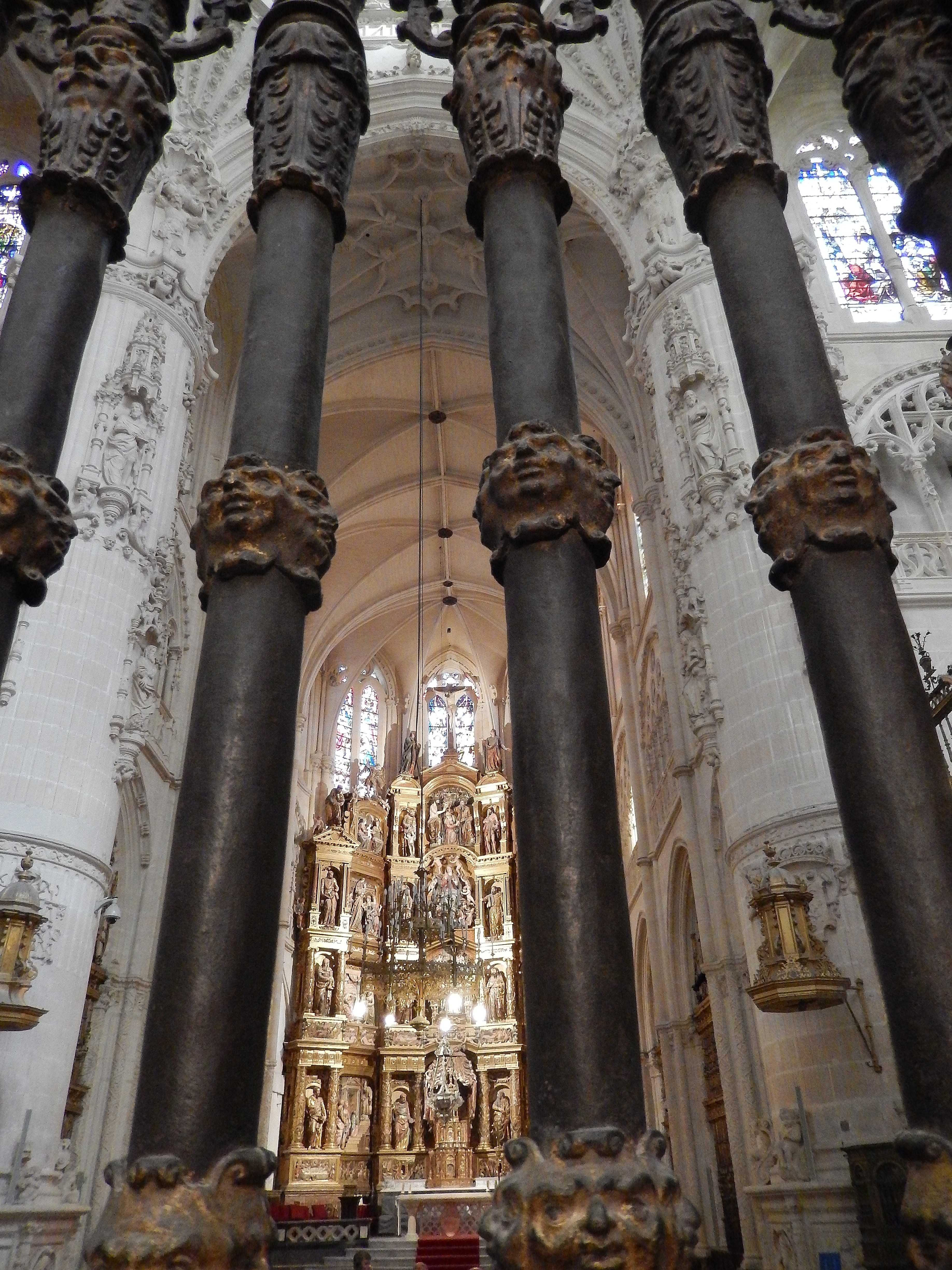
every detail exquisite
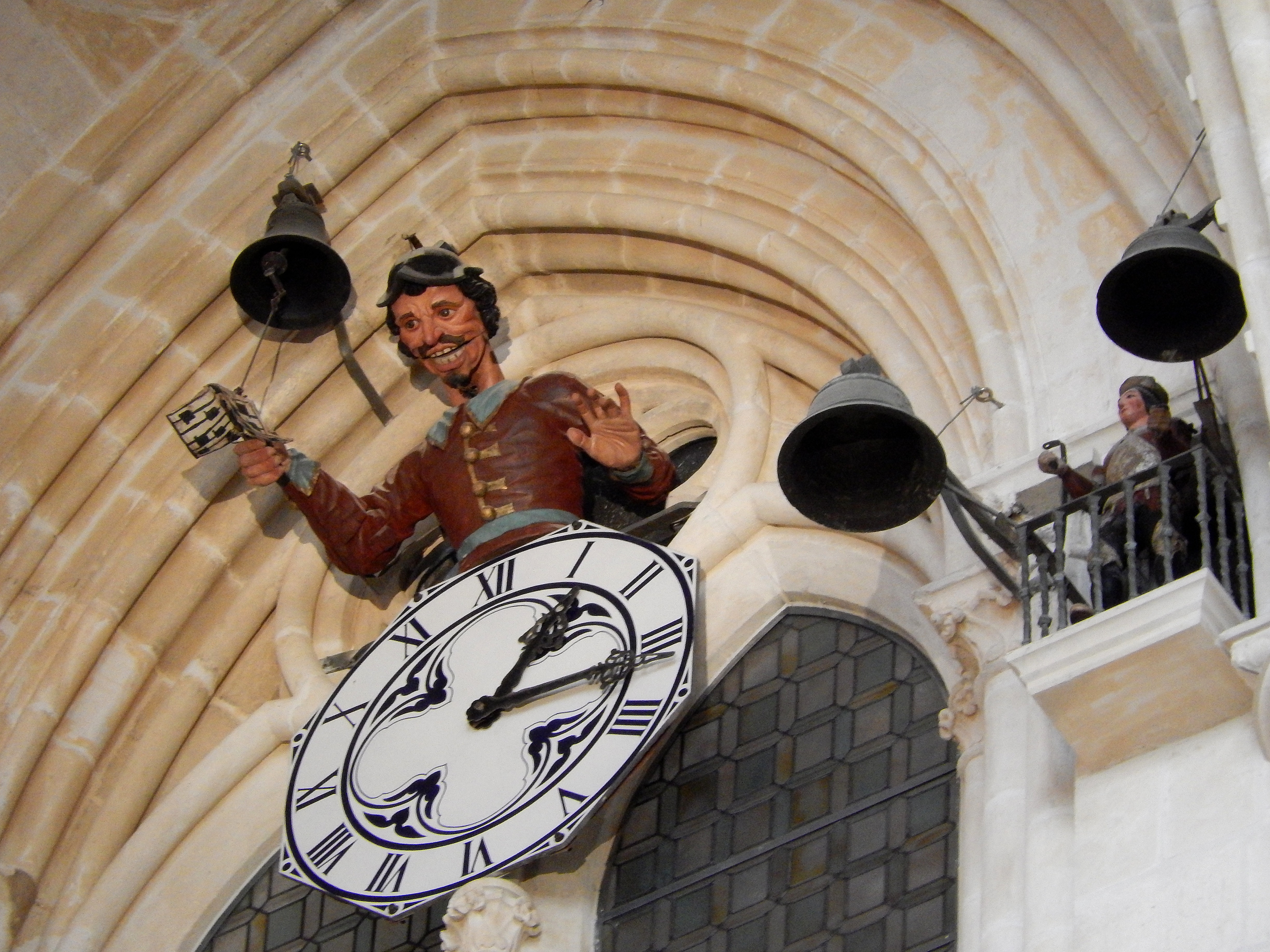
the church mascot: the “Fly-Catcher” clock. Above the clock is the German maker, whose mouth opens and closes when the bell rings…
which Don caught in action in this little video…
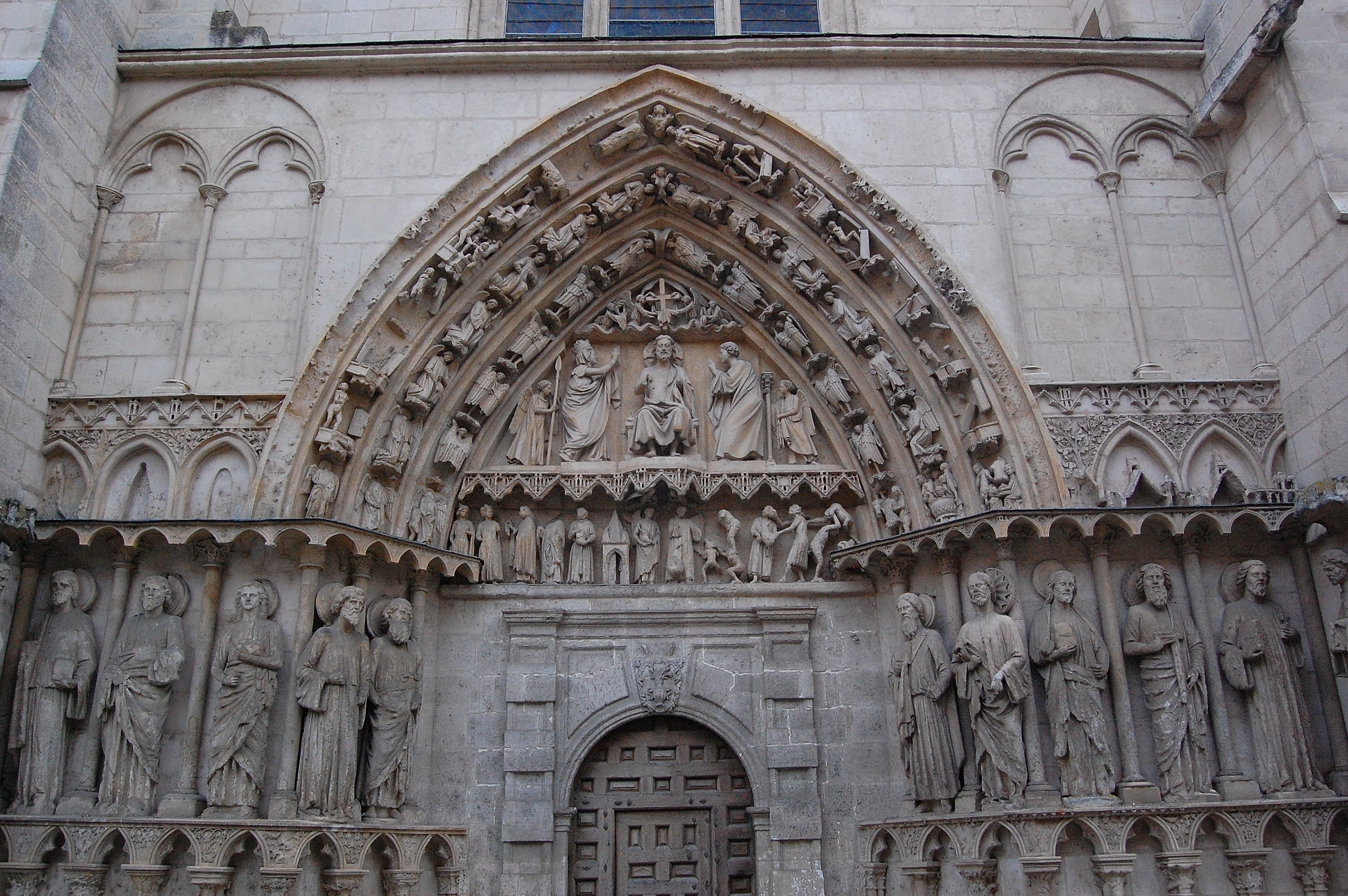
stone carving detail
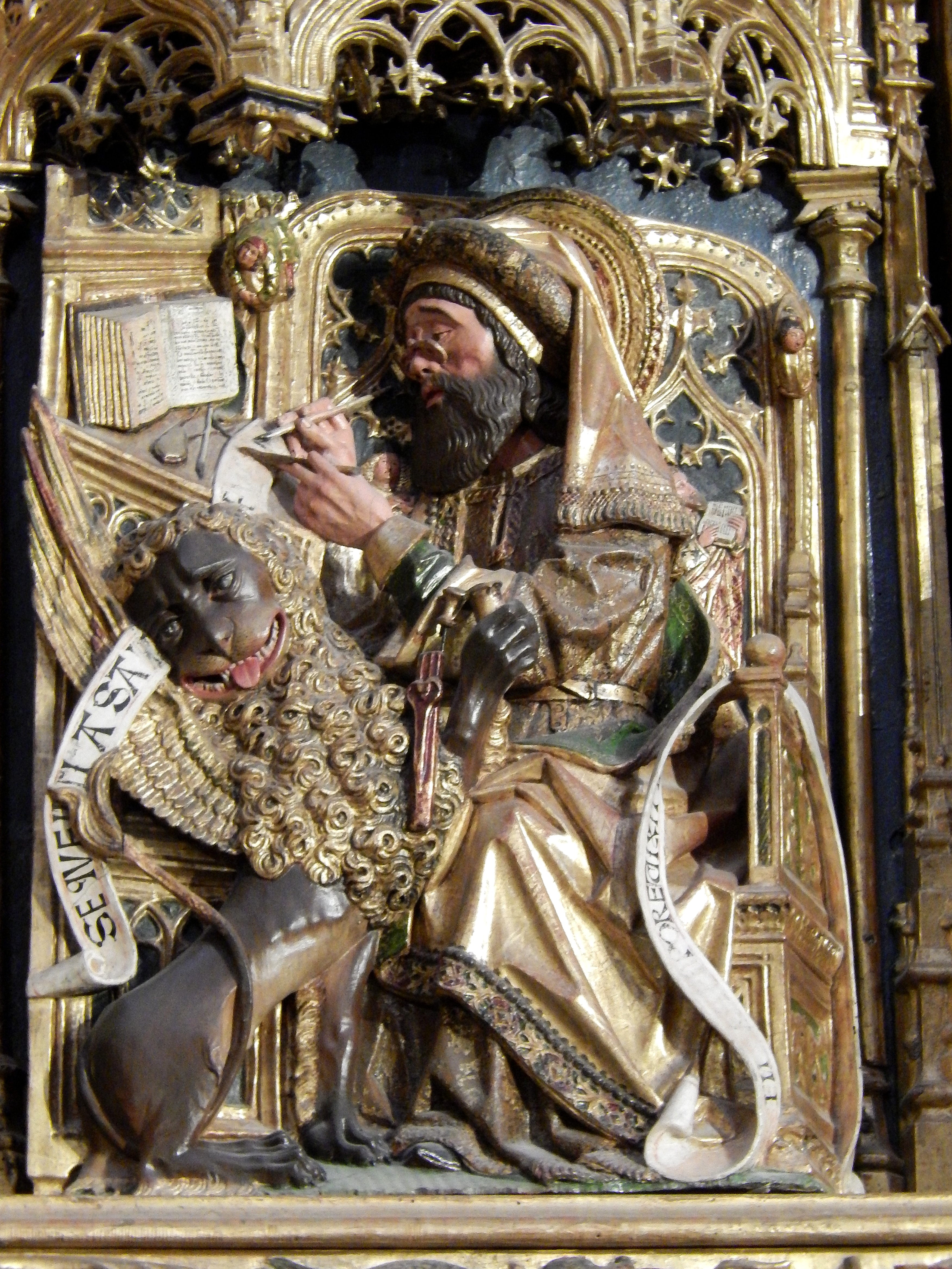
detail from a Gothic altar, this is a self-portrait of the sculptor
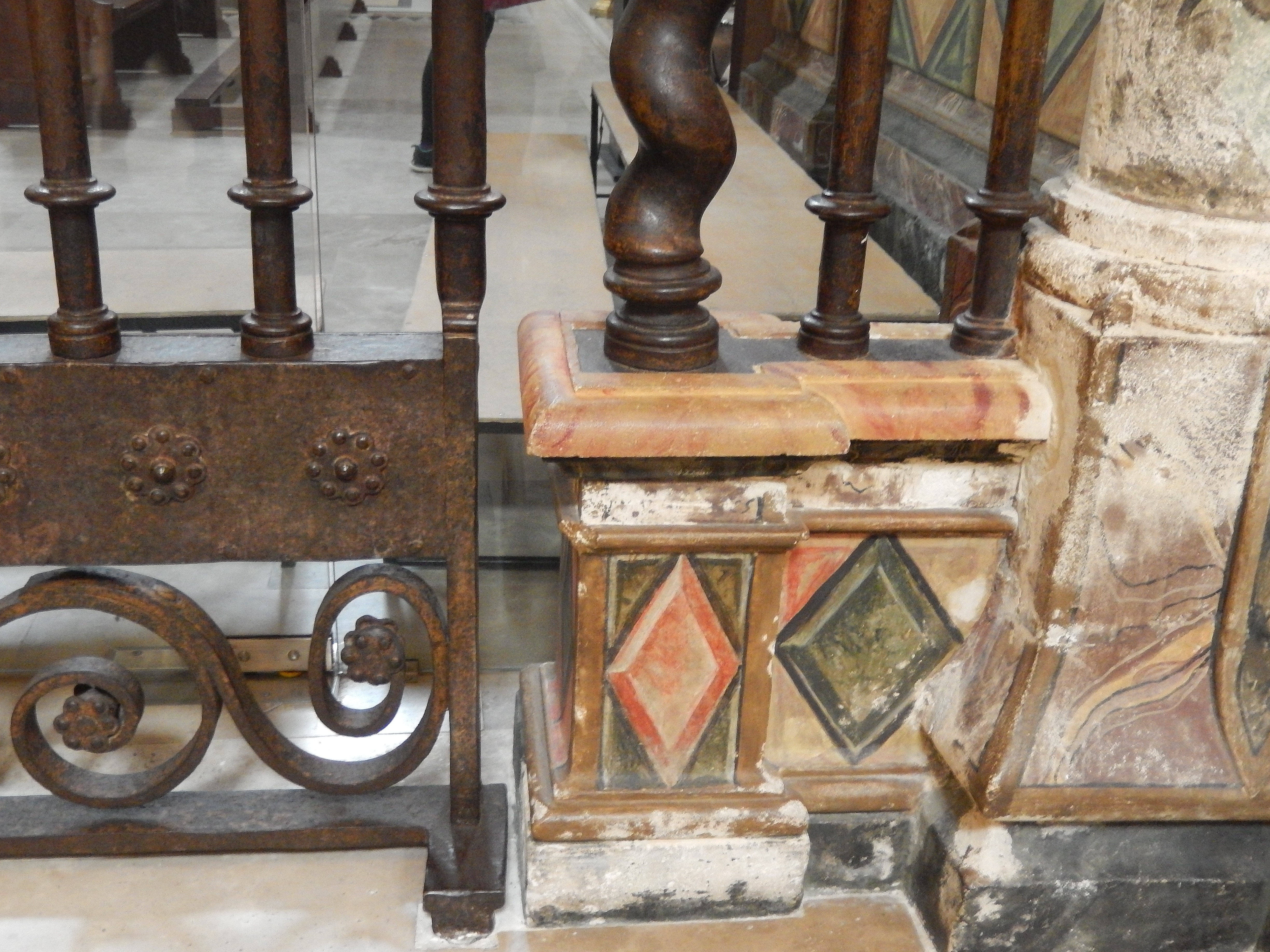
wrought iron and old tiles detail
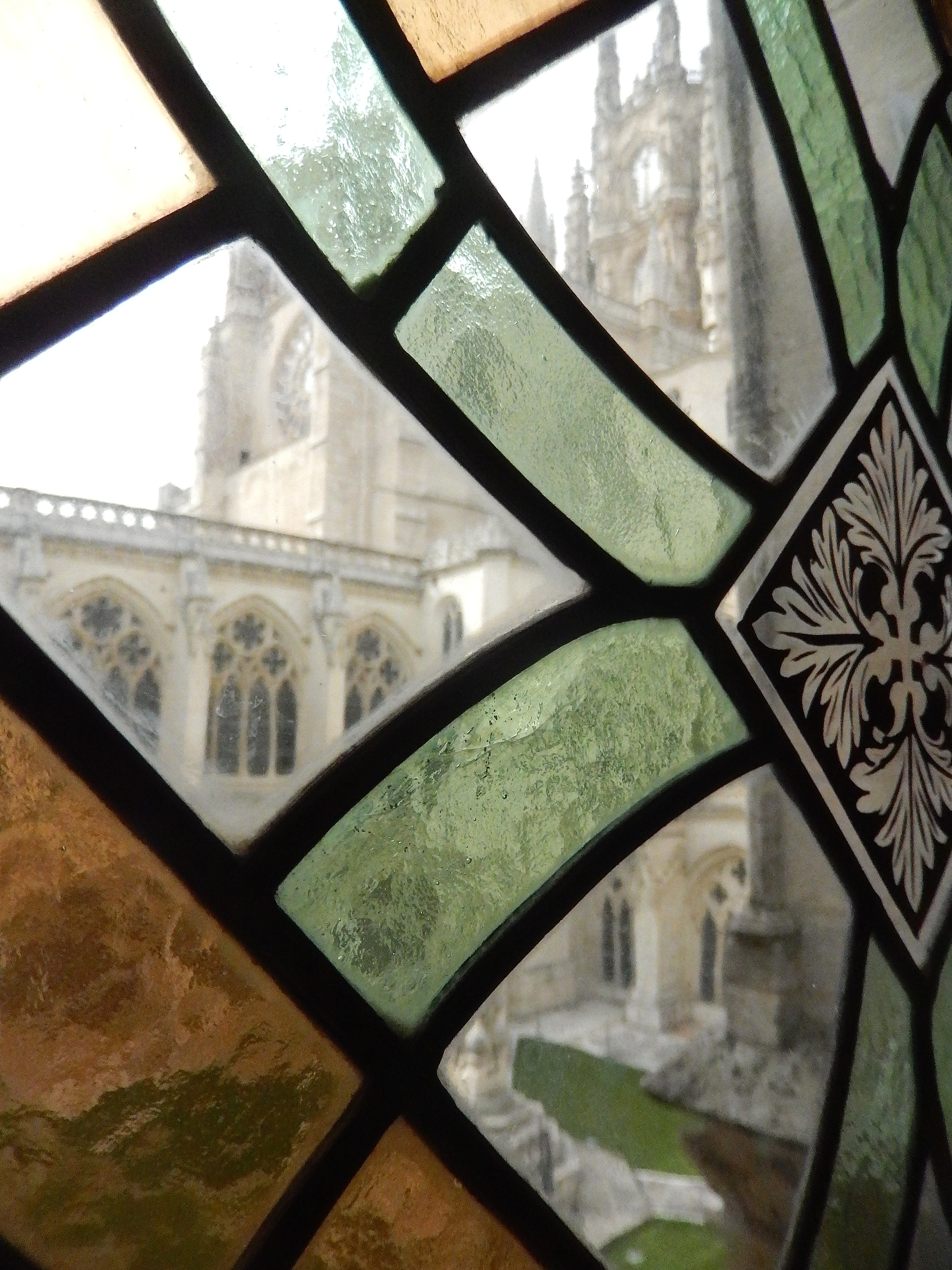
downstairs in the lower cloisters, looking out
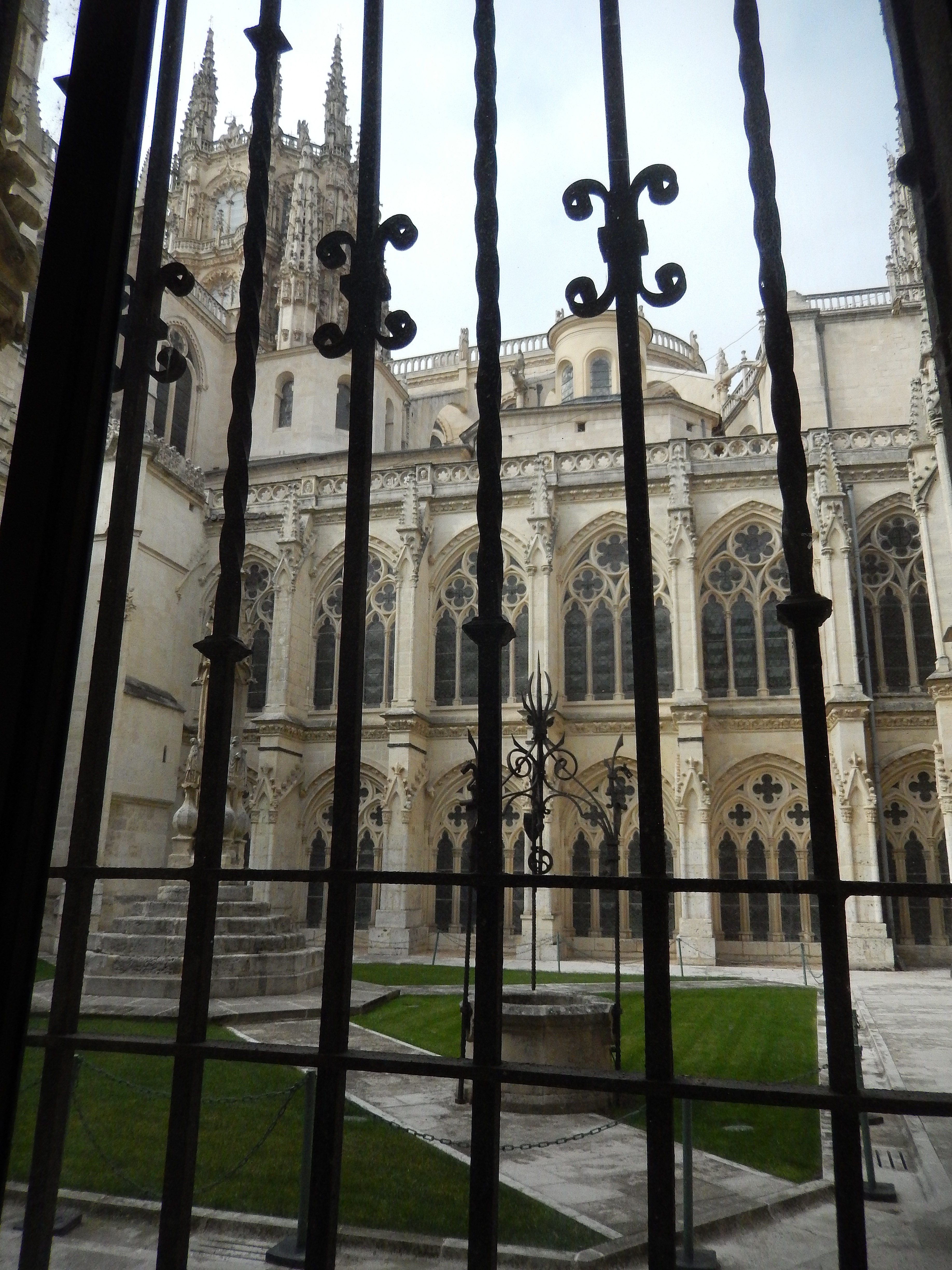
from the lower cloisters, looking out
After a thorough look at the cathedral, it was time for lunch – the best roasted lamb we’ve ever had in our lives!
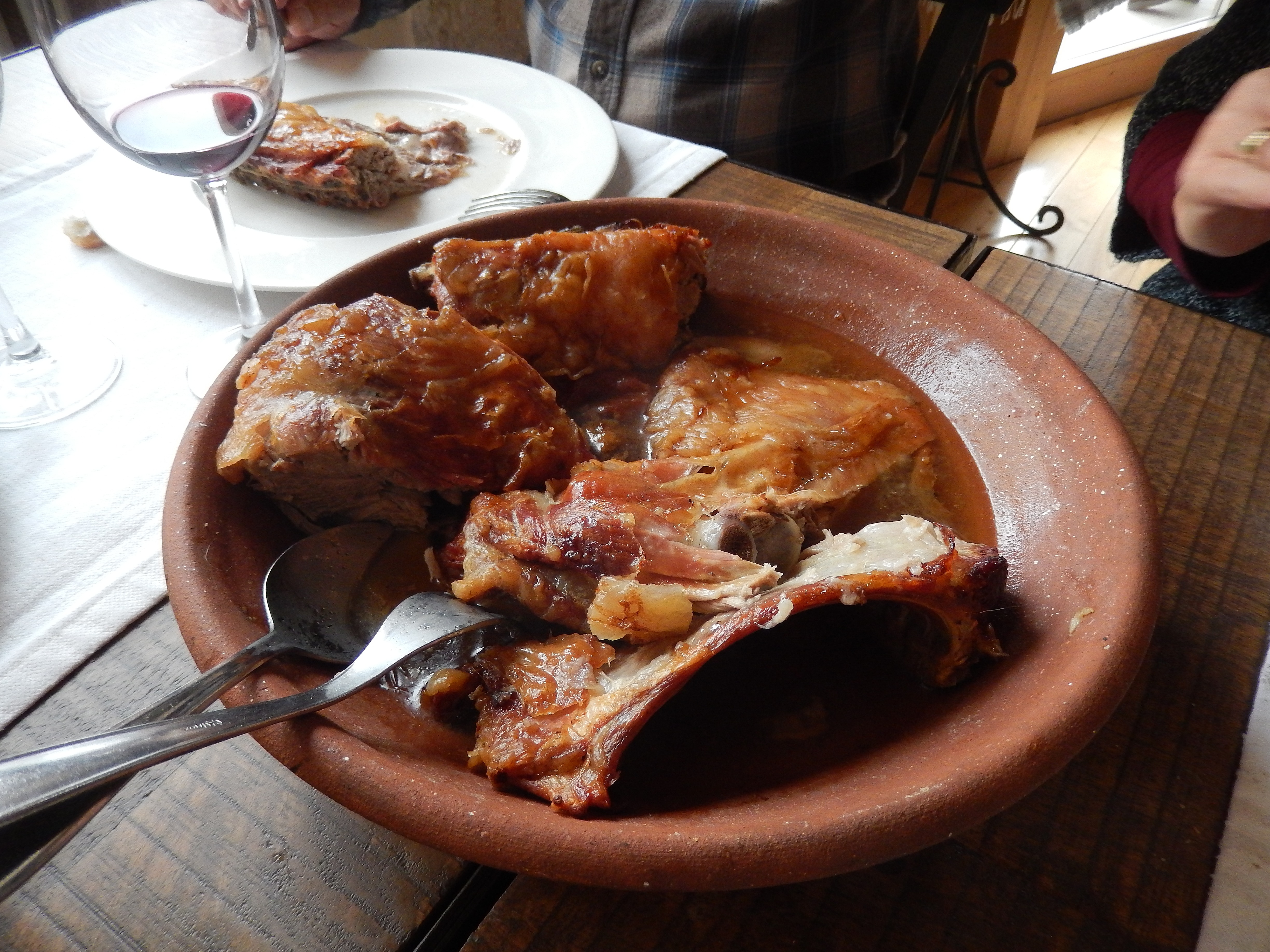
delicious roasted lamb
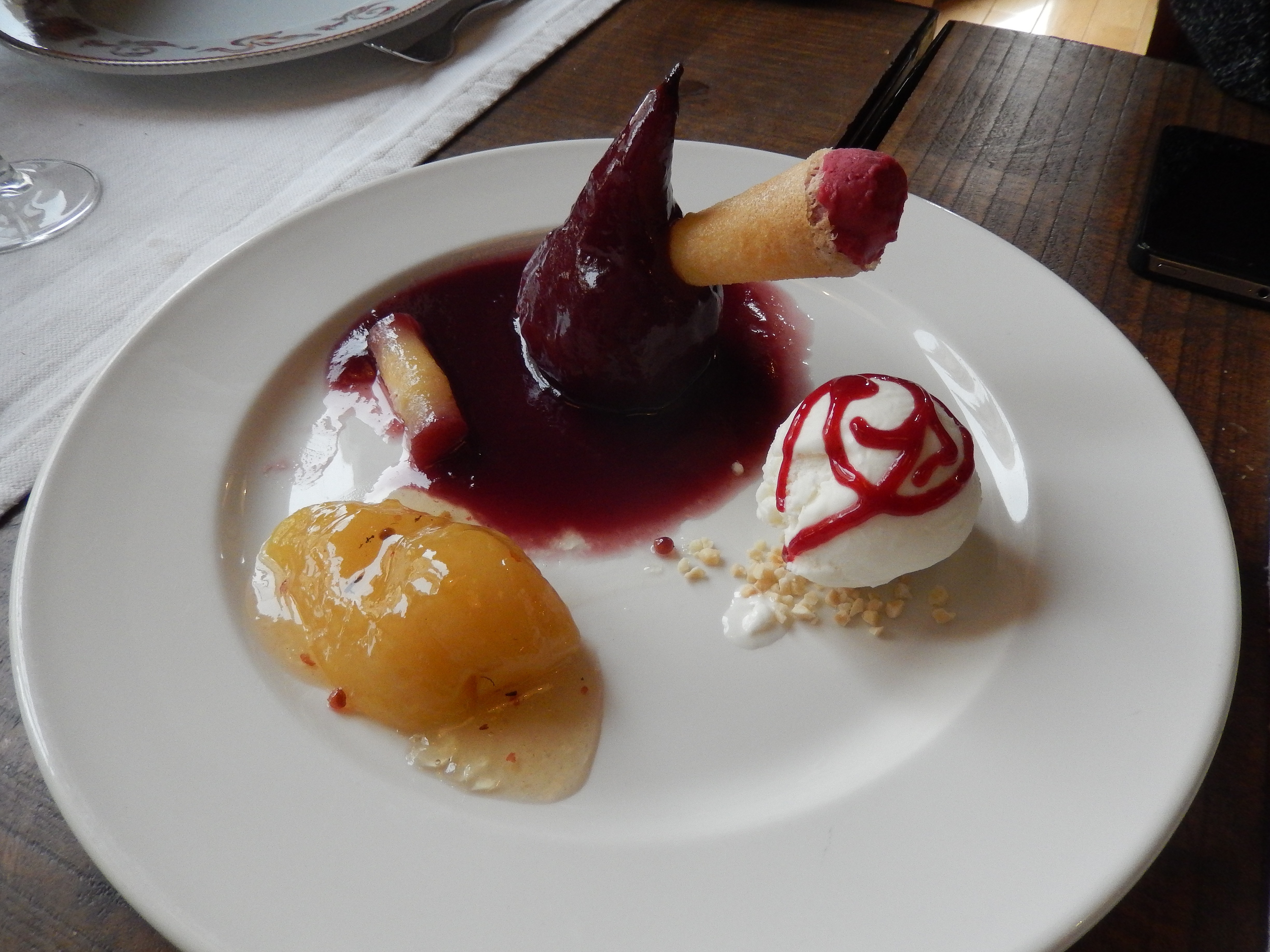
and a perfect dessert
After an amazing lunch, we retired to our rooms for a little siesta. Afterwards we went for a long walk through the city.
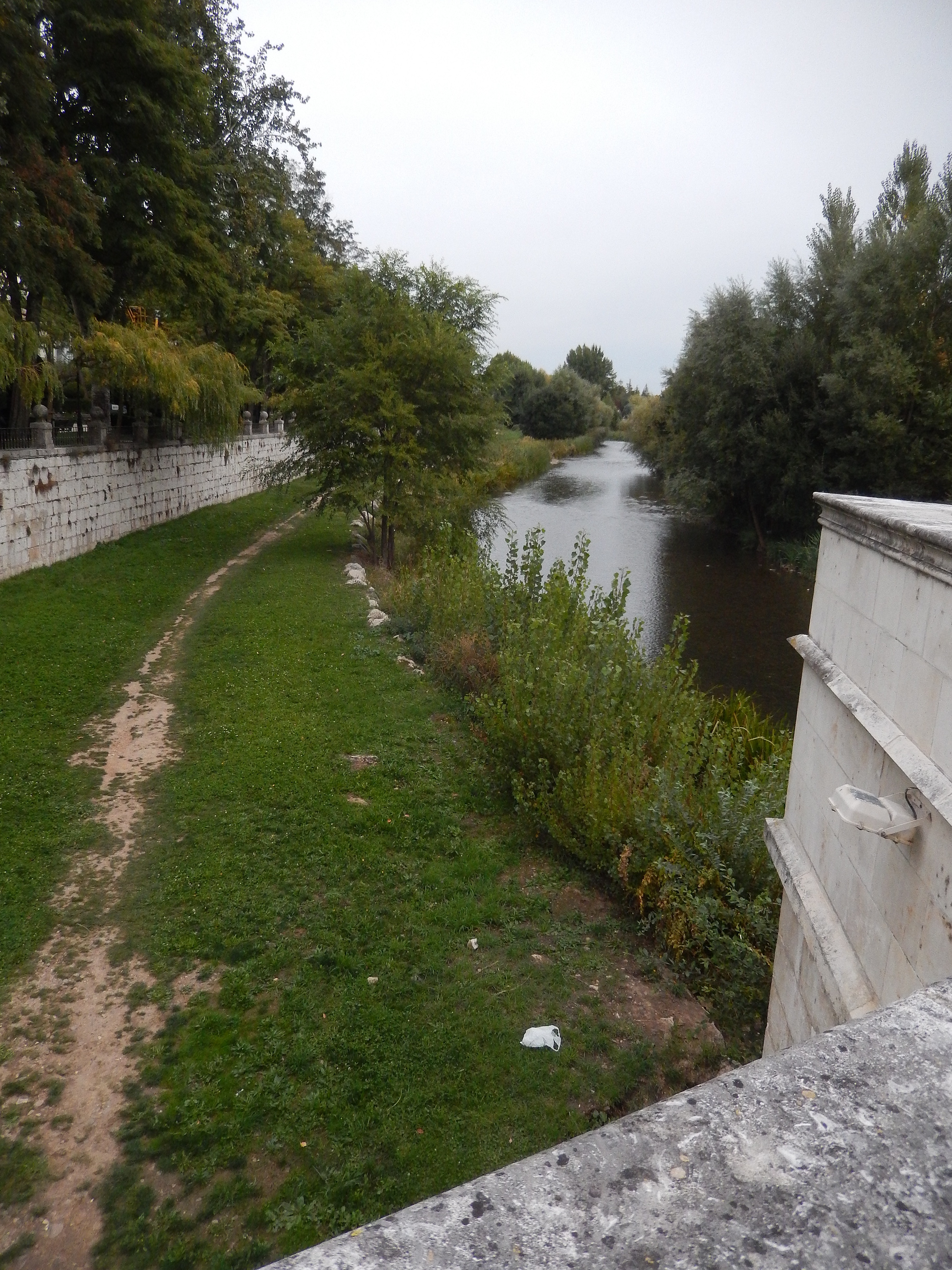
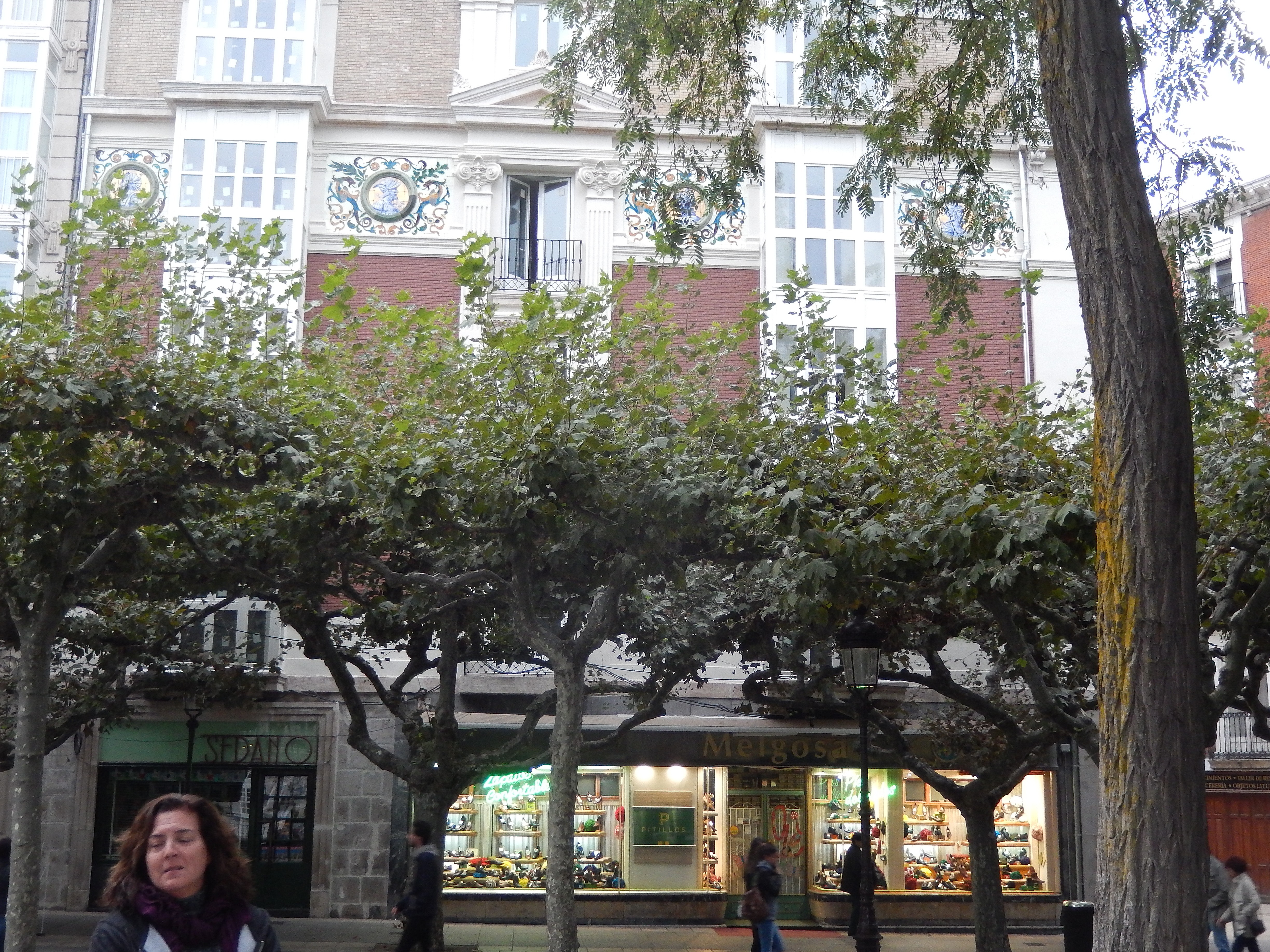
the pretty Arianzón River runs through the city
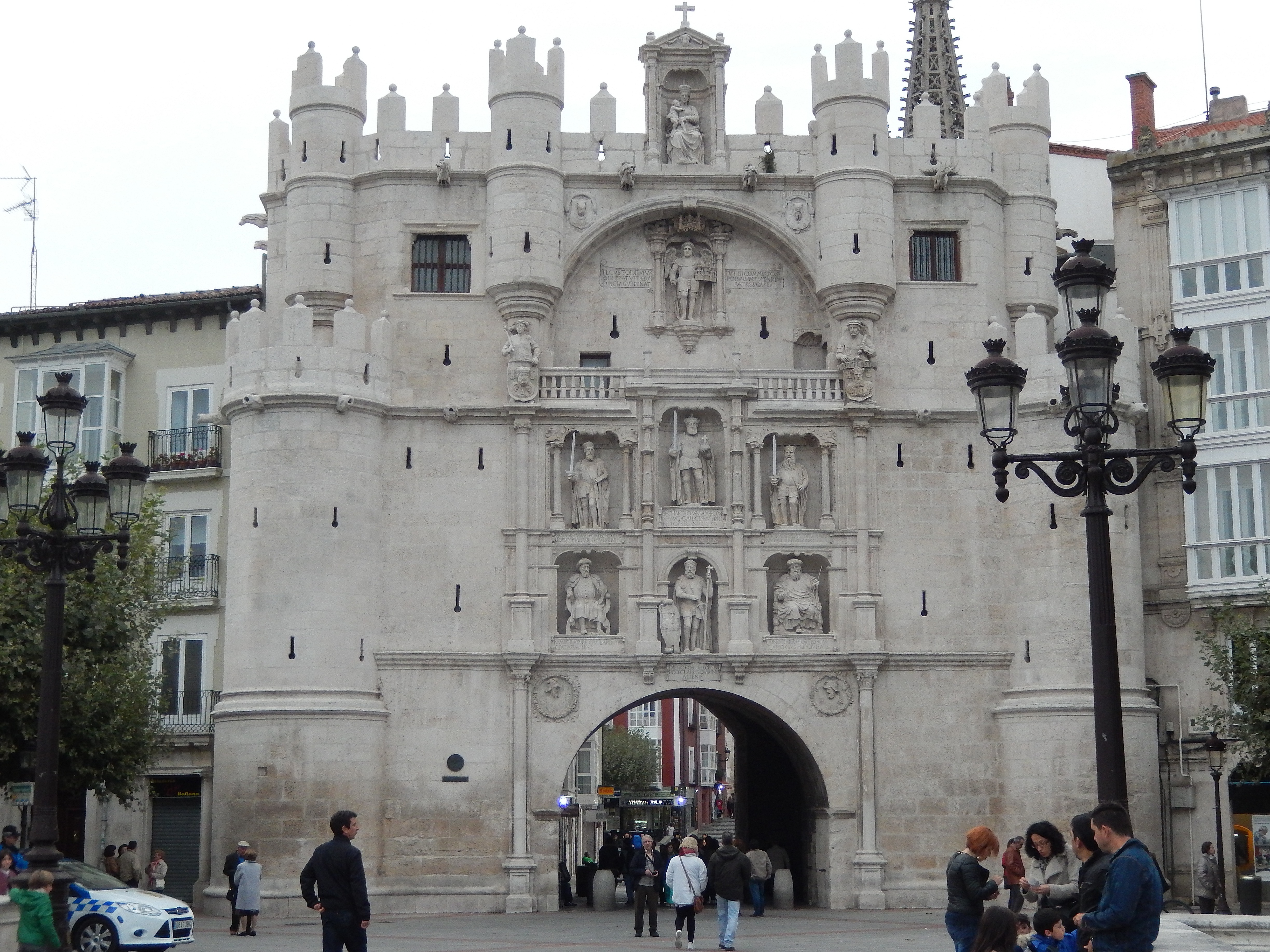
old town gate
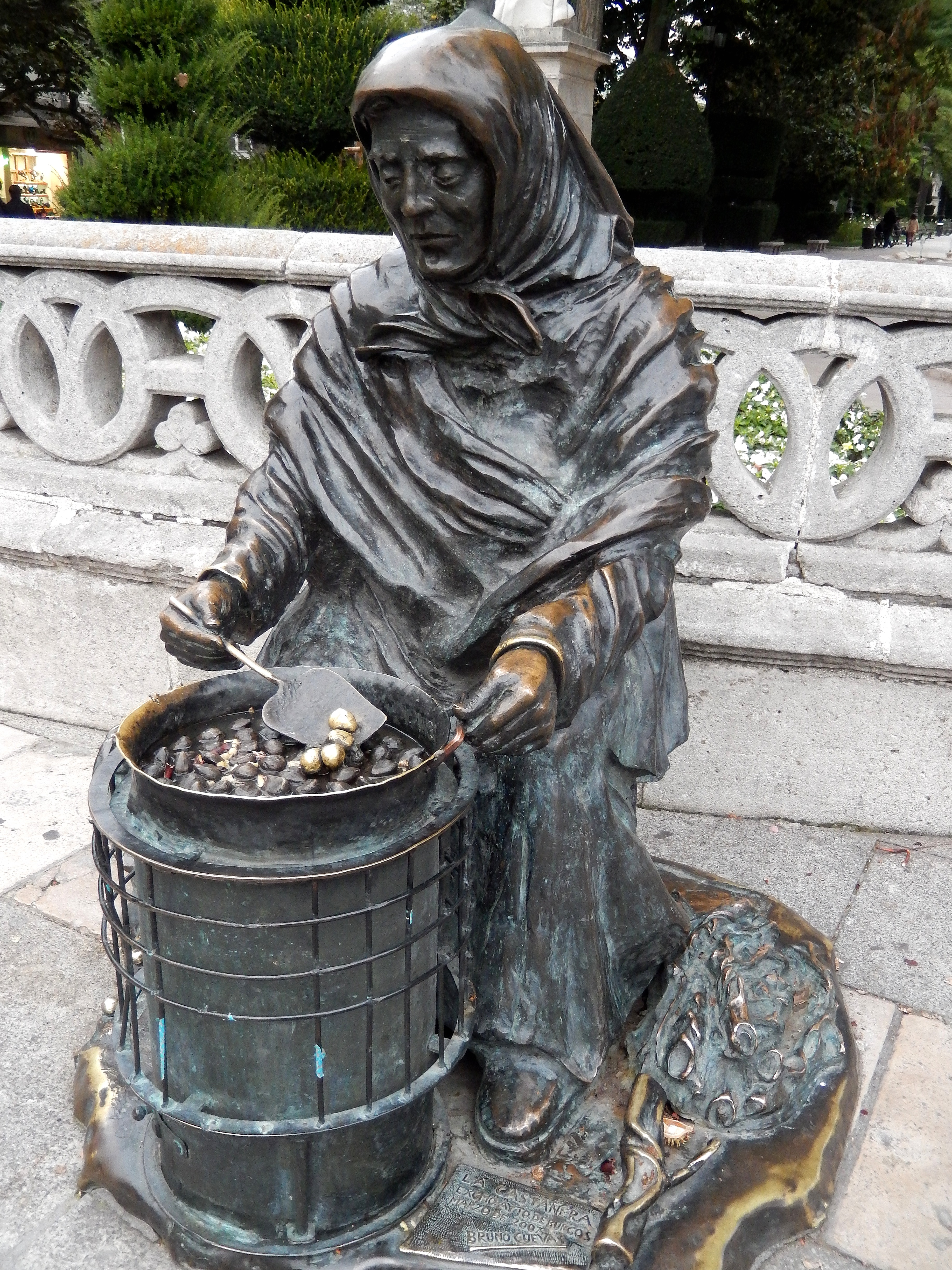
interesting statues along the promenade
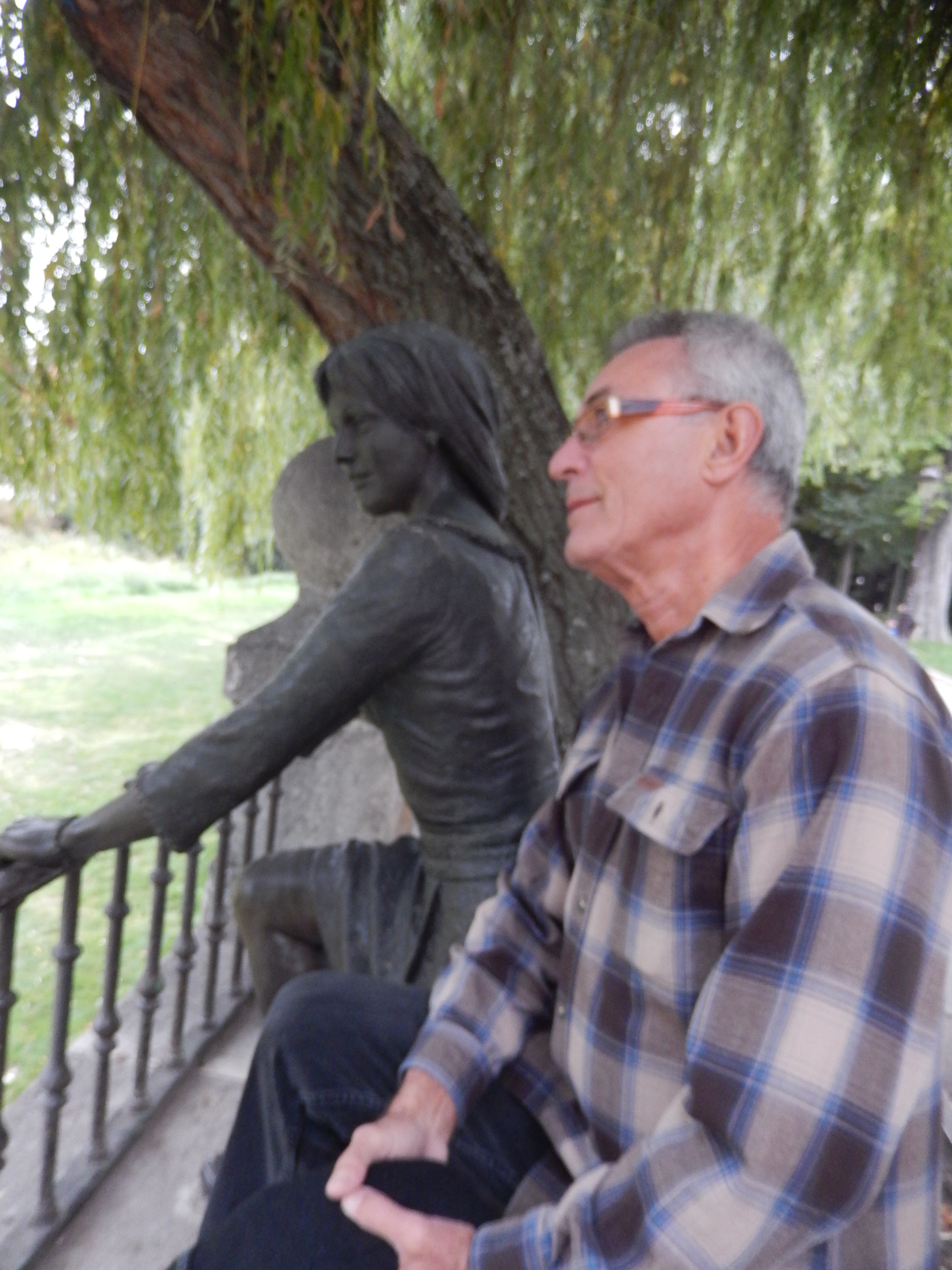
Julio asks how long this one has been in town 🙂
along the promenade
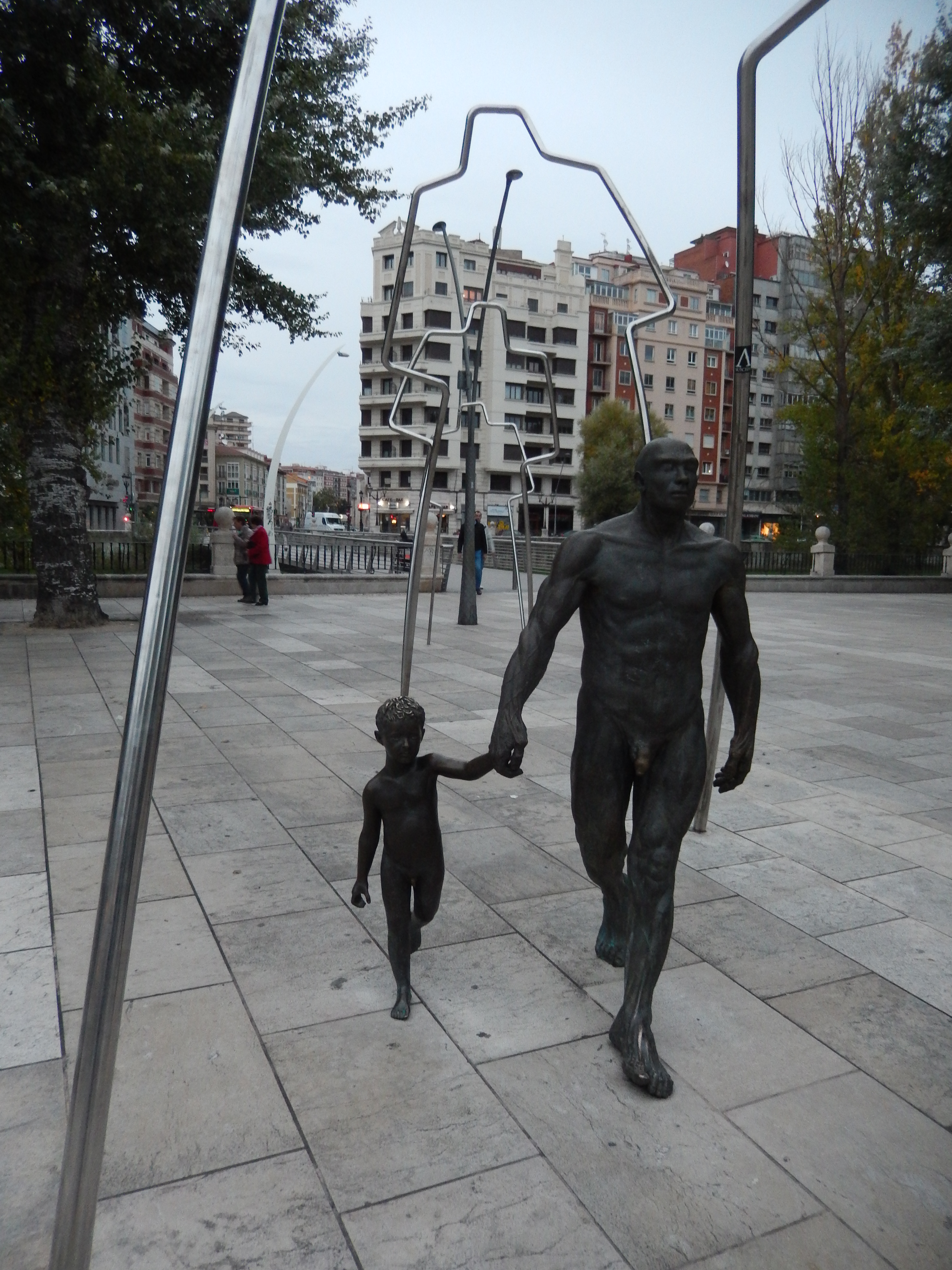
outside the Museum of Human Evolution
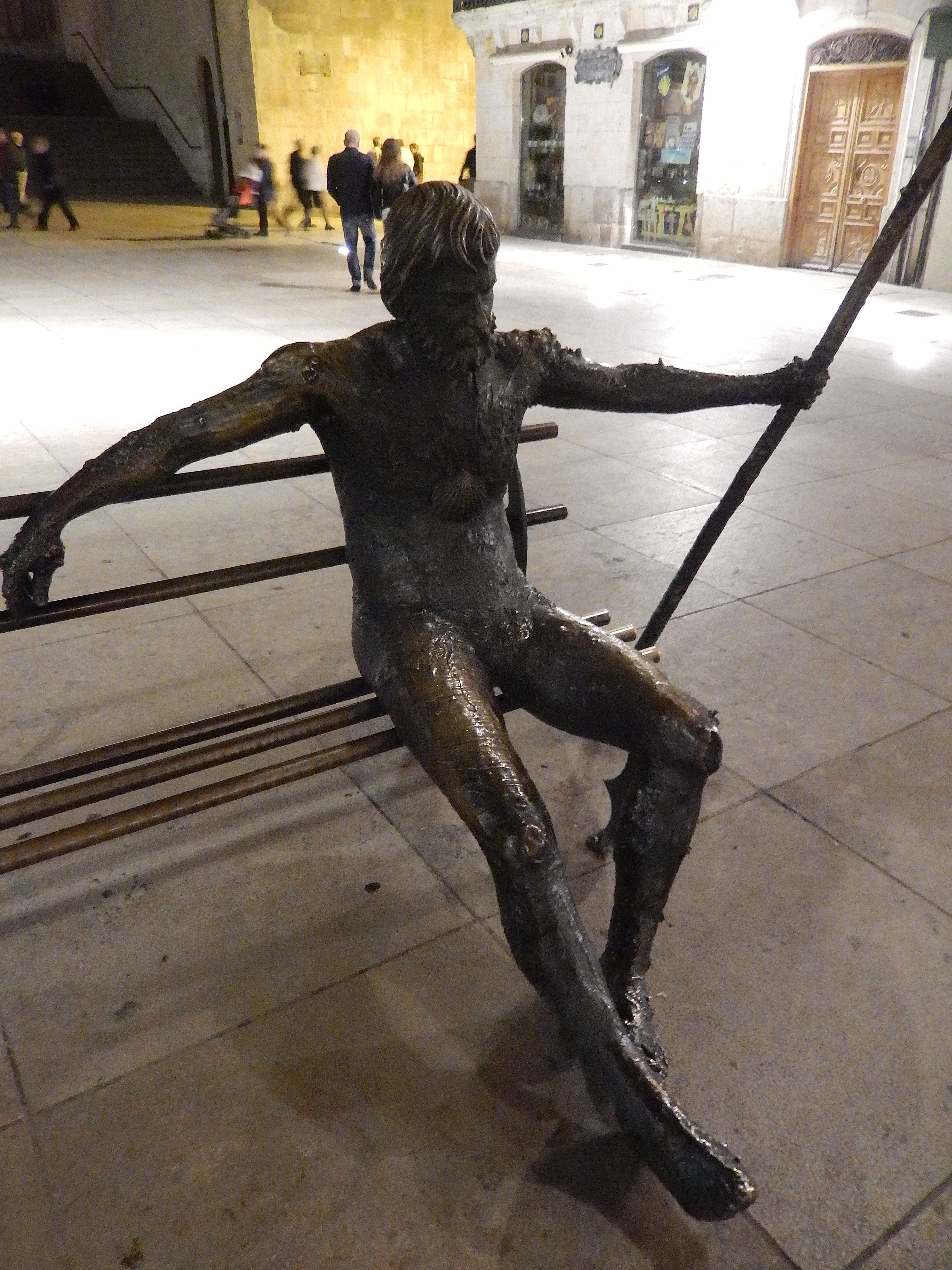
a weary pilgrim rests
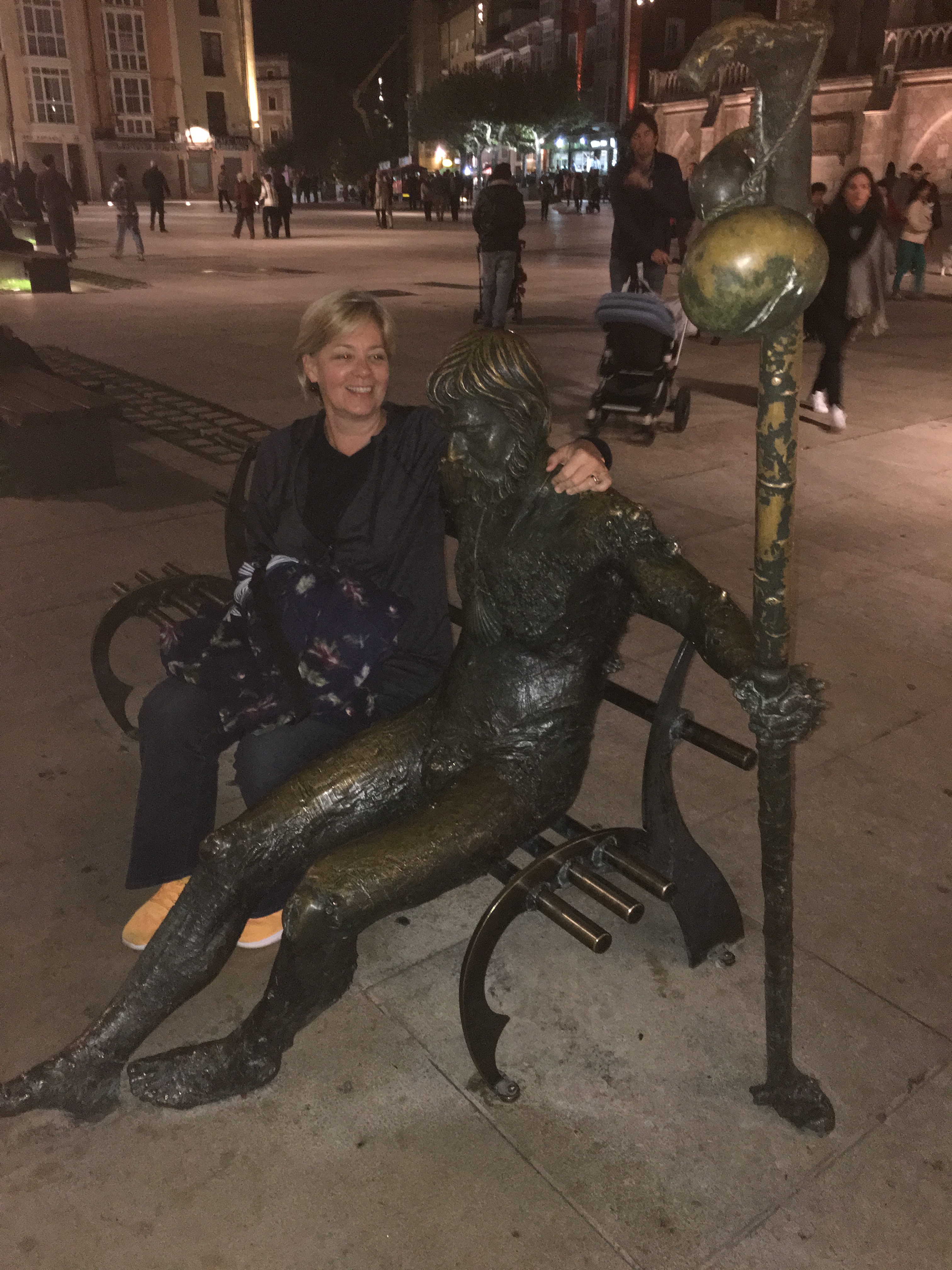
listening to the pilgrim’s story of his walk along Camino de Santiago
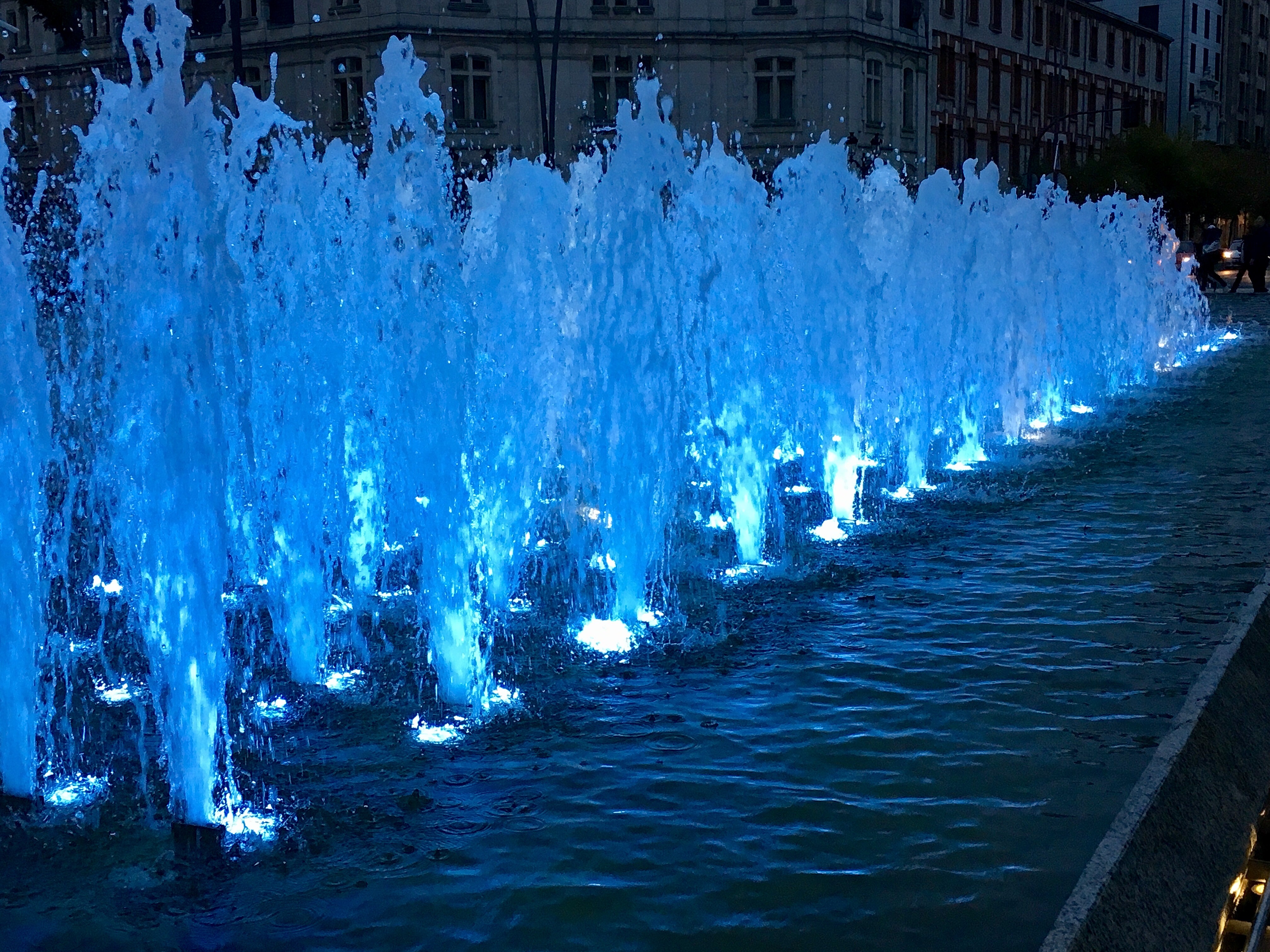
this fountain changed colours
The next morning, after one last goodbye to the cathedral…
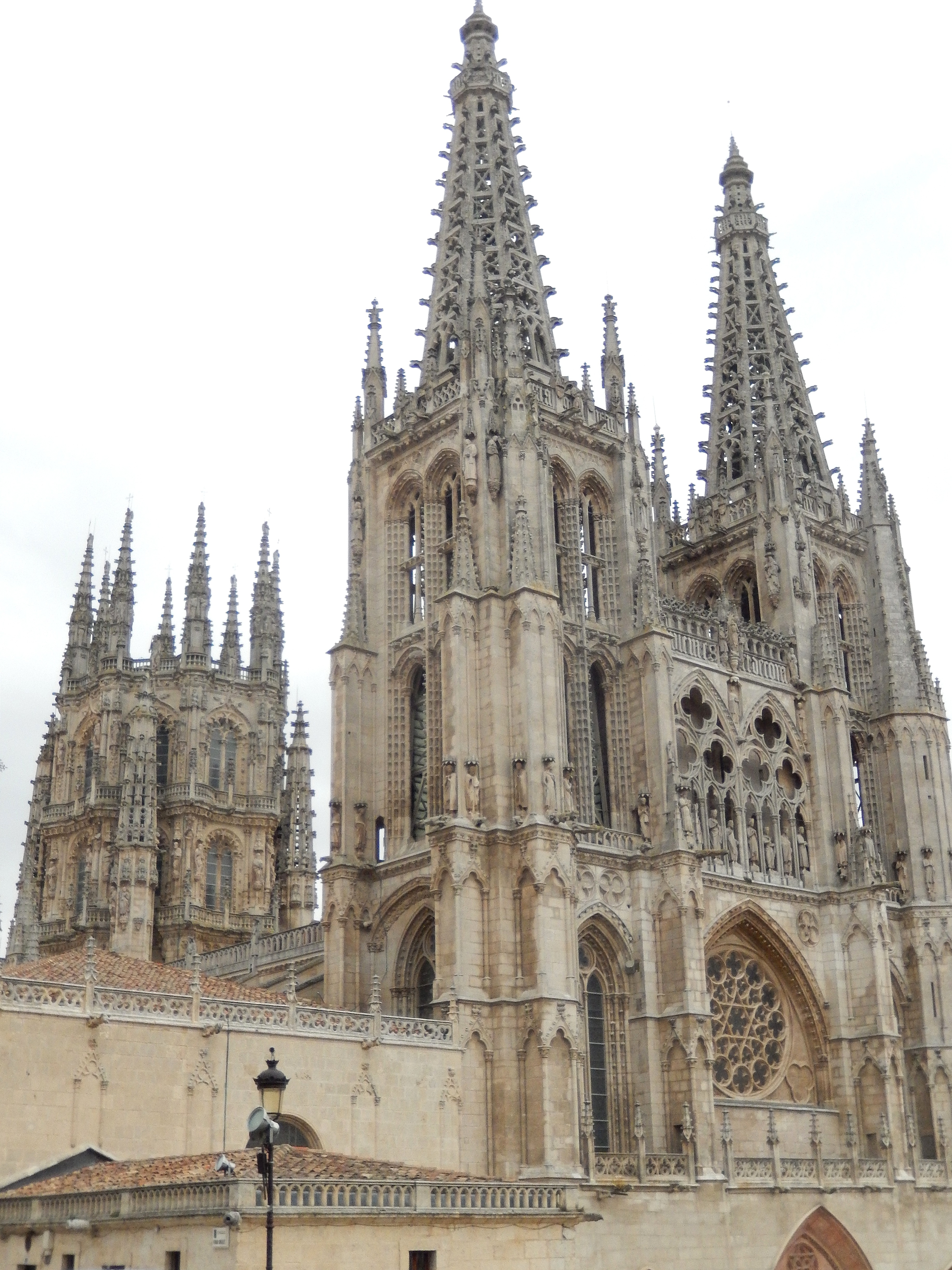
good bye to the Burgos Cathedral
..we were on our way back to Zaragoza, with a stop along the way to take a quick look at S. Millán de la Cogolla, where twin monasteries Yuso and Suso, have been declared a UNESCO World Heritage Site.
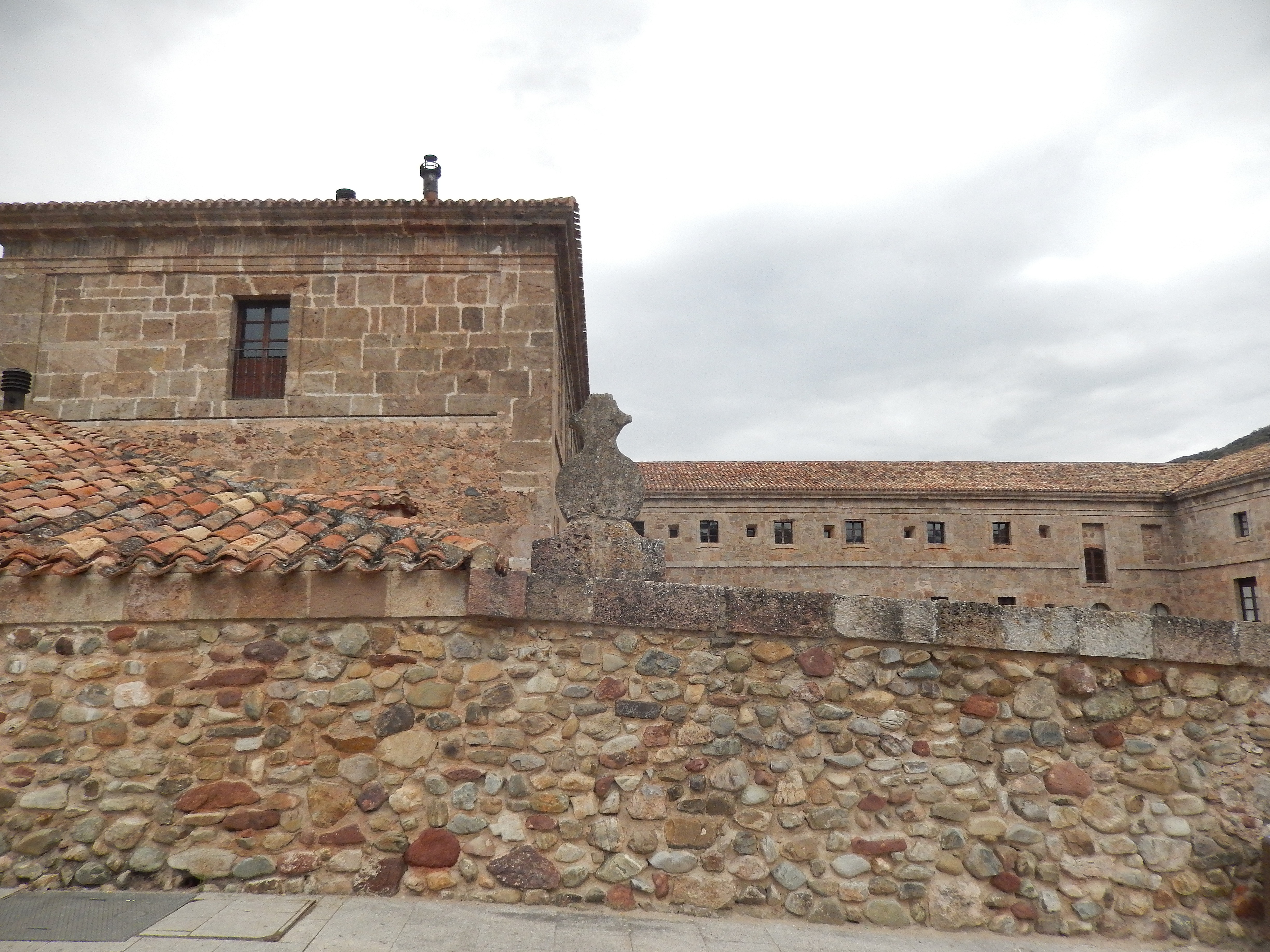
stone walls around the monastery

gate to the courtyard
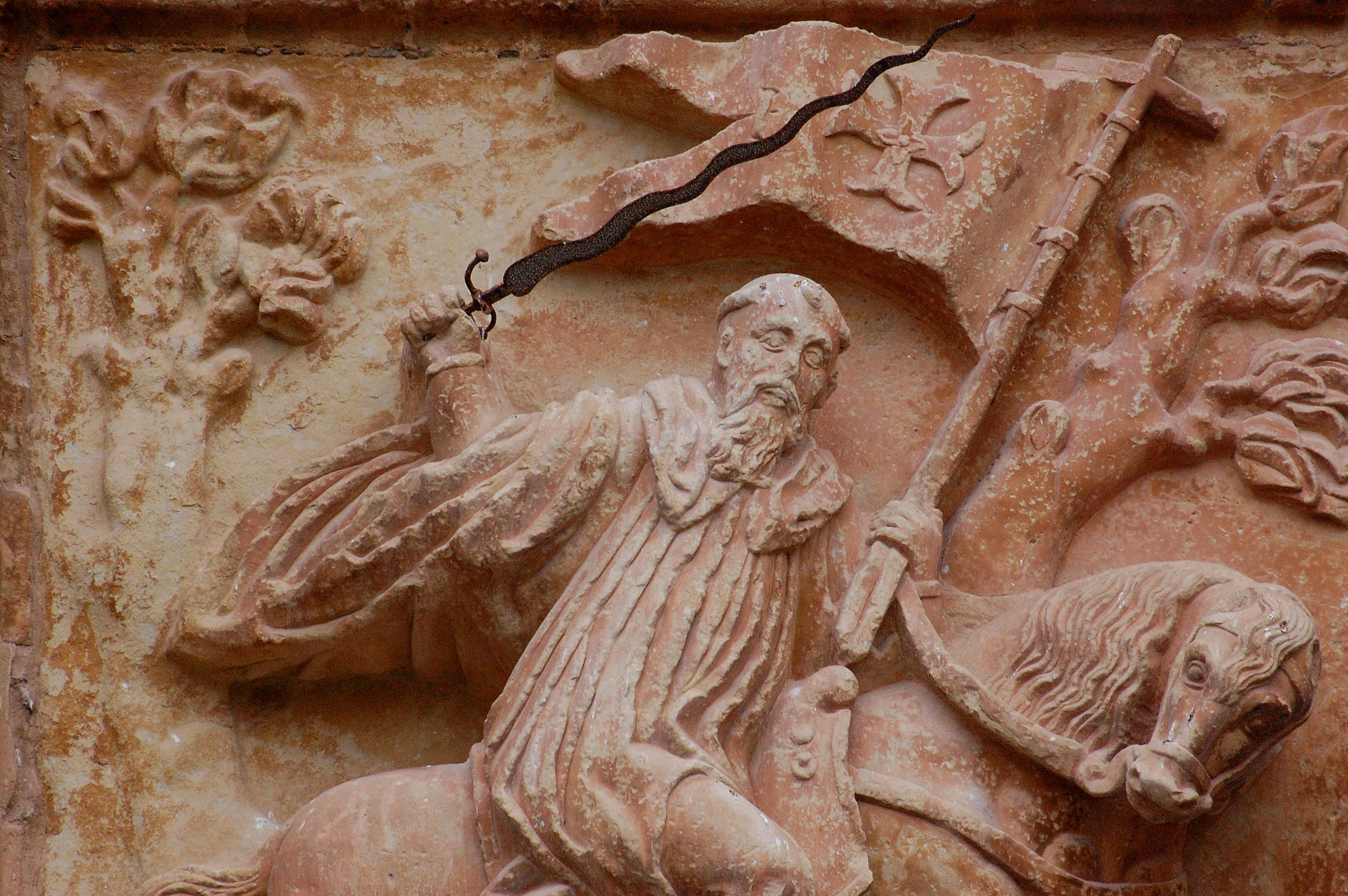
detail of the gate – note the iron sword
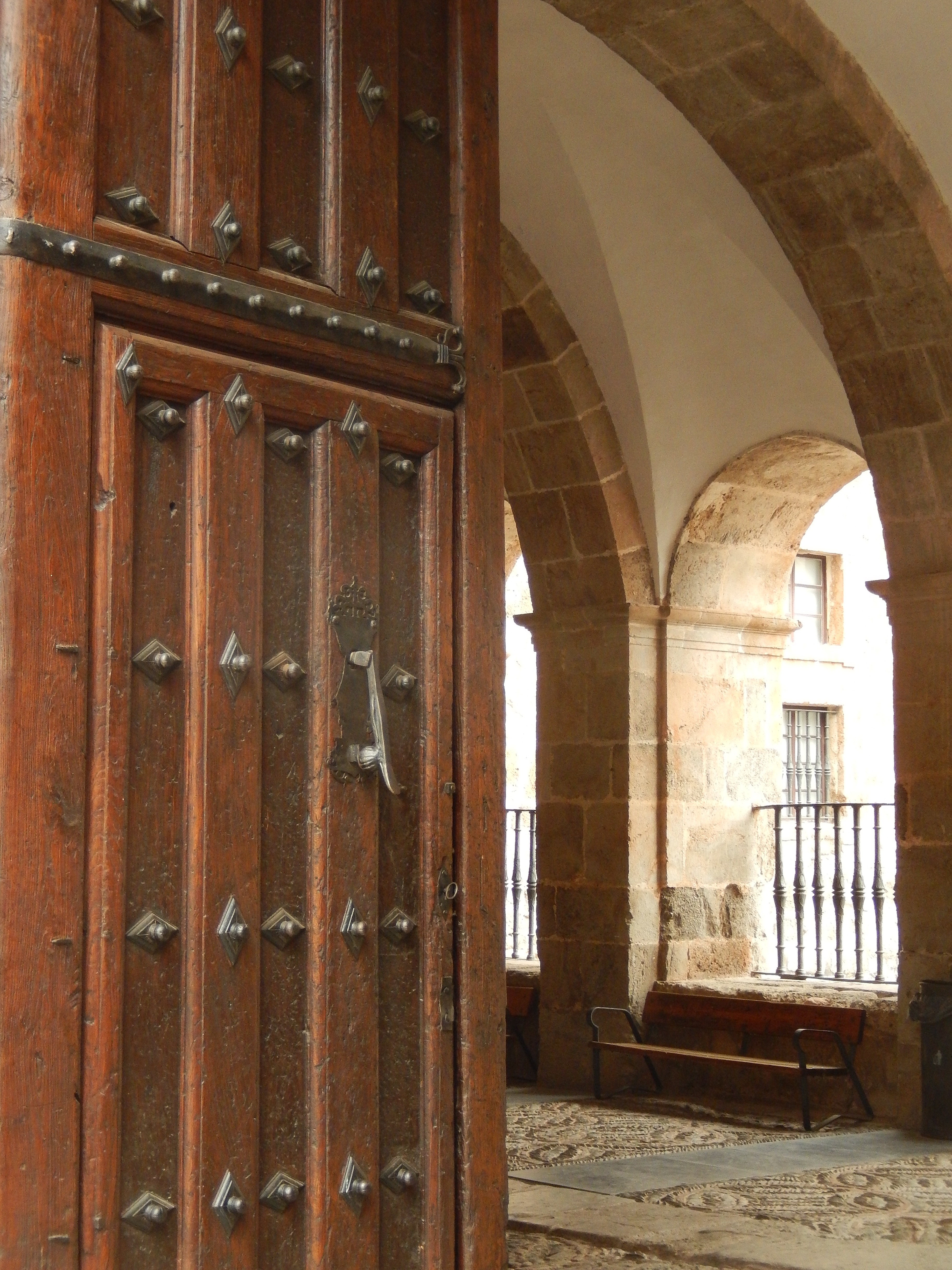
doors and arches
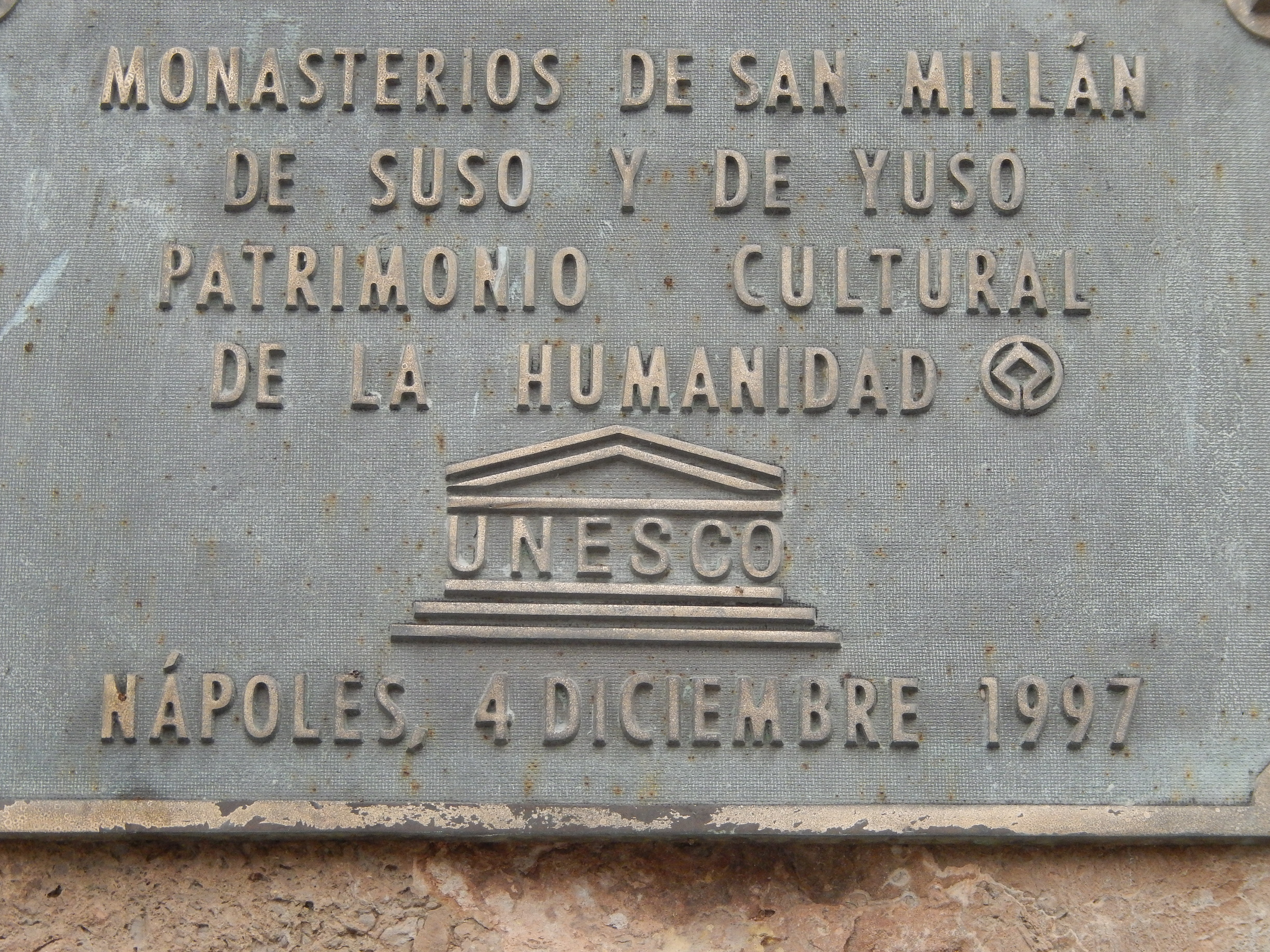
UNESCO plaque
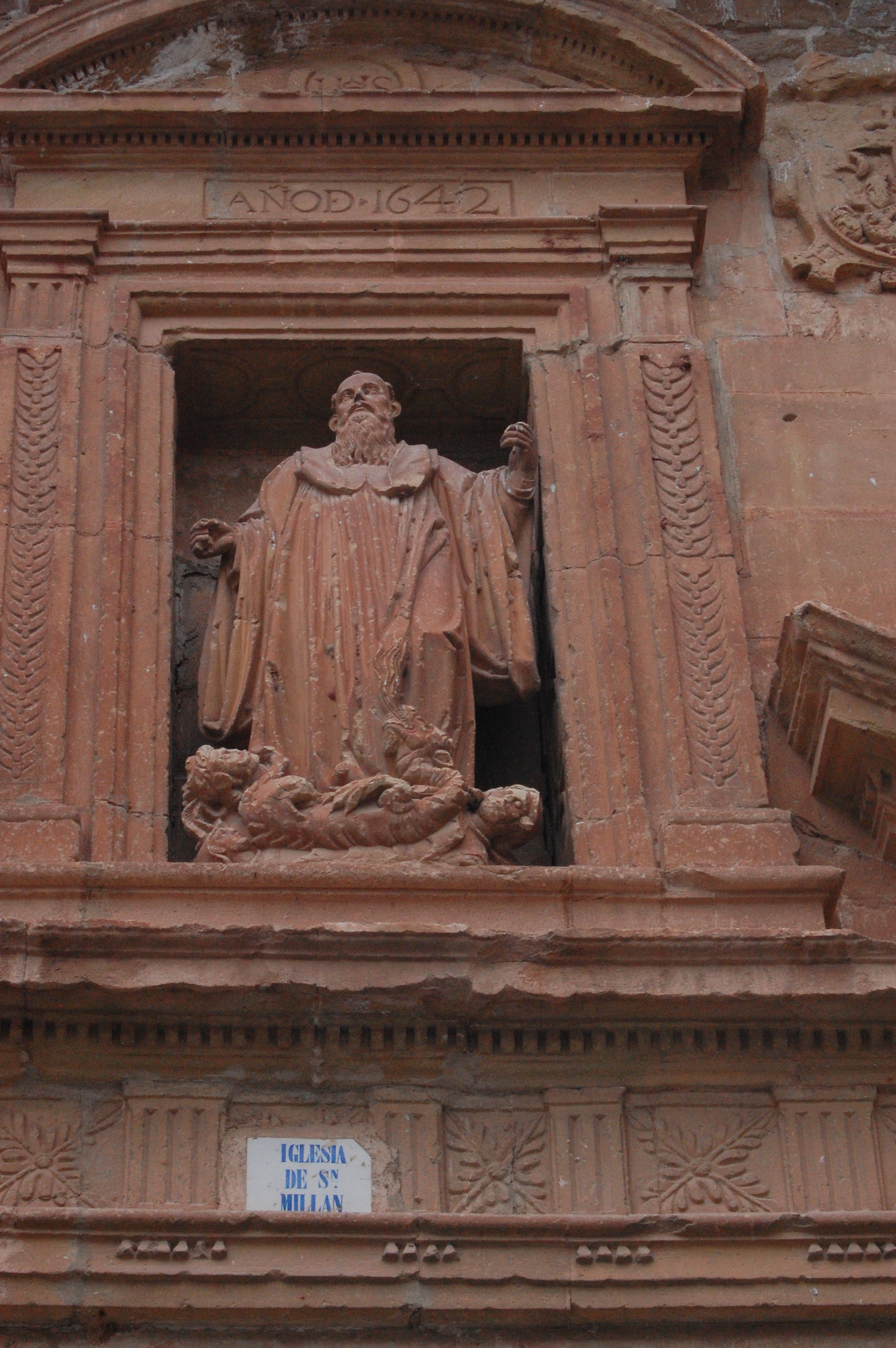
monastery detail
deciphering the inscriptions
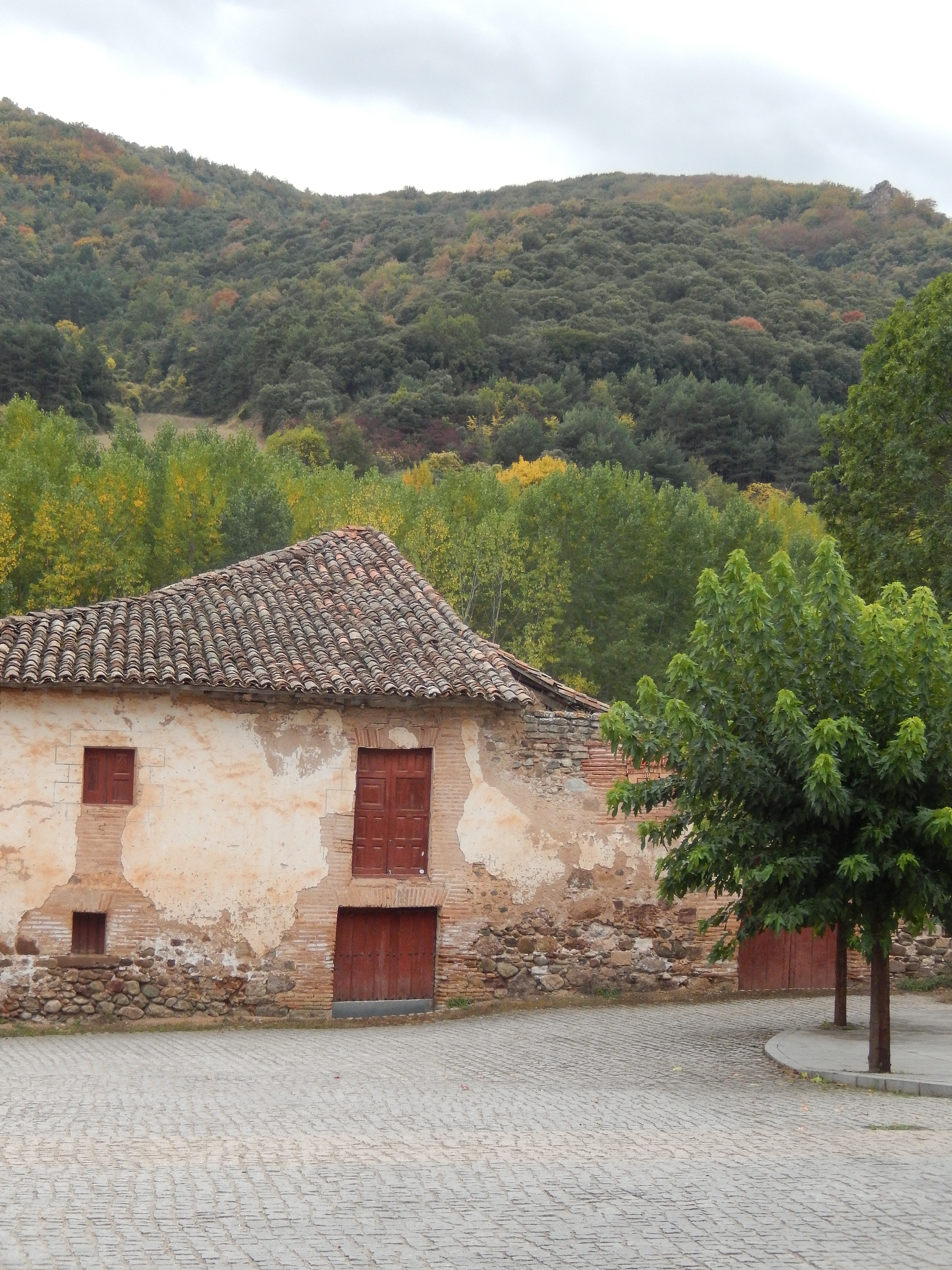
little village detail
Not much was open, on this Monday, so after wandering around, we got back in the car to head to Zaragoza. We made a quick stop in the city to buy some wine to bring home, and to check out the store in general…
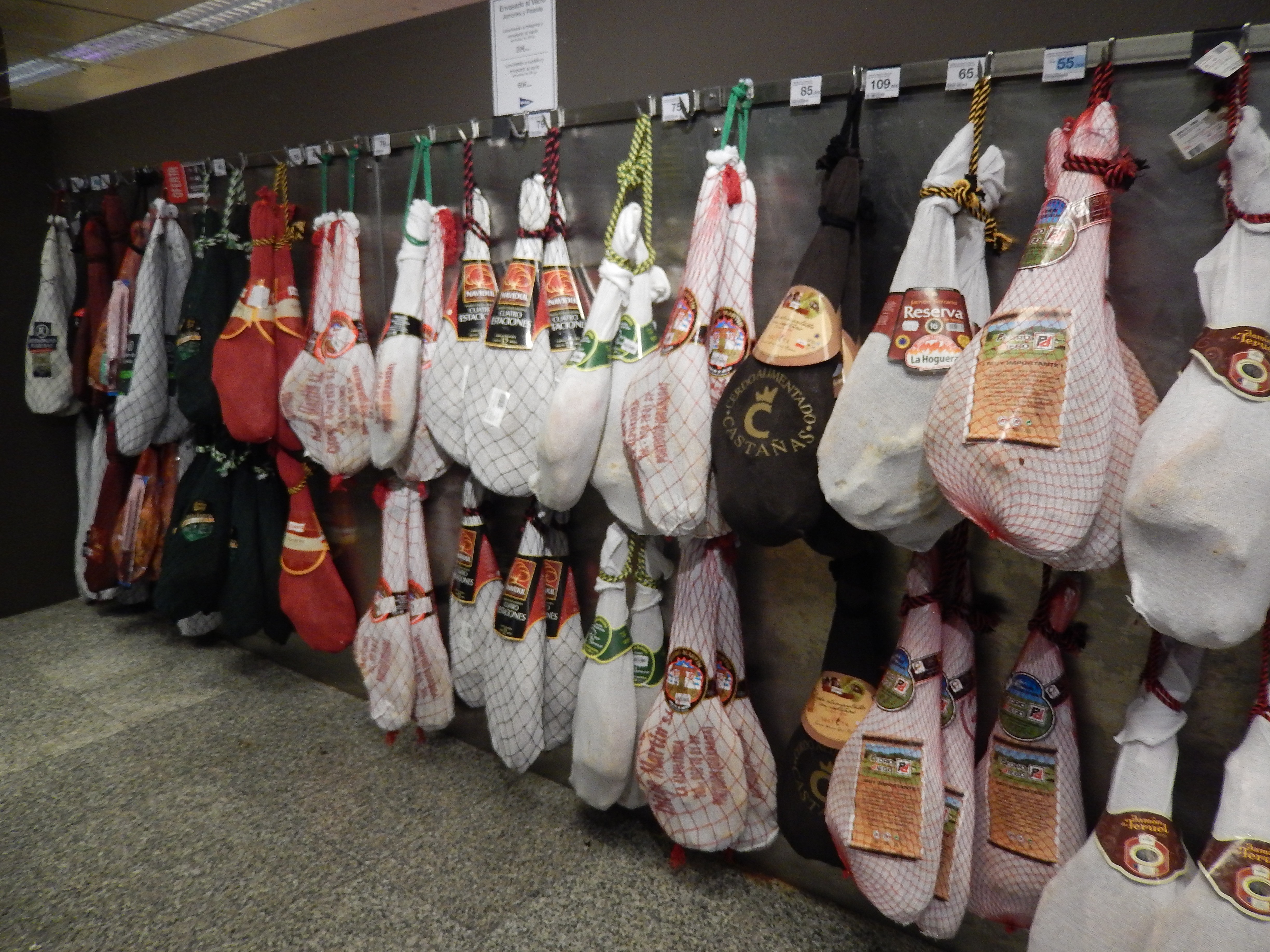
in Spanish grocery stores, this is how you buy your ham
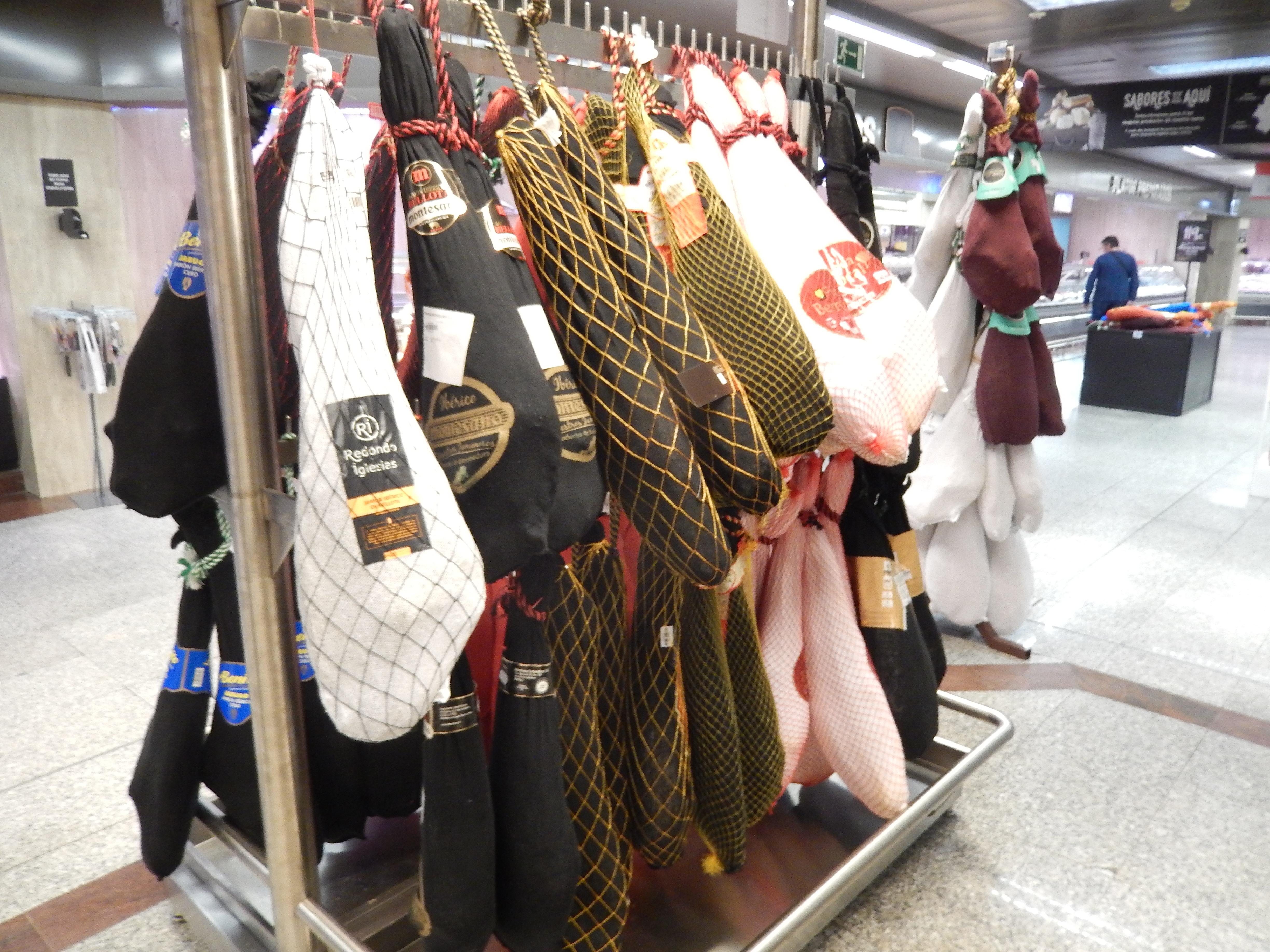
more hams on display
…and then we had one last glass of wine together before Don and I caught our train back to Madrid, staying overnight at a hotel at the airport and flying home early the next morning. Our two weeks eating and drinking our way around northern Spain, with a little sight-seeing thrown in for good measure, were at an end.
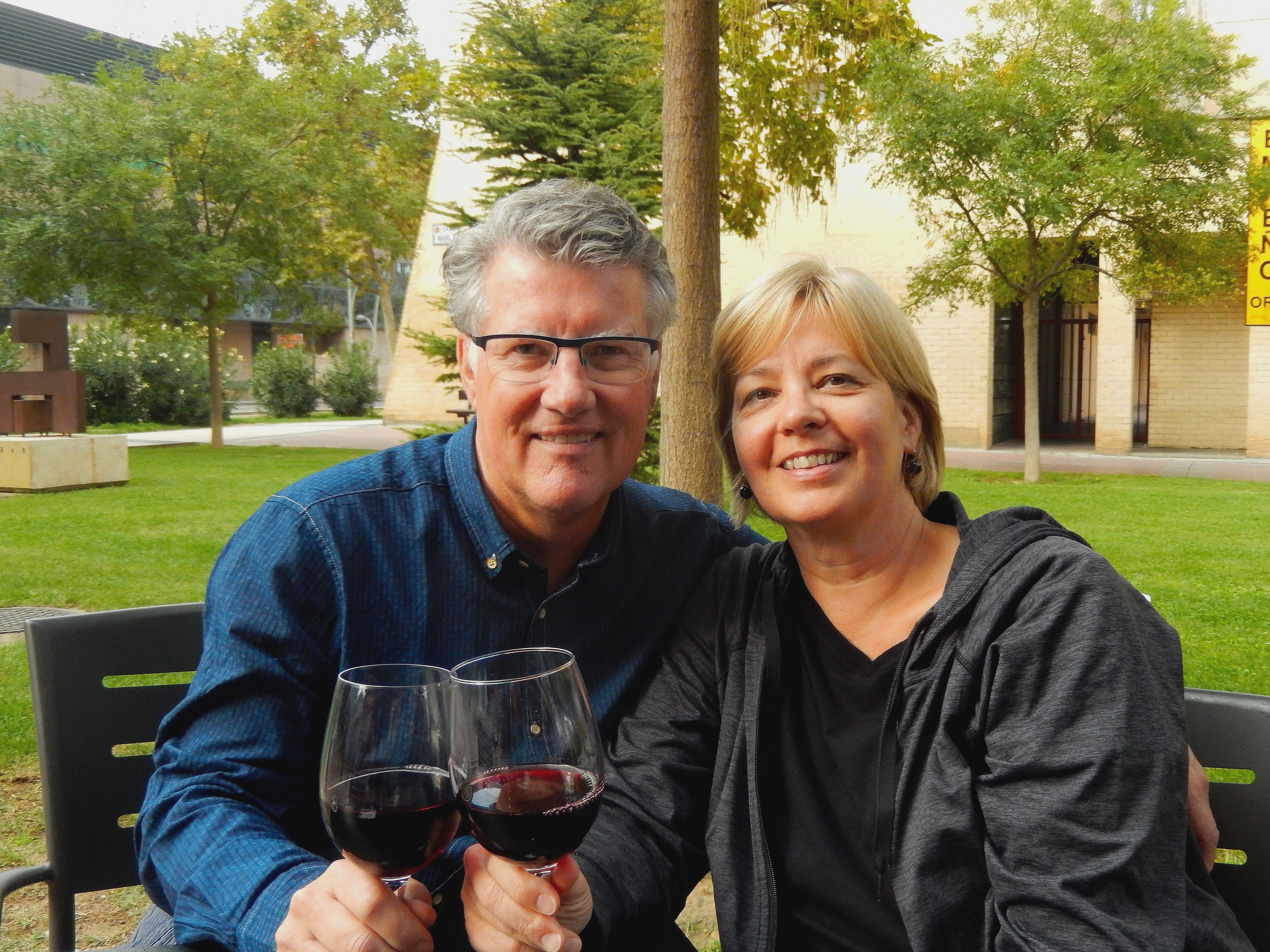
thank you to our friends, and Cheers!
 freda's world adventures